
Installing a cat hideaway shelf can give your cat a safe spot and help save floor space. With a few simple steps, you can make a neat wall setup that fits your room and your cat’s habits.
1. Pick the Best Wall Spot

Start by choosing a wall that has enough open space and feels calm for your cat. A spot near a window can be a nice choice because many cats like to look outside and rest in the sun.
Think about the room layout and how people move through it each day. You want the shelf to stay out of the way, but still be easy for your cat to reach.
2. Check the Wall Type
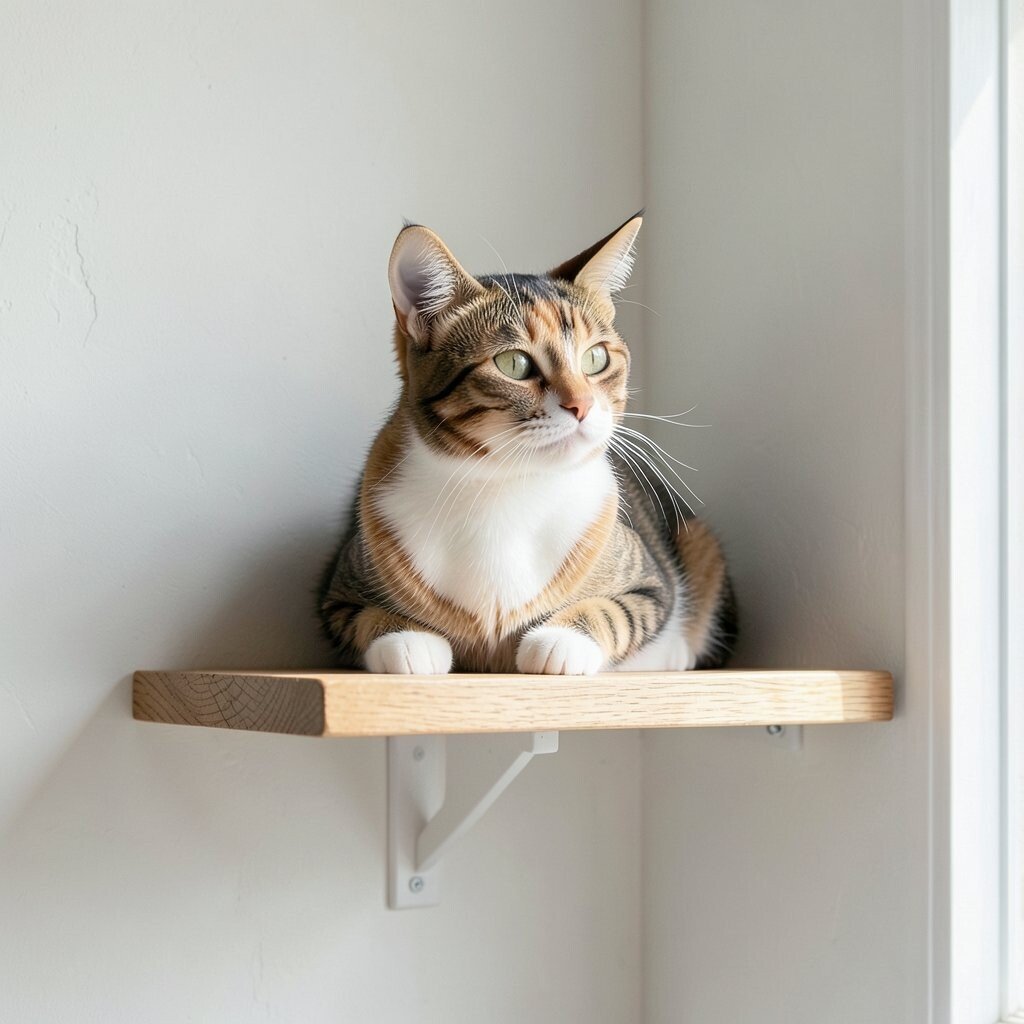
Before you drill anything, find out if your wall is drywall, plaster, brick, or wood. This matters because each wall type needs a different kind of screw or anchor.
If you skip this step, the shelf may not stay firm. A strong wall base helps keep your cat safe and gives you peace of mind.
3. Gather the Right Tools

Set out a drill, level, pencil, tape measure, screws, and wall anchors before you begin. Having everything ready makes the job smoother and keeps you from stopping in the middle.
You may also want a stud finder if you plan to mount the shelf into wood studs. This can help make the shelf more secure and may lower the chance of wobble later.
4. Measure the Shelf Height

Pick a height that works for your cat’s age, size, and jump skill. A young cat may like a higher shelf, while an older cat may need something lower and easier to reach.
Measure from the floor and mark the spot with a pencil. A clear mark helps you place the shelf in the right place and keeps the setup neat.
5. Make Sure the Shelf Fits Your Cat

Check the size of the shelf before you install it. Your cat should have enough room to curl up, turn around, and rest without feeling squeezed.
A wider shelf often feels more open, while a smaller one can feel cozy and private. The right fit can help your cat use it more often and feel at ease.
6. Look for a Cozy Hideaway Design

Many cat hideaway shelves have a covered front, soft sides, or a small opening. These details can give your cat a private nook where it can nap or watch the room.
Some styles look like a small box, while others have a more open shelf with a tucked-in bed space. Pick the look that fits your home and your cat’s taste.
7. Match the Shelf to Your Room Style
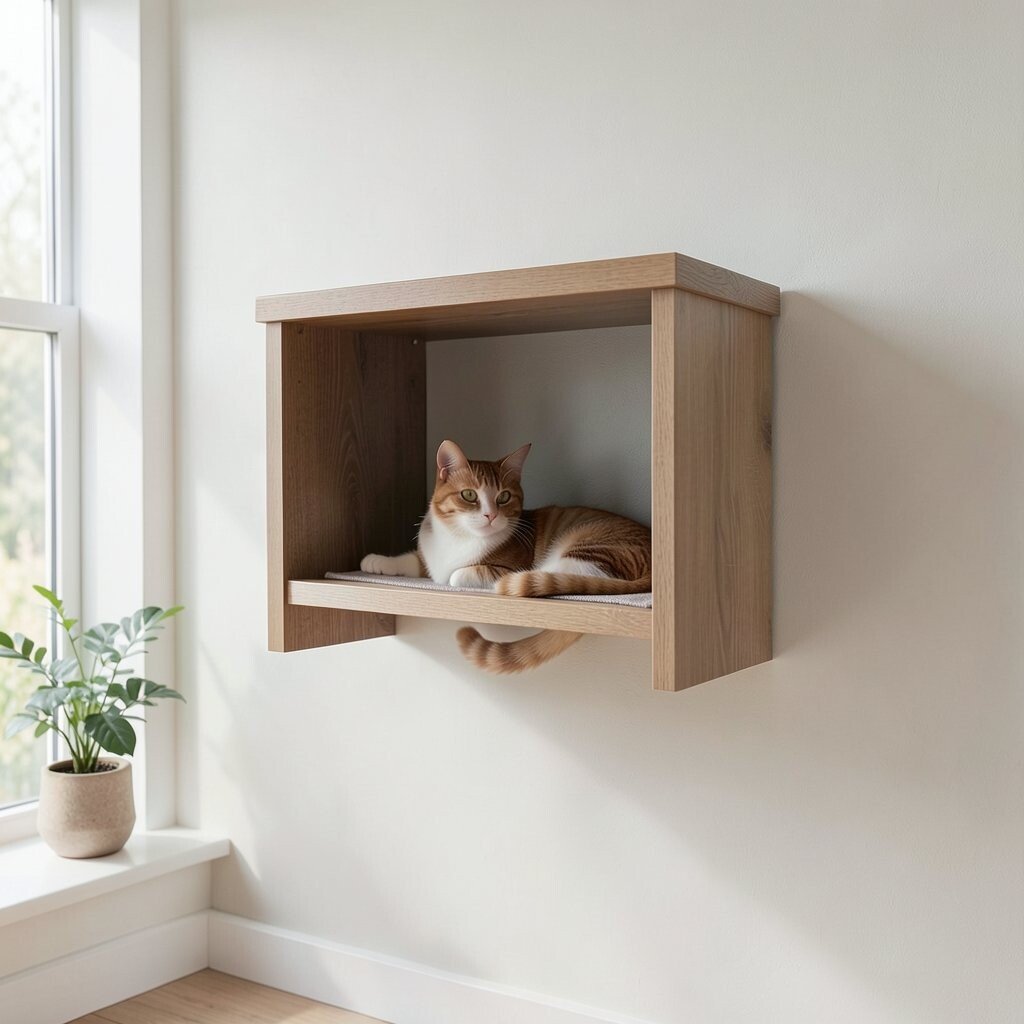
A cat shelf does not have to stand out in a bad way. You can find wood tones, painted finishes, and simple shapes that blend in with your walls and furniture.
If you like a clean look, choose a shelf with plain lines and soft colors. If you want a warmer feel, try wood grain or a fabric-lined design.
8. Think About the Cat’s Path Up

Your cat should have a safe way to reach the shelf. If the shelf is high, add steps, a lower shelf, or a nearby piece of cat furniture to help with the climb.
A good path matters because cats like to move with ease and feel in control. It also helps older cats or cats with less strength use the shelf without stress.
9. Mark the Drill Holes Carefully

Hold the shelf in place and mark where the screws will go. Use a level so the shelf sits straight and does not tilt to one side.
Careful marking can save time and reduce mistakes. It also helps the shelf look neat once it is on the wall.
10. Use the Right Anchors and Screws

Choose hardware that matches your wall type and the shelf weight. A cat shelf needs strong support because your cat may jump on it with speed.
If you are not sure what to use, check the shelf box or ask at a hardware store. Good hardware can help the shelf stay firm for a long time.
11. Install into Studs When You Can
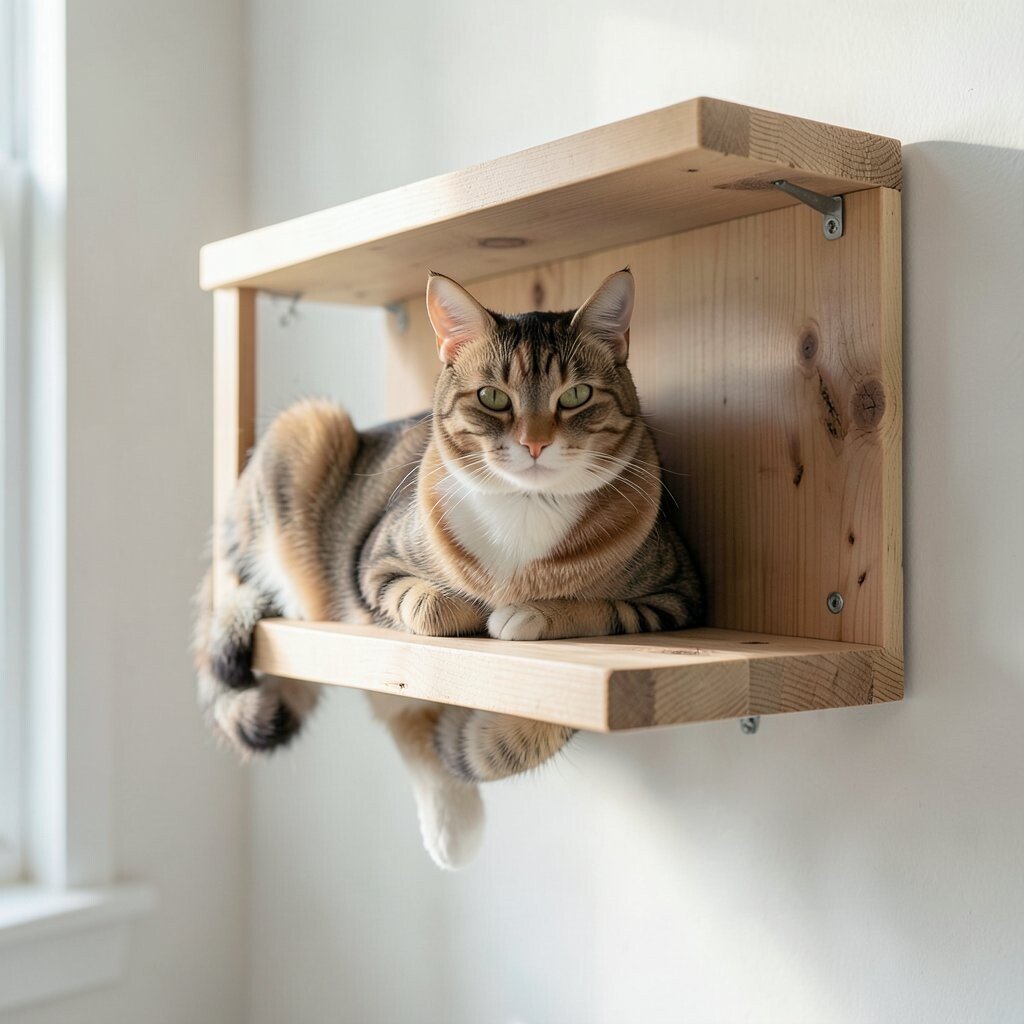
Studs give a stronger hold than drywall alone. If your shelf lines up with a stud, use it for part or all of the mount.
This can make the shelf feel more solid and less likely to shift. It is a simple step that can help a lot with safety.
12. Add Soft Bedding Inside

Once the shelf is up, place a soft pad, blanket, or small cushion inside. A cozy layer can make the hideaway feel warm and more inviting for your cat.
You can use washable fabric so cleanup is easy. Many cat owners like this because it keeps the shelf neat and helps with fur and dust.
13. Personalize the Shelf for Your Cat

You can make the shelf feel special by adding a toy, a small mat, or a fabric color your cat likes. Some people also add a name tag or a simple design to match the room.
Personal touches can help the shelf feel like part of the home, not just pet gear. This trend is common because many people want pet spaces that look nice and work well.
14. Check It Often and Keep It Clean

After the shelf is in use, check the screws and mount from time to time. A quick look can help you spot loosening before it becomes a problem.
Wipe the shelf, wash the bedding, and watch how your cat uses it. If your cat seems unsure, you can try a lower spot, a softer pad, or a better path to the shelf.