Snuffle mats help pets sniff and work their nose in a fun way. They can also help with calm time, slower eating, and less bored behavior.
1. Classic Fabric Snuffle Grid
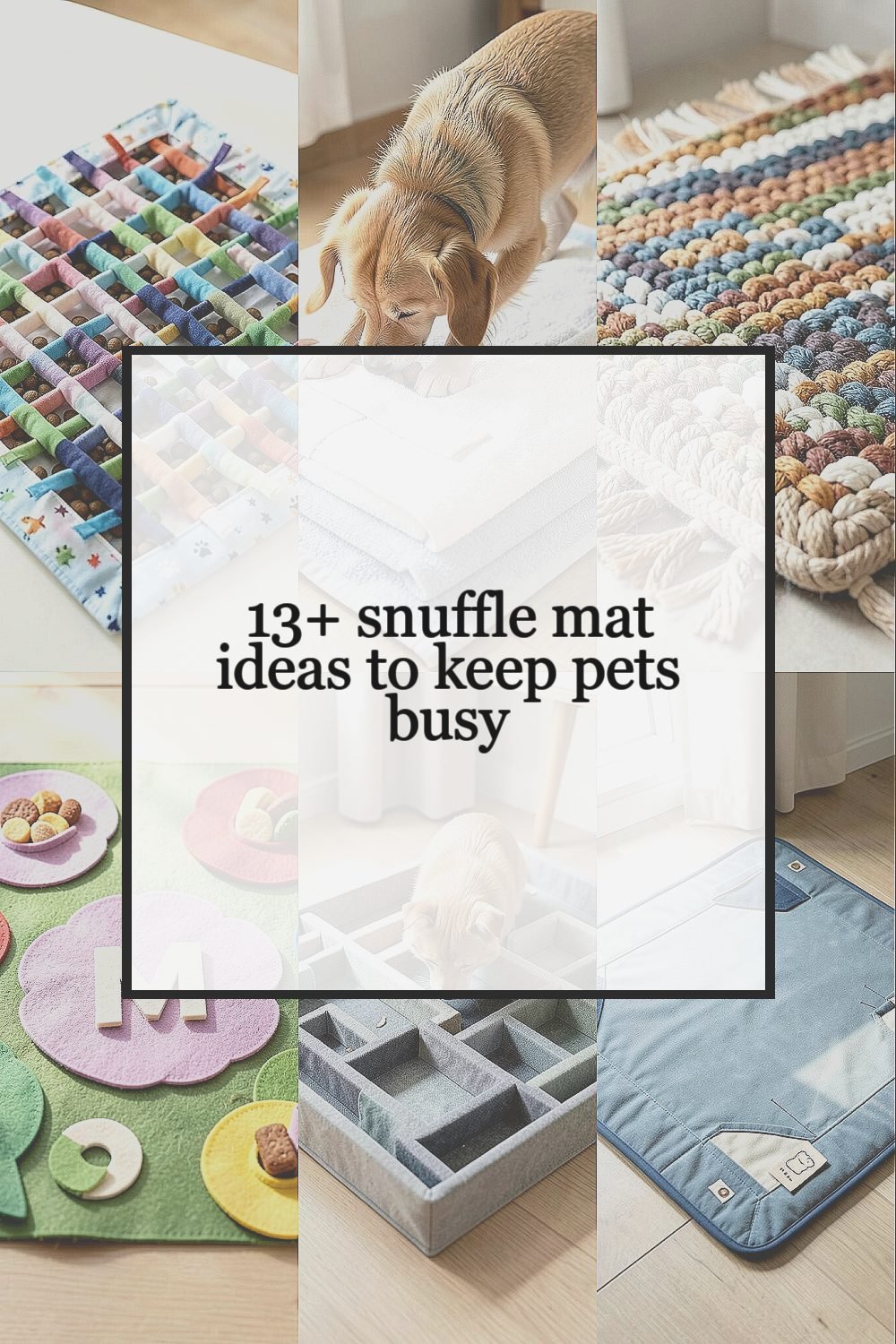
A classic snuffle mat is made from soft fabric strips placed on a base. You can picture a square or rectangle mat with many loose ends sticking up like small leaves. This type is easy to make because you only need basic cloth and a few anchor stitches.
For benefits, it turns sniffing into a job, so your pet stays busy longer. It also helps slow down fast eaters if you hide kibble in the strips. A good tip is to use a mix of longer and shorter strips so the maze feels more interesting each time.
For cost, you can use old fleece, towels, or fabric scraps. This idea is still popular, because it works for dogs of many sizes and skill levels. You can personalize it with your pet’s favorite colors or a simple border like stars or paw prints.
2. Towel Layers for a Thick Sniff Zone
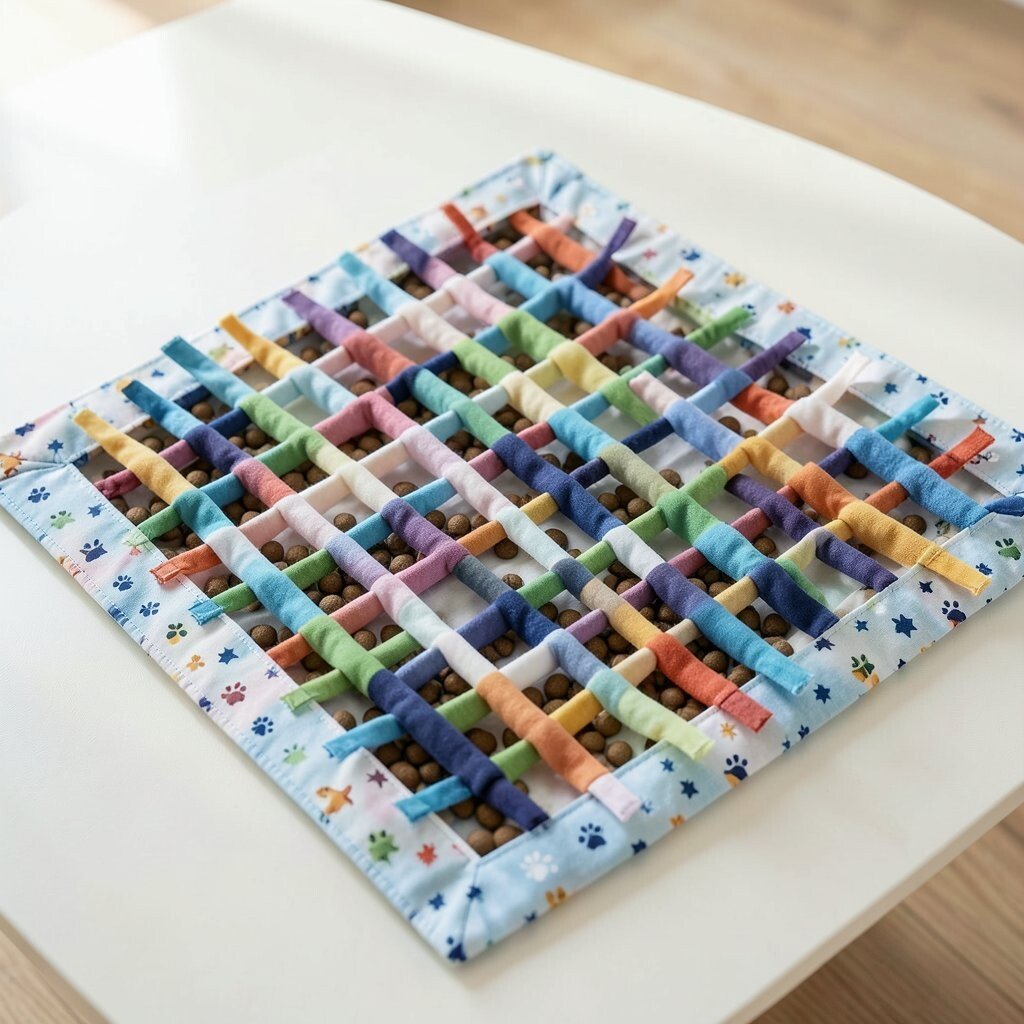
This idea uses towel layers to make a thicker top area. Visualize a mat with several towel strips stacked so the treats sink down a bit. When your pet noses around, the food stays a little hidden, which makes the work feel tougher.
This can help pets that finish mats too fast. It also gives a gentle challenge that may help some pets stay focused. A tip is to add some flat loops on top, so your pet can reach food without getting frustrated.
To keep it simple, cut towel strips of similar size and tie or sew them to a backing. You can keep the cost low by using clean old towels. This is also a good trend for people who want a “bigger sniff area” that feels more like a search space.
3. Braided Rope Fringe Mat
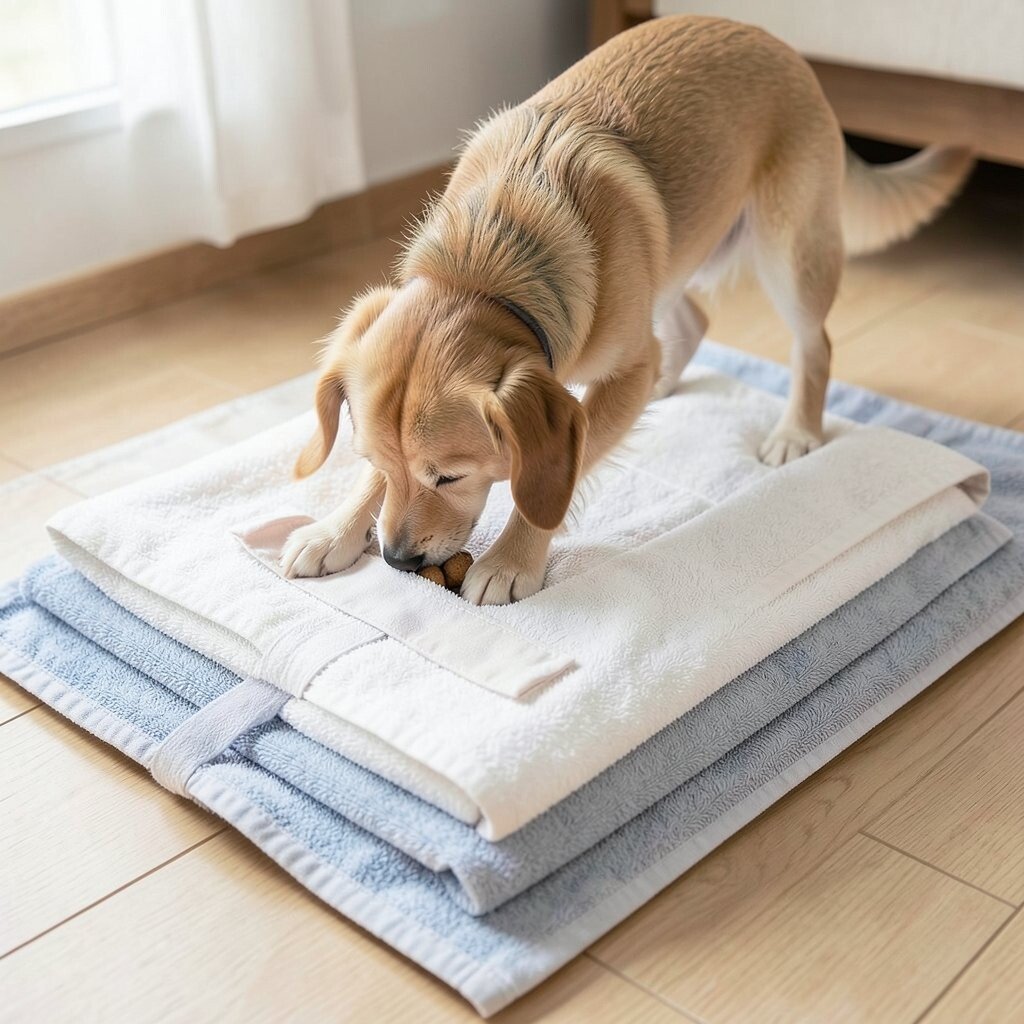
Instead of fabric strips, you can use braided rope or thick cotton cord for the fringe. The look is like a basket weave of soft ropes on a firm base. This gives a different texture, and many pets seem to like it.
The main benefit is that rope fringe can guide your pet’s nose to specific spots. It also creates clear paths, so the mat feels like a game you can repeat. A tip is to keep rope ends secure so they do not pull out when your pet chews.
For cost, rope can be cheap if you buy basic craft cord. You can personalize the pattern by mixing rope colors into stripes. This idea is unique because it changes how scent moves through the mat and how your pet searches.
4. Felt Flower Patch Mat
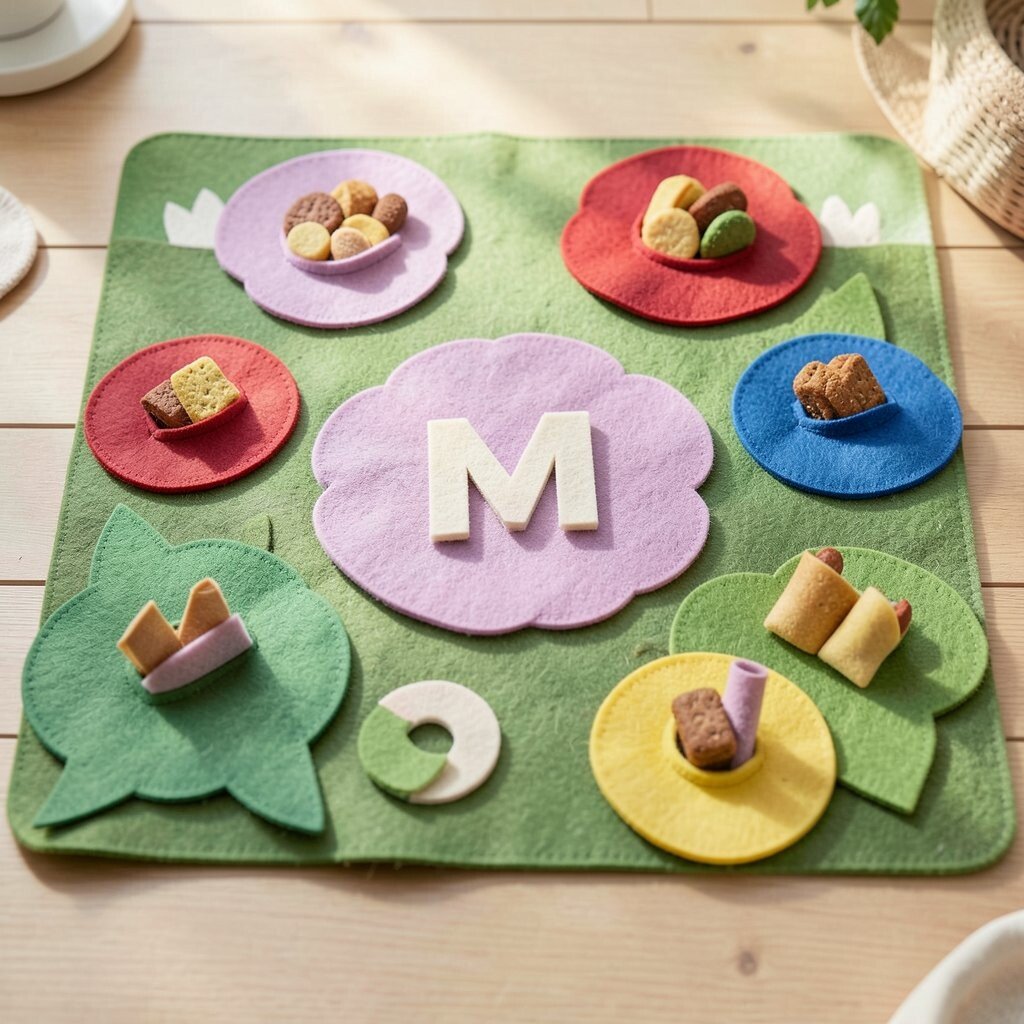
Make a mat that looks like a garden with felt “flower” patches. Picture circles or petals made from felt, each with a small pocket of strips on top. The pockets can hold treats in different spots.
This idea helps pets search in a clear layout. It also lets you add a simple theme that feels fun at home. A tip is to place more strips in the center of each “flower,” so your pet gets a treat reward for deeper sniffing.
For personalization, you can match your pet’s name to the felt shape, like “M” for a favorite letter. Cost stays low if you use craft felt. It is also a trending style because people like mats that look cute, not just useful.
5. Maze Mat With Tunnels Under Strips
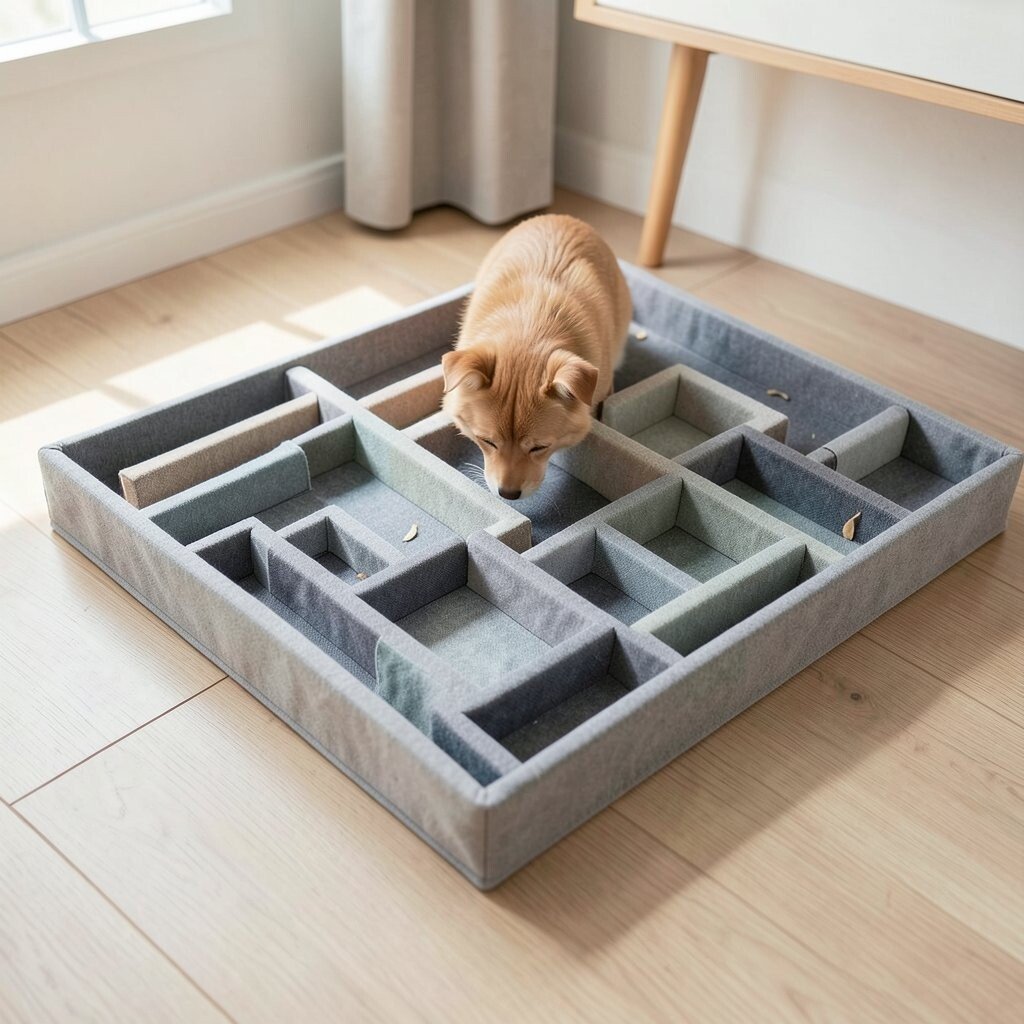
A maze mat uses strips as covers over hidden tunnels. You can picture a flat base with small fabric walls that form lanes, then top strips that hide the lanes. Your pet sniffs along the tunnels and has to move from section to section.
The benefit is more movement and more brain work, because the scent trails can be placed in paths. It can also help pets that need extra mental time, not just sniffing in one flat area. A tip is to add a few “safe spots” near the edges so your pet can win early and keep going.
For cost, you can use simple fabric strips and scrap cloth for the walls. This is unique because it adds structure like a small road map. You can personalize it by changing the tunnel pattern each week.
6. Corner Target Mat With Training Rewards
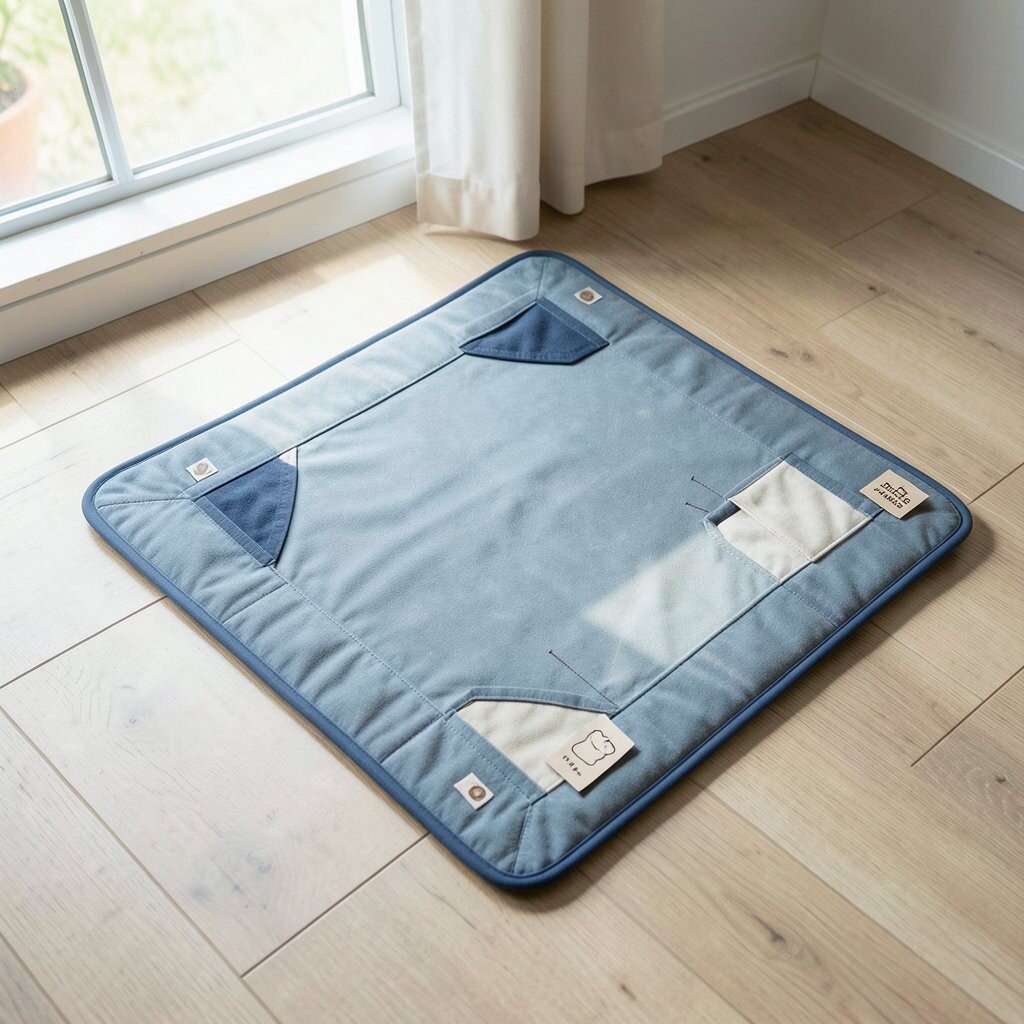
This idea builds a mat with clear target corners. Visualize a mat that has three or four marked corners, each with more strips and a treat pocket. You can use it like a training tool after a short walk.
The benefit is it helps you practice focus, because you can ask for a “find it” cue and point to a corner. It can also support calm behavior if you use it during quiet times. A tip is to reward the same corner first, then slowly change where the treats are placed.
For personalization, add a small tag or icon for each corner so you can track the pattern. The cost is low because it is just a regular mat with labeled spots. This is a newer trend with many pet owners using snuffle mats for simple at-home training.
7. Reversible Snuffle Mat With Two Textures
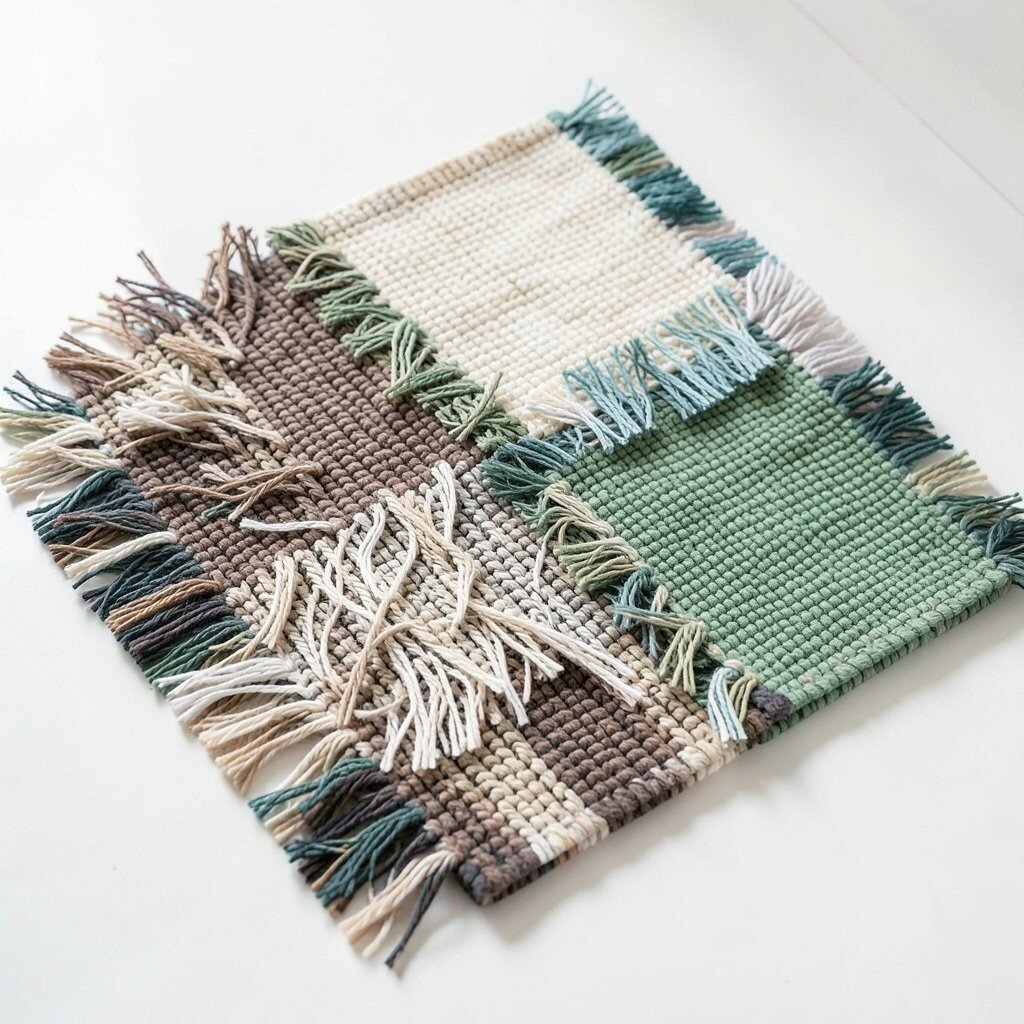
A reversible mat has two sides, each with a different texture. One side can use long shag strips, while the other side uses short loops or braid pieces. This way, your pet gets a new feel without buying a second mat.
The benefit is variety, which can help keep interest up. It also helps if your pet likes one side more than the other. A tip is to hide the same treat type on both sides at first, so you can judge what your pet likes.
For cost, you can start with one base and add two different fringe styles. Personalization can include colors on each side to match your home. This idea is unique because it works like a “new mat” even when it is the same mat.
8. Food Pouch Border Mat
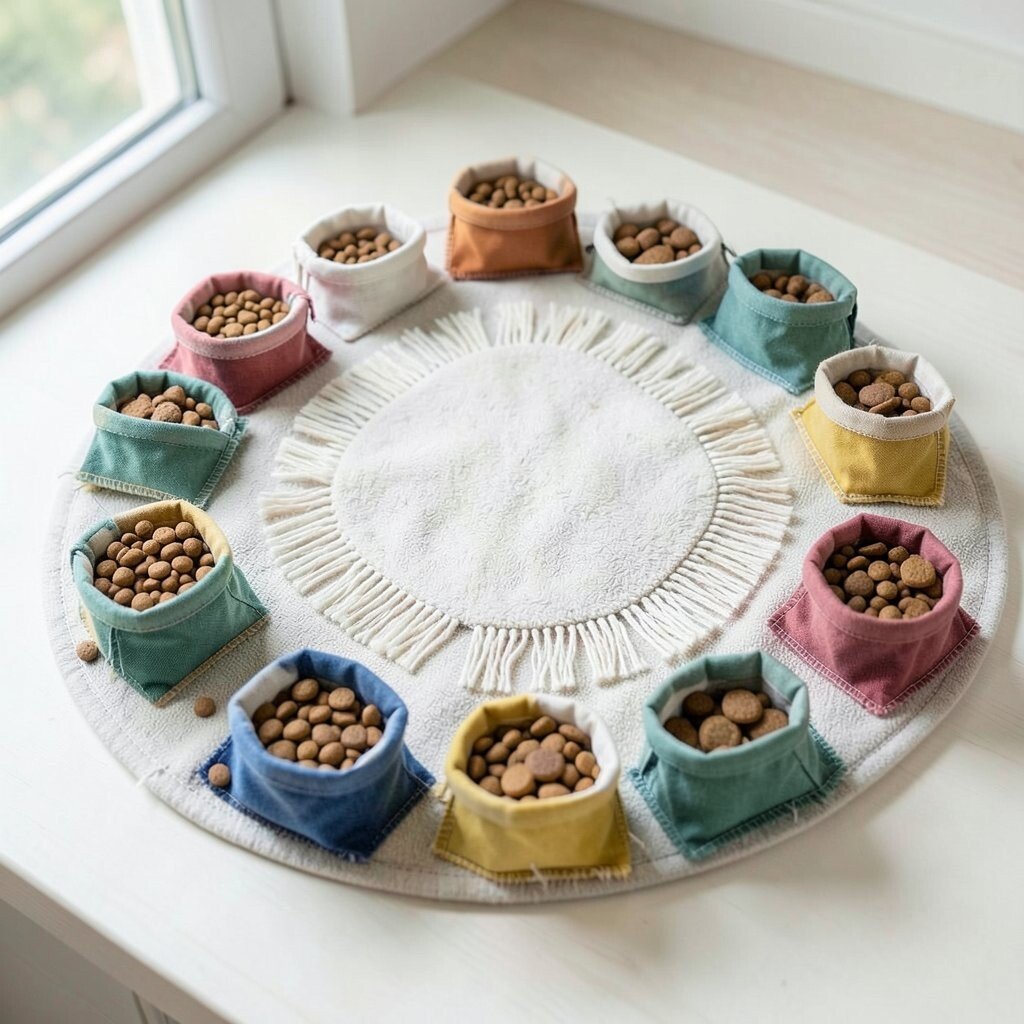
This idea adds small fabric pouches around the edge of a mat. You can picture a mat with fringe in the center and stitched pockets along the border. Some pouches can hold kibble, while others hold a few small pieces of treat.
The benefit is that it creates different levels of challenge. Your pet can start with easy border pockets, then move to the harder center fringe. A tip is to keep pouches shallow, so your pet can still find treats with their nose.
For cost, you can use scrap fabric cut into small rectangles and sew them on. Personalization is easy by making each pouch a different color. This is a unique twist because it adds both sniff work and a quick “grab” area for extra wins.
9. Basketweave Ribbon Snuffle Mat
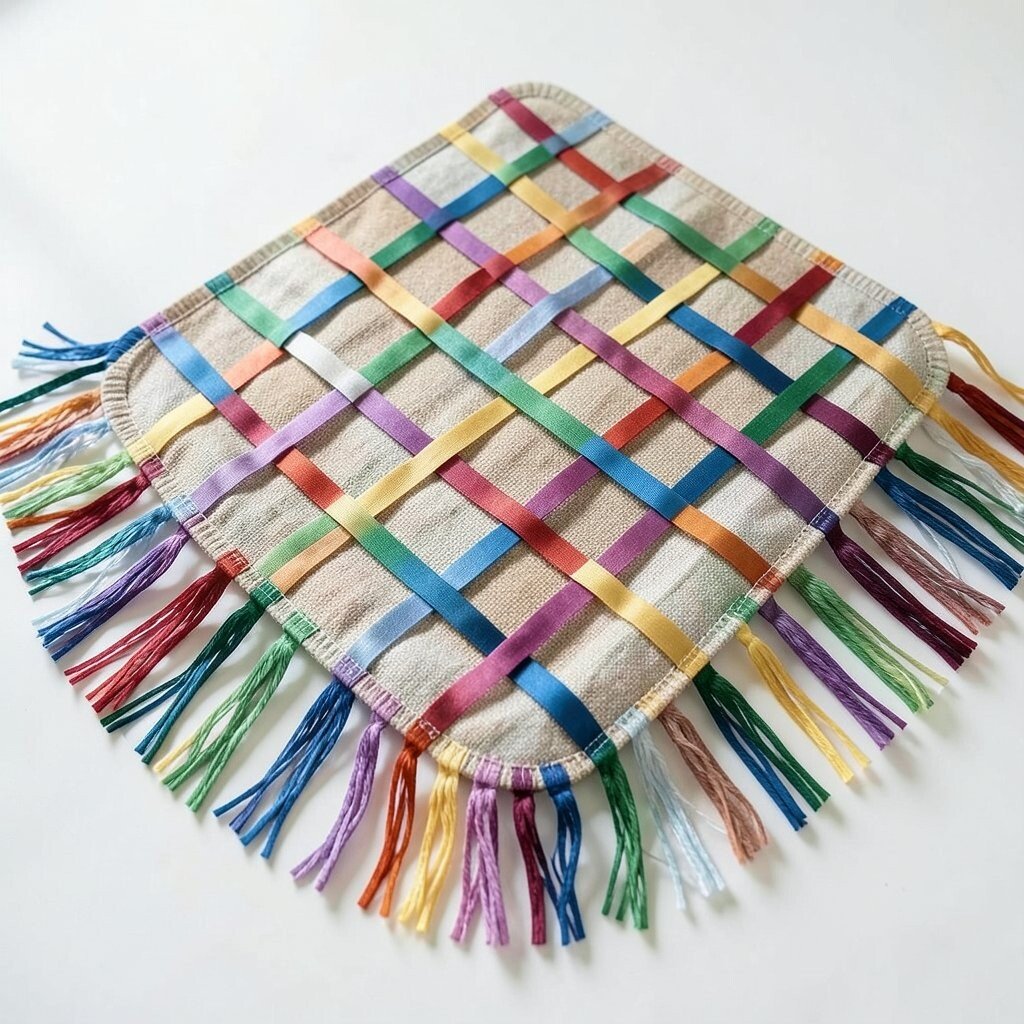
Here you use ribbon strips to create a basketweave look. Visualize a grid where thin strips cross, then extra ribbon ends hang down like soft fringes. The surface feels neat, but still open for scent.
The benefit is that the basket pattern helps your pet slow down and scan. It also can feel safer for smaller pets because the openings look more defined. A tip is to keep ribbons wide enough so treats can rest in the weave, not slide off.
For cost, ribbon can be bought cheaply, and old scarves can also work. Personalization can include using ribbons in matchy colors to make a “pet style” look. This idea is unique because it adds a tight design that some pets enjoy.
10. Flat “Leaf Pile” Mat for Gentle Sniffing
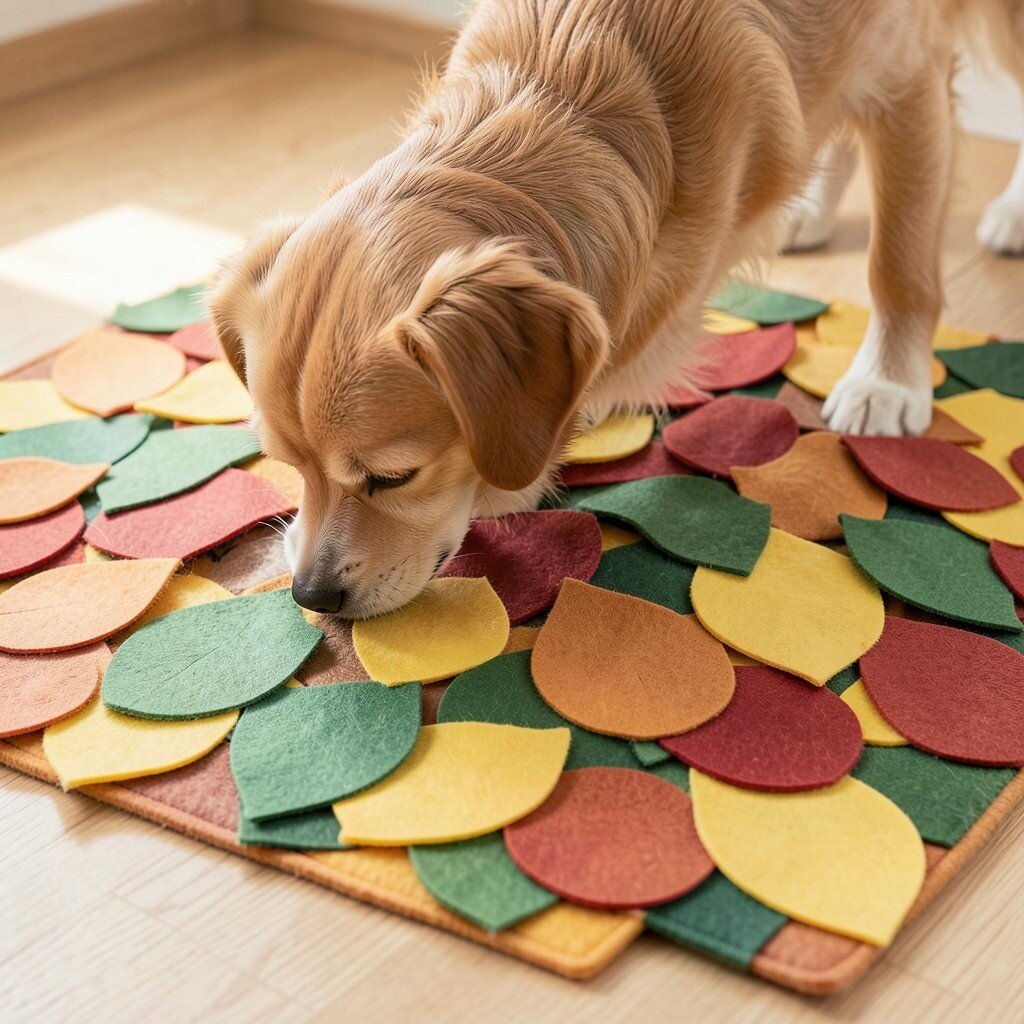
This mat uses flat fabric “leaf” pieces laid like a pile on top. Picture a base with many smooth leaf shapes that overlap, with small scent gaps between them. Your pet digs and noses through the pile to reach hidden food.
The benefit is gentle sniffing because the leaf pile can be less tangly than long shag strips. It may suit pets that do not like very loose fabric. A tip is to place treats in a few deeper gaps, so your pet gets a clear reward for digging.
For cost, leaf pieces can be cut from fleece or felt leftovers. Personalization can include a seasonal theme like fall colors. This is a unique style because it looks like a real leaf pile, but it still works like a snuffle mat.
11. Paper Cup and Strip Sniffer Mat
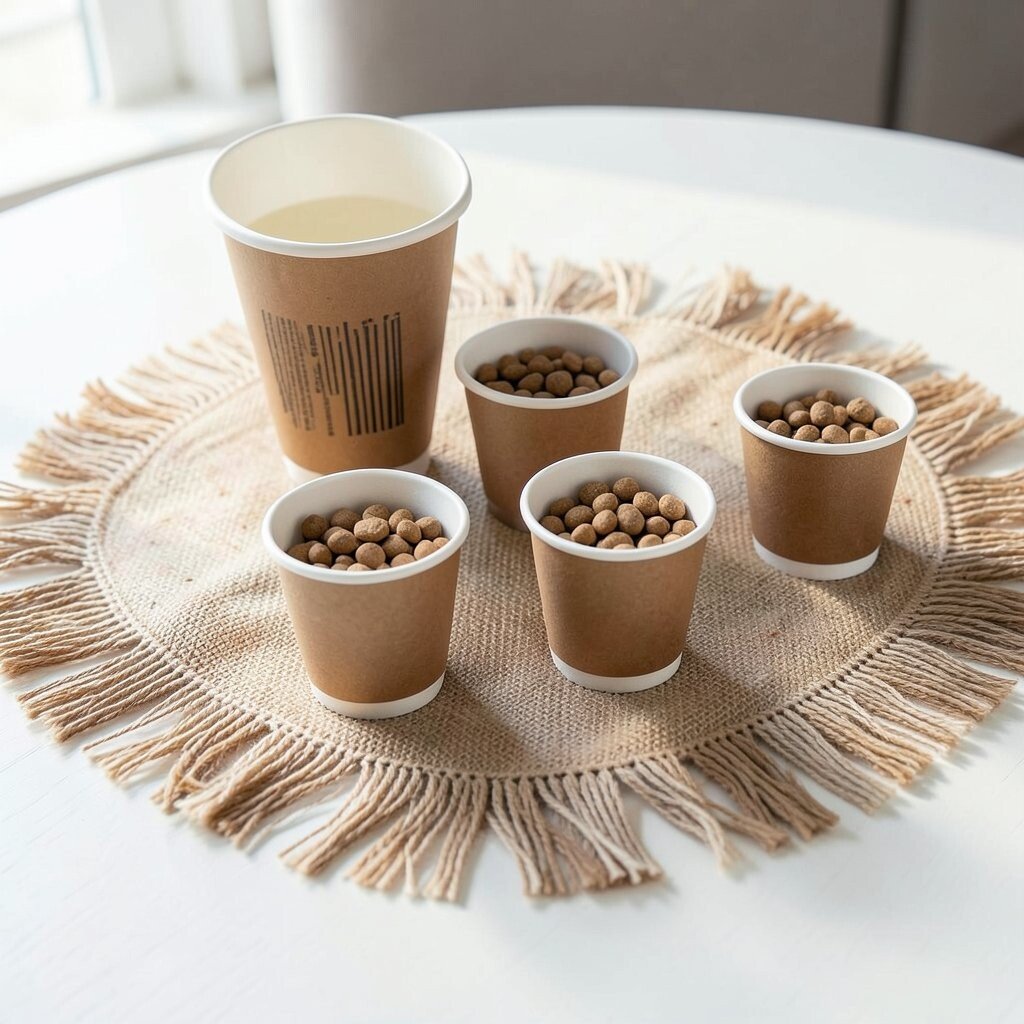
This idea mixes cups and fabric strips in one mat. You can picture a base where small paper cups sit under or beside fringe, then kibble is hidden inside the cups. Strips help cover the cups so the scent stays in small zones.
The benefit is it makes the search more like finding spots, not just digging in one big area. It also helps pets focus when they hunt for food in separate cups. A tip is to use sturdy paper cups that hold shape and are easy to replace after use.
For cost, this can be very low because you only need basic cups and scrap fabric. Personalization can include using cups of different sizes for small and big treats. This is unique because it adds a “spot hunt” feel that many pets find fun.
12. Mini Puzzle Snuffle Mat for Small Dogs
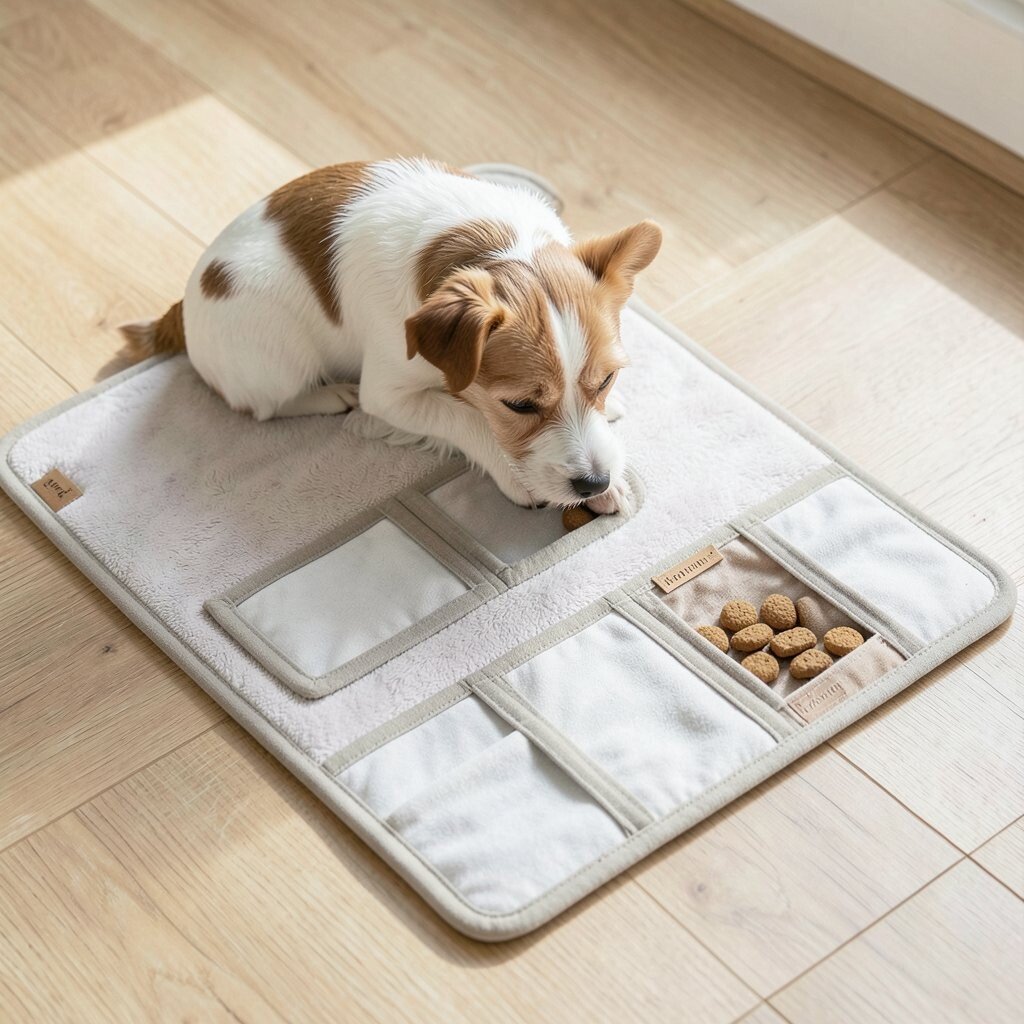
A mini puzzle snuffle mat is a smaller snuffling area with simple sections. Visualize a small square mat with three or four mini compartments made with fabric borders. Each section has its own strips so treats stay in one area at a time.
The benefit is less overwhelm for small dogs or pets new to sniff mats. It can also help older dogs that get tired from too much movement. A tip is to start with one section at a time, so your pet learns the pattern quickly.
For cost, a mini mat often uses less fabric and is easier to store. Personalization can include a small name tag on the corner. This idea is unique because it acts like a gentle starter mat while still giving real sniff time.
13. Seasonal Theme Mat With Scarf Strips
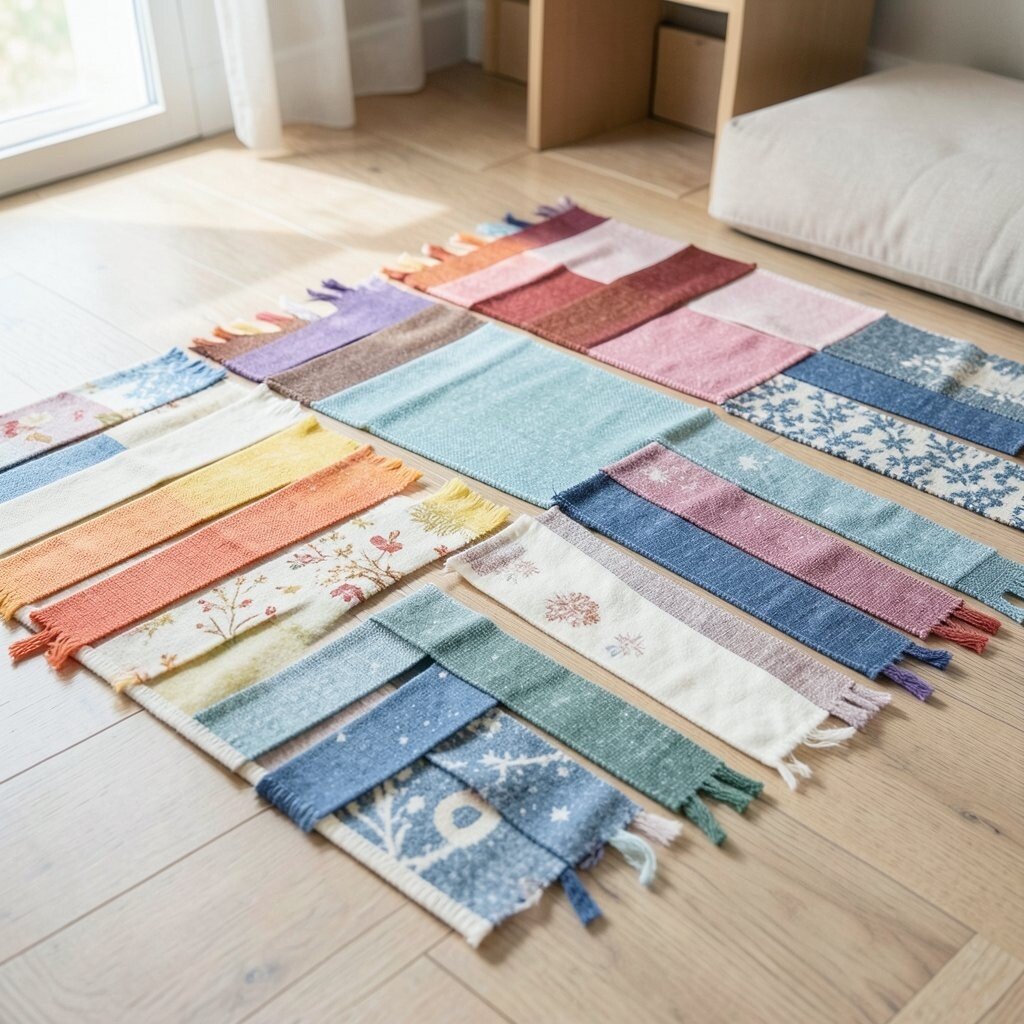
This mat uses old scarves cut into strips, matched to seasons or events. Picture a mat with soft scarf ends in spring colors, then in winter colors for a new look. Each update feels like a fresh change for your pet.
The benefit is that it adds novelty while keeping the sniffing job the same. It can also help you rotate fabrics so smells stay fresh. A tip is to keep the strips similar in length each time, so your pet does not lose interest from a sudden change.
For cost, scarves can be found on sale or used from your own closet if they are clean. Personalization is the best part here, since you can match colors to your home. This is a trend among pet owners who like themed home items that also help pets.
14. Slow Feeder Snuffle Combo Mat
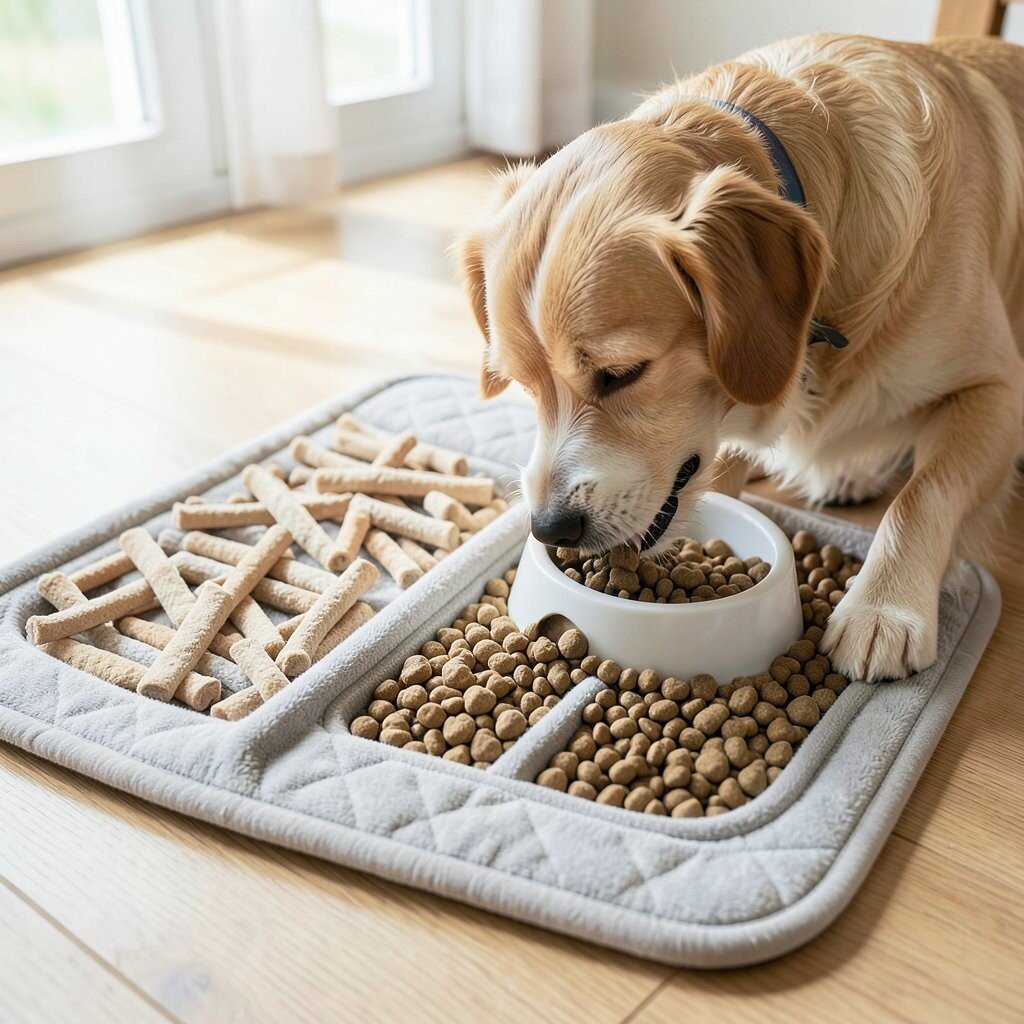
This idea mixes a snuffle area with a slow feeder section. Visualize half the mat as loose strips, and the other half as raised bumps where kibble sits. Your pet has to switch from sniffing to eating in a controlled way.
The benefit is it helps with both mental work and eating speed. It can also support dogs that get too excited and finish too fast. A tip is to start with just a few treats in the slow section, then add more once your pet learns the routine.
For cost, you can build the slow part from simple safe plastic or use a separate slow feeder insert placed on the mat. Personalization can include the layout, like which side you place the slow section on. This is unique because it combines two useful tools in one setup.