Art class can feel like a small window into big imagination. When students get the right prompts, the room starts to hum with fresh ideas.
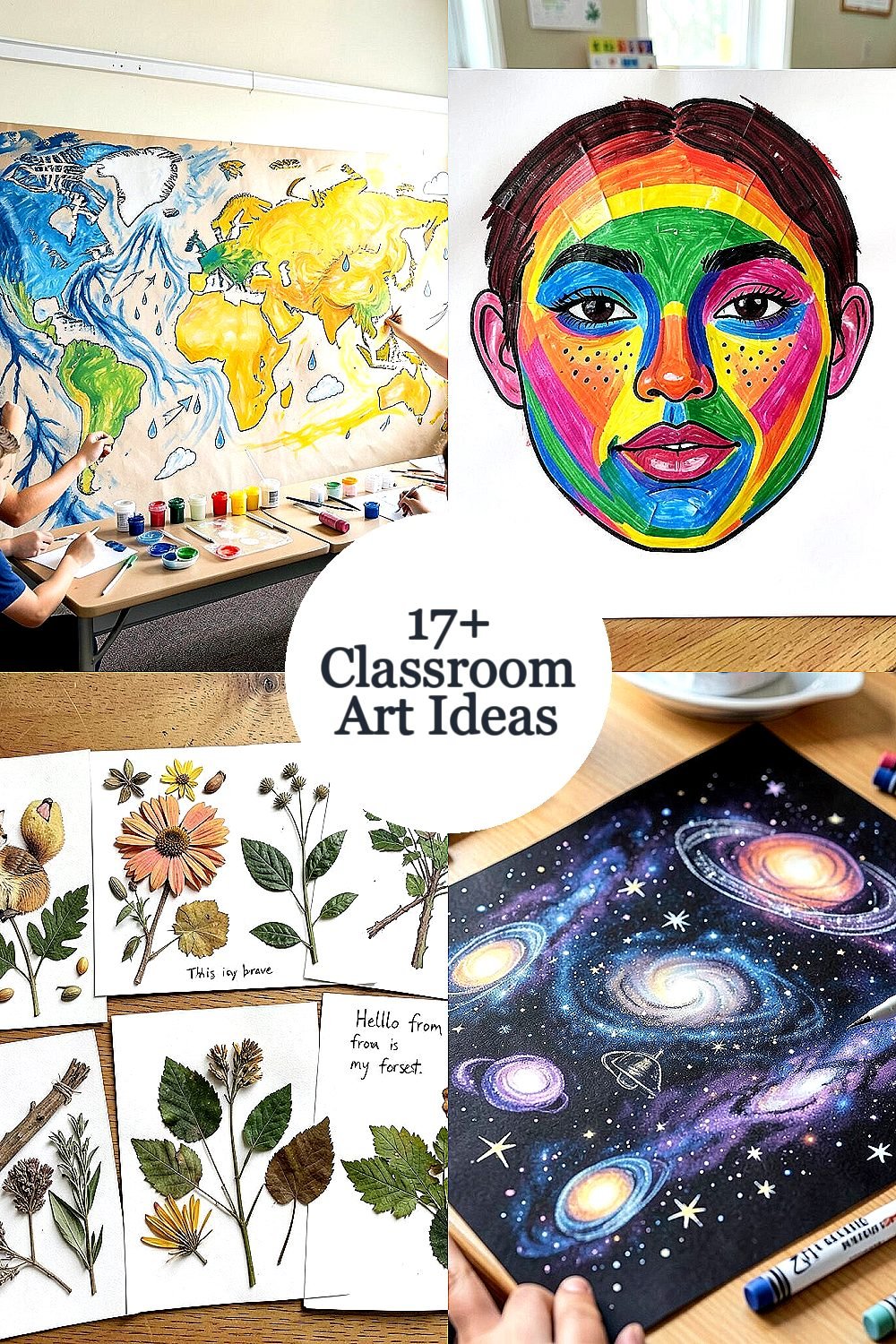
1. Weather Map Murals
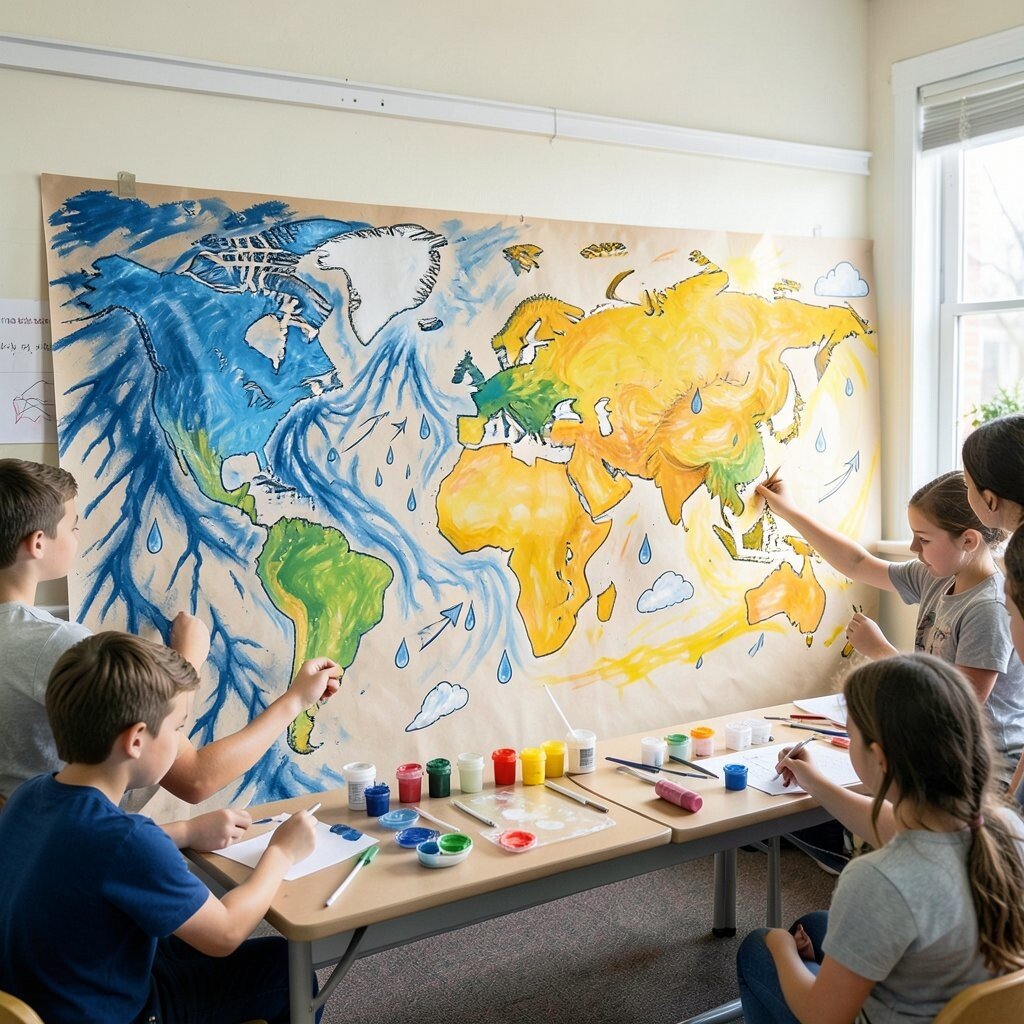
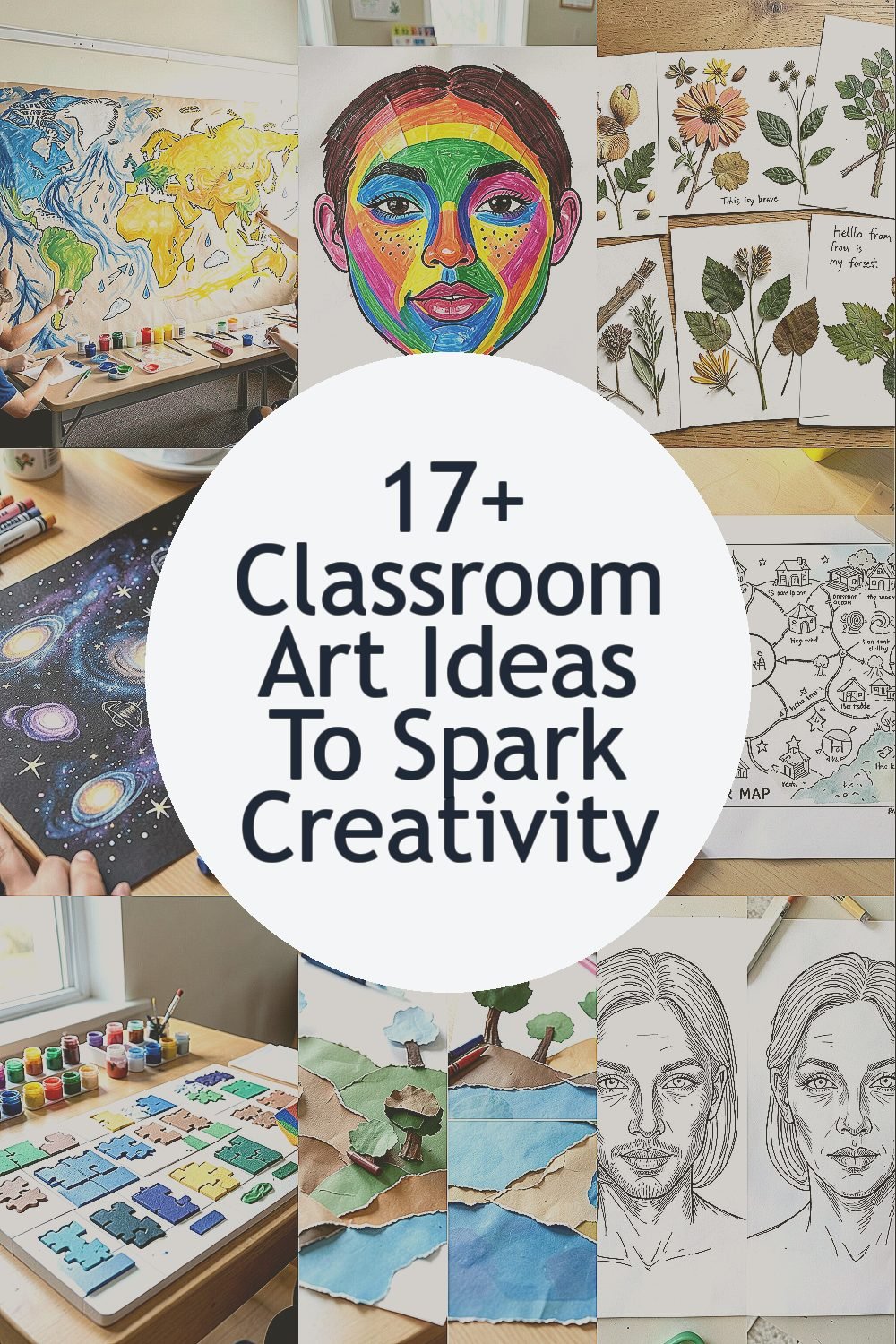
Students paint a wide “weather map” on butcher paper using colors they associate with different conditions. A storm might look like jagged blue lines, while sunshine can become warm yellow swirls.
As they work, they choose symbols like raindrops, wind arrows, or cloud shapes and place them across the mural like a real forecast. This idea builds visual literacy because students learn how to represent ideas using color, texture, and simple icons. For practical use, pre-mix a small set of paint options and let students add white pencil or chalk for highlights so everything pops.
2. Tape-Resist Rainbow Faces

Give students a sheet of paper and ask them to design a face using painter’s tape as their “line drawing.” They then paint over it with bright colors and peel the tape away to reveal clean shapes.
Each peel creates crisp edges, so faces look graphic and bold even when students are still learning. Students benefit because the process reduces mess and encourages planning before painting. For personalization, let them decide the mood and add freckles, hair styles, or tiny accessories with markers after the paint dries.
To keep costs low, use painter’s tape instead of specialty supplies, and choose washable tempera or acrylic paint. A current classroom trend is using simple craft techniques for high-impact results, and tape-resist fits that well because it creates instant “wow” texture. If you want structure, invite students to include one unexpected color that does not usually belong to a face.
3. Seed and Leaf Collage Postcards
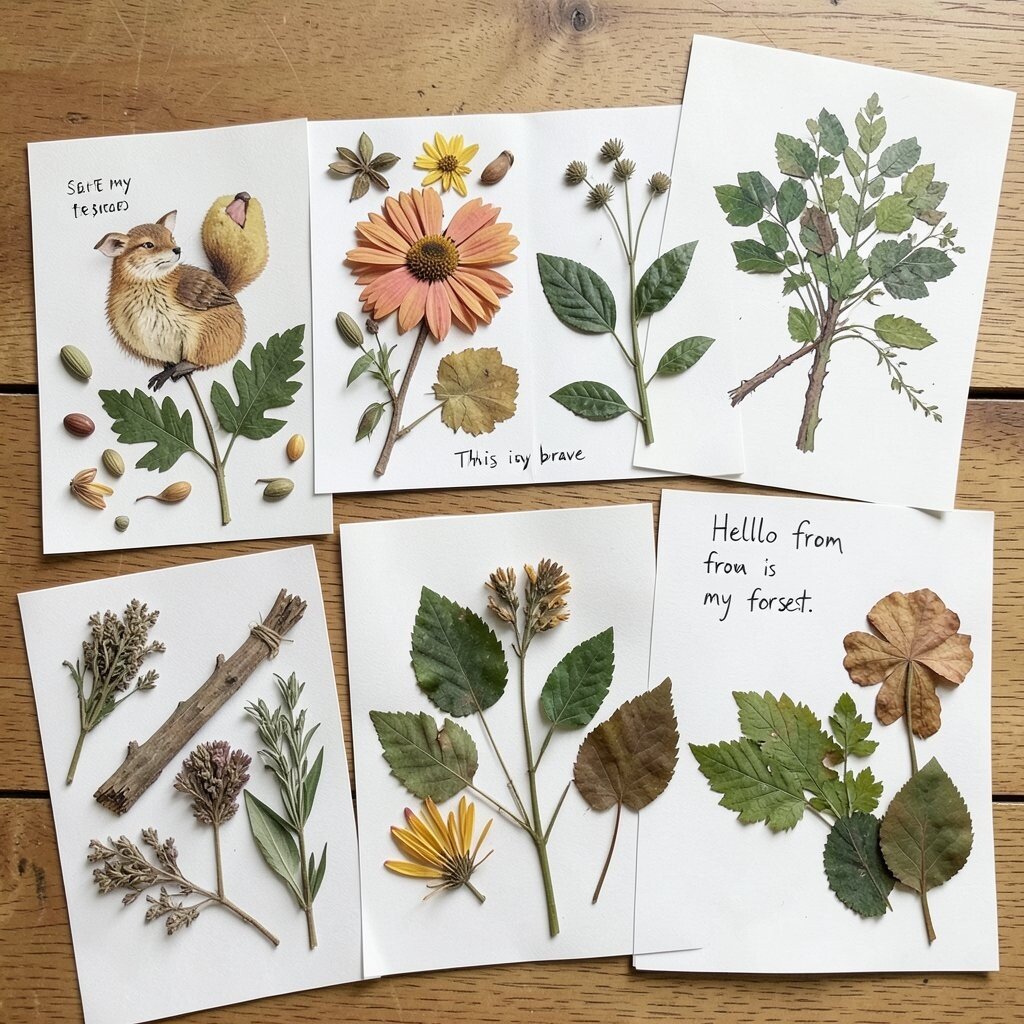
Students collect safe seeds, leaves, and natural scraps and arrange them into postcard-sized pictures. They can glue items down to form animals, flowers, or even abstract designs that feel like nature songs.
Collage sharpens fine-motor skills and helps students slow down, notice shapes, and make thoughtful choices about placement. The uniqueness shows up in every piece because no two leaf fragments look the same. A practical tip is to dry materials in advance so glue holds better and paper stays flat.
For cost considerations, you can ask families to send leftovers like herb seeds or dried stems, which often arrive free. Students can personalize by writing short messages inside the frame, like “Hello from my forest” or “This is my brave tree.” If your class enjoys trends, try “nature minimalism” by using only a few elements and letting negative space do the work.
4. Glow-in-the-Dark Galaxy Crayons
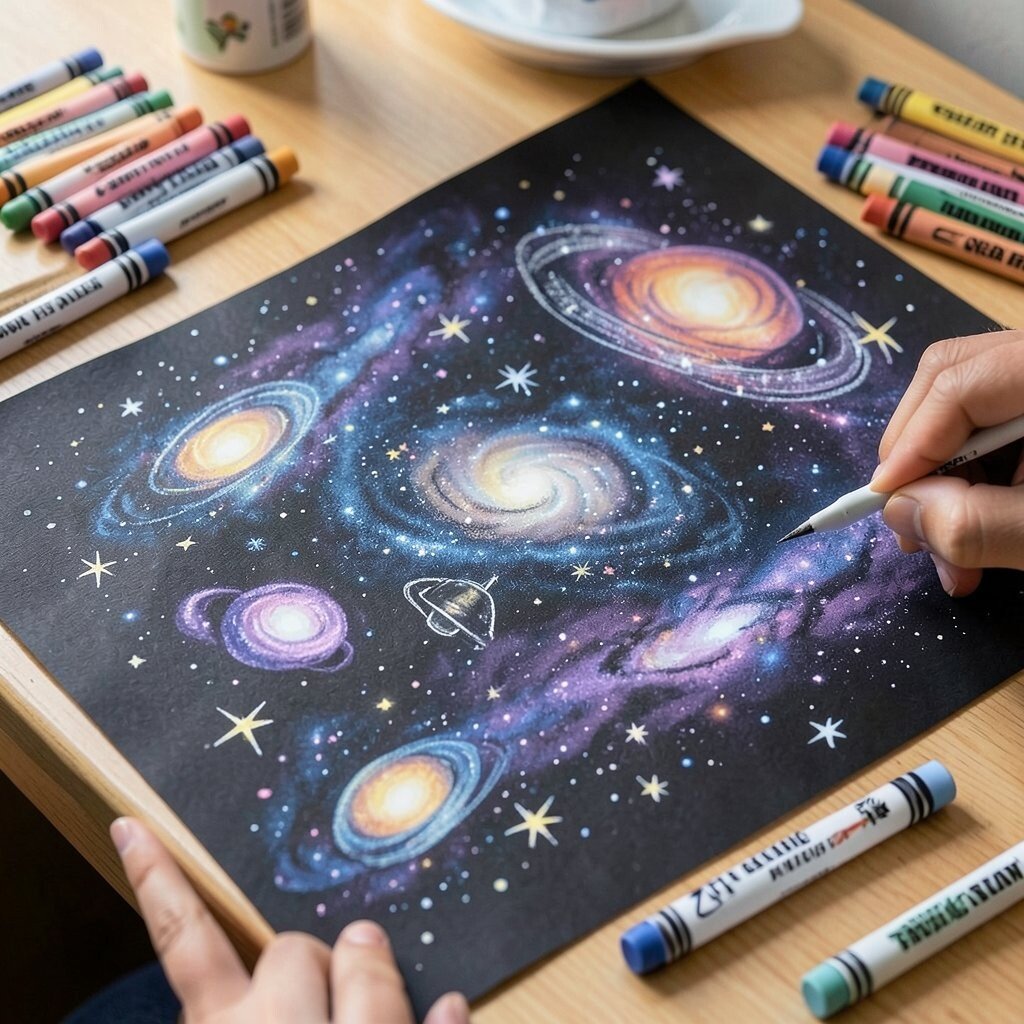
Students draw stars and planets on black paper using white crayons or chalk-like pastels. Then they color the space with dark blues and purples, and finish with a few shapes that look like glowing lights.
The benefits are huge for engagement because the artwork feels magical and students get instant satisfaction as layers build depth. For personalization, let students choose a personal theme like “a trip to my favorite planet” or “my classroom in outer space.” Use cheap materials by using standard crayons, colored paper, and a small glow product if available, but the glow effect is optional.
5. Storybook Cover Design Challenge
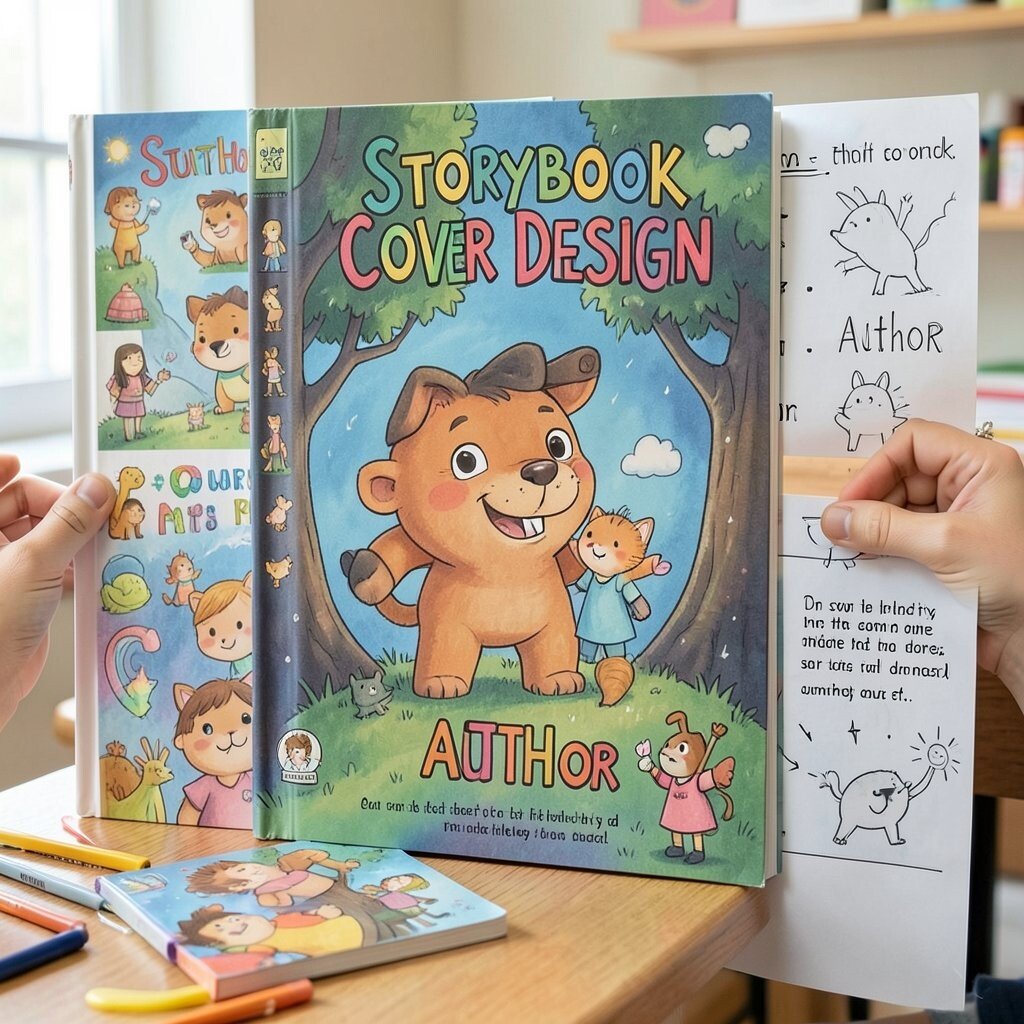
Students pick a character or topic from a book or class reading and design a brand-new book cover. They plan the title, choose colors, and place “author” text in a style that feels bold and fun.
This activity supports literacy because students translate story ideas into visual elements that match the mood. It also encourages uniqueness since each class chooses different themes and typography styles. For practical tips, provide a few printouts of fonts for inspiration and allow students to trace letters lightly before finishing freehand.
Cost is usually low because recycled magazines, printed images, and simple markers do most of the work. Students can personalize by adding a tiny blurb on the back using a one-sentence summary, and it can be written in their own voice. A current trend is “minimal cover art,” so challenge students to make a cover that tells the story using only a few shapes.
6. Classroom Map With Hidden Symbols
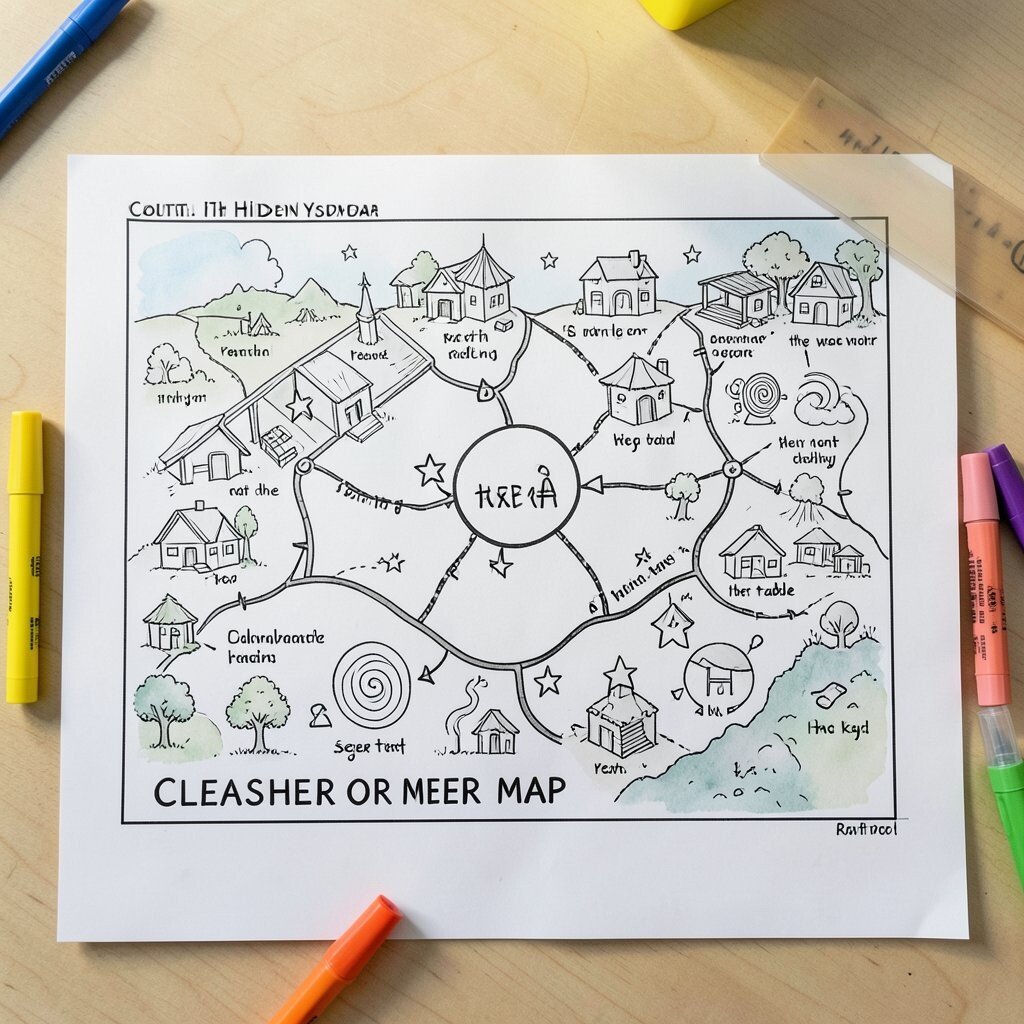
Students create a map of the classroom, but they must invent a symbol code for places and routines. They might use a star for the reading corner and a spiral for the art table, then write a key in their own handwriting.
The process strengthens spatial thinking and makes students feel more connected to the space they use every day. They also benefit because the map becomes a tool for organizing ideas rather than just drawing lines. For personalization, encourage each student to add a “secret” symbol that only their friends will understand at first.
Practical tips include using rulers for clean boundaries and adding a light background wash so details stand out. Costs can stay small with plain paper and a few colored markers, and you can reuse old map worksheets if you have them. If you want to match a current interest, treat it like a “game world” map and add imaginary landmarks for fun.
7. Modular Block Prints With Sponges

Students carve simple shapes into foam or use sponges dipped in paint to create repeating patterns. They press the shape in different directions to build textures that look like tiles.
This idea supports understanding of pattern and repetition, which helps students plan and create with confidence. It is also unique because small variations in pressure and angle change each print. For practical use, set up a paint station with minimal colors first so students can learn how each color affects the whole design.
8. Ripped Paper Texture Landscapes
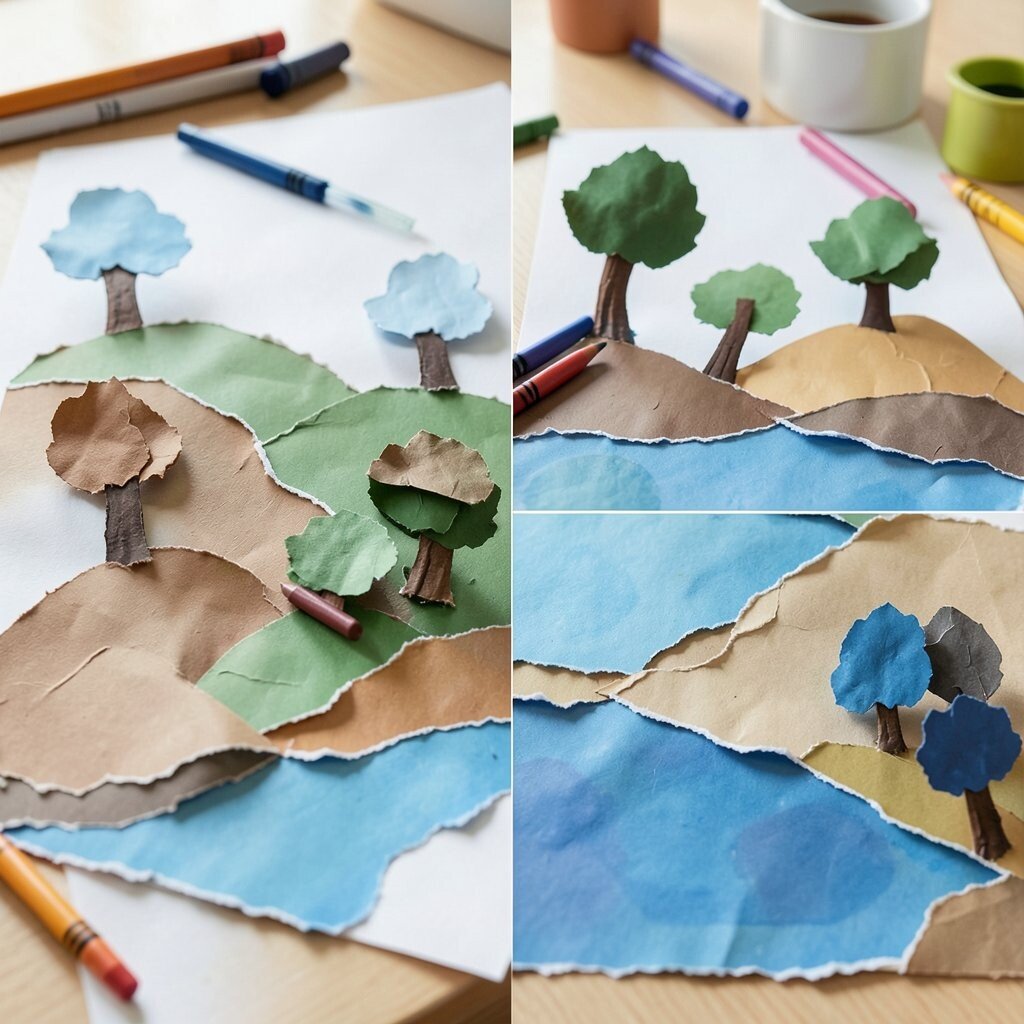
Students create landscapes by ripping colored paper into hills, trees, and water shapes. They layer pieces onto a background and then add details with crayons or colored pencils.
The benefits include hands-on creativity with a forgiving process, since ripped edges add texture automatically. Students often feel proud because even simple shapes can look like real scenes when layered well. A practical tip is to offer a limited palette like warm browns and sky blues, then let students break the rules with one surprising color.
9. Portraits Using Only Lines

Students draw self-portraits or portraits using only line work, such as spirals, waves, and short strokes. They avoid shading, and instead use line density to show light and shadow.
This builds observational skills because students must look closely at features and decide how to represent them with lines. It also creates a unique style, since everyone’s line habits turn into a signature look. For personalization, invite students to choose a line “voice,” like calm flowing lines or energetic scribbles, and stick with it.
To keep it practical, offer simple prompts for where lines should get denser, like under the chin or around the eyes. Costs are low because pencils and paper are enough, and you can extend learning by doing a second portrait using a different line type. A current trend in art classes is line-based “continuous contour” practice, and this connects nicely while still feeling free.
10. Cardboard Tube City Skyline
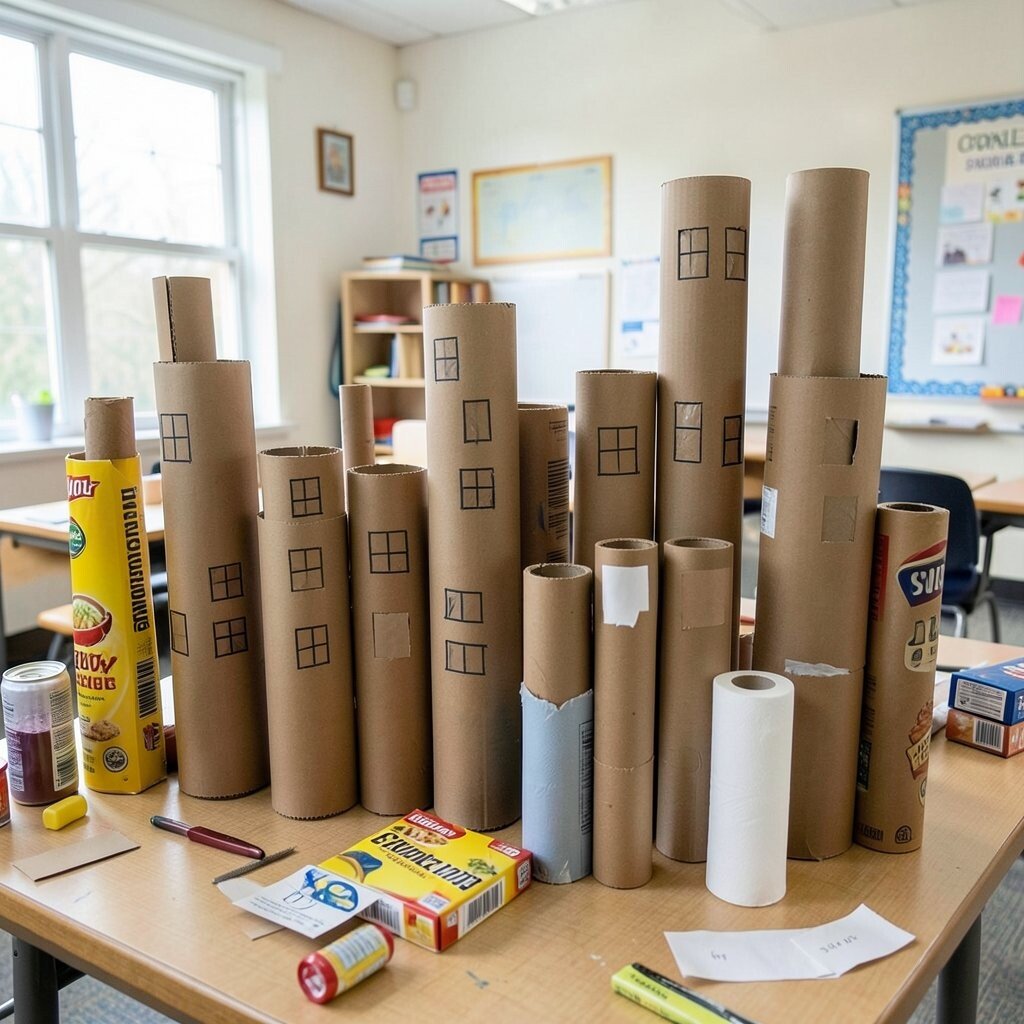
Students build a city skyline using cardboard tubes, cereal boxes, and scraps like paper towel rolls. They glue pieces into buildings, then add windows with markers or cut paper squares.
This activity turns recycling into something exciting, which keeps students motivated and mindful. The uniqueness shows in the shapes and heights they invent, and it can grow into a class neighborhood display. For practical tips, provide a safe cutting method and pre-cut some strips so younger students can focus on assembling.
11. Bubble Wrap Pattern Posters
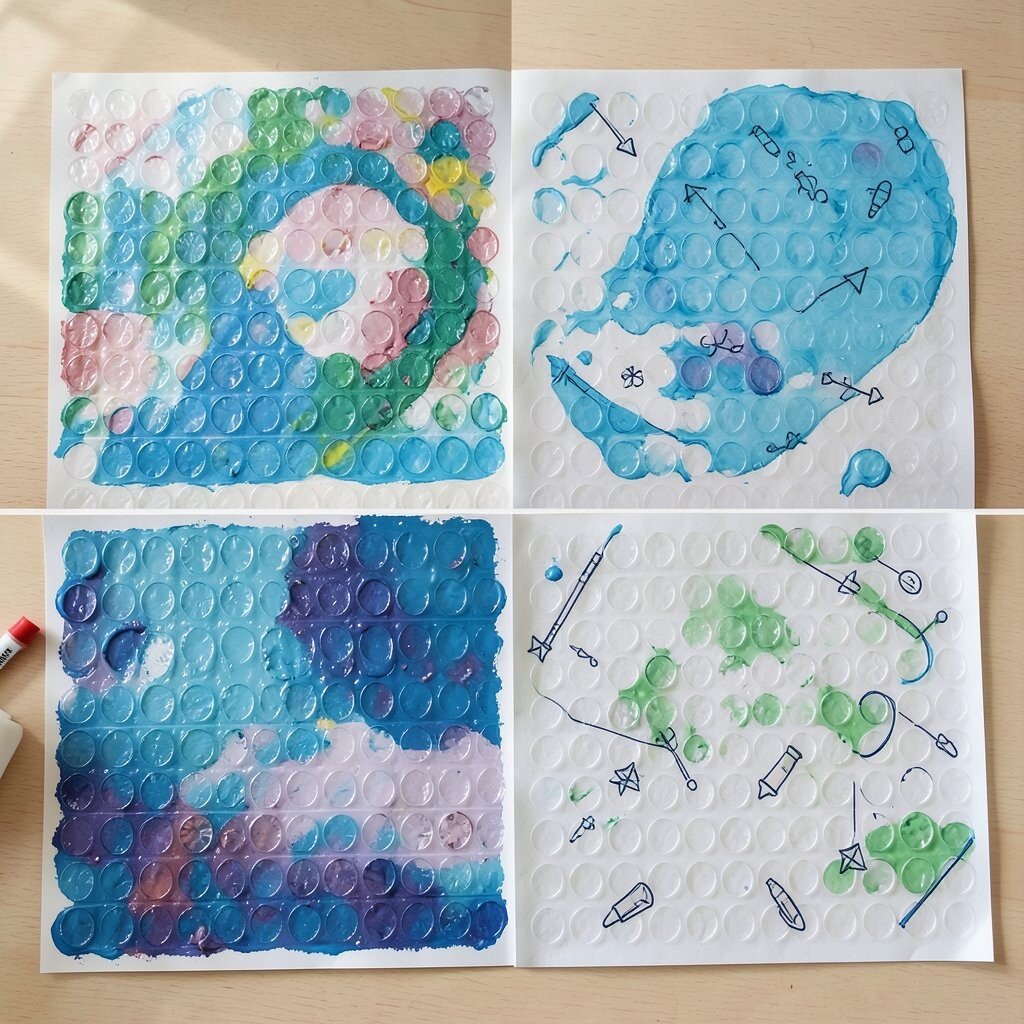
Students press bubble wrap onto paint-covered paper to create bubbly textures. They can repeat the pattern, rotate the wrap, and build a poster design around the textures.
The benefits include tactile creativity and an easy way to get rich visual texture without special tools. Students also learn about contrast, since the paint edges show crisp raised shapes. For personalization, encourage them to outline a theme like “ocean bubbles,” “snow,” or “space dust” and add simple symbols in marker.
Cost is usually near zero because bubble wrap often comes from deliveries, and you can ask families to save it. If you want to match current trends, treat bubble wrap prints like “texture art” and pair them with limited color palettes for a clean modern look. A practical tip is to test a small corner first so students know how much paint to use.
12. Watercolor Resist With Oil Pastels

Students draw images using oil pastel lines, then paint over with watercolor. The pastel resists the watercolor, so the drawing stays bright as the background washes in.
This builds confidence because students see how materials behave differently and learn cause-and-effect in art. It also encourages uniqueness since every pastel stroke blocks paint in its own way. For personalization, students can create nature scenes, roller-coaster lines, or abstract patterns based on music rhythms they hear in class.
13. Paper Plate Shadow Puppets
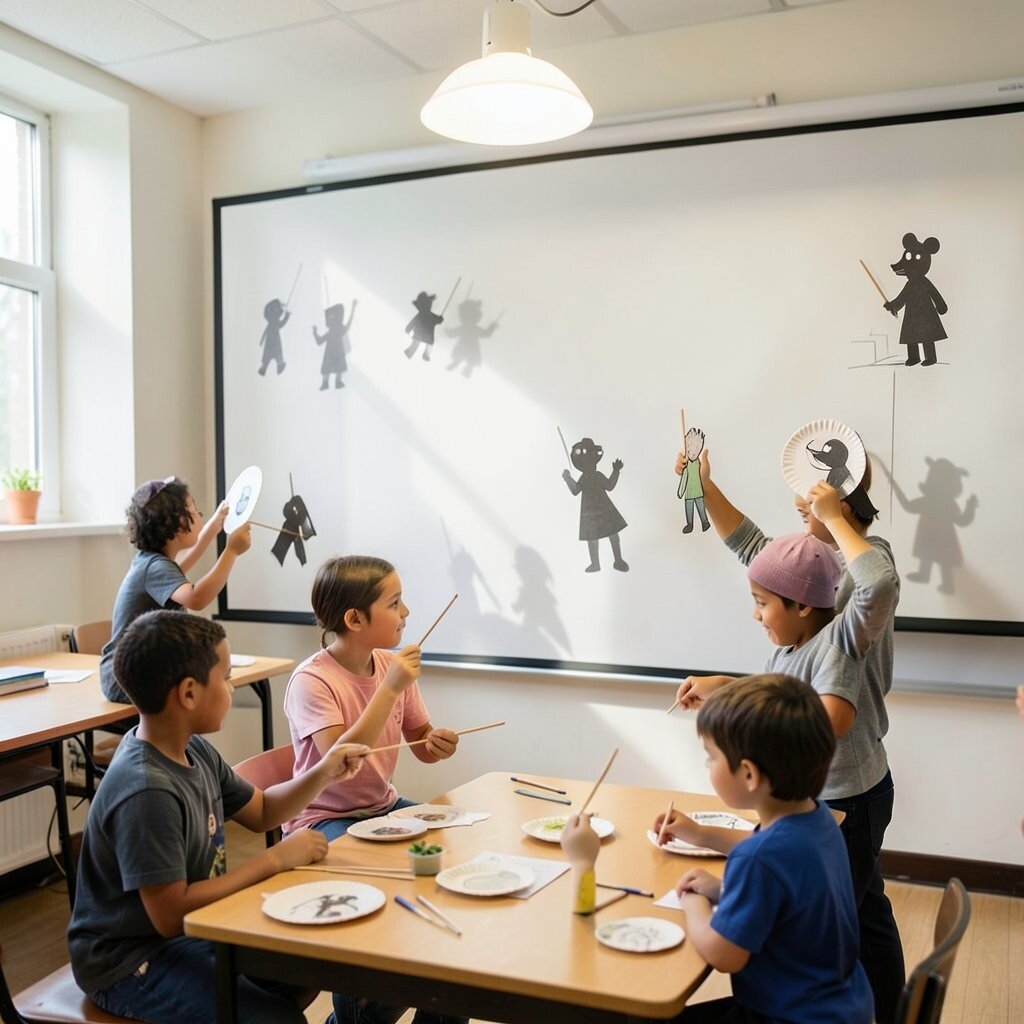
Students design shadow puppets using paper plates, craft sticks, and cut paper shapes. They add details, then test how the puppet looks under a bright lamp or overhead light.
The benefits include stronger storytelling skills because students often create mini scenes while testing their puppets. It also improves spatial thinking as they learn how distance and angle change the shadow. A practical tip is to set a simple “testing station” with a lamp and plain screen so students can adjust quickly without waiting too long.
Cost considerations are friendly since paper plates and scraps work well, and craft sticks are usually cheap in bulk. For personalization, let students choose a character and write a short voice or movement idea in their own words. If you want to tie in a trend, focus on “performance art” by pairing visual design with a quick student-led shadow play.
14. Texture Rubbings From Everyday Objects
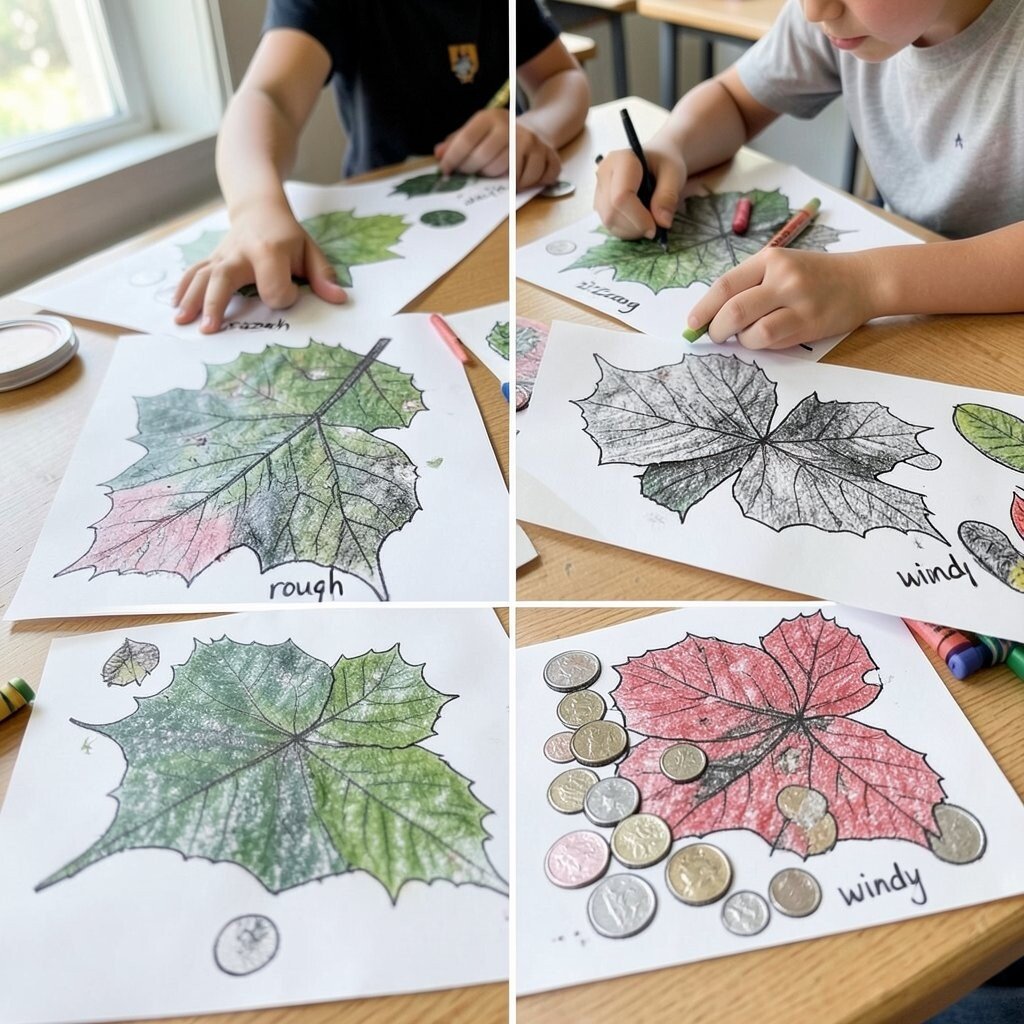
Students place paper over leaves, coins, or textured items and rub with crayons to capture patterns. They combine rubbings into collages so their final art looks like a map of hidden surfaces.
This activity supports observation and patience because students must control pressure to get clear texture. It also creates unique results, since everyday objects carry patterns that no one can exactly replicate. For personalization, students can label their rubbings with words like “rough,” “zigzag,” or “windy” to match what they feel in the texture.
15. Minimal “Mood” Posters With Symbols

Students choose a mood like calm, excited, nervous, or cozy and design a poster using only a few symbols. They may use simple icons, repeated shapes, or a single color theme tied to the feeling.
The benefits include helping students communicate emotion visually, which supports social learning and self-expression. It also helps students practice design skills because they must make choices without filling every space. For practical tips, give them a small set of symbol cards they can draw from, and set a simple time limit for early brainstorming.
Cost is low because markers, crayons, and paper are enough, and students can reuse scrap cutouts. Students can personalize by writing their mood in a stylized way or adding a tiny story that explains why they chose the symbols. A current trend in art education is minimal design, and this is a gentle way to use that style without making it stressful.
16. Stop Motion Storyboards With Drawings
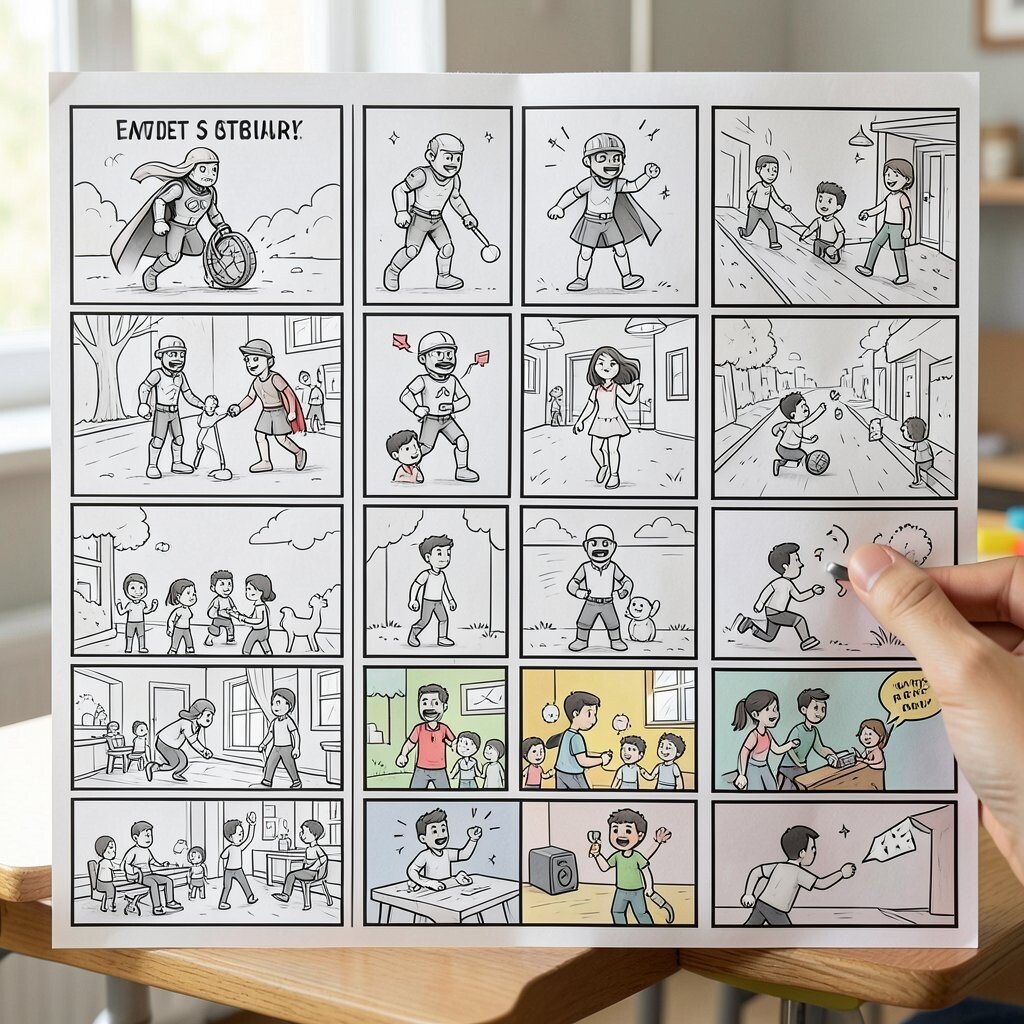
Students create a short story using a sequence of drawings that can be photographed for stop motion. They sketch each moment in a small box grid, then use a phone camera to capture frames.
This idea strengthens planning, because students must think about how the story changes from frame to frame. It also makes art feel modern and exciting, since many students already love videos and animations. For practical tips, limit stories to a few moments so setup stays quick and success stays high.
Costs are minimal since phones are common, and you can print storyboard templates or use notebook paper. Personalization is easy because students can choose genres like superhero missions or funny everyday moments, and they can add character details that match their interests. If you want to match a trend, let students use simple motion effects like “camera zoom” by moving closer between photos.
17. Color-Mixing Self Portrait Journals
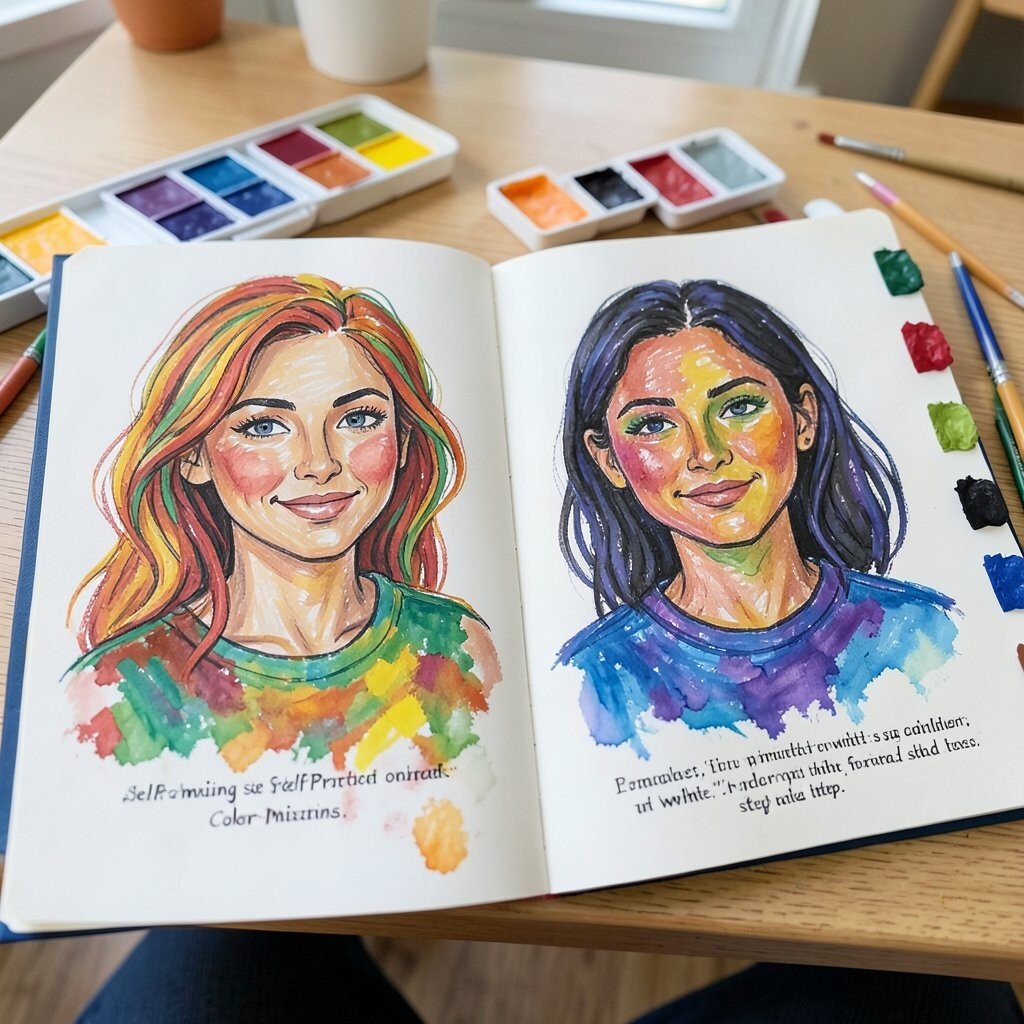
Students make a self-portrait page using only colors created from mixing paint or crayon layers. They keep small color swatches and record what they mixed so they can repeat a favorite shade later.
The benefits include deeper understanding of color relationships, and it helps students stop using “whatever color is closest” as a default. It is also unique because students build a personal color set that reflects their choices and comfort. A practical tip is to give them a limited starting palette like three primaries plus white, then encourage them to plan skin, hair, and background tones step by step.
18. Collaborative “Rules of Art” Mural
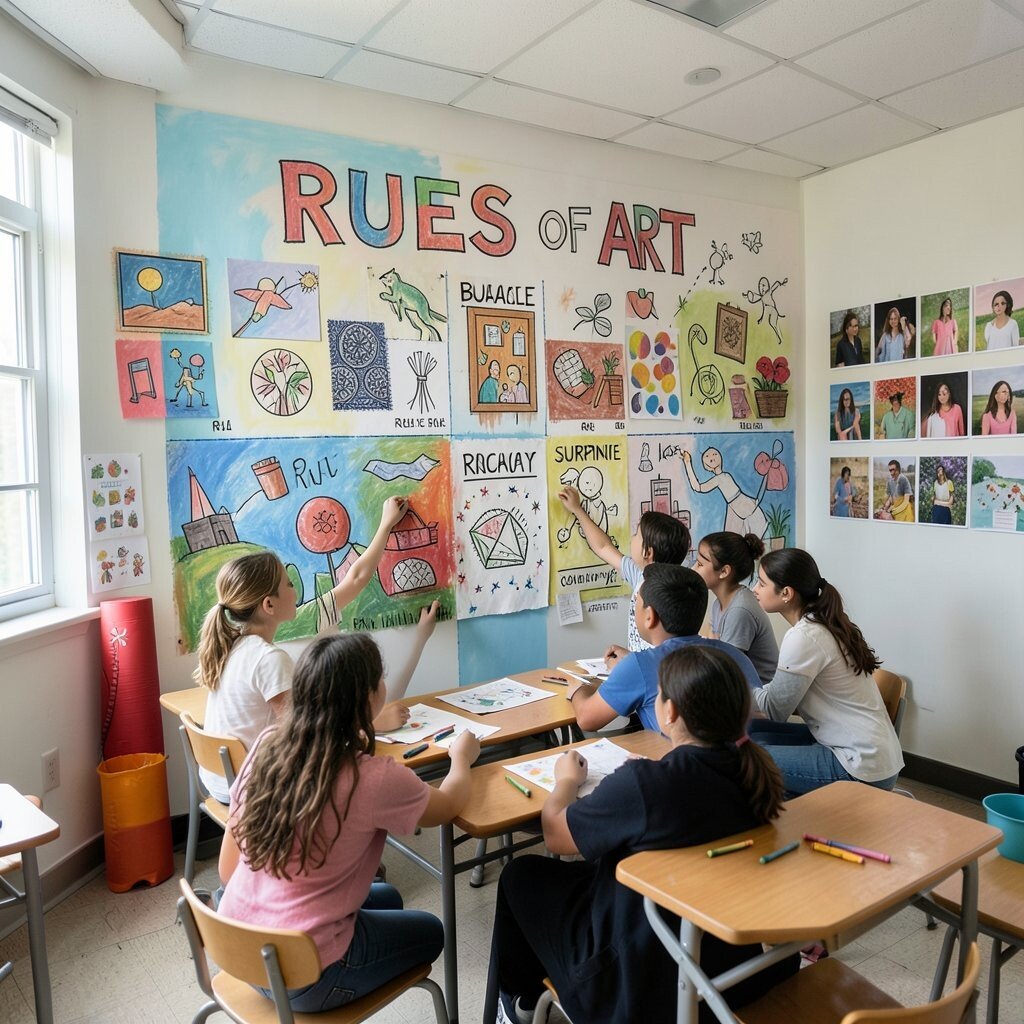
The class creates a large mural where every student adds one visual “rule,” such as balance, repetition, rhythm, or surprise. They contribute a symbol, a pattern patch, or a short design element that represents how they want their artwork to feel.
The benefits are powerful because students learn from each other’s ideas and create a shared artwork with meaning. It is uniquely classroom-centered since each contribution becomes part of the story of the group. For personalization, let students choose whether their rule is calm or bold, and give them freedom to use their favorite materials while keeping the overall mural organized.
Cost considerations can be kept gentle by using washable markers, crayons, and recycled paper scraps for texture. A practical way to run it is to assign small mural zones so everyone has space, and to place a few reference examples at the side of the room for support. If you want to follow current trends, use “community art” energy by photographing the mural and displaying the class images beside it like a mini gallery.