Classroom art can feel magical when you start with things that would otherwise be thrown away. Small changes in what you collect can turn an ordinary day into a studio moment.
Recycled materials offer color, texture, and stories students can see right away. They also help families and schools feel more thoughtful about waste.
1. Newspaper Sky Collage Landscapes

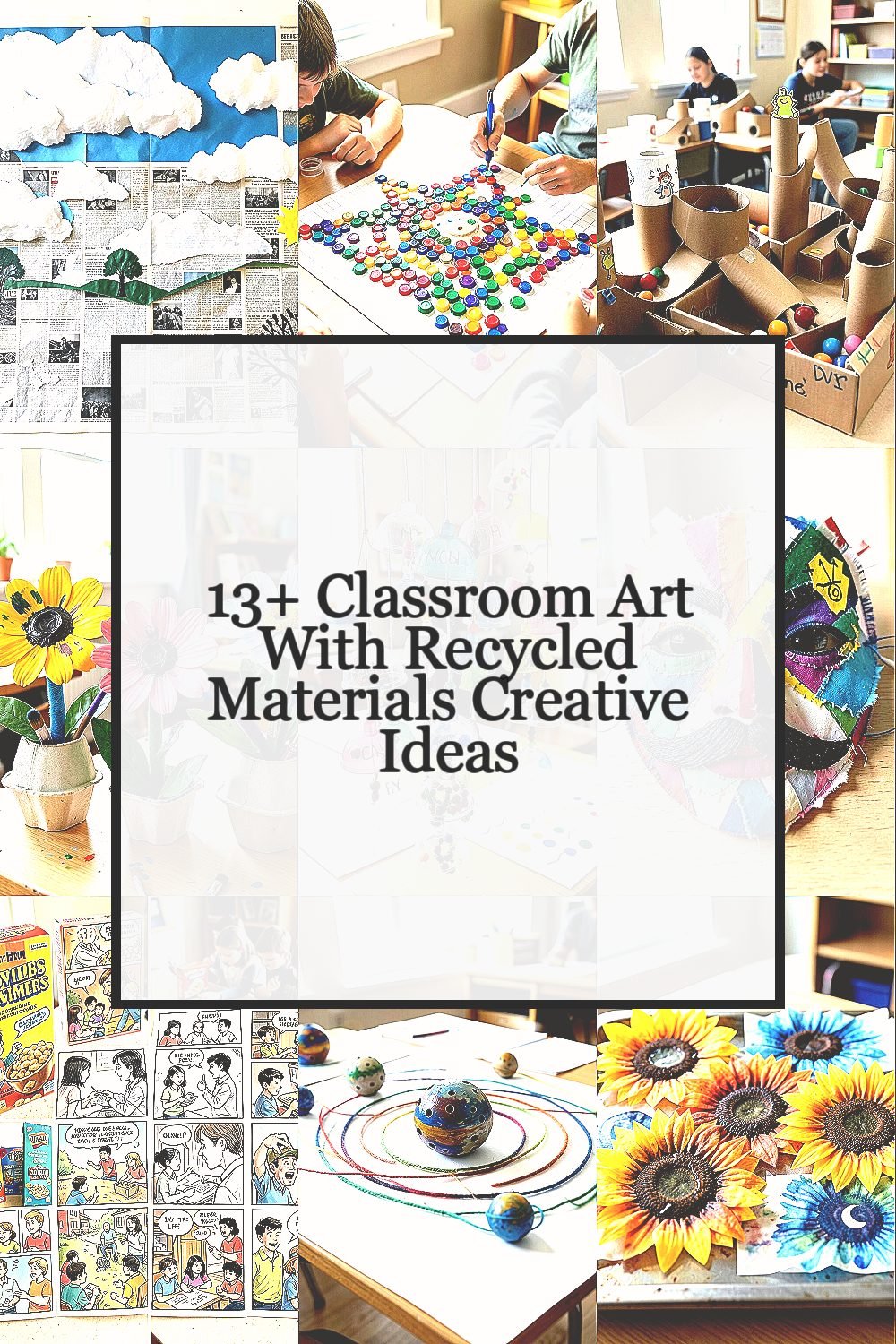
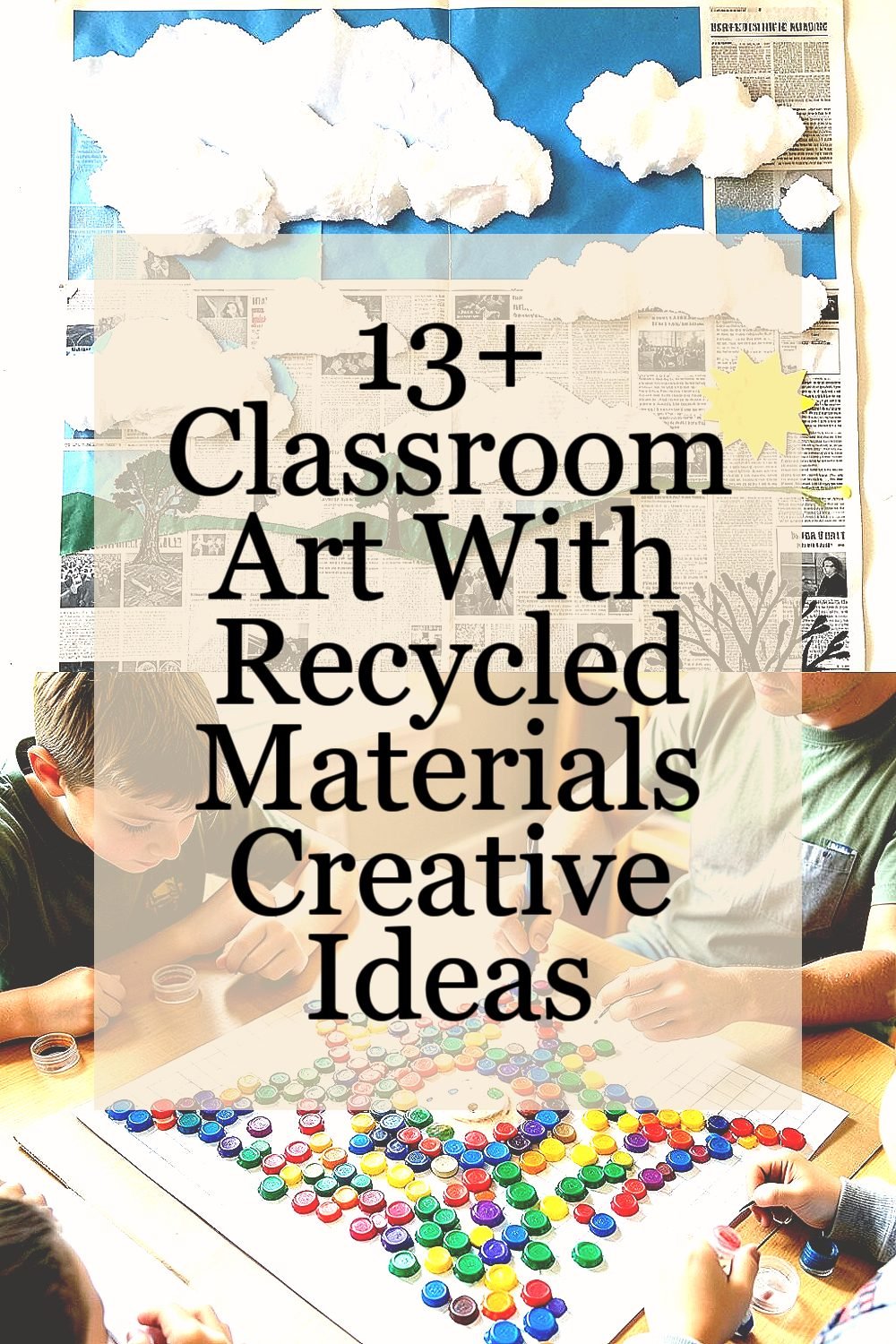
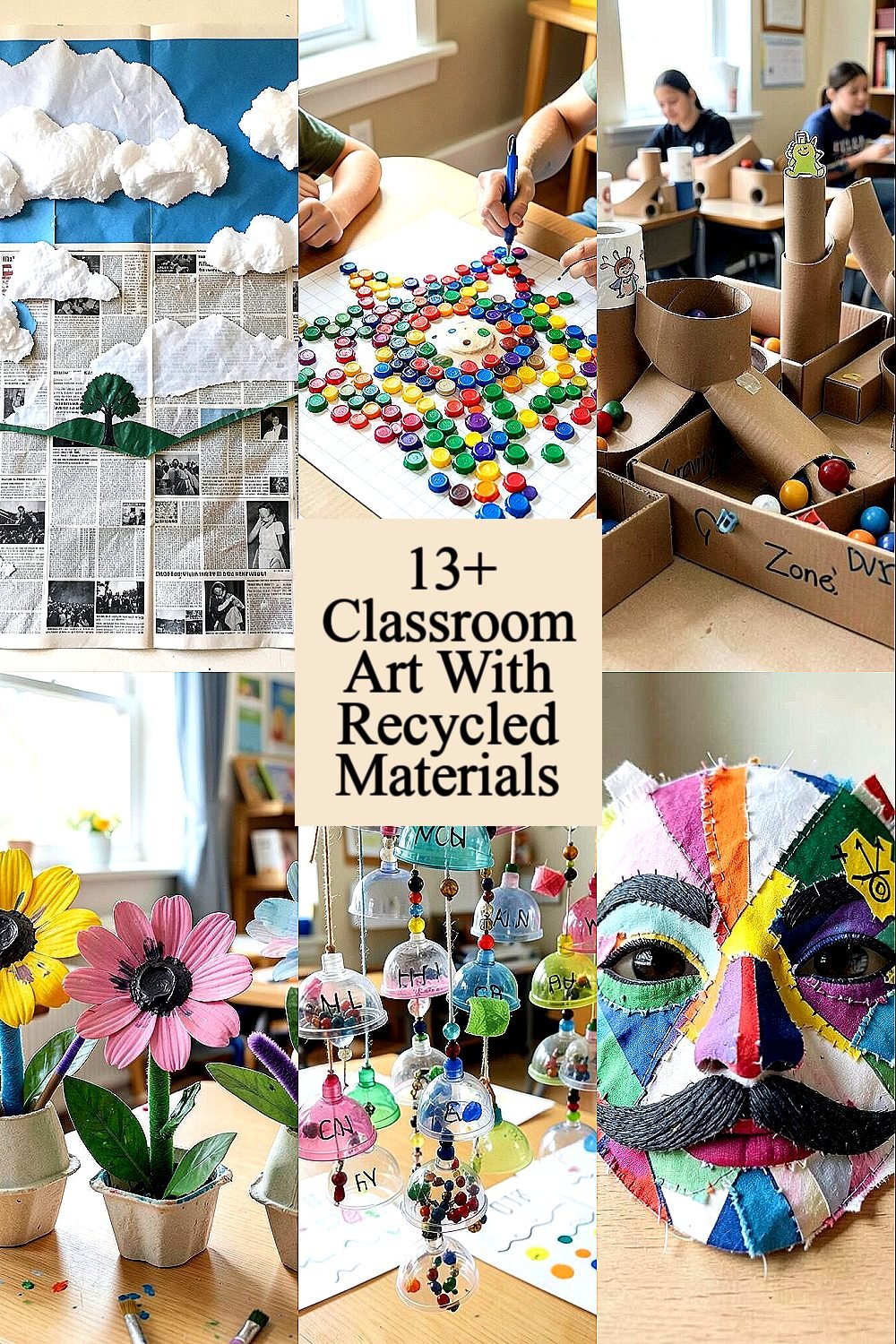
Students tear old newspapers into shapes and build a sky full of movement. They can overlap layers to make soft clouds and bold horizons that look textured up close.
Use construction paper as a base, then add glue in a thin layer so the paper lies flat. Choose a few bright sections of print and mix them with plain pages for contrast. Students can personalize each landscape by including a favorite tree silhouette, a sun shape, or a message hidden in the background print.
2. Bottle-Cap Color Mosaic Stars

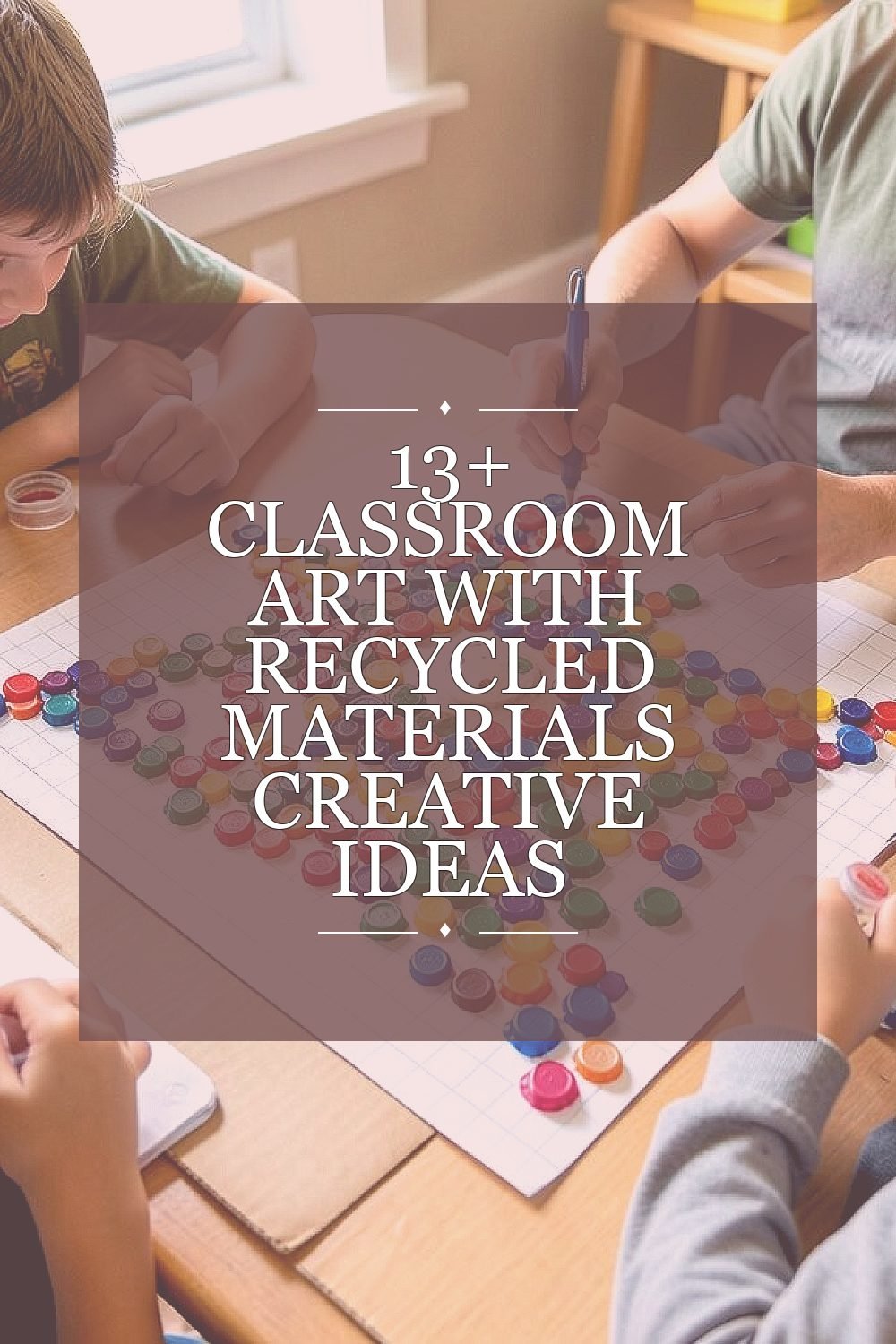
Gather bottle caps and sort them by color before class so the room feels calm and ready. Students place caps in a star pattern, pressing them down so the design holds steady.
Let them use washable school glue or hot glue handled by an adult, depending on what your class allows. For best results, suggest a simple grid on paper under a sheet of cardboard. This activity supports fine-motor practice and encourages careful planning, and it stays budget-friendly because caps are often free from home.
To match current trends, try a “planet” theme where caps form rings and craters, then add tiny painted dots for highlights. Students can make their own color palette by choosing a “favorite team,” a “favorite season,” or the colors they see in their neighborhoods.
3. Cardboard Tube Marble Runs

Cardboard tubes and shipping tubes can become a whole marble universe in the classroom. Students design ramps, loops, and towers, and the ride feels exciting when marbles tumble and bounce.
Give each group a box base and provide tape, paper fasteners, and safe cutters used with supervision. They can test and revise their runs, which makes learning feel like problem-solving without pressure. This idea is unique because every design turns out different based on how students use bends, ramps, and supports.
Cost stays low since many tube pieces come from toilet paper rolls, paper towels, or packaging. To personalize, ask students to label their “gravity zones,” add a themed character at the starting gate, or paint small symbols on the track edges.
4. Egg Carton Flower Portraits

Egg cartons hold a lovely shape, so students can build flowers with petals that look like they were made by nature. When paint soaks in gently, the texture becomes a feature, not a flaw.
Use tempera paint and simple brushes, then add pipe cleaners or scraps of paper for stems and leaves. Students can benefit from learning how shadows and highlights work by painting one petal darker than the next. Keep it personal by letting them choose a “garden personality,” like bright cheerful blooms or calm pastel flowers.
5. Plastic Lid Rainfall Wind Chimes

Clear plastic lids catch light and make students think of bright rain. Students poke holes near the edge and string lids at different lengths so they clink in a gentle rhythm.
Use fishing line or strong yarn for hanging, then add beads made from old broken jewelry or spare craft beads. This creates a sensory piece and helps students see how movement changes the look of art in real time. It also supports responsibility because students can take home what they make and feel proud of reusing materials.
For practical success, pre-sort lid sizes and make a simple template hole spacing on paper. Students can personalize wind chimes by adding letters for their name, tiny paper waves, or paint dots in a pattern that matches a favorite color theme.
6. Fabric Scraps Mixed-Media Collage Masks

Old fabric scraps add softness that paper alone can’t match, so masks feel bold and wearable. Students layer cloth pieces over a paper face shape and press them down so textures show through.
Provide glue sticks, school-safe fabric glue, and optional thread for simple stitching. Encourage students to think about “character cues,” like a dramatic mustache made from ribbon or a cool scarf made from a small strip of cloth. This is great for engagement because it invites personality, and it keeps costs down since scraps often come from closets.
To follow current classroom trends, try a pop art mask vibe with bold shapes and contrasting colors. Students can personalize their mask by choosing a theme tied to a book they like or a hobby they enjoy, then adding a tiny symbol near the eye.
7. Cereal Box Comic Panels

Cereal boxes already have colorful designs, which makes comic art feel ready to start. Students cut panels and rearrange them into new story scenes that show action and emotion.
Provide black markers for bold outlines and scrap paper for speech bubbles. This activity supports storytelling skills and teaches how composition works when characters stay in the right panel. Uniqueness comes from how each student repurposes printed packaging, turning ads and logos into their own plot.
Cost is minimal because many families collect boxes naturally. Students can personalize by using their own names as characters, inventing a silly villain from packaging text, or building a “day in the life” comic about school.
8. Paper Roll Planet Orbits With Yarn

Paper rolls become small planets when students paint them and add textures like craters with sponge dots. Then they thread yarn around the art to create orbit lines that look like they’re floating.
Try using different yarn thicknesses so orbits vary in speed and visual weight. Students get to practice measurement by counting spaces and spacing planets evenly, which makes the work look neat. This idea is budget-friendly and also current because space themes keep showing up in classrooms and online art communities.
9. Coffee Filter Color Wash Sunflowers

Coffee filters hold dye beautifully, so students can paint petals that look soft and bright. They fold or crumple filters lightly to create wave-like edges that feel organic.
Use washable markers, then mist with water so colors spread in a gentle bloom effect. Students benefit from watching how mixing changes the look, which builds patience and observation habits. For personalization, encourage them to choose warm colors for a sunrise theme or cooler colors for a moon garden look.
To keep it practical, place filters on a tray or baking sheet for easy cleanup. This project can fit a tight budget because filters are often inexpensive and go a long way.
10. Can Label City Buildings

Clean can labels and packaging inserts can turn into a whole city block when students stack and glue them carefully. They can design windows, doors, and signage that look like a real neighborhood from far away.
Give students a sturdy base and let them plan building heights before gluing so towers don’t tip. This supports planning and teamwork because groups can divide roles like architects, painters, and detail makers. Uniqueness shines when students reuse labels with different fonts and colors, making each building feel like it has its own history.
11. Popsicle Stick Story Keychains

Popsicle sticks become fun keychains when students paint symbols that match a story they love. They can cut shapes from cardboard scraps and glue them on for tiny scenes like mountains or castles.
Add a hole punch and string so each keychain can loop around a backpack clip. Students benefit from practicing careful hand control when sanding rough edges and aligning designs. Cost stays low because sticks are easy to collect, and the finished piece feels useful, not just decorative.
Personalize by letting students choose a “character theme,” such as ocean waves, superhero logos, or favorite animals, then add one meaningful word in small letters on the side.
12. Spiral CD Reflection Art

Old CDs reflect light in a way that feels like a mini science demo. Students can cut paper shapes and glue them onto a CD, then arrange reflective strips so the art changes as they move.
Use safe glue and handle CDs carefully since edges can be sharp, with adult support if needed. This activity benefits students by turning a flat recycled item into a shiny tool for color mixing through reflection. It’s uniquely eye-catching, and it fits current classroom interests in “hands-on light” art.
To personalize, ask students to pick a mood such as “calm,” “party,” or “mystery,” and choose colors that match that feeling. They can also add small star stickers, recycled foil scraps, or hand-drawn lines that look like they are traveling across the surface.
13. Scrap Paper Texture Tree Branch Collage

Students can build a winter or spring tree using torn paper and recycled materials like tissue scraps or old wrapping paper. The tree branches look layered and strong when students vary thickness by using thicker scraps for the trunk.
Provide glue and encourage students to press paper down so textures stick and don’t lift. This benefits students because they practice choosing materials intentionally, not randomly, which builds visual thinking. For personalization, let them choose a season theme and add small details like birds made from spare paper corners or leaf shapes cut from old flyers.
14. Rolled-Tire Stripe Coaster Weaving

If you have access to safe, clean rubber strips or flexible recycled materials, students can weave them into durable coasters. They can also weave paper strips tightly if rubber isn’t available, and the braided effect still looks impressive.
Teach a simple over-and-under pattern using yarn or strips, then trim edges neatly so the coaster looks polished. Students benefit from pattern practice and from learning how repeating steps can create something useful. This idea stays cost-friendly because it uses scraps, and it becomes unique when students choose personal color stories like “ocean,” “rainbow,” or “school spirit.”
To keep it practical, have a drying area and a plan for tidy supplies, since weaving materials can tangle. Students can personalize by adding a small charm made from a bottle cap or a leftover tag, then pairing their coaster with a classroom “care and respect” note about reusing materials.