A tennis ball can turn ordinary time into a lively game. With a few clever setups, kids can move, laugh, and practice skills without even noticing the practice part.
Grab a small basket of tennis balls and get ready for playful activities that fit many spaces. These ideas are easy to start, fun to repeat, and friendly for different ages and energy levels.
1. Backyard Bounce Relay
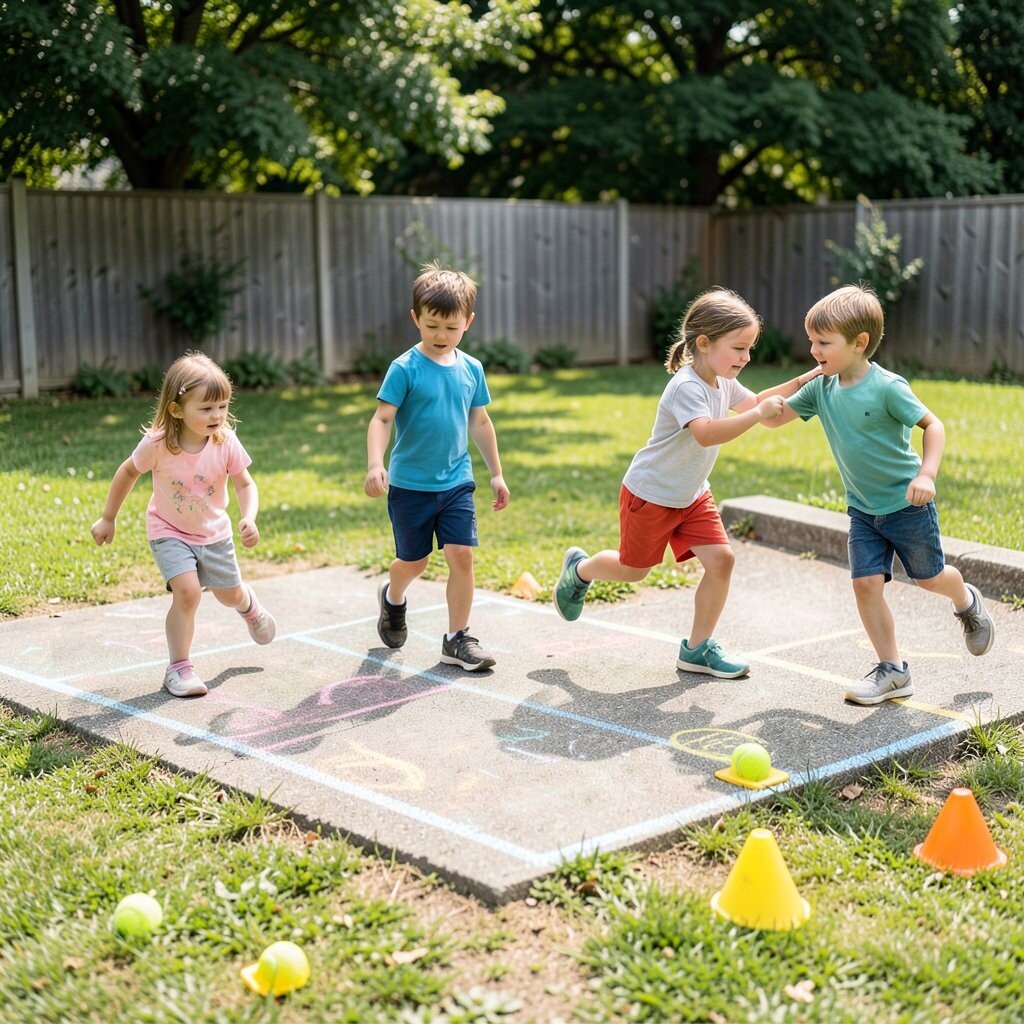
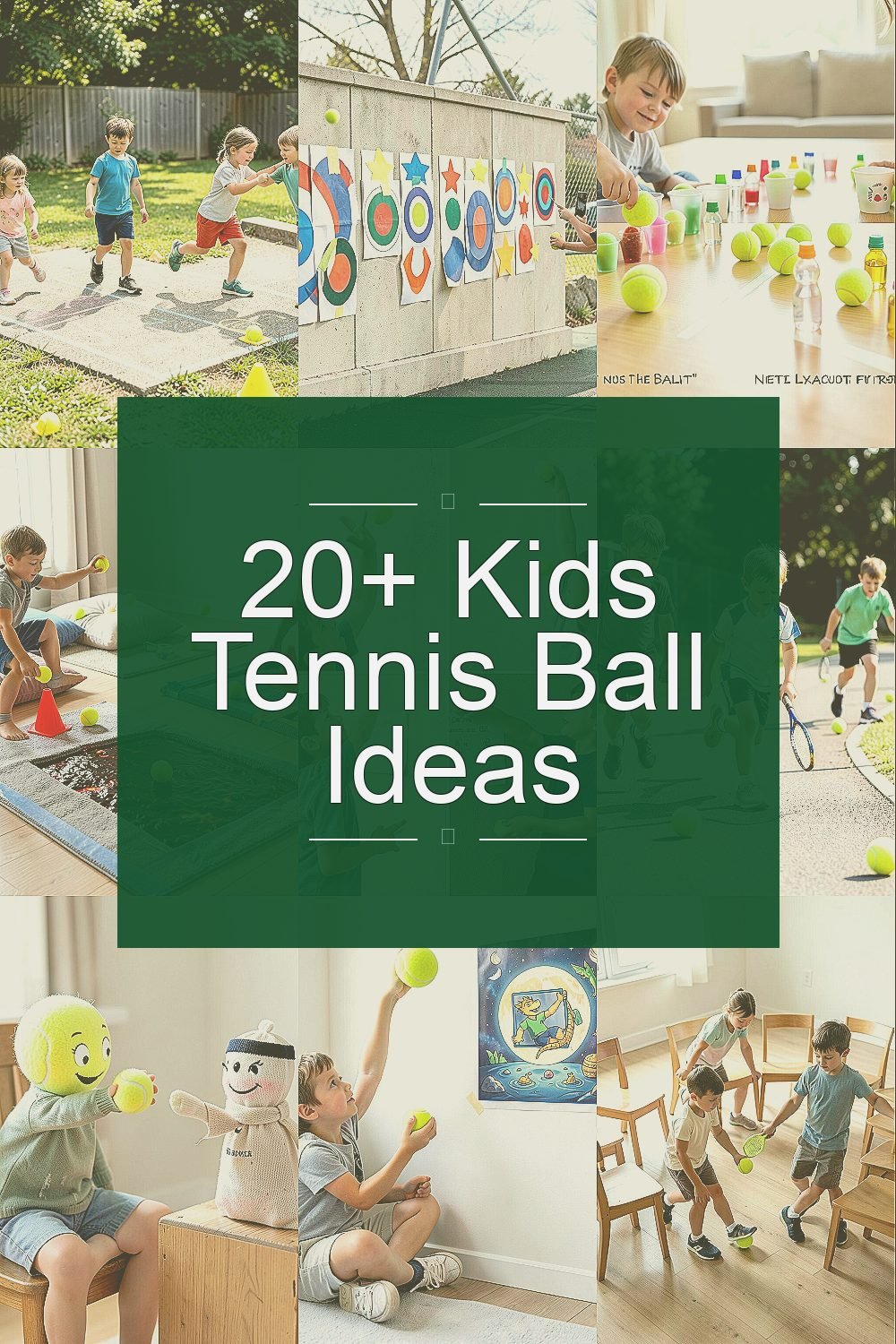
Set two points in the yard and have kids bounce a tennis ball from one point to the other. Each child keeps going until they reach the end, then taps the next player’s shoulder.
You can make the course visible with chalk lines, cones, or taped spots on the ground. This game helps with balance, hand-eye timing, and quick footwork, especially when kids focus on keeping the ball controlled. For personalization, give younger kids a smaller distance and older kids a slightly uneven path like a gentle slope or a curb edge with adult supervision.
2. Target Wall Scatter
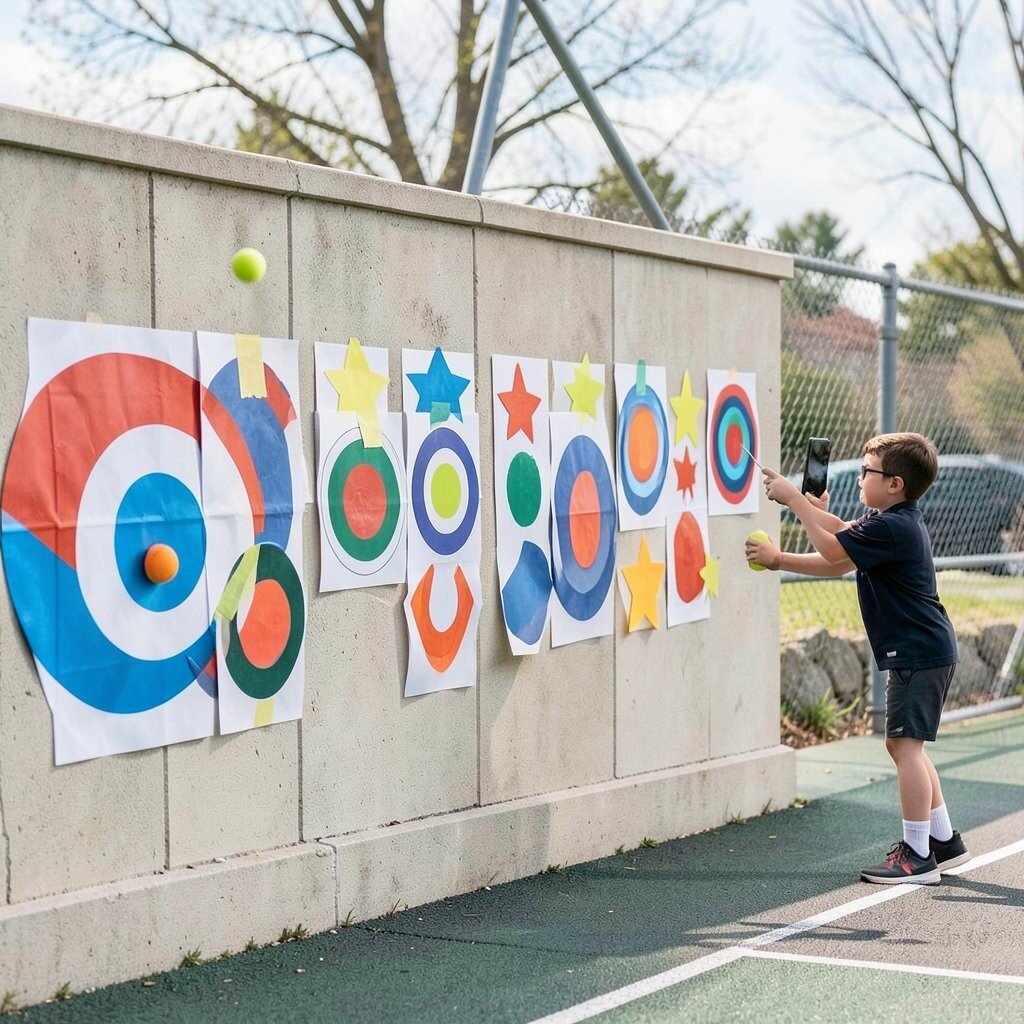
Choose a wall or fence and tape paper targets at kid height, then let kids aim from a safe distance. The ball should travel in a short arc so the targets feel reachable and exciting.
Use big shapes like circles or stars so it looks bright even from far away. This activity builds throwing accuracy and encourages kids to slow down and think about where they want the ball to land. If you want variety, use different colored targets for different points, and adjust the challenge by moving the aiming line closer or farther.
To keep it cost-friendly, make targets with scrap paper and reuse them by swapping the tape spots. A trendy option is to record a “best angle” moment with a phone, then let kids try to match their own shot style during the next round.
3. Skittle-Style Tennis-Ball Pin Knockdown
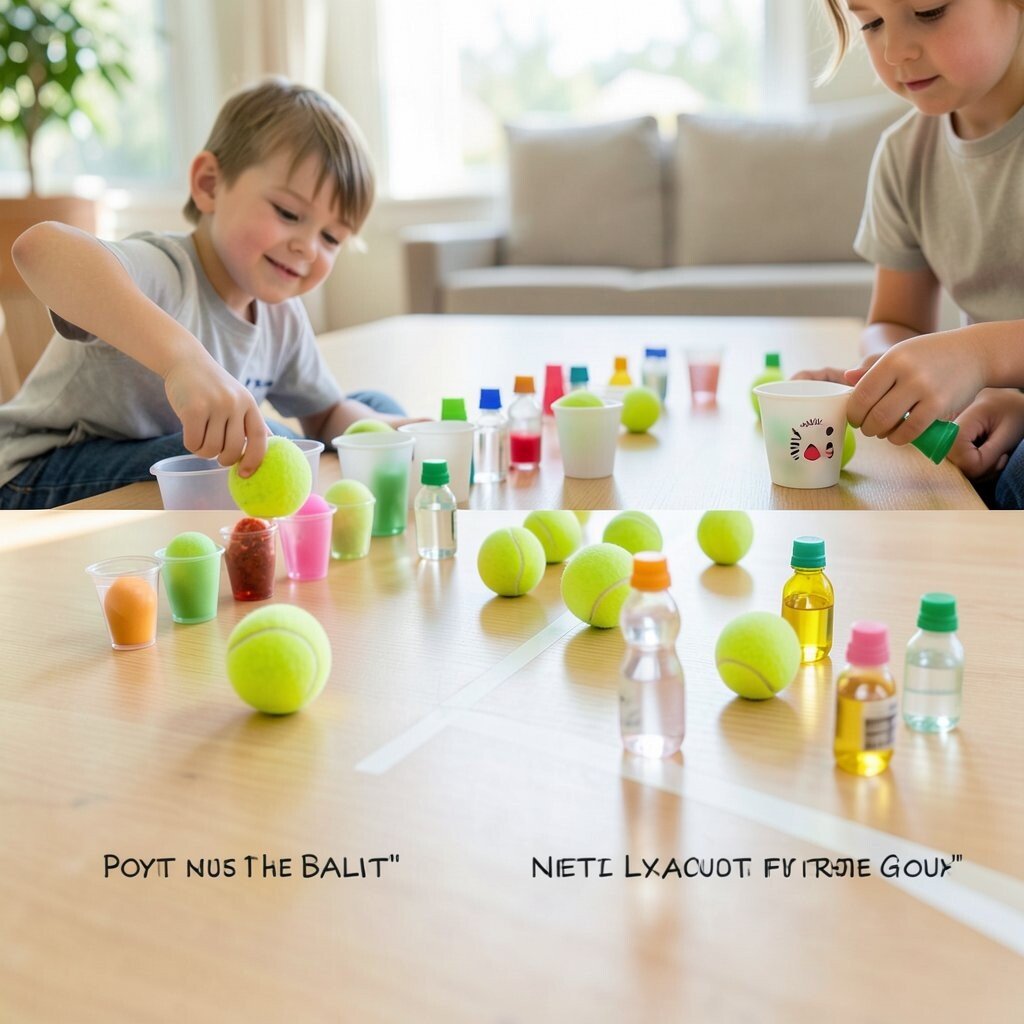
Arrange plastic cups or mini bottles like pins in a row and roll a tennis ball to knock them down. Kids will watch the pins scatter like a mini bowling alley right at home.
Play in short rounds so everyone stays engaged and the yard stays tidy. This builds throwing power control and improves grip and release timing, plus it feels like a real sport.
For practical tips, keep the bottles stable on a flat surface and leave a clear starting line. Personalize by using different pin layouts, such as a tighter triangle for accuracy practice or a wide spread for power practice. If you have different skill levels, give each child a “bounce rule” where they can bounce the ball once before it rolls.
Since tennis balls are reusable and cups are cheap, the setup is low cost and easy to refresh. Add uniqueness by letting kids name their own pin layout and choose the next layout for the group.
4. Floor Is Lava Soft-Throw
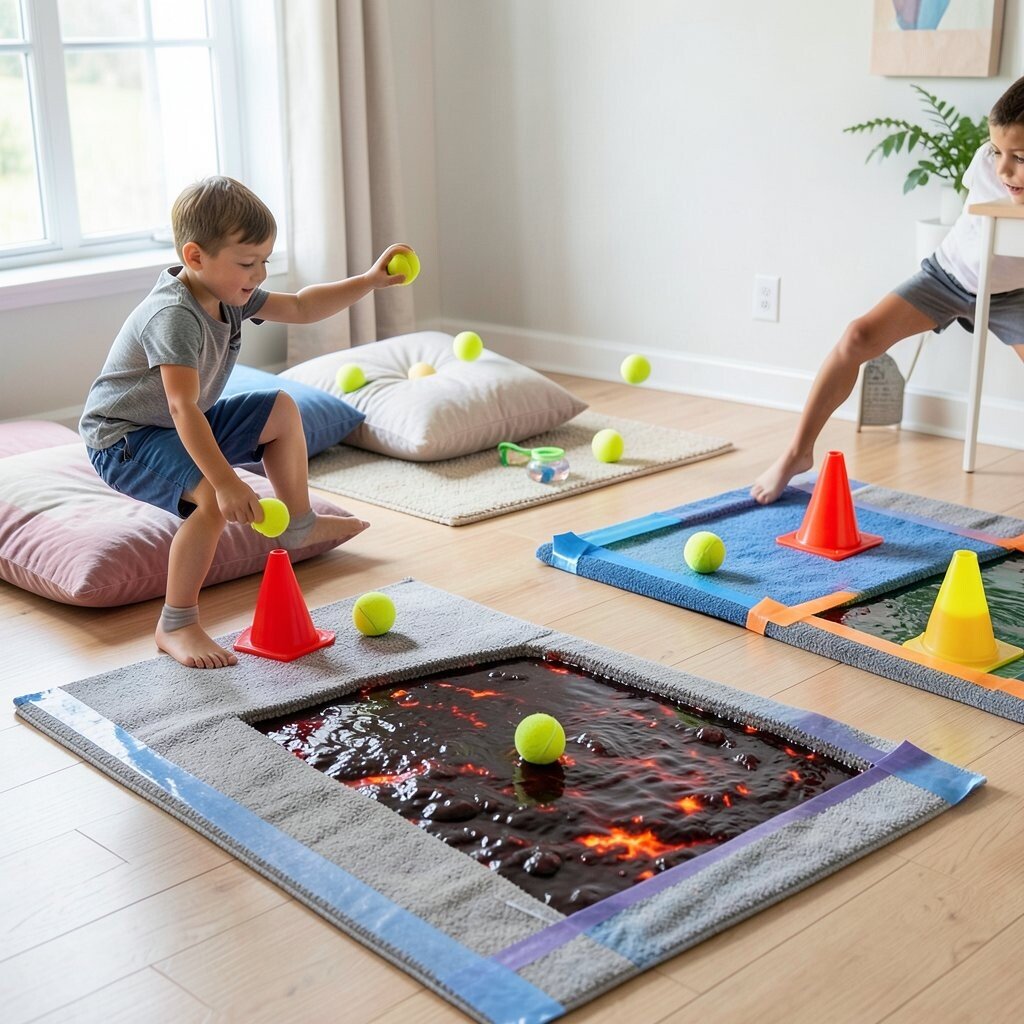
Create “islands” on the floor using pillows, rugs, or painter’s tape shapes. When the game starts, kids throw a tennis ball from island to island while avoiding stepping in the “lava” spaces.
This activity turns sprinting into a calm target challenge and supports coordination and quick decision-making. To keep it safe, use gentle throws at first and increase distance only when kids can land the ball reliably.
For personalization, make some islands “landing zones” with cones, and others “bonus zones” with a different color tape. A cost-conscious approach is to use household items as markers and rotate the layouts every few minutes so the game feels new. Kids often love the visual of balls bouncing between bright islands, and it makes the room feel like a mini game show.
5. Overhead Catch With a Wall Partner
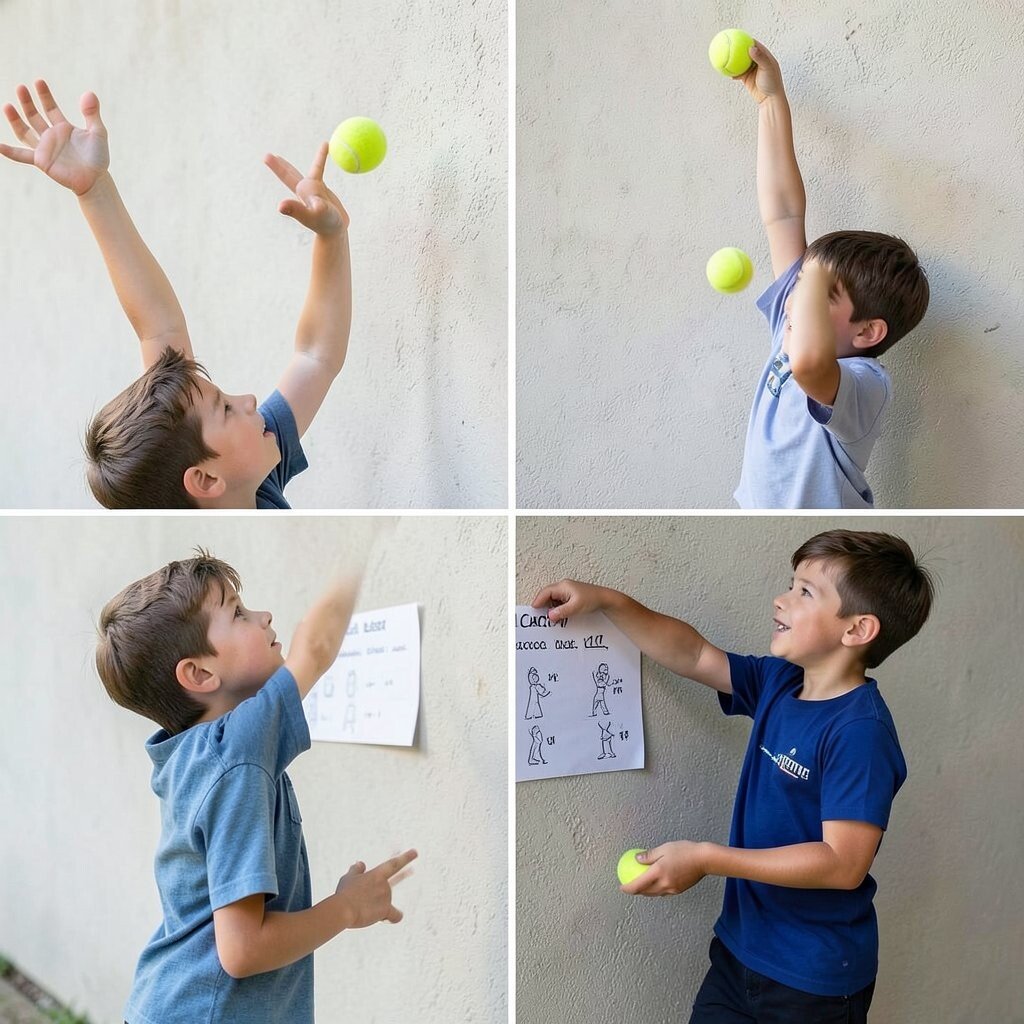
Stand near a wall and have kids toss the tennis ball so it bounces back at chest or shoulder height. They should practice catching with hands first, then with a gentle scoop motion.
Shift the challenge by changing the toss height and the distance from the wall. This builds reaction time, catching technique, and confidence, especially for kids who feel shy about throwing to people.
For practical tips, start with underhand tosses and remind kids to use two hands at first for control. Personalize by choosing a “catch style” for each round, such as one-hand catch for brave kids and two-hand catch for everyone else.
If you want a current-feeling twist, kids can “level up” like a video game by tracking catches on a simple checklist on paper. Tennis balls are affordable, and a single wall can provide endless practice without extra gear.
6. Tennis-Ball Checkpoint Dribble
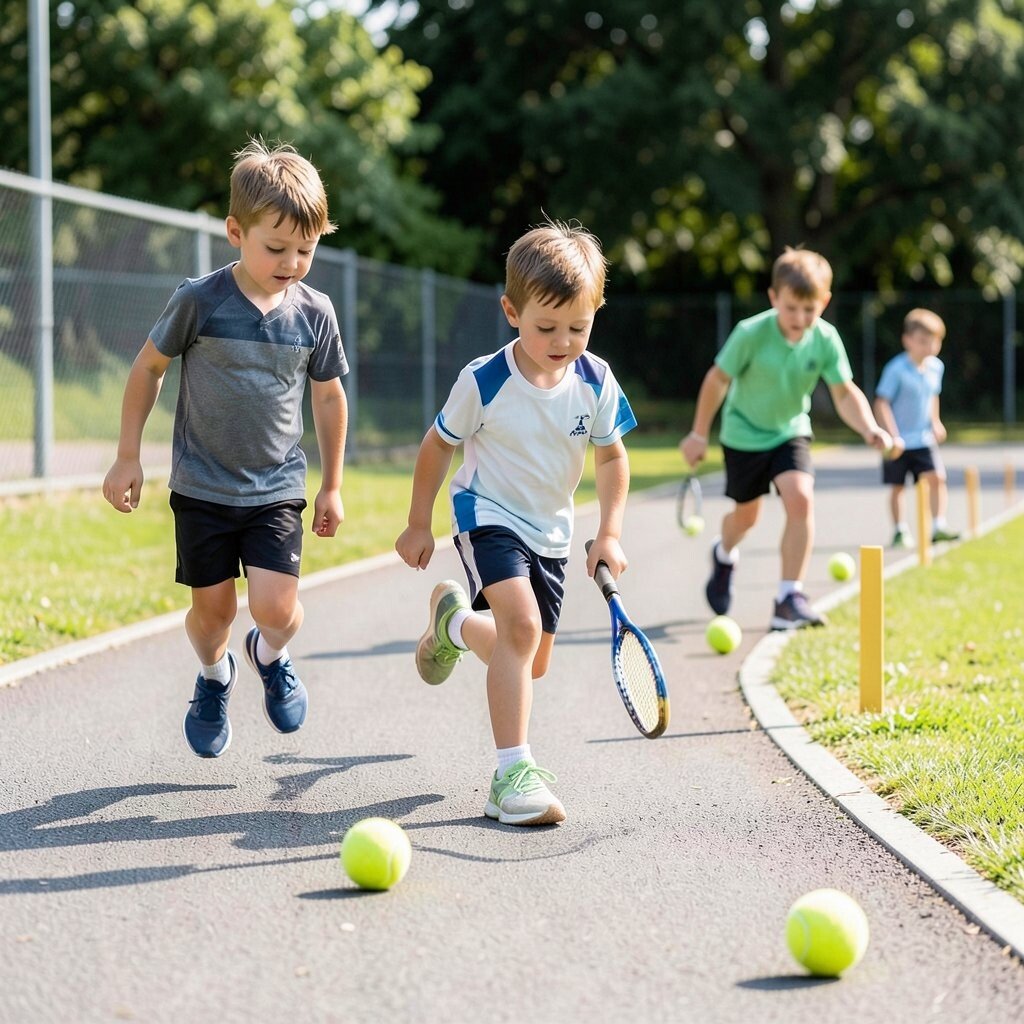
Mark several checkpoints along a path, and have kids dribble a tennis ball from one checkpoint to the next. They can use a hand dribble or a light bat tap while walking slowly.
The visual is satisfying as the ball pops along the ground and kids keep their eyes locked on it. This strengthens wrist control, focus, and steady movement, which carries over to many sports.
Make it practical by using a lane width that matches the child’s comfort, and keep surfaces flat to reduce slips. Personalize by adding a “freeze and pose” rule at each checkpoint so kids practice stopping safely and thinking before the next step.
7. Sock-Puppet Tennis-Ball Toss
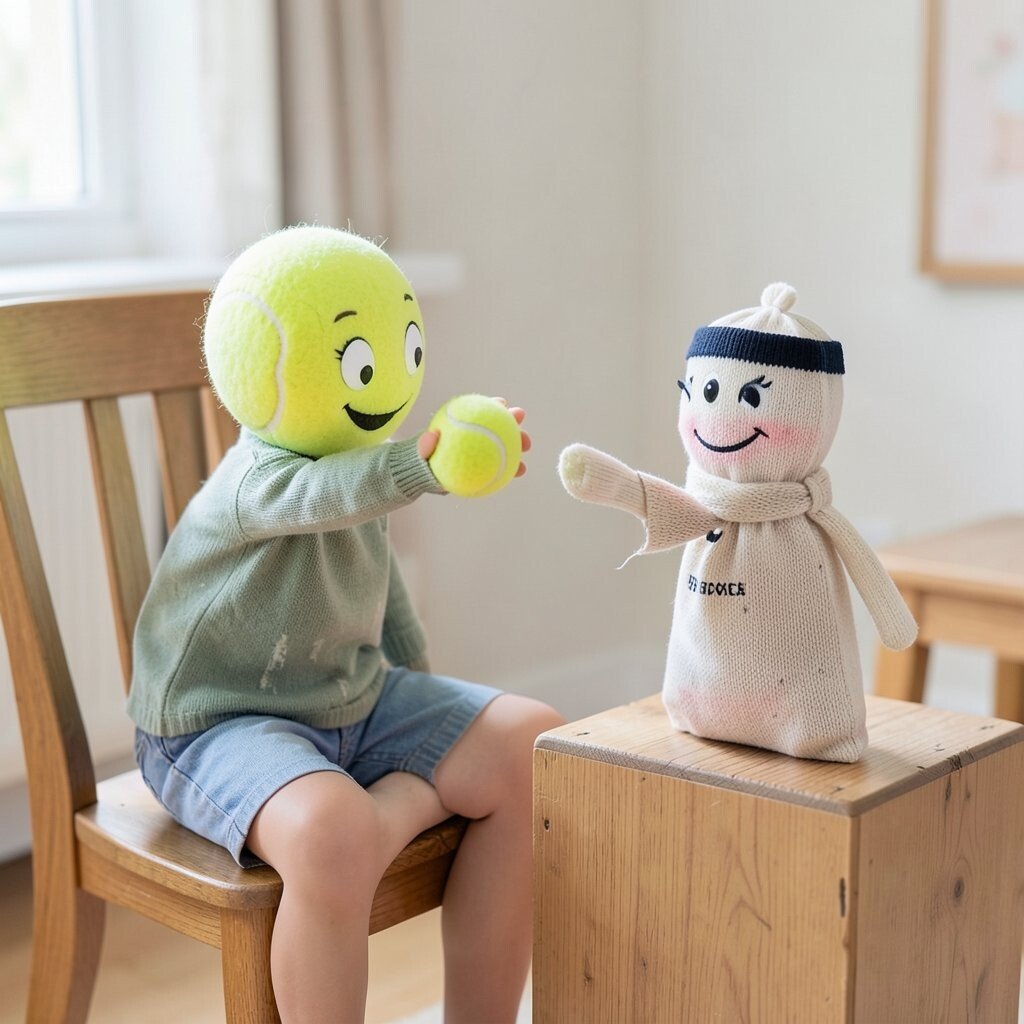
Stuff a sock or use a small cloth pouch as a “puppet” target, then toss a tennis ball toward it. The puppet can sit on a chair or a box so it looks like a silly character waiting for the ball.
This playful setup encourages gentle throwing and helps kids aim with softer focus instead of wild power. It also builds decision-making, because kids learn to adjust their throw based on how close the puppet is.
For practical tips, tie the sock closed or secure the pouch so the target stays put. Personalize by letting each child invent a puppet name and choose where to place the puppet for their “episode.” Keeping it low cost is easy since old socks and fabric scraps are free and tennis balls are the main item.
8. Gentle Wall Sit Target Hold
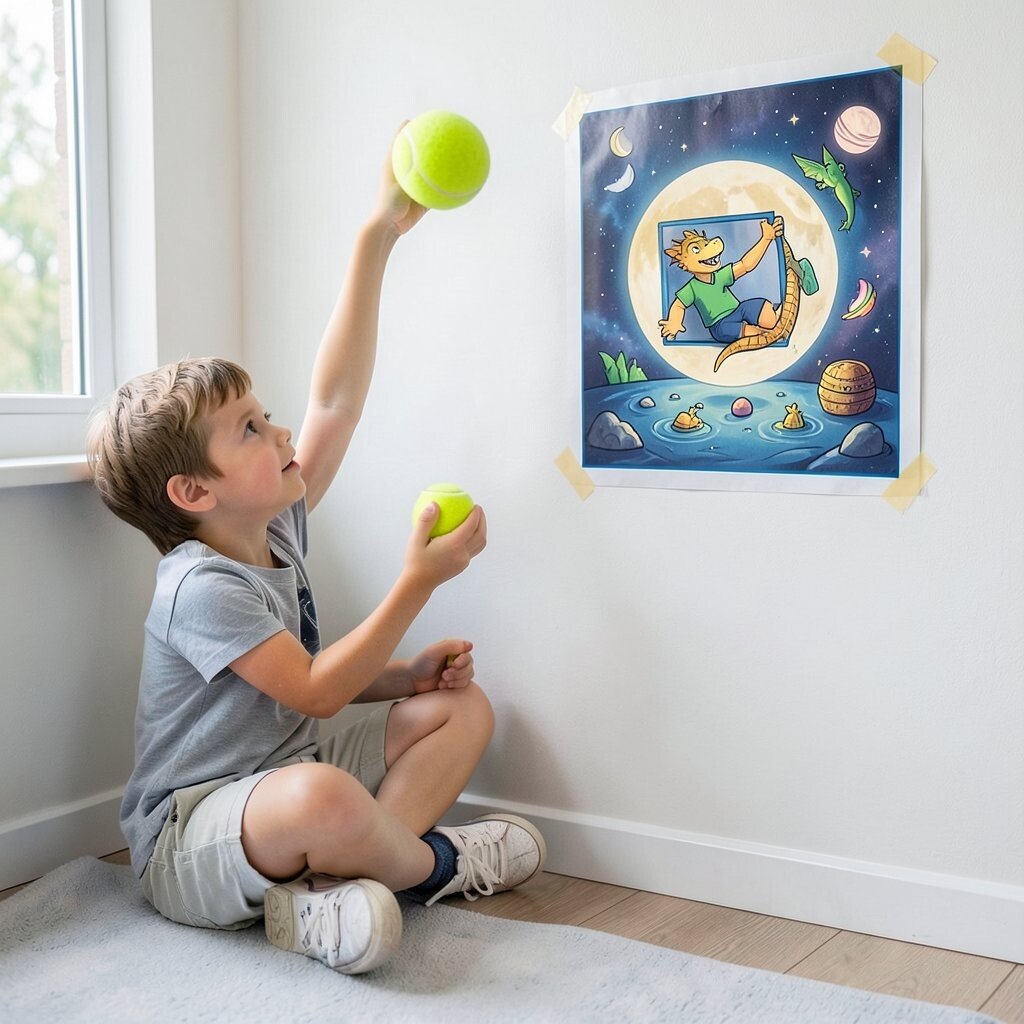
Have kids sit against a wall with their backs supported and hold a tennis ball near their lap. Then they toss the ball upward to a taped target area on the wall and try to land it in the square zone.
This might sound simple, but it feels like a mini arcade because the taped area looks like a clear goal. Kids practice upper-body coordination and arm timing while staying seated, which is great for younger kids or rainy days.
Use a large target at first and shrink it later for older kids. Practical tips include keeping a safe throwing angle and using a soft landing area on the floor. Personalize by letting kids choose the target color and giving the wall square a fun theme like “moon base” or “dragon treasure.”
9. Tennis-Ball Maze Around Chairs
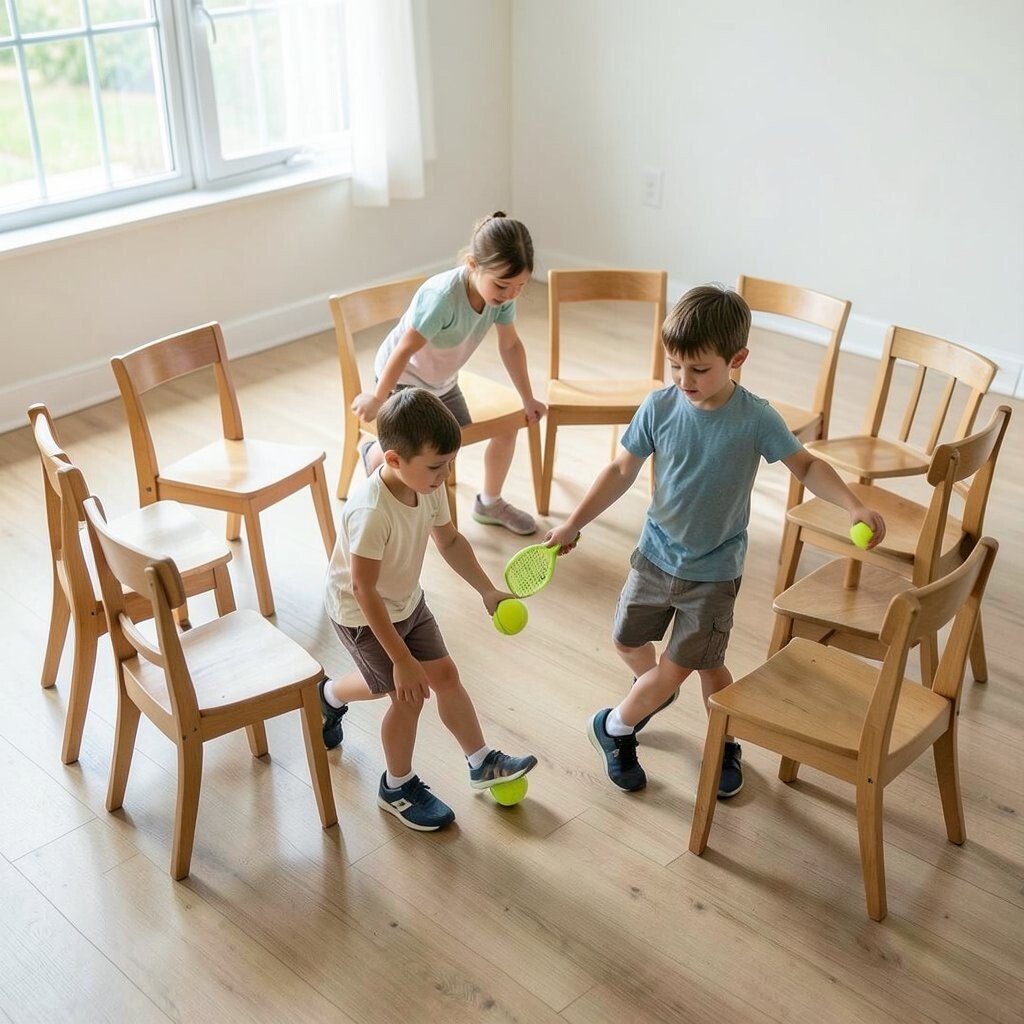
Arrange chairs in a gentle maze and have kids carry a tennis ball while walking through the path. They can also tap the ball forward lightly while stepping around each chair.
The maze creates a clear visual guide, and kids enjoy weaving between legs as if they are driving through traffic. This supports spatial awareness, foot placement, and control of ball handling.
For practical tips, choose stable chairs and keep the maze wide enough for kids to turn comfortably. Personalize by changing the maze spacing for different ages and by adding a rule that kids must pass the ball from their right side to their left side around certain corners.
10. Family “Hot Potato” With a Twist
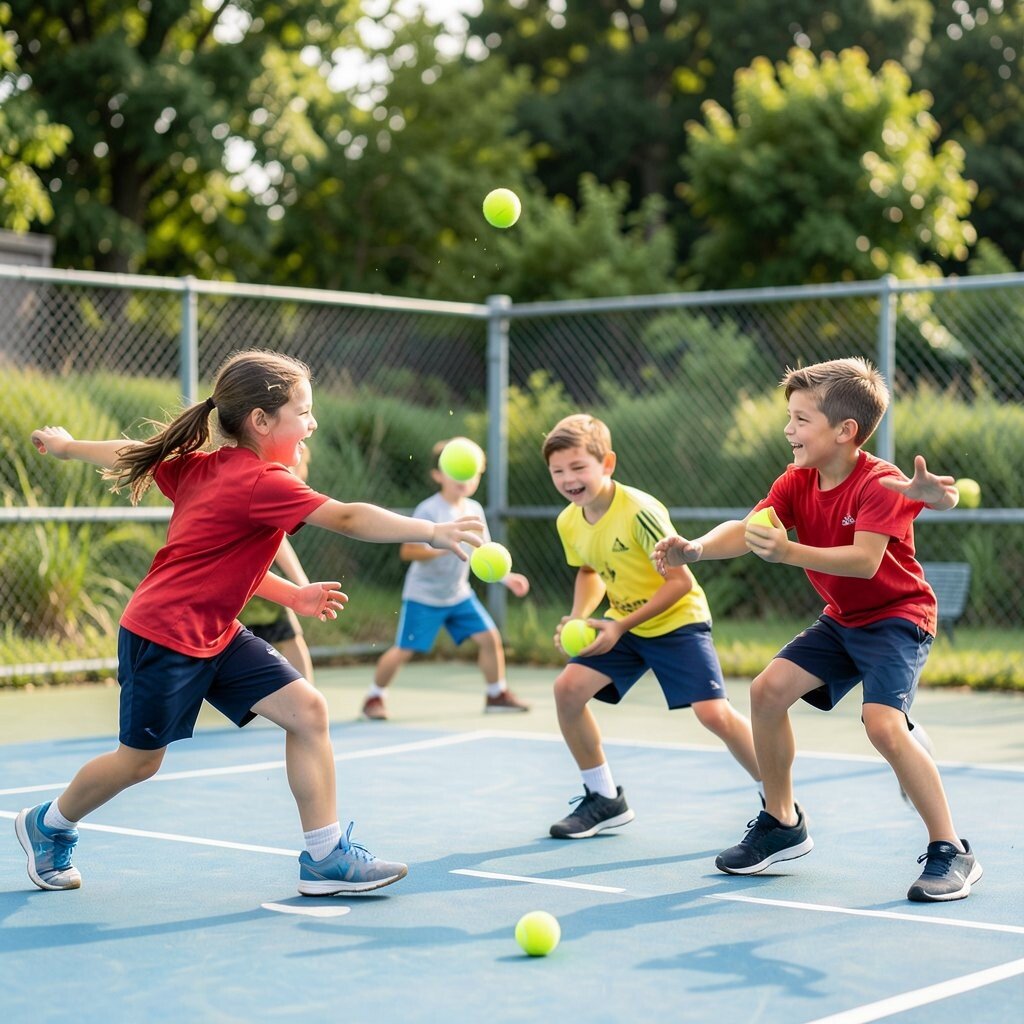
Play a hot potato game using tennis balls, but add a twist so kids move their skills. Instead of only passing by hand, kids toss the ball to one teammate across a short distance.
The visual is fast and silly as the ball bounces between players, and kids love the “wait, it’s coming!” feeling. This improves throwing under pressure, quick catching, and teamwork.
To keep it safe, set a clear throwing zone and remind kids to use gentle tosses. Personalize the twist by allowing a single bounce pass or a catch after a clap so everyone gets repeated chances to practice timing without frustration.
For cost considerations, tennis balls are cheap to replace, and you can rotate in different balls if you have them. A modern trend is to add playful music beats for rhythm, so the pass feels like a mini dance game.
11. Sight-Reading Toss With Number Cards
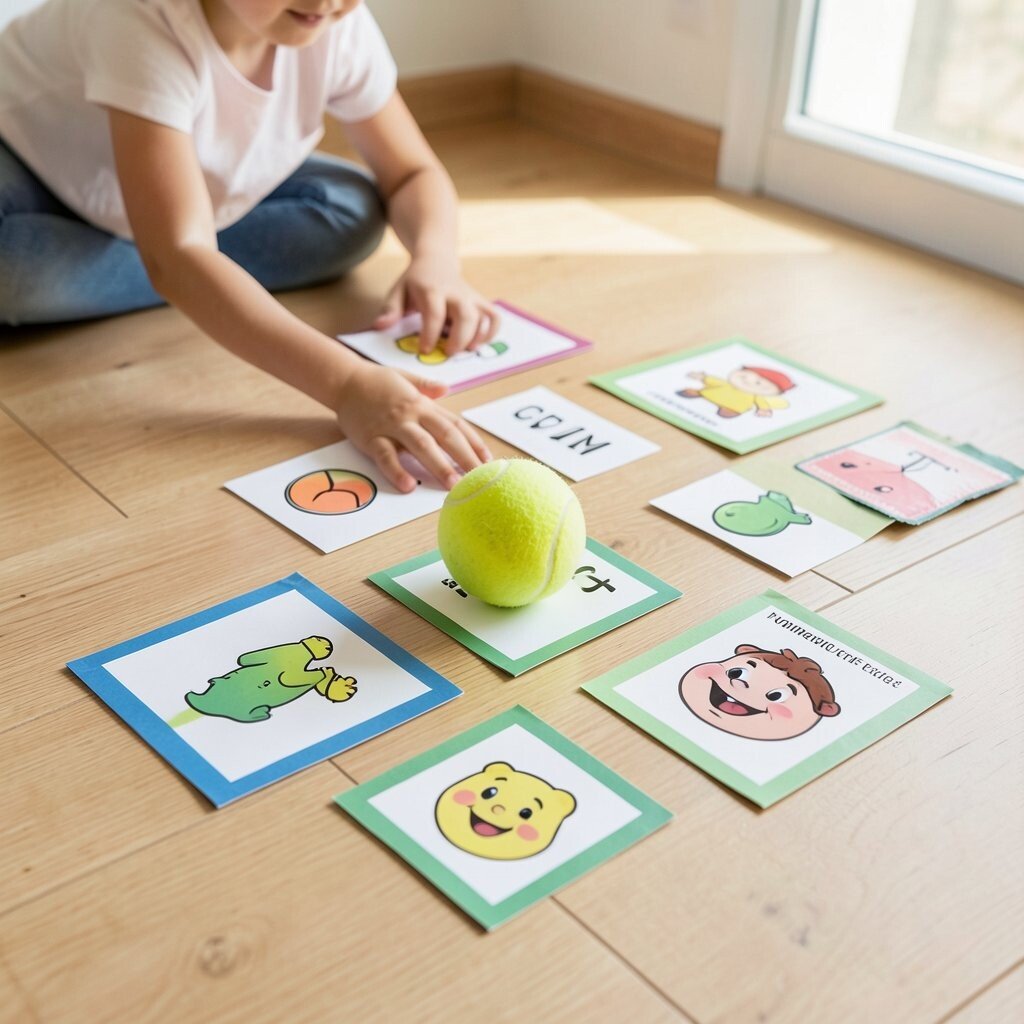
Lay number cards or simple symbols on the floor and have kids toss a tennis ball toward the matching card. Kids can grab a card first and then aim at its location.
This activity strengthens targeting and helps with early math concepts in a way that feels like play. It also supports reading-like practice when kids recognize symbols quickly.
Use thick tape borders so the card zones look like landing pads, which helps visual tracking. Personalize by using letters for word practice, shapes for preschool goals, or even their favorite cartoon faces.
Keep costs low by using printed or homemade cards and reusing them for many rounds. For uniqueness, make “secret cards” that kids only get after a good catch, turning the game into a mini story.
12. Tennis-Ball Footwork Ladder on the Ground
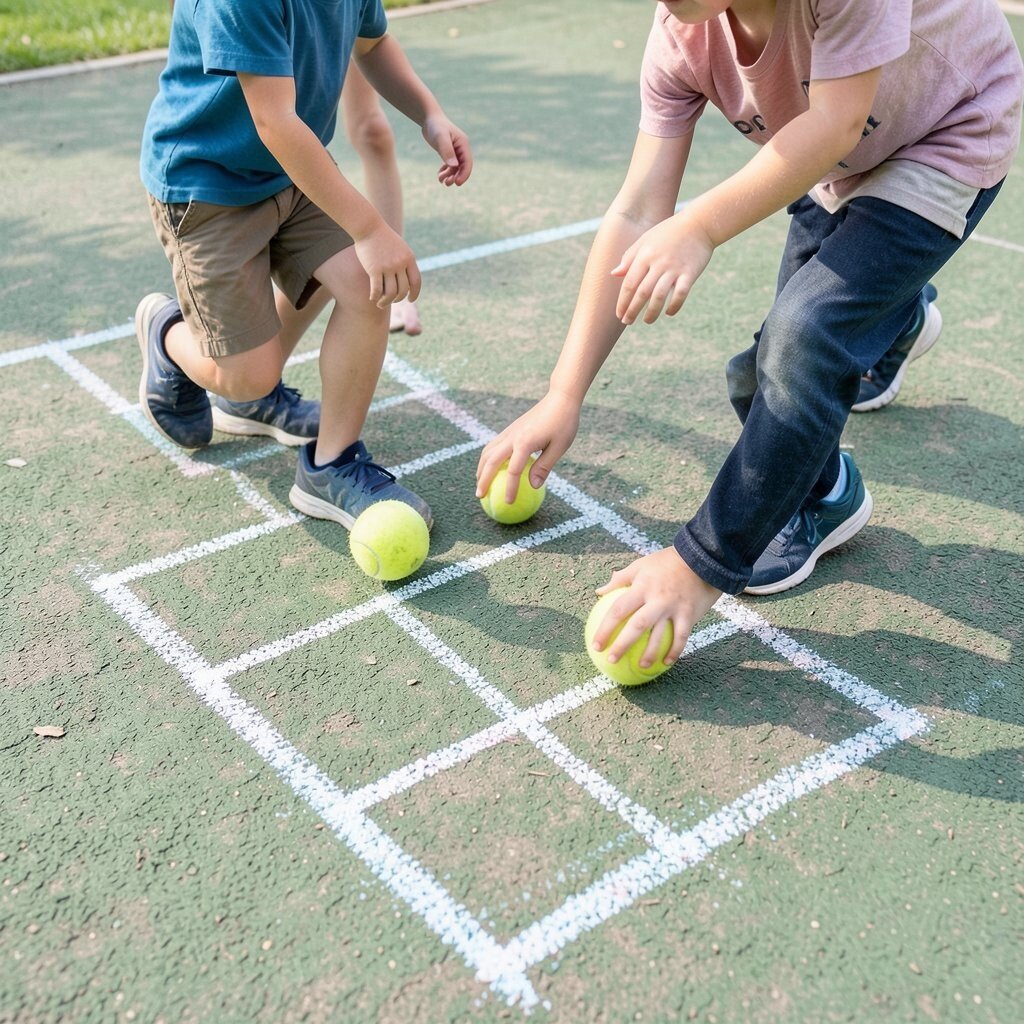
Draw a ladder with chalk or tape on the ground and have kids move the tennis ball between squares. They can roll it into each square and then step to the next one.
The chalk ladder looks neat and bright, and the ball rolling square by square feels satisfying. This builds coordination, footwork, and control while encouraging steady pacing.
For practical tips, keep the ball rolling slowly so kids can react, and avoid steep hills or slippery surfaces. Personalize by adding a rule that the ball must touch the ground square-first, or by letting kids use different body parts like tapping with the toe.
13. Partner “Two Bounce” Challenge
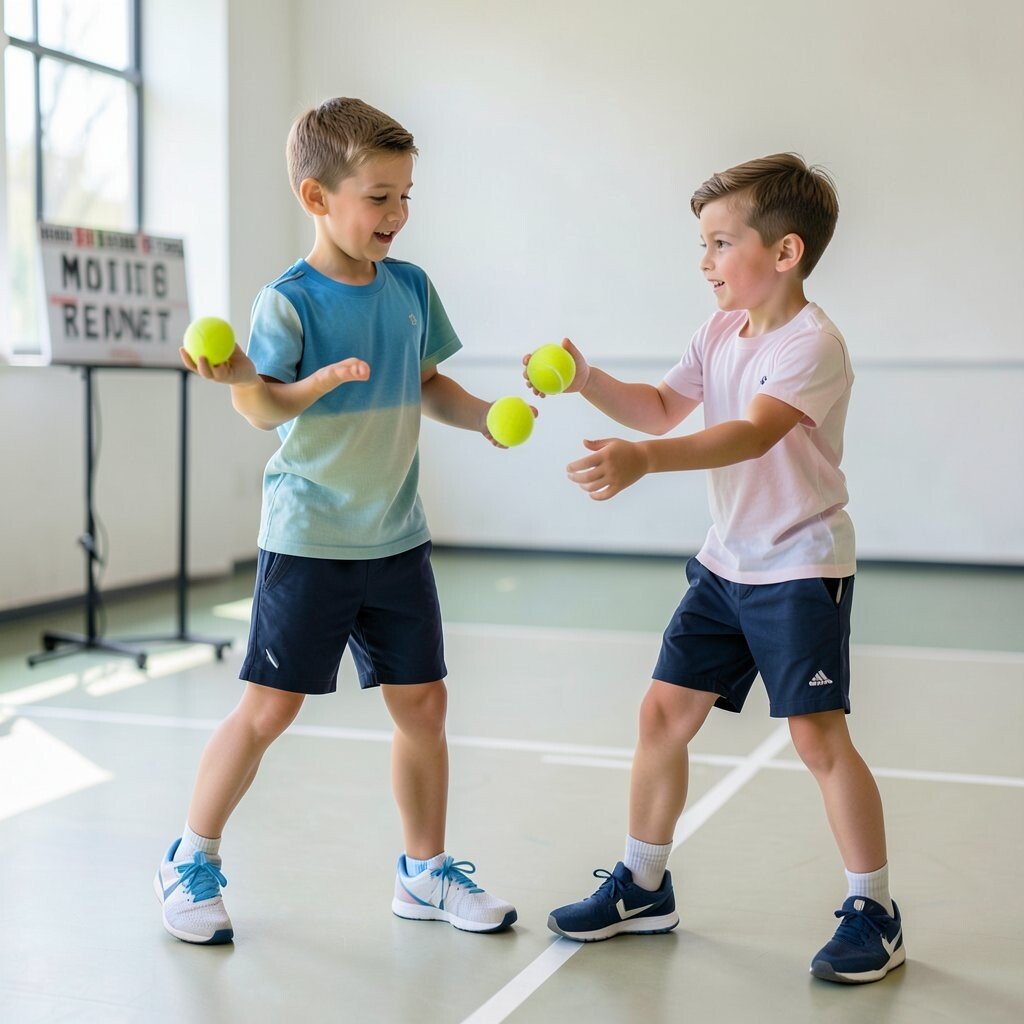
Pair up and stand at a comfortable distance for a gentle return game. Kids aim for a catch after two bounces, adjusting their toss so it lands in the partner’s zone.
This creates a clear visual rhythm because each throw has a predictable bounce pattern. It improves hand-eye coordination and teaches kids how to control force.
To keep it practical, start with shorter distances and allow a hand catch if the ball doesn’t cooperate. Personalize by using different zones such as “middle only” or “reach zone near the right foot” so kids feel the challenge in their body.
Tennis balls work well because they are soft, and you can do this nearly anywhere with a safe floor. A fun trend is to use a scoreboard that tracks successful “two-bounce returns” for each kid’s own progress rather than comparing kids against each other.
14. Tennis-Ball Music Shuffle Stop
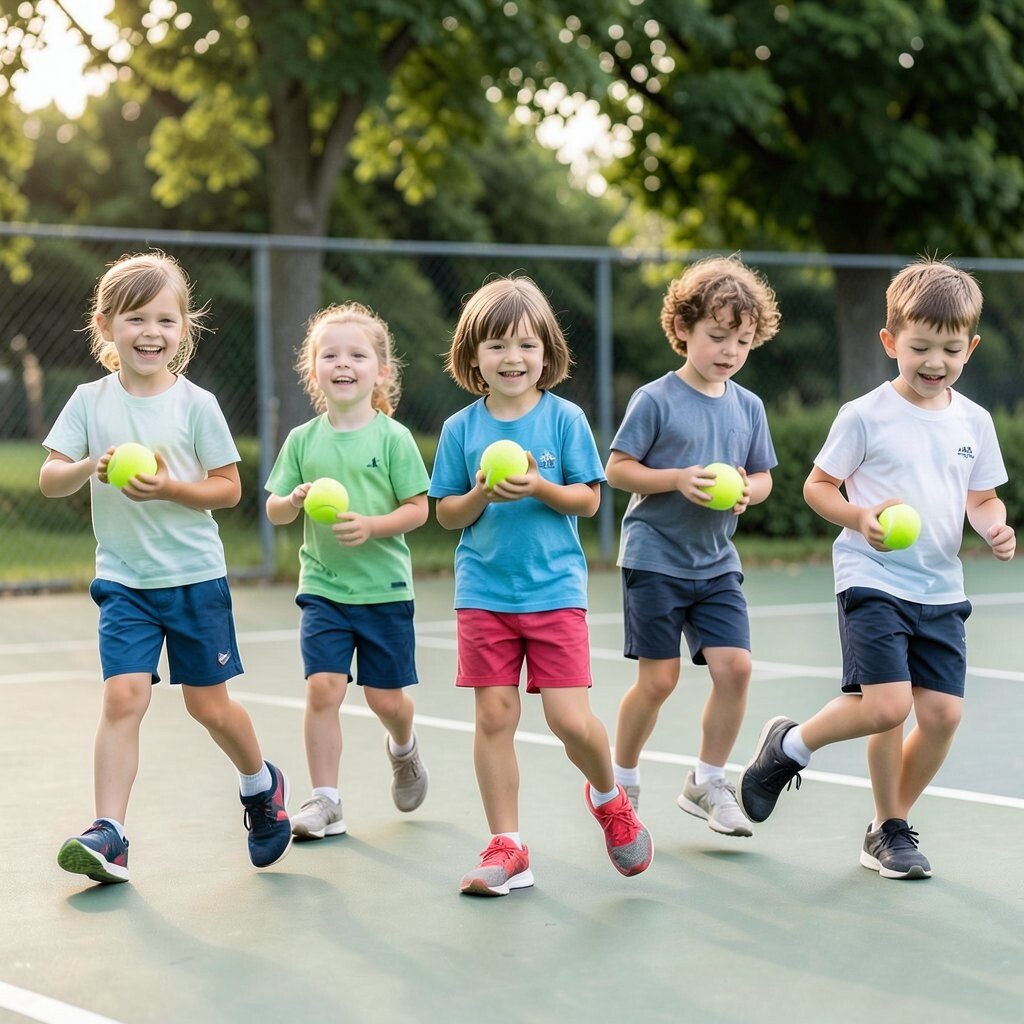
Put on music and have kids dribble or bounce a tennis ball while they walk or shuffle. When the music stops, they must freeze with the ball balanced in their hands or on a foot.
The visual of kids freezing mid-shuffle with a bright green ball is instantly funny and memorable. This helps with balance, body control, and listening skills.
For practical tips, use a timer or phone playlist so the rhythm is easy to manage, and keep kids in a clear play area. Personalize by changing the freeze position, like ball in both hands, ball held out like a flag, or ball gently pressed to the belly.
Cost stays low because music is free and tennis balls are the main tool. For uniqueness, let the “DJ” child choose a track and decide the freeze pose for the group.
15. Swing-Through Hula Hoop Toss
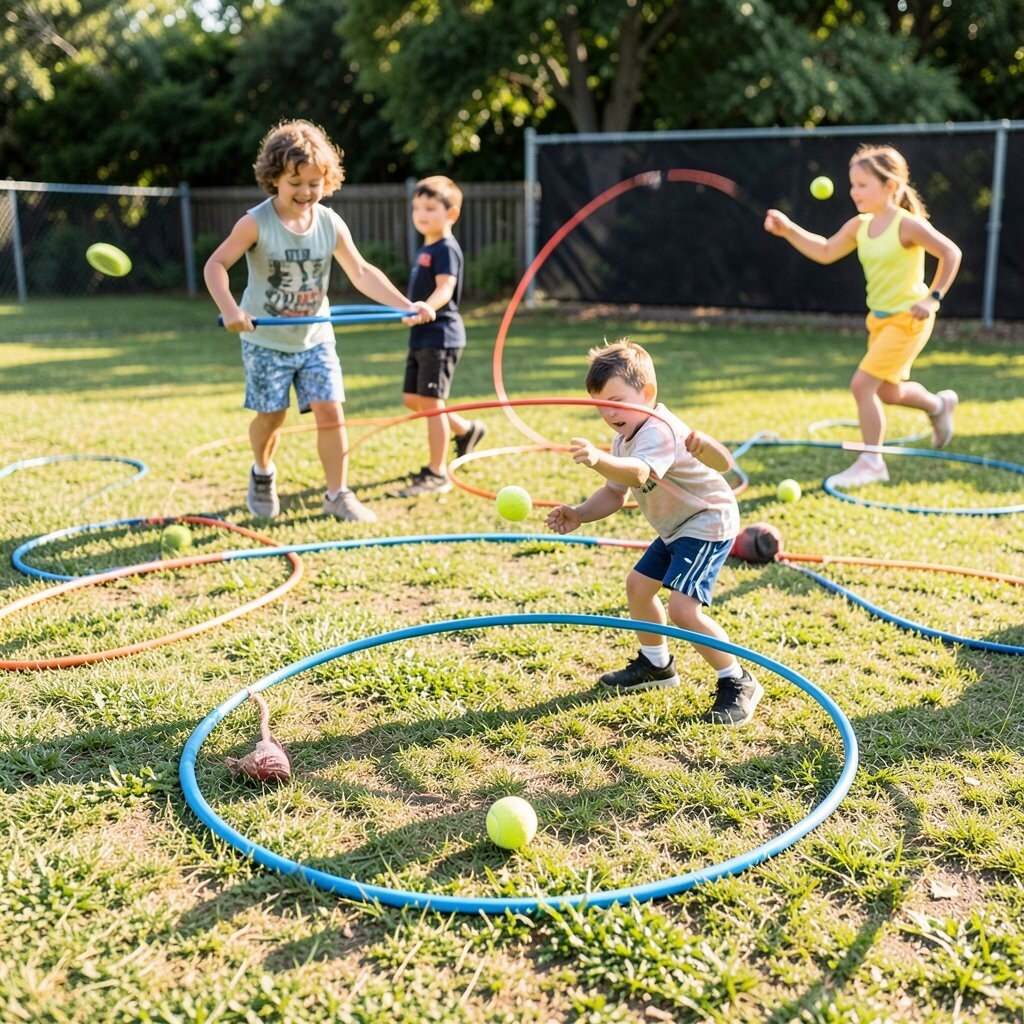
Place a hula hoop on the ground and have kids toss tennis balls so they land inside it. If you have enough hoops, create a small target line across a yard.
The hoop makes a bright circular goal that kids can easily spot, and the ball falling into it looks like a win. This activity supports throwing accuracy and improves focus on a specific target.
Use different distances for personalization, and add a “one bounce then hoop” rule for kids who need extra help. Practical tips include keeping the hoop steady with sandbags or weighted objects and using a safe throw arc at a comfortable height.
If cost is a concern, any ring-like object works, such as a jump-rope loop laid flat. A current trend is to combine this with “skill challenges” like aiming games used in family fitness videos, where kids try a quick round and then celebrate improvements.
16. Tennis-Ball “Treasure Hunt” Retrieval
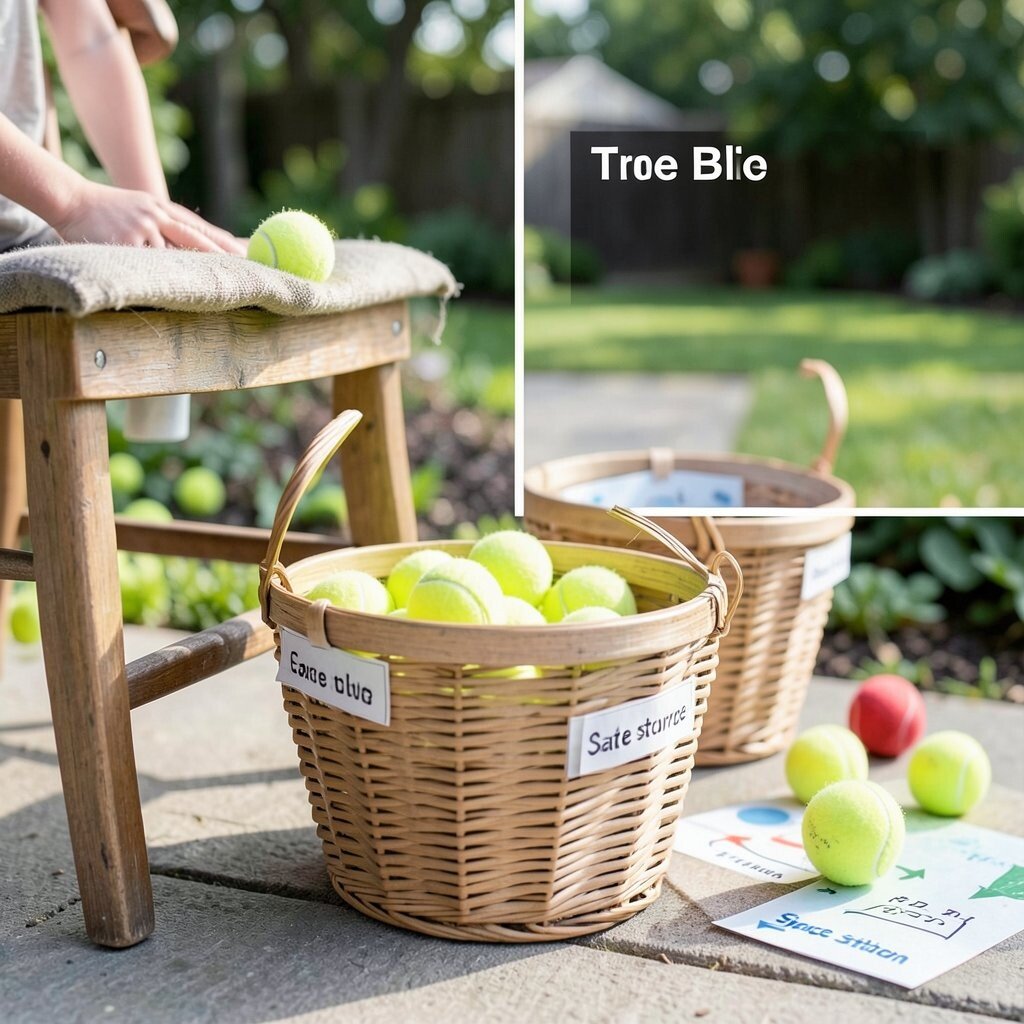
Hide tennis balls around a yard or room and give kids a goal like collecting specific colors or ball counts. After they retrieve one ball, they carry it to a labeled basket for safe storage.
The visual of little yellow balls peeking out from behind a chair leg feels like real treasure. This builds running stamina, scanning skills, and problem-solving as kids search thoughtfully.
For practical tips, keep hiding spots age-appropriate and avoid areas that are hard to access or unsafe. Personalize by making a map using tape arrows, or by turning it into a story where each ball is a “planet” that must be delivered to a “space station” basket.
17. Beanbag-Style Toss Using Tennis Balls
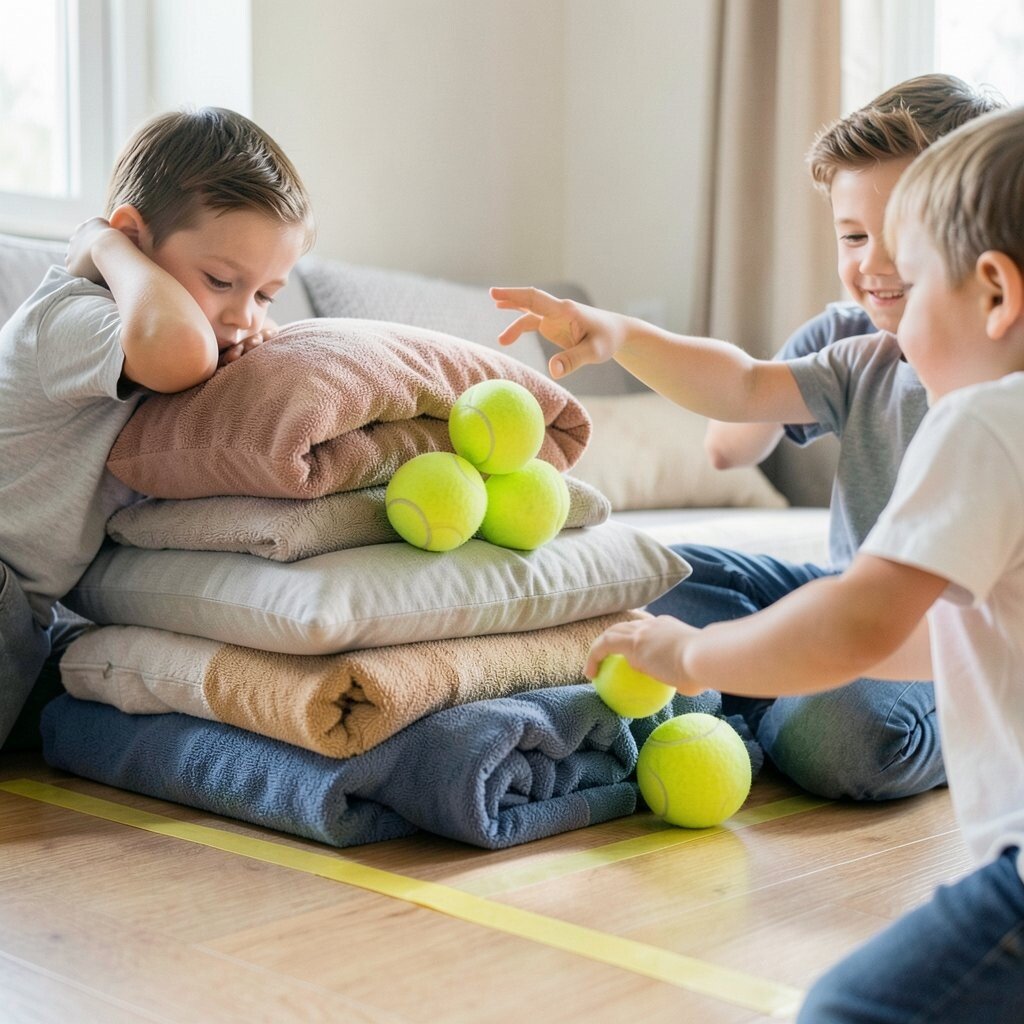
Stack soft targets like pillows or rolled towels and have kids toss a tennis ball to hit and knock them over. The targets can be grouped by size so kids choose their preferred challenge.
This creates a gentle, couch-safe version of tossing that still trains accuracy. Kids practice distance judgment and improve throwing form without needing heavy gear.
Practical tips include placing targets in a stable arrangement and using a clear throw line marked with tape. Personalize by using a “stabilize” rule where kids must reset the target after each throw, which keeps them involved and slows the pace in a good way.
Tennis balls are affordable, and you can reuse towels and pillows many times. For uniqueness, let each child decide whether they throw underhand or overhand for that round.
18. Tennis-Ball Obstacle Bowling With a Roll-and-Stop
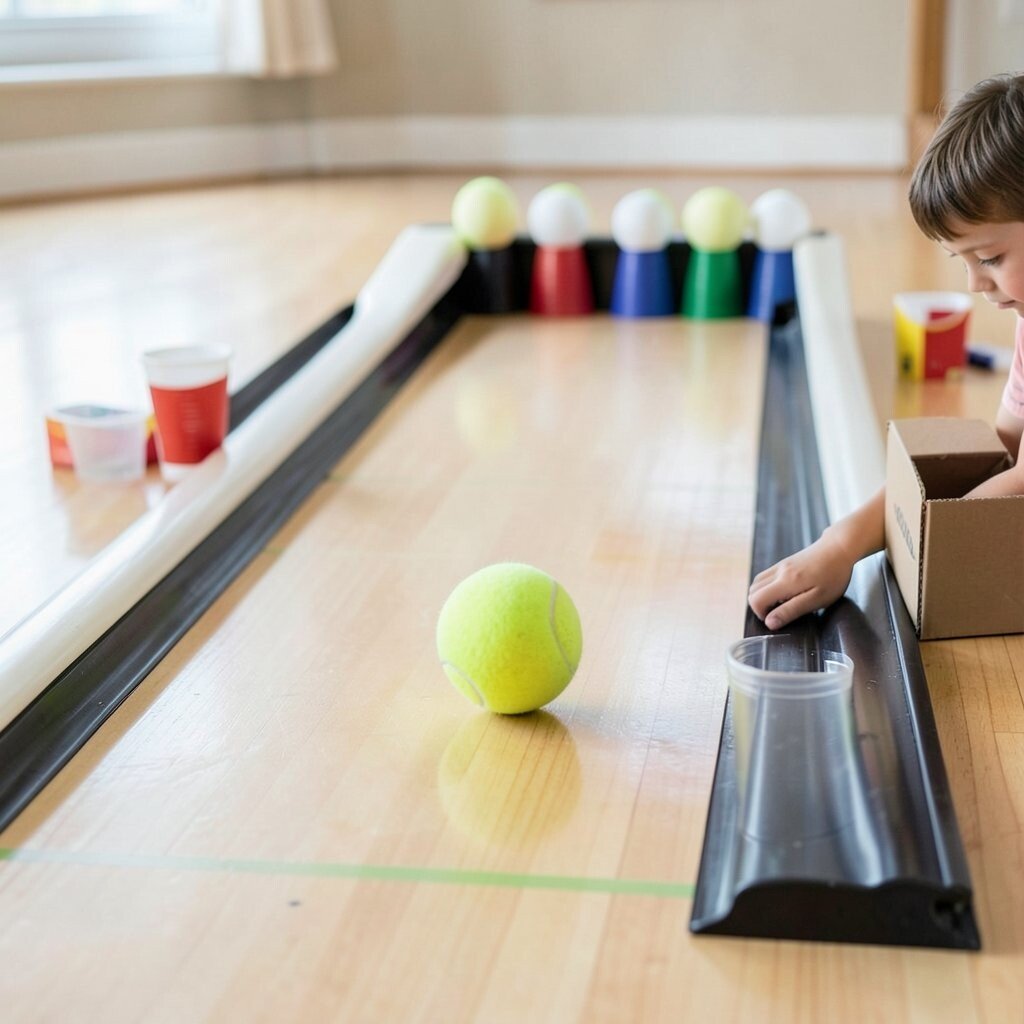
Set up a bowling lane using tape on the floor and place cups as pins at the end. Kids roll the tennis ball and then stop it by tapping once more without sending it into extra chaos.
The visual of the ball rolling down the taped lane and stopping near the pins gives kids a sense of control. This helps with focus, motor planning, and gentle power adjustment.
For practical tips, keep the lane short on slippery floors and add a barrier so balls don’t roll into furniture. Personalize by adding obstacles along the lane such as a small box they must pass to get a strike.
Cost is minimal because you can use cups, tape, and scrap cardboard barriers. A fun trend is to play timed “sets” where kids try to improve their accuracy within one song, which makes practice feel light and quick.
19. Shadow Target Toss in the Sun
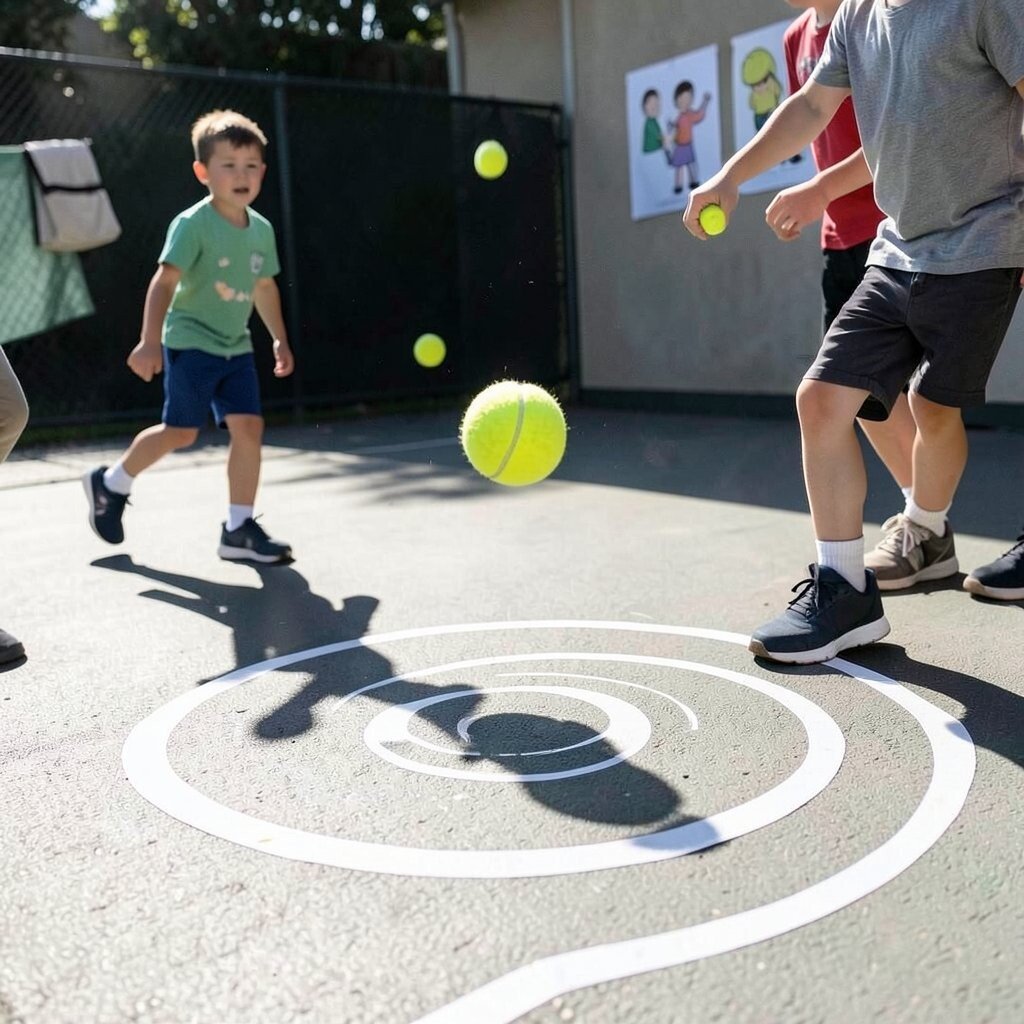
On a sunny day, place a target on the ground and have kids throw a tennis ball while watching its shadow. The goal is for the ball shadow to land inside the target area, not just the ball itself.
This activity looks magical because the bright shadow turns the ground into a stage. It helps kids learn visual tracking and timing while also encouraging them to notice sunlight patterns.
For practical tips, keep it safe by throwing gently and choosing a clear space away from windows. Personalize by switching targets between circles, squares, or themed shapes like “treasure” and “crater.” If the sun is too bright for some kids, use an indoor light source near a wall with a printed target.
Tennis balls are low cost, and the “gear” is just tape or a printed target sheet. Kids often love the novelty of shadow-based challenges because it feels different from the usual aiming games.
20. Tennis-Ball Story Toss
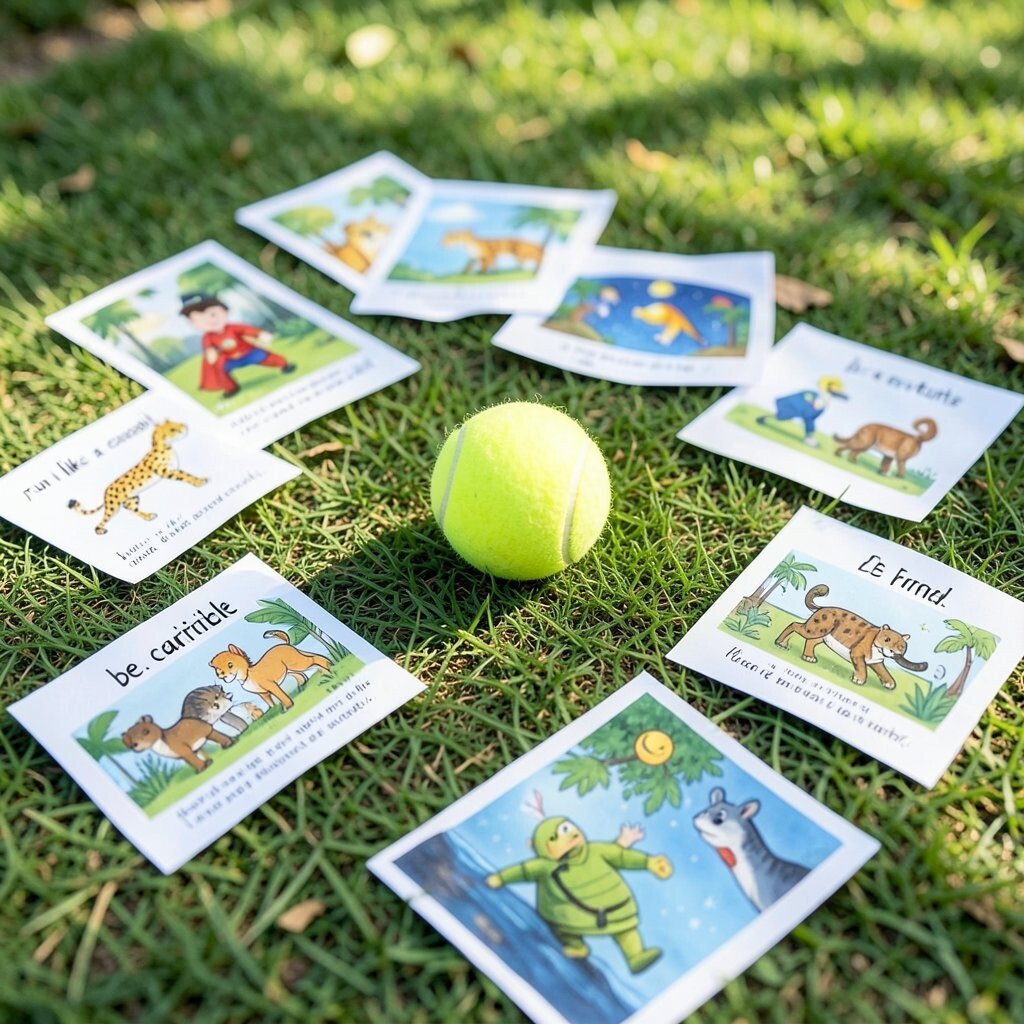
Write simple story prompts on paper and place them around the play area, such as “run like a cheetah” or “be a careful turtle.” Kids pick one prompt, read it with help, and then toss a tennis ball to the matching picture card.
The visual is playful because the cards turn the yard into a tiny story map, and the ball becomes the magic “key.” This supports language engagement, listening, and movement in a way that feels creative rather than structured.
For practical tips, use large cards with clear pictures so kids can understand quickly. Personalize by letting each child create one prompt card and become the storyteller for the next round.
Cost considerations are easy since paper prompts are reusable, and tennis balls are the main supply. A uniqueness boost comes from changing the story theme each week, like superheroes, space, jungle animals, or ocean creatures.
21. Skills Swap: Best Throw, Best Catch
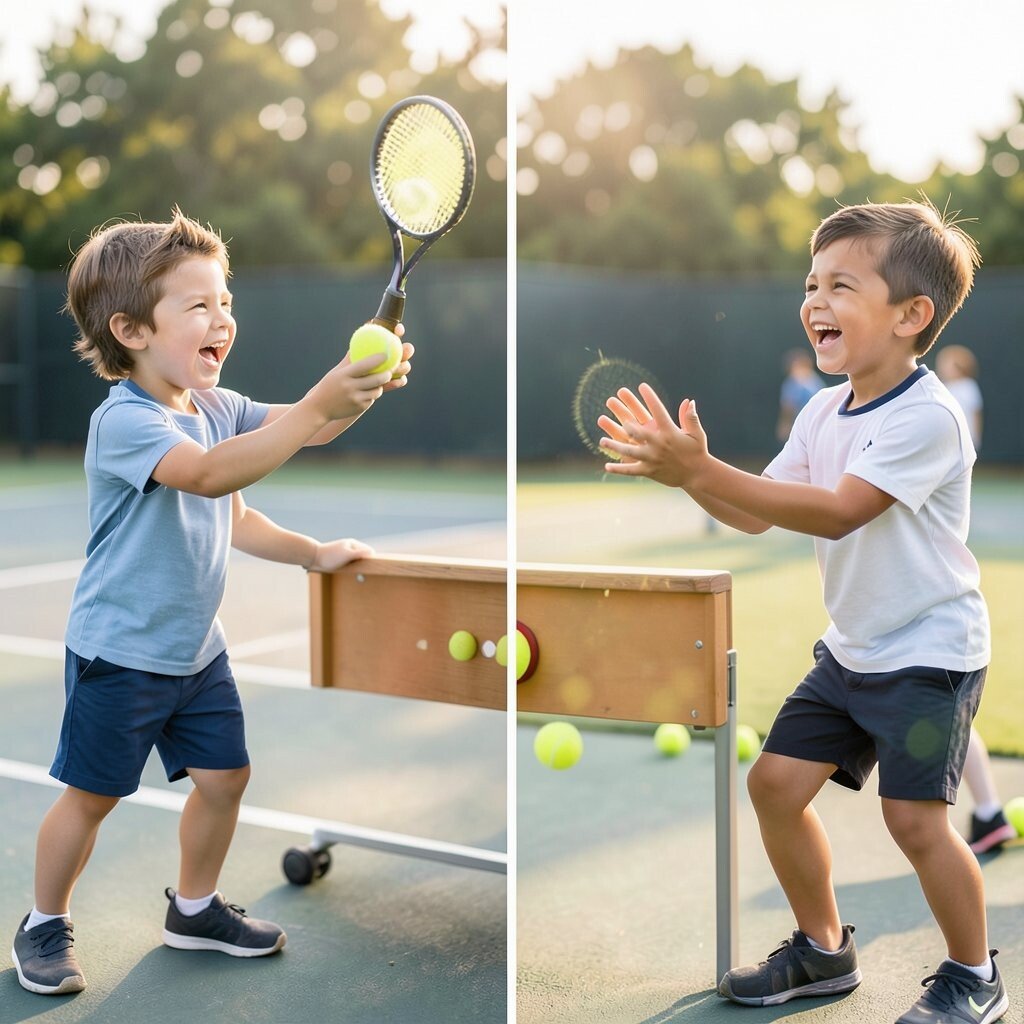
Set up a friendly station with two roles, one focusing on throwing and one focusing on catching. After each round, kids swap roles so they experience both sides of the game.
The visual is encouraging because you’ll see kids cheer for each other as the ball arcs and lands cleanly. This builds confidence and helps kids learn how good throws feel from the catcher’s perspective.
For practical tips, start with short distances and a rule that catching can be done with two hands for safety. Personalize by offering mini challenges like catching at waist height or catching after one bounce, which keeps each child working at a comfortable level.
With tennis balls being inexpensive and reusable, this station can run for many days without extra cost. A current trend is to use “skill swap” routines in family play, because it turns practice into a social game where nobody feels left out.