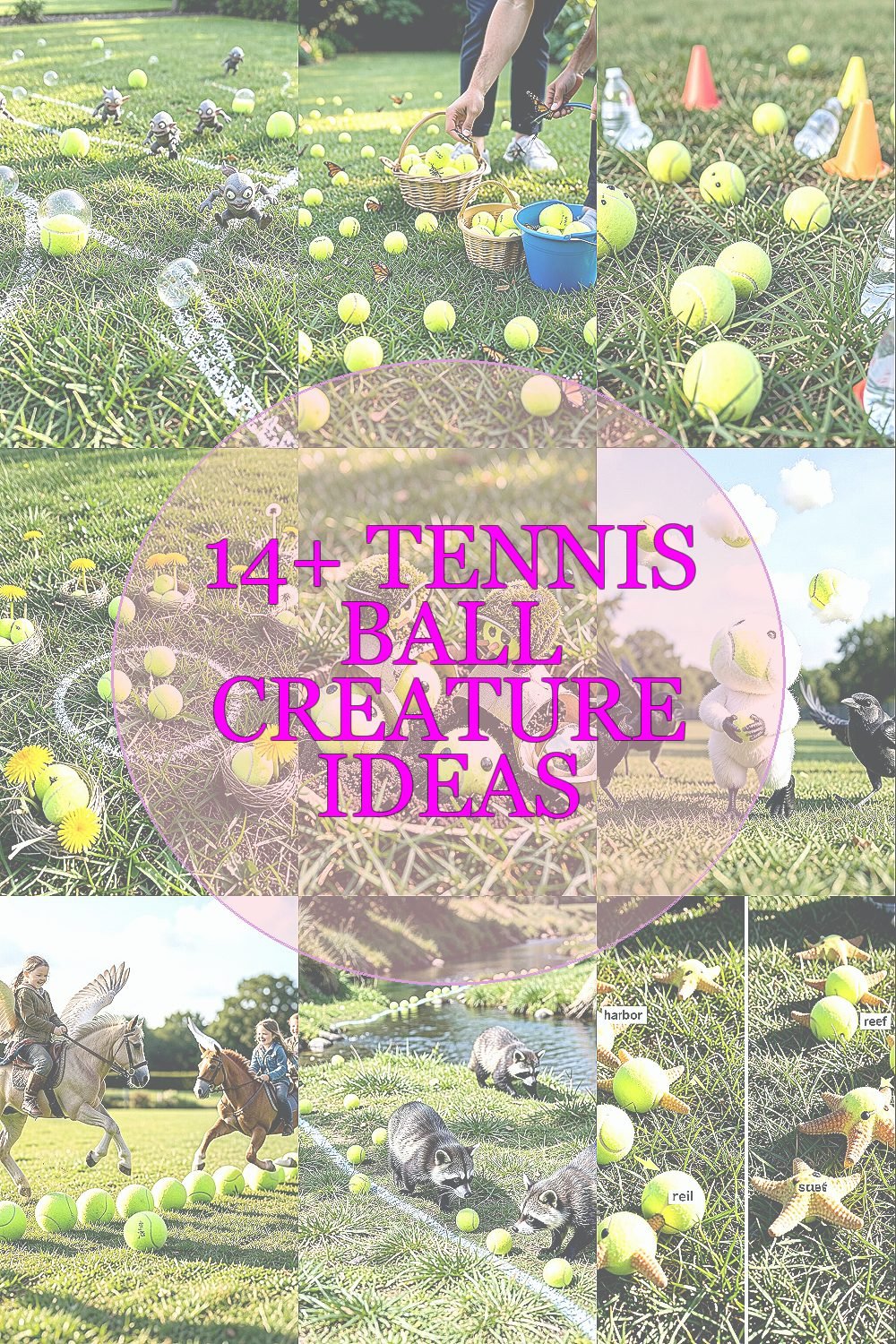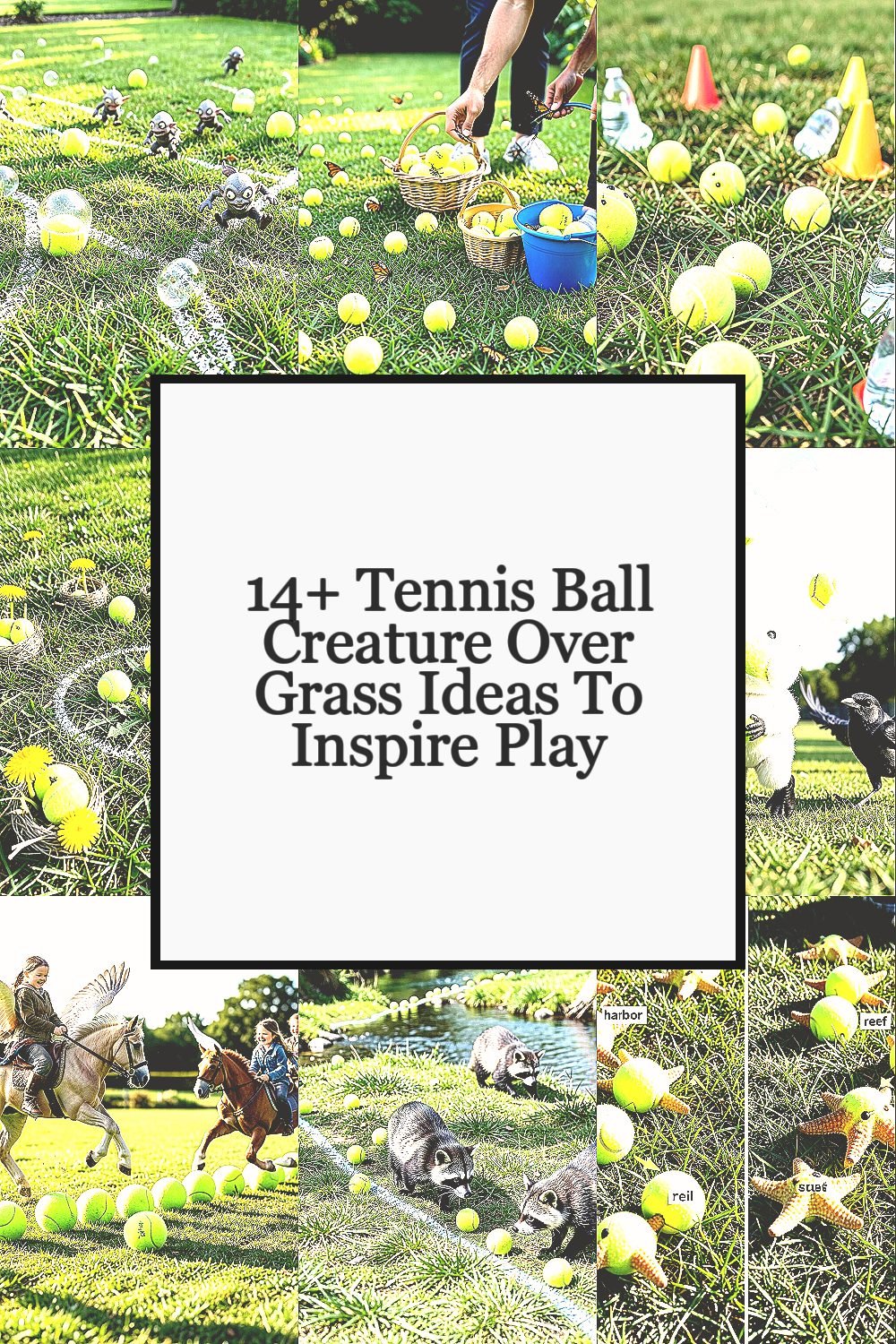
A patch of grass can turn into a whole neighborhood of silly critters. When you use tennis balls as their bodies, your games start to feel alive.
These ideas are made for kicking, chasing, throwing, and gentle practicing while still keeping things playful. Pick a style that fits your space, your pace, and your people.
1. Bubble-Runner Goblins

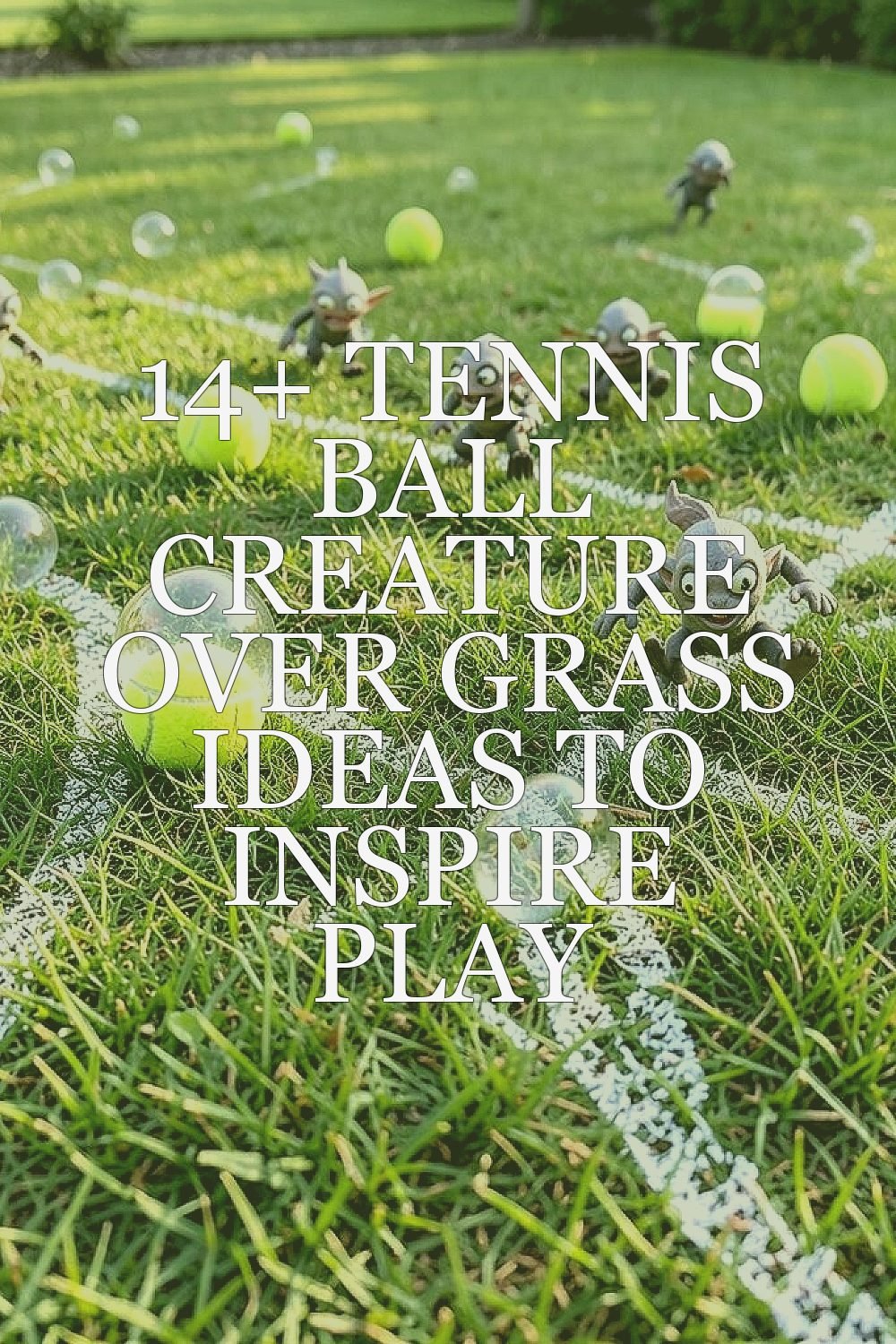
The tennis balls look like tiny bubbles that have rolled into the grass. You can imagine little goblins sprinting between tufts, leaving quick wiggles behind.
Choose a path across your yard using lines made from tape or chalk marks, but keep the edges soft for safety. Toss one ball ahead and tag the “goblin” by reaching it first, then sprint to the next mark.
2. Monarch Moth Gardeners

Scatter tennis balls like glowing seeds across the lawn, each one a little moth waiting to flutter. The way they pop against green grass feels magical even before you start moving.
Set a timer and “plant” your moths by gathering balls into a basket, then releasing them again at new spots. This builds quick footwork and helps your hands practice smooth throws without getting too intense.
To personalize, use different colored cups for different “garden zones.” Keep costs low by using socks, baskets, or any bucket you already own.
3. Tumbleweed Toad Troopers

Picture tennis balls rolling like stubborn little toads that refuse to stay still. They bounce over blades of grass and create a fun, unpredictable pattern.
Practice underhand rolling by pushing each ball in a straight line, then changing directions with your feet. As your control improves, try rolling “toad troopers” around cones made from water bottles.
For a unique feel, add a “battle rule” where you only move when the ball stops. This slows you down just enough to improve accuracy and makes the game feel like a story.
Grab a few cheap cones or use folded towels as markers. The main cost is time and a bit of playful imagination.
4. Dandelion Dragon Nests

Lay tennis balls near dandelion-like spots in the grass to look like dragon eggs in a nest. The bright yellow-green contrast makes every “nest” easy to see while you play.
Make a gentle throwing game by aiming balls into a “nest ring” drawn with chalk. Each successful toss teaches your arm control, and the wide grass surface helps your landing stay forgiving.
Try personalizing by assigning each nest a different dragon mood with rules like soft toss only or side-step first. If you want current trends, think of casual backyard challenges that look like mini obstacle courses.
5. Mossy Mole Launchers

Imagine tennis balls as shiny marbles dropped by mischievous moles underground. When you shove them forward, they seem to “pop up” from the soil.
Create small holes using paper plates or lightweight hoops, then roll balls through them like mole tunnels. This trains lower-body balance and helps your coordination as you stop, aim, and roll again.
To keep it fun for kids, let them name each mole and choose where the next tunnel goes. Using household items keeps the cost close to zero, and that makes it easy to play often.
6. Cloud-Catcher Crows

Hold tennis balls like little clouds and toss them into the air so they land with soft thumps on the grass. Watching them bounce makes the whole yard feel like a calm sky.
Try “catch and step” where you toss one ball upward and catch it at knee height, then take a step to the side. This builds hand-eye coordination and adds light movement without heavy sprinting.
Personalize by changing the toss height or using one-handed catches for older players. You can also make it match what’s trending by turning it into a friendly “yard league” with simple rounds and cheering.
Costs stay tiny since you only need tennis balls and a small open space. If you want extra variety, use different ball states, like slightly worn ones, for new bounce feels.
7. Pinecone Pegasus Riders

Stack or space tennis balls in rows and pretend each ball is a stepping stone for a flying pony. The grass around them becomes the runway where your “pegasus” carries you.
Hop from ball to ball using quick, controlled steps, then switch to side hops for a new challenge. This builds springy legs and helps with rhythm, which matters a lot in running and sports later.
To personalize, pick a theme like “morning flight” or “moon parade,” and let your child choose the travel direction. A few old scarves can work as “bridles” and add story without spending money.
8. River Pebble Raccoons

Place tennis balls in a winding line so they look like raccoons crossing a grassy river. The pattern is easy to see, and it instantly turns walking into a mission.
Practice gentle dribbling by nudging each ball forward with your hand or foot while staying behind the line. This trains control and teaches your body how to adjust as the ball rolls.
Uniqueness comes from story rules, like “raccoons must collect three pebbles” before they rest. For cost, use chalk to draw the river edge and reuse the same map again and again.
9. Starfish Sidewalk Sailors

Imagine tennis balls as little starfish floating on land, each one soaking up sunlight on the grass. When you roll them, they act like tiny boats that steer only if you guide them.
Set up a “sail route” using two target zones, then roll the ball from one zone to the other. Add a step pattern where you move left-right before you roll, which helps your brain and body stay coordinated.
Personalize by using different names for the zones, like “harbor” and “reef.” If you like modern backyard play, you can time each “sail” and race against your own best.
Cost considerations are simple since everything can be done with tennis balls and whatever markers you already have. Even a line of shoes can act like a start and finish.
10. Acorn Armor Ant Sentries

Scatter tennis balls like acorn helmets scattered by tiny ant heroes. The grass makes each one look like a strong little shield that’s ready to be guarded.
Play a “defend the nest” game where one player protects a small cluster of balls while others try to roll one ball away. This builds focus, quick reactions, and careful movement so nobody crashes into anyone.
To personalize, change the size of the defended cluster and switch who is the sentry each round. You can keep it trendy by making it part of a team game with friendly “rescues” instead of harsh competition.
For costs, rely on tennis balls as the only gear, and use a blanket as the nest area. That keeps it cheap while still feeling like a real challenge.
11. Spider Web Sprinters

Use tennis balls to mark “web nodes,” then imagine a spider dashing between them across the yard. The visible dots help players track where to go next, which makes moving feel smooth.
Create a web by placing balls in a loose grid, then sprint to the next node only after a signal. This gives you repeated acceleration practice and teaches controlled stopping, which is key for safe play.
Personalize by using different signals like clapping, stomping, or a whistle from a parent or friend. A simple trend in active play is making challenges feel like games from animated shows, and this fits that vibe nicely.
12. Rock Garden Riddle Herd

Form a small rock garden look using tennis balls as colorful “herd markers” among tall grass. Each ball becomes a stop in a riddle route you can walk or jog through.
Write simple prompts on paper and tape them to your target spots, like “find the tall grass” or “move like a duck.” Then players answer by doing a movement at that spot, which mixes thinking with activity.
Uniqueness grows when you let each person design their own riddles, using their favorite animals or characters. Keep costs low by using scrap paper and reusing the same route each day.
For practical tips, keep the route short and clear, and avoid stepping on slippery patches. Fresh air fun becomes safer when the playing area is simple and visible.
13. Galaxy Slingshot Snails

Imagine tennis balls as glowing snail shells cruising across the “galaxy” of grass. When you pull them back and release them gently, they feel like they’re launching toward a new star.
Set up a target at one end using a hoop or bucket, then use an underhand slingshot motion to roll the ball toward it. This trains accuracy and teaches proper body angle so the ball travels where you want.
Personalize by giving the targets names like “Mars Gate” or “Moon Parking.” If you like current trends, try casual skill challenges where everyone attempts the same shot and celebrates improvements.
14. Volcano Vent Vultures

Place tennis balls in a circle like little vents around a grassy volcano. The shape feels dramatic, and it makes everyone naturally move with purpose.
Stand in the center and roll balls outward while shouting a pretend warning like “hot air!” Then practice returning balls back to the center with controlled throws or rolls.
To personalize, set different rules for each round such as only using the right hand or only rolling with your toes. Costs stay small because you already have tennis balls, and you can use any container as the “volcano core.”
For a unique twist, add a “wind” rule where players must move in a direction suggested by a parent or friend. That keeps the game lively and keeps reactions quick without getting too rough.
15. Lemon-Lantern Lizard Leaps

Picture tennis balls as lemon lanterns that guide a lizard at night across the lawn. Their bright look makes it easy to keep eyes on the play area while you move.
Set up two or three “lantern” spots and practice leaping between them with a soft landing. This builds leg strength and helps your body learn how to absorb impact safely on grass.
Personalize by turning the lanterns into color cues that tell players which direction to jump. If you want practical variety, try one-foot leaps for balance practice and two-foot leaps for rhythm.
Cost considerations are friendly since tennis balls are the main gear, and grass already acts like the floor. Add a couple of household items like cones or cups for targets, and you’re ready for many rounds.
As you play more, adjust the distance so it feels challenging but never exhausting. Celebrate control, not speed, and you’ll keep the game fun longer.