A bright tennis ball can turn a dull day into a playful training moment. Your dog will love the challenge, and you’ll love how creative it feels.
1. The Two-Handle Tennis Ball Tug Game
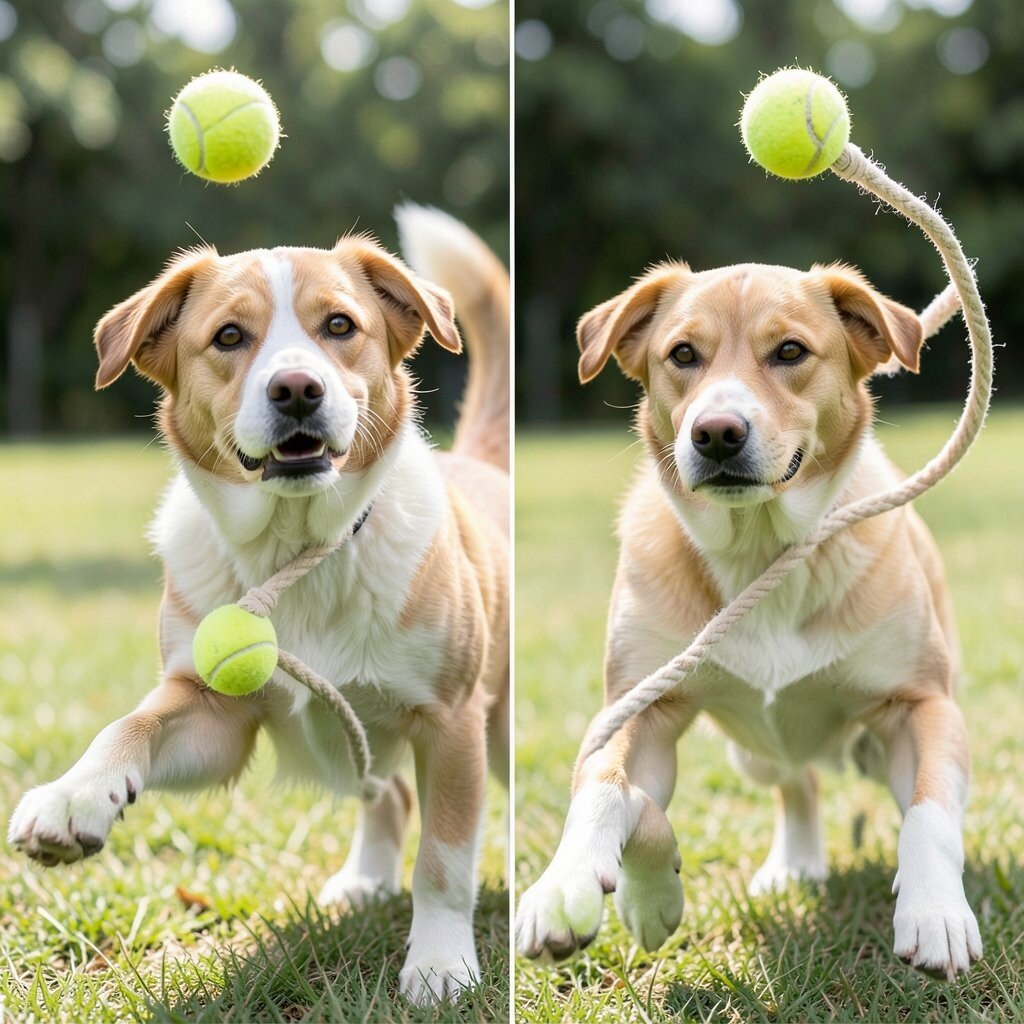
Grab two tennis balls and tie one end of a soft rope or dog-safe strap to each ball so they can swing freely. Present one ball at a time, then slowly move both so your dog has to choose, grab, and pull.
The visual is simple and joyful: two fuzzy yellow targets bobbing at different heights while your dog tracks the motion with focused eyes. This activity builds grip strength, impulse control, and confidence because your dog learns they can win through cooperative effort. Keep sessions short, stop before frustration, and swap in different rope lengths for personalization based on your dog’s reach.
2. Sock-and-Ball Burrowing Treasure
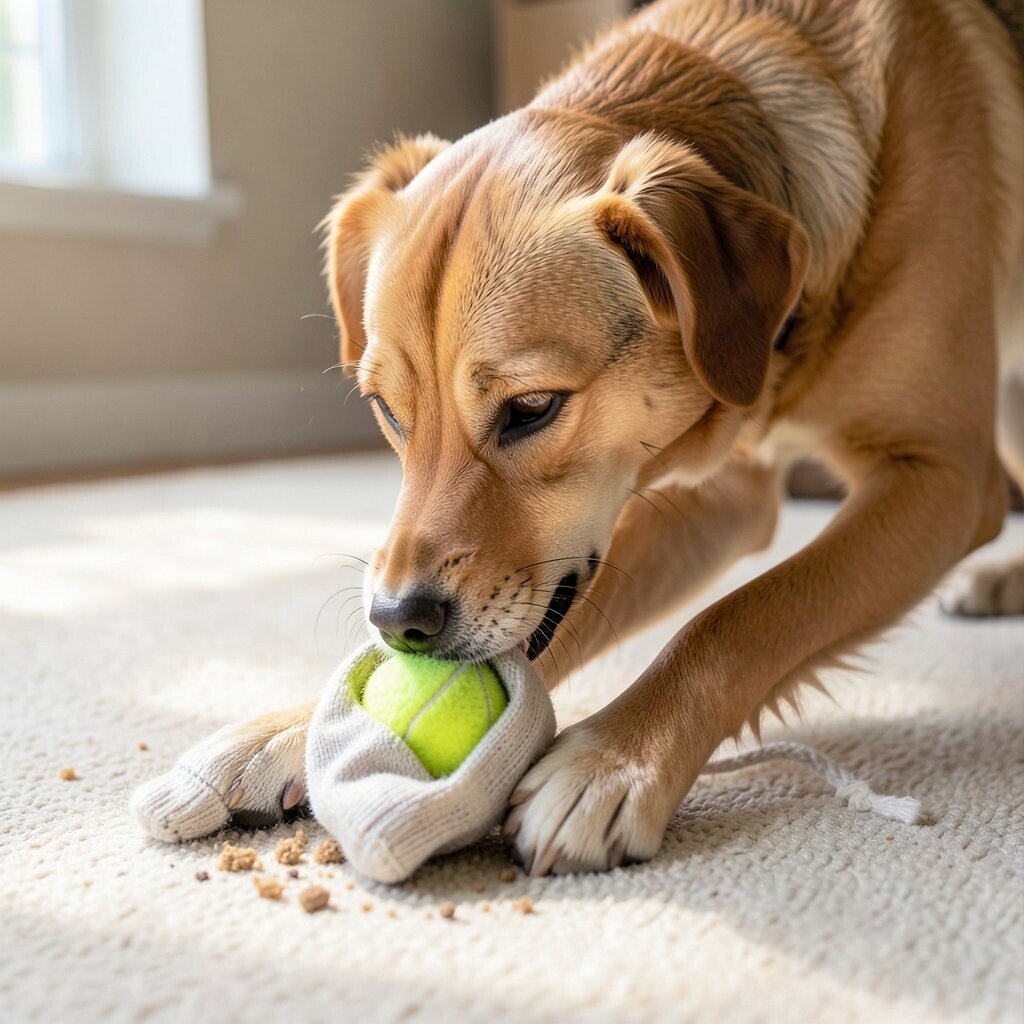
Hide a tennis ball inside an old sock, then loosely knot the sock so your dog can dig but not swallow the fabric. Toss it into a safe area and encourage your dog to nose, paw, and pull until the ball pops out.
Watching your dog work through the “mystery bundle” looks like tiny construction work, with paws pushing and teeth grabbing at the soft knots. This supports natural foraging behaviors and can reduce boredom by giving your dog a satisfying, chew-friendly goal. Use a sock with strong stitching, rotate textures like fleece or cotton for variety, and consider saving a few clean socks to reuse across days.
If you want a trend-style twist, think “messy but controlled” like the indoor enrichment setups trainers share online. Try a consistent start cue so your dog learns what the activity is, then reward calm digging with praise and a short play break. Tennis balls are usually affordable, and reusing socks keeps costs low.
3. Floor Is Lava With Bounce Targets
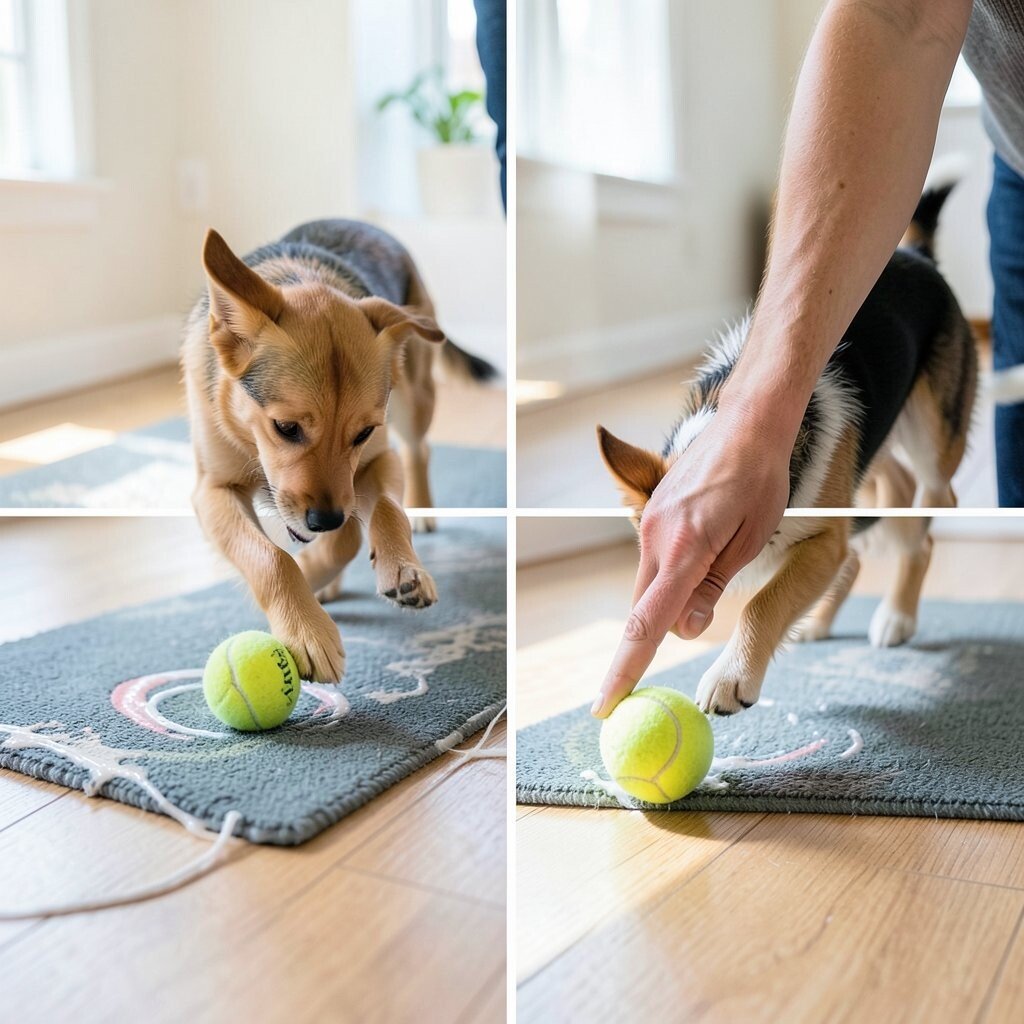
Choose two or three spots on the floor and place the tennis ball so it can bounce near each spot, like a moving target that stays low. Toss gently, then guide your dog to chase and pick up, using your hand to mark the safe landing zones.
This creates a vivid scene of your dog springing forward and landing right where you point. The benefits are quick mental stimulation, better coordination, and a fun way to practice reliable pickup. Personalize by setting the targets closer for a smaller dog or farther for a stronger runner, and use a hallway mat to keep footing stable.
To make it extra actionable, practice a simple cue for “get it” and another for “bring it back,” then reward immediately when your dog returns. If your dog tends to drop the ball too early, try shorter distances and slightly softer tosses. Tennis balls bounce unpredictably, which adds variety without extra gear.
4. Quiet Time Nose Work With Ball Scents
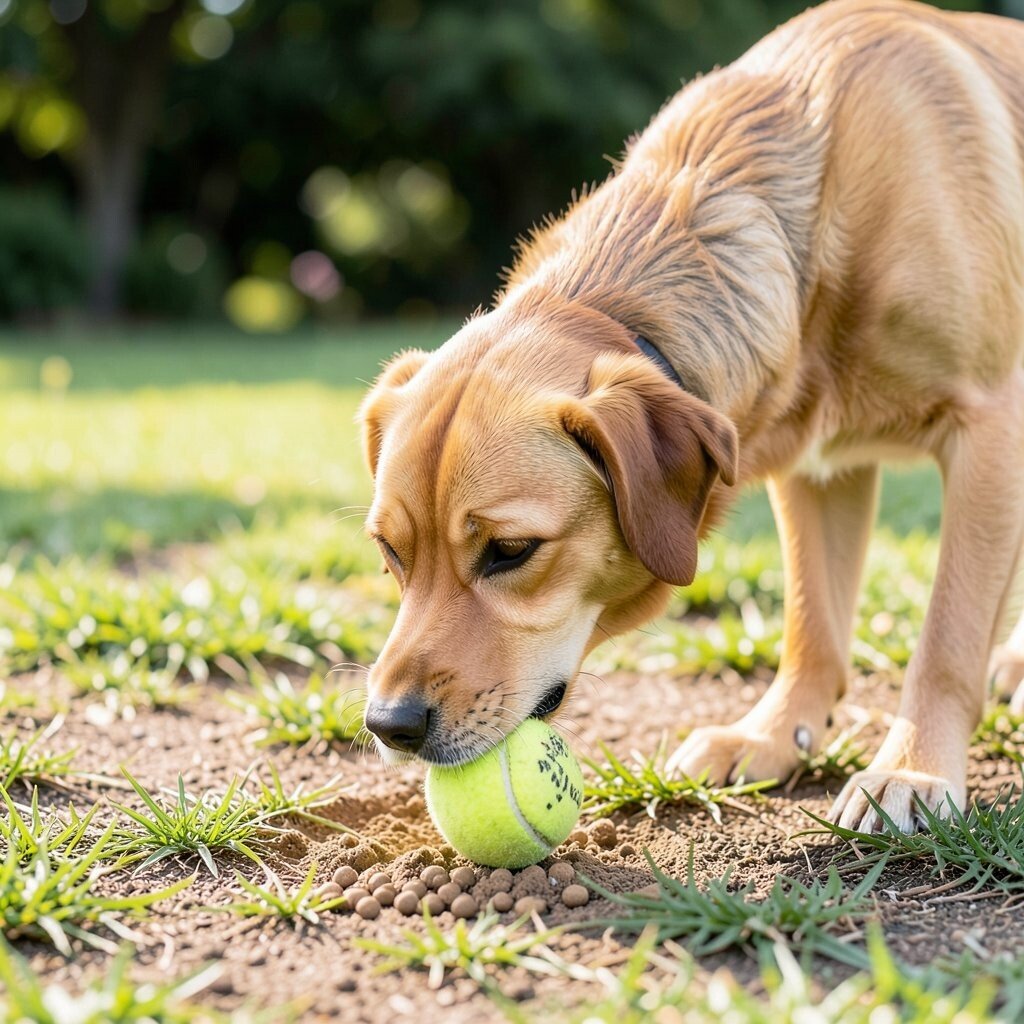
Lightly rub a tennis ball with a treat-smelling oil-free scent like peanut butter on the outside of a treat wrapper, then let the scent sit for a few minutes before play. Let your dog sniff first, then roll the ball a short distance so they follow the smell.
The visual feels calm and focused, like a little detective scanning a yard or room for a hidden clue. This activity supports scent tracking and can help a high-energy dog settle because the nose does the work instead of the body. Keep it safe by using only dog-safe scents, and rotate scent sources such as plain kibble dust or a tiny bit of training treat aroma for personalization.
For practical tips, use a consistent pattern, like starting near the same spot and rolling the ball the same direction each session. If your dog gets overexcited, pause, lower your voice, and return to a shorter roll. The cost is minimal since tennis balls are reusable and scent can come from foods you already have.
5. Ball Drop and Station Practice
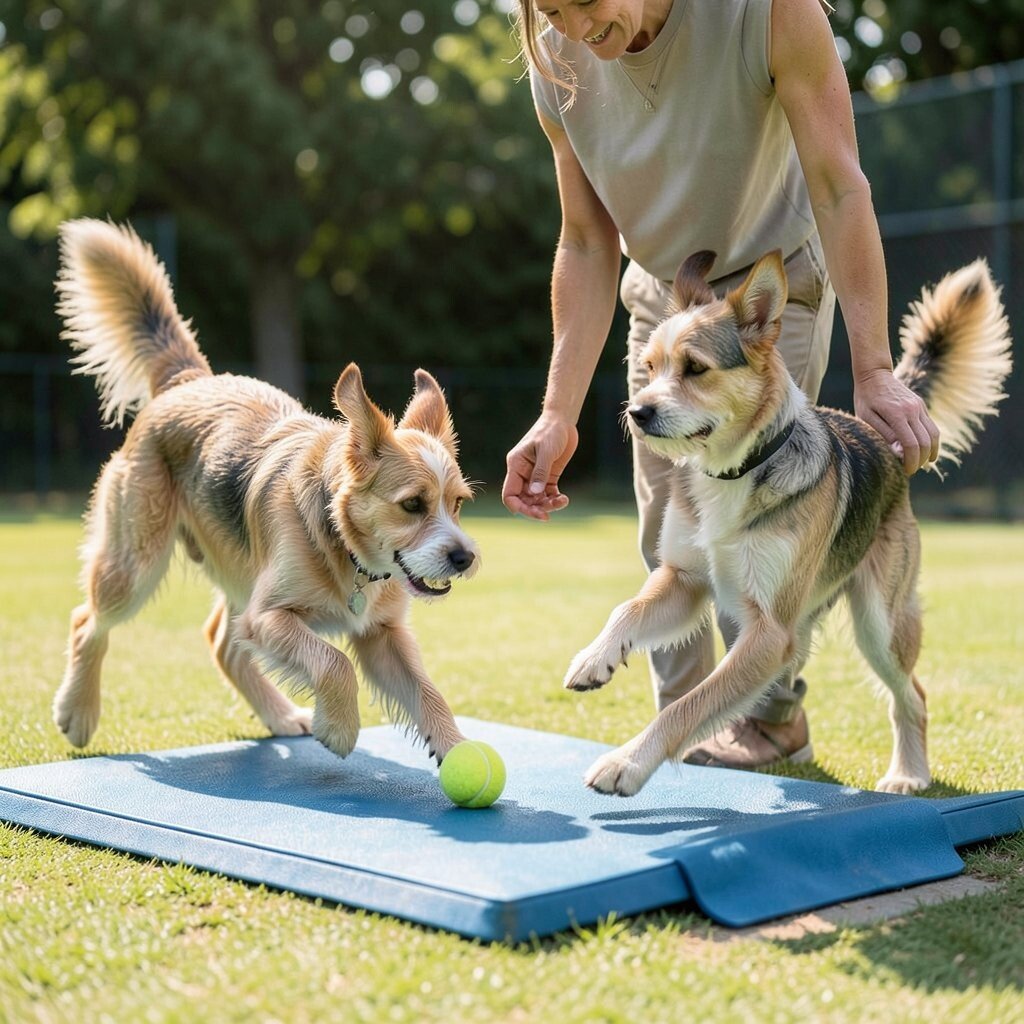
Pick one “station” spot, like a mat, and toss a tennis ball to your dog while you point to the station. When your dog grabs it, guide them back to the mat before rewarding.
The scene is energetic but organized: your dog zips to the ball, returns to the mat, and waits for the next toss. This improves focus, recall through play, and patience at the same time. Personalize the difficulty by changing where you toss from and by using different speeds, like slow rolling for beginners and short lobs for confident chasers.
To keep it doable, limit the number of drops and end while your dog is still eager. Try a gentle “place” behavior if your dog loves to sprint, so they learn that success includes staying near you. Tennis balls are cheap, and you only need a mat, which many people already own.
6. Tennis Ball Bowling With Light Skittles
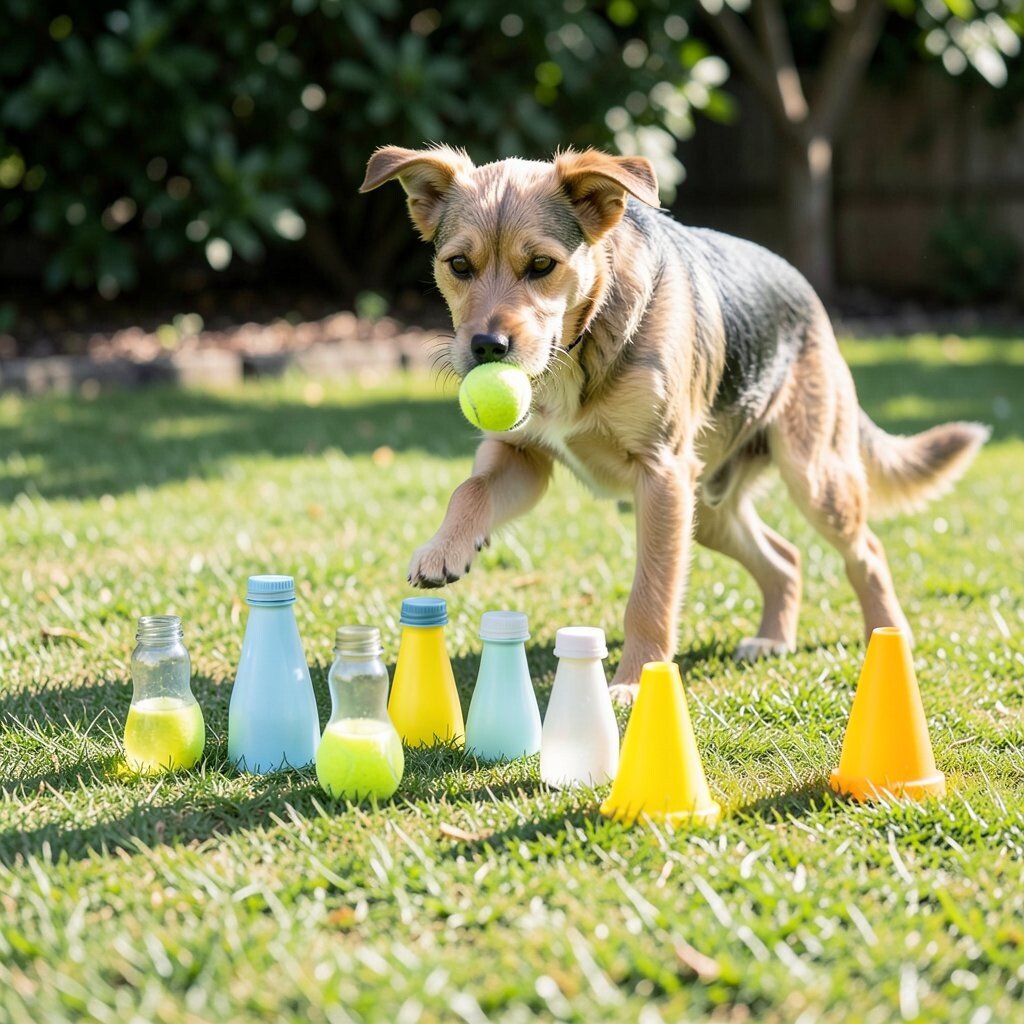
Set a few lightweight bottles or soft cones in a small row, leaving safe space between them and your dog. Roll a tennis ball toward the skittles and encourage your dog to wait, then chase and bring the ball back after each roll.
This looks like mini backyard bowling, with bright yellow rounds making quick taps and your dog ready to run. The benefits include target awareness, impulse control with turn-taking, and motor skills from tracking and chasing. For personalization, use different arrangements like a triangle or a staggered line so the “pins” never feel too predictable.
If you’re following current trends in enrichment, many trainers now stress structured play games over random throwing, and this fits perfectly. Keep the skittles stable and choose soft ones if your dog bumps them hard. Costs stay low because you can use items you already have at home.
7. The Tennis Ball Hide-and-Seek Sprint
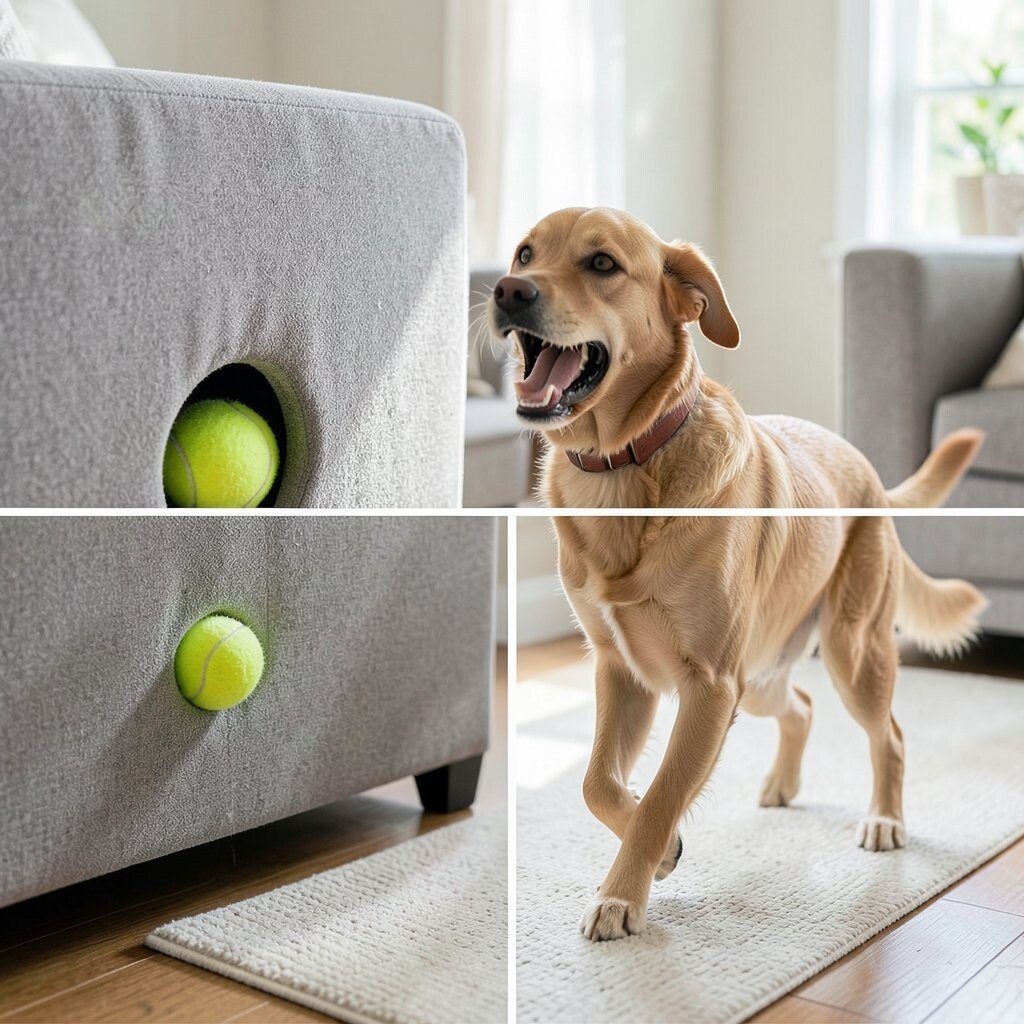
Pick one room and hide a tennis ball behind a large furniture-safe object, then call your dog in a cheerful voice. Keep the hiding spots simple at first so your dog learns the game quickly.
You’ll see a very specific kind of excitement: your dog freezes, scans, then bursts into motion when they catch the scent trail. This builds problem-solving, works on following your cues, and gives your dog a rewarding search routine. Personalize by changing the hiding style, like behind a pillow versus near a pet bed, depending on what your dog can reach safely.
Practical tip time is key here, so reward the moment your dog finds the ball and calmly restart. If your dog gets stuck or starts barking at one area, point subtly with your body and reduce the challenge. Tennis balls are sturdy and survive repeated hide-and-seek, so you get long-lasting value for very little money.
8. Ball Retrieval With Ladder Steps
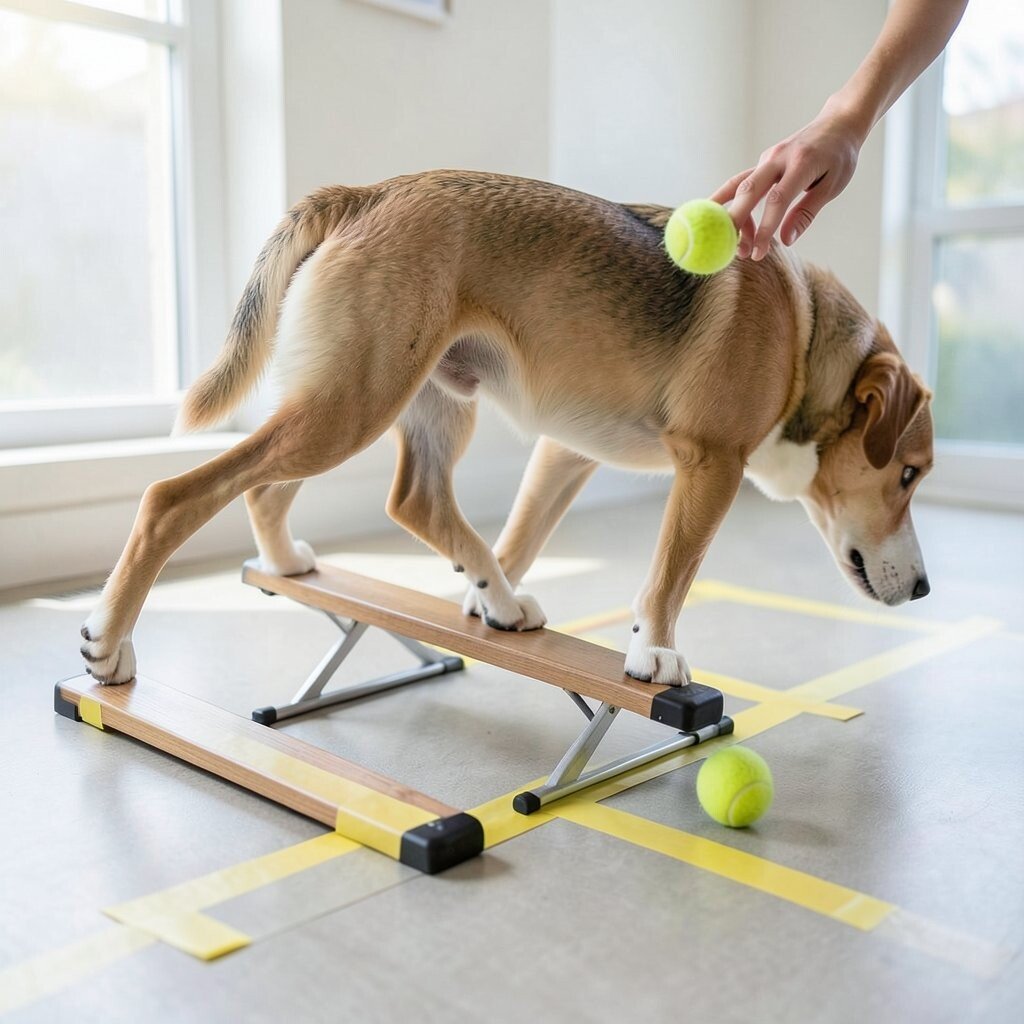
Use a short agility ladder or create step lines with tape on the floor. Toss the tennis ball so your dog has to cross the steps to get it, then return to you for the next throw.
The visual is clear and athletic: paws landing on each rung while the tennis ball waits just beyond the line. This strengthens coordination and builds confidence because your dog learns to move carefully rather than just sprint. Personalize by making the ladder wider for safer spacing or using smaller tosses so less experienced dogs stay successful.
For actionable practice, say your cue as your dog steps into the first rung, then reward the calm completion. If your dog skips steps, slow down and help them with a guiding hand motion. While ladders can cost money, tape lines work for free and still create the enrichment effect.
9. Muffin Tin Tennis Ball Snack Slots
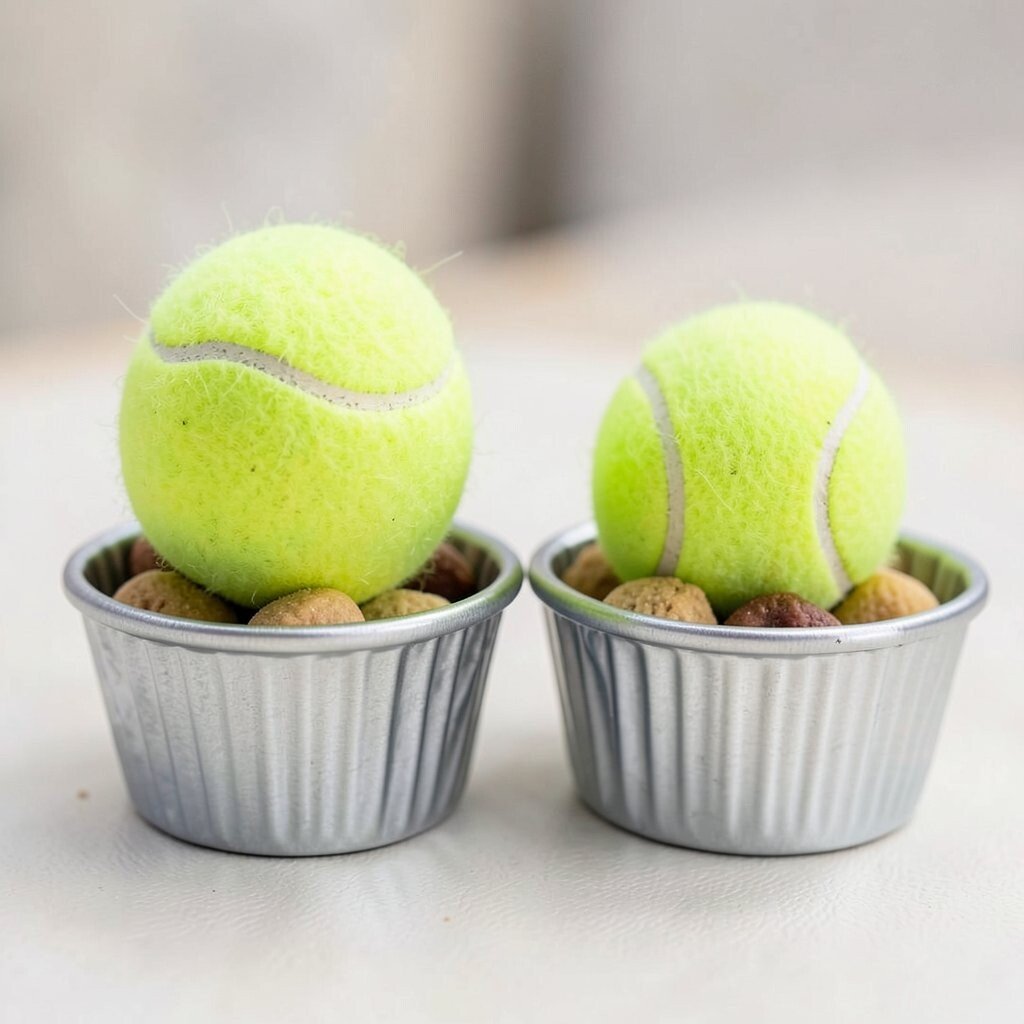
Place a tennis ball on top of a muffin tin cup, then tuck small treats partially under each ball so your dog nudges and lifts. Use one or two cups at first so your dog understands that pushing leads to tasty payoffs.
This creates a fun “treasure dome” look where tennis balls sit like tiny roof hats. The benefits are strong for foraging skills, problem-solving, and bite control because your dog learns to use nose and gentle pressure. Personalize by using different ball positions, like slightly off-center, so the treats are never in exactly the same spot.
To keep it practical, choose a muffin tin you don’t mind dropping and use quick, easy treats to avoid long waiting. This is a popular approach in enrichment circles because it blends simple household tools with deep brain work. Costs are low since muffin tins are common and tennis balls are inexpensive.
10. The Tennis Ball Reward Chain for Focus
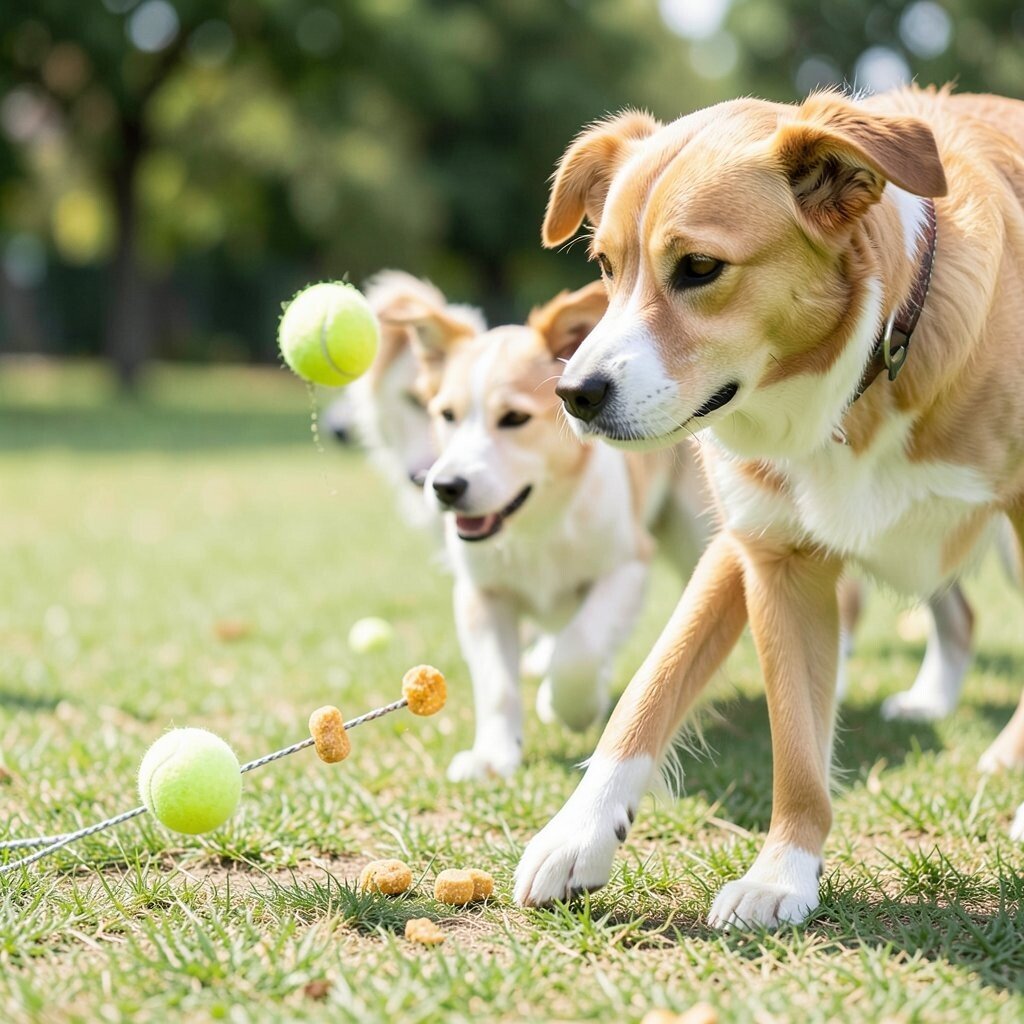
Start with a single tennis ball and reward calm attention when your dog looks at it. Then roll the ball a short distance and reward immediately when your dog returns to you.
You’ll notice a pattern forming: your dog starts tracking the ball, then naturally brings their attention back to you for the next reward. This improves focus, strengthens a reliable return habit, and helps manage excitement during play. Personalize the reward chain by mixing in different treat types like crunchy bites versus soft treats so your dog stays motivated.
For practical tips, keep throws short and raise the difficulty only after your dog succeeds several times in a row. If your dog grabs and runs, calmly pause the game until they return, then restart with smaller distances. Tennis balls are one of the cheapest enrichment tools, and the “brain work” comes from timing you control.
11. Sidewalk Target Toss and Retreat
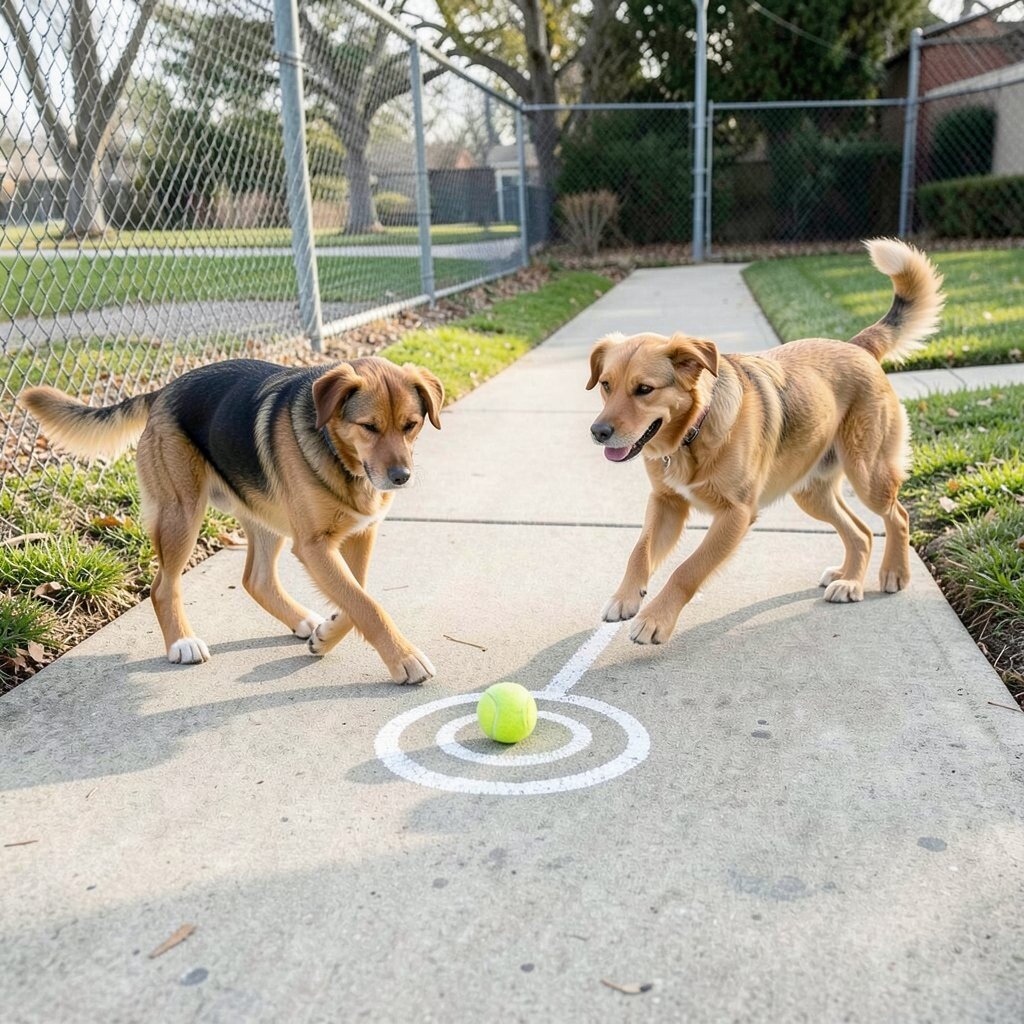
Choose a safe sidewalk or fenced area and mark a target line with a small object on the ground. Toss the tennis ball so your dog approaches the line to get it, then ask for a quick retreat back to you before another toss.
The visual is like a playful drill where your dog checks in after each grab, moving in short bursts. This helps with impulse control and listening skills during real-world distractions, which is a big win for many owners. Personalize by changing the target line distance and by adjusting your retreat cue based on your dog’s speed and confidence.
To keep it friendly, use a relaxed tone and reward any attempt at returning, then gradually require a tighter “back to me” position. If the area has distractions, start farther away and make success easy. Tennis balls work great outdoors, and you can carry a small bag of balls without breaking your budget.
12. Tennis Ball Canopy Under a Chair
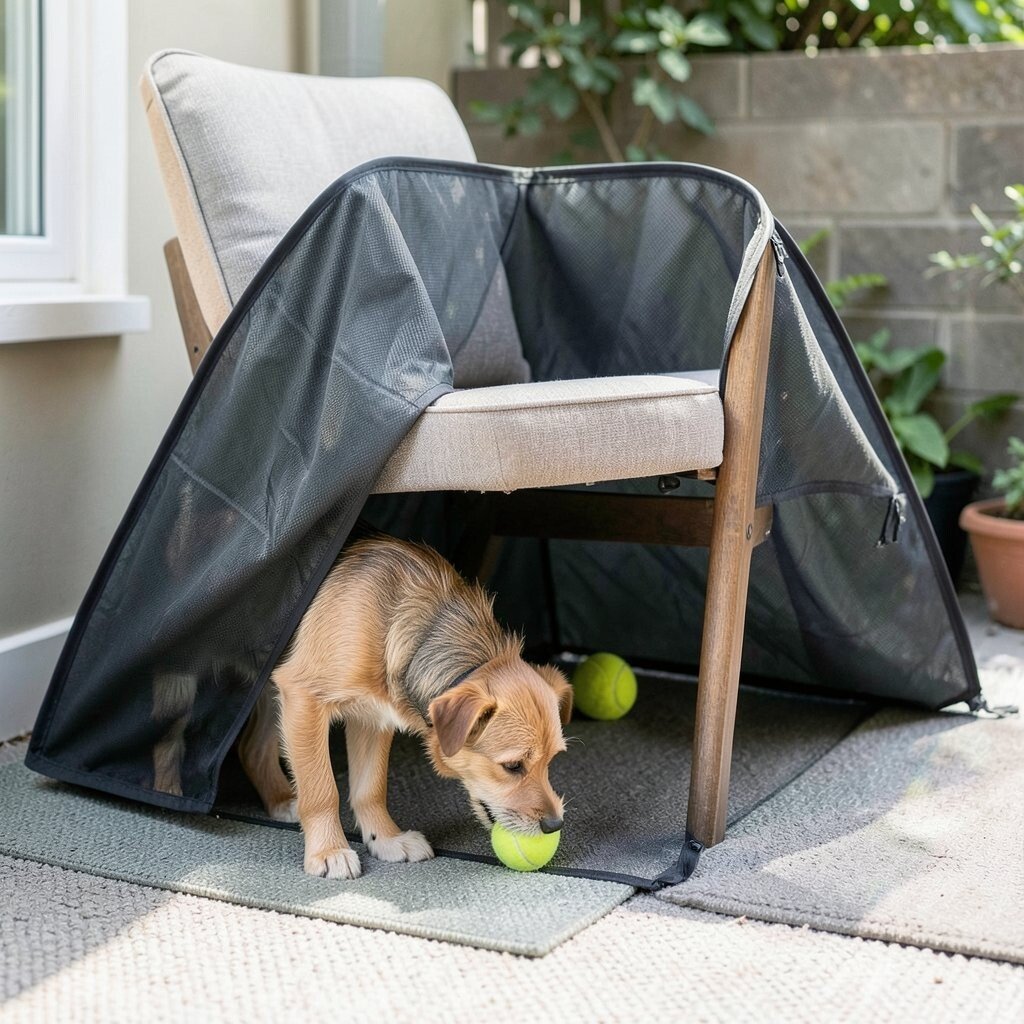
Place a chair over a safe area, like a patio mat or carpeted corner, then slide a tennis ball so it rolls partway under the chair. Guide your dog to investigate, and reward the moment they nudge the ball out.
This feels like a secret little stage, with the tennis ball peeking from the shadows while your dog carefully noses the chair area. The benefits include curiosity building, controlled problem-solving, and gentle chewing opportunities if your dog likes to carry the ball. Personalize by choosing different chair types and heights so your dog faces new angles without needing new toys.
For practical tips, keep the space clear of hazards and avoid chairs that could tip if your dog leans hard. Use treats to encourage safe sniffing instead of frantic pawing. The cost is basically zero beyond what you already own, which makes it a great option for quick enrichment days.
13. Ball Swap With Two Favorite Toys
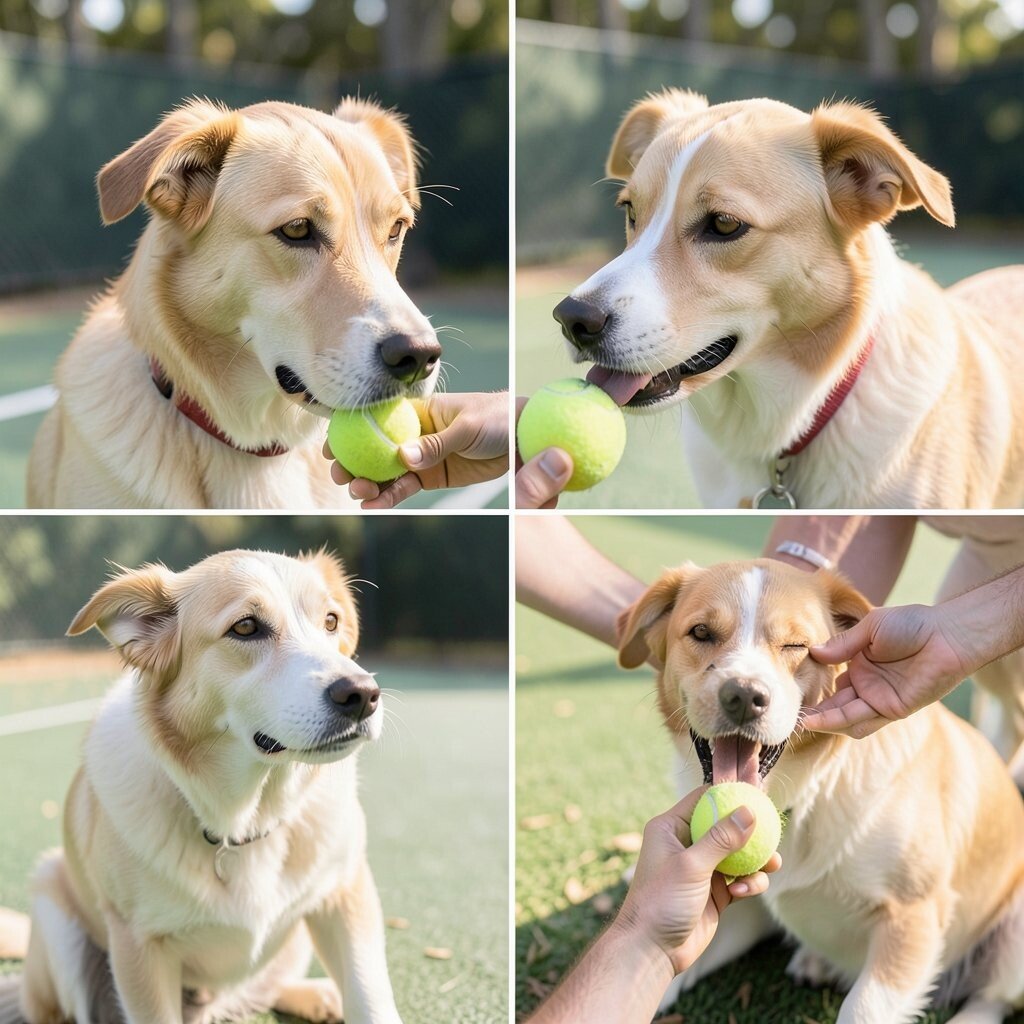
Have your dog’s usual toy ready and a tennis ball in your hand, then offer one first and switch when your dog engages. When your dog takes the tennis ball, give the other toy back or reward a clean exchange, so no one guards or grabs too fast.
You’ll see a neat “trade” moment where your dog alternates between soft comfort and the bouncy yellow ball. This supports impulse control, reduces toy guarding habits, and teaches reliable cooperation. Personalize by swapping at different speeds, like slow for anxious dogs and quick for playful dogs, based on your dog’s temperament.
To make it actionable, use a consistent cue like your usual “give” or “swap,” and reward when your dog releases without tension. If your dog is sensitive, start with longer intervals between swaps so it stays calm. Tennis balls are inexpensive, and they also add a new texture to keep the game fresh.
14. Tennis Ball Ladder Maze on Carpet
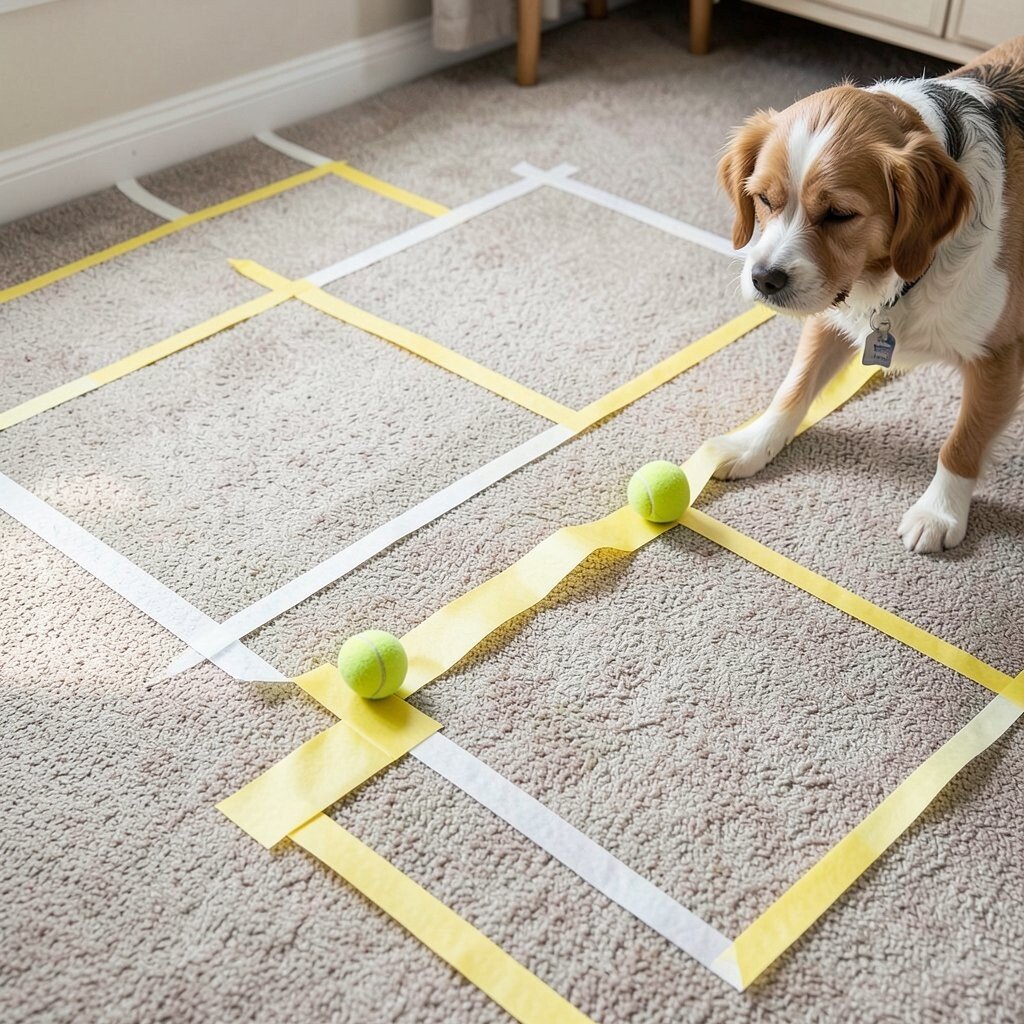
Lay strips of painter’s tape on carpet to create a simple maze pathway, leaving enough room for your dog to step through. Roll a tennis ball along the tape lines so your dog follows the path and then retrieves the ball at the end.
The visual is surprisingly satisfying: crisp tape lines guiding the ball like a tiny road map while your dog traces the route. This offers mental planning, strengthens attention, and adds light physical exercise without high speed. Personalize the maze by making turns sharper or wider, and by changing carpet spots so traction feels different.
For practical tips, keep the tape edges smooth so paws feel safe, and remove tape when done to protect the floor. This is trending because many enrichment people now focus on “micro-courses” you can set up in minutes at home. Costs are minimal since painter’s tape is cheap and reusable across many sessions.
15. Tennis Ball Echo Toss With Callbacks
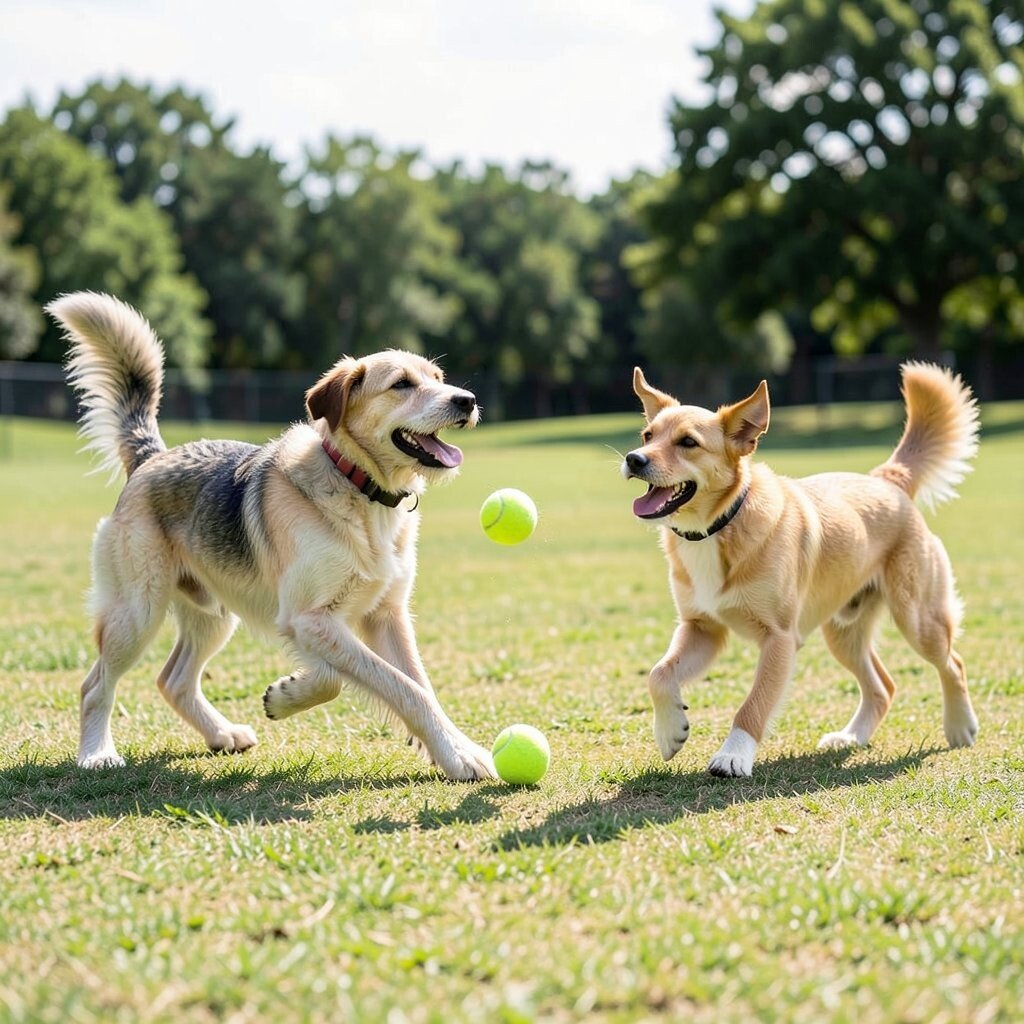
Go to an area with safe open space and toss a tennis ball at a slight angle so it bounces back toward you. Call your dog as they move, then reward them for returning to your side before the next toss.
This makes a lively, almost musical rhythm, with the ball hitting the ground and your dog responding to your voice like a cue echo. The benefits include building a stronger recall, improving timing, and reducing the chances your dog keeps the ball away from you. Personalize by changing your recall distance and using different tones so your dog learns the callback matters more than speed.
If your dog loves running, try a soft bounce toss rather than a hard throw to keep it fun and joint-friendly. Make the session feel like a game, not a test, by celebrating even small returns. Tennis balls are affordable, and the “echo” effect uses the ground you already have.
16. The Tennis Ball Weather Report With Movement Choices
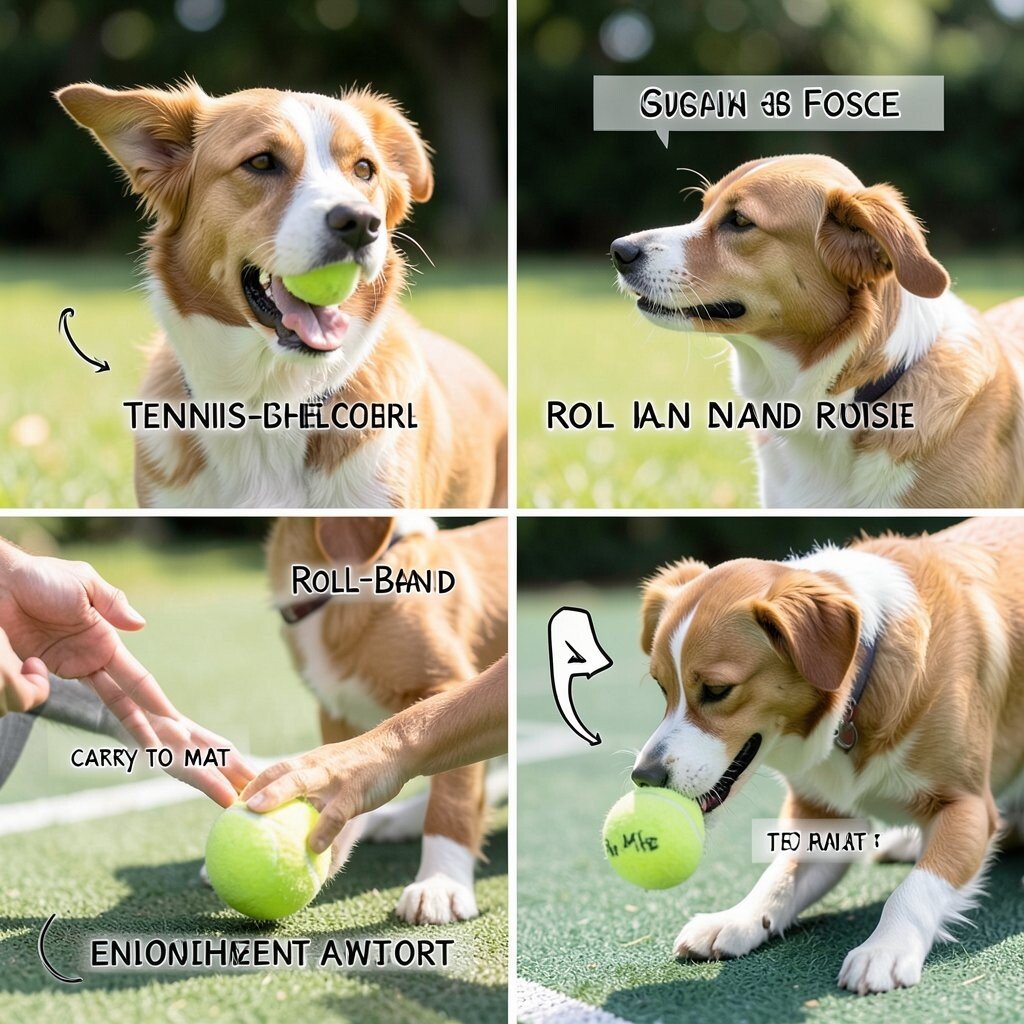
Choose two ways to play, like roll-and-fetch and roll-and-nose, then pair each with a simple signal such as a hand motion or a short phrase. Let your dog pick which option they want after a brief look, then follow through consistently.
The visual is charming and human-like: your dog watching your hands closely, then steering the play toward the style they prefer. This builds decision-making skills, helps your dog stay engaged longer, and supports emotional balance because they feel some control. Personalize by adjusting the choices over time, like adding a gentle “carry to mat” option for calmer days.
For practical tips, keep the signals clear and reward the choice quickly so your dog learns cause and effect. This fits current enrichment trends that focus on choice-based play, which many owners find reduces stress and increases motivation. Costs stay low because you’re using tennis balls and your creativity, not expensive gear.