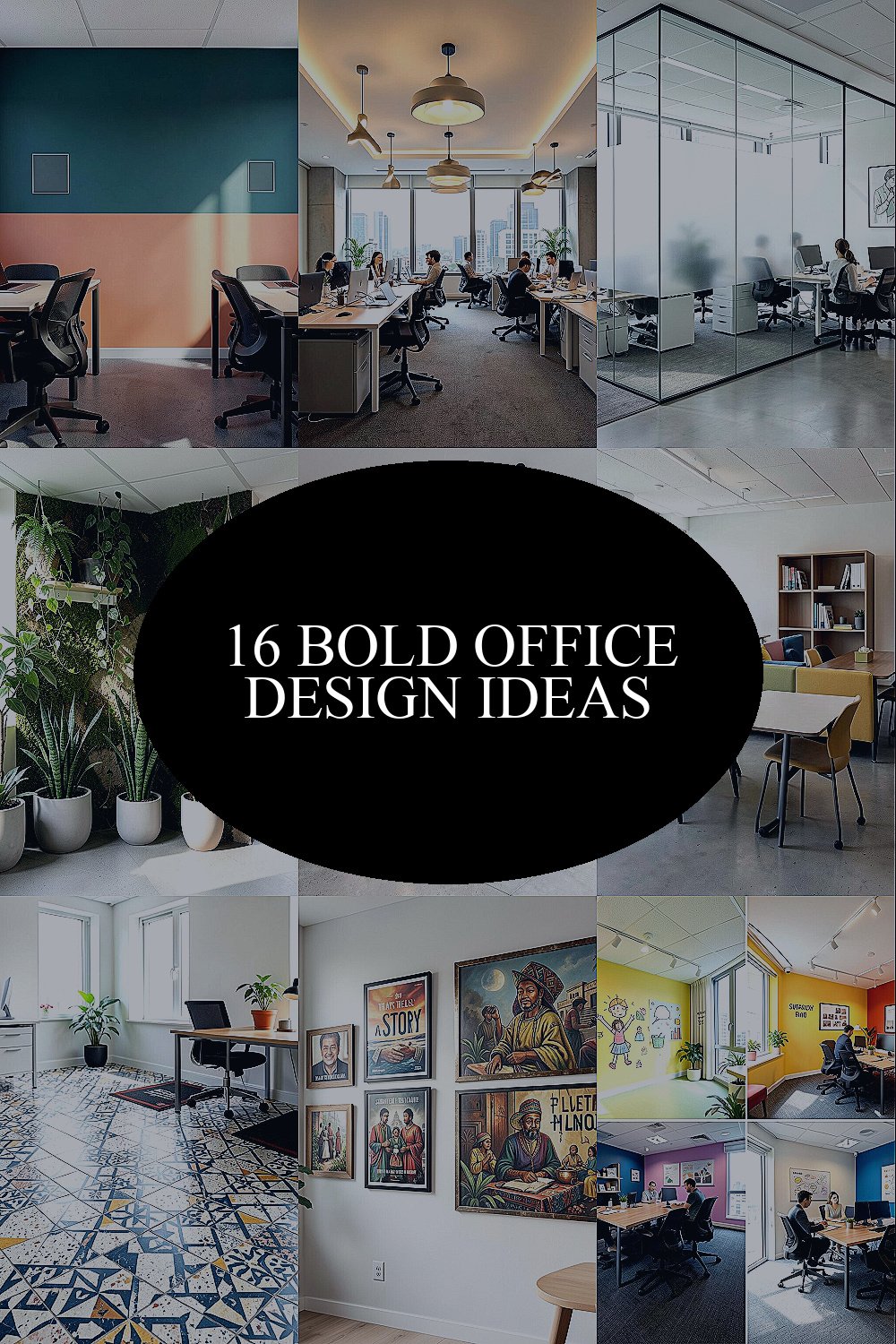
The moment you walk into an office, you feel the mood before you notice the details. Great design can make work feel lighter, clearer, and more motivating.
This list is packed with bold, practical ideas you can actually use, even when you are working with a real schedule and a real budget.
1. Color-Blocked Accent Walls

Choose one strong color and frame it with calmer shades around it, so the space feels focused but not loud. A color-blocked wall can instantly make a meeting zone feel special and memorable.
Pick a palette that matches your brand or your team’s energy, like deep teal for calm focus or warm coral for creative collaboration. Keep the shapes simple, and test paint samples on the wall for a few days before committing. For personalization, add removable wall decals near desks to create small “zones” for different roles.
2. Ceiling-First Lighting Statements

Instead of treating lighting as background, make it a design feature by using sculptural pendants or layered ceiling fixtures. When light patterns glow above, your whole room feels more intentional and welcoming.
Try warm dimmable bulbs in focus areas and brighter settings near collaboration zones so people can adjust to tasks. Consider energy-efficient options to keep monthly costs under control while still getting a bold look. If you can, aim for different heights of fixtures so the office has visual rhythm rather than flat brightness.
You can also add a subtle light line behind a drop ceiling for a modern “floating” feel. For practical setup, let an electrician plan wiring paths and switch locations so day-to-day use stays easy.
3. Glass Walls With Frosted Logic

Use glass to keep sightlines open, then soften private moments with frosted bands or etched patterns. The result feels airy, while still giving teams enough separation for phone calls and heads-down work.
Benefits show up quickly because people can find colleagues faster and the space feels larger. You also get sound dampening options like laminated glass, which helps reduce noise creep. Keep your frosted areas focused on sensitive spots, like conference room fronts and shared printer areas.
To personalize, add subtle office artwork in an etching style that matches your brand colors. For cost considerations, weigh full-height glass on a few key walls instead of installing it everywhere.
4. Biophilic Corners With Living Texture

Bring nature inside using planters, moss panels, and leafy shelves placed near natural light. A living corner makes the office feel calmer and helps people feel more comfortable during long days.
Go for low-maintenance plants like pothos or snake plants, and use smart watering setups if you have forgetful schedules. Try mixing tall and trailing plants so the wall feels layered rather than flat. A small biophilic nook near a break area can also make casual conversations more relaxed.
5. High-Contrast Reception With Clear Wayfinding

Your reception sets the tone, so make it bold with a strong backdrop like dark wood, bright laminate, or a textured wall. Add contrasting signage that guides visitors without making them feel lost.
A clear entry layout reduces questions and speeds up check-ins, which benefits both staff and guests. Choose durable materials for the parts people touch most, like seating edges and counters. For personalization, match the reception colors to your team’s style, then keep the rest of the office calmer so the entry stands out.
Keep cost in mind by mixing one splurge item, like a custom front counter, with simple upgrades like improved lighting and a better seating layout.
6. Modular Furniture That Moves With Teams
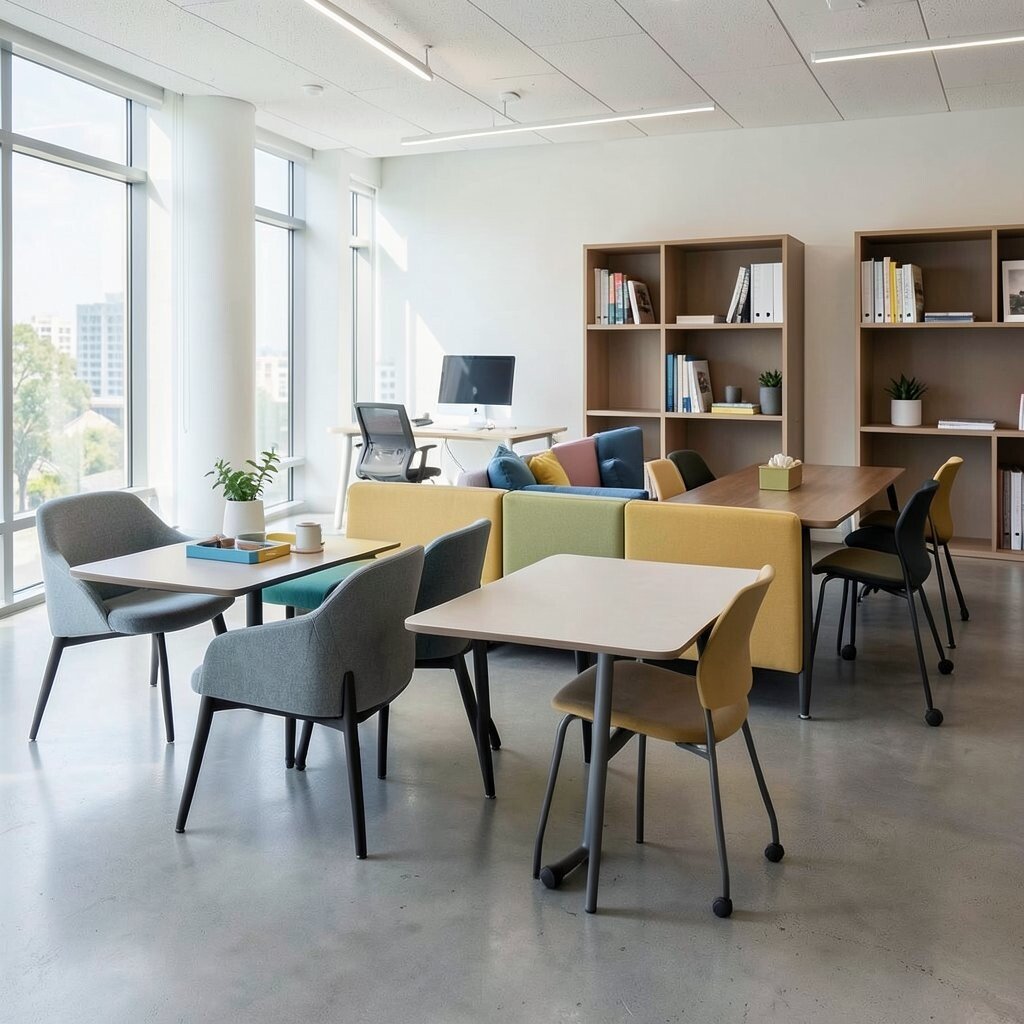
Instead of fixed rows of desks, use modular pieces that can shift as teams grow or projects change. Flexible furniture gives the space a “ready for anything” vibe, and it looks good in every setup.
Pick chairs and tables with clean lines and a consistent finish so the office feels cohesive even when you rearrange. A practical tip is to plan storage inside modules, because hidden organization makes bold designs easier to maintain. For personalization, let teams choose small accessory colors, like desk trays or throw pillows, while keeping the main furniture palette steady.
When budgets are tight, start with seating and a few mobile tables, then expand later. This approach matches current trends toward agile workplaces and project-based layouts.
7. Patterned Floors for Instant Personality
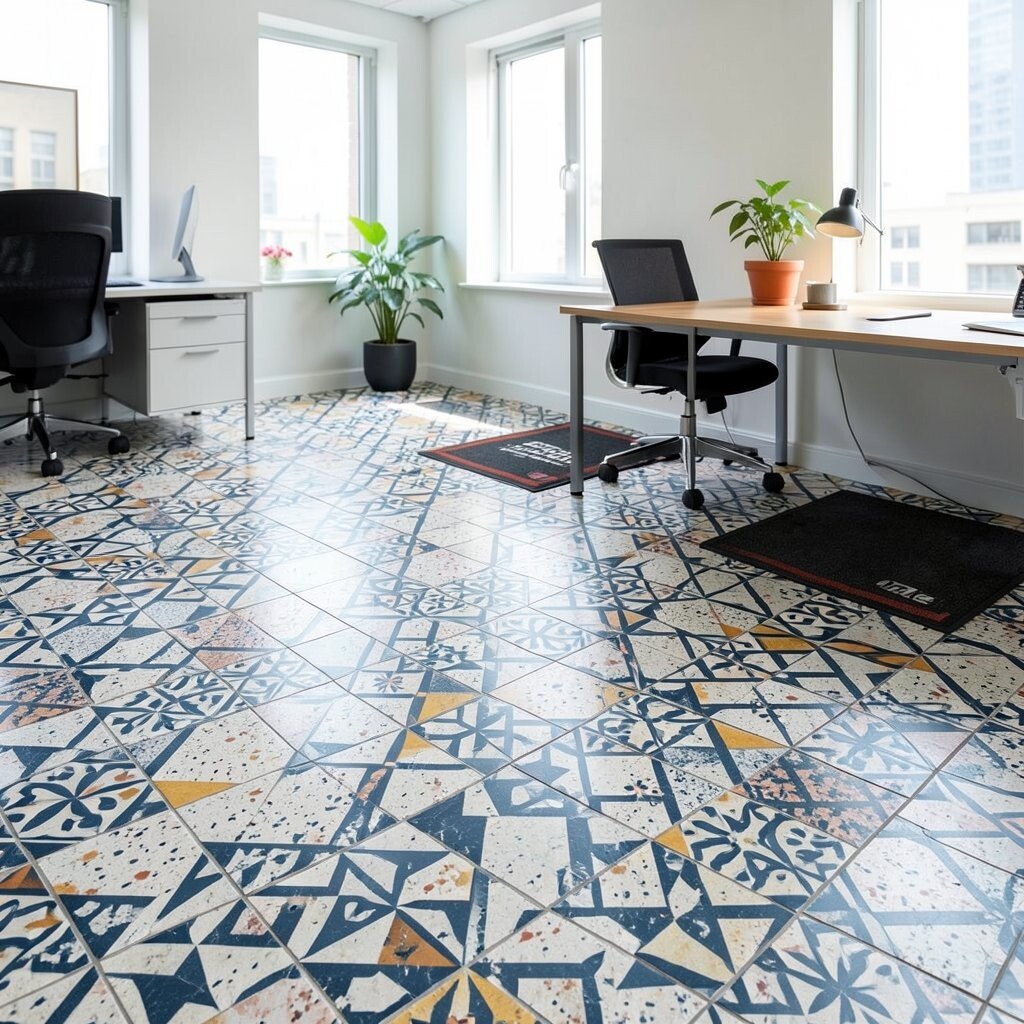
Switch from plain carpet to patterned tiles or durable vinyl with geometric designs. When flooring carries the visual energy, it makes the whole office feel more lively without cluttering the walls.
Choose patterns that hide everyday scuffs, like subtle speckles or repeating shapes. Benefits show up as people are less distracted by visual noise, because the pattern can visually “hold” the space together. For practical upkeep, select materials meant for commercial foot traffic and pair them with easy-clean entry mats.
If you want personalization, repeat your brand colors in a small way within the pattern. Cost can stay reasonable when you install patterns only in key paths or common zones rather than throughout the entire floor.
8. Statement Wall Art That Tells a Story

Use large-scale art to anchor a room, like framed prints, metal wall pieces, or fabric panels. Big art gives people something to look at besides screens and can make the office feel more human.
Make the artwork meaningful by choosing themes connected to your team’s mission, local culture, or customer community. This kind of visual focus can boost motivation because the space feels like it belongs to the people who work there. For practical tips, place art at eye level and keep it away from direct glare spots so it stays pleasant to view.
To stay on budget, consider rotating art on a monthly basis by printing new posters on a schedule. Many teams also blend thrifted frames with fresh artwork to keep costs down while staying bold.
9. Bold Meeting Rooms With Different Moods

Make meeting rooms feel like separate experiences by designing each one with its own color and texture. A room for brainstorming can be bright and playful, while a room for client calls can feel calm and professional.
Benefits come from clearer emotional cues, because people subconsciously know what kind of work belongs in each space. Add writable wall surfaces so the room supports collaboration instead of just hosting meetings. For personalization, label rooms with themes your team loves, like “Strategy,” “Launch,” or “Support,” using simple typography.
Cost considerations are easier when you limit big changes to walls, lighting, and wall materials rather than replacing the whole room. Keep one consistent design element across rooms, like the same type of chair, so the office still feels unified.
10. Acoustic Panels That Look Like Design

Sound can quietly ruin productivity, so add acoustic panels that double as modern wall art. When the panels look intentional, you get both comfort and style in one move.
Choose fabric-wrapped panels or geometric wood slats that match your color scheme. A major benefit is reduced echo, which makes conversations clearer and helps focus areas feel calmer. Keep installation practical by spacing panels where noise collects, like near open desks and hallway turns.
For personalization, rotate panel colors by department or project, but keep the overall finish consistent. Costs vary based on panel size and material, so start with high-impact walls and expand later as the team sees results.
11. Built-In Storage With Clean Fronts
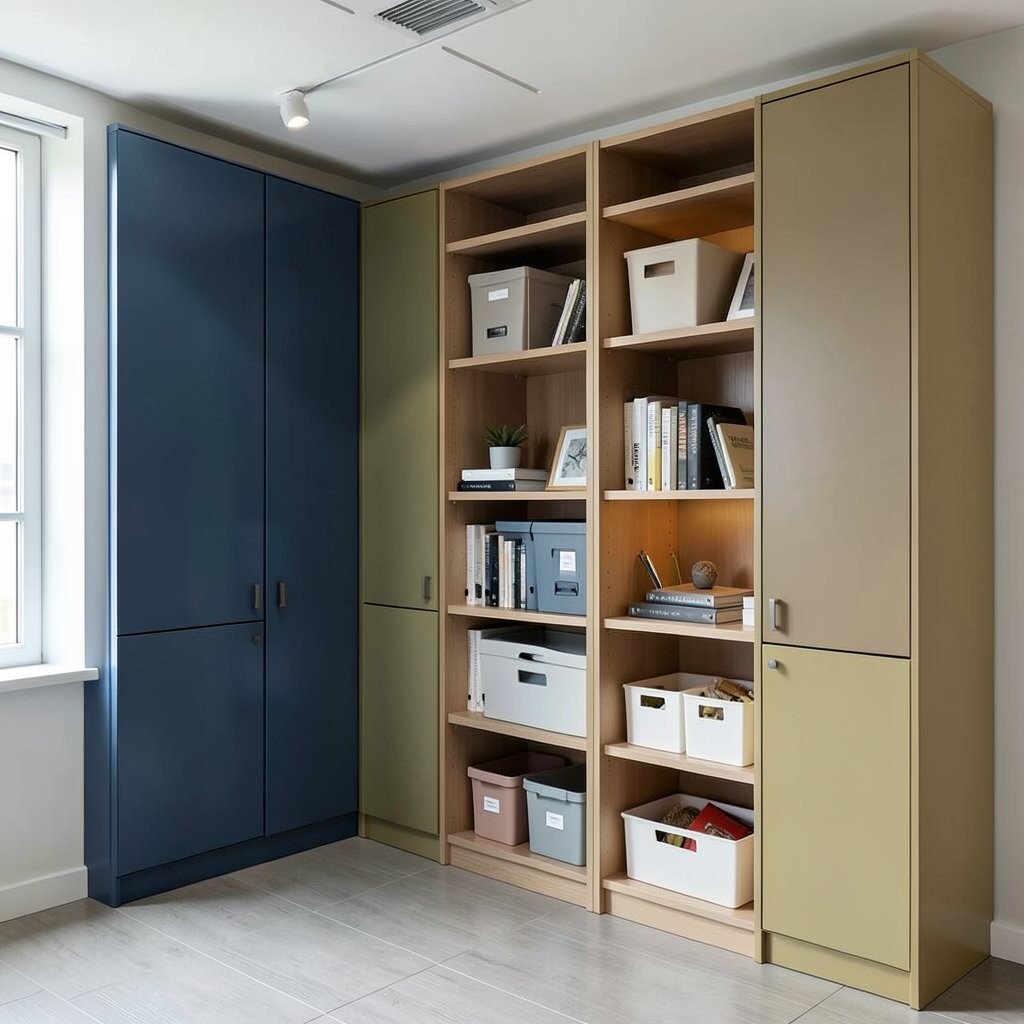
Bold design does not have to mean messy space, so invest in built-in storage with sleek doors and organized interiors. Clean fronts make the office feel polished, and the visuals stay calm even when work is busy.
Benefits are practical, because storage reduces clutter, which helps everyone find what they need quickly. If you have many small items, use adjustable shelves and labeled bins so staff can keep everything in its place. For personalization, choose door finishes that match your accent color and keep hardware simple for a modern look.
Cost can be managed by building storage along one or two key walls first. That way you get a bold visual upgrade without taking on the entire space at once.
12. Outdoor-Inspired Break Areas

Create a break area that feels like a mini patio using warm wood, plants, and cozy seating. When people can step into a space that feels outdoorsy, breaks become more refreshing and less rushed.
Benefits show up in mood and energy because a pleasant break area encourages people to actually relax. Use durable surfaces for coffee stations and easy-wipe tabletops so day-to-day mess stays under control. Add small touches like weather-themed artwork or patterned curtains to boost the theme.
For personalization, let teams place a rotating “community board” with photos, announcements, and shout-outs. When budgeting, prioritize comfort seating and lighting first, then layer in decor gradually.
13. Colorful Collaborative Zones With Clear Borders

Design collaboration areas with bright seating clusters and visible boundaries that guide people without barriers. Use rugs, low shelving, or wall-mounted markers to show where group work belongs.
A bold collaboration zone helps teams gather faster and reduces the “where do we meet?” problem. Choose comfortable chairs with easy-clean upholstery because these areas get used the most. For practical tips, keep tables sized for quick stand-and-chat moments, not just formal meetings.
Personalize by adding a small tool kit station for collaboration, like sticky notes, markers, and charging docks. Cost considerations can be friendly here because you can start with rugs, seating, and a few smart accessories instead of rebuilding everything.
14. Unique Desk Heights and Activity Seating

Give your workspace energy by mixing standing desks, sit-to-stand options, and comfortable activity chairs. When people can switch postures, the office feels more dynamic and supportive.
Benefits include better comfort throughout the day, especially for teams who spend long stretches at computers. A practical tip is to standardize desk power access so everyone can plug in easily without cable chaos. For personalization, offer a few different chair styles so people can choose what feels right for their body.
Current trends lean toward activity-based work, and this setup visually signals that your office supports different ways of working. If costs are a concern, start with a pilot group and add more as you measure comfort and satisfaction.
15. Dynamic Wall Writing and Display Systems

Install writing boards and display rails so ideas can live on the walls instead of disappearing into chats. When the office shows active work, people feel connected and progress feels real.
This design supports benefits like faster planning, better handoffs, and fewer lost documents. Use magnetic surfaces, cork sections, and clear pockets for prints so teams can update quickly. For practical upkeep, choose surfaces that handle dry-erase cleaning and keep markers stored neatly.
To personalize, set up themed areas for each team, and rotate content during major project phases. Cost is often manageable because many wall display systems can be installed without major construction, especially if you build around existing walls.
16. Warm Metal Accents and Modern Textures

Introduce warmth with brass tones, brushed copper, or matte gold details paired with soft textures like boucle or felt. This kind of mix makes the office feel bold yet inviting, not cold or corporate.
Benefits include a more “designed” look where small details guide the eye and make everyday surfaces feel special. Keep a consistent metal finish across key touchpoints, like handles, frames, and light fixtures, so the style feels intentional. For practical tips, choose finishes that resist fingerprints and make cleaning easy.
Personalization can be simple, like adding metal frames to team photos or matching door pulls to a favorite accent color. Cost considerations are flexible because you can splurge on a few standout pieces, then balance the look with budget-friendly textured materials for the rest.