
Your closet can be the calm place you forget about until you need it. With a few smart design choices, it can also become a beautiful part of your home.
When everything has a home, mornings feel smoother and your clothes look better. The best part is that customization can fit many budgets and styles.
1. Built-In Shelving With Hidden Flex Space

Imagine walking in and seeing neat shelves that look like they were always there, with a few panels that hint at secrets. Everything feels tidy because the design hides clutter until you want it.
Use adjustable shelves for shoes, folded sweaters, and seasonal bags, so your storage changes as your life changes. For flexibility, add a narrow pull-out section behind a door panel to store belts, scarves, or small accessories. This keeps your daily items easy to reach while making the closet look clean and intentional.
2. Full-Length Mirror Wall for Light and Flow

A mirror wall can make your closet feel bigger right away. You’ll notice more brightness and a smoother path from hanging space to drawers.
Choose a framed mirror that matches your hardware so the look feels cohesive. Consider a mirror size that covers most of the wall, then place lights nearby for better visibility when picking outfits.
To keep it practical, add shelves below the mirror for grooming items or watch storage. If you want personalization, use a slightly tinted mirror for a softer look, and check that it won’t distort color under your lighting. This design often costs less than complex cabinetry because it mainly depends on the mirror and installation.
3. Statement Lighting That Makes Clothes Look Better

Good lighting turns a closet from “storage” into a styling room. You can see true colors, and that makes shopping decisions feel easier.
Try slim LED strips along the ceiling edge or inside shelving for a glow that feels modern. Add a small dimmer so the light matches your mood, especially in the evening when you get ready for plans.
For a personal touch, point a warm light toward your most-worn outfits so they look inviting. If you’re upgrading on a cost-conscious plan, focus lighting first on the hanging area and mirror, since those are where you need accuracy. This kind of lighting is a current trend because it makes closets feel like boutique spaces.
4. Two-Zone Hanging for Daywear and Off-Season

Picture separate hanging areas, one for everyday pieces and another for what you rotate less often. Your closet stays orderly because you’re not mixing seasonal bulk with daily essentials.
Use one zone for longer coats and dresses, and another for shorter shirts, blouses, and trousers. Add a bottom rail or pull-out drawer under the second zone for shoes or folded bottoms so you don’t lose space.
5. Drawer Systems With Soft-Close and Dividers

Drawers that glide smoothly feel like luxury every day. When each item has a divider, your socks and accessories stop becoming a tangled mess.
Use small compartments for ties, intimates, and small tech items like chargers or earbuds. Then make larger drawers for tees, pajamas, or folded denim so you can grab a full outfit quickly.
For personalization, match divider colors to your closet tone using subtle fabric liners or wood stains. If budget is tight, prioritize drawers for the most-used categories, like underwear and socks, because that’s where organization pays off most. Soft-close hardware is a popular upgrade trend because it quiets the closet and feels premium.
6. Dedicated Purse and Bag Station With Lipped Shelves

Your bags deserve more than a shelf where they tumble. A dedicated station keeps them upright and protected from scuffs.
Choose shelves with small lips so purses can’t slide, and include a spot for a full-size tote where it’s easy to grab. Add a few hooks for small crossbody straps, so you’re not hunting for them later.
7. Closet Island or Central Bench for Styling Time

Think of a small center bench that makes the closet feel like a boutique dressing room. It gives you a place to sit, tie shoes, and plan outfits without rushing.
Pair the bench with a shallow drawer below for scarves or seasonal accessories so it stays useful. If you want a practical twist, use a bench with a cushion that’s wipeable and easy to maintain.
To keep it personalized, choose a bench finish that ties to your floors or wall color. Depending on your layout, this can range from a simple custom bench to a built-in unit, so costs can stay flexible. It’s also a current trend to add “hangout” functions to storage rooms, making daily routines feel nicer.
8. Custom Shoe Storage With Angle Racks or Pull-Out Rails

Shoes look better when they’re displayed in a designed way. You’ll also stop losing pairs in the back because every style stays visible.
Install angled shoe racks for sneakers and flats, or use pull-out rails for boots so you don’t have to fight tight shelves. Add a few adjustable spots for different boot heights, since not all pairs are the same.
9. Ceiling-Height Storage With Step-Friendly Access

When you use the top of the closet, you free up the mid-level space you use every day. Clothes and items stay off the floor, which makes the whole room feel cleaner.
Use high cabinets for bedding, storage bins, and luggage, but keep access easy with a pull-down step or sliding ladder track if your budget allows. For most homes, a well-placed shelf and sturdy folding step can work without heavy construction.
Personalize the look by matching the cabinet fronts to your hanging area, so the top storage doesn’t feel like a separate room. This approach can be cost-effective because it uses existing height, not extra floor space. Many designers recommend it now because it helps small homes store more without feeling cramped.
10. Specialty Hanging for Shirts, Suits, and Lightweight Layers

If your clothes always end up wrinkled, your closet setup may be the real culprit. Dedicated hanging sections help you treat each fabric the right way.
Use separate rails for suits and dress shirts, then add a lighter rail for sweaters and blouses. Consider garment sizing with fewer items per rail so you can close the door and still keep airflow.
11. Texture and Color That Matches Your Style Mood

Closets don’t have to be boring wood boxes. A subtle color change or textured panel can make the space feel warm and personal.
Try a soft neutral on doors, then add a darker wood tone on shelves for contrast. You can also choose a matte finish for a modern look, or a gentle stain for a classic feel that hides minor scuffs.
To personalize without overspending, focus color on the front faces and drawer fronts rather than changing everything. Keep hardware consistent with your room style, like brushed metal for modern spaces or warm brass for traditional rooms. This kind of customization stays on-trend because homeowners want storage that looks as good as it functions.
12. Rolling Laundry or Linens Storage for Busy Homes

Some closets double as daily workspaces, and that’s okay. A rolling system helps you keep linens and laundry items organized without dragging everything around.
Install pull-out bins with washable liners for items like towels, blankets, or everyday throw wraps. Add a separate section for a hamper-style setup so it’s easy to maintain and still looks neat.
13. Hidden Ironing Board or Steamer Shelf

Nothing kills closet calm like a board shoved in the wrong spot. When your ironing tools have a home, you get a cleaner routine.
A built-in shelf or fold-out panel can hold an ironing board, steamer, or small pressing cloth. This keeps the tool protected and reduces mess in other rooms.
For personalization, place it near a mirror area so grooming and pressing happen in one place. Costs vary based on how complex the mechanism is, so keep it simple if you’re aiming for a modest upgrade. Many modern closet designs now include hidden utility features because they solve real daily problems.
14. Wallpaper or Panel Accent Behind Open Storage
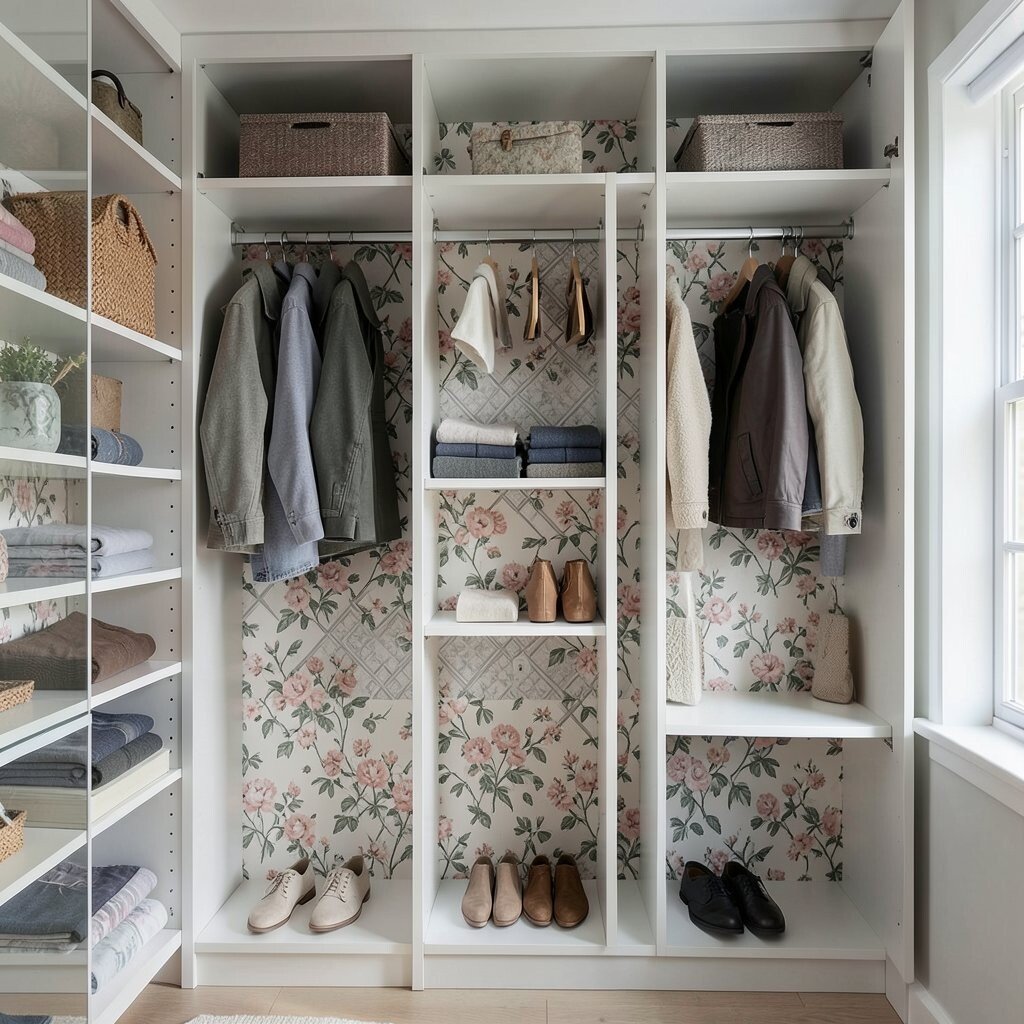
If your closet has open shelves, the background matters. A patterned panel behind the hanging area can make everything look more styled.
Use removable panels or moisture-friendly wallpaper so the look stays fresh even in damp weather. Choose designs that match your vibe, like soft florals for cozy rooms or geometric patterns for a crisp modern feel.
To keep it practical, place stronger patterned panels behind accessories and folded items, while using simpler finishes behind areas that hold heavy jackets. This can be a budget-friendly way to personalize because the visual impact is high while material costs stay manageable. It’s also a popular trend to treat closets like mini rooms with their own personality.
15. Custom Hooks and Keyline Zones for Daily Gear

Your closet is more than clothing, especially when you add daily gear. Hooks that are placed at the right height make grabbing items feel automatic.
Create a dedicated “keyline” area for keys, headphones, tote straps, and small bags so you don’t hunt at the last second. Use a combination of hooks and a small tray shelf for items that you set down every day.
Personalize this zone with color-matched hook bases or a small label-free engraved plate for a clean look. If you want to keep costs low, focus on hardware placement and a few durable trays rather than full cabinetry changes. These practical micro-zones are trending because they make organization feel effortless.
16. Color-Coded or Fabric-Front Bin Storage for Small Items

Small items get messy fast, but bins make them manageable. Fabric-front bins soften the look while still keeping everything sorted.
Use bins for accessories like gloves, hats, scarves, and beauty items, then group them by season or outfit type. When bins match your closet color palette, the space looks coordinated instead of chaotic.
For personalization, choose different bin colors for different categories, like neutrals for formal items and warmer tones for everyday pieces. If you’re watching your budget, start with bins and dividers first, since that upgrade can be inexpensive and still feels high-impact. Many closets now use this approach because it adds order without making the space feel rigid.
17. Satin or Glass-Front Cabinets for a Curated Look

Open shelves show everything, but closed cabinets can protect what you want to keep pristine. A mix of glass-front or satin-front doors can make your closet feel curated and bright.
Use glass fronts for neatly folded sweaters, special bags, or shoes that match your current style. Keep darker or fully covered doors for items you don’t want visible, which helps your closet look calm even when life gets busy.
To personalize, choose frosted glass for a soft glow and more privacy, or satin panels for a smoother modern finish. Costs can be higher because doors and hardware add up, so consider glass only on the most visible sections. This is a current trend because it blends display and storage, giving your closet the feel of a stylish showroom.