
Bright offices feel better the moment you walk in. The right design details can make work calmer, clearer, and more fun.
1. Sunlit Layout With Purpose

Place desks so daylight falls across the workspace, not behind people. You can feel the difference when your eyes don’t have to fight harsh shadows every time you look up.
Try positioning workstations near windows and using light curtains for softer glow. Keep bulky furniture away from the brightest areas so light can travel deeper into the room. If your space has sun at certain hours, move movable items to match the day.
2. Warm White Walls That Don’t Feel Flat

Choose warm white paint instead of icy white for a friendlier mood. It makes skin tones look natural and helps printed pages stand out.
Test a few sample swatches on the wall and watch them at morning and late afternoon. Pair the wall color with medium wood tones to keep the room looking cozy. If you want a gentle accent, add one subtle color panel behind reception or a main meeting wall.
Add in soft lighting so the whites stay inviting, not bluish. Layering is what keeps bright spaces comfortable, not glaring.
3. Glass-Partioned Meeting Nooks
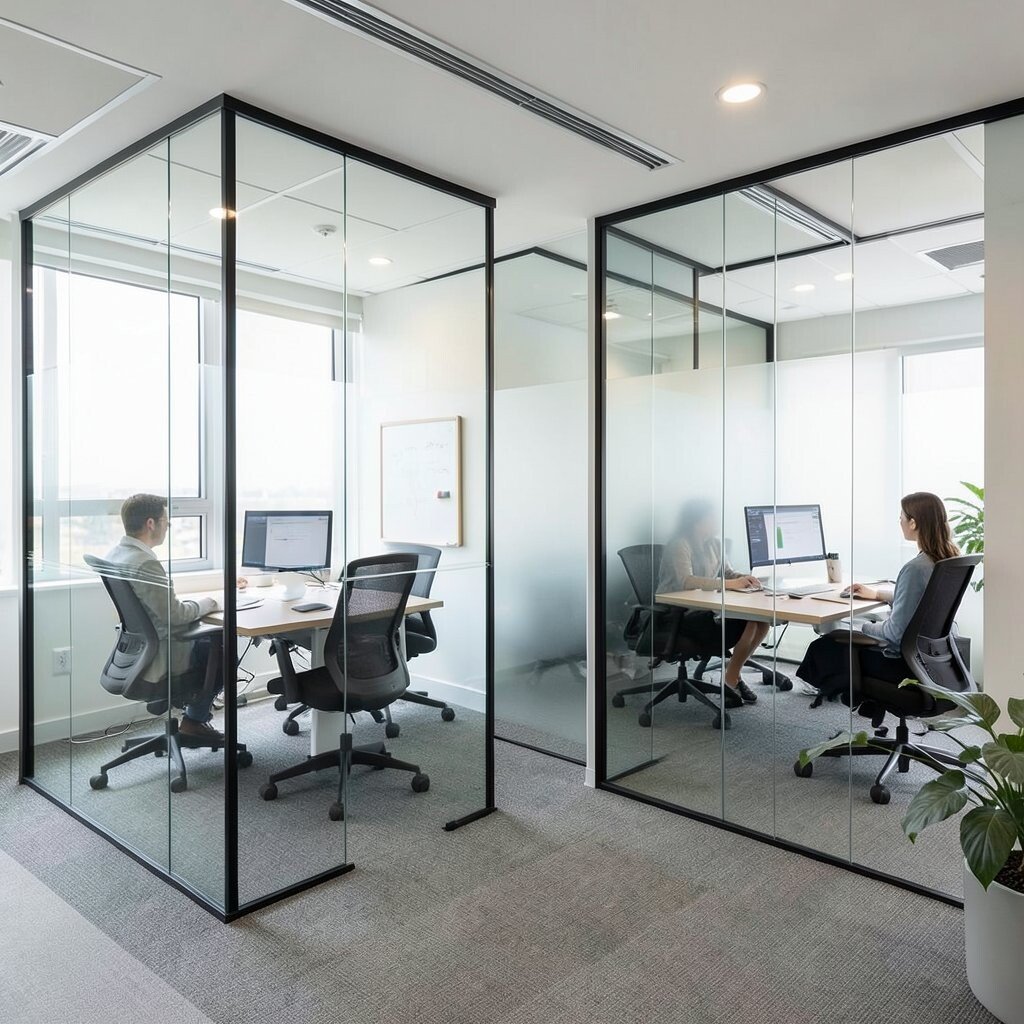
Use glass walls or framed glass panels to create meeting nooks that feel open. You get privacy for conversations while still keeping the room airy.
Clear panels help natural light reach further, which makes the office look bigger. Add frosted sections only where you need more discretion, like for phone calls.
For practical setup, place a small marker board or screen inside so teams don’t hunt for supplies. If you’re worried about glare, use films or angled shades. This idea works even in small offices because the space stays connected.
4. Color-Blocked Zones for Focus
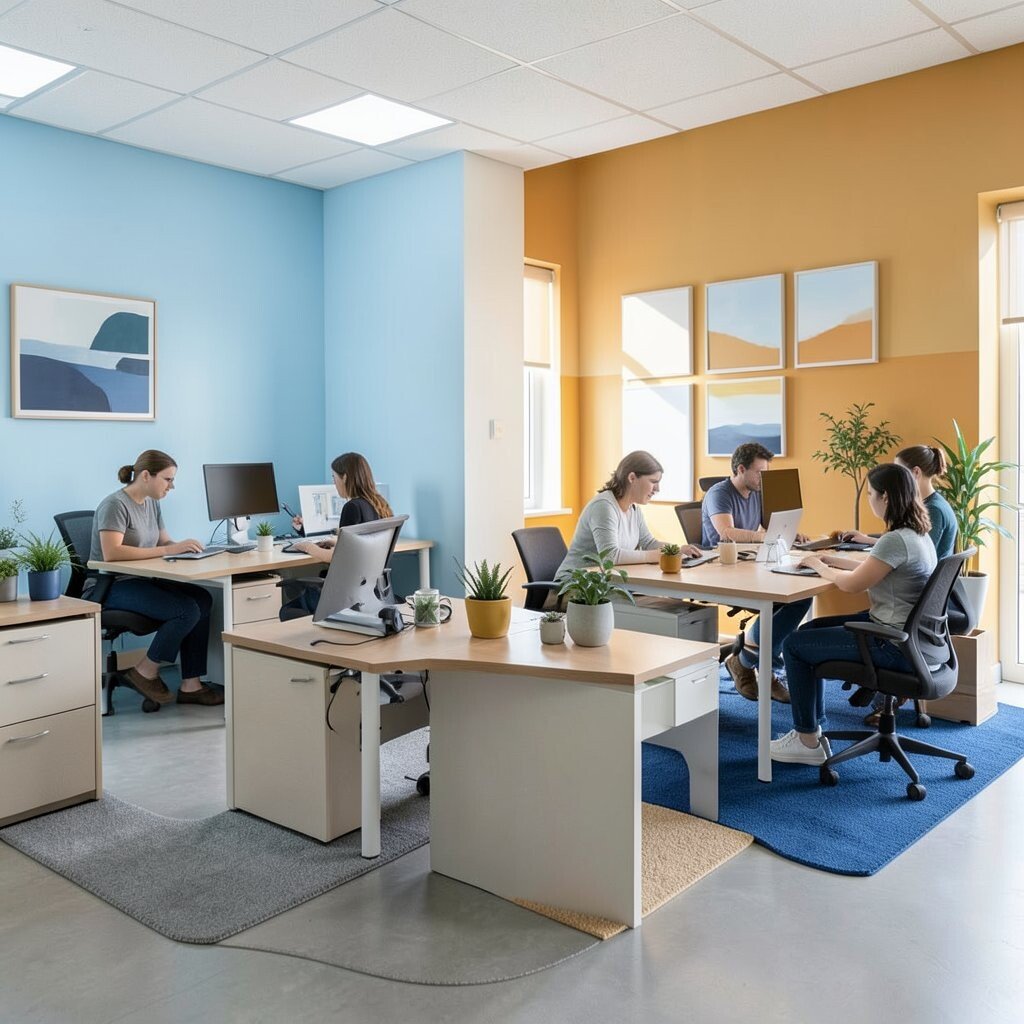
Create calm work areas and lively collaboration spots using color blocks. A soft blue corner can feel great for heads-down tasks, while a warmer tone near the breakout area adds energy.
Use paint, rug shapes, or wall art to mark zones without installing anything permanent. The key is to keep the palette simple and consistent with your brand colors. When you repeat colors across the office, it feels intentional instead of random.
5. Floating Shelving for a Cleaner Look
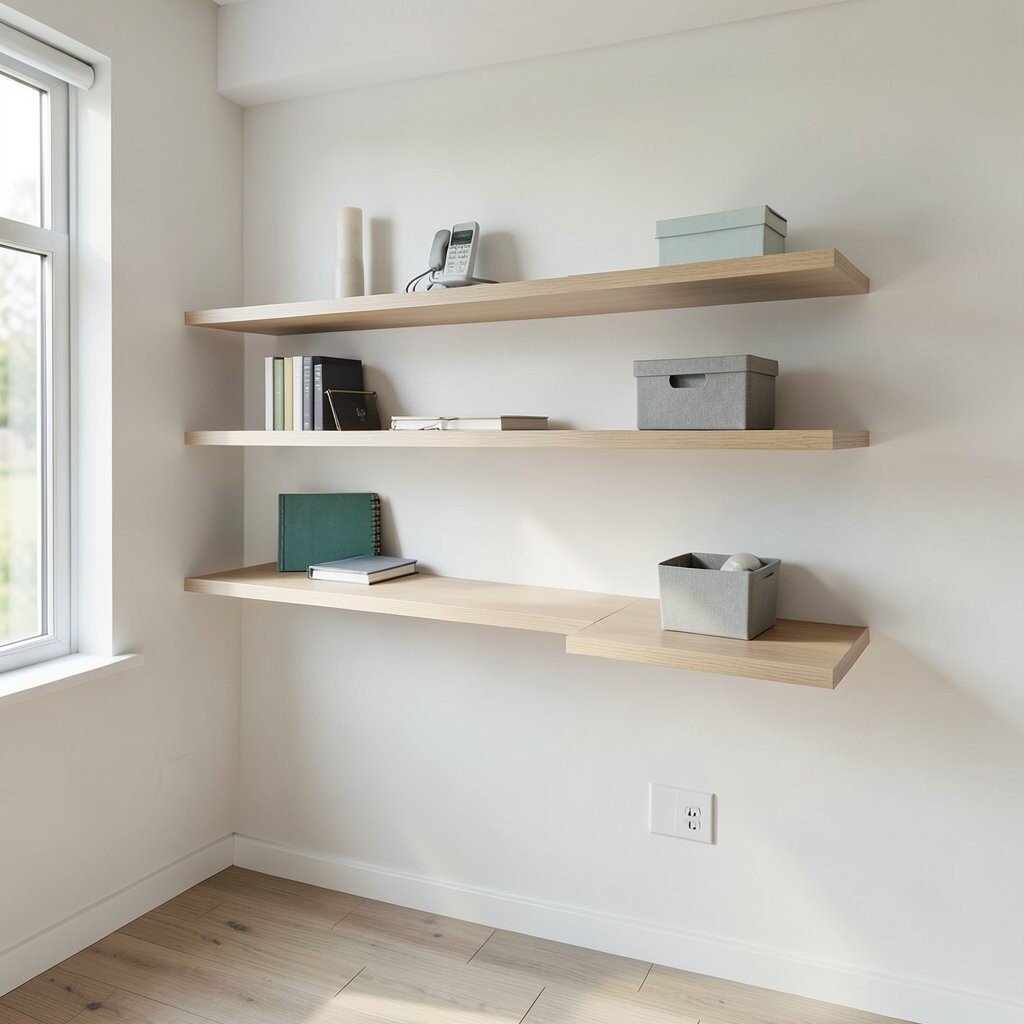
Swap heavy bookcases for floating shelves to keep sightlines open. Your office will feel lighter, and your surfaces will look more organized.
Style the shelves with a few useful items like chargers, notebooks, and small bins. Keep items grouped by height so the arrangement looks neat from across the room.
For cost control, shop for prefinished wood or laminate boards and install them carefully. Use strong anchors so everything stays safe, especially in high-traffic areas. This small change can make a big difference in how tidy the space feels every day.
6. Soft Seating That Invites Team Chats

Choose lounge-style chairs or a low bench for quick discussions near the team areas. Comfortable seating makes people slow down just enough to talk and share ideas.
Pick fabrics in durable, easy-to-clean textures since offices see spills and daily wear. Mix two styles, like a modern chair with a cozy ottoman, so the corner feels curated.
For personalization, add small throw pillows in your company colors or seasonal shades. Keep a compact side table close for water bottles and laptops. This helps the conversation area function without feeling crowded.
7. Layered Lighting With a Bright Base

Start with bright, even overhead lighting, then add warm desk lamps to reduce eye strain. Layered light keeps the workspace flexible across tasks.
Use adjustable bulbs or dimmers so meetings and deep work can share the same area comfortably. Try installing task lights at each workstation so reading and typing feel effortless.
Add wall washers or indirect LED strips behind shelves for a gentle glow. That kind of ambient light makes the room feel calmer, especially during darker months.
8. Statement Pendant Over Collaboration Tables

Hang a stylish pendant light directly above a shared table to make it feel special. A focused light spot creates a natural gathering center without crowding the room.
Pick a fixture with a warm finish or a clean shade shape so it matches your office vibe. If the table is used often, choose a design that spreads light evenly across the surface.
For practical planning, check ceiling height so the fixture doesn’t block sightlines. When you choose a dimmable model, you can shift from brainstorming mode to presentation mode easily. This is a high-impact upgrade that many offices love.
9. Acoustic Panels in Color-Soft Patterns

Sound matters in bright spaces because glare isn’t the only thing that stresses your eyes. Acoustic panels help conversations stay clear without turning the room into a noisy echo chamber.
Look for panels in light colors or gentle patterns so they blend with the airy look. Add them behind workstations or near open meeting areas for the biggest effect.
Try matching panel colors to your walls and textiles for a tidy, designer feel. If you want a creative touch, pick one accent pattern for a single wall. This balances style and comfort, which people notice right away.
10. Rug Tiles for Cozy, Flexible Flooring

Use modular rug tiles to warm up the floor and define areas. Underfoot comfort helps people stay focused longer, especially during long workdays.
Rug tiles also make maintenance easier since you can swap only damaged sections. Choose light neutrals for brightness, then add one bolder stripe or geometric pattern in a collaboration zone.
For cost planning, compare prices by square footage and include installation materials. If your office budget is tight, start in the highest-traffic areas first. This gives you a visible upgrade while spreading the rest over time.
11. Nature-Inspired Materials and Textures

Bring in materials that feel grounded, like light wood, linen textures, and woven baskets. These textures soften the look of modern furniture and make the office feel welcoming.
Try adding a wood slat wall behind reception or using rattan accessories on shelves. When you mix textures, the space becomes more interesting even if the palette stays simple.
For practical benefits, textured surfaces hide small marks and reduce the visual clutter of everyday life. Keep the texture variety limited, so the space still looks bright and organized. This is a great way to add uniqueness without going overboard.
12. Living Walls or Small Plant Clusters

Plants make an office feel alive, calm, and bright, even when the weather is gloomy. A well-placed plant cluster adds color that changes with growth and light.
Choose low-maintenance plants like pothos, snake plant, or ZZ plant for easy care. Group plants on stands near windows so they get enough light and don’t block walkways.
For practical tips, set a simple watering routine and add a tray for excess water. Pick plant pots in matching tones so the look stays intentional. This personalization idea works well in reception, break areas, and near entrances.
13. Bright Whiteboards With Easy-Erase Finishes

Upgrade old boards to bright whiteboards that write smoothly and erase cleanly. When tools work well, teams use them more often, and collaboration becomes more natural.
Mount boards at comfortable heights so people of different statures can reach easily. Add small marker ledges or tray systems to keep everything in one place.
If you want a modern look, choose frames in black, brushed steel, or warm wood. For personalization, include a few colored magnets or sticky note flags to guide brainstorming. This keeps meetings organized without making them feel stiff.
14. Thoughtful Privacy With Open-Feel Options

Create privacy with semi-open solutions like tall screens, partial-height partitions, and strategic shelving. You can keep the office bright while giving people space to focus.
Use materials that let light pass, such as frosted glass or light-toned panels. This reduces that closed-in feeling while still supporting quiet work.
Place privacy elements near call areas and deep-focus zones so disruptions stay controlled. If you share space, add clear pathways so the office feels easy to navigate. When privacy is planned well, people feel respected, and the environment stays peaceful.
15. Personalized Desk Backdrops With Character

Let each team member add a small desk backdrop like a framed print, a mini shelf, or a tasteful organizer tray. These touches make the workspace feel like it belongs to real people.
Choose items that match a shared style guide so it looks cohesive across the office. A consistent palette of light woods, neutral frames, and one accent color can tie everything together.
For practical tips, keep backdrops uncluttered and use vertical storage so desks remain open. Consider desk screens or foldable organizers to hide cables and personal items. It’s a simple personalization move that improves both comfort and daily routine.
16. Cable Management That Makes Brightness Look Real

Bright offices can still look messy if cables spill across desks and floors. A clean cable plan makes the space feel polished and helps people move safely.
Use cord clips, under-desk trays, and cable sleeves to bundle wires neatly. Route power near the back of desks so work surfaces stay clear.
If you want a cost-effective upgrade, start with cable ties and simple cable boxes before buying bigger hardware. Add labels on the inside of small organizers so troubleshooting takes less time. When cables look intentional, the whole office design looks intentional too.
17. Flexible Break Areas With Real Options

Design a bright break area that feels like a mini reset, not just a room with a microwave. Comfort during breaks improves mood and helps people come back ready to work.
Include seating options like bar-height stools, lounge chairs, and a small table for casual collaboration. Add a coffee station with easy storage so counters don’t pile up.
For trend alignment, many offices now choose brighter, lighter materials and simple layouts that make cleaning easy. Use wipeable surfaces and stackable accessories so the area stays fresh. This is where personalization can shine through art, seasonal decor, and a cheerful color accent.
18. Brand-Soft Wall Murals Instead of Busy Posters

Swap crowded poster walls for a soft mural or large wall art that supports the office vibe. A mural can add personality without creating visual chaos.
Pick a design that uses calm colors and includes space for lighting to glow. For example, subtle abstract shapes near meeting areas can feel modern and airy.
For practical planning, measure wall space and consider how the art lines up with light sources. If you want budget control, choose a removable mural panel or a large framed print set. This uniqueness can become a signature feature visitors remember.
19. Interactive Walls for Better Ways of Working

Add interactive walls using cork strips, magnetic surfaces, or pinboards in bright colors. They give teams a shared place to plan, track, and celebrate progress.
Keep the setup practical by adding ledges for markers and small bins for sticky notes. Use color coding for projects so updates are fast and easy to see at a glance.
To personalize, include a monthly rotating section where teams post wins, photos, or community notes. This keeps the wall lively while still maintaining structure. The room feels more current, and people feel more connected to what’s happening.
20. Curated Storage That Hides Clutter Smartly

Make storage part of the design by choosing cabinets and credenzas in bright or natural finishes. Hidden storage helps a bright space stay bright because fewer items sit out.
Use glass-front cabinets for displays and solid doors for daily supplies. Add labeled organizers inside drawers so items return to their place fast.
For cost considerations, consider building storage in phases, starting with the areas that cause the most visual mess. A well-chosen cabinet can also match desks and reduce the need for extra furniture. This is one of the quickest ways to upgrade how the office looks each day.
21. Flex Workstations With Easy Reconfiguration

Use adjustable desks, modular benches, or stackable tables so the office can change with each week’s needs. Flex spaces make it easier to handle quiet work, meetings, and team sessions without major stress.
Look for simple cable ports, smooth rolling options, and sturdy tabletops that can handle constant rearranging. When furniture moves well, you can keep sunlight and sightlines working in your favor.
For personalization, add small color tags or desk accessories that help teams set up quickly. This keeps reconfiguration simple while still letting people make their area feel like theirs. A smart flex setup supports current trends toward hybrid work and keeps the space feeling fresh over time.