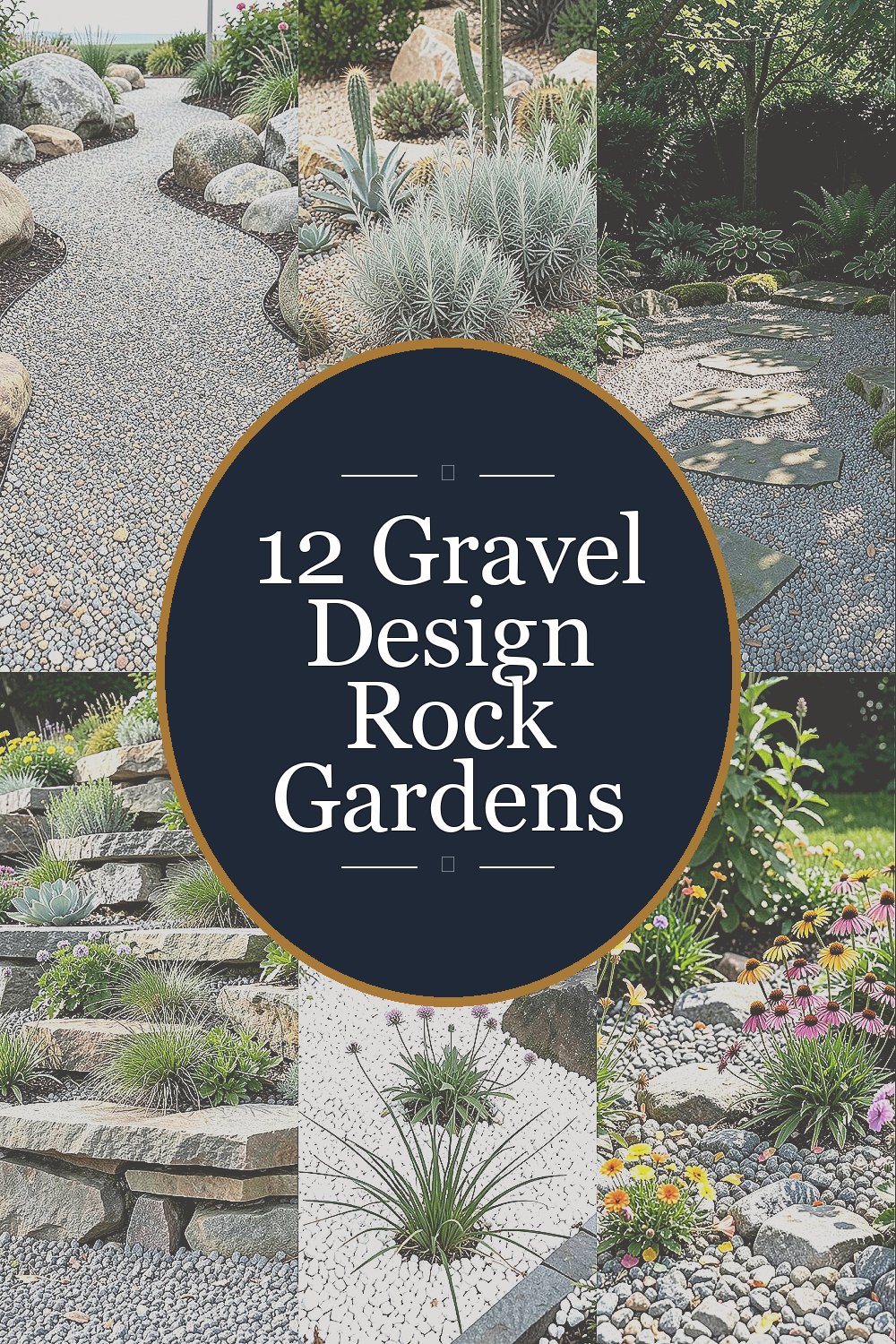
A quiet yard can still feel alive with the right textures. Gravel and rock can create that calm, natural look in a way that feels both simple and special.
When you mix stones, fine gravel, and hardy plants, you get a space that looks beautiful and works hard for you all year.
1. Crystalline Pathway With Rounded Boulders
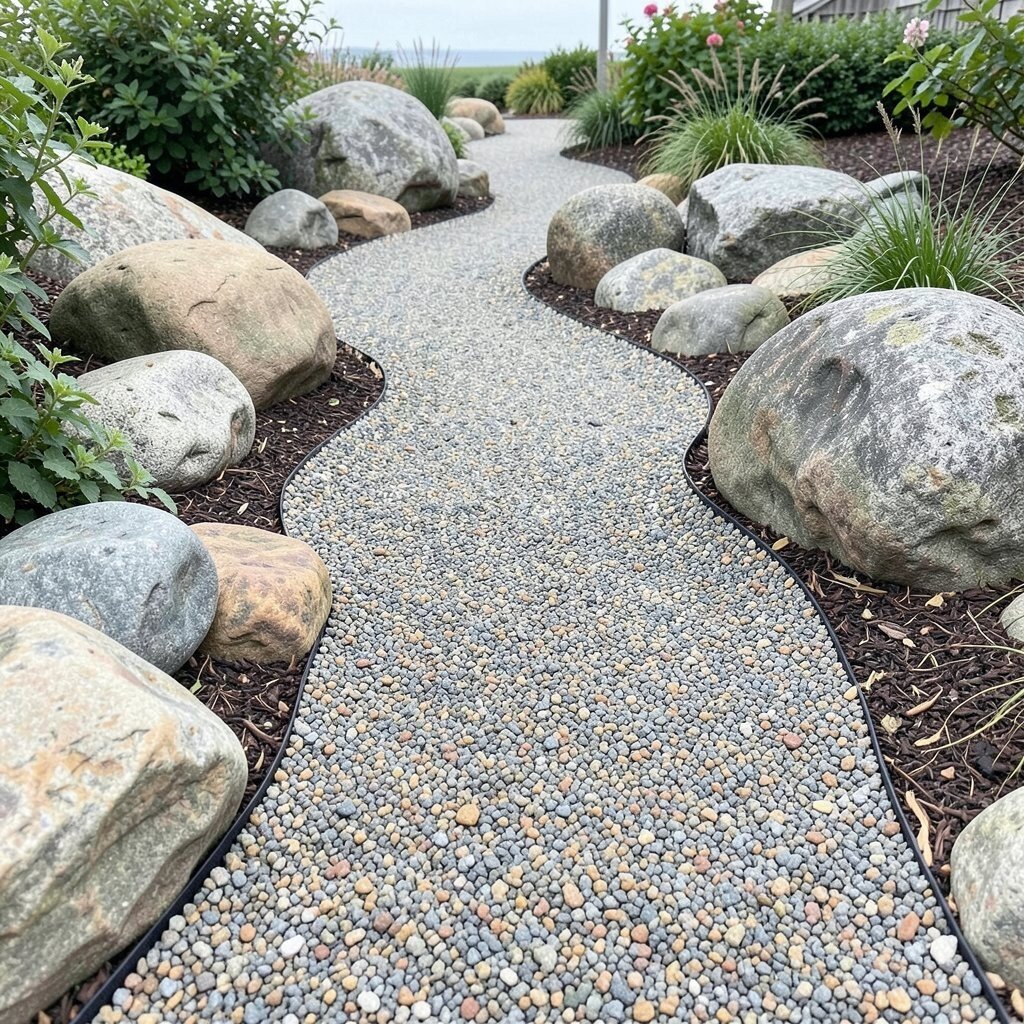
Start with a winding gravel pathway edged by rounded boulders that look like they were laid by nature. The contrast between smooth stone and crisp gravel can make your garden feel bright even on cloudy days.
Choose a gravel color that matches your outdoor style, like warm gray for a cozy feel or cooler tones for a modern look. Place the biggest boulders where foot traffic would naturally slow down, then nestle smaller stones around them for a softer transition.
Use a weed barrier under the gravel and cut it cleanly around each stone so the edges stay tidy. This setup helps drainage, which means fewer puddles and less mud after rain.
2. Desert-Style Rock Garden With Cacti and Sage
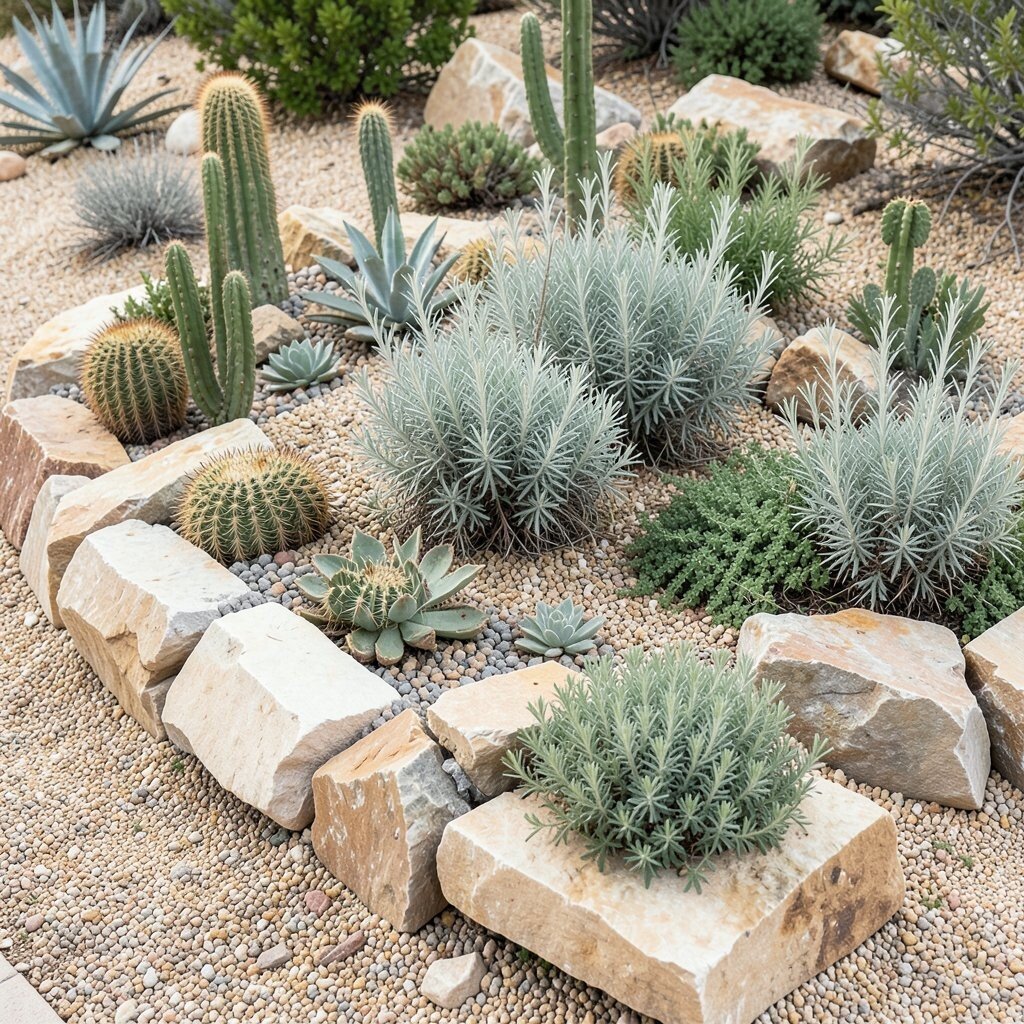
Build a low, desert-style rock garden using angular rocks and a sandy-looking gravel. You can picture the scene the moment you step outside, with silvery sage leaves glowing against pale stone.
Pair drought-tolerant plants like small cacti, hardy succulents, and creeping thyme to keep the garden looking neat. The best part is that these plants often need less watering once they settle in.
Keep taller plants slightly toward the back or center so shorter ones can spread naturally. Use a mix of gravel sizes, from fine top dressing to a few larger chips, so the surface looks more natural instead of uniform.
3. Shadowed Shade Garden With Mossy Stones
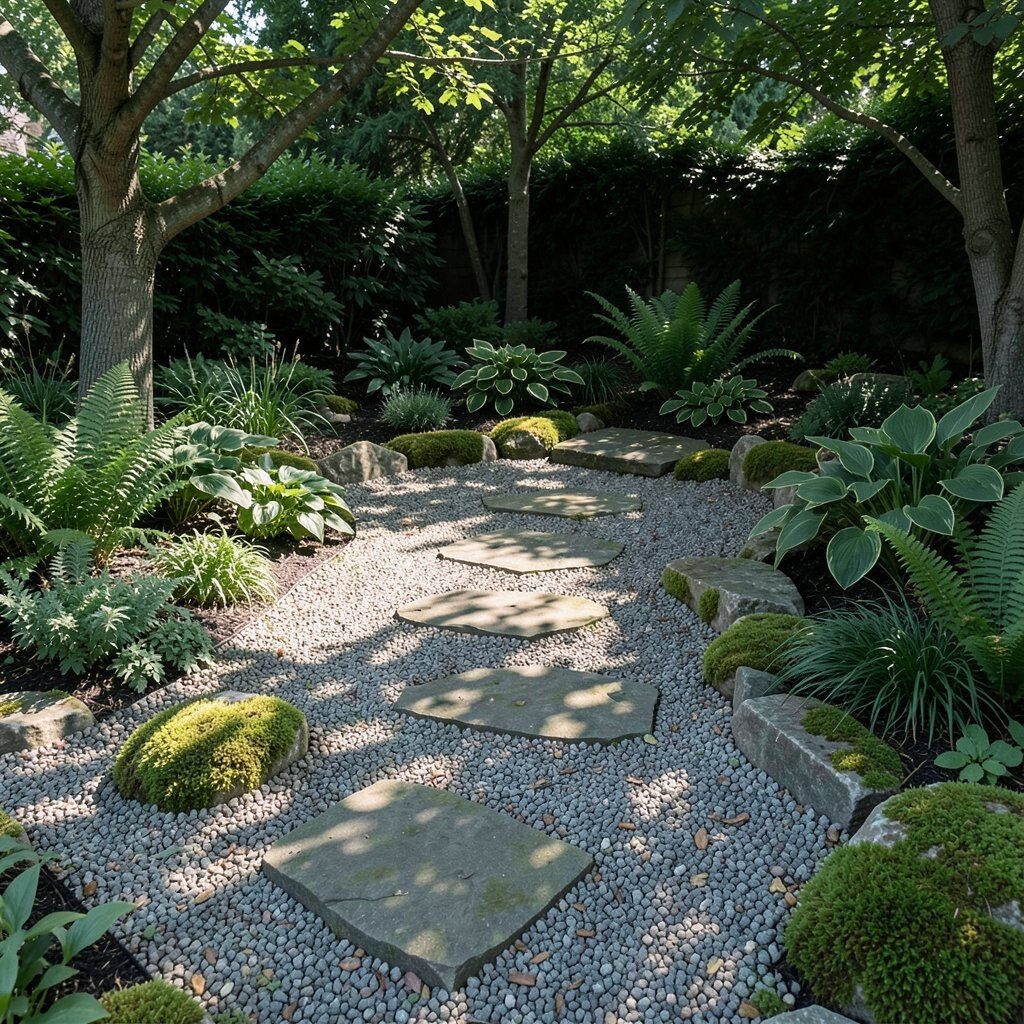
Create a shaded rock garden under trees by using medium gravel and flat stones that collect soft light. Even if your yard is cooler and dim, the right layout can make the area feel cozy and full of texture.
Choose plants that enjoy shade such as ferns, hostas, and mossy groundcovers. The gravel keeps the soil drier at the surface, which can help prevent soggy roots.
Use several flat stones like stepping spots, then tuck smaller stones around their edges to hide any uneven ground. Spread a thin layer of gravel and add fresh top dressing each season so the texture stays crisp.
For cost control, start with a small grouping of stones and expand as you collect more pieces over time. This slow build often makes the final design feel more personal, because it grows with your taste.
4. Alpine Rock Garden With Layered Terraces
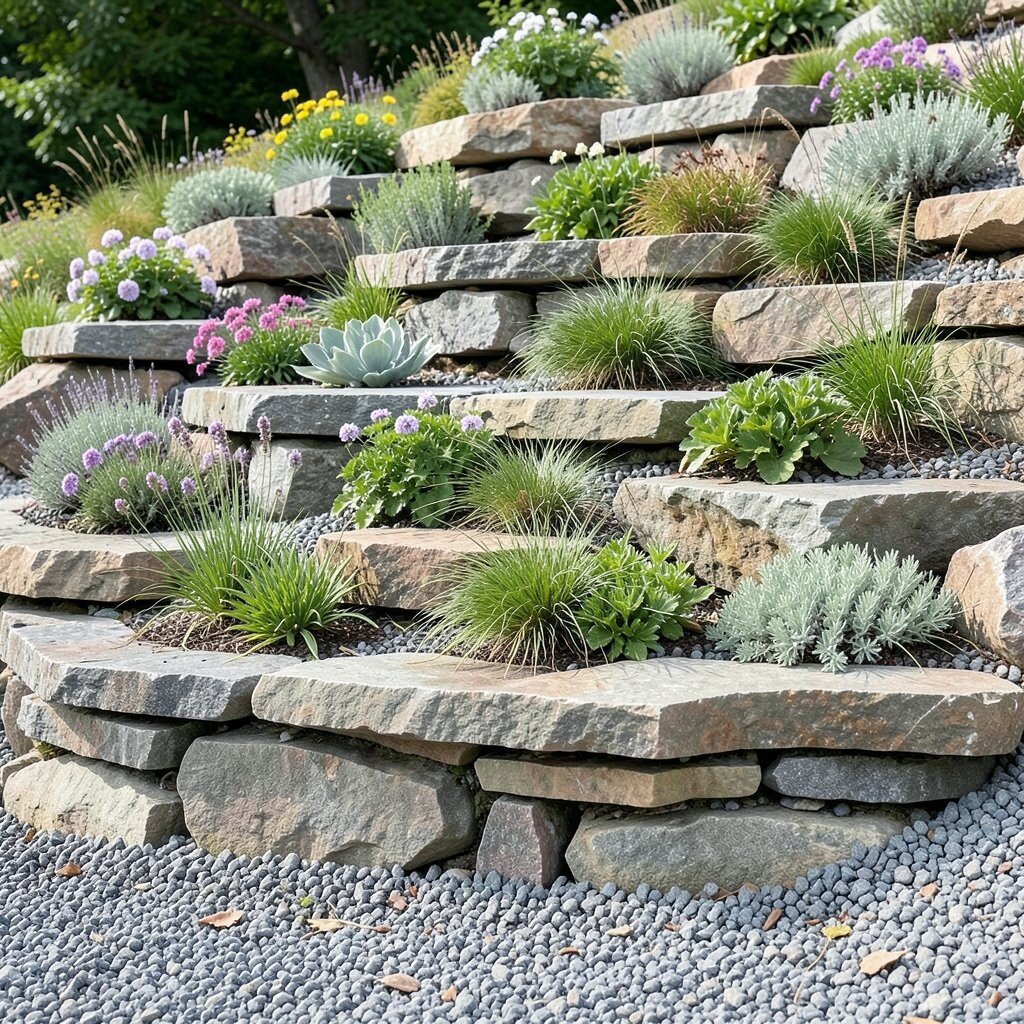
Make your outdoor space feel like a hillside by stacking rocks in gentle terraces. The layered look gives instant height, and it can turn a flat yard into something dramatic without needing a complex build.
Use a sturdy base of compacted gravel and larger stone underneath the visible rocks. That stability helps prevent shifting, especially after freeze-thaw weather.
Plant alpine-style favorites like creeping phlox, sedum, and low ornamental grasses in pockets between stones. These plants look tidy and survive in tougher conditions, which keeps maintenance realistic.
To personalize, vary the terrace widths so the garden feels naturally uneven rather than perfectly straight. Keep the spacing for plants consistent, then let their growth fill in the gaps over time.
5. Modern Monochrome Bed With White Gravel
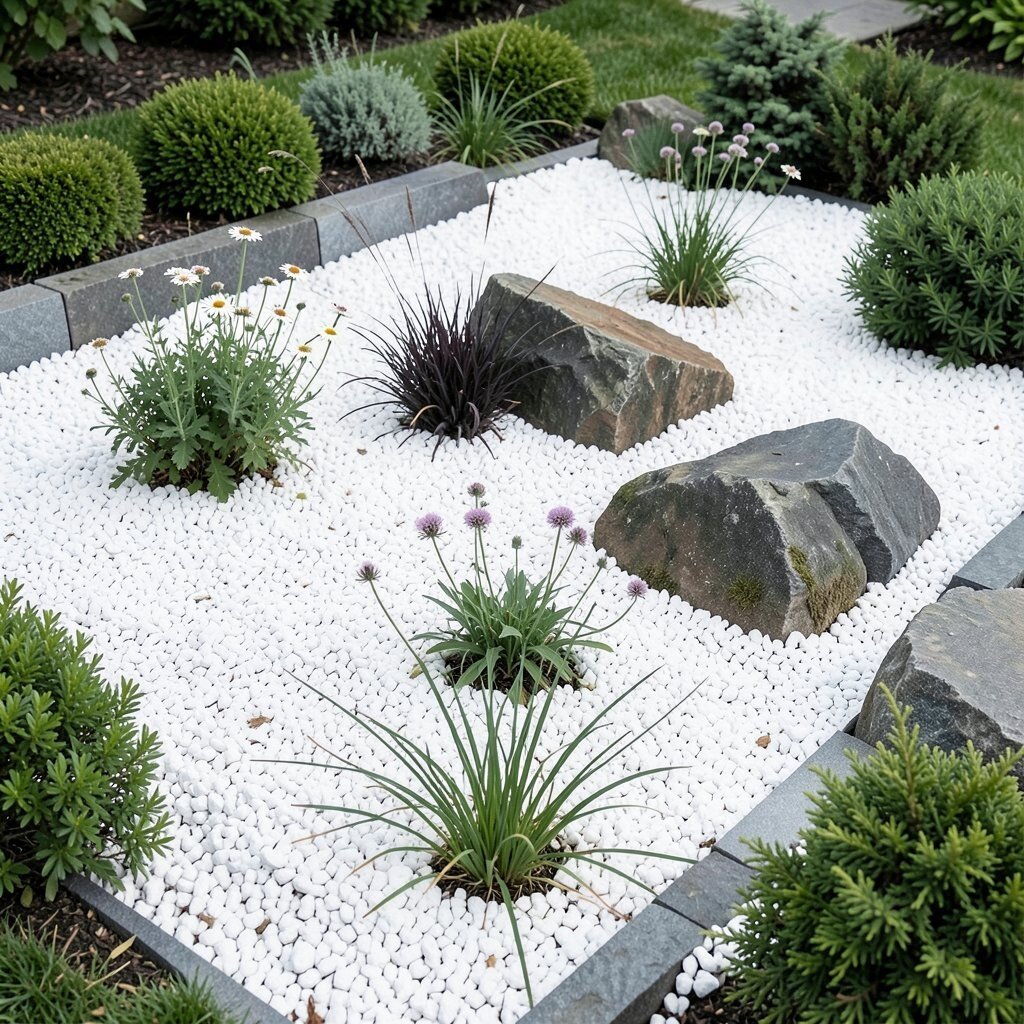
A modern rock garden can be clean and bold when you use white or off-white gravel. The bright surface makes dark foliage stand out, so your plants look sharper and more polished.
Choose a few statement rocks in different sizes and place them like punctuation marks. Add simple plants such as dwarf grasses, yarrow, or compact evergreen shrubs for a controlled look.
Because bright gravel can show debris, plan for an easy clean-up by using a stiff rake and keeping nearby plants trimmed. This style also benefits from edging stones so the gravel stays in place during rain.
For cost considerations, buy gravel in bulk from local suppliers when possible. That can lower your price compared with small bag purchases, especially for larger beds.
6. Cottage Charm Rock Garden With Colorful Blooms
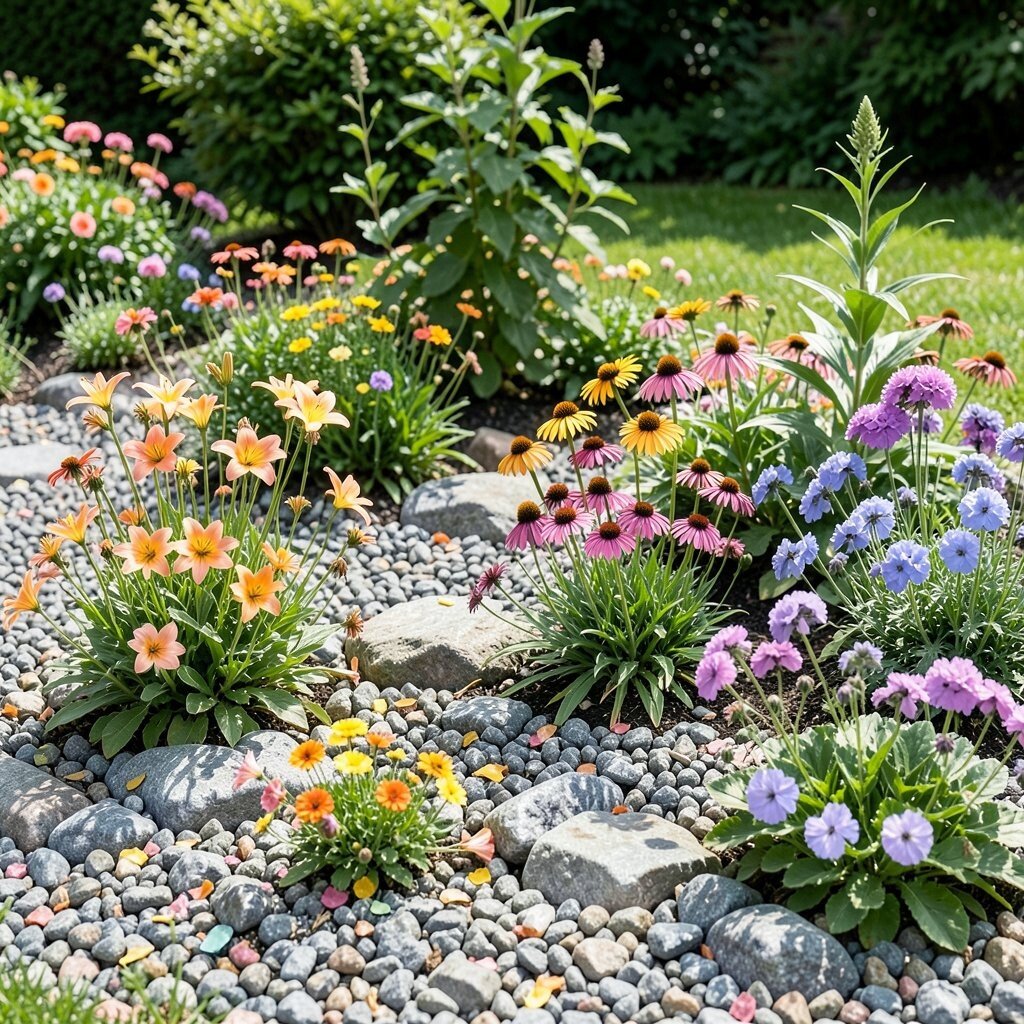
Bring a playful cottage vibe by mixing gravel with medium-sized stones and clusters of flowering plants. Think bright splashes of color sitting between gray rocks, like confetti that stays put.
Choose seasonal flowers that handle sun and drainage, such as daylilies, coneflowers, and hardy geraniums. Gravel helps keep the root zone airy, which can reduce disease pressure compared with heavy clay soil.
Let some stones peek out while others sit slightly lower, so the garden feels relaxed and lived-in. Add a few taller plants as anchor points, and let the rest spill gently around them.
For a natural look, keep the plant colors related, like warm pinks with orange or soft purples with blues. This simple grouping helps the garden look intentional even when blooms change through the seasons.
7. Water-Wise Rock Garden With a Dry Creek Layout
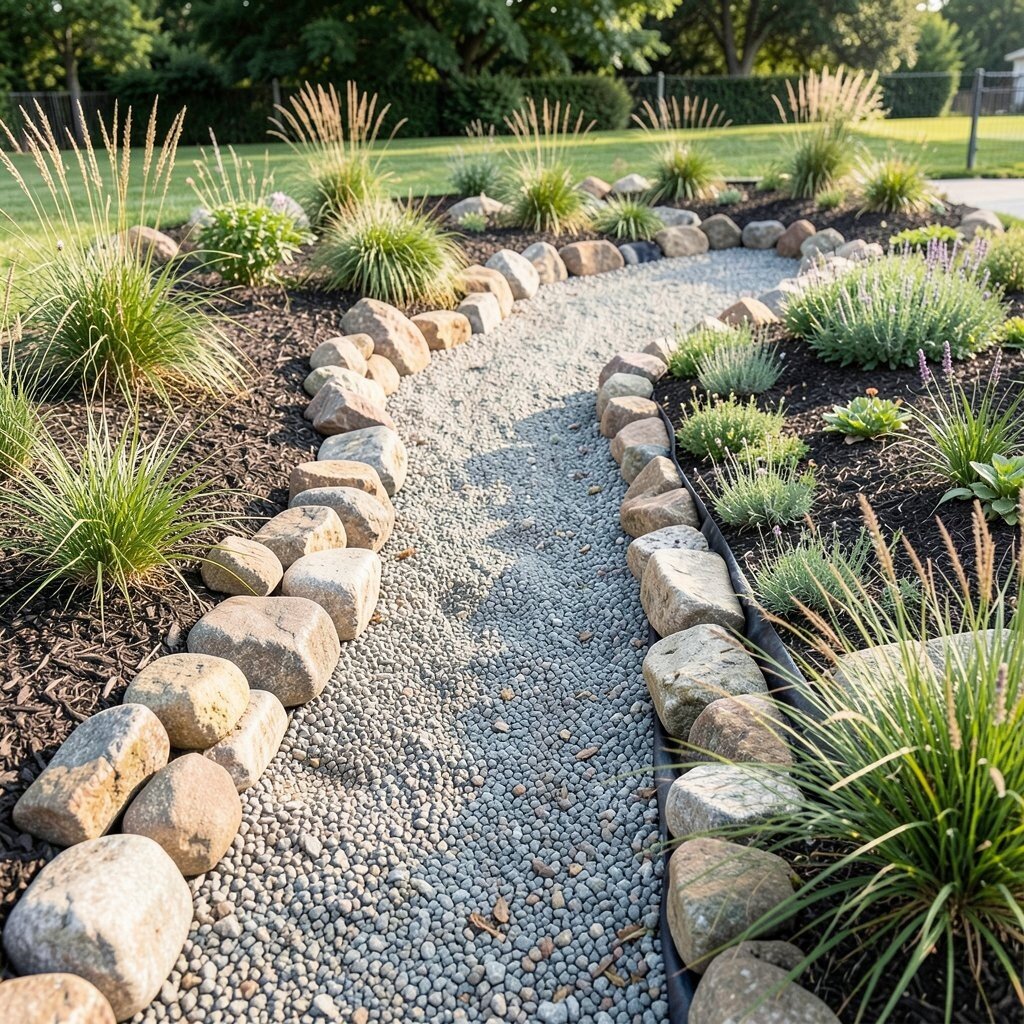
Design a dry creek using gravel channels that curve through your yard like a gentle stream. The movement of the stones makes the space feel calm, and it’s a practical way to manage runoff.
Use larger river rocks along the “banks” and fine gravel inside the channel to mimic natural erosion. This combination creates a clear visual boundary and helps water spread instead of pooling.
Plant moisture-loving grasses near the edges and drought-tolerant groundcovers farther away. If you’ve got areas that dry out quickly, this layout can save you time while still looking lush.
To keep it looking clean, remove leaf litter from the channel after storms and top up gravel when needed. You can also add a shallow layer of landscaping fabric under parts of the creek, depending on how your soil drains.
8. Zen Rock Garden With Sand Texture and Minimal Plants
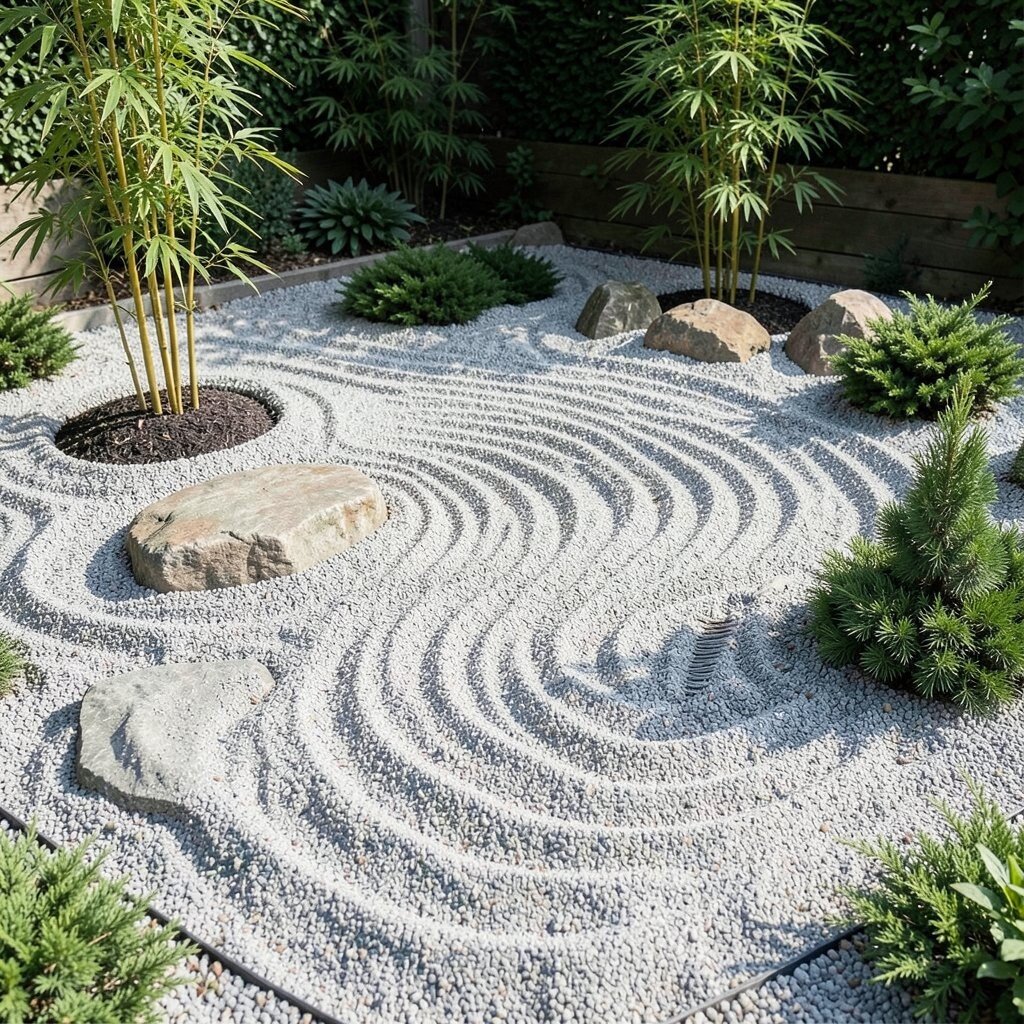
Build a quiet zen-style rock garden using fine gravel or stone dust for a smooth, sandlike surface. The clean lines and open spaces make your yard feel peaceful, especially where you like to sit outside.
Place a small number of well-chosen rocks in curved, balanced arrangements. Add a couple of slow-growing plants like dwarf bamboo, juniper, or carefully shaped groundcovers for soft contrast.
Use a rake to create gentle swirls in the gravel texture, then refresh them when you tidy the area. This small habit makes the garden look intentional and well kept.
For personalization, choose rocks with interesting shapes, like flatter stones for wide spaces and taller ones for focal points. Even a modest budget can feel luxurious when you keep the design simple and the materials high quality.
9. Woodland Edge Garden With Bark and Gravel Contrast
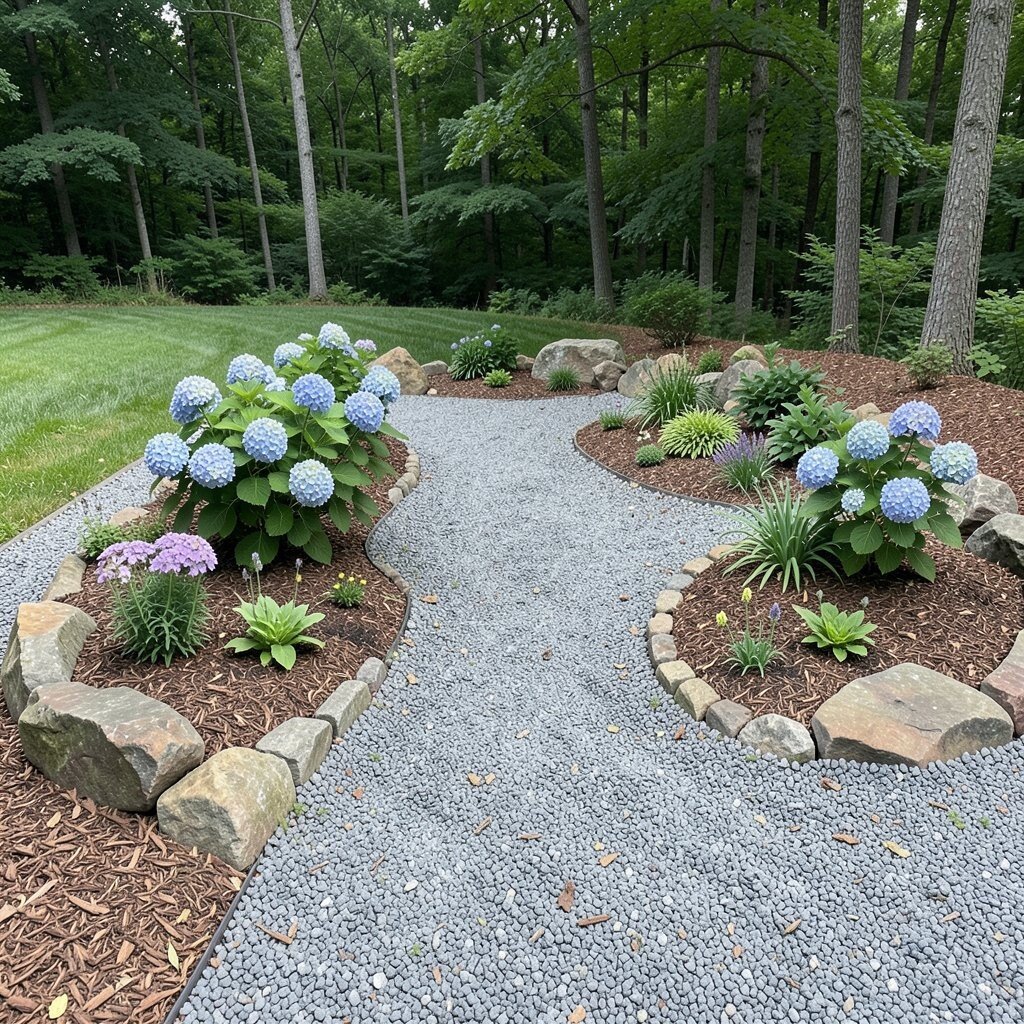
Soften the transition between lawn and trees by using gravel alongside bark mulch. This woodland-edge look feels natural, and the mix of textures helps the bed blend into the rest of your yard.
Set a border of larger rocks, then fill most of the space with gravel while allowing small pockets of bark mulch. Plant shade-loving favorites such as hydrangeas, heuchera, and woodland bulbs in the pockets where you want extra richness.
Keep pathways comfortable by adding a wider gravel strip and compacting the base underneath. This can reduce footprints in wet seasons and keep the area easier to maintain.
When thinking about cost, source a portion of rocks from local landscaping yards or stone suppliers. You can also plan to buy just a few “hero” stones first, then fill in around them later.
10. Entryway Rock Garden With Bold Focal Boulders
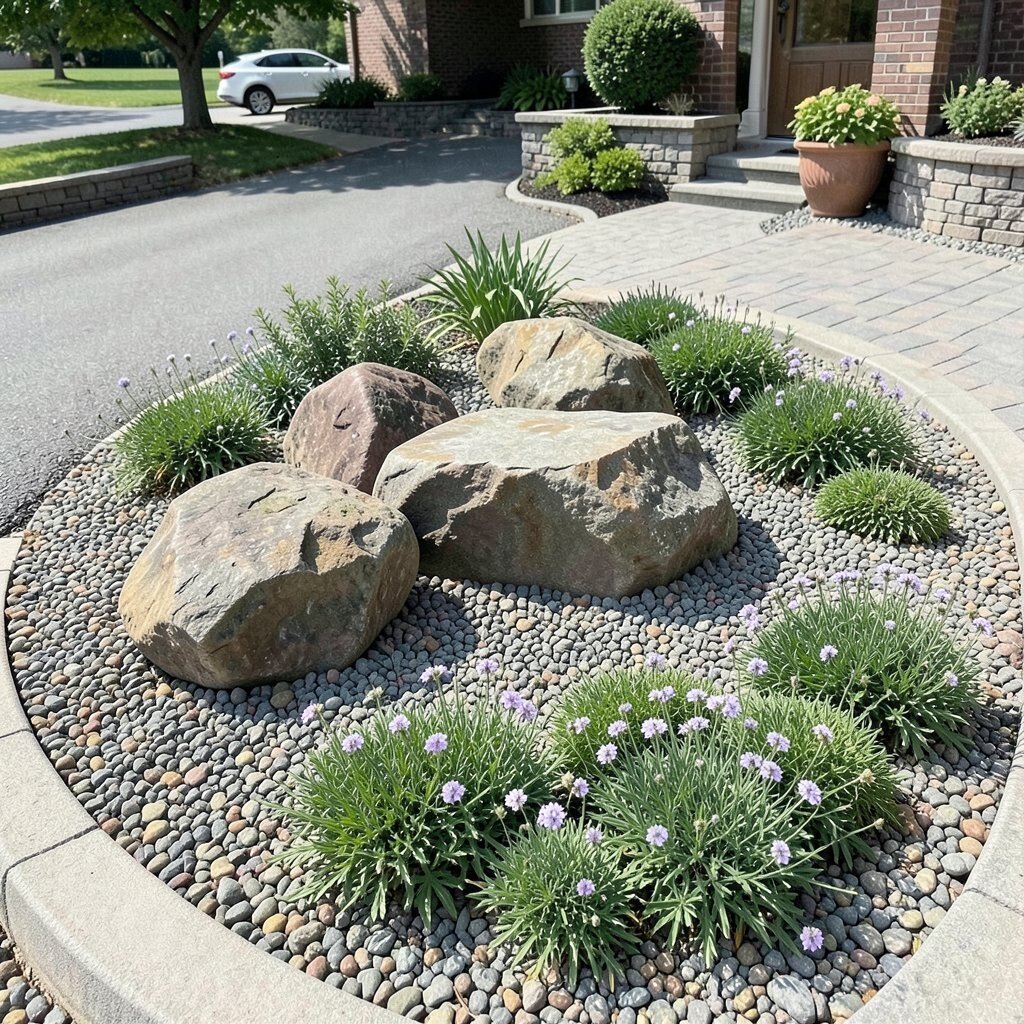
Turn a plain front entry into a warm welcome with a rock garden centered on bold boulders. When your eyes hit the driveway or walkway, the stones can guide your attention and set the mood instantly.
Choose boulders with character, then surround them with medium gravel and smaller stones for texture. Add a low row of plants like creeping phlox or compact sedum so the base looks full without blocking views.
Keep the design practical by making sure you can still reach the area for watering and seasonal trimming. If the entry gets lots of sun, prioritize plants that handle heat and keep the gravel looking tidy.
To personalize, match the stone color to other hardscape elements like pavers, retaining walls, or outdoor furniture. That small match helps everything feel connected, even when you change plant varieties over time.
11. Sloped Garden Rock Steps With Easy Plant Pockets
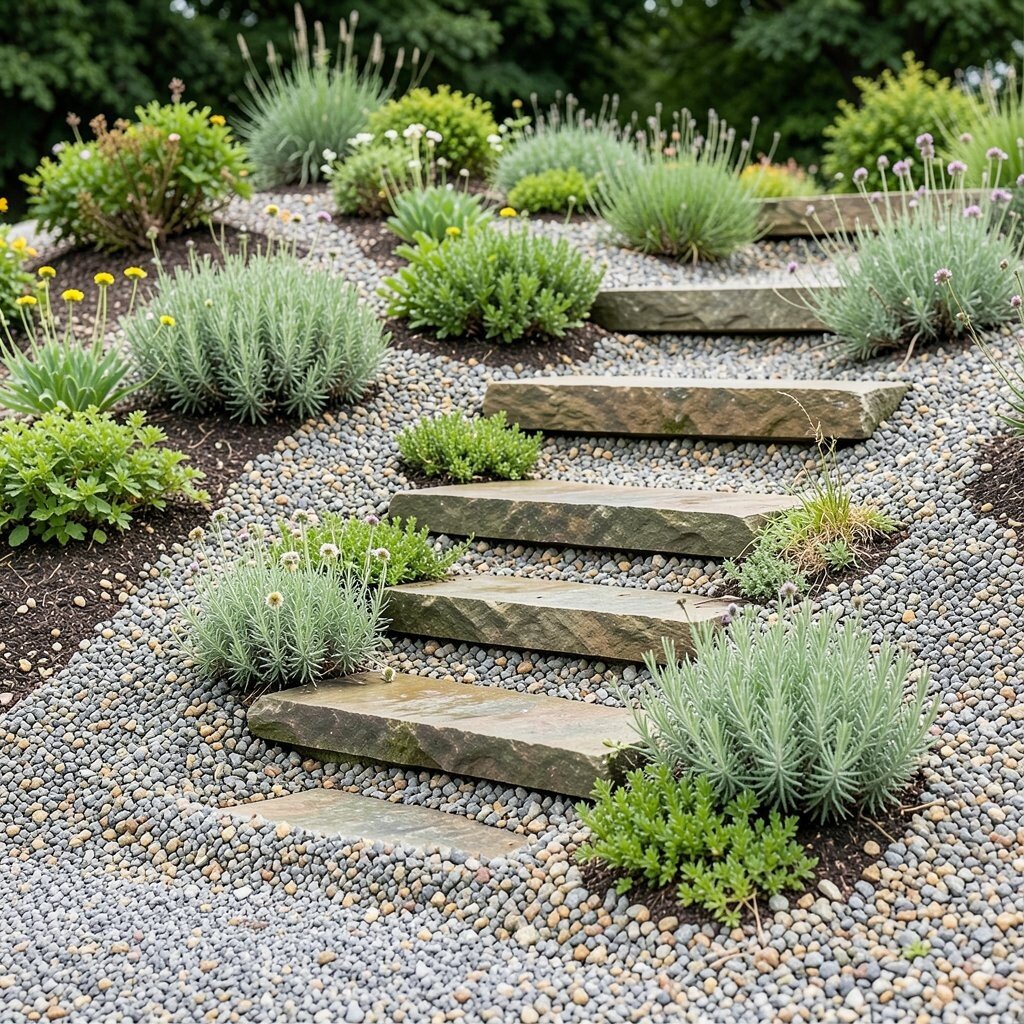
Use a slope to your advantage by creating rock “steps” that guide the eye up the hill. Gravel between stones makes the surface feel stable, and the steps help you reach plants without walking on loose soil.
Set flat stones at gentle angles, then backfill around each one with compacted gravel. This approach helps reduce slipping and can keep the steps from shifting after heavy rain.
Plant in pockets at each step using hardy groundcovers, small shrubs, or trailing thyme. That way, the greenery appears like it’s growing right out of the stone, which looks artistic and natural.
For practical upkeep, choose plants that don’t demand constant attention, like sedum varieties that tolerate dry conditions. You can also refresh gravel lines with a top dressing layer once or twice a year.
12. Recycled Aggregate Rock Garden With Budget-Friendly Charm
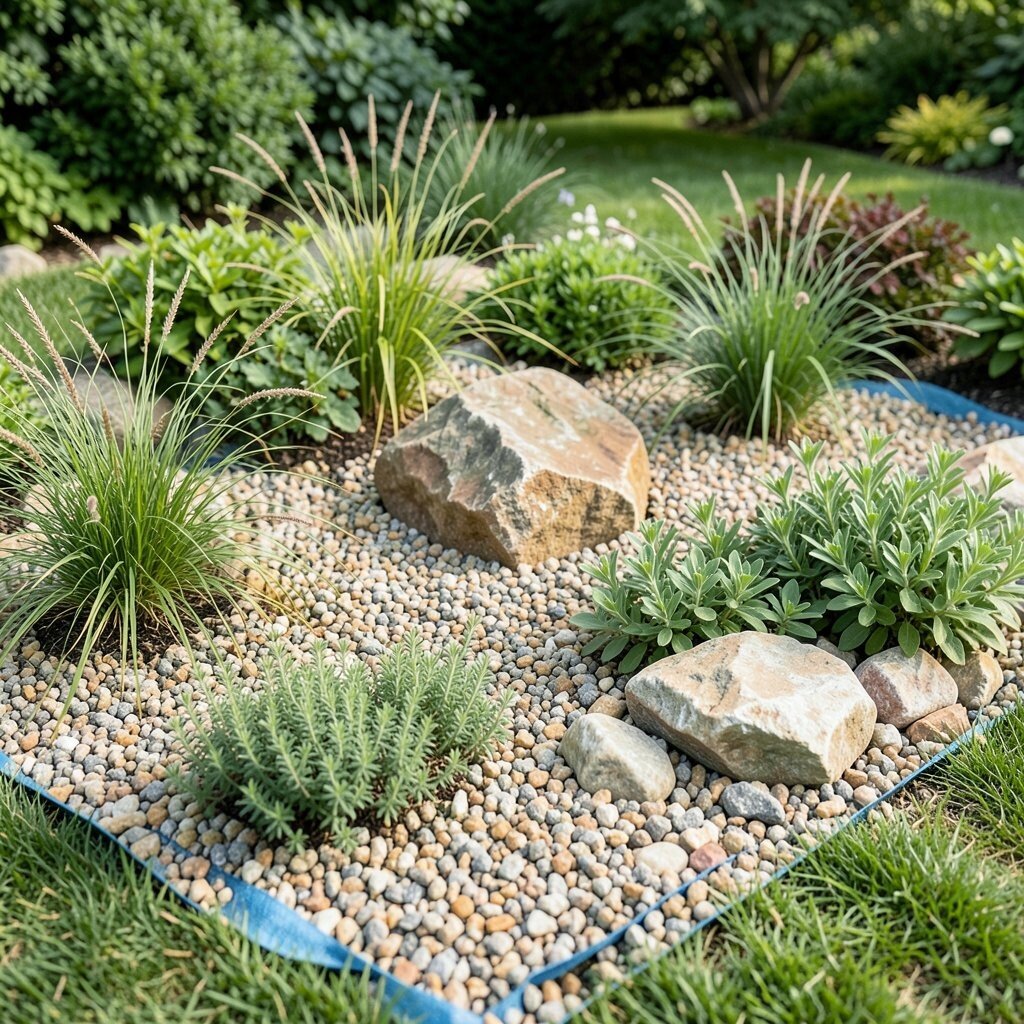
Build a beautiful rock garden on a budget using recycled aggregate, then add a few intentional rocks for character. The look can be surprisingly stylish, especially when you blend colors and sizes instead of insisting on perfect uniformity.
Use landscape fabric beneath to reduce weeds, then add a thick layer of aggregate for a long-lasting base. This helps with drainage and makes the bed easier to maintain through busy weeks.
Add plants that handle tough spots, like ornamental grasses, creeping thyme, and compact stonecrop. The greenery softens the aggregate, so the yard doesn’t feel harsh or industrial.
For a personalization boost, choose one or two standout boulder pieces as the “heroes,” then build the rest around them with smaller stones. When you buy gradually, you can spread costs over time and still end up with a one-of-a-kind look that fits your space.