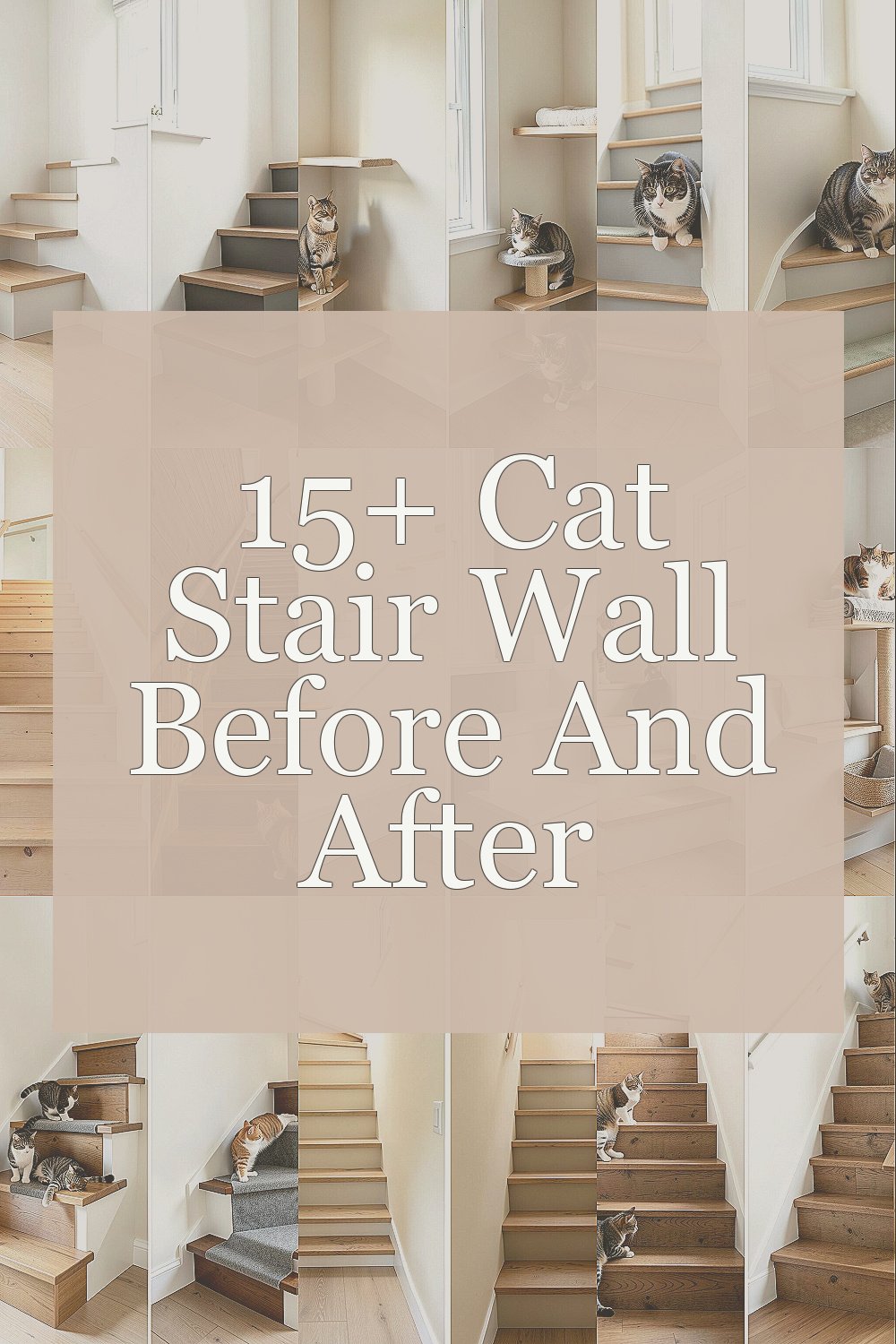
Cat stair wall ideas can make a home look neat and give cats a safe way to move around. A simple before and after plan can help you see what changes work best for your space and your pet.
1. Basic Floating Steps With Clean Paint

A simple set of floating steps can change a plain wall into a useful cat path. Before, the wall may look empty and plain, but after, it can feel tidy and calm with soft wood steps and fresh paint.
This style works well in small homes because it does not take up floor space. It is also a good low-cost choice if you want a clean look without buying many parts.
You can match the step color to the wall for a soft look or pick a darker shade for more contrast. Many people like this style because it is easy to fit into modern rooms and simple to keep clean.
2. Corner Cat Stair Wall With A Rest Spot
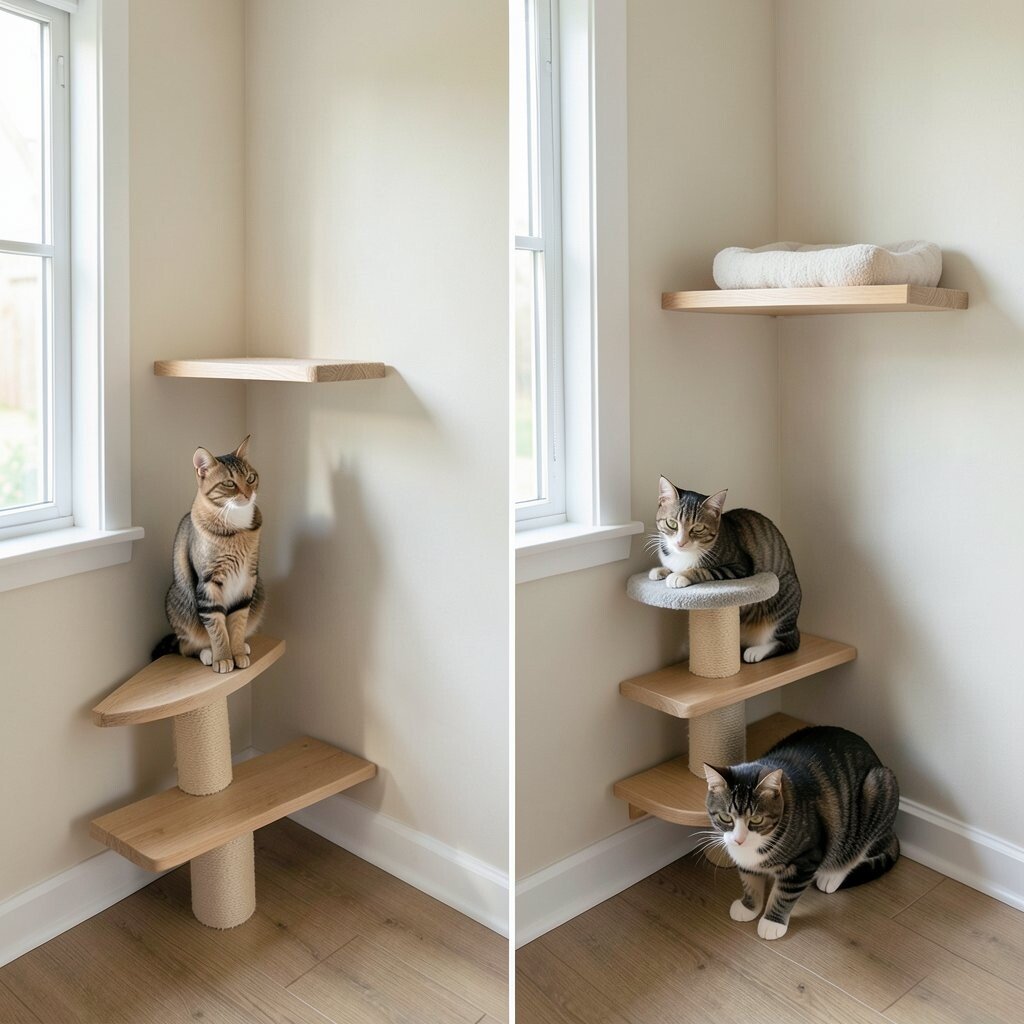
A corner stair wall makes use of space that often gets ignored. Before, the corner may be a dead spot, but after, it can hold steps, a perch, and a cozy place for your cat to stop and look around.
This setup can help shy cats feel safe because they can climb up and stay above the floor. It also gives active cats a clear path that feels like part of the room instead of a separate pet item.
For a personal touch, you can add a small cushion or a soft mat on the top shelf. The cost can stay fair if you use basic wood and keep the shape simple.
3. Wide Steps For Older Cats

Wide steps are a smart choice for cats that need a little more room. Before, narrow steps may seem hard to use, but after, the wider shape can make climbing easier and more comfortable.
This idea is helpful for older cats or cats with short legs. It can also be a better choice for homes that want a calm, easy look instead of a sharp, modern one.
You can paint the steps to match your room or add a soft grip on top. Many pet owners like this trend because it keeps the wall useful while still looking neat and simple.
4. Wood Stair Wall With Warm Natural Look

A wood stair wall can make a room feel warm and homey. Before, the wall may feel cold or plain, but after, the wood adds texture and gives the cat a path that stands out in a nice way.
Natural wood works well in many homes because it fits with both modern and classic styles. It can also be a good pick if you want something that feels less like pet gear and more like part of the room.
To make it your own, you can choose light wood for a soft look or darker wood for more depth. The cost may be mid-range, but the result can last a long time with simple care.
5. White Wall Steps With Hidden Brackets

White steps with hidden brackets can give a wall a very clean look. Before, the area may seem busy, but after, the steps can look like they are floating with little effort.
This style is popular in newer homes because it feels light and fresh. It can also help a small room feel less crowded since the steps blend into the wall.
If you want a personal twist, add a small colored pad on one step or use a soft gray wall behind it. The cost can stay lower if you keep the design simple and use paint that matches the wall well.
6. Stair Wall With Built-In Cat Shelf

A built-in shelf near the top of the stair wall gives your cat a place to rest after climbing. Before, the wall may end with only steps, but after, the shelf adds a clear stop that feels safe and useful.
This idea is nice for cats that like to sit and watch the room from above. It also helps the wall feel more complete, since the path does not end in a hard or awkward spot.
You can make the shelf wide enough for a small bed or a folded blanket. This trend is a good mix of style and use, and it can fit many room sizes if you plan the layout well.
7. Mixed Material Steps For A Fresh Look

Mixing wood, paint, and fabric can give the cat stair wall more style. Before, the wall may look flat, but after, each step can have its own feel and help the whole space stand out in a calm way.
This mix can also help with grip and comfort. Wood gives strength, paint gives color, and fabric or grip tape can help cats feel steady as they move up and down.
People often like this look because it feels custom without being too hard to build. You can keep the cost under control by using one main material and adding only a few small extras.
8. Narrow Hallway Cat Stair Wall

A narrow hallway can still hold a cat stair wall if the steps are made with care. Before, the hallway may only be a pass-through space, but after, it can become a useful cat path that does not block people.
This is a smart idea for small homes and apartments. It makes use of wall space instead of floor space, which helps keep the area open and easy to walk through.
You can keep the steps slim and neat so they do not feel heavy in the room. A soft paint color can help the wall feel calm, and the cost can stay low if the design stays simple.
9. Stair Wall With A Cat Bridge

Adding a small bridge between wall steps can make the route more fun for cats. Before, the wall may have only straight steps, but after, the bridge gives the cat a short path to cross and a new spot to enjoy.
This idea works well for cats that like to jump and move around. It also gives the wall a more playful look, which can make it feel less plain.
You can make the bridge short and sturdy so it feels safe. This style is part of a growing trend in pet-friendly homes, and it can be adjusted to fit many wall sizes and budgets.
10. Modern Gray Stair Wall
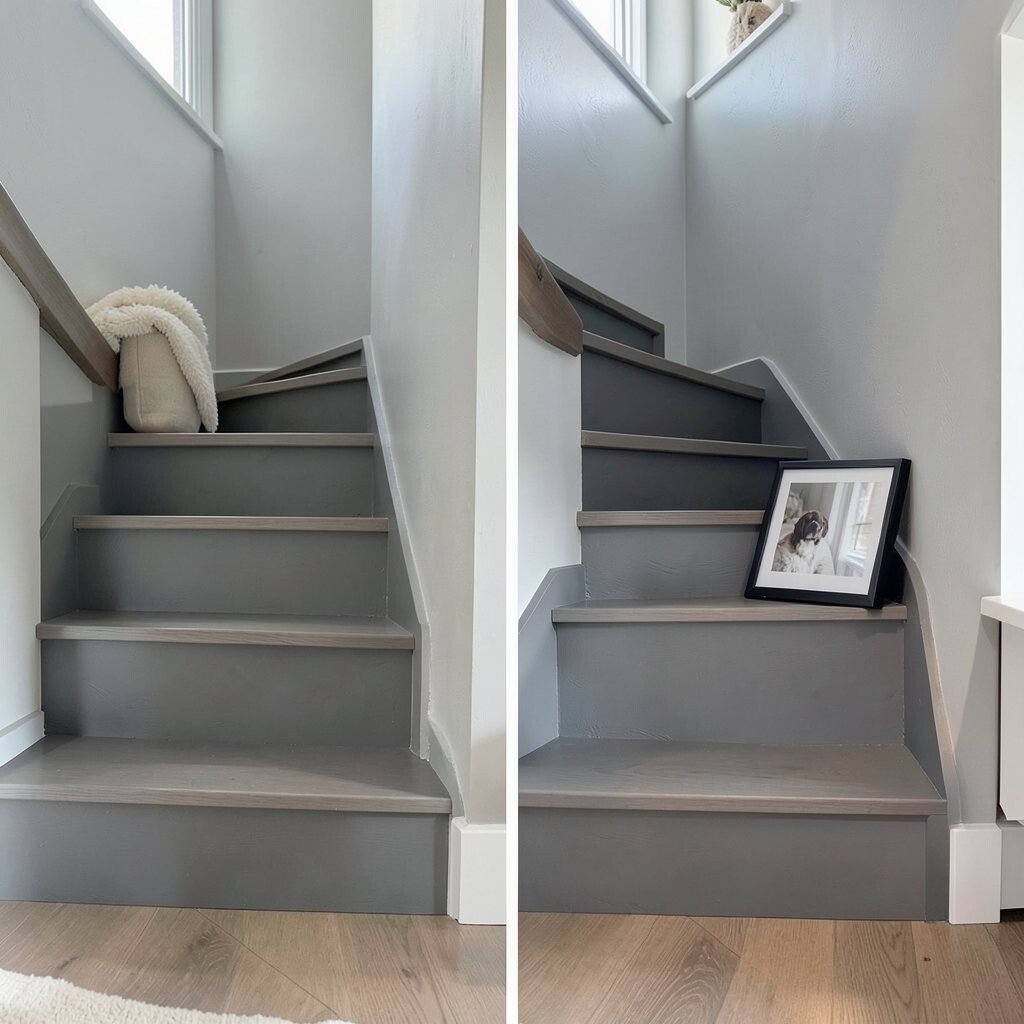
A gray stair wall can look calm and neat in many homes. Before, the wall may seem unfinished, but after, the gray color can help the steps blend in while still feeling stylish.
Gray works well because it is easy to match with other room colors. It can also hide small marks better than very light colors, which helps with daily use.
To make it feel more personal, add a soft blanket or a small framed pet photo nearby. Many people like this style because it feels current without being too bold, and the cost can be fair if you use paint and basic wood.
11. Stair Wall With Corner Scratching Post

A scratching post near the stair wall can give your cat more to do in one spot. Before, the wall may only help with climbing, but after, it can also help with play and scratching.
This setup is useful because it can keep cats busy and may help protect other furniture. It also makes the wall feel more complete since the cat gets both a path and a place to use its claws.
You can choose a post that matches the step color or wrap it in rope for a natural look. The cost can stay low if you build the post with simple parts and place it near the steps.
12. Stair Wall With Soft Lighting

Soft lighting can make a cat stair wall look gentle and easy to use. Before, the wall may feel dark at night, but after, small lights can help show each step and make the area safer.
This is a good idea for homes where people and cats move around after sunset. It can also make the wall look more finished without adding bulky decor.
You can use warm lights for a cozy feel or cool lights for a cleaner look. Many people like this trend because it adds comfort and style at the same time, and it does not need a huge budget.
13. Rustic Cat Stair Wall With Dark Stain

A rustic stair wall with dark stain can give a room a strong, homey look. Before, the wall may seem empty, but after, the deep wood tone can add weight and make the cat steps feel like part of the room.
This style works well in homes with warm colors, brick, or older wood furniture. It can also hide wear better than very light finishes, which is helpful in busy homes.
You can make the look your own by pairing the steps with a simple mat or a small plant nearby. The cost depends on the wood and stain you choose, but it can still be a good value if you want a classic style.
14. Stair Wall With Built-In Cat Tunnel

A built-in tunnel near the stair wall can give cats a fun place to pass through. Before, the wall may only have open steps, but after, the tunnel adds a hidden spot that feels special and playful.
This idea is great for cats that like small spaces and quiet rest areas. It can also make the wall look more custom, since the tunnel gives the setup a unique shape.
You can line the tunnel with soft fabric or leave it smooth and simple. This kind of design may cost more than basic steps, but many pet owners like it because it gives both style and use in one build.
15. Colorful Cat Stair Wall For A Fun Room
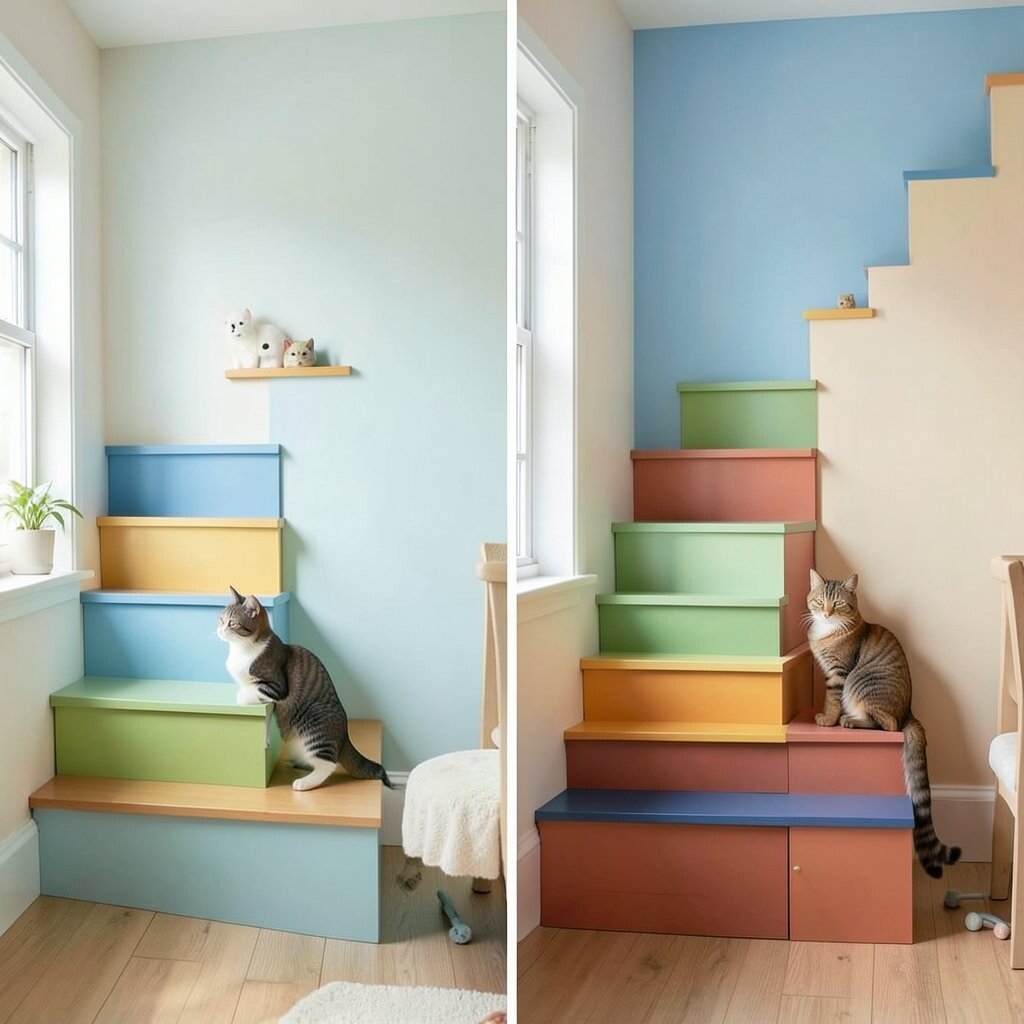
A colorful stair wall can bring a happy feel to a room. Before, the wall may look plain, but after, soft blues, greens, or warm tones can make the steps stand out in a friendly way.
This style works well in family rooms, play spaces, or homes that already use bright accents. It can also help each step feel easy to see, which may be good for both cats and people.
You can use one main color and add small accent shades for a custom look. The cost can stay low if you use paint well and keep the step design simple, which makes this a good choice for many homes.
16. Full Cat Wall Path With Steps And Perches
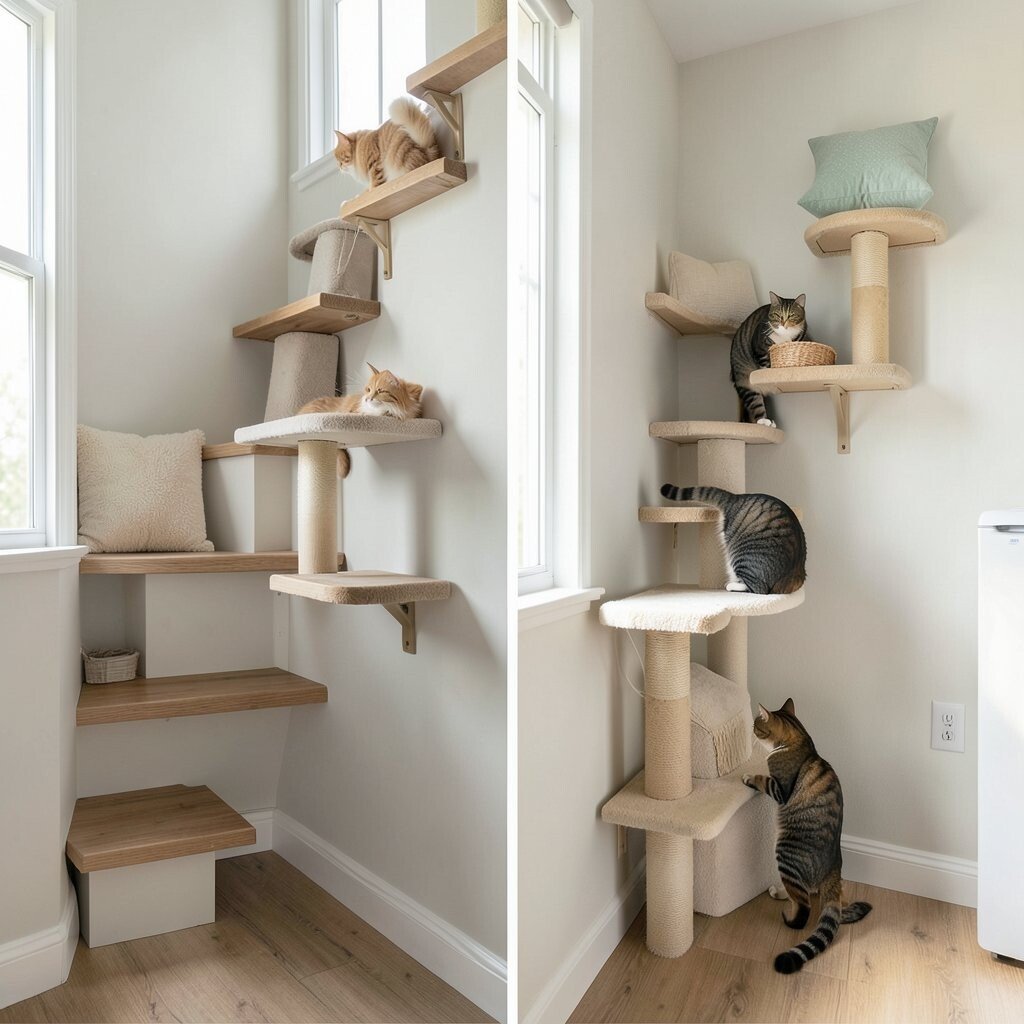
A full cat wall path can connect steps, perches, and resting spots into one clear route. Before, the wall may have only one or two pieces, but after, it can feel like a complete path that helps your cat move around with ease.
This idea is useful for active cats that like to climb and watch the room from above. It also gives you more room to add your own style, since each part can be shaped to fit your wall and your cat’s habits.
You can keep the look simple with matching wood and paint or make it more personal with cushions, small shelves, and soft textures. This is one of the more flexible trends because it can fit many budgets, room sizes, and design tastes.