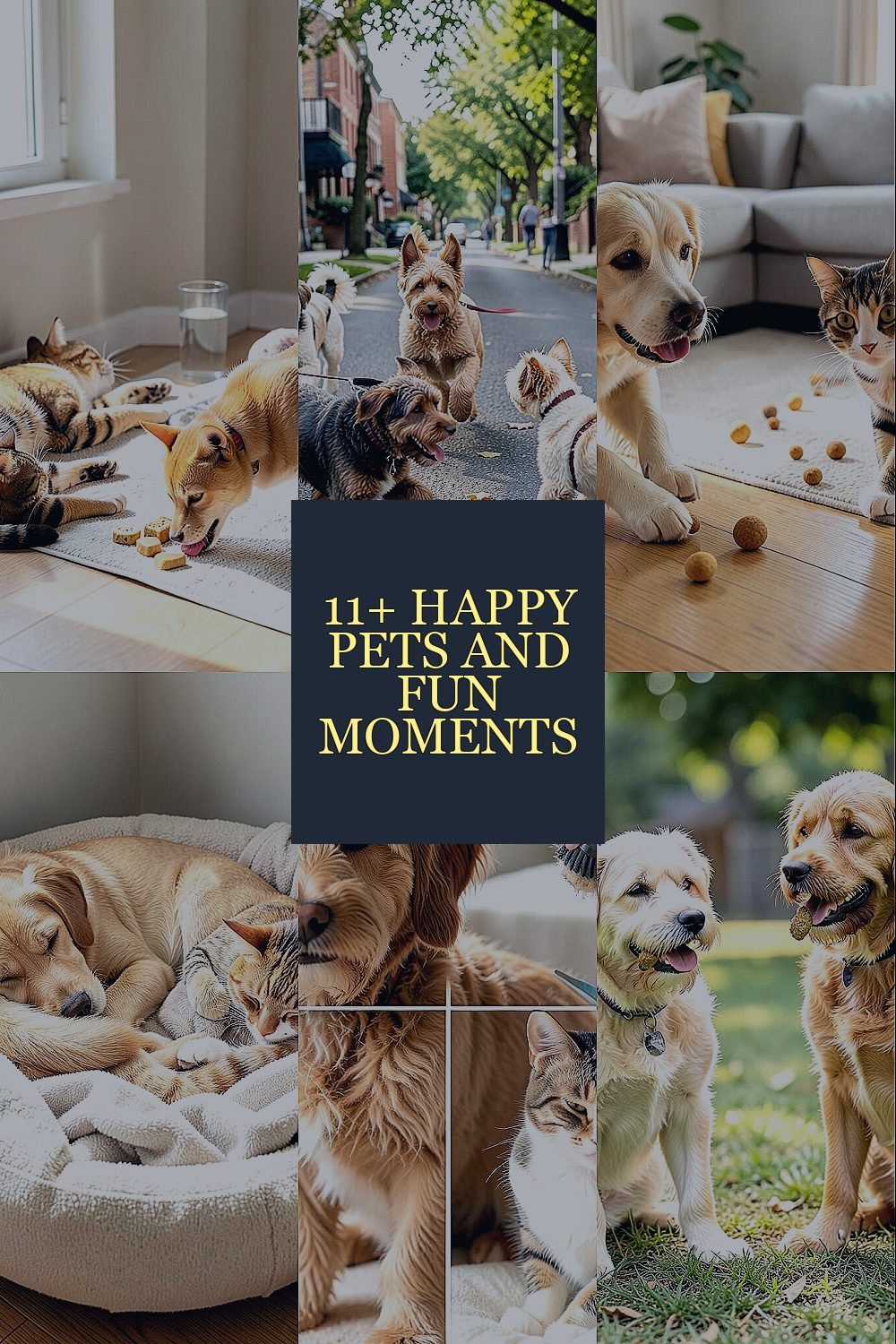
Happy pets make daily life feel warmer and calmer. When you watch them play, eat, and sleep, you can also feel less stressed.
1. First Morning Stretch With Your Cat or Dog

In the early light, many pets stretch like they are thinking. You might see a cat curl its back and then relax on the floor, or a dog push up with slow steps. It can look small, but it is a clear sign they feel safe.
This moment helps you start the day with a good mood. It also helps you check basic health signs like body size, movement, and comfort. If your pet seems stiff or avoids stretching, you can note it and plan a vet call.
Try a simple routine: open a window a bit, offer fresh water, and sit nearby for a few minutes. Keep the cost low by using what you already have, like a clean mat or a soft blanket. For personalization, use a favorite treat after the stretch, so your pet learns to enjoy the routine.
2. The “Zoomies” Walk Around the Block

Some dogs get a burst of energy and run in circles. Others hop forward after they spot a leaf, a bird, or a patch of grass. If you have a cat that loves movement, it might sprint from one room to another too.
Regular outdoor time is good for body and mind. It can lower stress and help your pet act calmer at home. It also gives you a chance to notice small issues, like limping or breathing changes.
Make it fun by letting your pet sniff longer than you would on a fast walk. Use a leash that fits well and check the fit often. If you want a trend idea, many owners are trying “sniff walks,” where the main goal is scent, not speed.
3. Treat Toss Games in the Living Room

You can turn regular treats into a fun game with a small toss. Watch your dog chase a soft treat across the floor, or see a cat follow a treat trail with wide eyes. The moment feels light, and it can turn a usual snack into play.
These games help training and build focus. They also give your pet a safe way to use energy indoors. Plus, you can do it without big gear, which helps keep costs down.
Use safe treats and avoid very hard bites that can upset teeth. Try different toss heights so your pet must look up and then move. For personalization, pick a sound cue like “ready” and always use the same word before you toss.
4. A Cozy Blanket Nest for a Safe Nap

Many pets love a warm spot where they can rest with no rush. You might see a dog dig a small spot and then curl into a tight ball. A cat may press its side into a blanket and purr like it has all the time in the world.
A calm nap helps your pet recover and stay patient. It can also make behavior better, like less barking or less scratching. A safe nest can be a big comfort during loud times, like storms or visitors.
Try adding a second blanket in a corner with low traffic. If you like a trend, pet owners are using simple “sniff stations” and quiet beds in corners, not fancy setups. The cost can stay small if you use clean towels or old blankets, but keep safety in mind by avoiding loose strings.
5. Grooming Time That Feels Like a Gentle Check

Grooming can be plain, but it can also be a caring moment. You might brush a dog’s coat and see loose fur come off in soft clumps. With a cat, you may use a gentle brush and watch it blink slowly.
Brushing helps reduce tangles and helps keep the coat cleaner. It also lets you spot bumps, dry skin, or fleas early. That early look can save you money later because small issues can be easier to treat.
Start with short sessions so your pet does not get tired. Use a brush that matches your pet’s fur type and take breaks if needed. For personalization, add a calm scent-free wipe after brushing, if your pet likes it and your vet says it is okay.
6. Training With Clicks and Simple Rewards

Training does not need to be hard. You can try a quick cue like “sit” and then reward with a small treat right away. Many pets learn fast when you keep the steps clear and repeat them in the same way.
Training helps your pet feel secure. It also helps you manage daily life, like getting ready for walks or greeting guests. You get a fun bond too, since you both learn together.
Use a small click tool or a simple word marker like “good.” Keep reward amounts small and watch cost by using small treats or meal portions. For personalization, set goals for your pet, like teaching a paw touch or a short “stay.”
7. Water Play for a Fresh and Happy Mood

Some pets love water and some do not, so you can start slow. You might see a dog splash in a shallow pool or jump after a floating toy. Even if your pet only likes a damp towel, that still counts as a fun moment.
Water play can cool your pet in hot weather. It can also give a new outlet for energy, which may reduce restlessness. Just keep an eye on your pet so the play stays safe.
Try a small, shallow setup in a safe spot where you can control the mess. Use pet-safe water and watch for too much time in direct heat. A trend you may hear about is “cooling toys,” like frozen chew items, but you can use what you already own and freeze a safe rubber toy.
8. Interactive Toy Time With a Slow, Calm Pace

Interactive toys help your pet work for food and have a job to do. You might fill a puzzle feeder, watch a dog push pieces with its nose, or see a cat tap and paw at hidden treats. The visuals can be fun because you see your pet think.
This kind of play can help with focus and can lower boredom. It also supports healthy eating habits since your pet slows down a bit. Costs can be controlled if you use homemade versions, like a folded towel treat game.
Try a simple setup first, then add steps later if your pet enjoys it. Personalize the toy by choosing shapes your pet likes, like round rolling toys for some dogs. For a trend angle, many owners now choose food puzzles over constant free treats, since it helps with both fun and routine.
9. Cat Window Watching With Safe Setup

A cat can spend long minutes at a window, watching birds and clouds. You might see it sit tall on a perch, tail around its body, eyes locked on movement. Some cats also reach out for gentle touches to leaves or reflections.
This quiet time helps mental health because it gives new sights. It can also reduce indoor pacing if your cat gets safe rest breaks. Window time can even help with stress since the room feels less empty.
Make it safe by placing the perch away from open hazards. Use a sturdy shelf or a cat tree that is stable, then check it often. For personalization, add a small scratch pad nearby so the cat can switch from watching to stretching without leaving the spot.
10. Chasing a Wand Toy and Learning Good Play Rules

Many cats enjoy wand toys that swing like a small bird. You might see quick bursts of pouncing, then a pause as your cat watches for the next move. This can be a great time to hear a mix of focus and excitement.
Play like this helps keep muscles strong and supports healthy instincts. It can also help your cat act calmer at night because it used energy earlier. The benefit is not just physical; it also builds trust when you play with care.
Use the toy in short sessions so your cat does not get too tired or cranky. Avoid tugging too hard, and keep the toy movement smooth. For personalization, match the toy type to your cat’s style, like a feather for gentle seekers or a thicker string for strong grabbers. Keep cost in mind by rotating between two simple toys instead of buying many at once.
11. Pet-Safe Chew Time With the Right Treat

Chewing is a normal need for many pets. You might watch a dog hold a chew and settle in, then take slow breaks to relax. Cats may carry a small toy in their mouth and then bat it like a game.
The right chew can help keep teeth clean and reduce boredom. It also gives pets something to do when you are busy. If you pick a safe chew size, it can help prevent chewing on things you do not want.
Choose chews that fit your pet’s size and chewing style. Talk to your vet if your pet has tooth issues, stomach issues, or allergies. For personalization, set a daily chew time after a walk or after meals, so your pet knows what comes next. Costs can vary, so compare prices and choose one or two favorites instead of a large mix.
12. Family Photo Day With a Simple Outfit or Bandana

Some pets enjoy being part of family life, even if it is only for a short time. You can take a photo when your dog is calm or when your cat sits in a sun patch. A small bandana or a simple sweater can add a cute touch without much work.
This kind of fun moment helps you bond with your pet and gives you happy memories. It can also make routine easier if you keep the time short and calm. Costs stay low if you use a simple item you already have or pick a budget-friendly accessory.
Make it gentle: add the outfit for a few minutes, then remove it if your pet looks stressed. For personalization, use colors that match your home or a season, like red for holidays or light colors for spring. A trend right now is quick “at home” pet photos, often with natural light, so you can set your phone by a window and keep it simple.