
Parrots need toys to stay busy and feel safe in their home. The right toys can help with play, learning, and good habits.
1. Swing With Natural Wood

A wooden swing is a simple toy that many parrots like. You can picture it as a small bar with rope or chain that hangs from a cage top. Birds can hop on it and move back and forth when they feel curious.
This toy helps with leg strength and foot grip. It also gives a safe place to rest and watch what is happening around them. Try to pick smooth wood that will not splinter, and always check it for loose parts.
2. Foraging Puzzle Feeder

A foraging puzzle feeder looks like a small box or tray with parts that move. Food sits inside, and the bird must work to reach it. Some puzzles have slide covers, while others use cups or lids.
This kind of toy can cut down boredom because the bird must think and search. It also slows down eating, which many birds enjoy during calm hours. You can personalize it by changing the food pieces, like using soft fruit or small bites of pellets.
Cost can vary, so you can start with a basic model if you want to watch how your bird reacts. As a trend, many people now mix puzzle toys with daily feeding to keep birds busy. Do not add more food than your bird needs, and remove any wet leftovers fast.
3. Cardboard Chew Roll

A cardboard chew roll is usually made from rolled cardboard or tubes like those from paper goods. It can be plain, or it can have safe tags and holes for chewing. When your bird bites, the roll breaks down into bits that feel fun to clean up later.
Chewing helps keep the beak in good shape and gives your bird a real job. It can also help with stress because the bird has something to focus on. For tips, cut the roll to a size your bird can reach easily and avoid paint or strong ink.
4. Shredding Paper Parrot Toy

Shredding toys are made for birds that love to tear and pull. Think of strips of paper or safe fiber tied to a base, with space to swing and hang. Some are made to attach to the side of the cage.
This toy is great for birds that enjoy breaking things down. It can lower nervous habits like pacing, since the bird can channel energy into shredding. Personalize it by adding plain paper strips, and change them often so the toy stays fresh.
Keep an eye on mess, since paper bits can collect on the cage floor. A good habit is to do small cleanups a few times a week. If your bird drops too much paper, switch to thicker safe materials.
5. Rope Ladder for Climbing

A rope ladder gives your bird a way to climb and move around. You can picture it as small rungs tied to side ropes, with space to step on each rung. Many birds like using it to reach favorite spots.
Climbing helps with muscle tone and gives mental activity too. It also helps the bird practice balance, which matters for confidence. Pick rope that is thick enough to handle bites, and check that knots are tight.
6. Stainless Steel Bell and Clapper

A bell toy is bright and simple, and your bird can hear it when it moves. Visualize a small bell with a clapper that rings when the bird taps it. You can hang it near a perch so the bird can reach it fast.
This toy can encourage play and light movement inside the cage. Some birds start with a gentle tap, then get more excited as they learn the sound. If your bird gets too worked up, try moving the bell to a quieter spot and use it for short time periods.
Cost is often low, so it is easy to try. A trend right now is pairing bells with other toys for short play sessions. Choose one made for birds, with no sharp edges.
7. Natural Foraging Branch With Safe Holds

A natural branch with safe holds is like a small tree section placed inside the cage. It may include knots, extra branches, or small spots to hold food. Birds often love it because it feels like real perching wood.
This toy can add variety to daily life, especially if your bird keeps using the same perches. It also supports natural behaviors like chewing, hopping, and looking around. For personalization, attach small clips with safe food, like a few nut pieces or a small leaf.
Cost can be moderate depending on what type of wood you buy. Trends in bird care focus on more natural items instead of only plastic toys. Just make sure the wood is safe, clean, and free from chemicals.
8. Swing-Style Bird Skewer With Veggie Clips

This toy style uses a skewer or bar that holds veggies using clips or holders. You can imagine colorful strips of bell pepper, leafy greens, or small pieces of carrot placed on the line. The bird can peck and pull the pieces off over time.
Veggie clips make feeding feel like play, which many birds enjoy. It also helps portion control because the bird picks at food slowly. For tips, cut veggies into small sizes so they do not fall in one big piece.
Cost is usually in the mid range, but you can reuse the base and keep changing the food. A trend in many homes is to hang food in different ways, not just in a bowl. Watch for any food that spoils and remove it the same day.
9. Mirror With a Single Perch Spot

A small mirror toy can give a bird something to look at and talk to. You can picture a mirror set with a perch spot next to it, so the bird can stand and observe. Many birds make soft sounds as they check their “friend.”
This toy can boost curiosity and help some birds stay calm. Still, it is not right for every bird, so use it with care. If your bird gets upset, avoid long mirror time and switch to a different toy.
For personalization, pick a mirror that is the right size for your bird, not too big. Cost can vary, but you can find simple models. As a tip, place the mirror near a favorite perch where the bird feels safe.
10. Puzzle Cup Stack Toy
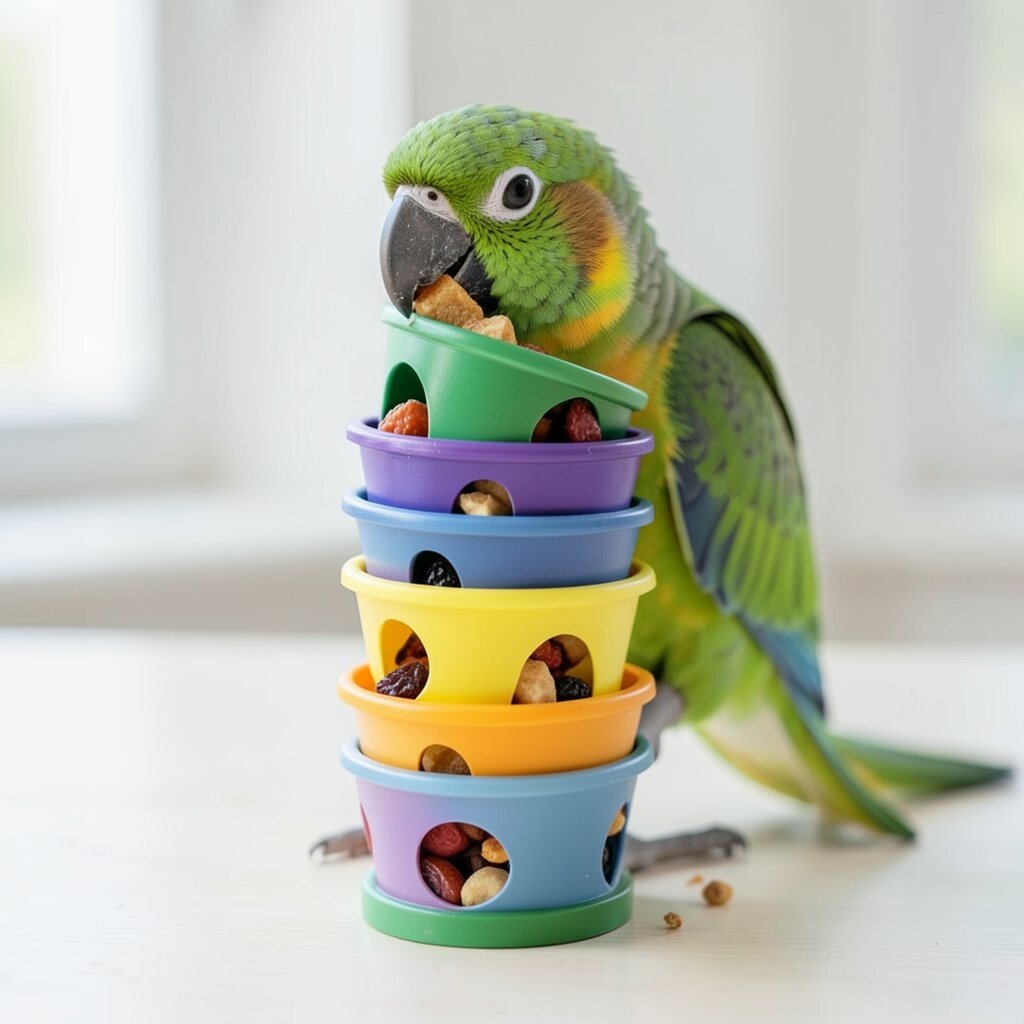
A puzzle cup stack toy uses cups or bowls that fit together in a set. Some have holes that hide food, and the bird must turn or tap them to reach treats. You can picture a small tower with cups that can move slightly.
This toy can help with problem solving, which keeps busy minds busy. It also gives a fun way to use treats, so you can keep treat time more planned. Personalize it by using safe items like dried fruit bits or tiny pieces of cooked sweet potato.
Cost depends on size and build, but you can choose a basic set first. A trend is to make “treat time” feel like a game instead of just handing food. Always remove the toy if your bird starts to chew it in a way that makes it unsafe.
11. Hanging Plastic-Free Feather Wand

A feather wand is a toy that a person can hold or hang for a short play moment. Visualize a small handle with soft safe feathers attached at one end. The bird can reach, tug, and bounce at the feathers when it feels playful.
This helps many birds with play and bonding because it uses movement. It can also help you teach gentle interaction, like letting the bird follow your hand slowly. For tips, use short sessions, and stop if your bird bites too hard.
Cost can be low to medium, since simple wand toys exist in many styles. Trends in bird care include more direct play time with owners, not only cage toys. Keep the feathers clean and avoid any toy with chemicals or unknown materials.
12. Adjustable Acrylic or Wooden Treat Dispenser

A treat dispenser is a toy that slowly releases food as the bird works it. You can picture a clear tube or wooden box with holes, so treats move out when the bird shakes or plays with it. Some have adjustable parts to control how hard it is to get the food.
This toy helps keep daily treats from turning into constant begging. It also gives your bird a clear goal, which many birds like. Personalize it by setting the level so your bird has a fair challenge, not too easy and not too hard.
Cost can be higher than basic toys, but it can last if it is well made. As a trend, many owners use “work for food” toys to keep birds focused. Check for wear often, since cracked plastic or loose pieces can be unsafe.