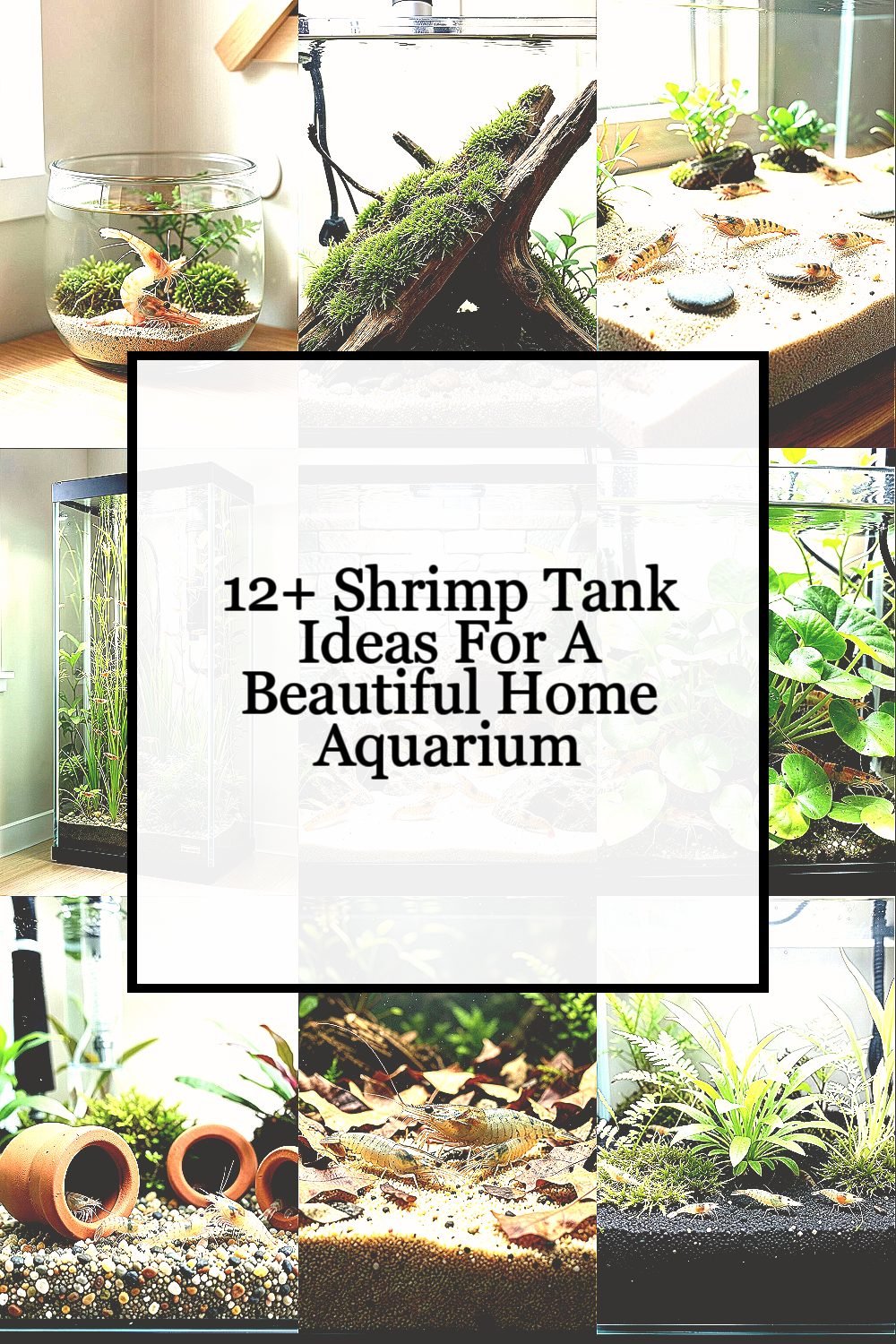
Shrimp tanks can look neat and calm in a home. They also help you enjoy watching small animals do normal daily things.
1. Small Glass Bowl Corner Setup
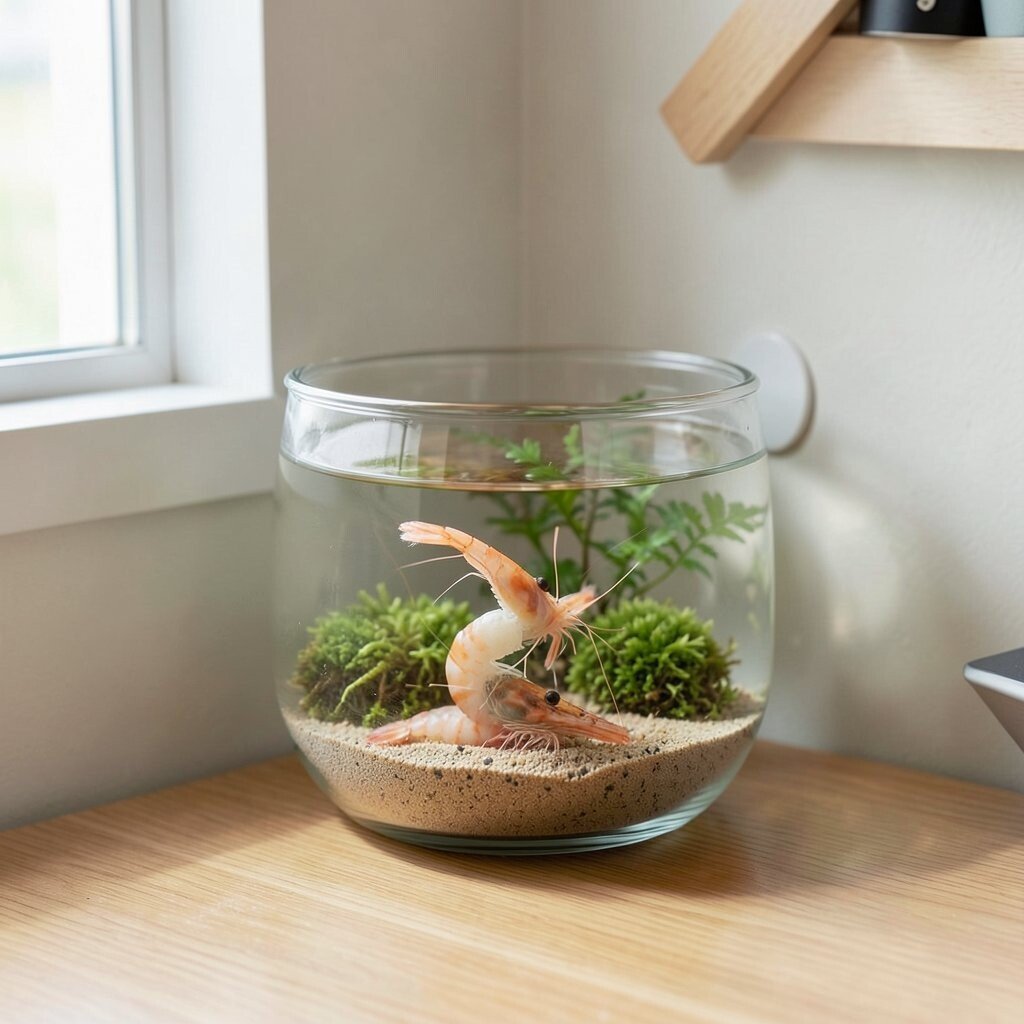
A small glass bowl can fit in a corner near a desk or reading spot. You can see the shrimp from almost any angle, and the tank can look clean with simple items inside.
Pick a clear bowl that holds water well and has a stable base. Use a sponge filter or a gentle pump so the shrimp do not get pushed around by strong flow.
This idea can be a lower cost start if you already have basic supplies. Try a few plants like small moss clumps, and add a thin layer of sand for a soft look and easier digging.
2. Driftwood With Soft Moss Cover
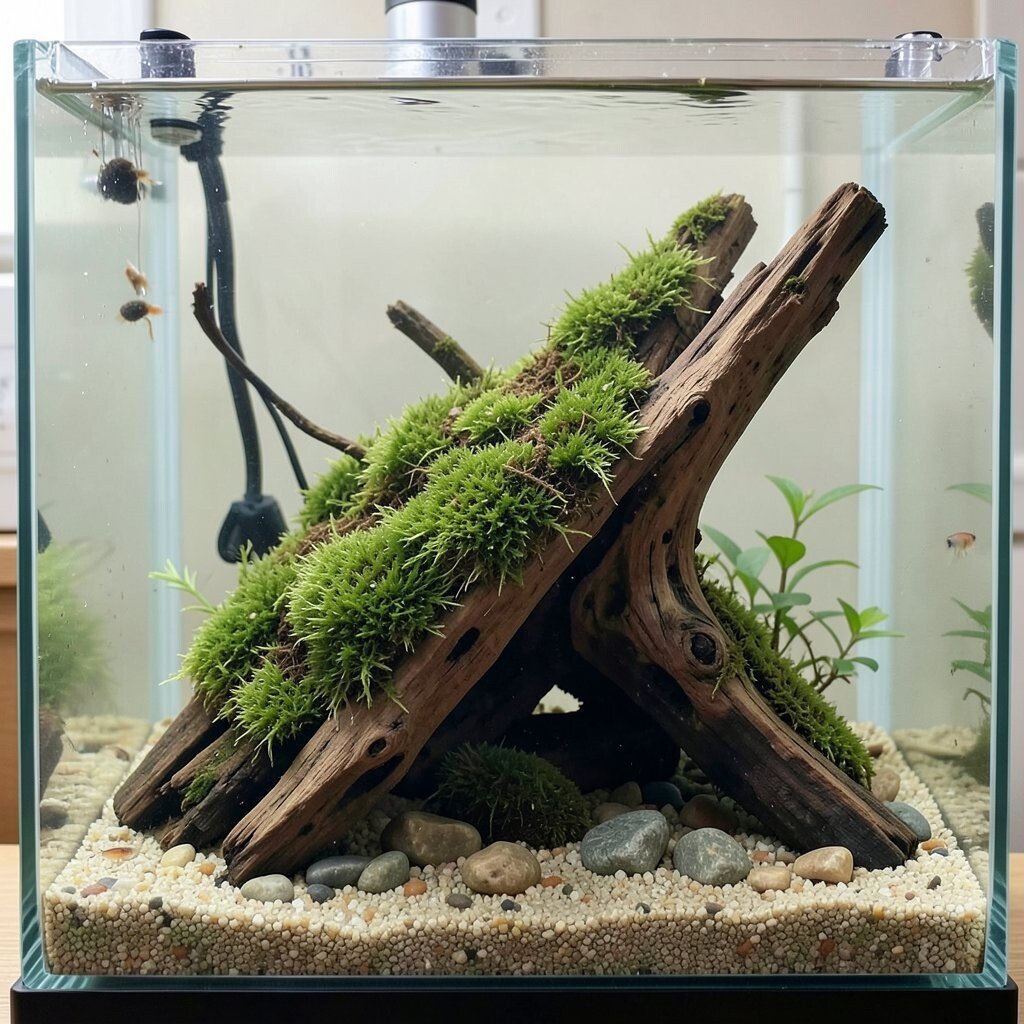
Driftwood can make a shrimp tank look more natural right away. Add soft moss on the wood, and you will get a green patch that shrimp like to graze on.
This setup is unique because it gives both hiding spots and food spots at the same time. You can also add a few tiny stones around the base to help the wood feel steady.
For best results, soak the driftwood before use. You can expect a little brown tint at first, but it often fades as the tank gets settled.
3. Sand Bed With Feeding Stations
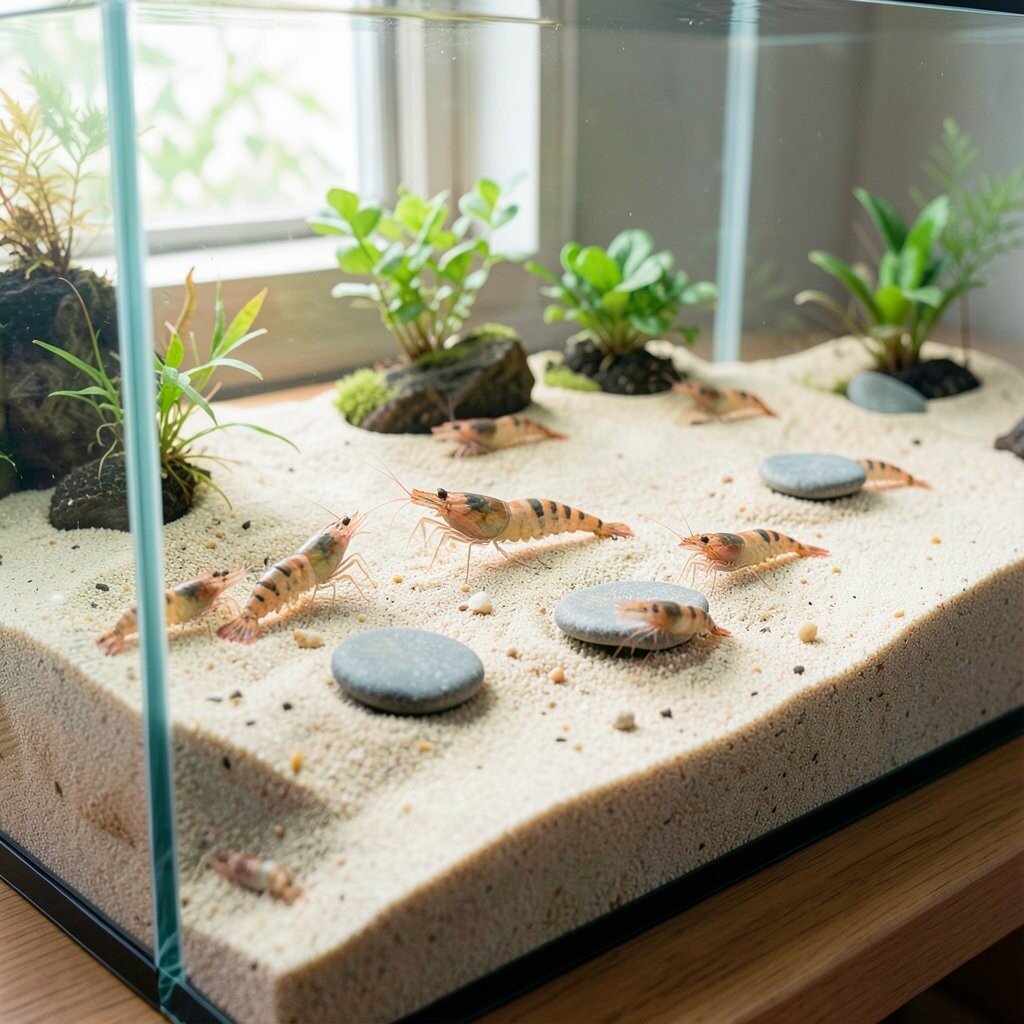
A sand bed makes the bottom feel smooth and calm. You can also set up feeding stations by placing small flat stones or feeding dishes on top of the sand.
When you feed in the same spot, it can be easier to watch how the shrimp eat. This also helps you control waste, because leftover food stays in one area instead of spreading everywhere.
Choose fine sand that is safe for small tanks and does not trap too much debris. Keep the sand level even, and stir gently during tank work so it stays clean.
4. Tall Tank With Vertical Plant Lines
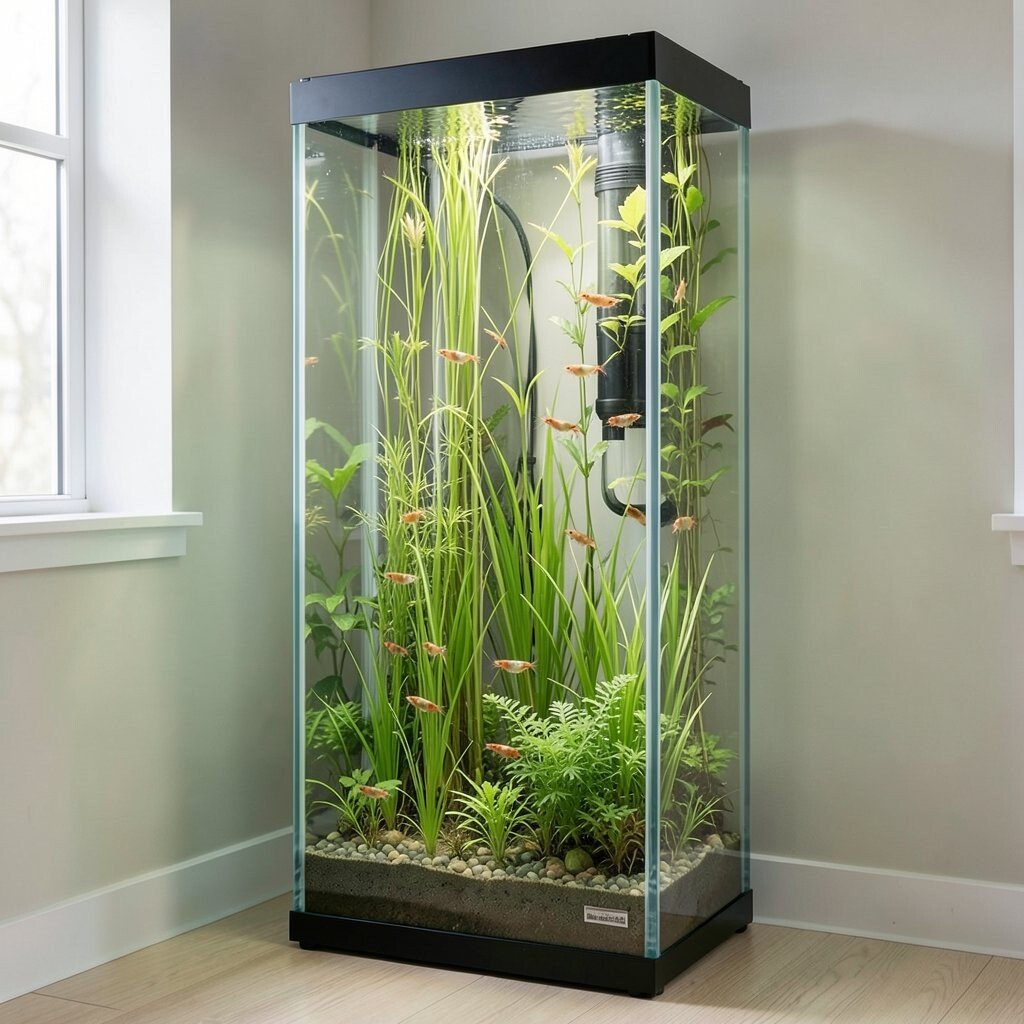
A taller tank can give you a lot of depth for a small home. Use plants in vertical lines, like short stems or grass-like plants, so the tank has clear structure.
These vertical lines can look tidy and help hide shrimp from bright light. The extra space also makes it easier to keep a steady water mix when you use a reliable filter.
This idea may cost a bit more if you buy a taller tank. Still, it can be worth it because the final look is strong, and you can add layers of plants as you go.
5. Stone Wall Backdrop Effect
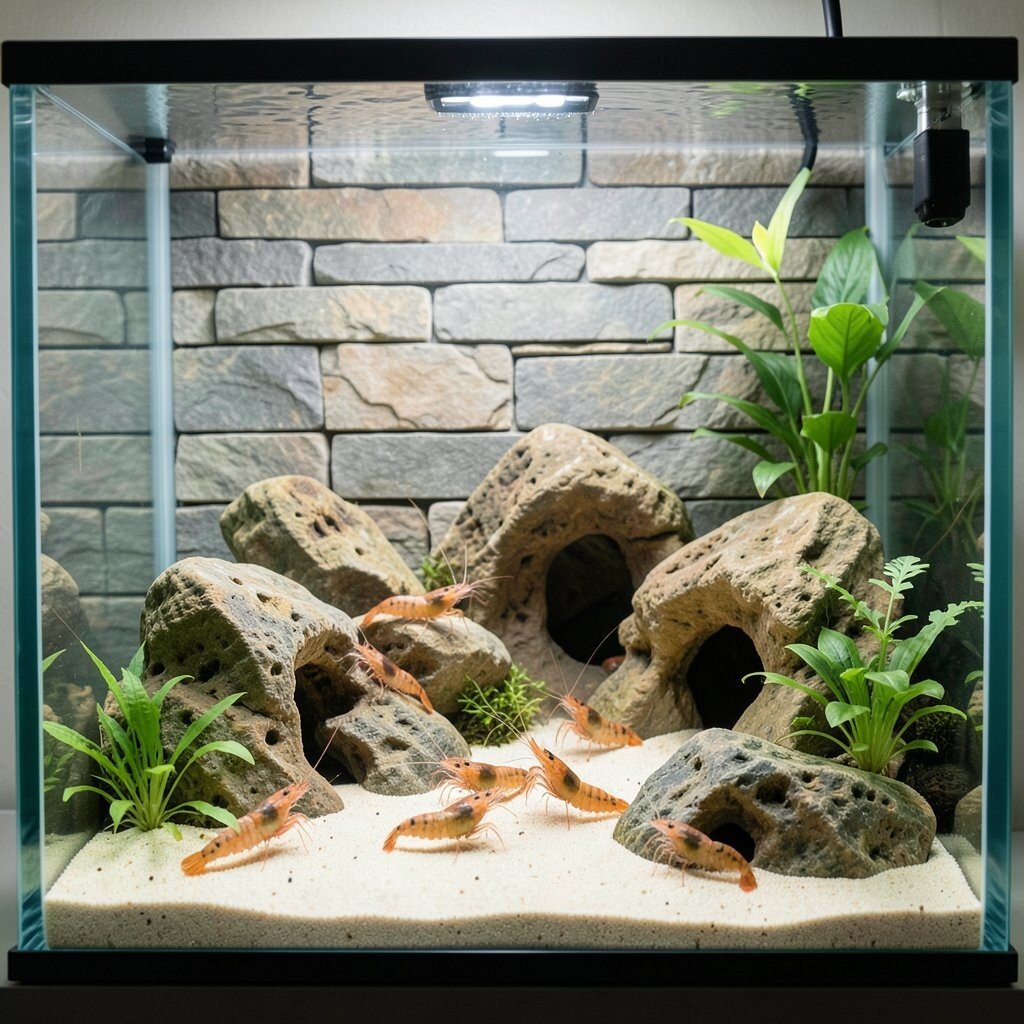
A stone wall style backdrop can make the tank feel like a small rock pool. Pair it with a few real rocks and you get a strong look without much work.
Use curved rocks so shrimp can move around and hide in small gaps. Small caves and creases help shrimp feel safe, especially when you add new ones.
If you want a personal look, pick a color that matches your room. A gray or tan theme often looks natural, and it is easy to pair with light sand and green plants.
6. Water Lettuce And Floating Shade
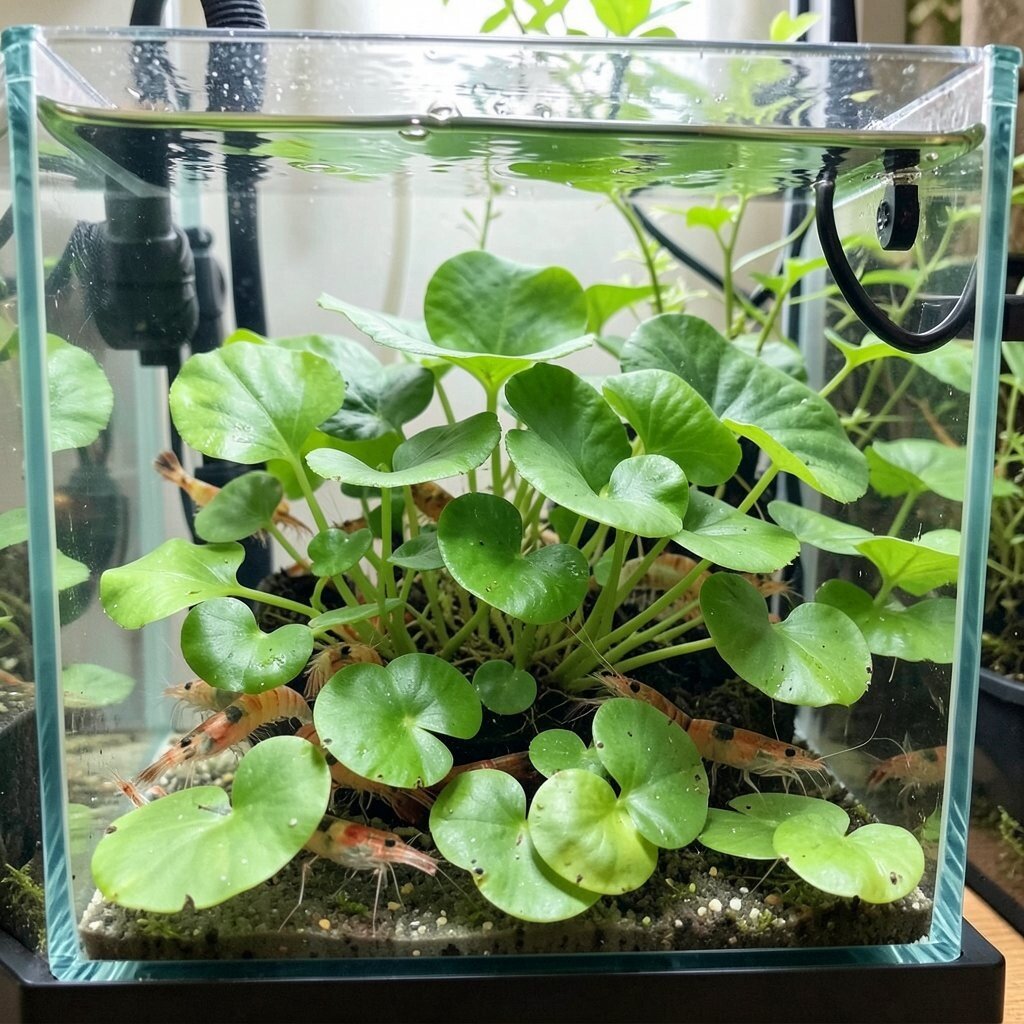
Floating plants like water lettuce can add shade and a softer look. The leaves float at the surface and make the tank feel calmer and more open.
Floating shade can help shrimp feel less stressed during bright hours. It also gives cover for babies, since small shrimp can hide under leaves.
This is a simple idea that can cost less than full planting. Just keep an eye on how fast the plant grows, and thin it out when it gets too thick.
7. Tiny Terracotta Pots For Caves
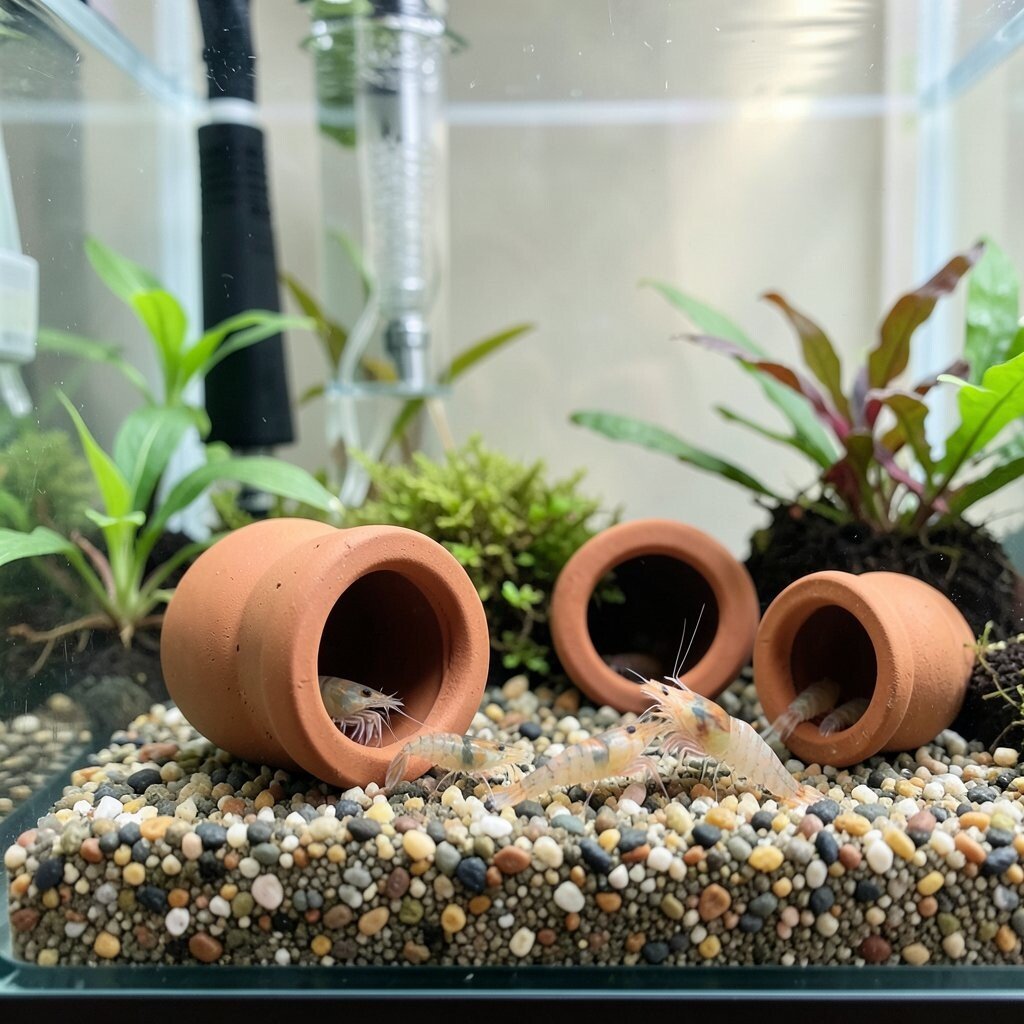
Small terracotta pots can make great caves for shrimp. You can place the pot on its side so there are open spaces for hiding and resting.
This option is unique because you get strong hiding spots without making the whole tank look crowded. It also helps break up the space so the tank looks like a small home area, not just a flat display.
Use plain terracotta without glaze, since the glaze can be risky for water. Rinse the pots well and do a test soak before you put them in the tank.
8. “Forest Floor” With Layered Sand And Leaf Litter
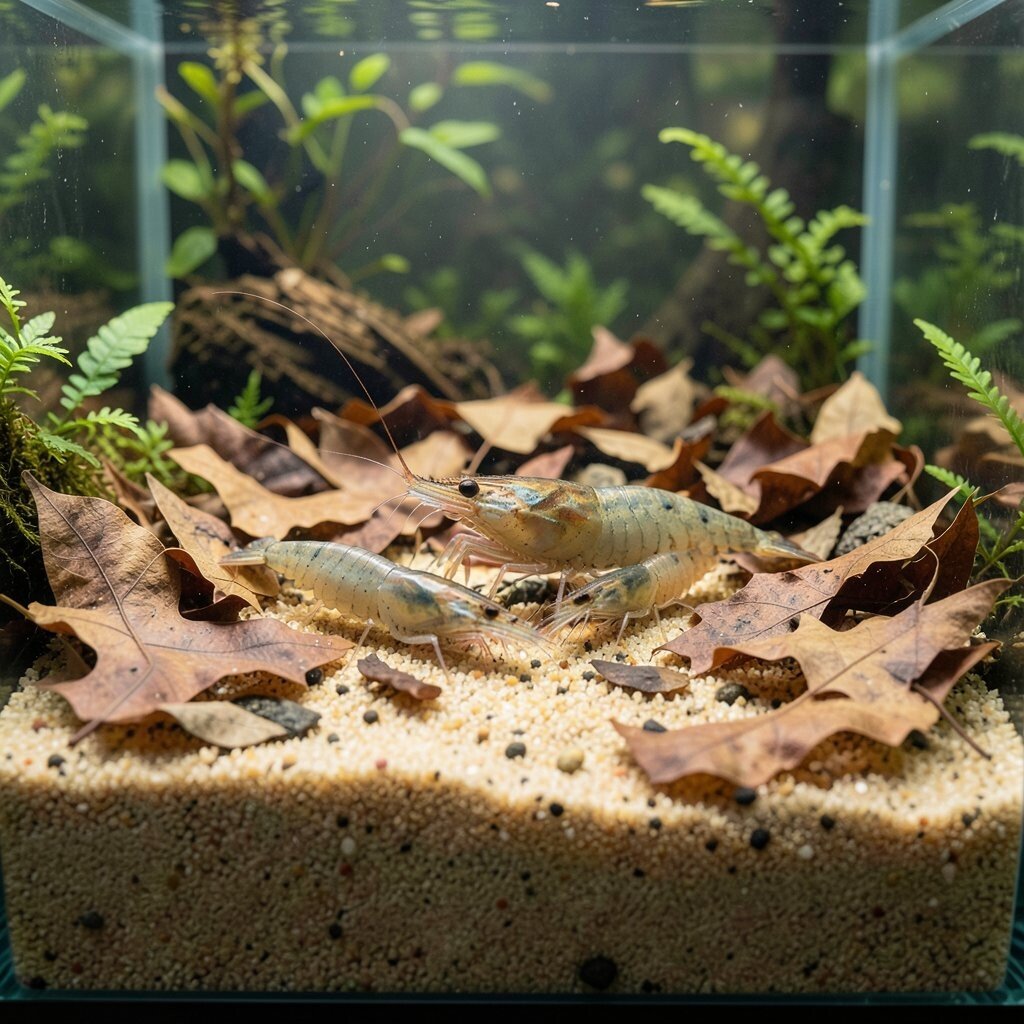
A forest floor style can look warm and real. You can add dry leaf litter on top of the sand to create soft texture and a natural color mix.
Leaf litter supports natural grazing and helps shrimp find tiny food bits. It can also encourage beneficial microbes that help keep the tank stable.
Start with a small amount and remove old leaves if they break down too fast. Choose safe leaves made for aquariums, and keep the water clean with regular light care.
9. Black Sand Contrast With Light Green Plants
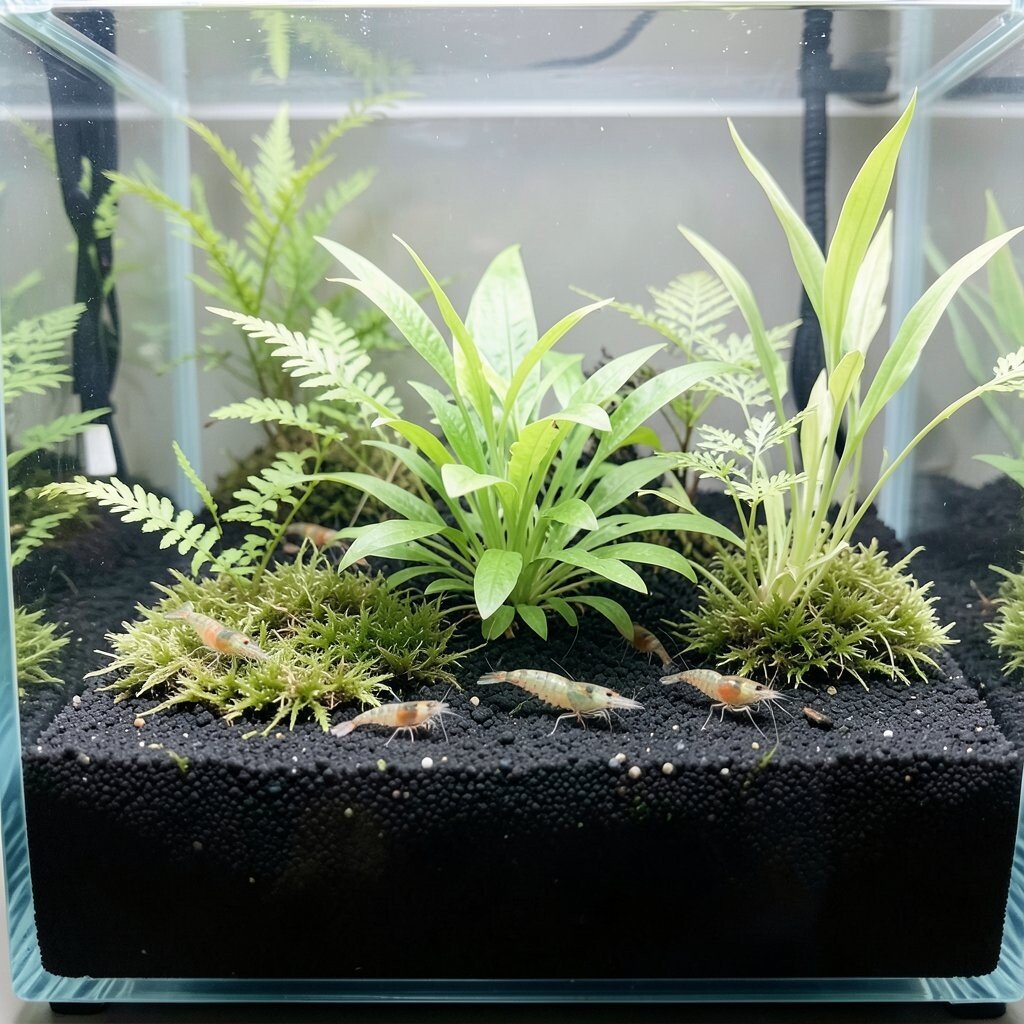
Black sand can make shrimp and plants stand out. Pair it with light green moss, fern-like plants, or pale stems so the colors look strong together.
The contrast can make it easier to spot shrimp moving around. It also gives the tank a modern look that many homes like.
This setup can be a mid-range cost, mainly from the sand and plants. If you want to save money, start with one main plant patch and grow it slowly.
10. Clear Center Display With Side Plant Groups
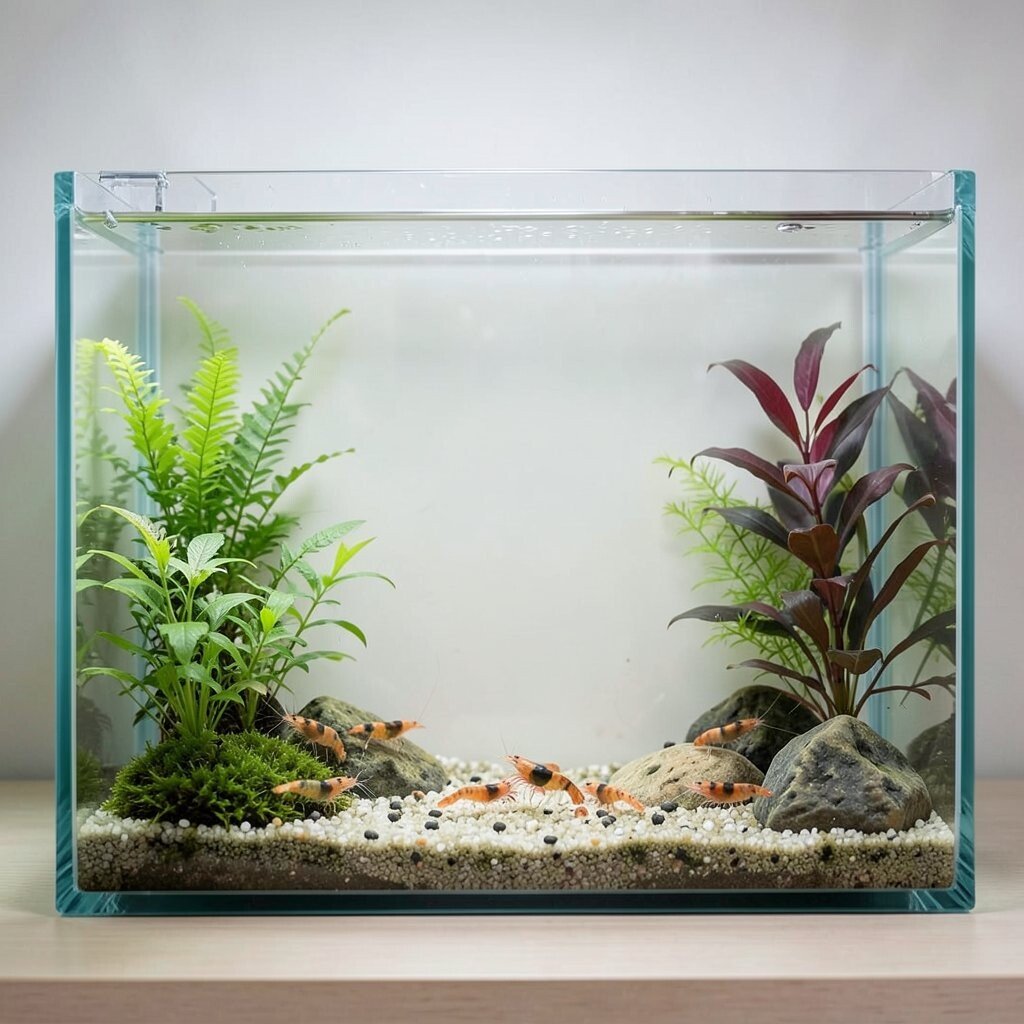
You can create a clean “show window” by keeping the center open. Put plant groups on the sides, and use a few rocks to frame the empty space.
This design makes it easy to watch shrimp during feeding. It also helps you see if food is getting eaten fast or if waste is building up in one spot.
Personalize the look by picking one plant color and sticking with it. Try a calm mix, like one moss type plus one darker plant, so the tank does not feel messy.
11. Hanging Betel Nut Style Moss On Twigs
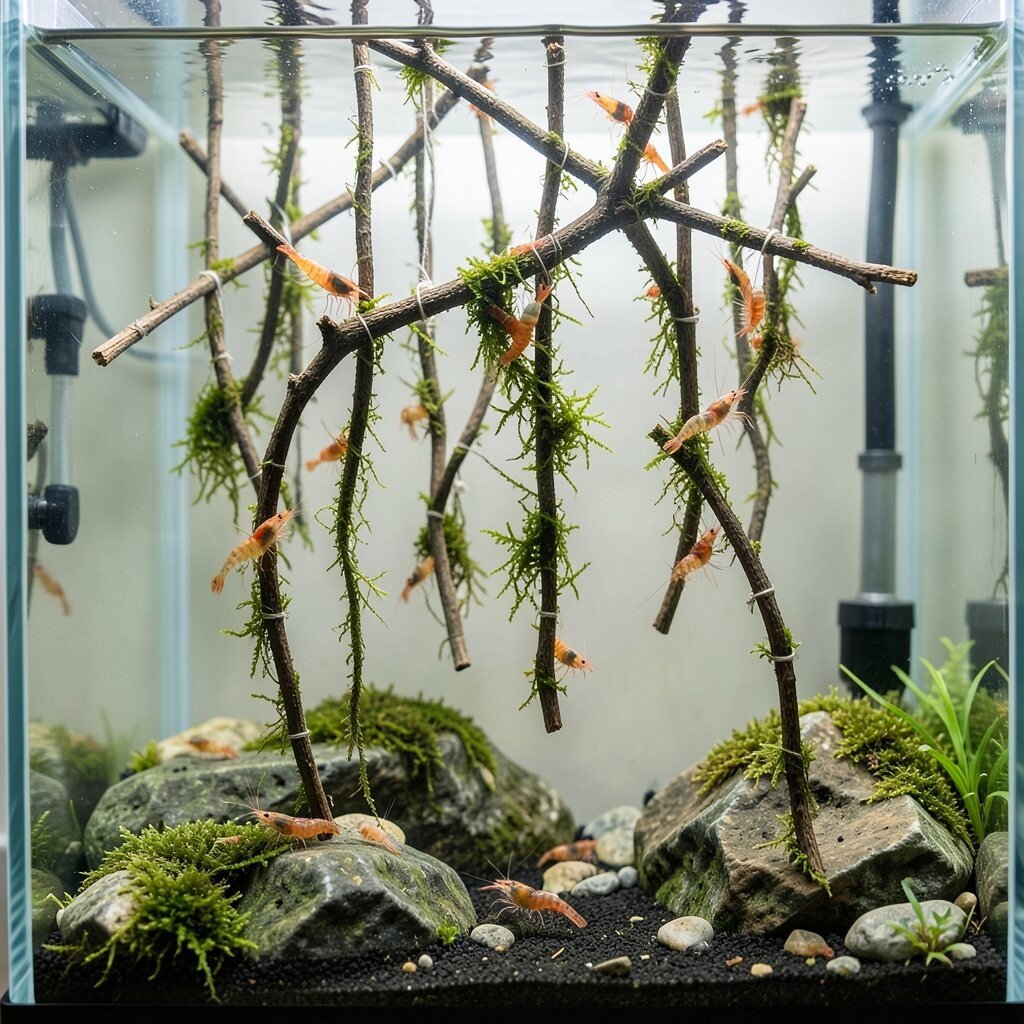
Using small twigs with moss can create a “hanging” look inside the tank. You can set the twigs on rocks or secure them near the filter intake so they stay stable.
This idea feels different because it gives lines and angles, not just flat moss mats. Shrimp can climb and graze along the moss areas, and you may see them travel between spots.
Secure the moss with safe thread or mesh meant for aquariums. Keep an eye on water flow so the moss does not move off the twig.
12. Warm Lighting With Low-Glare Placement
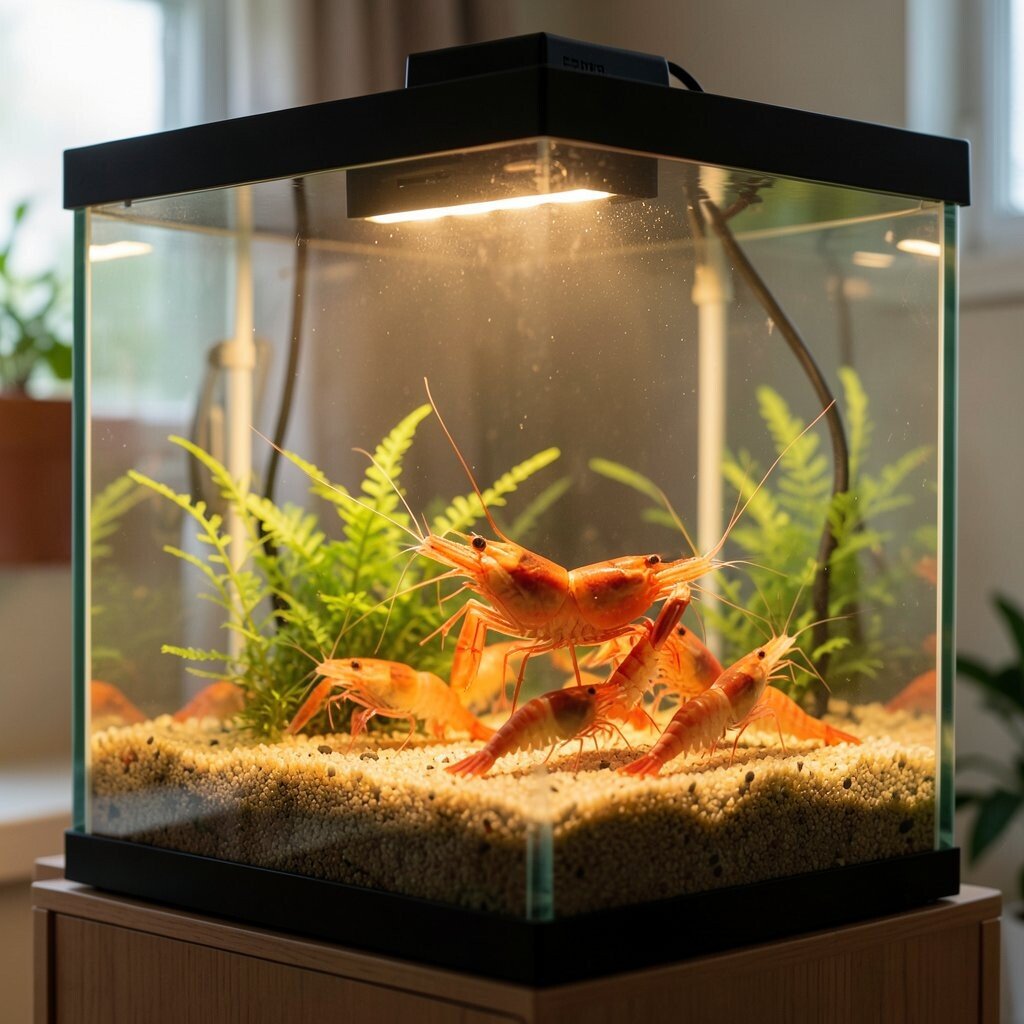
Lighting choices can change how the tank looks each day. Use warm light and place the tank where glare is not too strong on the glass.
Soft lighting can help shrimp act calm and move at normal times. It can also make colors look better, like brighter reds and clearer greens.
This can be a low cost step if you already have lights. Use a simple timer if you can, and keep light hours steady so algae does not take over fast.
13. Community Style Layout With Multiple Small Zones
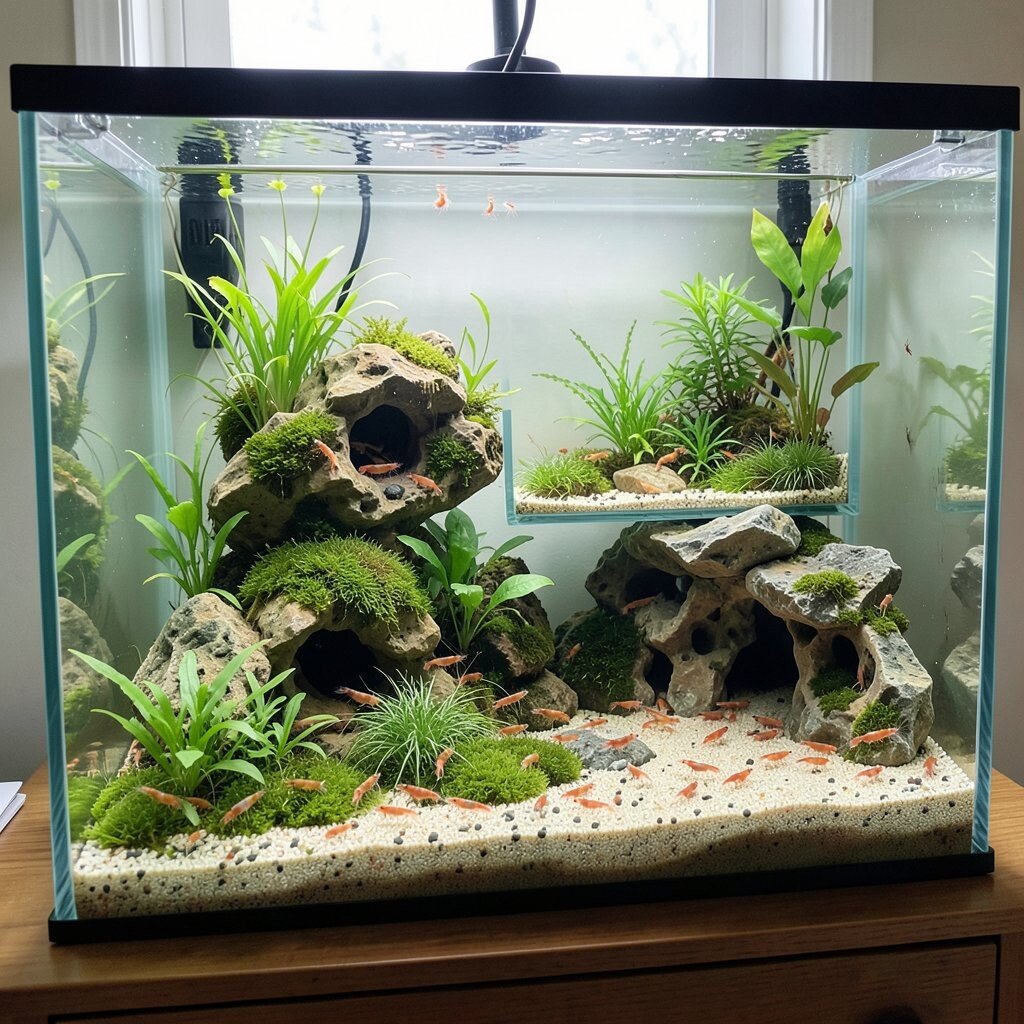
Instead of one big area, make multiple small zones in the tank. You can use rocks, plants, and caves to split the space into areas for hiding, grazing, and open walking.
This approach is unique because it gives shrimp options based on how they feel. Some shrimp may prefer darker caves, while others move toward plants where tiny food forms.
You can personalize this layout by choosing zone themes, like one moss zone and one rock cave zone. Plan your first setup with a simple sketch, and adjust after you watch how shrimp use the space.