Old wood has a way of making everyday life feel warmer. These pallet planters bring charm, color, and grow-ready style to almost any corner.
From balconies to entryways, you can shape a fresh garden look without starting from scratch. With a few smart choices, each planter becomes a mini project you’ll want to show off.
1. Vertical Pallet Herb Wall

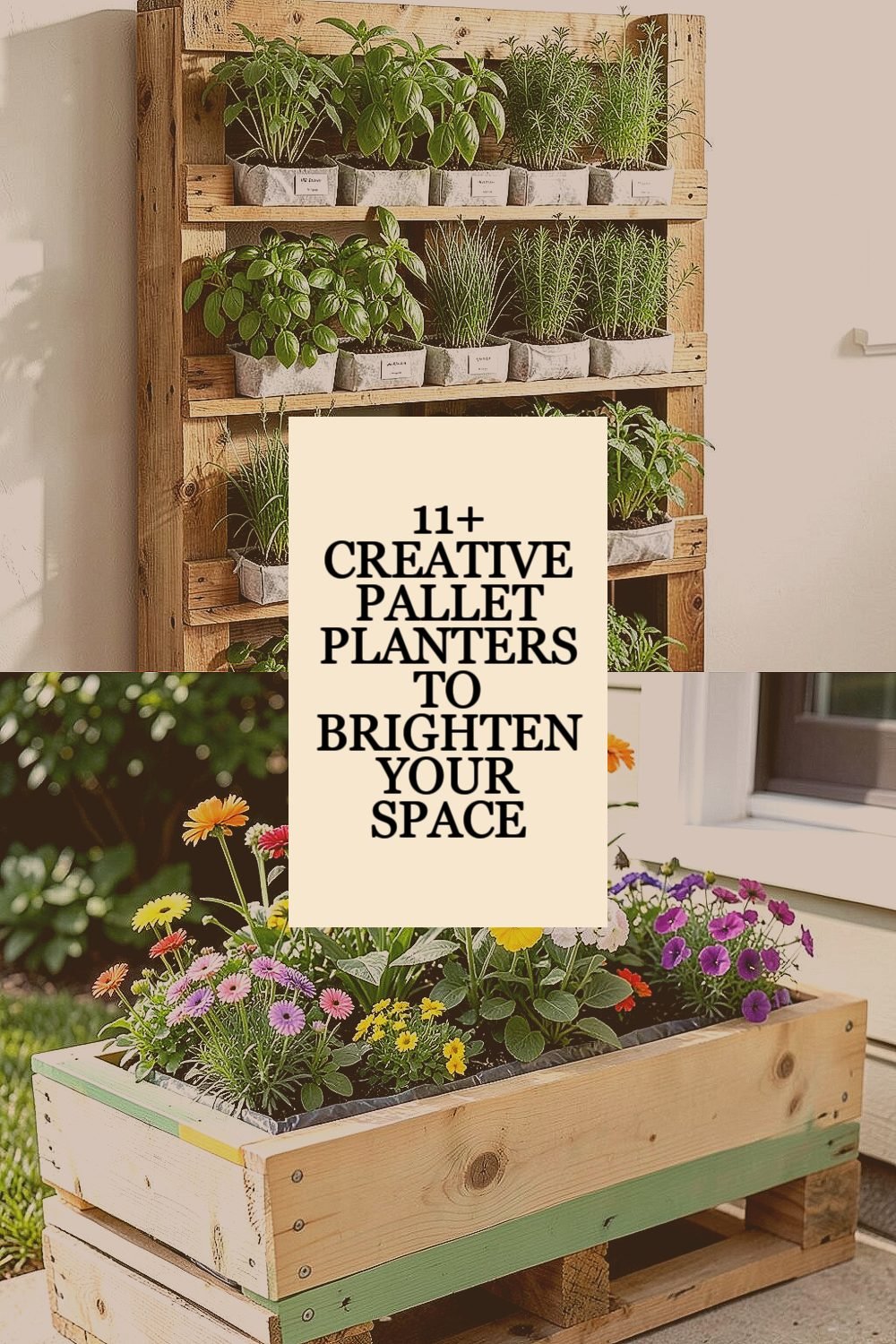
Imagine a tall pallet set against the wall, holding neat rows of herbs in small soil pockets. The green spears look lively even on days when the light is soft, and the wood frame gives it a cozy, cabin feel.
Choose a pallet that’s solid and not overly warped, then clean it thoroughly so the planter feels safe to use. Line the inside with a breathable fabric or plastic planter liner to protect the wood from constant moisture.
For practical use, keep herbs grouped by their needs, like basil with sunny herbs and mint with brighter spots but steady watering. Add small labels on plant tags so you remember what’s what when the growth gets thick.
2. Pallet Planter Bench for Flowers

A pallet turned into a low bench planter feels like a small garden stage. When you fill it with bright blooms, the scene becomes instantly inviting, like a front porch that never stops smiling.
Make sure the bench has proper drainage by creating holes and using a waterproof liner that still lets extra water escape. Treat the wood with a product made for outdoor use so the colors stay rich through changing weather.
To personalize it, paint only the front edge a joyful color and keep the rest natural for contrast. If you want an easy setup, start with store-bought seedlings and focus on one color family for a clean look.
For cost, consider using hardy perennials in the main spots and annuals around the edges for quick color. This kind of mixed planting is trending because it gives you fuller color without constant replanting.
3. Pallet Tray Planter With Raised Sides
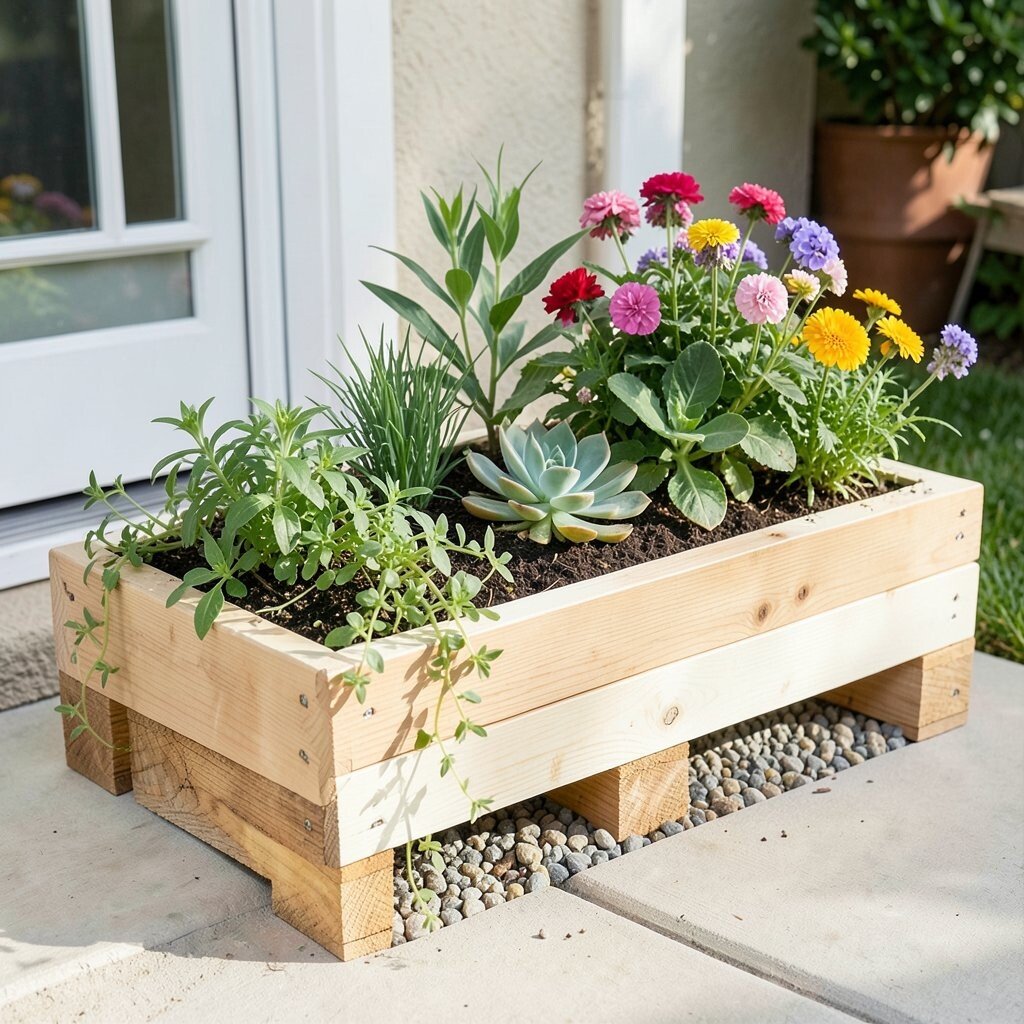
A pallet tray planter looks polished yet still rustic, like a wood sign that learned how to hold plants. The raised sides keep soil tidy, and the flat top makes it easy to set on a patio or near a door.
Sand the surface well, then check for loose nails and secure anything that wiggles. Add a liner and a layer of gravel at the bottom so water can move through instead of pooling.
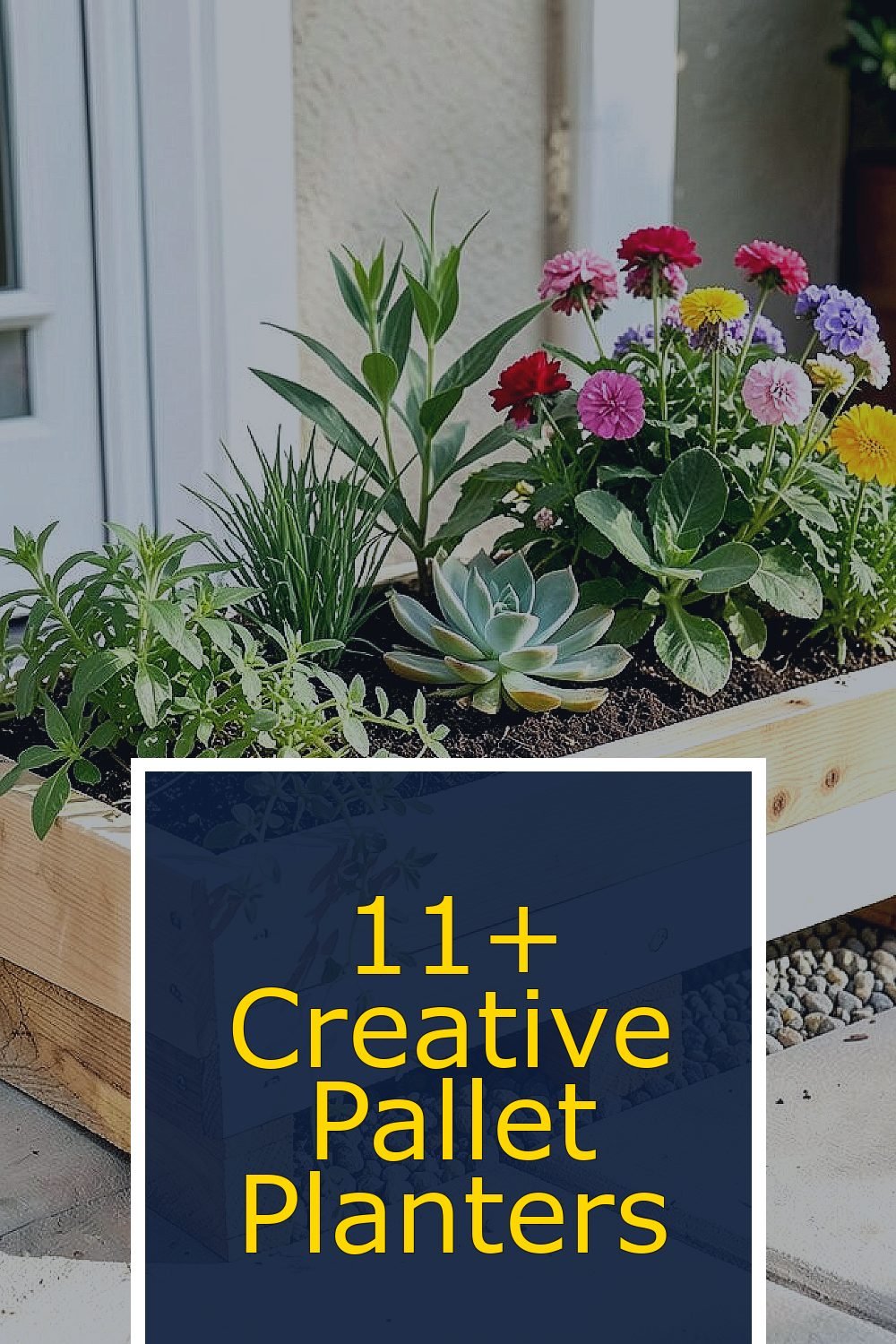
Try a mix of trailing and upright plants for a gentle, flowing look. Succulents work nicely if you want a low-care style, while colorful flowers can bring bold energy when the sun is strong.
To make it truly yours, stain the tray in a light oak tone or paint it in a soft cream that brightens shady areas. If you’re budgeting, reuse pallet wood and invest your money in good soil and a simple watering can.
4. Stacked Pallet Squares for Easy Staging
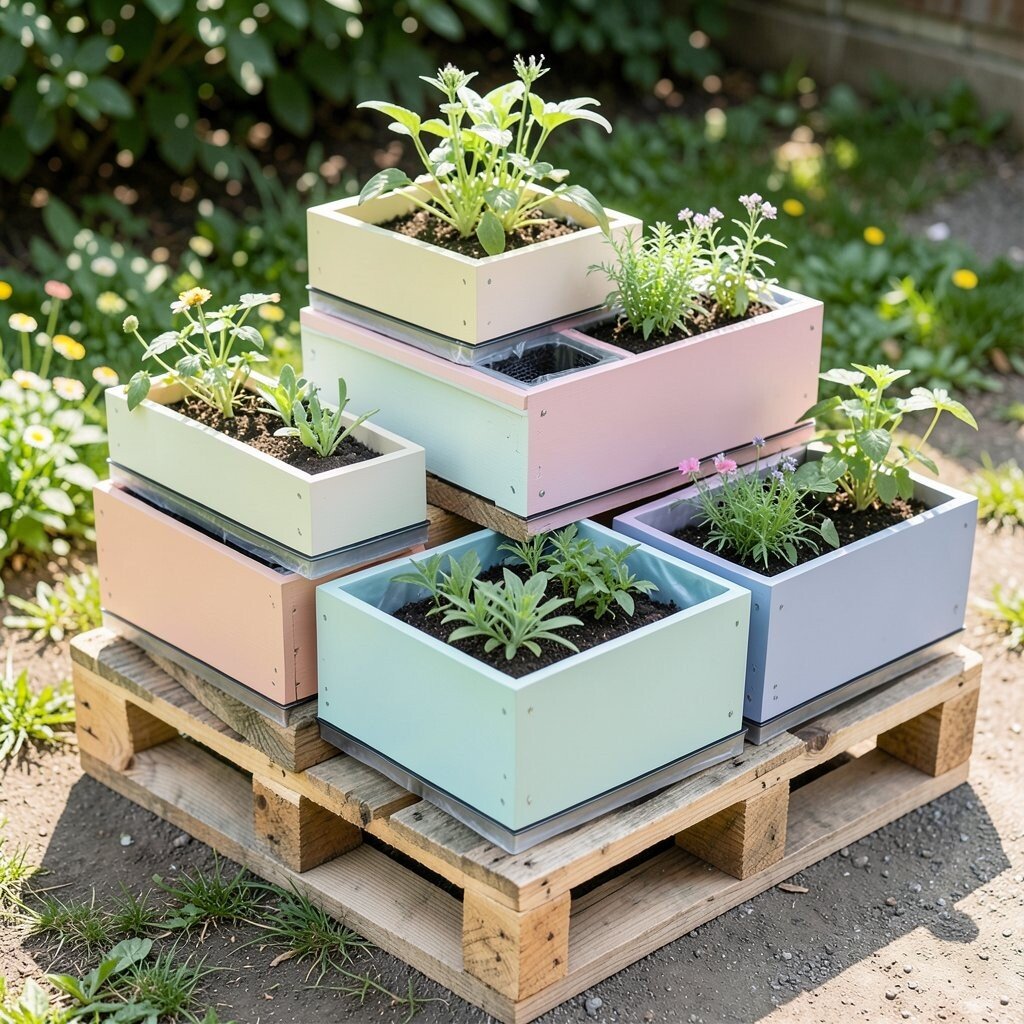
When pallet boards are stacked into square planters, the whole setup looks modern and playful. You can arrange the squares at different heights, and the staggered layers create depth from every angle.
Use hardware to anchor stacks so they feel steady, especially if you place them outdoors. A plastic liner plus drainage holes helps protect the wood while keeping plants healthy.
Start with a simple planting plan, then adjust as you learn what grows best in your light. This approach is popular right now because it turns small spaces into design features instead of clutter.
For personalization, paint each square a different pastel shade or keep them all the same for a calmer look. If cost is a concern, stick to fewer plant varieties and choose plants that look good together for months.
5. Pallet Corner Planter With a Hanging Detail

A pallet corner planter gives an awkward space purpose, and it looks extra charming when you add hanging hooks. The corner framing makes plants feel intentional, like they belong in your home’s layout.
Build a compact planter box and attach small hooks under the top rail for mini hanging pots. Line the inside with a moisture barrier and add drainage holes so roots never sit in soggy soil.
For an easy visual win, plant taller blooms in back and shorter ones in front, so every layer shows. You can also add a trailing vine from the hanging pots to soften the edges.
6. Pallet Planter With a Water-Reservoir Layer
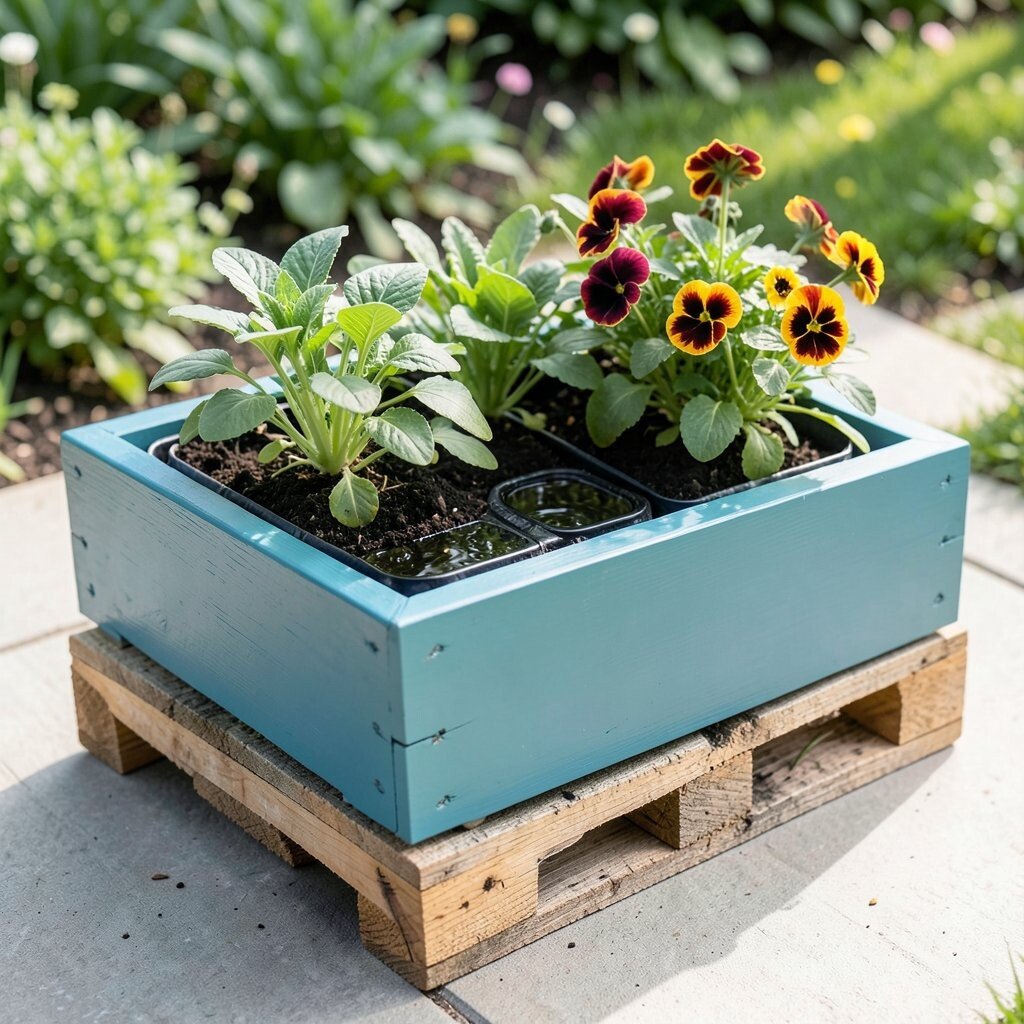
A pallet planter designed with a water-reservoir layer feels like a helpful friend for busy days. The look stays neat, and plants benefit because moisture lasts longer between watering.
Create this by adding a bottom reservoir tray behind a drainage gap, then use a wicking layer between soil and water. Choose plants that like consistent moisture, such as leafy greens or colorful nasturtiums, and they’ll reward you quickly.
For practical care, check the water level once or twice a week at first, then adjust your schedule as the weather changes. This style is becoming more common because it supports healthier growth with less frequent watering.
Personalize it by painting the front panel with a weather-friendly enamel in your favorite color. When planning costs, remember that good liners and quality soil often matter more than fancy wood finishes.
7. Pallet Window-Style Planter Boxes

Picture a pallet framed like a window, with planter boxes that hold small flowers in tidy rows. The effect is bright and cheerful, and it makes a wall feel like it’s wearing a wreath of greenery.
Build several narrow sections so each plant gets its own soil space, then add drainage at the bottom of each box. Sand smooth edges so the frame feels safe and comfortable to touch.
Plant by season, starting with cool-weather favorites for early months and warmer blooms later. For personalization, add small wooden trim pieces that echo the look of old shutters.
If you want a budget-friendly version, use a single pallet, then buy just a few plants to fill each section. This kind of neat, modular planting is popular because it creates a gallery wall vibe without expensive materials.
8. Pallet Planter for a Vertical Stair Step

A pallet planter staged along a stair step adds a calm rhythm to outdoor movement. As you walk by, the bright leaves and flowers seem to guide your eyes, step after step.
Cut the pallet to match the step width, then secure it firmly so it won’t slide when people go up or down. Use a liner and drainage holes, and keep the soil level slightly below the top edge to reduce spills.
Try planting with repeating colors like yellow and purple so the whole stair path feels cohesive. This also makes it easier to buy plants because you can reuse the same palette across multiple planters.
9. Pallet Planter With a Chalkboard Label Rail

A pallet planter with a chalkboard label rail turns your garden into a tiny storytelling spot. You’ll love how the hand-written names look against the wood, especially when the plants start growing fast.
Seal the wood well, then attach a flat chalkboard panel below the planter edge so you can refresh labels anytime. Use soil with good drainage, and water slowly so moisture reaches the root zone.
Personalize it with simple drawings like small leaf icons or a doodle sun for each section. For practical planning, write planting dates or care reminders so you don’t rely on memory later.
Costs can stay low since chalkboards are often inexpensive, and you can get most supplies from basic hardware stores. This trend of functional decor is growing because it mixes organization with style.
10. Pallet Planter With Painted Faces for Kids or Guests

A pallet planter with painted faces brings instant smiles to a porch, patio, or entryway. The look is playful and bold, and even a few plants can seem more alive when the wood has personality.
Use outdoor paint and seal it with a clear topcoat so the features stay bright in sun and rain. Add liners and drainage holes to keep plants healthy, then anchor the planter so it sits solid.
For personalization, choose a theme like friendly animals or sunny characters, and repeat a similar style across multiple planters. If you’re making one for guests, keep the palette cheerful but simple so it doesn’t clash with your other decor.
In terms of cost, paint is usually cheaper than new decor, and you can reuse scrap wood for extra details. This approach matches a current love for handmade, personal touches that feel warm instead of generic.
11. Pallet Planter With a Sliding Trellis Top

A pallet planter with a sliding trellis top is a clever way to grow climbers without making a bulky mess. The setup looks airy, and vines can wrap around the wood like they’re part of the design.
Build the planter box, then add a trellis frame that can slide or adjust for height changes. Use outdoor screws and a sturdy liner, and plan for drainage so roots stay healthy while vines keep reaching.
Try growing sweet peas, morning glories, or even small climbing tomatoes if you want a tasty reward. For practical care, guide the vines gently at first so they find the trellis instead of tangling.
Personalize it with twine accents or painted rails in a color that matches your outdoor lights. If you’re watching costs, focus on sturdy materials for the frame and use inexpensive seedlings for quick results.
12. Pallet Planter as a Firewood-Style Plant Box
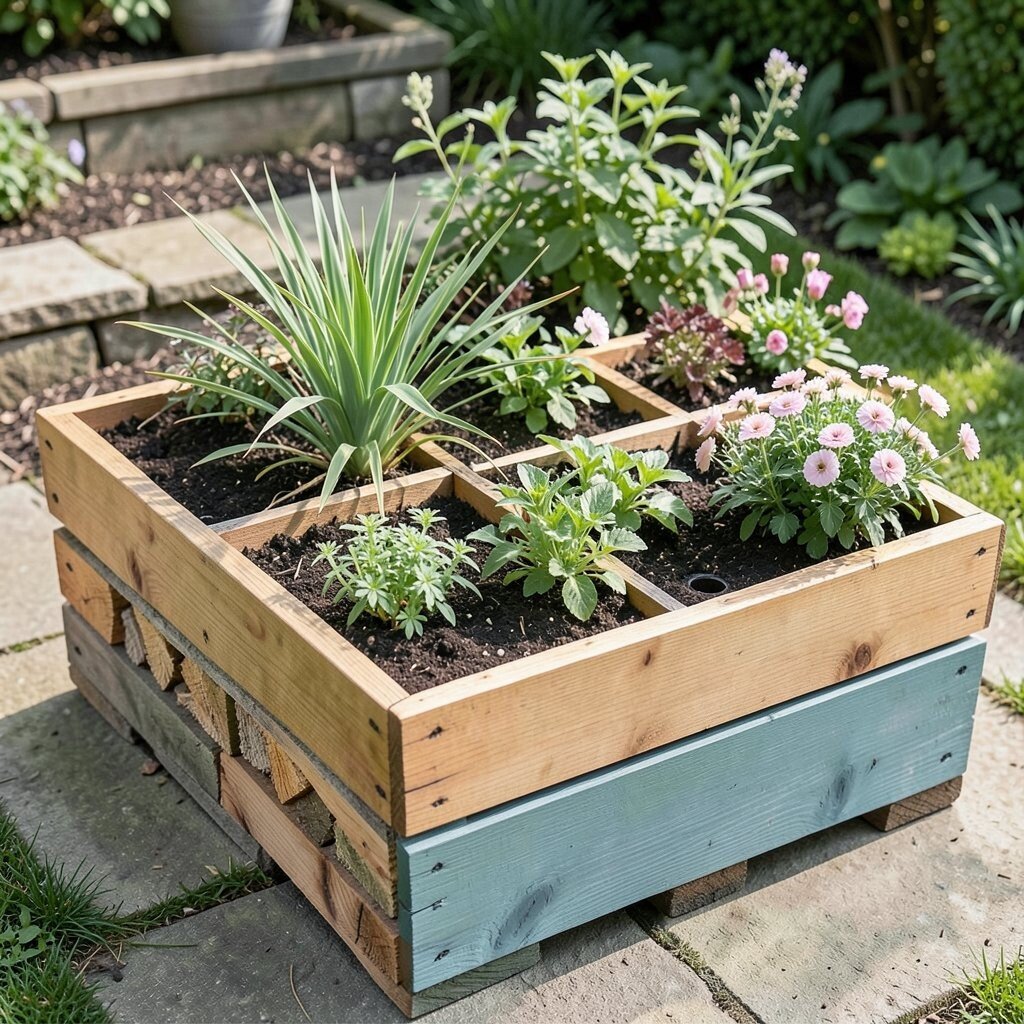
A firewood-style pallet planter looks bold and organized, like a stack that has learned how to bloom. The clean lines and grouped sections make it feel structured, and it’s surprisingly easy to style.
Arrange the wood into a grid pattern, then create separate soil compartments so each plant variety stays happy. Add drainage holes and a liner, then secure everything so it feels sturdy when fully planted.
For visual impact, use plants with different textures, like spiky foliage in one section and soft flowers in another. This contrast is a current favorite in garden styling because it makes the whole planter look rich even when blooms fade.
To personalize, use a stain that matches your outdoor furniture or paint only the front row for a layered look. Costs stay reasonable when you build with pallet wood and spend a little more on quality compost for stronger growth.