
The right pair of jeans can turn into something cozy and beautiful. You will be amazed how quickly old fabric becomes new home comfort.
1. Patchwork Pocket Accent Pillow

Grab denim pocket panels from jeans you no longer wear. Stitch them onto a pillow cover so the front looks like a little outfit with pockets.
Choose pockets with different fades for a lively look. This idea gives you clear visual interest without needing fancy tools. It also keeps your fabric choices practical, since pocket sections are already neatly finished edges.
To make it sturdier, reinforce the back with a plain denim or cotton layer. For personalization, mix pocket sizes and place one as the “feature” pocket at the center. When you shop your home first, the cost stays low and the result feels truly one-of-a-kind.
2. Frayed Hem Fringe Pillow

Use the frayed hem of jeans to create a fringed border that looks relaxed and lived-in. The uneven strands catch light and add movement even when the pillow is still.
Cut a strip along the original hem and sew it around the edges of a denim pillow top. This offers a casual vibe that fits current farmhouse and rustic styling trends. It is also an easy way to hide small imperfections because the fringe turns them into a design.
Try blending two jean shades in one border to create a subtle gradient effect. Secure the fringe with topstitching so it stays put after washing. Since most of the cost is just thread and an insert, you can keep the budget comfortable.
3. Embroidered Flower Denim Pillow

Choose a denim section with a smooth area, then stitch simple flowers on top. A few bright threads can make the fabric feel fresh and cheerful.
Work with easy shapes like daisies or tiny blossoms, and place them along seams for a neat look. This makes the pillow feel unique because your color choices become part of the design. You also get a personal touch that works well in family rooms, nurseries, and guest spaces.
Use a contrasting backing so the stitching looks bold. If you want practical durability, use tight stitches and reinforce the back with a second layer of denim. For cost, embroidery floss is usually inexpensive, and you can reuse spare skeins from past crafts.
4. Denim-On-Denim Color Block Pillow

Cut multiple denim panels from different jeans and combine them into a color-block layout. The result shows off varied washes like a modern quilt.
Arrange darker pieces near the bottom and lighter ones near the top for a pleasing visual balance. This style matches what many people are doing right now with patchwork and texture layering. It is also a smart cost move because you can use smaller scraps that would otherwise be trash.
5. Tie-Front Knot Pillow Using Jean Strips
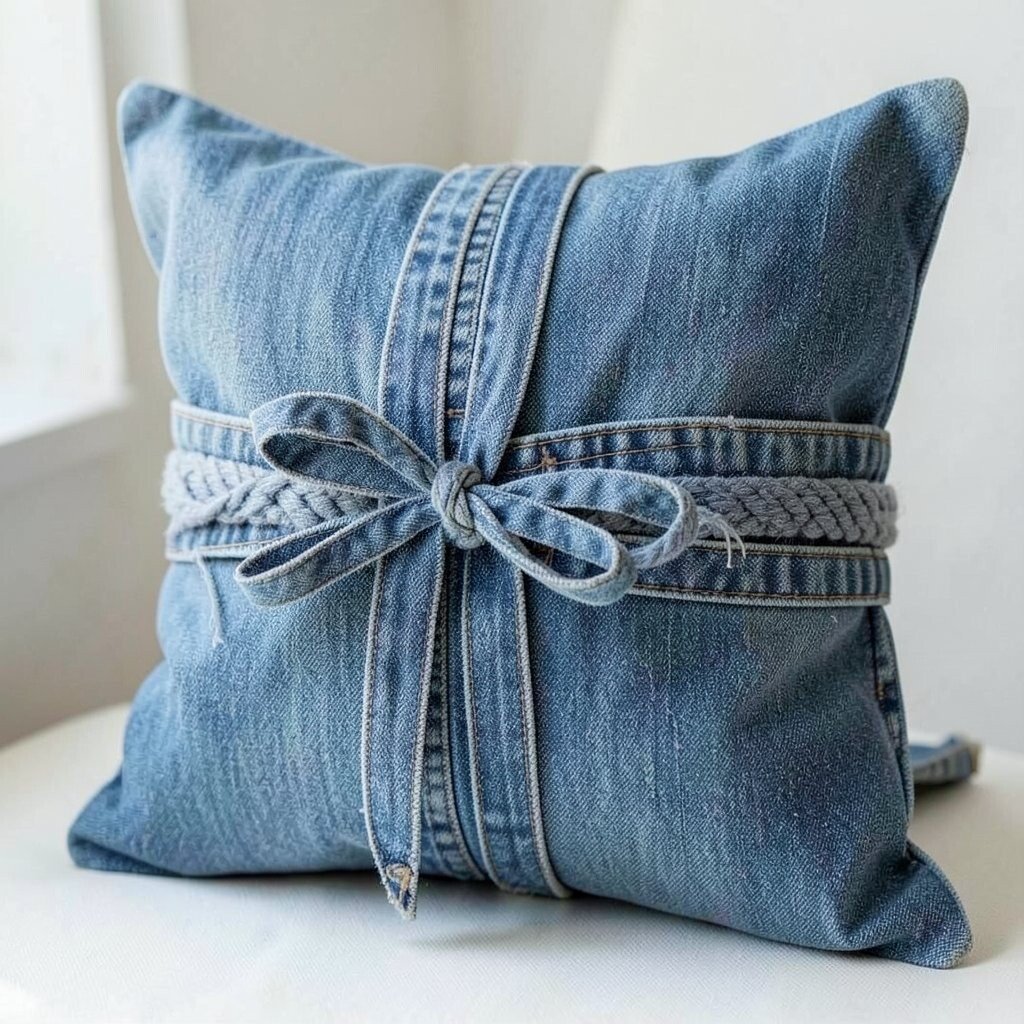
Slice jean legs into long strips and wrap them around a pillow cover like braided rope. Tie the ends in small knots so the front looks playful and dimensional.
This design adds a handmade “wow” factor without needing complicated pattern pieces. It also lets you personalize by choosing strip widths, knot locations, and color contrasts. If you use strips cut from cuff areas, you often get extra character right away.
For practical results, keep knots on the front so seams stay hidden. Add a zipper on the back for easy insert changes and washing. Since jean scraps are free to you, the only ongoing costs are thread and a pillow insert.
6. Studded Motorcycle-Inspired Denim Pillow
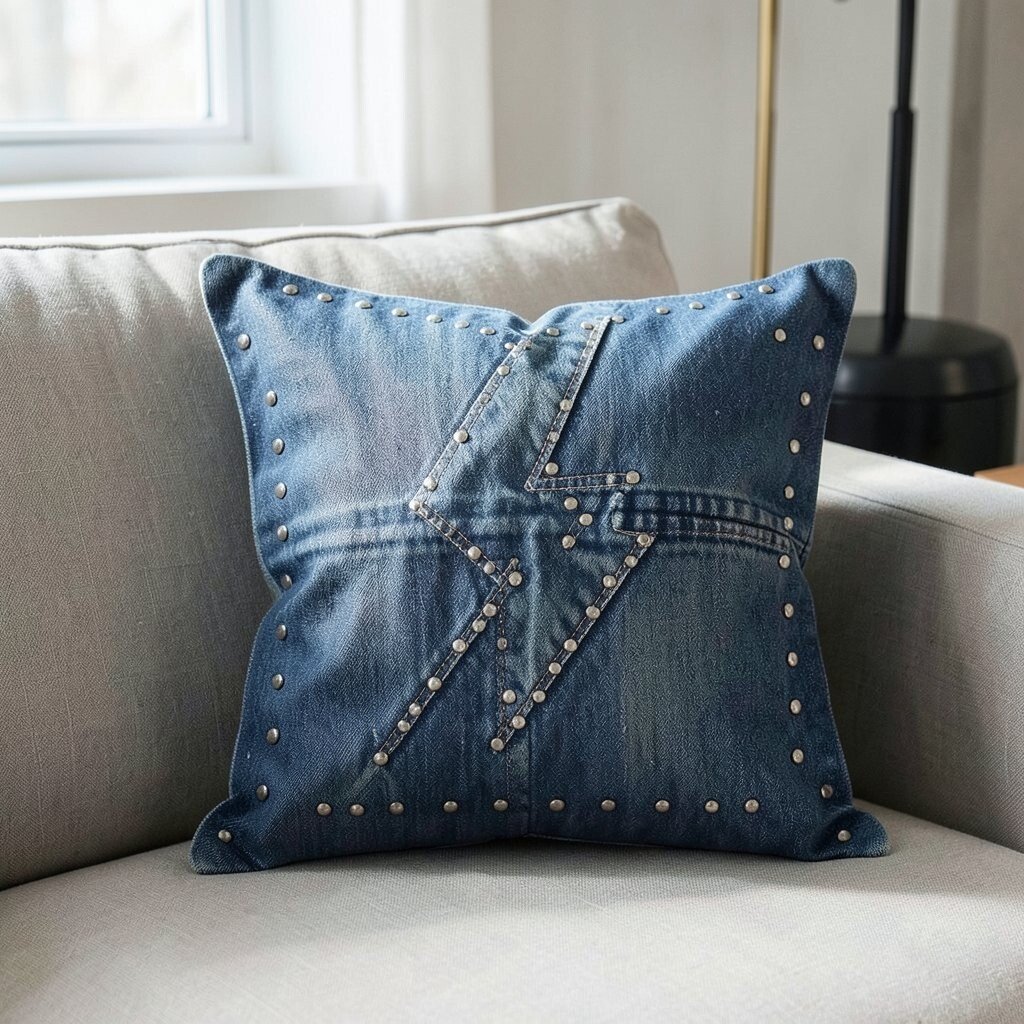
Keep the rugged edge of denim by adding metal studs along a bold outline. A simple line pattern on the front can look like streetwear applied to home decor.
Choose a clean denim square and mark a shape like a lightning bolt or symmetrical chevrons. Press studs into place with careful spacing for a strong, even finish. This gives you a unique style that stands out on neutral couches and black-and-gray furniture.
For durability, place a thin backing fabric under the stud line before sewing or securing. When you personalize, match stud color with other room accents like brass picture frames or black lamp bases. The cost is mainly in hardware, so buy only what you need and use leftovers for smaller projects.
7. Seamline Story Pillow With Visible Stitching
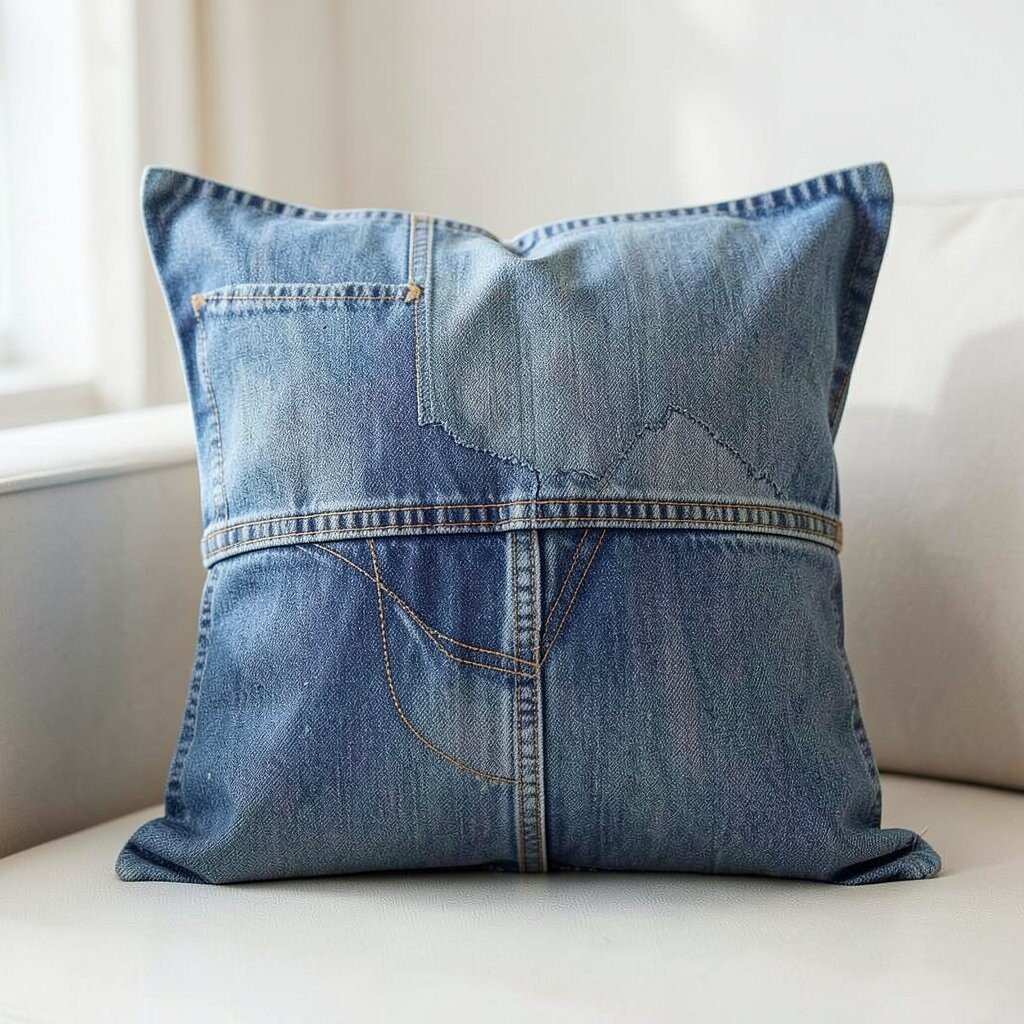
Save the original jean seam lines and build your pillow around them. The visible stitching feels classic and instantly recognizable.
Align seams so they create a simple “map” across the front. This benefits the overall look by adding structure even if the fabric is plain. It also keeps your work practical because you can use existing curved stitching without drawing complicated patterns.
8. Lace-Trimmed Denim Pillow Front

Pair denim with lace for a soft-and-strong contrast. The denim brings sturdy texture, while lace adds a delicate border that feels romantic.
Cut a denim panel for the pillow front and sew lace along the edges or across a center band. This gives you a layered look that fits current styling trends like mixed materials and soft glam. It is also easy to personalize by choosing lace color, like white, cream, or even black for drama.
If you plan to wash, stitch lace carefully and reinforce the seam allowance so nothing pulls loose. Using a cotton-lace option often helps it last longer. The cost stays reasonable because you can often use small lace remnants from older crafts.
9. Denim Button Appliqué Keepsake Pillow
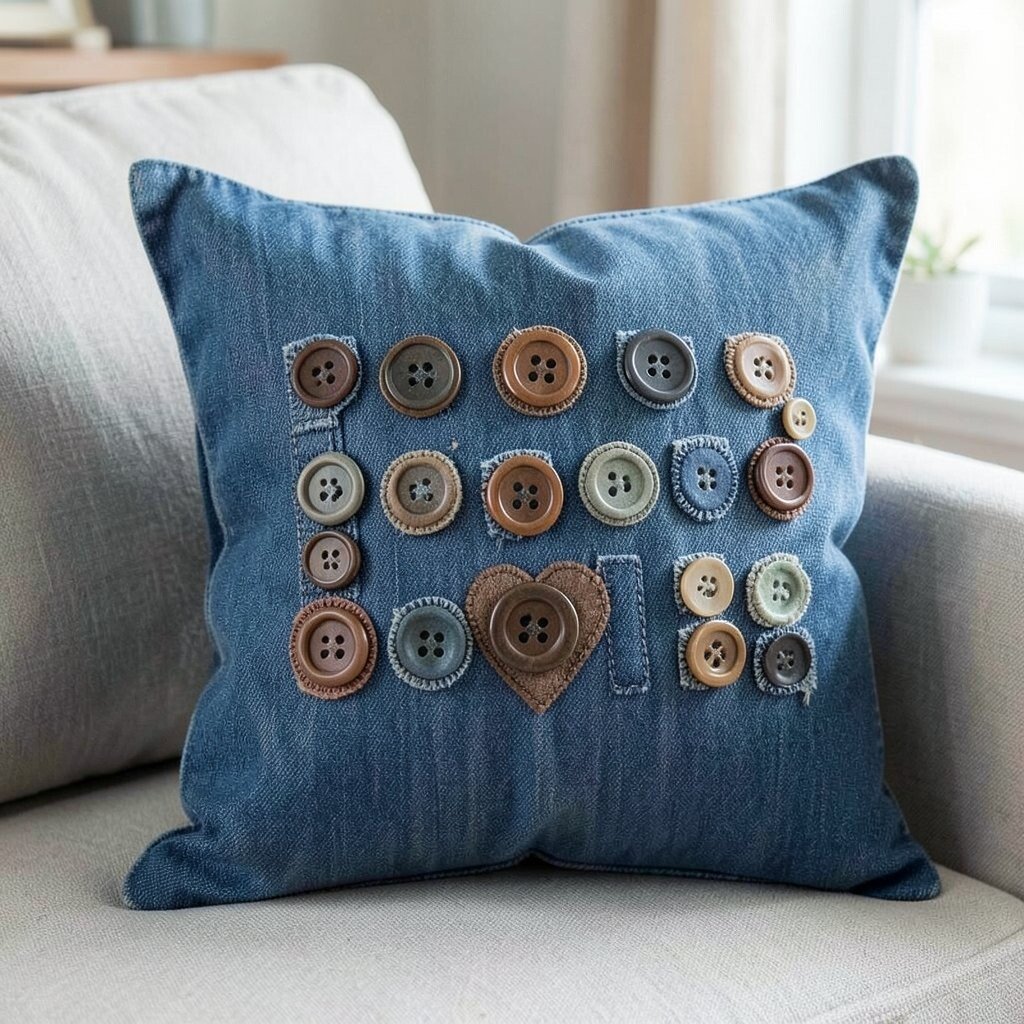
Collect buttons from old clothing or craft bins and place them as an appliqué design on the denim. You can form letters, hearts, or small icons that match your home theme.
This idea feels uniquely personal because every button carries its own style and shine. It also creates a textured surface that is fun to look at during quiet evenings. For practical tips, secure each button with strong thread and stitch through the denim firmly.
Choose a consistent color family so the design looks intentional, such as warm browns or cool blues. If you want a cost-effective approach, prioritize buttons you already own. You can also use the inside jean waistband label for extra meaning and charm.
10. Denim Cuff “Pocket Banner” Pillow
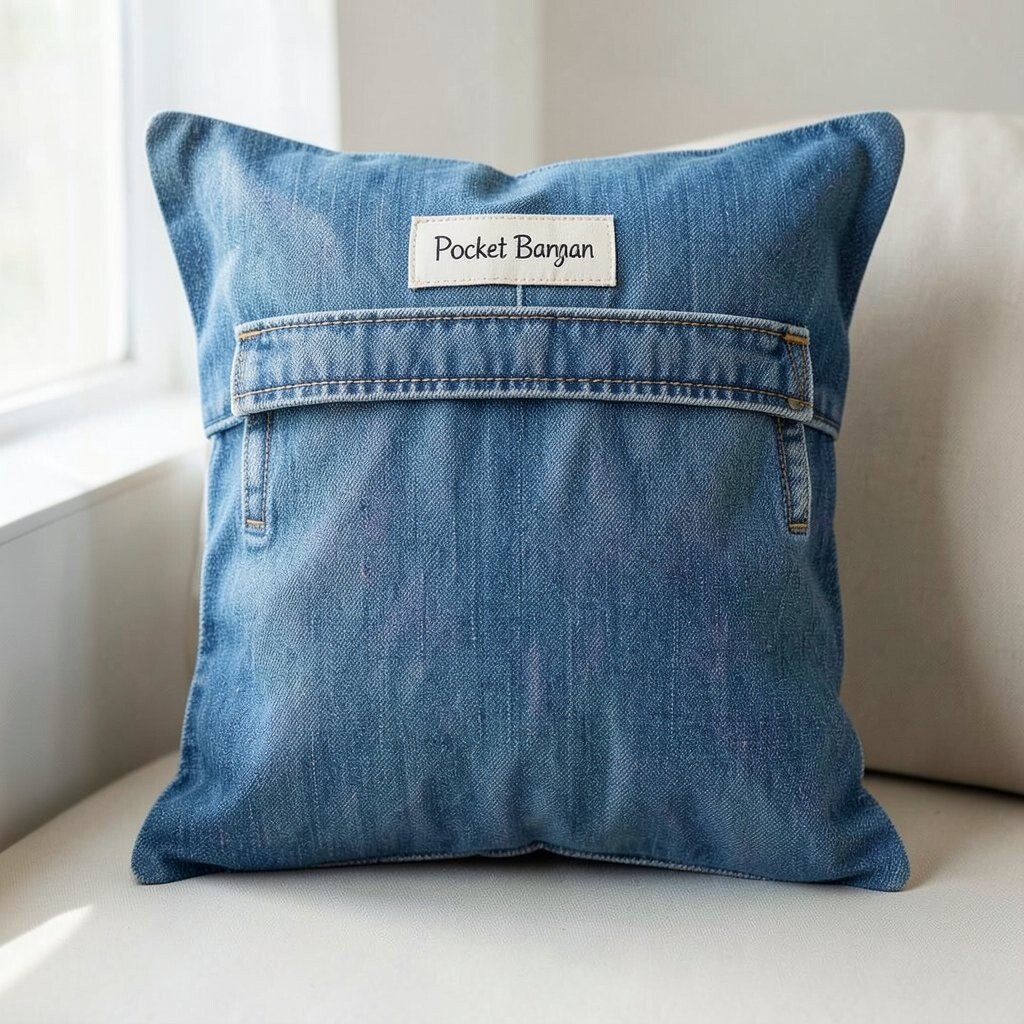
Use the jean cuff area like a mini banner panel for the pillow front. The cuff often has interesting stitching and a slightly thicker feel that looks great in the center.
Trim the cuff into a rectangular shape and attach it to a plain denim or canvas backing. This gives you a clear focal point without the need for heavy patchwork. It is practical too because cuffs are sturdier and help the pillow keep its shape.
Personalize by adding a small message patch made from fabric scraps or a name label. Current trends favor bold focal shapes, and a cuff panel provides exactly that. Costs stay low since you are mostly using fabric you already have and adding a few small decorative pieces.
11. Repurposed Back-Yoke Geometric Pillow

Take the back yoke section of jeans where the shape is already defined and build your pillow around it. The stitching details and curved lines make natural geometry.
Cut the yoke into a panel and combine it with simpler denim for the rest of the cover. This helps the design look balanced while still staying unique. You also get a practical benefit because the yoke area is already reinforced, which makes it easier to sew.
To make it yours, arrange the geometric lines so they form a centered pattern. Use light-and-dark denim to emphasize the shape, like a diamond or arch. The only new spending is usually thread and an insert, so the project can fit almost any budget.
12. Shoulder Strap Crossbody Style Pillow
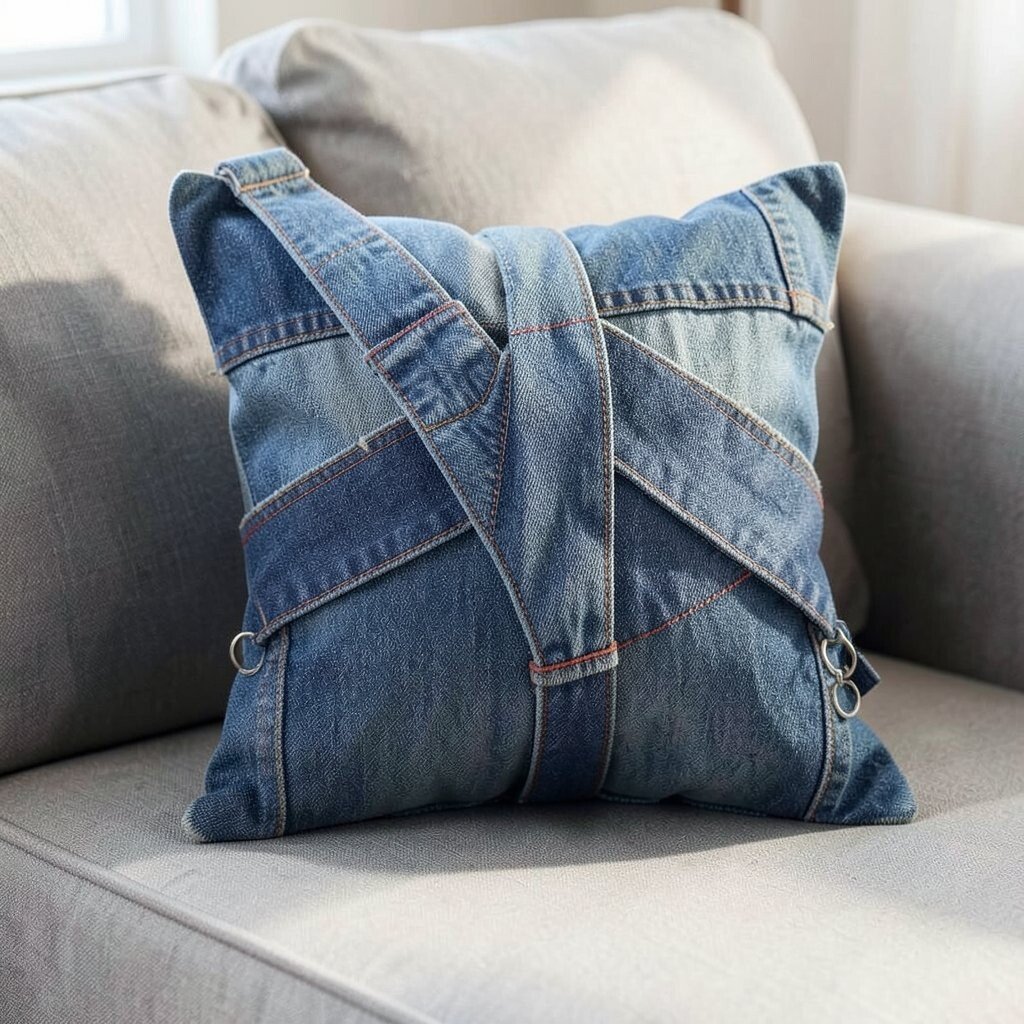
Cut long strips and craft a crossbody-style strap design across the pillow front. It looks like wearable style, but for your sofa or bed.
Attach small denim loops to hold the strap in place, then sew the strap down at key points. This adds a functional visual element and gives the pillow a playful, unique look. It is especially charming for kids’ rooms where themes like adventure and outdoors are popular.
For practical tips, keep strap ends neatly folded and stitched so they do not fray too fast. Personalize by using contrasting thread colors and small metal rings if you want extra detail. Costs can be kept in check by using rings from old keychains or bag hardware you might already have.
13. Embossed Pattern With Drawstring Denim Sides
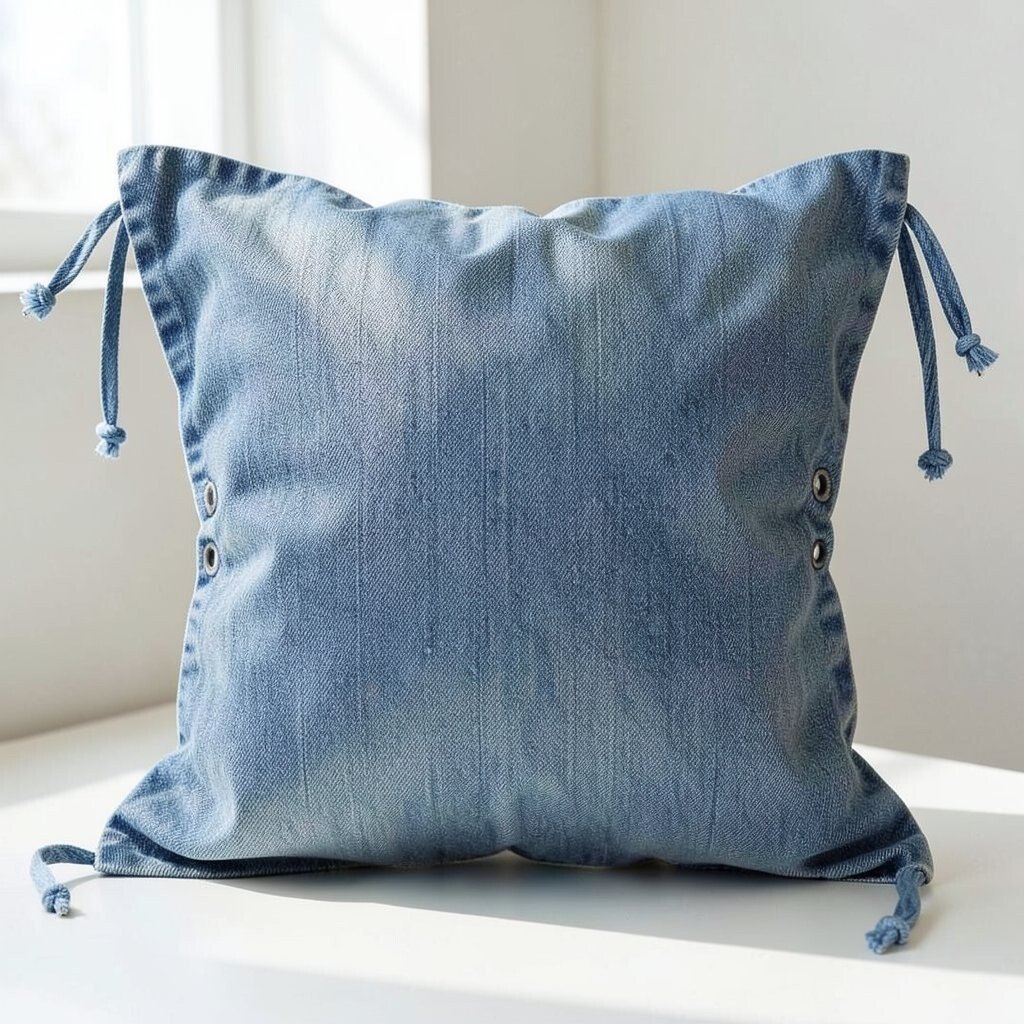
Create a pillow cover that tightens at the sides using denim drawstrings. The front can stay smooth while the edges gather slightly for a cute, puffed shape.
Install drawstring holes near the side seams and thread denim strips through. This makes the pillow visually interesting and gives you a practical way to adjust the cover fit. The uniqueness shows up in how the denim itself becomes part of the mechanism.
Personalize by adding decorative knots or small charms to the drawstring ends. For durability, reinforce the eyelet area and use strong stitching at each end. Costs remain manageable since drawstrings can be made from the jeans, and the hardware is optional depending on your comfort level.
14. Minimal Denim With One Statement Patch
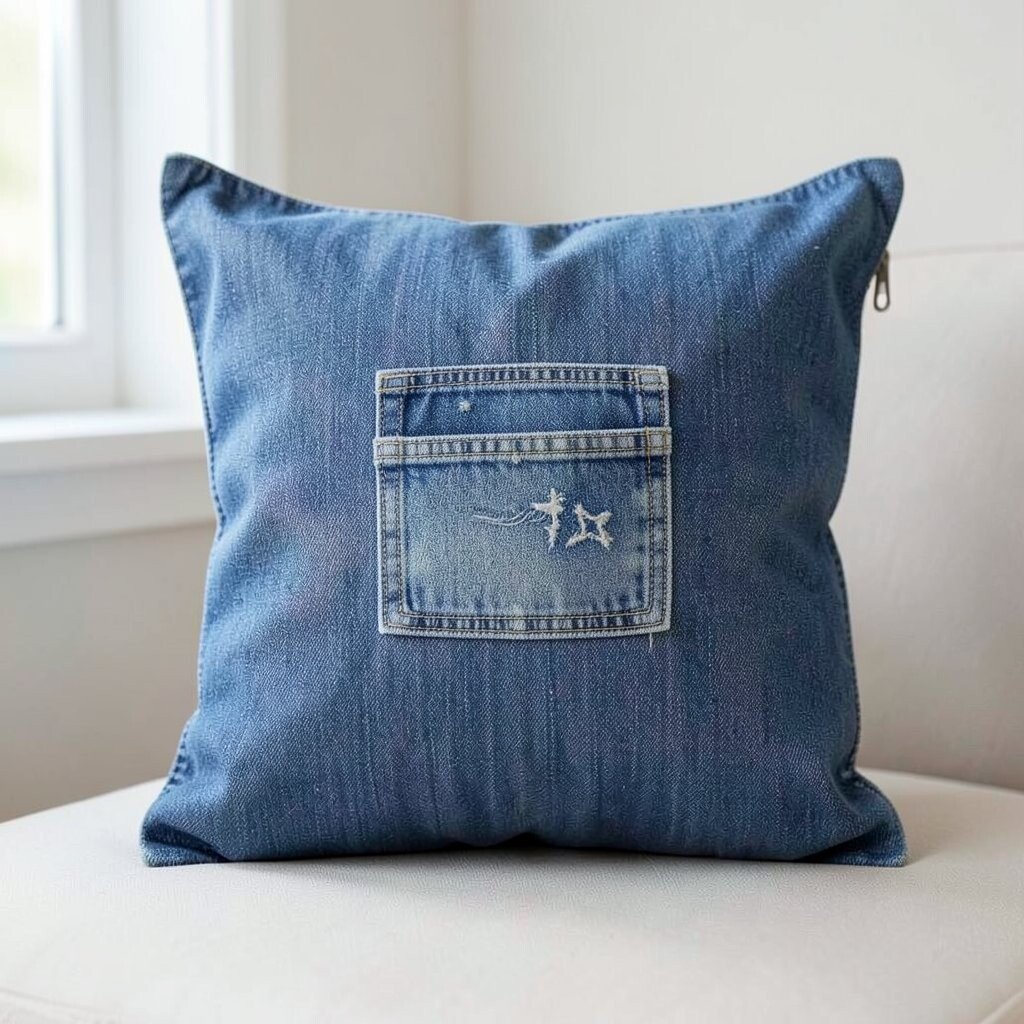
Keep the pillow simple by using most of the denim as a clean base. Then add one standout patch made from a different pair of jeans with a contrasting wash.
The statement patch can be a small oval, a square with rounded corners, or even a carefully cut piece that includes a faded knee or signature whisker marks. This design benefits from calm space around the patch so the pattern looks intentional. It also matches current preferences for minimal decor that still feels warm and handcrafted.
Personalize by choosing a patch shape that matches your room theme, like a star for a kids’ space or a circle for a modern look. Cost is usually very low because you can use scrap fabric for the patch and reuse other materials. For practical tips, use a zipper back so the cover is easy to remove and refresh.
15. Denim Ruffle Border With Soft Layers

Add a ruffle border made from denim strips sewn into gentle waves. The denim becomes soft-looking, even though it is tough fabric underneath.
Cut narrow strips and gather them with careful stitching before attaching them along the front edges. This creates a textured frame that feels cozy and current in styles that mix hard and soft materials. The pillow also becomes unique because every ruffle bunch looks slightly different, like handmade waves.
For practical durability, avoid overly thin strips and press seams before sewing. Personalize by mixing denim colors for a two-tone ruffle effect. Costs can stay reasonable by using scrap strips, and you only need basic sewing supplies plus an insert.
16. Denim and Canvas Sport Stripe Pillow
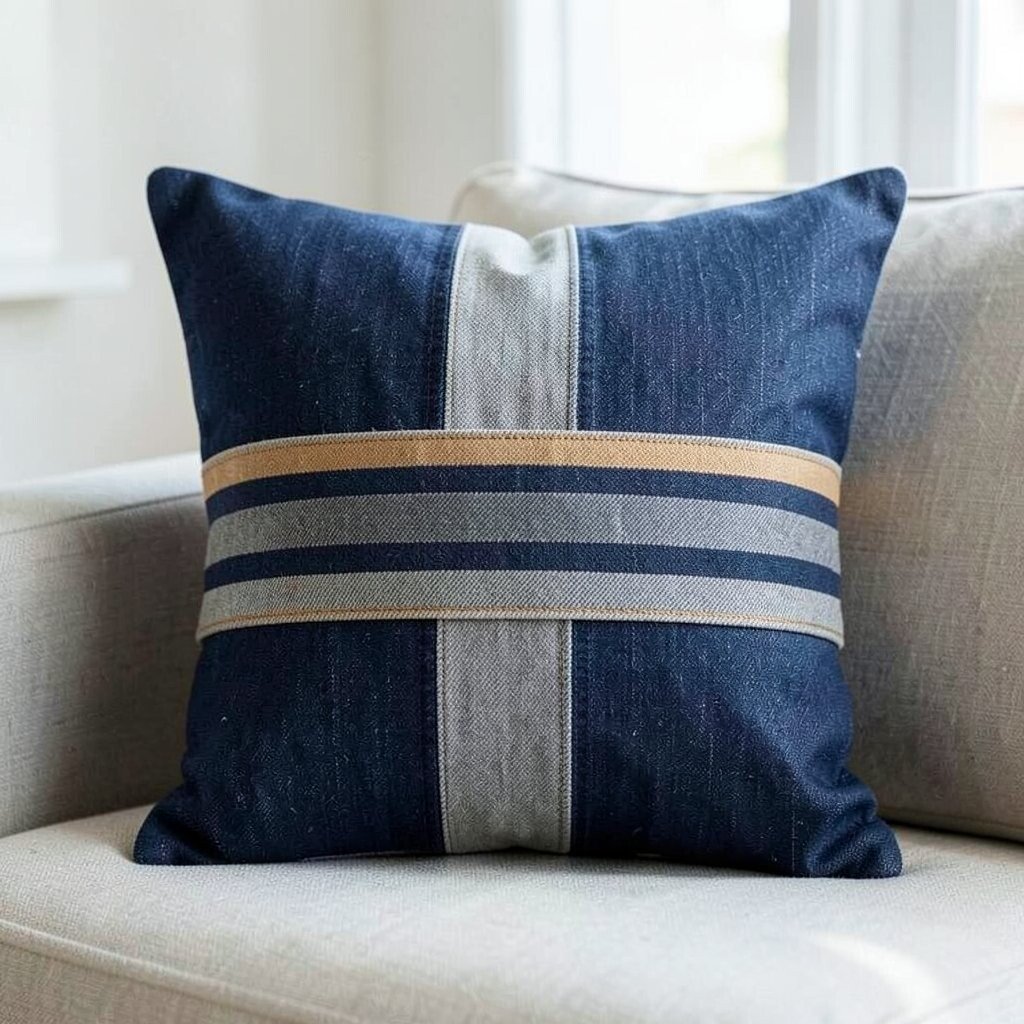
Pair denim with a contrasting canvas panel and add sporty stripes across the center. Think of racing jackets and old athletic banners, but softened for home comfort.
Cut stripes from denim legs and sew them onto a canvas backing in a simple repeating pattern. This gives visual rhythm and helps the pillow look polished even with a rugged material. The benefits include durability from denim and a clean base from canvas, which can handle everyday use.
Personalize with stripe colors that match your room, such as navy, gray, or a pop of tan. For cost, canvas can be a small purchase if you do not have scraps, but you can still use denim scraps for most of the front. Current trend styling often favors bold accents, and this pillow provides an easy way to bring that energy into your space.