Art time can feel messy, but it can also be quick and sweet. These projects help little hands make big feelings visible.
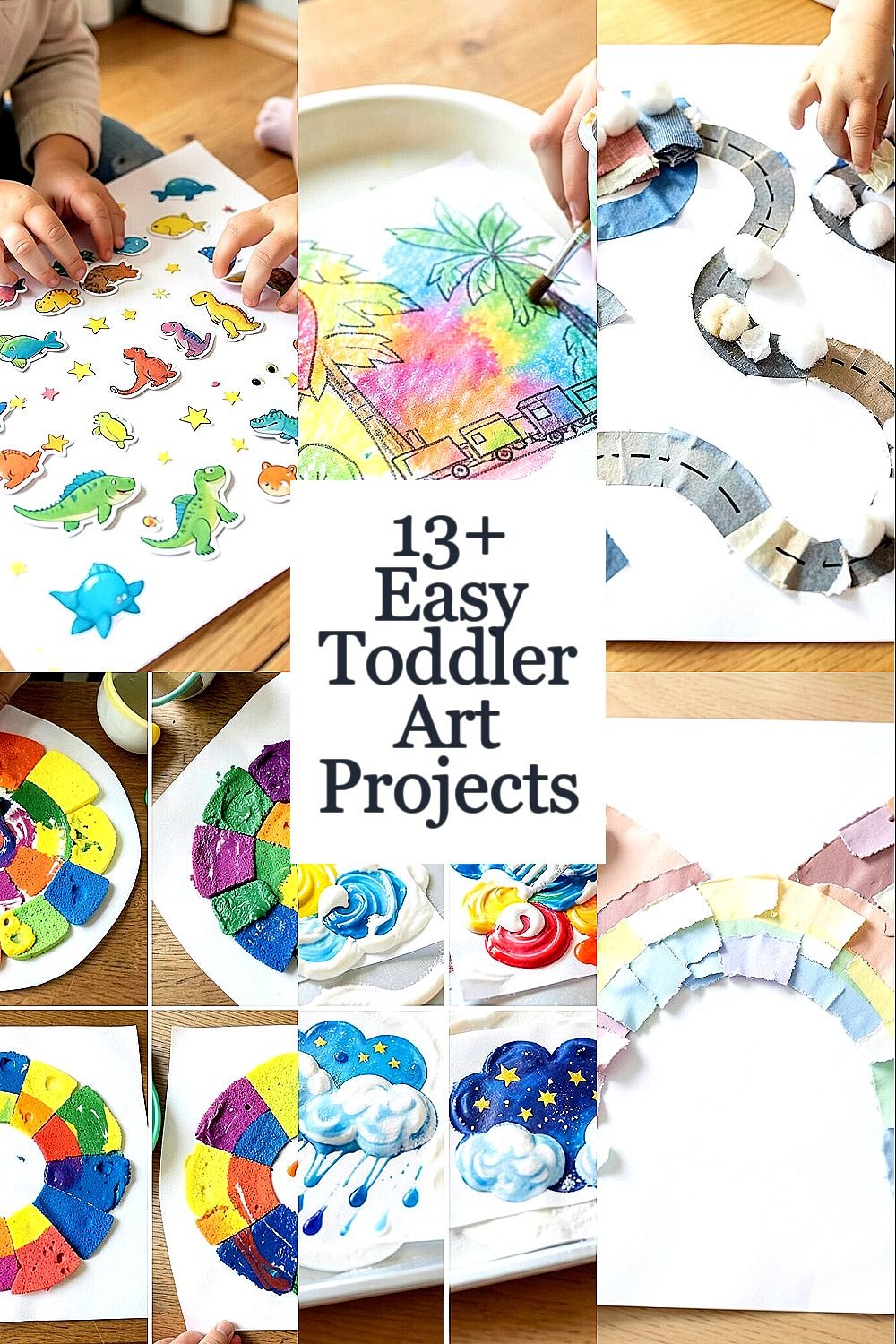
1. Sticker Story Collage
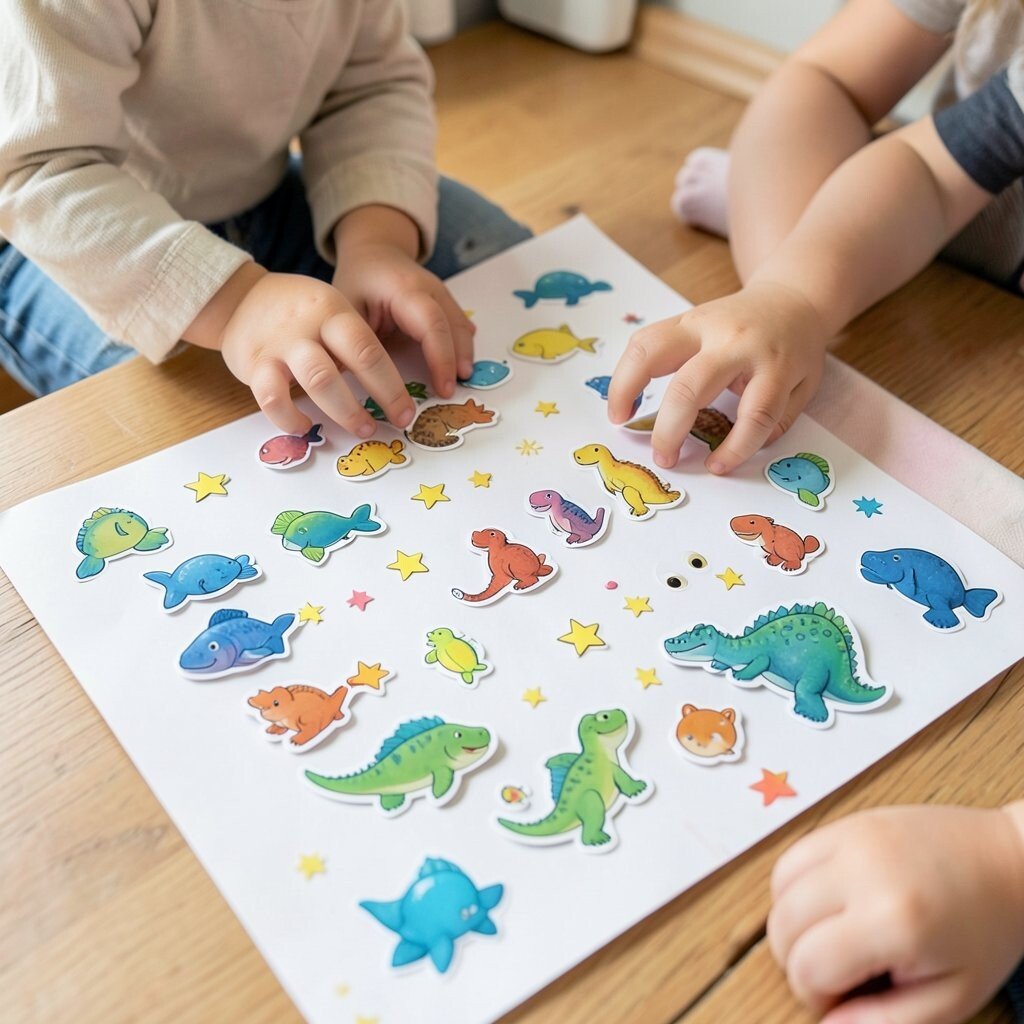
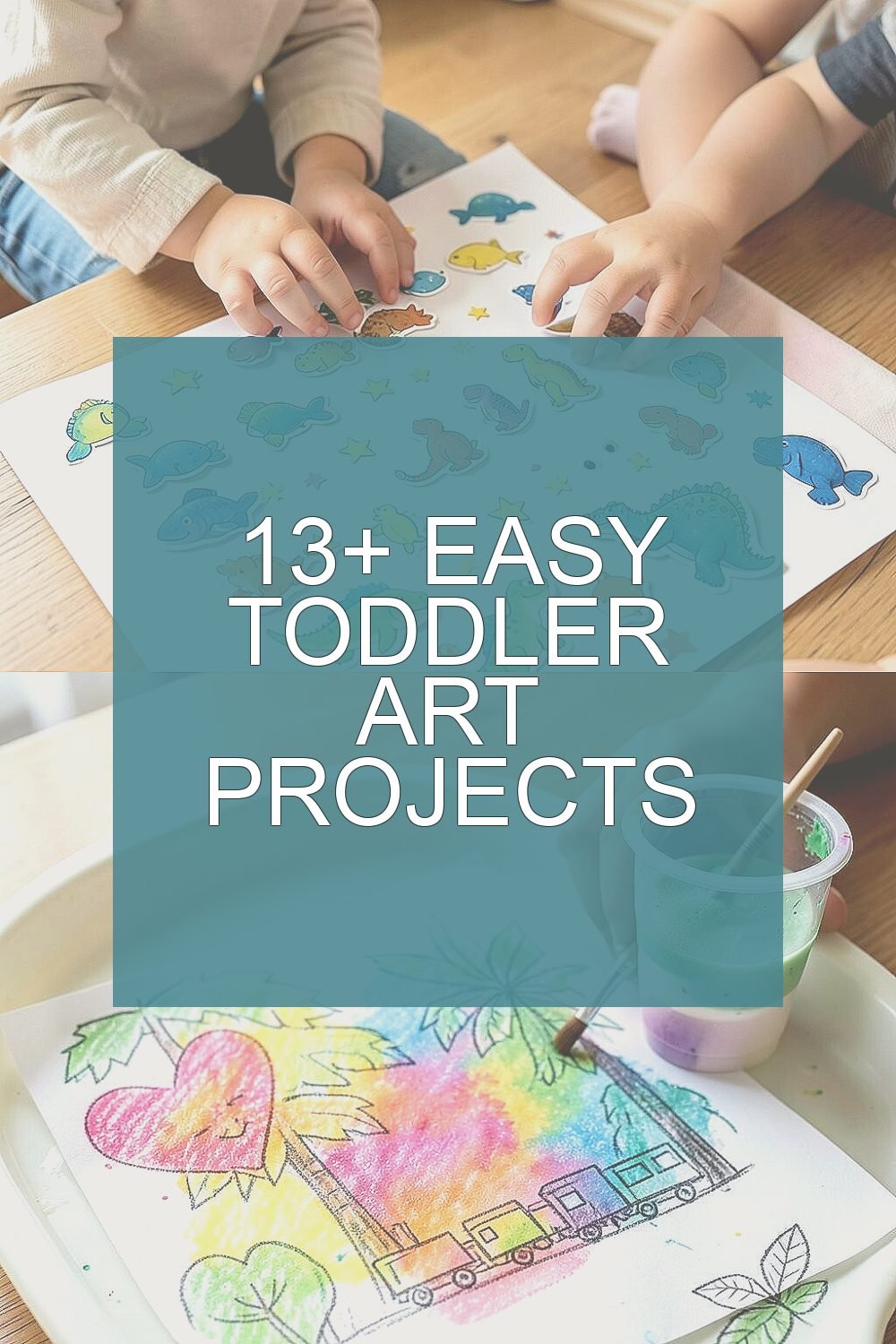
Choose a sturdy sheet of paper and invite your toddler to place stickers freely. You’ll see tiny worlds form as eyes scan the page for shapes, stars, and animals.
This activity builds hand control and helps toddlers practice staying focused for a short stretch. Use stickers that match a mood or theme, like ocean creatures for a calm day or dinosaurs for high-energy play.
Let your child press and peel stickers with one gentle direction at a time so it feels doable. If stickers are pricey, try reusing old sticker packs, labels, or cut-out foam shapes from craft stores.
2. Crayon Resist Doodles With Watercolor
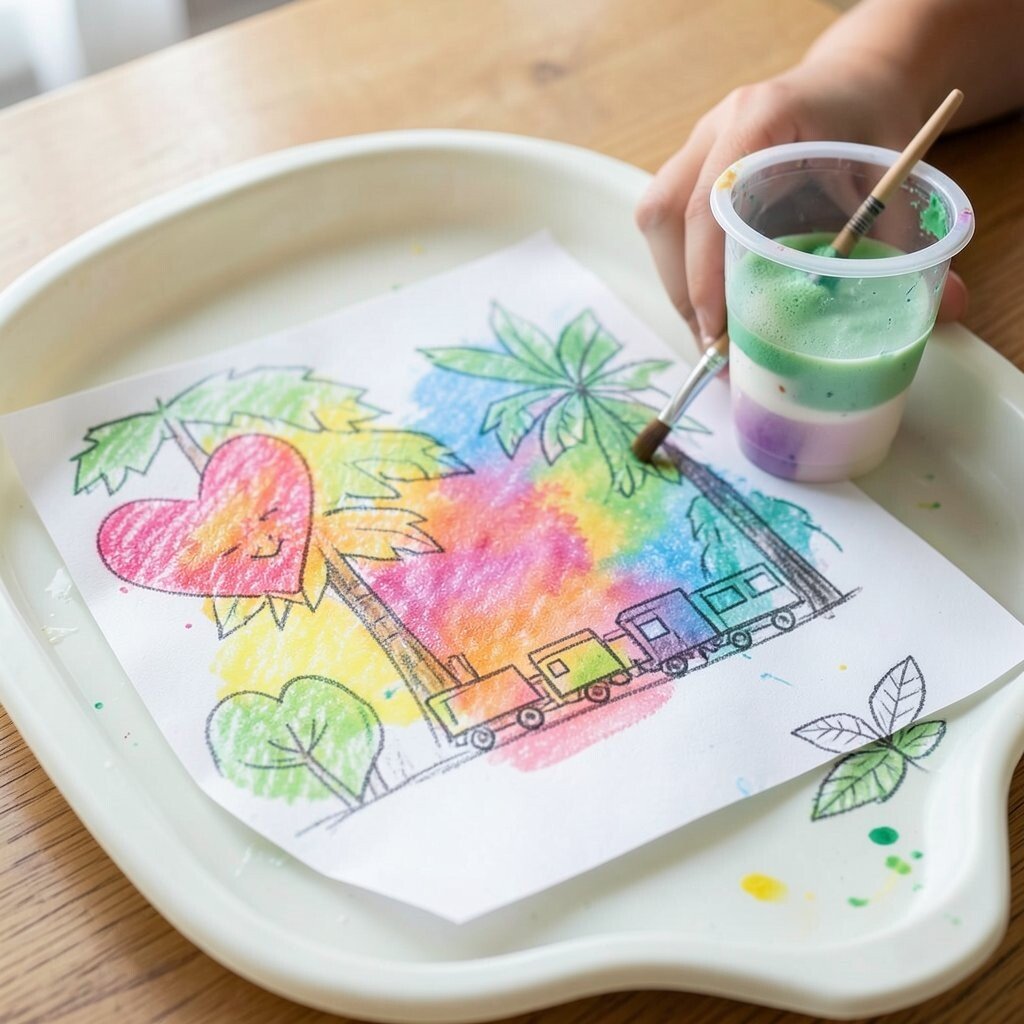
Sketch lightly with crayons on white paper, then give a small paint brush or sponge for watercolor over the top. The colors glow where your toddler already drew, creating a magical picture.
This project supports early drawing skills while also teaching cause and effect in a fun way. It also encourages toddlers to slow down and plan where they want their lines.
For fast cleanup, place paper on a washable tray and keep water in a cup with a wide lip. Personalize it by using your toddler’s favorite prompts, like hearts, trains, or jungle leaves.
3. Tape and Texture Treasure Maps
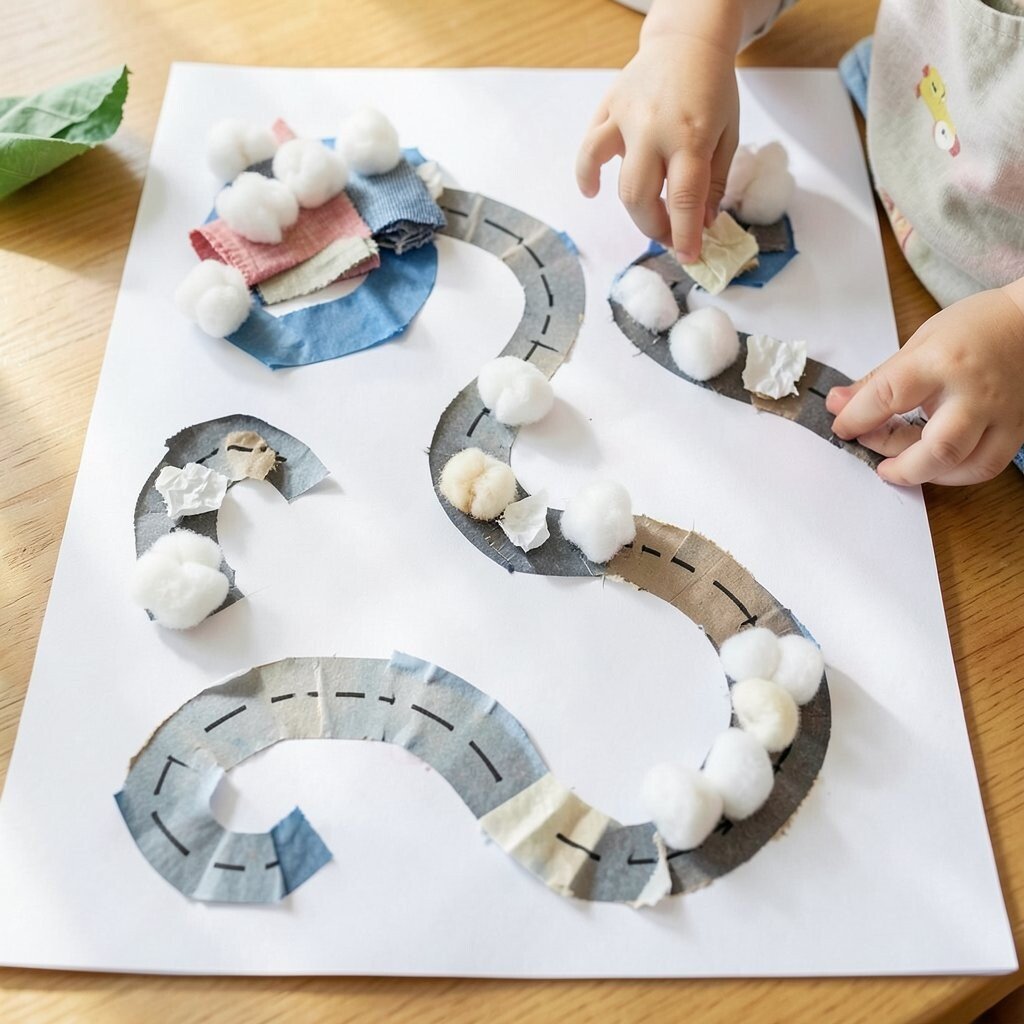
Cover a sheet of paper with painter’s tape in paths, loops, and simple shapes. Then add texture by pressing on scraps like cotton balls, fabric, cardboard, or crumpled tissue inside the taped areas.
Your toddler will love the way everything looks different when touched and viewed closely. The finished map feels unique because no two arrangements match, even with the same materials.
This helps with sensory development and strengthens grip while practicing careful placement. Use a limited color set and only a few texture pieces at first so your child can succeed quickly.
For a budget-friendly approach, raid the craft bin for spare fabric scraps and take leftovers from gift wrap. If you notice your toddler enjoys patterns, try making a “road” that always curves, then repeat it across the page.
4. Color Wheel Sponge Painting
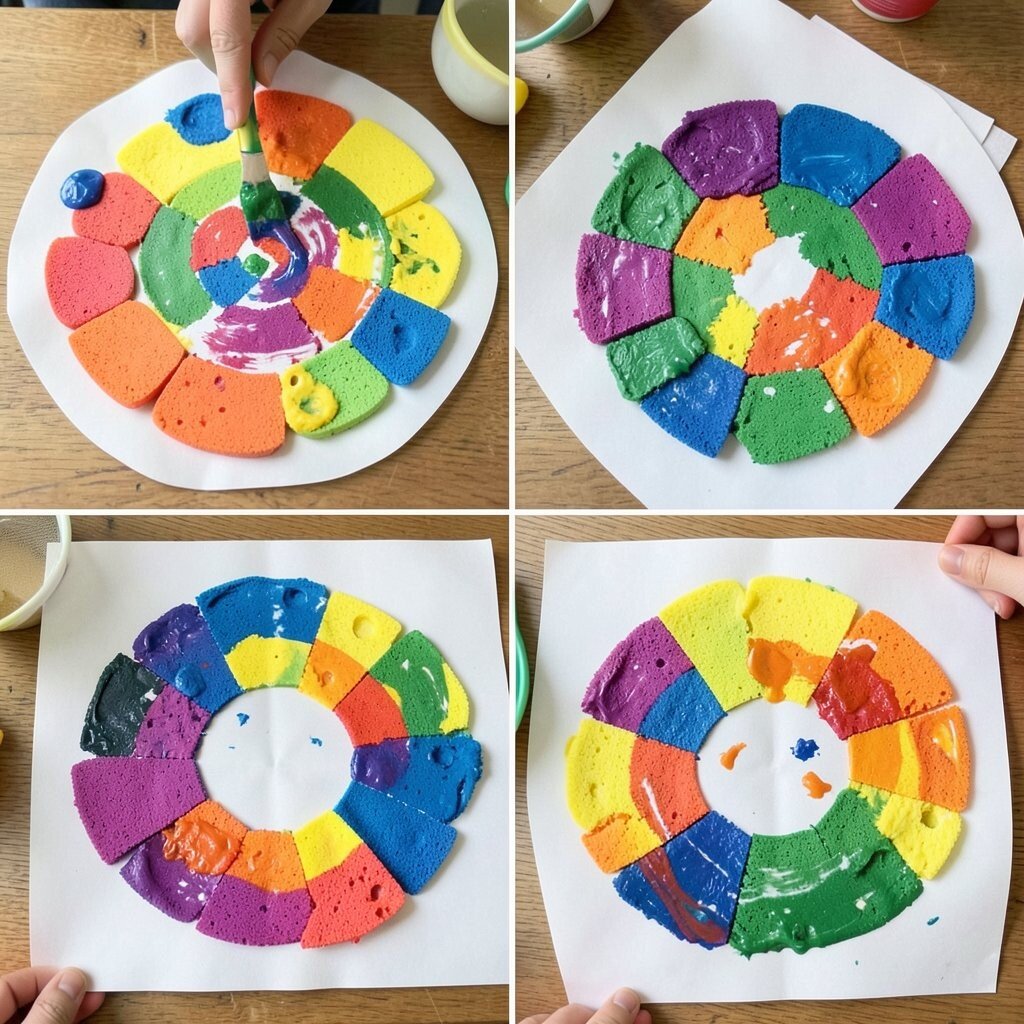
Cut small sponges into simple shapes and dip them into child-safe paint. Spin through a few colors to make a bright ring pattern that looks like a friendly wheel.
This activity is quick, visually satisfying, and easy to repeat on multiple sheets. It supports color recognition and teaches your toddler that painting can be controlled even with playful movement.
5. Shaving Cream Cloud Prints
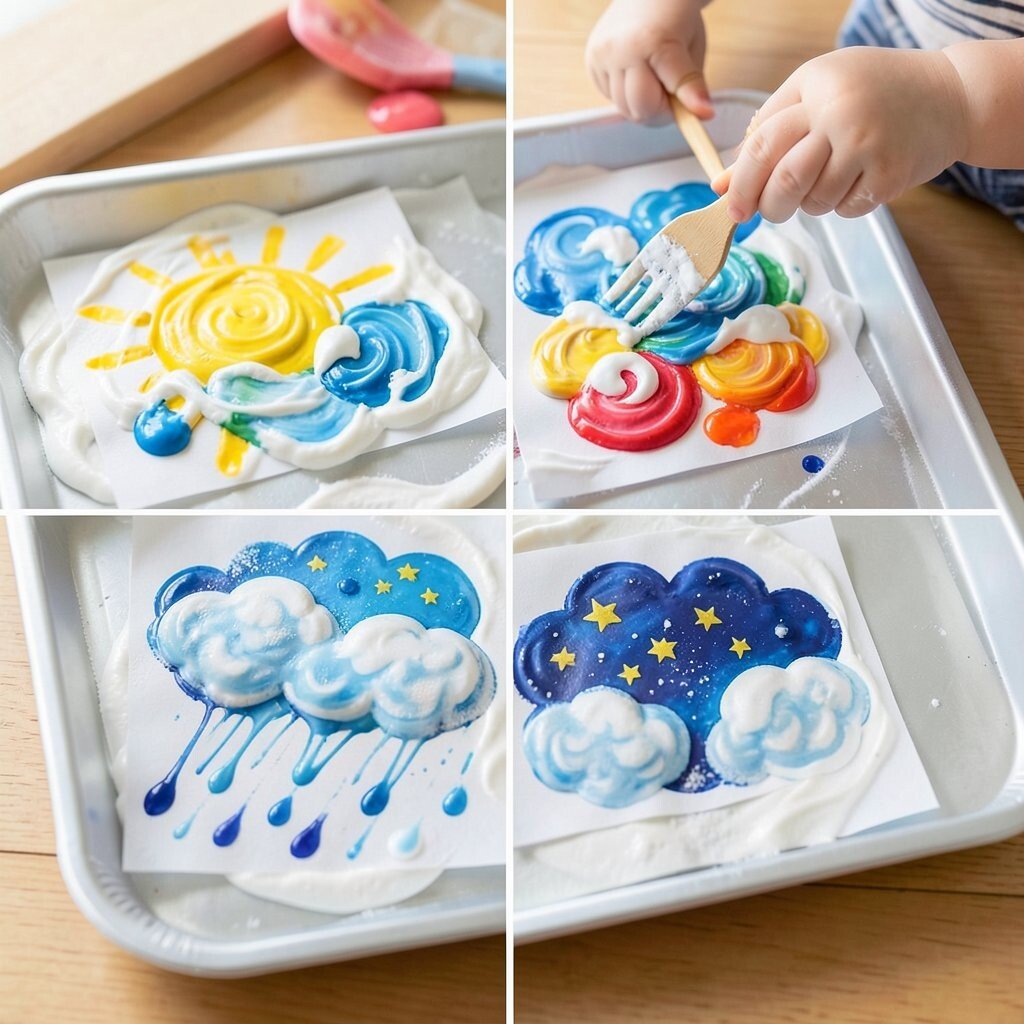
Sprinkle a little shaving cream on a tray and add drops of washable paint. Drag a fork or skewer through it to make swirls, then press paper lightly on top for prints.
Your child will watch clouds of color appear in a sudden, exciting way. The sensory feel is soft and cool, which many toddlers find soothing after a busy day.
Keep it practical by using a disposable tray liner and wiping everything off with a damp cloth. Personalize each print by turning it into a “weather picture,” like sunshine, rainy streaks, or star clouds.
6. Pastel Paper Tear Collage
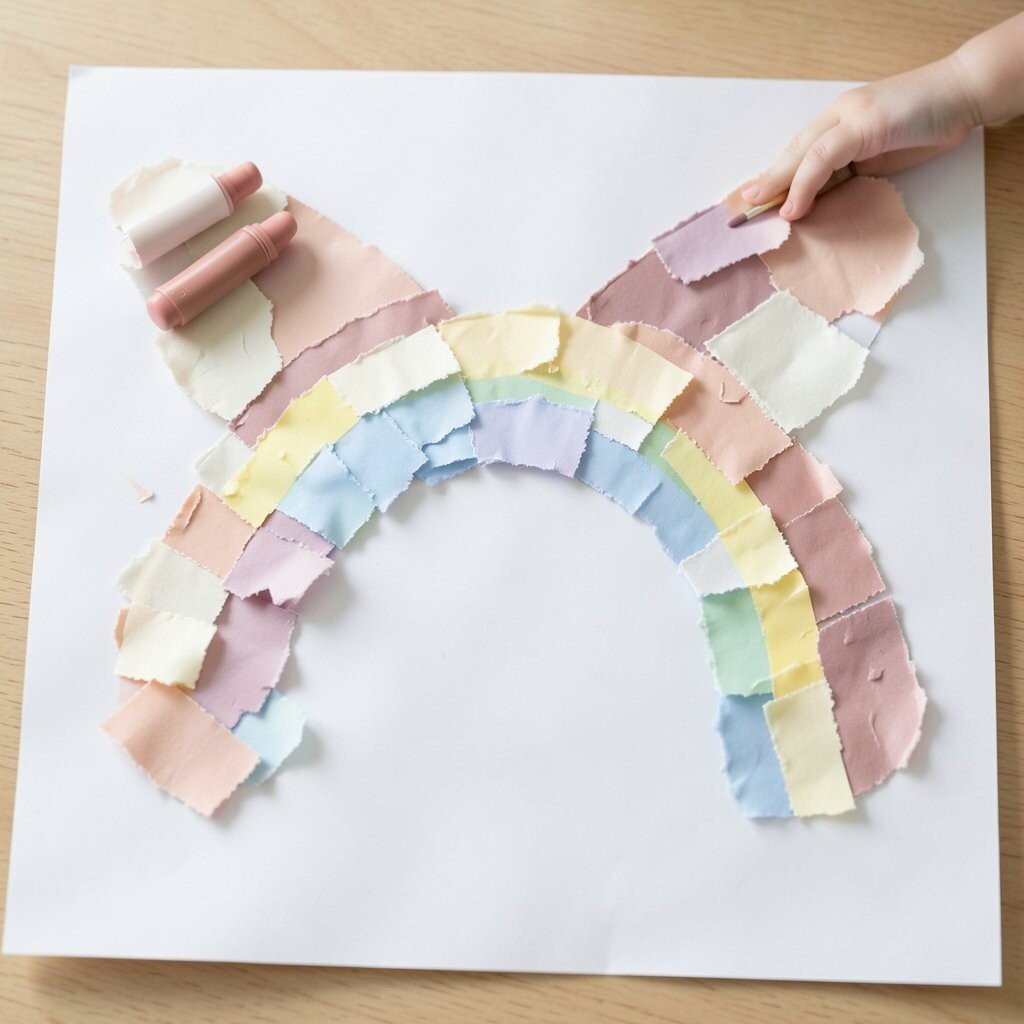
Offer colored craft paper and invite your toddler to tear it into uneven bits. Then glue the pieces onto a larger sheet to form a big shape, like a butterfly or a rainbow arch.
The torn edges create a natural texture that feels different from cutting. This method is also gentler than scissors and encourages independent hand movement.
Use thicker glue sticks or a small brush so you can manage the mess. Cost stays low when you use recycled paper, tissue paper wrappers, or old flyers cut into sheets.
For a trendier look, try a soft monochrome palette, like cream, blush, and dusty rose. If your toddler loves animals, do a simple zoo collage with a handful of familiar shapes only.
7. Box Lid Shape Stamp Play
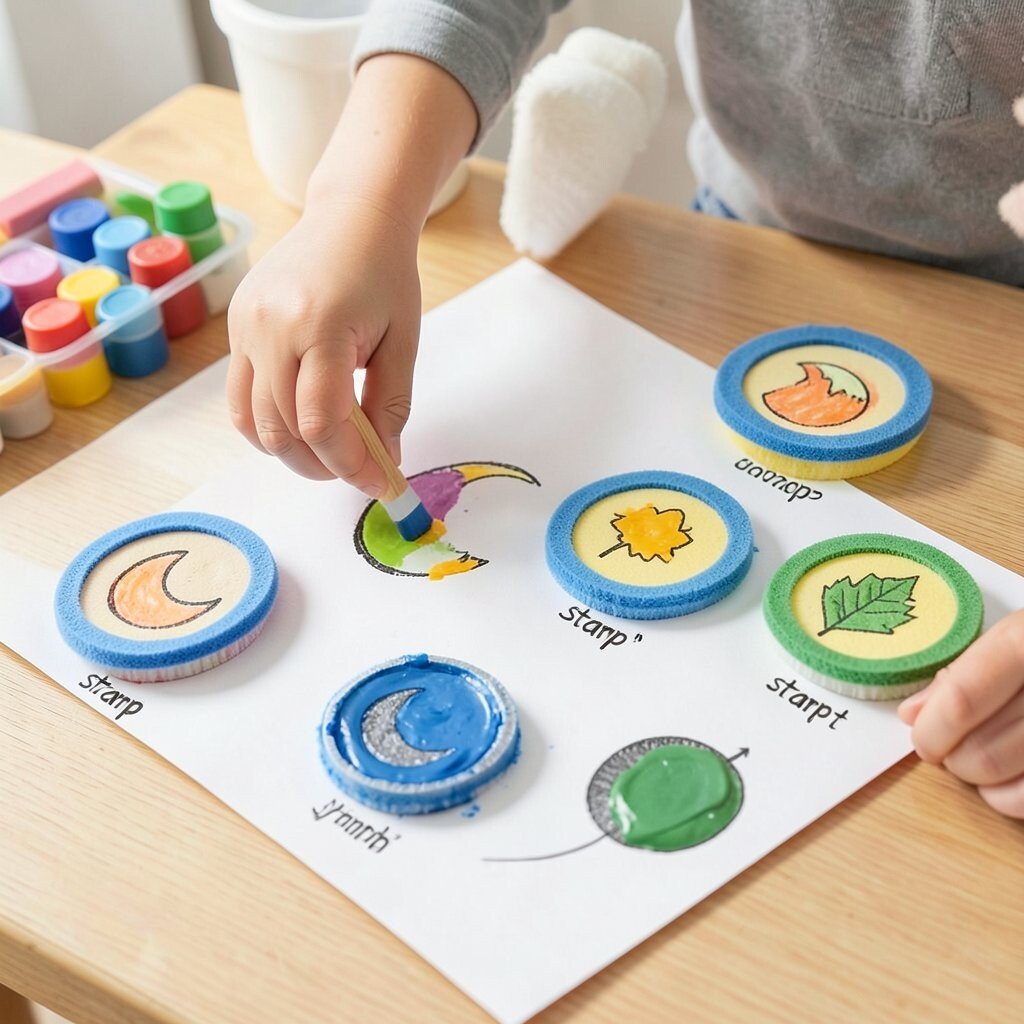
Collect a few shallow box lids and cover their rims with sponge or felt. Dip them in paint and stamp on paper to build shapes without complicated steps.
This project feels like a game and helps toddlers practice timing, pressure, and spacing. The repeated stamping also supports early pattern awareness, which is great for growing focus.
Keep supplies simple by using one color at a time, especially when you’re short on energy. Personalize it by labeling each lid with a theme your toddler loves, like “moon stamp” or “leaf stamp,” using only objects and not words.
8. Sidewalk Chalk Watercolor Resist
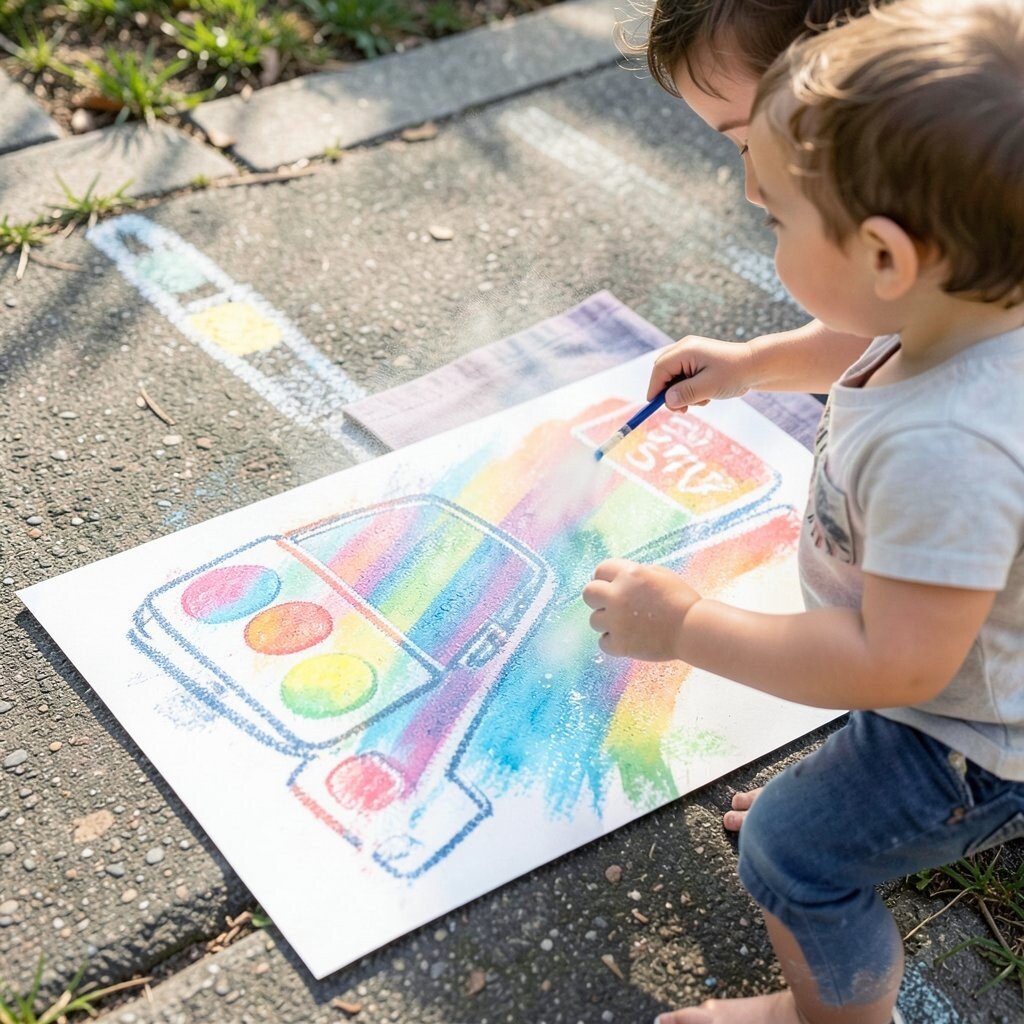
Use sidewalk chalk to draw simple lines on thicker paper or a board, then spray a mist of water lightly. The chalk blooms into watercolor-like streaks while your toddler watches the picture change.
This is a fun twist that turns dry marks into moving color. It helps toddlers build curiosity about how materials react, which is a big part of science learning at a young age.
Choose a surface you can rinse easily and do it outside or near a washable mat. For personalization, copy your child’s favorite car tracks, then add “stoplights” with dots of contrasting chalk.
9. Paper Bag Puppet Faces
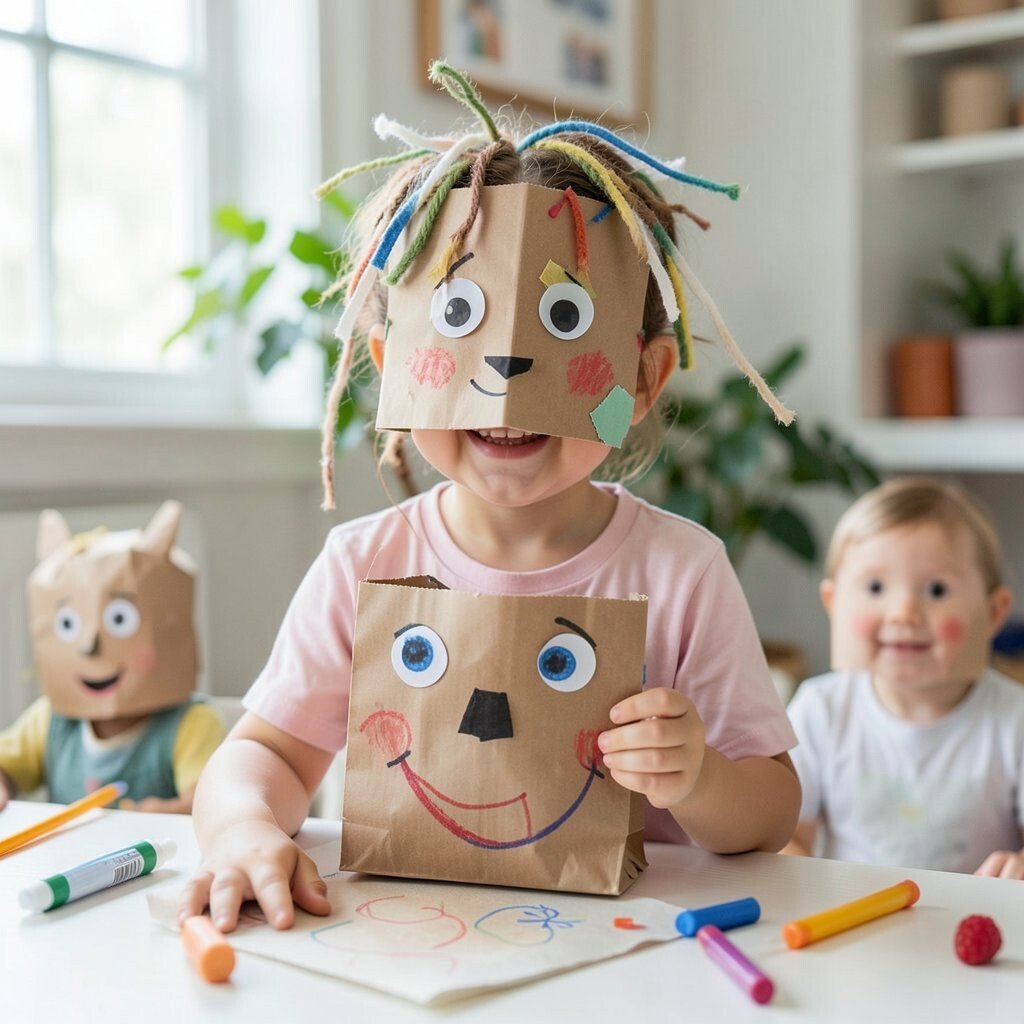
Decorate a paper bag with a face using washable markers, paper scraps, or fabric bits. Your toddler can stick on eyes, draw a smile, and add hair made from yarn or strips of paper.
Once the face is ready, turn art into play by making tiny puppet shows. This supports language development too, since toddlers often narrate their puppet’s actions.
Use a glue stick and avoid tiny parts that could be pulled off quickly. If you want a budget win, reuse plain grocery bags and keep a small “face kit” with spare eyes and scrap fabric.
For a current, popular vibe, try making a “story character” inspired by everyday moments like going to the park or picking berries. Let your child choose the mood, then match the colors and expression to it.
10. Leaf Vein Rubs With Crayon
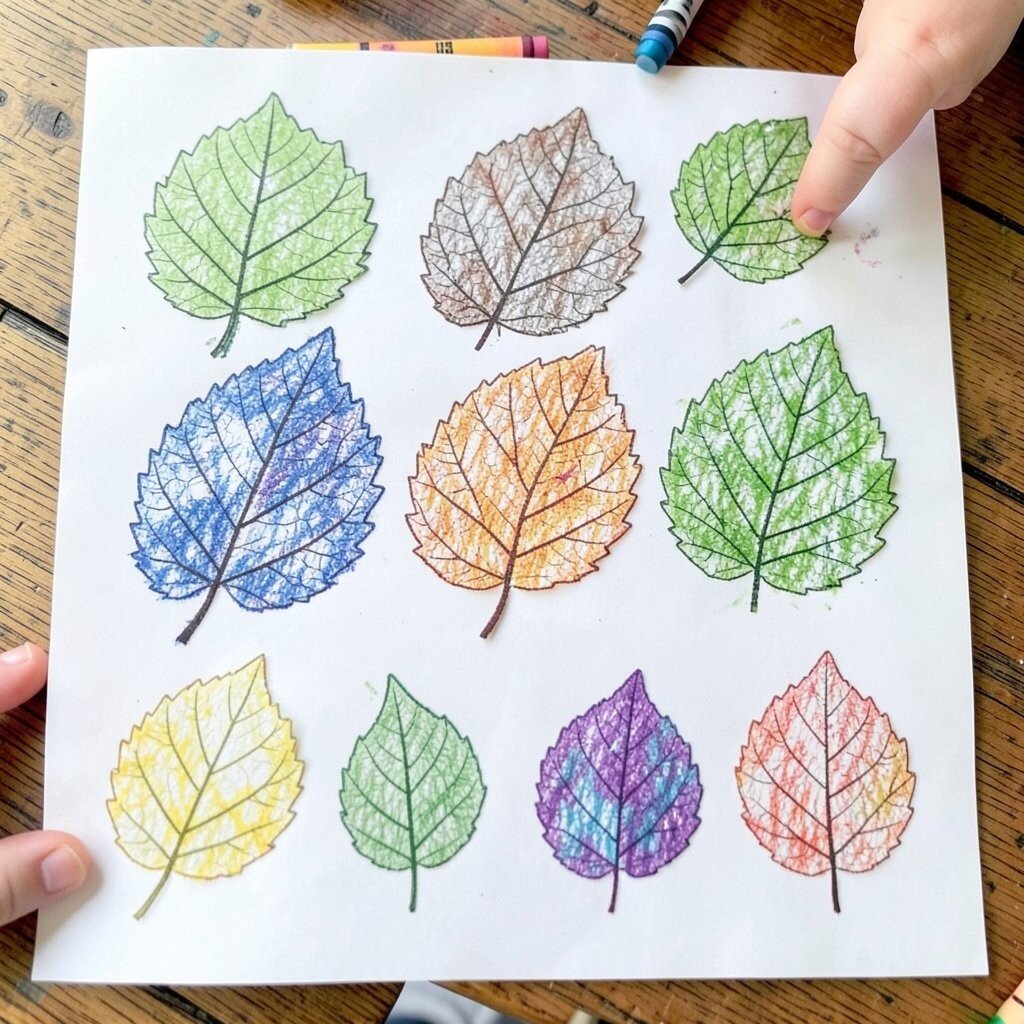
Gather a few leaves from outside and place them under a sheet of paper. Rub a crayon over the top so the leaf veins show up like delicate lace.
Your toddler will be amazed by how nature prints itself, even when you only use a simple tool. This encourages patience because the leaf needs to sit flat and be handled gently.
Keep it easy by using thick paper and a single crayon color first. Personalize the outcome by arranging the leaf rubs into a “forest page” with different leaf sizes in rows.
If you need a safer option, press leaves you’ve already collected indoors and use only washable materials. Budget stays friendly because leaves are free, and the results look detailed without expensive supplies.
11. Muffin Tin Color Sorting Painting
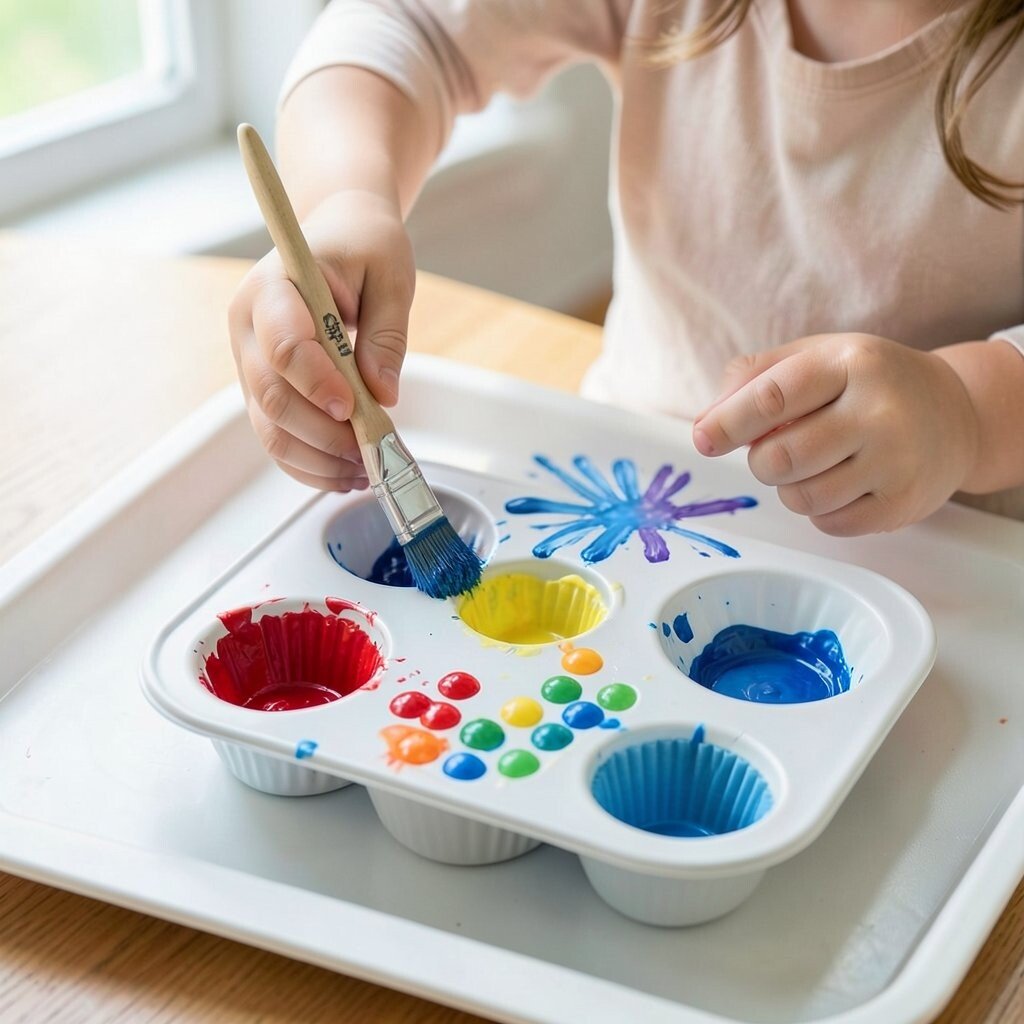
Set up a muffin tin with a few paint wells and give your toddler a sponge brush. They can dip into one color, paint a dot cluster, then switch to another color in any order.
This activity blends art with simple sorting and helps toddlers practice decision-making. The muffin tin also keeps paint contained, which means less spill chaos.
Make it practical by placing the tin on a tray and using washable paint that cleans with soap and water. Personalize it by painting the same shape repeatedly, like dots that become “flowers” or “fireworks.”
12. Yarn Wrap Rainbow Bars
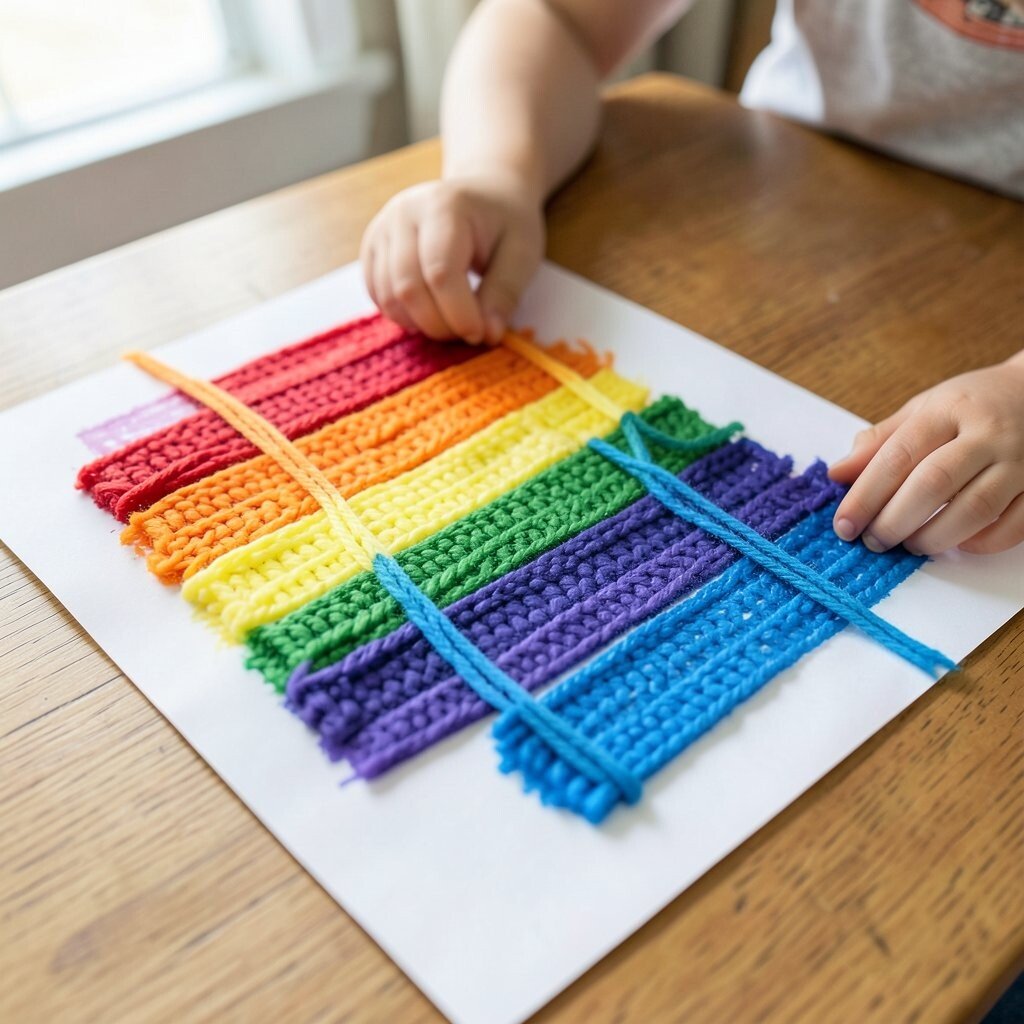
Draw several thick rainbow bars on paper, then tape the paper to a table. Your toddler wraps yarn along each bar, pressing gently so the strings stay in place.
The finished rainbow looks cozy and bold, with raised texture that feels different from flat crayon art. Wrapping also strengthens fine motor skills and teaches your child to follow a boundary.
For a cost-friendly approach, reuse yarn scraps, old sweaters, or bits from craft stores. If you’re short on time, limit to three colors so cleanup stays easy and the design feels finished faster.
13. Potato Print Patterns
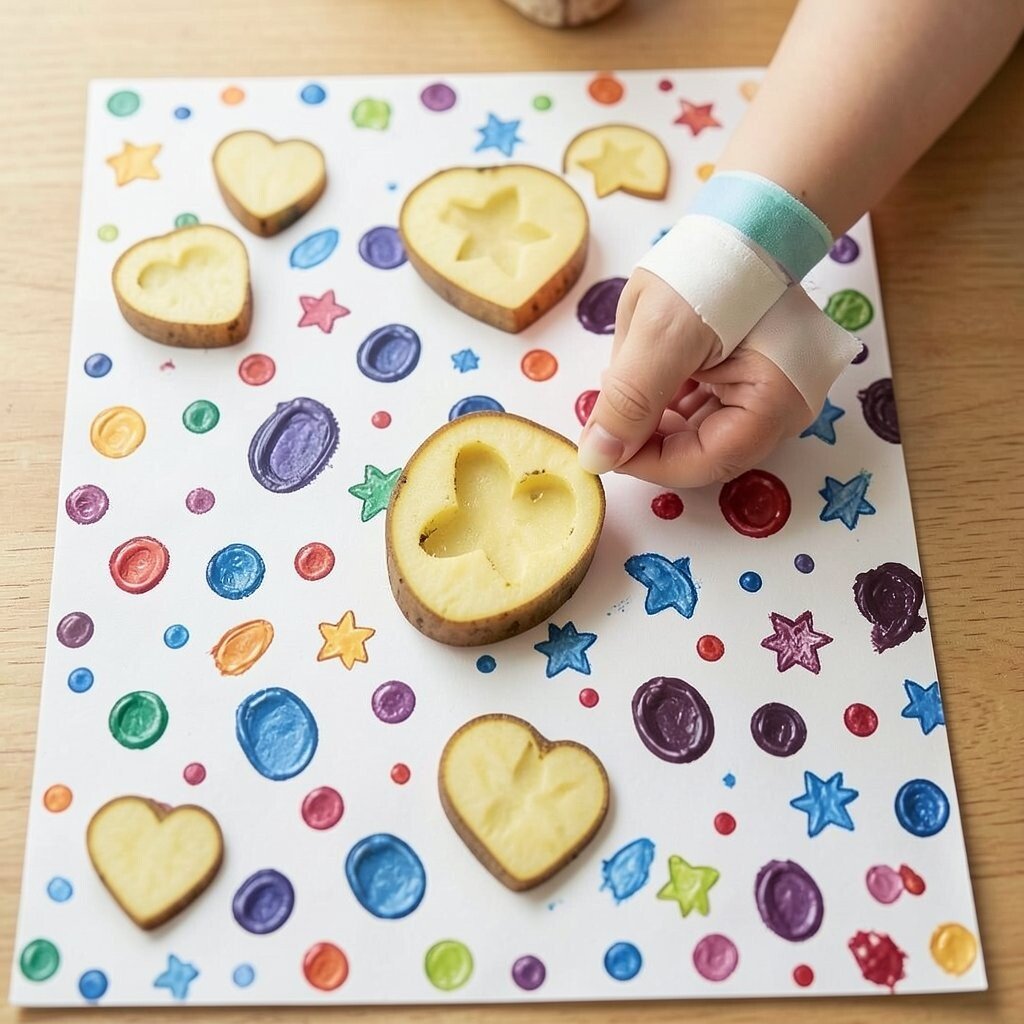
Cut a potato into simple halves and carve a basic shape like a heart or star into the surface. Dip the potato stamp in paint and press onto paper to form repeating patterns.
This method creates crisp designs with a satisfying stamp sound when you press. It also helps toddlers learn rhythm and repetition, which can calm them into a focused flow.
Keep it manageable by doing one potato shape per session and wiping it between colors. Personalize the pattern by choosing a theme your child loves, like dots for a “polka party” or stars for a “night sky.”
For current kid-friendly trends, try making a “wrapping paper” look by filling the page edge to edge. Cost is low because potatoes are affordable, and stamp carving can be done once for future sessions.
14. Milk Carton Frame Collage
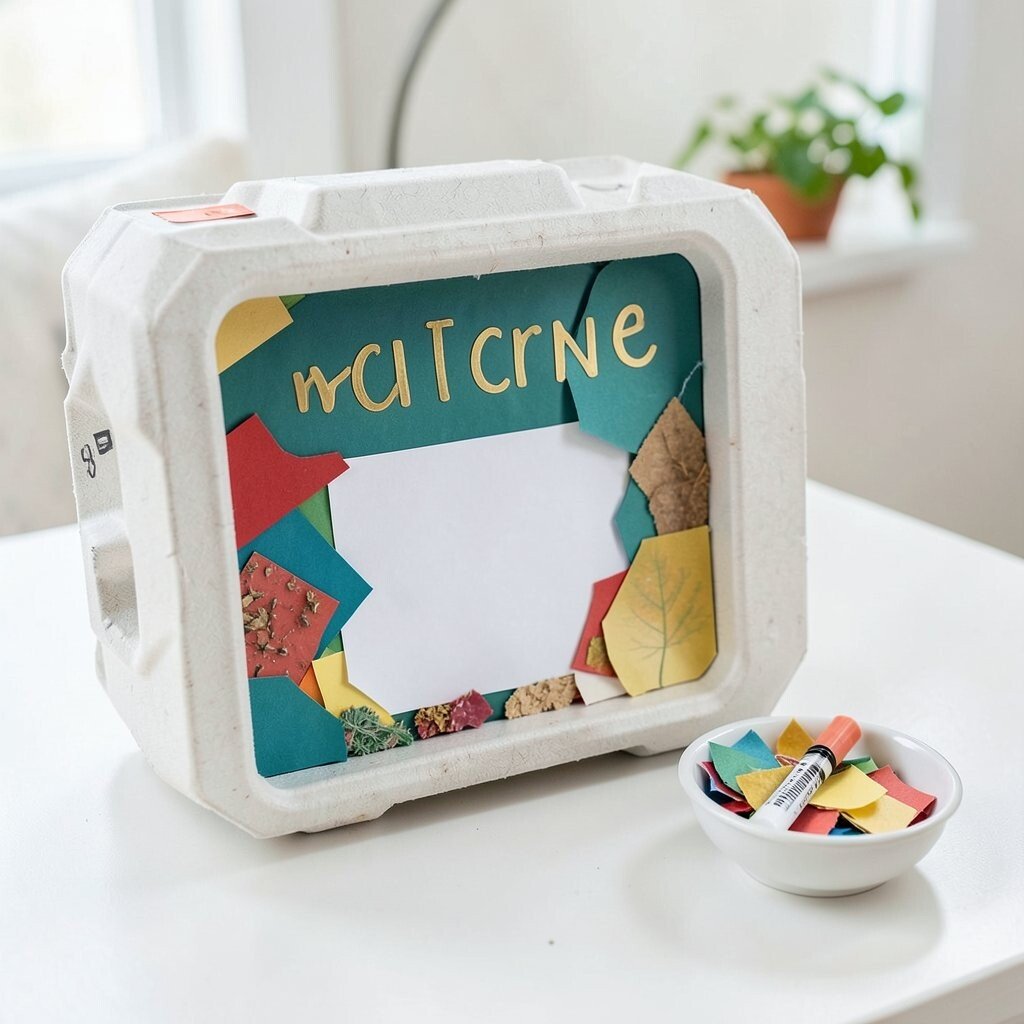
Cut a milk carton into simple frame shapes and clean them well. Let your toddler glue colored paper scraps and small textures inside the frame so the art looks like it’s displayed.
This project feels special because it turns recycled materials into a mini gallery piece. It supports creativity while also giving toddlers an easy “inside the lines” area for placing shapes.
For practical cleanup, use a glue stick and keep scrap pieces in a small bowl so they’re easy to grab. Personalize the frame with a name your child loves by choosing pictures that represent it, like a toy car for “cars” or a leaf for “forest.”
If you want a modern look, stick to one or two color families like teal and gold or red and cream. Cost considerations are great here because you’re using household items, and the finished result looks sturdy and display-worthy.