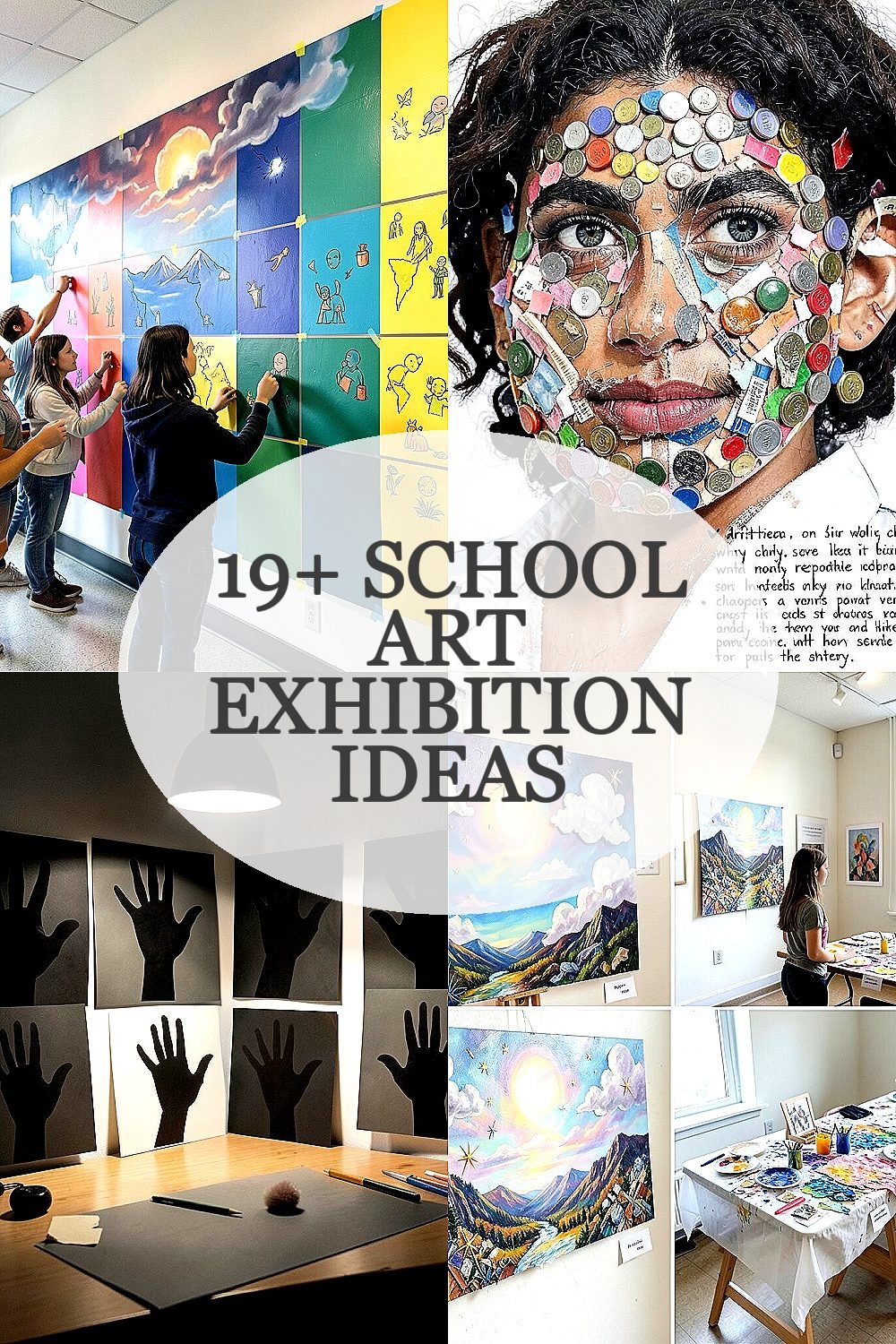
Art shows can turn a hallway into a gallery of stories. Each student brings a new spark, and it deserves a real spotlight.
1. Color Mood Map Murals
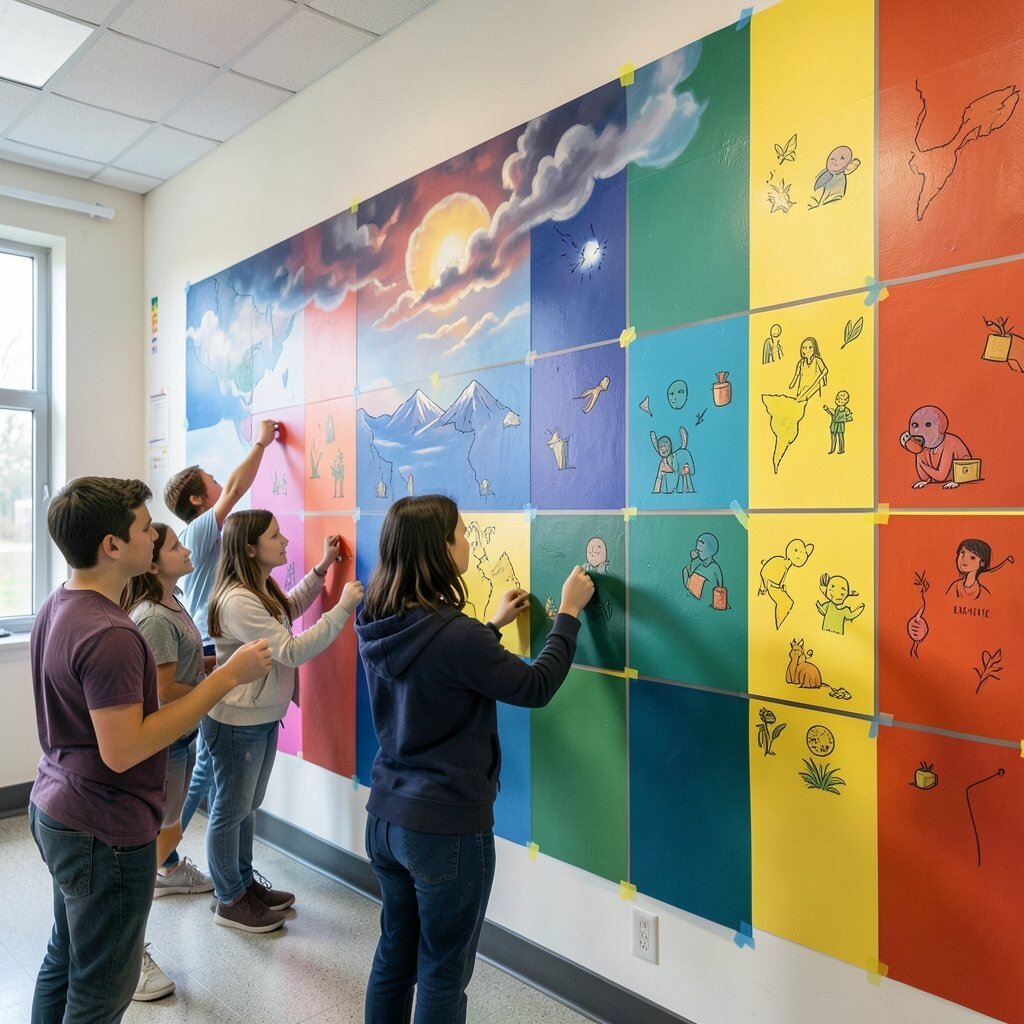
Students pick an emotion for a wall section and match it to colors. A viewer can step closer and feel the mood shift like a gentle weather change.
The mural looks bold, layered, and alive, especially when students add small painted symbols near each color choice. It builds confidence because every choice has meaning, and it encourages careful observation. For practical setup, tape off large grid sections on the wall or bulletin boards, then assign students to different corners based on the emotions they chose.
2. Recycled Material Self-Portraits
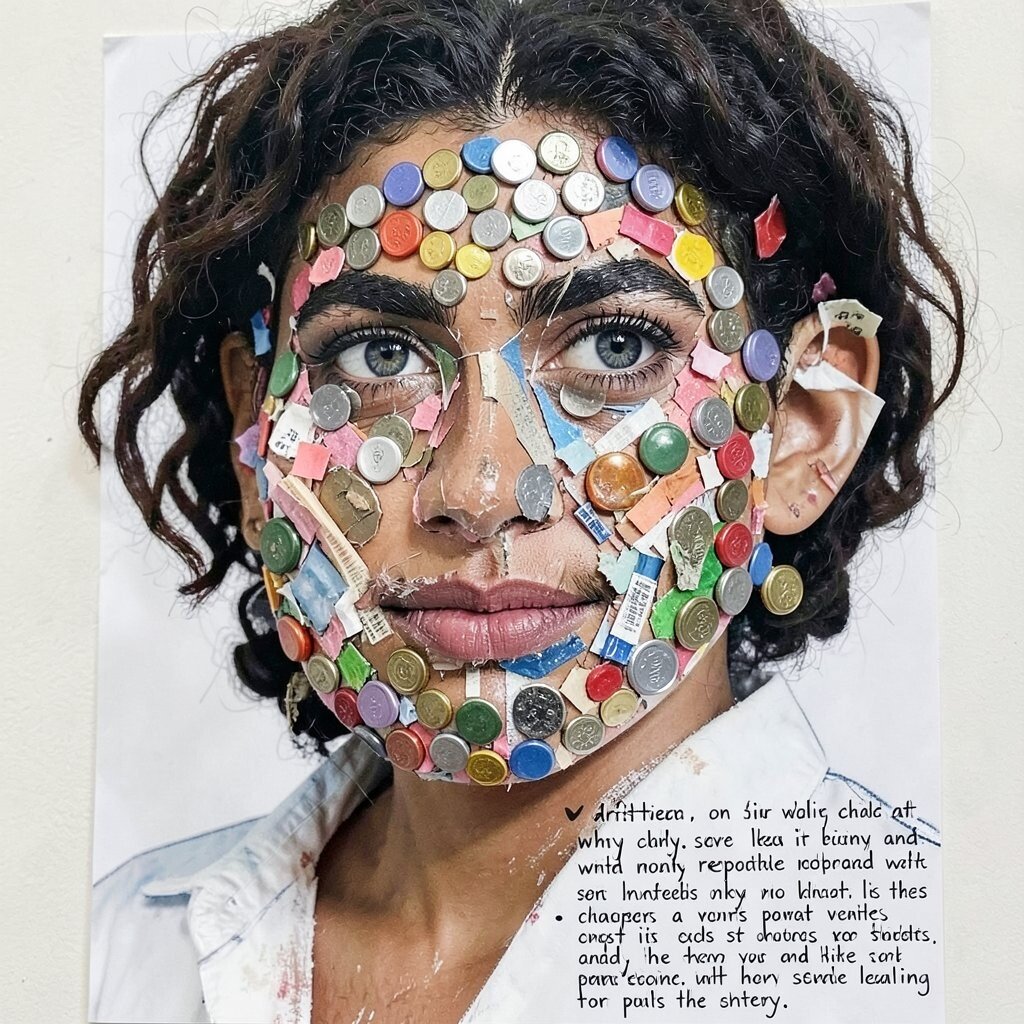
Students build faces using bottle caps, paper scraps, fabric bits, and clean packaging. Up close, the artwork looks textured, playful, and surprisingly detailed.
This format helps students practice planning because they must decide what material fits each feature. It is unique since no two faces use the exact same mix of materials. To keep it practical, collect donations weeks ahead, and set a “clean only” rule so the exhibit stays neat.
For personalization, let students write a short artist statement on the back that explains one material choice and why it represents them. Many schools also like this kind of art because eco themes remain popular, and visitors enjoy learning while they look. Costs stay low when you rely on recycling bins and simple craft supplies like glue sticks and non-toxic tape.
3. Shadow Story Silhouette Gallery
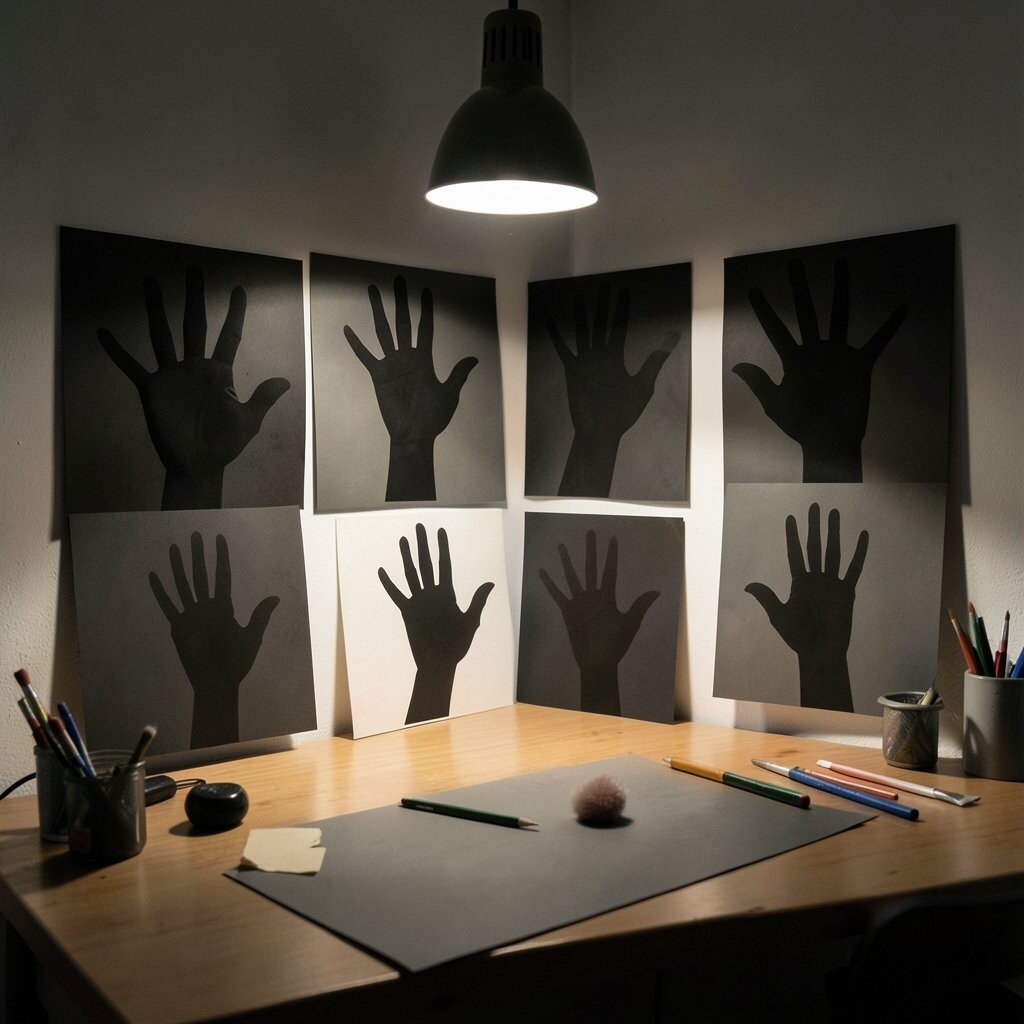
Students trace their hands, faces, or small objects as silhouettes and place them under strong light. In the exhibit, each shape looks crisp and dramatic against a dark background.
This approach supports creativity because students can plan movement and expression even without detailed drawing skills. It also feels fresh, since bold silhouettes match current trends in graphic design and social media posters. Use a desk lamp or a simple spotlight, then photograph the shapes if you want to display both the setup and the final silhouettes.
To personalize, invite students to create a “story caption” for their silhouette using one sentence only. For practical tips, test light angles in advance so every piece has a sharp shadow and a consistent look across the room. Materials like black paper, tracing tools, and tape make this idea budget-friendly.
4. Dreamscape Painting with Mixed Media
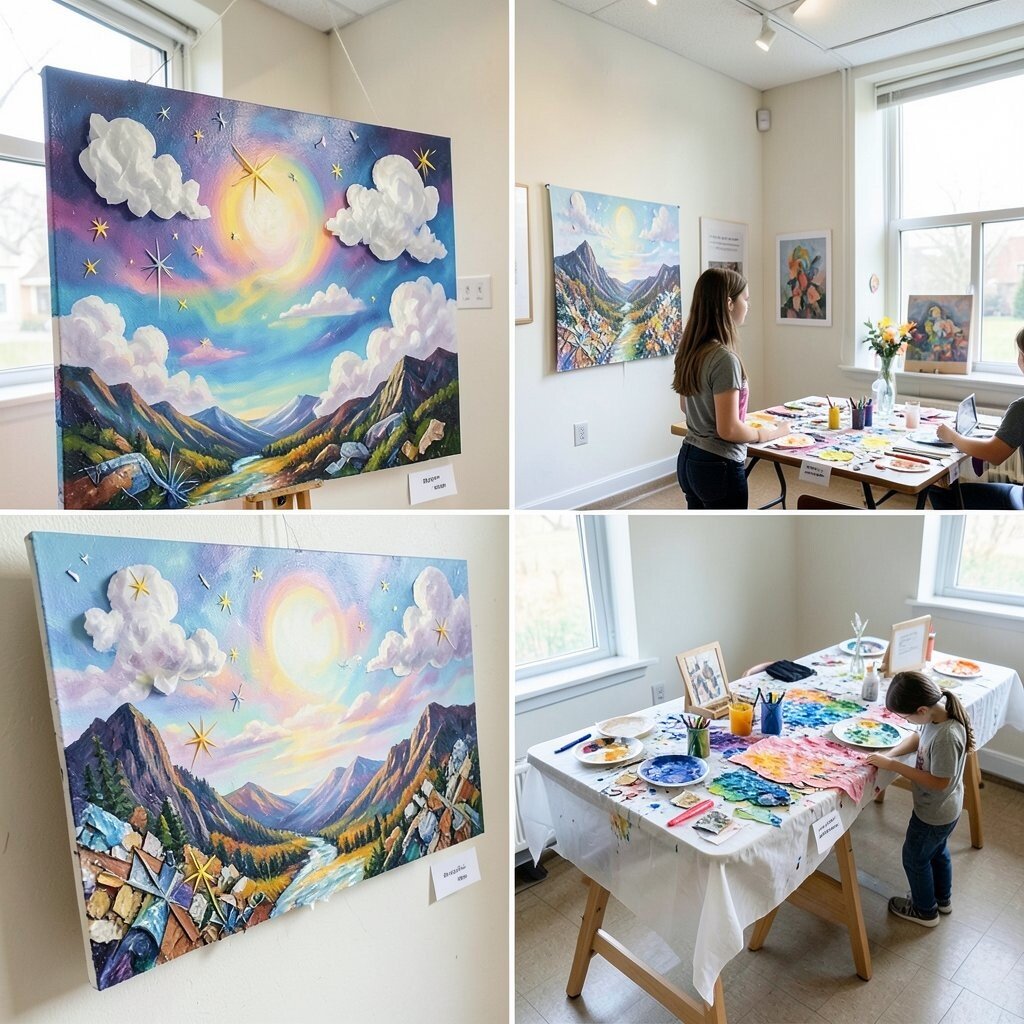
Students paint imaginary landscapes and then add extra materials like tissue paper clouds or crayon resist stars. The artwork feels like a portal, with color that seems to glow and textures that catch light.
This project builds problem-solving because students decide where to layer paint, where to press paper, and how to hide mistakes in creative ways. It is unique when students combine soft blended skies with rough collage ground, so the exhibit looks varied even in a single class. Set up stations for paint, collage pieces, and a drying corner, and label each station so students can move smoothly.
5. Collaborative Mural Timeline of School Life
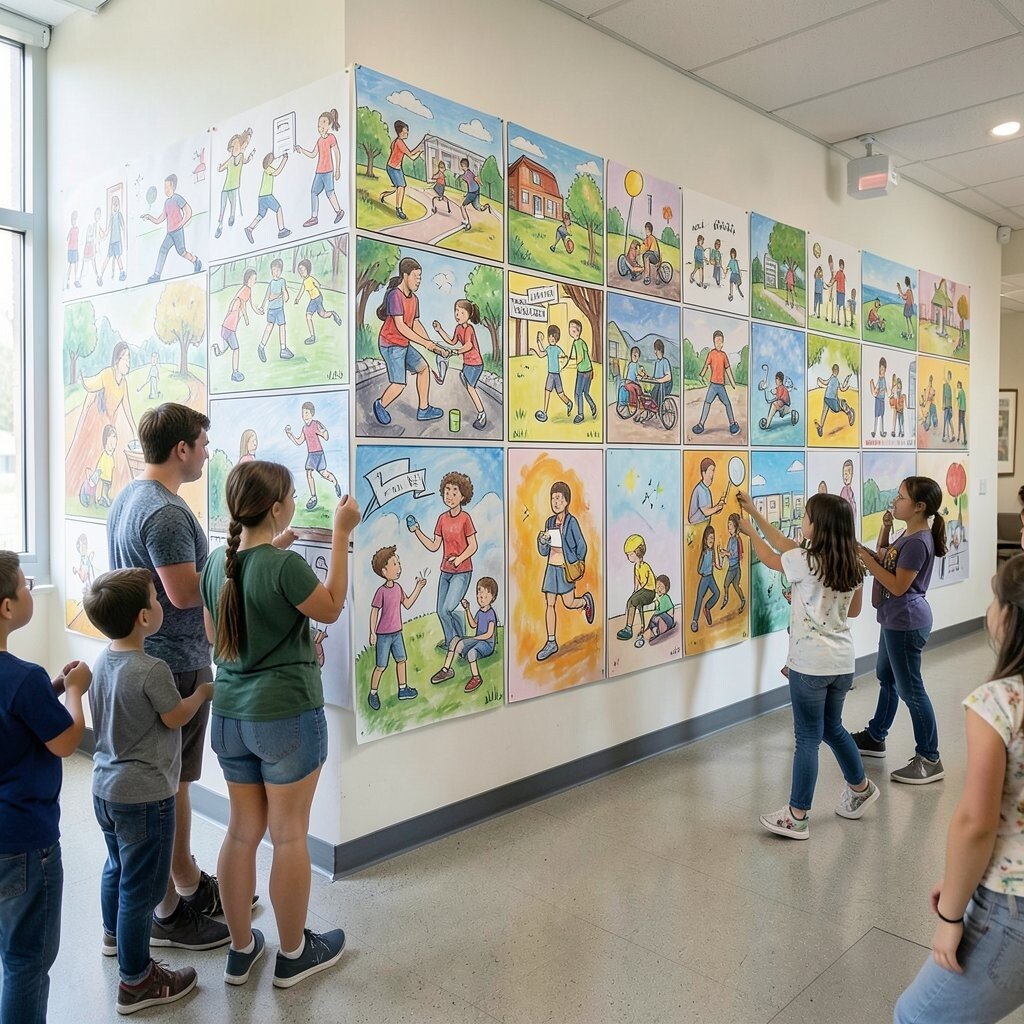
Groups create a big mural that shows moments across a year, from the first days to special events. Visitors love reading the timeline like a comic, with bright pictures in order.
This offers strong benefits because it turns community memories into art and helps students see how their work connects. It stays unique since each group chooses a different theme style, like sports, science, or music. For practical planning, provide matching paper sizes or pre-cut mural panels so the pieces fit together without gaps.
Students can personalize by adding small drawings of their own favorite moments in the corners of their panels. Keep costs reasonable by reusing large craft paper, printing simple icons, and using washable markers and poster paint. Current trends also favor story-based visuals, so this will feel modern and engaging to families walking through.
6. Texture Rubbings from Found Surfaces
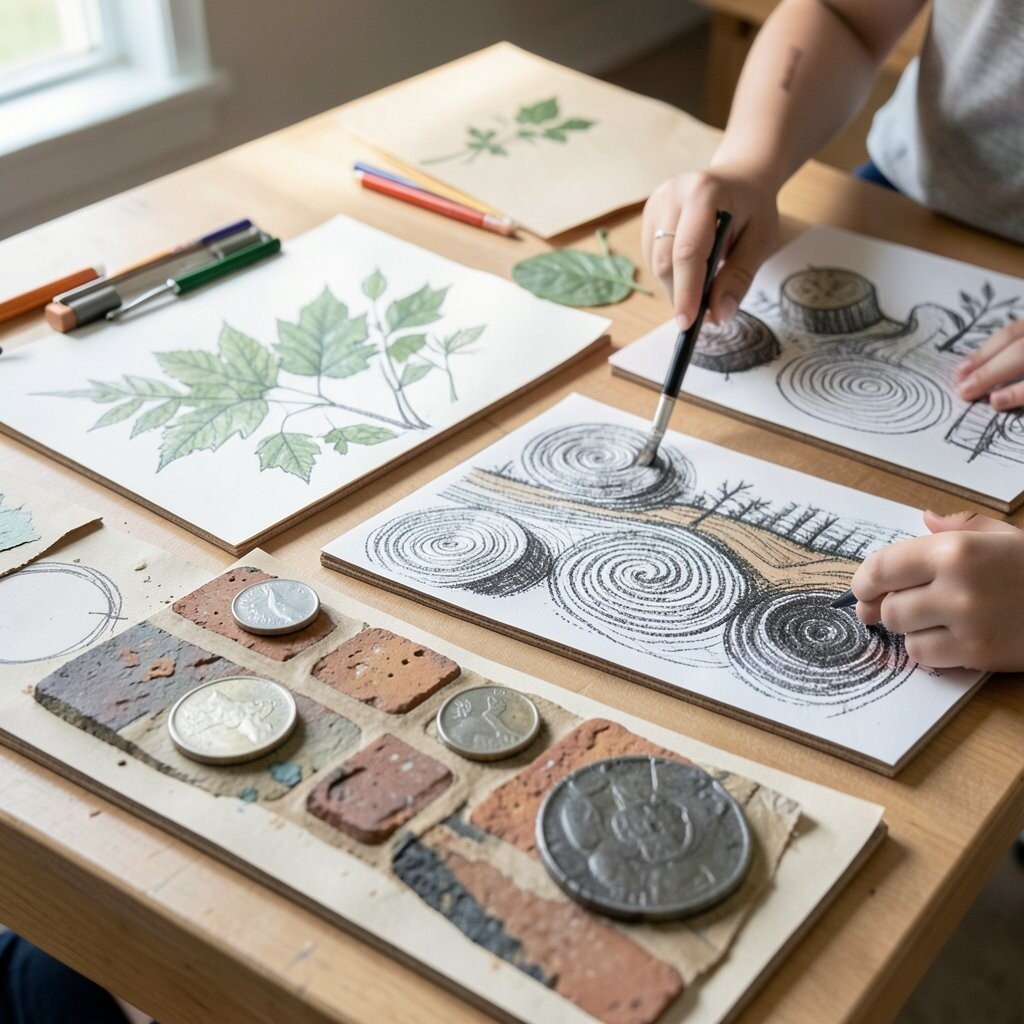
Students make prints by rubbing paper over leaves, bricks, coins, and textured wood. The results look like mini landscapes of pattern, with swirls and lines popping clearly.
This idea helps students notice the world around them and practice fine motor control. It is unique because the “subject” is something everyday, and the artwork becomes a record of texture. For practical tips, provide different paper types and stable clipboards so students can keep pressure even.
7. Clay Nameplates with Personal Symbols
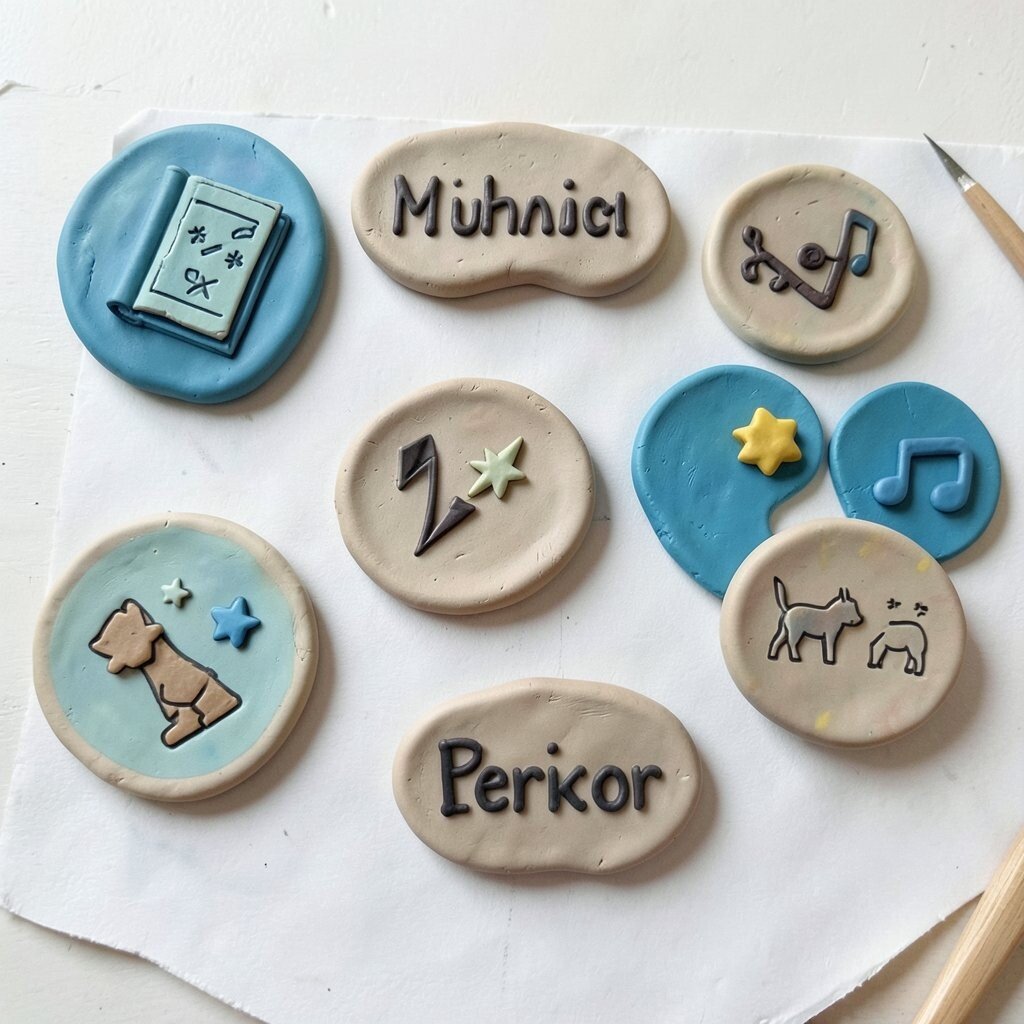
Students shape clay nameplates and add their initials using stamps, coils, or impressed textures. When the pieces are glazed or painted, each nameplate looks like a wearable moment of pride.
The exhibit benefits from being interactive since visitors can search for their own names or classmates’ symbols. This project feels unique because students add personal icons like stars, animals, or favorite hobbies. Keep it practical by choosing simple shapes and allowing a set curing timeline so pieces don’t stall at the last minute.
For personalization, ask students to include one small symbol that represents how they learn best, like a book, lightning bolt, or musical note. Costs depend on your clay choice, but air-dry clay and basic paint keep it manageable. Many schools also enjoy tactile art lately because it stands out against flat drawings on typical walls.
8. Paper Weaving Patterns Inspired by Neighborhoods
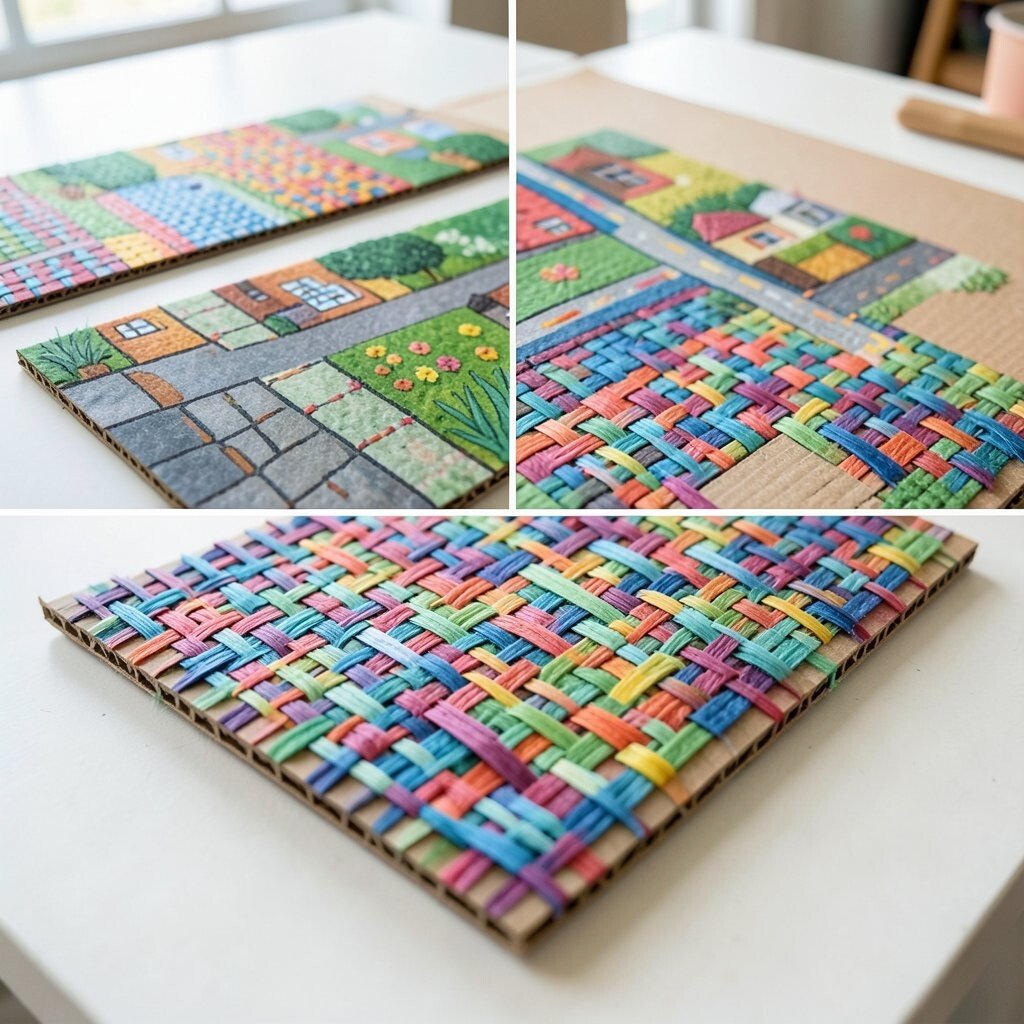
Students design woven panels using colored strips and then integrate patterns that remind them of their neighborhood. Up close, the artwork looks neat, rhythmic, and almost like fabric art.
This builds patience and planning because weaving requires careful over-under choices. It is unique since the patterns can reflect real places, like sidewalks, gardens, or even bus routes. Use sturdy cardboard looms or guided templates, and give students a clean cutting area so the strips stay even.
9. Mixed-Up Museum of “Found” Objects
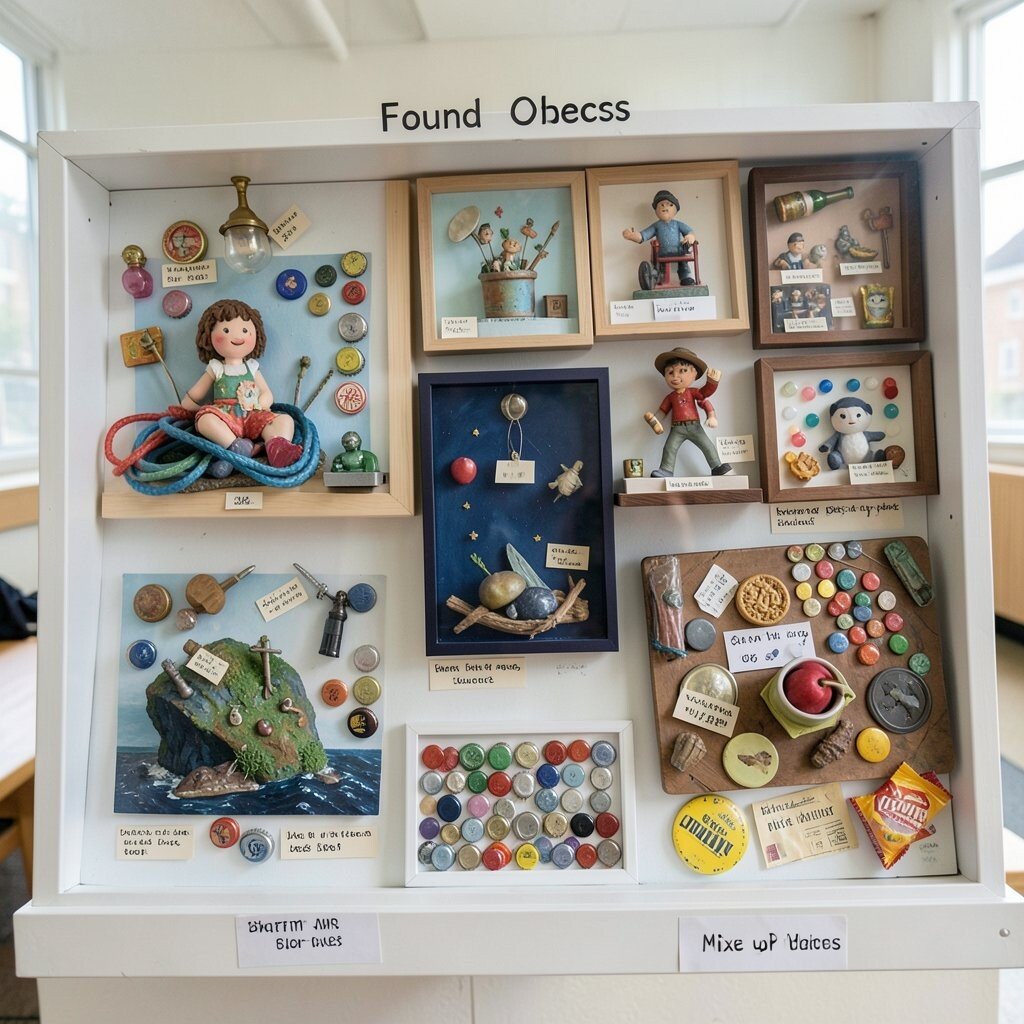
Students bring in safe everyday items like bottle caps, buttons, and paper labels and arrange them into mini sculptures. The display looks like a tiny museum where ordinary objects become characters.
This format supports creativity because students must think like curators and designers, not just makers. It is unique since each arrangement has a different theme, like “ocean gear” or “space snack.” For practical tips, give a tray or shadow-box frame for each display and set a clear size limit so it stays tidy.
Students can personalize by writing a title and a few words about what the objects “do,” such as a pretend machine or a friendly creature. Cost stays low when the class uses shared collections and small glue dots. Current trends in maker culture and upcycling make this idea feel timely and exciting for families.
10. Watercolor Resist with Secret Messages
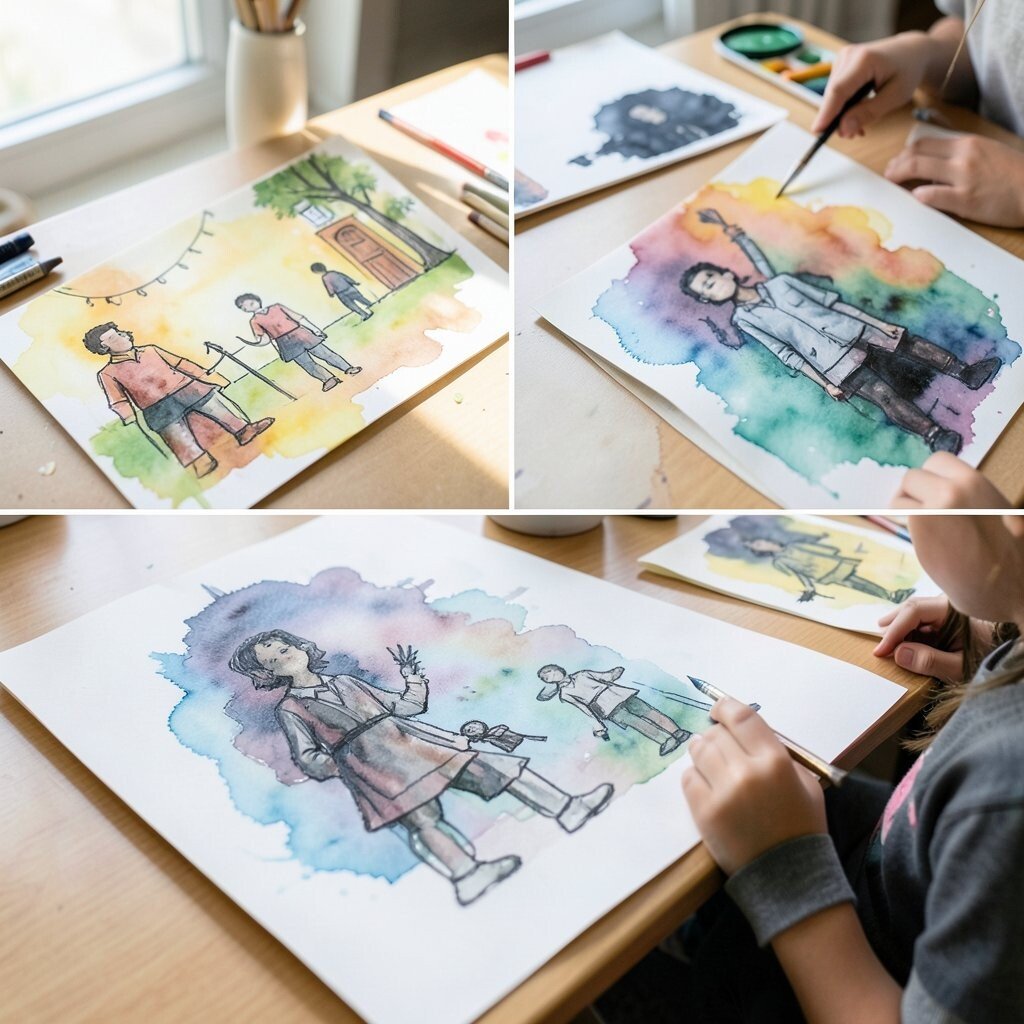
Students paint backgrounds with watercolor and then use resist techniques like crayon or wax to hide pictures. When visitors tilt the paper under light, the “secrets” feel like they are waiting.
This benefits students by teaching them about materials and how they interact, like wax repelling water. It feels unique because the hidden elements create a reveal moment that keeps people curious. For practical tips, practice one sample sheet so students learn which tools work best and how to avoid muddy colors.
11. Stop-Motion Art Clubs on Display Walls
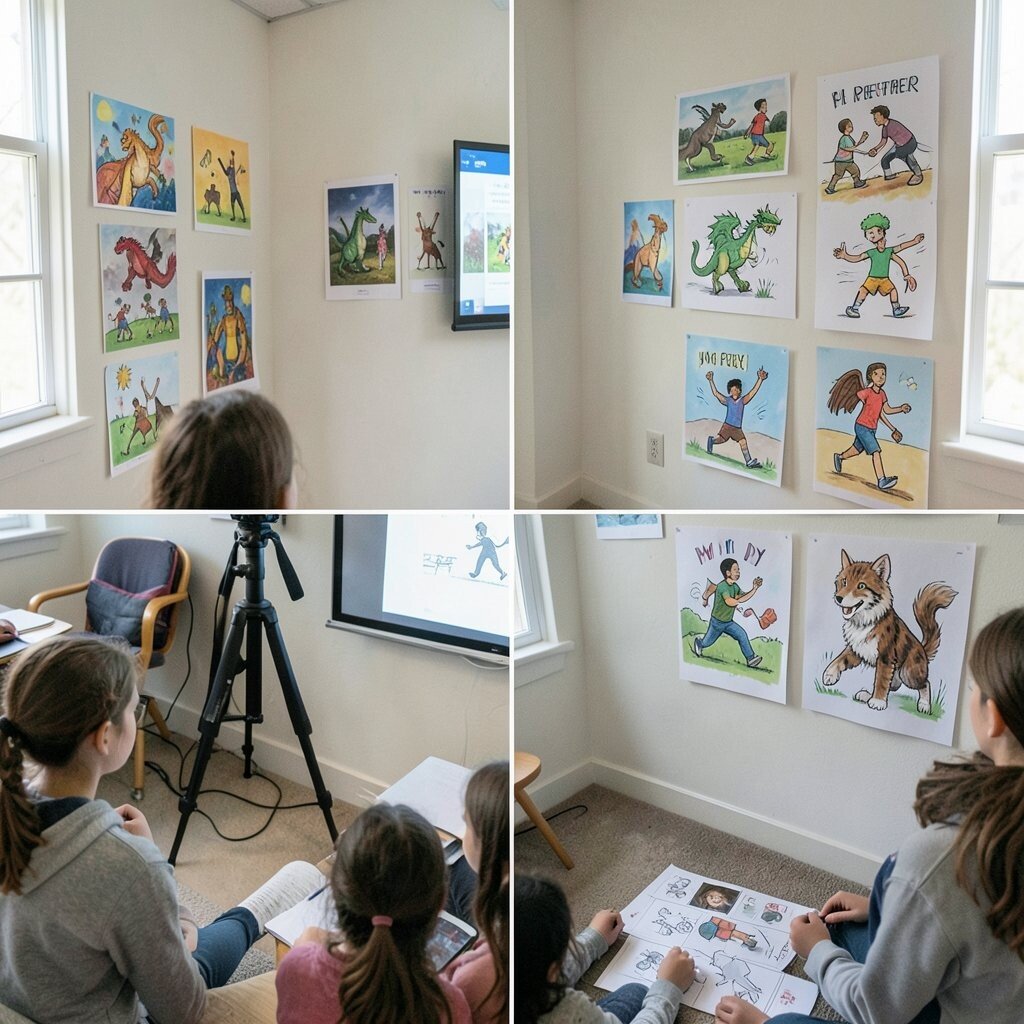
Students build simple paper cutouts and take photos to create stop-motion animations. The exhibit can show a sequence on a screen or print still frames that look like a story in motion.
This project has strong benefits because students practice planning, timing, and teamwork while learning basic digital skills. It is unique since visitors see art that moves, not just art on paper. Keep it practical by using a single phone tripod, fixed background, and a short loop like a character walking across the page.
For personalization, let students choose a favorite theme such as dragons, sports celebrations, or “my pet’s day.” Costs can stay near zero if you use school devices already available, and you can print storyboards on regular paper. Many schools see interest in short animations right now, especially because families love interactive visuals.
12. Storybook Cover Design Showcase
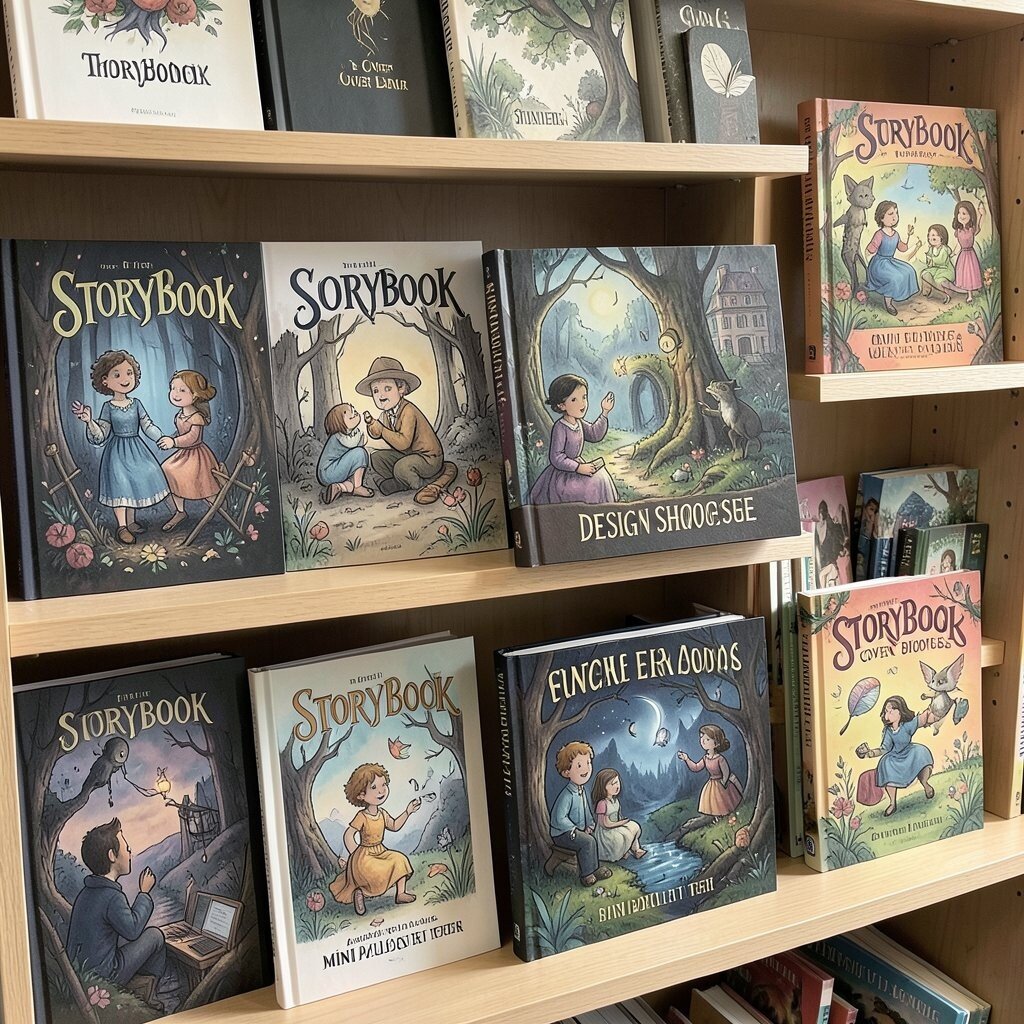
Students create book covers for imaginary stories, using drawing, collage, and typography. The exhibit looks like a real shelf, with bold titles and eye-catching images.
This benefits students because it connects art with literacy, making reading feel visual and fun. It is unique since every cover has its own style, from spooky to silly, and the class becomes a mini publishing team. For practical tips, teach simple layout rules like big title placement and clear image contrast so designs read from a distance.
13. Mandala Workshops with Shared Color Codes
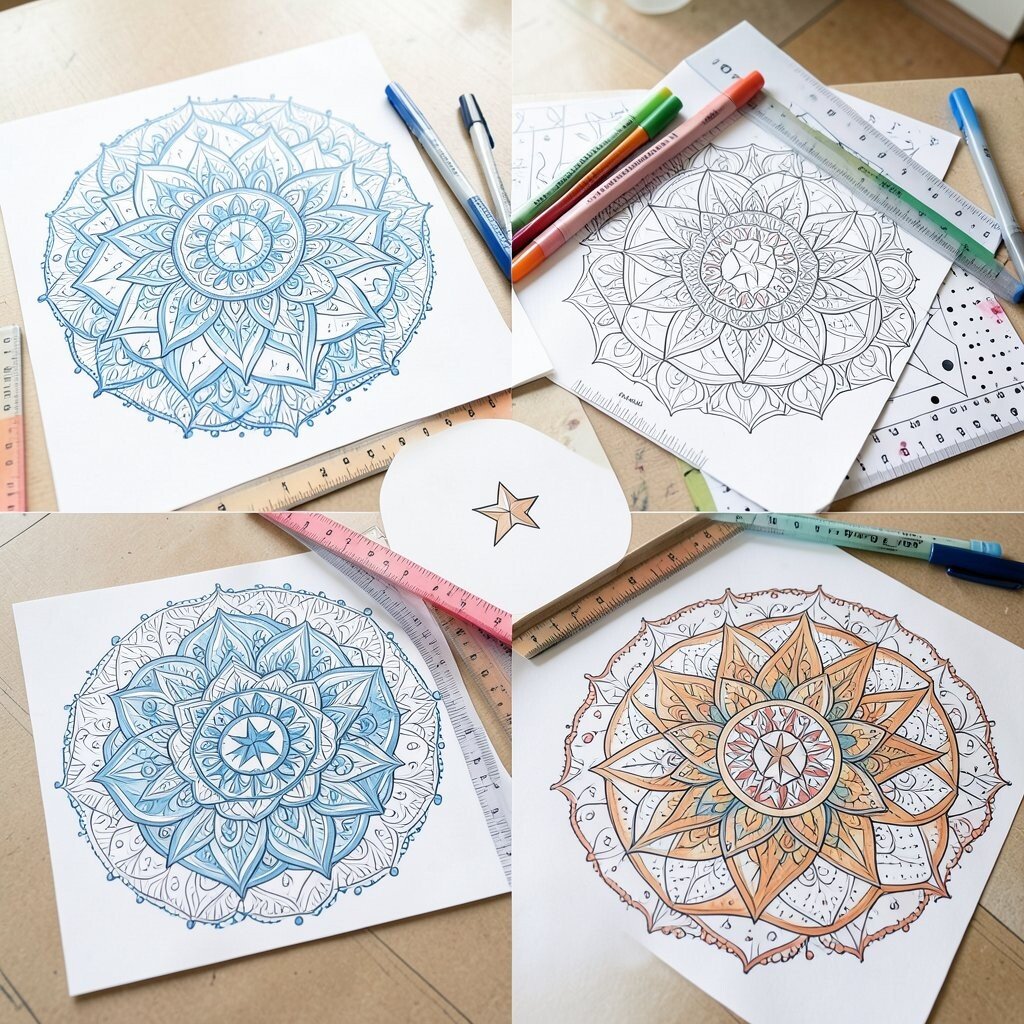
Students design mandalas centered around one theme word, such as “calm,” “courage,” or “curiosity.” The artwork looks balanced and detailed, with repeated patterns that invite slow looking.
This project supports benefits for focus and self-control because students create step-by-step symmetry. It is unique when you add a class color code, like using blue shades for ocean symbols and warm tones for confidence moments. Provide rulers for circles, set up dot markers or pre-printed guides, and keep paper sizes consistent so the gallery looks cohesive.
For personalization, let students place a small “signature” element in the center that matches their personality, like a star or a tiny heart. Costs are simple because dot markers, fine-tip pens, and paper are usually inexpensive. Current trends also include adult-style coloring aesthetics, which families recognize and enjoy.
14. Collage “Me” Portraits with Magazine Headlines
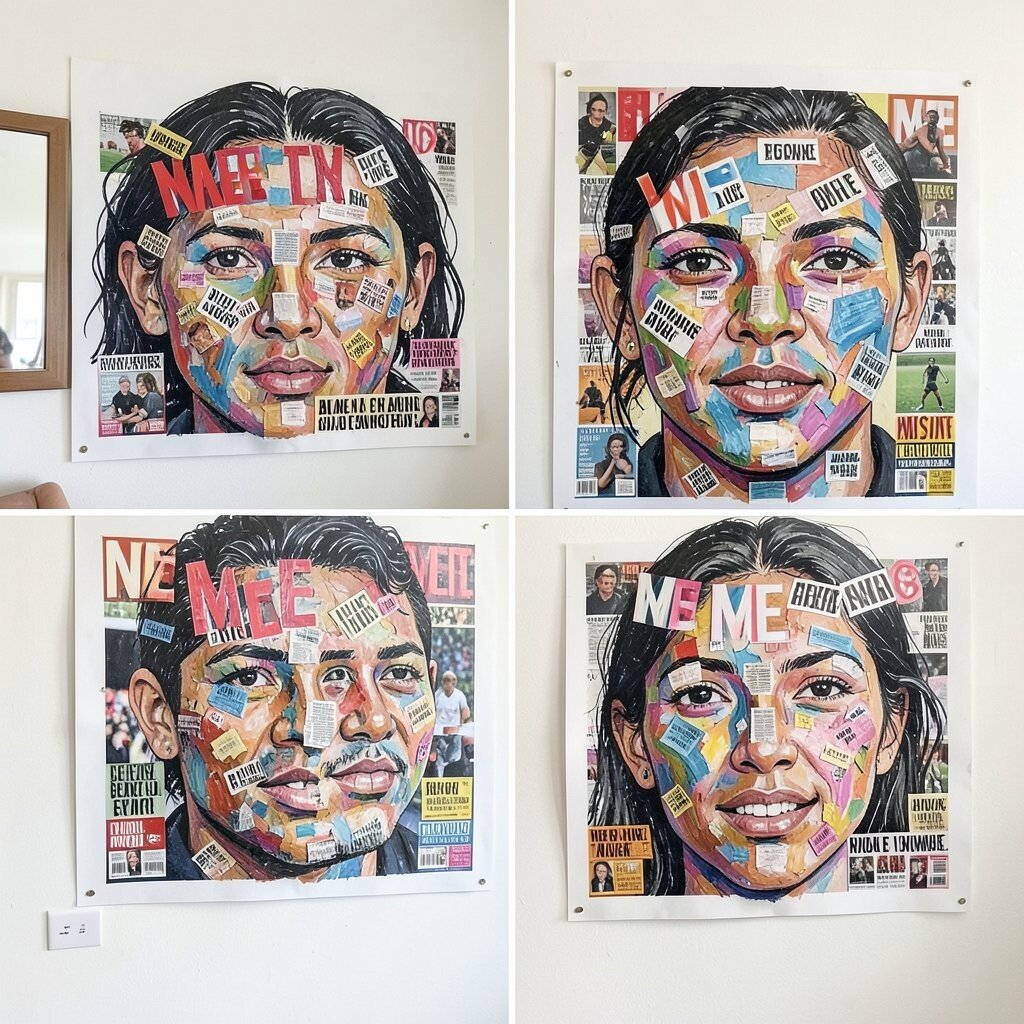
Students build portraits using magazine cutouts and headline snippets that match their interests. From far away, faces appear bold, and up close, visitors can spot words that tell a personal message.
This benefits students because it encourages text and image connection, supporting both creativity and language skills. It is unique since each student’s collage is shaped by the specific words they choose, which means the exhibit naturally varies. For practical tips, give a limited set of categories like sports, food, art, and music so students avoid running out of materials too fast.
15. Architectural Dreams with Cardboard Models
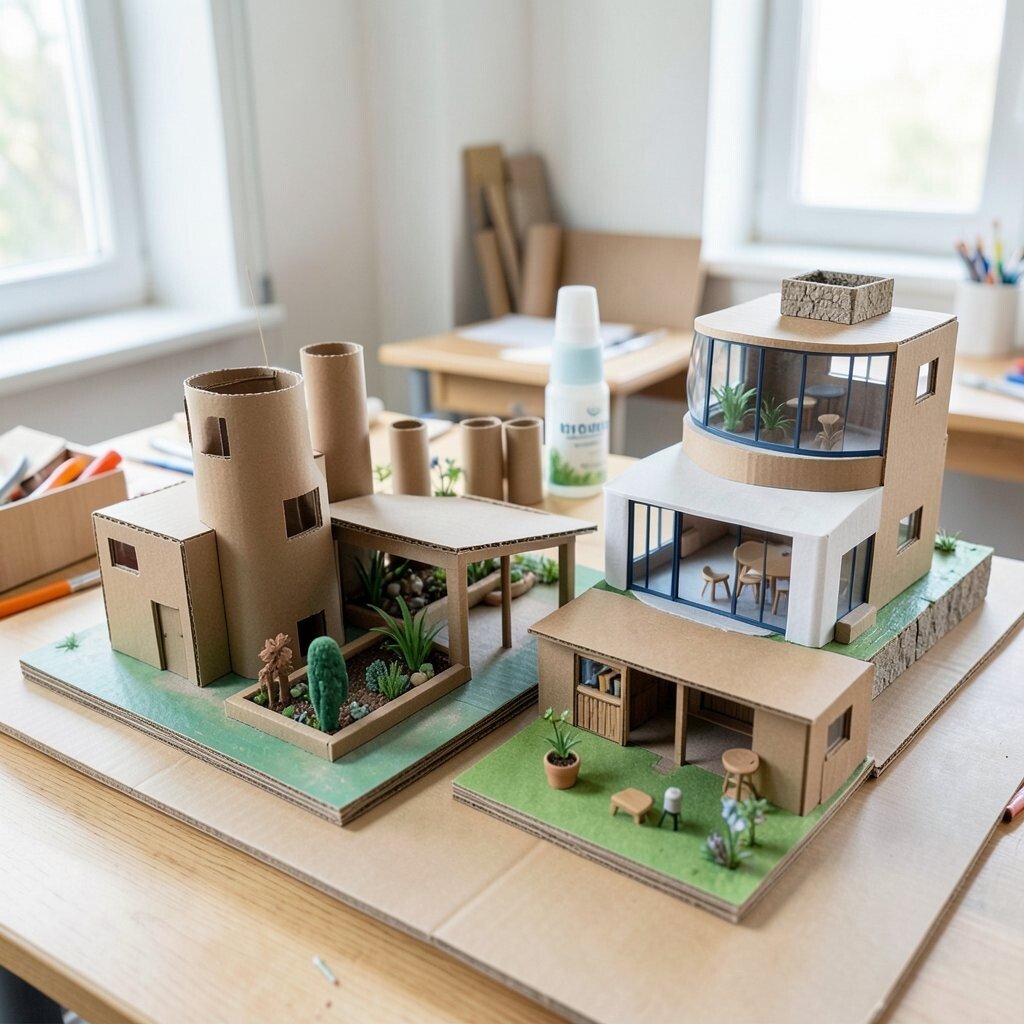
Students design dream buildings with cardboard, paper tubes, and safe craft tools. The models look dimensional, with windows, bridges, and texture details you can almost touch.
This project has benefits because it teaches structure and design thinking while still allowing wild imagination. It is unique when students use different construction styles, like stacked layers for a castle or smooth curves for a future house. Keep it practical by using pre-cut foam boards or sturdy bases and allowing only a few glue types so things don’t get messy.
For personalization, ask students to include one “community feature” like a garden, library, or park inside their design. Costs can be managed by saving shipping boxes and using scrap cardboard, then adding simple paint for color. Maker-style building ideas stay popular in classrooms because they feel hands-on and real.
16. Kindness Graffiti Wall with Paint Markers
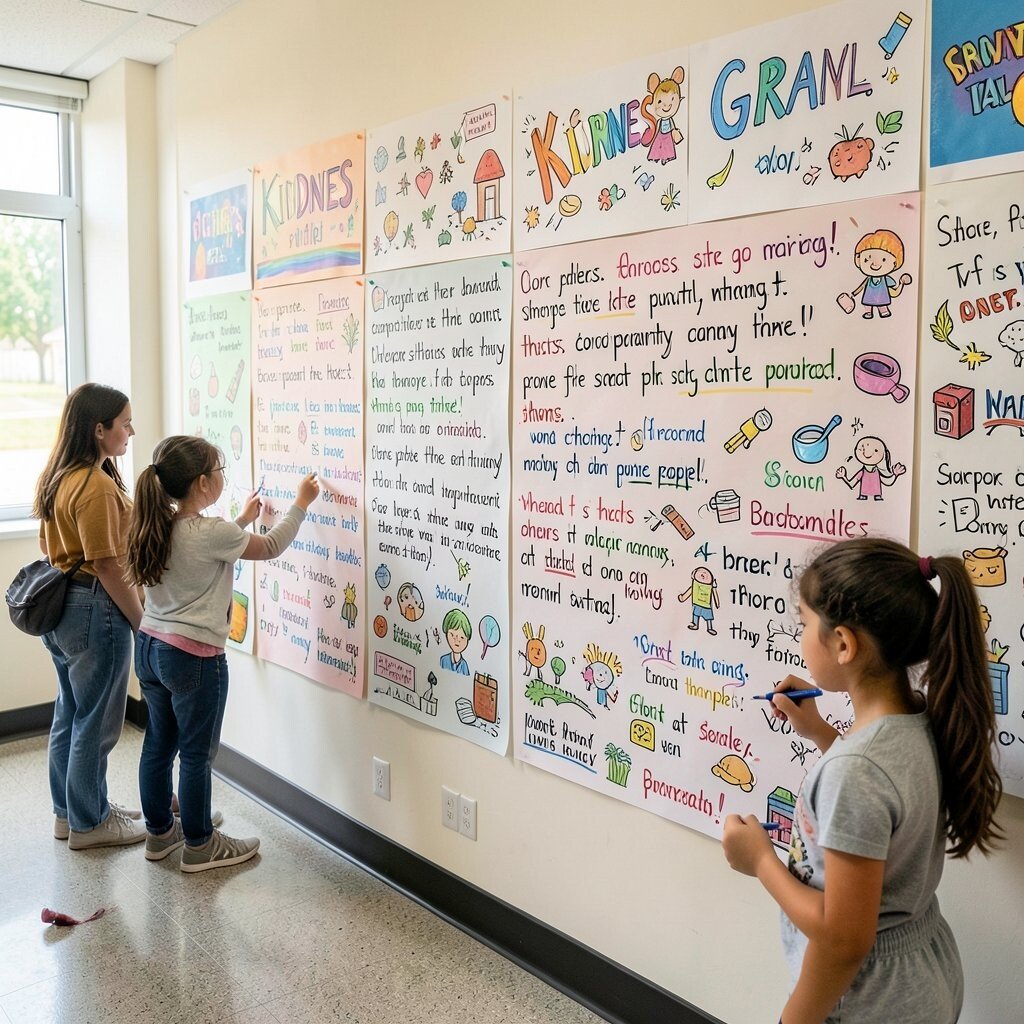
Students write and draw messages that show encouragement and gratitude using paint markers. The wall becomes a bright mix of letters and small doodles that feels warm, not messy.
This benefits students by building a positive community and giving them a safe way to express feelings. It is unique because visitors can read messages like mini notes from different people. For practical setup, use sealed poster board panels or a controlled wall area and remind students to keep lines readable from a few steps away.
17. Science Meets Art: Geology Crayon Resist Stones
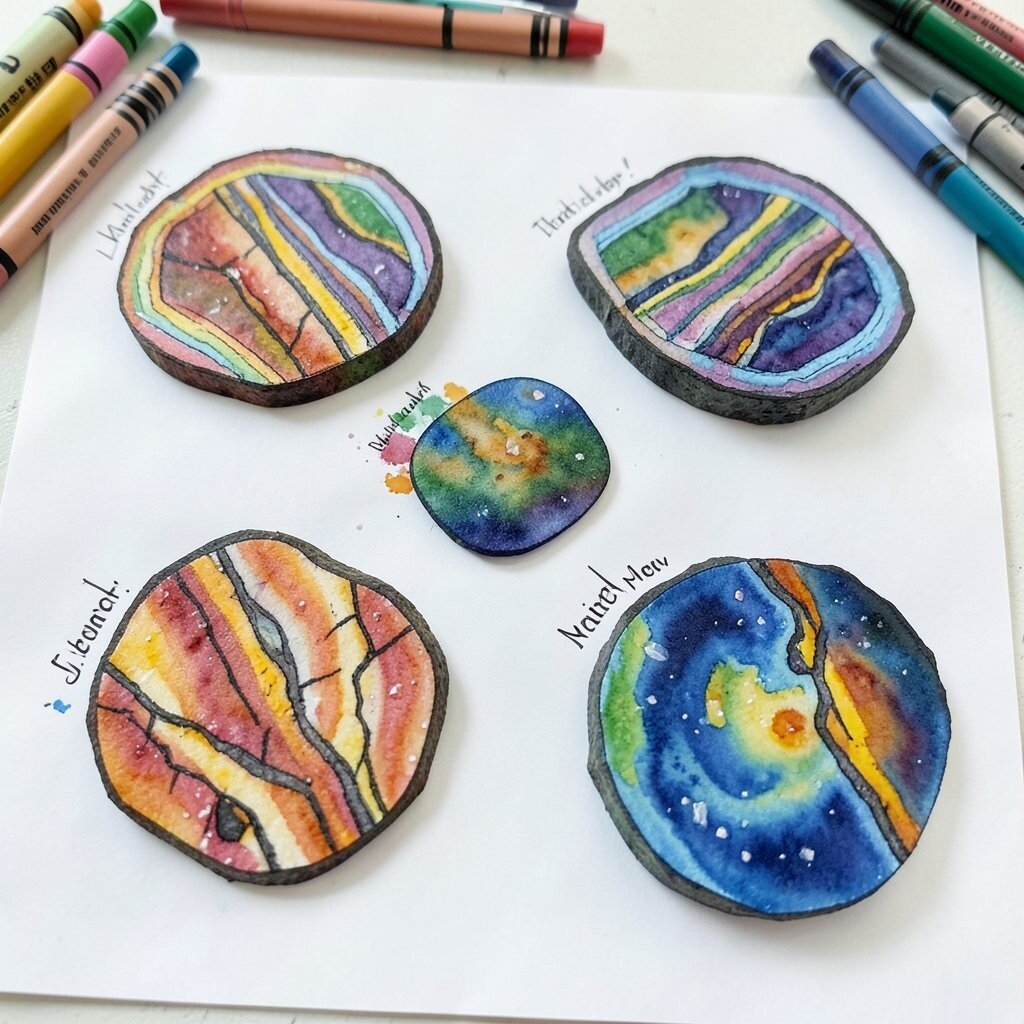
Students create “rock slices” on paper using layered crayons, then add watercolor to reveal striations. The stones look full of veins and patterns like real geology, and they feel elegant even though materials are simple.
This idea has benefits because it supports science vocabulary through visual choices like bands, layers, and minerals. It is unique since the resist effect gives every piece a one-of-a-kind texture. For practical tips, demonstrate how to press evenly and choose watercolors that contrast with the crayon base.
For personalization, encourage students to name their rock as if it were from a fictional planet or local stream. Costs stay low because crayon, watercolor, and paper are common supplies. This kind of art-crossing-learning feels current since many schools want STEAM projects that connect subjects naturally.
18. Fabric Banner Flags for Student Voices
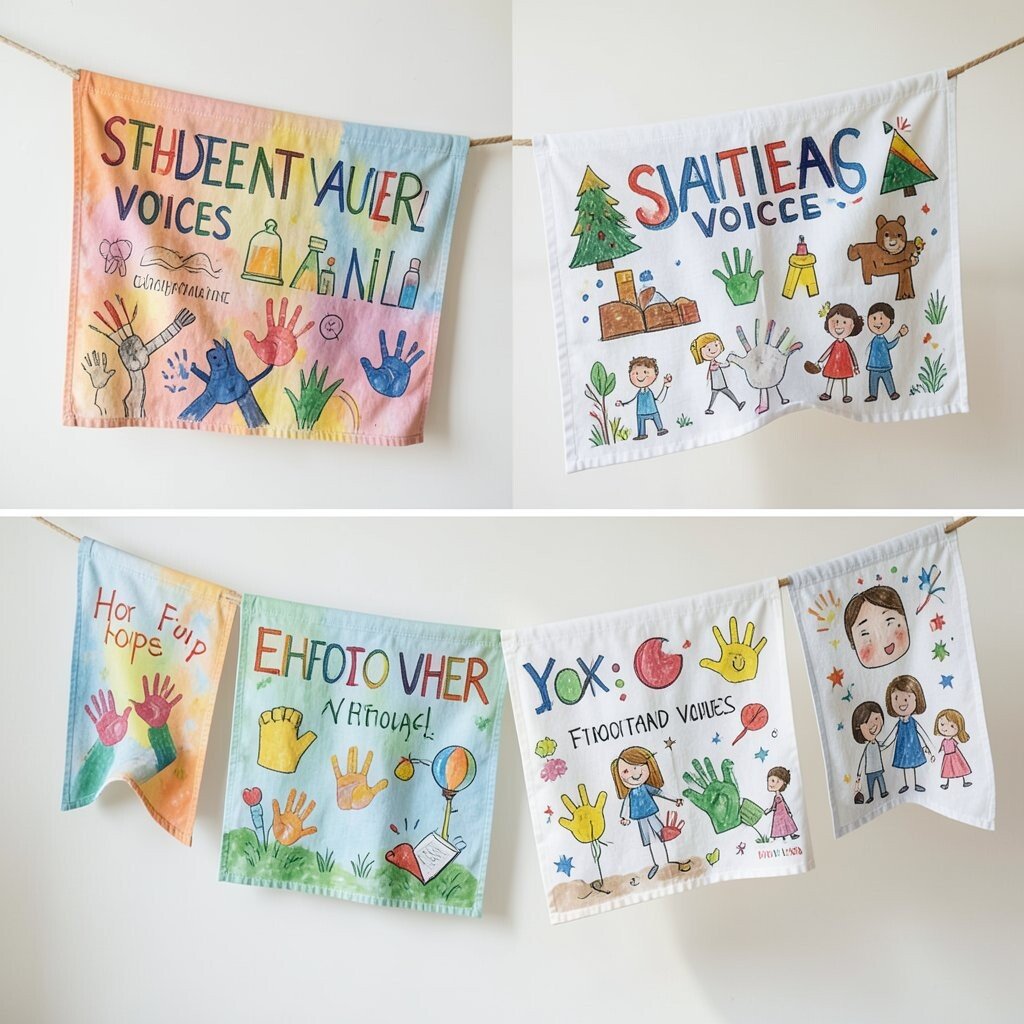
Students design fabric banners that represent hopes, favorite values, or cultural influences. When hung like flags, they sway slightly and look festive, like a celebration made of art.
This format has benefits because fabric art invites softness and personal expression, even for students who don’t like drawing faces. It is unique since the movement and material change how the viewer experiences each design. For practical tips, use washable markers or fabric paint, and choose a simple banner size so hanging stays easy and consistent.
Students can personalize by adding handprints, stitched symbols, or small fabric patches, which creates a rich look without expensive tools. Costs can be controlled by using recycled cloth scraps and donating old white sheets as banner bases. Families often love this because it looks festive and connects to current interest in textile art and community displays.
19. Perspective Street Scenes with Chalk Pastels
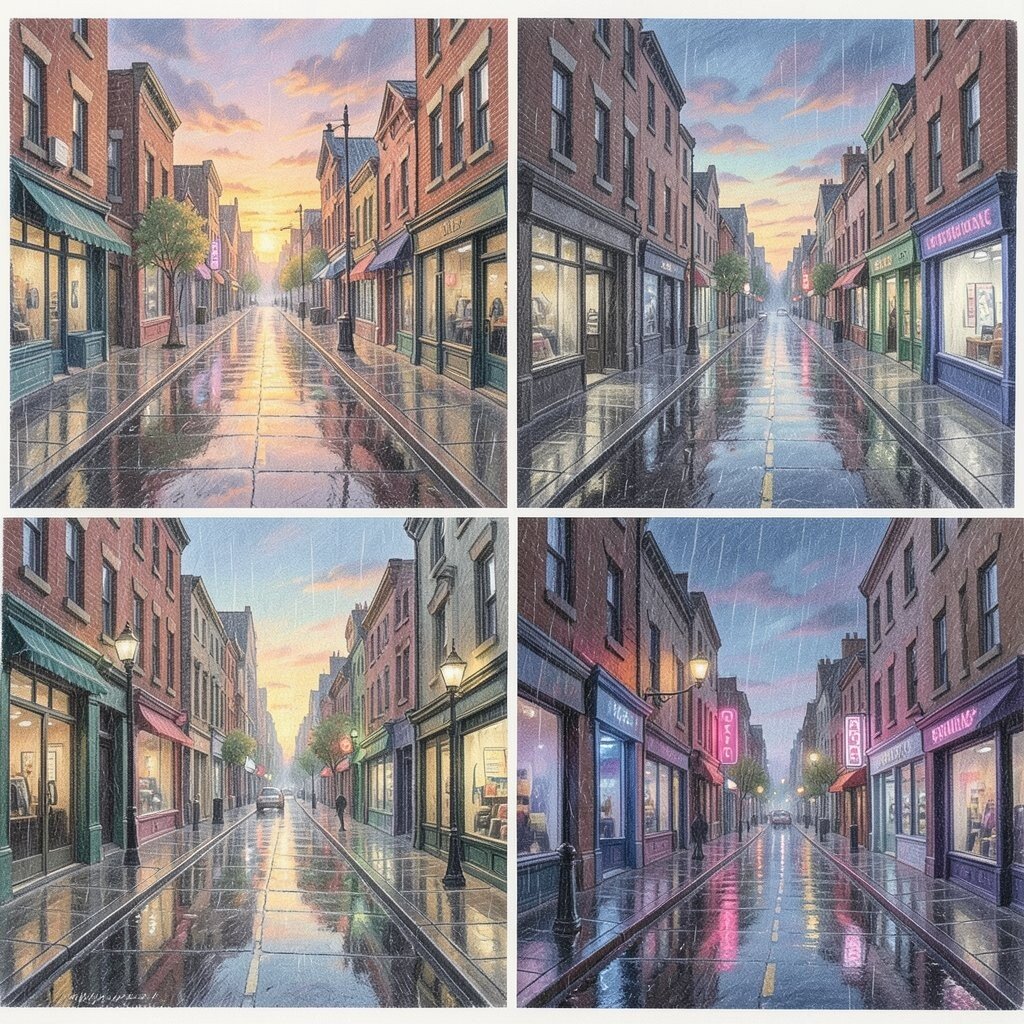
Students draw sidewalks, storefronts, or city corners using one-point perspective rules. The images look like they could continue into real space, with roads narrowing toward a vanishing point.
This project benefits students by building spatial thinking and improving drawing skills through a clear method. It is unique when you let students choose different times of day, like sunrise, rain night, or neon evening, so the hallway becomes a whole town. For practical tips, test chalk pastel blending on scrap paper and protect finished pieces with gentle fixative or display covers.
20. Interactive Gallery Walk with “Choose Your Path” Prompts
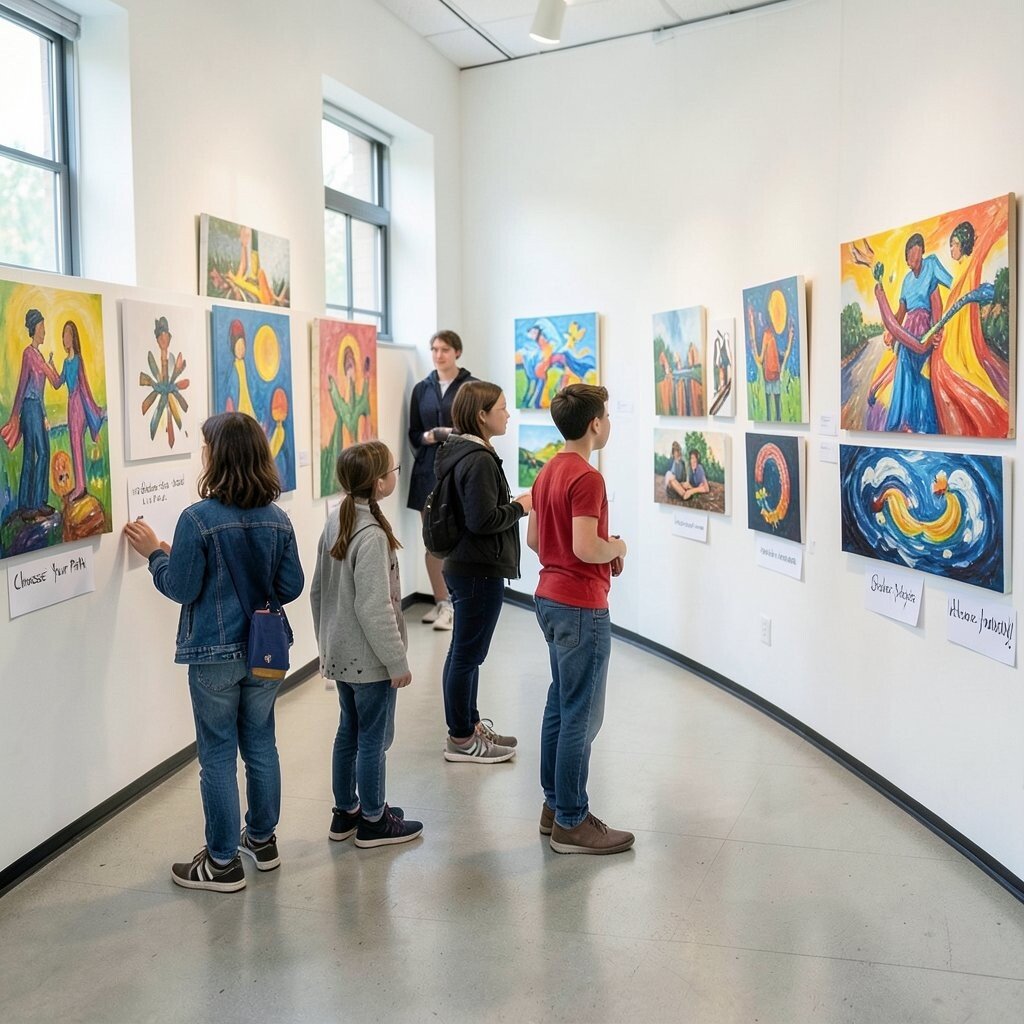
Students create artworks paired with viewer prompts that guide people to look closer, pick a detail, and imagine a story. The gallery feels like an adventure because visitors can choose where to focus next.
This provides benefits by turning the exhibit into a shared experience, not a quiet viewing only. It is unique since the prompts can be humorous, emotional, or curious, and each visitor creates their own trail through the room. Keep it practical by printing prompt cards for each piece and placing them at consistent eye level so families can move smoothly.
For personalization, let students write prompts based on their own artwork choices, like why a color was chosen or what object was hidden. Costs are mostly printing supplies, which helps keep the project budget-friendly. Current trends in interactive museums and audience participation make this idea especially appealing to modern school communities.