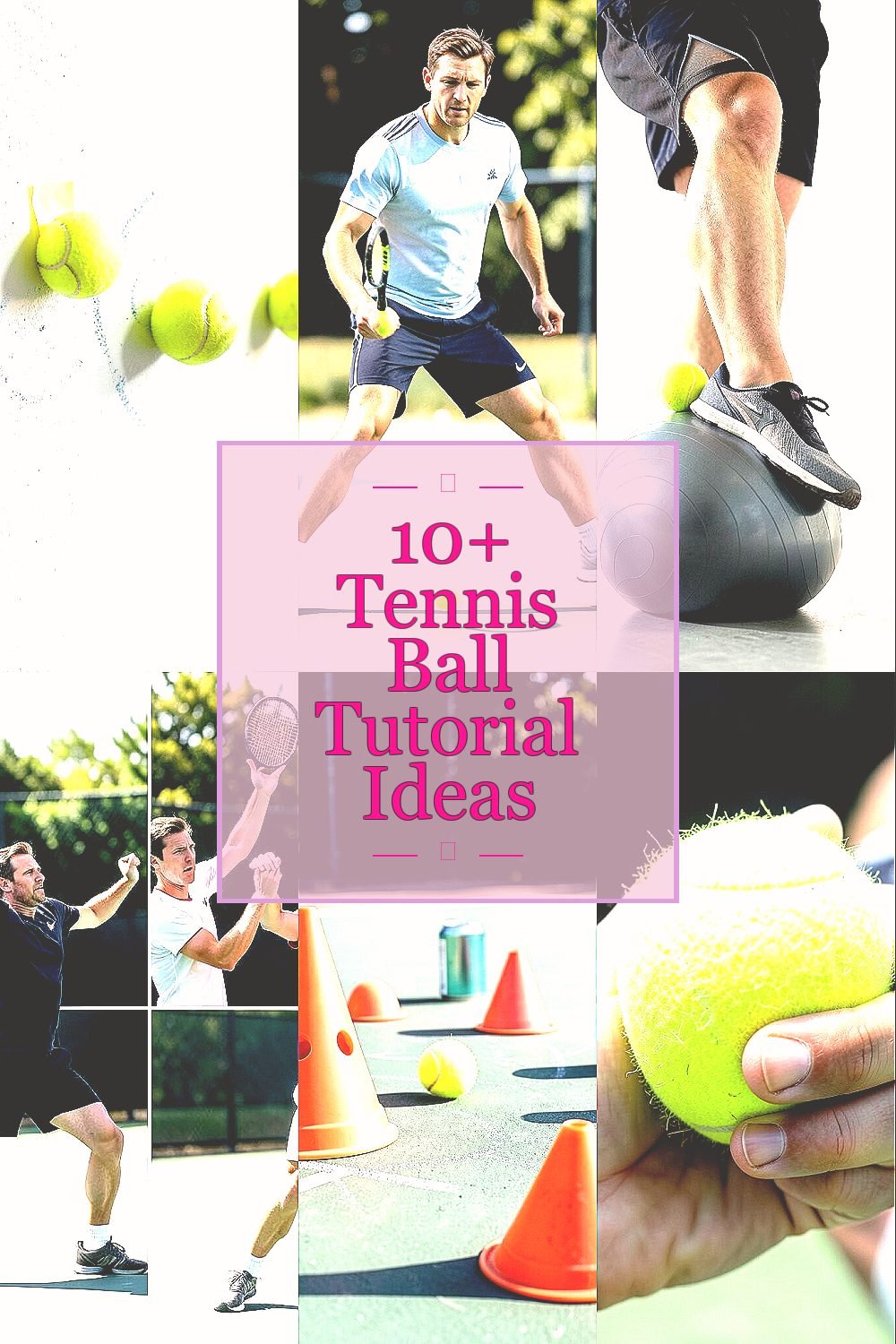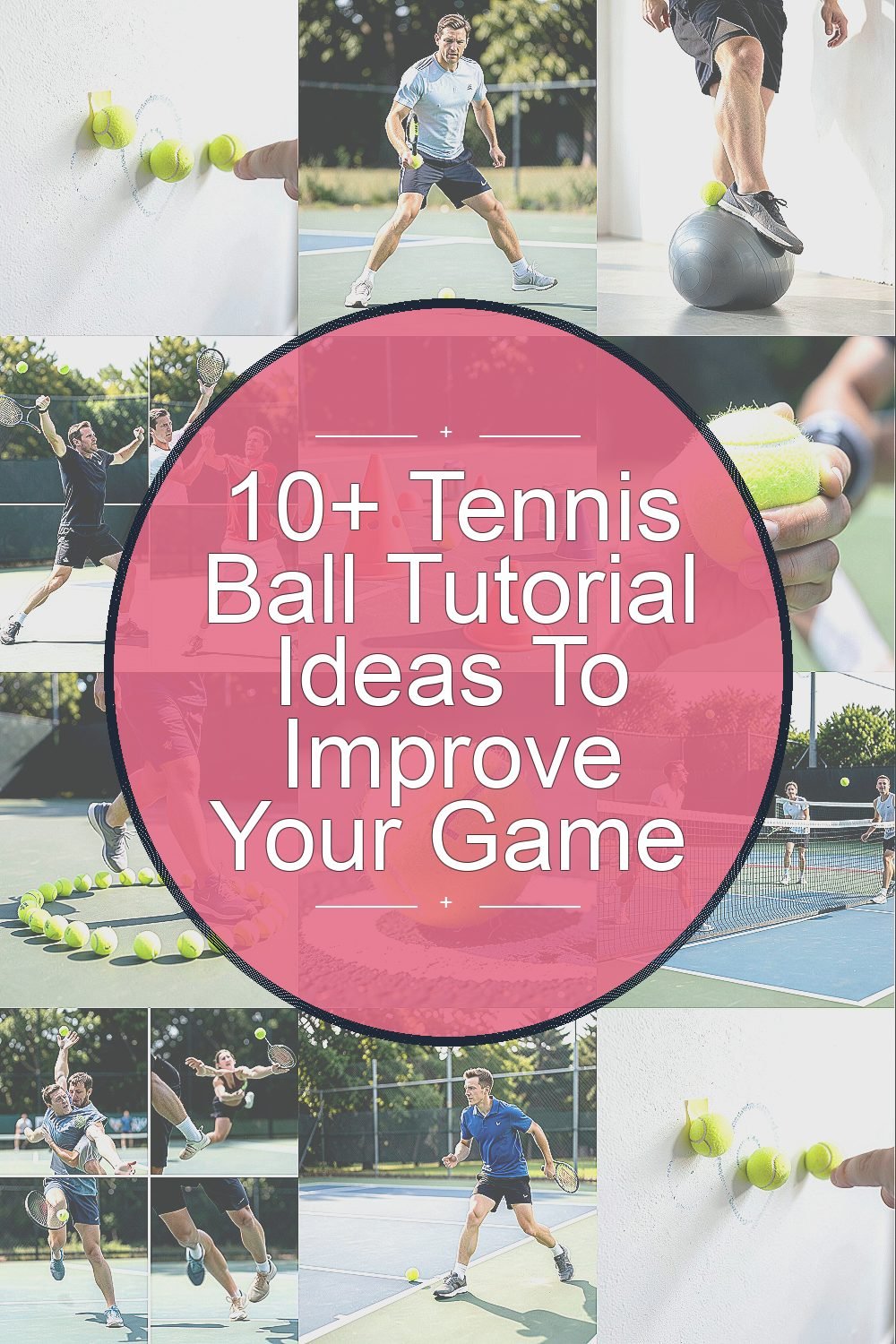
Tennis balls can be used in simple ways to help you work on your game at home or on court. These ideas can help you build better touch, timing, and control with tools that are easy to find.
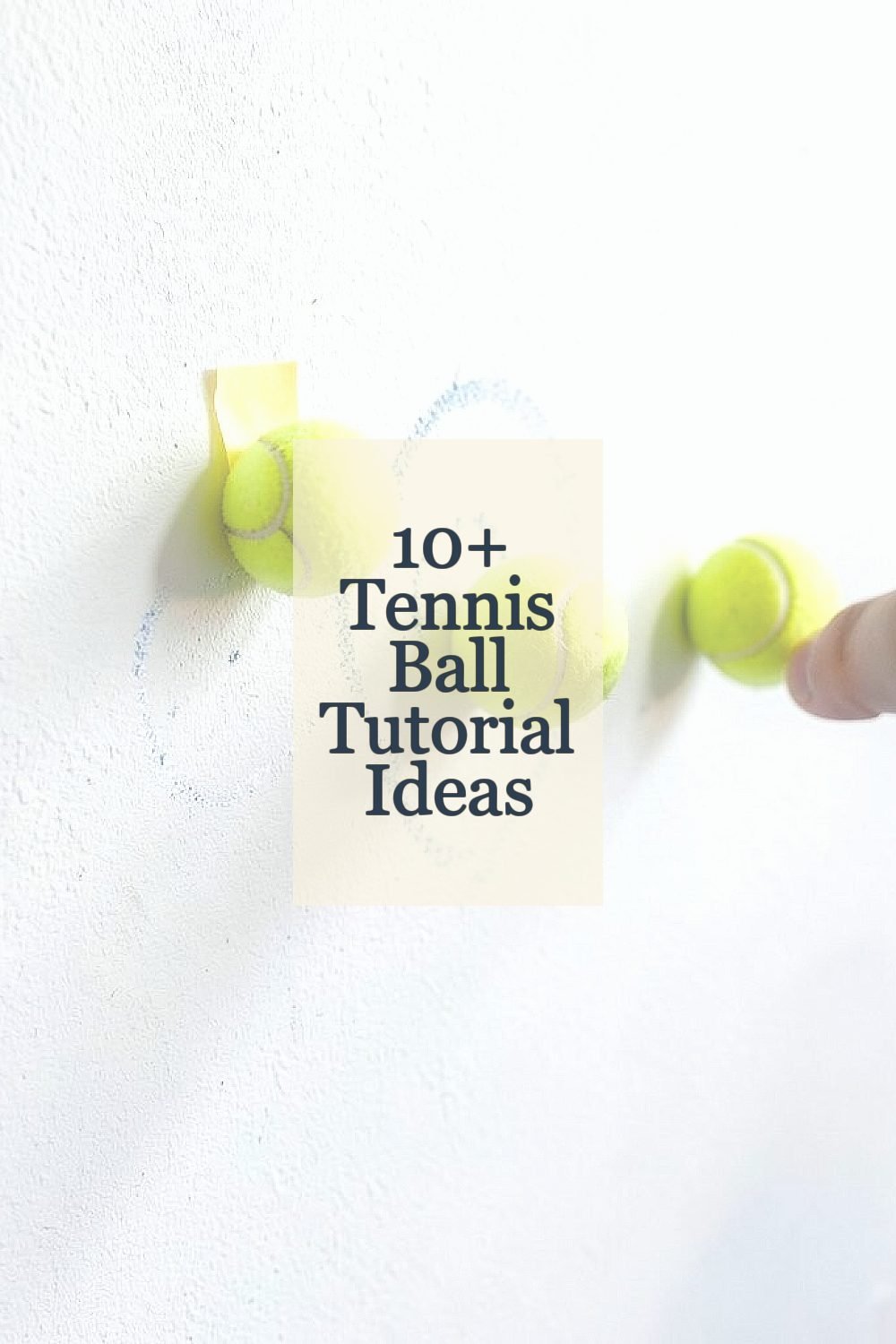
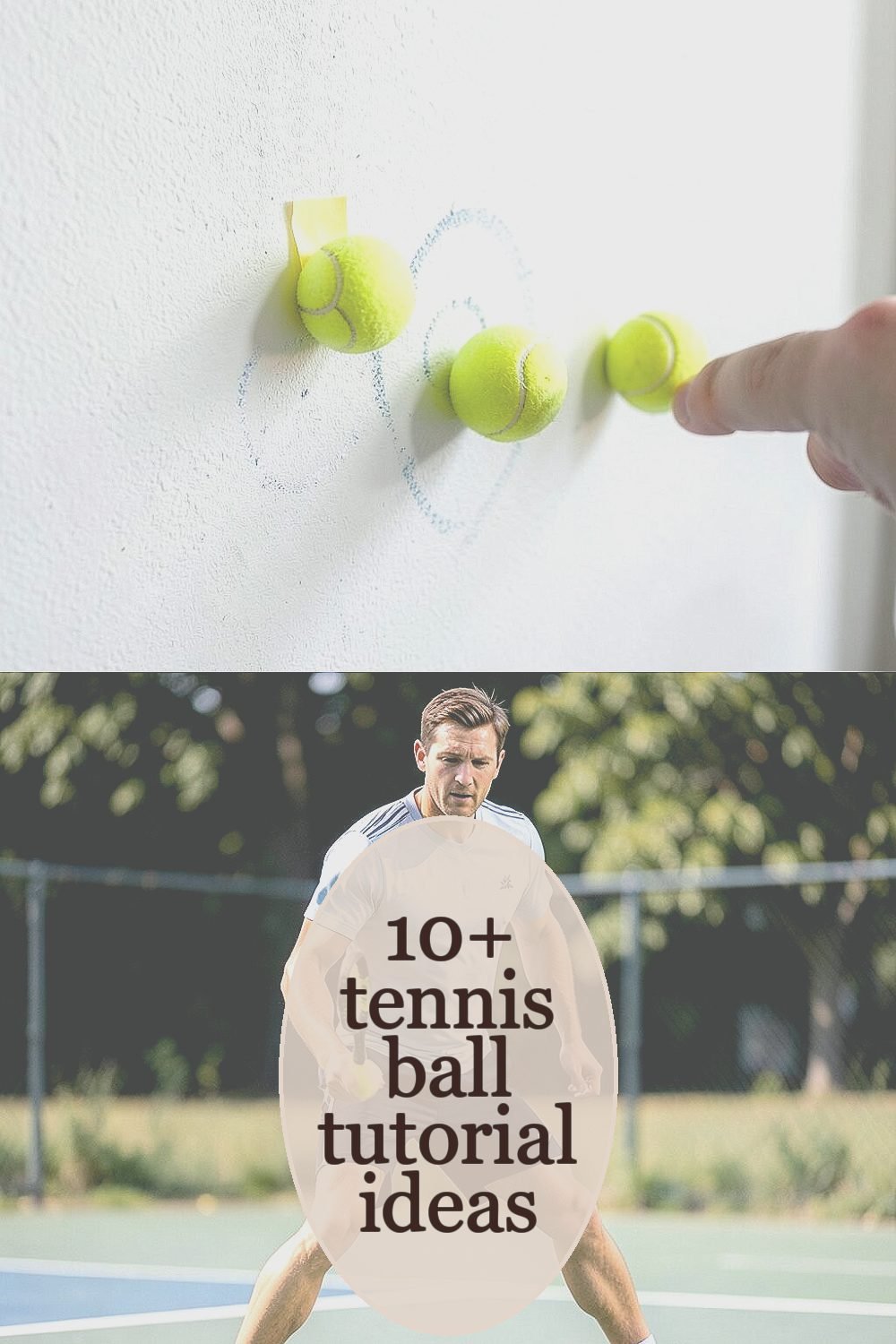
1. Wall Rally Target Drill

This drill uses a plain wall, a few tennis balls, and some tape or chalk to make small target spots. The setup looks simple, but it gives you a clear way to work on aim, pace, and steady contact.
Hit the ball at the target spot over and over, and try to keep your swing smooth. This helps your eyes, hands, and feet work together, and it is a low-cost way to practice almost anywhere.
2. Tennis Ball Drop and Catch Drill

Hold one tennis ball at waist height and drop it to the ground, then catch it after one bounce. The bright yellow ball is easy to see, and the short bounce makes this drill feel light and quick.
This idea helps with hand-eye control and quick feet, which are useful in real points. You can make it easier by standing still or harder by moving side to side before each catch.
3. Balance Ball Under Foot Drill
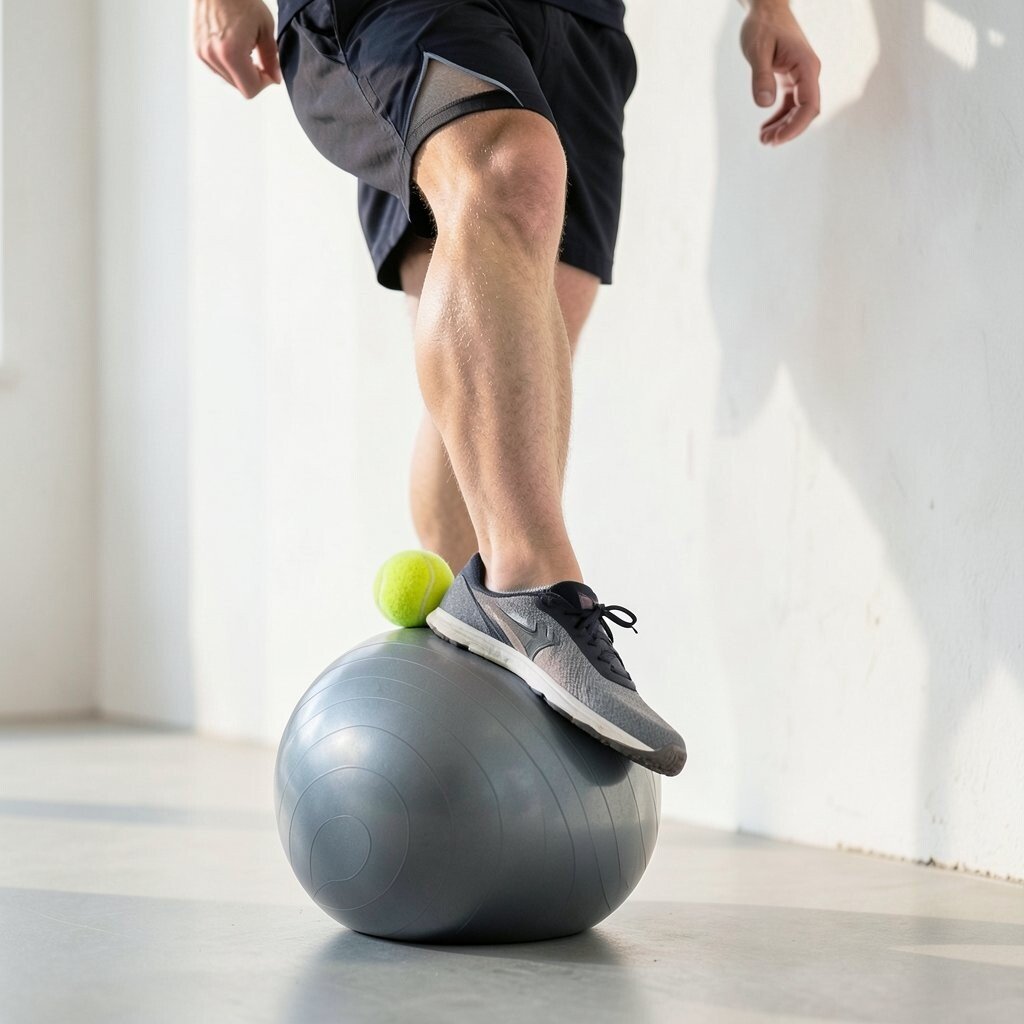
Place a tennis ball under one foot and try to stay steady while you keep your balance. The round shape makes the ball feel a little tricky, so you must use small body moves to stay in control.
This drill can help with ankle strength, body control, and quick recovery after shots. If you want to make it fit your needs, try it near a wall for support or use it as part of a short warm-up.
4. Tennis Ball Toss and Turn Drill

Toss a tennis ball into the air, turn your body, and catch it after one bounce or before it hits the floor. The ball moves fast enough to keep you alert, but not so fast that it feels out of reach.
This drill is good for timing and body control, and it also adds a fun change from normal hitting work. You can make it more personal by using your forehand side first, then your backhand side, and then mixing both.
5. Cone Aim With Tennis Balls
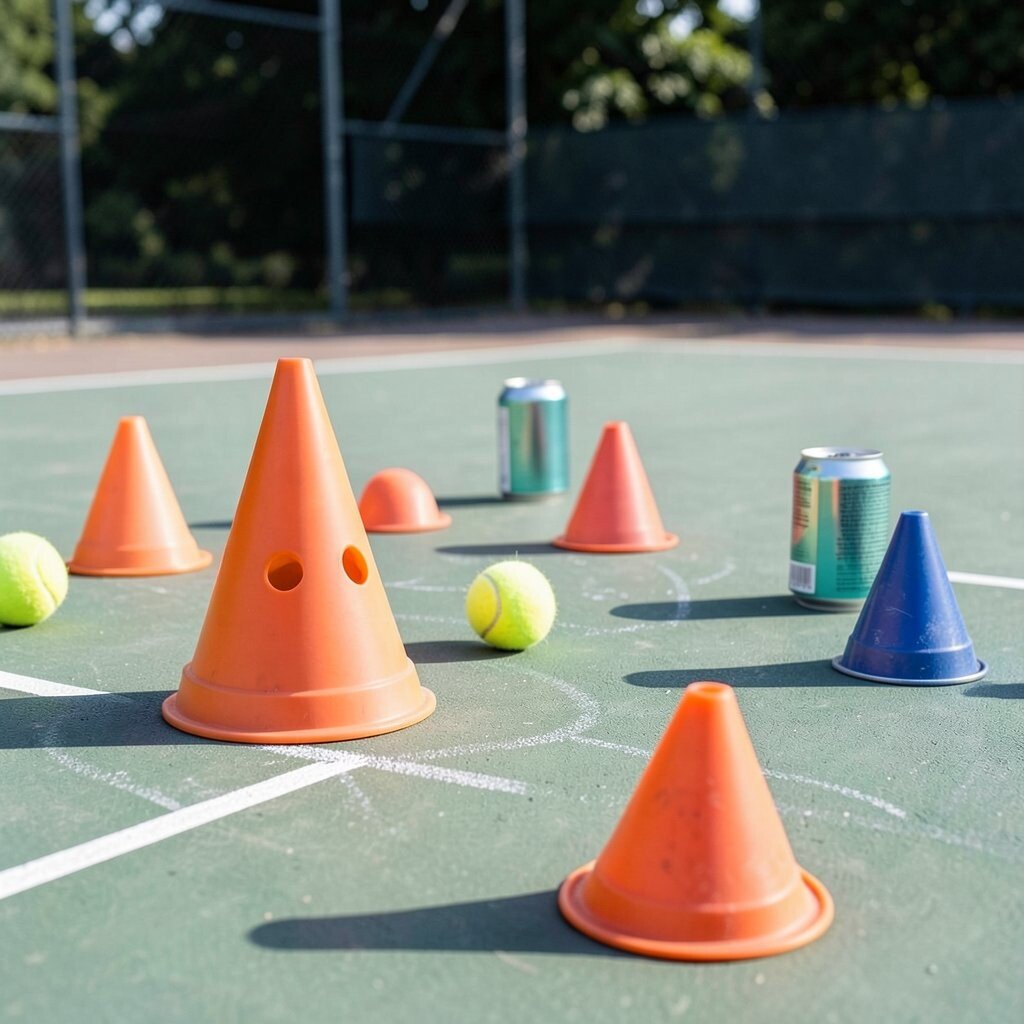
Set up cones, cans, or other safe items as targets and try to roll or hit tennis balls toward them. The bright ball stands out well on most court surfaces, which makes it easy to track where it goes.
This kind of target work helps you aim better and keeps practice focused. It is also cheap because you can use old cones, bottles, or chalk marks instead of buying special gear.
6. Tennis Ball Squeeze Drill

Hold a tennis ball in your hand and squeeze it for short sets, then relax and repeat. The fuzzy outer layer and firm shape make it a simple tool for hand strength work.
This drill can help your grip on the racquet, which may make your strokes feel more steady. Many players like to use it during breaks, on the way to practice, or while watching a match at home.
7. Footwork Circle Drill
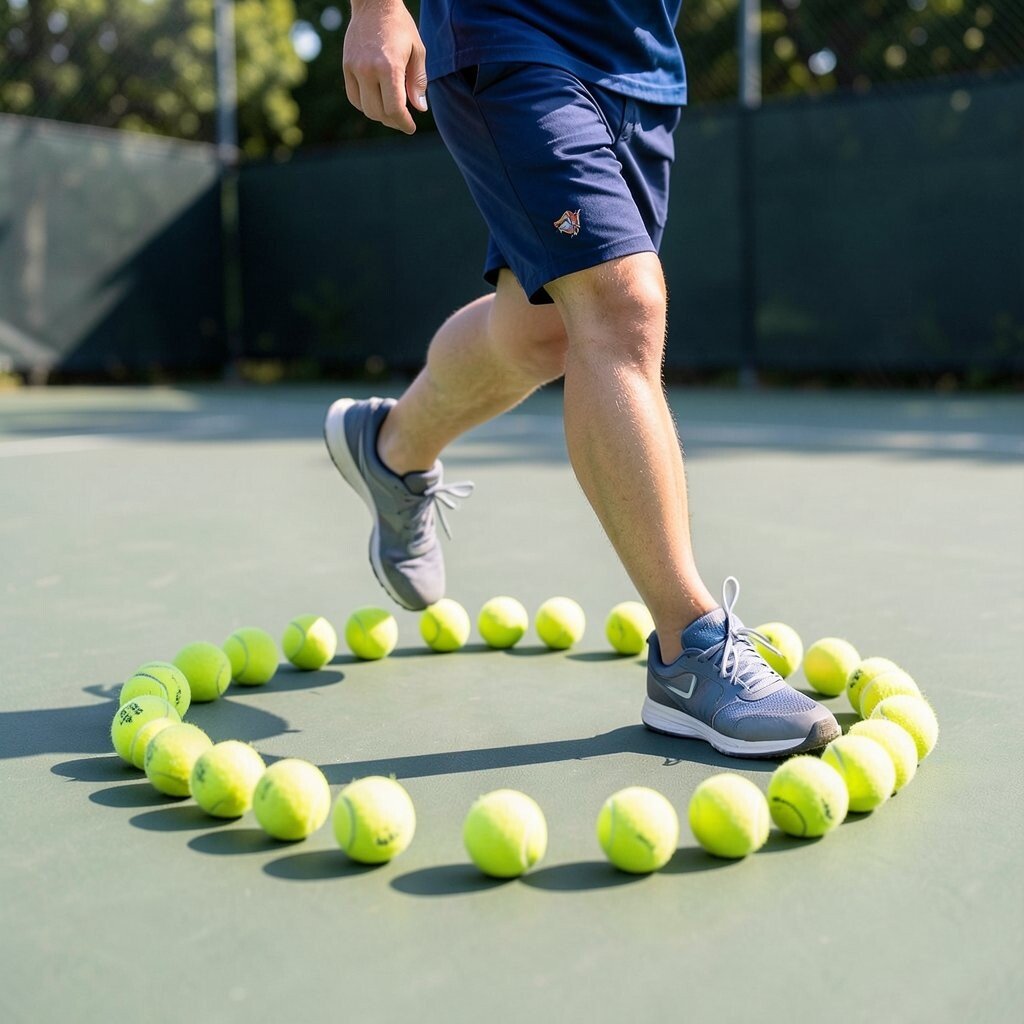
Place tennis balls in a small circle on the ground and move your feet around them in quick steps. The balls make a clear shape that helps you see where to step, and they do not cost much at all.
This drill can help with balance, speed, and fast changes in direction. You can make the circle bigger or smaller based on your space, skill level, and how hard you want the drill to feel.
8. Spin Control With a Ball Mark
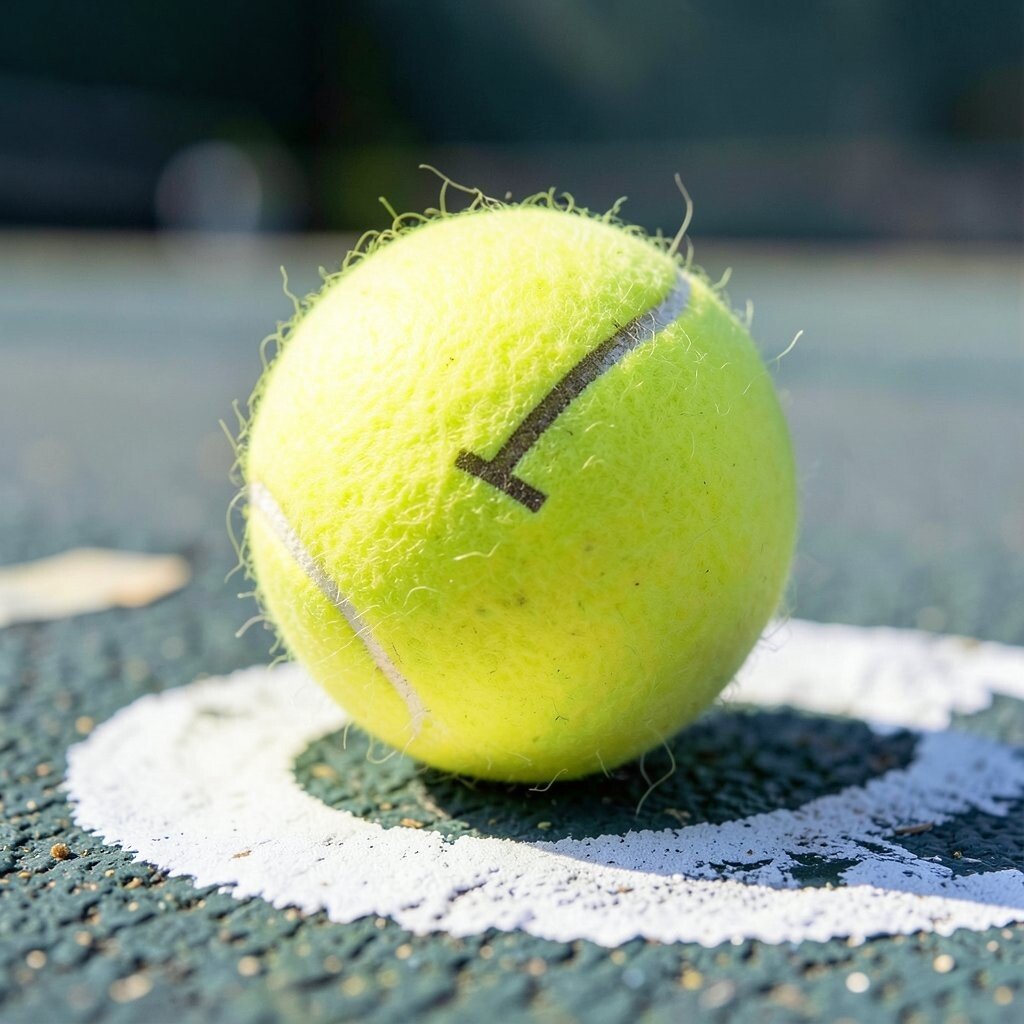
Use a tennis ball with a small line or mark on it so you can see how it spins after contact. The mark gives you a visual clue that makes it easier to learn how your swing changes the ball.
This is helpful for players who want to work on topspin, slice, or flat shots. It is also a nice way to notice trends in your own swing, like if the ball starts to spin more when your wrist stays loose.
9. Net Clearance Toss Drill
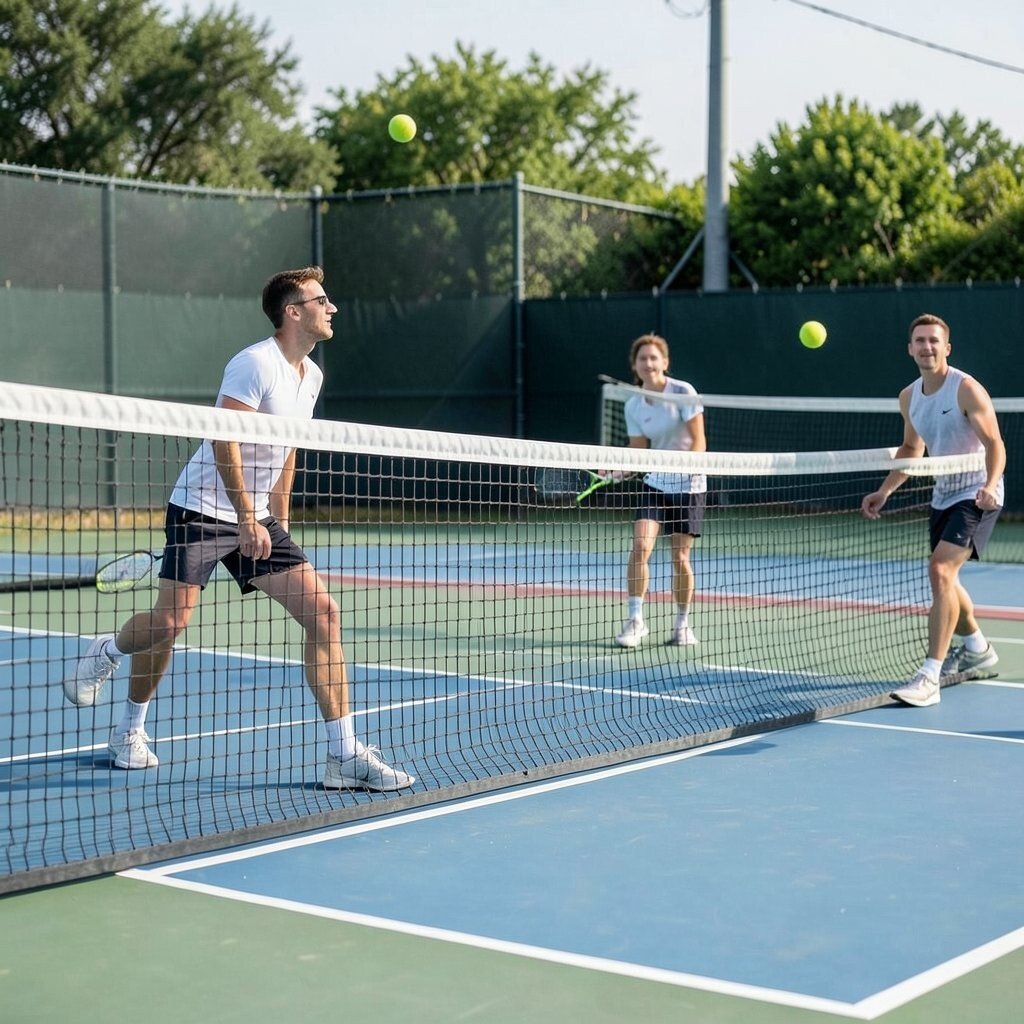
Toss a tennis ball over the net without a racquet and try to send it with the right height and depth. This simple idea gives you a clean view of how the ball travels through the air and lands on the court.
It can help you learn safe shot shape and better control over where the ball goes. You can change the distance, use one side of the court, or add a partner to make the drill match your own level.
10. Reaction Bounce Drill

Have a partner drop a tennis ball from different heights, and react as fast as you can to catch it after the bounce. The ball is small enough to test your eyes and feet, but easy to follow because of its bright color.
This drill helps with quick starts, sharp focus, and better reaction time in match play. It is also easy to set up, so you can use it before practice, after practice, or in a short home session.
11. Tennis Ball Recovery Path Drill
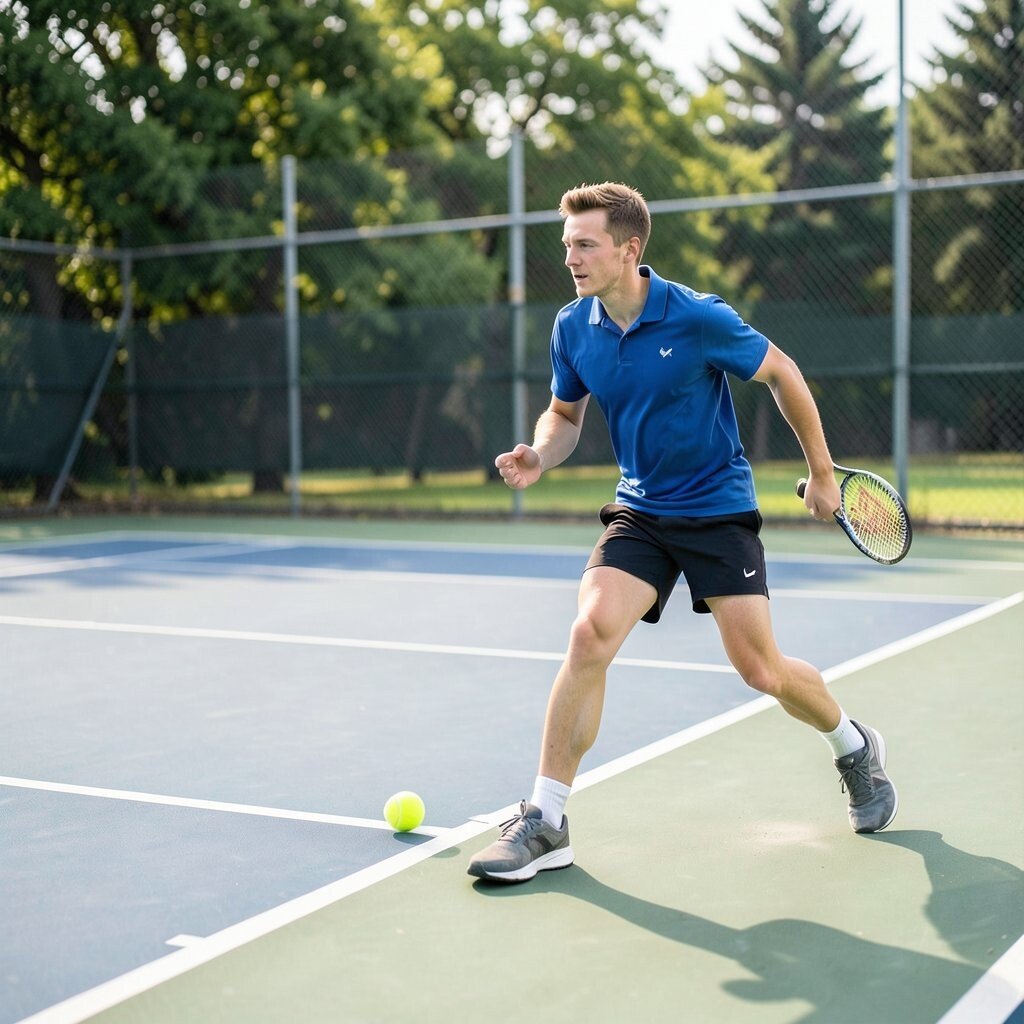
Roll or toss a tennis ball to a spot, then move to a set recovery point before the next ball comes. The ball gives you a clear path to follow, which helps you train your movement in a way that feels real.
This drill is useful for learning where to return after each shot, and that can help you stay ready for the next ball. You can make it more personal by changing the court area, the pace, or the type of movement you use each time.