Back shelves can change a room’s mood in a single glance. Small choices add up to a space that feels both useful and deeply personal.
They give your walls purpose, soften empty space, and make everyday items look intentional. Ready to see practical, good-looking ideas?
1. Floating Ledge That Lets Light Through
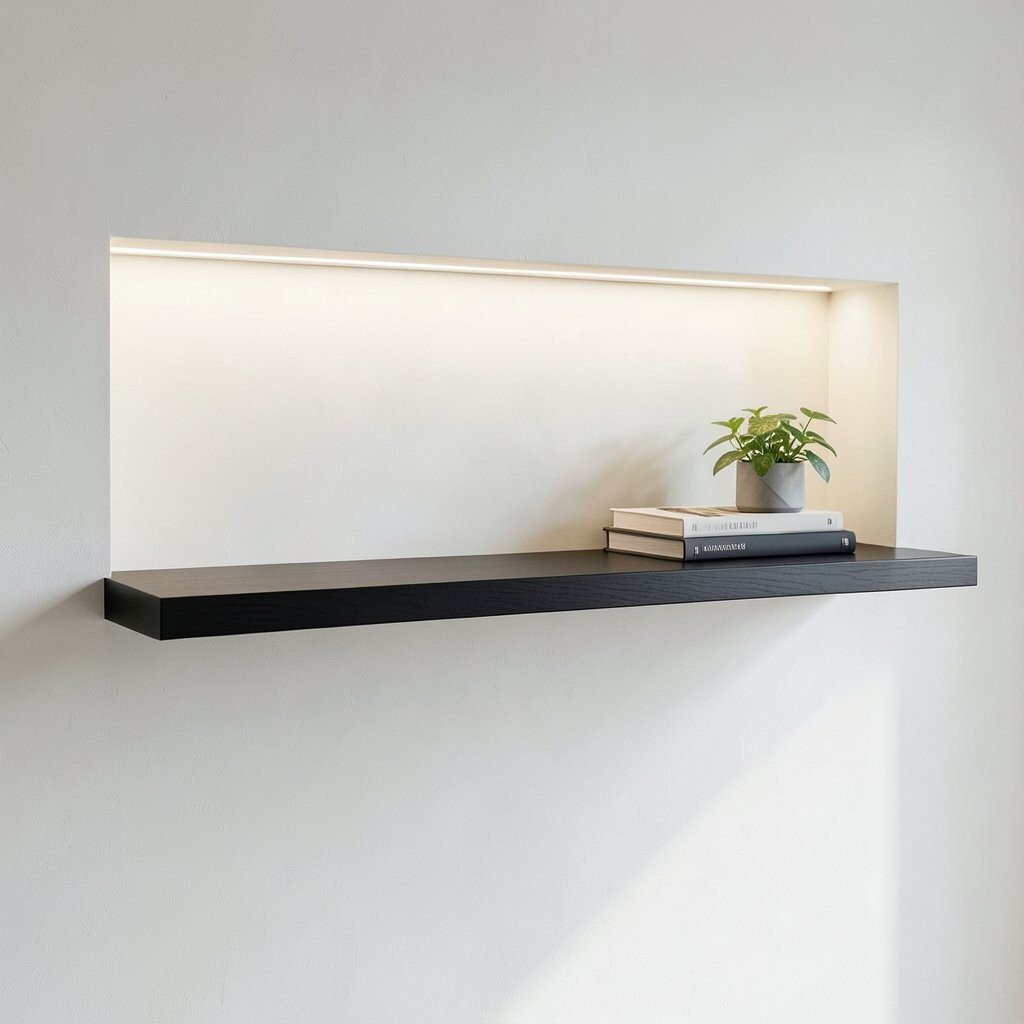
A thin floating shelf line can make a wall feel lighter and calmer. When the gap behind it stays open, light bounces farther and your space looks more airy.
Choose a simple wood tone or a matte black finish to match your furniture. Place slim frames, a small plant, or a stack of books so the shelf reads like a steady horizon. Keep the items spaced so you can swap pieces without clutter building up. If you’re on a budget, start with one shelf and add a second only after you like how it looks in daylight.
2. Built-In Niche Backed With Soft Color
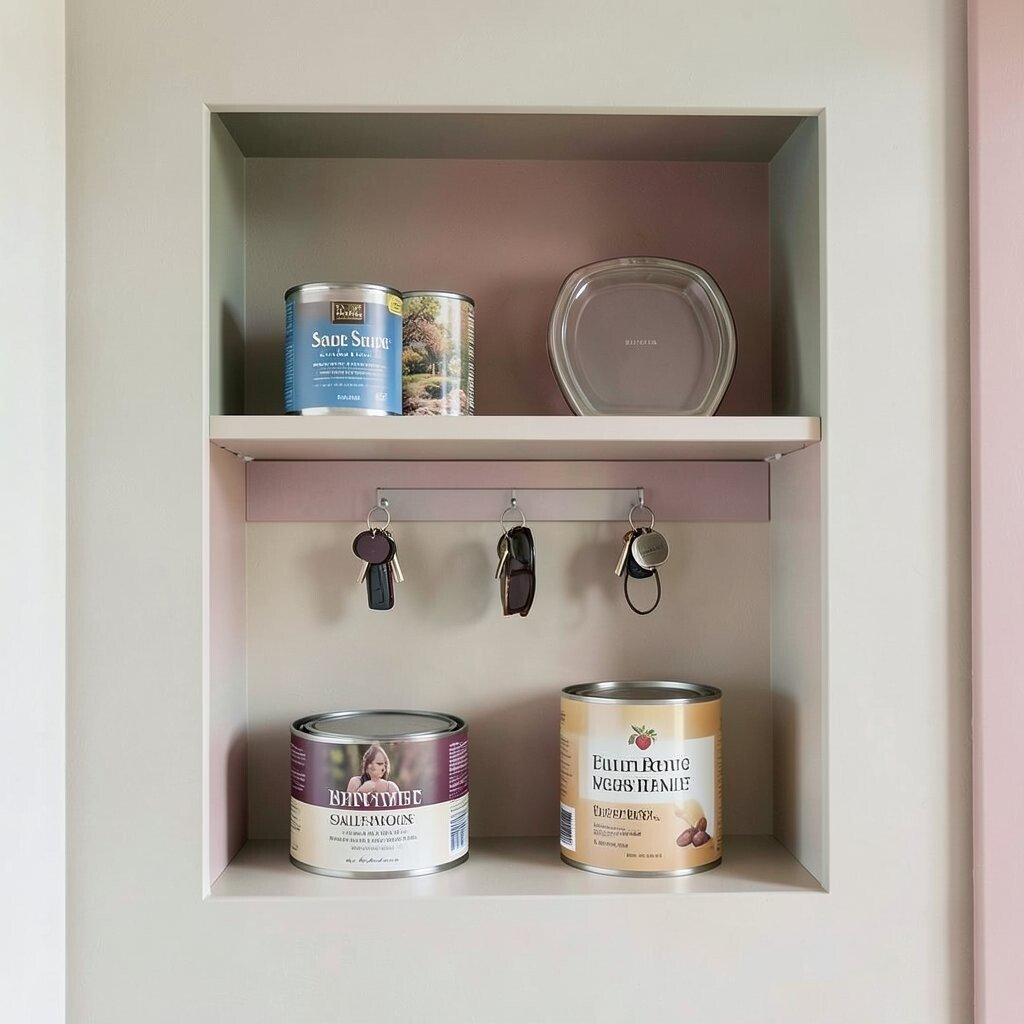
A recessed niche behind your shelf instantly adds depth, like a tiny stage for your favorite things. Add a gentle color in the back, and your objects pick up that warmth every time you walk by.
Pick a shade that already exists in your room, such as a muted sage, dusty rose, or warm cream, so it feels connected. For a practical layout, keep daily-use items on the lower section and display pieces higher up. Use a magnetic strip or small hooks inside the niche for keys, sunglasses, or charging cords so the look stays tidy. If you love trends, matte painted backs and gentle gradients are popular right now, and they photograph beautifully.
If you want personalization without big costs, paint only the back panel with a sample can and seal it with a clear topcoat. You can also line the niche with a peel-and-stick wallpaper strip for a similar effect. Measure carefully so the edges look crisp and custom.
3. Warm Wood Slats for Texture and Calm
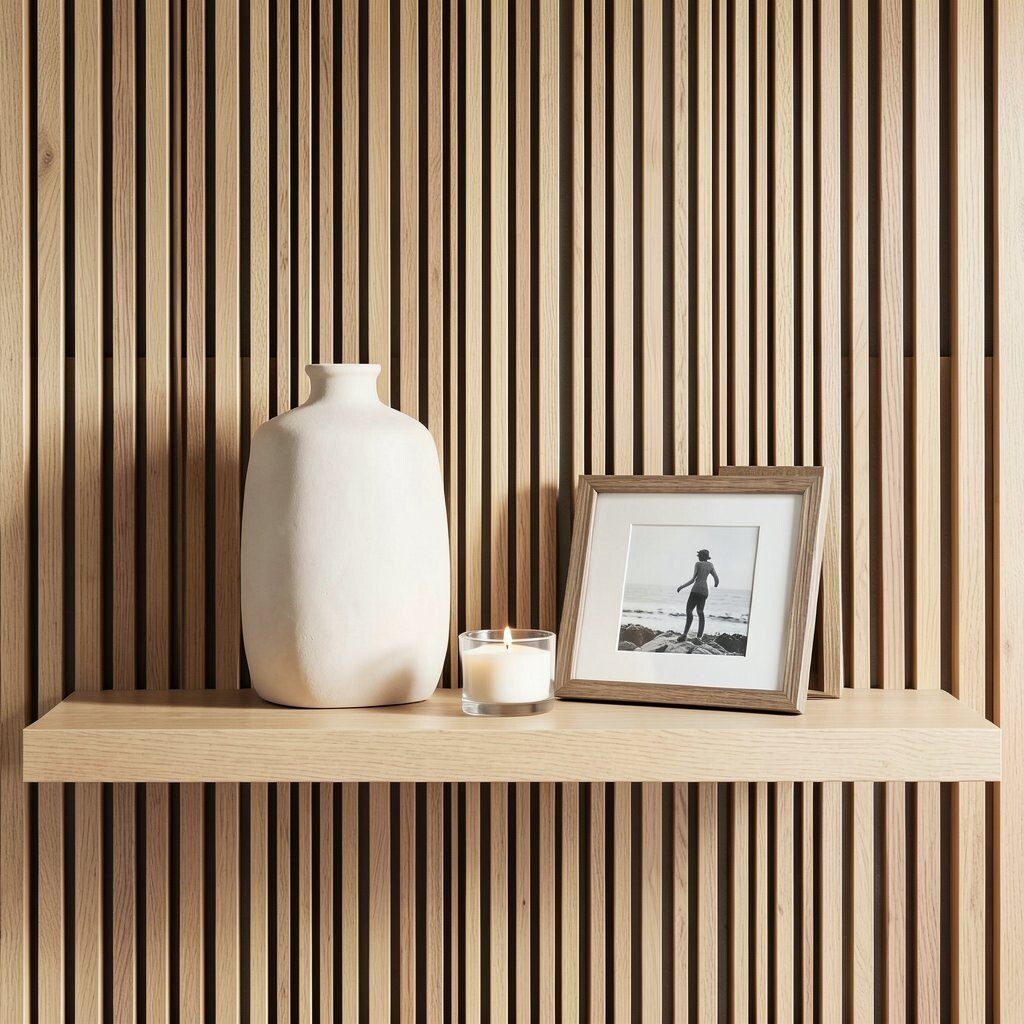
Wood slats behind a shelf bring a cozy rhythm to the wall. You get texture without visual noise, especially when the spacing is neat and the finish is warm.
Stagger your décor like you would arrange picture frames, using a few taller pieces and more flat ones. A small vase, a candle, and a framed photo can share the space without fighting. Consider sealing slats with a low-sheen finish so dust wipes off easily. This kind of background is unique because it feels architectural, even if you keep the shelf styling simple.
To keep it budget-friendly, look for pre-cut slat panels or thin lattice sheets that install as a single section. Match the color to your floors or table legs so everything feels like it belongs together. If you want it to feel current, choose lighter oak tones that lean modern yet still feel welcoming.
4. Patterned Wallpaper Behind the Shelf Border
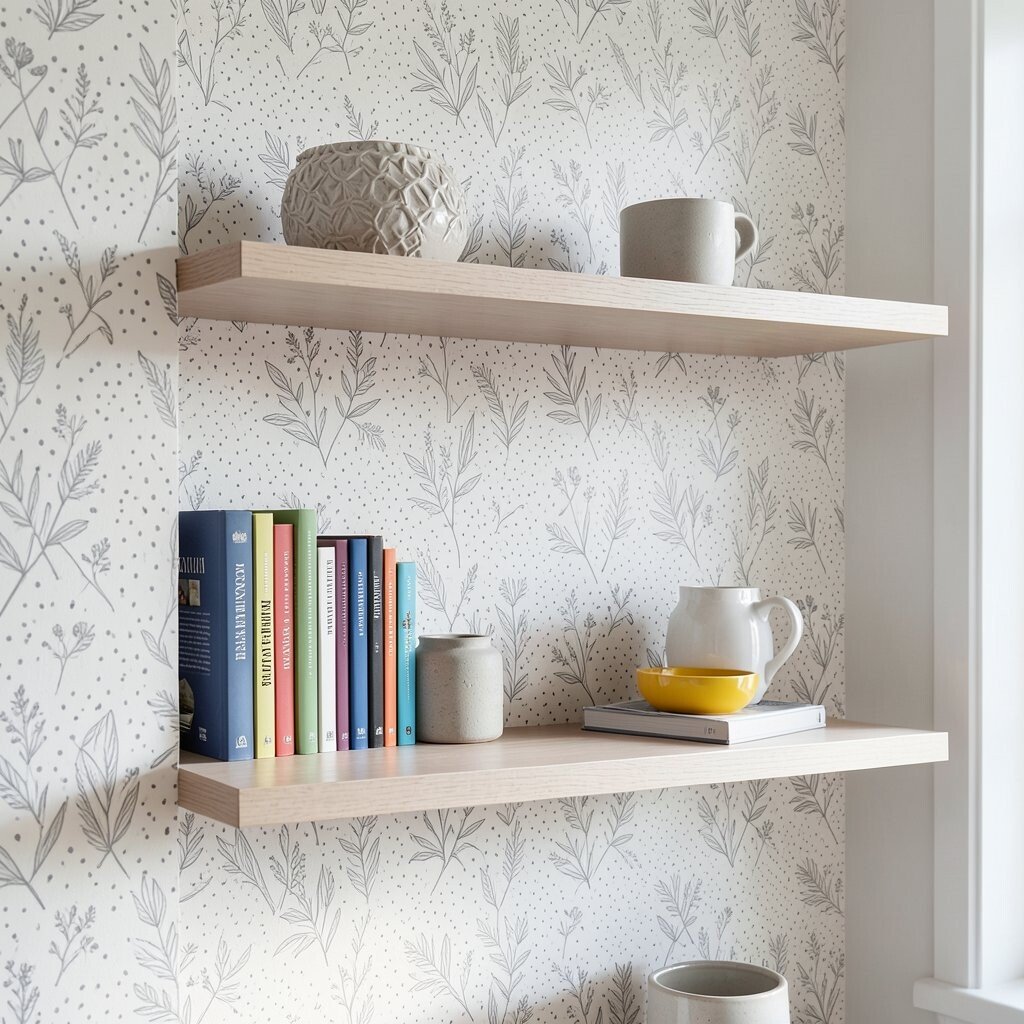
Wallpaper behind a shelf adds instant personality, like your room put on an outfit. A small-scale pattern can make the whole area feel finished, even when the shelf holds only a few items. Choose a design that complements the rest of the room, such as subtle dots, soft botanicals, or simple geometric lines.
If the wallpaper is bold, keep the shelf styling calmer with mostly neutral objects. If the wallpaper is gentle, you can layer in colorful books or a bright ceramic bowl. For practicality, seal glossy pieces and wipe-down-friendly materials so the shelf area stays easy to maintain. This approach is especially good for renters because removable wallpaper can help you switch looks later.
5. Black Metal Mesh Back for a Gallery Feel
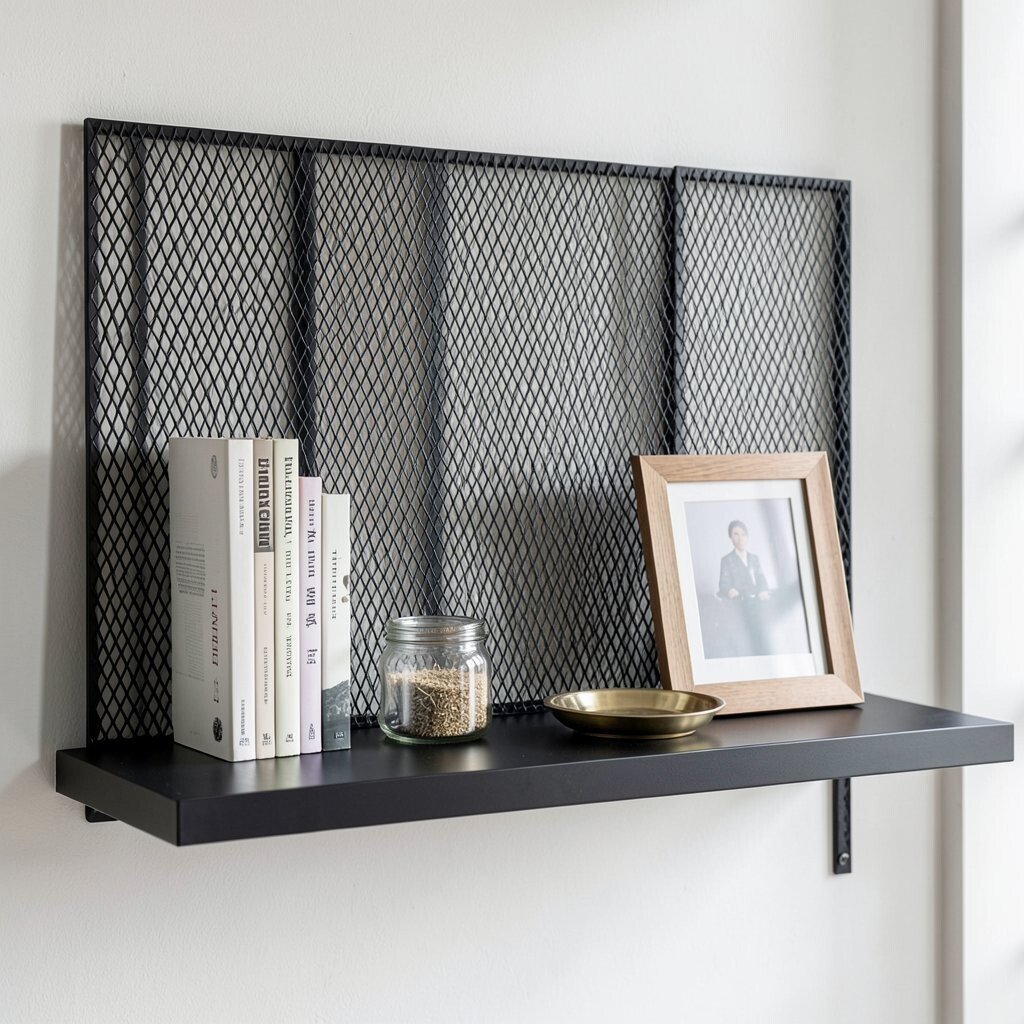
A black mesh backing behind your shelf looks sleek and a little industrial. It creates a “gallery grid” effect that makes collectibles feel curated. The airy lines also help smaller objects stand out without blocking your view.
Use a mix of heights: a taller book stack on one side, a slim jar on the other, and a medium photo frame in the middle. Try adding one reflective piece, like a small brass tray, so the mesh makes it sparkle. Keep the colors in a tight range so the background doesn’t overwhelm.
For personalization, swap the items seasonally while leaving the mesh in place, which gives you quick refresh with minimal effort. If cost matters, consider using metal mesh panels as an accent behind only one shelf run, not the whole wall. This is a current look in many modern interiors, especially for people who like clean lines.
6. Mirror Panel for Extra Depth and Shine
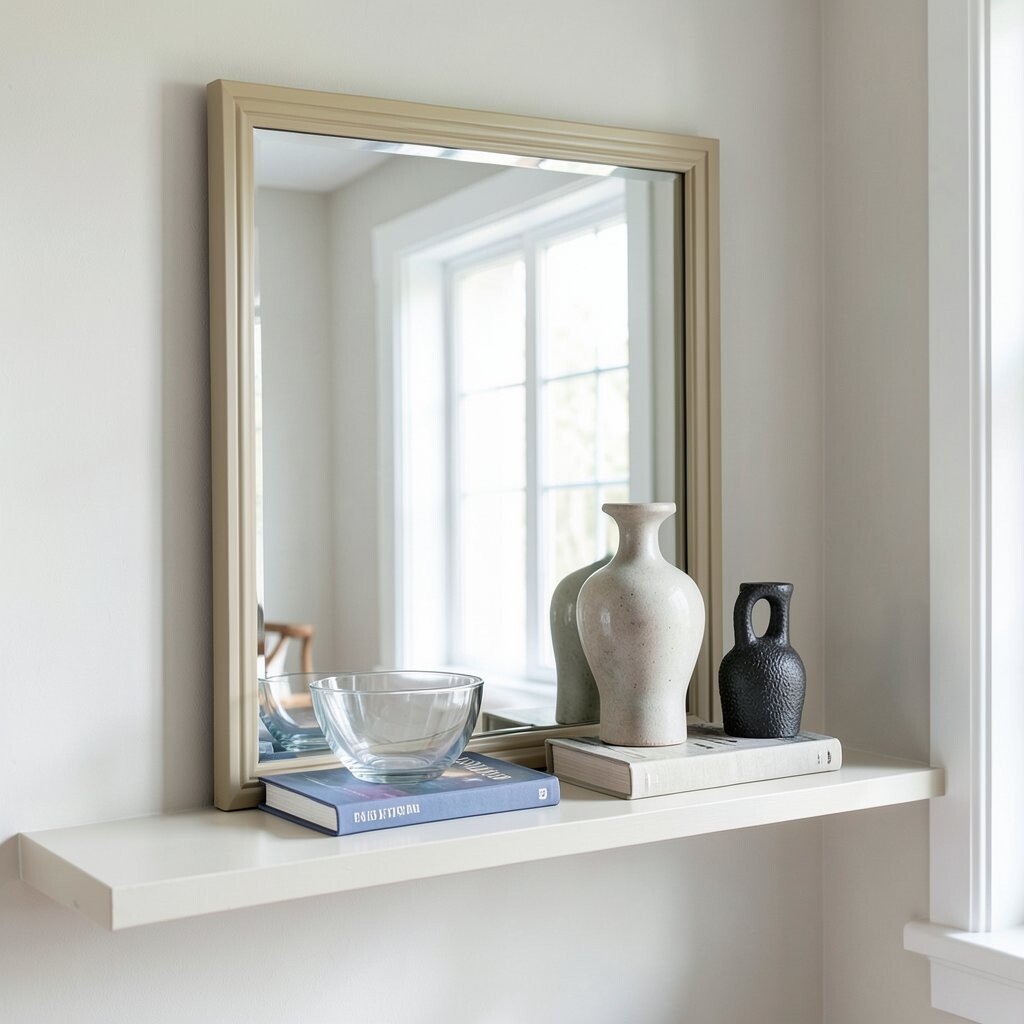
A mirror placed behind a shelf can make a room feel bigger and brighter. It bounces light and gives even a small wall section a more open look.
Arrange items so the reflection feels balanced, with a mix of light and dark objects. A glass bowl, a ceramic sculpture, and a couple of stacked books can look striking in the mirror. To keep it from feeling busy, avoid too many small knickknacks and choose pieces with similar shapes. If you’re budget-conscious, try an inexpensive mirror panel and frame it with trim paint to match your shelves. Mirror-backed shelves are popular because they add luxury without the need for heavy stone or complex building work.
7. Chalkboard or Slate Strip for Everyday Notes
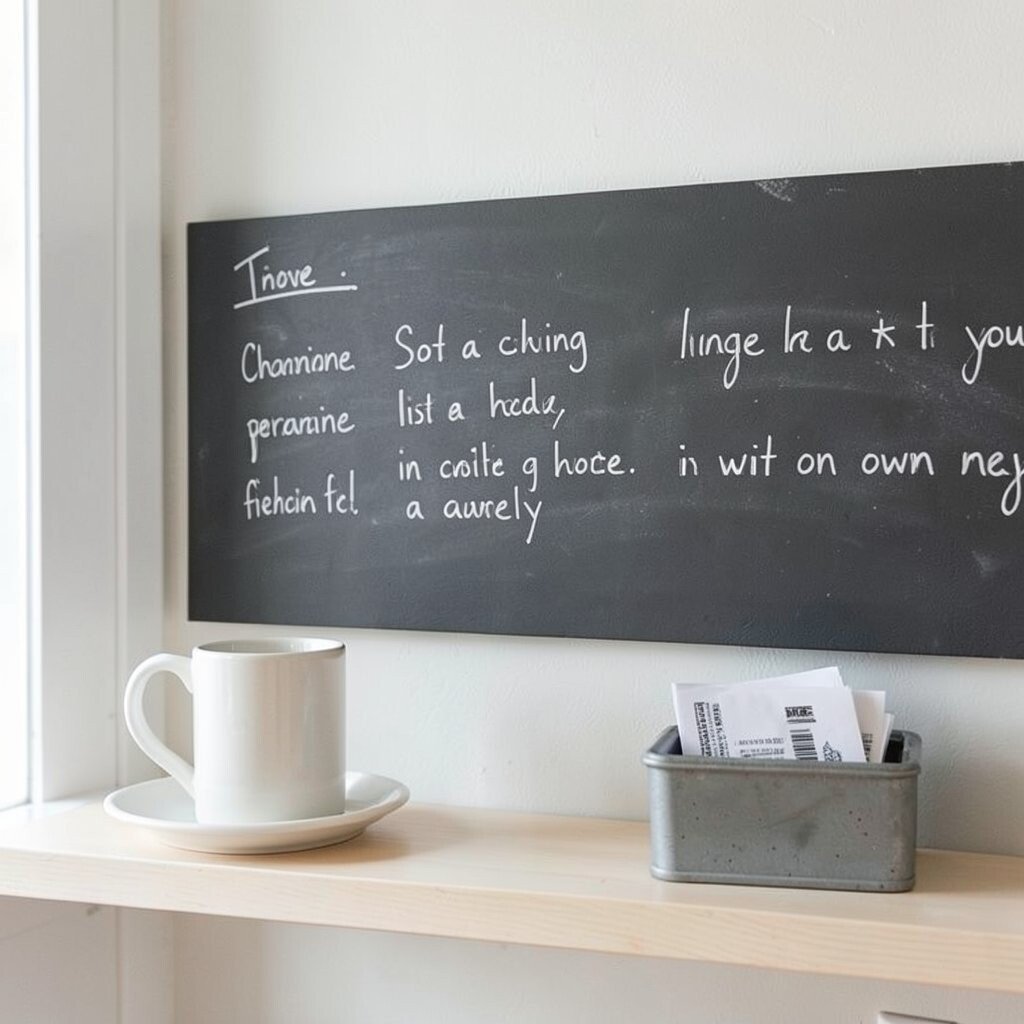
A narrow chalkboard strip behind your shelf makes the background useful, not just pretty. You can jot reminders, jot a grocery list, or write a calming quote in your own handwriting.
Write with softer colors like dark gray chalk on a light slate for a modern feel. Keep the shelf below it styled with things you want to see daily, such as a mug set or a small bin for mail. This is unique because it blends decoration and function in one place. For personalization, change the wording often, which keeps the area from feeling static. In terms of cost, chalkboard paint on a single section is usually cheaper than installing a full panel. It also fits current trends for “lived-in” spaces that still look neat.
8. Fabric Backdrop That Softens Everything
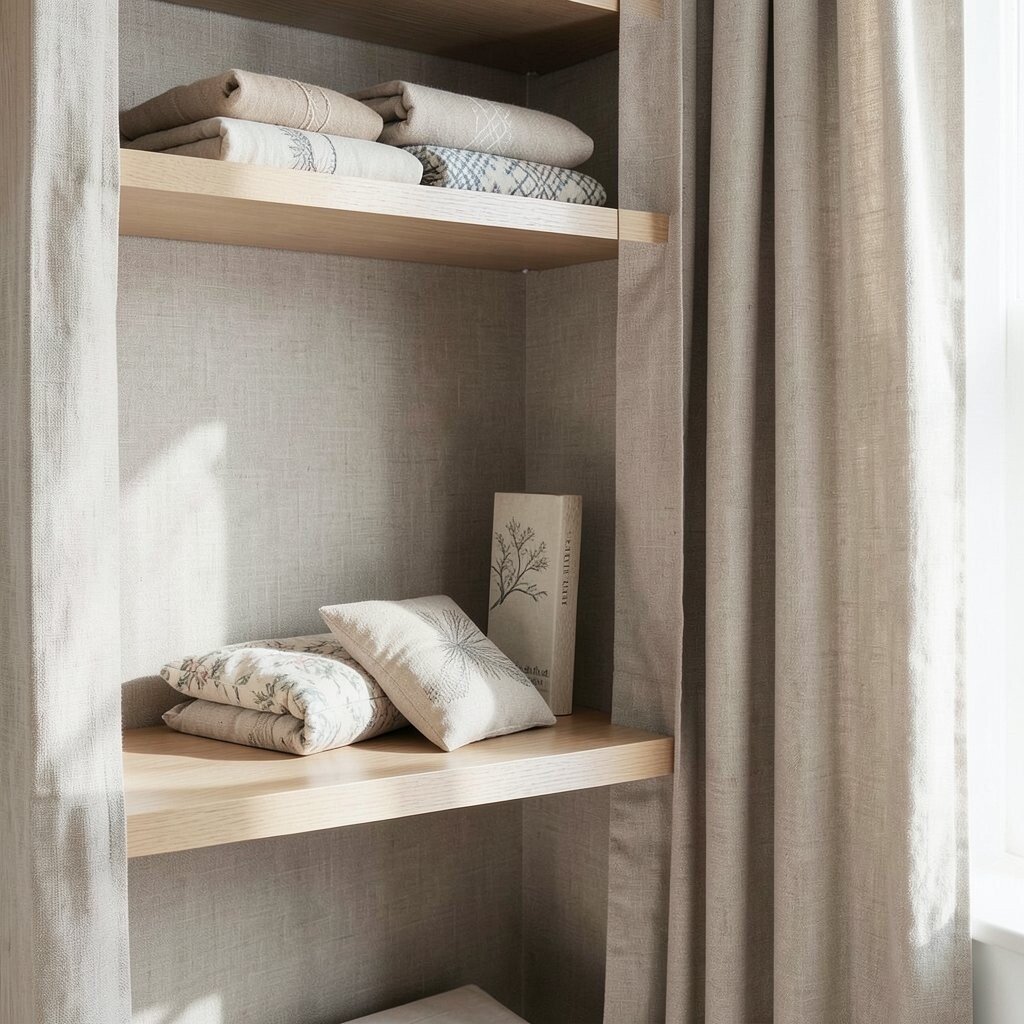
Using fabric behind shelves adds softness that wood and metal can’t fully match. Imagine a linen panel, a textured cotton curtain, or a wrap-around textile that makes the whole corner feel cozy.
Choose a fabric color that echoes your textiles, like throw pillows or curtains, so the room feels tied together. When styling, stick to a few meaningful objects and let the fabric provide the rest of the mood. Tuck the fabric edges neatly so it looks tailored, not like a last-minute cover. This idea is very personal because you can pick a pattern you love, even one that’s sentimental or from a special trip. For cost, you can repurpose curtains or thrifted textiles and simply mount them to a backing board. It’s also a current choice for people who want warmer, more tactile interiors.
9. Color-Blocked Back Panels for a Playful Edge
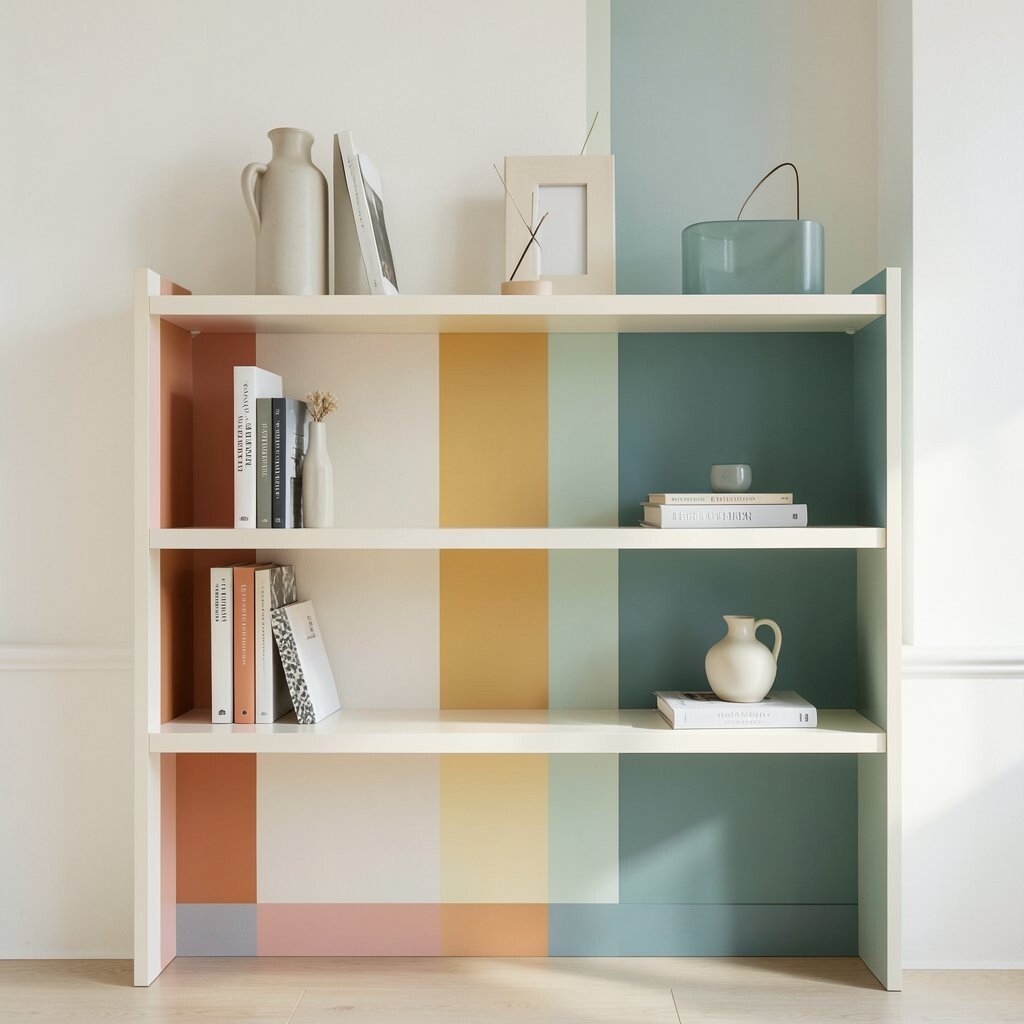
Color-blocked panels behind a shelf create an energetic backdrop that still looks organized. It’s like adding a clean graphic design to your wall, but with real depth from the shelf space.
Use two or three colors that match your room, such as a cream base with a warm accent stripe and a muted teal touch. Keep the décor simple so the color does the main talking. Try placing tall items at the corners, then smaller pieces in the middle to keep your eye moving. If you want personalization, paint a stripe in a shade you only see in one or two other spots, like a rug thread or a vase. Cost-wise, paint is often one of the cheapest ways to get a bold look. This trend is popular because it makes plain walls feel designed even when you don’t change furniture.
10. Reclaimed Brick or Stone Look Background
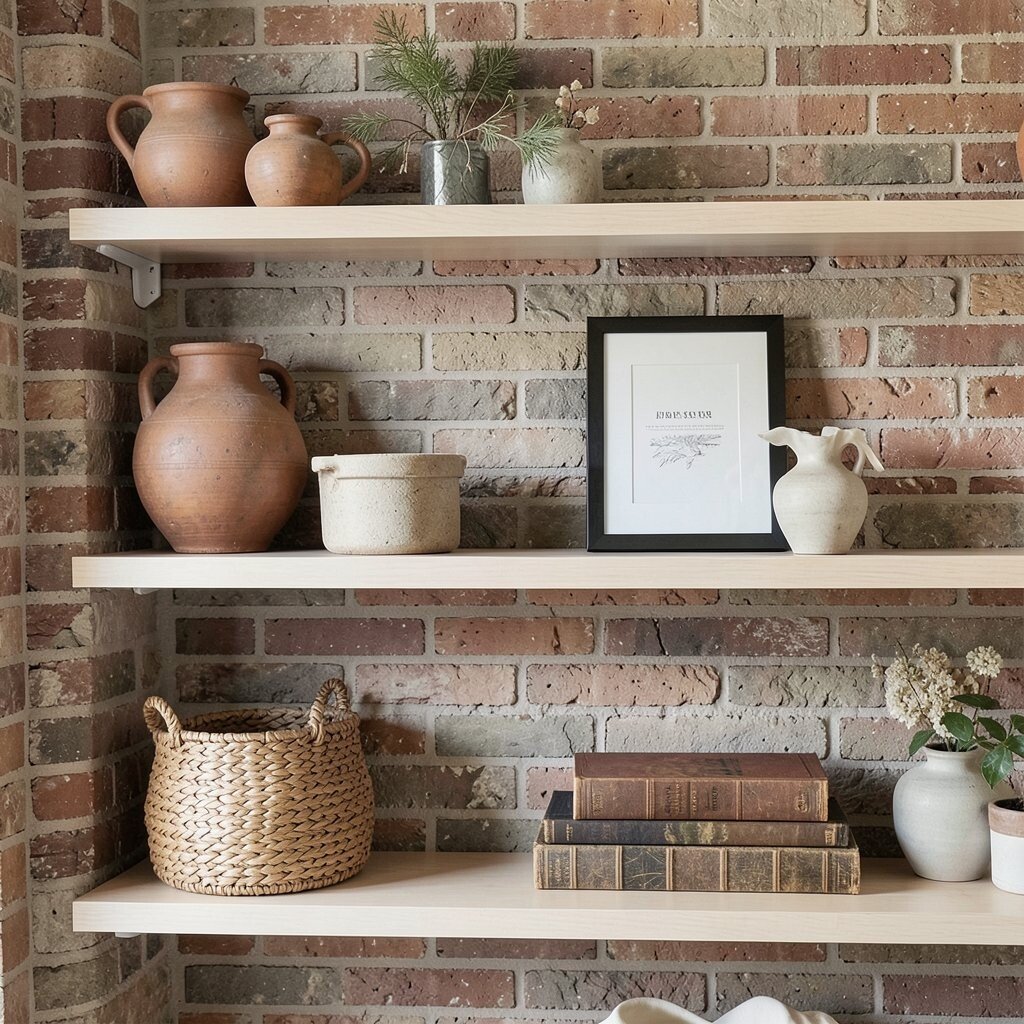
A brick or stone-look backing makes your shelf feel grounded and timeless. Even if your room is modern, the texture can add warmth and a little drama.
If you can, use thin veneer or a peel-and-stick stone panel so installation stays manageable. Style with rustic elements like pottery, woven baskets, or an old book, but balance it with one modern item like a sleek frame. This keeps the look from feeling stuck in one era and makes it more unique. For practical care, choose sealed materials so dust doesn’t cling. Budget-wise, smaller sections are easier to tackle than covering an entire wall. Current interiors often mix “hard” textures like stone with soft décor, and this idea does that naturally.
11. Back Shelf Lighting With Warm LED Strips
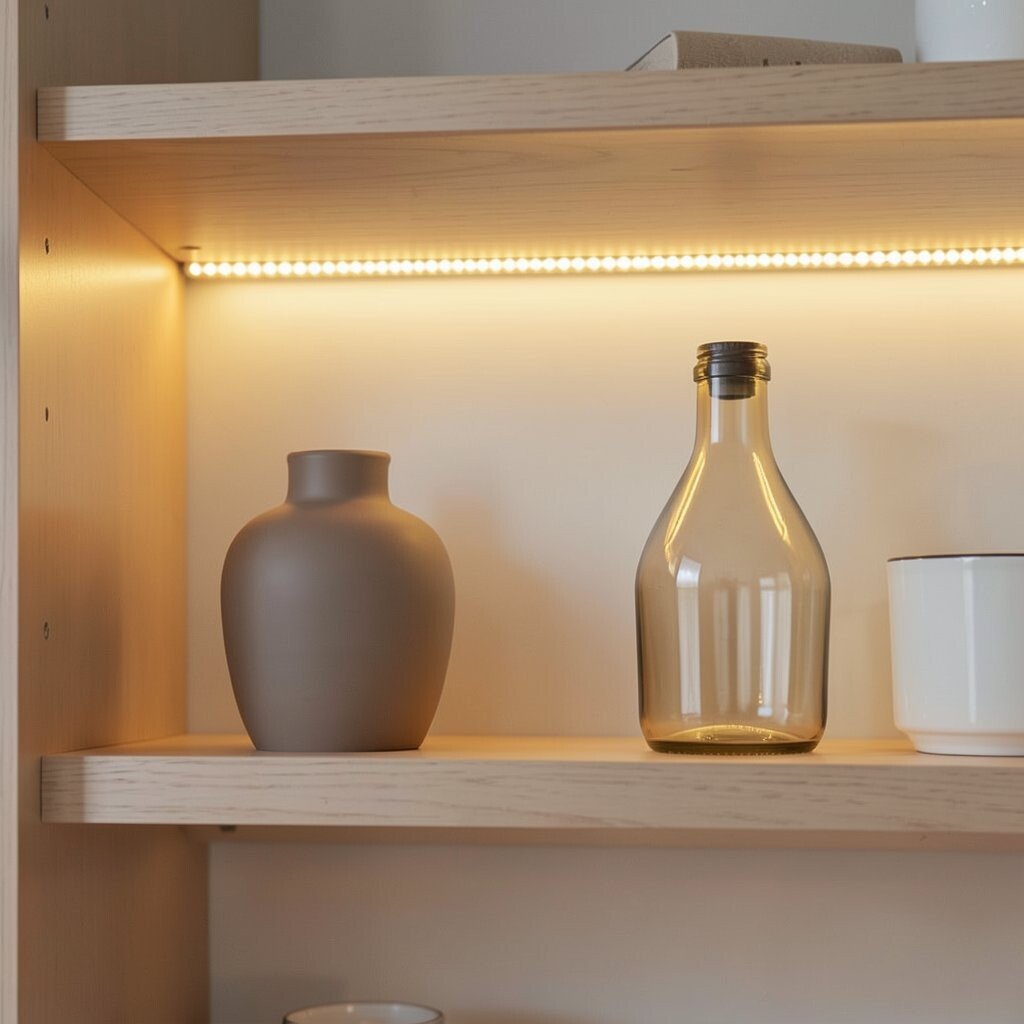
Lighting behind a shelf makes your items look like they belong in a boutique display. Warm LED strips can create a gentle glow that softens shadows and highlights textures.
Mount the light along the top edge of the shelf or behind the back panel so it looks even. Keep the shelf items within a color story so the glow doesn’t make everything look random. Try a mix of matte and glossy pieces, like a matte vase paired with a glass bottle, to catch the light in a pleasing way. This is unique because it changes the atmosphere at different times of day without changing the décor. If cost is a concern, start with battery or low-voltage options for one shelf section. It’s a strong trend because it’s easy, energy-friendly, and instantly “finished.”
12. Terracotta or Ceramic Tile Back for Earthy Color
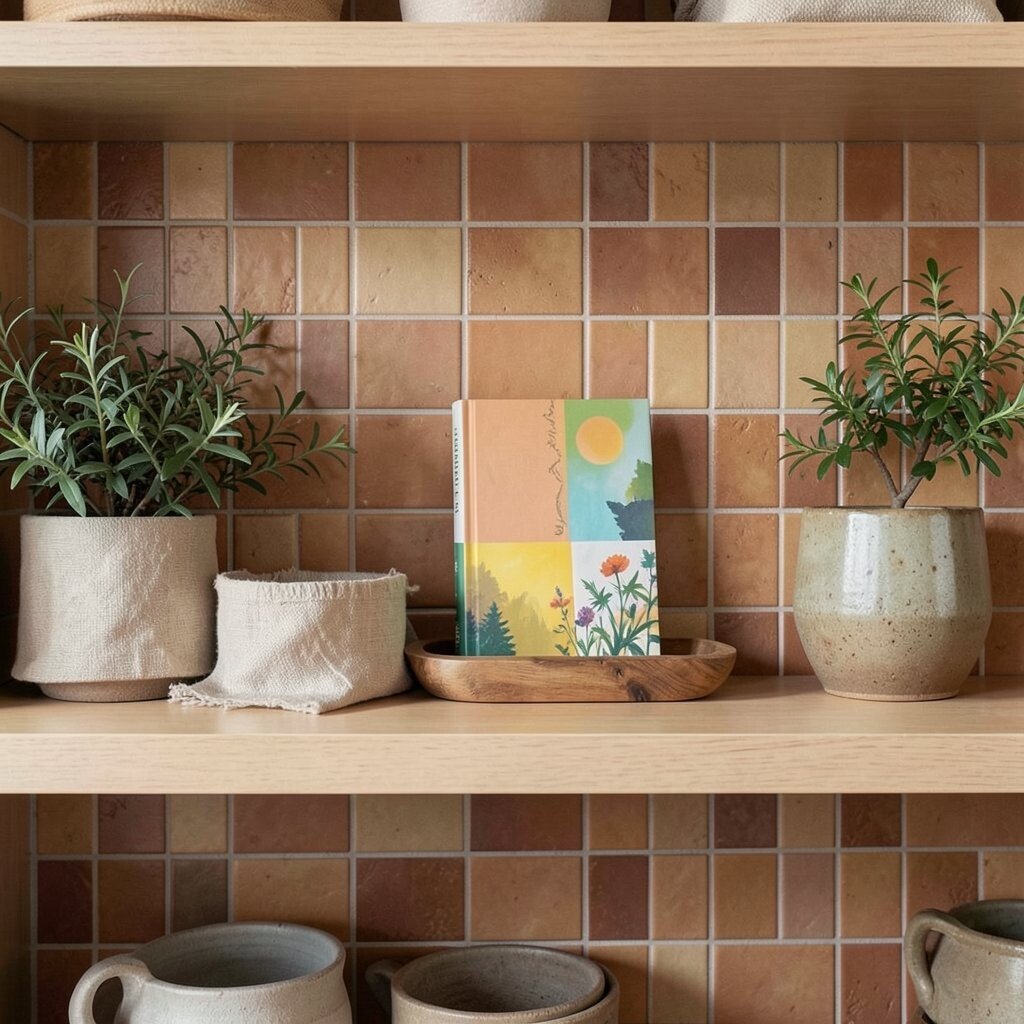
A tiled background behind a shelf adds old-world charm and a solid, grounded feel. Terracotta tones look especially warm, making even simple items feel special.
Choose small tiles for a cozy pattern or larger rectangles for a more modern, clean look. Style with earthy accents like linen, ceramic planters, and wooden trays. Keep one bright element, like a vibrant book cover or a pop of greenery, so the background doesn’t become too uniform. For personalization, place tiles in a color that connects to your kitchen or living room, like warm browns or muted oranges. Cost varies based on tile choice, but small areas can stay reasonable. This element fits current trends toward nature-inspired palettes and texture-rich interiors.
To keep it practical, wipe tiles with gentle cleaner and avoid harsh scrubbing that can dull finishes. If you rent, consider peel-and-stick tile sheets for a temporary but stylish look.
13. Hanging Bar and Pegs for a Clever Layer
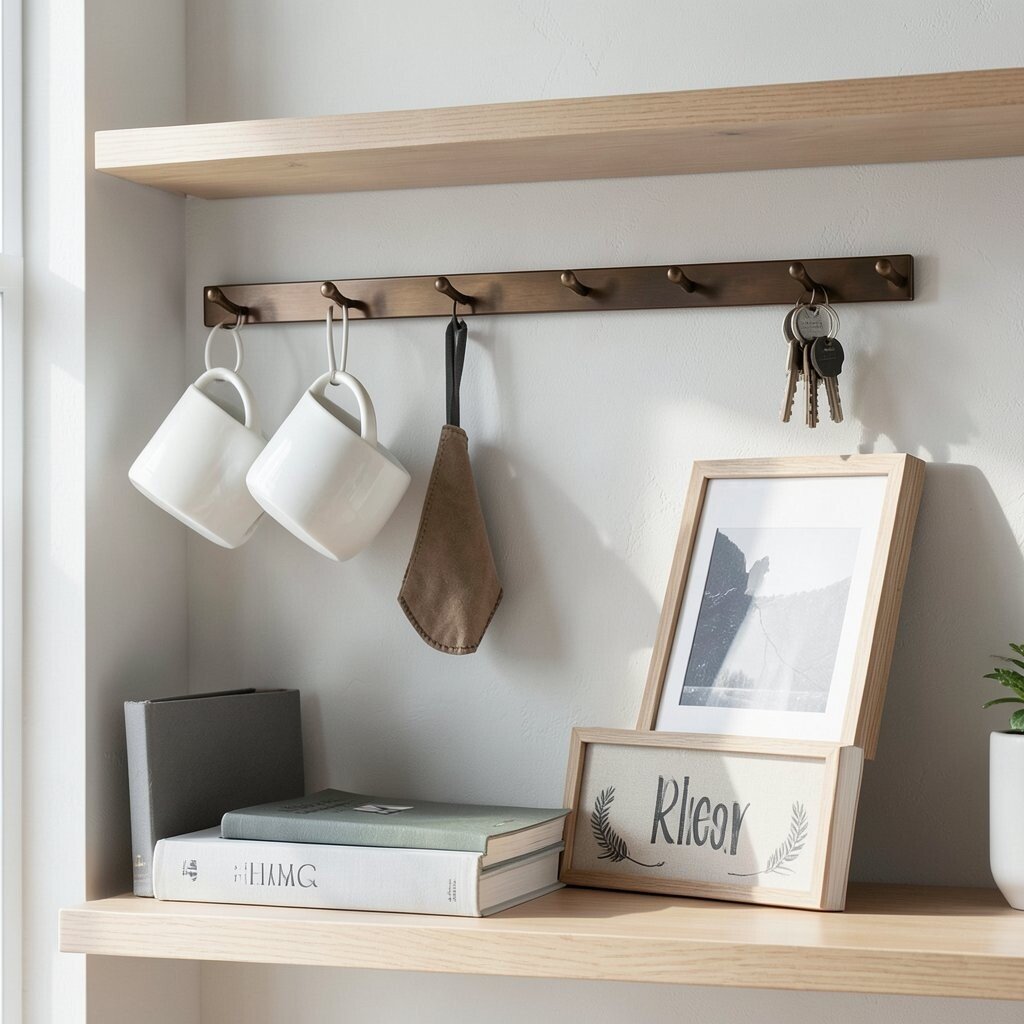
A background shelf area can also include a hanging bar with small pegs or hooks. It’s a smart way to add function while still keeping the wall visually interesting.
Hang lightweight items like mugs, small bags, or even a set of keys so you don’t search for them later. On the shelf itself, keep your display pieces heavier or more decorative, like books or a framed print. This idea feels unique because it blends storage into the background rather than tucking everything into cabinets. For personalization, match hook finishes to your hardware, like brushed brass or oil-rubbed bronze. If cost matters, a basic wall rail and a few pegs can be far less than building custom shelving. It also aligns with current “utility meets style” design habits.
Use a consistent spacing for a neat look, and limit hanging items so the bar still feels intentional.
14. Curved Back Panel for Soft, Modern Flow
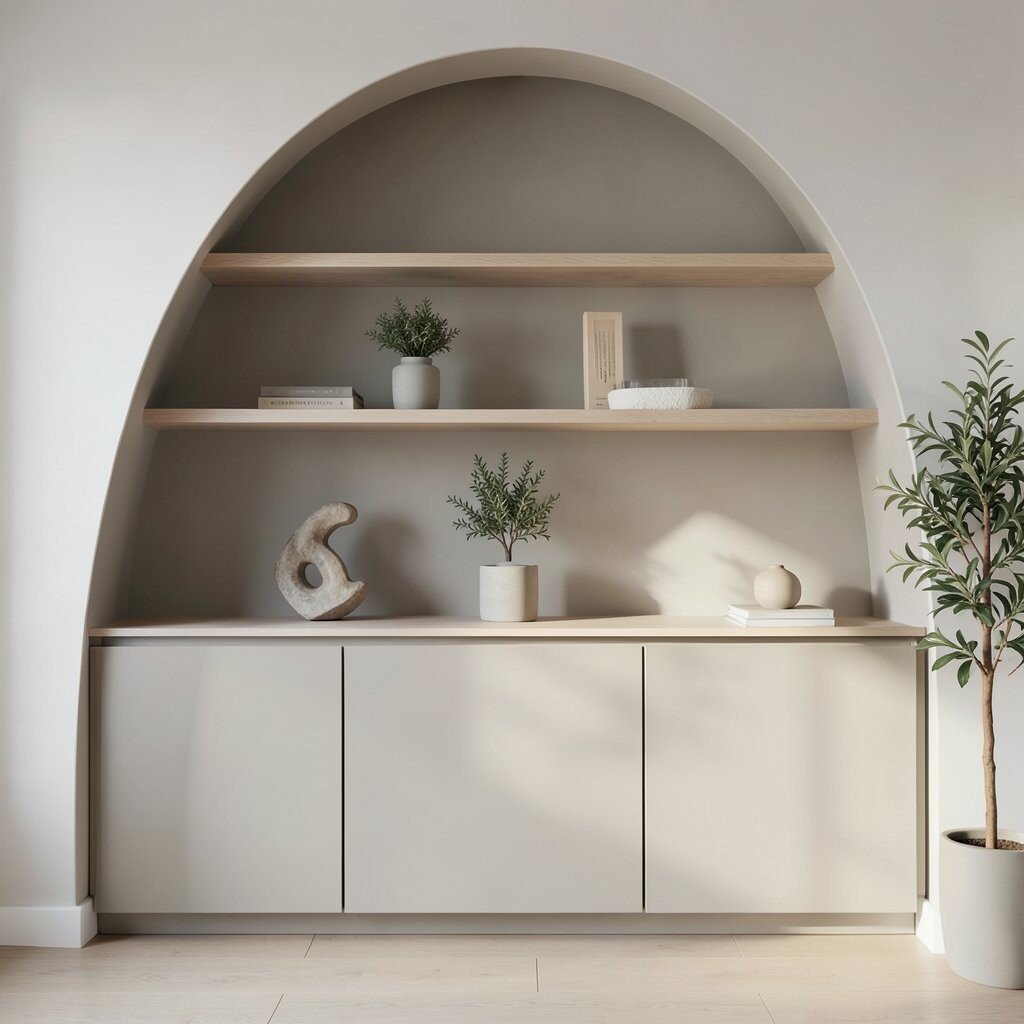
A curved background panel behind a shelf gives a room a smoother, softer feel. Instead of straight lines that can look harsh, the curve adds gentle movement.
Pair the curve with clean-lined shelves and simple décor so the shape becomes the star. Try placing a sculptural object or a tall plant near the curve so the eye follows the bend. This is unique because the background works like a design detail, not just a surface. For personalization, you can paint the curved panel in a color that complements your cabinetry or a soothing neutral. In terms of cost, a pre-made curved panel or plywood template can be more budget-friendly than custom built-in work. It’s also trending since many interiors lean toward softer geometry.
15. Woven Rattan or Cane Back for Texture
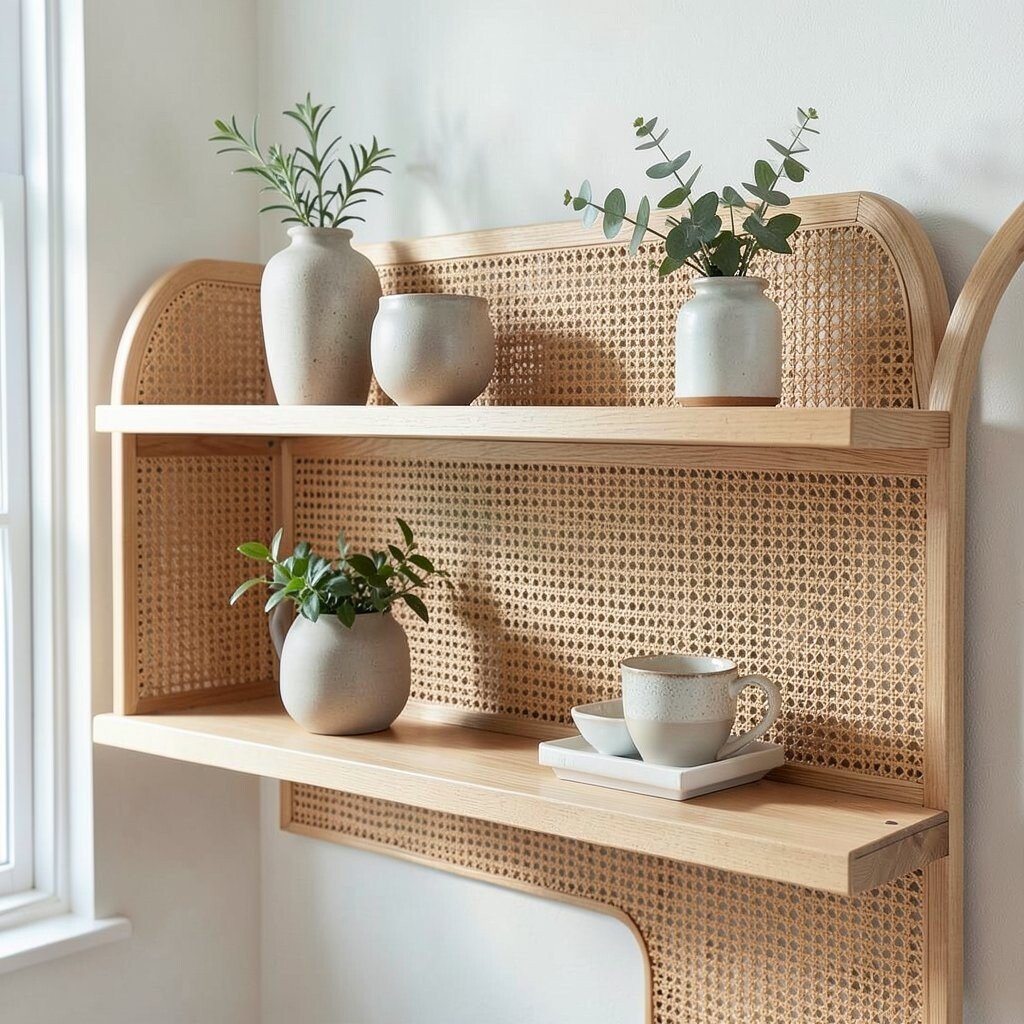
Rattan or cane backing makes a shelf feel light, breezy, and welcoming. The woven texture adds depth without needing bright colors.
Choose a backing that fits the shelf width, then style with simple ceramics and a few greenery picks. This element is unique because it brings an organic pattern that looks great in both modern and classic rooms. Keep the shelf décor in neutral tones, and let the weave do the work. For personalization, select a weave color that matches your floor or basket handles so everything feels cohesive. Cost can be friendly, especially if you use woven panels that come in sheets or removable inserts. Current trends favor natural materials and “cozy modern” styles, and this is a strong match.
To keep it looking clean, wipe gently with a dry cloth and use a soft brush for dust in the grooves.
16. Lined Backboard With Peel-and-Stick Patterns
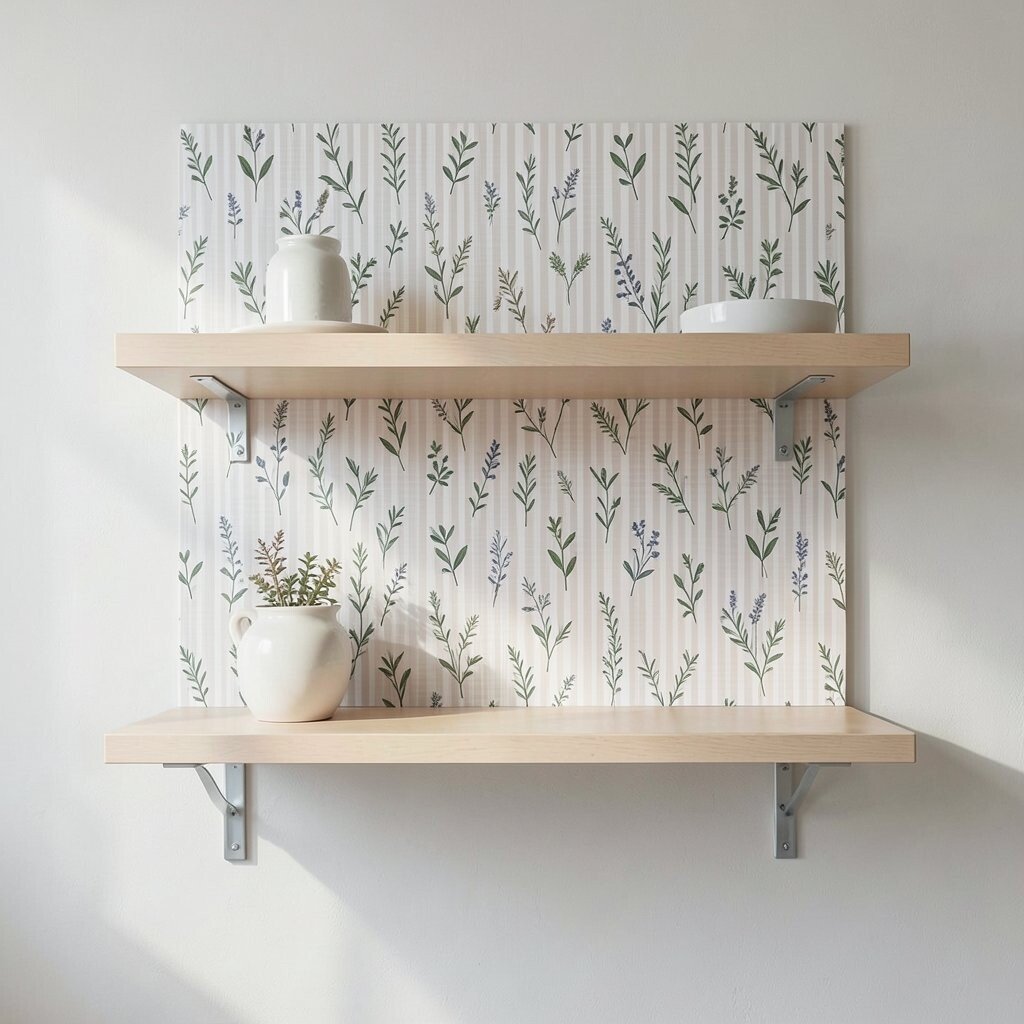
A peel-and-stick lined backboard makes it easy to get the look without heavy work. You can add a pattern that frames your shelves and instantly makes the area feel intentional.
Pick a pattern that matches your décor, like subtle stripes, small checks, or gentle botanical sprigs. For practical styling, use fewer items but choose pieces that echo the pattern colors. This approach is unique because you can swap the background when your tastes shift. If you’re thinking about cost, peel-and-stick options are often one of the most budget-friendly ways to refresh a wall. It’s also trending because many people want changes they can do themselves. For personalization, create a layered look by using one solid color for the shelf face and a patterned sheet behind it.
17. Book Spine Back Row With Color Coordination
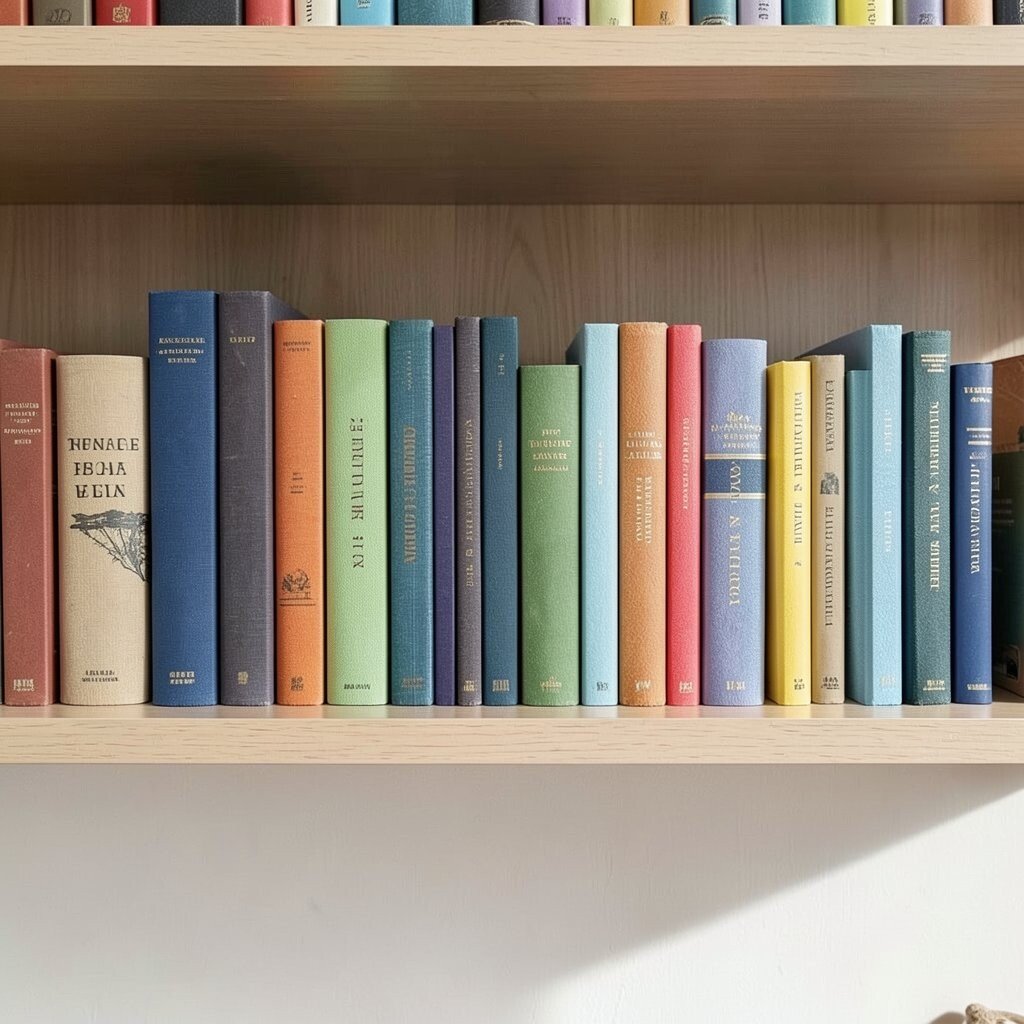
Using a neat row of books as the background creates a built-in rainbow without extra materials. When the spines are aligned, they form a clean backdrop for smaller objects.
Choose a limited palette so the shelf looks calm instead of chaotic. Stack books so the same height repeats, and use bookends that match your shelf finish. For practical tips, keep the spines facing outward so the display stays easy to see. This idea is unique because you are literally using what you already own as décor. Personalize by mixing new favorites with older classics, then adjust the arrangement until it feels balanced. Cost-wise, you can start with books you already have and buy only a few matching ones if needed. Current trends often celebrate “book styling” as a way to blend function and beauty.
Remember to protect the shelf with felt pads so books and decorations don’t scratch the wood.
18. Ceramic Knobs and Hooks Along the Back Edge
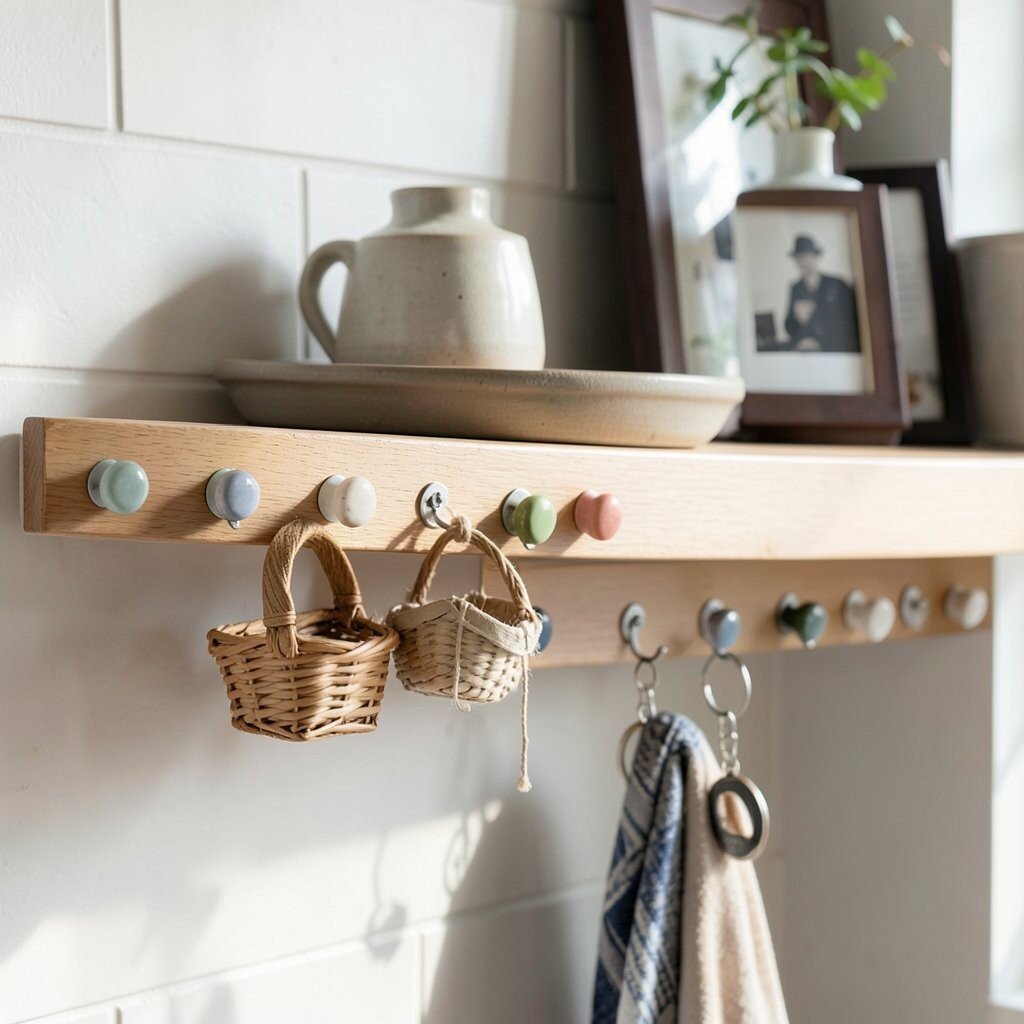
Small ceramic knobs or hooks along the back edge can turn a shelf into a charming display system. They add tiny color pops and give you flexible places to hang or rest items.
Try using hooks to hold lightweight items like mini baskets, keychains, or a small scarf. Keep the shelf surface styled with a few heavier pieces, like a tray, a vase, or a framed photo. This element is unique because it adds tactile detail right at the background boundary. For personalization, select knob colors that match your pottery or your kitchen accents. Cost can stay manageable since even a few hardware pieces create a big visual impact. This also fits current trends where people add handcrafted details and small “moments” rather than large renovations.
Use a level for installation and space hardware consistently so the shelf looks crisp.
19. Glass Block or Acrylic Windows for an Airy Layer
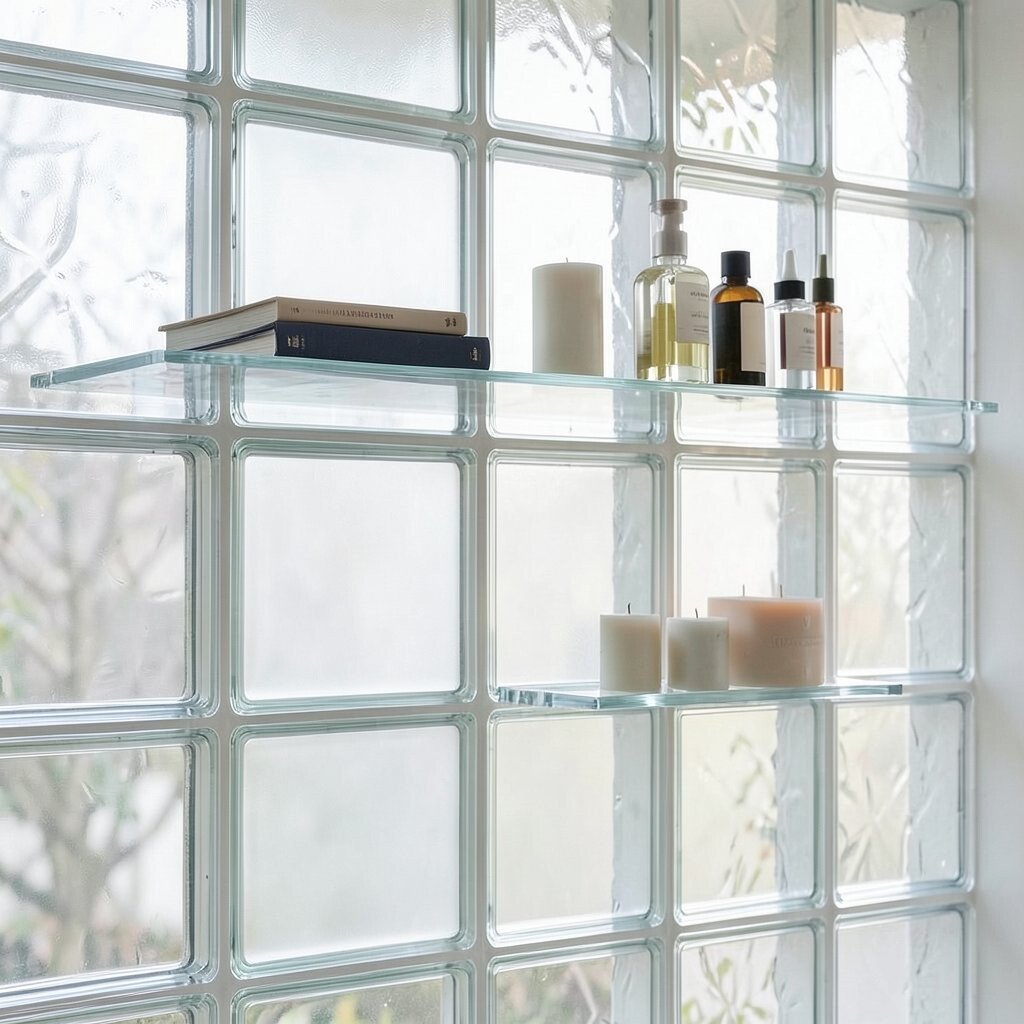
Glass block or clear acrylic behind a shelf adds a modern, window-like feel. It lets your décor show through while creating a polished, structured background.
Style with items that look great in layers, like stacked books, slim bottles, or a row of candles. The clear background helps maintain a clean visual flow, which is useful in smaller spaces. This is unique because it gives you “see-through” depth that still feels design-forward. For personalization, choose frosted sections for privacy and softness, or keep everything clear for bright energy. In terms of cost, acrylic can be cheaper than real glass block, especially for smaller sections. Current design trends include crisp, reflective materials, and this idea brings that vibe without feeling cold.
20. Vertical Gallery Lines With Peg Rail Styling
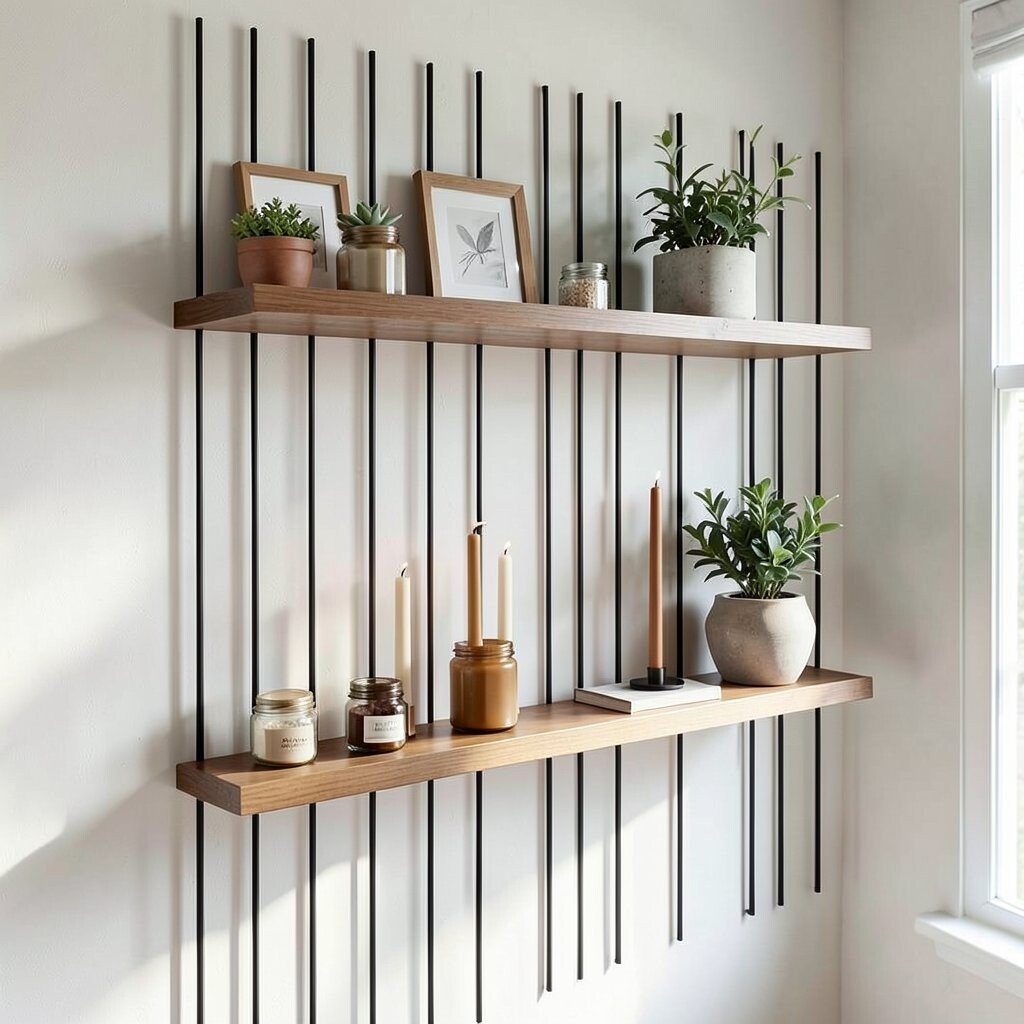
Vertical gallery lines behind shelves can give your wall a confident, gallery-like structure. Add a peg rail or narrow grid system so you can arrange items with control.
Use the rails to hang lightweight art, small planters, or even hanging picture frames that sit next to shelf objects. On the shelf, create a steady rhythm by repeating shapes, like small jars, long candles, and one medium plant. This element is unique because it’s flexible, meaning you can change the look whenever you feel like it. Personalize it by grouping colors, such as using warm creams and browns, or by using a single accent color you love. Cost is often reasonable because you can build this system from rails and pegs rather than full cabinetry. It also matches current trends toward modular storage that can grow with your style.
21. Solid Back Panel With a Removable Gallery Tray
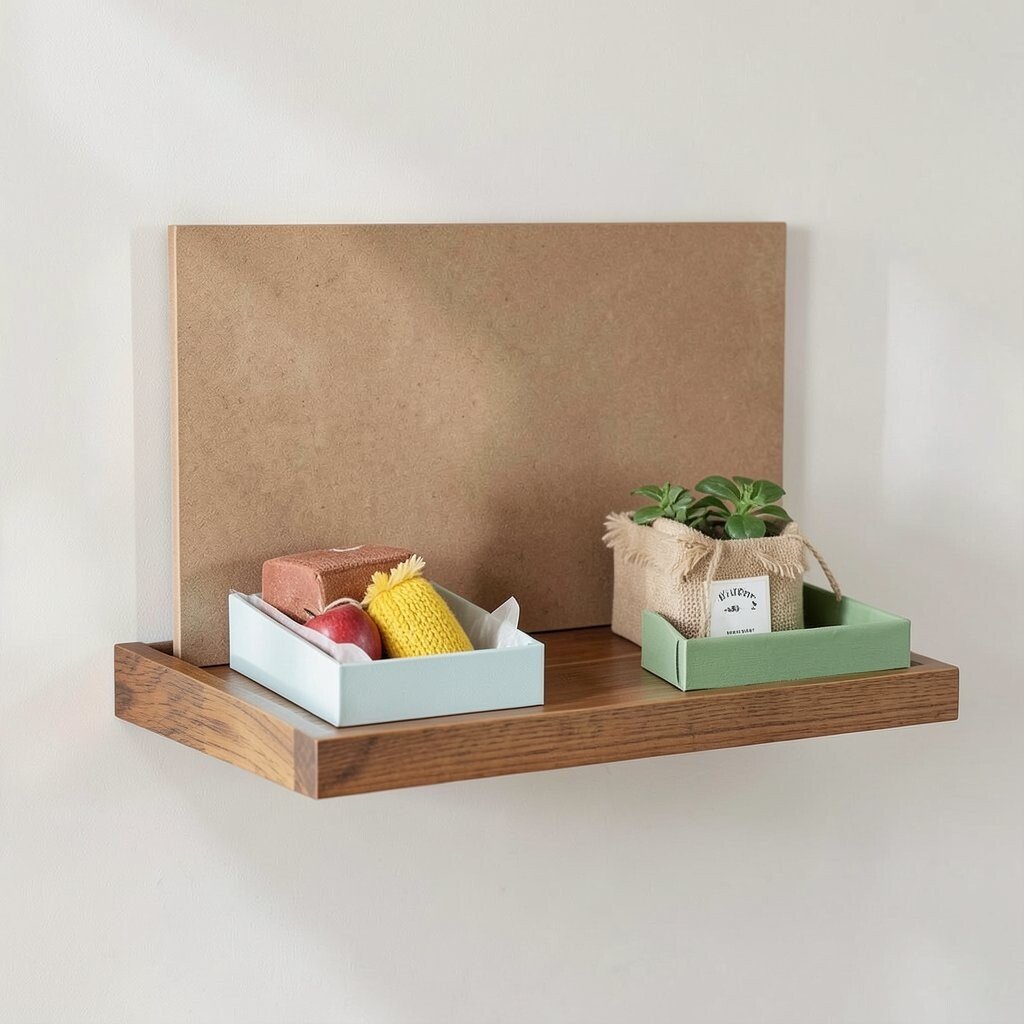
A solid back panel creates a clean canvas, and a removable gallery tray adds the fun. The panel keeps the wall calm, while the tray gives you an easy way to swap décor without starting over.
Choose a panel finish that suits your room, like matte paint, stained wood, or a simple textured board. Place the tray slightly above the shelf base so it forms a natural focal point. This is unique because it keeps the background steady while your styling changes. For practical tips, use tray liners or small risers so items stay in place during cleaning. Personalize by using different trays for seasons, like cozy fall tones or bright spring colors. Cost considerations are friendly because a solid panel is usually simpler than complex built-ins, and trays can be found in many sizes. This approach also fits current trends for interchangeable décor that feels curated but not permanent.
Keep a few favorite items in a small storage box so you can quickly refresh the tray when you want a new look.