
Your stairs deserve details that feel timeless and personal. Classic balusters can make every step look carefully designed.
1. Turned Wood Balusters With Crisp Spindles
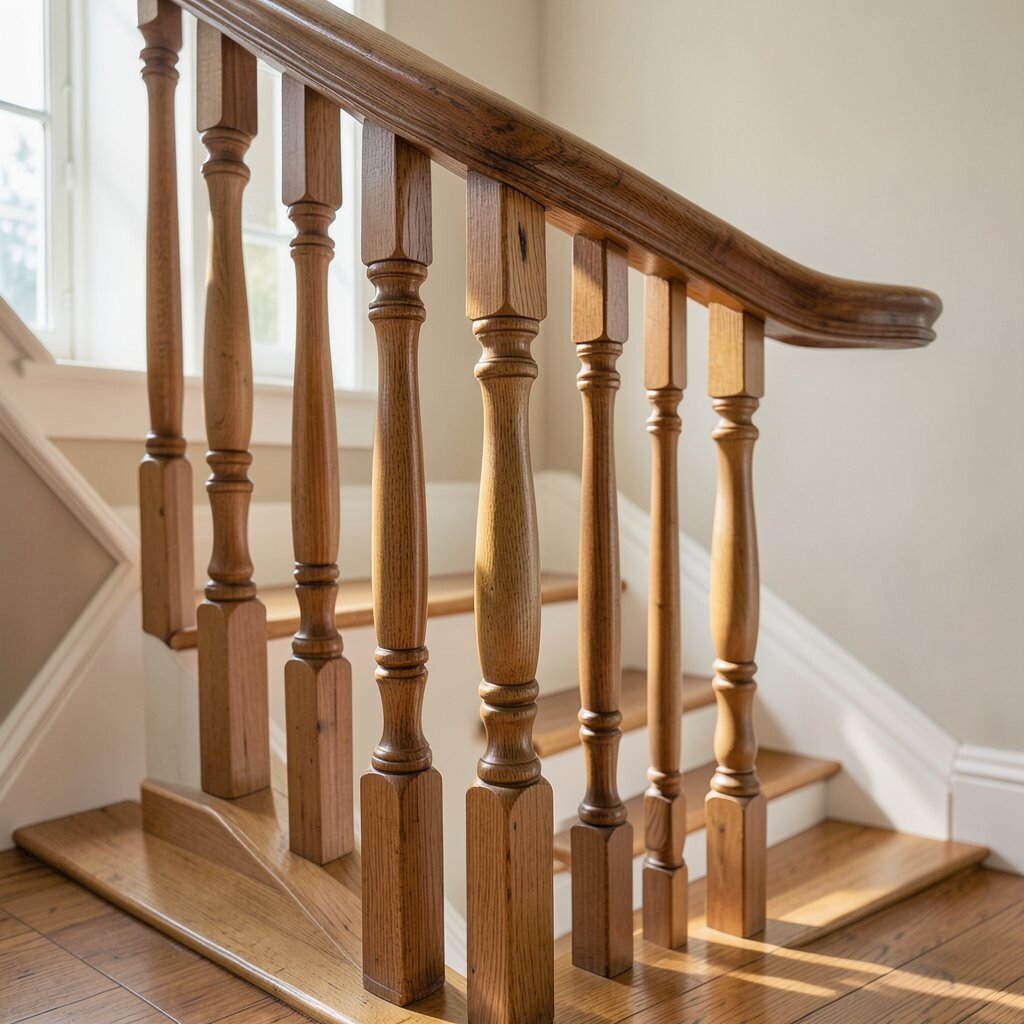
Turned wood balusters catch the light like little columns, with smooth curves that look hand-finished even when they are made with precision. I love how they make stair rails feel warm, not cold, especially in homes with wood floors or honey-toned trim.
They offer a classic look that pairs easily with many styles, from farmhouse to traditional. For practical results, choose a consistent spindle profile so the stair looks balanced from top to bottom. If you want personalization, match the wood species to your railing and baseboards, then stain a shade that blends instead of standing out.
2. Fluted Balusters With Vertical Rhythm
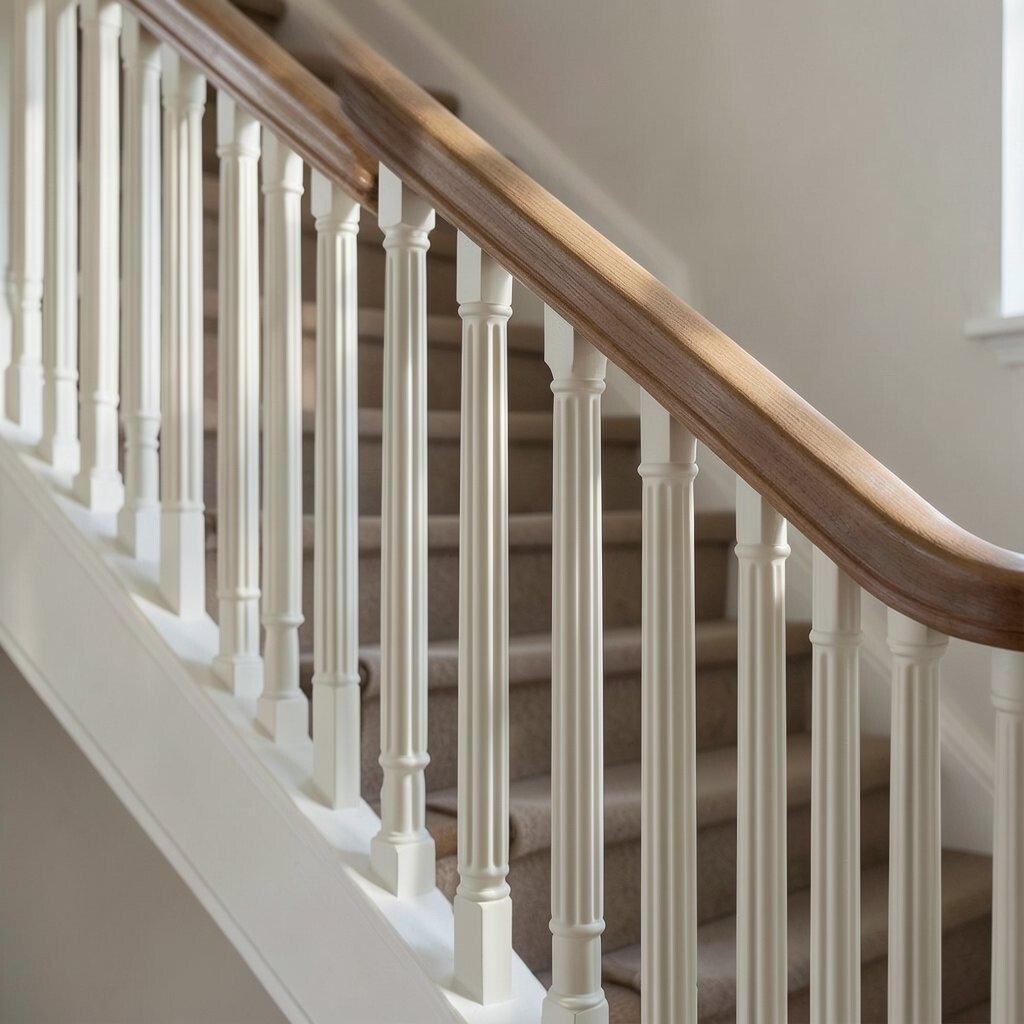
Fluted balusters bring a steady sense of movement, like vertical stripes that guide your eyes up the staircase. When you look closely, the shallow grooves create gentle shadows that feel elegant in daylight and cozy at night.
This element adds visual order, which helps stairs look neat even in busy hallways. To keep installation smooth, measure for consistent spacing and verify that every groove aligns with the top rail and newel style.
If you enjoy a subtle update, paint the balusters a soft satin off-white for a clean look. For cost planning, simple fluted profiles often cost less than fully carved styles, so you can keep the budget calmer while still getting a high-end vibe.
3. Wrought Iron Scrollwork Balusters
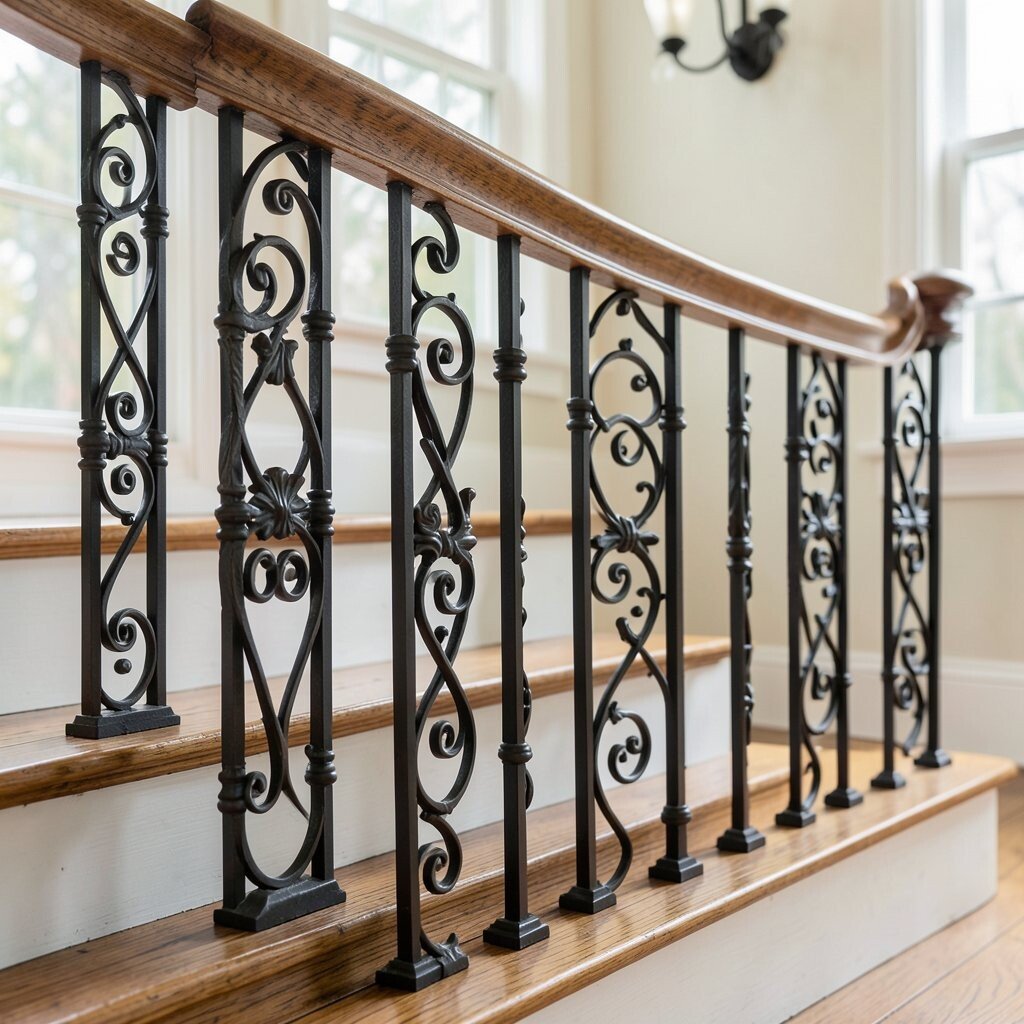
Scrollwork balusters create a lacy feeling without losing strength, especially when the metal is dark bronze or matte black. They look fantastic with wood treads because the warm grain and cool metal create a satisfying contrast.
One major benefit is durability since wrought iron handles daily use and resists warping in humid areas. Keep things practical by choosing scrolls with clear lines that won’t snag fabric or small hands.
For personalization, align the scroll pattern with other accents in the room, like a matching chandelier or door hardware. Current trends lean toward slimmer scroll shapes and clean finishes, so you can feel modern while staying classic.
4. Square Wood Balusters With Clean Edges
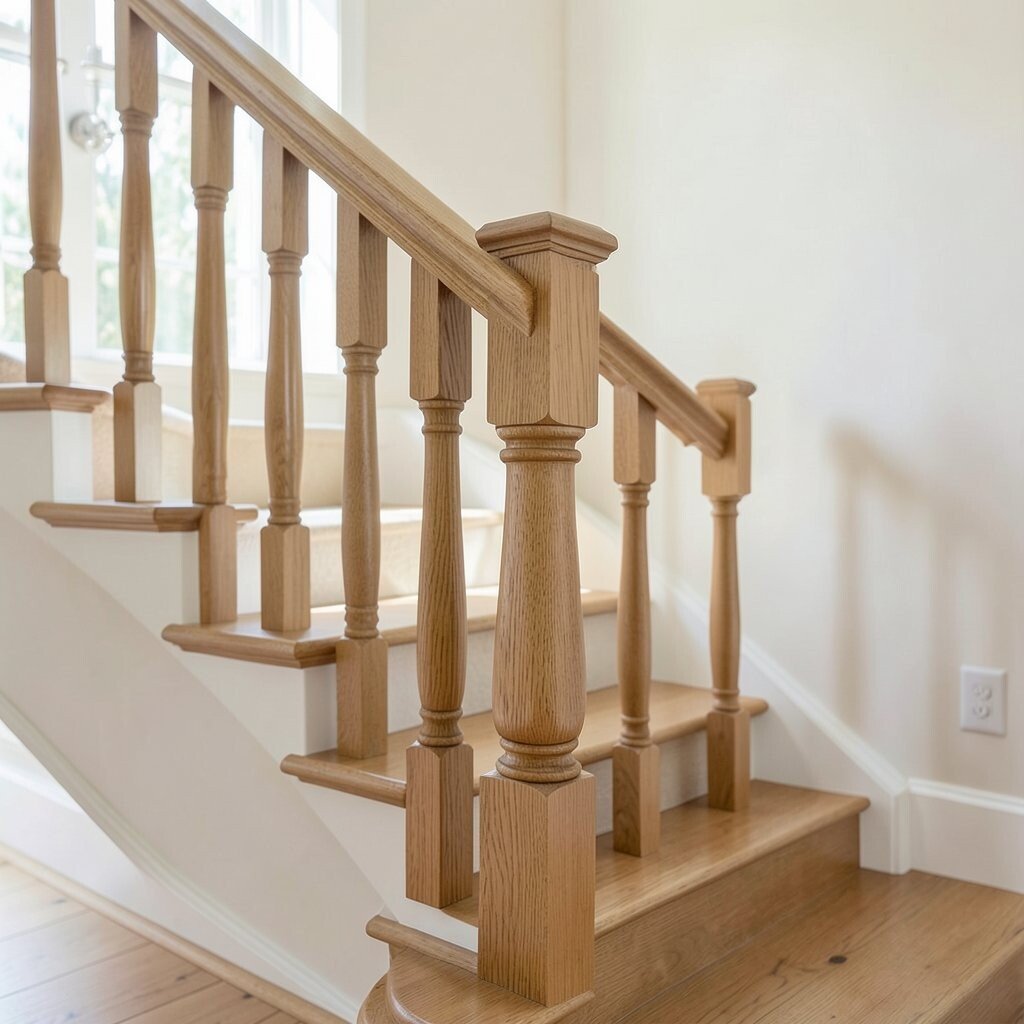
Square wood balusters feel sturdy and architectural, with straight lines that make a stair look crisp and intentional. In a bright entryway, their simple geometry can look almost like furniture.
This style is easy to maintain, since flat faces wipe clean and don’t trap dust in deep cuts. If you want variety without complexity, slightly vary the top and bottom silhouettes using a matching rail profile.
5. Classic Spindle Bundles With Decorative Caps
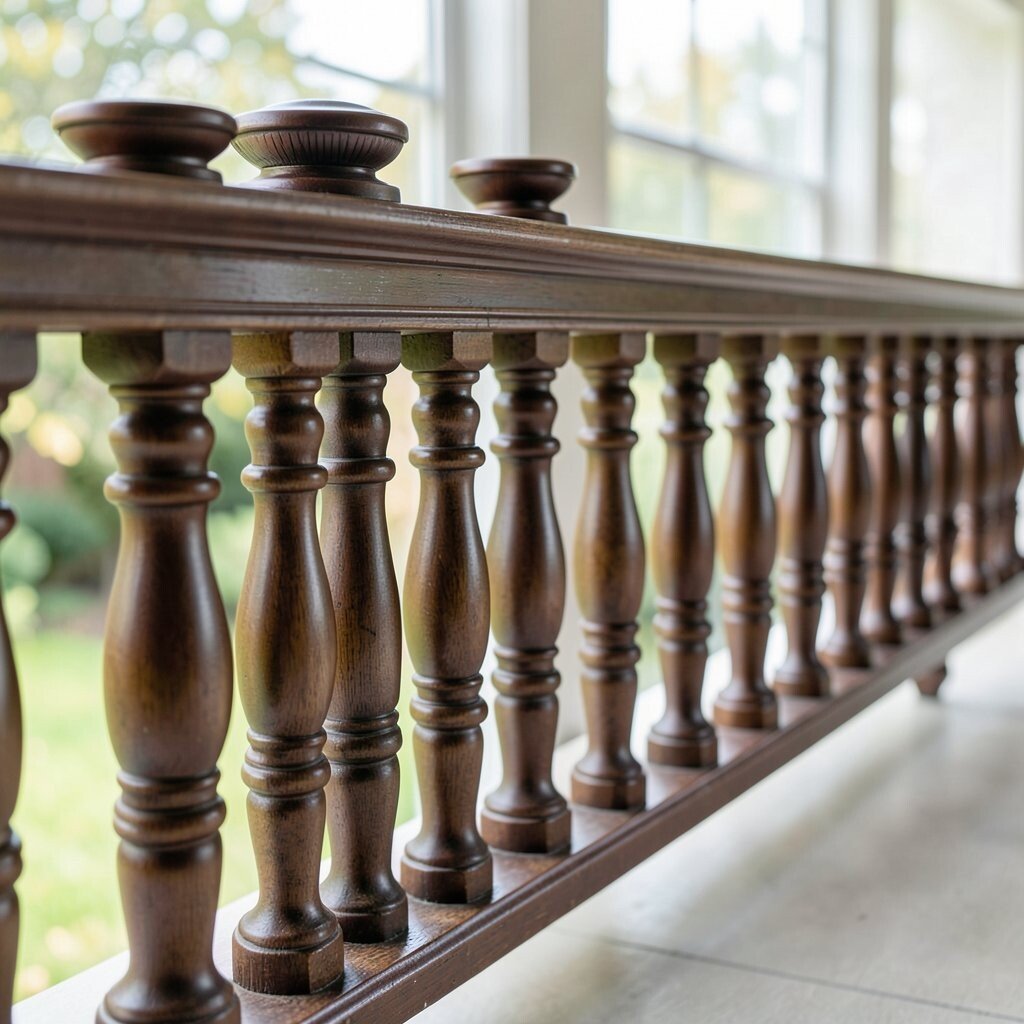
Some designs group turned spindles into repeating clusters, then add a cap that gives the look a finished crown. From a distance, it reads as rich and rhythmic, and up close you can see the tiny details that make visitors slow down.
These elements add visual interest without needing heavy carving, which makes them a great pick when you want charm but still crave lightness. A practical step is to keep the cluster size consistent, so the spacing stays calm along the railing.
For personalization, choose caps with a subtle bead or shallow ogee curve that echoes your trim. Cost-wise, bundled styles can vary, so compare options that use fewer custom parts but still deliver the same overall “wow.”
6. Gently Curved Balusters For Soft Classic Lines
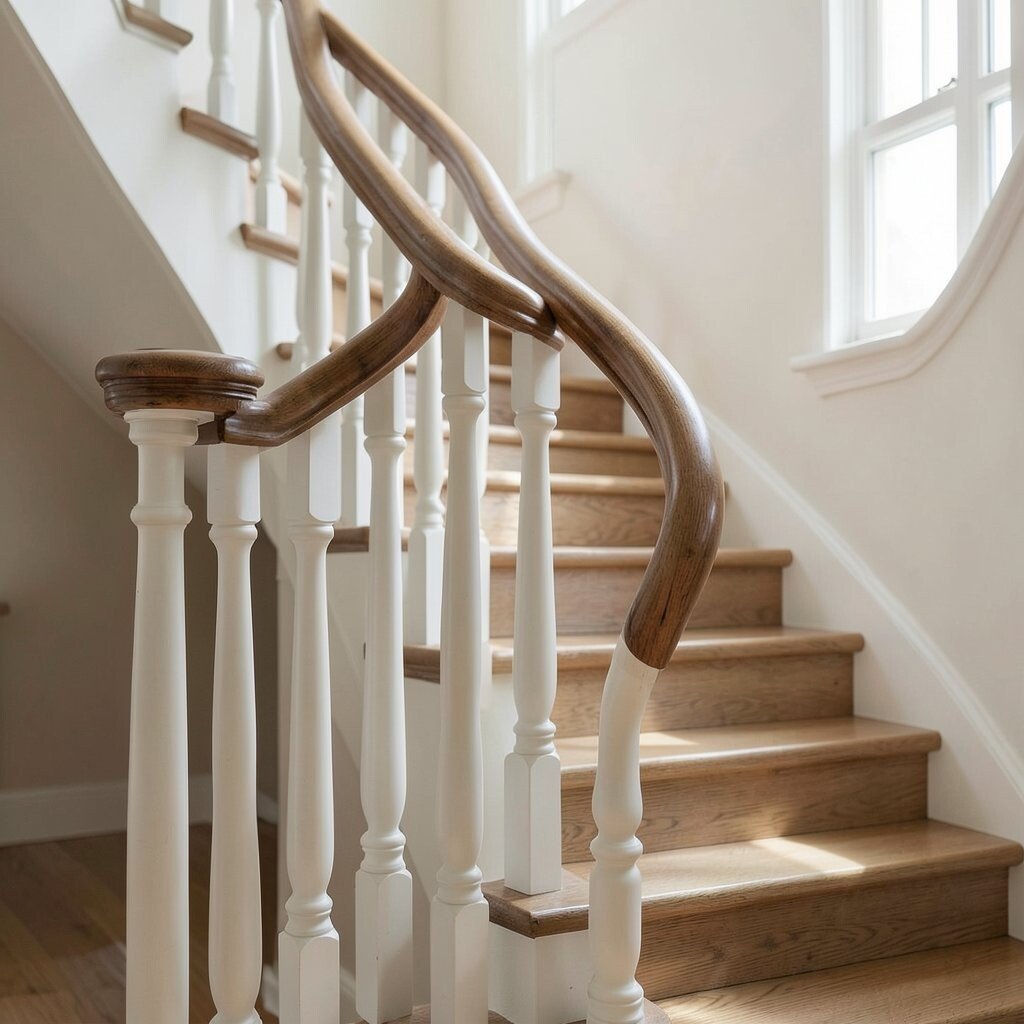
Curved balusters bring a gentle flow to the staircase, like railings that were designed to move with the body. This works especially well on sweeping stairs where the turn naturally adds drama.
The benefit is that curved lines feel friendly and less rigid than strict straight patterns. To get a professional look, plan your measurements carefully around the angle of the stair so the curves land evenly between newel posts.
7. Diamond-Pattern Balusters For A Traditional Spark
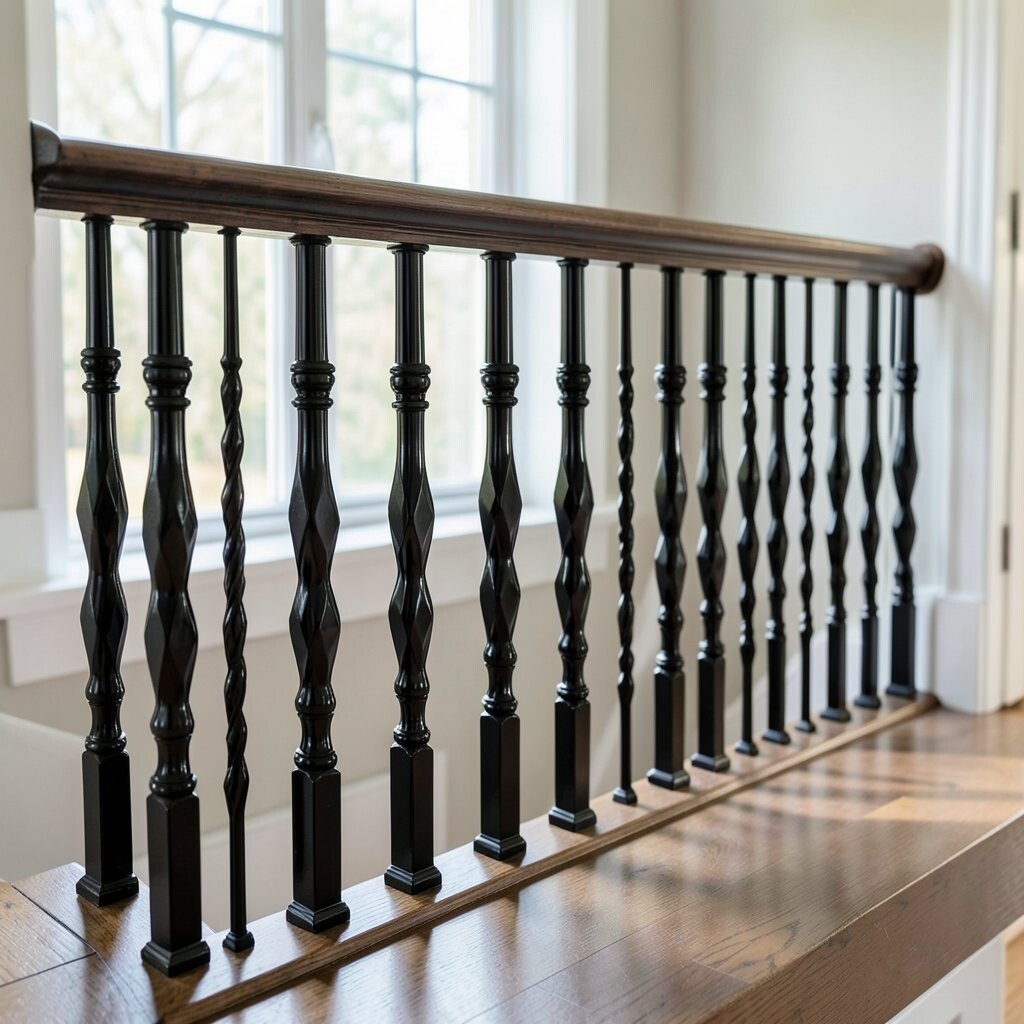
Diamond-pattern balusters create a classic look with a bit of sparkle, especially when finished in polished metal or a glossy black. The repeating shapes add a steady grid effect that can make even a simple railing feel designed.
They add privacy while still keeping sightlines open, which is a smart balance for homes with natural light. For practical living, choose a diamond spacing that won’t feel too open for kids or pets, and check that edges are smooth.
If you want personalization, match the diamond scale to your room size, using larger diamonds for wide landings and smaller ones for cozy hallways. Current trends favor crisp geometric repeats, so this classic pattern often feels surprisingly fresh.
8. “S” Scroll Balusters In An Antique Finish
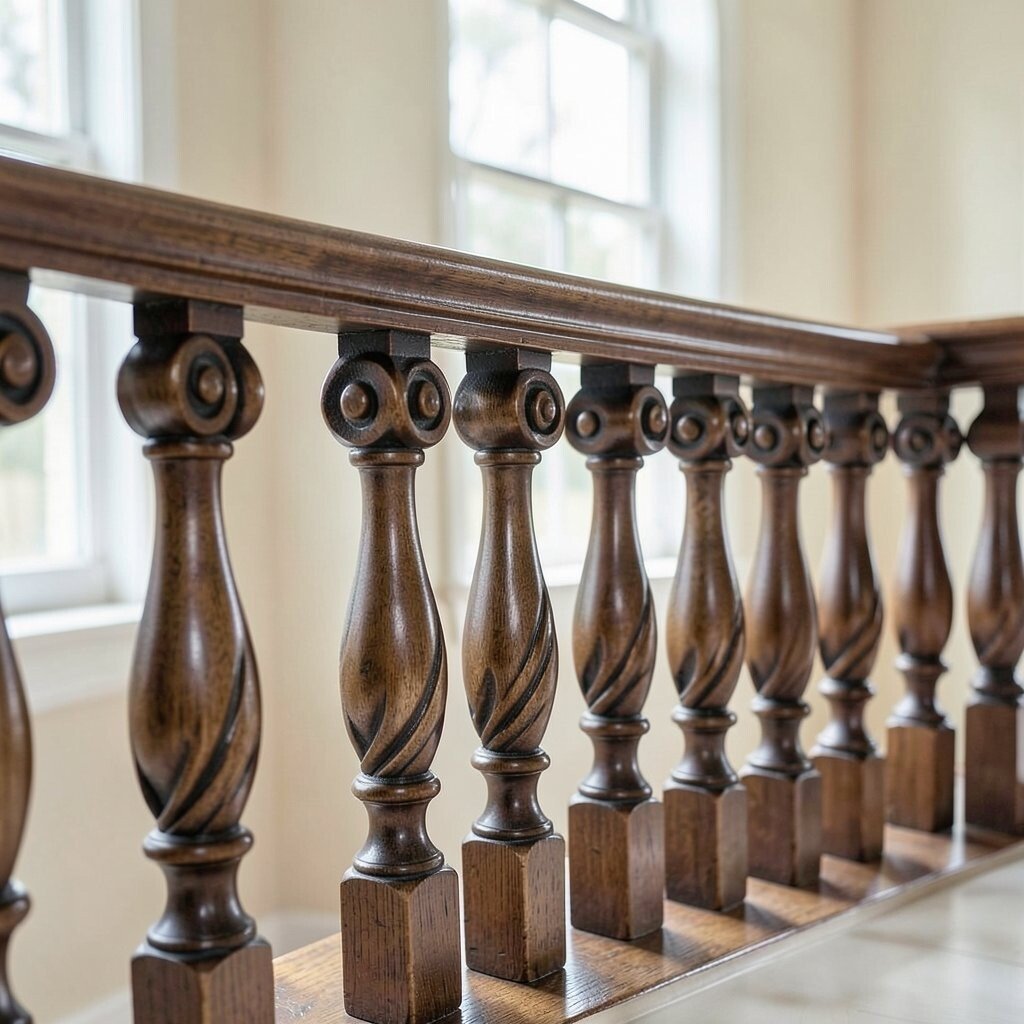
“S” scroll balusters have a timeless personality, folding back on themselves in graceful shapes that look at home in older neighborhoods and new renovations alike. An antique finish, like aged bronze with darker undertones, makes the curves feel richer and deeper.
This element shines in foyers because it frames the rail with a steady visual heartbeat. Keep practical by selecting a scroll design with adequate spacing from the rail so dirt doesn’t build up where metal meets wood.
9. Flat Bar Balusters With Classic Spacing
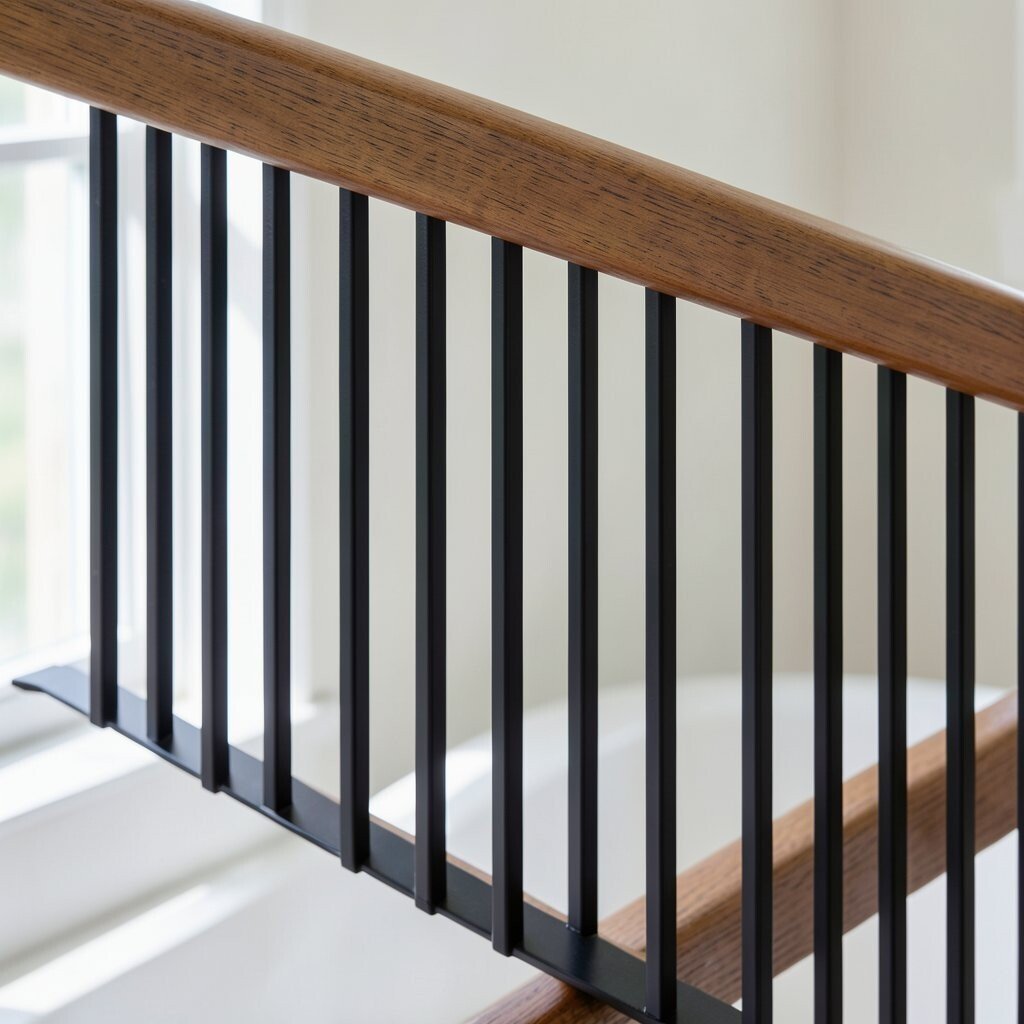
Flat bar balusters look simple, yet they can feel elegant when spacing is consistent and the finish is well chosen. A slim flat bar in brushed steel or matte black gives a clean, classic vibe without looking bare.
The advantage is straightforward maintenance since smooth bars wipe down quickly. For best results, install with careful alignment so every bar remains parallel to the rail line from every viewing angle.
Personalization is easy through finish selection, like pairing warm wood rails with a bronze tone. If you’re managing cost, flat bar options often sit in a more affordable range compared to heavy ornament, while still upgrading the look.
10. Rope-Twist Balusters For Vintage Charm
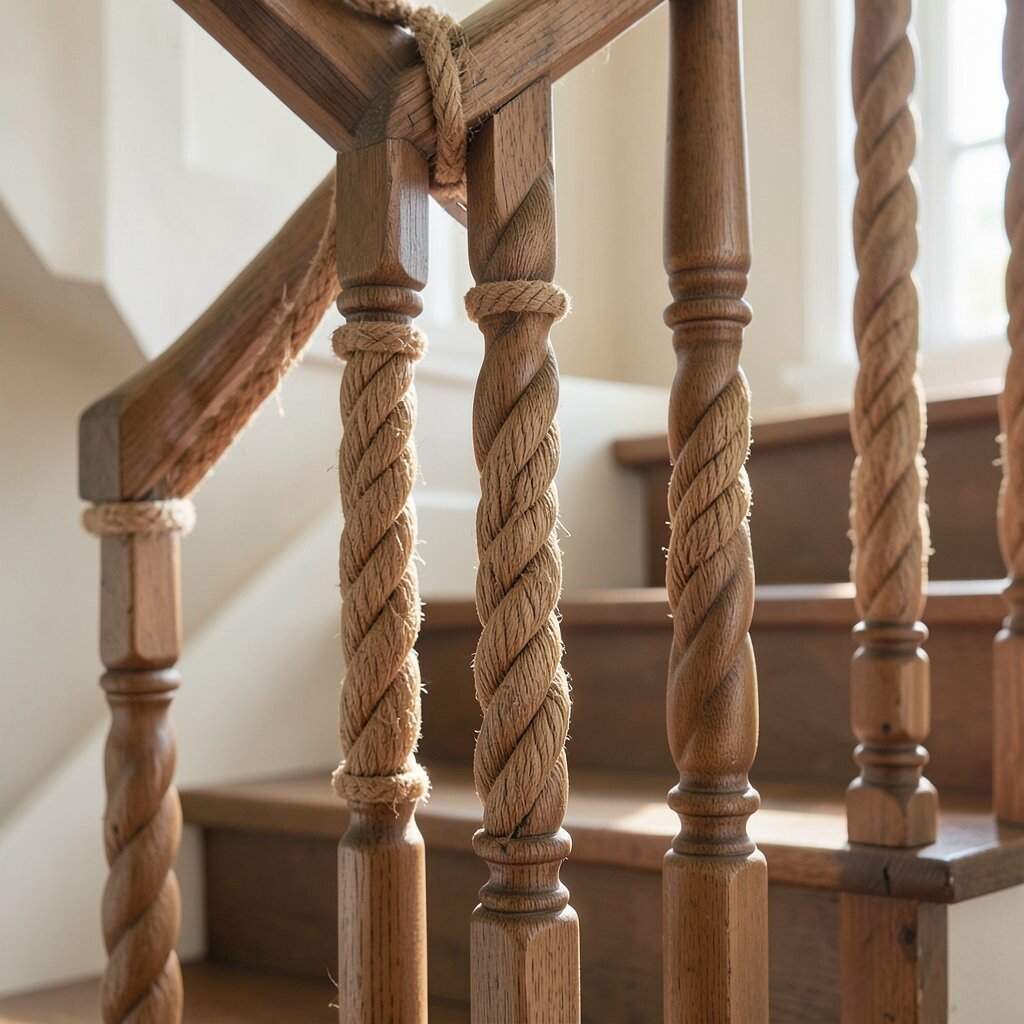
Rope-twist balusters bring a vintage, slightly playful energy, like the railing is wrapped in a decorative cord. Up close, the twisted ridges catch light and add texture that feels lively.
This style adds character fast, even when the rest of the staircase is simple. For practical use, make sure the twist edges are smooth and won’t create snag points.
11. Majestic Balusters With Ogee Profiles
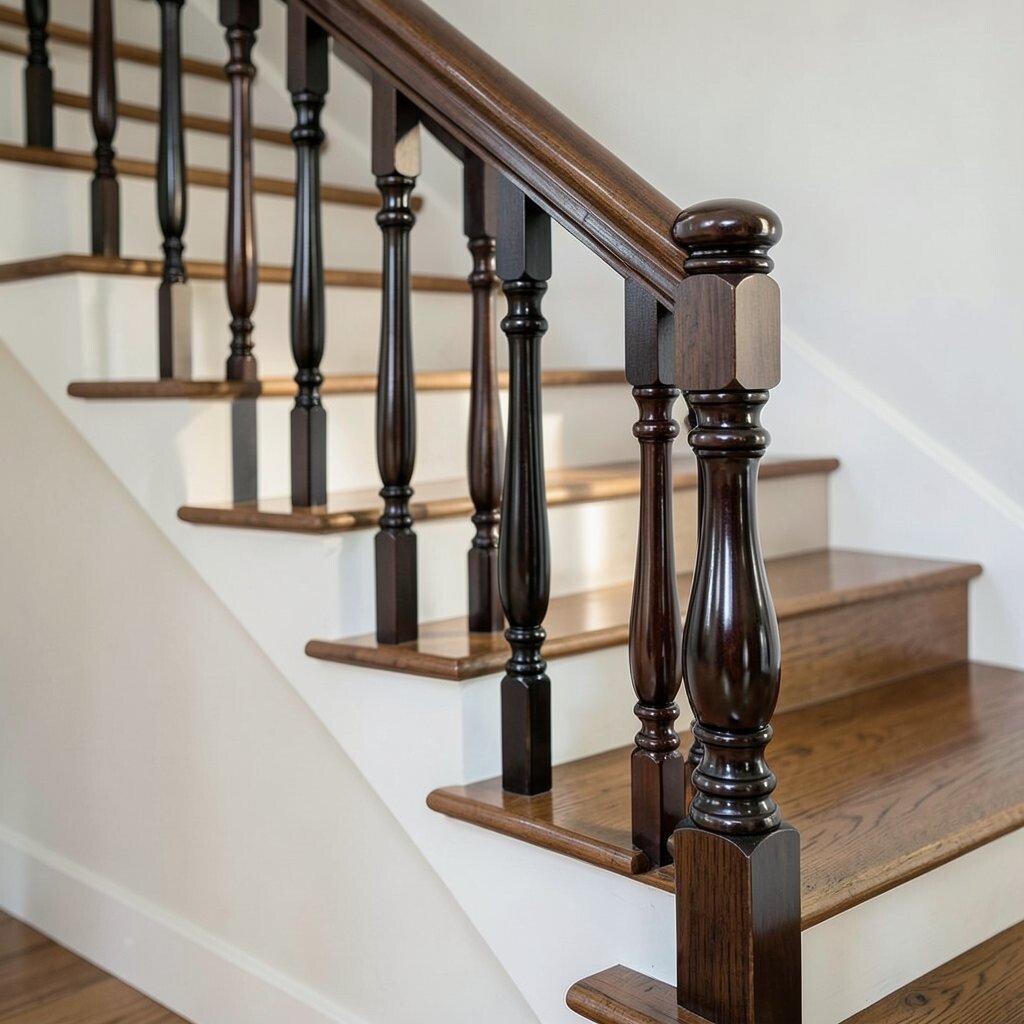
Ogee profiles add a classic “S” curve at the body of the baluster, creating a refined look that feels old-world without being overly ornate. When the finish is semi-gloss paint or a deep stain, the profile stands out clearly.
These balusters help stairs feel polished because the silhouette is complex enough to look special. For accuracy, double-check that the ogee height matches your rail cap and that spacing stays even so the pattern doesn’t drift.
If you want personalization, consider pairing ogee balusters with a simple newel to keep the overall look balanced. Cost-wise, ogee detailing can be moderate depending on whether you choose mass-produced profiles or fully custom work.
12. Glass-Accent Balusters With Framed Panels
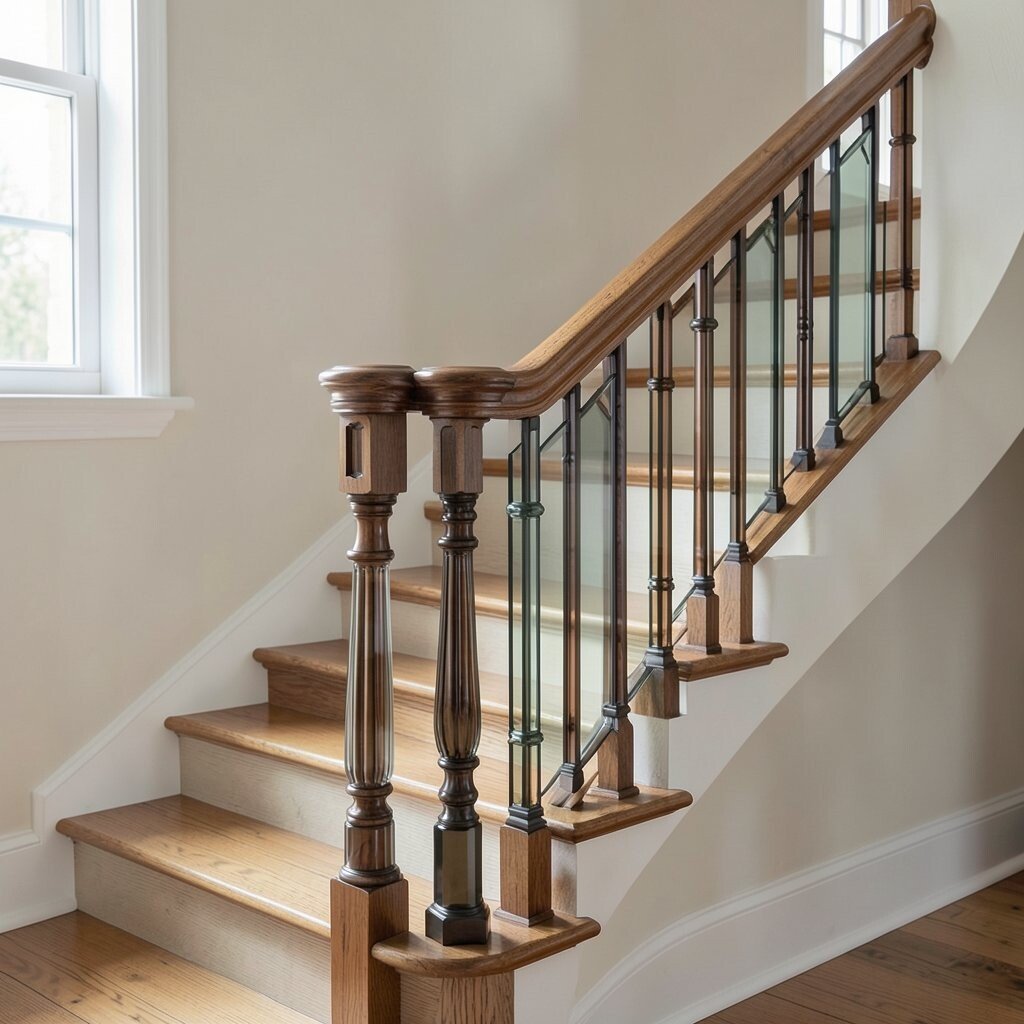
Balusters with glass accents can still feel classic when the glass is framed in wood or metal with traditional shapes. Clear glass makes the stairs feel lighter, while frosted panels soften the look and add privacy.
The benefit is that glass improves visual openness, which is great for homes with narrow hallways. For practical installation, use properly rated glass and ensure the frame design supports safe mounting and easy cleaning.
To personalize, pick a glass tint that complements your window tones, like warm amber or cool gray. In current styling, framed glass panels often pair beautifully with classic rail lines, giving you a traditional feel with modern light handling.
13. Panel Balusters With Raised Molding Detailing
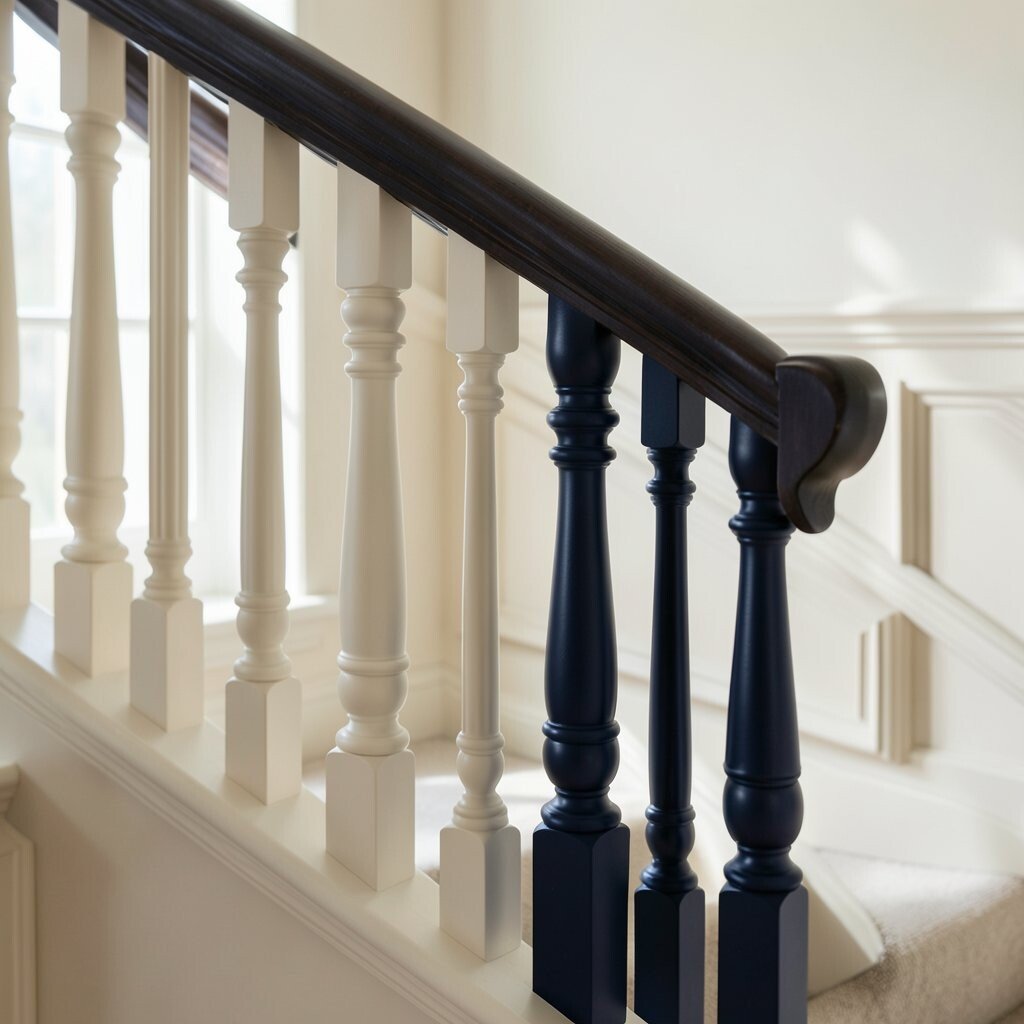
Panel balusters use raised molding like miniature wall panels, giving your stair rail a crafted look. They can make a staircase feel like built-in millwork, especially when painted to match trim.
One practical advantage is that panels can help reduce sound and movement compared to airy open patterns. For a clean result, ensure the panel edges line up with the rail so the molding looks symmetrical.
Personalization is simple through paint color, since warm creams feel classic while deep navy feels bold and elegant. Cost considerations often depend on how much custom molding is involved, so compare pre-made profiles against fully custom millwork.
14. Wooden Balusters With Beaded Turns And Micro Details
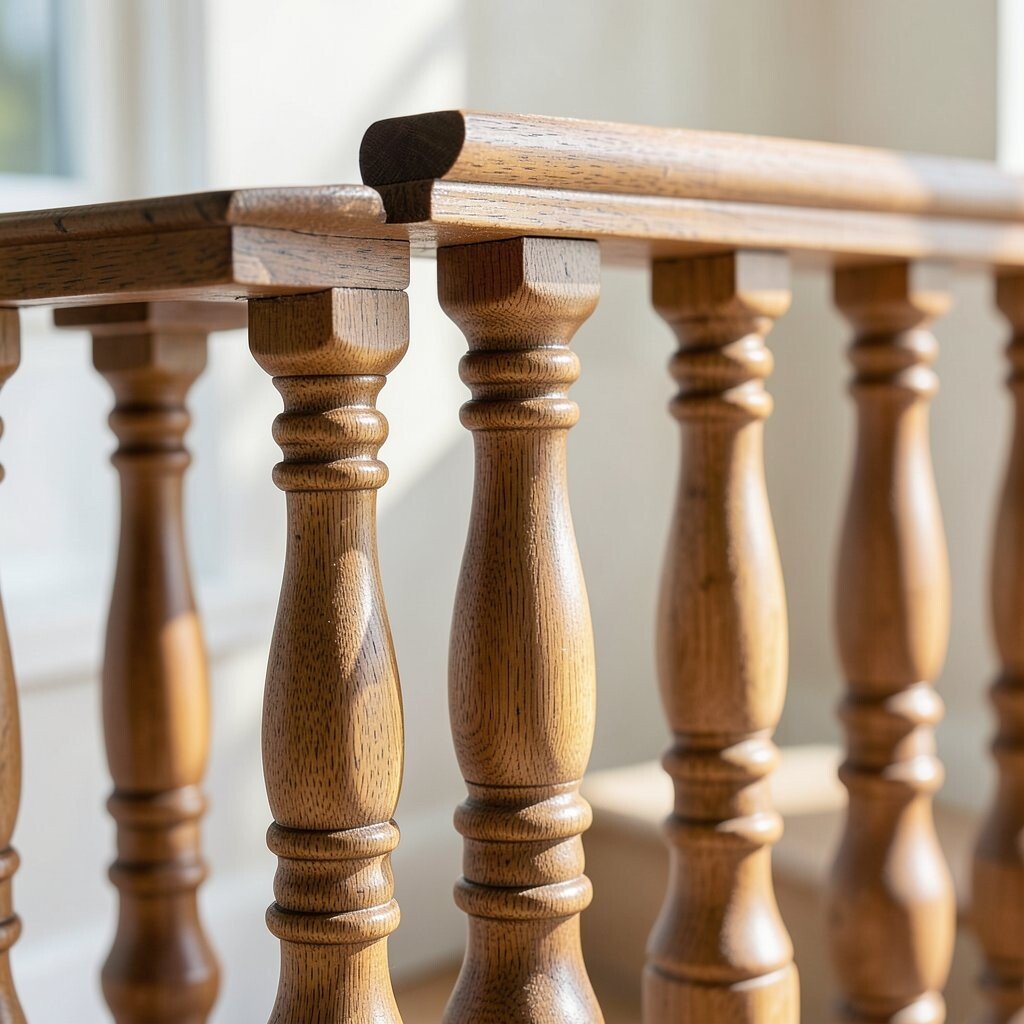
Beaded turns add tiny round details that make a railing look intentionally decorative, even when the main shape is simple. They give a gentle sparkle in daylight and add depth in shadow.
This element is great when you want classic style but still want something a bit more special than basic spindles. To keep maintenance easy, choose a finish that seals the bead edges so grime wipes away without scrubbing.
15. Cast Metal Balusters With Vintage Motifs
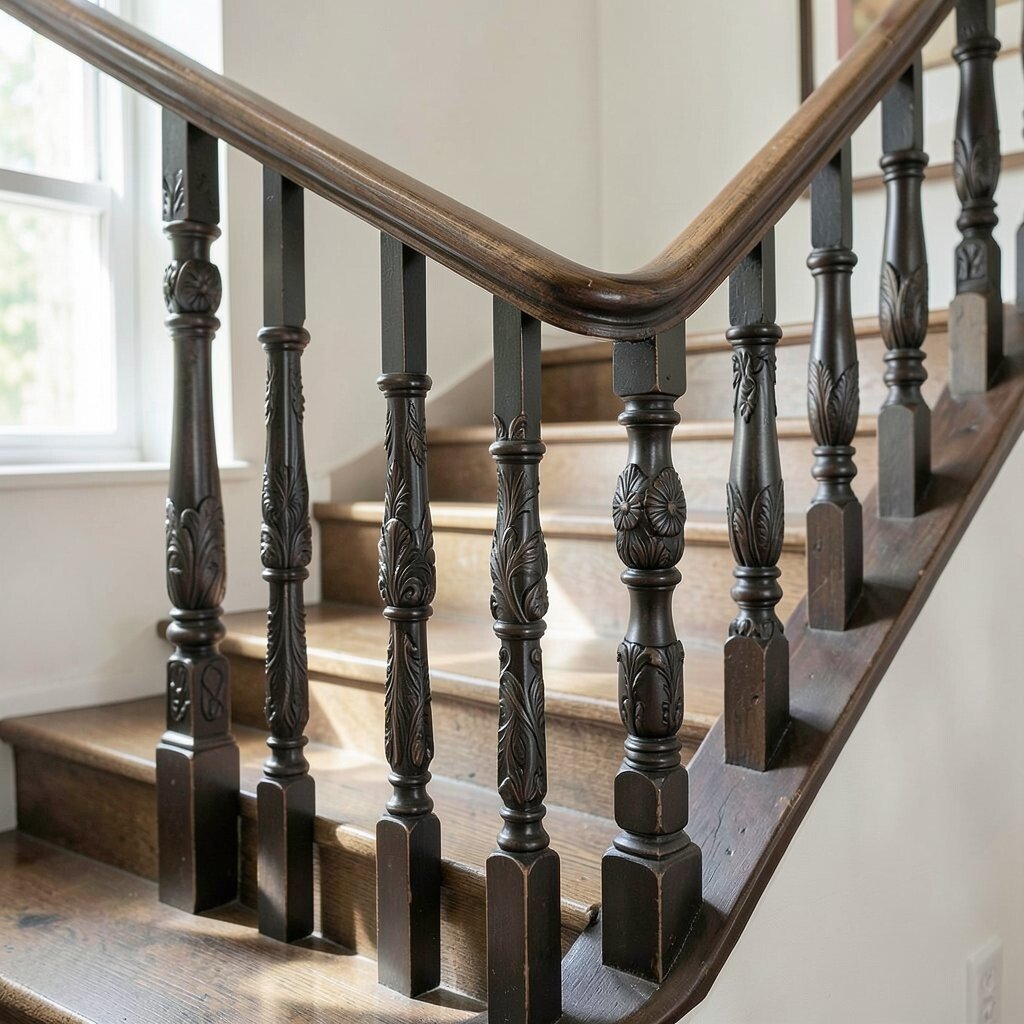
Cast metal balusters can bring heavy, historic character, especially when they feature motifs like leaves, rosettes, or scroll crowns. Even if your staircase is modern, a cast pattern can anchor it with classic charm.
The benefit is strong visual presence, which means fewer additional decorations are needed to make the stairs feel complete. For practical planning, check the weight of cast pieces and make sure your rail system and posts can safely support the load.
Personalization works well by selecting a motif that echoes your living space, like repeating leaf curves found in furniture or artwork. Cost can be higher for cast designs, but it’s often worth it because the details look “finished” without needing extra upgrades.
16. Mixed-Classic Baluster Sets For A Curated Look
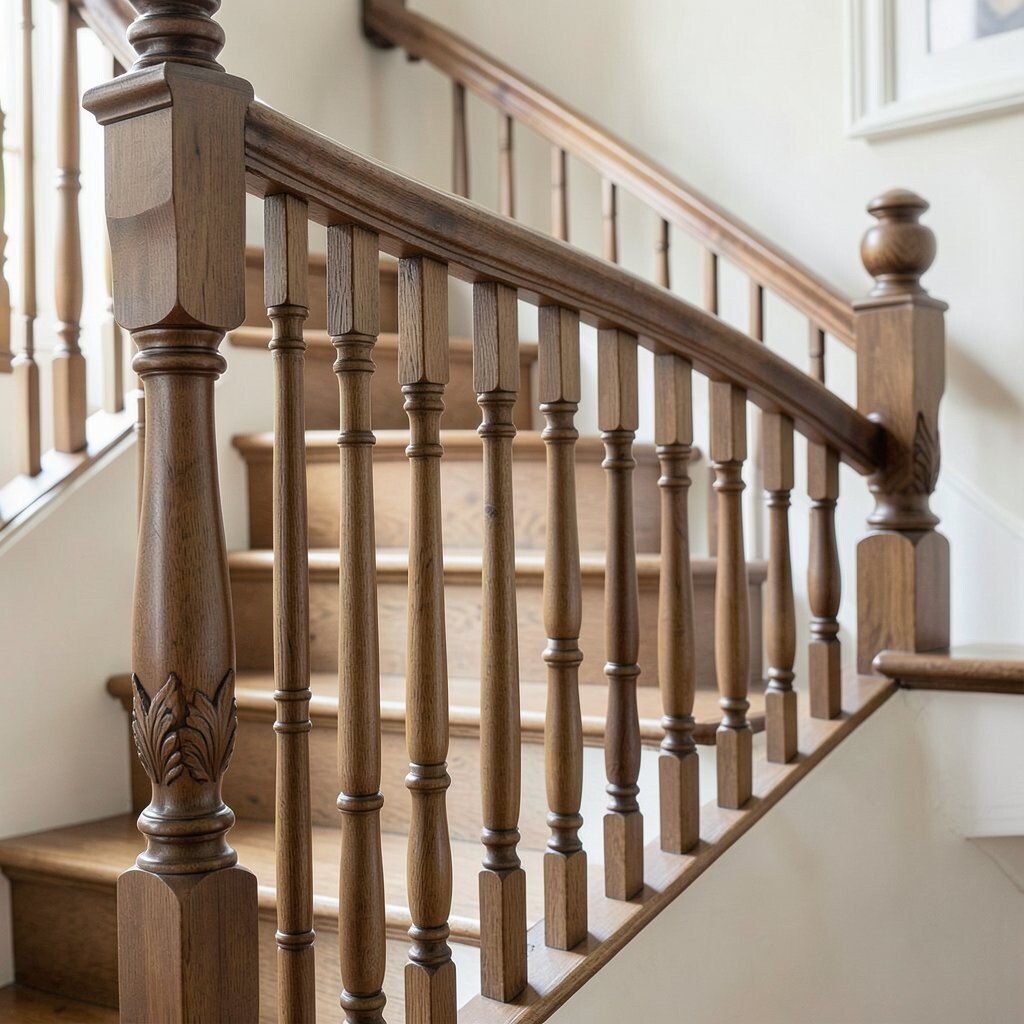
Sometimes the most stylish option is mixing classic balusters in a repeating pattern, such as pairing simple spindles with a few ornamental accents near newel posts. It feels curated and intentional, like a gallery wall, and it can make your stair the focal point.
This approach offers flexibility for personalization while still keeping everything cohesive through matching finish and consistent spacing. For practical results, map the pattern on paper first, then test the rhythm by laying out a few pieces before final installation.
When thinking about cost, mixing can help you allocate budget to the most visible sections while using simpler elements elsewhere. Current trends lean toward thoughtful “accent” design, so this classic mixed method often looks both traditional and fresh.