
The room feels calmer when your desk looks like it belongs outdoors. Small design choices can make work feel lighter and more focused.
Nature-inspired spaces don’t have to be expensive or complicated, and they can still look modern. With the right mix of color, texture, and light, your everyday routine can feel a little fresher.
1. Start With Soft Forest Colors
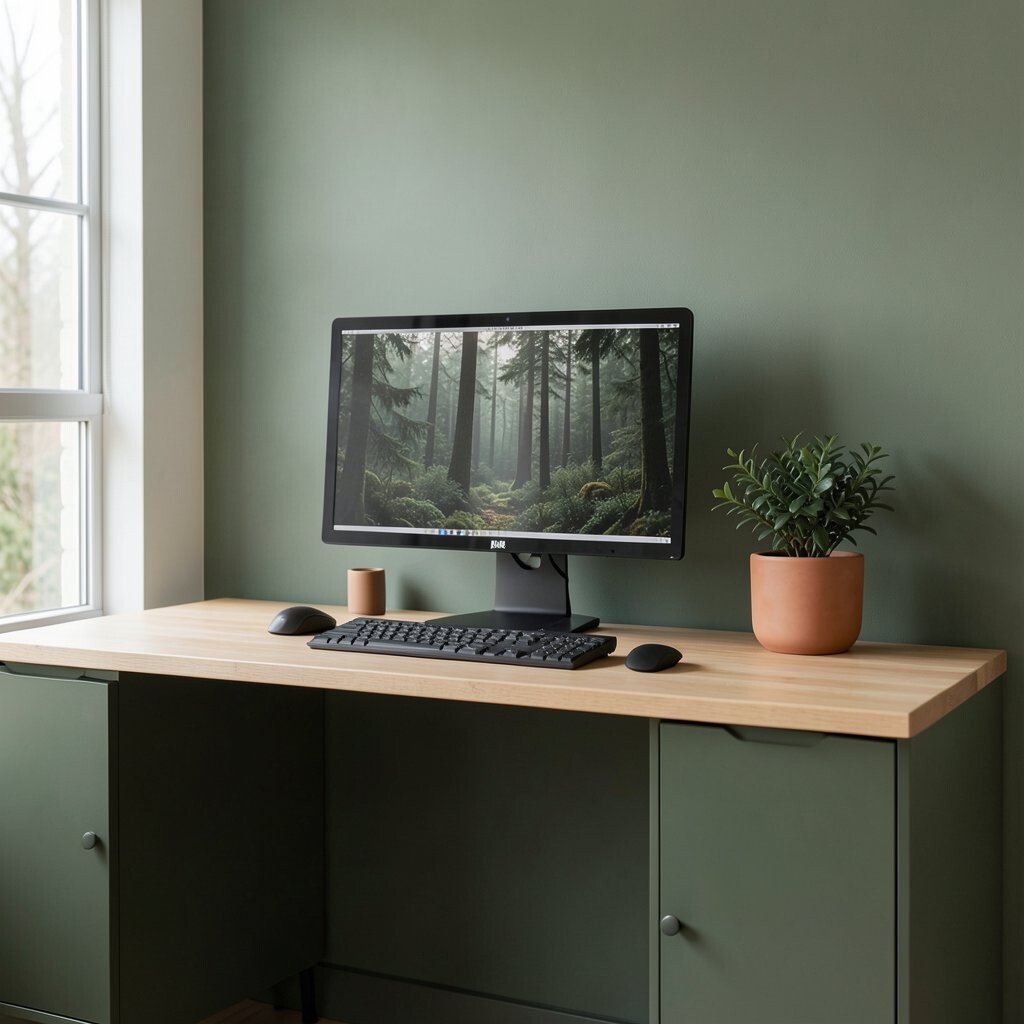
Choose a paint or accent color that reminds you of evergreen leaves or shaded moss. Think of deep greens, muted browns, and warm creams that make the space feel grounded.
Pair the color with a matte finish on the wall or cabinet doors to cut glare. You’ll likely notice less eye strain during long work sessions, especially when your monitor brightness is high. Add a small color pop with a plant pot or desk accessory in terracotta to keep the palette lively.
2. Bring In Living Plants With a Simple Setup

A single plant can change the mood fast, especially if you pick one that fits your light. Consider a pothos on a shelf or a low desk plant like a snake plant for a clean, modern look.
Living plants add gentle color and natural texture, which can make the workspace feel more welcoming. They also help many people feel more relaxed while working, because greenery feels soothing and familiar.
Use a lightweight cachepot and place it where your screen won’t cast strong shadows. If you want low effort, group two plants in different heights so the arrangement looks intentional. Rotate the pots every couple of weeks for even growth, and personalize by tying the pot style to your favorite colors.
3. Use Natural Wood in Key Spots
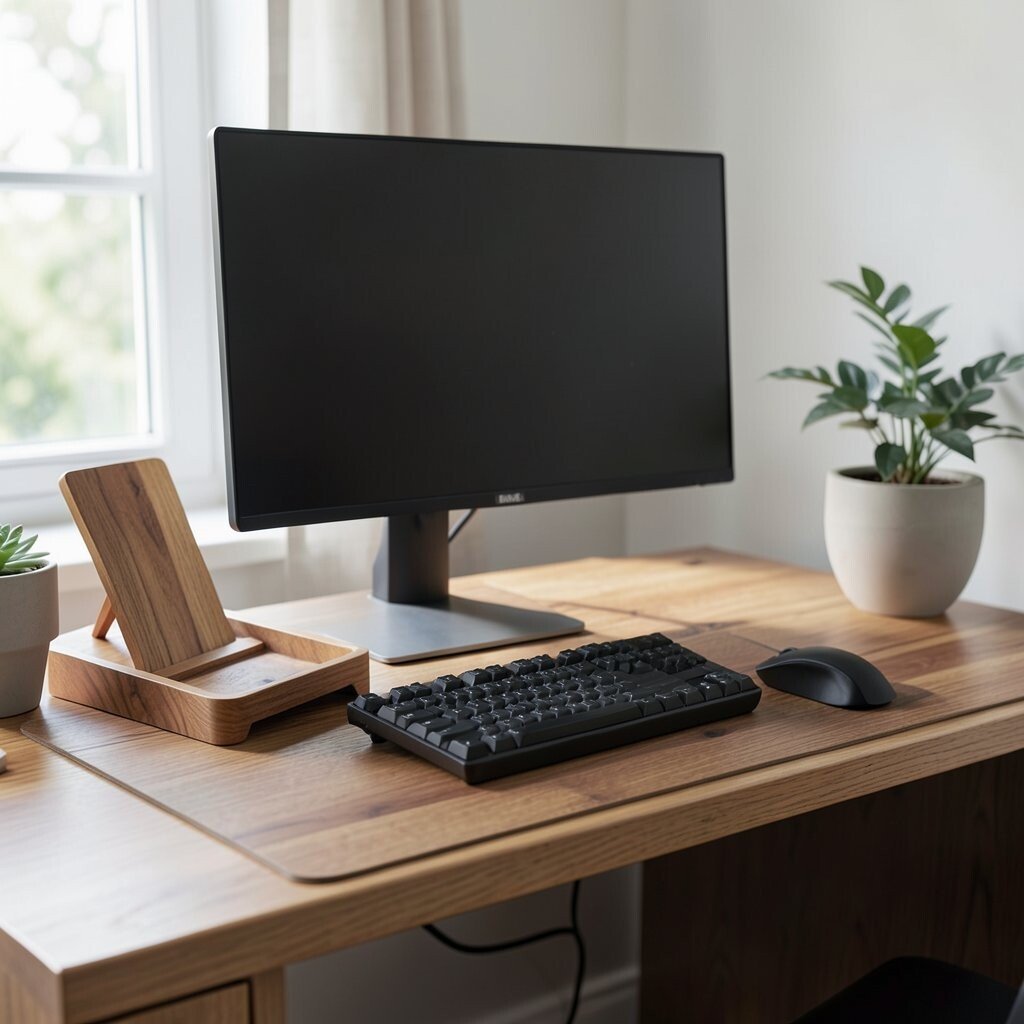
Warm wood tones can make even a small desk area feel more grounded. Look for a wood monitor stand, a desk tray, or a keyboard wrist rest in oak, walnut, or bamboo.
Wood brings a tactile feel that looks good in photos and feels good in daily use. It also helps balance cooler tech colors like gray and black, so your setup feels more human.
To keep it practical, wipe wood surfaces with a soft cloth and avoid soaking them. If you want a budget-friendly path, choose a wood-texture desk mat or veneer panel instead of replacing furniture. Personalize the look by matching wood tones across one or two items only, so the room stays calm.
4. Add Textures Like Stone, Linen, and Woven Fiber
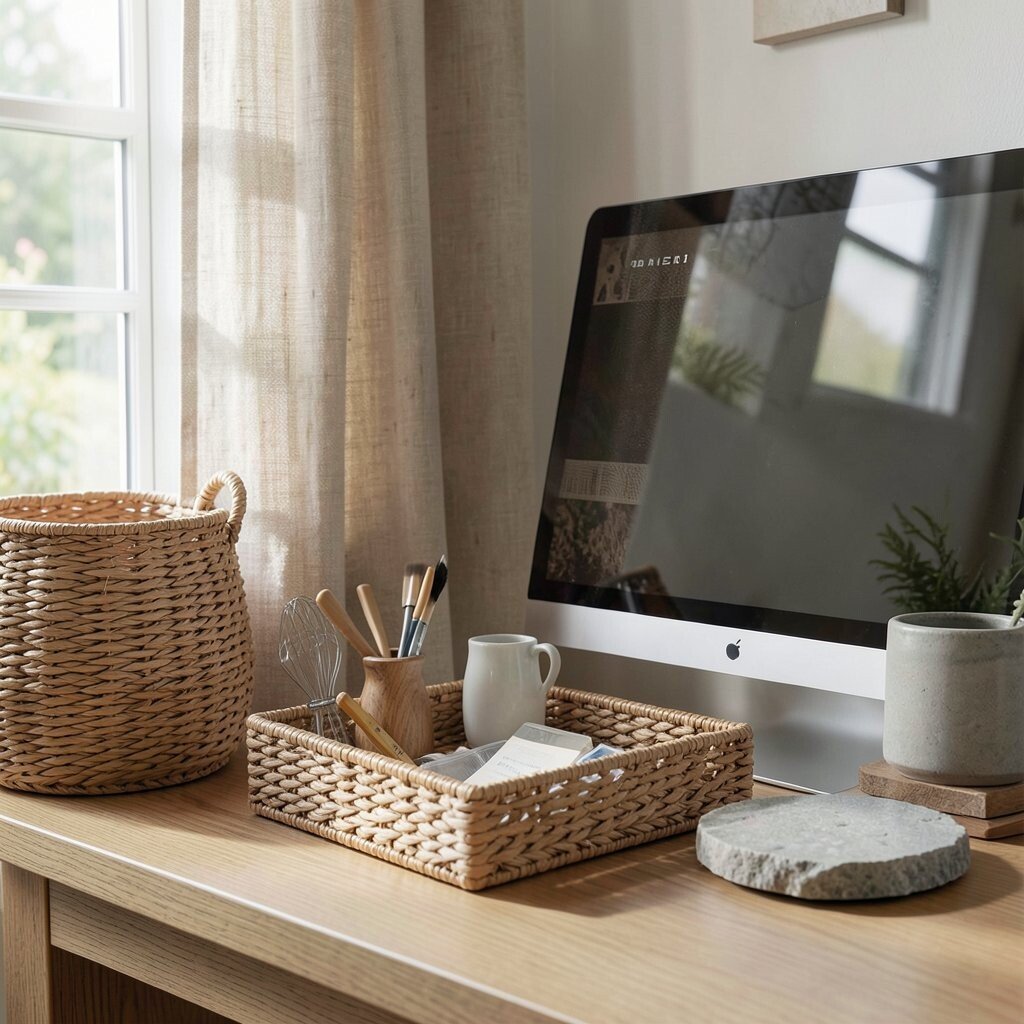
Texture is where nature design really shines, because the outdoors is never smooth and flat. Mix materials such as linen curtains, a woven basket, or a stone-like coaster set.
This approach makes the space feel richer without adding clutter. It can also soften reflections, which helps keep screens easier to look at. Try placing a woven tray under your daily essentials so you get a tidy look with natural texture.
5. Let Daylight Do the Hard Work

Position your desk near a window when you can, even if it’s only partially. Soft daylight helps colors look more true, and it can make the whole room feel brighter and more awake.
Use sheer curtains or light blinds so sunlight spreads gently instead of blasting direct glare. Your eyes may feel less tired, especially during morning to afternoon work blocks. If your desk is away from windows, place a full-spectrum lamp to mimic daylight and personalize the shade color to match your palette.
6. Choose a Desk Mat That Looks Like Terrain
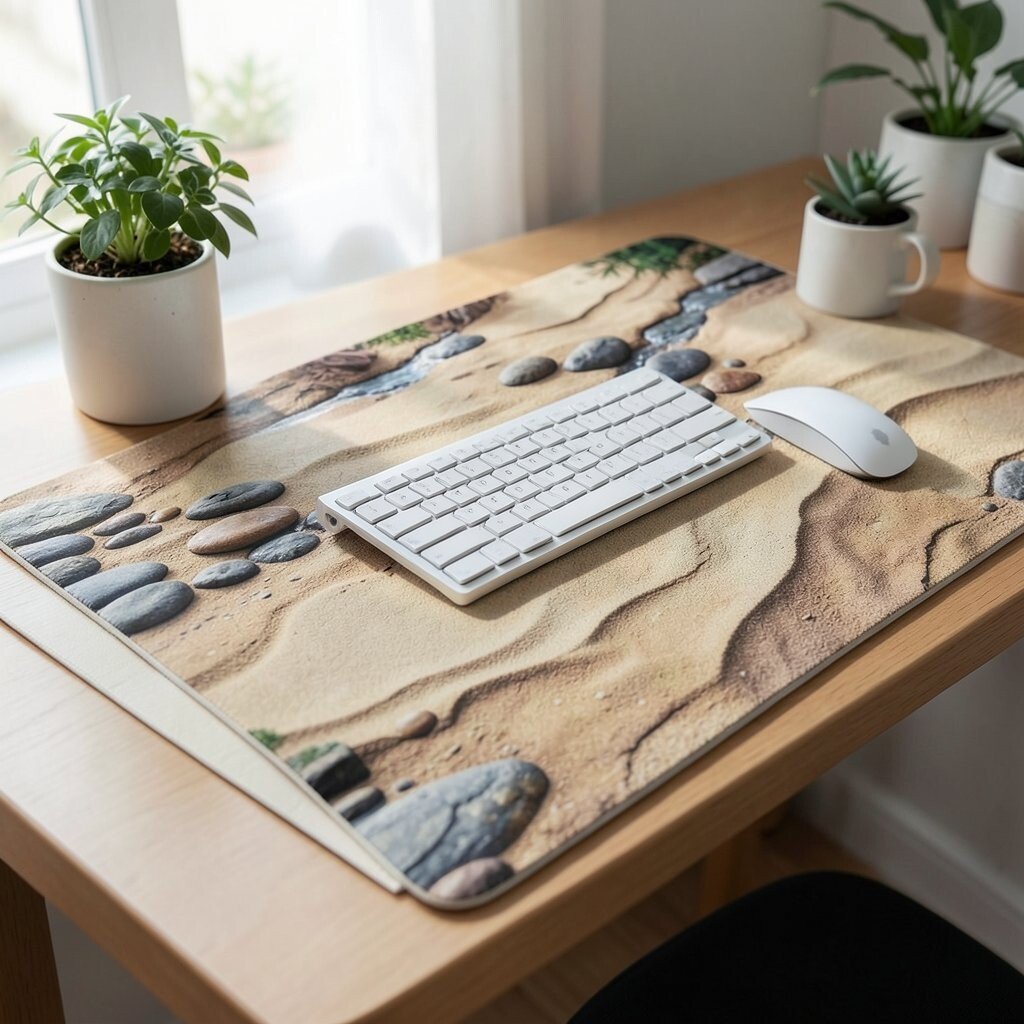
A desk mat doesn’t have to be plain, and nature-inspired designs can make it feel like a mini landscape. Look for patterns that resemble river stones, subtle topographic lines, or muted sand tones.
A textured mat creates a clear “home base” for your keyboard and mouse, which can reduce the mental noise of scattered items. It also protects your desk surface, so it stays looking neat longer.
Keep it practical by choosing a mat with a grippy underside so it won’t slide. For personalization, align the pattern tones with your plant pots or chair accents. Budget-wise, mats are usually cheaper than replacing furniture, but they still make a noticeable visual upgrade.
7. Hang Art That Feels Like the Outdoors

Nature art can set the emotional tone of your workspace right away. Choose prints of trees, coastlines, or mountain ridges, but keep the color palette consistent with your room.
When your wall art matches the calm tones you picked for your desk area, the whole setup feels more coherent. It can also give your eyes a quick visual rest when you look away from the screen.
Try a single larger piece if your space is small, or cluster smaller frames for a cozy gallery vibe. For a current look, choose minimalist line art or watercolor-style scenes. If you like changing things often, consider swapping seasonal frames using inexpensive frames and print packs.
8. Frame Your Monitor With a Green Accent

Small framing details can make your workstation feel like it has an outdoor “border.” Add a monitor bezel strip, a slim green shelf, or a vertical plant stand behind your screen.
This creates a visual focus that keeps your attention centered without feeling harsh. Green accents can also make the space feel fresher and less metallic, which many people enjoy in modern tech setups.
Keep cables tidy by routing them behind a small shelf or through a cable sleeve in a natural color like dark brown. Personalize by picking a shade of green that matches your favorite plant or art print. If you’re cost-conscious, use a peel-and-stick screen ledge or a fabric backdrop instead of buying new furniture.
9. Add a Rug With Earthy, Grounded Colors

A rug instantly changes the look of a workspace, especially if your desk sits on hard flooring. Choose earthy tones like clay, ochre, or soft charcoal with a subtle pattern that reminds you of natural landscapes.
Underfoot comfort matters, and a rug can make long work hours feel less tiring. It also reduces noise and makes the room feel less echoey, which is great for focus.
Pick a rug with easy-to-clean materials if you snack at your desk or keep it kid-friendly. Personalize by layering a smaller mat under your chair to highlight your color theme. For cost, consider washable rugs or outdoor rugs that handle daily life better.
10. Create a “Breathe” Corner for Brain Breaks

Even if your workspace is small, you can carve out a mini nature pause. Add a comfy chair, a floor cushion, or a small stool with a plant nearby and a soft light.
This corner gives your eyes and mind a clear break, which can help you reset during busy days. It also makes the space feel designed rather than random.
Keep it practical by adding a side basket for a water bottle, a journal, or a stress ball. Personalize with one calming object like a smooth river rock set in a bowl or a small lantern with warm light. Choose items you can move quickly so the corner works whether you need quiet or conversation.
11. Organize With Woven Storage Bins

Woven bins and baskets feel like they belong in a cabin or garden shed, but they still work in modern rooms. Use them for paper, chargers, stationery, or spare cables.
Natural-looking storage reduces visual clutter, which helps your brain feel calmer. Many people find it easier to start tasks when supplies are easy to grab and easy to put away.
Choose a set of bins that match your color palette, such as light jute or dark wicker. Personalize by labeling in a small handwritten style or using small tags that look like plant labels. For budget, thrift baskets with great shapes and clean them well before using them.
12. Make Your Desk Feel Like a Calm Clearing

Nature spaces feel open, so your desk should too. Clear the top of the desk until only your daily essentials remain in the same spot each day.
A tidy desk can reduce distraction and help you find what you need faster. It also makes the nature elements you add, like wood or plants, stand out more.
Use a tray for pens and a small stand for your notes so everything has one home. Personalize your clearing ritual by keeping a tiny “reset” cloth near the keyboard and using it at the end of the day. If you’re on a budget, start with simple items like a catchall tray and a few cable ties before buying bigger upgrades.
13. Pick Lighting That Mimics a Sunrise or Sunset
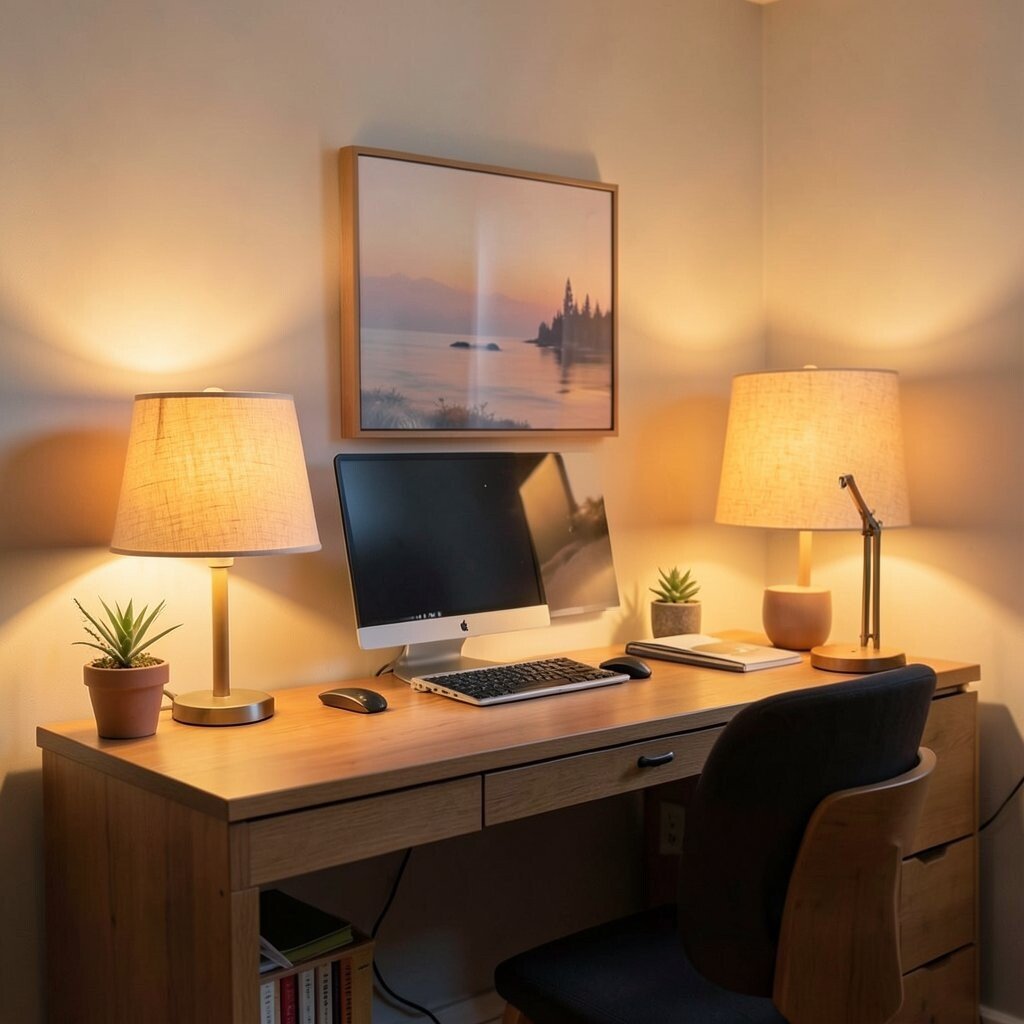
Lighting shape matters as much as lighting brightness, and nature gives great examples. Choose a warm lamp tone for evenings, or select an adjustable light so you can shift the vibe through the day.
Soft warm light can help your workspace feel cozy and less harsh than overhead lighting. It may also help you feel more relaxed when you’re done with intense tasks.
Look for lamps with shades in linen, paper, or fabric for a gentle glow. Personalize by placing a small lamp near your reading side instead of only using one big ceiling light. Cost-wise, a good lamp is often cheaper than a whole furniture refresh, and it upgrades your look immediately.
14. Add Natural-Inspired Patterns in Small Doses
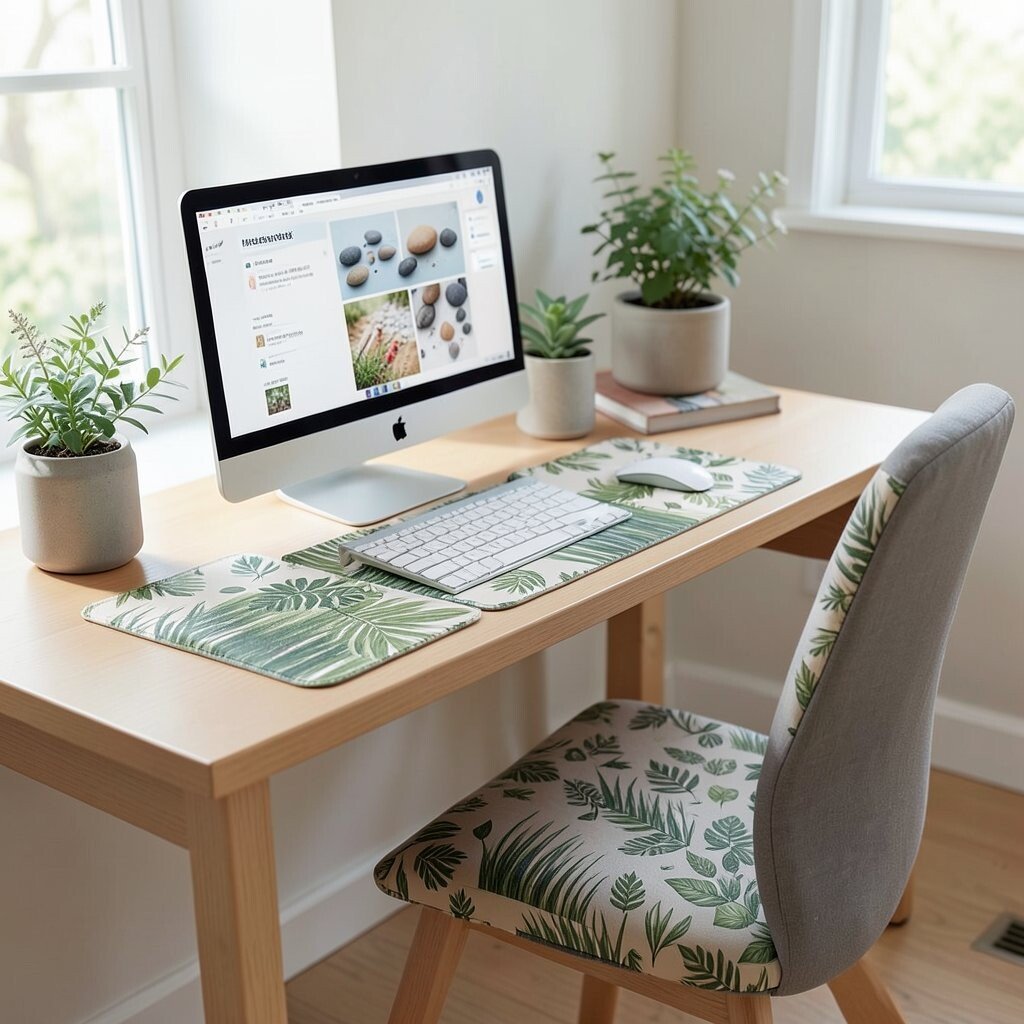
Patterns like leaf prints, gentle waves, or grass-like stripes can bring nature energy without overwhelming the room. Try them on accessories such as a mouse pad, notebook cover, or chair cushion.
Small pattern accents make the workspace feel more playful while still staying organized. They also make it easier to match your design theme with your existing furniture.
Keep the pattern scale moderate so it doesn’t fight with screen text or busy decor. Personalize by choosing patterns that match your favorite outdoor memory, like beach stones or forest shadows. For cost control, pick one patterned item at a time and let it lead the rest of your color choices.
15. Incorporate Water-Like Blue and Soft Wave Details

Coastal colors can create a relaxing, airy feel, especially if you like calm workdays. Add muted blues, seafoam greens, and soft wave patterns in small accessories or wall art.
These colors can make the room feel cooler and more breathable, which is a nice change from heavy browns. A water-inspired palette can also help your desk look clean and modern.
Use blue tones for items like cable organizers, desk trays, or even a soft cushion for your chair. Personalize by matching the shade to your monitor’s overall color warmth so the room doesn’t feel mismatched. If you want a low-cost approach, start with stationery and a mouse pad in sea-inspired colors before changing bigger items.
16. Upgrade to a Chair With Natural Comfort Details

Your chair is part of the nature vibe because comfort is what keeps you working well. Choose upholstery in warm neutral tones, or add a seat cushion with natural texture like cotton or woven fabric.
Comfort supports posture and can make your body feel better during long sessions. When your chair looks cozy, the whole workspace feels more inviting too.
Look for ergonomic support and easy adjustability first, then pick colors that match your theme. Personalize with a small lumbar pillow in a texture you love, like linen or a subtle woven pattern. Budget-wise, cushions and covers can refresh your chair without the cost of replacing it.
17. Make a Leaf-Themed Wall Organizer for Notes
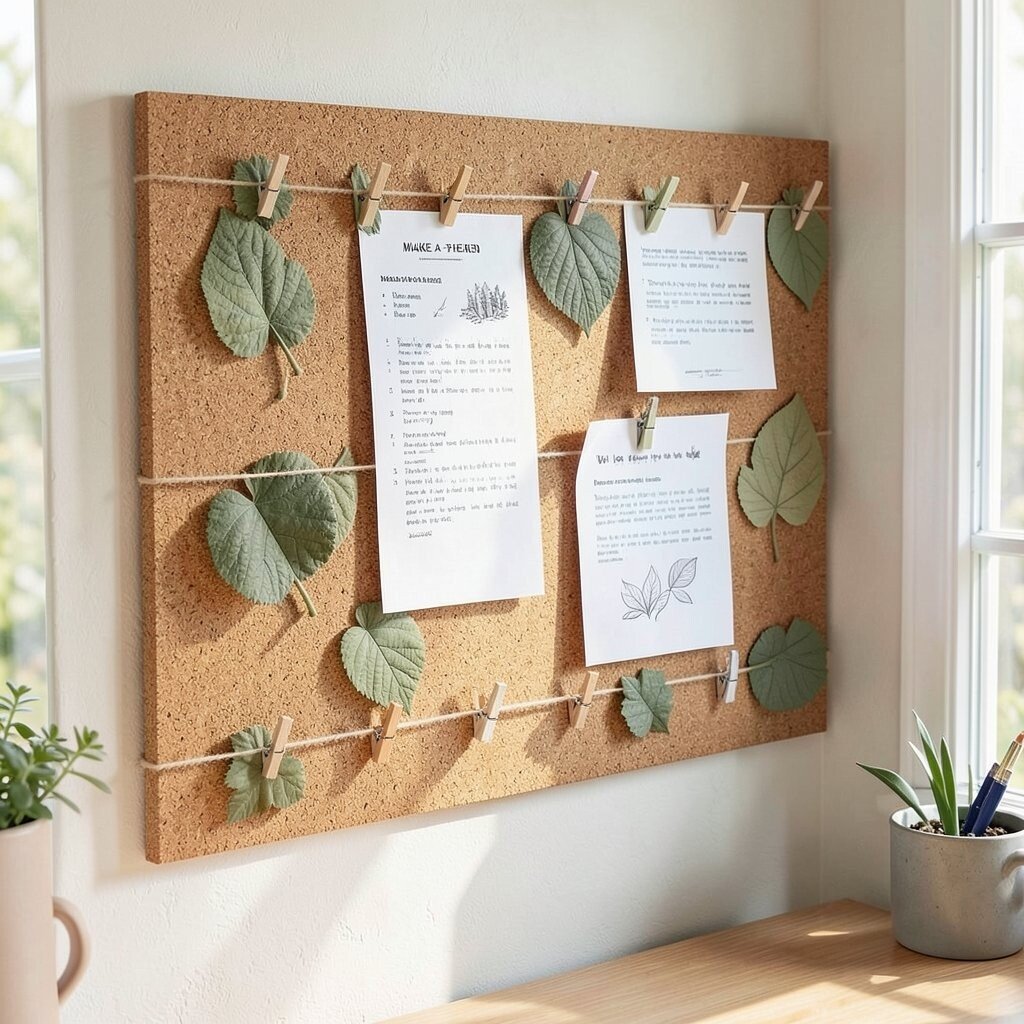
A wall organizer can keep papers off your desk while adding an outdoors feel. Use a cork board, a peg rail, or a fabric board with leaf-shaped clips and simple string lines.
This keeps important notes visible while still reducing desk clutter. It also turns planning into something visual and satisfying, like pinning reminders in a garden shed.
Place it within arm’s reach so you don’t have to walk across the room to grab a document. Personalize the organizer by choosing clips in wood tones or muted greens. If you want a budget win, repurpose a cork sheet or buy a small board and add clip accents yourself.
18. Use Scent and Steam-Friendly Accessories for a Living Feel

Nature isn’t only visual, and gentle scent can make your workspace feel more alive. Consider a subtle room spray, a soy candle in a safe holder, or a small diffuser placed away from electronics.
When the air feels pleasant, many people find it easier to settle into focus. A calm scent can also make routine tasks feel less draining.
Choose light scents such as cedar, pine, or citrus, and keep the strength low so it doesn’t overwhelm you. Personalize by testing one scent for a week and switching if it ever feels too strong. Cost considerations are simple here, since small diffusers and refill pods are often cheaper than frequent decor upgrades.
19. Add a Sculptural Desk Object Like a Smooth Rock

One sculptural object can add personality and make the desk feel curated. Look for a smooth stone paperweight, a small ceramic bowl, or a polished wood sphere.
These objects provide a satisfying focal point, which can help you stay grounded during stressful moments. They also make your workspace feel unique, because the item reflects your taste.
Keep it practical by choosing a weight that won’t slide on your mat or scratch your desk surface. Personalize by selecting a shape you love, like river-rounded or angular basalt-inspired styles. For cost, start with one affordable paperweight and build your decor around it slowly.
20. Style Your Shelf Like a Mini Botanical Display
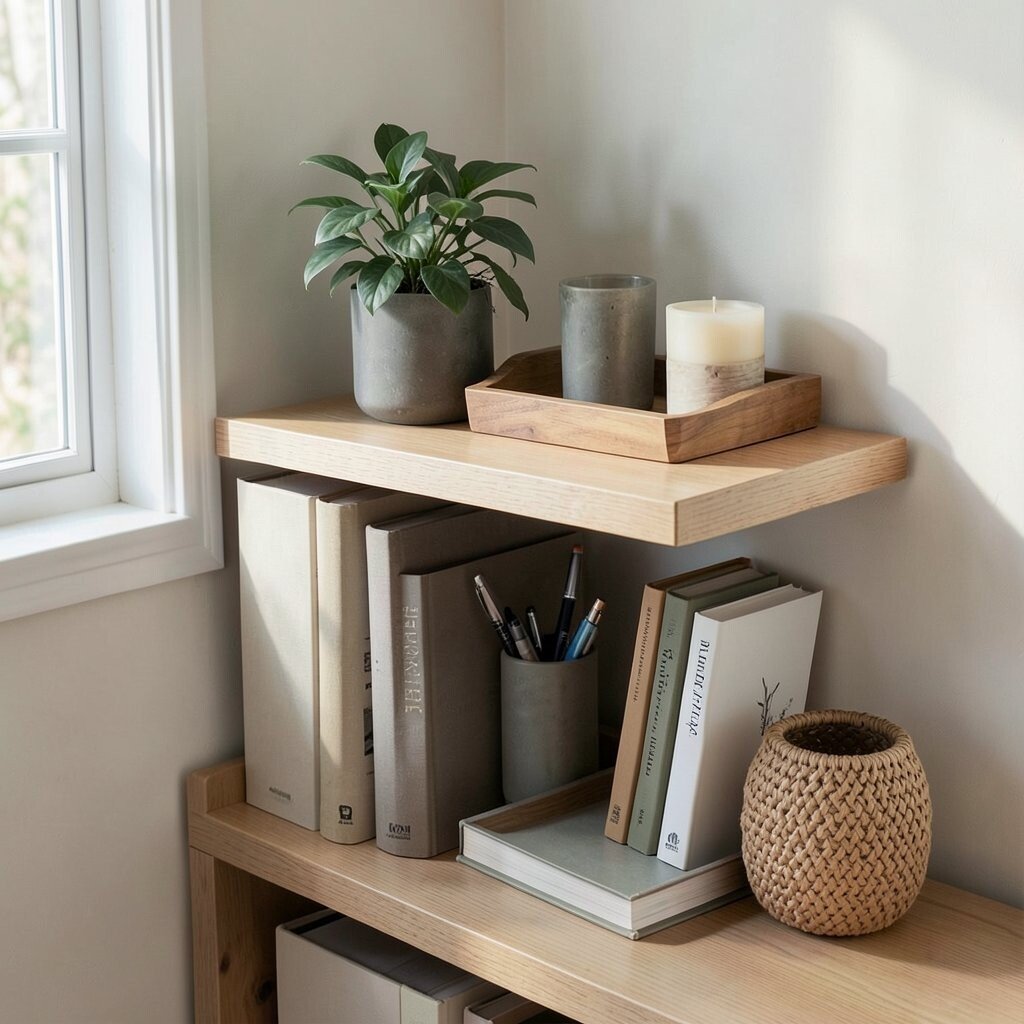
Even a small shelf can look like a natural corner if you style it with care. Use a mix of books with neutral covers, one plant, and a few nature-themed objects such as a wooden tray or woven candle holder.
This gives you a display that looks good from your desk and feels intentional. It can also support better habits because you’ll have a clear spot for items that otherwise end up on your work surface.
Try varying heights so the shelf looks layered, like a forest understory and canopy. Personalize with items you truly use, such as a favorite pen cup and a notebook you reach for often. For budget, rearrange what you already own first, then add one or two new pieces that match your palette and texture goals.