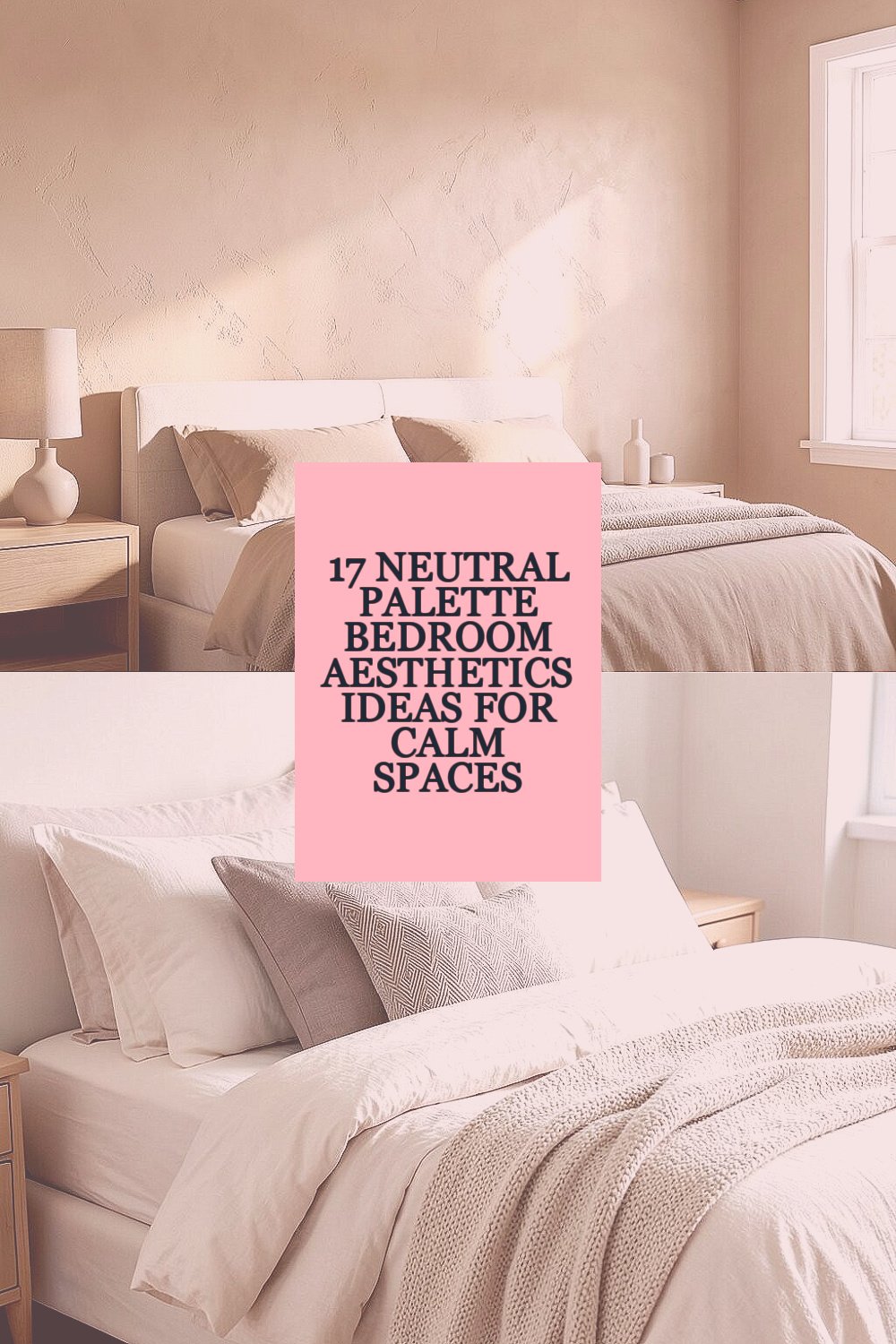
The right bedroom mood can feel like a soft exhale. Neutral colors help your space slow down and breathe with you.
1. Warm Beige Walls With Subtle Plaster Texture
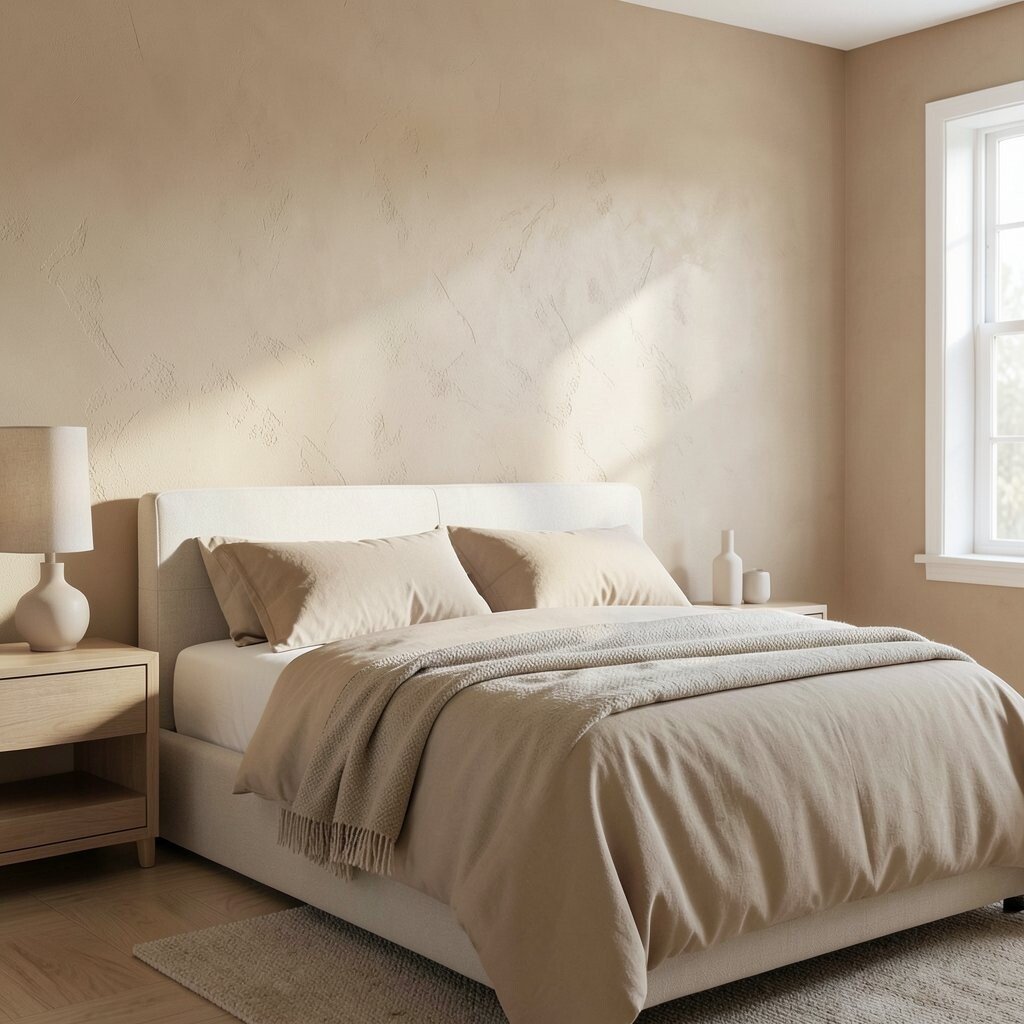
Imagine stepping into a room where the walls look like sunlight caught in clay. The texture adds depth, so the color never feels flat or boring.
Choose a warm beige that leans toward honey or oat so it flatters skin tones and bedding. Pair it with matte paint or a plaster-style finish to keep the vibe calm. Keep trims in a slightly lighter neutral so everything feels gently layered instead of sharp.
2. Layered Off-White Bedding With Different Weaves
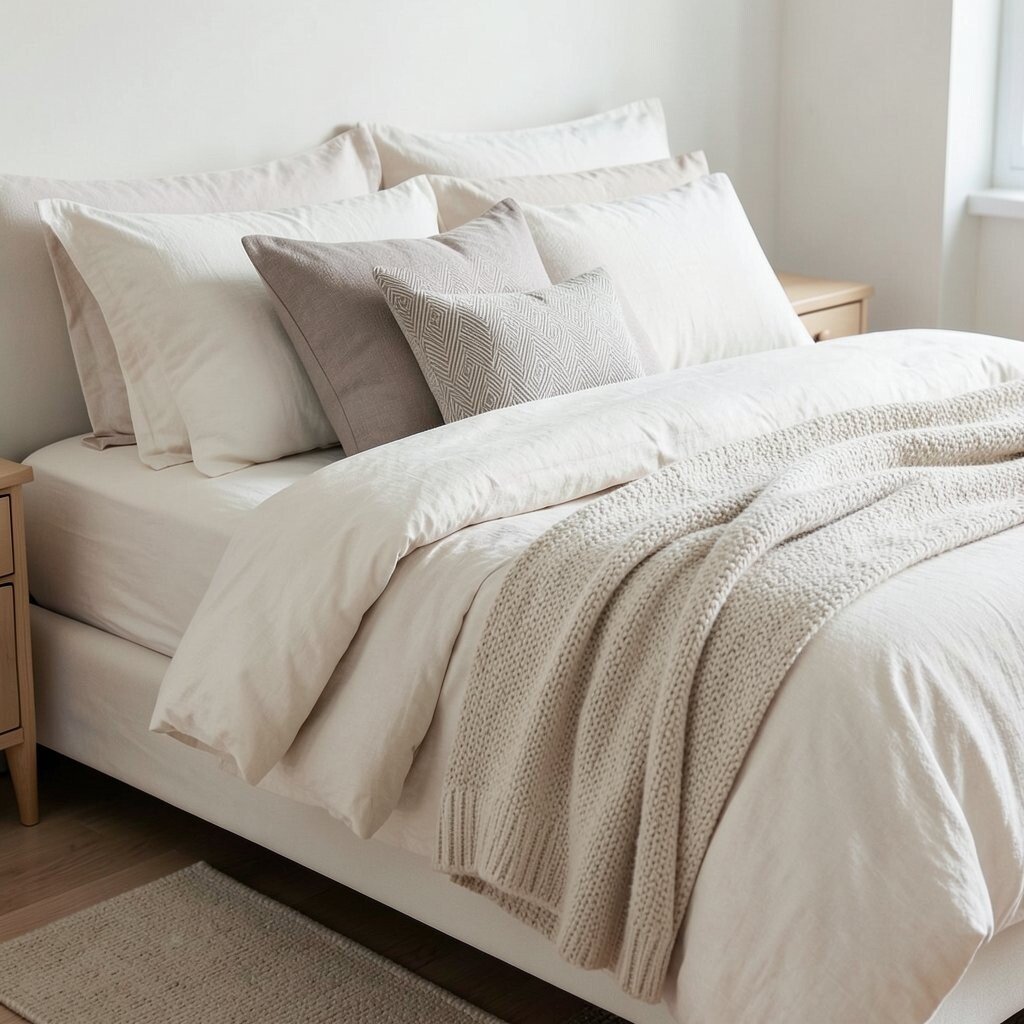
Think of your bed as a cloud made from several fabrics. Off-white sheets, a linen duvet, and a soft knit throw create a lived-in look that still feels tidy.
Mix weaves to keep the room interesting without adding loud colors. Tuck the duvet slightly differently each day or use a relaxed half-fold so it looks effortless. For a practical win, wash and rotate covers often so texture stays inviting and fresh.
Look for affordable upgrades like pillowcases in a slightly different off-white shade to create dimension fast. If you want a trend feel, search for “stonewashed” or “washed linen” fabrics, since they look softer and less stiff than brand-new linen. Personalize with one patterned accent cushion in muted taupe, then keep the rest plain so it stays soothing.
3. Sand-Tone Curtains With Soft Light Diffusion
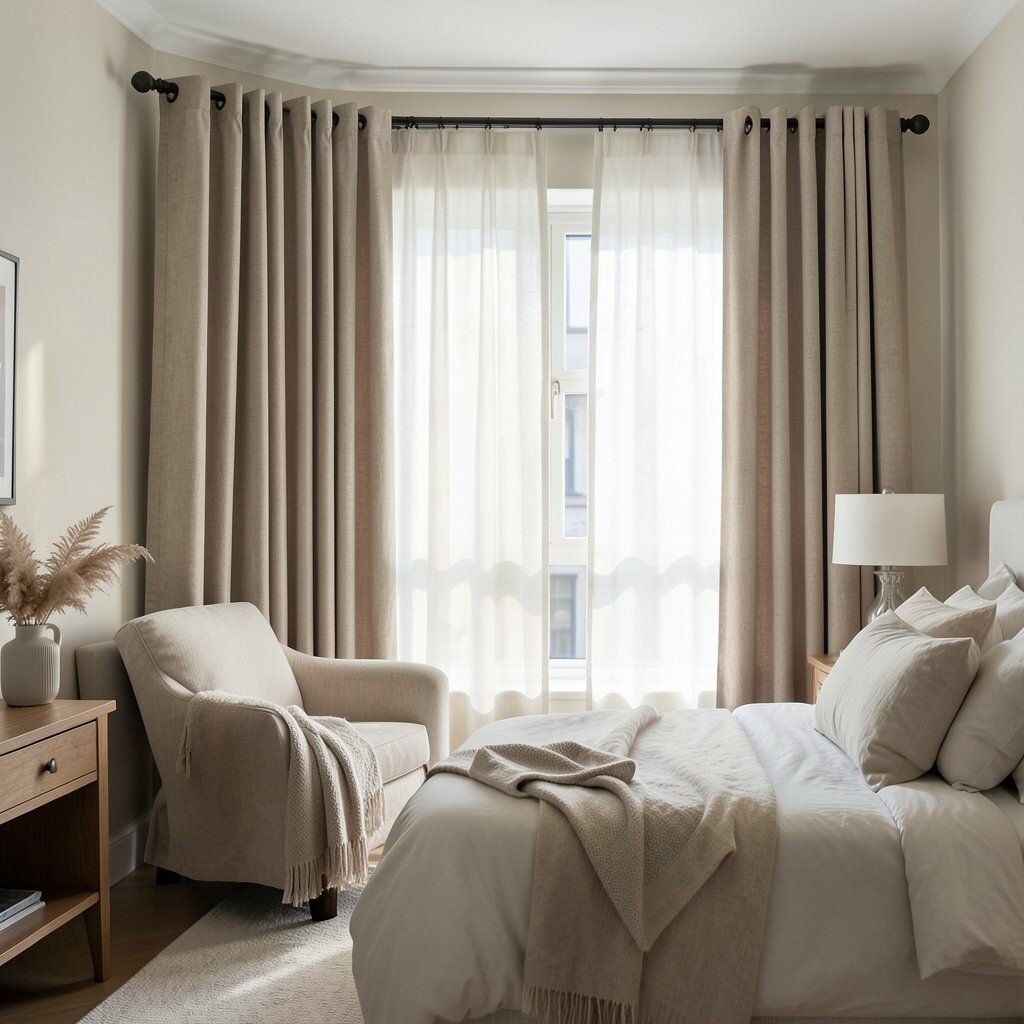
When curtains are the right neutral, light becomes your décor. Sand-tone panels can filter morning sun into a gentle glow.
Go for sheer enough to soften harsh glare, but keep them full-length so the room feels grounded. Mount the rod high to make the ceiling feel taller, which is an instant calm upgrade. If you share the space with a busy street, choose thicker lining for better sleep without changing the color story.
To personalize, select a weave that you can spot up close, like a linen-blend with visible fibers. If your budget is tight, buy one set for the main window and use a matching shade behind it for extra privacy. This is a simple way to follow the current trend toward “light-as-texture” interiors while keeping the room quiet.
4. Taupe Accent Chair With Low, Relaxed Lines
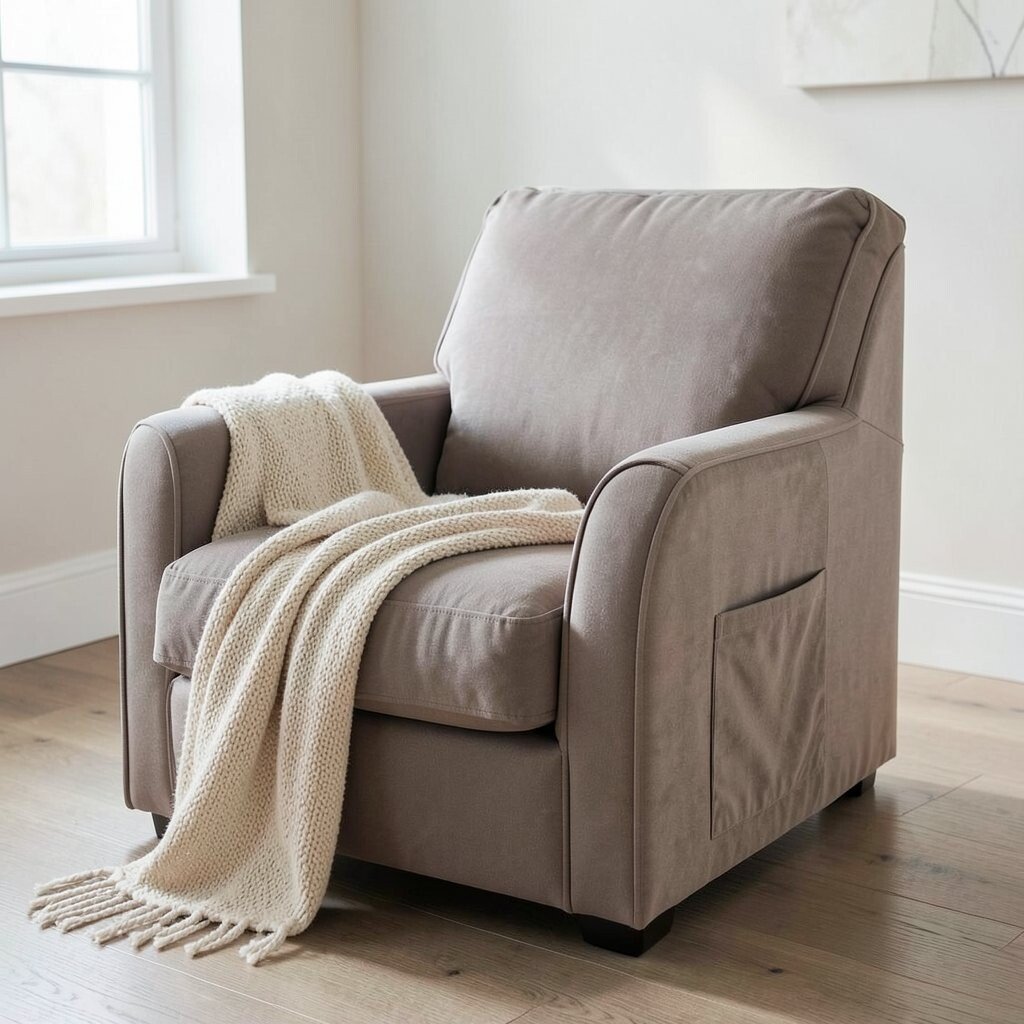
Picture a chair in muted taupe with arms that curve gently and a seat that looks comfortable right away. It becomes a calm anchor where you can read, scroll, or sip tea.
Choose a fabric that looks soft even when it’s new, like performance weave or brushed cotton. Add a throw blanket in oat or cream so the color stays neutral but warm. If you move often, consider a slipcover style since it’s easier to refresh and keep looking neat.
5. Natural Oak Or Walnut Nightstands Instead Of Glossy Surfaces
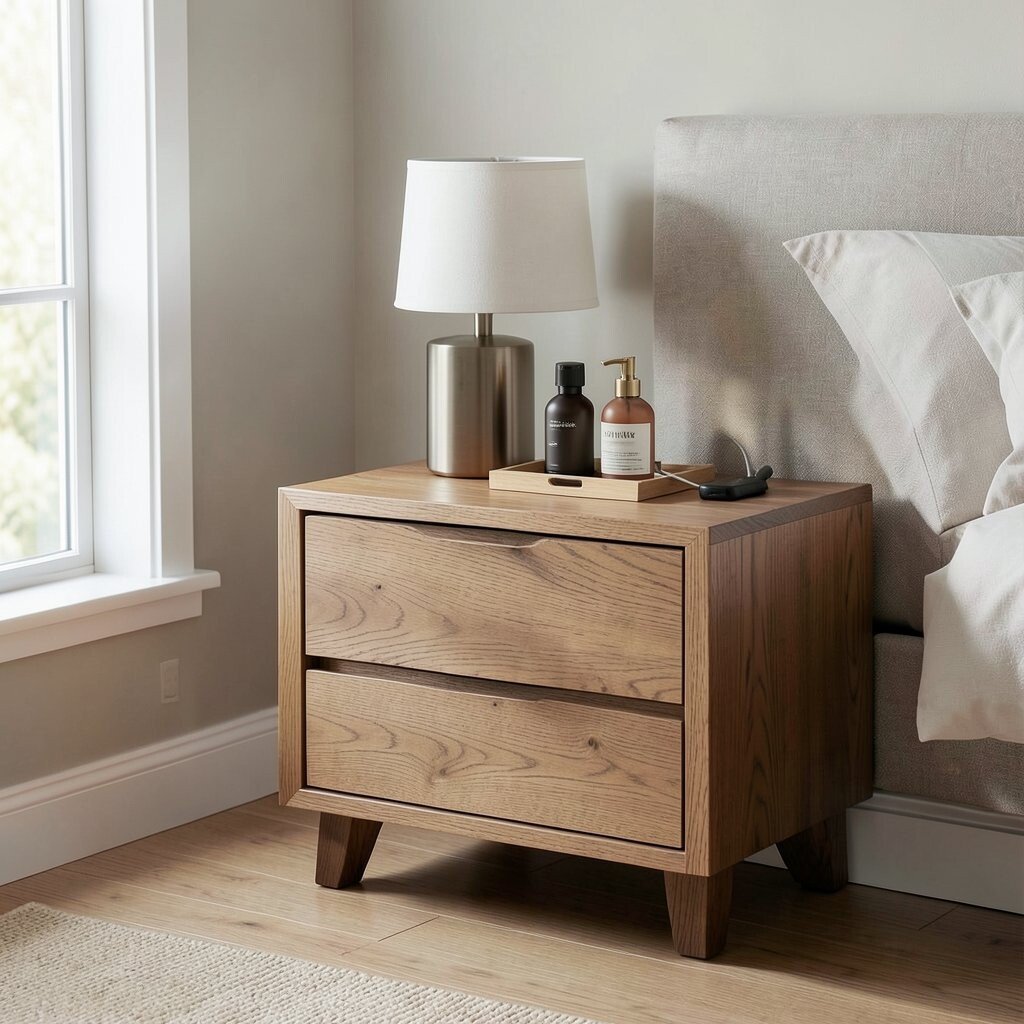
Warm wood tones bring a grounding effect that makes neutrals feel more human. A nightstand in oak or walnut also gives the room a steady, grounded rhythm.
Go for matte finishes instead of shiny ones to reduce glare at night. Keep surfaces clutter-light by using a small tray for essentials like a lamp, moisturizer, and phone charger. For practical personalization, choose hardware in brushed brass or dark bronze to add a subtle modern touch.
If you’re watching cost, look for solid wood-look options that still have strong grain detail. This kind of material pairing is popular right now because it makes calm spaces feel natural, not staged. Even one well-chosen nightstand can upgrade the whole room without adding visual noise.
6. Grounding Area Rug In Greige Or Light Charcoal
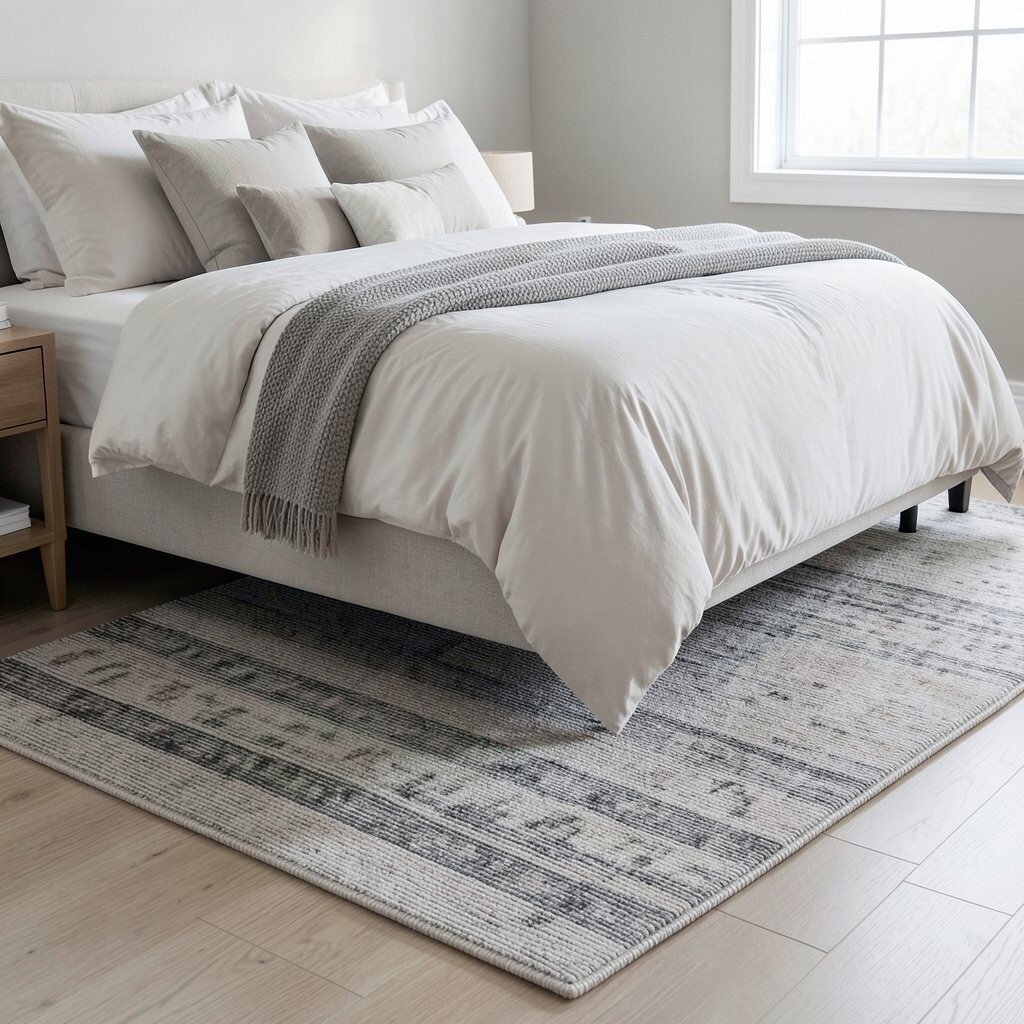
A rug can turn an empty bedroom corner into a cozy scene. Greige and light charcoal work especially well because they balance warm neutrals with a hint of depth.
Choose a rug with a subtle pattern like woven stripes or a faded motif so it hides small everyday marks. Make sure it extends under the bed at least a bit so your feet land on softness when you wake up. For practical tips, consider a low-pile style if you have pets or thick blankets that tangle easily.
7. Bedside Lamps With Ceramic Or Linen Shades
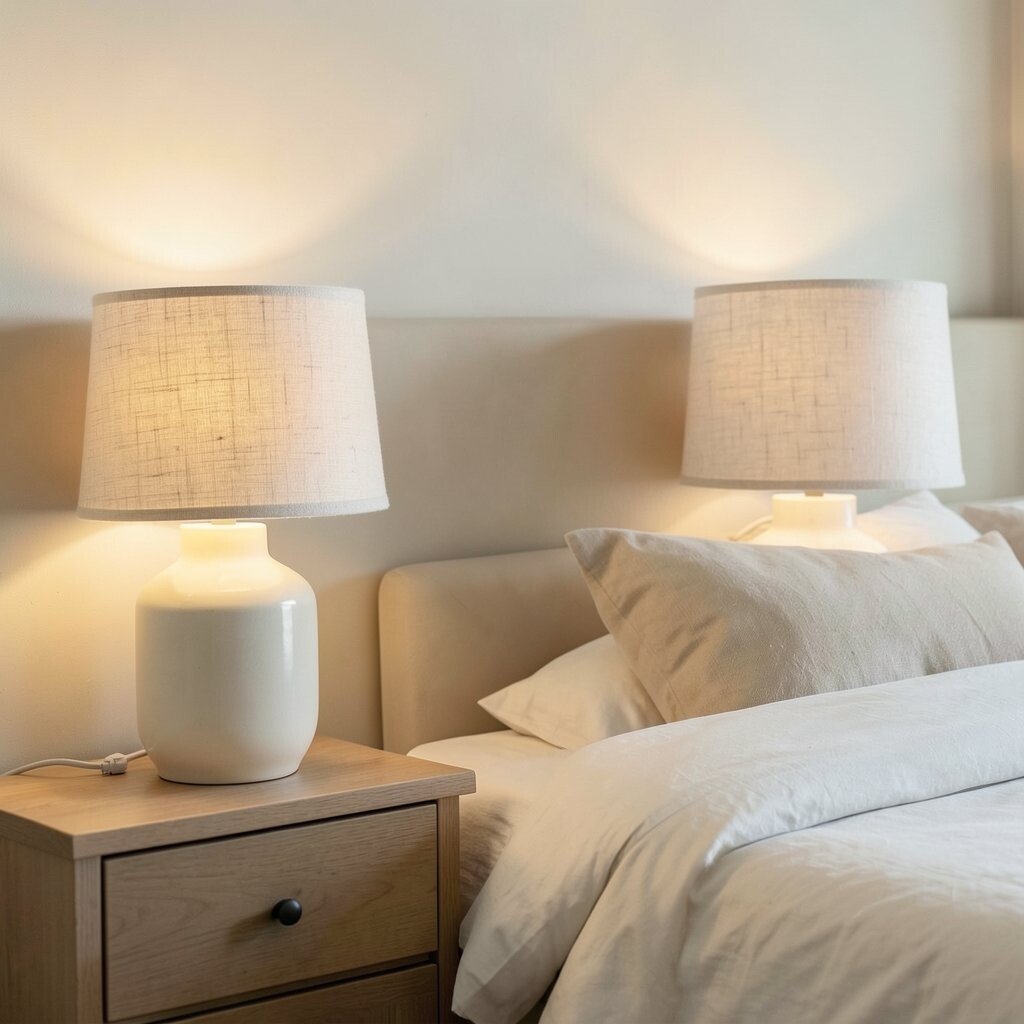
Lamps do more than light the room; they shape the mood. Ceramic bases and linen shades in neutral tones feel gentle and a little romantic.
Pick warm bulbs for evenings so the light looks soft instead of blue. Use one lamp as a matching set to keep the design calm, but you can vary the shade texture for a natural look. If you like personalization, try a slightly different neutral on each side, like cream on one and sand on the other.
For cost control, thrift or re-home lamps, then replace the shade for a fresh look. This aligns with a current trend toward “warm minimalism,” where lighting and texture do the heavy lifting. Keep cords tidy with clips or a cord cover so the setup feels clean and restful.
8. Minimal Art Gallery Wall With Muted Tones
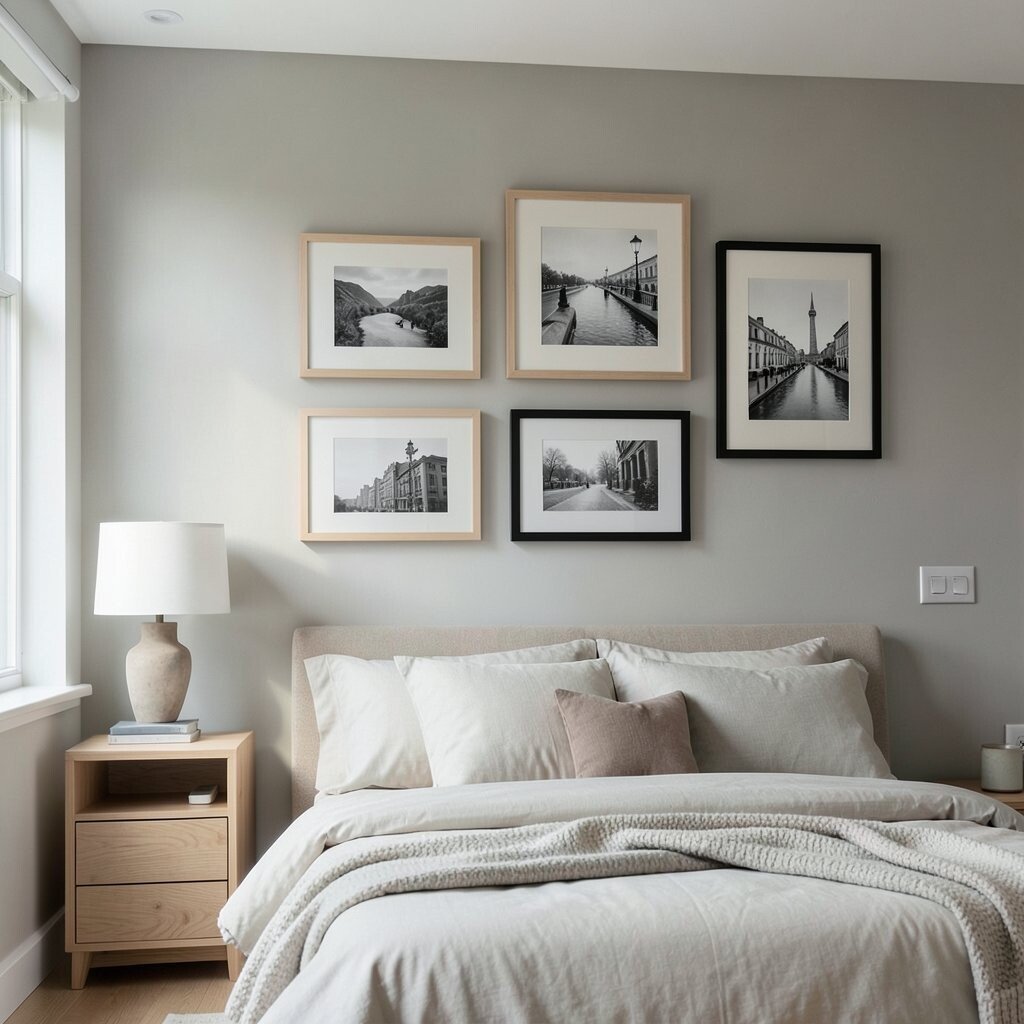
Wall art can calm a room when it’s restrained. Look for pieces in muted neutrals like graphite, clay, and faded sand.
Choose frames in consistent finishes, such as natural wood or matte black, to keep the layout neat. Consider larger pieces instead of many small ones so your eyes rest sooner. If you want a personal touch, print your own travel photos in grayscale and soften them with a cream border.
9. Layered Neutral Wall Sconces Or Shelf Lighting
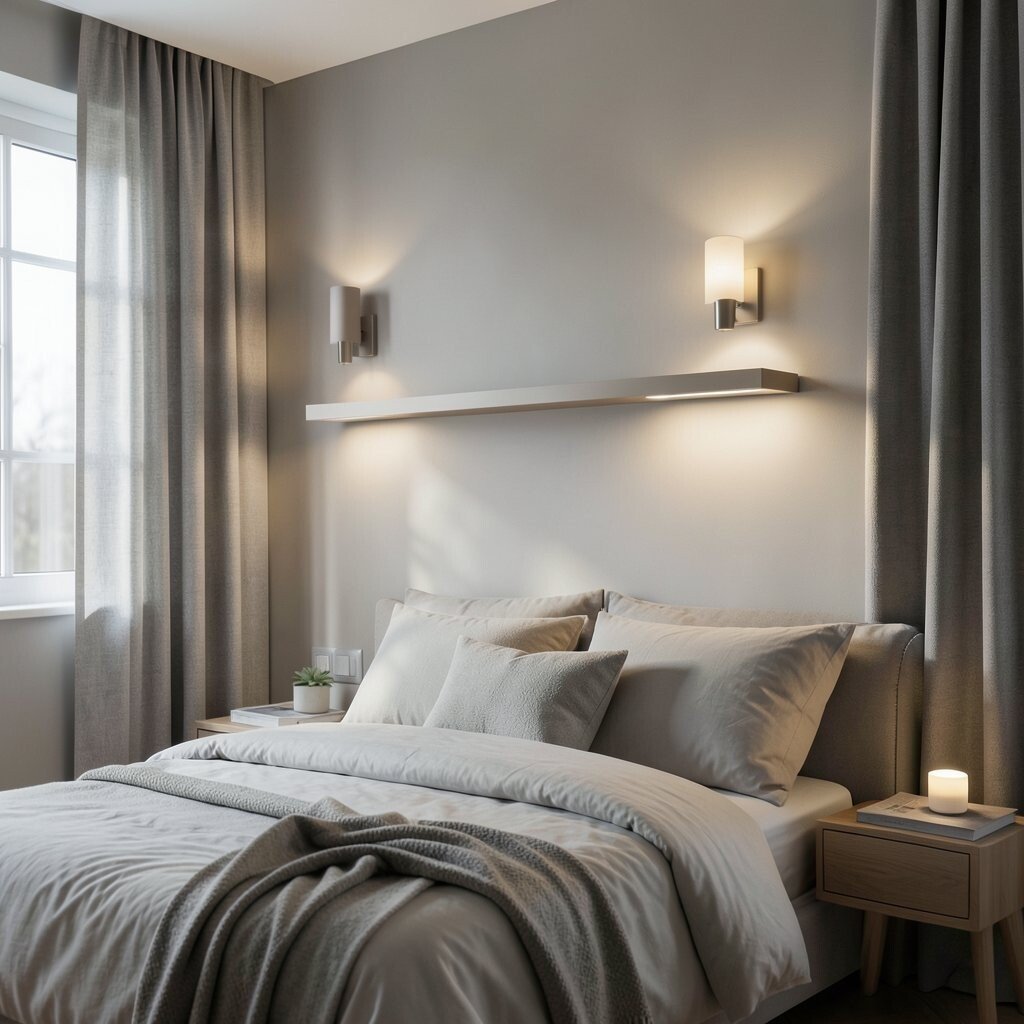
Lighting from the walls adds softness that overhead lights can’t match. Neutral wall sconces or shelf lamps make nighttime feel slower.
Install sconces at eye level when seated so the glow flatters without glare. Use dimmable bulbs if possible, because adjusting brightness is one of the best practical tools for sleep comfort. For personalization, select shades that match your curtains or bedding so the light feels like part of the palette.
If you’re renovating, wired options look sleek, but plug-in sconces can be a budget-friendly step. This approach fits a trend toward indirect lighting, where cozy shadows become part of the décor. Keep the look minimal by choosing slim fixtures with simple lines.
10. Soft-Close Storage Bench In Light Gray Linen
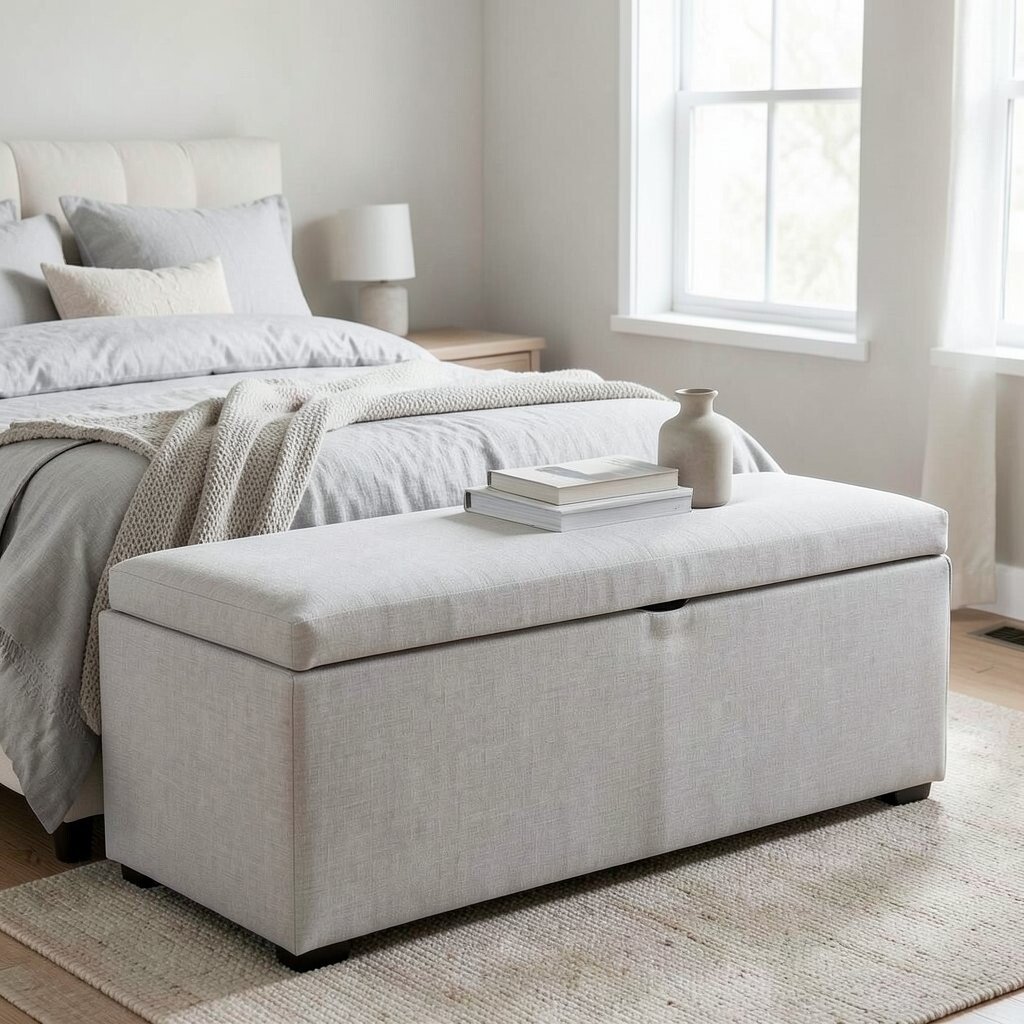
A storage bench is a calm room’s best friend. Light gray linen with soft-close features keeps the space tidy and the movement quiet.
Use it to hide extra pillows, spare blankets, and seasonal sheets so you don’t see visual clutter. Style the top with just one small vase or a stack of books to keep it soothing. For practical personalization, pick a bench length that fits your bed space without crowding the walkway.
11. Textured Wallpaper In Greige Or Bone
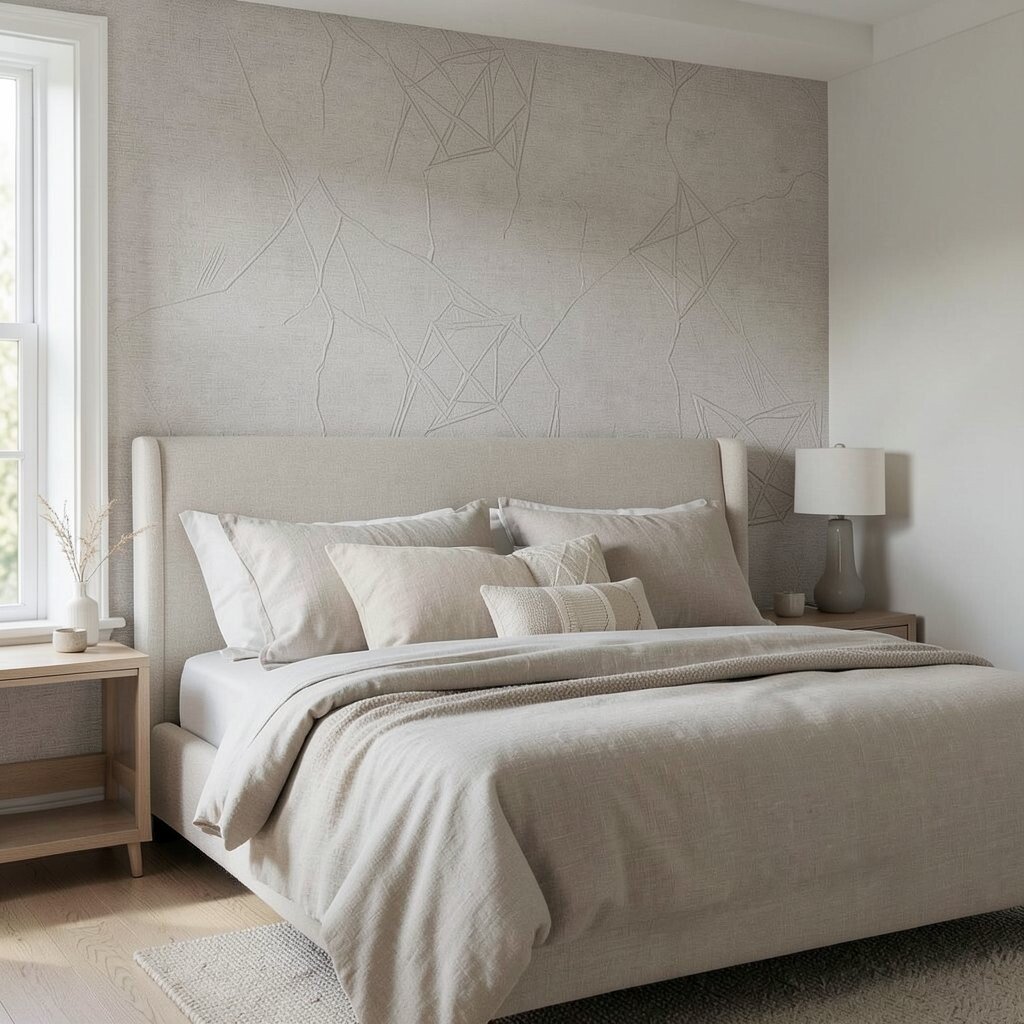
Textured wallpaper makes neutrals feel rich without adding color chaos. Think of subtle patterns like micro-embossing, grasscloth effects, or gentle geometric lines.
Apply it to one wall behind the bed to create a calm focal point. Keep the rest of the walls simple so your eyes have a quiet place to rest. If you want a cost-friendly path, use peel-and-stick wallpaper on a single accent wall and remove it later if you change your mind.
For trend vibes, look for nature-inspired textures, since they pair well with current neutral styling. Personalize by choosing a texture that matches your fabrics, like a grasscloth look with linen bedding. The result feels elevated, yet still relaxed and livable.
12. Sleek White Or Natural Timber Headboard With No Flash
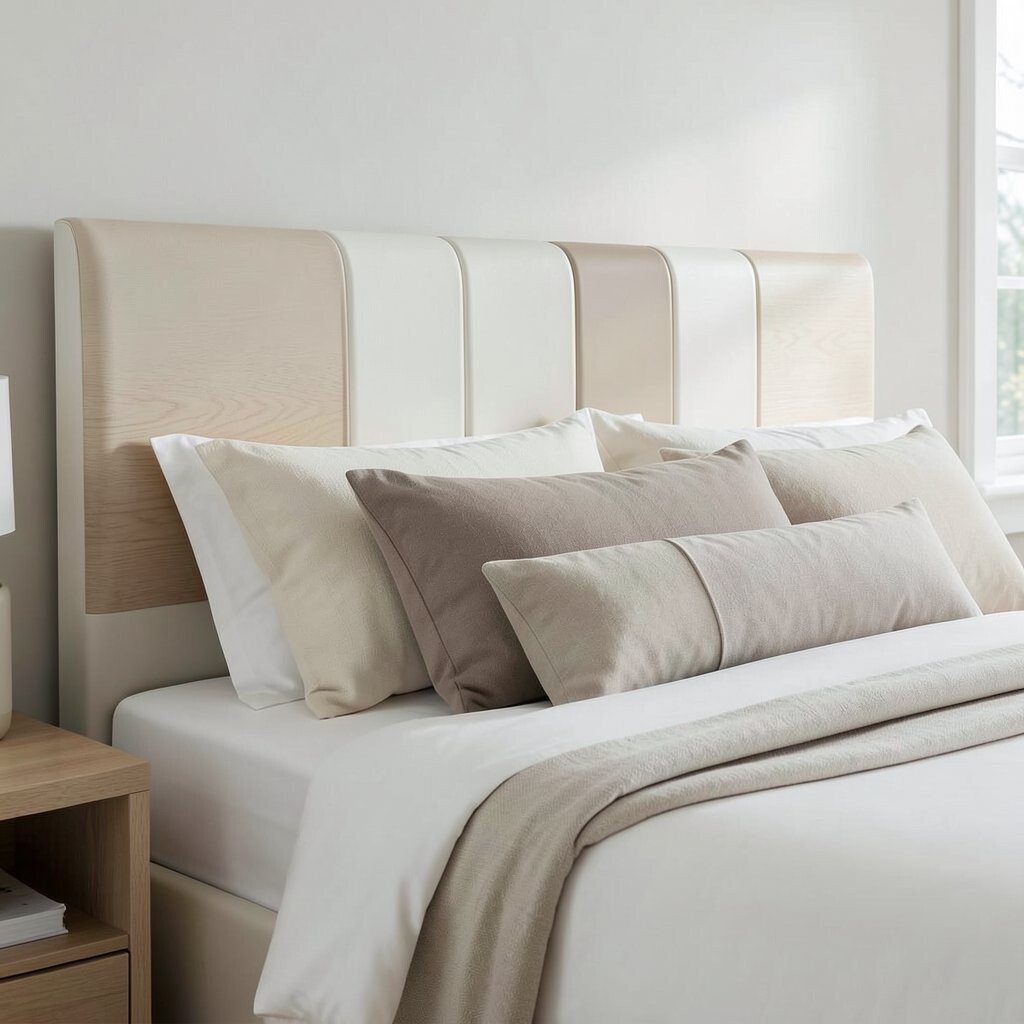
A calm headboard helps your bed feel secure and intentional. Natural timber or simple white versions make it easy to build a neutral palette around it.
Choose a headboard with gentle curves or vertical slats for a subtle visual rhythm. Keep the finish matte so it doesn’t reflect harsh light during the day. If your budget is limited, paint a used headboard and seal it with a matte topcoat for a smooth, durable surface.
Personalize with a headboard pillow arrangement in layers of cream, oat, and taupe. This is an easy way to keep the look fresh without buying new furniture. The minimal lines also match today’s calm, uncluttered bedroom styling.
13. Neutral Bedding Staples With One Signature Color Thread
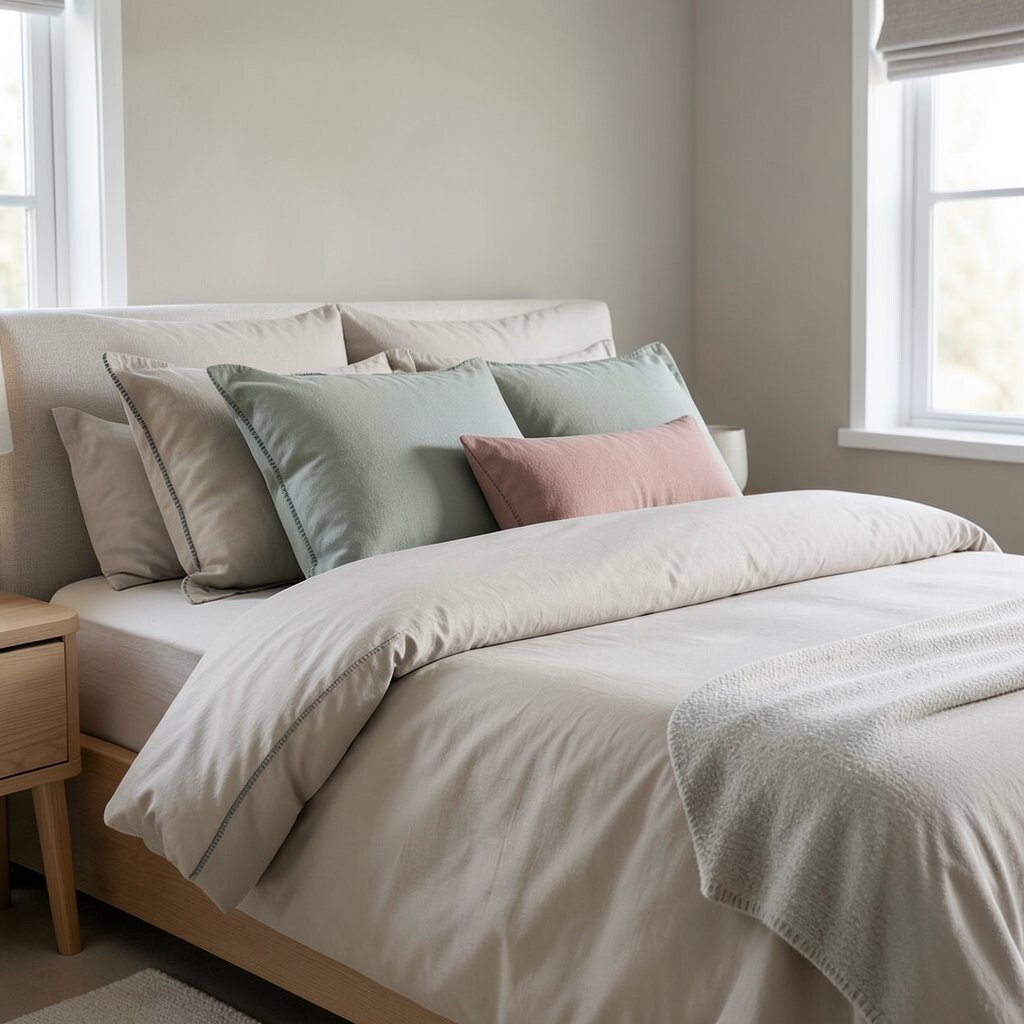
Neutral palettes feel extra personal when you add one small thread of color. You can keep the main mood calm while still showing your style.
Pick a signature color like sage, muted blue, or dusty rose, and limit it to details such as one throw pillow or a stitched edge on a duvet. Choose fabrics in neutral base tones so the color reads soft, not loud. For practical tips, repeat the color in two places only to maintain balance.
If you want a budget-friendly personalization idea, use a vintage blanket or a thrifted pillow cover with that exact tone. The trend right now is “controlled accenting,” where a tiny hue adds warmth without disrupting sleep-friendly calm. Keep the rest of the room neutral so the color feels like an optional whisper.
14. Minimal Mirror Placement For Soft Reflection
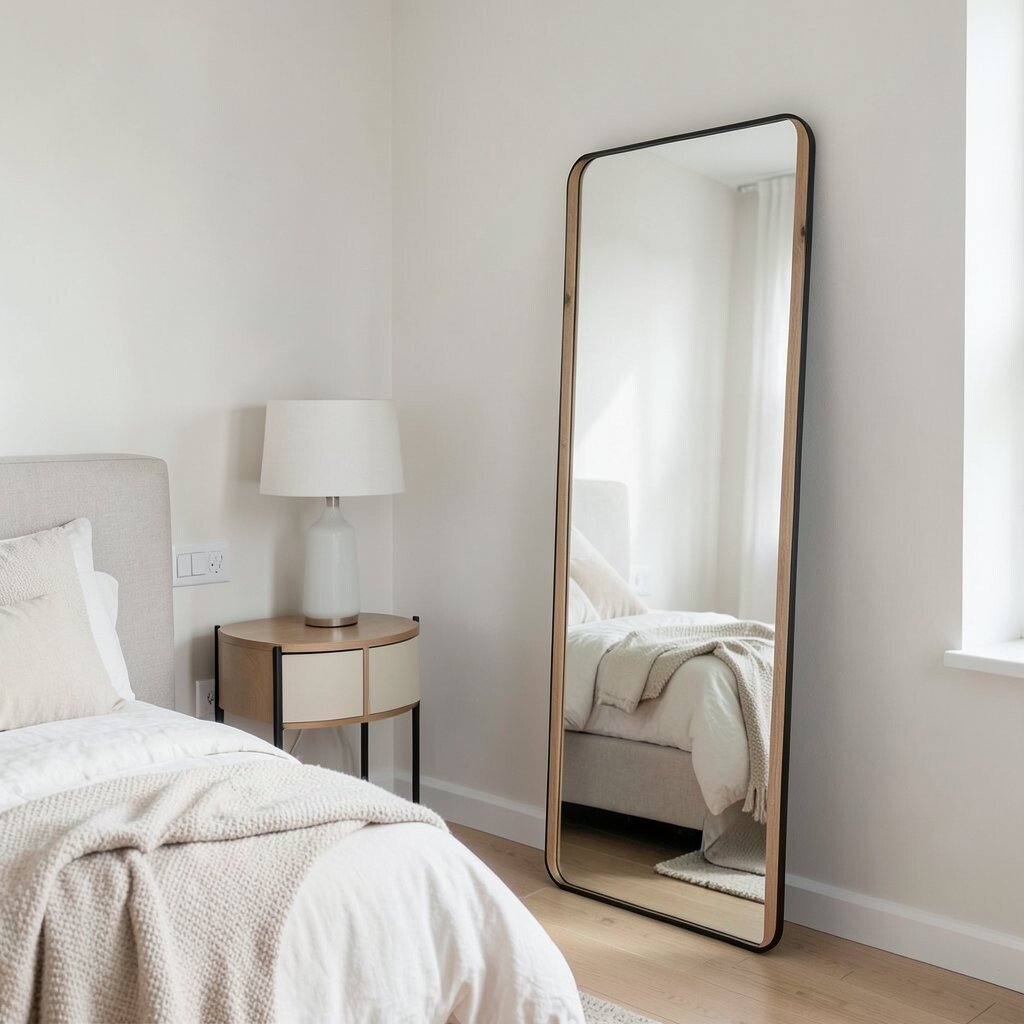
A mirror can make a neutral bedroom feel brighter and more open. The key is choosing the right placement and style.
Try a tall mirror with a thin frame in blackened metal or natural wood. Position it so it reflects indirect light, like a lamp or window glow, rather than a bright overhead fixture. If you share the space, you’ll also appreciate how mirrors help with quick morning checks without cluttering the dresser.
To keep the look calm, choose one statement mirror instead of several smaller ones. For a cost-saving move, search for a mirror with a solid frame and then swap in a softer finish if needed. This approach matches current trends toward airy neutrals, where light and reflection help the room breathe.
15. Neutral Dresser Styling With A Carefully Chosen Tray
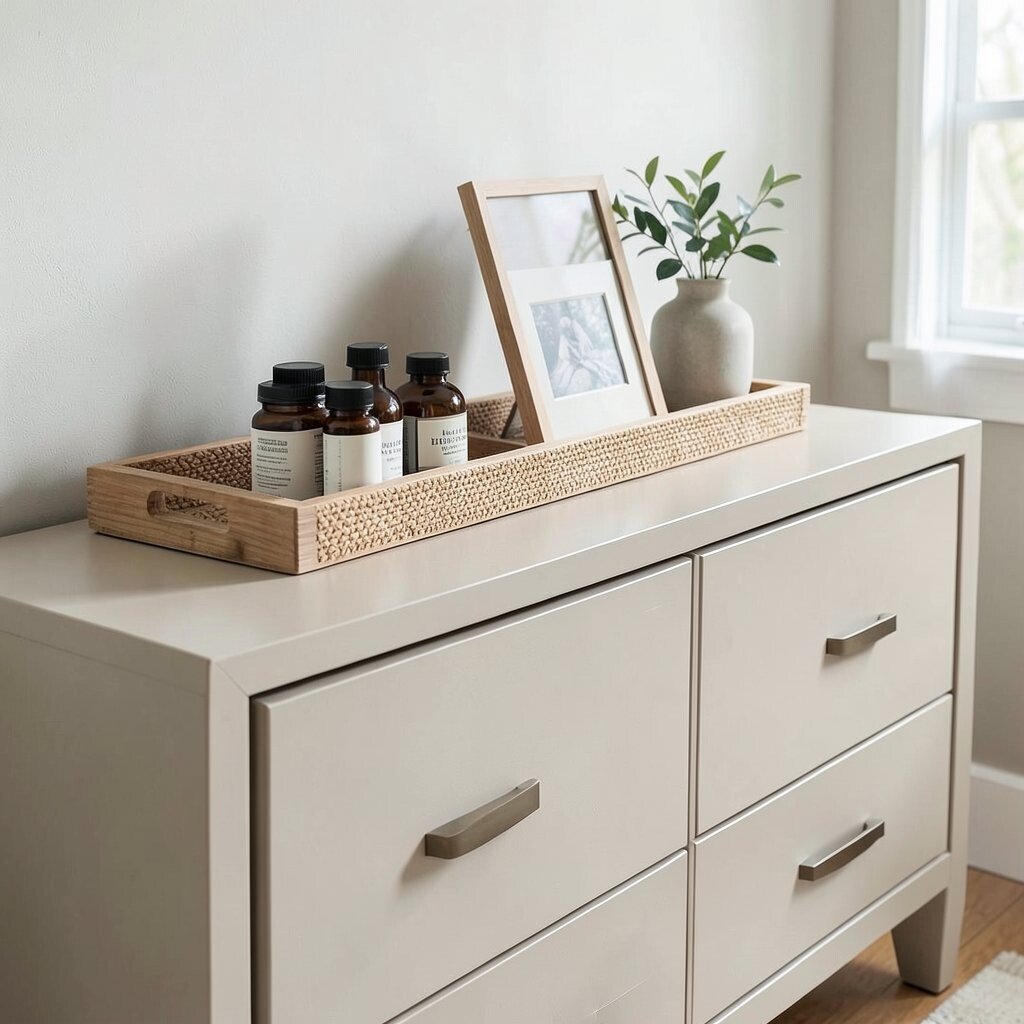
A dresser can either feel peaceful or chaotic depending on how you style it. Neutral styling works best when items have a home and the surface looks intentional.
Use one large tray in light wood, stone, or woven natural fiber to hold daily essentials. Keep bottles capped, use matching containers, and store extras in drawers so the top stays calm. Add a small plant or a simple vase, but limit yourself to one main organic shape to avoid visual clutter.
For personalization, display a meaningful item like a framed photo or a hand-thrown ceramic piece, as long as its colors stay within your neutral range. If you’re watching costs, a tray and a few matching containers do more than fancy décor. This is a timeless habit that fits modern bedroom trends focused on tidy surfaces and restful visuals.
16. Layered Textiles With A Cozy Throw In Oat Or Mushroom
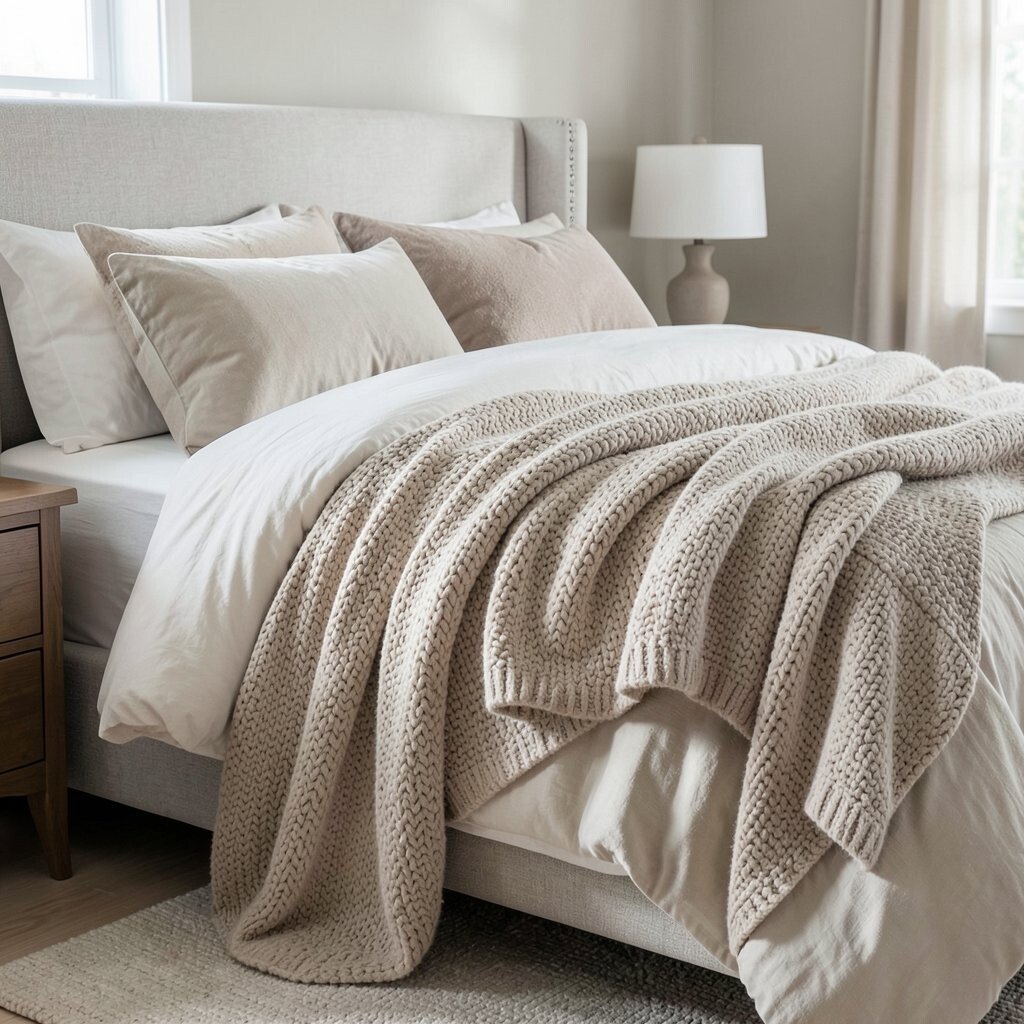
Throws and blankets turn a neutral bedroom into something you want to linger in. An oat or mushroom throw looks soft and warm even when it’s just draped over the chair or end of the bed.
Choose a fabric that feels inviting, like a chunky knit, brushed cotton, or a faux suede that doesn’t look shiny. Rotate textiles seasonally so your room stays comfortable without needing a full redesign. For practical tips, keep one lightweight throw and one heavier option so bedtime and mornings feel easy.
Personalize the placement by folding the throw consistently, then switching the fold style now and then for a subtle refresh. This matches a current trend toward tactile comfort, where textures help the room feel calm even in neutral tones. If you want a budget win, thrift a throw and steam it so it looks crisp and lived-in.
17. Neutral Color Flow Between Bedroom And Bathroom Or Hallway
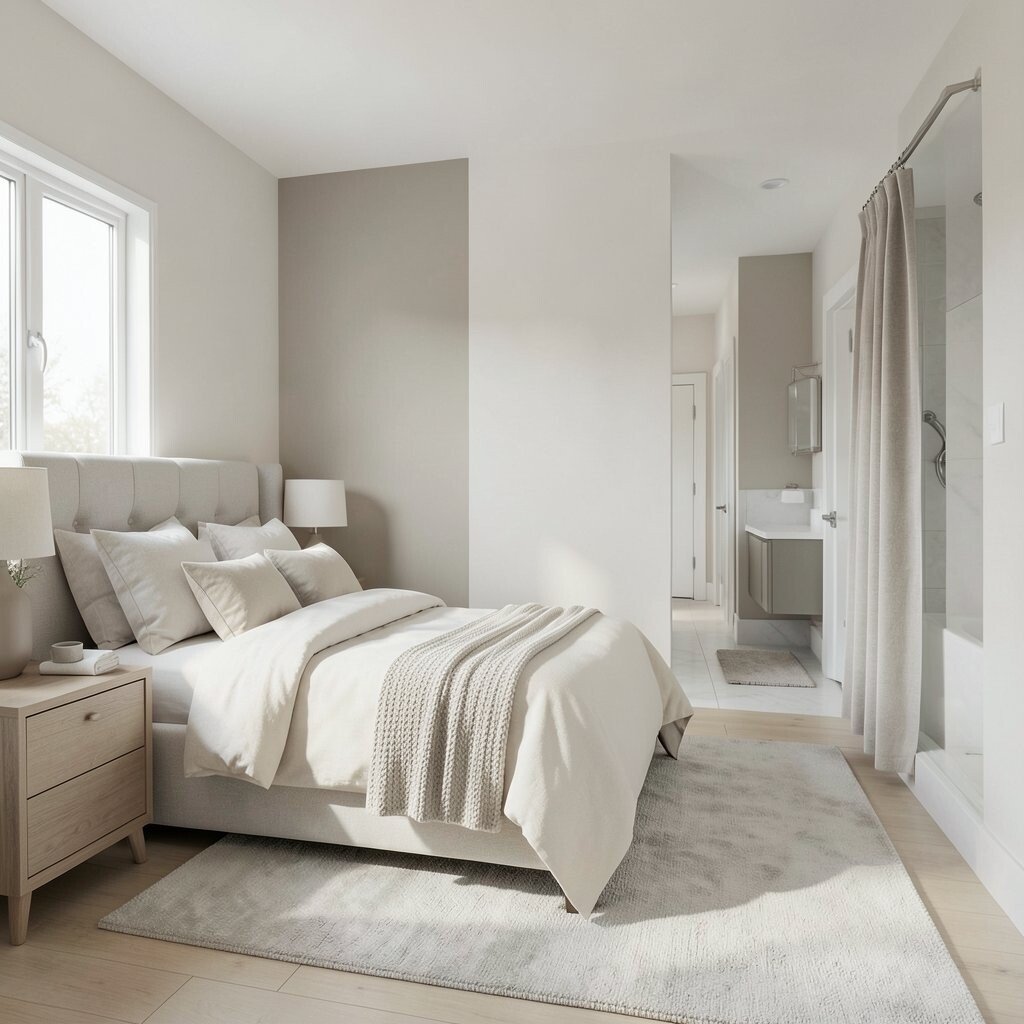
Calm spaces feel even calmer when colors flow from room to room. If your bedroom connects to a hallway or bathroom, repeating neutrals helps everything feel cohesive.
Carry a similar warm white, greige, or beige into the adjacent space through towels, bath mats, or wall paint. Keep undertones consistent, so the light in one room doesn’t clash with the undertone in the next. This creates a gentle visual rhythm that makes the whole home feel calmer, not choppy.
If you want to personalize without repainting, coordinate textiles like a runner rug or a shower curtain in a neutral family. For cost considerations, use removable panels, paint samples, and swap items gradually instead of doing everything at once. The result feels modern and serene, with a trend-forward “whole-home palette” approach that still respects your budget.