Small flooring choices can change how your whole office feels. The right surface also helps your day-to-day work feel smoother and calmer.
1. Warm Engineered Wood Planks
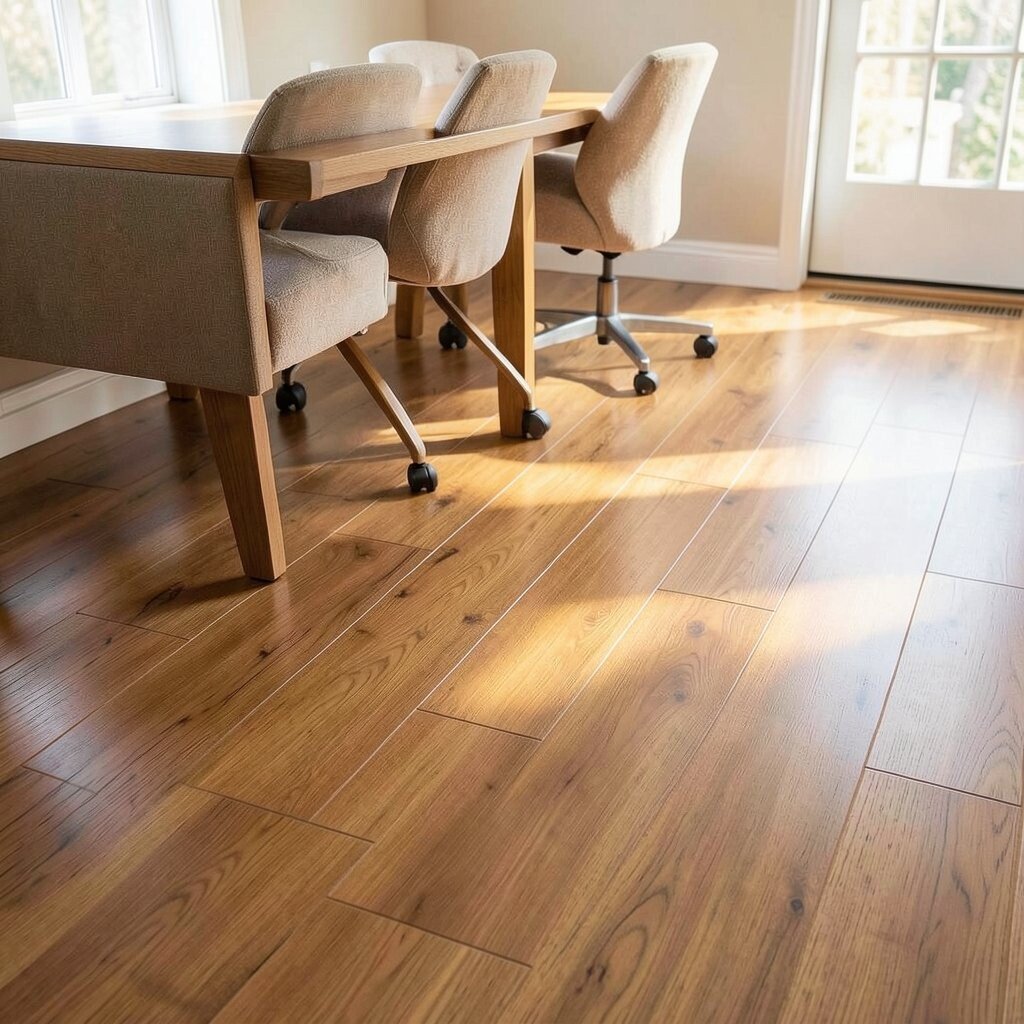
Engineered wood planks bring instant warmth, like the glow of sunlight on polished floors. You’ll notice the way the grain lines guide your eyes and make even a plain room feel inviting.
Pick a matte finish if you want a softer look that hides scuffs and fingerprints. For durability, choose a thicker wear layer and pair it with felt pads on chairs. To keep it looking neat, sweep with a microfiber mop and use a wood-safe cleaner only when needed.
2. Modern Luxury Vinyl Tile Layouts
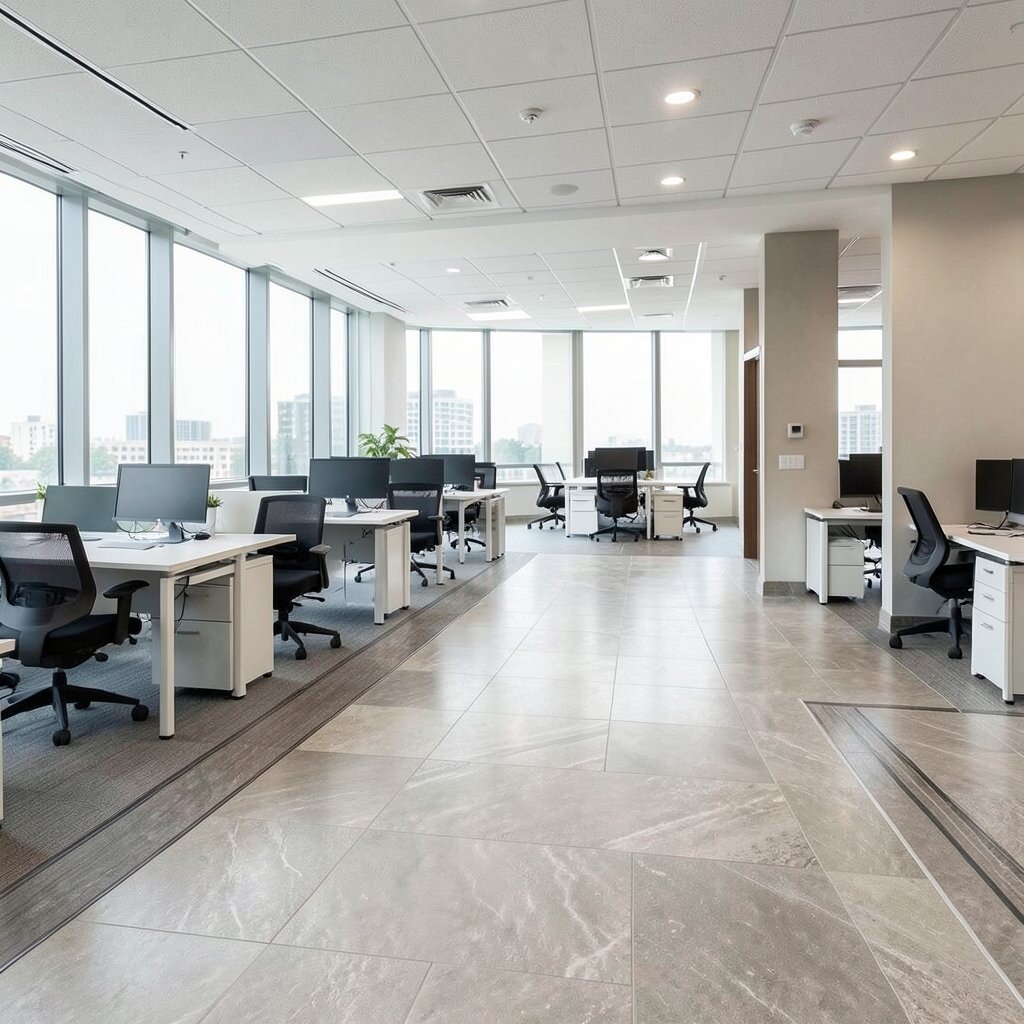
Luxury vinyl tile can mimic stone or wood while staying comfy underfoot. Many offices like the clean, patterned look because it frames work zones without feeling busy.
Choose larger tiles for conference areas so the space feels open. Use grout-look lines carefully and align them with desk rows for a tidy rhythm. For personalization, consider a border strip near entrances to signal arrival without major construction.
Budget-friendly flooring is one reason people pick vinyl for offices. Installation is often faster than traditional materials, which can reduce downtime. If you’re leasing or planning a future move, vinyl’s practical maintenance makes it easier to keep costs in check.
3. Polished Concrete With Soft Rugs
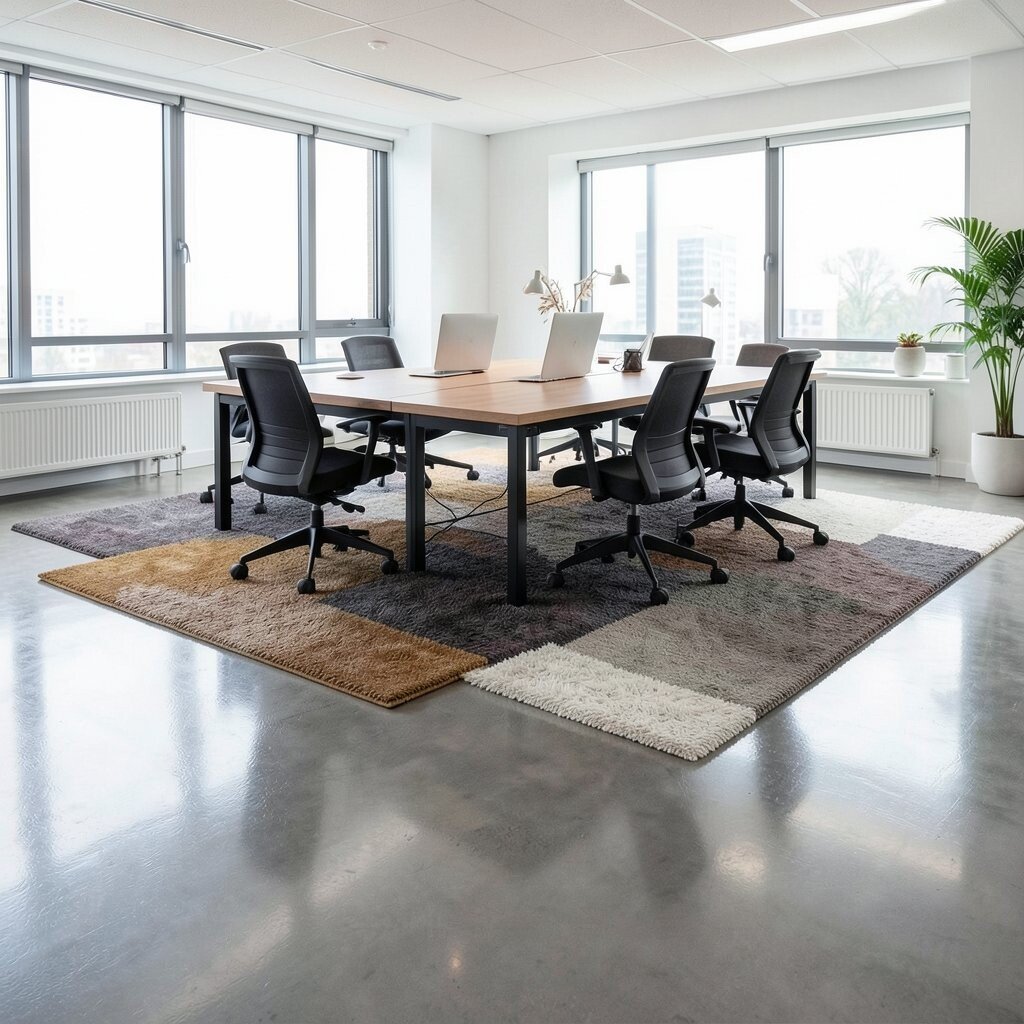
Polished concrete feels sleek and grounded, with a smooth shine that bounces light. It’s especially striking in modern spaces where furniture lines are simple and bold.
To avoid the cold feeling, add rugs with non-slip backing under meeting tables and high-traffic paths. You can also use sealers that resist stains from coffee and everyday mess. For practical care, wipe spills right away and avoid harsh cleaners that can dull the finish.
If your office already has concrete, this can be a smart upgrade. The cost can be more controlled when work is limited to polishing and sealing instead of full replacement. A great trend right now is mixing industrial floors with warm textiles so the look stays fresh, not harsh.
4. Cork Flooring For Quiet Comfort
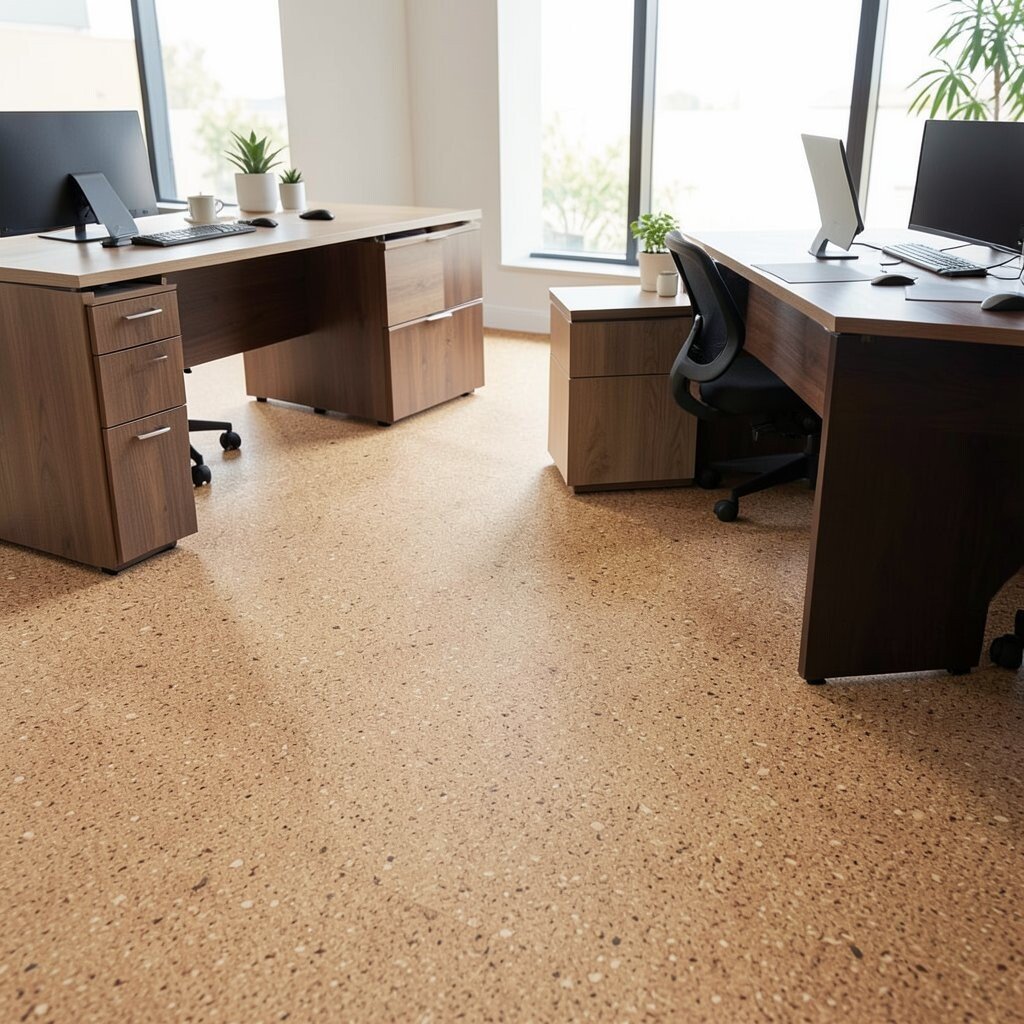
Cork flooring has a naturally springy feel that makes footsteps sound softer. Visually, it offers gentle speckling and color variation, so it never looks flat.
Because cork helps with sound control, it’s a strong fit for open offices and phone-heavy spaces. Choose sealed cork for better stain resistance and easier daily cleaning. For personalization, pair light cork tones with darker wood desks to create contrast that still feels calm.
5. Cozy Carpet Tiles In Productivity Zones
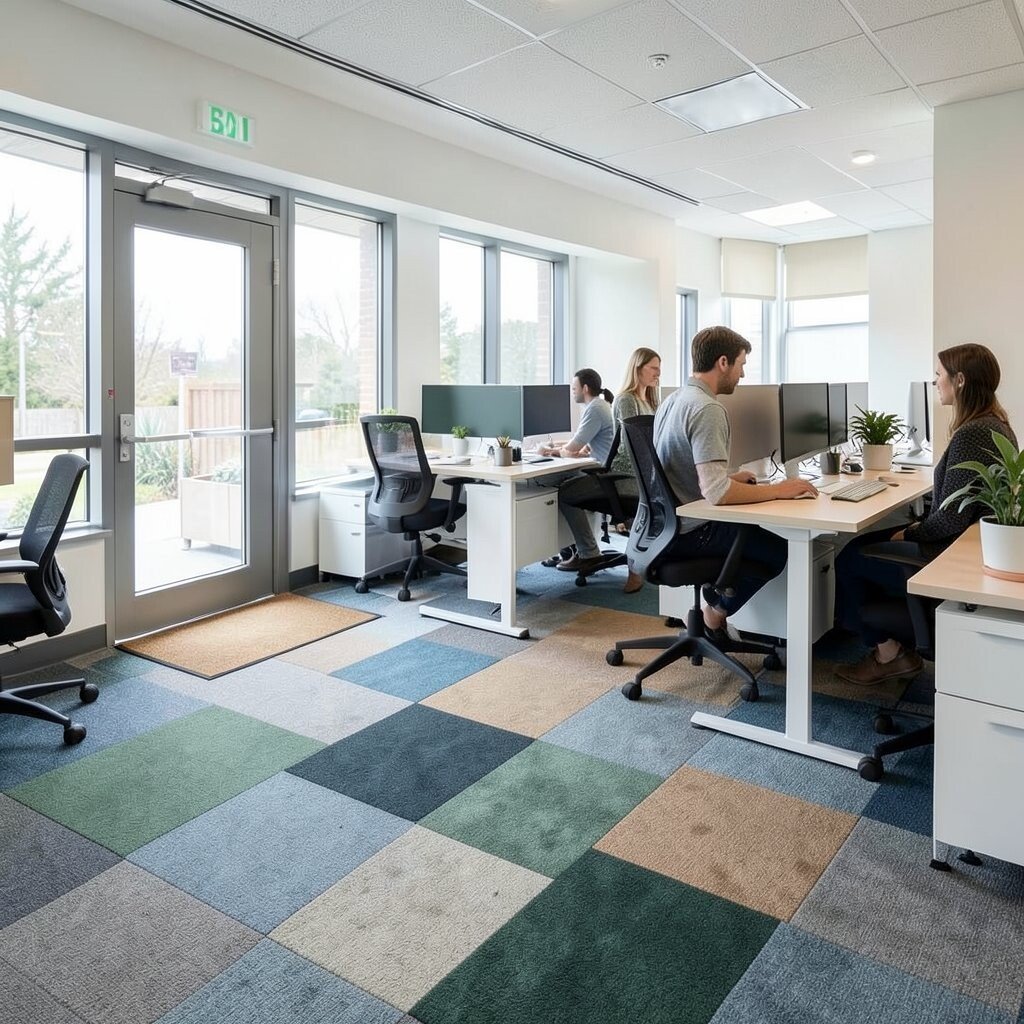
Carpet tiles bring comfort right away, and they can make the office feel more “work-ready.” With their modular style, you can place them in patterns that guide people from entrance to desks.
Go for a low-pile option if you want easier vacuuming and a cleaner look. A smart move is using color blocks for zones like collaboration, focus areas, and break spots. If a tile gets stained, replacing one piece is usually simpler than replacing an entire carpet.
This approach can match many budgets because you can scale coverage based on what needs upgrading most. Carpet tiles remain a popular trend in offices since they support flexible layouts and future changes. Add a rug runner at the front door to reduce dirt tracking and keep maintenance simple.
6. Slate-Look Flooring For A High-End Feel
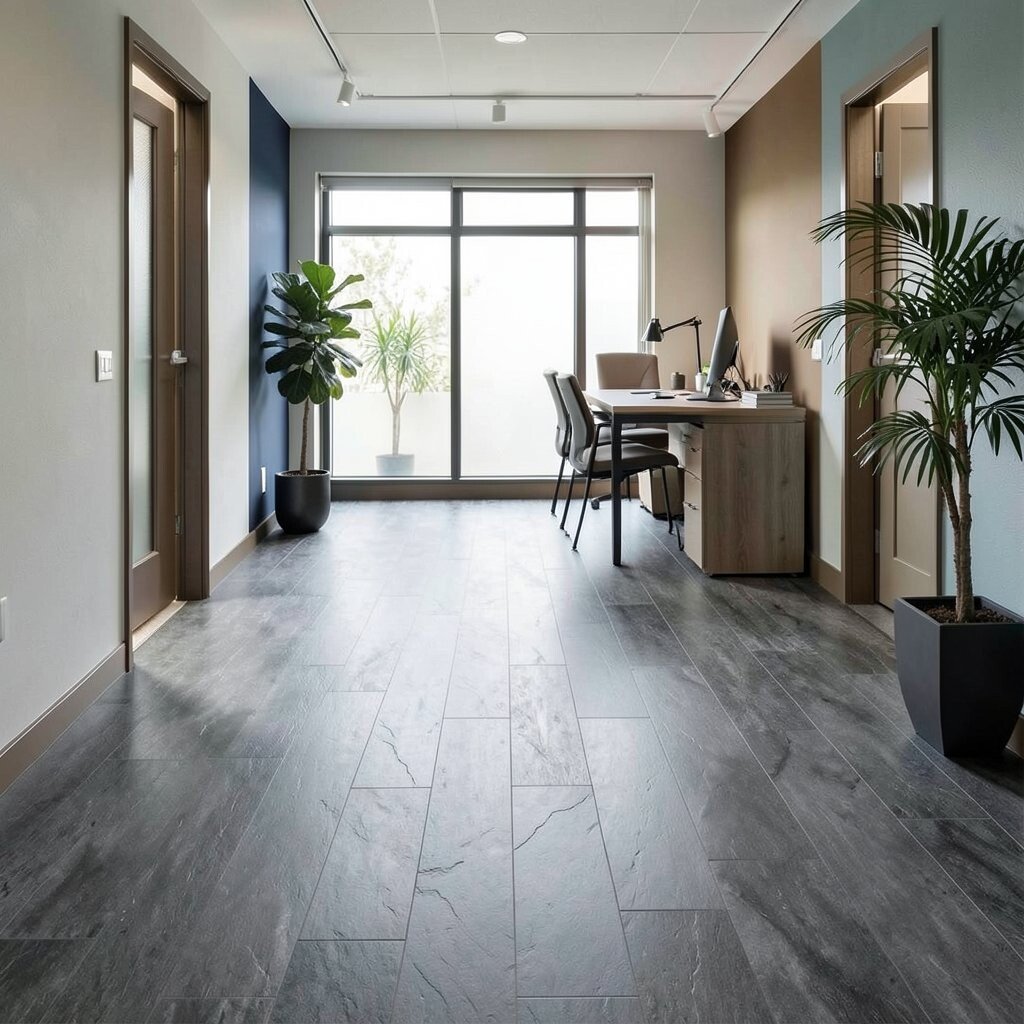
Slate-look surfaces give your office a refined, grounded look without the weight and upkeep of real stone. You’ll see subtle texture that makes the room feel stylish and modern.
For best results, choose a finish that balances elegance with practicality, like a low-sheen surface that won’t show every mark. Use mats at entrances to protect the floor from grit and moisture. If you want personalization, coordinate the tones with your brand colors through wall paint or planters.
Many offices like slate-inspired vinyl or laminate because it can be more affordable than natural stone. Installation can also be less disruptive, which helps when you can’t close the office. Keep costs predictable by planning transitions around doorways so you avoid expensive custom cuts.
7. Bamboo Floors For Clean, Natural Energy
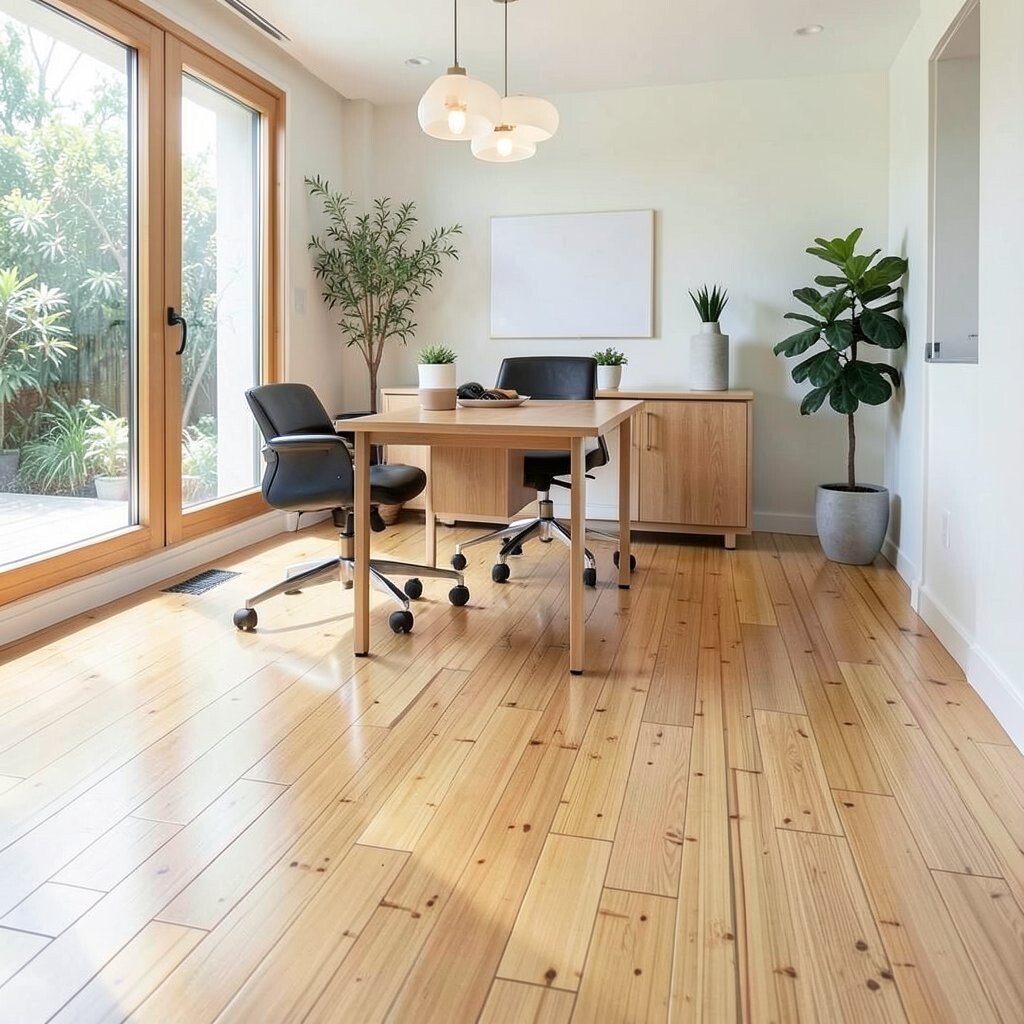
Bamboo flooring adds a bright, airy feel, like a breath of fresh air inside. The look often leans modern with straight lines or warm grain that feels natural and friendly.
Look for strand-woven bamboo if you want a harder surface that holds up to daily foot traffic. Pair it with a moisture-resistant underlayment when humidity changes are common. To keep it looking sharp, sweep often and use a manufacturer-approved cleaner instead of strong chemicals.
Because bamboo grows quickly, many people choose it for a greener mindset. Pricing can vary by style and quality, but mid-range options can still deliver an upscale look. A practical personalization idea is to match bamboo tones with light metal fixtures and greenery for a cohesive vibe.
8. Herringbone Or Chevron Layout With Vinyl Or Laminate
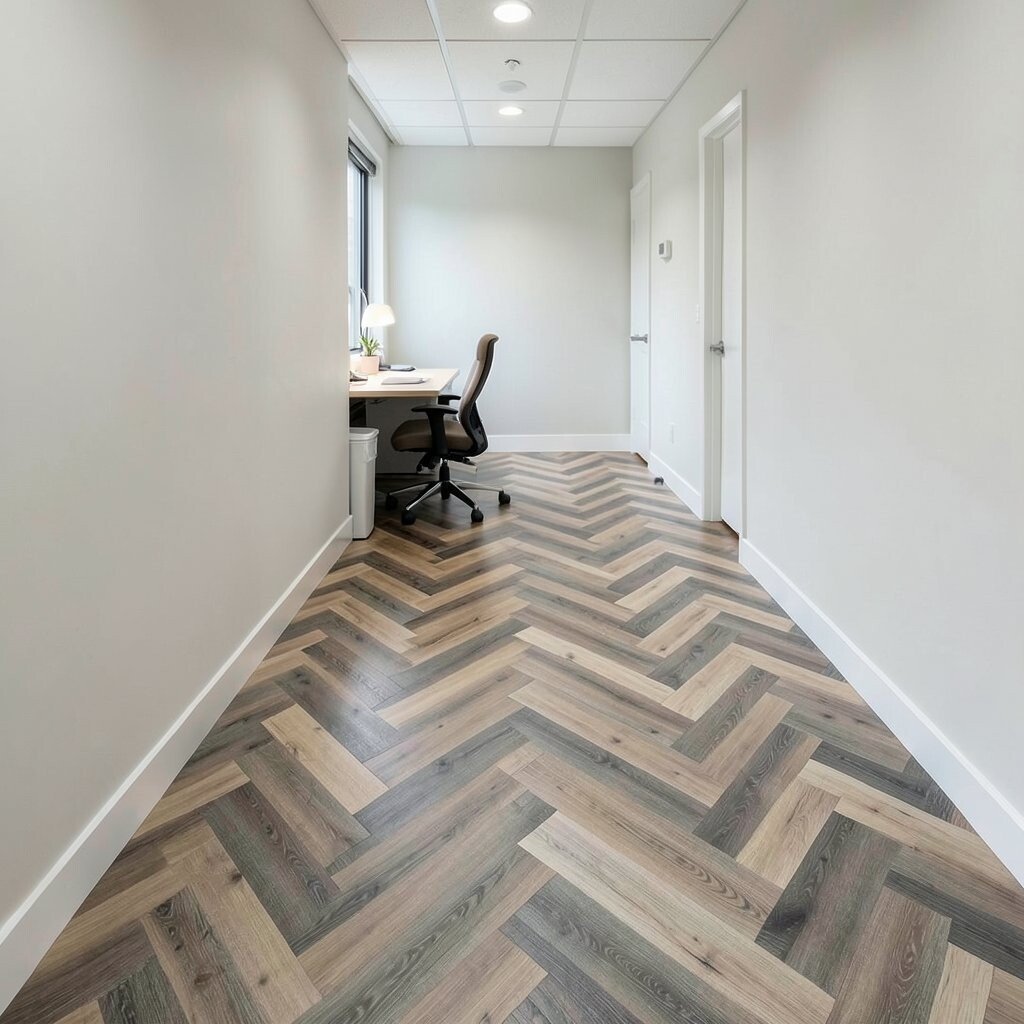
A herringbone or chevron pattern brings instant personality, even in a basic office. The diagonal rhythm creates movement and makes plain walls feel more dynamic.
To keep the pattern crisp, measure carefully and plan how the design will meet your main walking path. Choose a vinyl or laminate system that’s built for commercial wear so the pattern stays tidy. For practical tips, use matching baseboards and keep transitions straight so the floor looks intentional, not accidental.
This is a strong uniqueness play because patterned floors often become the “wow” part of the space. Costs can be controlled by installing the pattern only in key areas, like reception or a hallway loop. Current trends show offices mixing simple furniture with bold floors, so your upgrades will look modern without extra clutter.
9. Terrazzo-Look Flooring For Colorful Speckled Charm
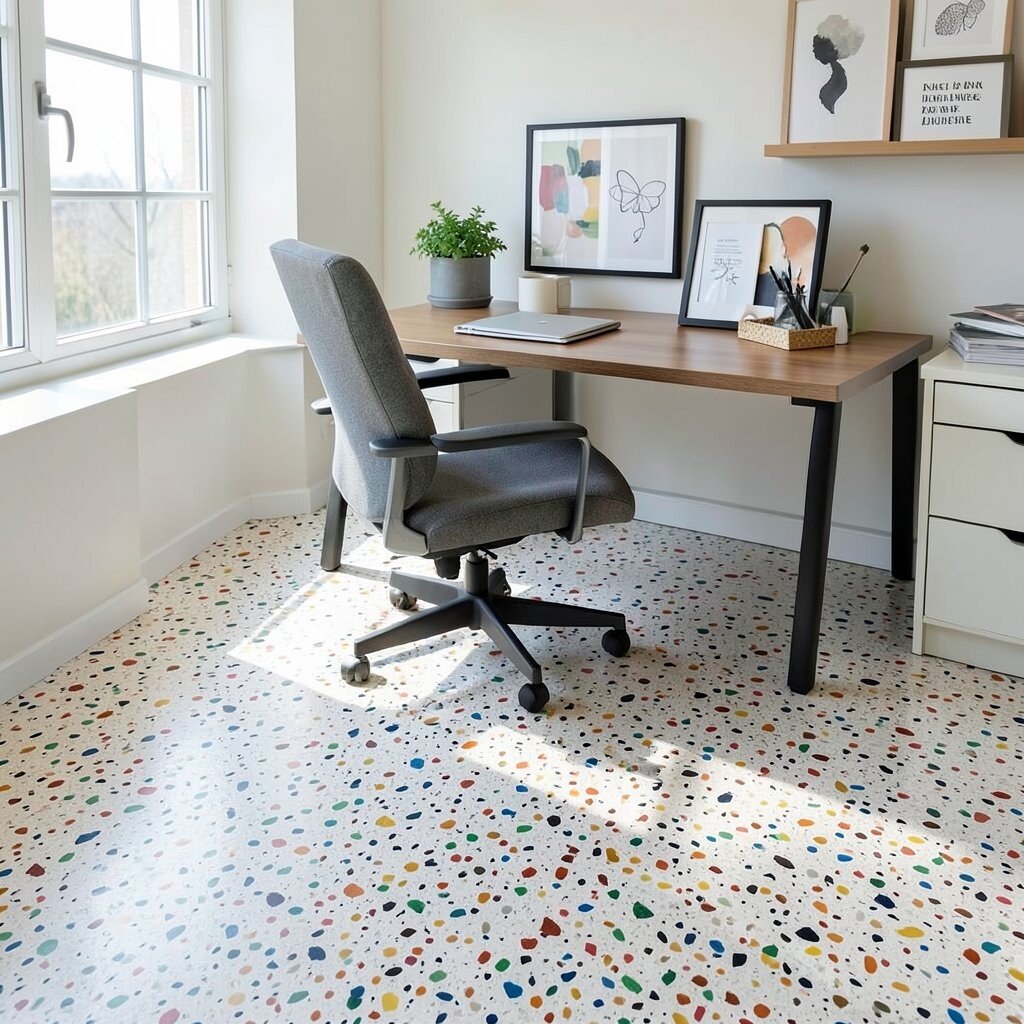
Terrazzo-look flooring adds playful speckles that catch light and hide small imperfections. It can make a waiting area feel more lively and a workspace feel more creative.
Choose a finish that’s comfortable to walk on, especially if your team stands during client meetings. Consider coordinating the speckle colors with your brand palette so the floor feels like part of the design story. A practical cleaning tip is to use a gentle cleaner and avoid scrubbing too hard, since the texture can collect residue if treated roughly.
Many options are available through vinyl or other resilient surfaces, which can lower cost compared to traditional terrazzo. This trend keeps popping up because it adds character while still feeling polished. For personalization, you can mirror the speckle tone in accessories like desk trays or artwork frames.
10. Rubber Flooring For Gyms-Style Durability In Offices
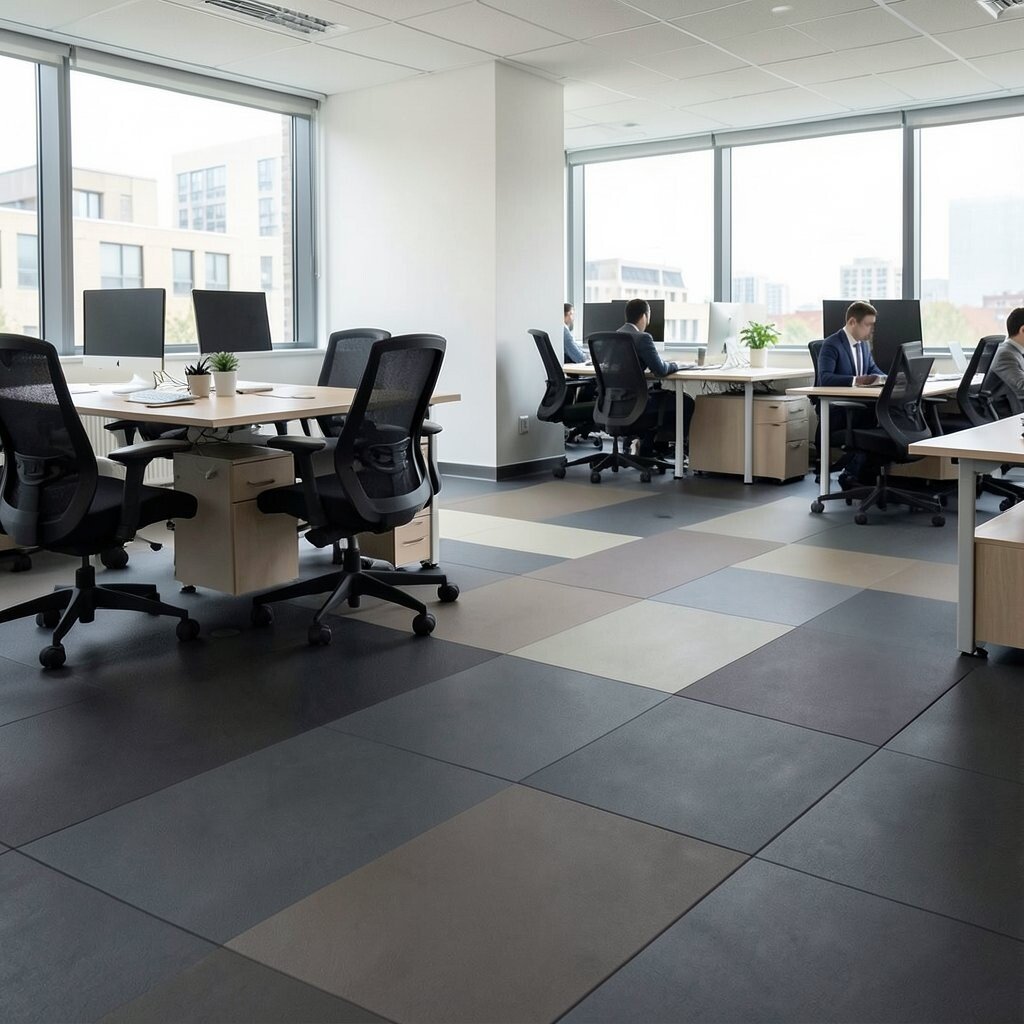
Rubber flooring offers a tough, supportive feel that works great in high-traffic zones. The look can be minimal and sleek, especially when you choose clean colors like charcoal or warm gray.
If your office has a studio, training area, or lots of standing desks, rubber helps reduce fatigue. Select tiles with a smooth top so they’re comfortable underfoot and easy to wipe down. For personalization, you can create subtle color bands to separate training space from office space.
Cost can be attractive because rubber is built for durability and long service life. Maintenance is usually straightforward, which saves time during busy weeks. This option is currently popular in mixed-use offices because it supports both professional meetings and active work.
11. Bright, Sealed Hardwood In Light Tones
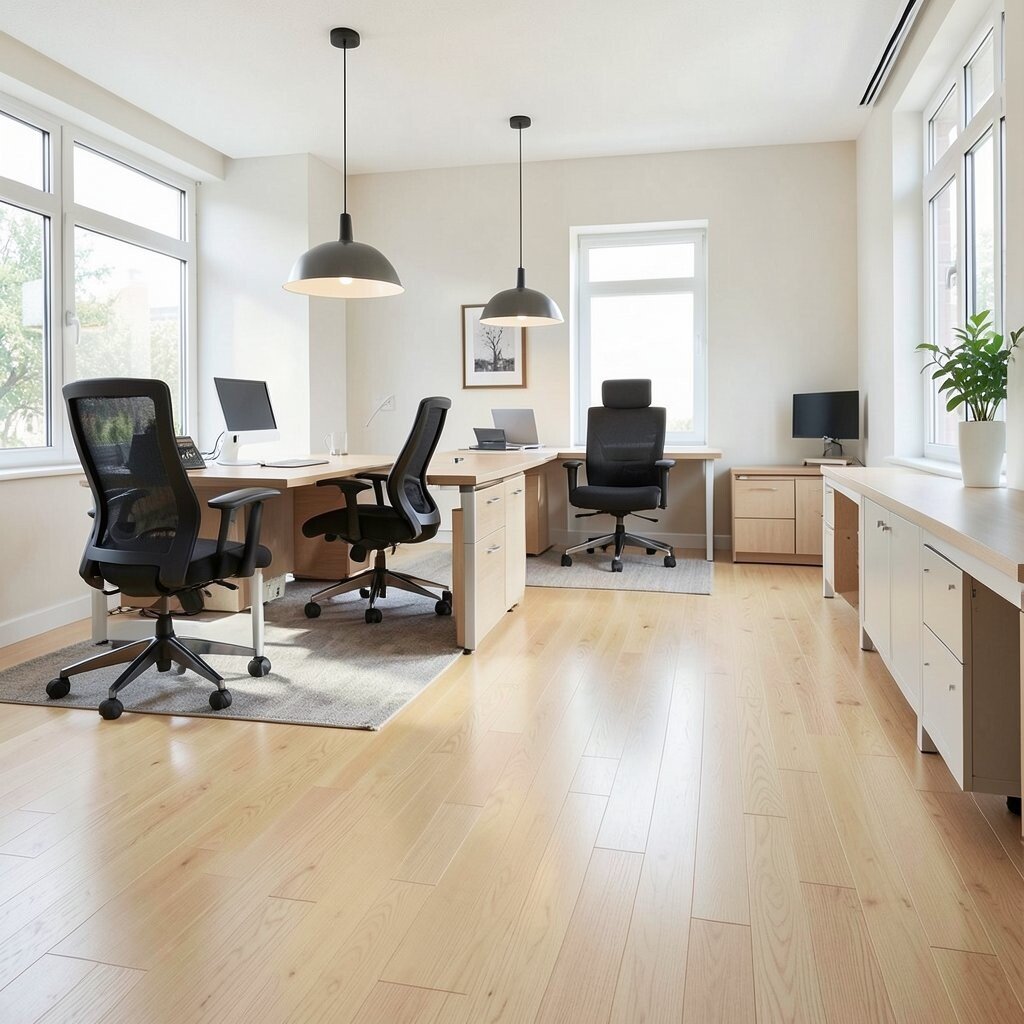
Light hardwood in a sealed finish makes an office feel fresh and open. You’ll notice how it brightens darker corners and pairs nicely with modern lighting.
Choose a satin sealer for a gentle sheen that still looks clean. If you deal with seasonal humidity swings, acclimate the floor materials and keep a steady indoor climate. For practical tips, place rugs at chair rolling areas and avoid dragging heavy items across the surface.
This approach can cost more up front than some alternatives, but many offices love the long-term appeal. If your budget allows, focus spending on a great wear layer and quality sealing rather than extra decorative features. Personalization is easy through furniture choice, since light floors work with nearly any desk style and wall color.
12. Warm Laminate With Realistic Texture
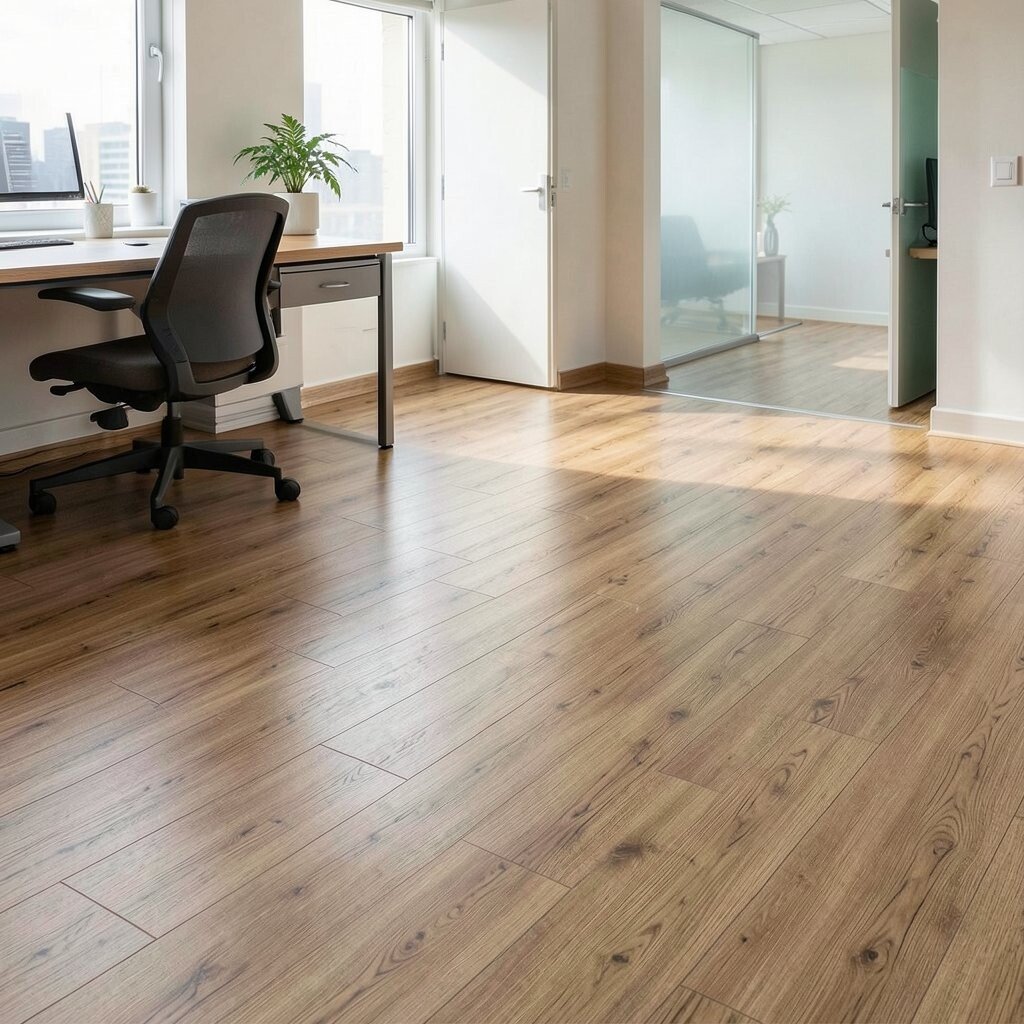
Laminate with realistic wood texture can look surprisingly convincing, especially in good lighting. It offers a cozy feel while giving you an easy-care surface for everyday office life.
Pick a thicker, higher-quality plank so edges feel sturdier and the floor resists dents better. Use underlayment that reduces noise, which helps keep meetings sounding calm and focused. For personalization, consider a plank length that matches your room size so the layout looks balanced.
Laminate is often a budget-friendly option, and it can be a smart choice if you want a quick refresh. Current trends show offices updating flooring to improve appearance without major remodeling. To keep costs predictable, plan for transitions under doors and measure carefully so you don’t end up with extra waste.
13. Custom Vinyl Borders And Accent Strips
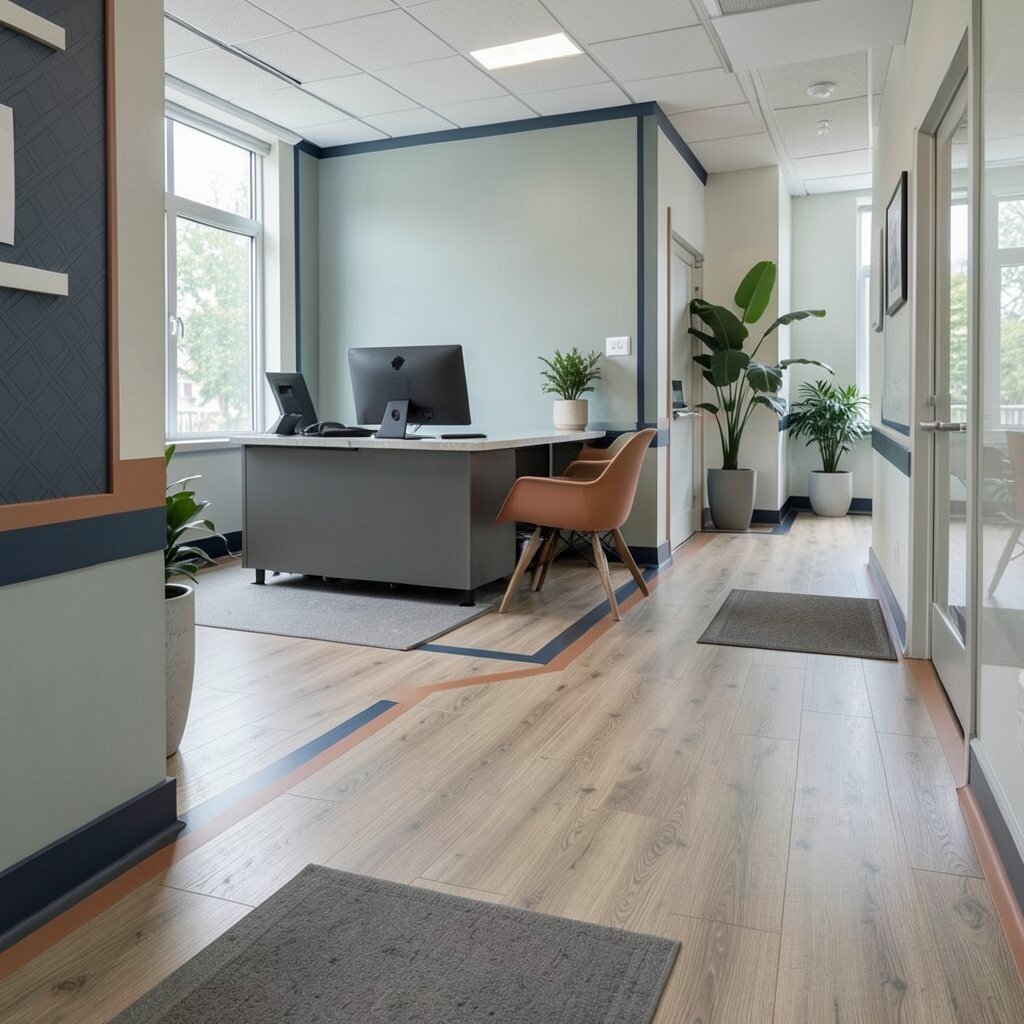
Accent borders let you add personality without committing to a full floor makeover. Visually, a border can frame a reception area or highlight a hallway like a neat design ribbon.
Choose colors that support your brand, such as muted navy, soft sage, or a warm terracotta tone. Keep the border width consistent and align it with key features like desk fronts or wall panels for a polished look. For practical tips, seal edges well and place mats at doorways to protect the border from dirt buildup.
This idea keeps cost flexible because you can upgrade only the visual focal points. It’s also a uniqueness strategy since not every office adds intentional design lines underfoot. For personalization, echo the border pattern in items like sign holders, planters, or even the color of chairs so the whole space feels coordinated.