
Soft textures and clean lines can make even a small apartment feel welcoming. Scandinavian style shines when comfort is treated as carefully as beauty.
Warm light, natural materials, and smart layout choices help you live better every day. The best part is that these ideas adapt to your life, not the other way around.
1. Light-First Color Palette
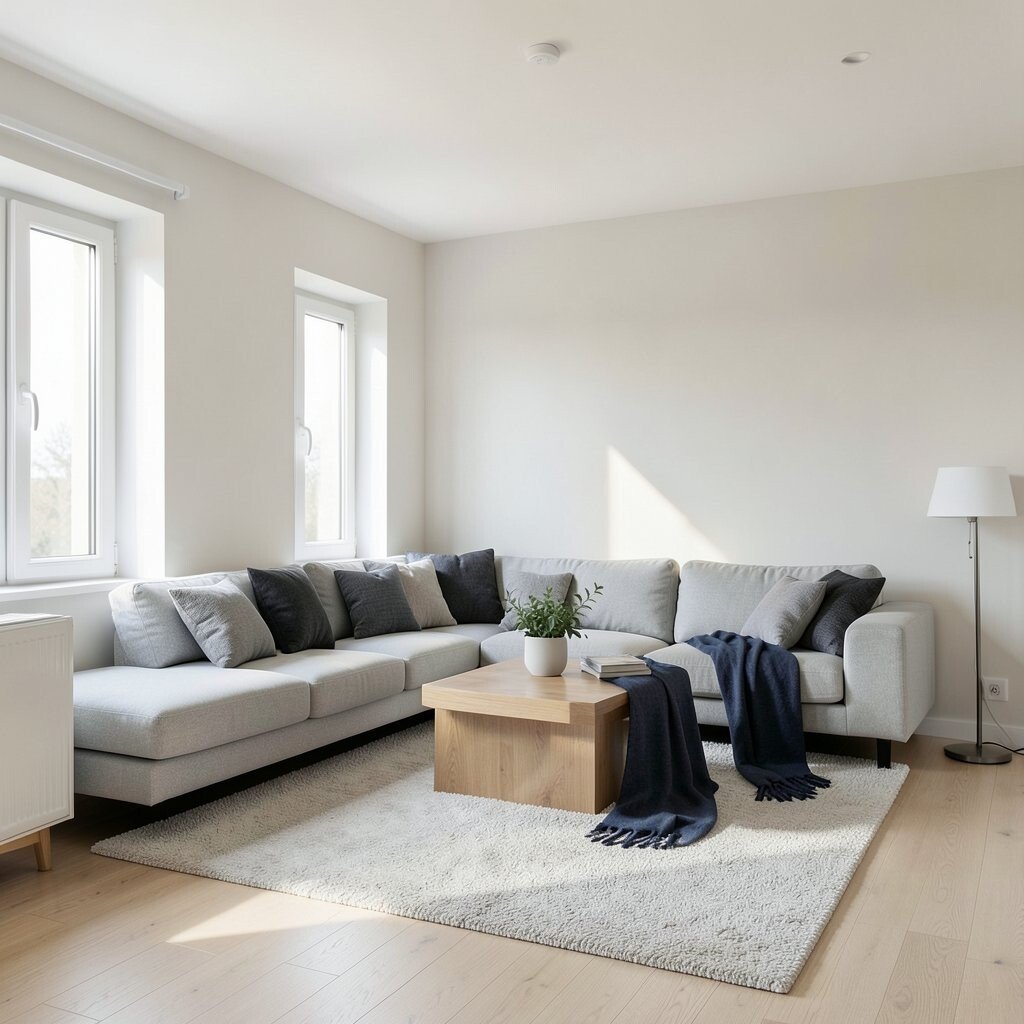
Start with a bright, calm base like warm white, pale beige, or light greige. Notice how your space feels bigger when the walls and large surfaces reflect daylight.
Pair the light colors with one gentle contrast, such as a soft oak floor, charcoal cushions, or a muted navy throw. This keeps the room cozy instead of stark, and it suits current trends that lean toward “warm minimalism.” For practical results, paint only the main walls first, then test swatches near windows during different hours of the day.
2. Layered Linen and Wool Textiles

Think of fabric as your comfort system. A sofa covered in linen-look throws, plus wool or knit accents, makes the whole room feel softer.
Mix textures on purpose so the eye stays interested, like a chunky knit blanket over a smooth cotton pillow cover. This works great in Scandinavian apartments because it adds warmth without clutter. If you want to keep cost down, start with one blanket and two pillow covers, then swap in seasonal colors as the year changes.
For personalization, choose patterns that match your taste, such as subtle stripes, small checks, or simple solid tones with different weave thicknesses. You will still get that clean Scandinavian feel while making it unmistakably yours.
3. Warm Wood Wherever You Can
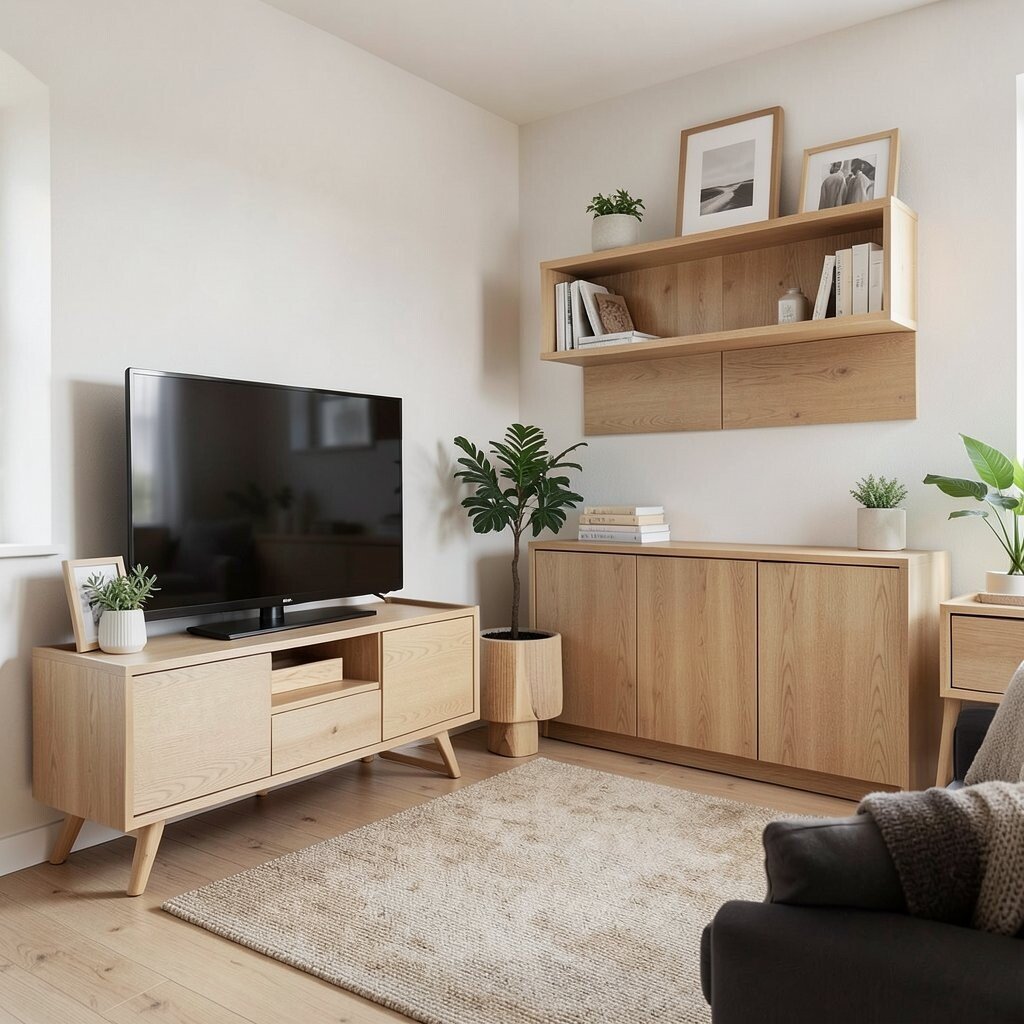
Scandinavian interiors often rely on wood to make the room feel human and grounded. When you choose light oak, ash, or birch tones, everything feels airy yet cozy.
Try wood in several small places, like a TV console, a bedside table, or even a picture frame. This creates a natural rhythm that looks intentional, not accidental.
To keep it practical, focus on the biggest visible surfaces first, since they offer the most visual impact per purchase. If you are renting, look for peel-and-stick or removable wood-look options for shelves and cabinet fronts. You can also warm up dark furniture by adding a light wood tray or a laminated wood side panel.
4. Soft Lighting With Many Small Sources
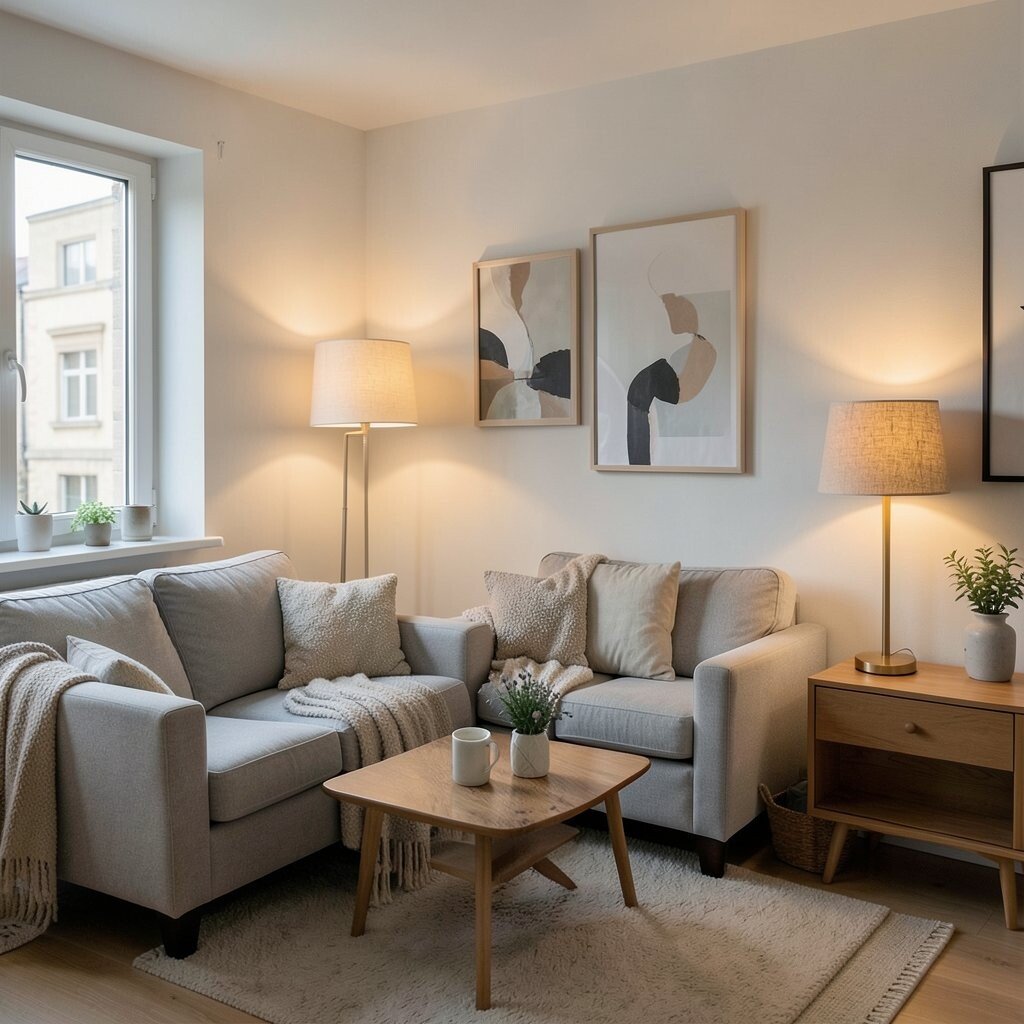
Instead of relying on one overhead light, use several gentle sources around the room. A floor lamp by your seating area and a small table lamp on a console can change the mood fast.
Choose warm bulbs so the light looks like late afternoon, not harsh midday. This is a big Scandinavian cozy move because it makes evenings feel relaxed and flattering.
For practical tips, place lighting at different heights and aim it slightly toward walls so the glow spreads. If you enjoy budgeting, lamps can be secondhand, and shades are often easy to replace. Personalize with a fabric shade in a texture you love, like linen or boucle, for an instant upgrade.
5. Open Yet Structured Layout

Keep the apartment open, but give the room structure so it does not feel empty. In many Scandinavian homes, furniture forms clear zones for living, working, and eating.
Try pushing your sofa to face a focal point, such as a window view, a gallery wall, or a simple media cabinet. Add a rug under the front legs of the main seating area so the space feels anchored.
To make it actionable, sketch your plan before buying anything new and measure doorways and walking paths. If your layout is tight, swap bulky pieces for slimmer versions like a narrow sideboard or low-profile storage. This also supports current trends that favor flow and flexible living in smaller homes.
6. A Patterned Rug That Brings Warmth

A rug can do more than cover floors. It can soften sound, add color, and make the room feel cared for.
Look for Scandinavian-style patterns like subtle geometric shapes, simple stripes, or a tonal shag that feels cozy. If you love minimal look, choose a rug with texture rather than loud prints.
For benefits, a well-placed rug helps define your seating area and keeps your feet comfortable. For practical sizing, leave enough room for furniture to sit naturally on the rug, usually with the front legs of key pieces on top. When cost is a concern, consider layering a washable flatweave over a basic underlay for comfort without overspending.
7. Curated Gallery Wall, Not a Clutter Wall

A gallery wall can be warm and personal without feeling messy. Choose frames in one or two finishes, like thin black metal and natural wood, so the look stays balanced.
Plan the layout on the floor first so you can adjust spacing before you hang anything. Scandi design often favors calm spacing and consistent alignment, which makes your art feel intentional.
Add prints that reflect your life, such as travel photos in soft tones, botanical illustrations, or simple typographic art. This gives uniqueness while keeping the palette calm and cohesive. If you want a budget-friendly approach, mix a few original pieces with affordable art prints, and frame only the best-sized favorites.
8. Cozy Dining Nook With Practical Seating
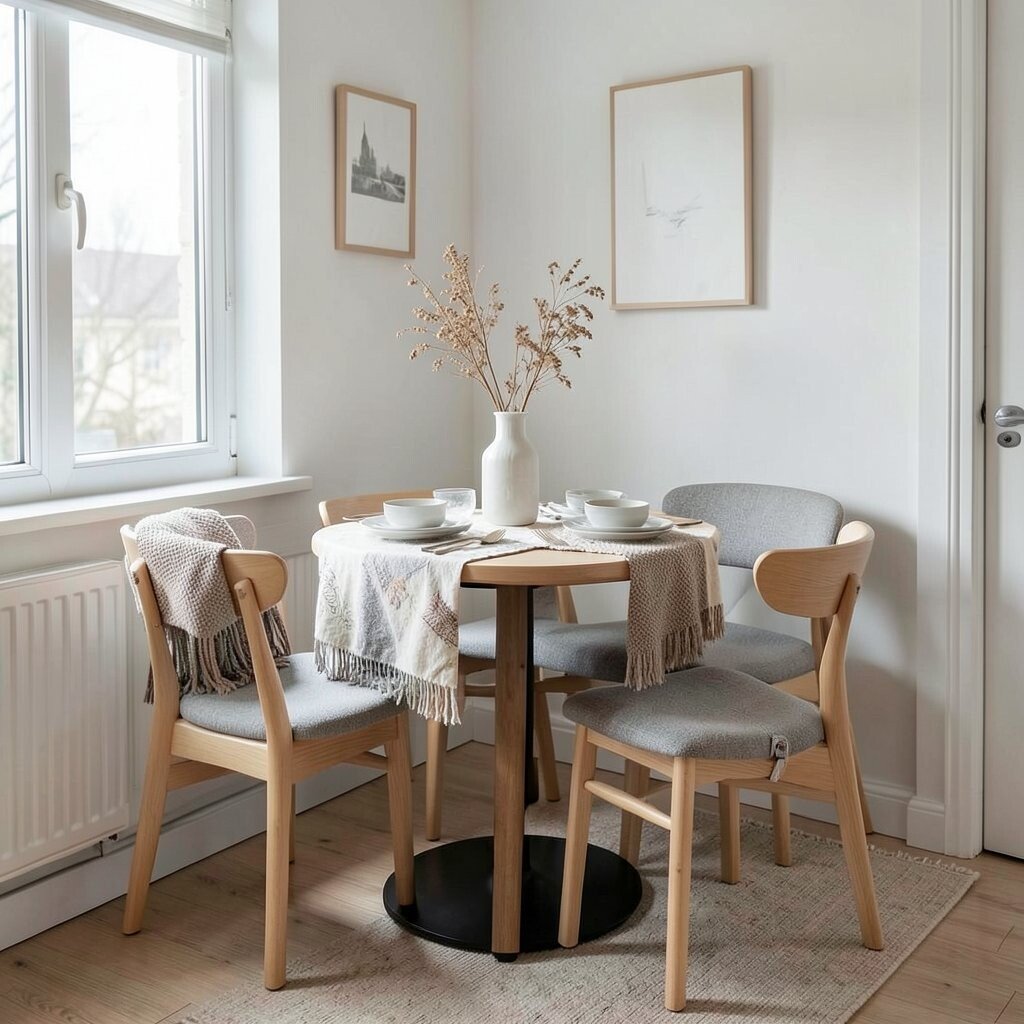
Even a small apartment can feel like home at mealtime. A cozy dining nook works best when seating is comfortable and the layout makes daily use easy.
Choose a small round or compact table and pair it with chairs that feel inviting. Scandinavian apartments often use natural wood chairs with upholstered seats for added comfort without visual heaviness.
For benefits, a dedicated dining spot helps you enjoy meals fully instead of eating on the couch. To make it work in real life, keep a simple centerpiece like a vase of dried stems or fresh cut flowers. When budgeting, consider using a better dining chair first, since you sit in it more often than you think.
Personalize the nook with a washable runner and a few seasonal textiles so it always feels current.
9. Simple Curtains for Better Light Control
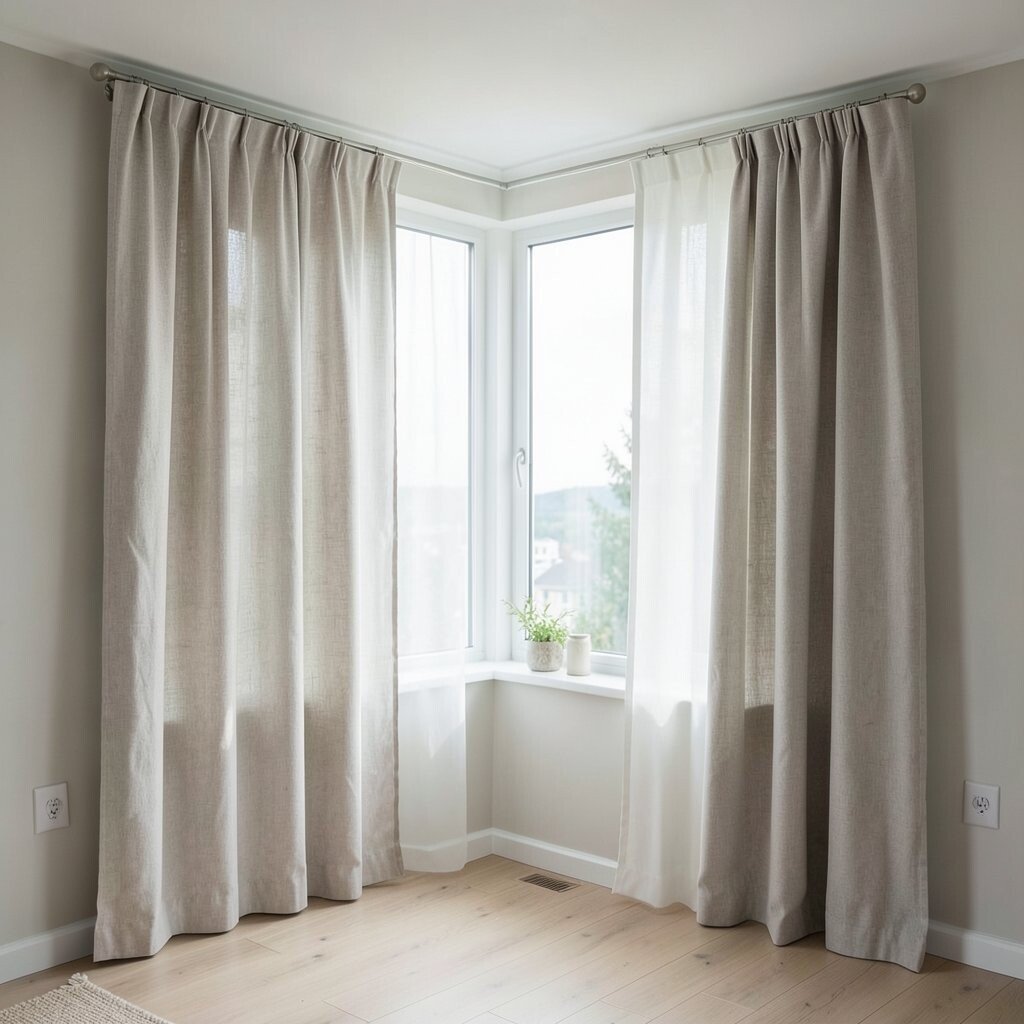
Curtains do not need to be complicated to make a big difference. They soften windows, frame views, and help your space feel finished.
Go for linen-look or cotton in light neutrals so daylight stays gentle. For privacy and comfort, choose a thickness that matches your needs, such as sheer panels plus a heavier layer for evenings.
As a practical tip, hang curtains close to the ceiling so your windows look taller. If cost is a concern, reuse curtain rods you already have and invest in fabric panels first, since fabric creates the biggest visual change. For personalization, add a subtle color wash through tassels, tiebacks, or a single coordinated pattern.
10. Storage That Hides the Everyday
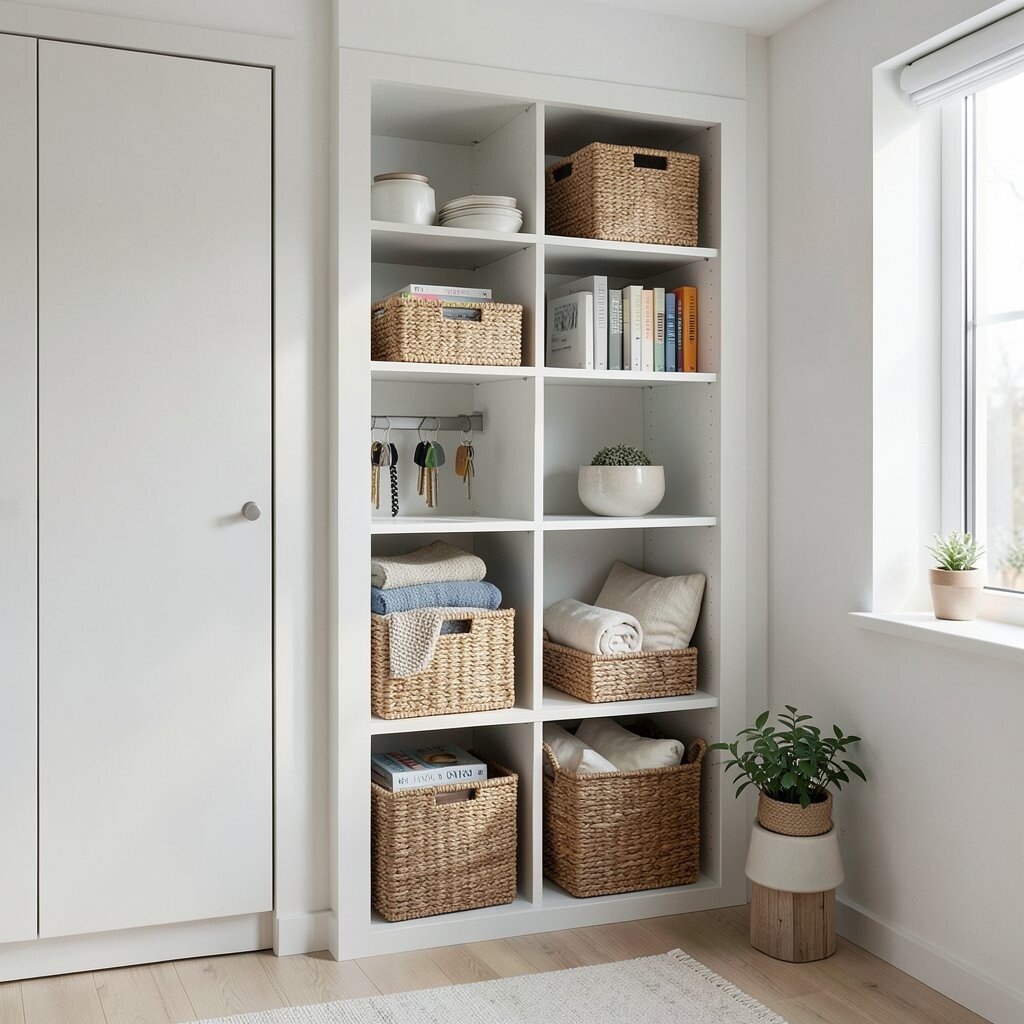
Scandinavian style looks neat, but it still supports real life. Storage is what keeps your home looking calm even when you have everyday items out.
Use closed cabinets for clutter and open shelving only for things you truly want to show. This makes your space feel curated rather than crowded.
Try baskets in matching colors for blankets, board games, or extra pillows. The benefits are clear: fewer visual distractions and easier cleaning routines. To keep it practical, add storage near where you use the items, like a small entry shelf for keys and bags.
For personalization, choose one or two “display favorites” like a ceramic bowl, a stack of books, or a plant pot that matches your palette.
11. Minimal, Meaningful Decor Pieces

Instead of filling every surface, choose a few decor pieces that feel special. Scandinavian homes often feel cozy because every item has a reason to be there.
Pick decor with natural texture, like ceramic, glass, stone, or woven rattan. Then give each piece breathing room so it looks calm and intentional.
For benefits, fewer items are easier to dust and easier to rearrange when you want a fresh look. A practical approach is to rotate decor seasonally so you do not have to buy new things often. Personalize with one handmade element, like a pottery mug set or a small wall weaving, to add uniqueness without adding visual noise.
12. Fireplace-Style Wall Feature With Lighting

You might not have a real fireplace, but you can still create that cozy focal vibe. A fireplace-style feature can be built with shelving, a mantel, or a low console with a warm light behind it.
Use a simple surround in light wood or neutral tile, and keep the decor minimal so it feels Scandinavian. Add candles, a tall vase, or a framed art print for that “evening comfort” look.
This design choice brings benefits by giving your room a clear anchor point. For practical tips, make sure the feature fits your wall size so it does not overpower the space. If you are renting, consider a freestanding shelving unit that can be moved later, and personalize with removable decor. This is also a current trend because people love statement corners that feel functional, not just decorative.
13. A Desk Setup That Feels Calm and Cozy

Working from home should feel light, not stressful. A Scandinavian desk setup uses simple lines and comfortable essentials.
Choose a light wood desk or a white desk with clean edges, and pair it with a warm lamp and a soft desk mat. Add one small organizer so cables and papers do not spill across the surface.
For benefits, a tidy workspace supports focus and reduces daily friction. Keep practical access to what you use most, like a pen cup and a notebook, while storing extras in drawers. Personalize with a framed photo, a small plant, or a print that matches your room’s palette. If cost is a concern, upgrade your lamp and chair first, since those items directly affect comfort.
Even in a studio, the desk zone can look intentional when it matches your living area style.
14. Plants in Low-Mess, High-Impact Ways
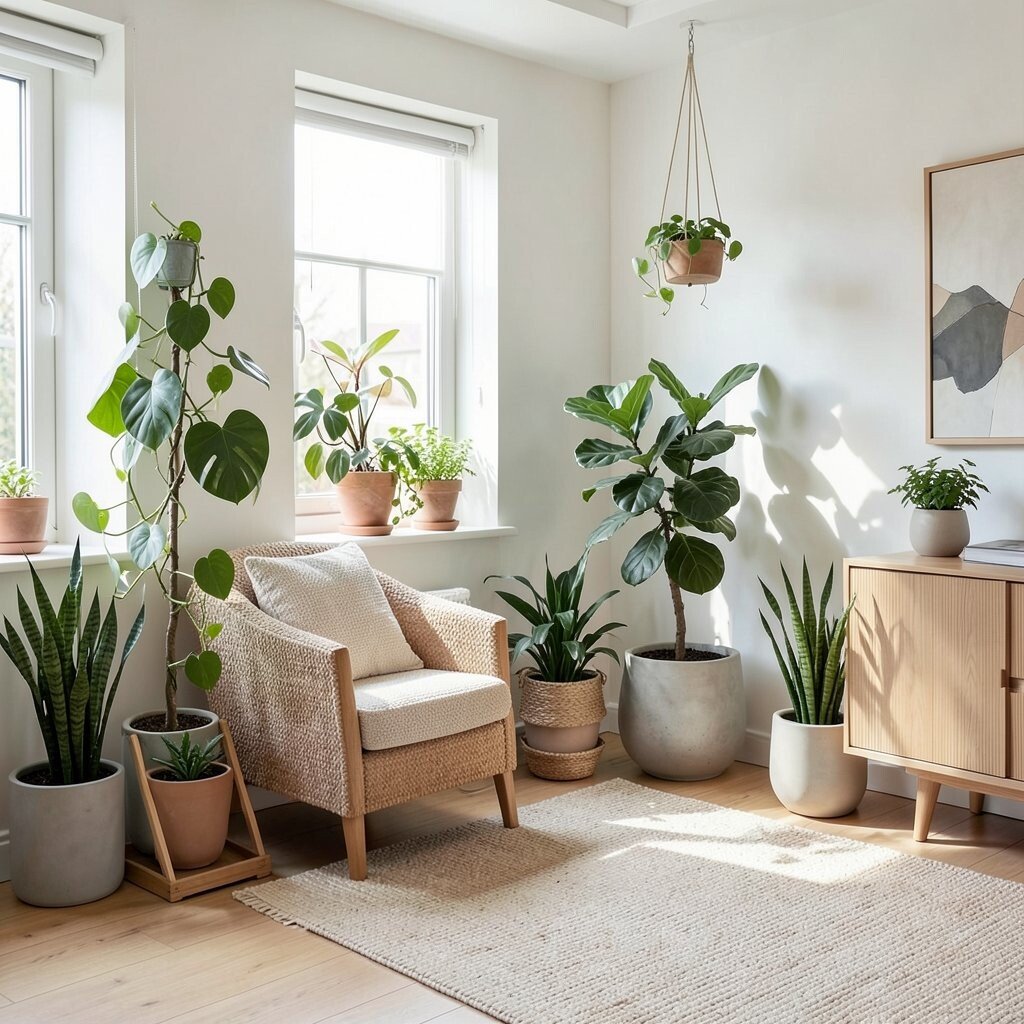
Plants add life and softness, which is a core Scandinavian comfort idea. You do not need a jungle, just a few well-placed greens.
Choose plants that fit your light, like pothos, fiddle leaf fig in bright corners, or low-maintenance snake plants. Use planters in matte ceramic or woven covers to match your textiles and wood tones.
For practical tips, group plants with similar care needs and use a tray under pots to protect floors. The benefits include cleaner-looking surfaces and a more soothing atmosphere when you look around the room. For uniqueness, add a small plant stand in wood or a simple hanging planter if your ceilings allow it. This also aligns with current trends that mix indoor nature with calm design.
Personalize by tying plant placement to your routines, like placing one near your reading chair for a daily feel-good moment.
15. Dining and Living With Textured Wall Art
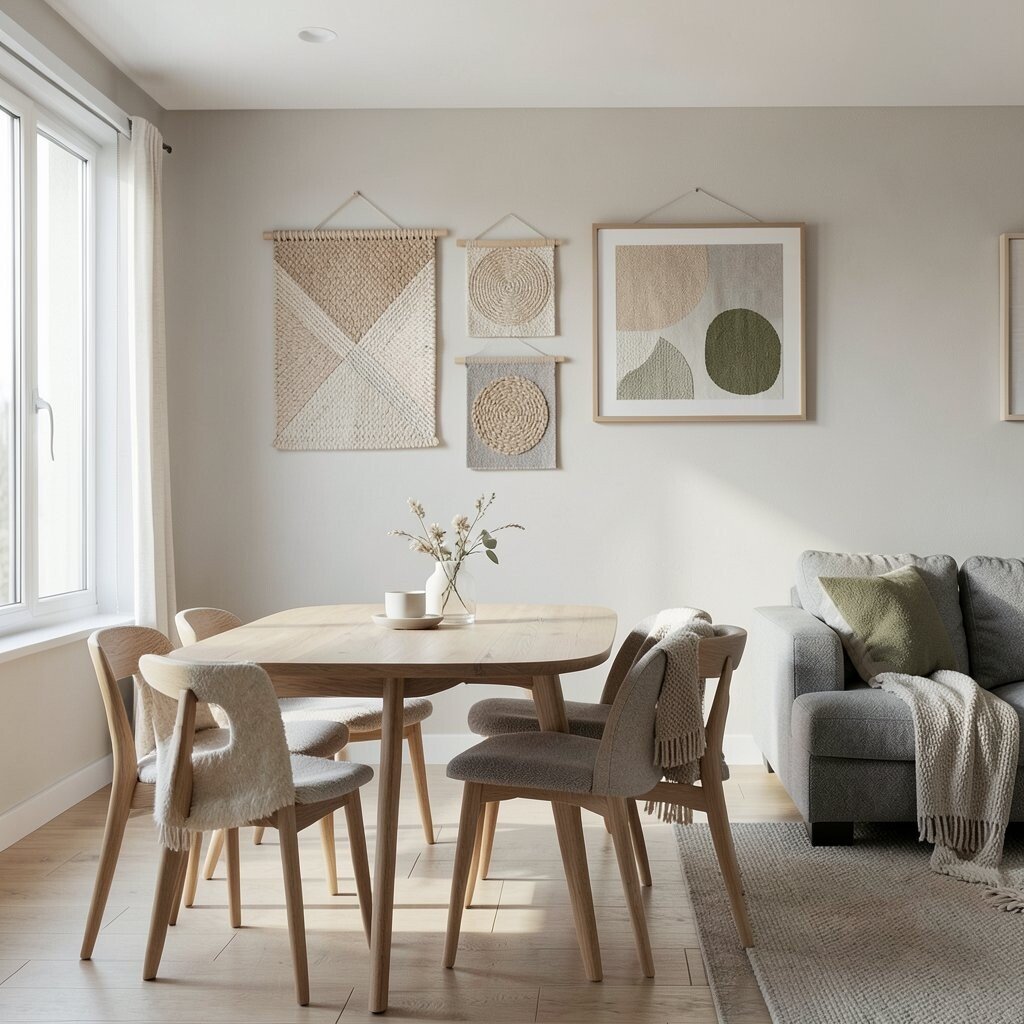
Wall art with texture can make a room feel cozy even when colors are muted. Think woven pieces, framed fabric panels, or simple wood relief art.
Scandinavian style often balances visual quiet with tactile interest, so textures create warmth without loud patterns. Choose colors that echo your textiles, like soft beige, warm gray, or muted olive.
For benefits, textured art softens acoustics and adds depth that flat prints cannot. A practical tip is to keep the size proportionate to your wall, so it feels like part of the room rather than a random decoration. Personalize by selecting art that matches your story, like a piece inspired by nature or a symbol from a favorite place. If cost is a concern, look for affordable woven wall hangings and pair them with a simple frame or rod.
16. Cozy Corner for Reading and Unwinding

A dedicated reading corner turns your apartment into a calm retreat. Even a small nook can work when you add comfort and good light.
Use an armchair, a floor cushion, or a compact chaise, then add a soft blanket and a side table for water and books. Scandinavian apartments love this “small sanctuary” feel because it makes everyday moments feel special.
For practical tips, place a light source within arm’s reach and choose warm lighting for evenings. The benefits are real: you read more, unwind faster, and notice the room feels better because you use it intentionally. Personalize with a throw in your favorite color and a small tray that holds your current book and glasses.
If you want to manage cost, shop gently used chairs and invest in cushions and a lamp. That combo often gives the biggest comfort upgrade per dollar.
17. Personal Style Through Seasonal Swaps

One of the smartest Scandinavian comforts is the habit of changing details with the seasons. You can keep the main look calm while refreshing the feel with small swaps.
In warmer months, use lighter throws, airy curtains, and brighter natural tones. In cooler months, switch to thicker knit blankets, deeper neutrals, and extra layers so the room feels snug.
For benefits, seasonal changes prevent the space from feeling stuck and make your home feel alive. Practical tips include using storage bins labeled by season and keeping a small capsule of reusable decor pieces. Personalization comes from how you choose your palette, like warm honey tones in autumn or crisp whites and soft blues in winter.
Cost considerations are easier when you plan swaps around what you already own and buy only one or two key items each season. This also fits current trends toward slow living and mindful consumption.