Your cabinets can work harder than you think. With a few clever add-ons and smart habits, everything can feel in reach and easy to maintain.
1. Pull-Out Pantry Shelves With Soft Alignment
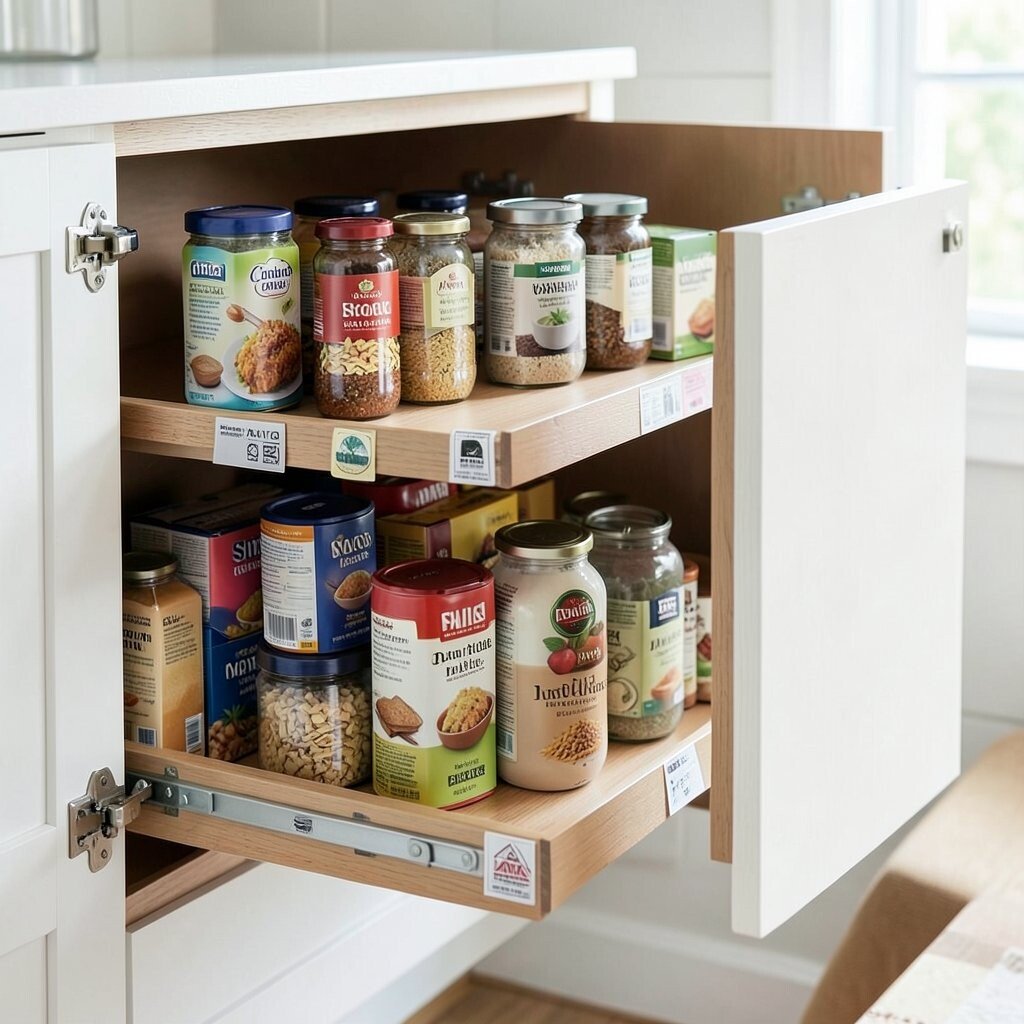
Imagine opening a cabinet and having your food slide forward like a little stage. Jars, boxes, and snacks stay upright, and the front edge reveals what you need in seconds.
Look for pull-out shelves with gentle stops and smooth rails so items don’t jerk or tip. Soft alignment guides help you close the cabinet without bumping corners or scraping labels. To personalize, group items by meal type, like breakfast staples and baking supplies, and add simple label stickers to the shelf edges.
2. Lazy Susan Corner Cabinets With Adjustable Inserts
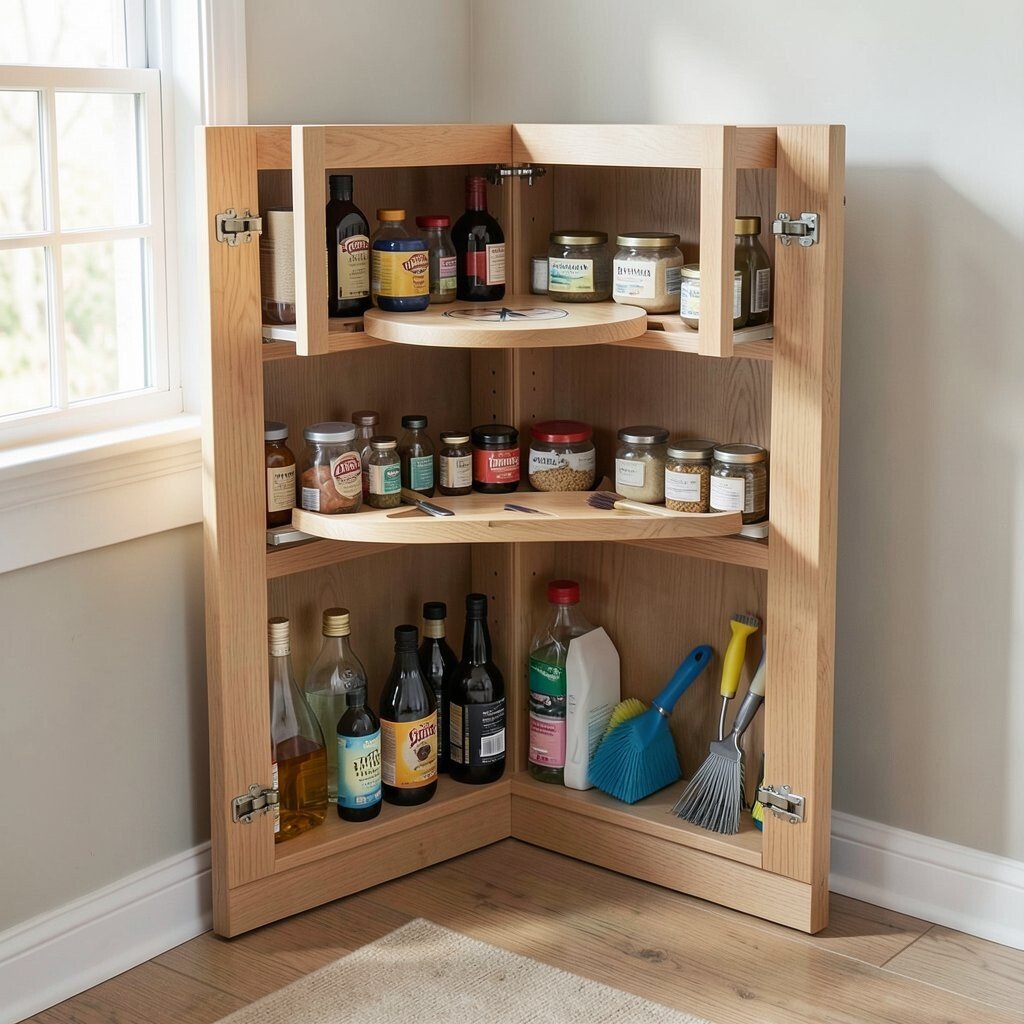
Corners used to be wasted space, but a Lazy Susan makes them feel roomy. When you spin the turntable, everything rotates toward you like a compass pointing to dinner.
Choose a model with adjustable dividers so tall bottles, small jars, and even cleaning tools fit neatly. A steady base reduces wobble, which matters when the cabinet is loaded. For practical organization, place everyday items at eye level on the near-facing section, and keep less-used backups in the far side. If you want a cost-friendly approach, measure your cabinet carefully and shop for inserts that fit your existing hardware.
3. Vertical Dividers For Baking Sheets, Trays, And Pots
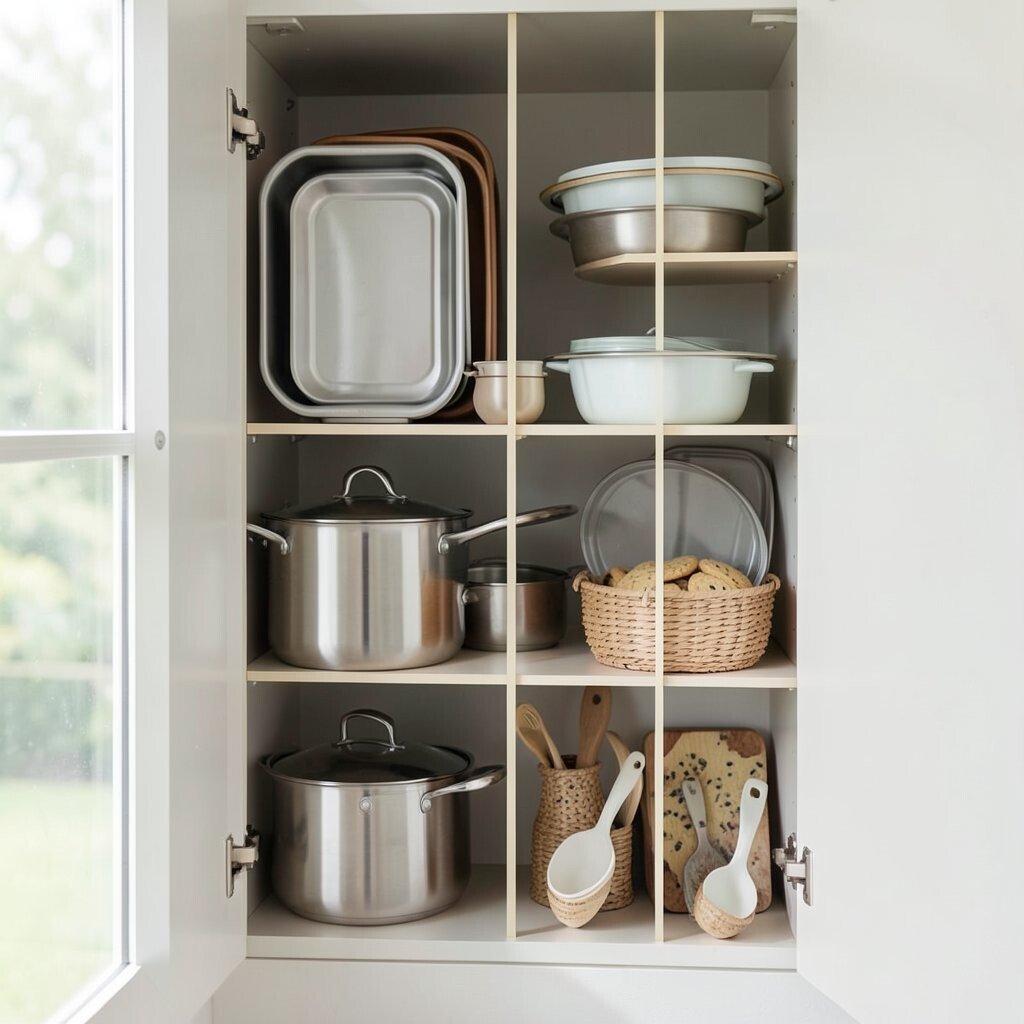
Picture your baking trays standing up tall instead of leaning in a chaotic stack. Vertical dividers hold sheet pans, cutting boards, and even shallow lids so they slide out smoothly.
This setup reduces scratches and makes it easier to grab the right size without unfolding everything. Use removable dividers so you can reconfigure the layout when your cookware collection changes. A small trick is to store heavy pans on lower sections and lighter items higher up for safer handling.
For personalization, keep a “cookie zone” with mats and scoops in the same area so baking feels automatic. If you’re thinking about cost, you can start with a few dividers for the most-used cabinet and expand later. Current trends lean toward modular storage, because it upgrades as your needs change.
4. Over-Door Organizer Bins For Cleaning And Small Tools
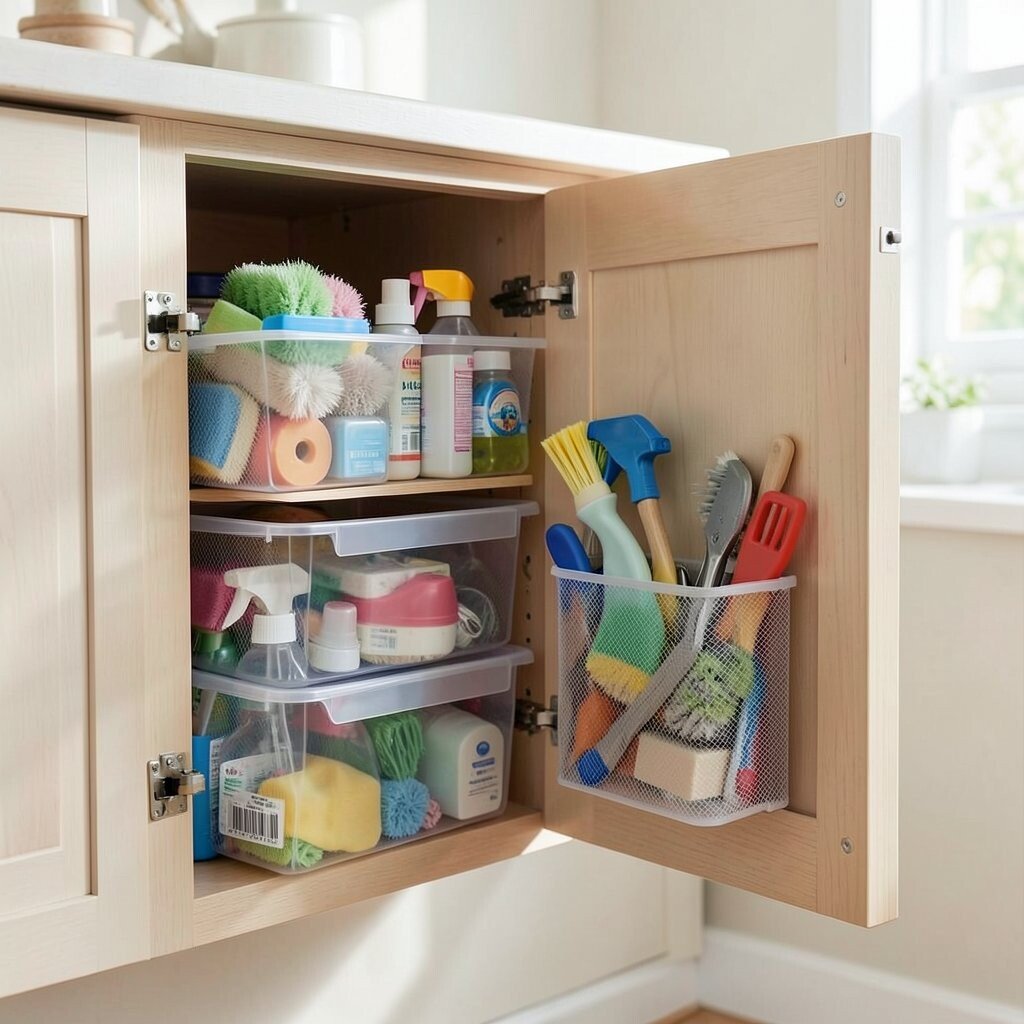
Some cabinets don’t need more shelves; they need smarter access. Over-door bins turn the inside of the door into a tidy landing zone for sponges, gloves, and spray bottles.
You can see everything at a glance, so you don’t rummage through stacks when you’re in a hurry. Choose bins with clear fronts or mesh so contents stay visible while still protecting smaller items from falling. To personalize, dedicate one bin for bathroom supplies and another for kitchen quick-clean tools, keeping each routine separate. If you’re on a budget, try removable adhesive options for lightweight items before investing in a full hardware kit.
5. Soft-Close Hinges With Built-In Dampening Tricks
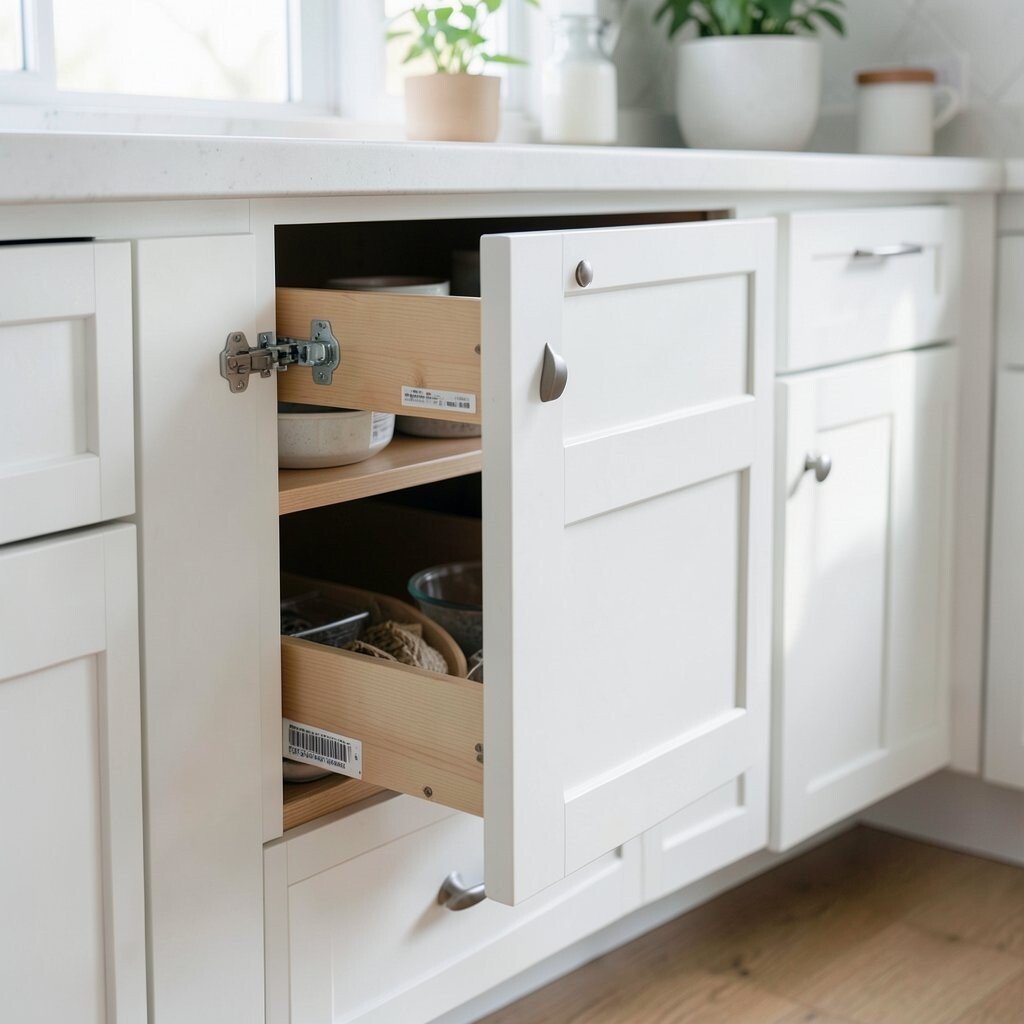
Have you ever pulled a cabinet door and heard that sharp slam? Soft-close hinges make opening and closing feel gentle, and the cabinet stays calm even in busy kitchens.
When doors close quietly, it helps prevent door bounce and reduces wear on hinges and shelves. It also makes organization easier because drawers line up more consistently when you close them the same way every time. For practical tips, pair soft-close hinges with drawer organizers so everything stays aligned as you pull and replace items. If you like customizing, choose a hinge system that matches your cabinet style and install handles that feel comfortable to grip.
Many people now prefer hardware upgrades because they improve daily comfort without changing the cabinet layout. Costs vary depending on brand and installation type, but even one upgraded cabinet can feel like a noticeable upgrade.
6. Drawer Inserts With Removable Trays For Utensils
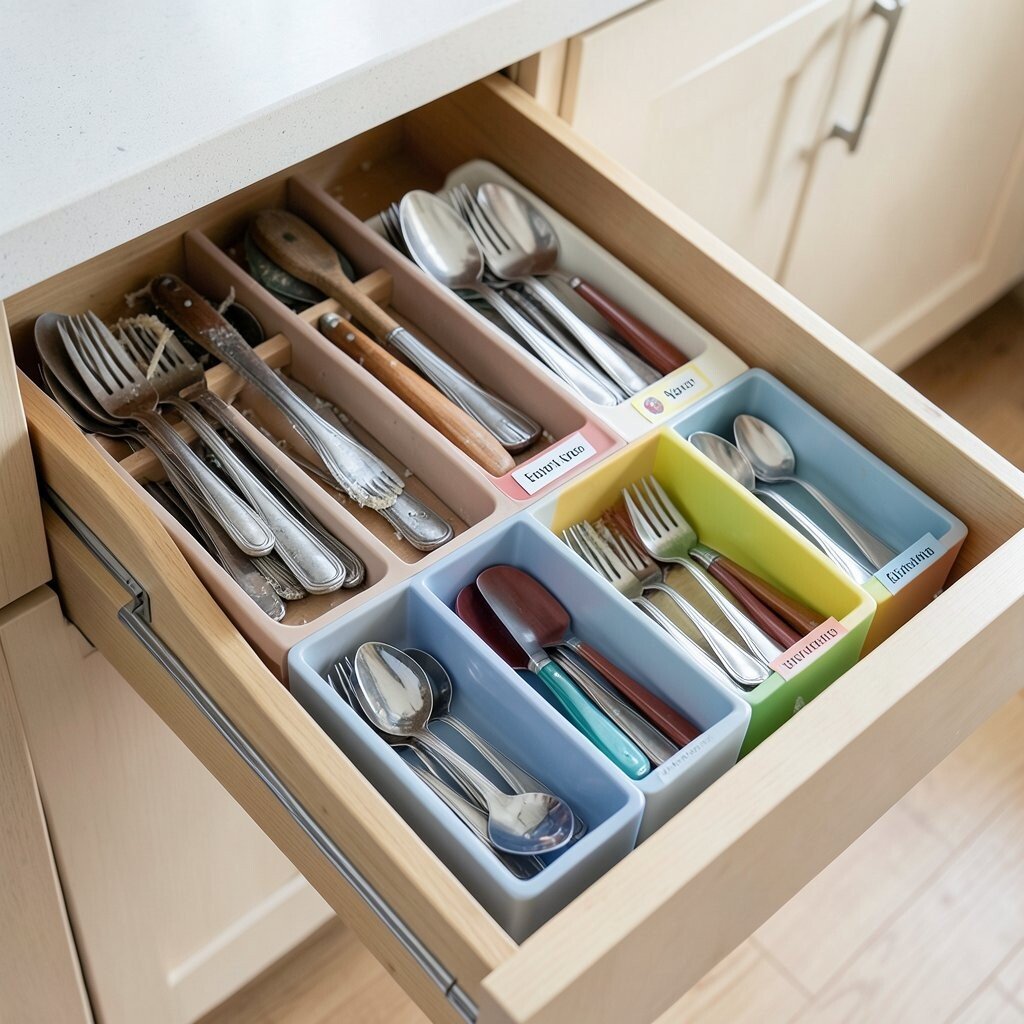
Utensils look messy when they roll into each other, but drawer inserts keep them standing in neat rows. You’ll open the drawer and immediately see the exact tool you want.
Use removable trays so you can rearrange sections as your utensil collection grows. Flatware dividers work well for forks and spoons, while deeper sections handle serving utensils and specialty tools. A simple personalization idea is to color-code the tray labels by use, like cooking versus eating, using small stickers that match your kitchen vibe.
7. Pull-Down Shelves For High Cabinets And Hard Reaches
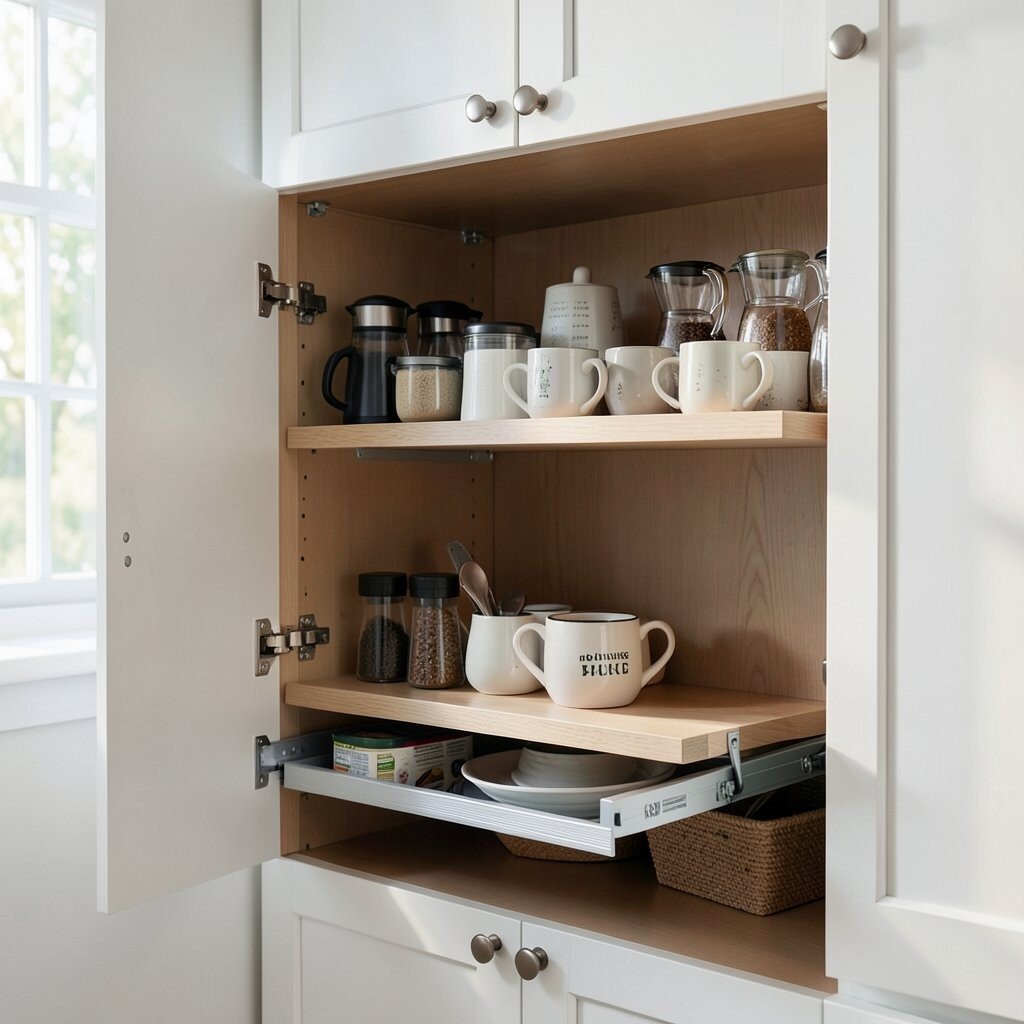
High cabinets are great for storage, but painful for access. A pull-down shelf brings items down to you, so reaching becomes safer and less annoying.
Look for shelves that support weight and glide smoothly so they don’t drop or drift. This is especially helpful for storing mugs, small appliances, or even rarely used serving platters. For practical organization, keep daily-used items closest to where the shelf lands, and reserve the top back area for seasonal supplies.
To personalize, set up a “coffee shelf” with filters, measuring spoons, and your favorite mug set. Installation can cost more than simple inserts, but it’s a long-term convenience upgrade that many homeowners find worth it. Current trends favor lift systems because they solve the real problem of wasted vertical space.
8. Clear Front Cabinet Doors For Quick Visual Checks
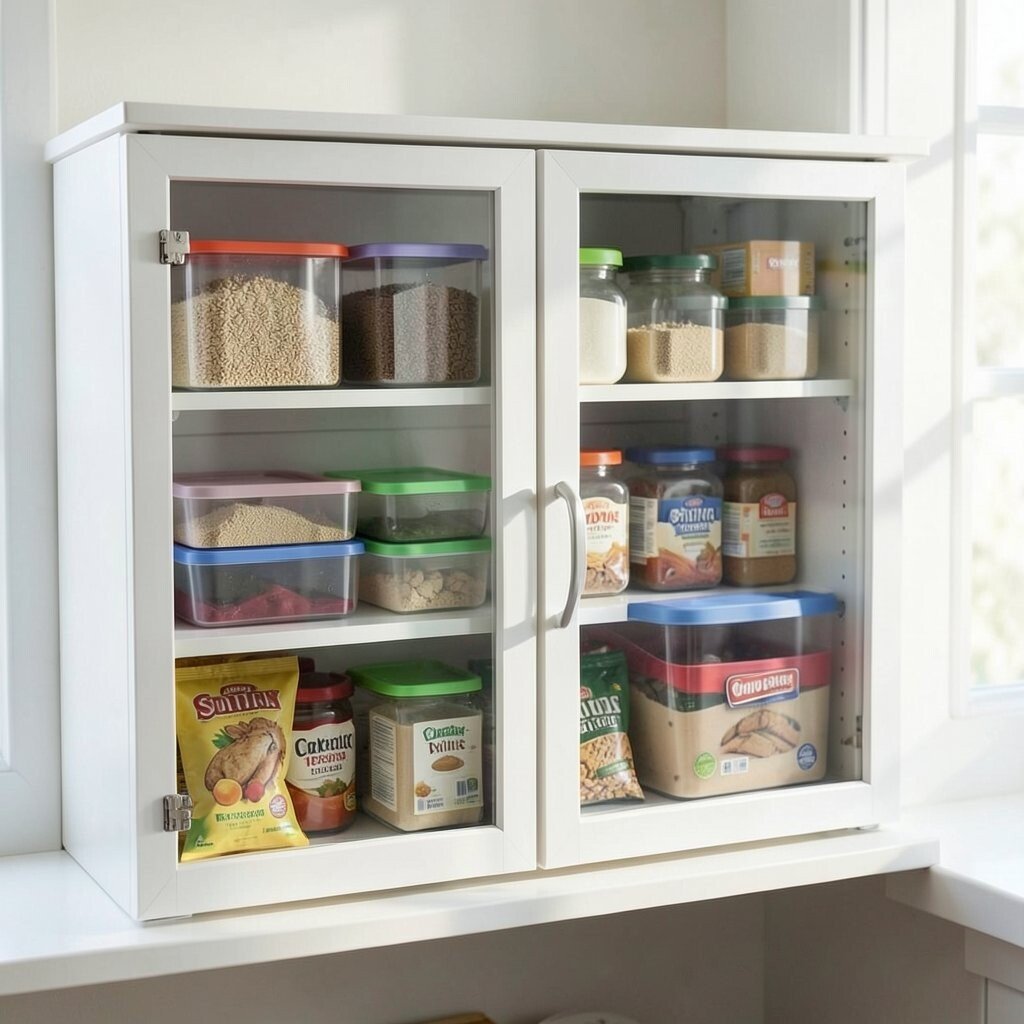
Sometimes you don’t need more organization tools; you need faster visibility. Clear front doors let you scan what’s inside without opening cabinets again and again.
This creates a cleaner feel because the storage looks intentional instead of hidden. For best results, pair clear doors with uniform containers or matching bins so everything looks neat at a glance. A personalization idea is to use different colored lids for different categories, like dry goods and baking mixes, so grabbing items stays effortless.
Consider cost based on how many cabinets you want to change, since swapping doors can be a bigger project than adding inserts. If you want a gentler budget option, start with one cabinet that holds your most frequently used snacks or pantry staples.
9. Stackable Bins With Inventory-Friendly Labels
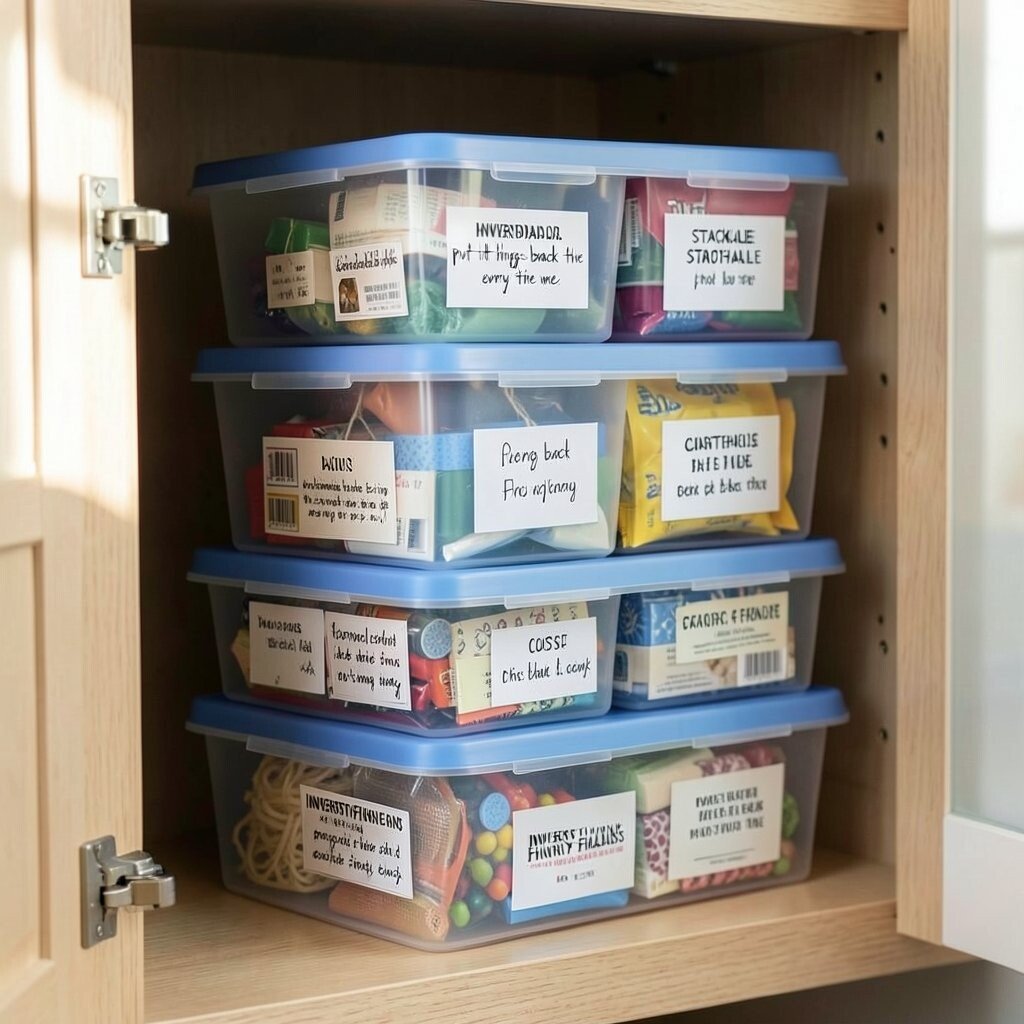
Stacking bins turns a cluttered cabinet into a neat series of boxes you can grab quickly. When bins are stacked by size and type, you don’t need to dig to find anything.
Choose bins with sturdy lids and consistent sizes so they sit securely and don’t slide during cabinet opening. Label the front of each bin so your household can put things back the same way every time. For practical tips, keep a few “catch-all” bins for small things, like packets and backup accessories, then move them into their categories when you have time.
Personalize by using labels that match your style, whether that’s simple handwriting, neat printed tags, or patterned label tape. Cost is usually reasonable, especially if you begin with bins for just one cabinet zone. A current trend is using identical storage sets, because it makes the cabinet look cohesive and helps you maintain the system.
10. Pull-Out Trash And Recycling Caddies
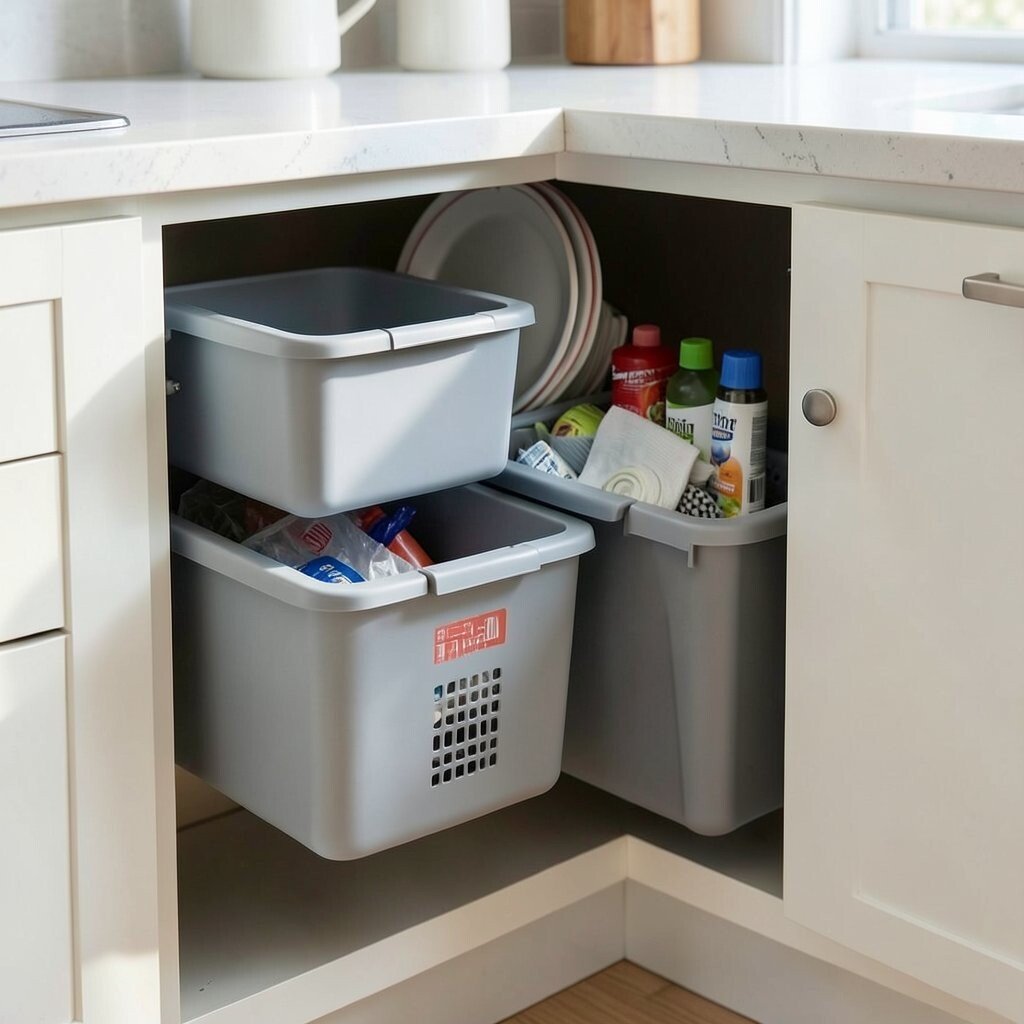
A well-organized cabinet isn’t only about food and dishes; it’s about workflow. Pull-out trash and recycling caddies keep bins close to the action and out of sight when you close the door.
Soft glides and tight sealing lids reduce smells and help bags stay neat. For practical tips, measure your cabinet height and width so the caddies fit comfortably with enough clearance for door movement. You can personalize by adding a small liner organizer for gloves, odor control refills, or extra liners that you swap during big clean-ups.
These systems often cost more than basic organizers, but they can save time every day. Many homeowners now choose hands-free or easy-lift bins for convenience, especially in kitchens with busy schedules.
11. Magazine-Style Storage For Spice Jars And Oil Bottles
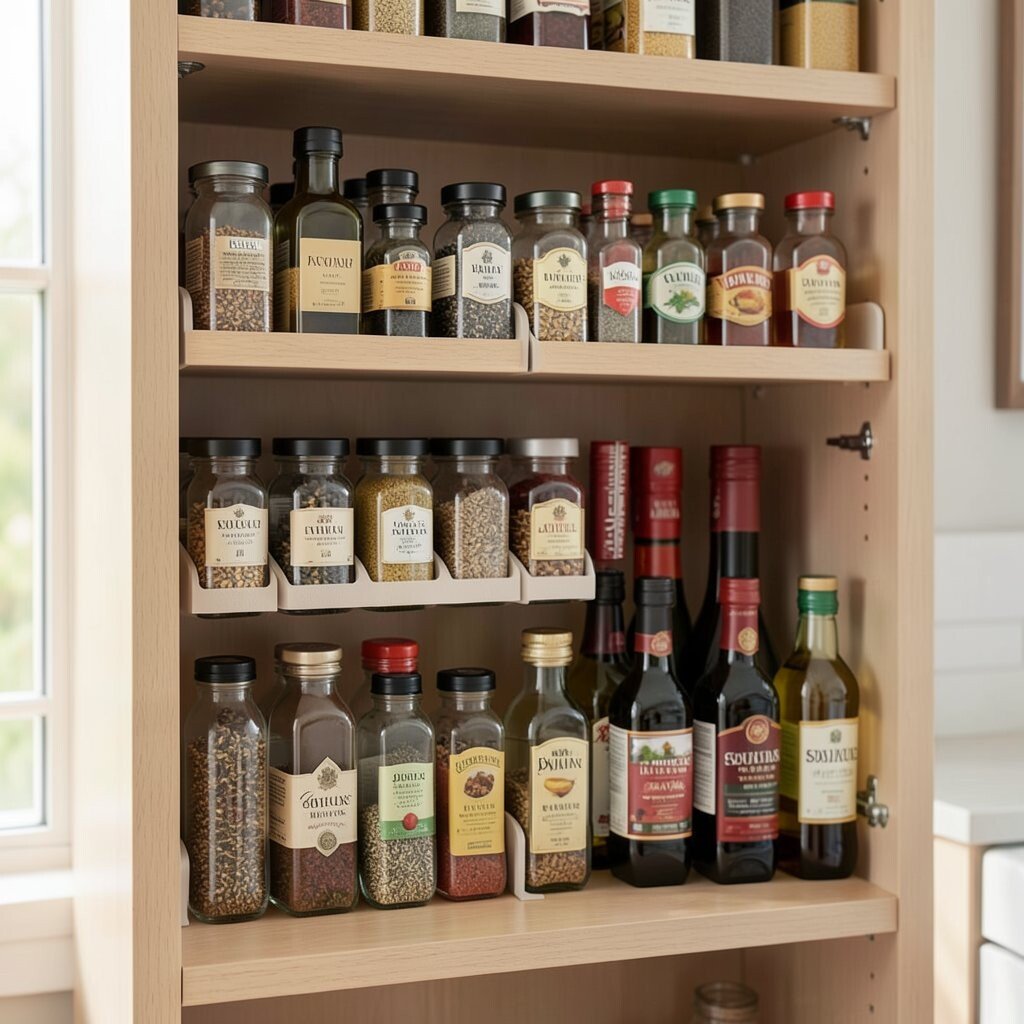
Spices fall into chaos when there’s no place for them to stand. Magazine-style racks hold jars upright, so your spice shelf looks like a tidy library.
You’ll be able to read labels quickly, which helps you cook with less guesswork. Choose racks with adjustable spacing so tall bottles, small jars, and different brands all fit. For practical organization, store oils and vinegars in one section and spices in another, then keep the most-used seasonings at the front row.
To personalize, rotate your rack seasonally so the front row matches your current cooking habits, like grilling months or holiday baking. The cost can be modest depending on rack size, and many budget options are available. Current trends include “at-a-glance” seasoning setups because they reduce the time spent searching for flavor.
12. Smart Drawer Dividers For Cords, Chargers, And Tech Extras
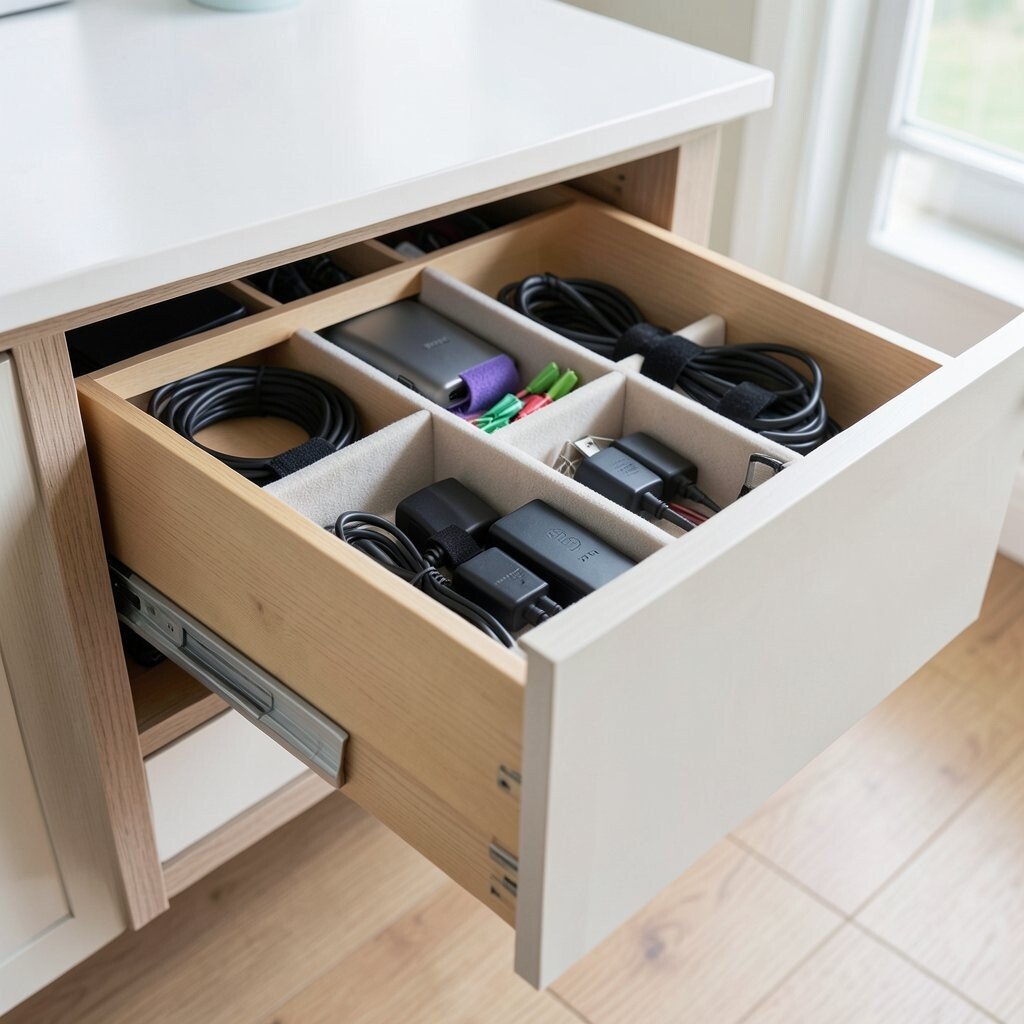
Cabinets often collect cables, chargers, and small tech accessories that don’t fit anywhere else. Smart drawer dividers create sections for each item so your electronics stop becoming a tangled mystery.
Use compartments sized for adapters, charging bricks, and spare cords, and consider a soft insert layer so items don’t scratch. Cable management ties or Velcro straps can keep cords from twisting when you close the drawer. For practical tips, create a simple “home base” section for the devices you use most, so you can grab them fast.
If you want to personalize, label compartments by room, like office and living room, so everyone knows where items belong. Cost depends on how advanced the divider system is, but a basic set plus a few cable ties can be a quick upgrade. Many people now prefer hidden tech storage because it keeps surfaces clean and reduces daily clutter.
13. Door-Side Pull-Out Organizers For Measuring Spoons And Small Pans
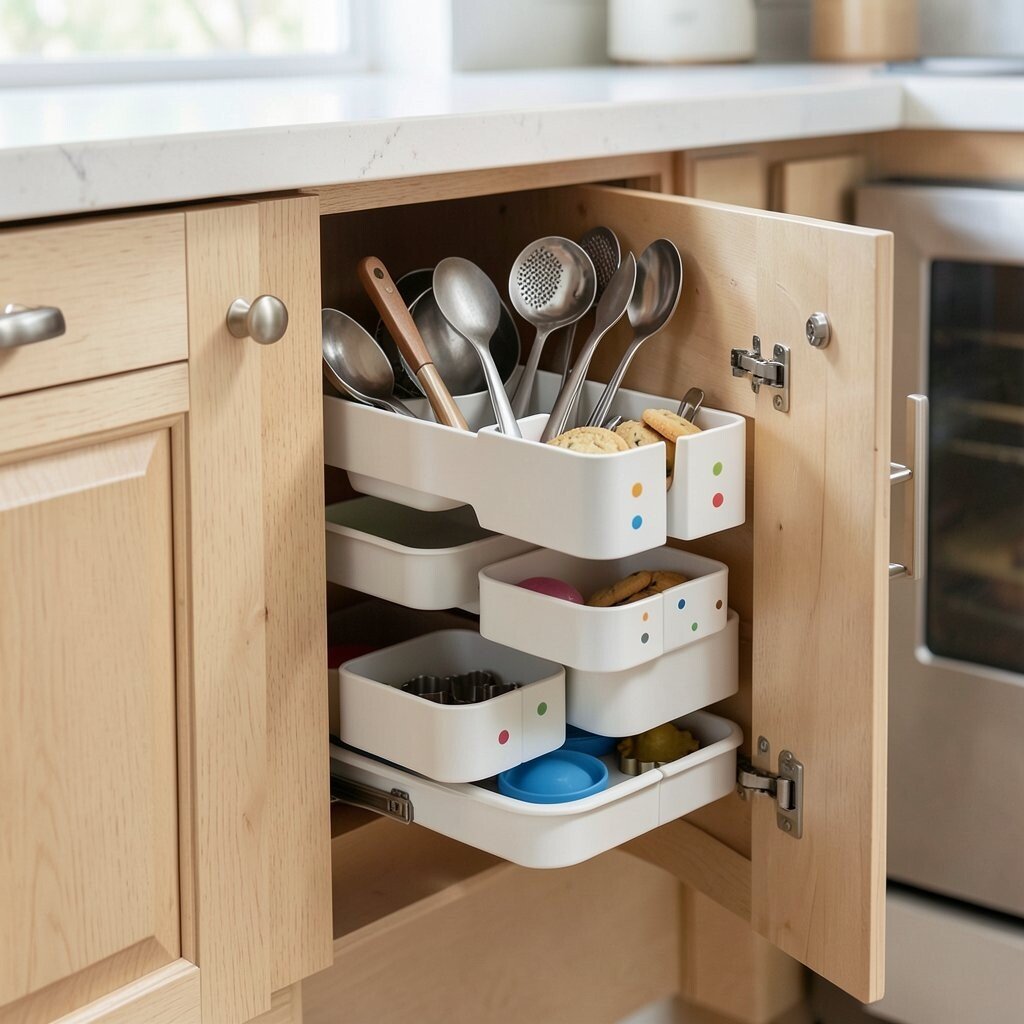
The inside edge of a cabinet door can become useful space instead of wasted air. A door-side pull-out organizer holds small pans, measuring spoons, and light tools at a comfortable angle.
This design makes it easy to grab what you need while keeping countertops clear. Look for organizers that open smoothly and lock into place so items don’t slide when the door swings. For practical organization, keep measuring tools together and store small baking extras in matching sections, like cookie cutters and mini spatulas.
To personalize, choose a finish that matches your kitchen hardware and add small color dots to each section so kids and guests can put items away correctly. Cost is often reasonable compared with major cabinet renovations, especially if you only add organizers to one or two cabinets first. A current trend is using door space for “micro-storage,” because it adds function without taking room from the main cabinet.