Your closet can feel calm, roomy, and easy to use every day. With the right layout, even a small footprint can look tidy and inviting.
1. Room-First Layout With Clear Pathways
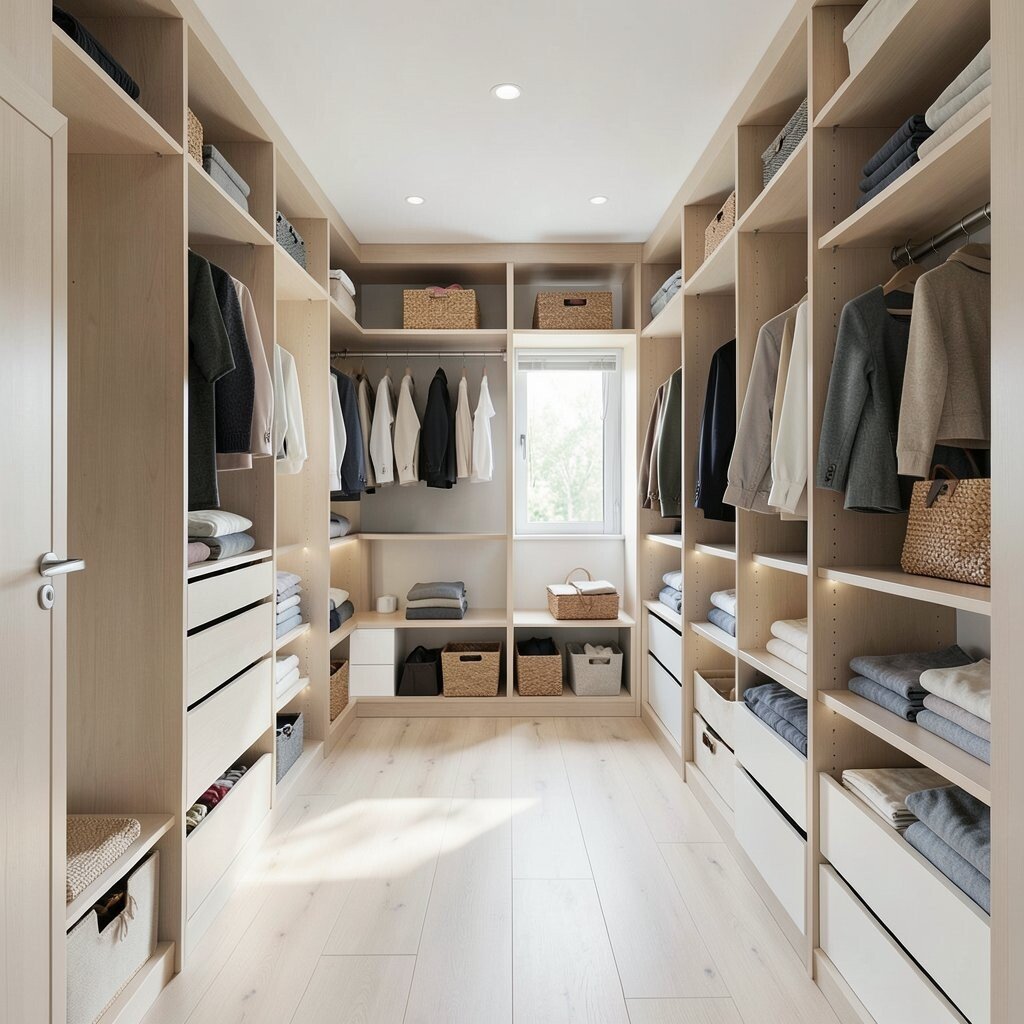
Start by picturing how you move in the space. Keep a wide walking lane so doors, shelves, and drawers never feel cramped.
This layout makes every morning smoother because you reach what you need without stepping around obstacles. Aim for smooth zones for hanging, folding, and small-item storage, and you will instantly feel the space organize itself. When you plan the order of use, you avoid the messy pile that forms when items go “somewhere for now.”
2. Ceiling-High Storage That Uses Vertical Space
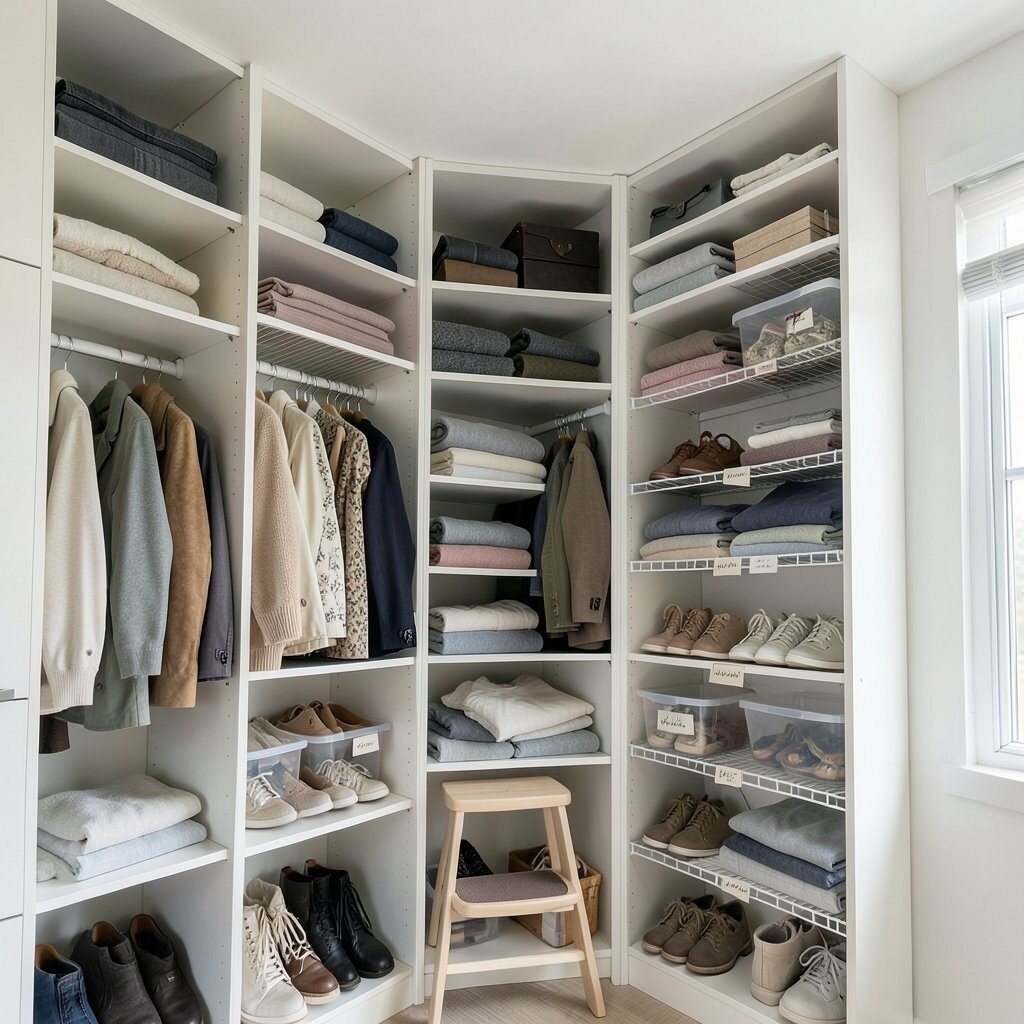
Look up and treat the ceiling like part of your design. Tall shelving or cabinets help your closet feel spacious because bulky items stop cluttering floor level.
Use higher tiers for seasonal coats, extra bedding, or seldom-worn shoes so daily items stay within easy reach. A simple tip is to add a step stool with a non-slip surface and store it where it belongs. Choose clear bins for quick scanning so you do not have to open every container.
For personalization, label shelves with gentle handwritten tags on fabric or sticker labels that match your closet style. If you want a budget-friendly approach, consider adjustable wire shelving instead of custom cabinetry. The trend right now is clean, tall storage that looks built-in and keeps the closet visually light.
3. Double Hanging Rods With Smart Height Levels
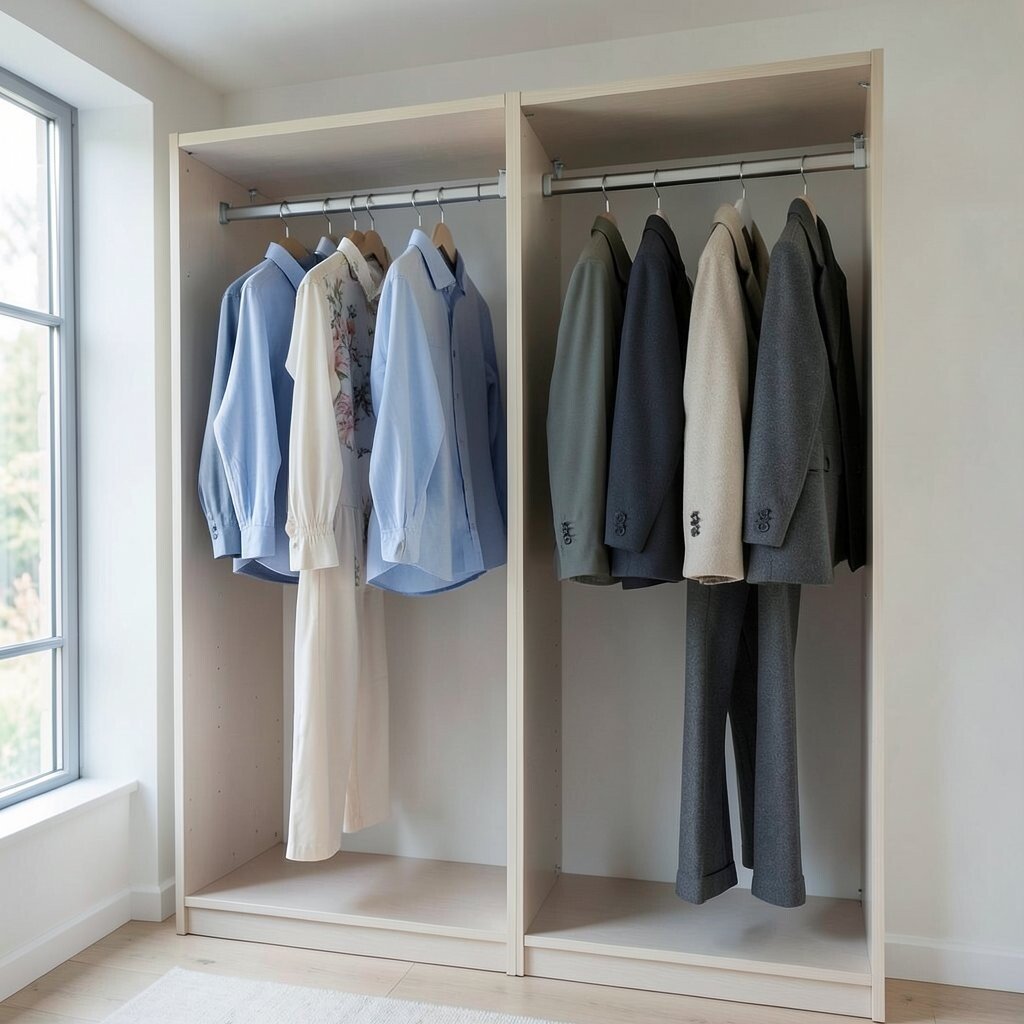
Two hanging rods can give you more organized room without adding new furniture. Use one for shorter pieces like shirts and dresses, and the other for longer items like coats and pants.
This trick gives you better visibility, so you pick clothes faster and put them back with less effort. When the hang space is tall and evenly spaced, garments slip into place instead of bunching. Make it feel custom by adjusting the rod heights to fit your actual wardrobe, not a generic closet.
4. Drawer Systems That Replace Clutter Trays
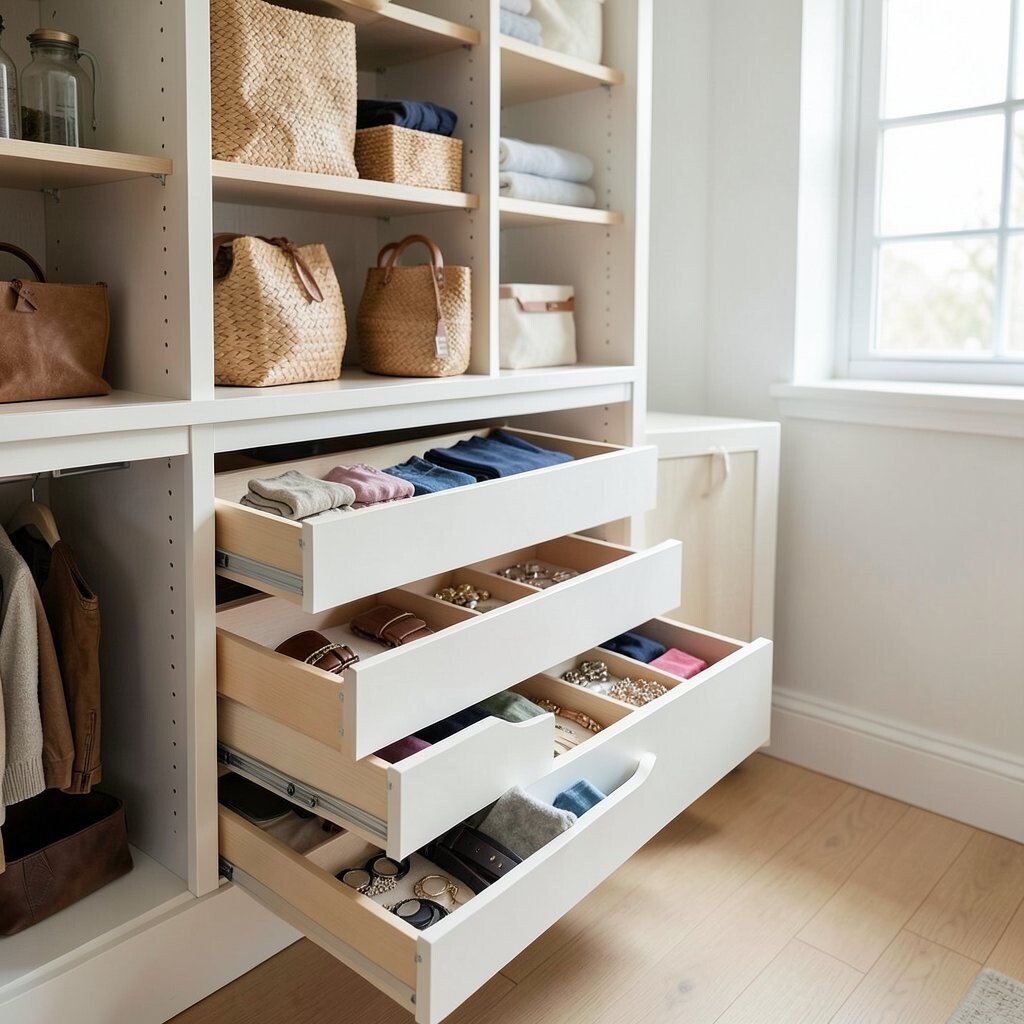
Try moving small extras into drawers with dividers instead of keeping them in bowls. Neat drawers make it easier to find accessories and keep counters clear.
Choose shallow drawers for belts, socks, and jewelry so everything sits flat and does not get lost. For practicality, use soft liners to reduce slipping and protect delicate items. This style also looks cleaner because you remove visual mess from the open air of the closet.
5. Shoe Storage That Looks Like a Design Feature
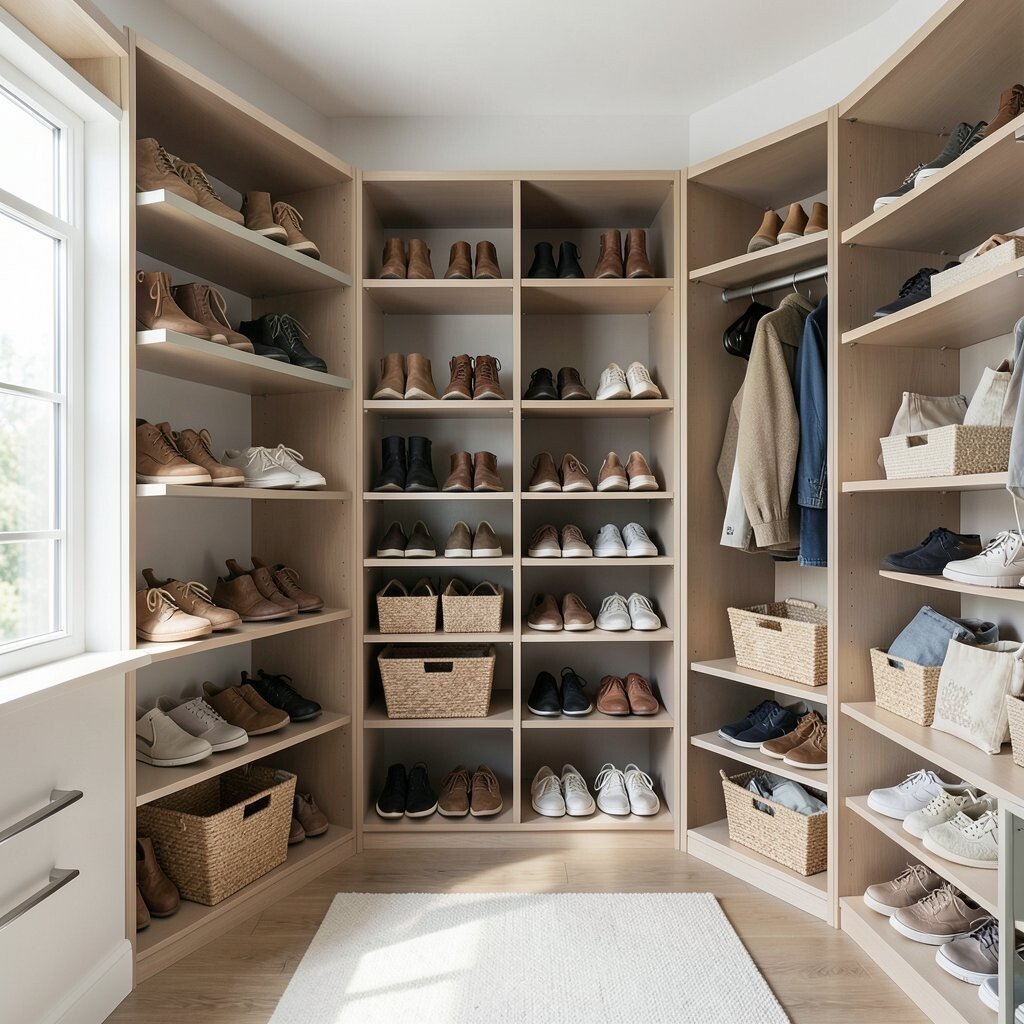
Your shoes take up space fast, so give them a home that feels intentional. A neat shoe wall with matching shelves can turn a messy area into a clean focal point.
Use angled shelving for faster grabbing and better airflow, which helps reduce that “closet smell.” For a personal touch, choose shelf colors or finishes that echo the rest of your room. If you prefer an easier setup, start with modular cubbies and expand as your collection grows.
To keep it budget friendly, use a mix of open shelves and simple plastic-free baskets for smaller pairs. Current closet trends lean toward uniform shoe storage because it makes the whole closet look calm and tidy.
6. Built-In Baskets For Easy Weekly Organization
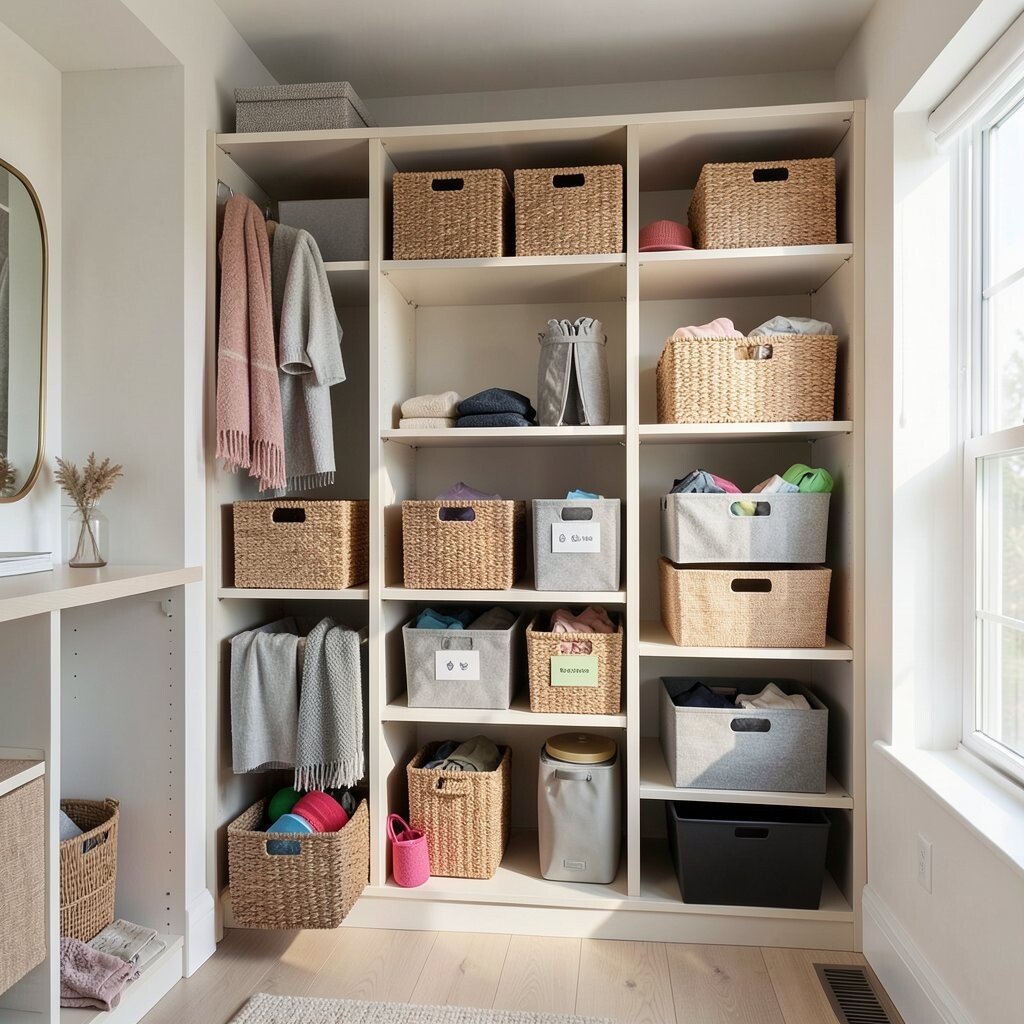
Baskets are a simple way to keep your closet looking neat without strict rules. They are perfect for scarves, hats, gloves, or workout gear that likes to drift around.
Pick baskets that fit your shelves snugly so the closet stays smooth and not overly busy. Add a few labels that use icons or colors, and it becomes easier for everyone in the home to put items back. For personalization, choose woven textures for a warm feel or sleek fabric bins for a more modern look.
7. Fold-And-Go Shelf Surfaces With Defined Zones
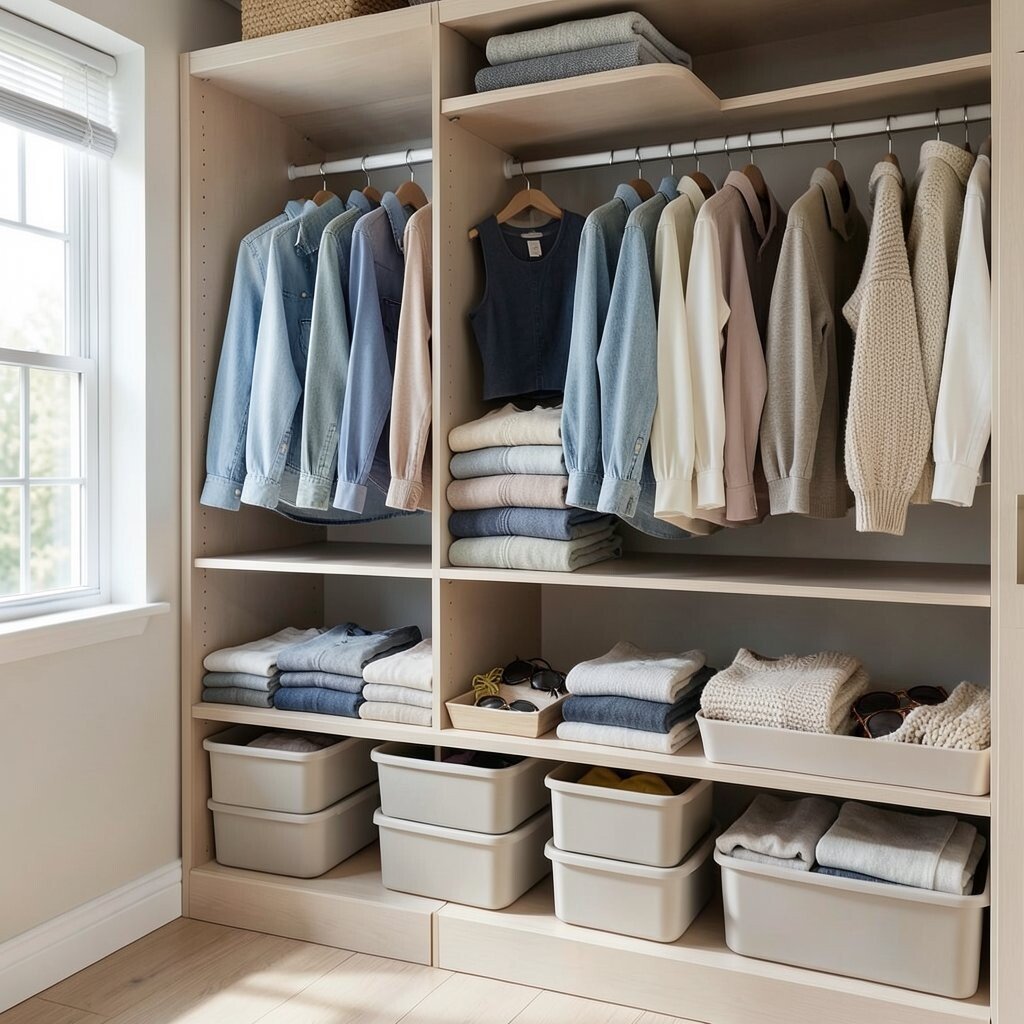
If you fold your clothes, give folding space its own “station.” A long shelf surface with a clear border makes it easier to stack shirts and sweaters in tidy rows.
Defined zones help you keep categories separate, like casual tops on one side and cozy knits on the other. Use shelf dividers that are thin but sturdy, so stacks do not lean or collapse. This design also helps you avoid the half-folded pile that grows when there is no plan.
To keep costs reasonable, measure carefully and use ready-made shelf dividers and stackable containers. A current trend is the tidy “stacked look” using matching bins for folded items, which creates a uniform and airy vibe.
Personalize with a soft tray for accessories like hair ties or sunglasses so small items stay together. When everything has a zone, you get a closet that feels like it runs on autopilot.
8. Mirror Panels That Add Light And Make Space Feel Bigger
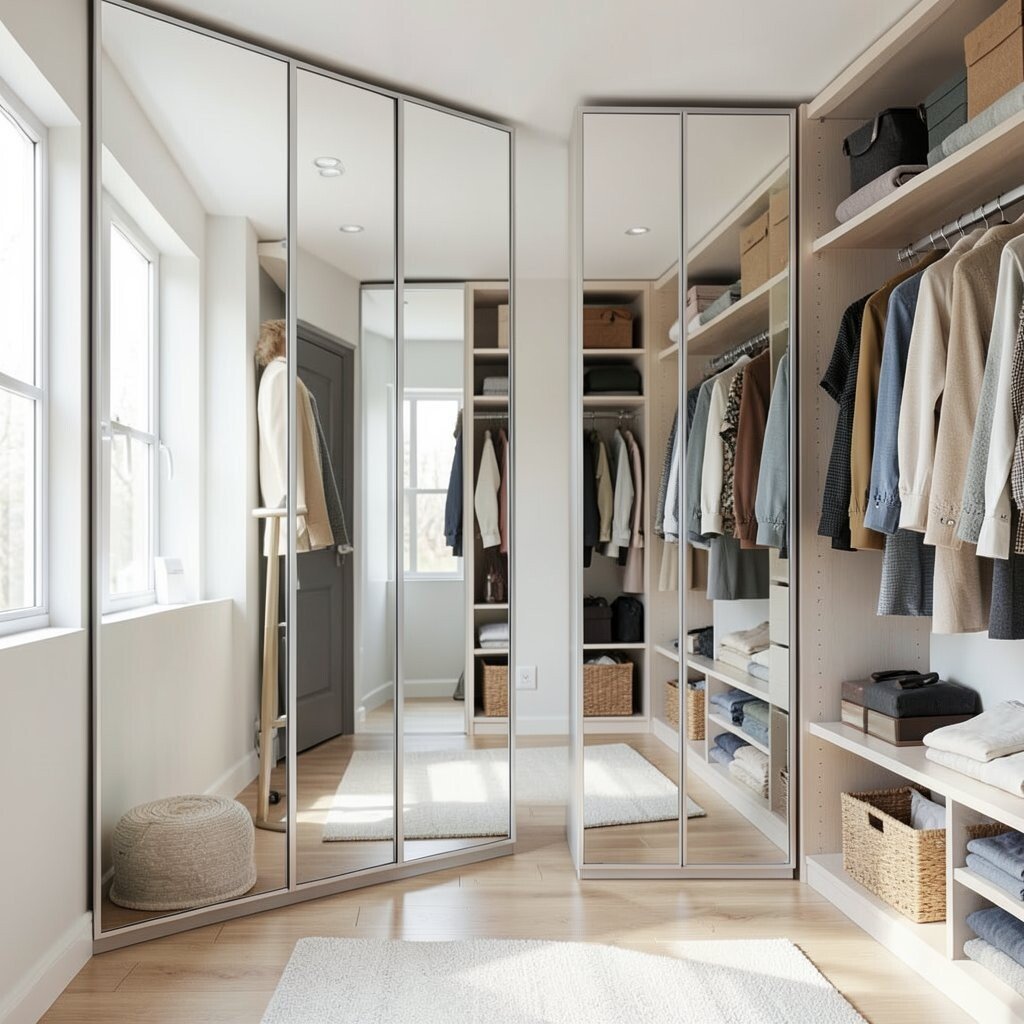
A mirror in your closet can make the room feel brighter and more open right away. It also helps you check outfits without turning your whole home into a dressing area.
Place the mirror where it reflects natural light, such as opposite a window or near a doorway. For practicality, choose a mirror with a protective backing so it is safe in daily use. Consider a slim mirrored cabinet, which stores small items while still giving you that full-view look.
9. Lighting That Makes Clothes Easy To See
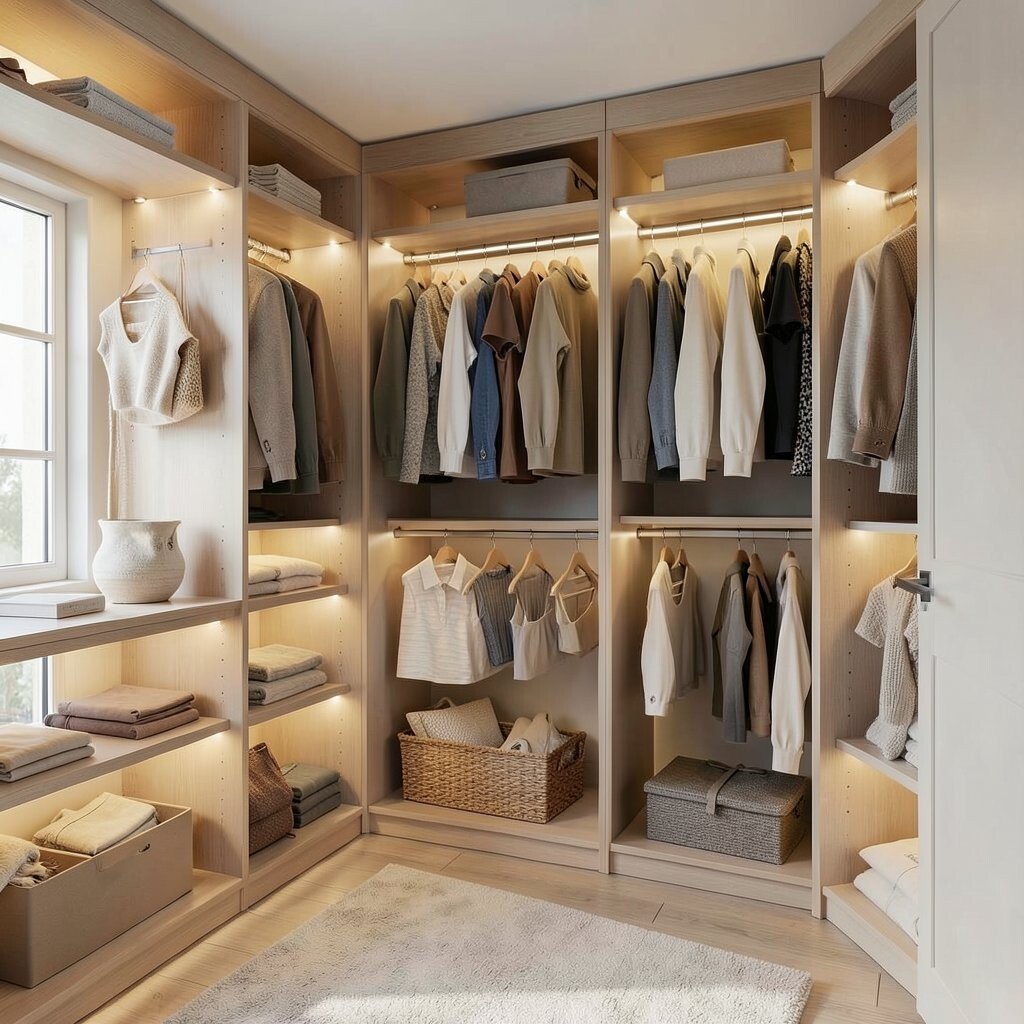
Good lighting is one of the easiest upgrades that changes everything. When clothes are clear and shadows are reduced, you find pieces faster and stop rummaging.
Use LED strips under shelves or small puck lights inside the closet for a bright, clean glow. Many people also add a motion sensor so the light turns on when you open the door. This is a practical cost consideration because LEDs use less power, and they last a long time.
For personalization, pick a warm tone if you want a cozy feel or a neutral tone for true color matching. Current trends favor subtle lighting that looks built-in, so the closet feels modern without looking flashy.
10. Color-Coordinated Hanging For Calm Visual Order
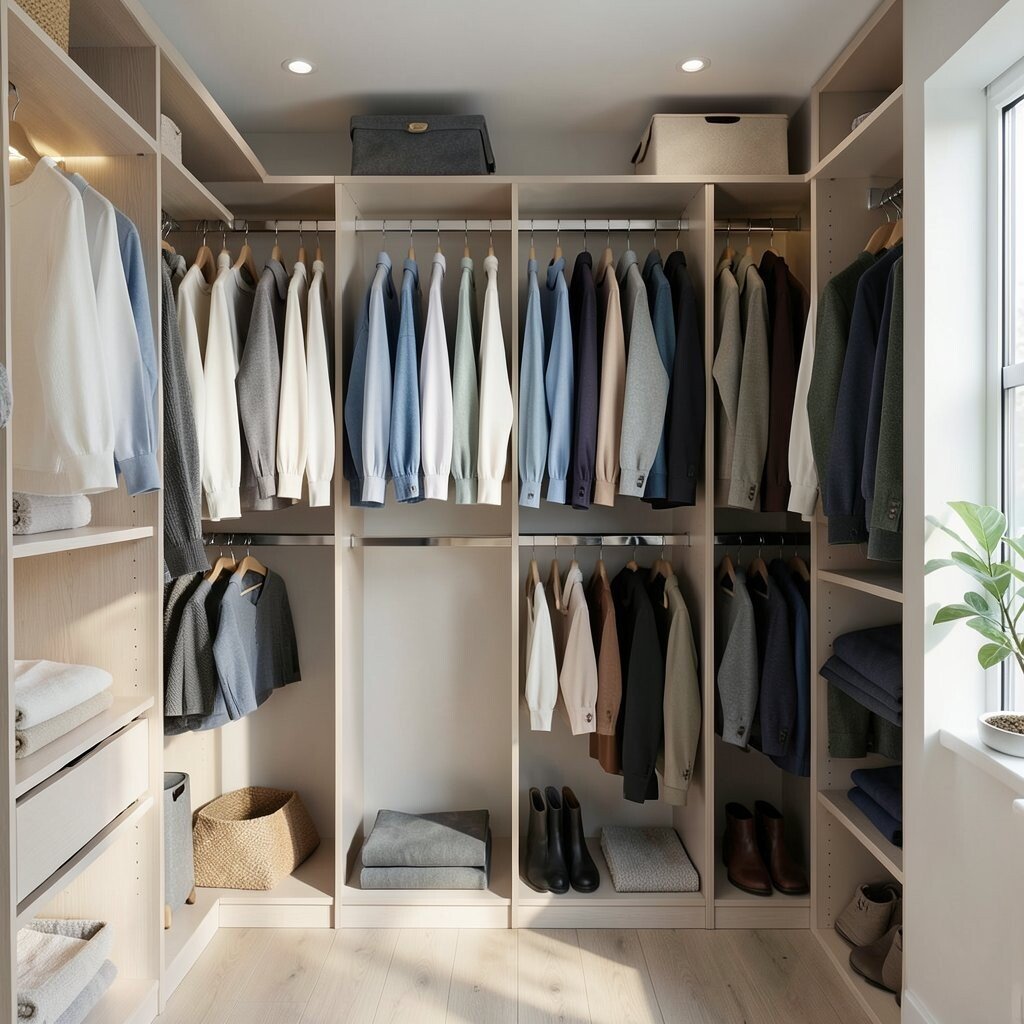
Hanging clothes by color can make your closet look like a neat display. Even if your wardrobe is mixed, sorting by shade brings instant order.
Start with simple categories like whites, blues, and darks, then refine as you get comfortable. Add matching hangers for a uniform look, which makes the space feel more expensive without complex upgrades. This approach is especially helpful if you hate searching, because your clothes visually “show up” quickly.
11. Sliding Doors That Save Space For Movement
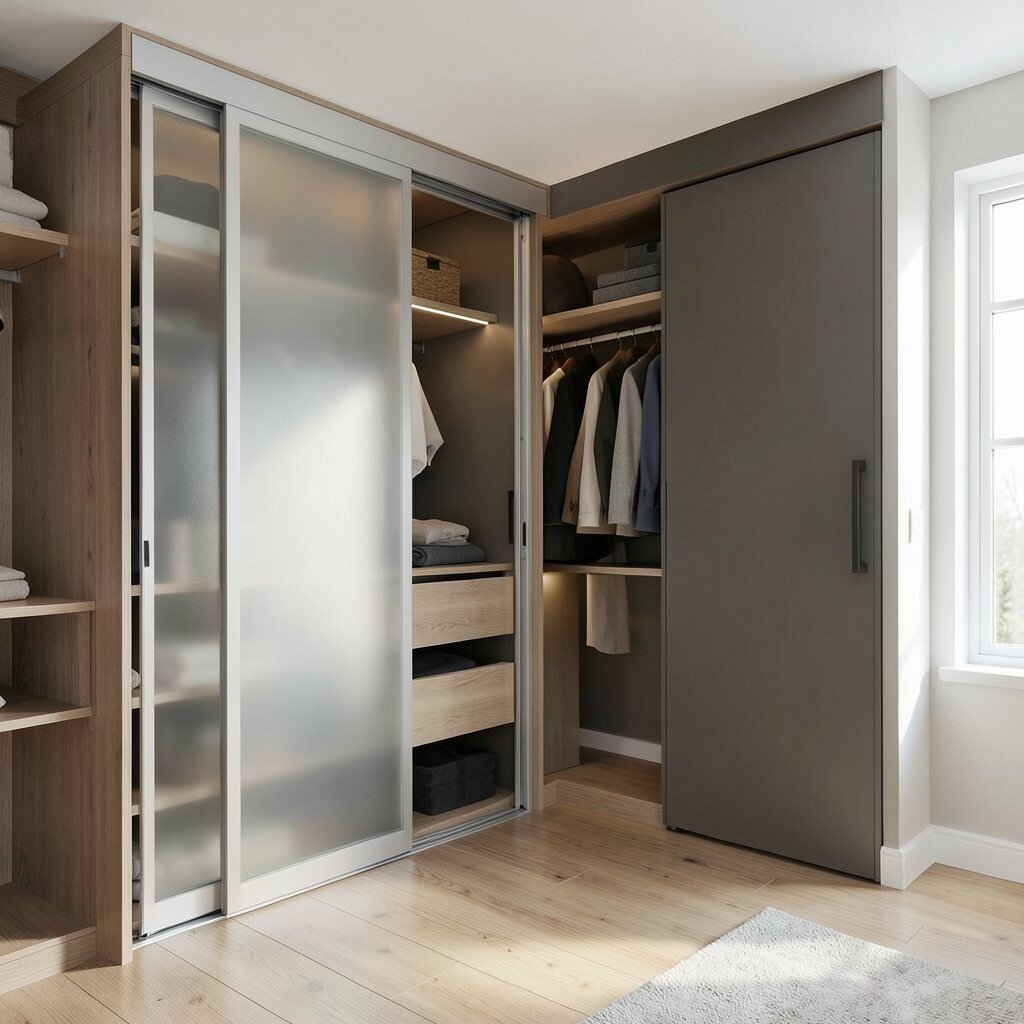
If your closet doors take up room, consider sliding doors. They free up floor space and make the whole area feel less tight.
Sliding doors also help keep the closet usable when your room has limited layout options. Choose a style that fits your home, like frosted glass for soft light or solid panels for a clean, minimal look. For practical installation, measure the door opening carefully and confirm wall clearance for smooth tracks.
You can personalize with wood finishes, matte paint, or a sleek modern frame that matches your furniture. This is a cost consideration too, because door hardware can be a larger purchase, but it often pays off by improving day-to-day flow.
12. Flexible Organizers With Adjustable Shelving
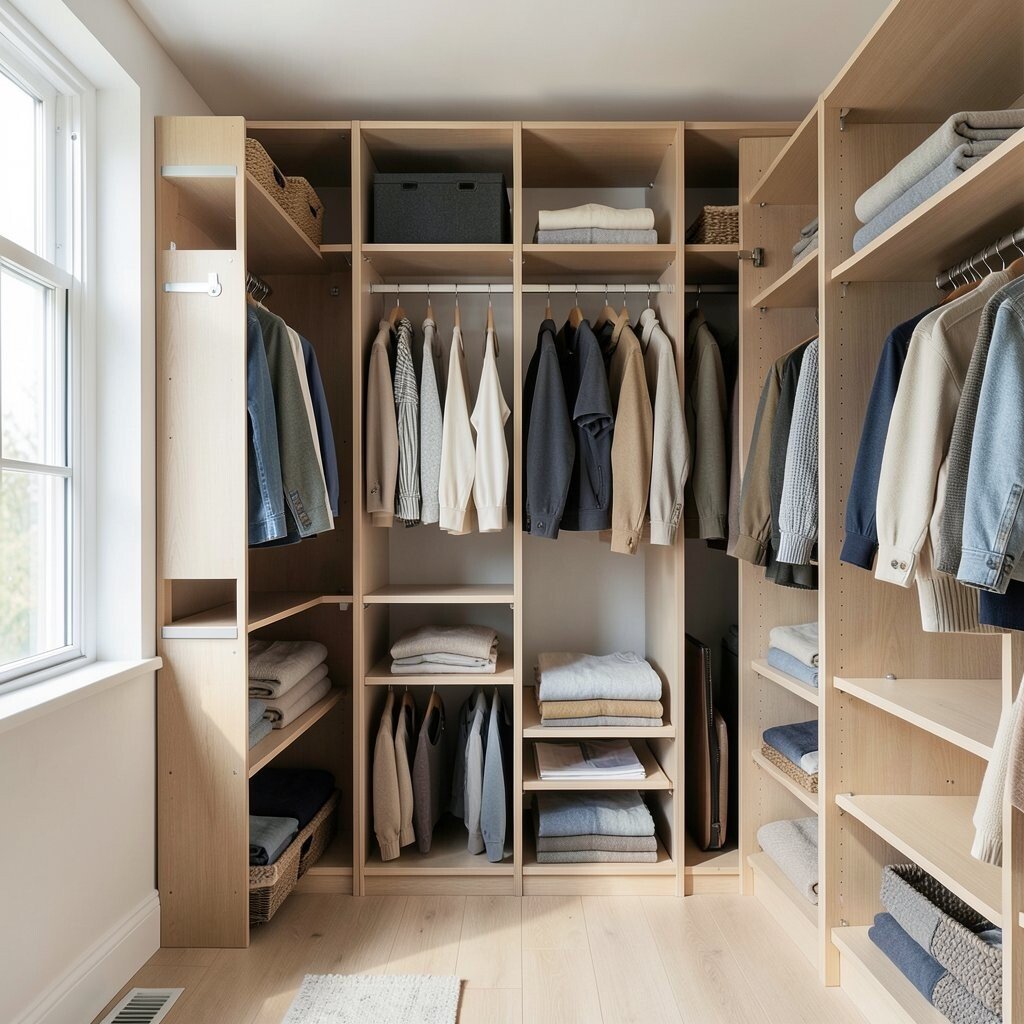
Your closet should grow and change with your life. Adjustable shelves help you reconfigure storage when seasons shift or your wardrobe changes.
This design keeps the closet from feeling “stuck,” which is great if you move often or simply like to rearrange. Use shelf pins and standardized spacing so you can change heights without tools. Practical planning matters here, so measure your tallest items and leave enough vertical clearance for hangers and folded stacks.
13. Long-Lasting Containers That Keep Bins From Looking Messy
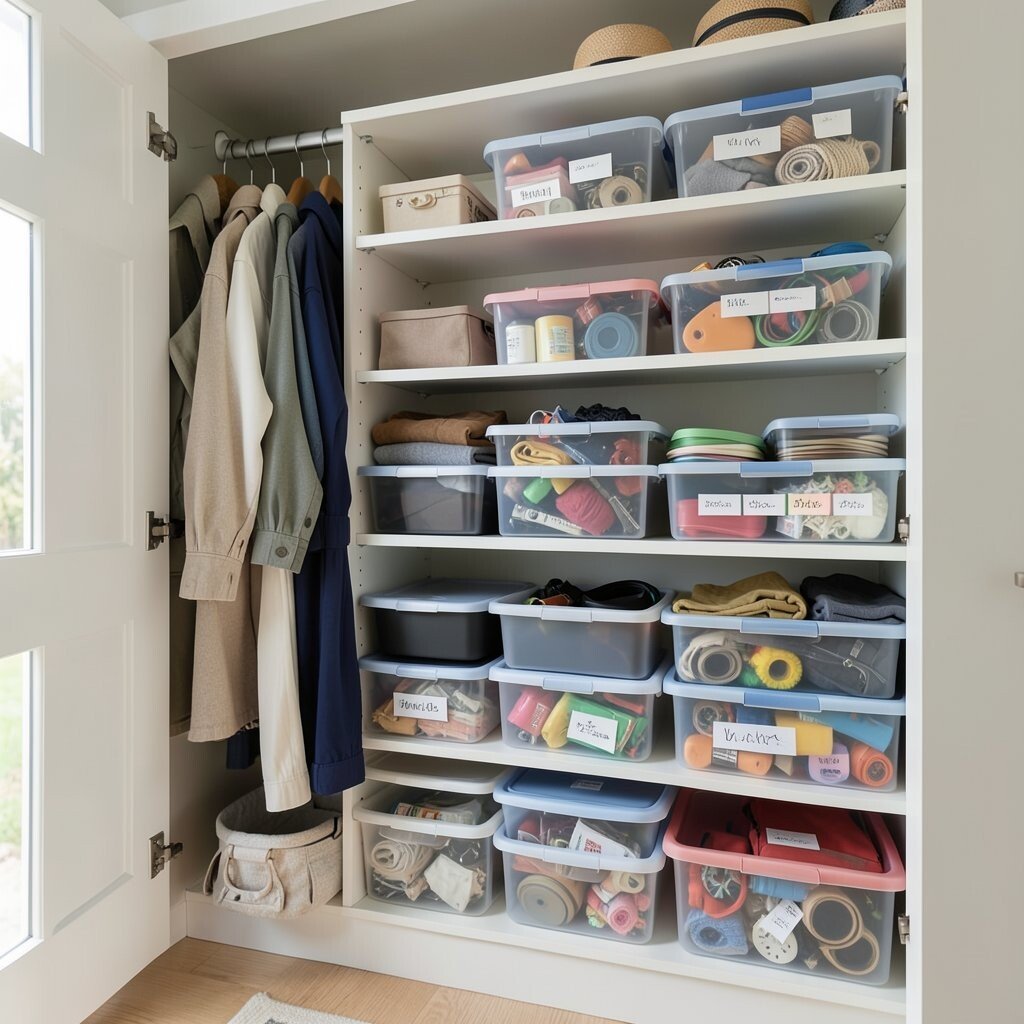
When you use containers, choose ones that look tidy even when they are full. Matching sizes and consistent latching lids make the closet feel organized at a glance.
Use clear containers for items you grab often, like belts or travel supplies, and opaque bins for things you store away. Add a label system that uses color blocks or simple handwriting, so you do not need to open everything. This is a practical tip that saves time and helps you keep the closet neat after every closet reset.
For cost considerations, start with a few bins for your most-used sections, then add more as your system proves itself. The current trend is clean storage that looks uniform, which is why matching containers matter.
14. Hanging Accessories Rail For The “Small Stuff” Fix
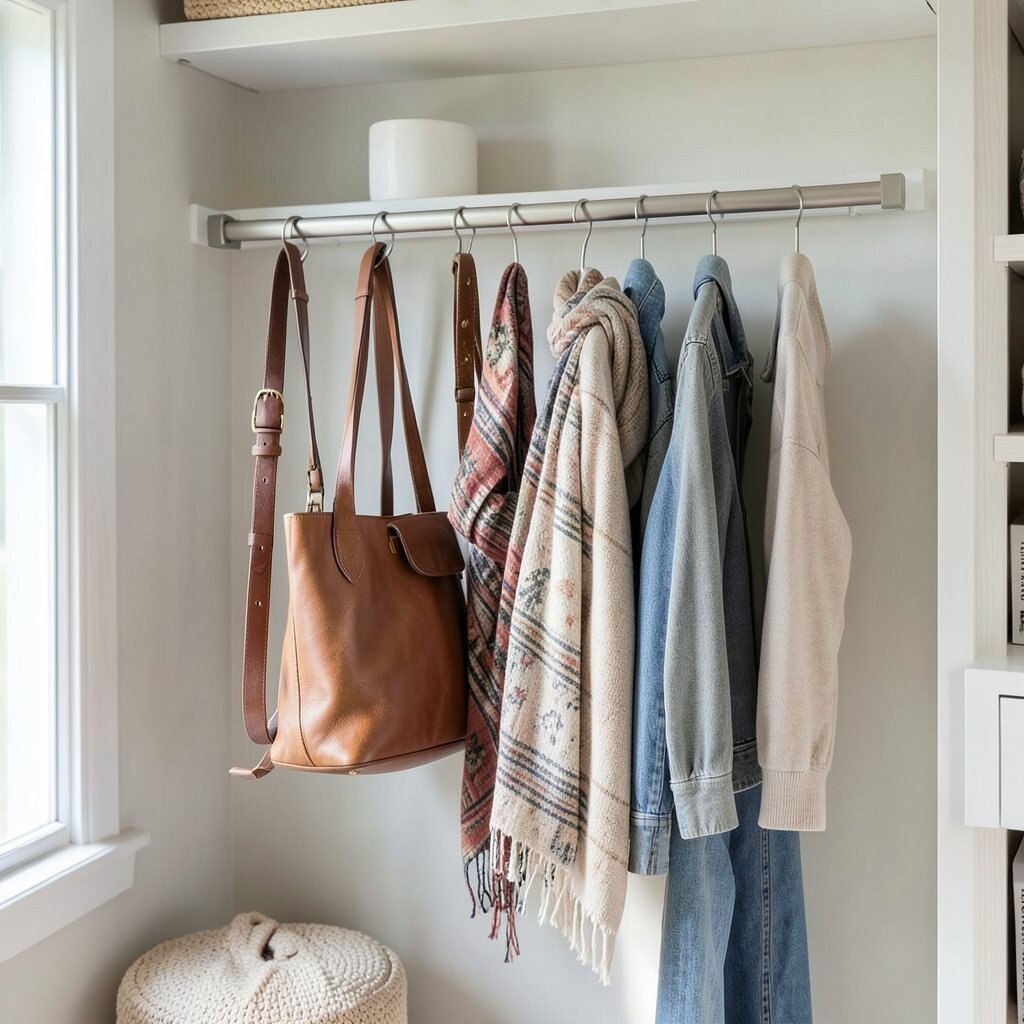
Small accessories love to clutter up shelves, so give them a dedicated hanging rail. A rail with hooks keeps items like bags, scarves, and belts visible and easy to rotate.
Choose hooks that grip gently so items do not slip or snag, and keep spacing consistent. This makes getting ready faster because you can grab the right accessory without digging through a drawer. Personalize by mixing hook sizes or using a rail finish that matches your hardware for a cohesive look.
15. Center Islands Or Narrow Benches For In-Closet Dressing
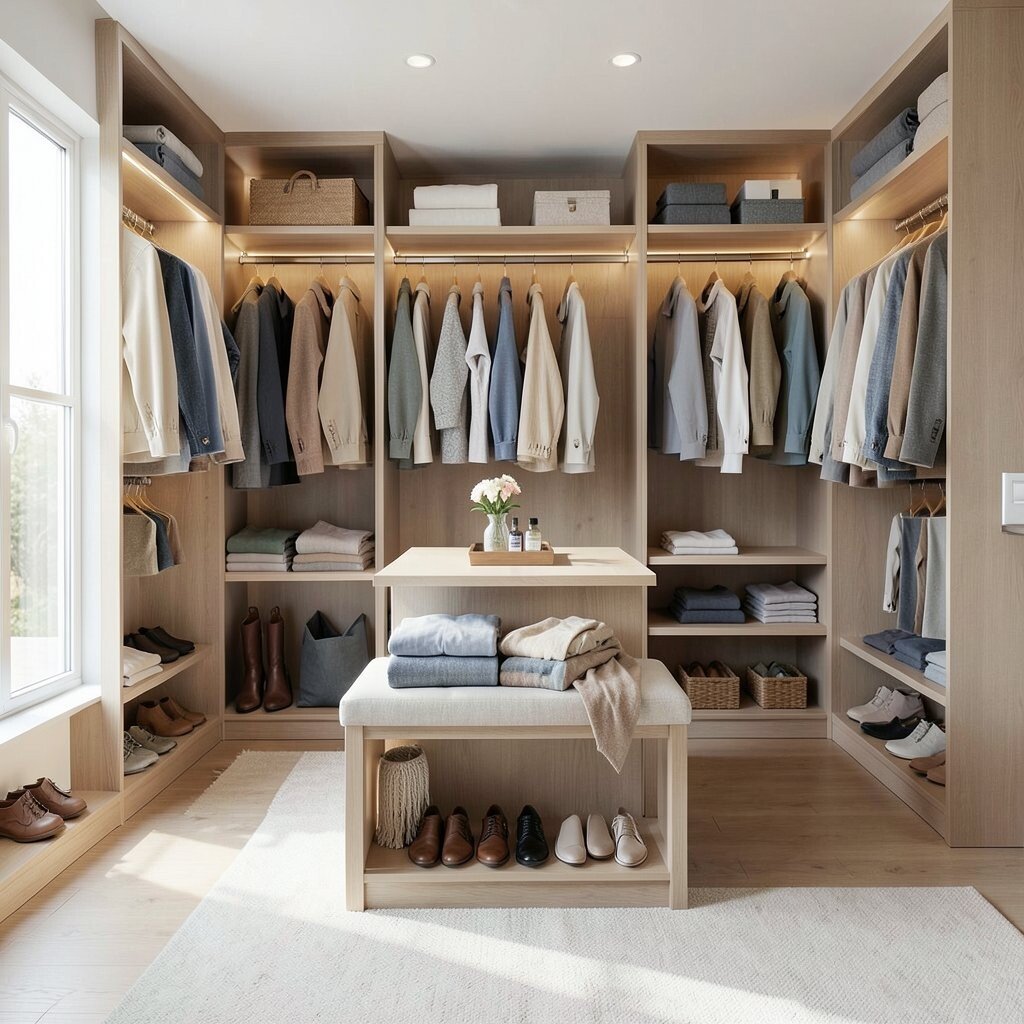
If you have enough width, add a narrow bench or a small center island. It creates a handy place to sit while putting on shoes or folding the last item.
This also helps your closet feel more like a room than a storage space. For practicality, choose a bench with hidden storage underneath for scarves, spare hangers, or shoe polish. A cost consideration is that freestanding benches can be cheaper than custom builds, and they still deliver a “designed” feel.
Personalize with a fabric cushion that matches the bedroom or with a tray on top to hold essentials. This trend shows up in many modern homes because it combines comfort with organization.
16. Patterned Back Panels That Make Storage Look Softer
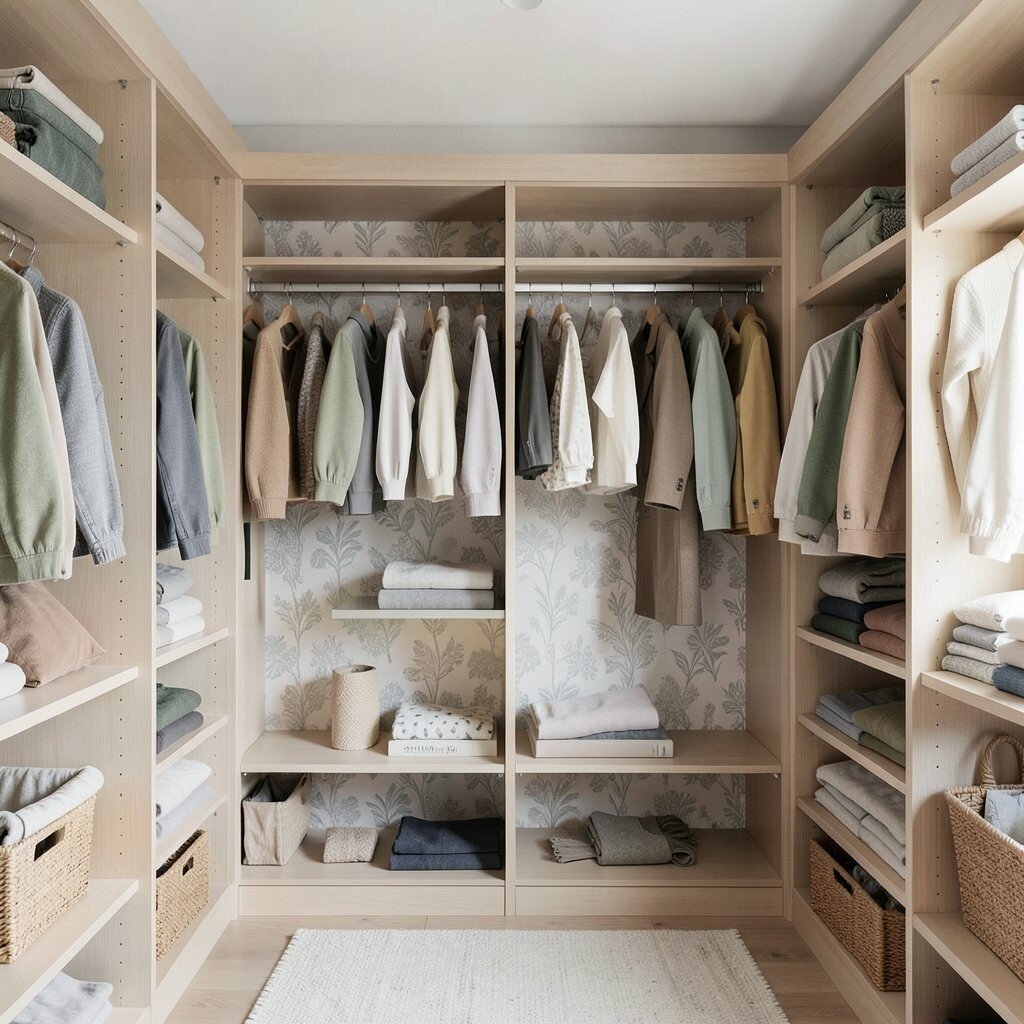
Instead of plain walls behind shelves, use a subtle back panel for warmth. A light pattern or gentle color can make the closet feel more inviting and less boxy.
This small visual change can make shelves look deeper and help the closet feel more spacious. Try a peel-and-stick option for a budget-friendly start, and choose a pattern that does not overwhelm your clothes. For personalization, match the tone to your home style, such as modern grays, warm neutrals, or soft greens.
17. Maximal Visibility Using Open Shelving With Order Rules
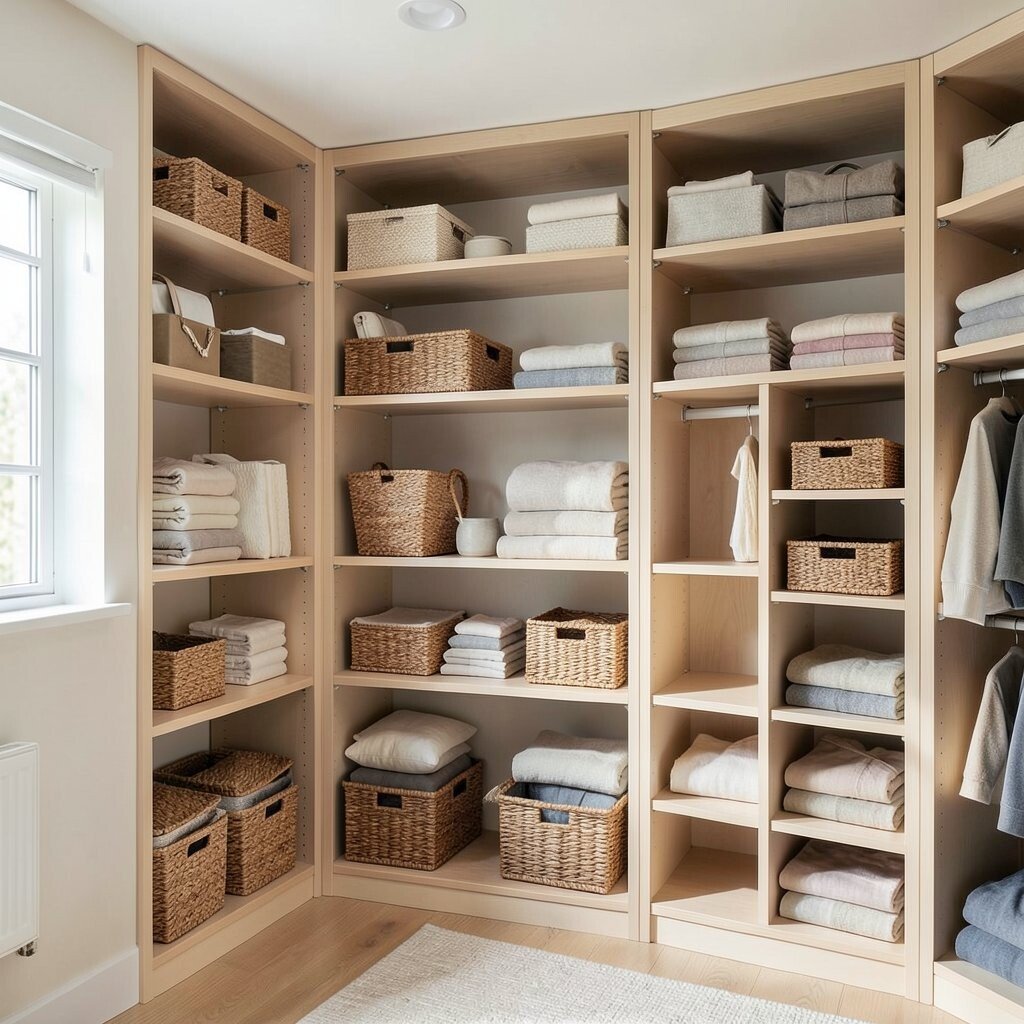
Open shelving gives a closet a breezy look, but it works best with a clear method. When items are arranged in sets, your closet stays neat even with open displays.
Group similar items together, keep stacks aligned, and use baskets to hide small clutter. Use height variety carefully, with shorter items on upper shelves and folded stacks at a comfortable reach level. This approach feels unique because it shows off style while still keeping daily pieces easy to grab.
For cost considerations, open shelving can be cheaper than full cabinetry, especially if you use simple brackets and uniform boards. Current trends often combine open and closed storage to balance style with clean hiding spots.
18. Hanging Organizer Doors For The “Behind The Door” Zone

The back of the closet door is a space many people forget. Using hanging organizers turns that unused area into a practical storage zone for daily items.
Try compartments for sunglasses, scarves, or small bags, and choose one that folds smoothly when the door opens. This keeps frequently used accessories within easy reach and reduces clutter on shelves. Personalize the organizer style with a fabric color that matches your closet theme so it does not look like an afterthought.
For practical tips, measure door width and confirm the organizer will not block door movement. If you have limited budget, this option is usually much cheaper than adding built-in storage.
When you keep the door zone focused on small items, the main closet stays calm and spacious.
19. Seasonal Rotation With A Dedicated Away-Storage Area
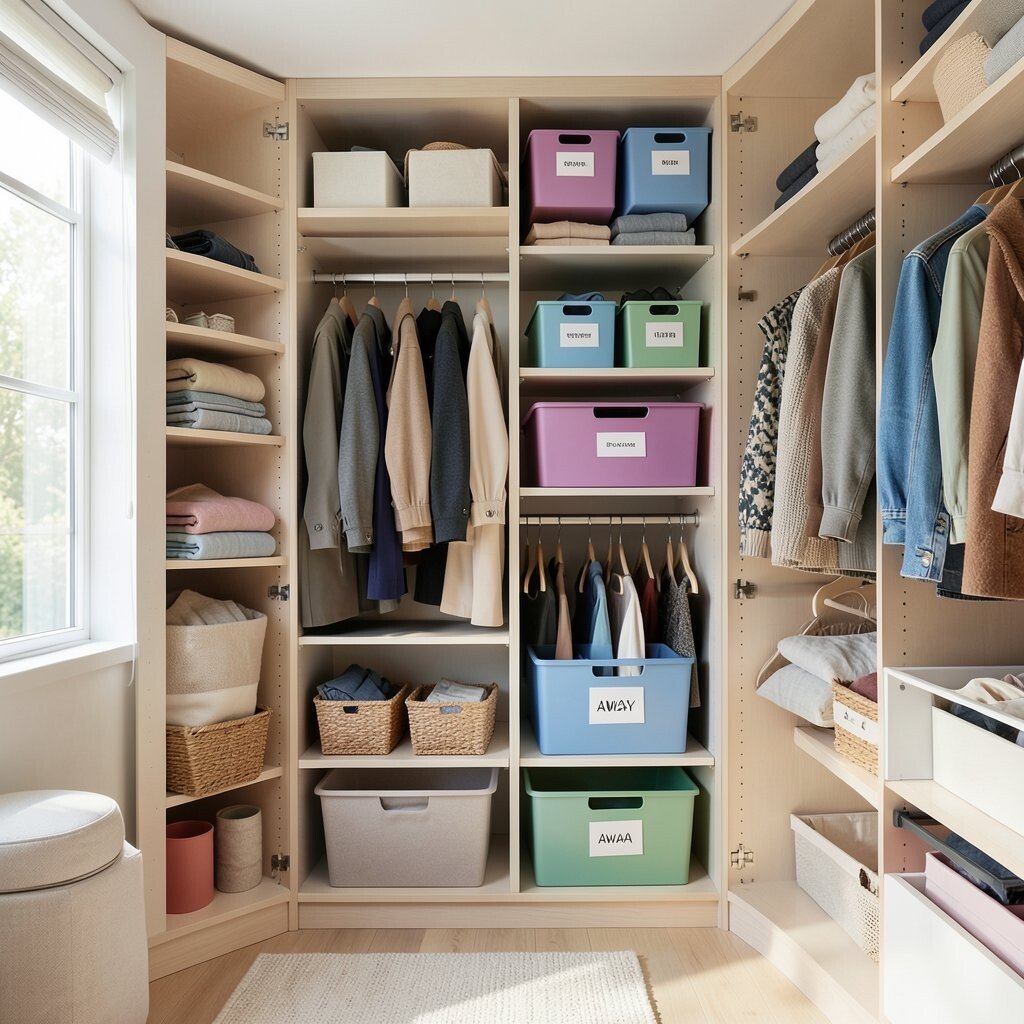
Seasonal rotation prevents the closet from becoming a crowded museum of old outfits. Create an “away” area for items you are not using right now, so the rest stays breathable and orderly.
Use top shelves or labeled bins to store out-of-season clothes, then swap them when weather changes. This helps you keep daily choices easy and supports a tidy closet that stays that way. Personalization is simple here, since you can color-code bins by season or add a small note on what is inside.
For cost considerations, the cheapest rotation system uses existing shelves plus a few sturdy bins, while more advanced setups use sliding carts or pull-out drawers. Current trends favor low-effort systems that keep closets functional, not just pretty. When you commit to a seasonal switch, your closet looks spacious year-round.
Keep the swap ritual gentle by setting aside a short time and returning items directly to their exact spot. After a few rotations, your closet will feel like it finally makes sense.