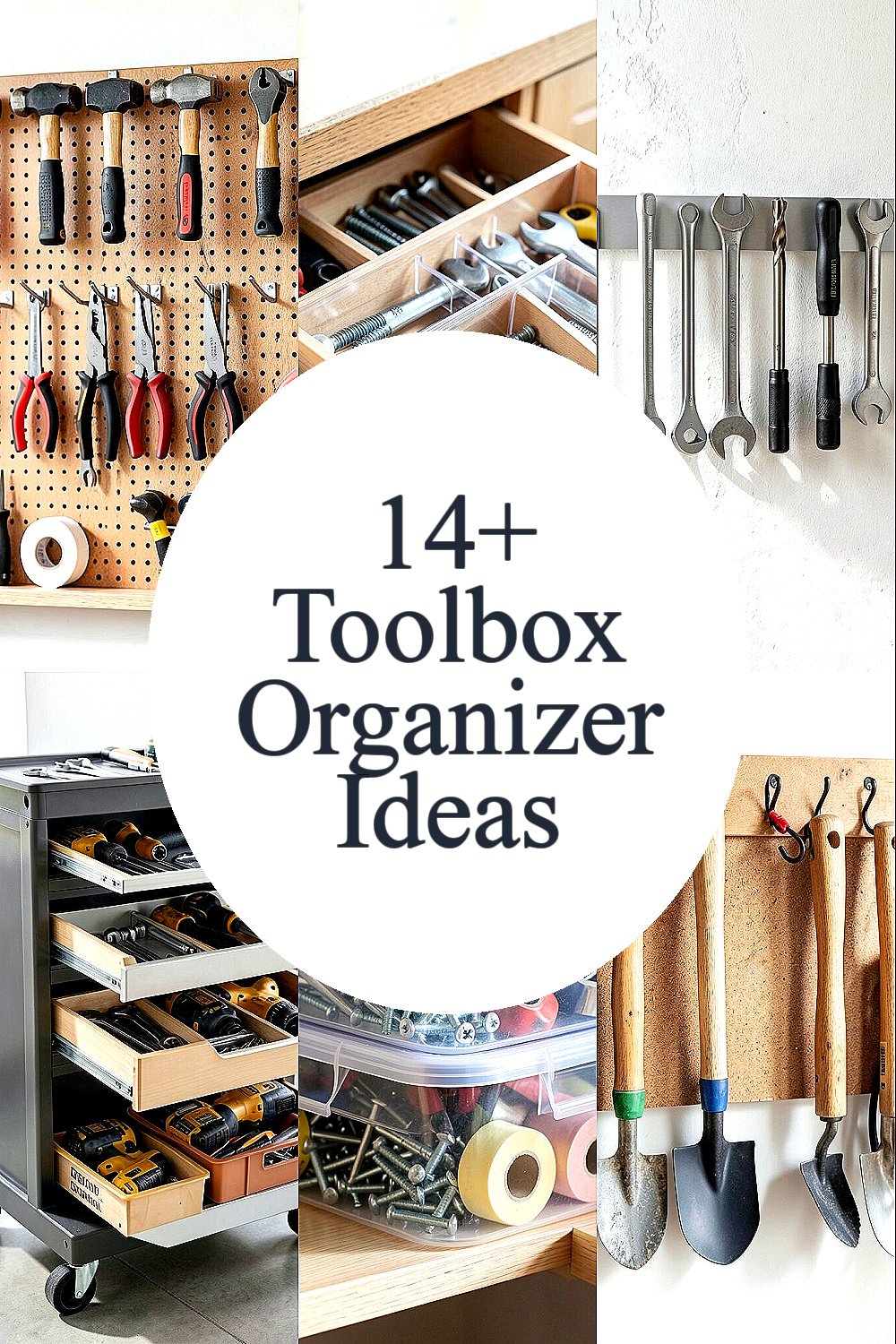
Tool clutter can make a work area feel hard to use and slow. A simple organizer can help you keep each tool in its place and make daily jobs easier.
1. Pegboard Wall Setup
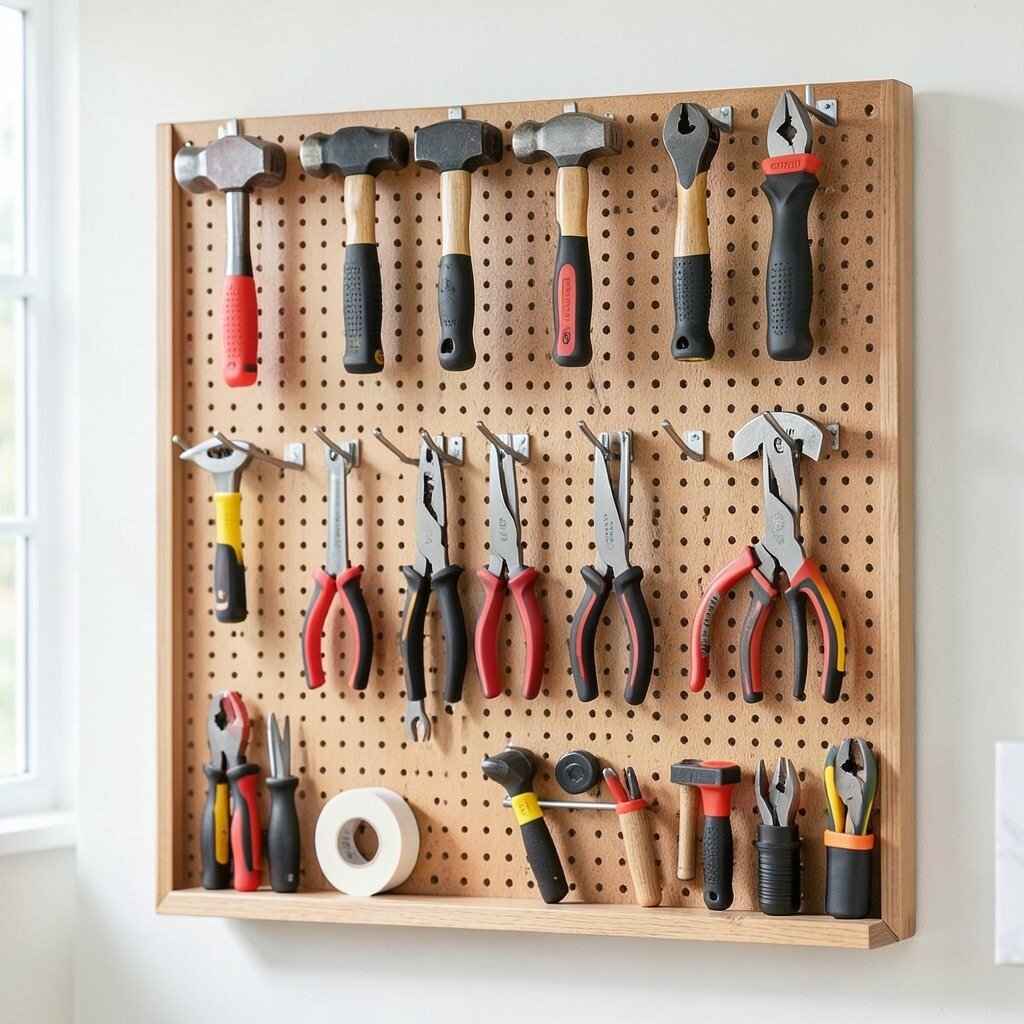
A pegboard wall gives you a clear view of your tools at a glance. You can hang hammers, pliers, tape, and other hand tools in neat rows.
This setup is easy to change when your tool set grows. It also costs less than many built-in storage options, which makes it a good pick for small budgets.
2. Drawer Divider Inserts

Drawer dividers help stop small tools from sliding into one messy pile. They make it easy to sort screws, bits, wrenches, and other small items by type.
Clear plastic inserts are common, but wood and foam inserts also work well. Many people like foam because it can be cut to fit the exact shape of each tool.
3. Wall-Mounted Magnetic Strip
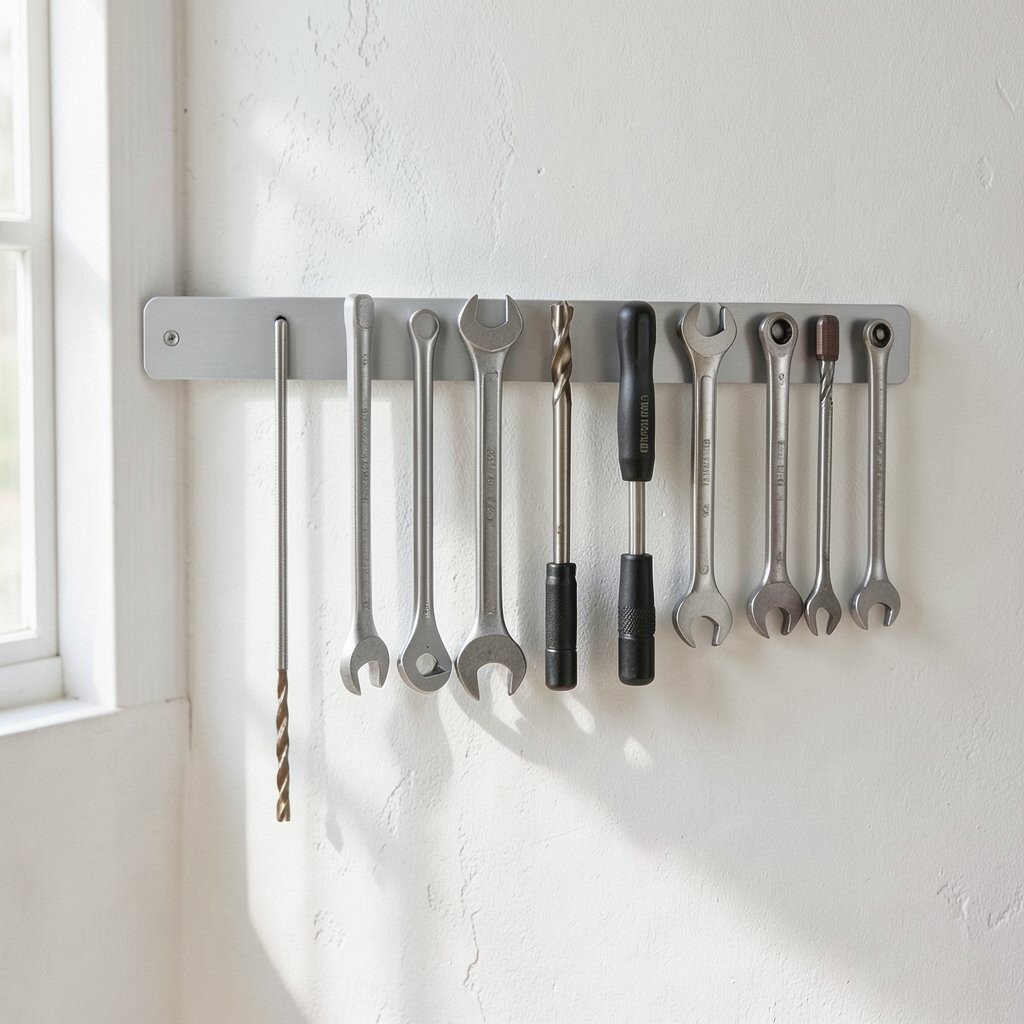
A magnetic strip can hold metal tools in a clean line on the wall. It works well for drill bits, screwdrivers, and small wrenches that you use often.
This idea looks neat and saves drawer space at the same time. It is also quick to set up and does not cost much, so it fits many home workshops.
4. Rolling Tool Cart
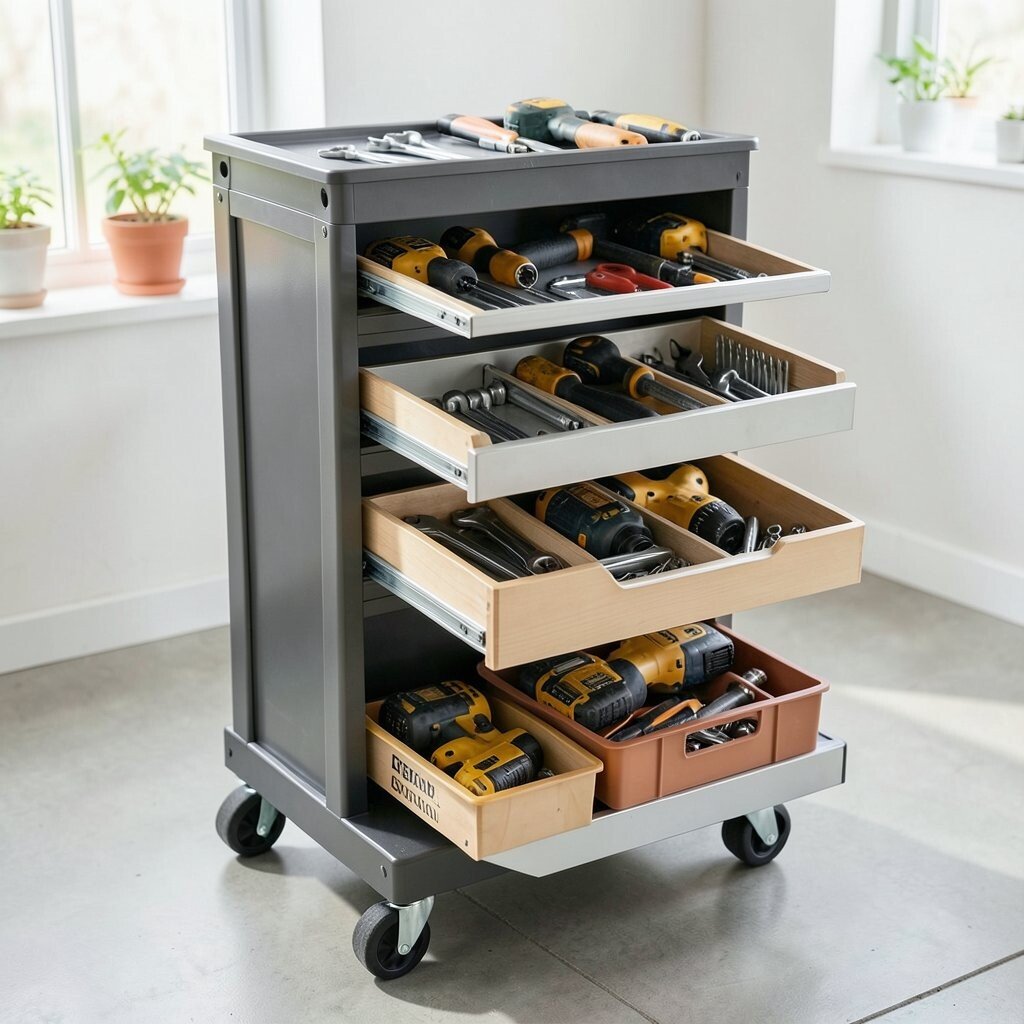
A rolling tool cart lets you move your tools from one spot to another with ease. The open shelves or drawers can hold hand tools, power tools, and repair parts.
This is a good choice if you work in more than one area. You can also label each shelf or add small bins to match the way you use your tools.
5. Clear Plastic Bins

Clear plastic bins make it easy to see what is inside without opening every box. They work well for nails, screws, clamps, tape rolls, and other loose items.
Many people use stackable bins to save space on shelves. This is a simple and low-cost way to keep tools sorted while still making them easy to grab.
6. Wall Hooks and S-Hooks
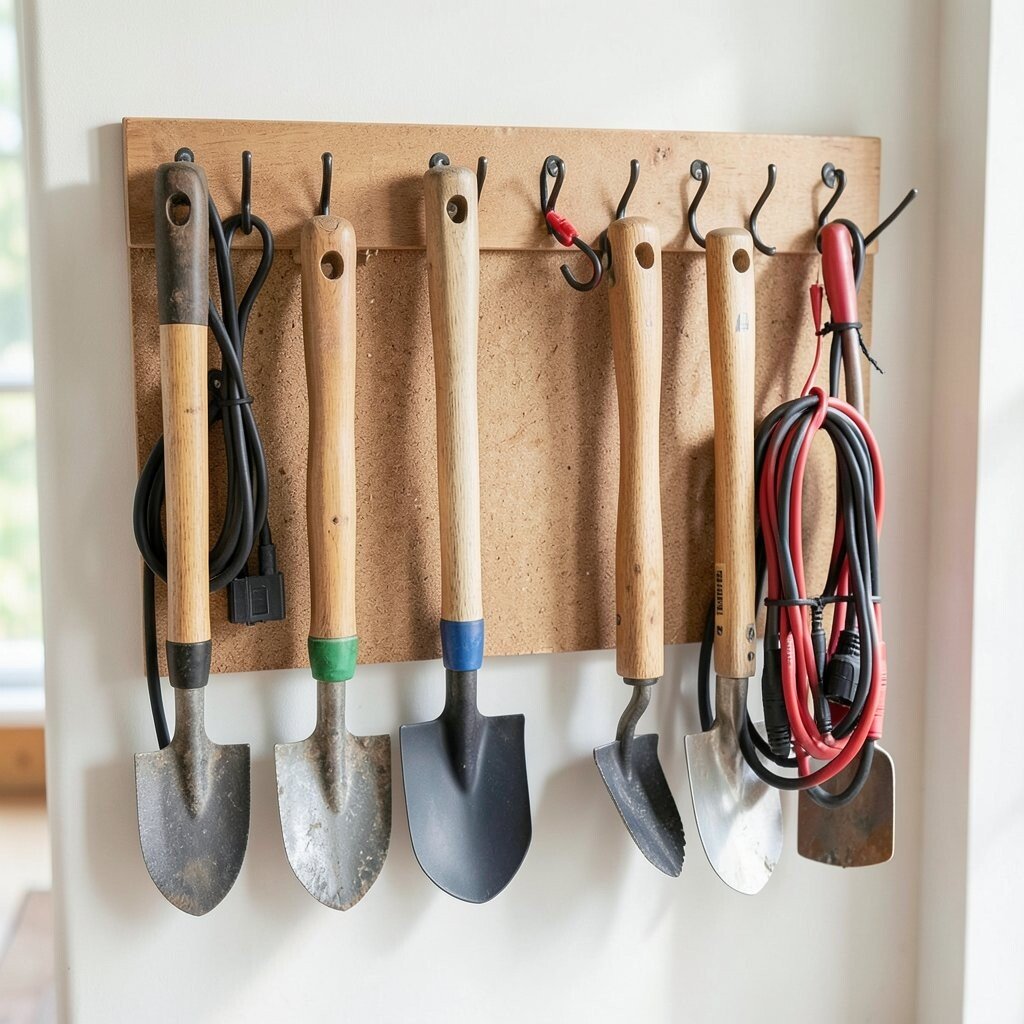
Wall hooks give larger tools a safe place to hang off the floor. Shovels, extension cords, saws, and garden tools can all stay neat on hooks.
S-hooks are handy because you can move them around when needed. This kind of setup is simple, cheap, and easy to change as your needs shift.
7. Foam Tool Shadow Board
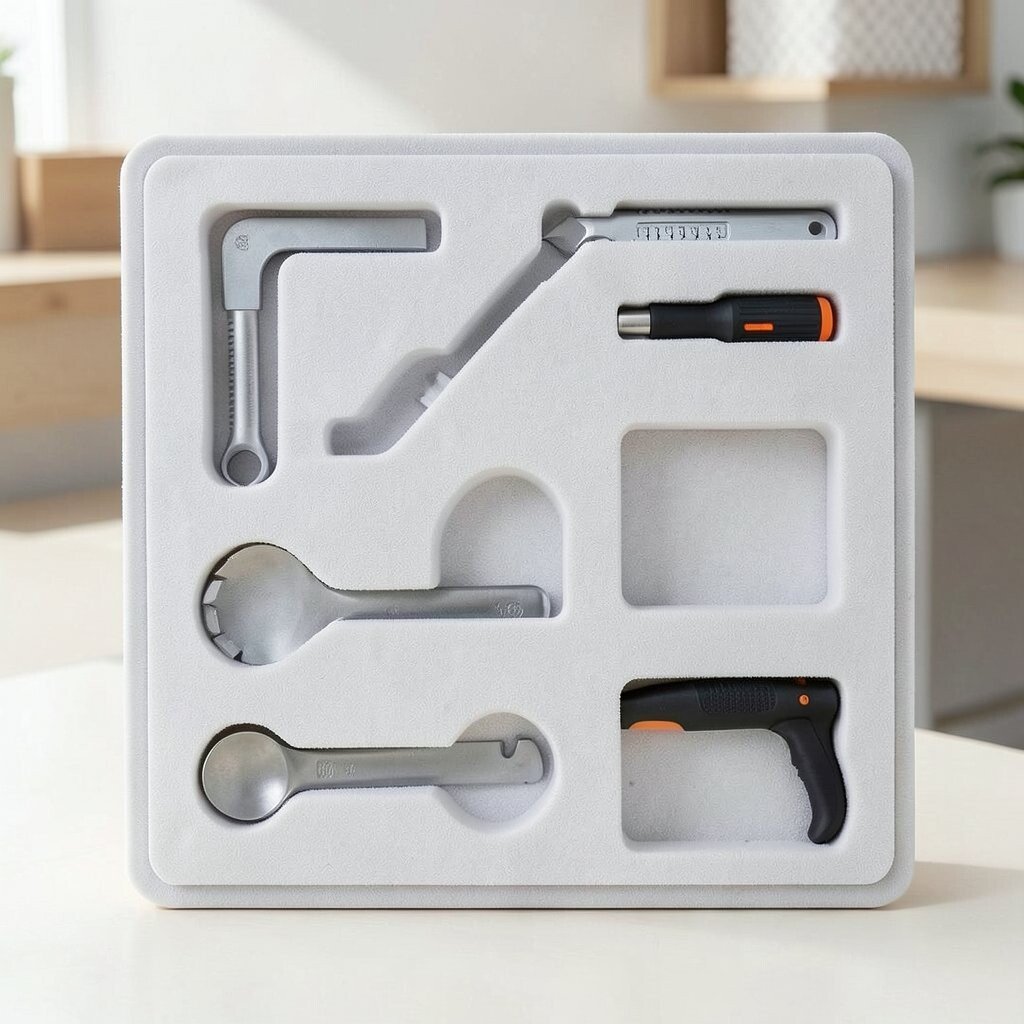
A foam shadow board shows each tool shape in its own cutout. When a tool is missing, the empty spot makes it easy to notice right away.
This style looks clean and helps you keep tools in the right place. It is also popular in shops that want a tidy look and fast tool checks.
8. Labelled Storage Jars
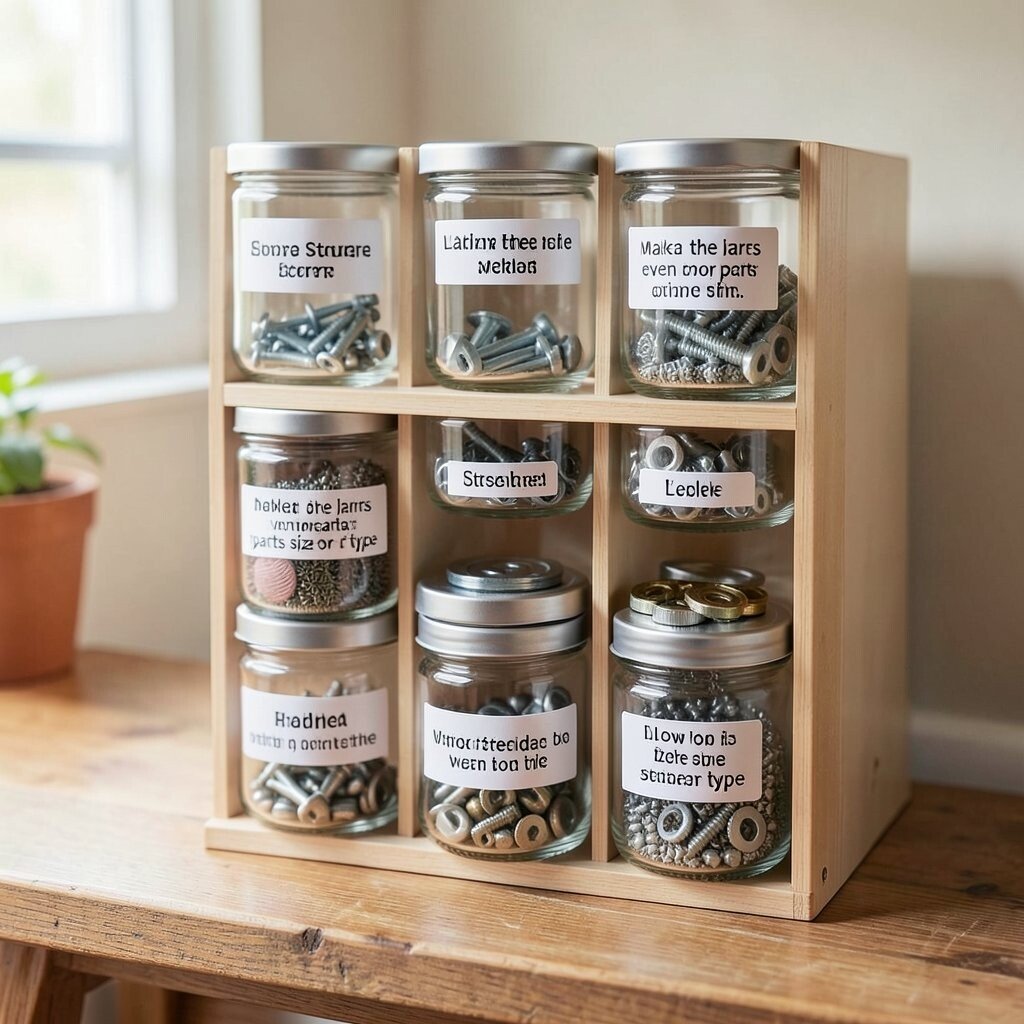
Small jars can hold screws, nuts, washers, and tiny parts that often get lost. Clear glass or plastic jars let you see the contents without opening them.
Labels make the jars even more useful because you can sort parts by size or type. This is a low-cost idea that works well on shelves, in drawers, or on a bench.
9. Under-Bench Storage Drawers
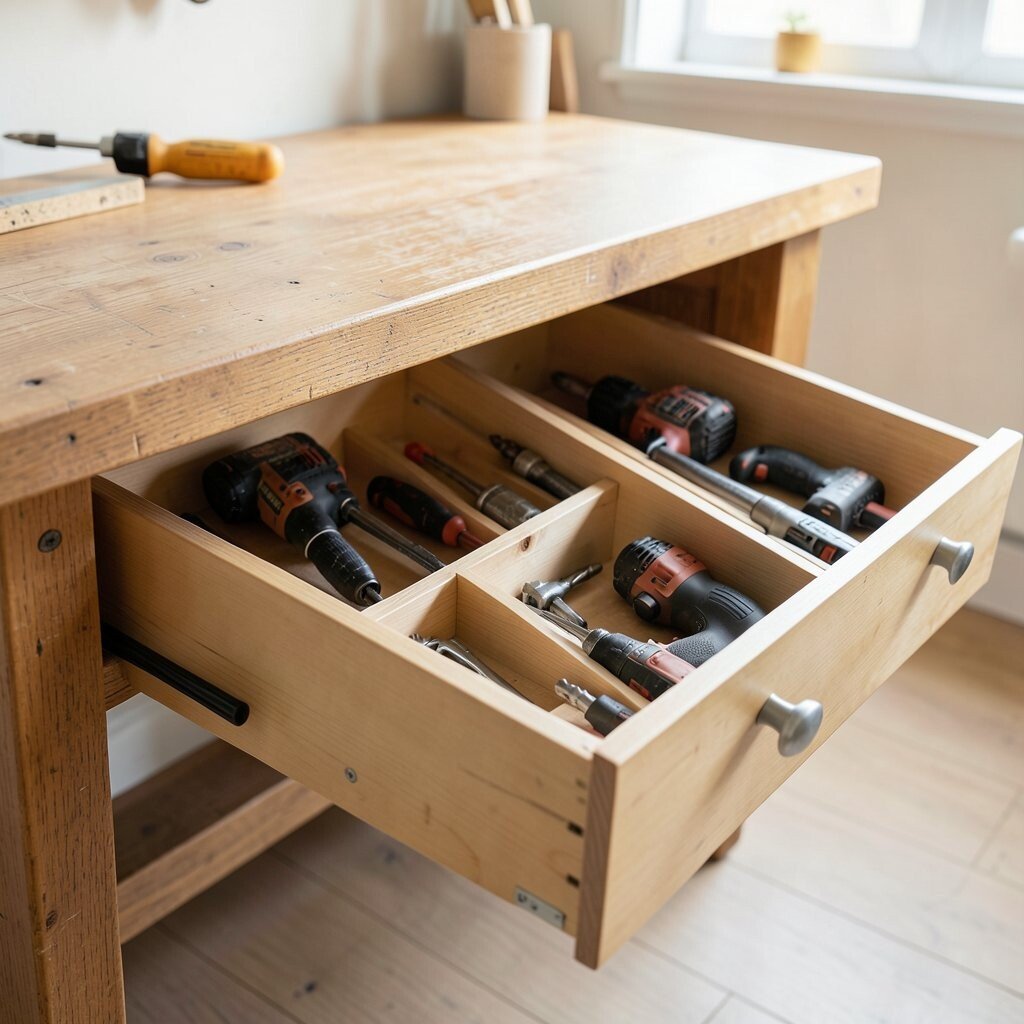
Drawers under a workbench help use space that might otherwise go to waste. They can hold power tool parts, drill sets, and items you want close at hand.
This setup keeps the top of the bench clear, which makes work feel less crowded. Many people add dividers inside the drawers so each tool has its own spot.
10. Tool Roll Pouches
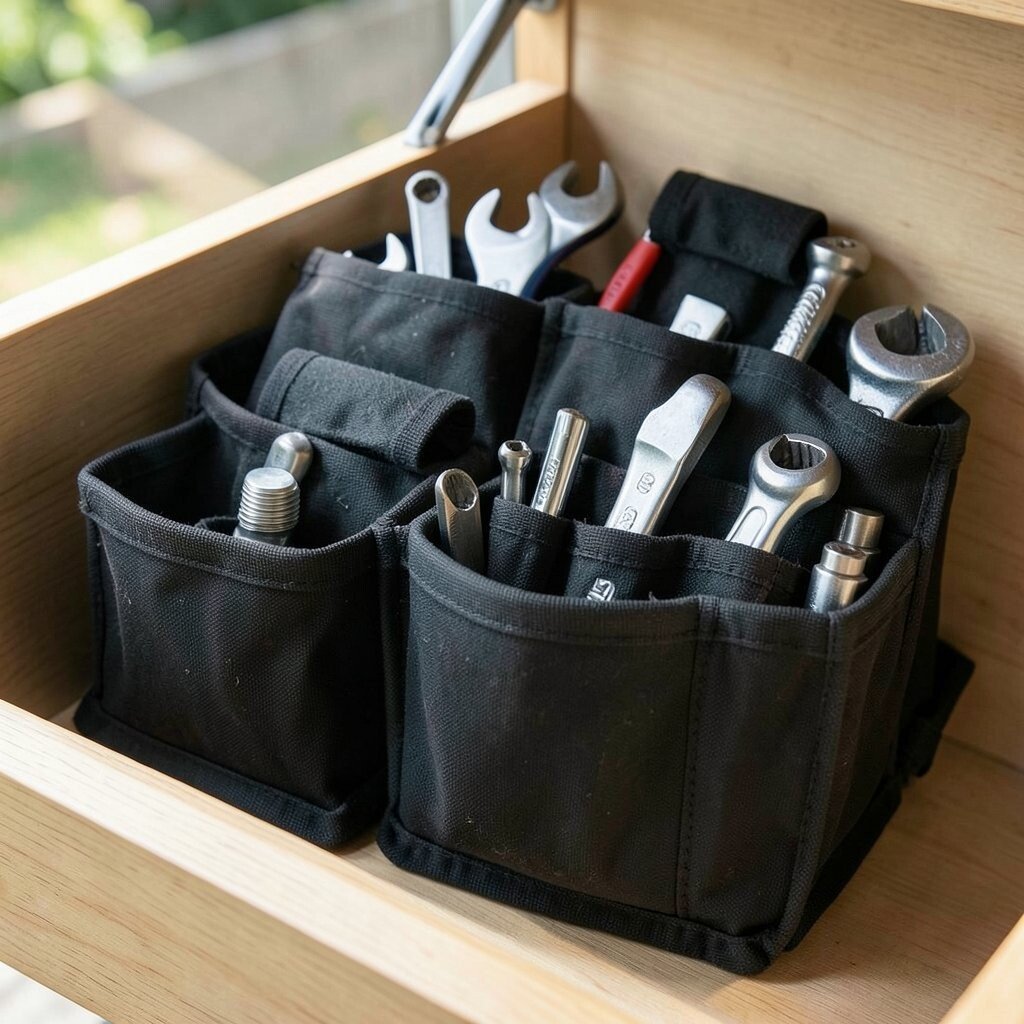
Tool roll pouches are great for carrying tools in a compact way. You can roll them up and store them in a drawer, bag, or truck box.
They work well for wrenches, socket sets, and other slim tools. A tool roll also helps keep tools from rubbing against each other and getting scratched.
11. Ceiling-Mounted Storage Rack
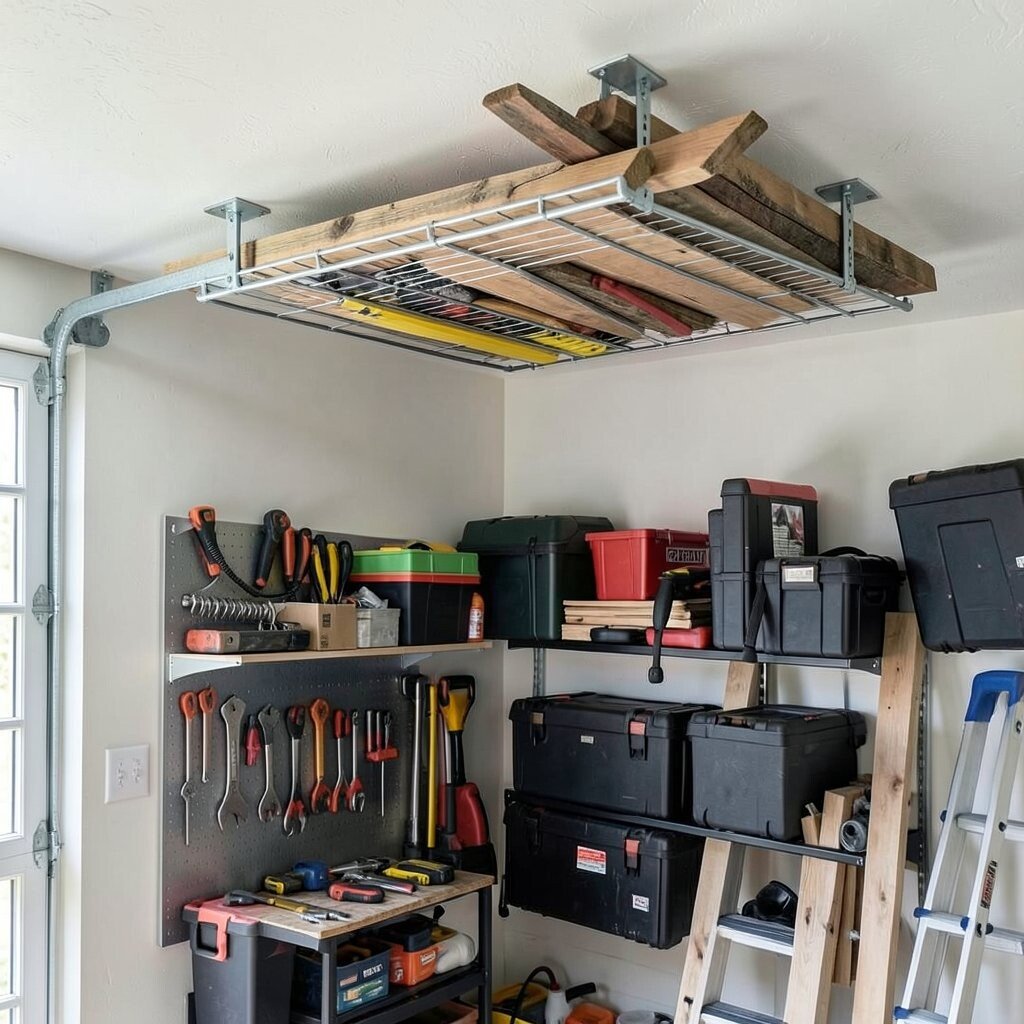
A ceiling rack can hold long items that do not fit well in drawers. Ladders, wood pieces, and bulky tool cases can stay out of the way but still be easy to reach.
This idea is useful in garages with little floor space. It may cost more than simple hooks, but it can free up a lot of room for daily use.
12. Workbench With Built-In Bins
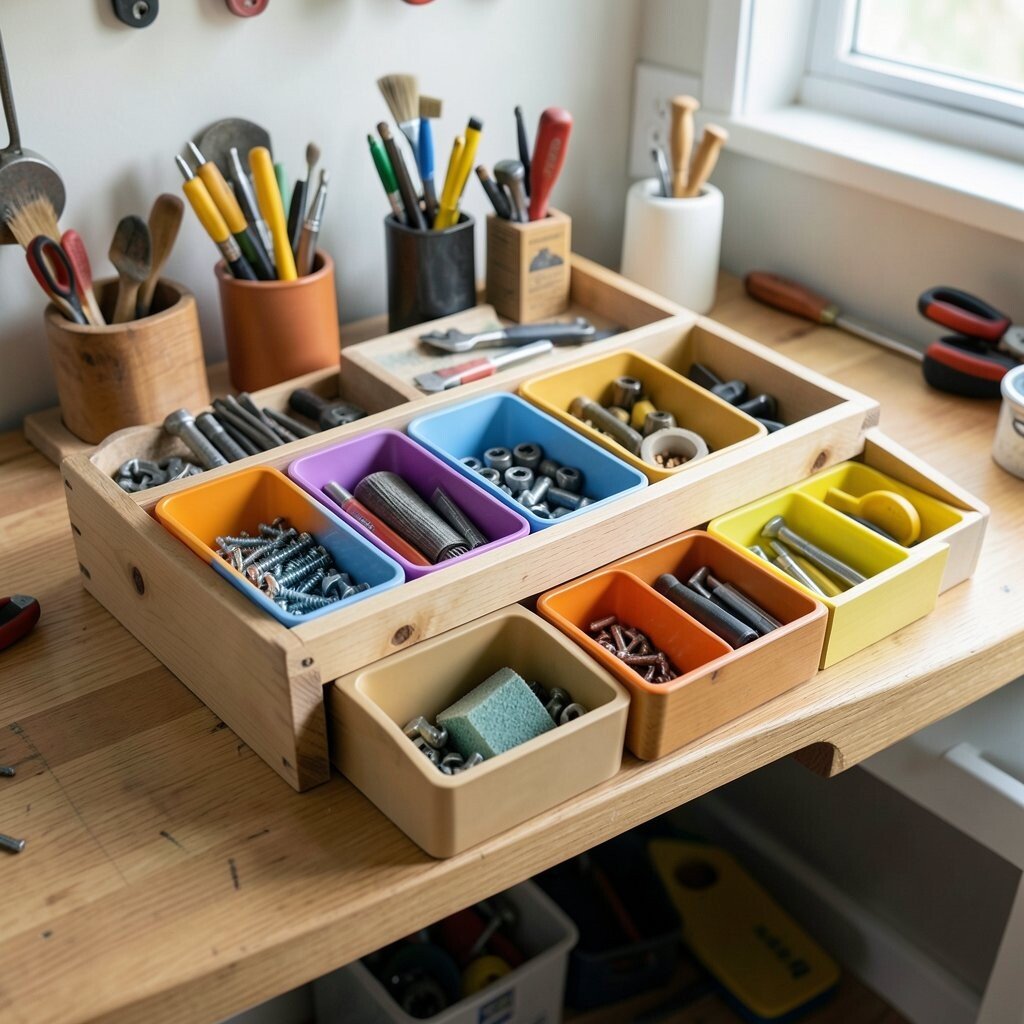
A workbench with built-in bins keeps small tools close while you work. The bins can hold screws, bits, sandpaper, and other parts you use often.
This kind of setup feels tidy because everything stays in one place. You can make it your own by adding bins in the sizes that fit your usual jobs.
13. Portable Tool Tote
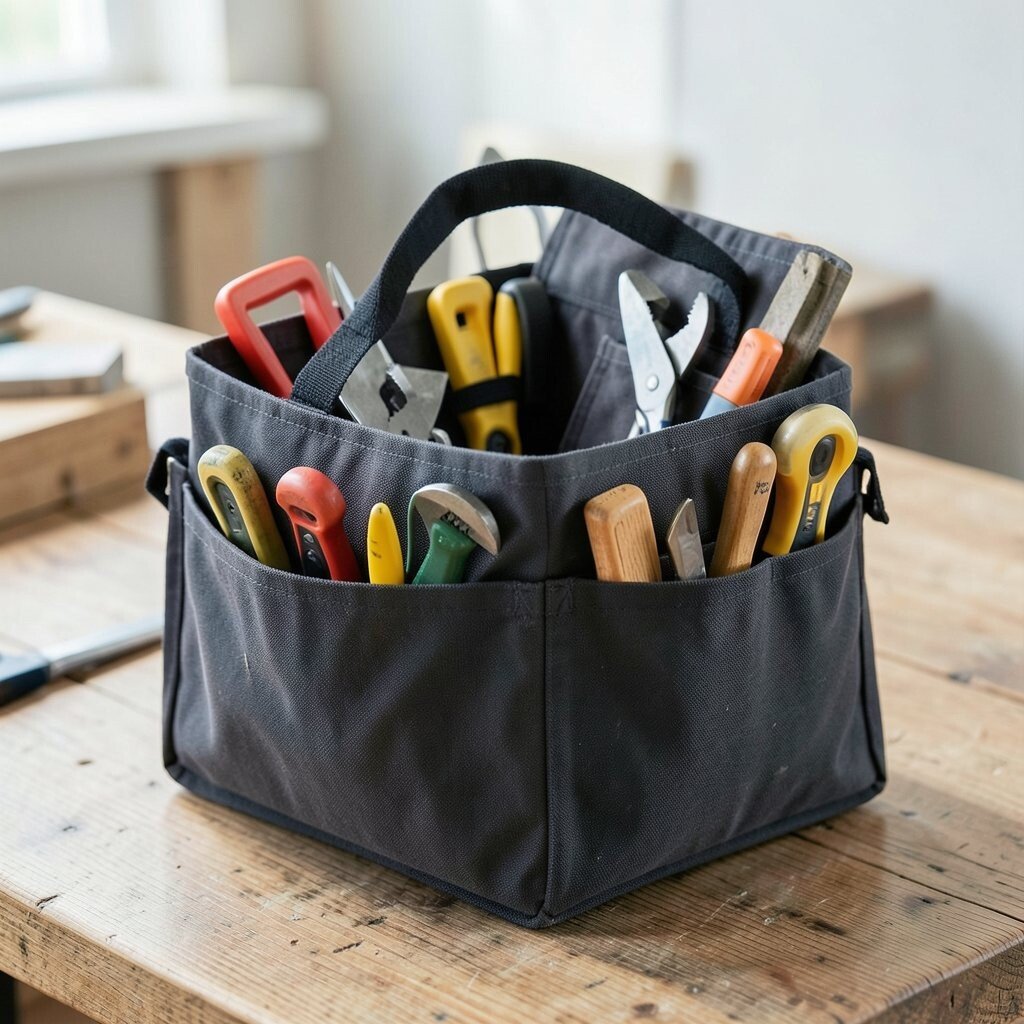
A portable tool tote is useful when you need to carry tools from place to place. It gives you a simple way to keep the most used items in one bag.
Many totes have open tops and side pockets, which makes them easy to use. They are often low cost and come in many styles, so you can pick one that fits your work.
14. Drawer Foam Cutouts
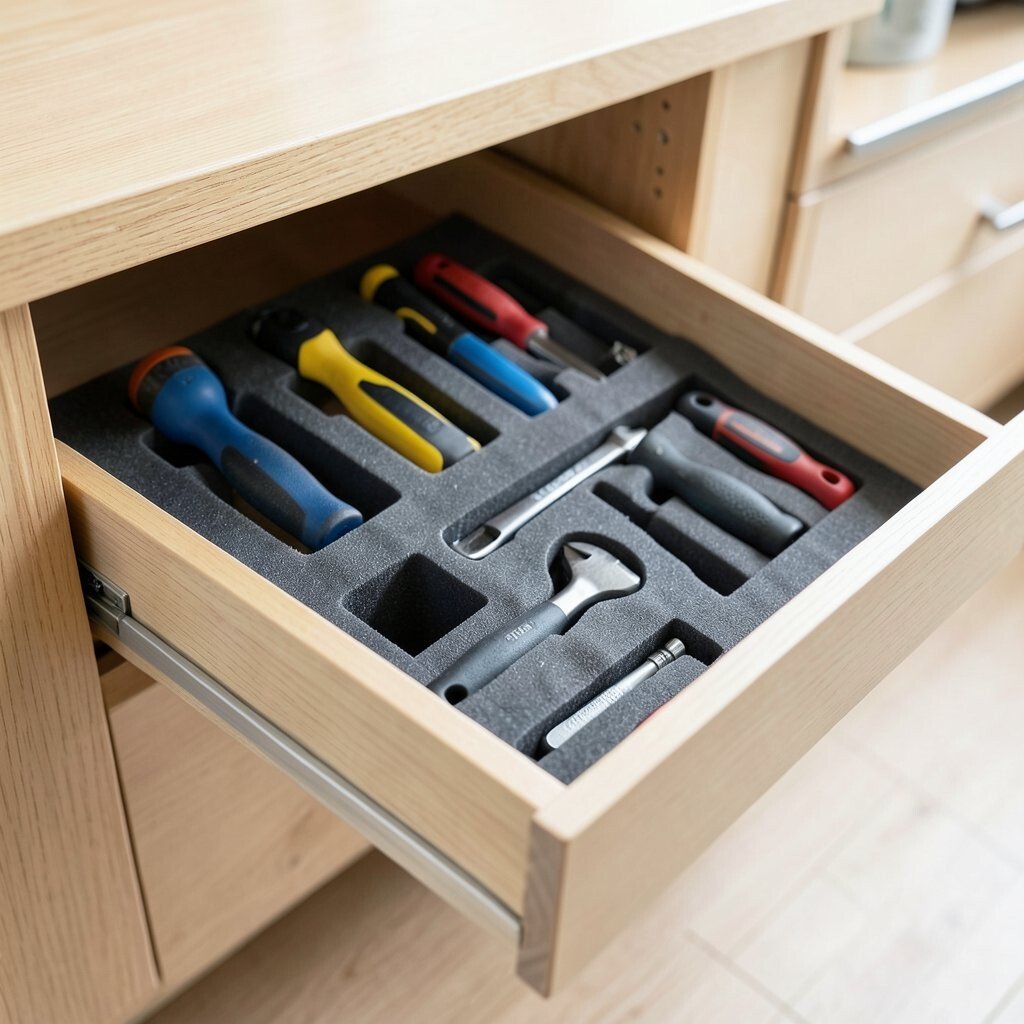
Drawer foam cutouts give each tool a custom fit inside a drawer. The foam keeps tools from shifting and also makes the drawer look very neat.
This idea is often used in newer tool storage setups because it looks clean and helps with fast checks. It works best when you want a more set layout and do not mind taking time to cut the foam.
15. Color-Coded Storage System
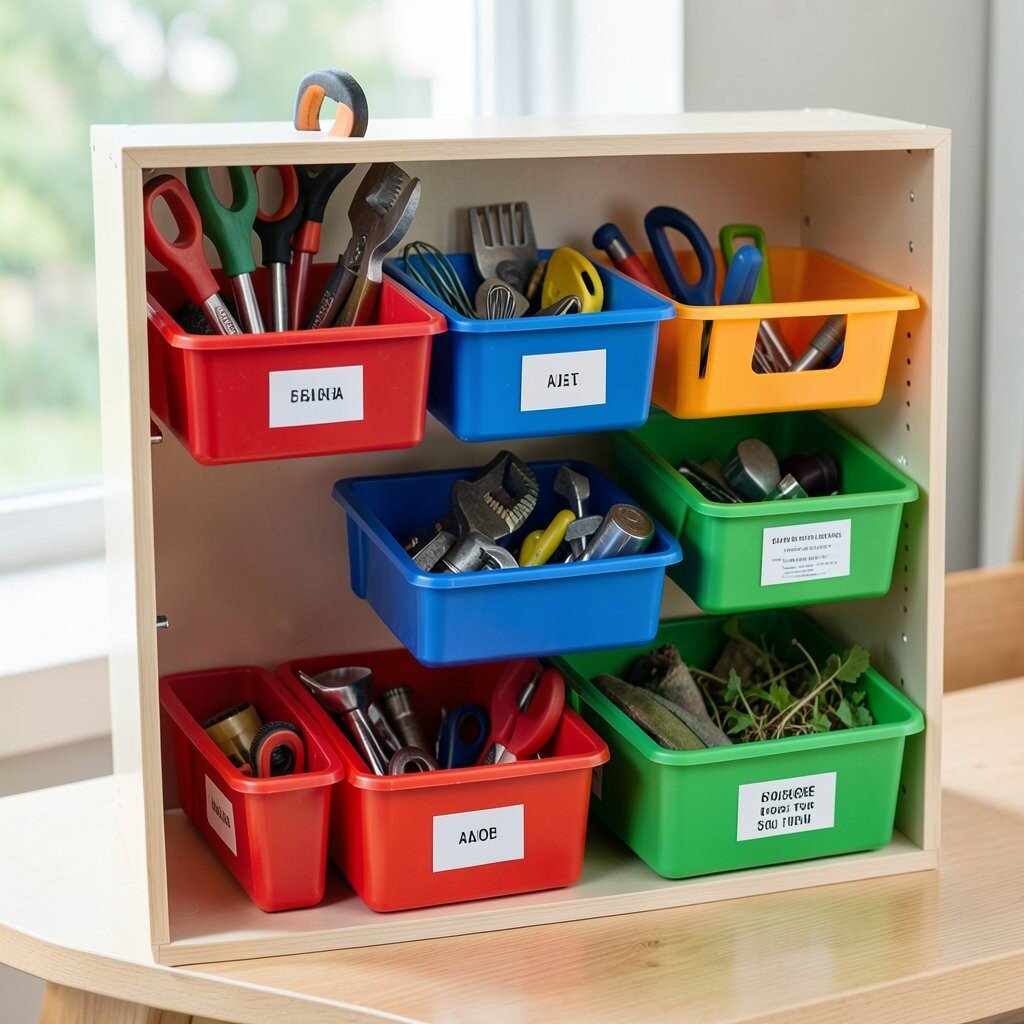
A color-coded system uses colors to sort tools by group or job. You might use red bins for electrical tools, blue for hand tools, and green for garden items.
This method is easy to learn and helps other people find tools too. It adds a simple visual cue, and you can build it with low-cost bins, tape, or labels.