
Building a chicken coop helps you keep hens safe and happy. You can also make it fit your yard and your budget.
1. Small Backyard Coop With a Simple Frame

A small coop can fit in a tight spot and still give your flock good shelter. You can use common wood parts and build a basic box with a roof. Add a door on the front so you can clean it each week.
This idea is great if you want a neat look and easy upkeep. A simple floor plan also helps you spot problems fast, like wet spots or loose boards. Keep the coop off the ground with blocks so air can move under it.
For cost control, shop for treated lumber on sale and reuse screws and hinges if they still work. Personalize it by painting the outside in a calm color that matches your house. A small window can help with light and daily checks.
2. Coop With a Covered Run for All-Weather Time

A covered run gives your birds a place to move even when it rains. You can build a fenced yard space next to the coop and cover it with a simple tarp or metal roof. Many people choose this because hens still scratch and peck outside.
The main benefit is fewer muddy days inside the coop. When the ground stays drier, bedding lasts longer and smells stay lower. It also helps keep birds calm because they can see outside activity.
Use a mix of shade cloth and hard roofing to manage heat in summer. Add a few flat stones or clean boards for traction. For trend ideas, look at low-cost solar lights or small fans that you can run in the evening.
3. Deep-Bedding Coop With Good Ventilation

Deep bedding means you add fresh straw or wood shavings on top of old bedding instead of cleaning all at once. A good coop for this style needs strong airflow near the top. Fresh air helps keep moisture from building up.
This works well for many backyard setups because it can cut down on heavy clean days. You also get natural heat from the bedding as it breaks down. That can help in cool months, as long as you still provide safe warmth.
Personalize your setup by choosing bedding that fits your area, like pine shavings or straw. Add vents that open and close so you can control airflow. Keep in mind costs for shavings can add up, so buy in bulk if you can.
4. Predator-Resistant Coop With Hardware Cloth

If you deal with raccoons, foxes, or other visitors, predator control should be part of your plan. Use hardware cloth on openings instead of wide wire gaps. Hardware cloth is strong and helps stop digging and clawing.
This design adds real peace of mind, especially at night. You can also bury the fence edge a bit or use a skirt to block digging. Many coops fail because small spots are left weak.
Keep tips simple: check every latch, hinge, and corner after storms. Personalize the look with a normal door and a clean paint job, but keep the strong netting hidden where you need it. A higher up-front cost for strong wire is often worth it.
5. Raised Coop With Storage Under the Floor
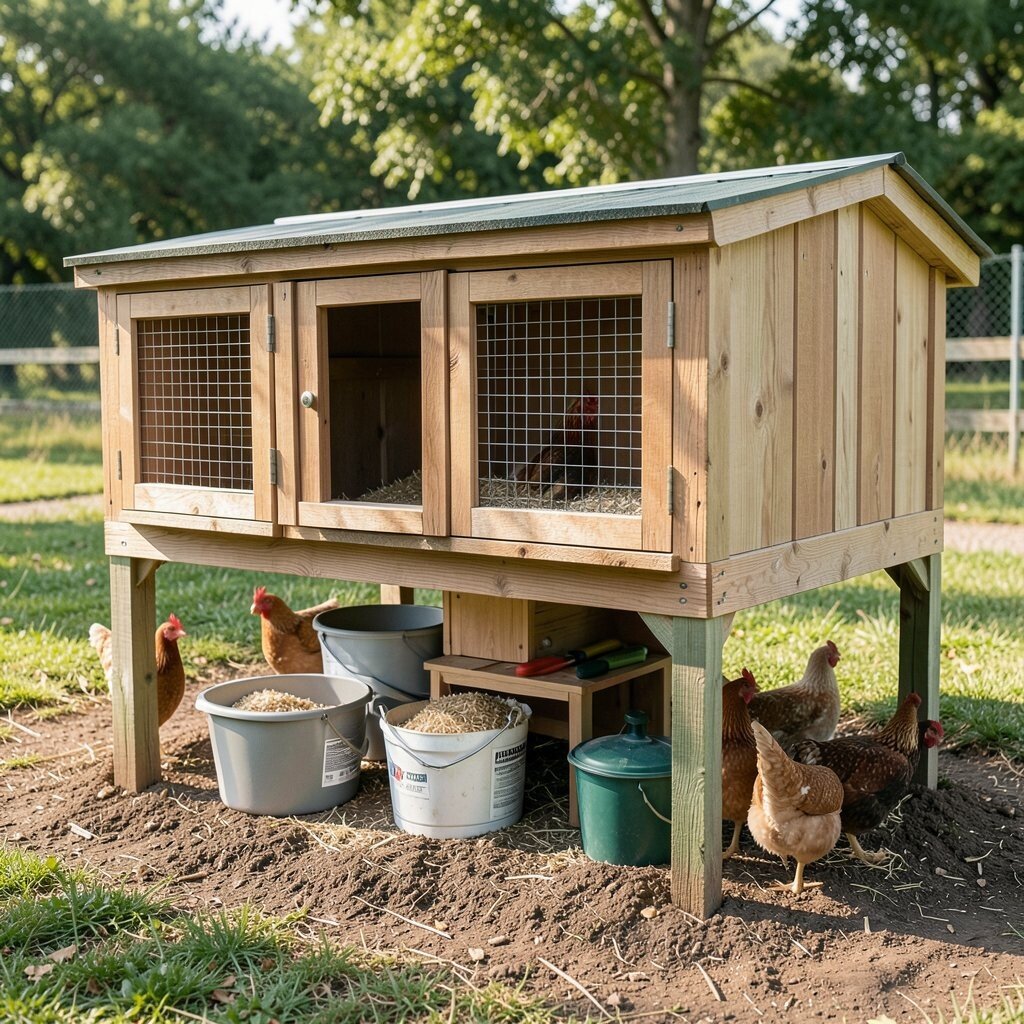
A raised coop lifts the main box off the ground and leaves space below for storage. You can keep feed buckets, extra bedding, or tools in a dry area. This also helps protect hens from damp ground.
The benefit is a cleaner routine since you spend less time hunting for supplies. It can also help with pests because birds are not as close to the soil. For safety, make sure the space under the coop is still well closed and not easy to access.
For personalization, add a small shelving unit or a locked cabinet under the coop. Costs can be a bit higher because of posts and supports, but you gain practical storage. Try using removable trays for easier cleaning when you need it.
6. Sliding Door Coop for Easy Daily Access
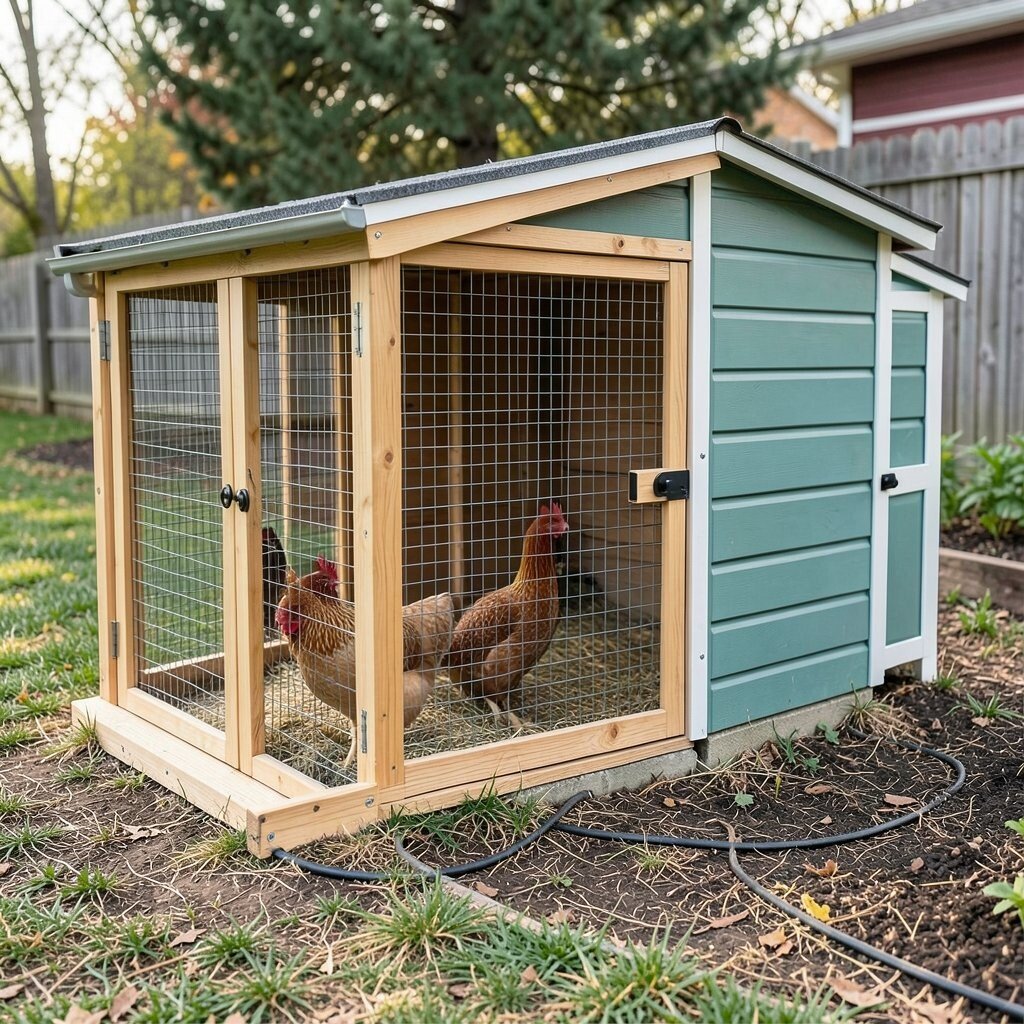
A coop with a sliding door makes daily chores faster and less messy. You can build a track system and use a sturdy board that moves sideways. This helps when the coop sits close to a fence or garden bed.
It is useful because you can open just what you need and keep wind out. Many people also like this style because it is easier on your hands than lifting a heavy door. If you add a small handle, it feels smooth and simple to use.
Keep the track clean by adding a small cover over the rail. For cost, you can use roller wheels from hardware stores. Personalize the outside with a color that makes it easy to spot your coop from a distance.
7. Layered Coop With Separate Roosting and Laying Areas

A layered layout can help keep eggs area cleaner. You can place roost bars higher up and keep nesting boxes in a separate section. This makes it easier to gather eggs without disturbing resting hens.
The benefit is better egg collection and less mess in nesting spots. When roosting and laying spaces are separated, droppings fall away from the nest area more often. It also helps you see which hen is using which spot.
Personalize nesting boxes by adding easy-grip handles for cleaning and by using removable liners. Try different sizes if you have mixed hens and pullets. Costs stay mid-level because most parts are simple wood blocks and basic hardware.
8. Chicken Coop With a Small Window Wall for Light
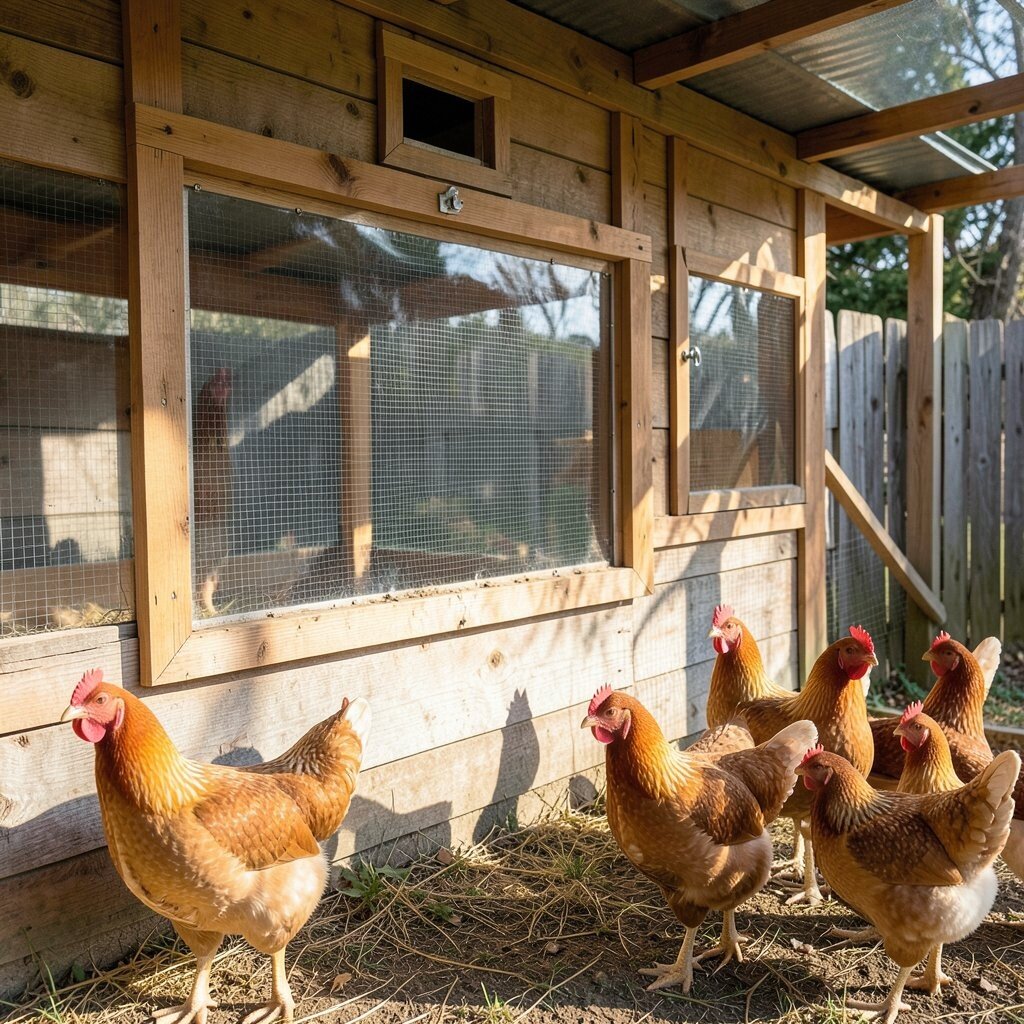
Good light helps hens feel calm and helps you do daily checks. A window wall can bring in sunlight while still giving shade parts. You can add a clear panel with a cover so the glass stays safe.
This helps you notice dirty areas early and see how the birds act. Many backyard owners like the look because it makes the coop feel open and less closed in. In winter, sunlight can also help the space feel warmer in the day.
Use simple tips: add a vent above the window and use a latch so it stays closed in storms. Personalize with wood trim that matches your porch or fence. Be sure the window is protected with netting so birds cannot peck it.
9. DIY Coop With Repurposed Materials and Careful Sealing

Repurposed materials can help cut cost and make the coop look unique. You can use old boards, reused doors, or leftover roof panels. But you need to clean and check each piece so it is safe for birds.
The benefit is a coop that feels like it fits your home story. You also reduce waste by reusing items you already have. Seal the wood with a safe finish made for outdoor use so it lasts longer.
Personalize this style by mixing colors and textures in a neat way. Try to keep the inside walls smooth so bedding does not snag. Costs can be lower, but you still may need new hinges, wire, and screws for safety.
10. Compost-Linked Coop With Easy Bedding Changes
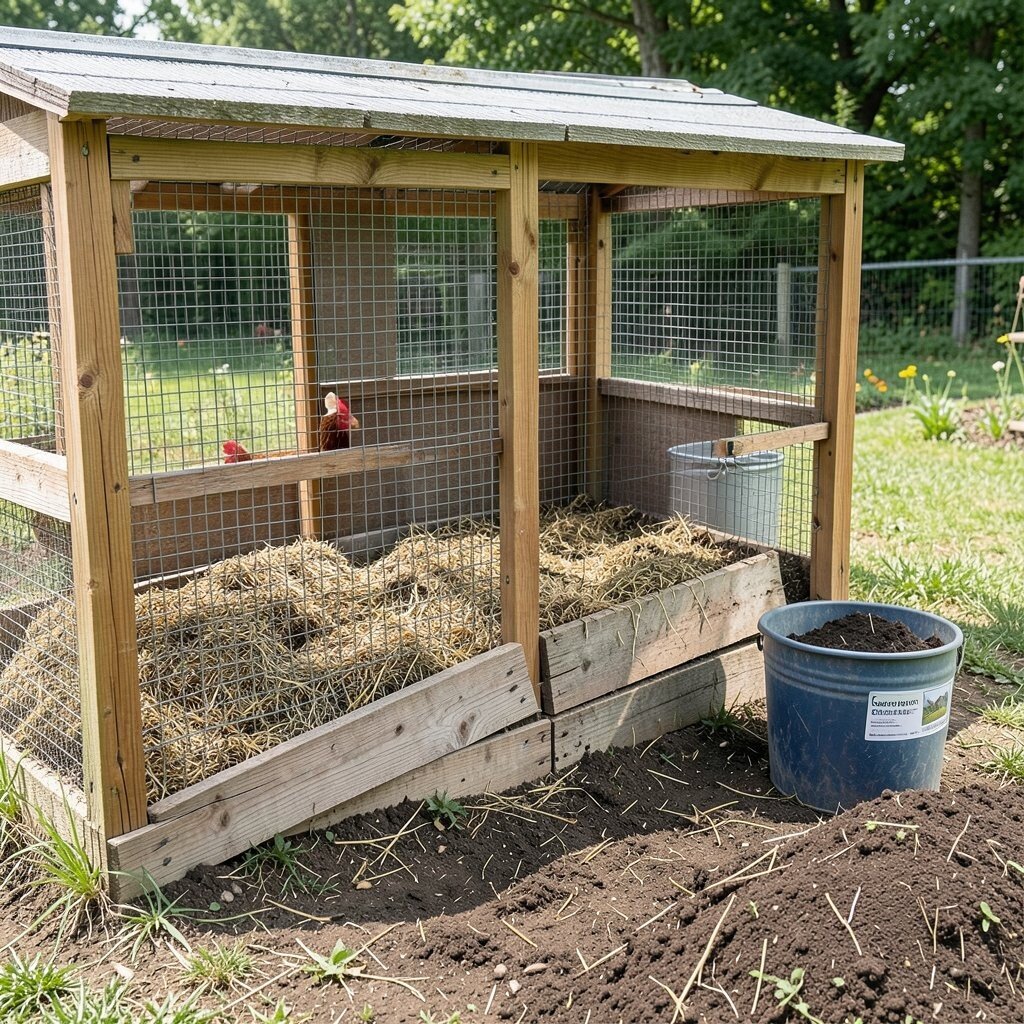
If you like home projects, link the coop routine to your compost plan. You can set up a system where used bedding can be moved into a compost bin after it cools and breaks down a bit. This makes cleanup feel more useful.
The benefit is less waste and a clear next step for bedding. When managed well, your yard can get rich soil for gardens over time. The key is to keep compost covered and handle bedding with care for good results.
Personalize by placing a small bin near the coop so you do not carry heavy loads far. Use simple labels so you remember what is in the pile. Costs can be low because compost bins are often made from basic barrels or bins you can buy used.
11. Portable Chicken Coop on Skids for Rotating Ground

A portable coop can move to new ground, which can help reduce mud and bugs. You can build it on skids or wheels that roll on a level base. Many people like this method because it feels flexible with yard changes.
The benefit is you can rest one spot and let grass grow back while hens use another area. This can lower the smell and help keep the run drier. It can also help with pest control when you rotate over time.
To keep hens safe, make sure wheels lock and the frame stays solid. Personalize with handles on the sides and a roof that lifts for easy cleaning. Costs can vary, but skids can be cheaper than full wheels, depending on what you already have.
12. Modern Coop With Clean Lines and Simple Color Blocks
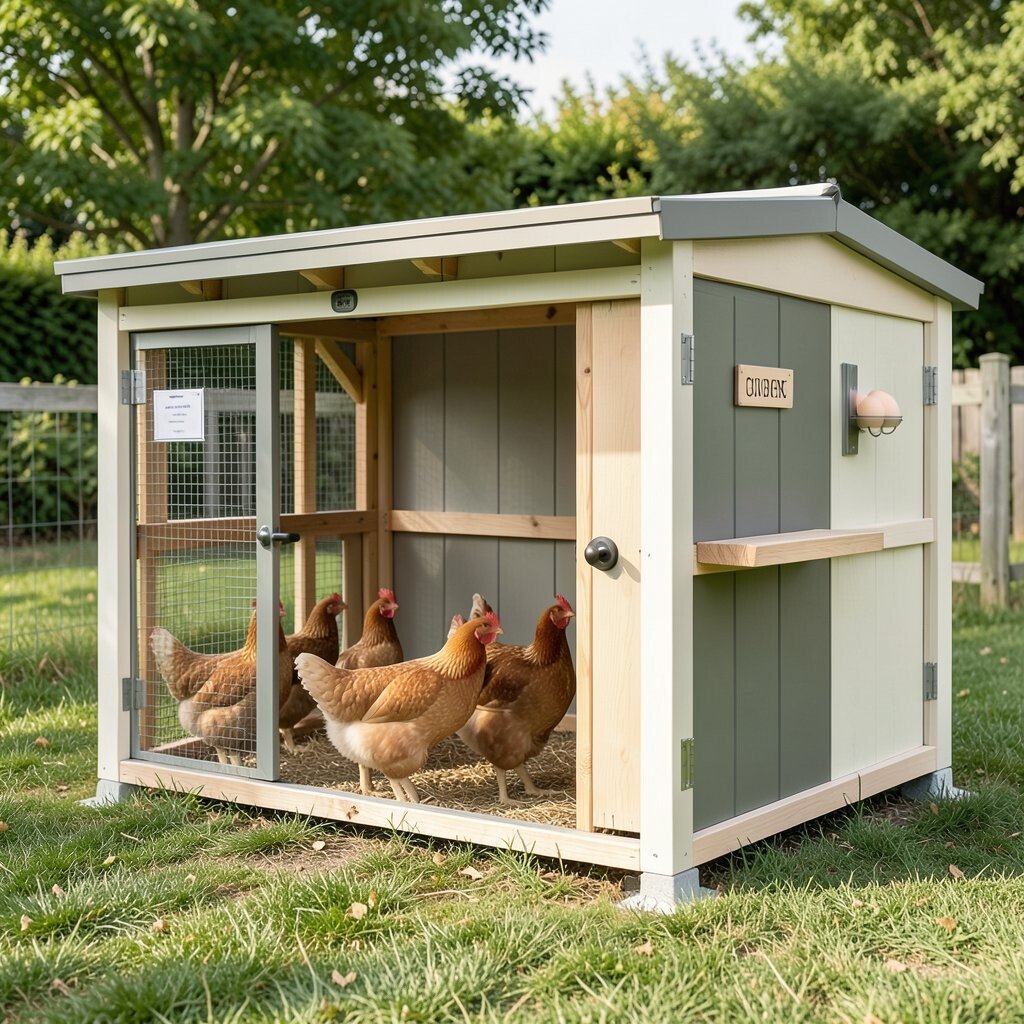
A modern coop can look neat and still work well for hens. Think clean boards, simple roof shapes, and clear paint lines in a few matching colors. A tidy design can also help you keep the coop organized.
The benefit is a backyard look that fits many homes and gardens. It can also help you spot wear marks early because the design is not too busy. Many people like the feel of a coop that looks like part of the yard plan.
For trends, you may see matte paint, simple signage, and neat feeder holders built into the wall. Keep costs in check by using paint you can buy in small cans and wood that is already straight. Personalize with a name plate or a small shelf for eggs so daily chores feel easy.