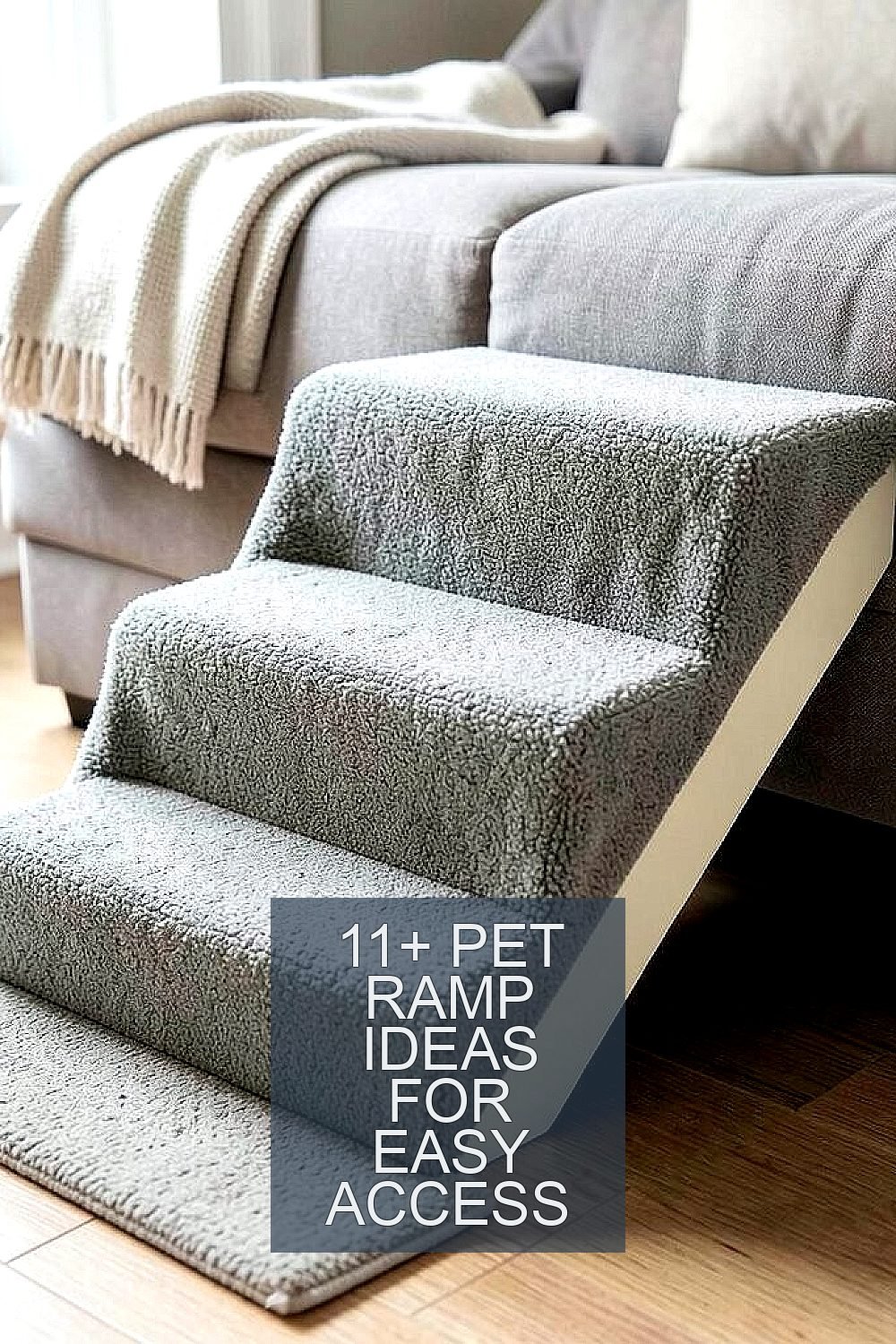
Pet ramps can help your dog or cat move with less strain. You can pick a style that fits your home and budget.
1. Carpeted Indoor Step Ramp
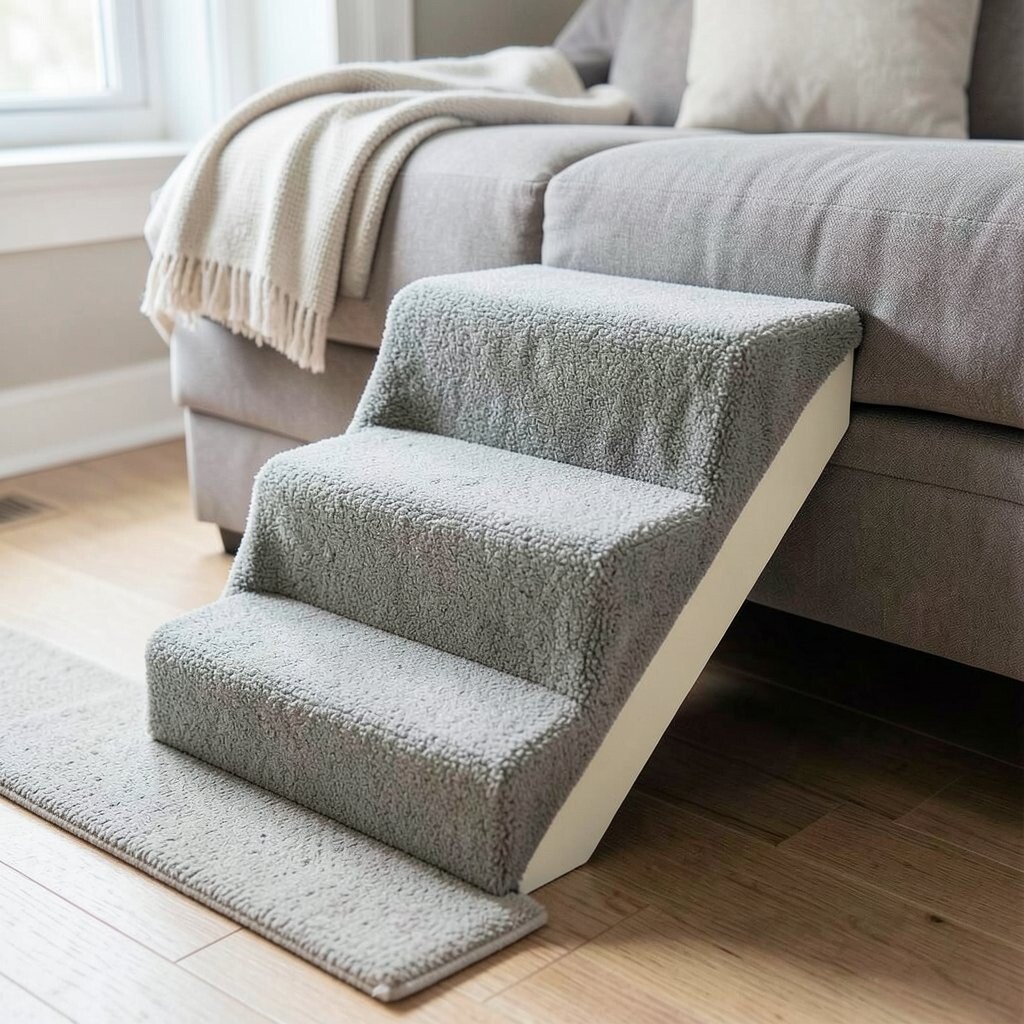
A carpeted ramp is a simple flat panel with soft grip on top. You can picture it as a small slope that rests against a couch or bed. The carpet helps feet stay in place and makes steps feel safer.
This idea is good for pets that get tired on stairs. It can also help older pets keep their legs less sore. A tip is to choose a ramp with a steady base and a firm edge so it does not shift.
For cost, carpeted ramps can be low to mid range. You can also reuse a sturdy piece of foam and add indoor carpet. This kind of ramp stays popular because it looks like regular home gear and it works right away.
2. Fold-Flat Travel Ramp
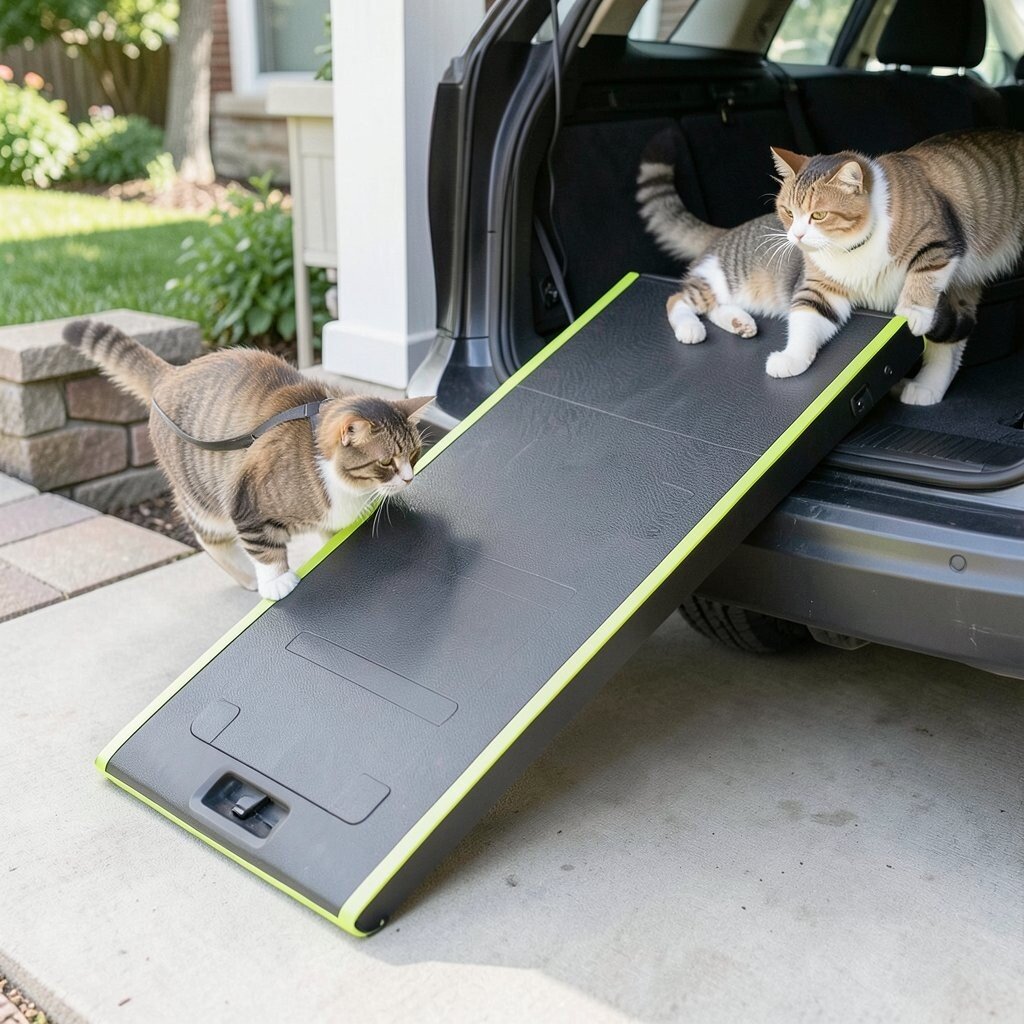
A fold-flat ramp is made to move, store, and set up fast. Think of a ramp that folds in half and packs like a flat mat. It is easy to place in a car trunk or near the front door.
The main benefit is easy access when you go out. It can help pets get into a car, onto a porch, or onto a vet table. For tips, look for a ramp with a non-slip surface and a simple lock so it stays put when you unfold it.
Costs can vary, but you often find options in a wide price range. A trend you may notice is more travel gear for pets, since more people take pets on trips. You can personalize it with bright tape on the edge so it is easy to spot.
3. Step-Style Ramp With Wide Treads
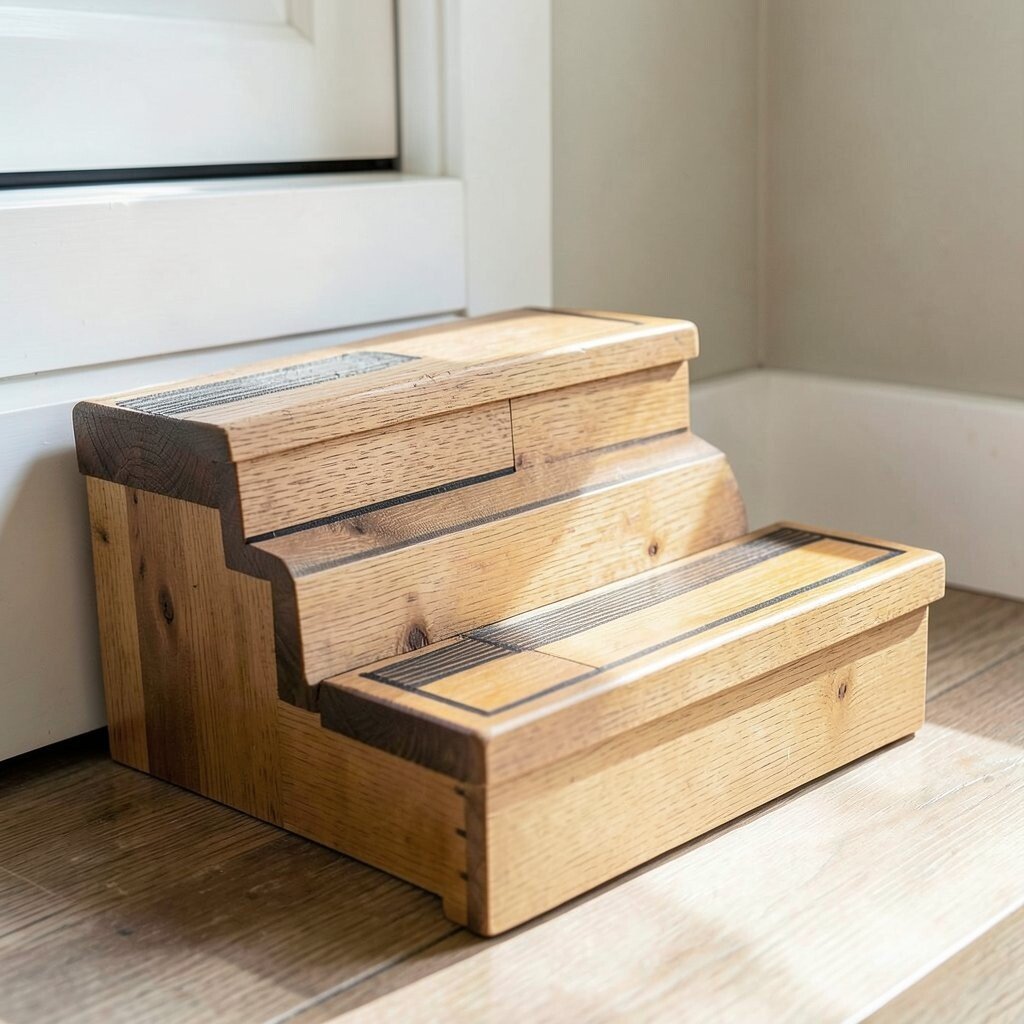
A step-style ramp uses multiple small steps instead of one long slope. You can picture three to four steps, each with a flat top for paws. This helps pets feel like they are climbing, not sliding.
This is a good match for pets that need more control. The wide treads can help older pets with balance. Tip: measure your pet’s paw width and choose steps that give enough space to land with comfort.
Cost is usually mid range because it is more built than a simple panel. You can also build a basic version with wood and add grip strips. Many homes like this style because it looks neat and fits well near doors.
4. Adjustable Clamp-On Balcony Ramp
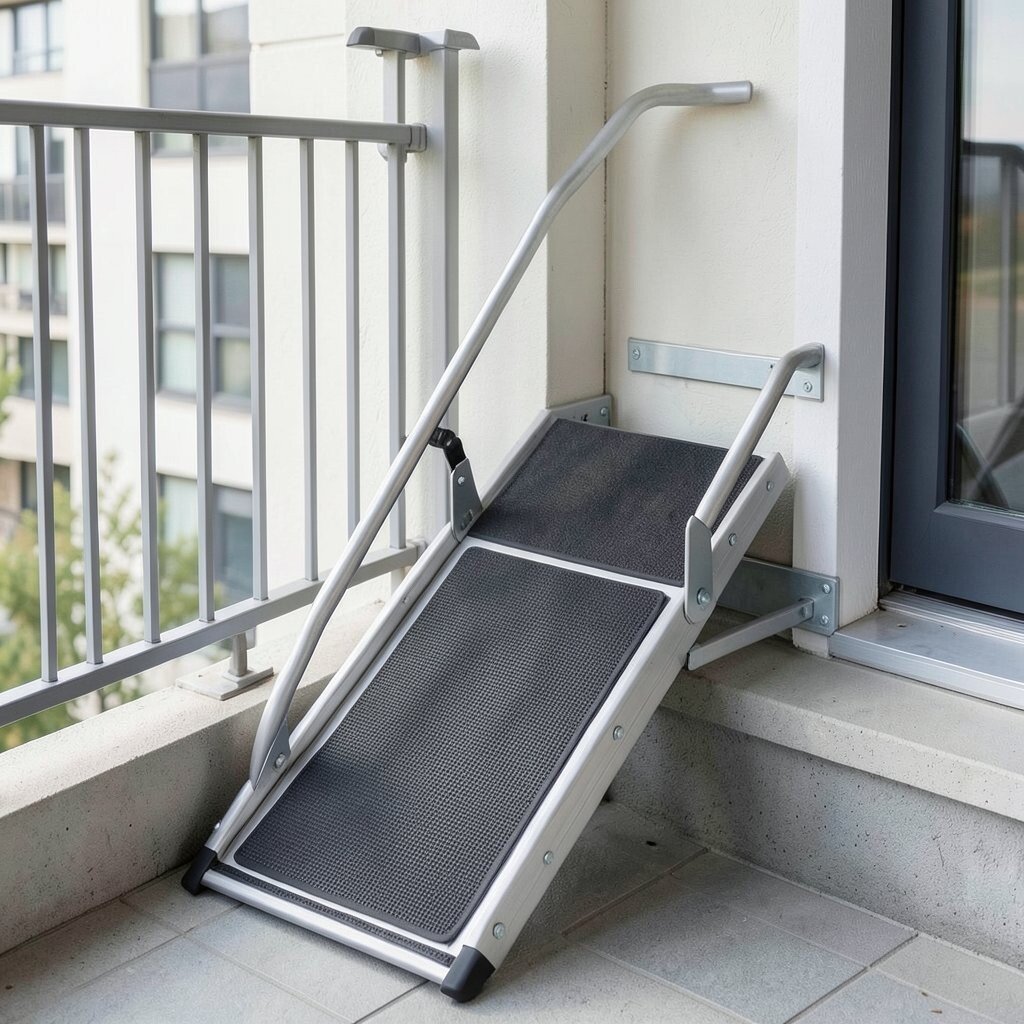
An adjustable ramp can clamp to a balcony or a raised ledge. Picture a metal frame with a small rail and a top board that can move up or down. This lets you match the ramp height to your door.
The big benefit is that it can fit many spots in one plan. It can reduce the jump your pet has to make. A tip is to check the clamp strength and test it on your setup before your pet uses it.
Costs can be mid to high, depending on the material. This ramp style is more common in apartments and rentals now because people want safe access without big building work. To personalize, add a removable non-slip mat on top for easy cleaning.
5. Foam Ramp With Non-Slip Cover
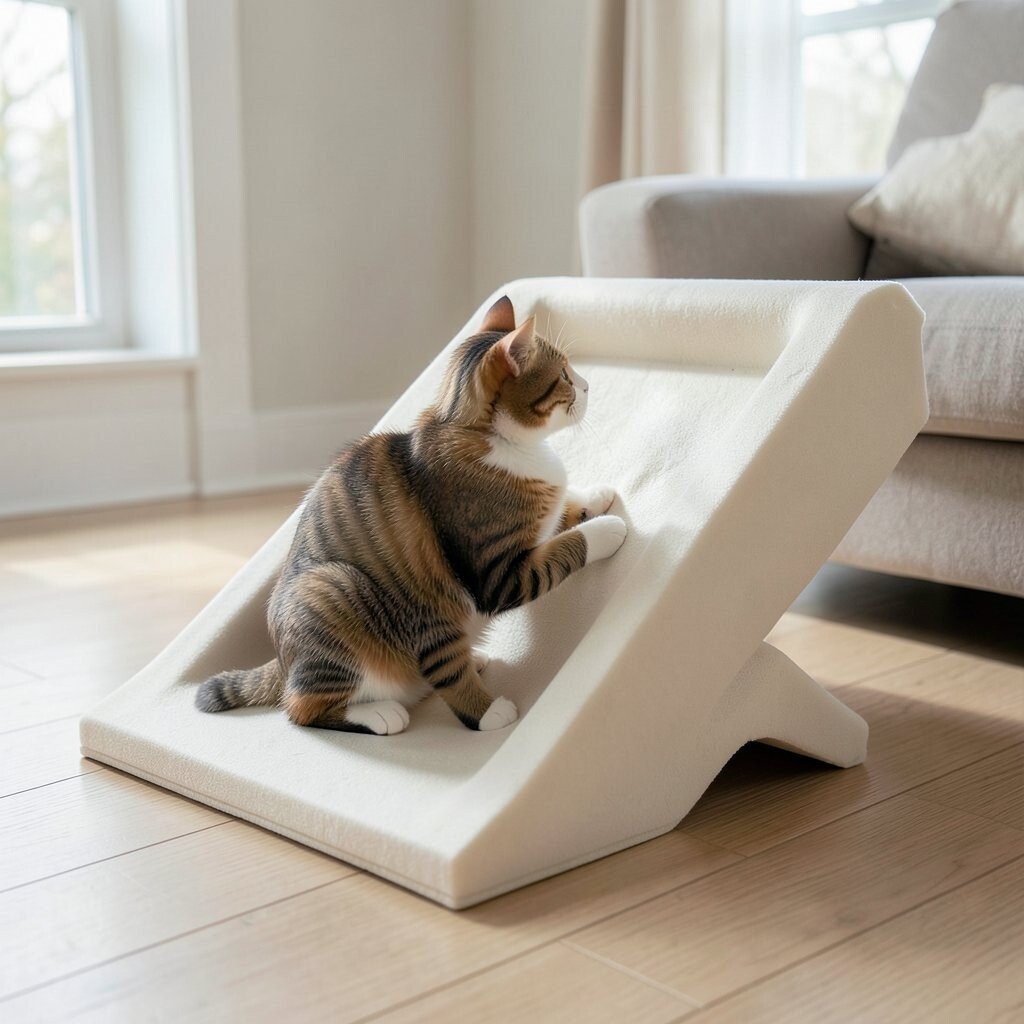
A foam ramp is light and easy to carry. You can picture a soft slope that you can move from room to room. With a non-slip cover, it can feel safer than smooth foam.
This idea is good for small pets and low jumps. It can help cats reach a favorite window seat or a couch without jumping. Tip: use a cover that is thick enough to grip and not slide, and place it on a flat surface.
Costs are often low. Foam ramps can also be a good starter option if you want to test your pet’s habits first. A current trend is simple at-home safety tools, and this fits that pattern well.
6. Wood Ramp With Side Rails
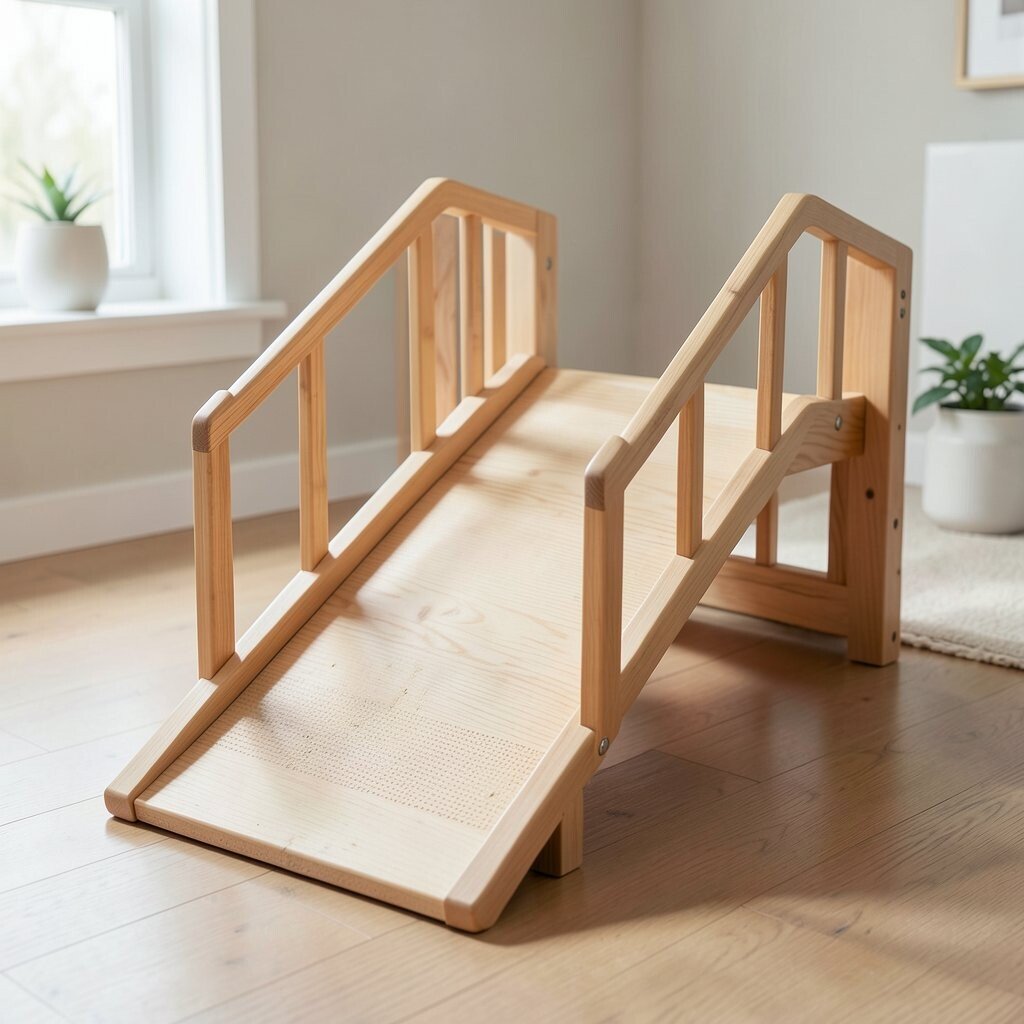
A wood ramp with side rails gives a clear guide for pets. Picture a smooth board with rails on both sides, like a small ramp bridge. The rails can help pets keep balance as they go up or down.
This ramp can work well for pets that need more support. The wood surface can be made safer with a grip strip. Tip: sand rough spots and add a textured top so paws do not slip.
Cost depends on how you source the wood. Buying wood and making one can be cheaper than a full pet ramp. Many people like this style because it can match home decor and last for years.
7. Portable Rubber Mat Ramp
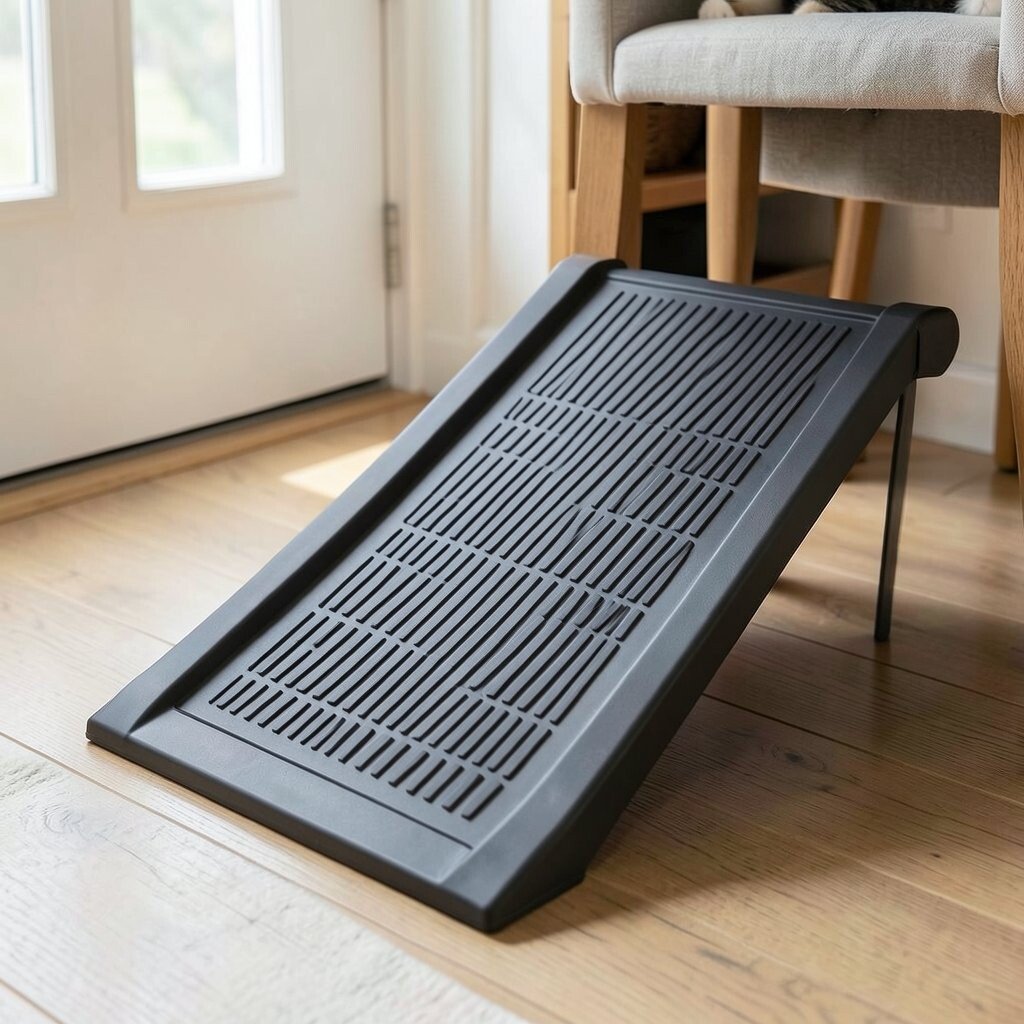
A rubber mat ramp uses durable rubber and can roll or fold. You can picture a thick rubber piece with tread lines for grip. It is easy to store under a chair or in a closet.
The benefit is that rubber grips well and can handle daily use. It is also helpful for pets that scuff at smooth surfaces. Tip: use it only on stable floors and make sure the mat edges are not curled when your pet goes up.
Cost is often mid range, and you can find many sizes. This idea is in step with the trend for practical home safety items. To personalize, you can choose a color that matches your entry area.
8. Livestock-Style Ramp Board for Back Steps
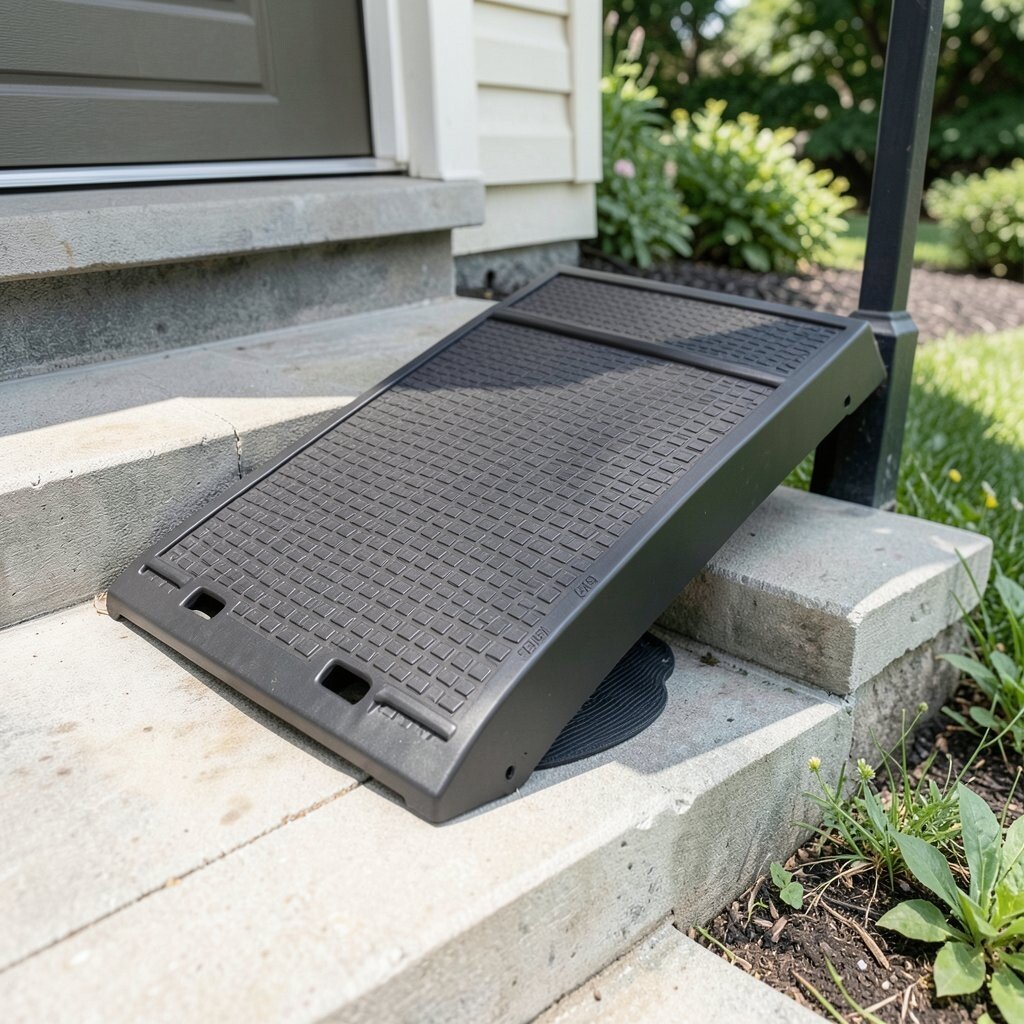
A livestock-style ramp board is made for trucks, steps, or heavier use. Picture a sturdy board with a textured top that can handle weight. Some versions also have holes or strong edges for secure placement.
This is a good pick for larger pets or for outdoor use. It can help your dog get in and out of a car or over a small back step. Tip: use anti-slip pads under the feet and avoid wet ground when possible.
Costs can be mid to high, but it can last a long time. A unique angle here is that this style is built for heavy movement, so it feels solid. If you like DIY, you can add a comfort strip on top for paw ease.
9. Curved Modular Ramp for Bent Spaces
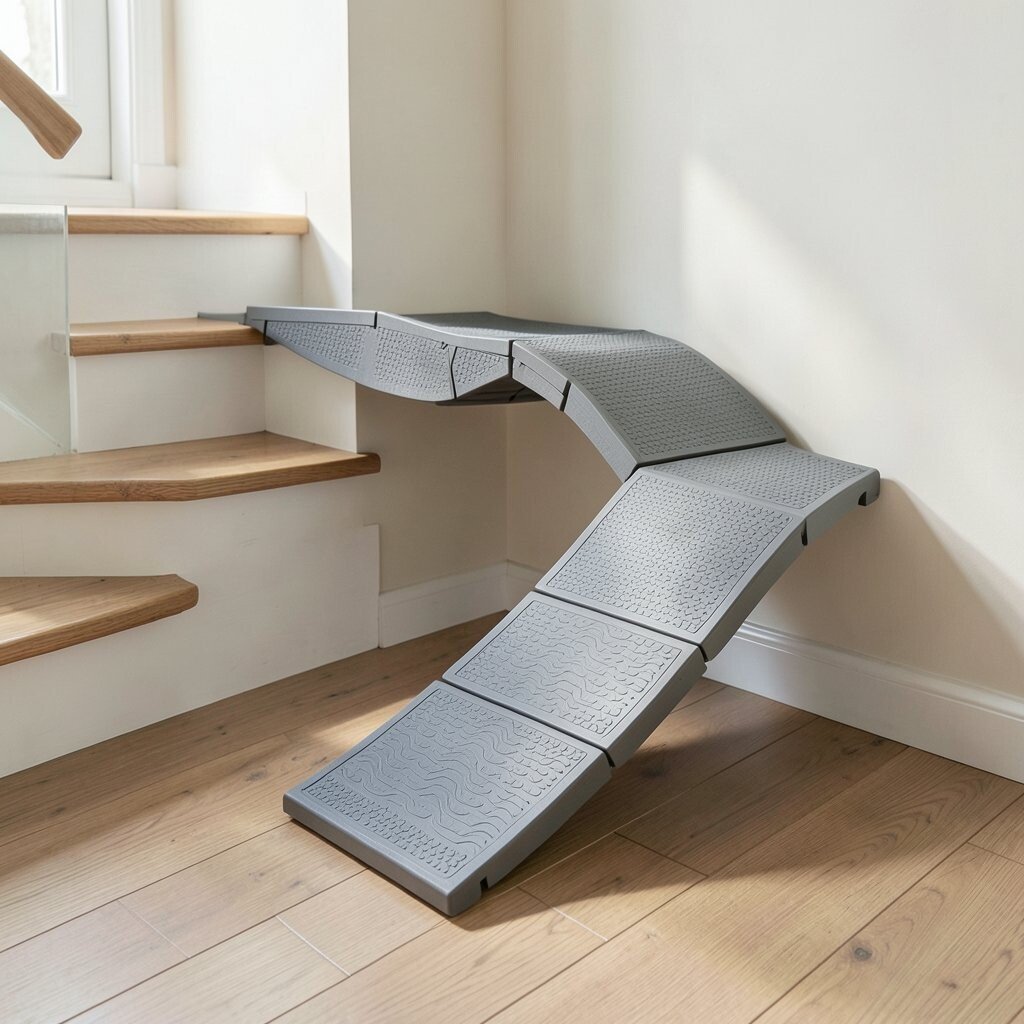
A curved modular ramp uses pieces that connect to make a bend. You can picture a ramp that wraps around a corner near stairs or a hallway. This helps when you do not have a straight space to place a simple ramp.
The benefit is better fit in tight layouts. It can reduce how much you need to move furniture. Tip: plan the path in your home, then test how each piece lines up before your pet uses it.
Cost can be higher because modular ramps may need more parts. Still, the unique look can help the ramp blend into your space. This style is also growing because more homes have small hallways and odd angles.
10. DIY Rolling Ramp With Locking Casters
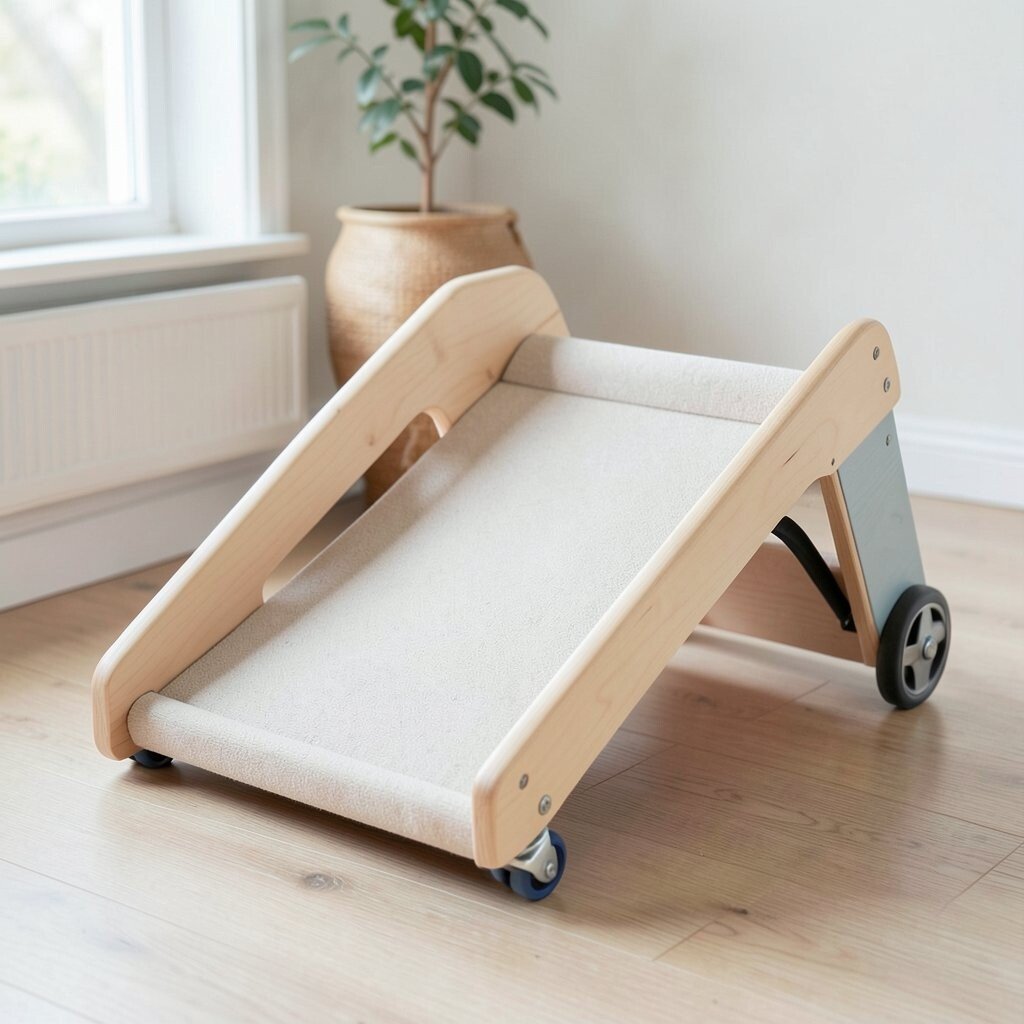
A rolling ramp uses wheels with brakes so you can move it when needed. You can picture a ramp on casters that rolls out for use and locks in place. This is helpful if you need ramps in more than one room.
The benefit is easy handling for you. It also helps you set the ramp quickly before your pet loses patience. Tip: choose wheels with strong locks and keep the ramp on a flat floor so it does not wobble.
Cost depends on the materials, but DIY can be mid range. A trend with pet care is making simple home fixes instead of buying lots of gadgets. For personalization, add a handle so you can guide the ramp with less effort.
11. Stair-to-Ramp Conversion With Safety Landing
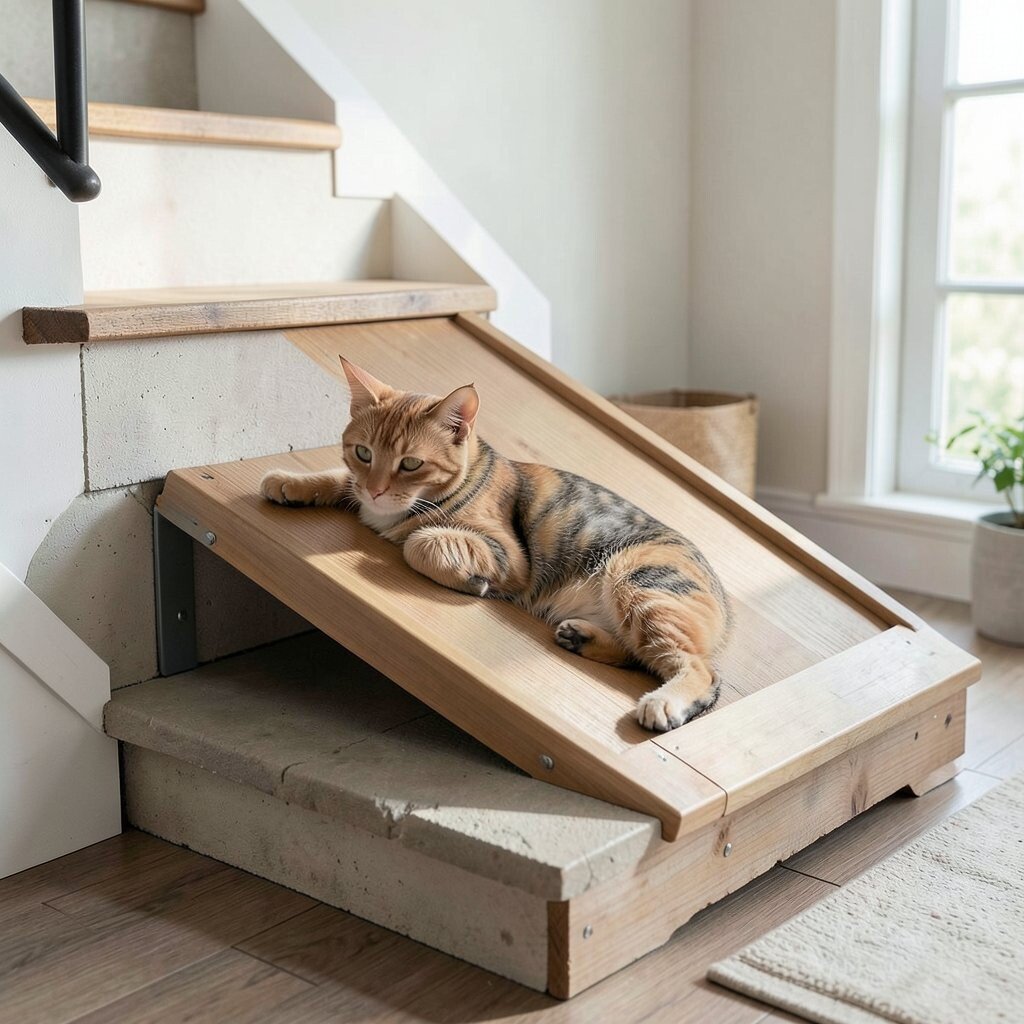
A stair-to-ramp conversion uses a ramp path plus a small landing area. You can picture a ramp that starts at a step and then has a flat zone where the pet can pause. This can help pets feel more steady as they move.
This plan works well when you need access from one height to another. The landing also helps with turns and changes in direction. Tip: measure your available space and make sure the landing is big enough for your pet to stop safely.
Costs can be higher due to build work, but it can last for a long time. The uniqueness is the pause area, which many simple ramps do not have. This is also a growing idea as more people plan pet-friendly home layouts over time.
12. Targeted Ramp for One Favorite Spot
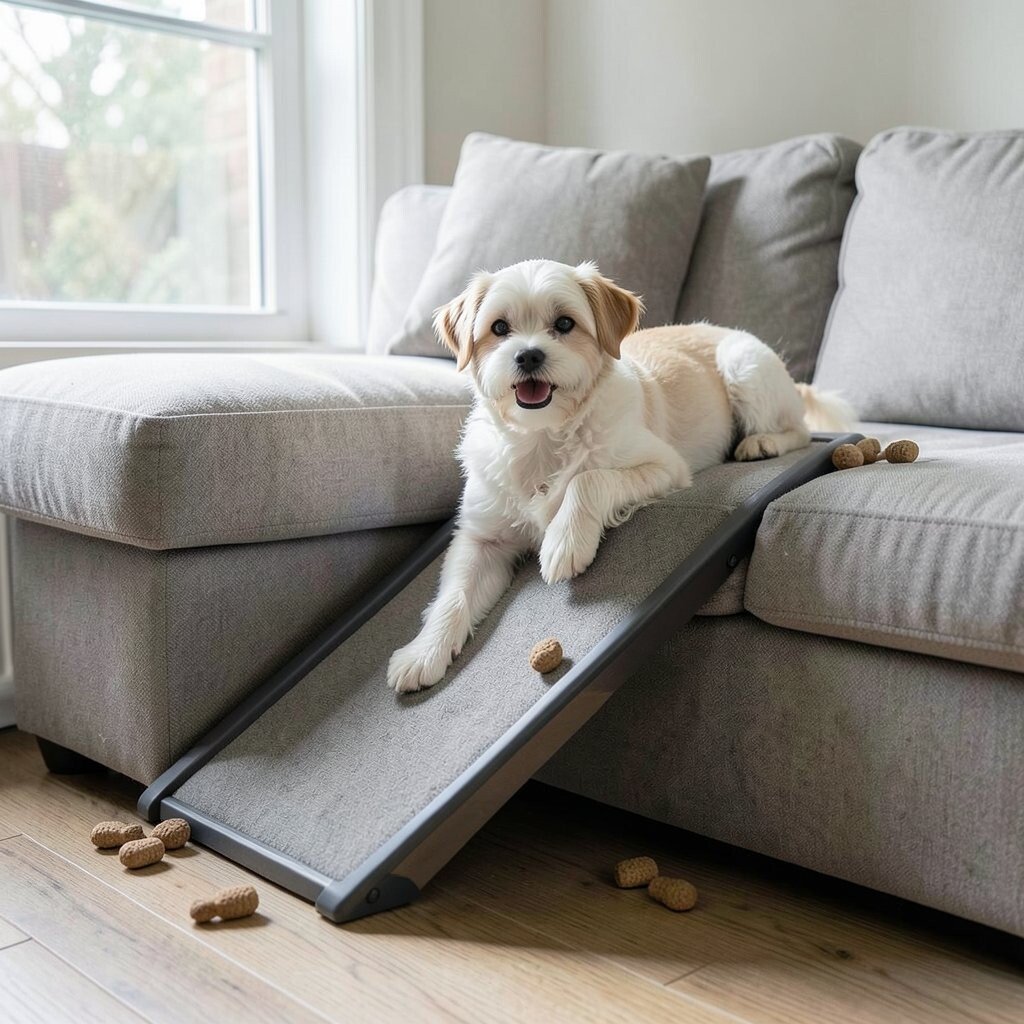
This idea is about using a ramp for one key place your pet already loves. You can picture a ramp set up just for a favorite couch, a bed edge, or a window ledge. Instead of covering every spot, you focus on the one that matters most.
The benefit is you build better habits with less trial and error. Your pet learns one clear route, and you can keep it consistent. Tip: place treats near the top and bottom, and use the same spot each day so your pet knows what to do.
Cost can be low because you only need a small ramp. Personalization is easy here since you can match the ramp to that one surface. A trend you may see is people setting up “pet zones” in their homes, and this fits that idea well.