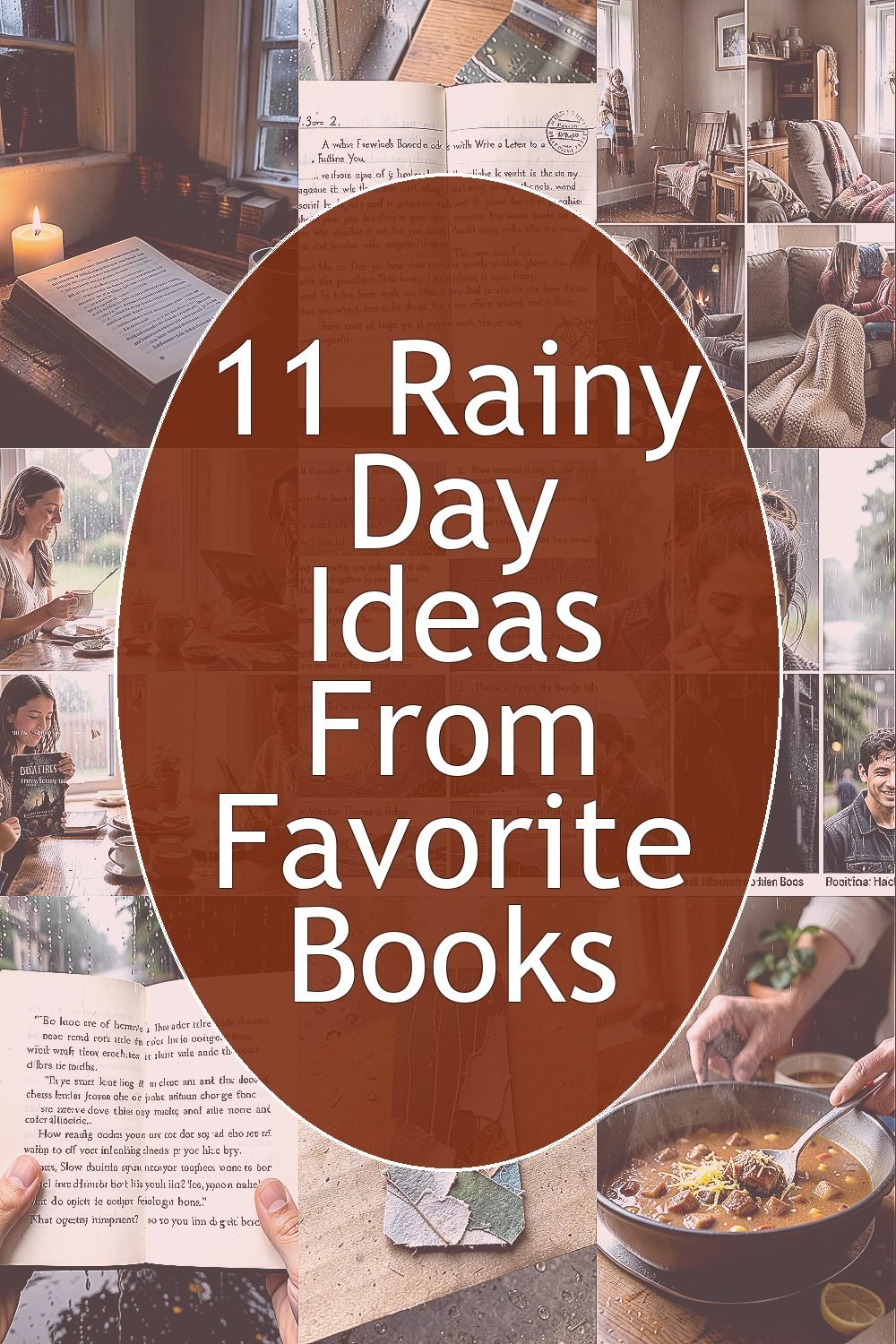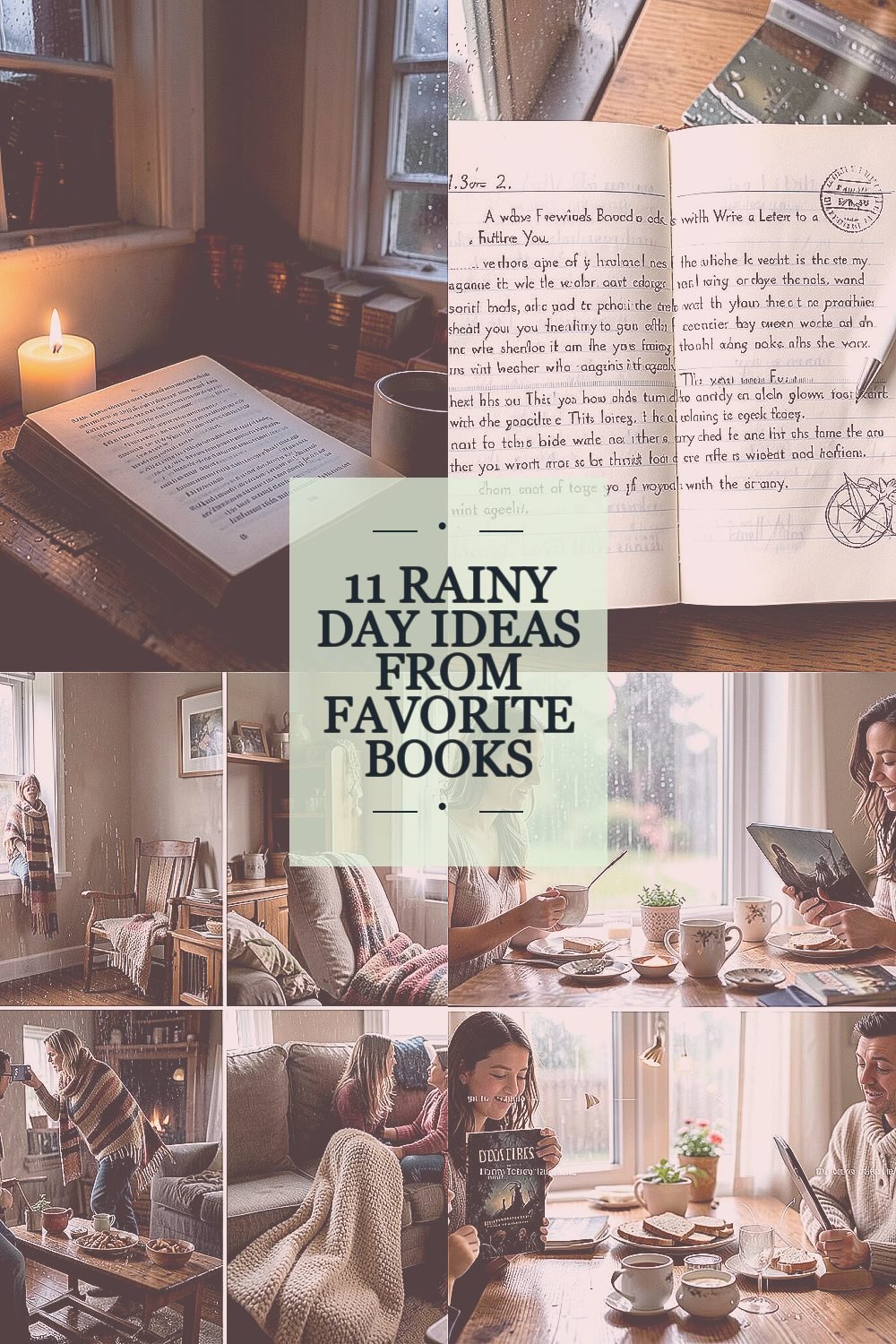
The rain can feel cozy, even a little magical. Here are rainy-day ideas pulled from the kinds of stories that make you want to turn the page again.
1. Make a Candlelit Chapter Nook

Pick a corner of your home and turn it into a tiny story space. Dim the lights, set a candle or battery tea light near a book, and let the room glow like an old library after hours.
Choose one chapter to read slowly, then write a few lines about what you notice in the mood. Keep a mug of something warm beside you, because comfort helps your brain settle in, and reading on rainy days often feels extra vivid. If you like cozy trends, this fits right in with the current love for “soft life” evenings, where small rituals feel meaningful.
2. Write a Letter to a Future You

Open a notebook and copy the date at the top like a page from a diary. Write to a version of yourself who will someday read it when the weather is bright again.
Describe what you can hear outside, what smell hangs in the air, and what you want to practice next week. This builds focus, and it can help you turn gloomy weather into a gentle goal-setting moment without any pressure. For cost, grab any paper and pen you already have, and if you want it fancier, decorate the envelope with a stamp or a simple doodle.
3. Recreate a Scene With Household Props

Take one memorable scene from a book and act it out using items you already own. A striped scarf becomes a character’s cape, a kitchen chair becomes a cabin seat, and blankets can turn your living room into a dramatic stage.
When you rehearse, pay attention to the visual details the author used, like weather, lighting, and body language. This helps with creativity, and it also makes rainy days feel less stuck and more playful. To personalize, swap roles so you’re not only acting, but also directing the “camera” by moving your phone to different angles for fun photos.
Keep it low-cost by using what’s around you instead of buying costumes. If you’re into current maker culture, short “story reenactments” are popular on social media, and you can do the same thing privately for yourself without posting at all.
4. Host a Tea and Toasty-Tales Swap

Choose three short stories or excerpts you love and trade them with a friend or family member. Set a table with mugs, a plate of toast or crackers, and a rain soundtrack from a video or open window.
Each person reads a small part aloud, then tells what details stood out. It’s a sweet social benefit, and it turns a rainy afternoon into something warm and shared. If you want it to feel unique, pick books that have different vibes, like one whimsical, one spooky, and one cozy, so the room feels like a mini festival.
5. Build a “Weather Timeline” in Your Journal

Write about the day in small beats, like a story timeline that begins with morning and ends with evening. Notice how the rain changes, whether it taps softly or pours hard, and connect that shift to your mood.
Use one sentence per moment, and try to keep it clear and bright even when the sky feels gray. This helps you process feelings in a gentle way, and journaling on rainy days can make your thoughts feel organized and lighter. If you want a modern twist, many people now use mood trackers, and you can borrow that idea by rating the day with quick words like “calm,” “restless,” or “cozy.”
To keep costs low, reuse old notebooks or print free journal pages online. Personalize it by choosing a theme like astronomy, seaside storms, or city rain, then write comparisons that match the theme’s vibe.
6. Make a Character Playlist From Rain Sounds

Pick a favorite character and write down the feelings you associate with them. Then build a playlist using rain ambience, soft instrumentals, and one or two songs that match their personality.
When you listen, imagine the scene on repeat and let the music guide how you picture the story. This is a fun way to study atmosphere, and it can also improve focus because your mind has a soundtrack to hold onto.
For a practical plan, test five tracks and decide which ones make you feel calm, brave, or reflective. If you’re into current trends, themed soundtracks for reading are popular, and you can copy that idea by labeling playlists by emotion rather than genre, which makes it feel more personal.
7. Try a “Slow Reading” Challenge With One Page

Pick a single page and read it like you’re watching a movie. Pause at each vivid sentence, then picture the setting and notice the way the author builds rhythm.
After the page, write what the weather “does” in the story, like whether it hides secrets or softens tension. Slow reading benefits your comprehension, and it also makes the words feel closer, almost like the book is talking to you. Personalize the method by choosing your own lens, such as “How does sound show up?” or “What objects feel important?” so you don’t get bored.
8. Turn a Bookmark Into a Tiny Art Project

Use a scrap of cardboard or thick paper and make it into a bookmark with the book’s theme in mind. Cut a simple shape, then decorate it with rainy-day colors like deep blue, silver gray, or soft green.
Glue on scraps like old paper pieces, fabric bits, or even dried leaf textures from earlier seasons. This kind of hands-on craft is great for stress relief, and it gives you something useful that also looks unique when you return to reading.
If you want practical tips, keep a small “craft kit” in a drawer so you can grab it during storms. For cost considerations, you can recycle packaging and old magazines, and you can use a glue stick instead of expensive tools.
9. Cook or Bake a Page-Perfect Snack

Choose a comfort scene from a book where food plays a role, then make a snack inspired by that mood. Maybe it’s soup when characters feel safe, or cinnamon sweets when the story feels hopeful.
Follow a basic recipe you already trust, but match the flavor to the feeling you remember. Cooking on rainy days gives you a benefit that’s more than taste, since your home smells warm and your body gets a calm routine. To personalize, change one detail, like adding grated lemon zest or using a different topping, so it’s truly yours.
10. Create a Mini Map of Your Story’s World

Draw a simple map of the story’s setting using paper and a pencil. Mark the places you care about most, like a home, a forest edge, a train station, or a quiet room where secrets happen.
Add notes in your own words about what each place feels like during rain. This turns reading into play, and it strengthens memory because your brain stores story events as locations. If you enjoy current trends, world-building sheets and “fan map” posts are common, and you can keep it casual by using only three to five spots so the map stays fun, not stressful.
Keep costs down by using printer paper, markers you already own, or even watercolor from a budget set. Personalize it by drawing icons instead of sentences, like a teacup for warmth or a cloud for uncertainty.
11. Host a “Re-read the Best Line” Round

Grab a book, flip to the middle, and pick one line you love. Read it out loud, then pause and explain why it hits you, using simple words that feel honest.
Do this with a few more lines, and you’ll notice how rainy weather makes some sentences feel extra tender. The benefit is that you build deeper meaning without needing a full study session, and rereading also helps you feel steady. To make it unique, choose a theme for the day like courage, kindness, or humor, and only pick lines that match that mood.
12. Write an Alternate Ending Using the Rain

Turn off autopilot and rewrite one scene’s ending, letting the rain change the outcome. Give the characters a new choice, then show how a storm helps them understand something they missed.
Use sensory details you can see right now, like puddles reflecting streetlights or window glass blurring distant shapes. This practice boosts creativity and can be surprisingly grounding, because you’re giving your imagination a safe job to do. For practical personalization, set a time limit, like a short writing sprint, and keep the plan flexible so you don’t feel trapped if your new ending takes a different path.
If you want a cost-friendly approach, write by hand on one page and then keep it in a folder for later rereads. Current trends in “fanfiction” and creative prompts can make this feel less intimidating, but you can keep it private and still enjoy the joy of making your own rain story.