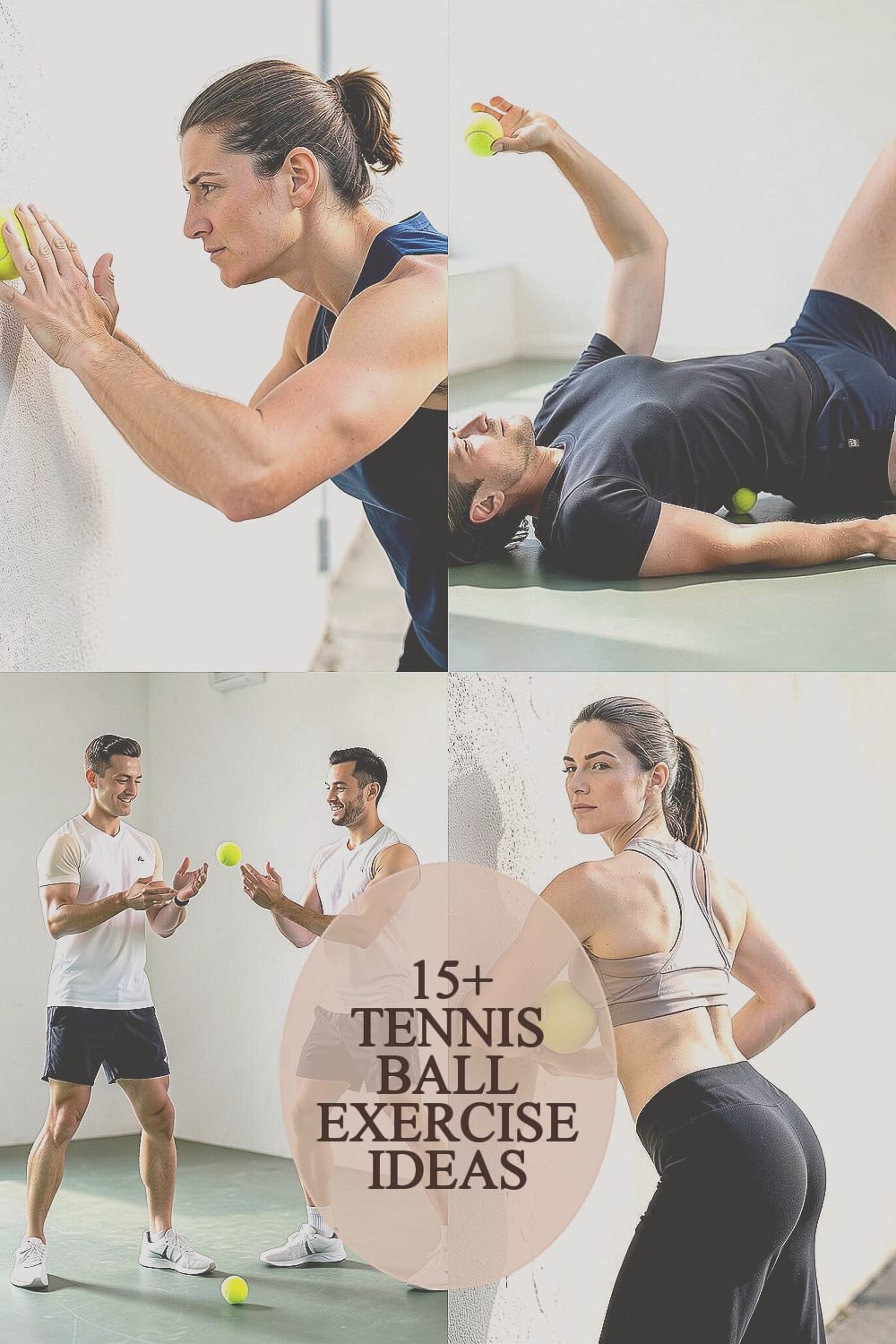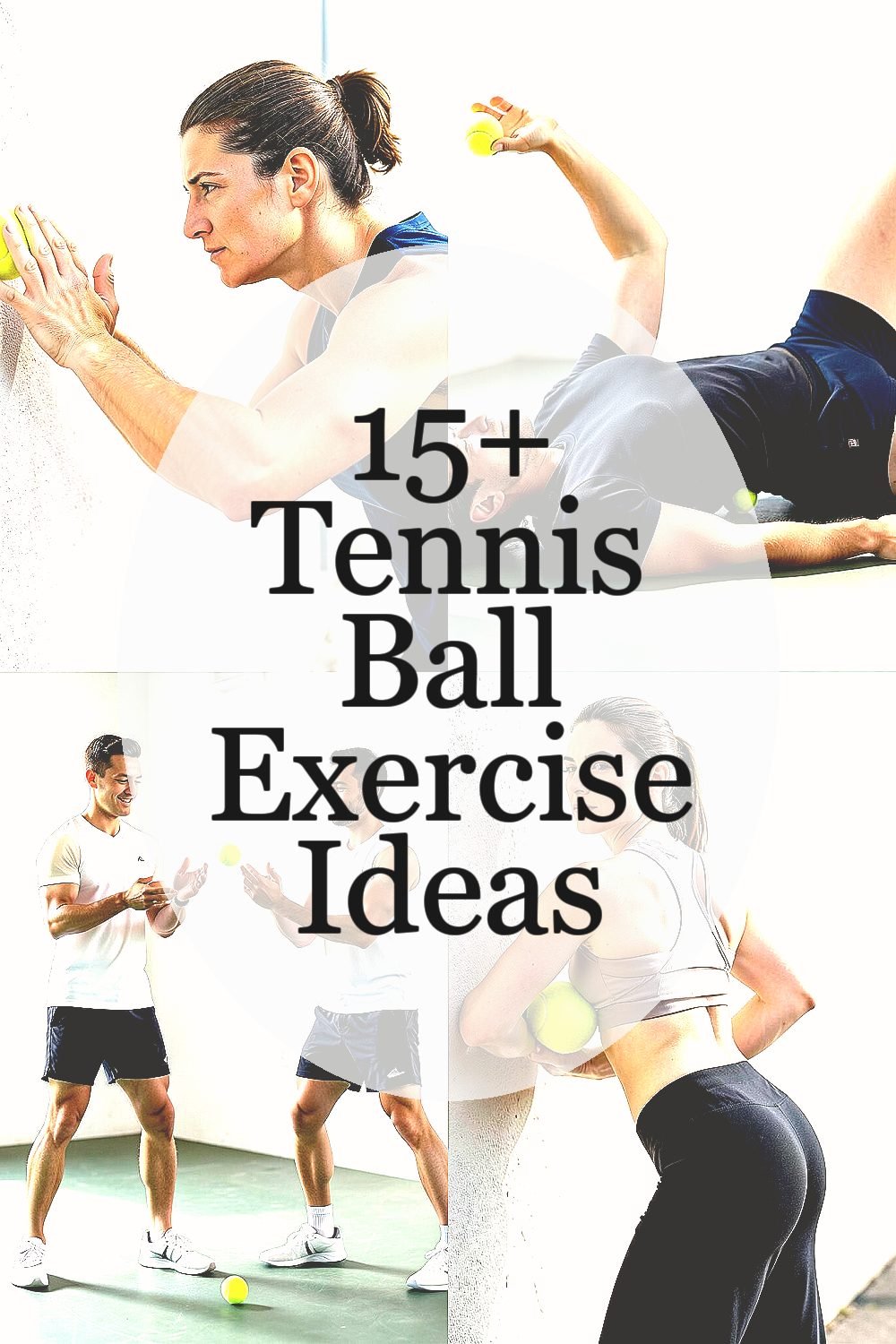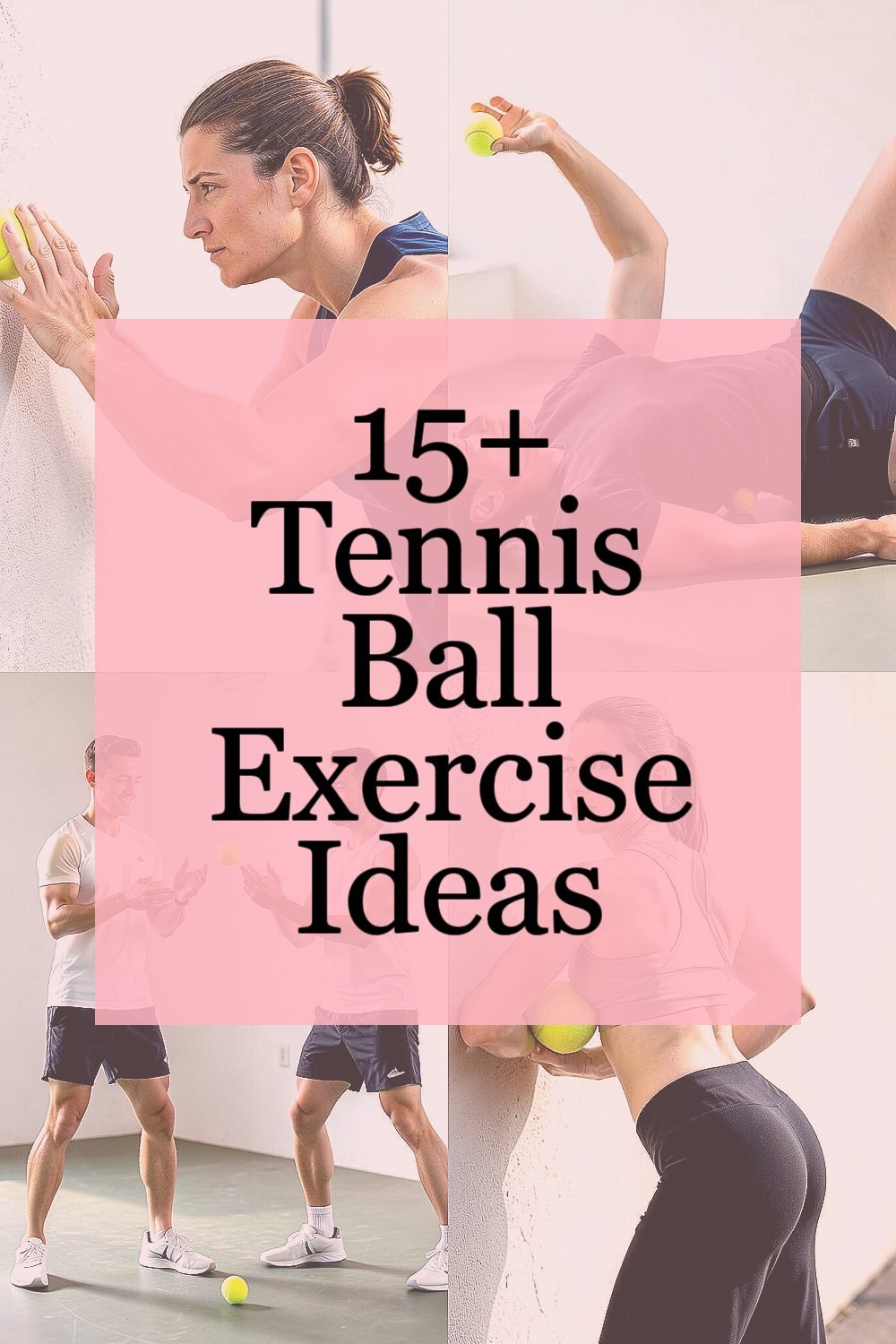
That small yellow ball can do a lot more than you think. With a little creativity, it turns into a handy fitness tool for strength, balance, and recovery.
Whether you use it at home, in a hallway, or in a small park, it stays light, cheap, and easy to carry. You will soon notice how quickly it improves your control and comfort as you move.
1. Wall Tennis Ball Pushes For Upper-Body Control
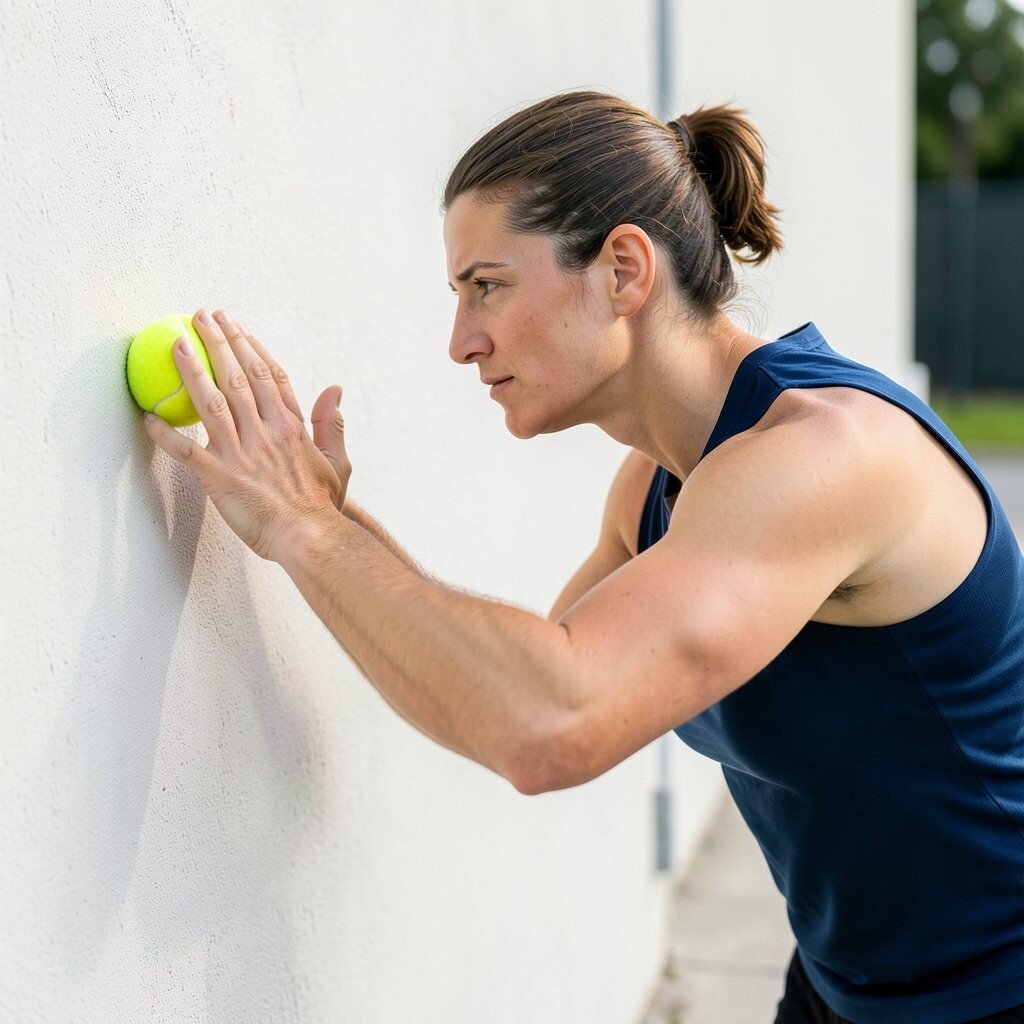
Stand an arm’s length from a wall and press a tennis ball against it with your palm. Lean in until you feel steady pressure, then push the ball slightly and return to neutral.
Do this for smooth reps, keeping your elbow in line and your shoulder relaxed. You should notice your chest and arm working without needing heavy weights, and your movement will feel more precise. For added comfort, try different ball positions on the wall to match your tight spots.
2. Floor Ball Press And Reach For Core Strength
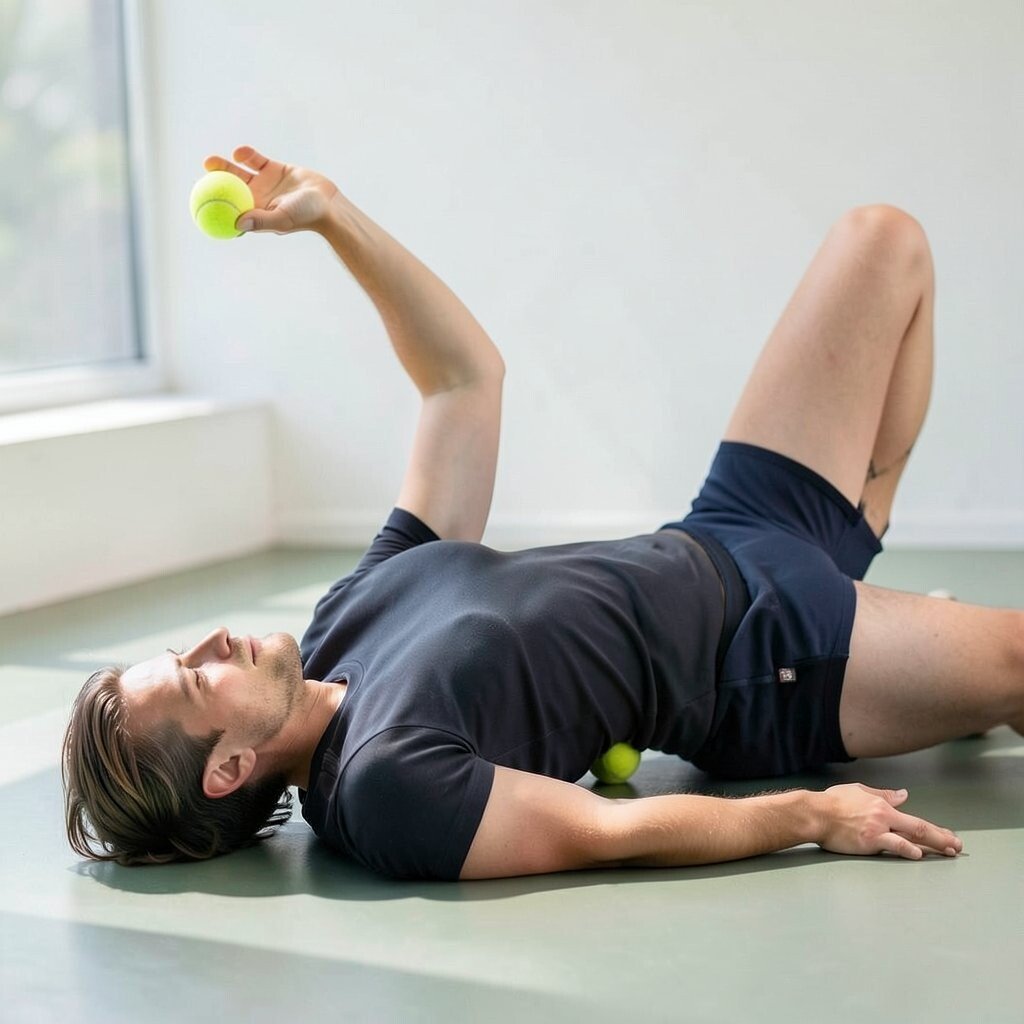
Lie on your back with the tennis ball under your lower back area, then breathe in and tighten your belly gently. When you exhale, reach one arm overhead slowly, staying controlled and not arching your spine.
Switch sides and keep the ball pressed so your core must work to stabilize you. This helps your trunk learn better control, which supports safer lifting and everyday movement. If you feel pinching, move the ball slightly higher or lower until the pressure feels supportive.
For personalization, choose a spot that feels like a helpful “pressure point” rather than sharp discomfort. A simple way to progress is to lengthen the reach by an inch each week or pause for a second at the end range. Keep the ball where it stays steady so your form stays clean.
3. Partner Toss For Quick Reactions And Coordination
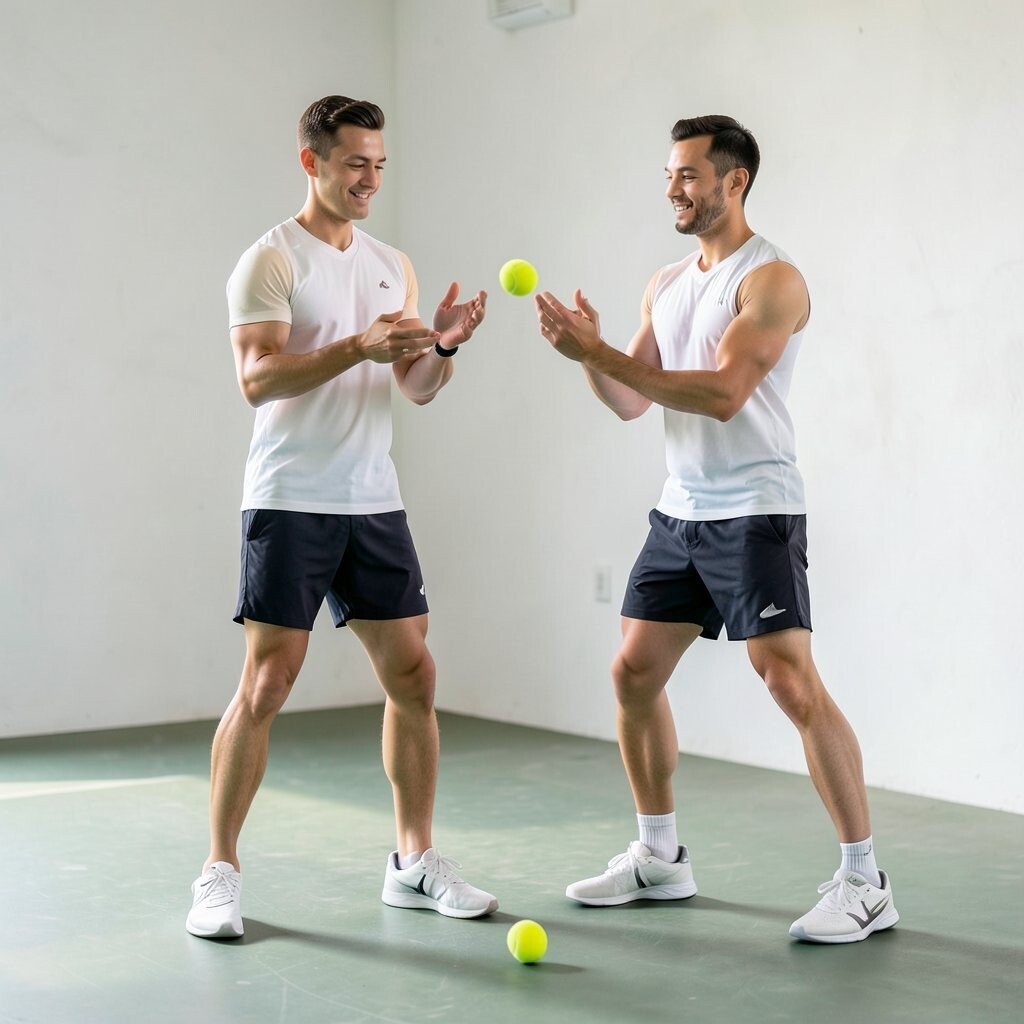
Stand a few steps apart with a partner and toss a tennis ball gently at chest height. Catch it with soft hands, then toss it back while you stay tall and ready.
Speed up gradually by making the tosses shorter and faster, or slow down when your aim needs work. This improves reaction time, hand-eye coordination, and shoulder comfort through light, repeatable motion. Try aiming at slightly different heights to keep your brain guessing and your body attentive.
If you train alone, bounce the ball on the ground and catch it as it rises. You can also throw against a wall and track how the ball returns to you. The cost stays tiny because a few balls can handle tons of reps, and the setup can fit almost any space.
4. Tennis Ball Glute Squeeze Against A Wall
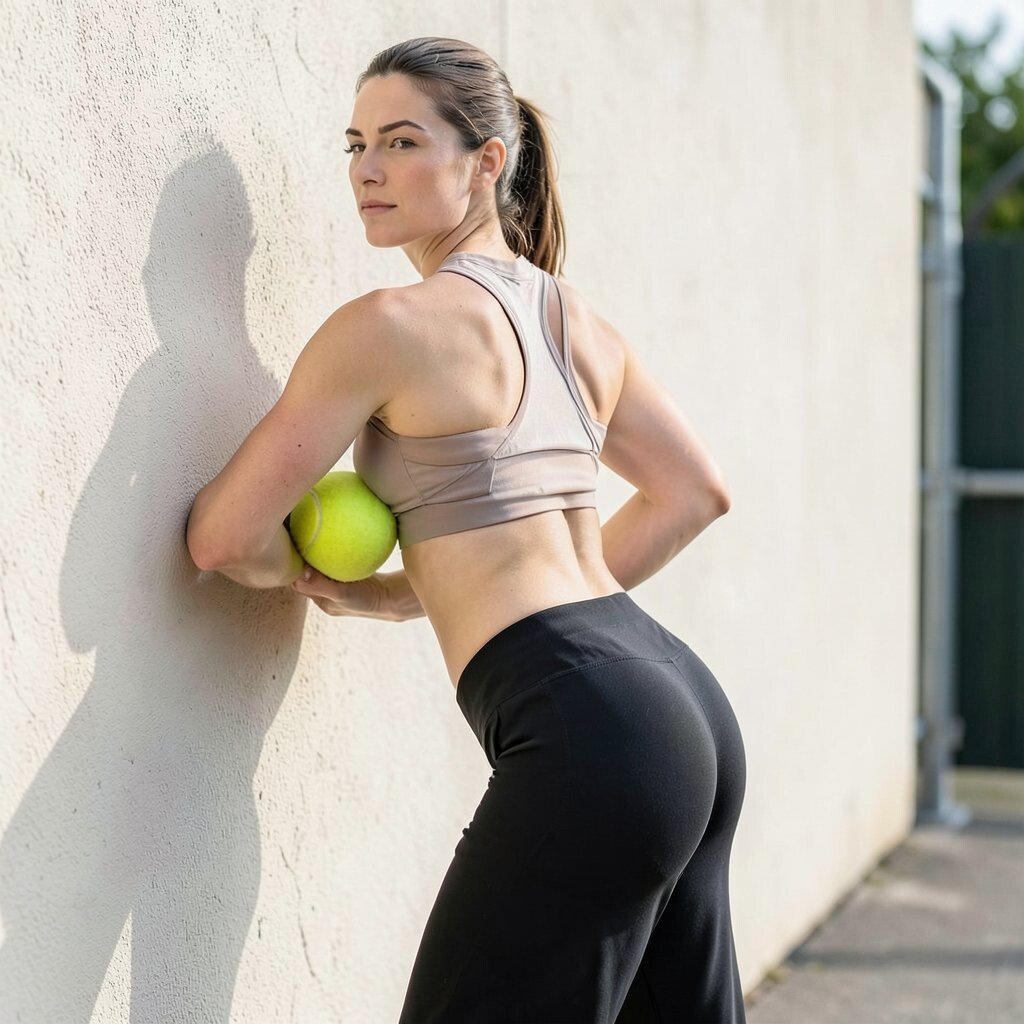
Place a tennis ball between your lower back and a wall, then step back until it supports your glutes. Press your body gently into the ball as if you are trying to “lift” your hips, then relax and repeat.
Keep your breathing steady and move slowly, so you feel deep muscle work rather than wobbling. This can help with hip comfort, posture, and everyday stability when you stand, walk, or climb stairs. For a unique twist, angle your hips slightly left or right to target different parts of the glute.
5. Seated Calf Press For Ankle Mobility
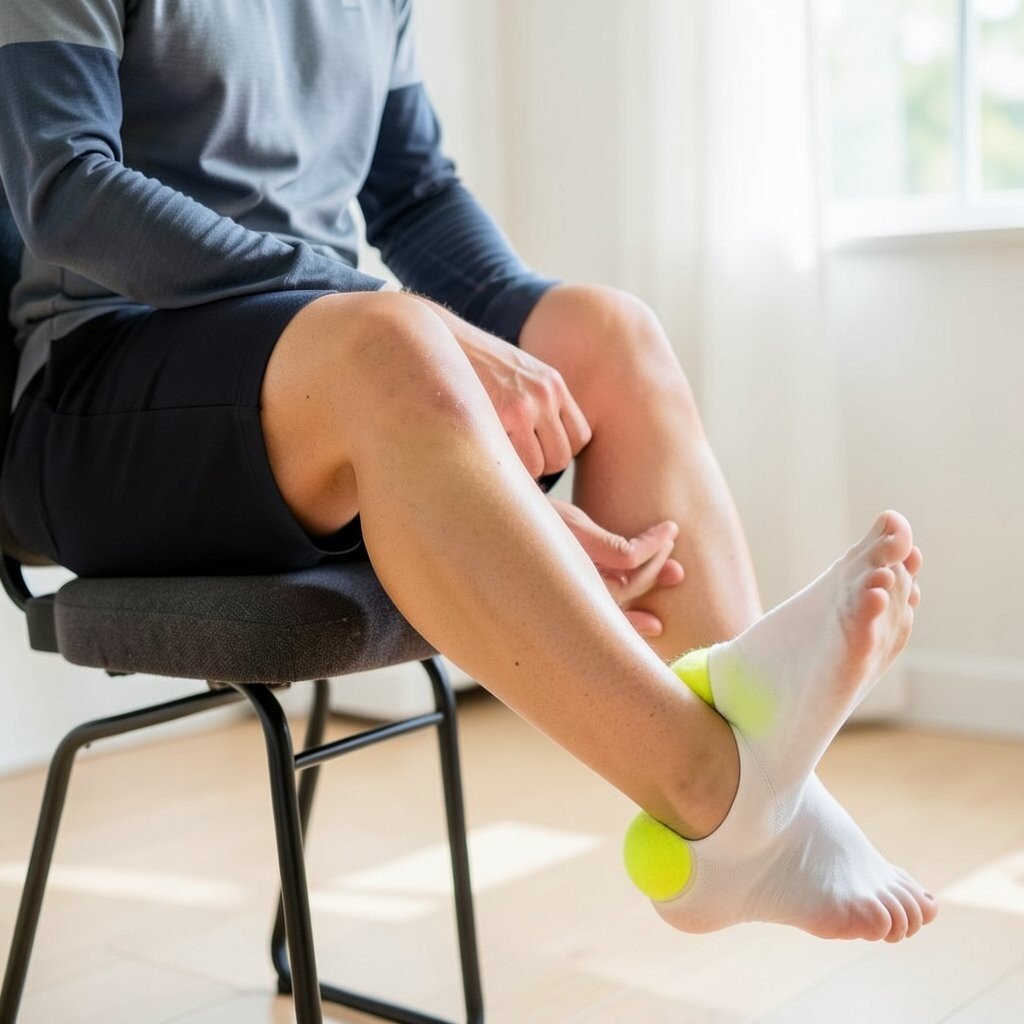
Sit on a chair and place the tennis ball under your calf muscle. Roll it slowly by adjusting your foot position, like you are massaging while keeping your balance supported.
Then do a few controlled ankle raises while the ball stays under the calf. You will feel your ankle and lower leg get more comfortable, which can help with better stride and less stiffness. If you have sensitive areas, use lighter pressure and move the ball in smaller circles.
To personalize, switch between inner and outer calf placement so both sides get attention. This fits current trends toward “mobility plus recovery,” because it blends movement with soft-tissue care. It also stays low-cost since a single ball can cover many sessions.
6. Single-Leg Balance With Ball Reach
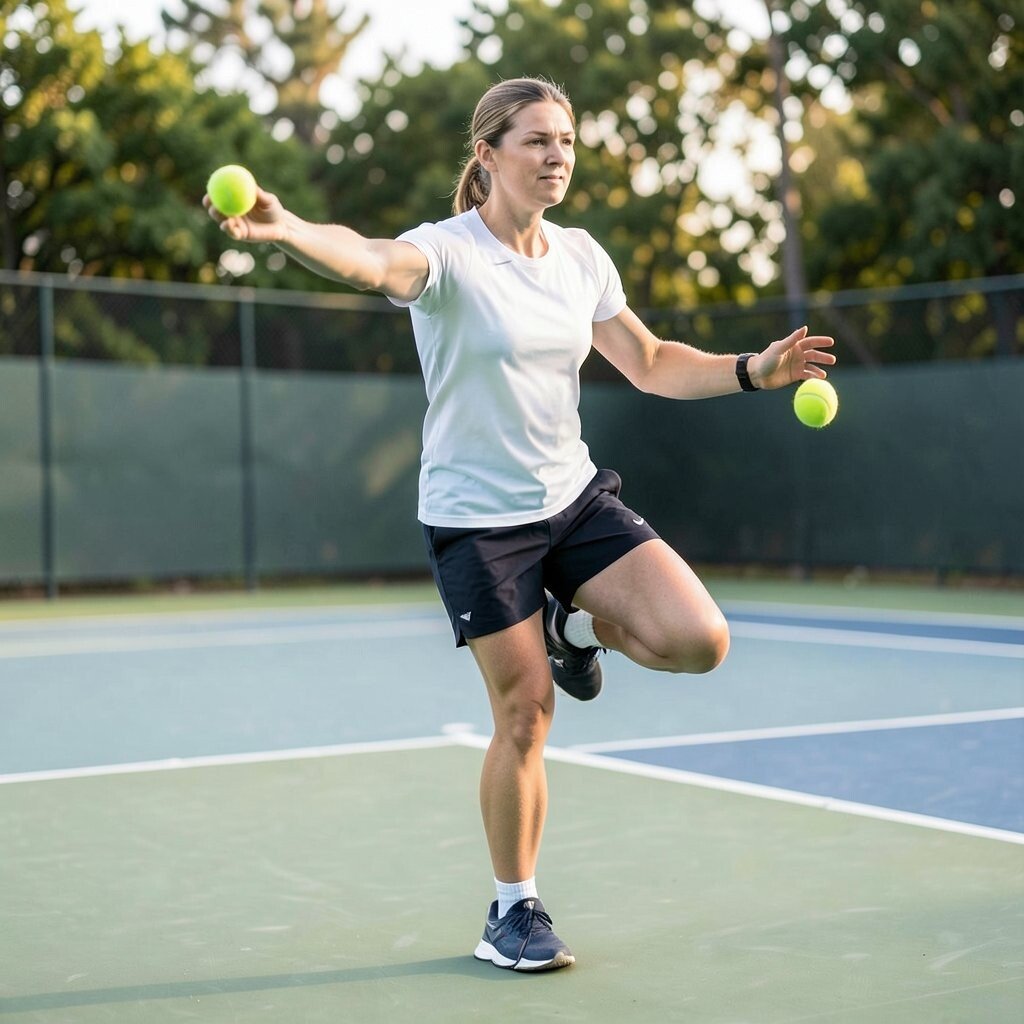
Stand on one leg and hold a tennis ball in the same hand as your balance side. Reach the ball forward or slightly to the side while you keep your hips level and your foot planted.
Return to standing and repeat with controlled, quiet footwork. This strengthens stabilizer muscles and improves balance, which shows up in sports and in safer daily movement. If you wobble, shorten your reach and focus on slow control rather than distance.
7. Tennis Ball Hamstring Scoots On The Floor
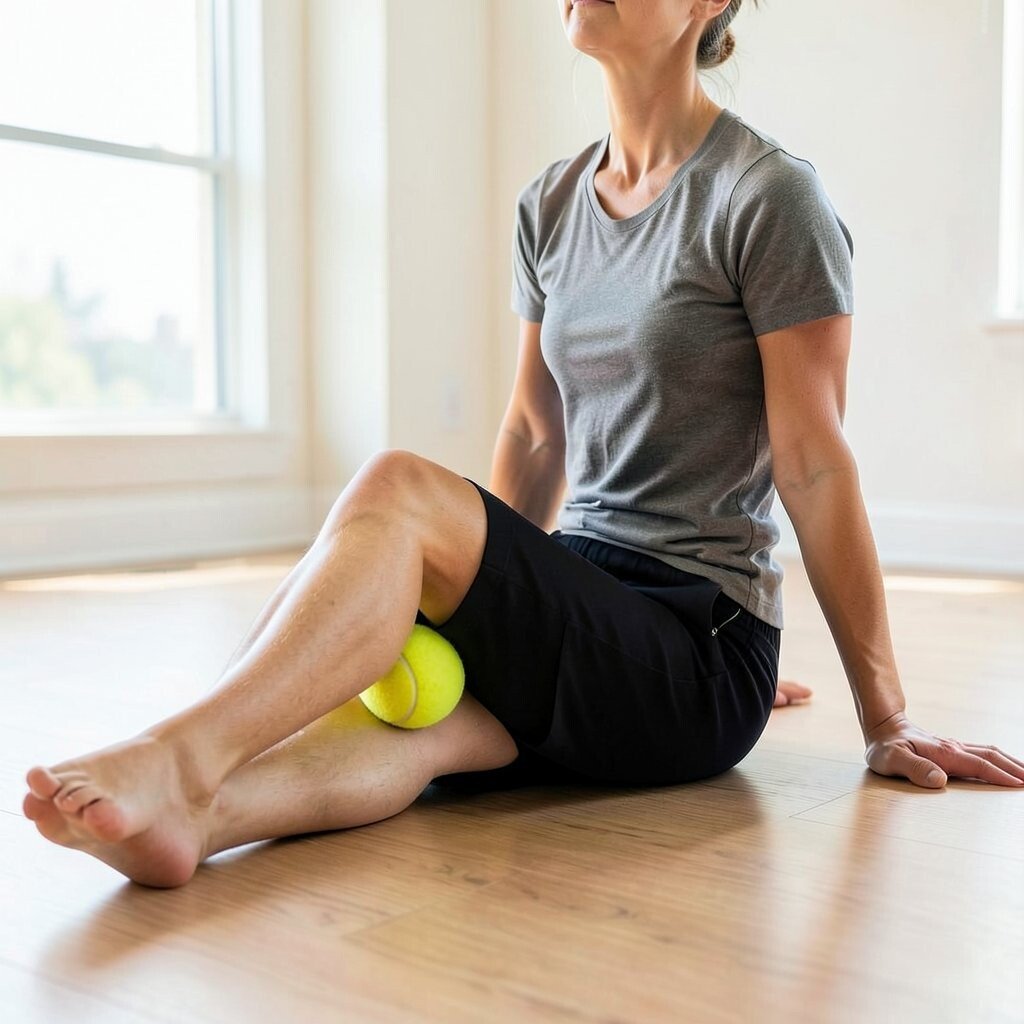
Sit on the floor with your legs out, then place a tennis ball under one hamstring near the back of your thigh. Use your hands behind you for support and gently scoot your body so the ball glides under the muscle.
Keep the pressure comfortable and move a small distance at first, then slightly expand your range if it feels good. This can improve how your hamstrings feel and help you move with less tightness. Pair it with slow forward folds to make the warm-up feel more complete.
For personalization, try rolling with your knee bent a little, then with it more straight to change the angle. Many people find this type of mobility work fits nicely into pre-workout routines. Since the ball is cheap, you can repeat it often without stress.
8. Wall-Supported Ball Overhead Holds For Shoulder Stability
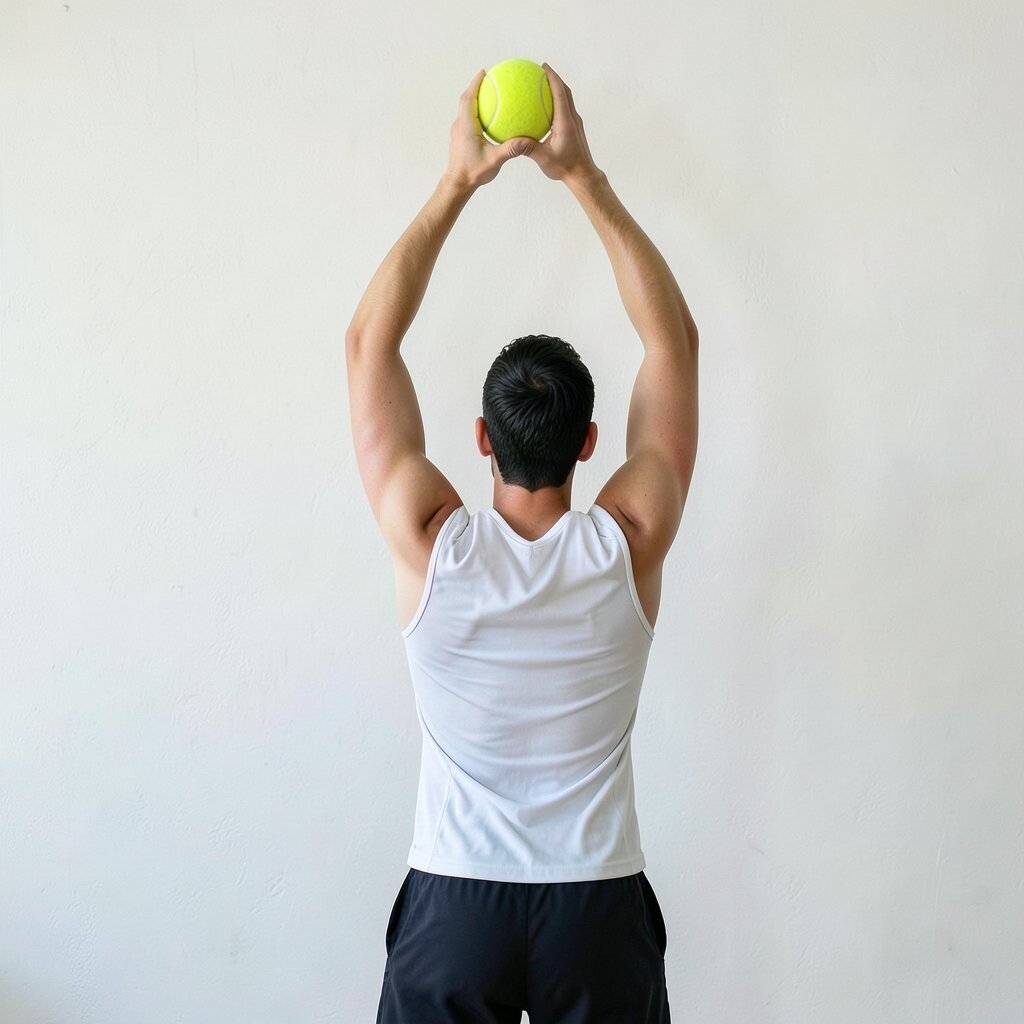
Stand with your back to a wall and hold a tennis ball overhead with your hands lightly supporting it. Press upward gently and hold for a moment, keeping your ribs from flaring.
Lower the ball slowly and repeat while you maintain a tall posture. This helps shoulder stability and teaches your body to control overhead movement without strain. To customize, widen or narrow your grip so you can feel where you need more support.
9. Doorway Chest Squeeze For Fast Posture Reset
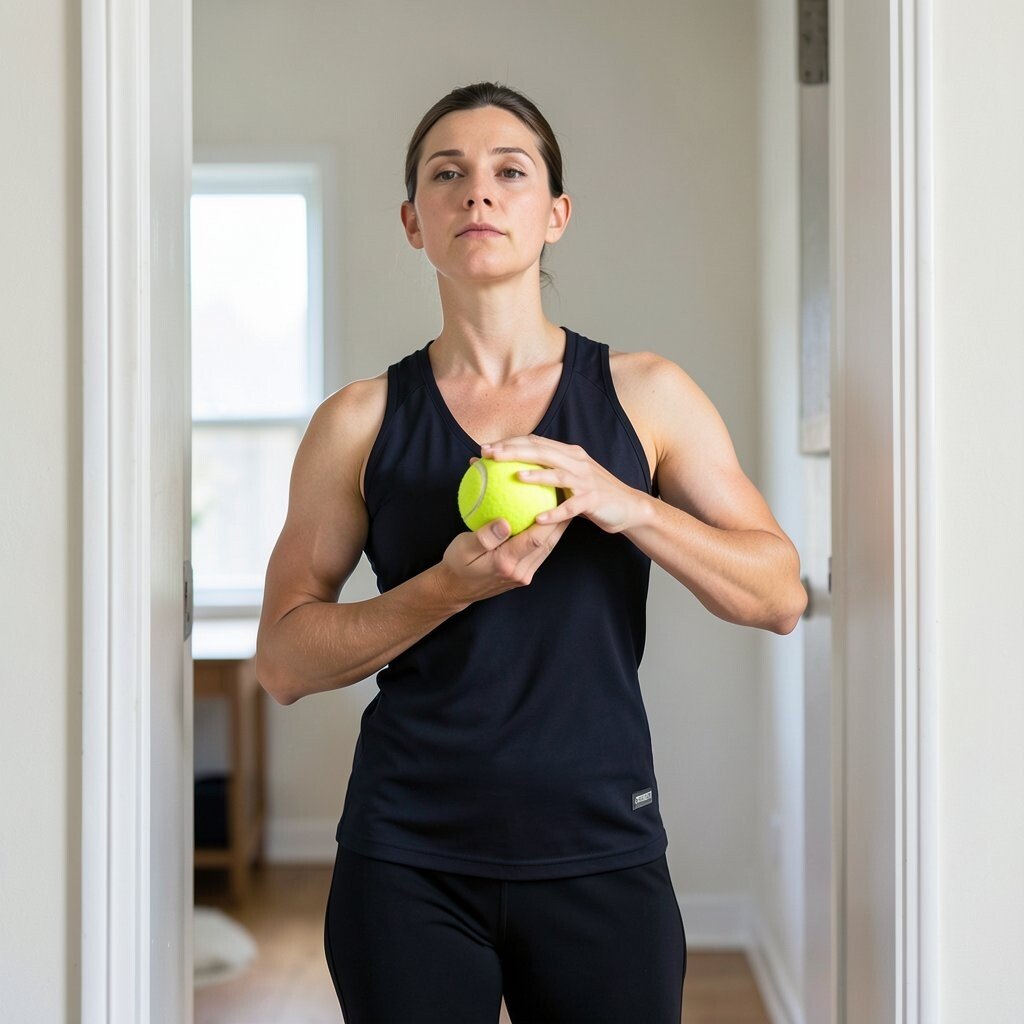
Place a tennis ball between your chest and a doorframe, then step through slightly so you feel gentle pressure. Turn your shoulders a bit to find the most comfortable stretch, and hold your posture tall.
Take slow breaths while you keep your neck long and shoulders relaxed away from your ears. Many people feel immediate relief because this encourages better chest opening and upper-back awareness. For practical tips, keep your movement small so you can maintain control instead of forcing the stretch.
Trend-wise, posture resets that mix mobility with breath are becoming popular because they are quick and easy between tasks. If you work at a desk, this can become your “reset moment” whenever you notice stiffness. The cost stays near zero compared with bigger equipment.
10. Ball Between Knees Hip Activation March
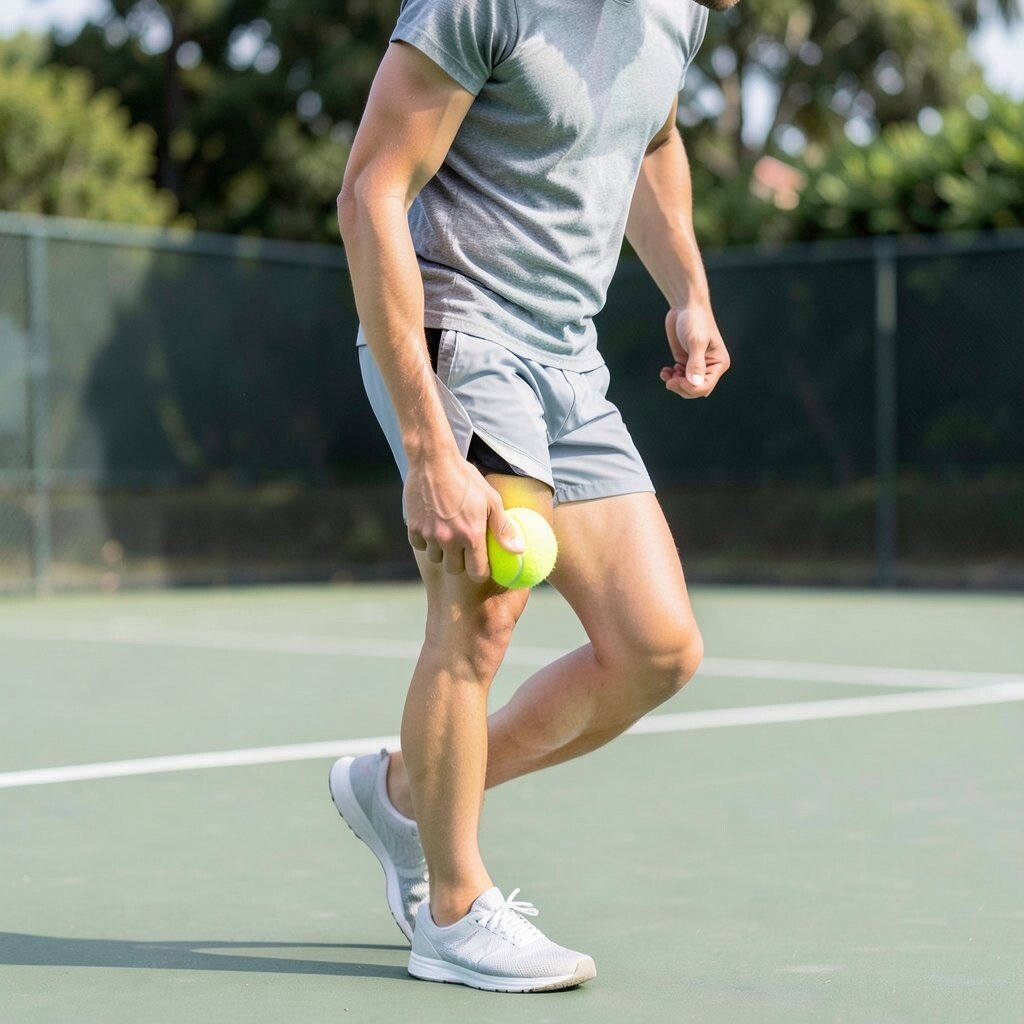
Sit or stand and place the tennis ball between your knees, then squeeze gently to activate the inner thigh. Start marching in place by lifting one knee at a time while keeping the ball from slipping.
This trains hip control and can support better knee tracking during walking, squats, and sports. You should feel your inner thighs working, not your lower back taking over. If the squeeze feels too much, use a lighter grip or reduce the range of the march.
11. Tennis Ball Forearm Rolling For Grip And Comfort
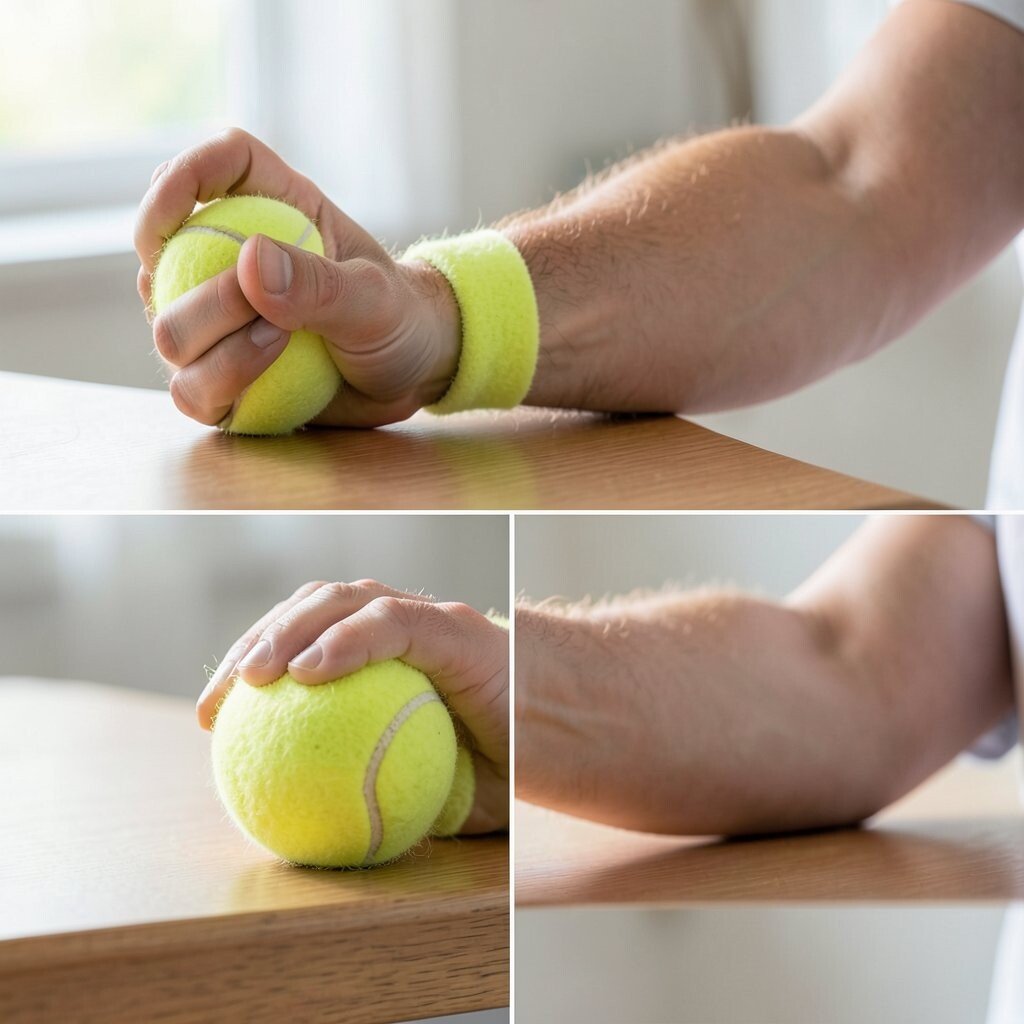
Place the tennis ball on a table edge and roll your forearm over it gently while you keep your wrist relaxed. Move slowly and stop before it becomes painful, focusing on areas that feel stiff.
Then switch to the other forearm and repeat, breathing steadily as you roll. Better grip comfort and forearm flexibility can make typing, lifting, and racket sports feel easier. A practical upgrade is to roll with your palm facing up, then palm facing down to hit different muscle lines.
For personalization, use different speeds based on how you feel that day. Some people prefer slow and deep, while others like quick light rolling. Since tennis balls are widely available and cheap, this fits well into many home routines.
12. Step-And-Ball Shuffle For Footwork Practice
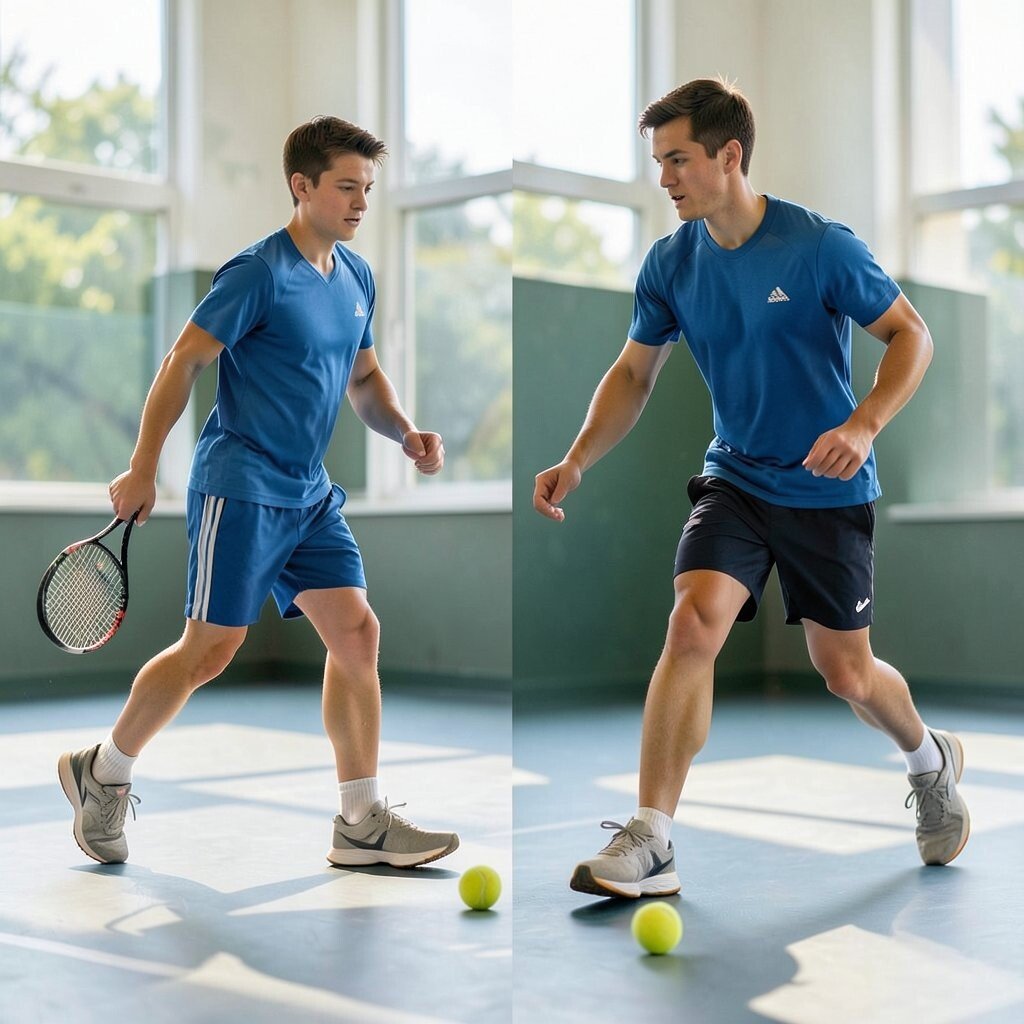
Place a tennis ball on the floor and practice stepping around it in a small pattern. Shuffle sideways, keeping your feet light so you can change direction smoothly.
Then switch the pattern by moving forward and back, always maintaining control and steady balance. This builds agility and strengthens the muscles that help you react quickly. Try adding a timer on your phone so you can track consistency without needing complicated gear.
13. Tennis Ball Push-Off Sled On Carpet Or Mat
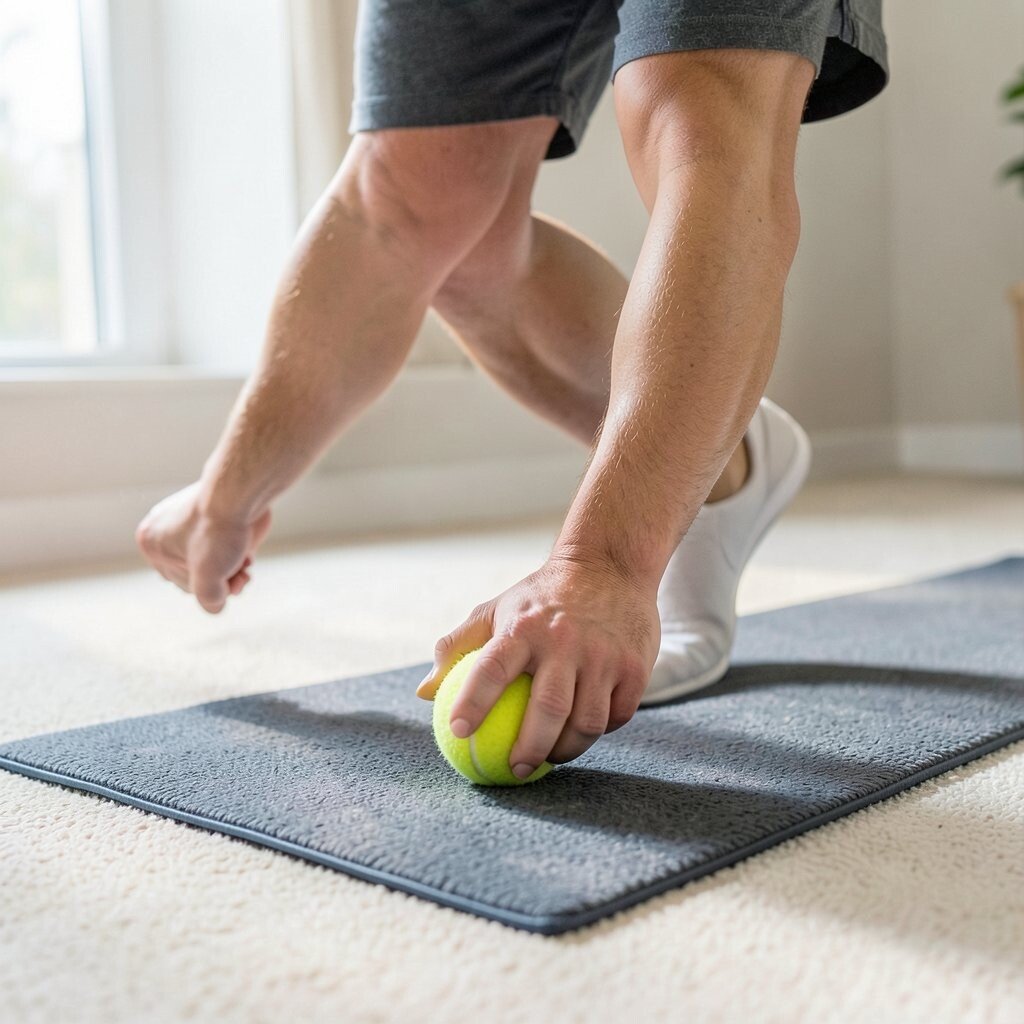
Lay a tennis ball on the floor and place it under your hands or feet like a tiny “sled” to slide smoothly. Push forward in short bursts, then slide back slowly to protect your joints.
This can strengthen pushing and core control while keeping the impact gentle. You will see how friction changes based on the surface, which makes it feel realistic for different environments. If you try it on carpet, start with smaller moves because the ball may grip more.
Personalize by switching angles, like pushing diagonally or doing gentle mountain-climber style bursts. Some people like pairing this with strength days because it warms up the body without heavy loading. Cost stays minimal since you already have the ball.
14. Floor Ball Shoulder Taps For Anti-Rotation Core
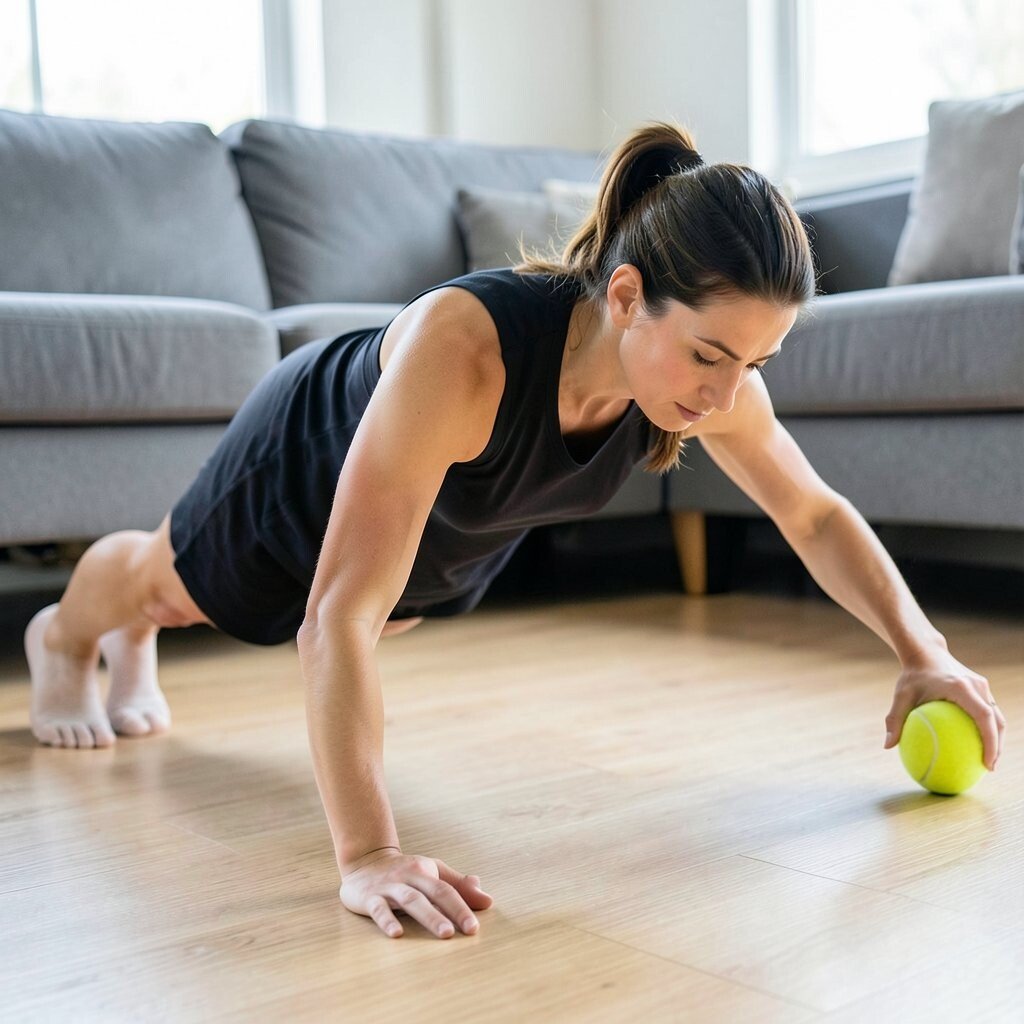
Get into a plank position with one tennis ball beside your hand. Tap the ball lightly with one hand and return your palm to the floor, keeping your hips still.
Switch hands and keep your torso from twisting as you tap. This trains anti-rotation core stability, which helps your spine move safely during sports and daily chores. If a full plank feels too challenging, try doing the taps from an incline on a couch or bench.
15. Tennis Ball Wall Sits For Quads And Endurance
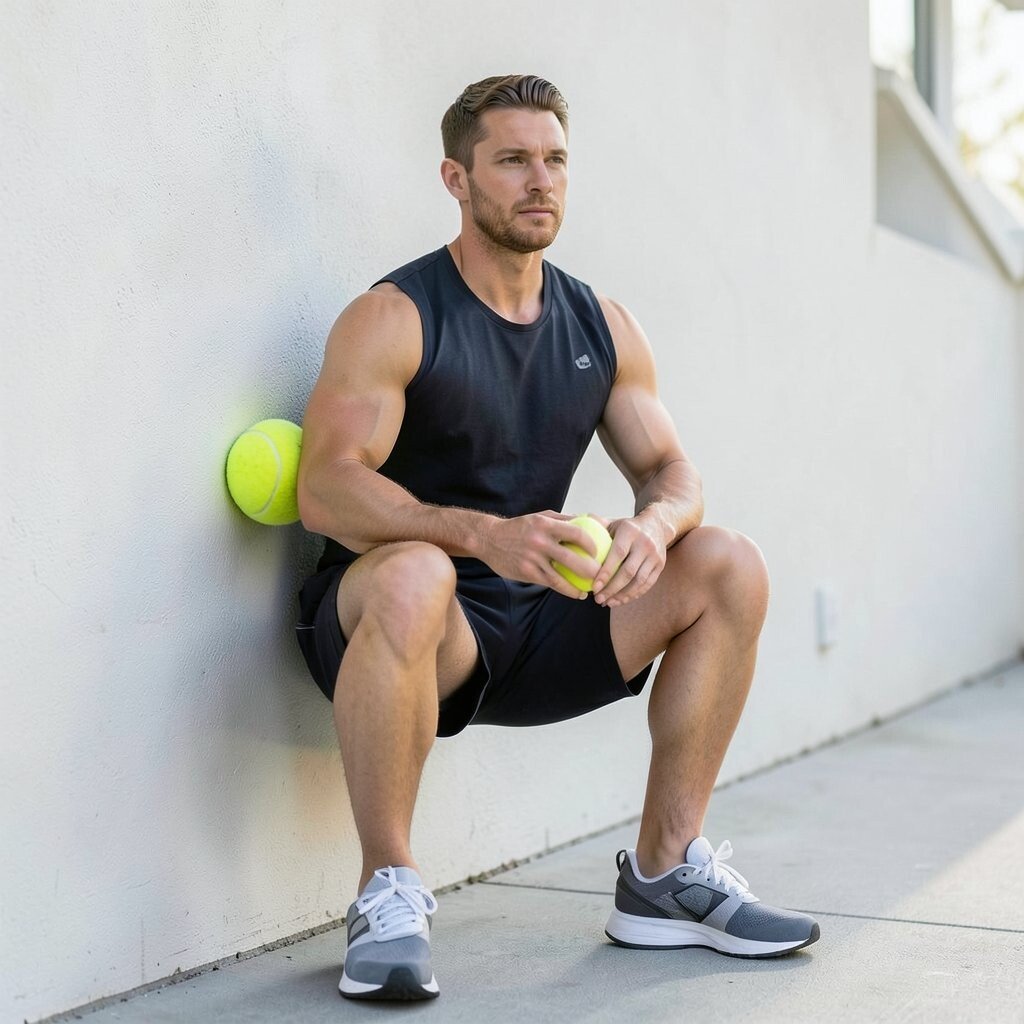
Place a tennis ball between your back and a wall, then perform a wall sit with your feet a comfortable distance away. Keep your knees aligned with your toes and hold a steady position.
The ball can add support and help you notice form, especially in the lower back area. This strengthens your quads and builds muscular endurance, which shows up in stairs, hills, and long walks. For practical tips, keep your breathing slow and stop if your knees feel uncomfortable.
To personalize, try slightly different foot angles so you can target inner or outer quad comfort. Many current fitness routines emphasize “long-time under tension,” and this move fits that style. Since tennis balls are inexpensive, it is an easy addition even on busy weeks.
16. Tennis Ball Recovery Sequence For Feet, Knees, And Hips
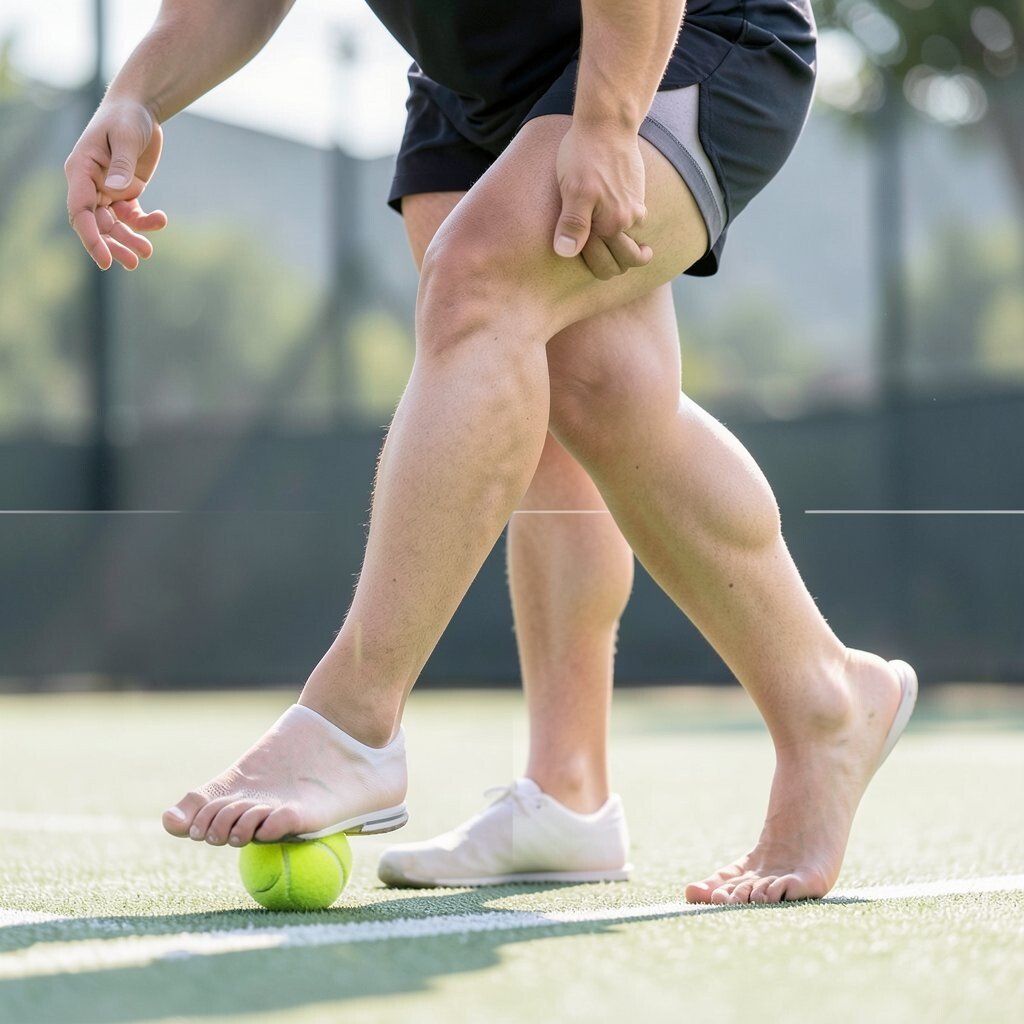
Create a quick recovery mini routine by rolling the tennis ball under your foot, then around the outer hip and glute area. Spend a little time on each spot, using gentle pressure and slow movement so your body learns to relax.
Keep the pace calm and pair it with easy stretching, like a light calf stretch or gentle hip opener. This can improve comfort and mobility so your next workout feels better, not harder. If you have a sensitive spot, reduce pressure and focus on short sessions rather than forcing through discomfort.
Trends in fitness now often include short recovery blocks between workouts, and this one fits right in because it needs almost no space. Personalize the order based on what feels tight that day, such as starting with feet after a long day on your feet. The cost stays friendly, since one ball can support many weeks of rolling, pressing, and moving.