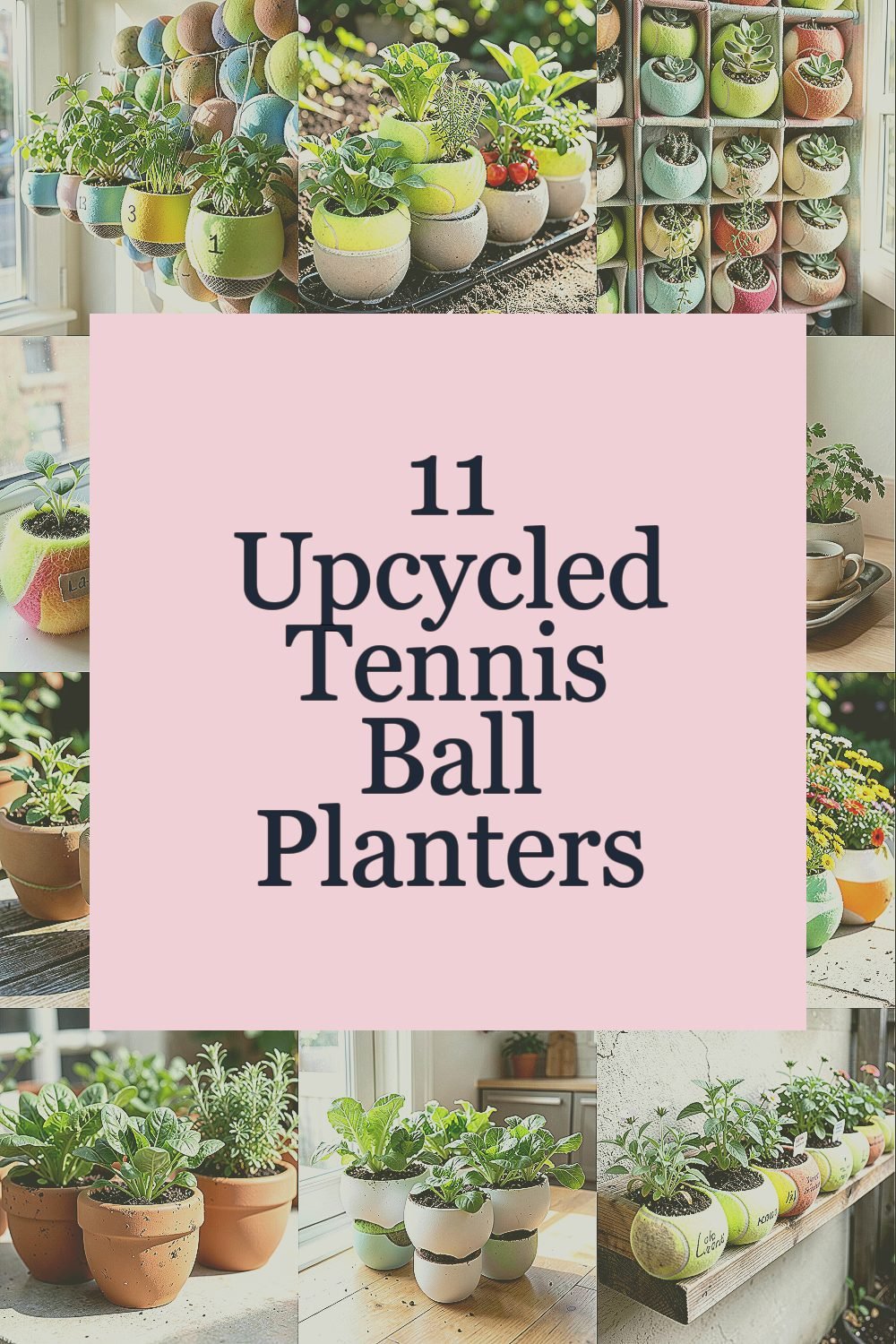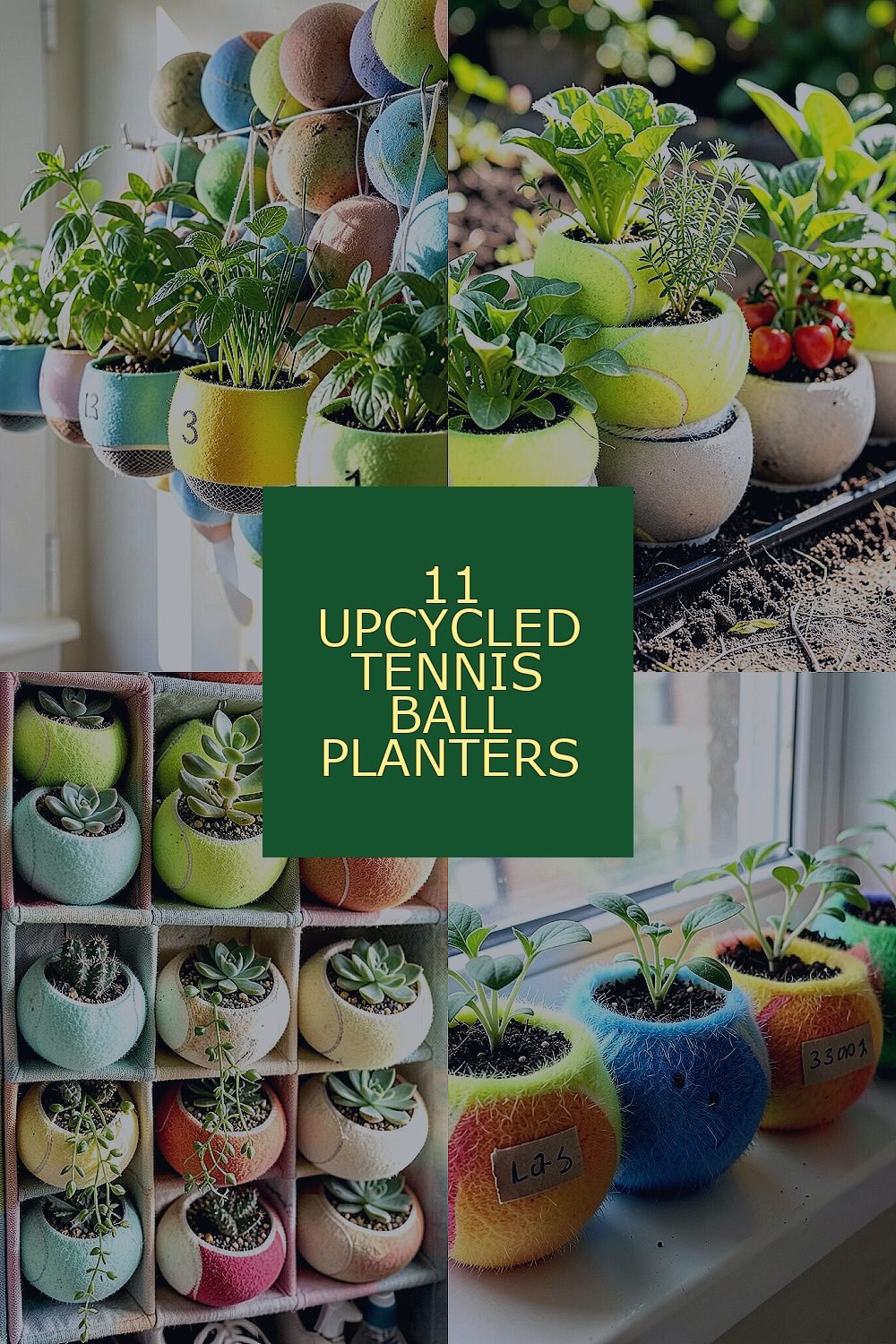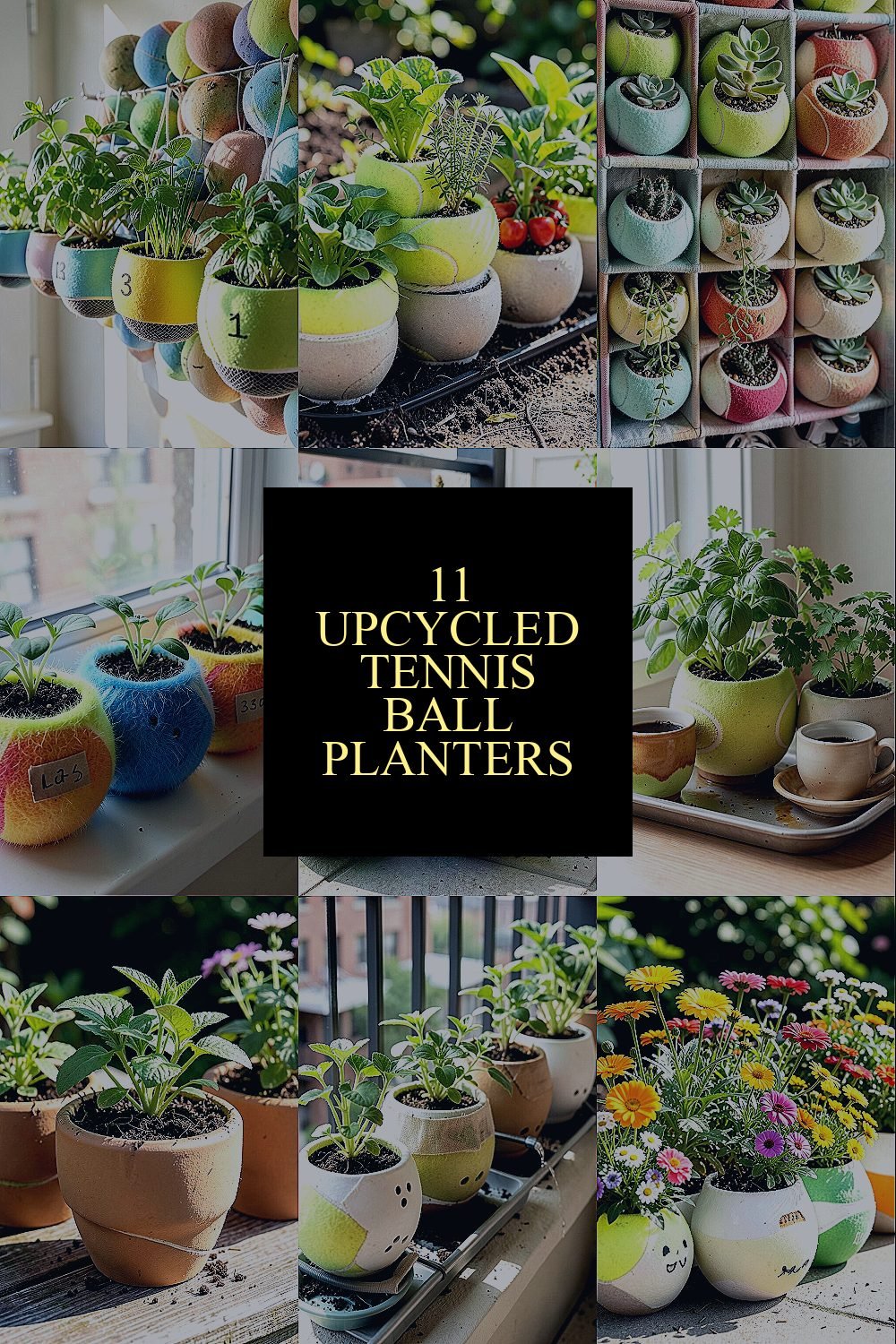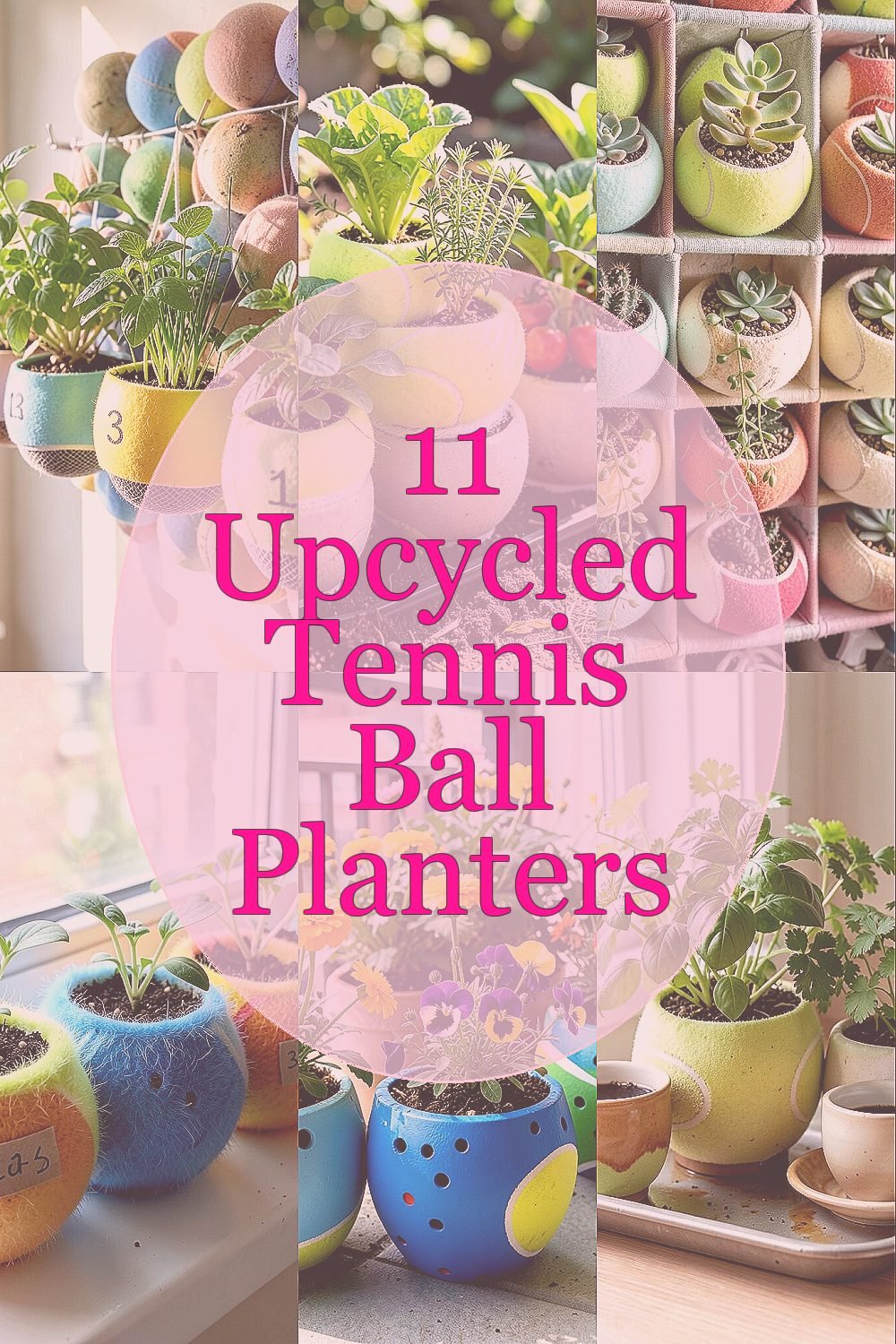
The humble tennis ball has more uses than you’d expect in a small city space. With a few simple steps, it becomes a playful planter that brings life to balconies and windowsills.
It’s practical, budget-friendly, and visually fun in a way store-bought pots rarely manage. Best of all, it fits right into the current trend of reusing everyday items for greener homes.
1. Hanging Tennis Ball Herb Wall

Imagine a row of bright, fuzzy planters dangling like tiny lanterns, each one holding a different herb. The balls catch light from the street or kitchen window and make greenery feel cheerful even in a tight area.
To get started, cut a small drainage opening and add a bit of mesh or filter paper at the bottom so soil doesn’t wash out. Use potting mix that drains well, then plant shallow-rooted herbs like basil, mint, or chives for easy success. Water gently until the mix looks evenly moist, and keep the wall near bright light.
This setup is great for renters because you can mount it with lightweight hooks or a simple rail system. For personalization, paint the tennis balls in soft city colors or leave them classic and let the stems “decorate” the fuzzy texture. If you want extra tidy results, label each ball with a small painted mark so you always know what’s growing.
2. Self-Watering Tennis Ball Planters for Busy Days

Picture tennis balls stacked into a small row, each one holding a little reservoir that helps plants get through a warm afternoon. The fuzzy surface makes them feel friendly, while the clean planting holes keep things neat.
Build a simple self-watering system by creating a water-holding chamber beneath the soil layer, then wicking moisture upward with a cotton strip. After planting, test the flow by adding water and watching how quickly the soil darkens. Use crops that handle brief dry periods, such as lettuce, thyme, or small peppers, and place them where they receive steady sun.
In urban apartments, uneven watering is a common problem, so this method can reduce stress for both you and your plants. For practical care, check moisture by pressing a finger into the soil, then top up the reservoir only when it feels light. Keep a small tray underneath if you’re growing indoors to protect floors and furniture.
3. Vertical Succulent Micro-Garden in a Shoe-Organizer Grid

Visualize a patchwork of tennis ball planters hanging inside a fabric shoe organizer, each pocket holding a different succulent. The result looks like living mosaic art, especially when the fuzzy balls catch sunlight from the side.
Cut openings carefully so each tennis ball sits stable, then fill with gritty cactus mix for fast drainage. Plant tiny succulents or even cuttings that root easily, like jade, haworthia, or small echeveria types. Arrange them by height so trailing types spill down gently and upright ones stay tidy.
This idea benefits small spaces because vertical storage gives you more growing area without taking up floor space. For personalization, choose one color family for the balls, such as mint and cream, or mix bright street-style colors for an upbeat look. To keep watering simple, use a spray bottle sparingly and only when the mix is fully dry.
It also matches a popular reuse trend where people build living walls out of thrifted materials. If you’re cost-conscious, the main supplies are the tennis balls and a bag of cactus mix, which often lasts for many planters.
4. Window Sill Seedling Starters With Fuzzy Covers

Think of a row of tennis ball planters lined along your window, each one starting seeds with a soft, whimsical look. The fuzzy exterior hides the hard edges of gardening setup and makes seed-starting feel less technical.
Start by punching drainage holes and filling with seed-starting mix rather than heavy potting soil. Plant tiny seeds shallowly, mist lightly, and keep the flats near bright light but not harsh heat. Once seedlings grow, thin them to avoid overcrowding so air can move around the stems.
This is a friendly way to grow in apartments because the planters are small and easy to rotate for even light. For personalization, you can color-code the balls based on the seed type or add a simple piece of tape with handwritten dates. A practical benefit is that you can transplant seedlings without disturbing the roots too much if you keep the soil ball intact.
To manage costs, use leftover seed packs and repurpose common kitchen tools like spoons for planting and labels made from old paper. It’s also a current trend to start plants at home to reduce store runs and bring more fresh flavor to small kitchens.
5. Balcony Color Pop With Painted Tennis Ball Pots

Imagine stepping onto your balcony and seeing tennis ball planters in bold colors, like little paint-splashes holding blooms. The fuzzy texture turns flowers into something playful, especially when petals contrast with the bright shells.
After creating drainage holes, paint the exterior with outdoor-safe craft paint and let it cure fully before potting. Add compost-rich potting mix, then plant compact flowers such as marigolds, pansies, or dwarf zinnias. Water when the top layer feels dry, and feed with a diluted liquid fertilizer every couple of weeks during active growth.
This setup boosts curb appeal in a way that feels creative rather than cluttered. For practical care, group planters based on their watering needs so you aren’t running back and forth with a hose. Personalization can be as simple as adding a small pattern like stripes, polka dots, or a favorite sports team color scheme.
6. Tea Cup and Tennis Ball Combo for Kitchen Herbs

Picture a small kitchen corner with mini planters nested inside repurposed containers, like tennis balls paired with tiny tea cups or saucers. The look feels curated and tidy, even when you’re just harvesting a few leaves for dinner.
To make this work, attach a tennis ball planter above a shallow tray that collects a bit of runoff, then fill with a light herb mix. Plant fast-growing greens such as basil, parsley, and cilantro, and keep them near a window where they can soak up daily light. Water slowly to avoid flooding, then empty excess liquid from the tray to prevent root issues.
This benefits urban gardeners because herbs stay close to your cooking routine, making it easier to harvest regularly. For personalization, decorate the tea cups with matching paint or a stain that brings out warm tones in the tennis ball. It’s a low-cost project too since many people already have old cups and saucers tucked away.
7. Reusable Tennis Ball Potting System for Easy Transplanting

Imagine each tennis ball planter acting like a small sleeve for seedlings, ready to move when conditions change. The exterior grip is helpful when you’re carrying them from a sunny spot to a shadier one.
Create a consistent system by using the same soil depth and spacing in every ball. When it’s time to transplant, loosen the root ball gently and slide the seedling into its new home without tearing delicate roots. Water the transplant right after moving and keep it protected from wind for a day or two.
This approach supports practical planning because you can start multiple batches without buying new pots each season. It’s also unique since it turns a quirky item into a repeatable gardening tool. For personalization, keep one set of balls for greens and another for flowers, so your garden rhythm stays organized.
8. Tennis Ball Planters With Upcycled Drip Lines

Picture a small drip line running along a balcony railing, feeding tennis ball planters like a gentle watering song. The setup looks modern, neat, and surprisingly calming compared to daily hand watering.
Use a small irrigation kit or repurpose simple tubing and create tiny drippers directed at each planter. Make sure each ball has drainage holes, then place the planters where water can flow out safely into a tray or protected surface. Set a timer if you can, and adjust the run time based on sun exposure and plant type.
This benefits busy schedules because moisture stays steady, which helps plants grow evenly. For personalization, you can hide the tubing under a strip of fabric or paint it to match the balcony decor. It’s a good cost consideration because drip systems can be reused across seasons if you store them carefully.
9. Mini Pollinator Garden Using Tennis Ball Flower Planters

Imagine tiny tennis ball planters lined like a snack bar for pollinators, with bright blooms that attract bees and butterflies. Even a small patio can feel alive when the garden has flowers that keep returning.
Plant nectar-rich varieties such as calendula, sweet alyssum, or compact zinnias, then group colors in clusters so insects can find them easily. Keep the soil moist during early growth, and after established, water based on how quickly the mix dries. Add a thin layer of mulch or small bits of bark to reduce evaporation on hot days.
This idea is unique because the fuzzy tennis ball texture adds a whimsical “habitat” feel, like nature is already part of your decor. For personalization, mix planter colors with flower colors, and change the combinations each season to match the mood of your space. A practical tip is to avoid heavy pesticides, since pollinators are what you’re inviting.
10. Faux Terracotta Look for a Classic City Style

Picture tennis ball planters that look like small terracotta pots, giving your urban garden a classic, warm aesthetic. The shell becomes a design feature instead of something you hide away in a corner.
To achieve the look, clean the tennis balls, then apply a base coat that resembles clay coloring and finish with a matte sealant. Make sure drainage holes are clear, then fill with potting mix and plant hardy greens like lettuce, spinach in cool weather, or herbs like oregano. Water normally, and let the surface dry slightly between waterings to avoid soggy roots.
This approach benefits people who want a cohesive home look, because the planters match traditional style instead of standing out as bright toys. For personalization, add subtle speckles with a dry brush or use a sponge for a slightly weathered effect. If you’re cost-conscious, most of the work uses basic paint supplies you can repurpose for other crafts.
11. Seed-to-Salad Tennis Ball Pot for Lettuce and Greens

Imagine harvesting fresh lettuce right from a cluster of tennis ball planters near your kitchen door. The visual is simple but satisfying, like a tiny salad bar you can pick from whenever you want.
Plant lettuce varieties and other cool-weather greens in well-draining soil, keeping seeds or seedlings spaced so leaves can spread. For best results, give them consistent light and water, and avoid letting the mix fully dry out. As leaves grow, you can harvest outer leaves first, which encourages new growth without restarting your whole setup.
This is a practical benefit for city living since greens need less space than many veggies and grow quickly in suitable weather. For personalization, stagger planting dates across different balls so you harvest at different times and never run out. Keep an eye on temperature swings by moving planters slightly indoors during heat waves or windy storms.
12. Tennis Ball Planters in a Reclaimed Wood Rail Planter Box

Picture a reclaimed wood rail box filled with tennis ball planters tucked along the length, like a garden that’s also a piece of wall art. The earthy wood tones make the fuzzy planters look intentional, not random.
Mount a simple rail or trough to a wall or fence, then set each tennis ball into drilled slots with secure spacing. Make sure every planter has drainage support so water doesn’t pool inside the wood. Fill with a quality potting mix, plant herbs or small flowers, and water until you see runoff, then keep it steady based on weather.
This setup is uniquely urban because it combines upcycling materials and turns vertical space into something useful. For personalization, stain or paint the wood to match your outdoor decor, and label each planter with painted markers for quick identification. If you’re thinking about cost, reclaimed wood can be sourced cheaply from old pallets or thrift finds, and the tennis balls do most of the container work.
Right now, wall-mounted planters and upcycled decor are especially popular in cities, since they look stylish and make growing feel more integrated into daily life. To keep it looking fresh, check drainage regularly and replace any balls that wear down from repeated seasons.