Your shelves can feel new without buying a single bold piece. A few background choices can make everything on the shelf look more intentional.
When the back of the shelf looks good, your everyday items start to look like part of a style plan. That small change can also make the whole room feel calmer.
1. Layered Fabric Backdrops for Soft Contrast
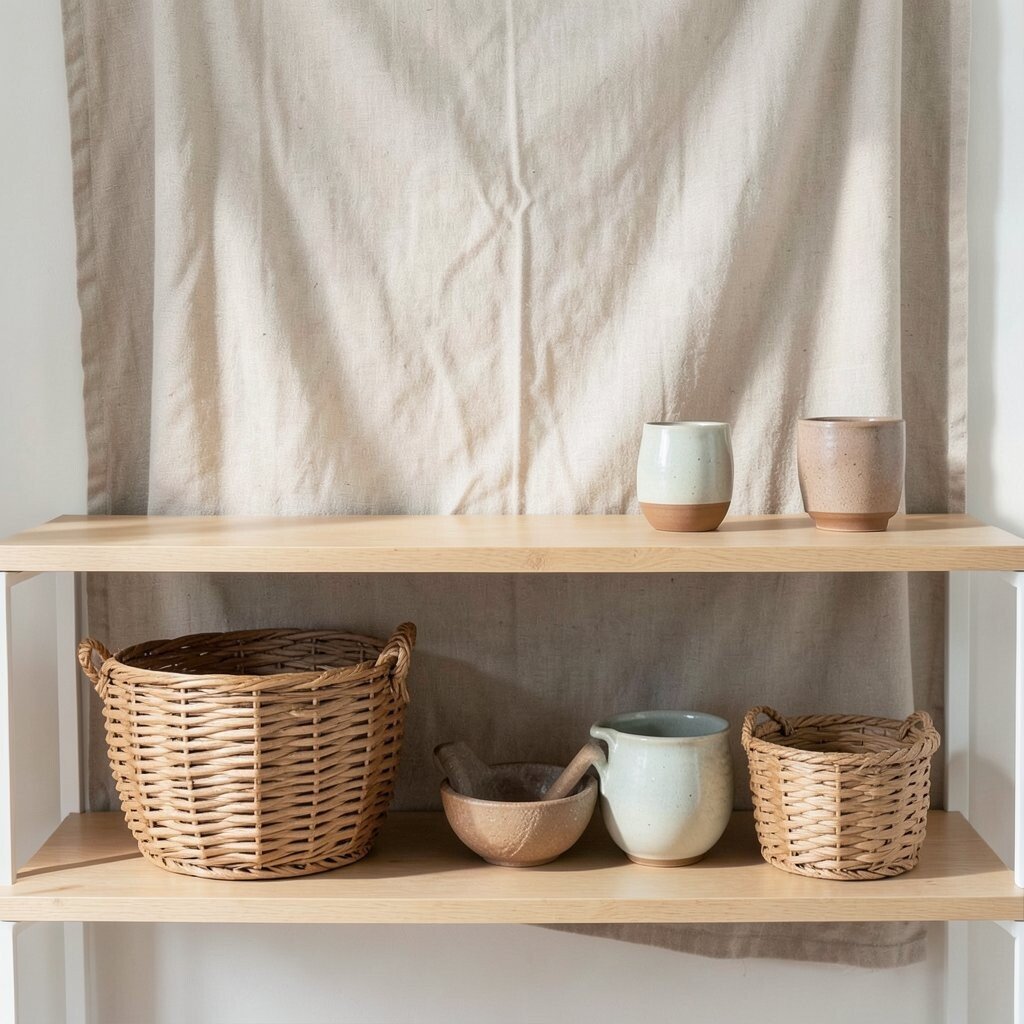
Hang a piece of fabric behind the shelf to add instant warmth. Choose linen, cotton, or even a thick scarf so the back feels cozy, not flat.
For a clean look, let the fabric fall evenly and press out big wrinkles before you place it. Keep a consistent color family so your items still stand out. This setup is great for photos, ceramics, and small baskets because it adds a gentle contrast instead of glare.
2. Crisp Paint Stripes That Guide the Eye
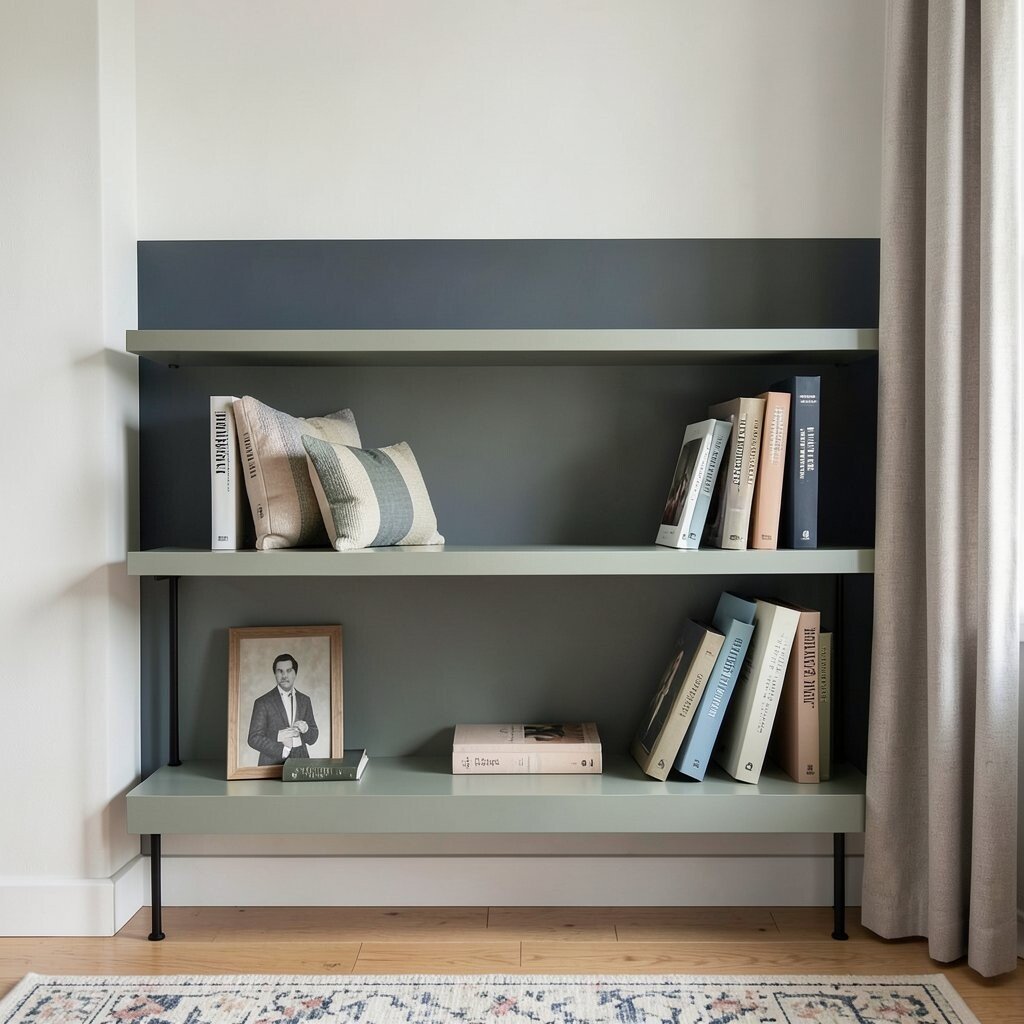
Paint a narrow stripe or two on the wall behind the shelf for a focused background. Even subtle lines can make your shelf feel designed rather than accidental.
Use painter’s tape to keep edges sharp and start with low-contrast colors like warm gray, sage, or muted navy. Paint looks fresh, but it is also a cost-friendly option since you can do it with leftover supplies. Try placing taller items where the stripe feels strongest, so the shelf reads like a mini gallery.
To personalize, match stripe colors to a pillow, rug, or curtain in the room. If you love changing styles, you can repaint later without replacing any shelf pieces. This trend is popular because stripes add structure while still letting your shelf items stay the star.
3. Wallpaper Panels for Instant Personality
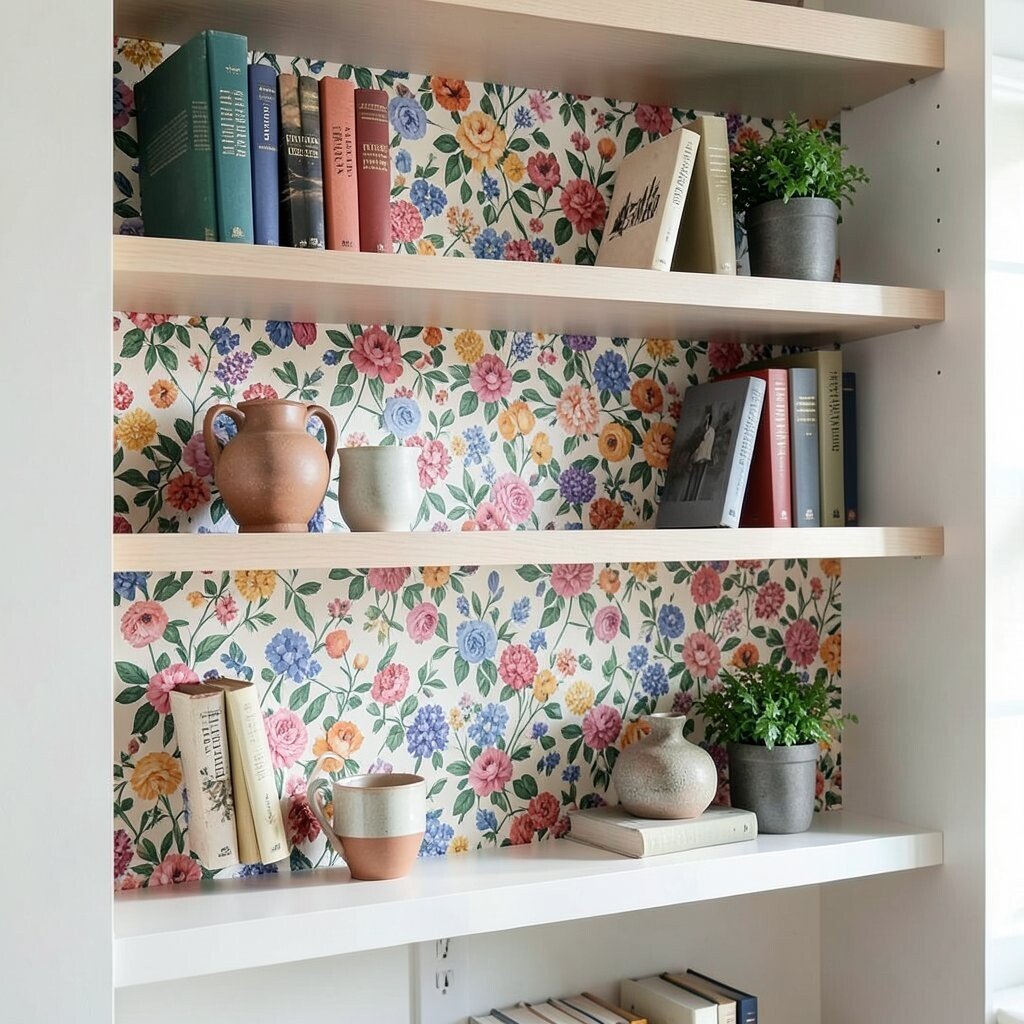
Use a peel-and-stick wallpaper panel as the backer for your shelves. Choose small patterns if you want a tidy look, or choose bold florals if you want a lively vibe.
Cut the panel to fit the shelf backing, then secure edges neatly so there are no lifted corners. If the shelf is deep, you can let the wallpaper wrap slightly around the edges for a more finished feel. This background makes books and décor look curated because the pattern frames them.
For practical styling, keep your front items in two or three repeating colors. That way, the wallpaper adds charm without making everything look busy. It is also an easy way to try a trend without committing to redecorating the whole room.
4. Corkboard Backing for Notes, Cards, and Texture
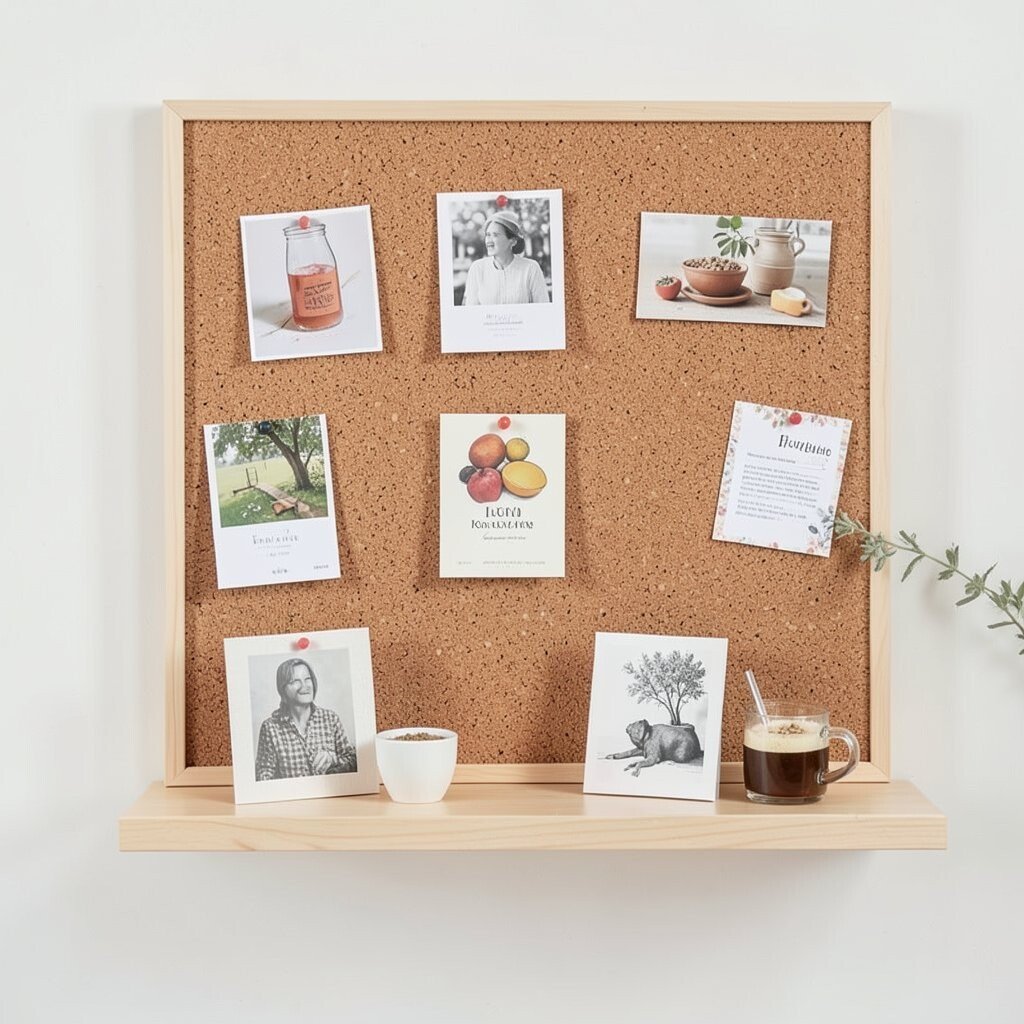
Cover the back of the shelf with corkboard to add texture and a natural look. You can pin postcards, small art, or even favorite recipe cards for a personal touch.
Pick a warm cork tone rather than a very dark one so the shelf still feels bright. Cork is also forgiving, since it can hide small imperfections and keep the background from looking too smooth. Style your shelf items in front of the cork so pins feel like little accents, not clutter.
5. Mirror Panels for Light That Multiplies
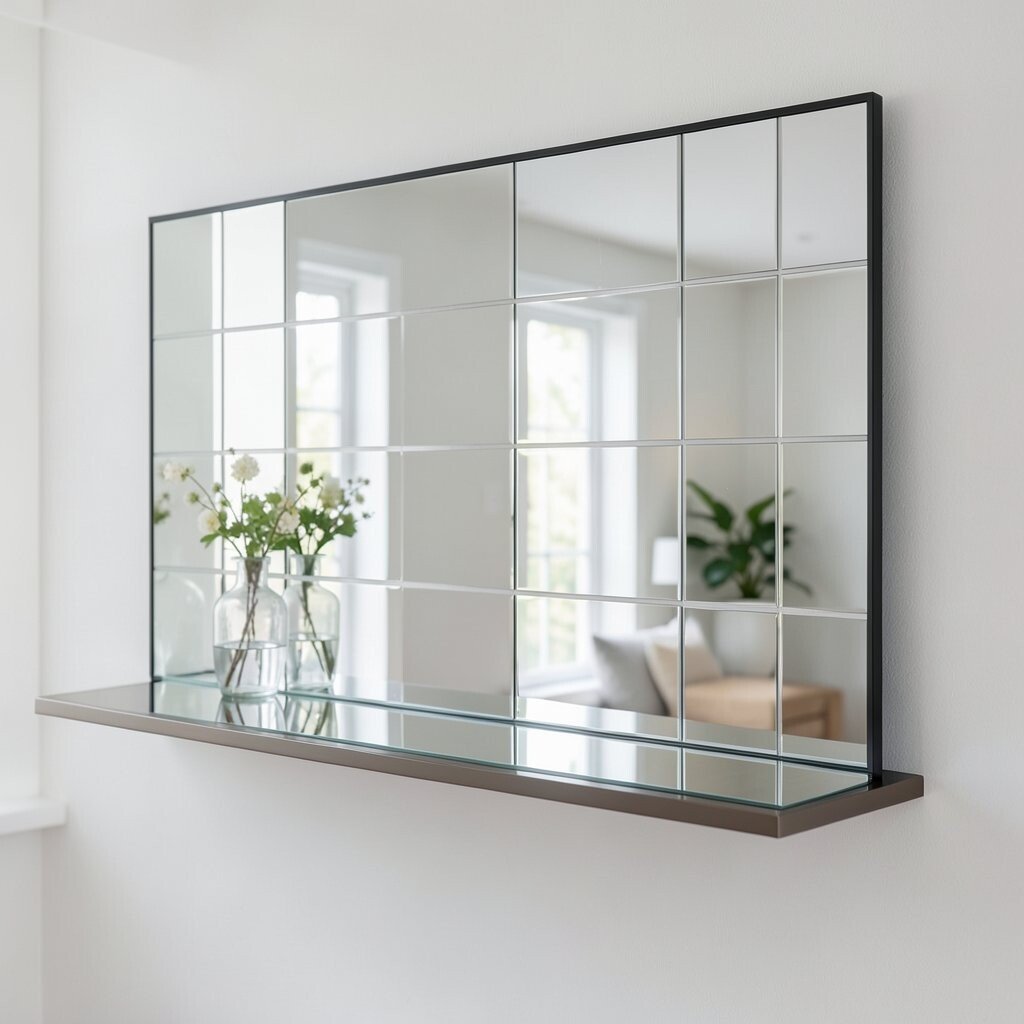
Place a mirror sheet or mirrored backing behind the shelf to bounce light around the room. When light hits the surface, your shelves look brighter and more open.
Choose a frameless mirror look for a modern feel, or add a thin frame to keep edges protected. This arrangement helps if the room is darker, because reflections make the space feel less heavy. Keep the décor tidy and limited, since mirrors can show visual layers more clearly.
For uniqueness, you can use small mirror tiles in a grid pattern instead of one large piece. If you worry about cost, shop for budget-friendly mirror panels or check home improvement stores for cut options. The trend of “light-first” interiors is why mirror backs keep returning.
6. Stained Wood Backers for Warm, Vintage Charm
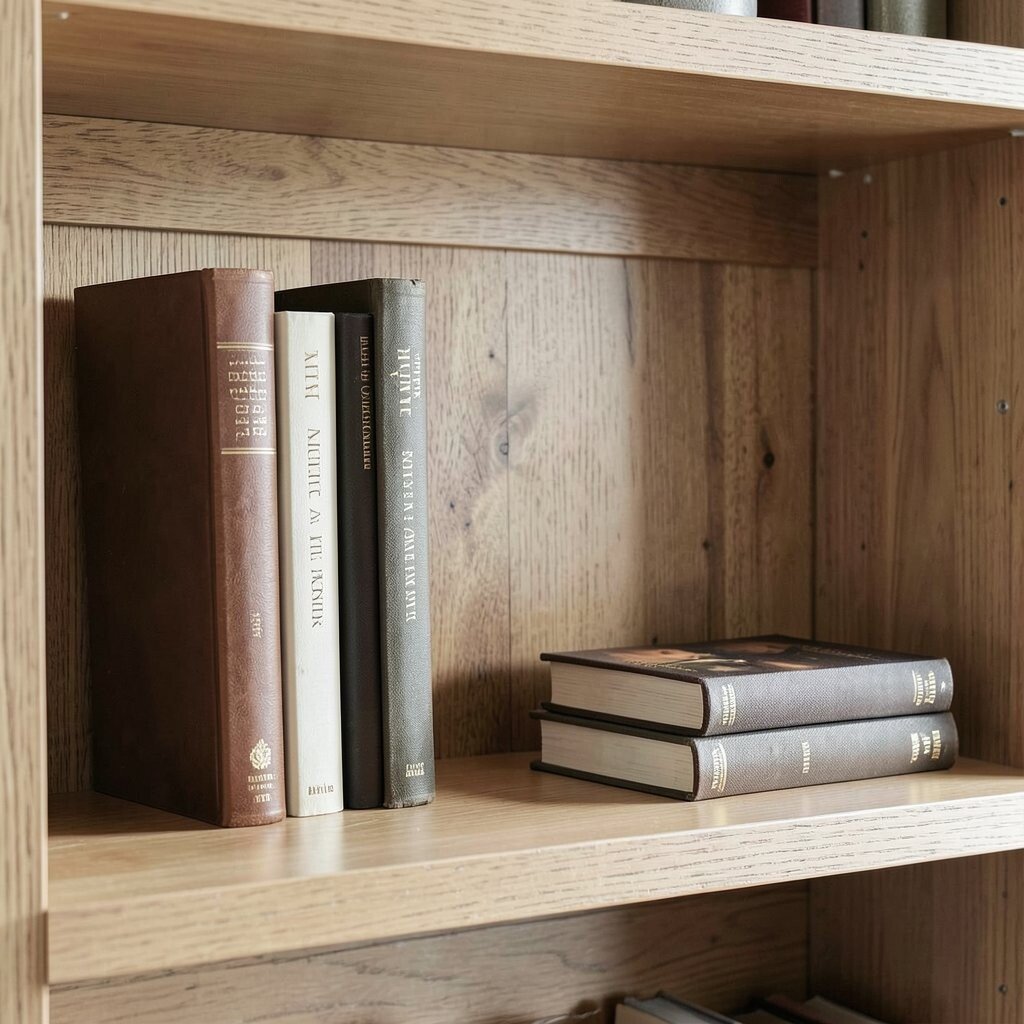
Use a thin stained wood panel behind the shelf to add warmth and a classic feel. Even a light oak tone can make items look more grounded and rich.
To keep it practical, use a panel that matches your furniture finishes so the whole room feels consistent. Sand lightly and wipe dust off before installing, and consider a clear top coat for easy cleaning. Place books upright with matching spines or stack them horizontally for a tidy rhythm.
7. Pegboard Back Panels for a Playful Organized Look
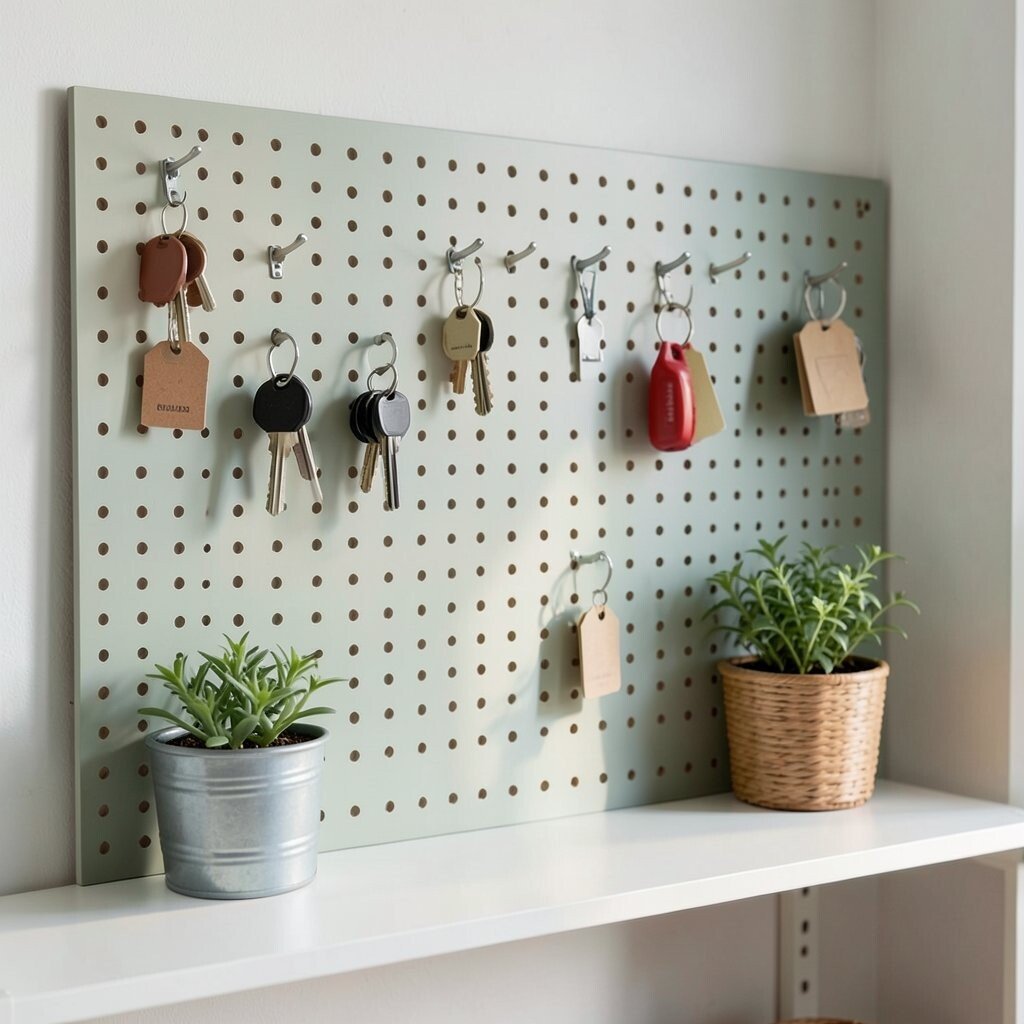
Pegboard can turn the background into a functional style feature. Add small hooks, clips, and baskets to hold keys, mini plants, or even hanging tags.
Paint the pegboard a soft color like cream, dusty blue, or olive so it feels gentle, not industrial. Then attach your accessories in a repeating pattern so the shelf looks intentional. This arrangement is unique because the background works like a tiny command center without looking like office storage.
To keep it from looking messy, limit what hangs and choose pieces with similar finishes. You can also rotate items seasonally by swapping small clips and pins. Many people are using pegboard again because it feels practical and creative at the same time.
8. Bold Color Blocks for a High-Energy Backdrop
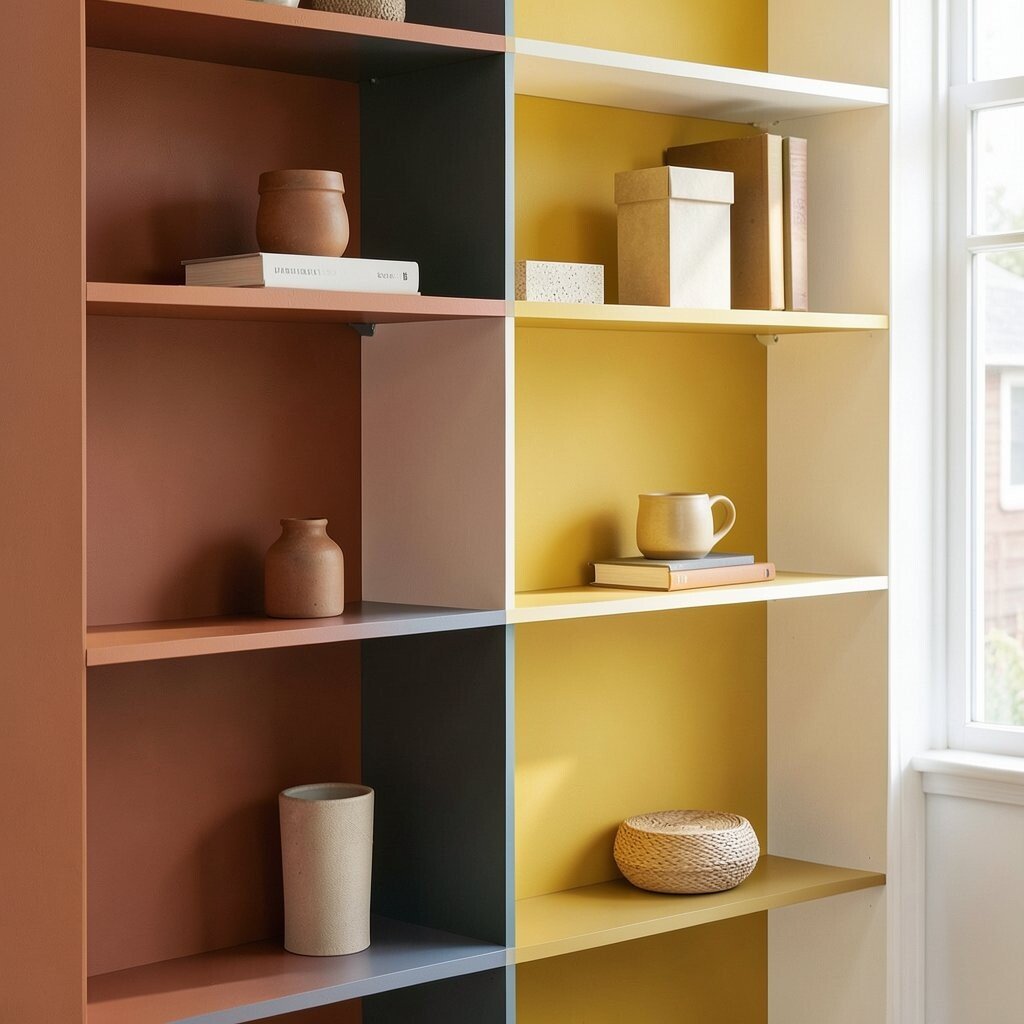
Paint the shelf backing with color blocks that sit behind your tallest items. This makes the background feel bold while still giving structure to your display.
Choose two or three colors that show up elsewhere in your room, like terracotta, mustard, and cream. Use painter’s tape to create clean edges so the shelf looks crisp. Color blocks benefit smaller rooms because they add personality without adding more objects.
9. Layered Shelving Back Trays for a Stacked Feel
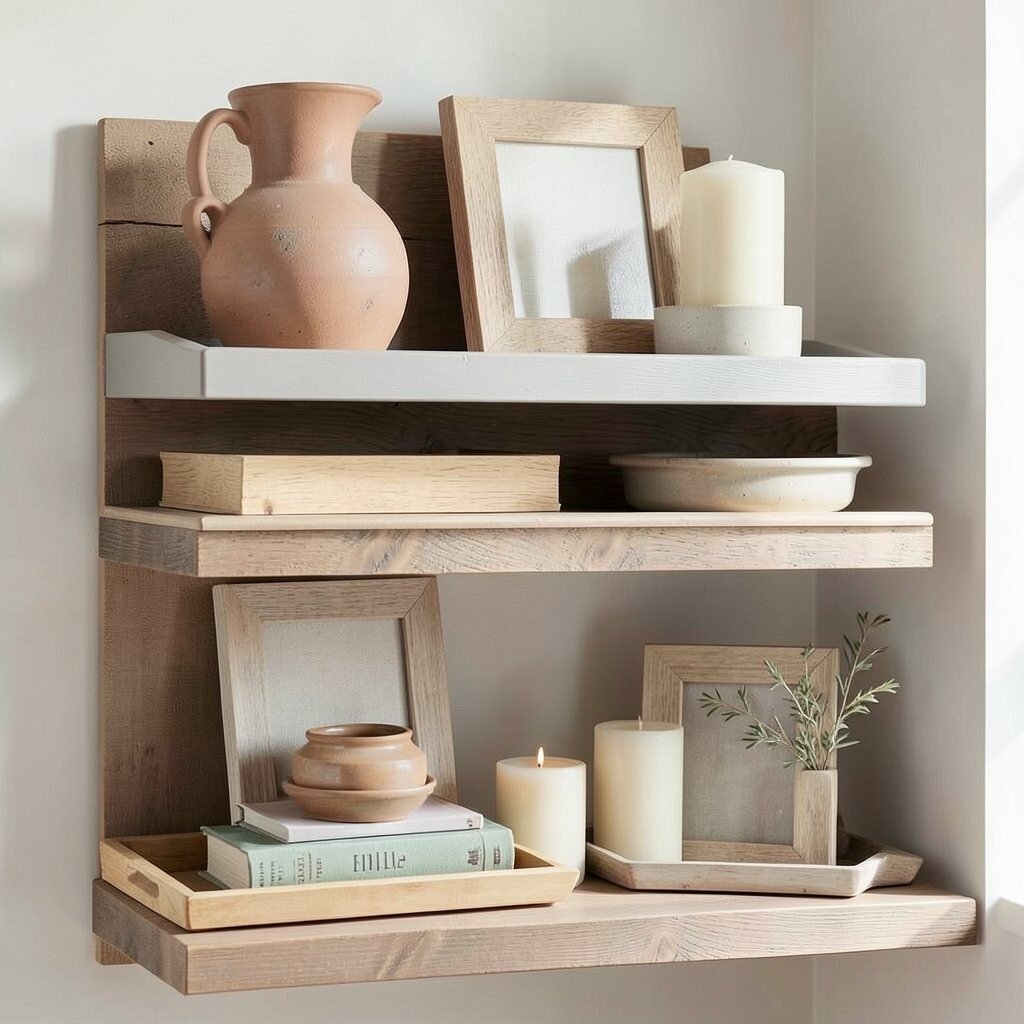
Add shallow trays, risers, or thin wooden boards behind your front décor. This creates depth and a layered look even if your shelf itself is plain.
Try arranging items in tiers so taller décor sits on the back layer and smaller items sit on the front. That small move makes everything easier to see. It is also a budget-friendly way to get visual interest because you can use inexpensive trays or even repurpose old boards.
To personalize, paint the trays the same color as your frames or leave them natural. Current trends lean toward layered, “styled stacks,” especially with pottery, books, and candles arranged by height. If you like seasonal changes, you can swap trays and backgrounds faster than replacing a whole shelf.
10. Textured Back Papers With Handmade-Finished Vibes
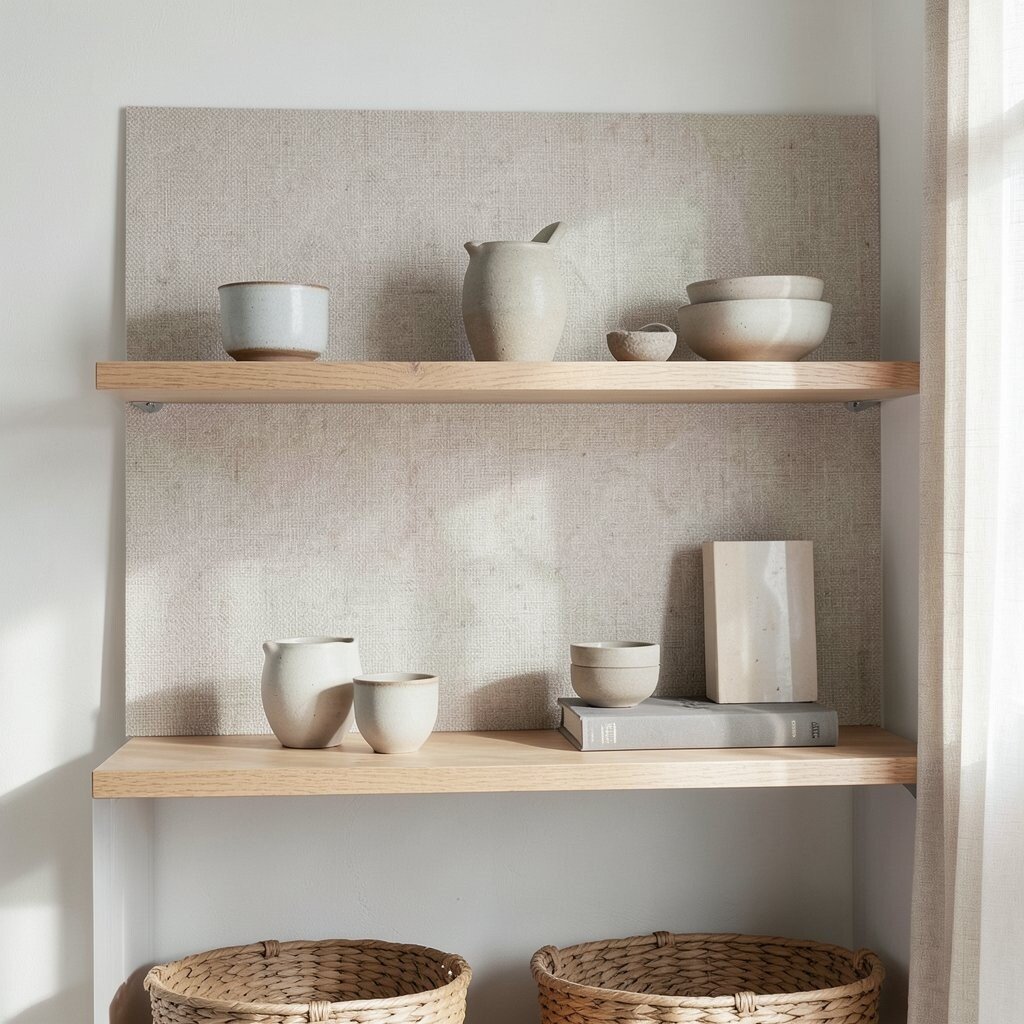
Use textured paper like heavy art paper, grasscloth-style sheets, or subtle linen-look backing. The goal is a background that catches light gently instead of looking shiny.
Trim the paper to size and add a clear backing adhesive so it stays smooth. Textured backgrounds benefit your shelf because they soften the look of glossy décor and make matte pieces feel richer. Keep your front styling simple, like a small collection of ceramics or a few curated books.
For uniqueness, choose a texture that matches your room’s materials, such as woven baskets or natural curtains. This style feels handmade even when it is simple, which is why it is popular right now. Cost is usually low since paper options often beat larger furniture upgrades.
11. Gallery Photo Strip for a Personal Memory Wall
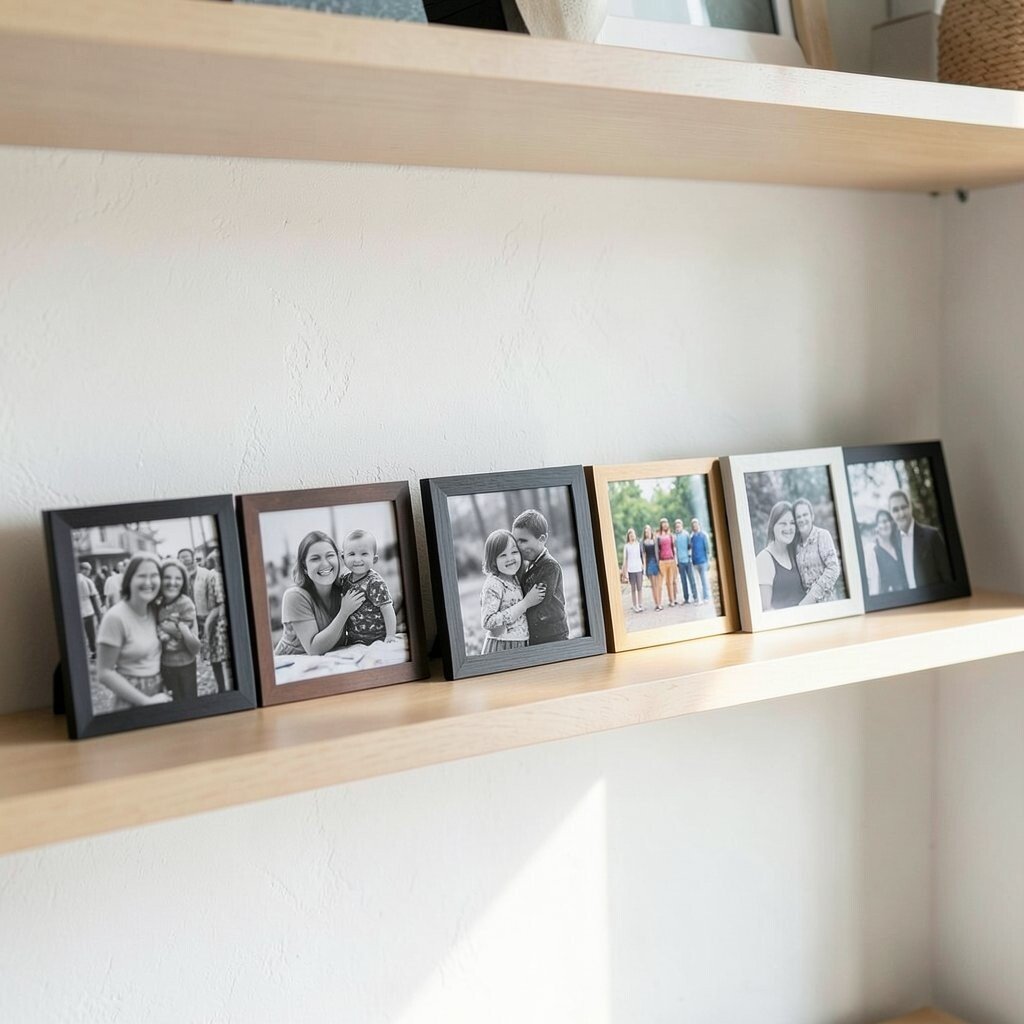
Create a photo strip across the back of the shelf using small prints or postcards. It turns the background into a story, and your favorite pieces will look more meaningful.
Use consistent frames or clip styles so the strip looks neat and not random. Black-and-white photos often keep the display calm, while a burst of color can feel playful. This arrangement helps when you want your shelf to feel personal but still stylish.
12. Leaning Art Panels for a Curated, Artistic Look
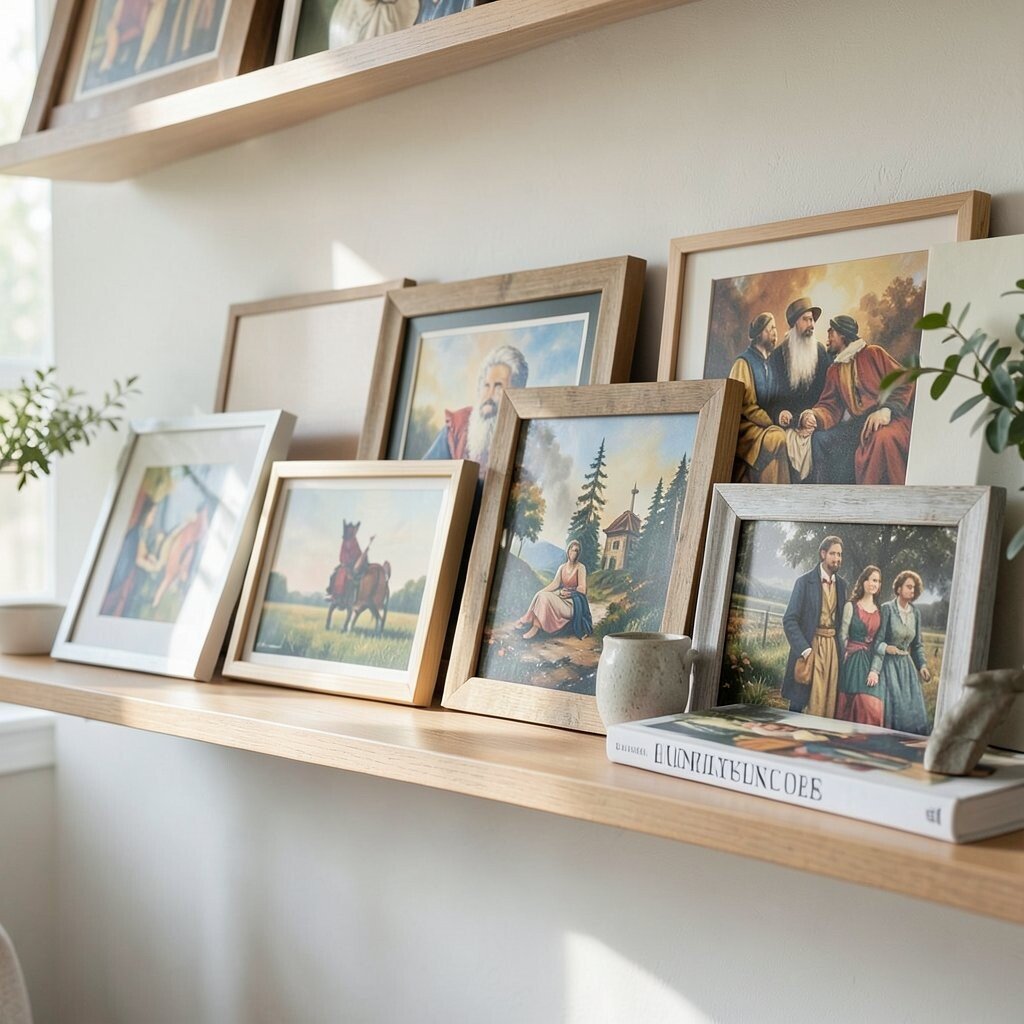
Lean framed art panels or lightweight boards against the back of the shelf. Choose prints with colors that echo your décor so the background supports your items.
Vary sizes to create a gallery feel, and place books and objects in front without fully hiding the art. This gives you a “view” behind your shelf items, which makes the whole display look more high-end. If you want cost control, use thrifted frames or swap printables that you can print at home.
To personalize, rotate prints based on seasons or holidays. This approach matches current trends toward lived-in art displays, where shelves feel like part of the wall. It is also easy to adjust if you change your mind later, since panels can be swapped quickly.
13. Floating Shelf Back Rings With Hanging Planters
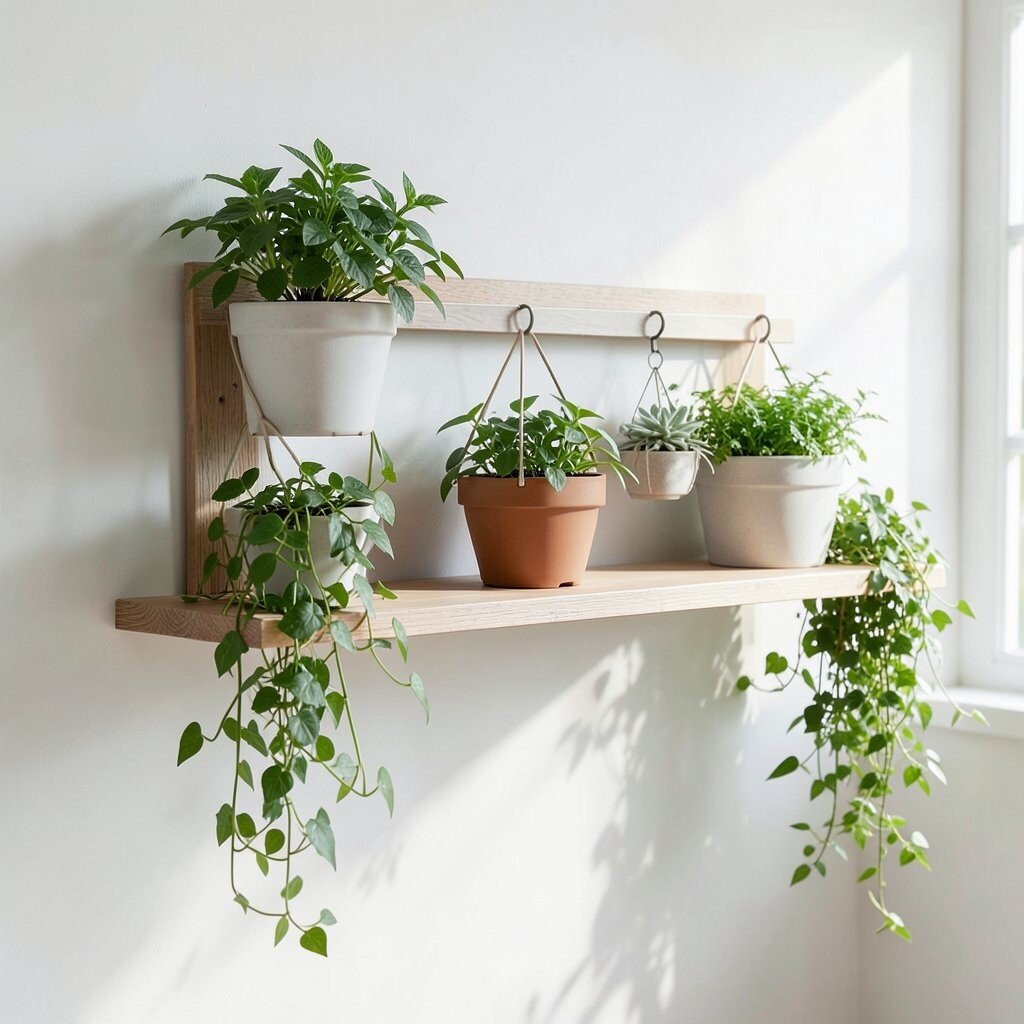
Mount a thin ring rail or simple hooks behind the shelf and hang small planters or décor from it. The background becomes airy, and the shelf looks more dynamic.
Choose lightweight planters so nothing pulls or droops. Keep hanging items evenly spaced to make the look feel clean, and let trailing greenery fall for a soft effect. This arrangement adds uniqueness because the background includes movement, not just color.
For practical styling, keep the shelf items balanced with the hanging pieces so one side does not feel crowded. Use a consistent pot color or material to keep the background from looking scattered. If cost is a concern, start with one or two small planters and add more later as you find your favorite shapes.