
Stair balusters set the mood the moment someone steps inside. The right pattern can make your stairs feel timeless, safe, and totally yours.
1. Turned Spindle Lattice

Turned spindles create that neat, old-world rhythm you see in many stately homes. Each baluster has graceful curves that catch light and cast soft shadows across the steps.
This look brings a classic feel without needing heavy ornament. For a practical win, match the spindle diameter across the whole run so the stair feels balanced. If you want easy personalization, choose a warm wood stain for a cozy look or go with matte paint for a crisp modern twist.
2. Rope-Twist Balusters

Rope-twist balusters look like curled strands, adding a playful bit of movement. The swirling profile makes the stair feel more dynamic, even when the design stays tidy.
They are unique in a way that still feels traditional, because the twist is carved with restraint. Consider spacing them evenly and keeping the handrail height consistent so the staircase feels comfortable to use. If you’re planning a budget, simple rope-twist profiles often cost less than highly carved scrollwork while still delivering strong style.
To personalize, pair the twist pattern with a handrail that has a matching gentle curve. You can also choose a darker finish on the balusters and a lighter rail for extra contrast. This style also fits current trends that favor texture over heavy bulk.
3. Fluted Column Style
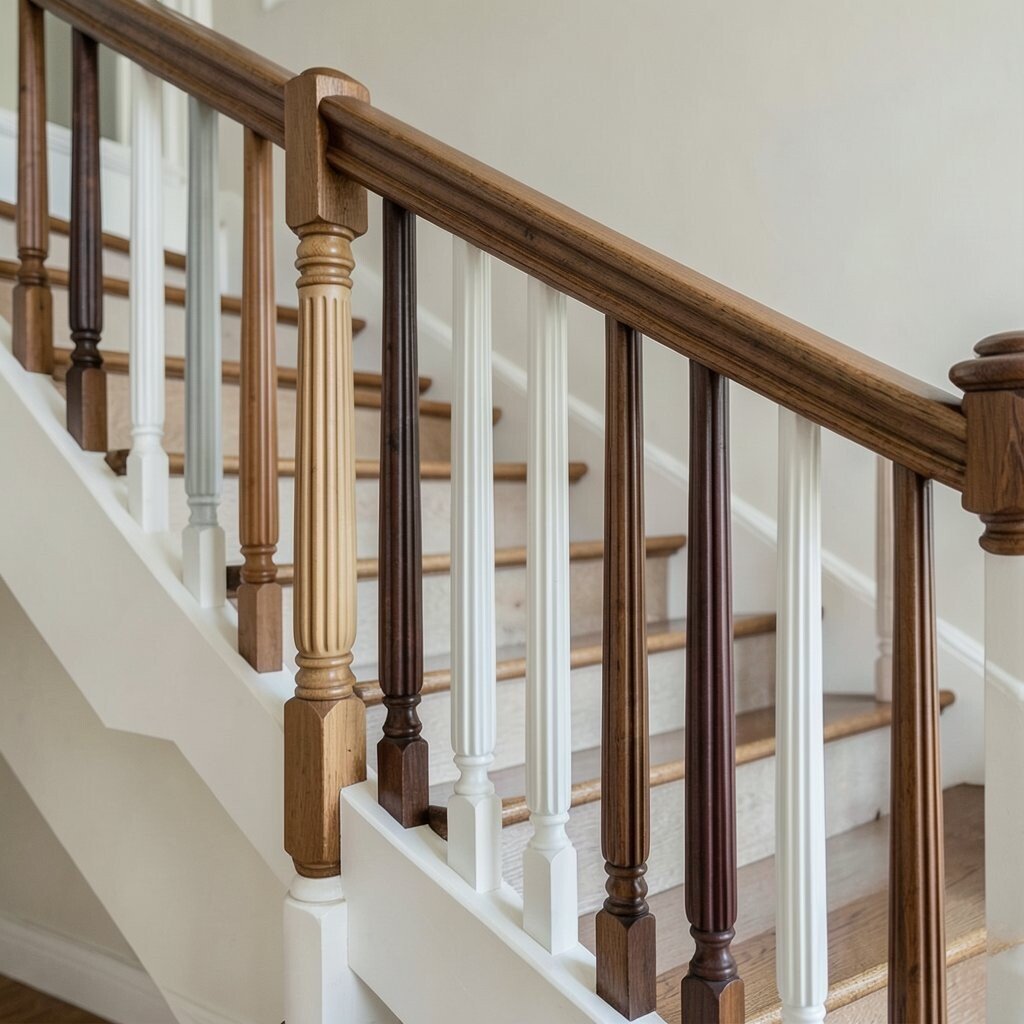
Fluted balusters bring a column-like elegance that feels formal and calm. The vertical grooves make the stair look taller and more refined.
This pattern offers benefits for visual clarity because the lines guide the eye upward. Use consistent flute depth across each baluster to keep the look sharp. If you want a practical upgrade, combine fluted balusters with sturdy, well-supported posts at each turn or landing.
For personalization, try a two-tone finish with fluted balusters in one color and caps and rails in another. If your home leans toward traditional or transitional, this choice blends beautifully. Costs vary based on whether you choose pre-milled balusters or custom profiles, so measure carefully before ordering.
You’ll also find that paint hides small irregularities, while stained wood highlights them, so plan your finish based on your tolerance for natural variation.
4. Classic Vertical Panel Posts

Vertical panel posts make balusters feel substantial, like mini columns with flat sections. The panels create a clean backdrop that makes the handrail stand out.
This look feels timeless because it echoes early craftsman and farmhouse details. It also helps with practical stair safety by creating a more solid visual barrier, especially when paired with narrow gaps. For personalization, inset a simple groove line or choose slightly chamfered edges for a subtle upgrade.
5. Herringbone-Inspired Repeats

Herringbone-inspired balusters use repeating angles to create a woven effect. When the light hits the staggered edges, the pattern looks lively from every angle.
This design brings uniqueness while staying elegant, because the rhythm is neat and orderly. Keep the angles consistent and avoid mixing slightly different shapes, which can make the stair look messy. If you want a budget-friendly direction, choose a pre-designed rail-and-baluster kit where the pattern already matches the spacing.
To personalize, paint the pattern in a single bold color for a modern classic look or stain it for a softer, traditional feel. This is a great pick for current trends that favor geometric texture without going fully modern.
6. Basket-Weave Carved Balusters

Basket-weave carved balusters give your stairs the feel of classic craftsmanship. The lattice texture looks like it belongs in a heritage home, yet it reads clearly at a distance.
They add visual depth, which is a real benefit when your staircase is a focal point. For practical tips, keep the weave pattern consistent in height so the stair line stays smooth from top to bottom. If you’re working with a contractor, ask how they plan to align each carving so it doesn’t drift along the run.
Personalize with a stain that emphasizes texture, or paint with a satin finish so shadows show the weave. Costs can be higher because carving takes more time, but you can balance the budget by using the detailed weave on straight runs and simpler balusters on less visible areas.
7. Mission-Style Straight Rails

Mission-style straight balusters keep everything clean, flat, and sturdy. The look feels strong and grounded, like classic furniture made for everyday life.
This pattern is great for people who want a classic vibe without lots of twisting or curves. Use durable materials and straight cuts to help the stairs hold up over time, especially if you have kids or heavy traffic. If you want to personalize, choose slightly different widths for the vertical elements to create gentle variation while staying orderly.
Cost-wise, straight profiles are often more budget-friendly than carved designs. It’s also an easy match for current trends that like honest materials, simple lines, and practical durability.
8. Gothic Arch Spacing

Gothic arch-inspired balusters create a pointed silhouette that feels dramatic but still elegant. The arch shape draws the eye upward and makes the stair feel grand.
This look is unique because it blends classic architecture with a stair-friendly design. Keep the arches consistent and make sure the handrail complements the arch height so the proportions feel right. For personalization, pair the arch balusters with decorative end caps that echo the same curve.
9. Victorian Scroll and Button

Victorian scroll balusters often include curving details that end in small, rounded accents. The “button” points add charm without overwhelming the rail.
This style brings strong personality, and it’s one of those patterns that feels instantly recognizable. A key benefit is that the scroll gives you plenty of visual interest even when the stair is viewed from far away. For practical tips, ask whether the scrollwork is shallow or deep, since deep profiles need more cleaning and can catch dust.
To personalize, choose a soft white paint for a classic look or a warm gray for a more subtle vibe. Costs usually rise with complexity, so consider using the most detailed balusters at the main viewing section and slightly simpler ones elsewhere.
This design also stays popular because many current trends still celebrate ornate detail in a clean, controlled way.
10. Simple Square Blocks
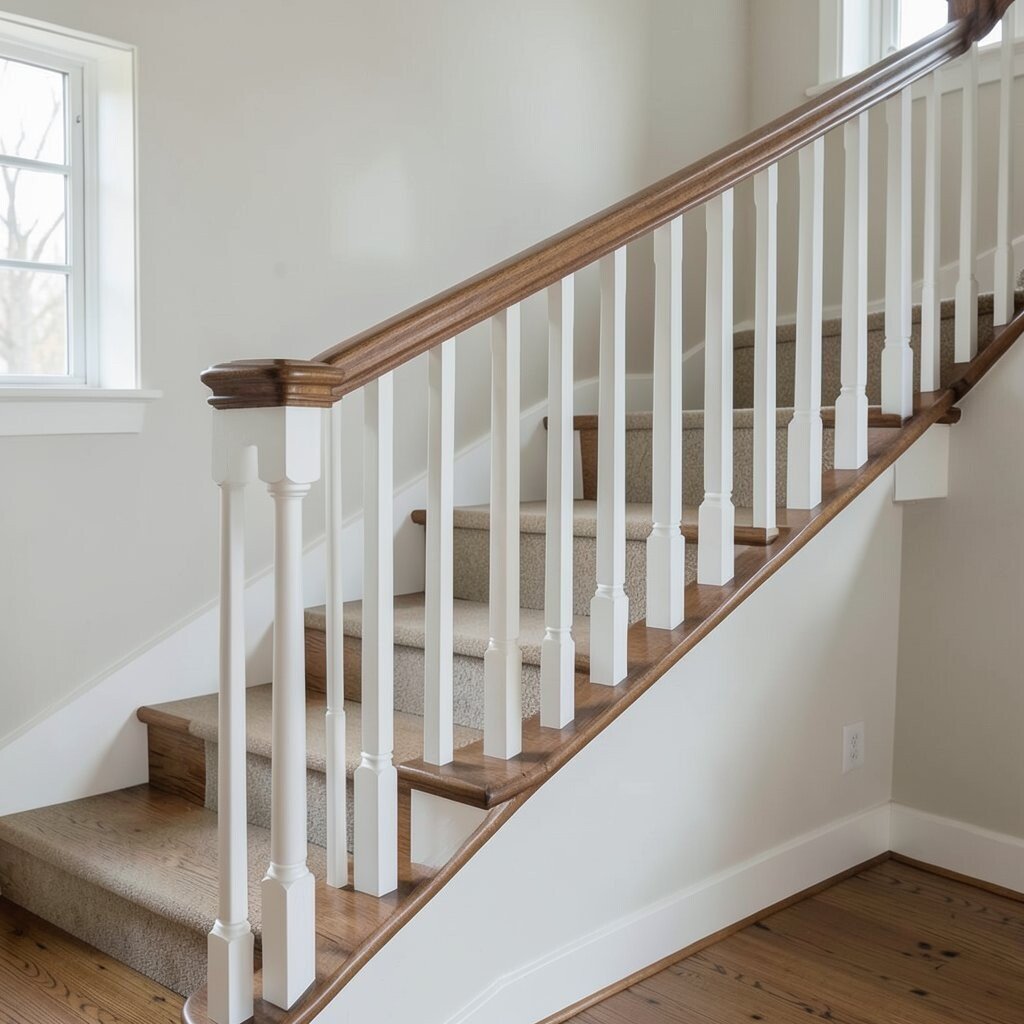
Square block balusters give a crisp, minimal classic look. They can make the stair feel like it belongs in a modern farmhouse while still reading traditional.
This pattern offers benefits for maintenance because flat faces are easier to wipe clean than heavy carving. Keep the blocks aligned and use a consistent spacing so the stair line looks neat. If you want personalization, try alternating block sizes in a subtle way, but only if you can keep symmetry.
11. Symmetrical Ogee Curves

Ogee curves create that classic double-swoop silhouette that feels detailed but refined. The shape looks elegant along both straight runs and turns.
This pattern is unique because it carries a history of doorways and trim into stair design. Make sure the ogee curves are all facing the same direction so the pattern reads clean. For practical tips, choose a finish that matches your handrail sheen so the whole system feels coordinated.
To personalize on a reasonable cost path, consider using pre-made balusters with ogee profiles and spending extra on the rail and newel posts. Many homeowners do that tradeoff, because the posts and rails set the “wow” when someone approaches the stairs.
12. Diamond Point Lattice

Diamond point lattice balusters create a repeating sparkle of geometry. Each diamond catches light and adds a crisp, classic sparkle across the stair.
This look brings visual benefits by adding pattern without requiring heavy scrollwork. Keep the diamonds evenly spaced and avoid stretched shapes, especially near corners. For personalization, paint the balusters in a strong contrast color so the diamonds pop against the wall.
If you’re thinking about cost, lattice-style profiles can be more affordable than deeply carved designs. They also align with current trends that like geometric detail paired with simple rail systems.
13. Artful Ringed Turnings

Ringed turnings add small bands along a turned baluster, creating a classic “measured” style. The rings create an easy-to-see rhythm as people move up and down the stairs.
This design is practical because the repeated rings help hide minor variations in finish over time. When ordering, confirm the ring spacing so the whole run looks consistent rather than accidental. Personalize by choosing a slightly larger ring on the balusters nearest the landing for a subtle focal point.
Cost can stay moderate since turnings are often simpler to manufacture than complex carve-through patterns. If your budget is tight, you can allocate money to premium newel posts, which usually matter more for first impressions.
14. Rope and Reed Combo
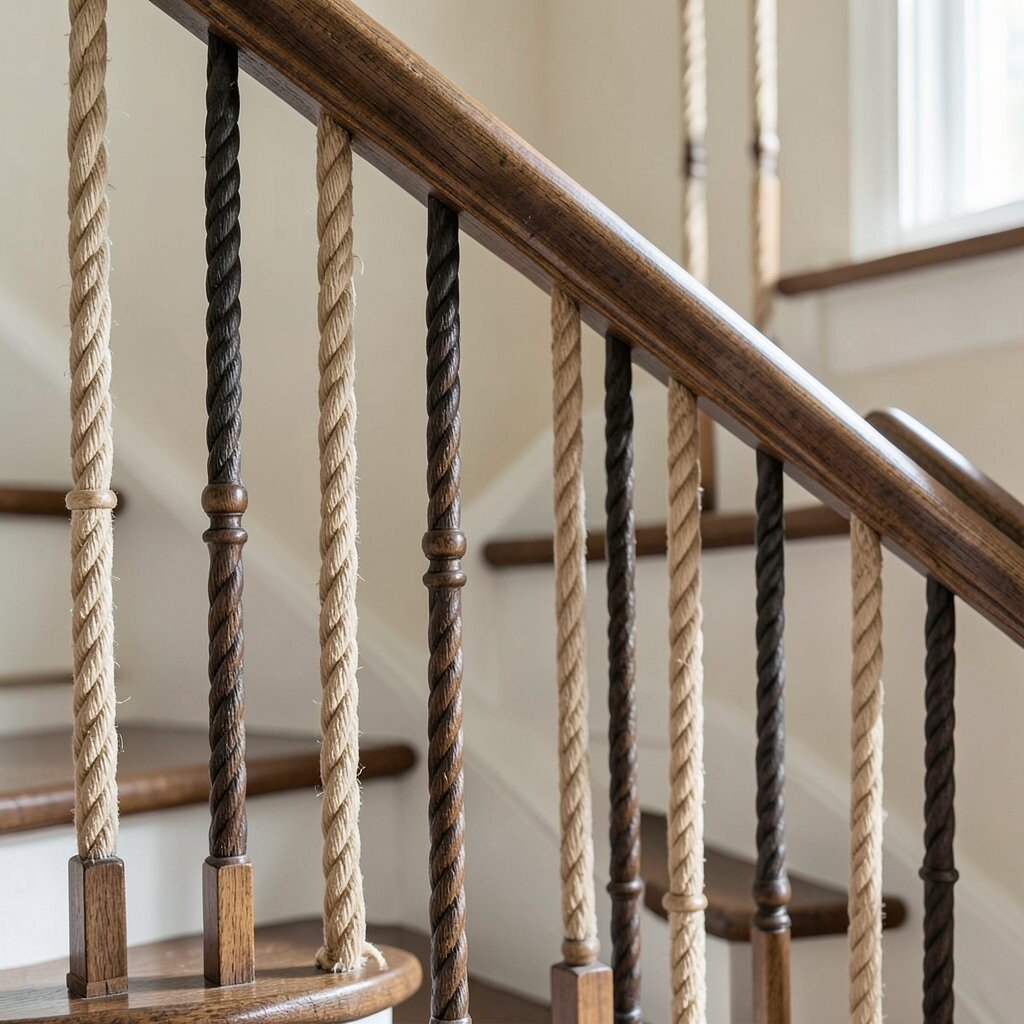
A rope and reed combo mixes twisting curves with slender vertical accents. The contrast makes the stair feel richer while still grounded in classic detail.
This pattern is unique because it balances movement with order, like a carved border with repeating structure. For practical tips, keep the reed accents thin enough that they don’t weaken the baluster overall. Personalize by choosing a finish that emphasizes contrast, such as a darker rope and a lighter reed effect.
Costs may be higher than simple turned styles because of the mixed geometry, but you can manage it by limiting the combo pattern to the most visible sections. This approach also fits current trends that favor feature areas and intentional repetition rather than full-house uniformity.
15. Solid Cap and Crown Spindles
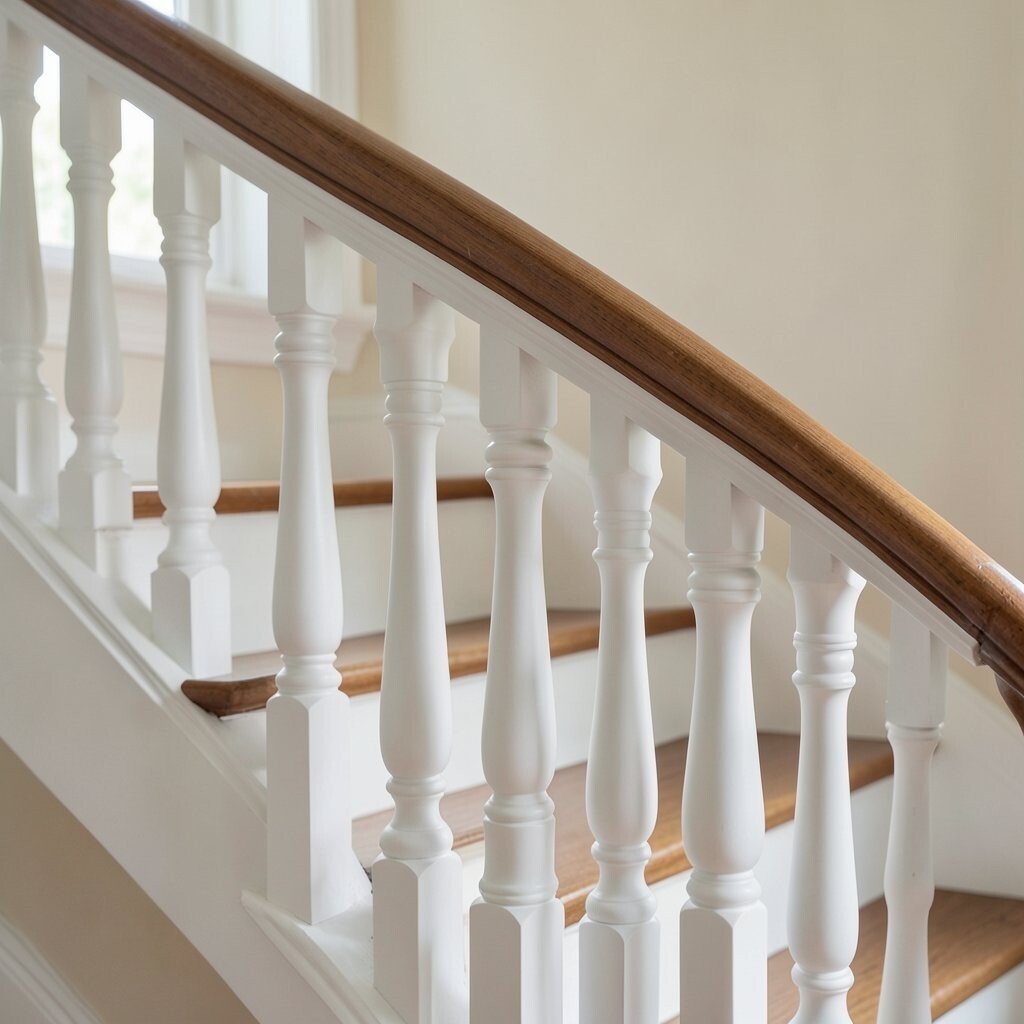
Solid cap and crown spindles emphasize the top details with sturdy, decorative ends. They look like classic trim pieces scaled to stair height.
This design offers benefits because the caps draw attention to the upper line of your staircase. Use consistent crown shapes so the pattern feels deliberate rather than patchy. For personalization, match the crown profile to molding in your room, like baseboards or door casings, for a cohesive style.
Cost considerations are usually favorable because the main styling is at the ends rather than in full-length carving. You can also pick a sturdy material that resists dents, which helps stairs stay looking new even with daily use.
16. Classic Twist Spiral Single Thread

Single-thread twist balusters create a smooth spiral line that wraps upward. The result feels elegant and light, like a ribbon made of wood.
This pattern is ideal if you want a bit of character without the complexity of heavy Victorian scrollwork. For practical tips, check that the twist profile is consistent from baluster to baluster so the spiral rhythm looks continuous. Personalize by staining the twist slightly darker than the straight sections, if your design includes both.
17. Roman Segment Cutouts

Roman segment cutouts feature curved voids that echo old architectural niches. The negative space makes the balusters feel airy, even when the stair is busy with other details.
This look is unique because it’s classic but not overly ornate, thanks to the cutout shapes. Make sure the cutouts align cleanly along the stair run so the pattern doesn’t drift visually. For personalization, pair cutouts with a bold newel post design so the stair has a strong anchor point.
Costs can vary depending on how deep the cutouts are, since deeper machining takes more time. If you want to keep it budget-friendly, choose moderate depth and invest in a high-quality handrail finish that feels great to touch.
18. Traditional Flat Bar Balusters

Traditional flat bar balusters bring a crisp, built-like-a-frame look to your stairs. The simple bars feel sturdy and timeless, especially in entryways with classic molding.
This pattern is a smart choice if you want easy maintenance and a clean line. Keep the bar spacing consistent and choose a finish that resists scratches, since stair areas take a lot of daily contact. Personalize with a slightly distressed paint finish for a vintage mood or a polished metal look for a crisp contrast.
Cost considerations often work in your favor because flat bars can be produced efficiently. It’s also a current favorite because many modern classic homes blend simple metal accents with warm wood rails.
19. Ornate Scroll Frame Panels

Ornate scroll frame panels place decorative curves inside a structured border. The framed look feels grand, like classic gates scaled to your staircase.
This pattern brings benefits by giving the eye a defined structure while still adding charm. For practical tips, confirm the panel dimensions so the balusters don’t look too narrow or too wide for the stair opening. Personalize by selecting a border profile that matches your window trim style for a cohesive, home-wide look.
Costs tend to be higher when the scrollwork covers more surface area, so you might limit the most detailed panels to the most visible stair run. This keeps the impact strong while staying mindful of your overall budget.
20. Mediterranean Arched Slats
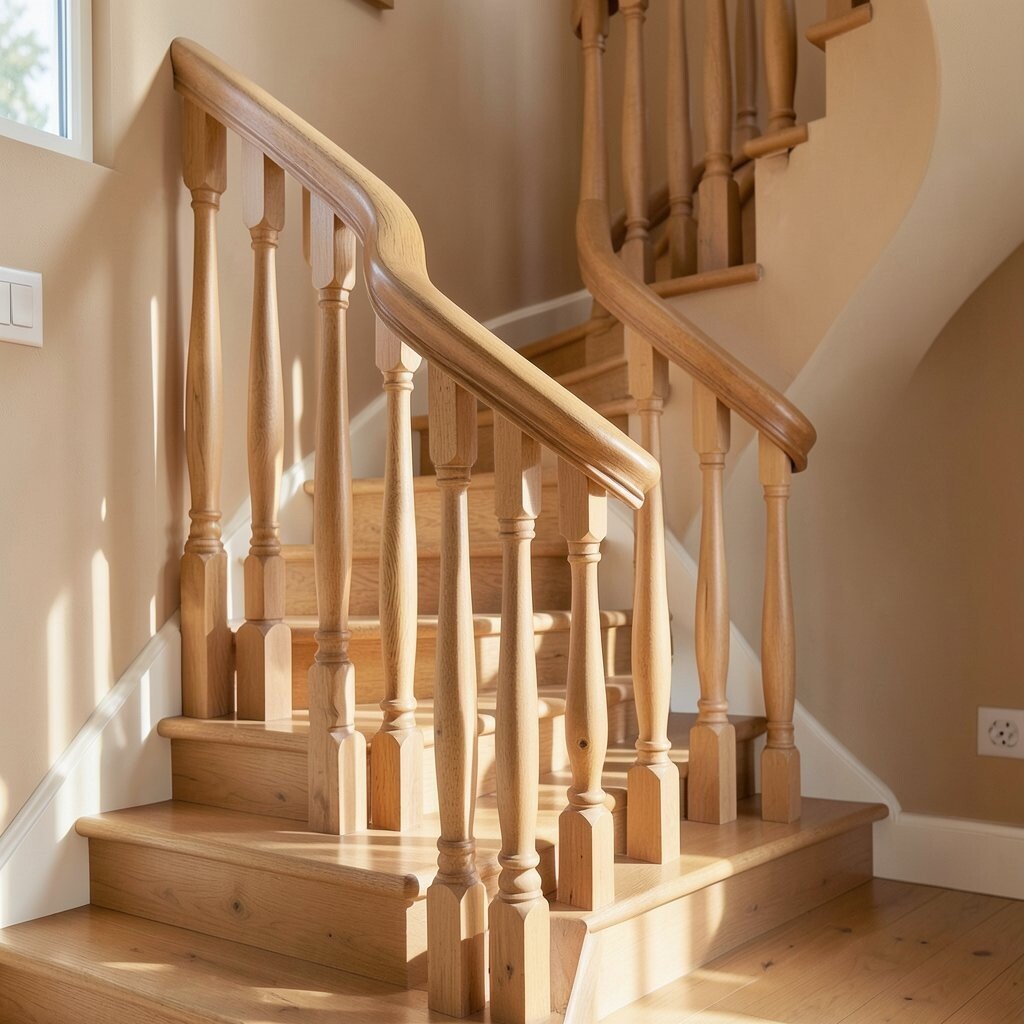
Mediterranean arched slats bring warm, sunlit character to your stair design. The arches look like small doorways, creating an inviting visual rhythm.
This style is unique because it blends classic arches with a lighter, breezier feel than heavy Victorian details. Keep the arches consistent and ensure the handrail supports the overall curve so the staircase feels comfortable to use. For personalization, choose a finish that echoes terracotta tones nearby, like warm beige walls or honey wood floors.
Cost can be moderate when you use repeatable slat profiles rather than deeply carved figures. It also fits current trends that bring a soft, vacation-inspired touch into everyday homes.
21. Country Turned Spindles with Bands

Country turned spindles with bands create a homespun charm without looking rustic in a messy way. The small band details make the spindles feel “finished” and friendly.
This pattern’s benefit is that it looks great in many rooms, from farmhouse kitchens to classic living spaces. For practical tips, keep the band positions aligned and consider matching the band height across every baluster. Personalize by adding a subtle glaze on painted spindles so the grooves and turns show depth.
Cost considerations are often reasonable because turned profiles are efficient to make, and the banding adds style without extreme carving time. If you want the current classic trend feel, pair the spindles with simple, sturdy newel posts and a warm matte handrail.
22. Minimalist Bead and Reeding

Minimalist bead and reeding uses small raised beads and gentle ridges for a quiet, classic look. It feels detailed up close while still staying calm from across the room.
This pattern offers benefits because the surface texture helps the stair feel rich without adding clutter. Keep the bead sizes consistent and avoid mixing profiles from different batches, which can cause slight mismatches in rhythm. For personalization, choose a satin paint or a clear finish that highlights the fine ridges for a soft, elegant glow.