A staircase can be a quiet centerpiece of your home. The balusters are the details that make it feel finished and full of character.
From tidy classics to bold, turned woodwork, the right style helps you match your space and keep things safe for everyday use.
1. Traditional Turned Wood Balusters
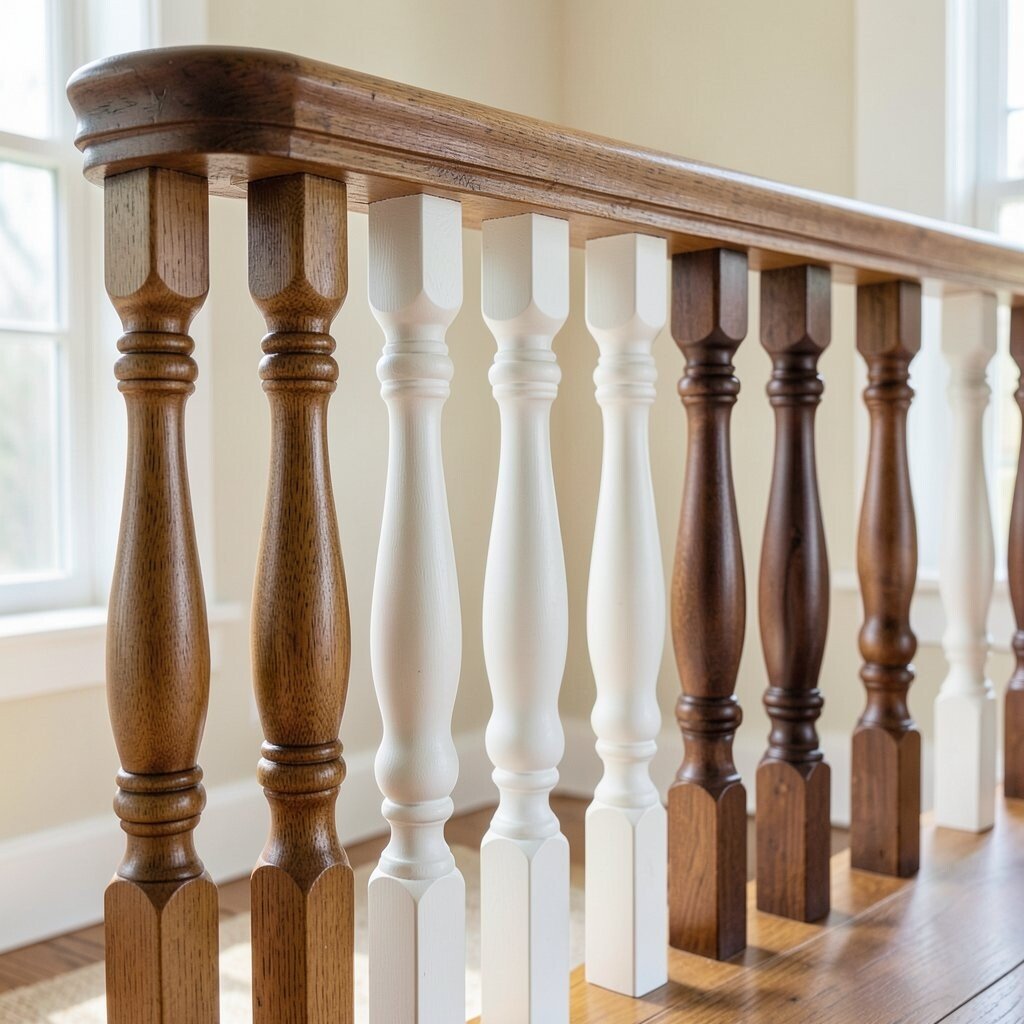
Traditional turned balusters have a warm, hand-crafted look with repeating curves that catch the light. You can spot them easily because they feel orderly and comforting from the first glance.
They work beautifully in many homes, especially when your railings, trim, or doors use similar wood tones. For practical results, measure the spacing carefully so each post sits evenly and the handrail feels steady. If you want a personalized touch, paint them in a soft white for a bright feel or stain them darker to match walnut furniture.
2. Fluted Balusters With Vertical Grooves
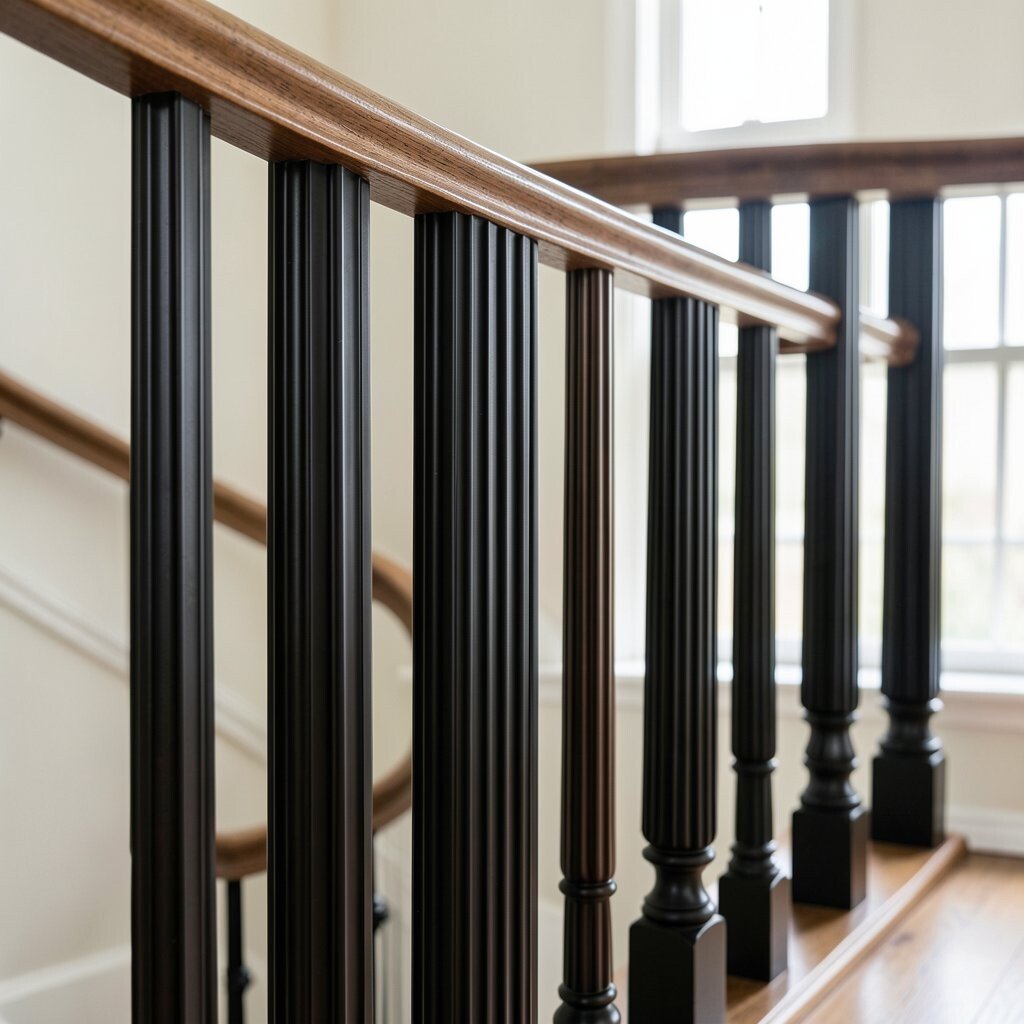
Fluted balusters feature slim vertical channels that create a refined, architectural look. Because the grooves catch shadows, they add depth even in plain lighting.
This style suits both classic and transitional interiors, and it pairs well with wood or metal handrails. To keep them looking sharp, dust with a soft cloth and use a gentle cleaner on the grooves so dirt does not build up.
For current trends, many homeowners are pairing fluting with darker finishes like matte black or deep bronze for a crisp contrast. When budgeting, ask your installer if fluted pieces come in standard lengths to reduce cutting and waste.
3. Rope-Twist Balusters for Cozy Detail
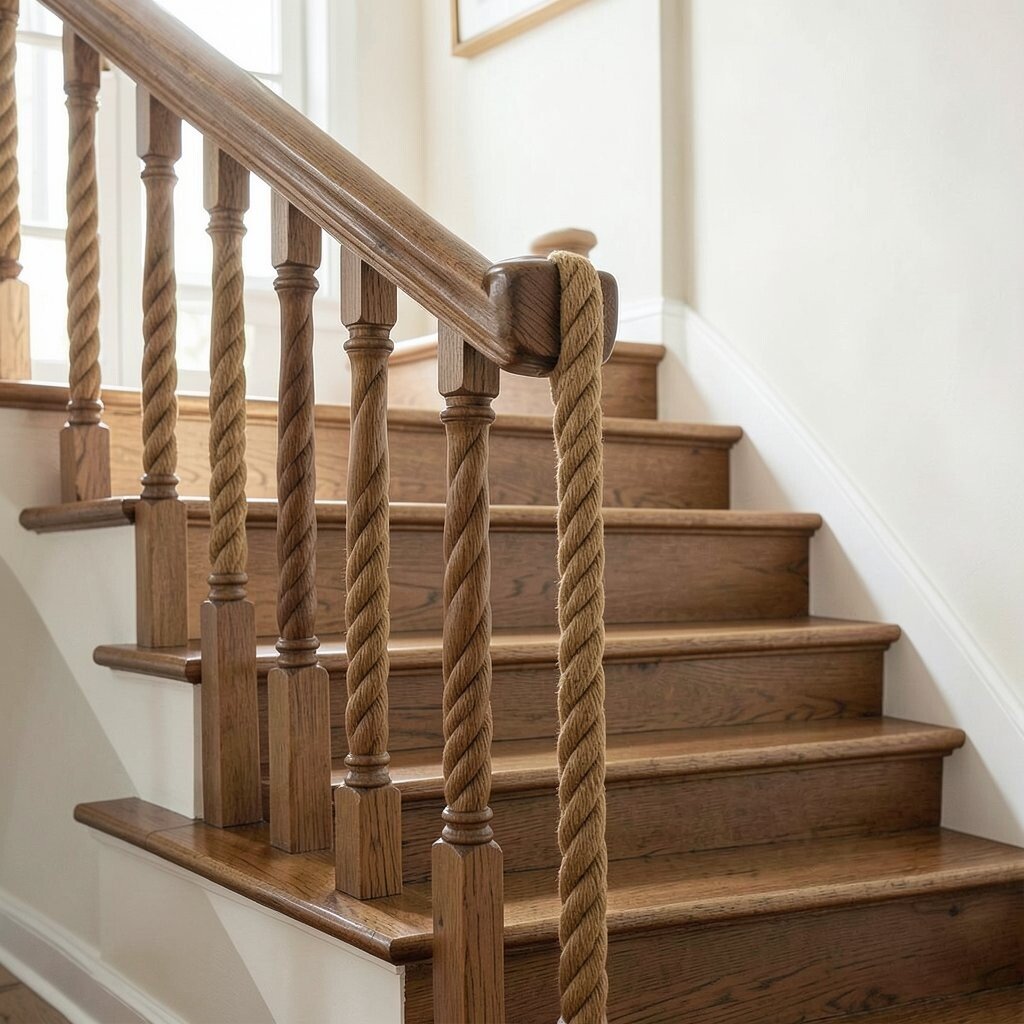
Rope-twist balusters look like braided cord turned into sturdy railing parts. The spiraling lines feel lively and classic at the same time.
You get a strong visual rhythm along the stairs, which is great if your entryway needs personality. For everyday practicality, choose balusters that are securely anchored so the twist stays aligned over time.
To personalize, match the tone of the rope pattern to your stair finish. A walnut stain with lighter natural highlights can make the twist pop without feeling too busy.
If you want a cost-friendly path, consider using rope-twist balusters only on the most visible sections, like the first flight, and keep the rest simpler.
4. Square-Post Balusters With Clean Edges
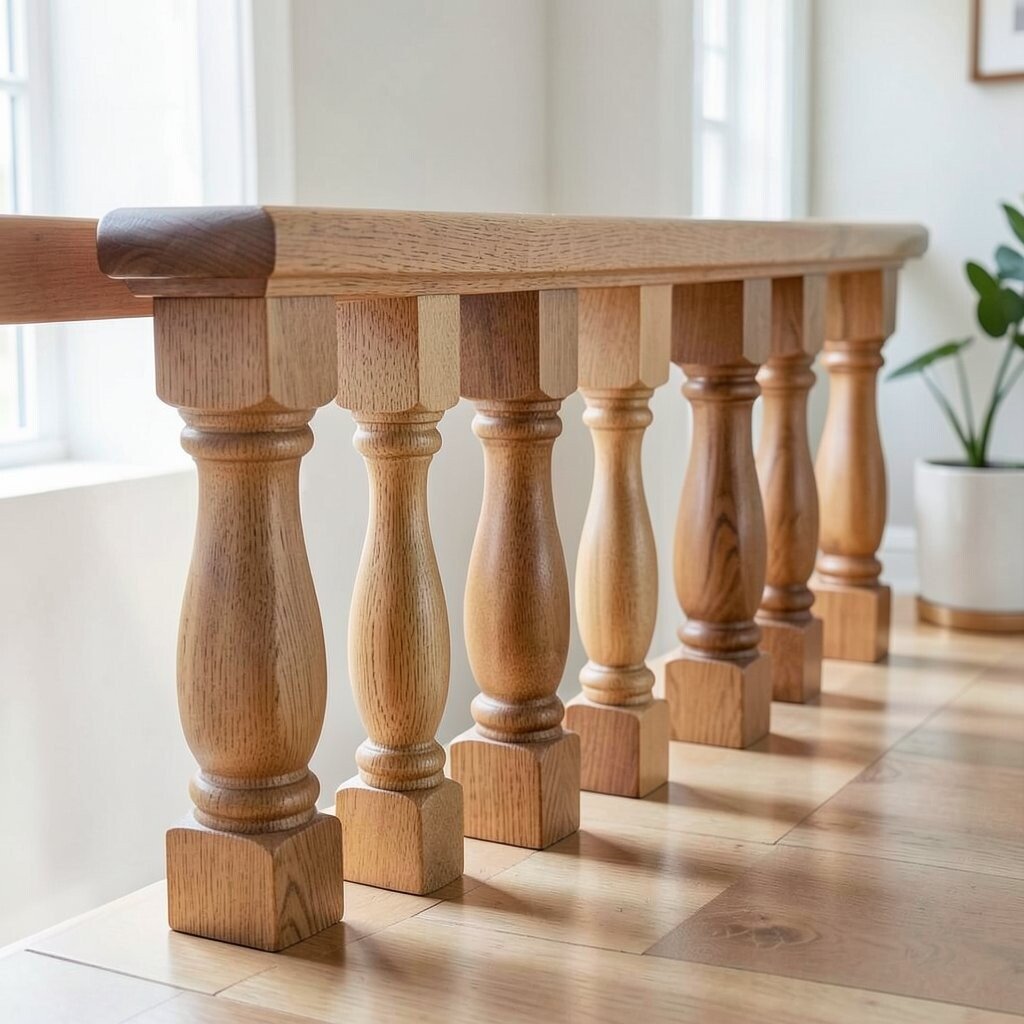
Square-post balusters give a calm, structured look with straight lines and crisp corners. They feel classic, but not fussy, which makes them great for small spaces.
This style can be budget-friendly because it often uses simpler shapes and straightforward mounting. To make sure everything looks level, confirm that each baluster top aligns with the handrail line during installation.
Personalization is easy, since you can choose square balusters in stained wood, clear-sealed oak, or painted finishes. If your home has modern touches, slightly chamfered square posts can blend old and new beautifully.
5. Wrought Iron Scroll Balusters
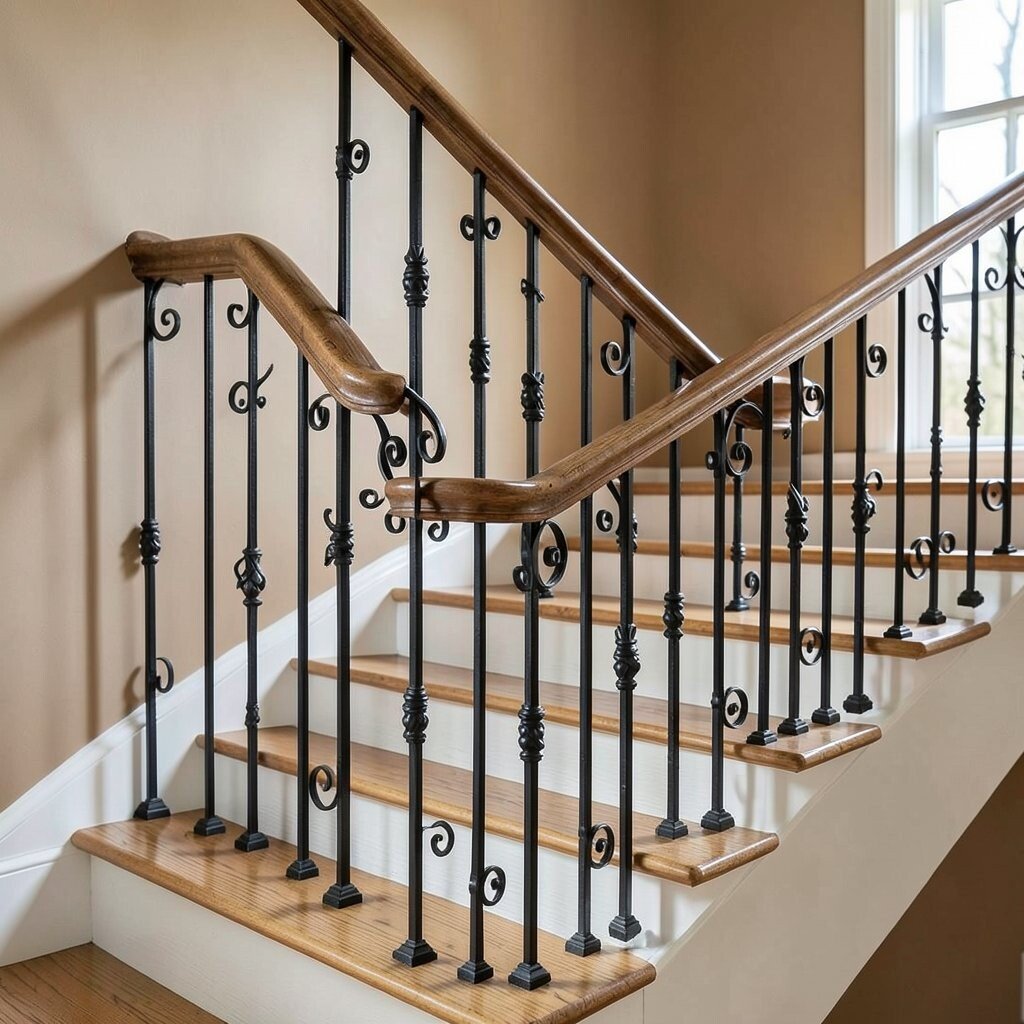
Wrought iron scroll balusters feel elegant and airy, with curls that look like old-world metalwork. Even when the design is delicate, the railing still looks sturdy and intentional.
This option adds a high-end look to entryways, foyers, and stair landings. Keep maintenance practical by using a rust-resistant coating and wiping down metal regularly to prevent grime buildup.
For trends, many people combine black wrought iron with light wood treads and warm wall colors to create a strong contrast. Cost-wise, iron work may cost more upfront, but it often lasts for decades with simple care.
6. Simple Cable-Style Balusters
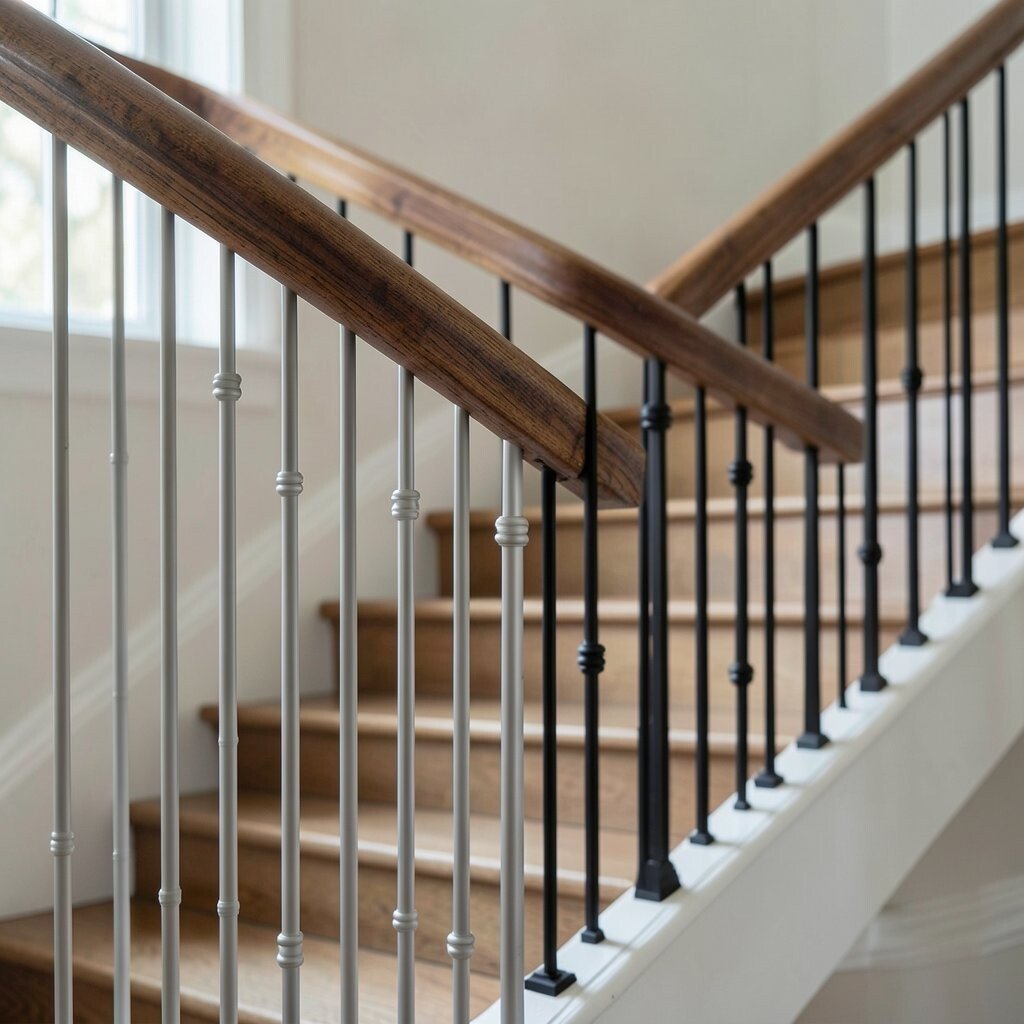
Cable-style balusters use sleek lines stretched between sturdy posts, giving a clean, minimal view. They can make staircases feel lighter because they do not block sightlines as much.
Even though the look is open, you still get safety when cables are installed to proper tension and spacing. For a smart tip, choose hardware that matches your handrail fittings so every connection looks deliberate.
To personalize, pick a finish like satin silver for a soft modern feel or matte black for drama. Many homeowners like this style in contemporary homes, but it can also fit classic spaces when paired with traditional wood rails.
In terms of cost, cables can be a great middle ground because the straight runs are often quicker to install than elaborate balusters.
7. Classic Spindle Balusters With Uniform Shapes
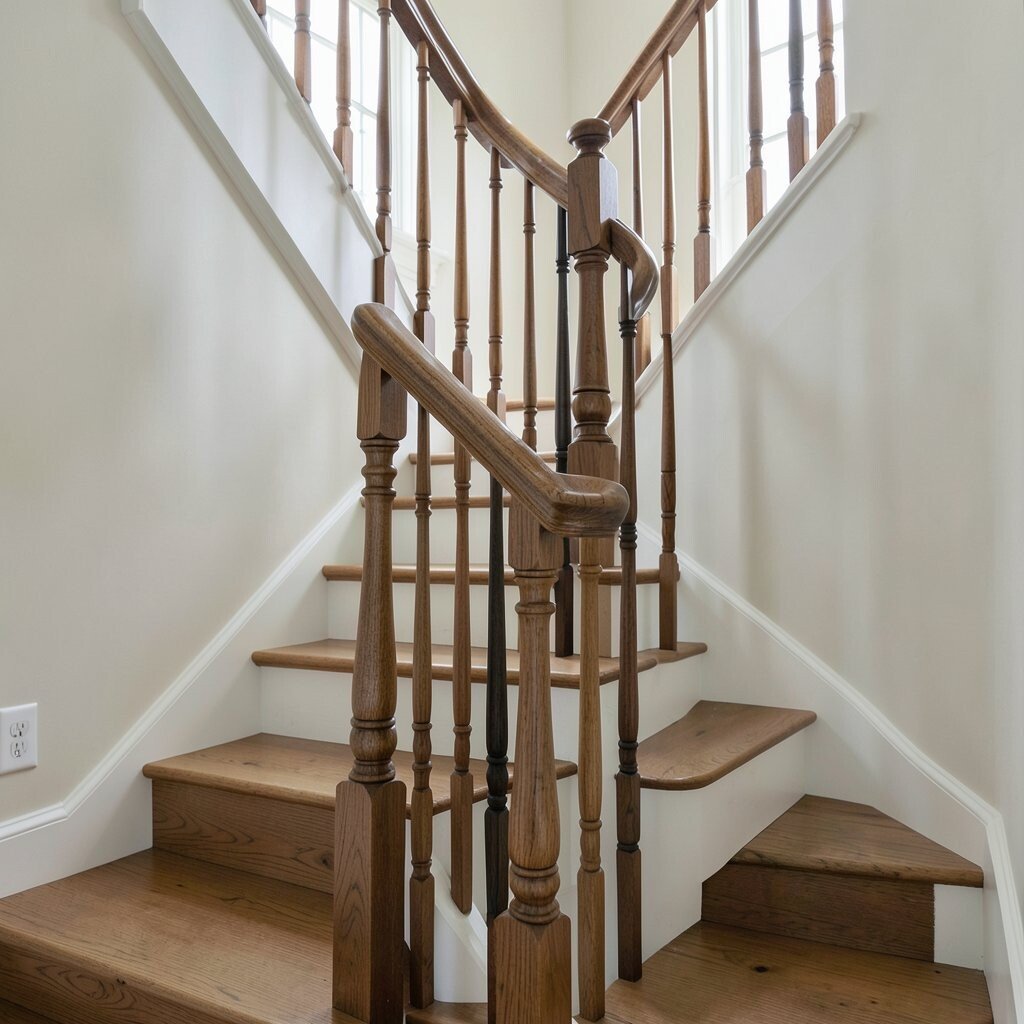
Spindle balusters are all about consistency, with slim, repeated shapes that create a neat rhythm. They look tidy and timeless, especially when the stairs are narrow or the landing is visible from the hallway.
This style helps the whole staircase feel organized, which is a big win for busy homes. A practical step is to plan your layout early so spacing stays even and the handrail sits smoothly across turns.
If you want personalization, switch between two close wood stains to add subtle depth. You can also add a decorative newel post to make the design feel custom without changing every baluster.
For cost considerations, standard spindles are often easier to source, which can reduce delays and installation surprises.
8. Ball-Capped Balusters for a Polished Finish
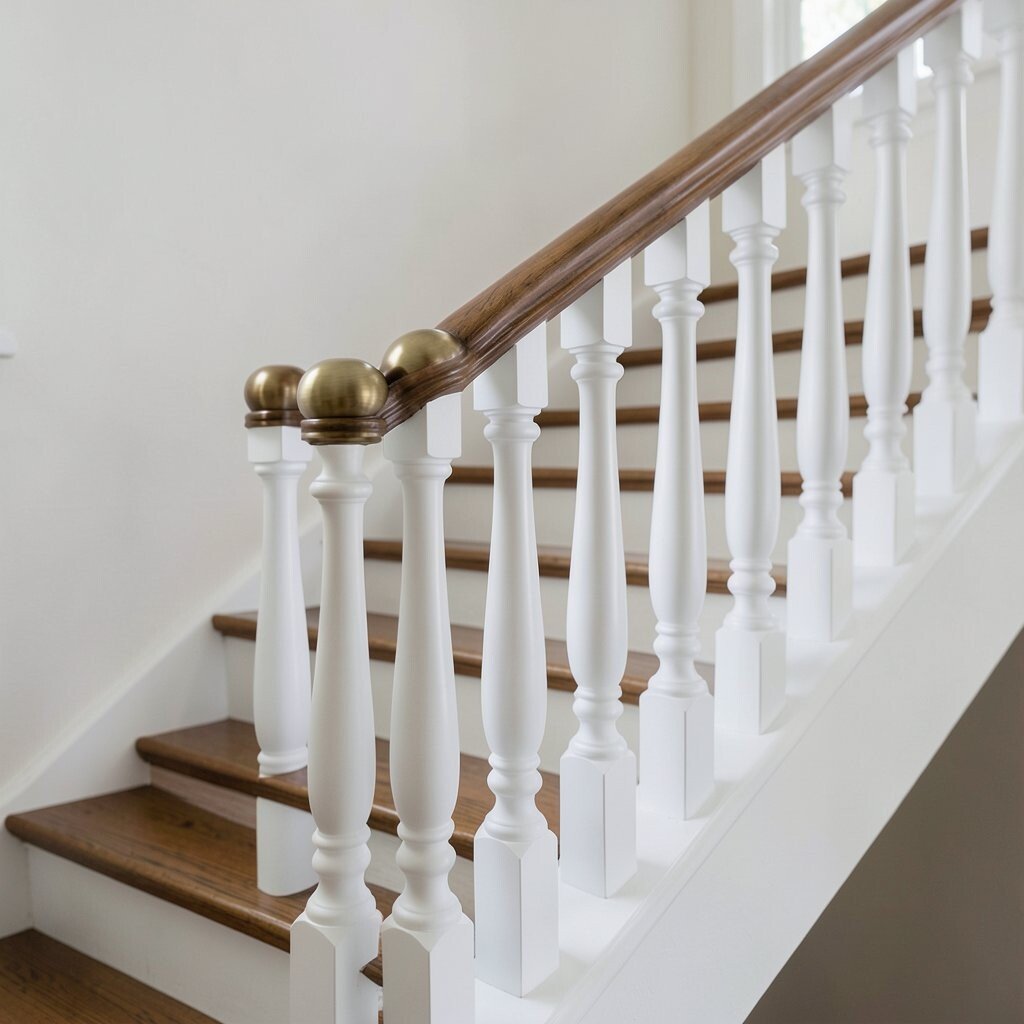
Ball-capped balusters feature a rounded top that softens the look of the railing. From a distance, they create a friendly pattern that feels classic and complete.
This small detail can make a staircase feel more welcoming without adding complexity. To keep everything neat, make sure the ball tops align evenly so the railing does not look wavy.
For personalization, you can choose different sizes of ball caps on different floors to guide the eye upward. Pairing brass-toned caps with white rails can create a lively, high-contrast look that still feels traditional.
On cost, ball caps may add a bit to the price, but the effect is big, so it can be a smart upgrade.
9. Artful Fretwork Balusters for Warm Charm
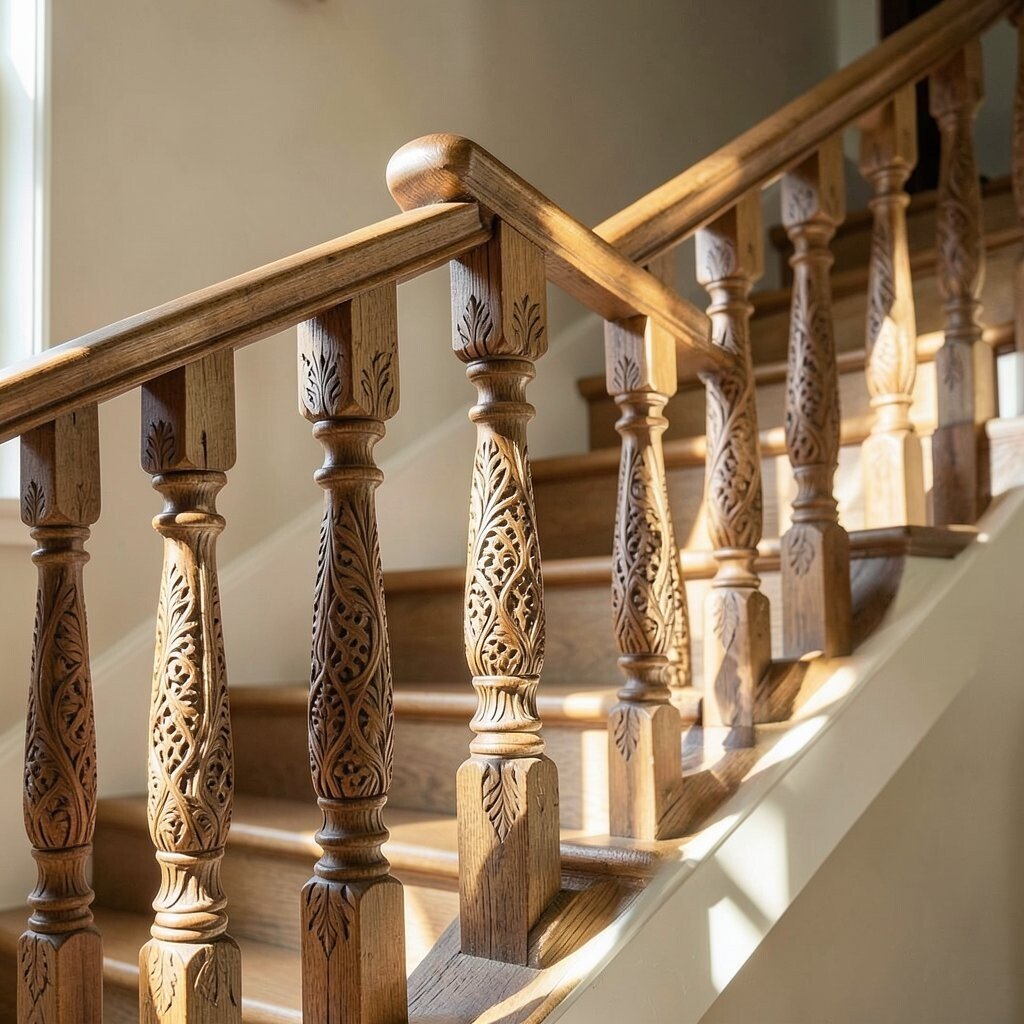
Fretwork balusters bring a cozy, decorative feel with carved patterns that look like lace made solid. They add sparkle to your staircase, especially when sunlight moves across the rail.
This style is unique because the pattern becomes its own feature, turning plain walls into a focal backdrop. A practical tip is to consider how much cleaning you want to do since intricate designs can hold dust in small grooves.
If you want the look but less upkeep, choose larger, simpler cutouts that still provide visual interest. For personalization, match the fret pattern to a motif used in your room, like leaf shapes or geometric lines.
Cost can vary widely based on the complexity of the pattern, so ask about pre-made panels versus custom pieces.
10. Oval-Panel Balusters With Framed Details
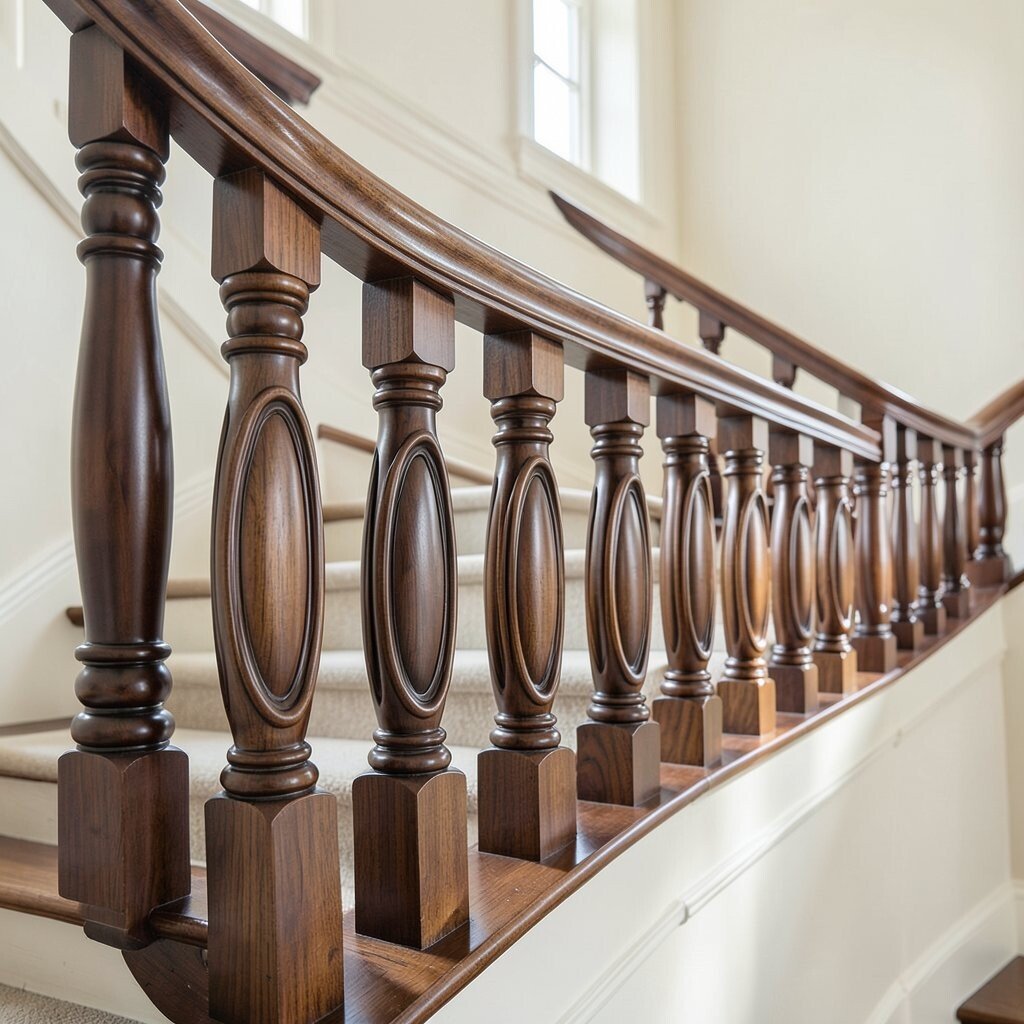
Oval-panel balusters feel elegant because they include framed shapes that hold the eye. They look especially good on wide staircases where the design can breathe between posts.
When done well, the panels add a classic “picture frame” effect that makes the railing look like part of the architecture. For practical installation, confirm that the panel edges align consistently so the frames look symmetrical.
To personalize, choose panels that echo the shape of your room accents, such as oval mirrors or arched doorways. A darker stain with lighter trim can make the frames pop without needing extra decor.
11. Gothic Revival Balusters With Pointed Motifs
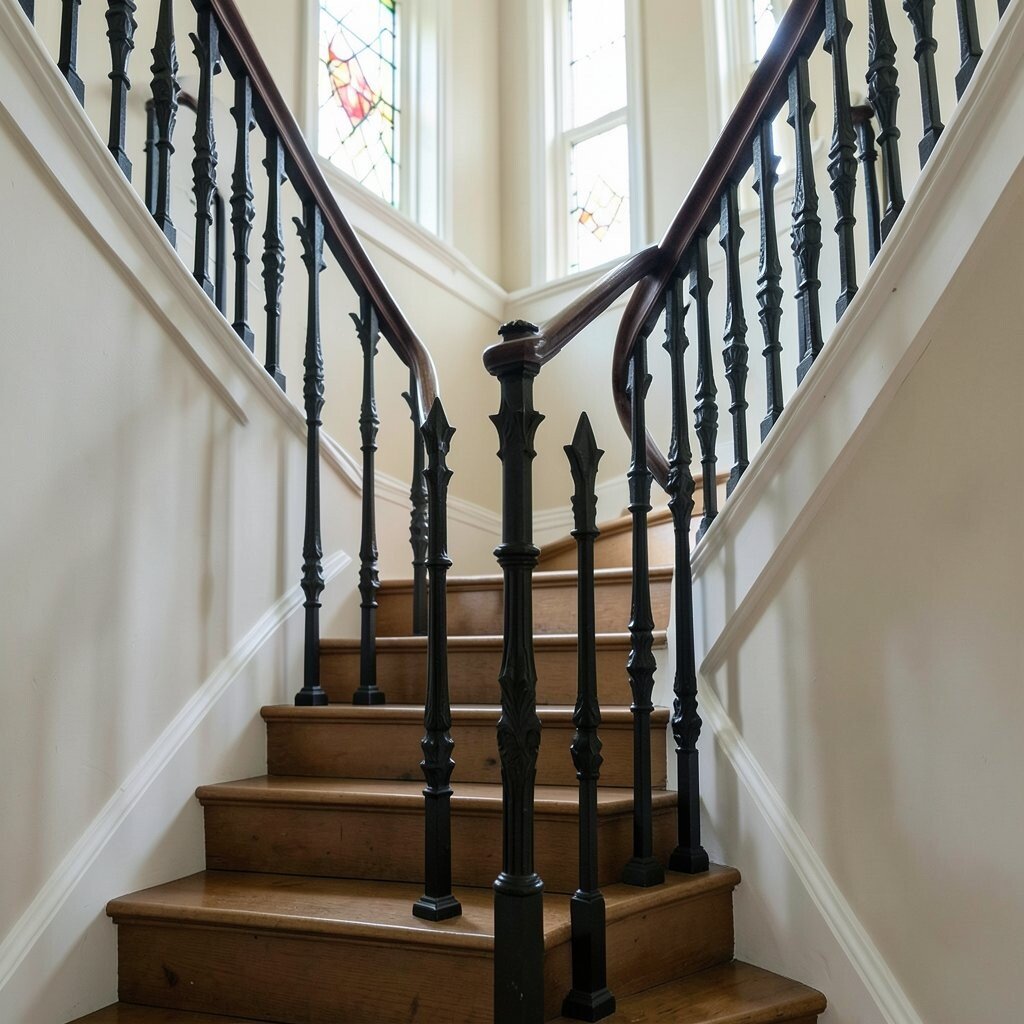
Gothic revival balusters bring a dramatic, timeless mood with pointed shapes that rise like tiny arches. They suit homes with tall ceilings, stained glass, or ornamental trim.
You get a unique sense of character because the silhouette looks bold even from the bottom step. For safety and comfort, ensure all points are smooth to the touch so nothing snags clothing or hands.
Personalization is also about scale, so if your stairs are narrow, opt for smaller pointed motifs to avoid visual overload. Many homeowners choose black iron gothic patterns paired with light walls for a striking but still classic look.
On cost, pointed iron pieces can cost more, but the impact can be worth it when you want a standout staircase moment.
12. Traditional Victorian Eastlake Balusters
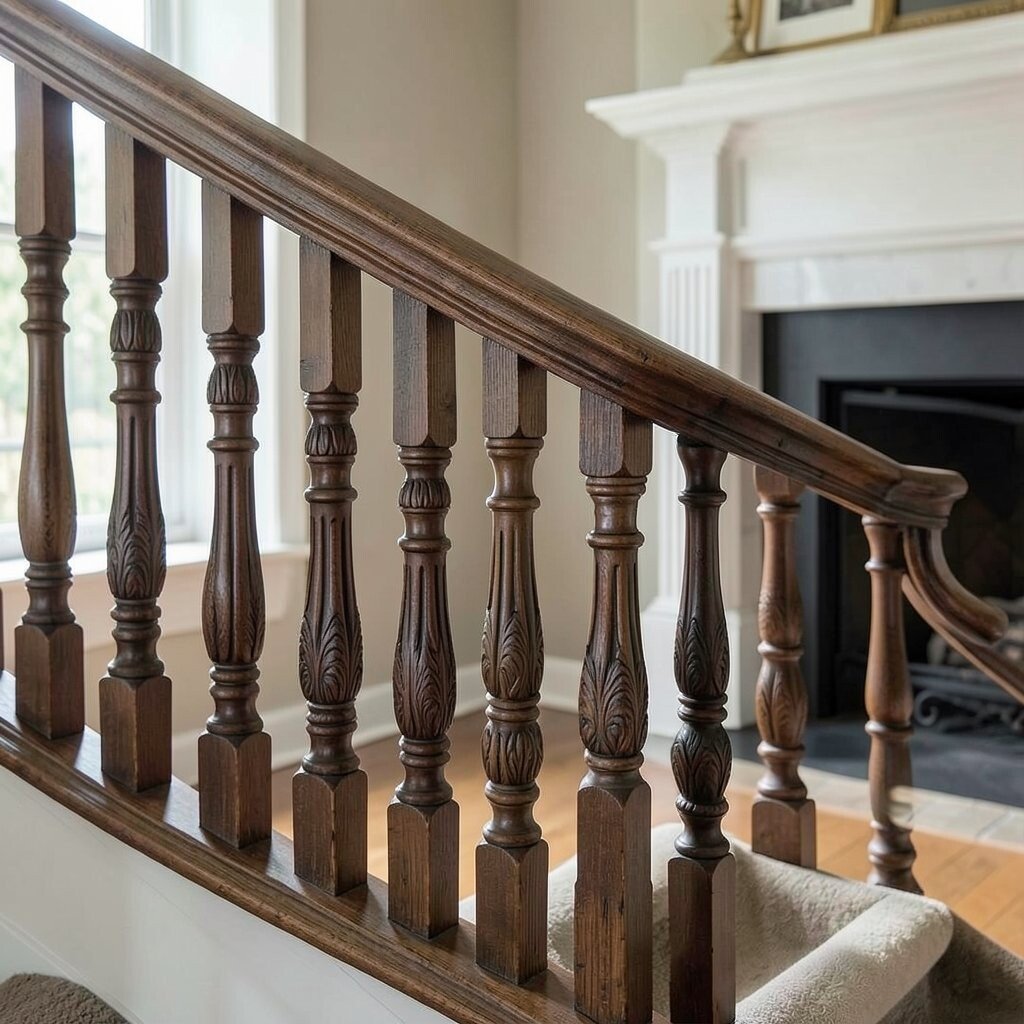
Victorian Eastlake balusters are known for their strong, decorative texture and detailed profiles. They feel lively, almost like furniture turned into staircase parts.
This style shines when you want the home to look richly finished, not plain or minimal. To keep the look practical, choose finishes that resist scuffs and wipe clean easily after daily life.
For personalization, match the railing’s carved feel to a cabinet style or fireplace surround in the room. If you prefer a calmer look, use fewer ornate pieces on the most visible segments and keep the rest simpler.
Cost-wise, highly detailed profiles usually cost more, so planning a partial upgrade can help your budget stretch.
13. Neoclassical Fluted Wood With Balanced Proportions
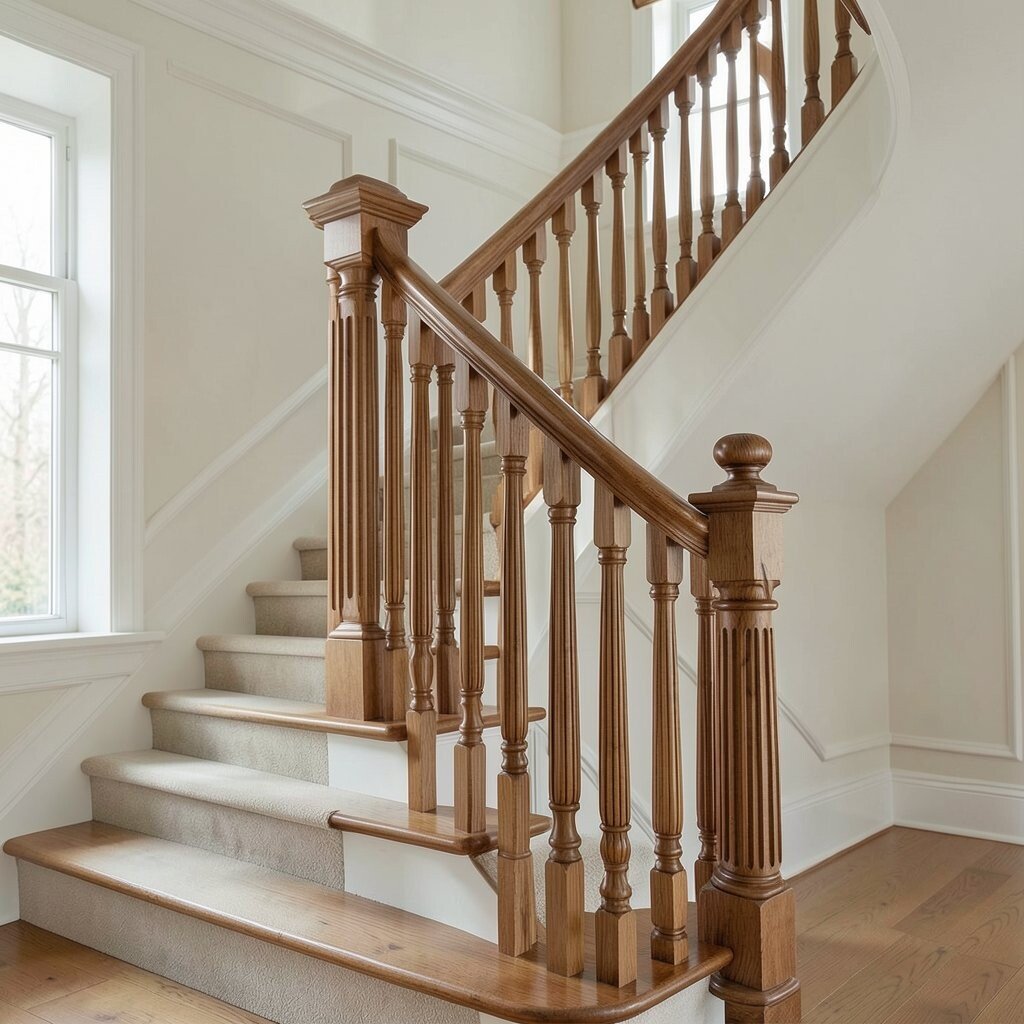
Neoclassical fluted balusters combine strong lines with elegant vertical detail. The result is a staircase that feels formal and well-composed.
This look often pairs nicely with columns, crown molding, and other symmetrical features in the home. For a practical tip, ensure the balusters align with the newel posts so the staircase feels perfectly balanced from front to back.
To personalize, choose a finish that matches the room’s “main character” wood, like cherry, mahogany, or painted trim. Many current styles favor soft off-whites and warm creams because they look crisp without feeling cold.
14. Scroll-and-Leaf Balusters for Garden-Inspired Elegance
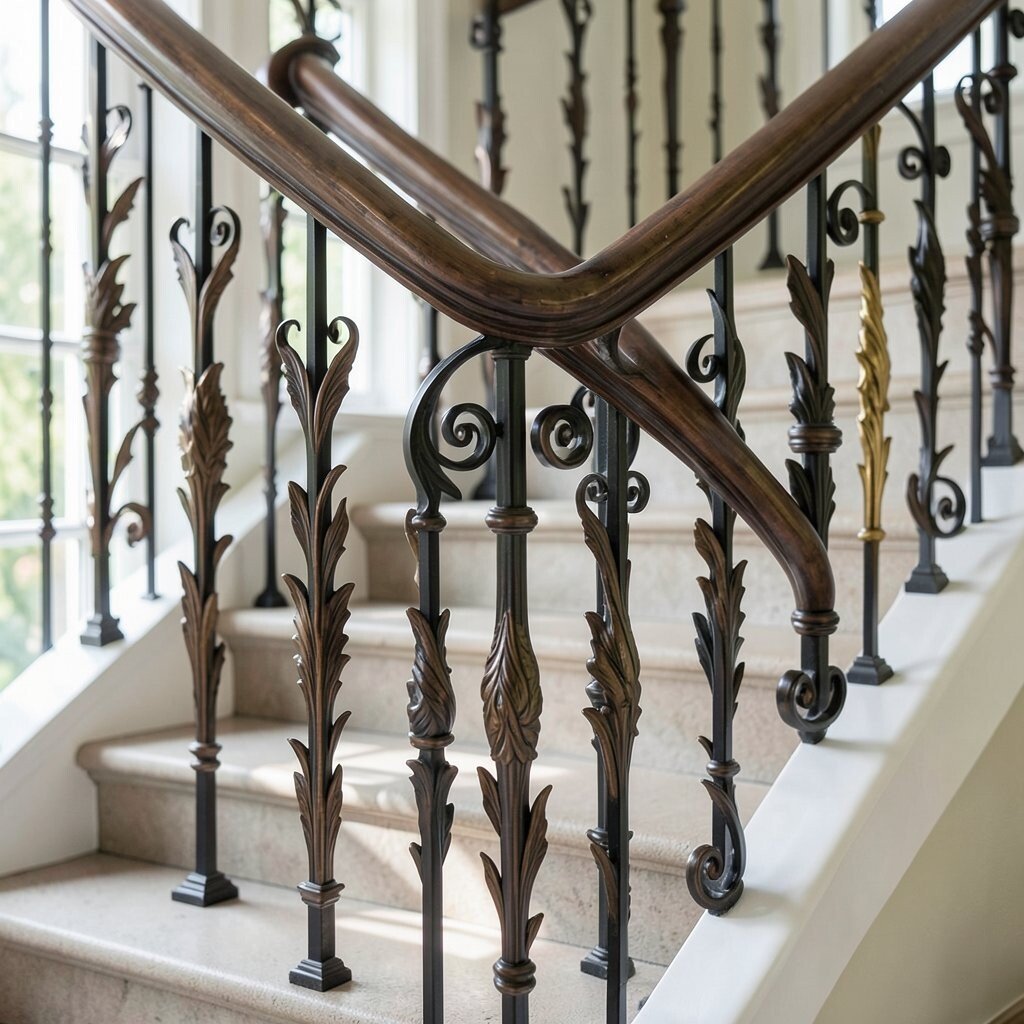
Scroll-and-leaf balusters carry a nature-inspired flow, with metal curls and leaf shapes mixed together. They make a staircase feel like a decorative pathway, not just a way to move between floors.
This style is unique because it adds motion, even when the railing stays still. For practical maintenance, look for leaf designs that are not too fine so cleaning remains manageable.
Personalization can be as simple as choosing the leaf tone, like dark bronze for a vintage mood or polished brass for a brighter sparkle. If you want a budget-friendly approach, use the more detailed scroll-and-leaf balusters only at turns and landings where they are seen most.
15. Parquet-Influenced Balusters With Patterned Sections
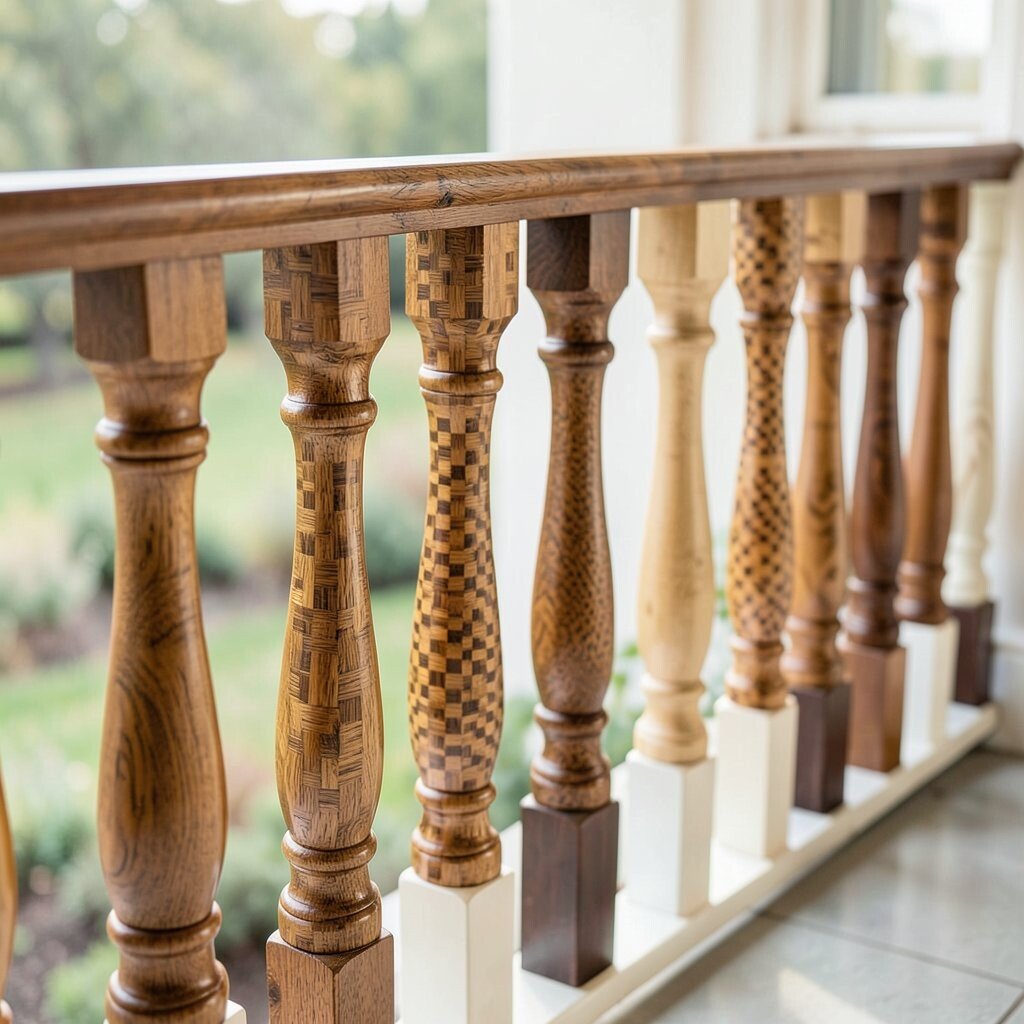
Parquet-influenced balusters use pattern-like grids or small repeating shapes to create visual texture. The effect feels classic, but still fresh because it looks like design, not just decoration.
This option is great when you want the railing to add interest without relying on heavy scrollwork. To keep installation smooth, confirm the pattern lines up across balusters so the overall rhythm feels intentional.
For personalization, consider mixing finishes, such as a stained wood pattern with painted rails, for a layered look. Cost can vary, since patterned balusters may require more careful alignment, but the visual payoff is often worth it.
16. Colonial-Style Tapered Balusters
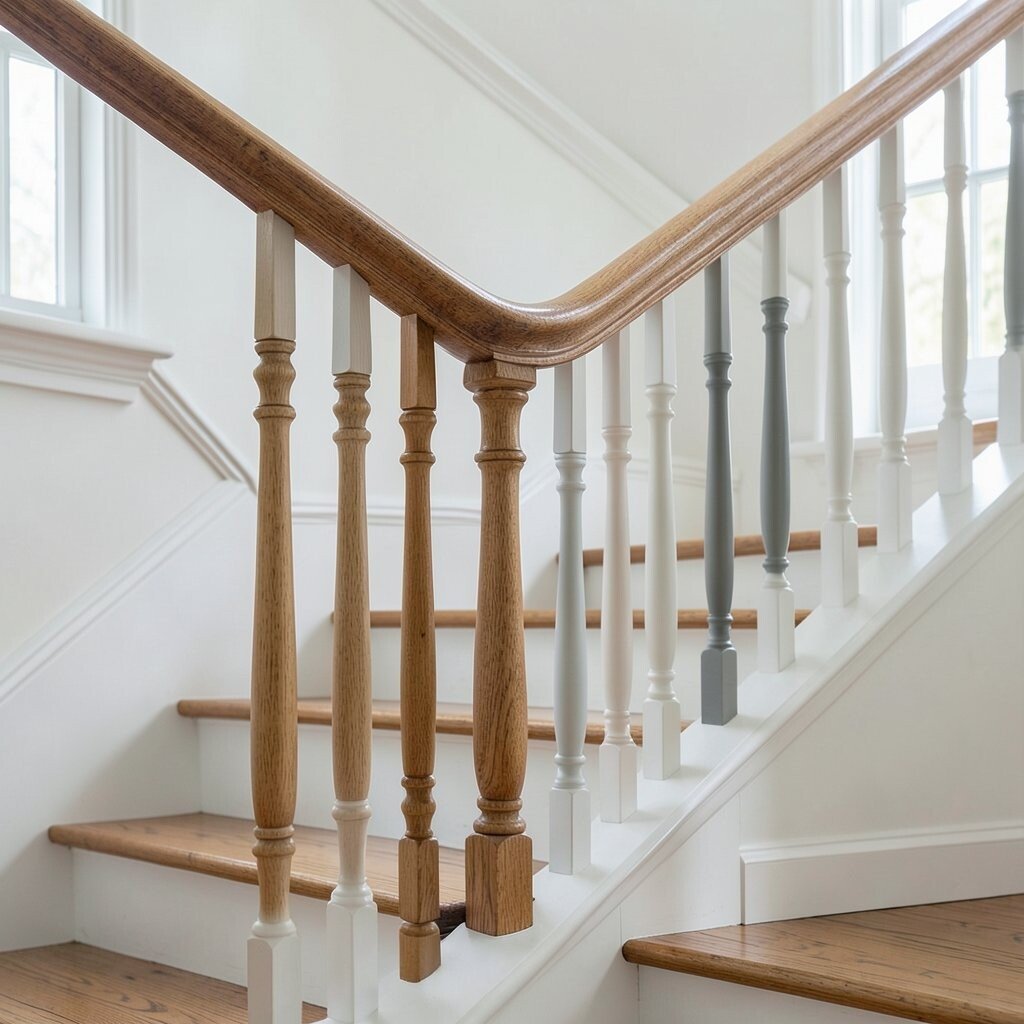
Colonial-style tapered balusters narrow as they rise, creating a gentle, historical feel. They look especially good with white walls and traditional trim.
This style helps your staircase feel rooted and classic while still looking clean. For a practical tip, choose tapered balusters with consistent taper so the railing does not look uneven from different angles.
Personalization is easy through finish choices, such as natural oak for warmth or painted finishes for a crisp look. Many homeowners also like pairing tapered balusters with a slightly rounded handrail for a comfortable grip.
17. Renaissance Style Balusters With Grooved Panels
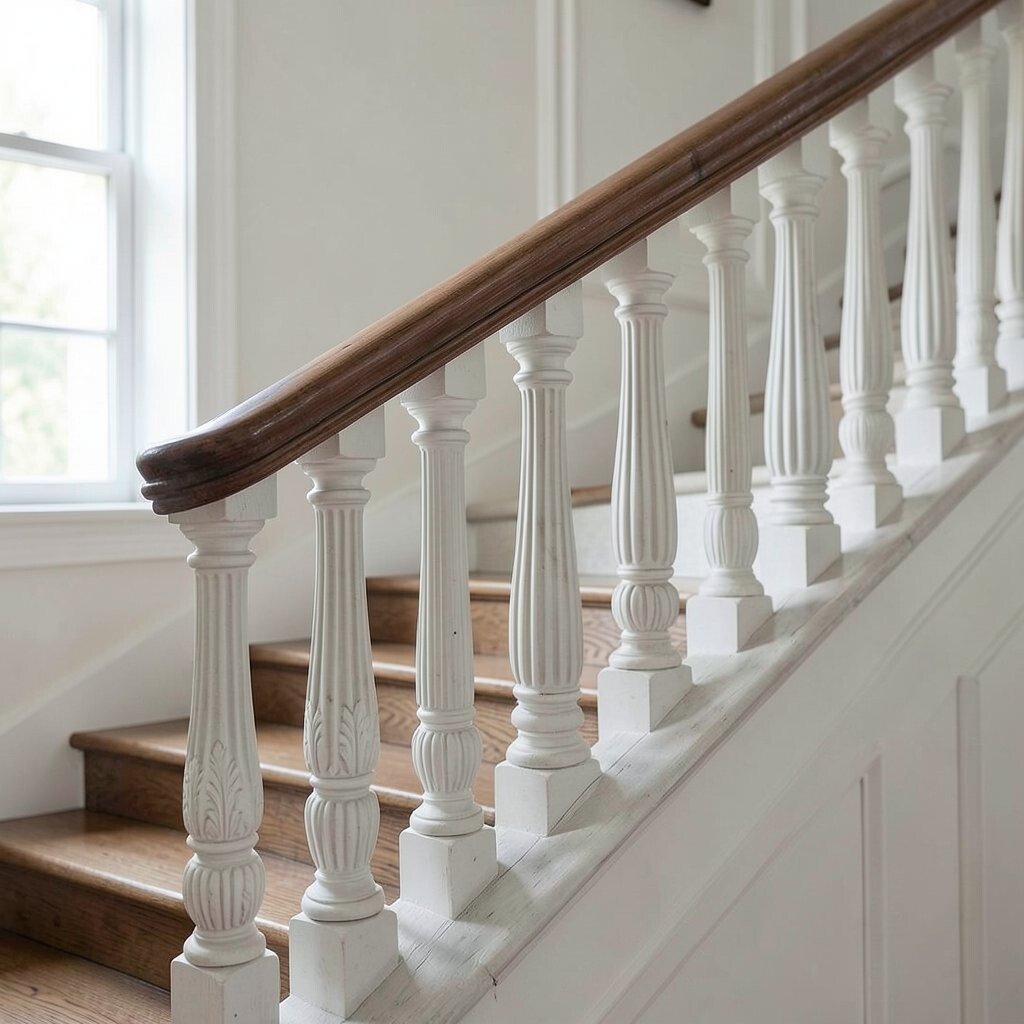
Renaissance style balusters often include grooved panels and layered curves that feel like handcrafted ornament. They can make a staircase feel grand without turning it into a theme park.
The benefit of this style is that it looks detailed up close, yet still stays cohesive from a distance. For installation, plan for enough time to align panels carefully since the grooves create strong visual lines.
Personalization ideas include matching panel motifs to a headboard, dining table carvings, or wall molding profiles. Cost considerations vary based on how many panels are used, so decide whether you want subtle detail across the run or more pronounced sections near newels.
18. Plain Shaker Balusters With Honest Simplicity
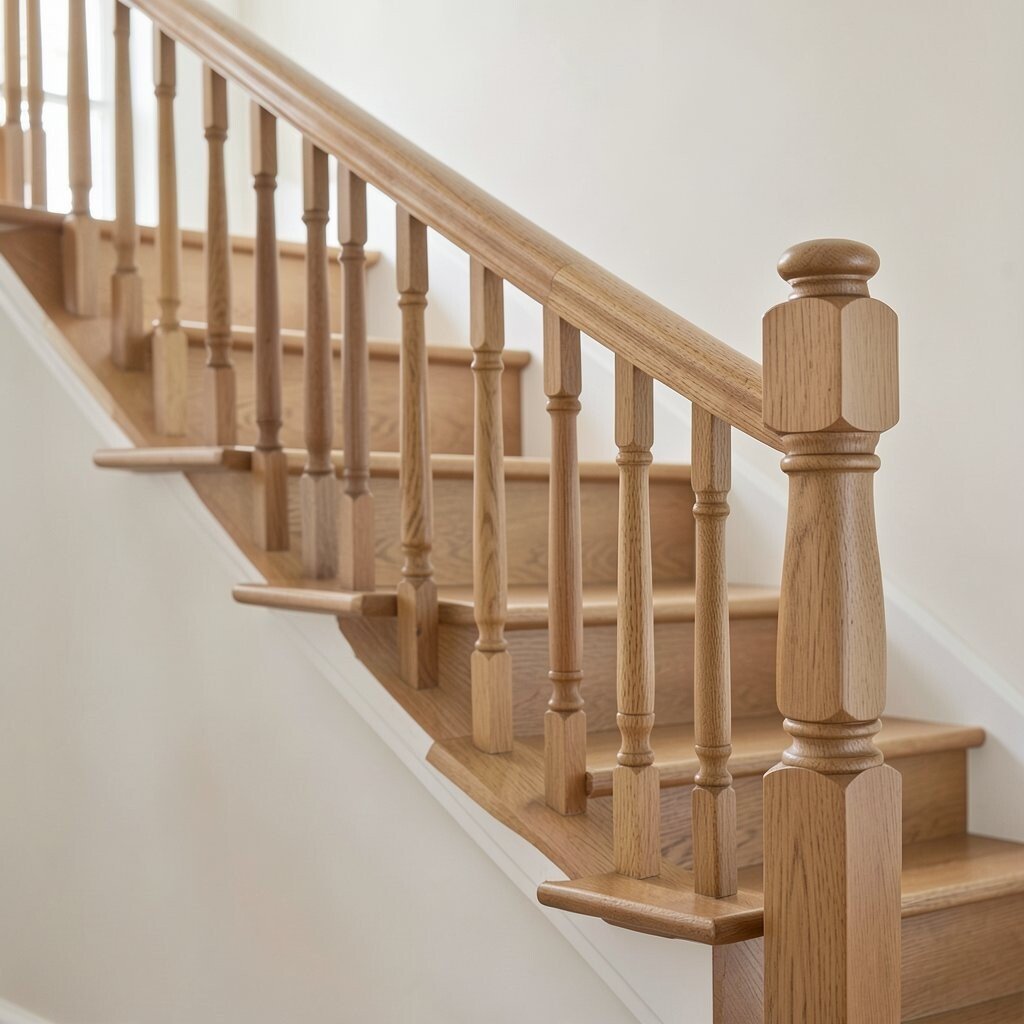
Shaker-inspired balusters are simple, sturdy, and friendly, with a clean look that lets your staircase feel calm. They often use straight lines and basic shapes that feel practical and timeless.
This style works well if you like classic design but want fewer details to maintain. For practical care, wipe down with a mild cleaner since fewer grooves mean less trapped dust.
To personalize, you can add a thicker handrail or a bold newel post for contrast. Current trends often favor warm natural woods and matte finishes, so consider oak, maple, or a soft stain that highlights grain without looking glossy.
On budget, Shaker-style balusters can be a smart choice because they typically require less custom work.
19. Decorative Brass-Toned Balusters With Refined Shapes
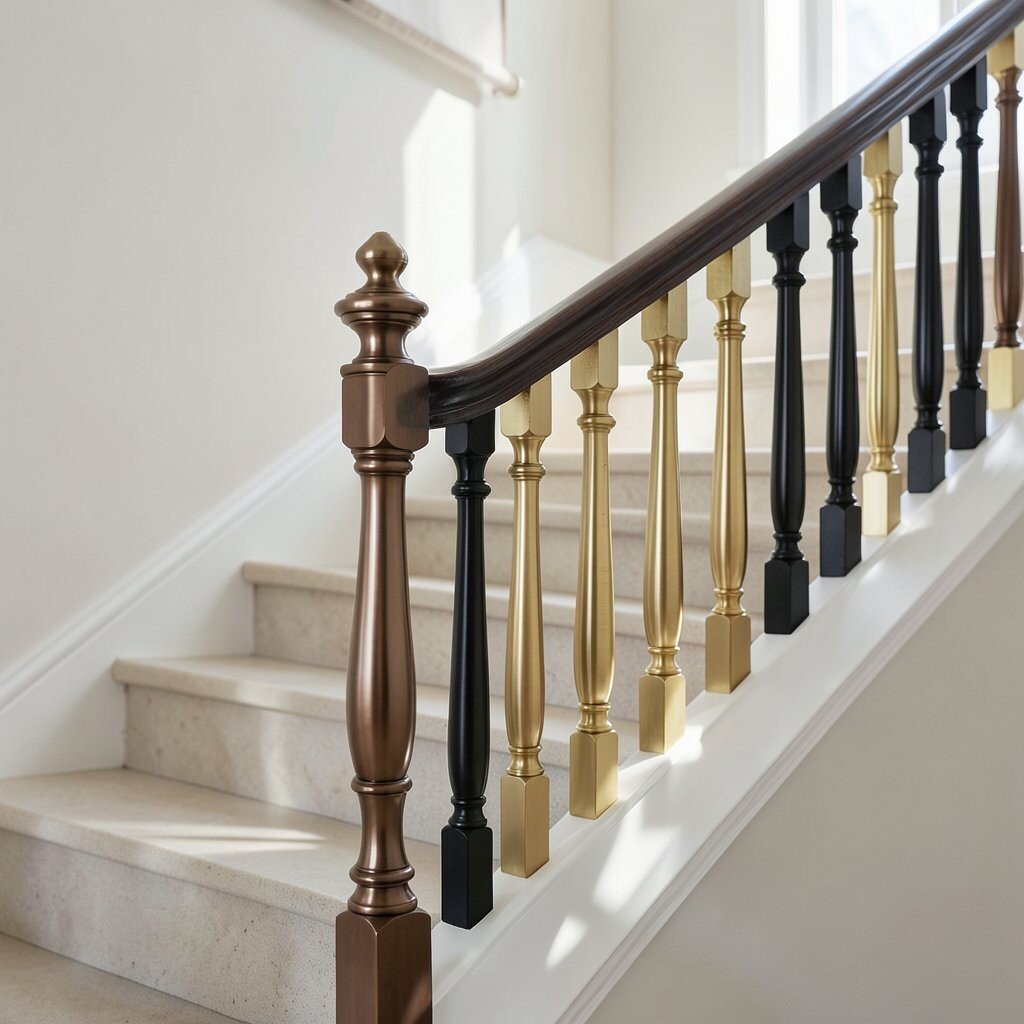
Brass-toned balusters bring a polished, refined glow that makes staircases feel special. Even classic shapes look glamorous when the finish is rich and smooth.
This style benefits visibility because light bounces off the railing, making the stairs look brighter. For maintenance, use a soft cloth and avoid harsh cleaners so the finish keeps its warmth.
Personalization can be as easy as choosing brushed brass for a quieter look or a shinier finish for bold contrast. If you want to stay within budget, consider brass accents on select newel areas and keep the rest in a complementary metal.
Today, many interiors mix brass with black hardware, so you can pair your balusters with matching door handles or light fixtures.
20. Semi-Transparent Glass-Infill Balusters With Metal Rails
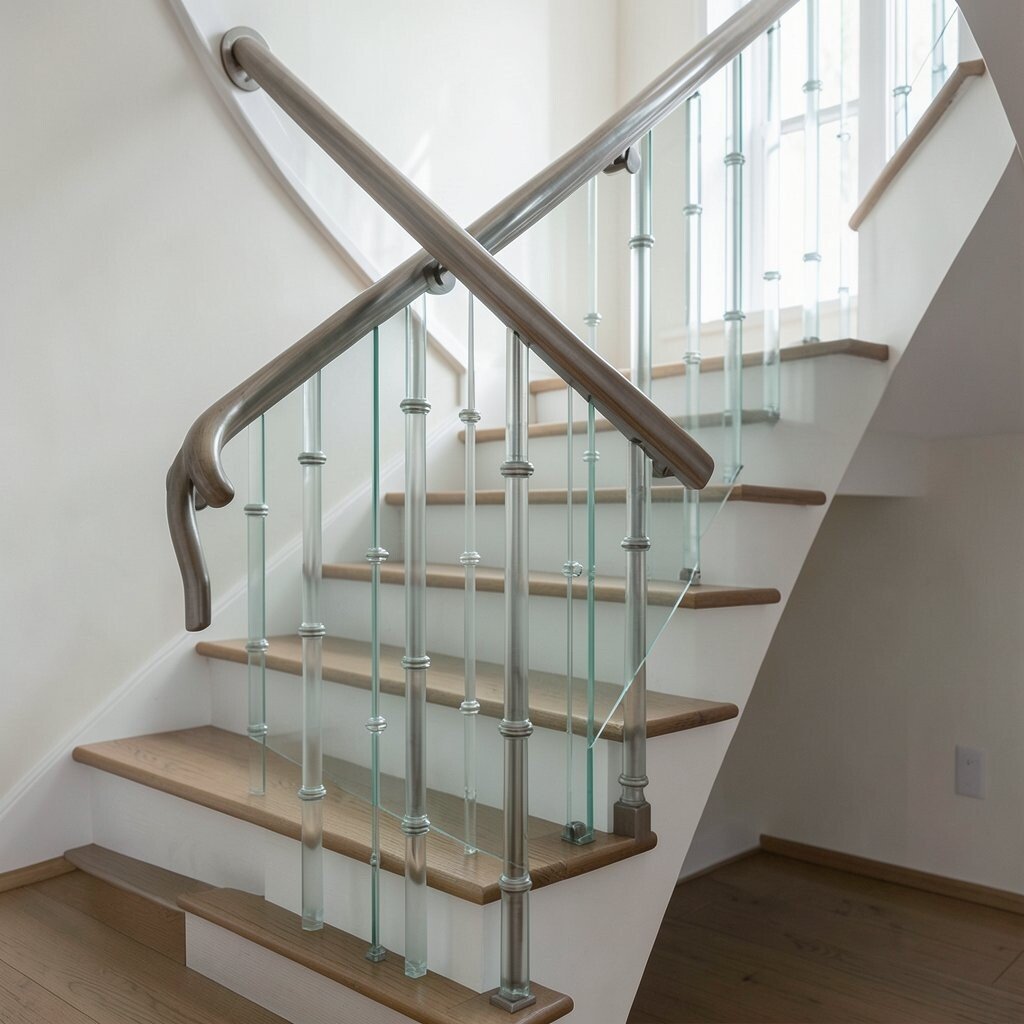
Glass-infill balusters create a sleek, open look while still supporting a classic handrail. When the glass is clear or lightly frosted, the staircase feels modern but elegant.
The visual benefit is that your hallway lighting can flow, making spaces feel bigger. For practical safety and comfort, choose tempered glass and ensure it is installed with secure metal rails and proper spacing.
Personalization ideas include adding a decorative border strip that matches your trim color. Frosted glass can add privacy in shared spaces, while clear glass keeps sightlines open.
Cost considerations often depend on glass thickness and frame style, so request options that balance protection and budget.
21. Classic Combination Wood and Iron Balusters
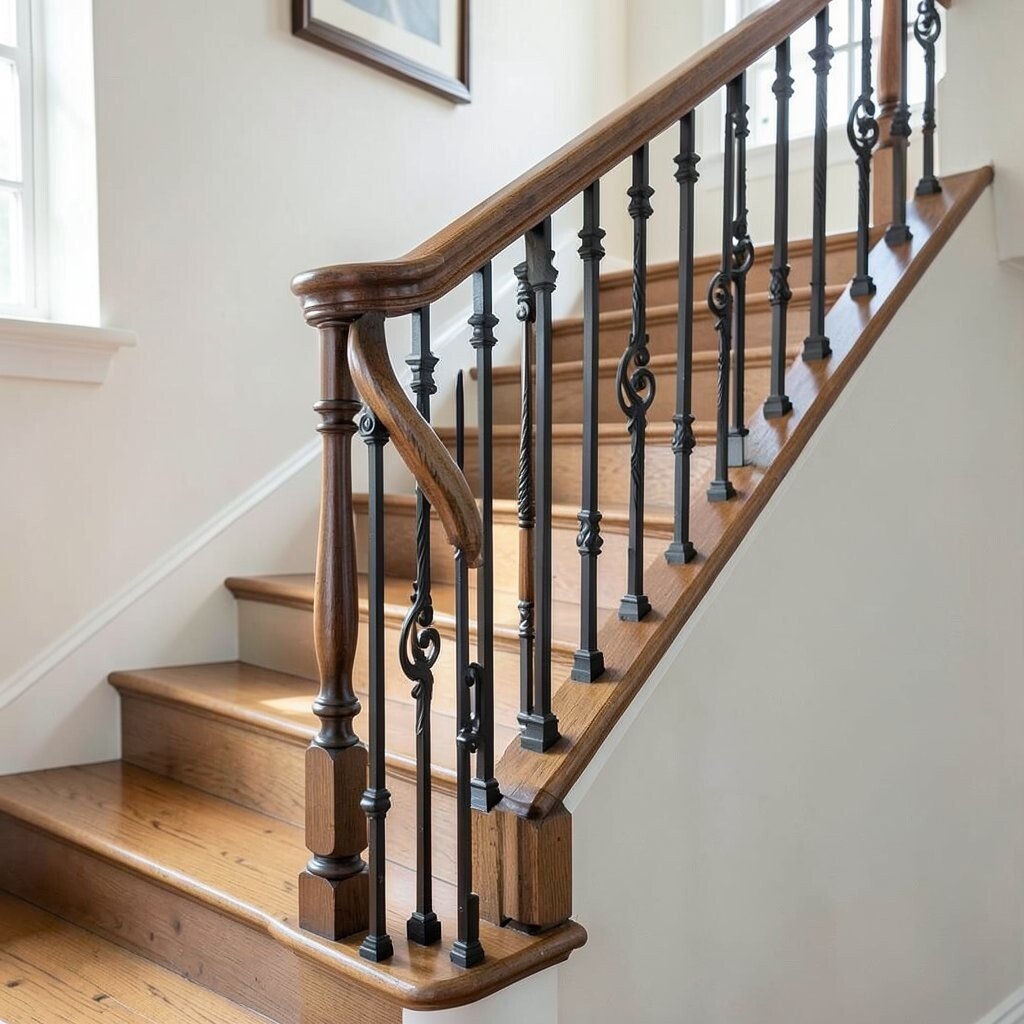
A wood-and-iron combination blends warmth with structure, using wood for the handrail and iron for the balusters. This pairing looks classic because it balances soft and strong materials.
You get the benefit of style plus practicality, since iron parts handle wear well while wood offers a comfortable grip. For a practical tip, match the metal finish to other hardware like hinges, faucets, or light fixtures so the staircase feels cohesive.
To personalize, choose iron scrollwork that stays simple if you want a calm look or more detailed if you want a dramatic centerpiece. Many current trends favor this mix because it suits both traditional and modern homes.
Cost-wise, you can control spending by choosing fewer iron details and focusing ornament near the top and bottom of the stairs.
22. Oversized Newel-Featured Baluster Design
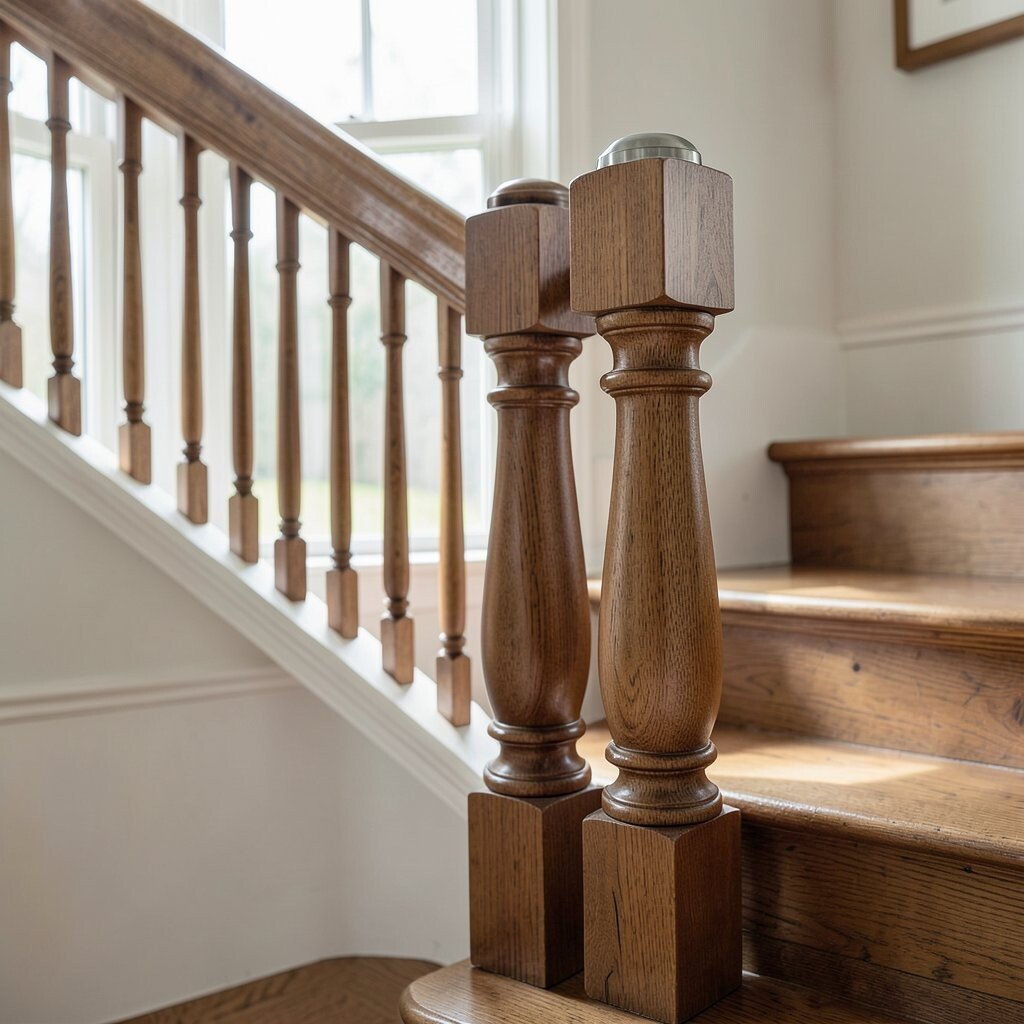
Oversized newel-feature designs put the spotlight on the posts at landings and stair turns. When the newels are bold, the balusters can be simpler yet still look intentional.
This approach is unique because it uses placement and scale instead of heavy patterning across every section. For practical installation, confirm the newels are perfectly plumb since they set the visual tone for everything attached to them.
Personalization can be amazing here, since you can carve, cap, or crown the newel to match your home’s style. Consider wood with raised panels, turned details, or even a metal cap that coordinates with your light fixtures.
If you want to manage cost, this design often lets you invest in one showpiece area while keeping the balusters themselves more straightforward.