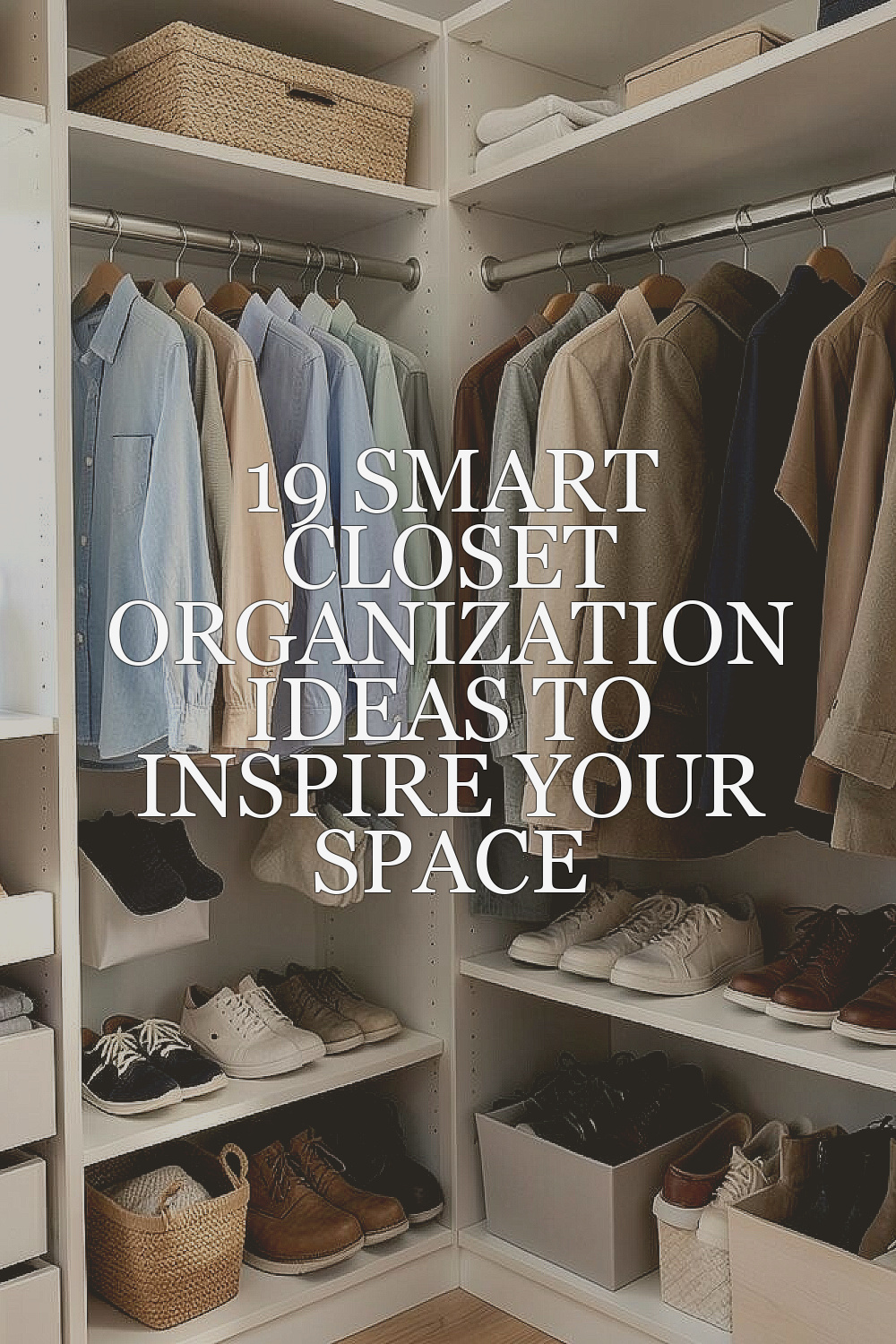
Your closet can look calm and feel roomy even when you own a lot. A few smart changes can make mornings quicker and evenings more peaceful.
With small effort and the right layout, you can turn everyday clothing chaos into something you actually enjoy opening.
1. Start With a Closet Map That Shows Real Paths
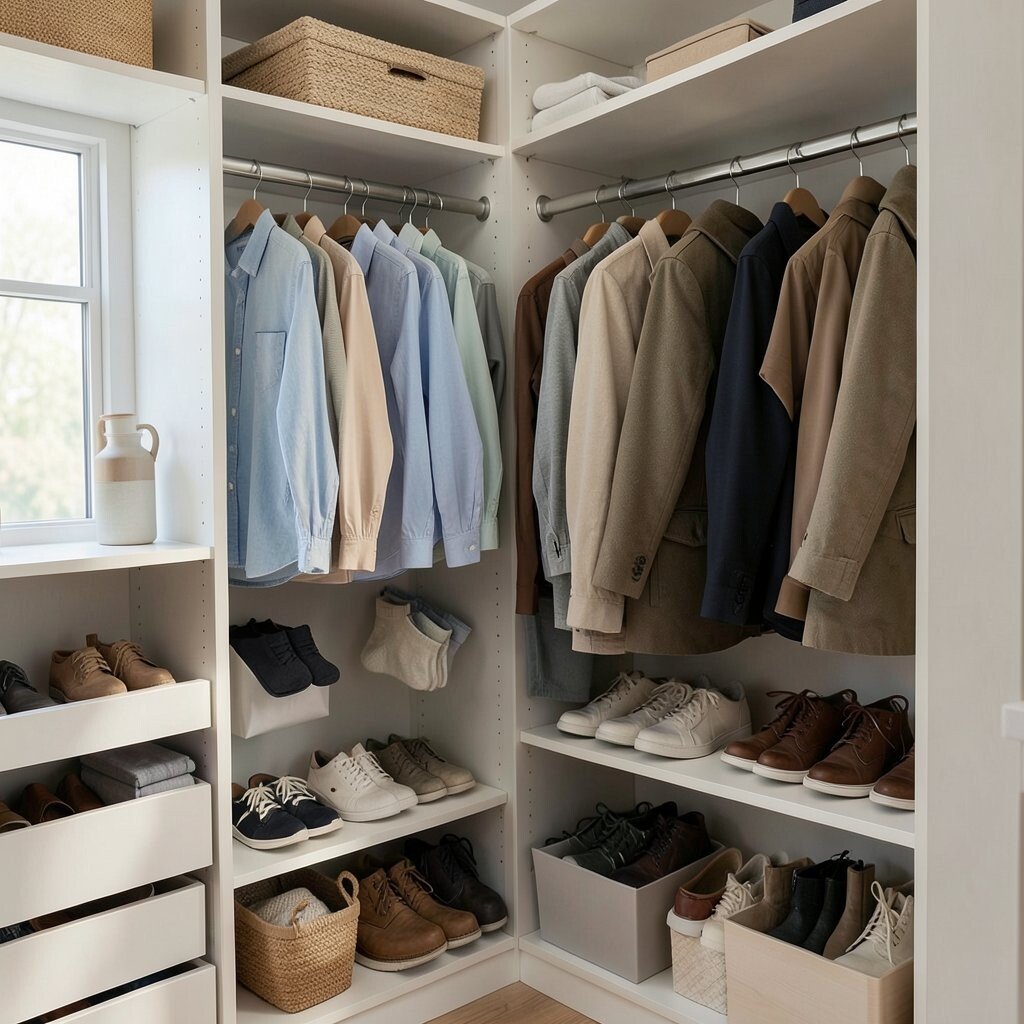
Picture your closet like a little neighborhood where every item has a home and every drawer has a route. When you map where you stand, what you reach first, and what you avoid, you instantly spot bottlenecks.
Write down the shortest path for daily use, like reaching shirts, socks, and everyday shoes without moving past winter coats. Then test your plan by holding a hanger at your usual spot and imagining the motion you make. This helps you choose the right height for hang rods, the right shelf depth, and the right spot for bins so you do not keep bumping elbows.
2. Color-Code Your Hanging Section for Faster Choices
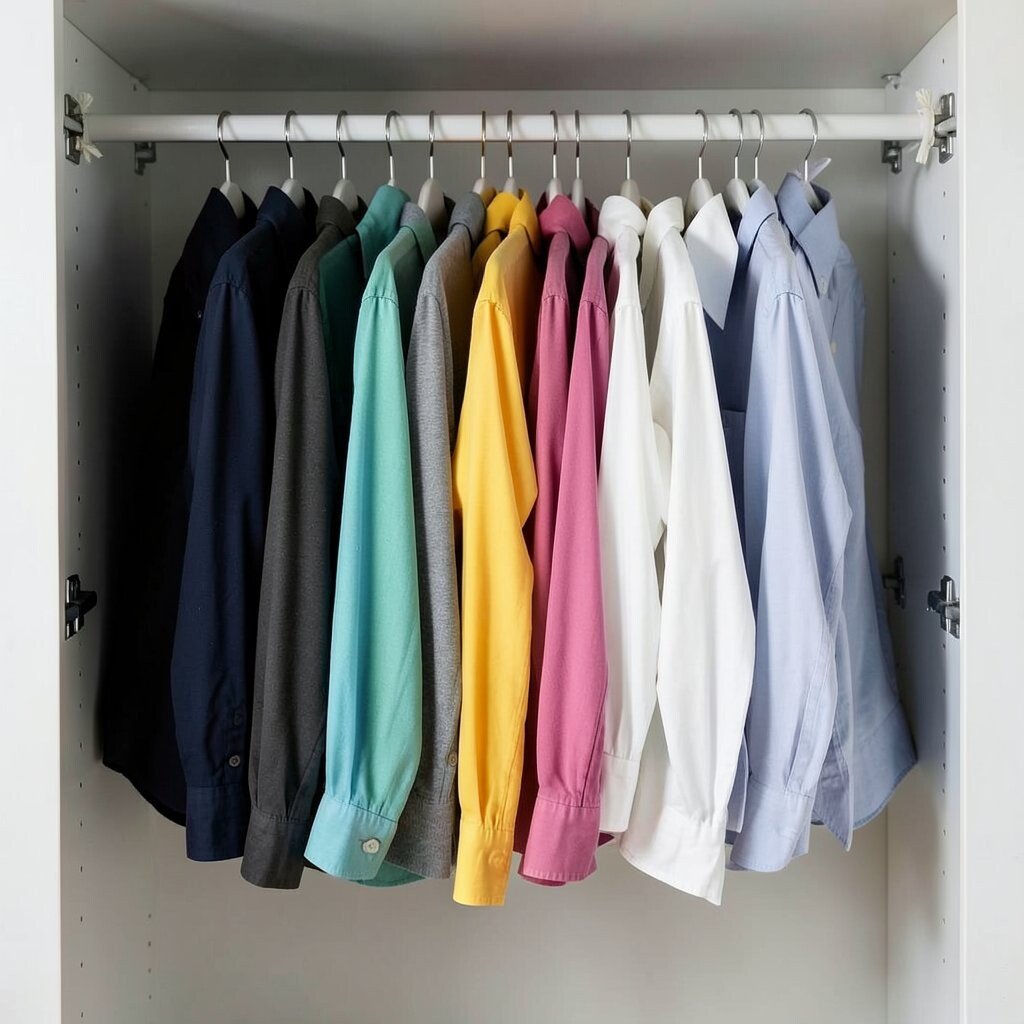
Open your closet and notice how your eyes travel when you look for a specific outfit. If everything blends together, you may feel like you are searching, not choosing.
Try grouping similar colors or shade ranges on the same rod, so your shirts look like a neat rainbow from left to right. It feels visually satisfying, and it makes it easier to build outfits without thinking too hard. Keep darks together, lights together, and add a small gap for special pieces like dress shirts or blouses.
For personalization, match the color groups to how you actually wear your clothes, not how a store displays them. Use plain labels on the rod ends or small fabric ties on hangers, and you can remove them later without damage. If you want a budget approach, start with just one section, like everyday tops, and expand when it starts working.
3. Use Slim Velvet Hangers to Save Space and Prevent Slips
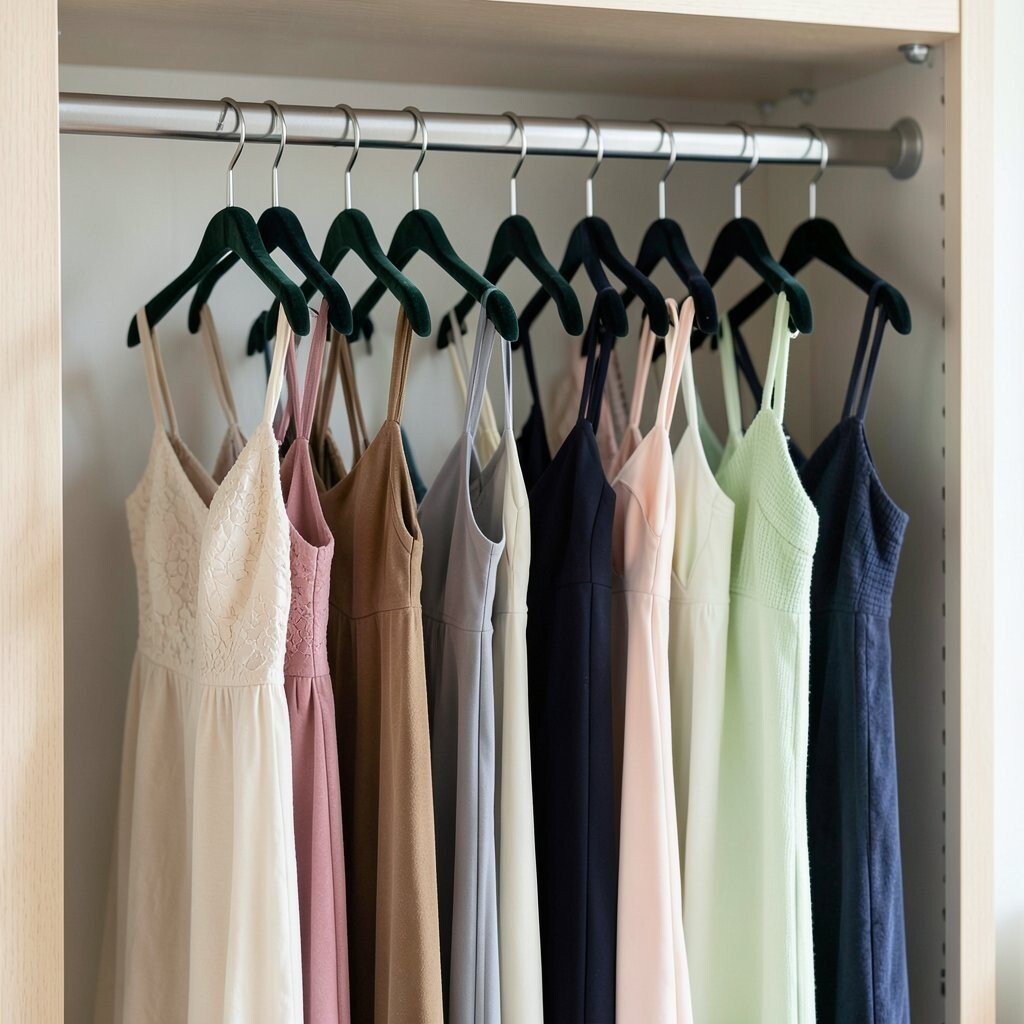
Imagine your closet filled with hangers that do not waste space and keep clothes from sliding. Slim velvet hangers create a tidy look and make straps and lightweight fabrics stay put.
They are especially helpful for camisoles, dresses, and anything that tends to slip off regular plastic hangers. With smoother edges and better grip, you get fewer wrinkles from constant repositioning. Visually, your hanging section will look fuller yet more organized, because everything hangs straighter.
To stay practical, switch hangers gradually, starting with items that bother you most. Pair them with a consistent hanger orientation, so all hooks face the same direction. If cost is a concern, compare packs online and buy for one closet zone at a time, like the top rod first.
4. Install Adjustable Shelves So Your Storage Grows With You
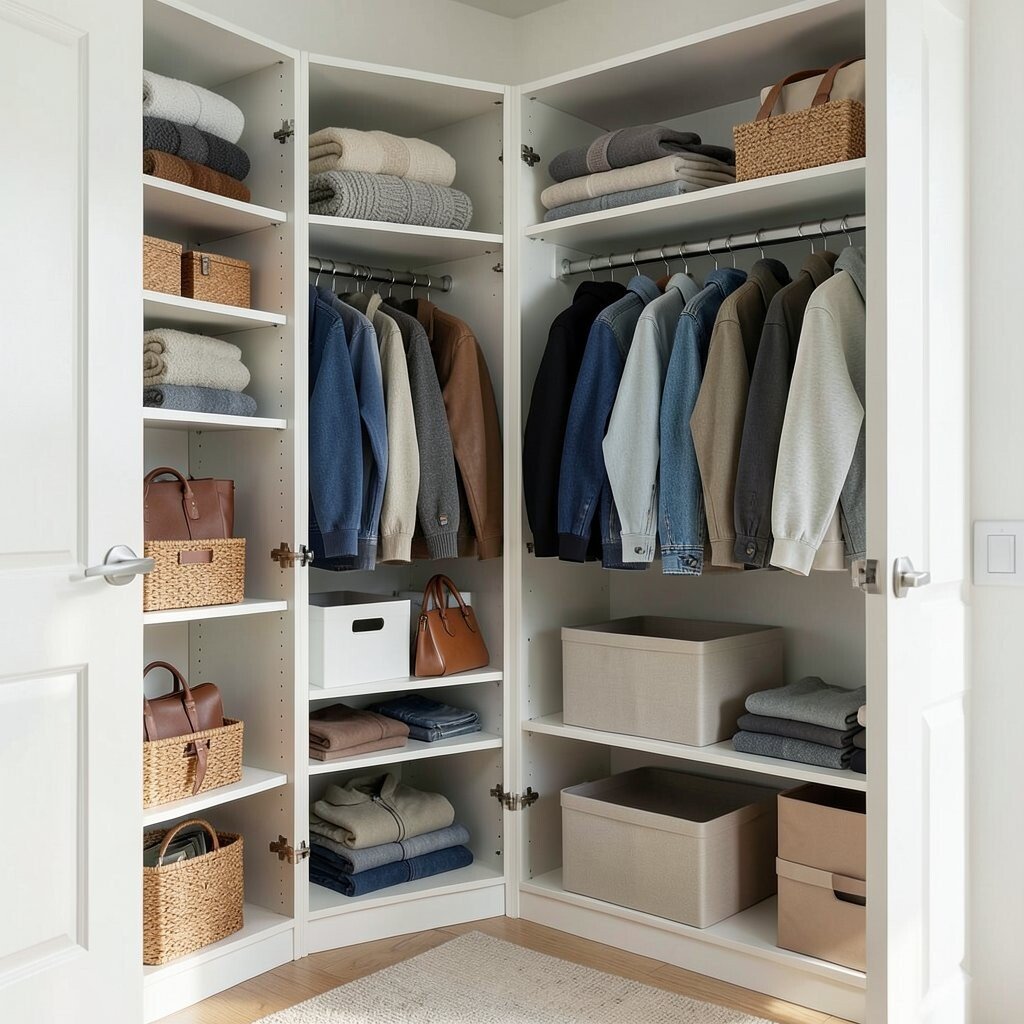
When your closet shelves are fixed, you end up with awkward gaps and wasted space. Adjustable shelves let you fit bulky sweaters one season and smaller items the next.
Set shelf heights based on what you store most, like folded jeans, folded hoodies, handbags, or storage boxes. Leave a little breathing room so boxes do not scrape when you open the door. This also makes it easier to personalize storage, because your layout can follow your wardrobe changes.
5. Add Clear Bins for Shoes, Scarves, and Small Accessories
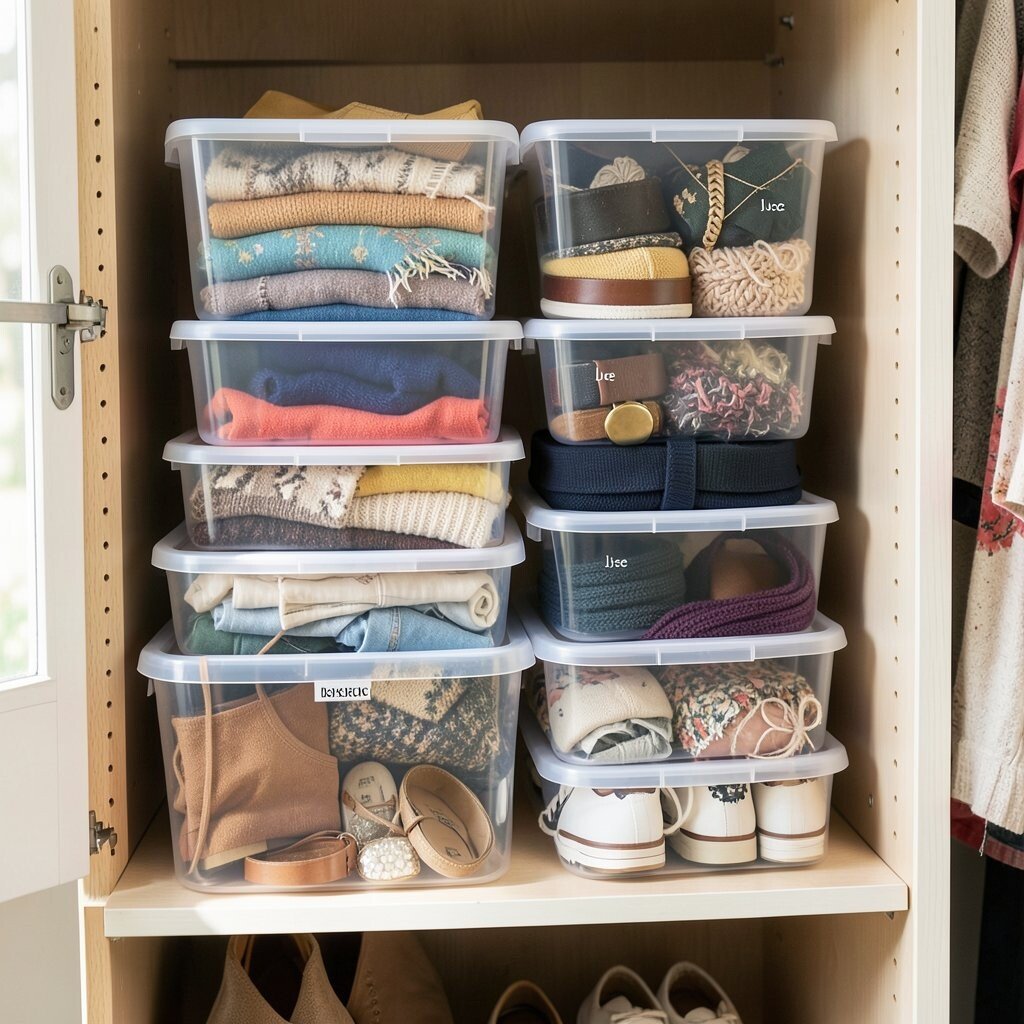
Clear bins make it easy to spot what is inside without opening every container. You can see the visual mix of colors and textures, which makes choosing outfits feel simpler.
Use labeled clear bins for scarves, hats, belts, and shoes that are not worn every week. For a practical touch, group items by use, such as travel items, work accessories, and weekend favorites. When the bin system is tidy, you spend less time digging and more time getting ready.
Choose bins that stack well to keep the closet from feeling crowded. If you want a budget-friendly option, start with a few bins for your biggest problem area, then expand as you learn what you truly reach for. Current trend-wise, many people now prefer modular storage because it keeps pace with changing seasons and styles.
6. Create a Drop Zone for Items You Grab Daily
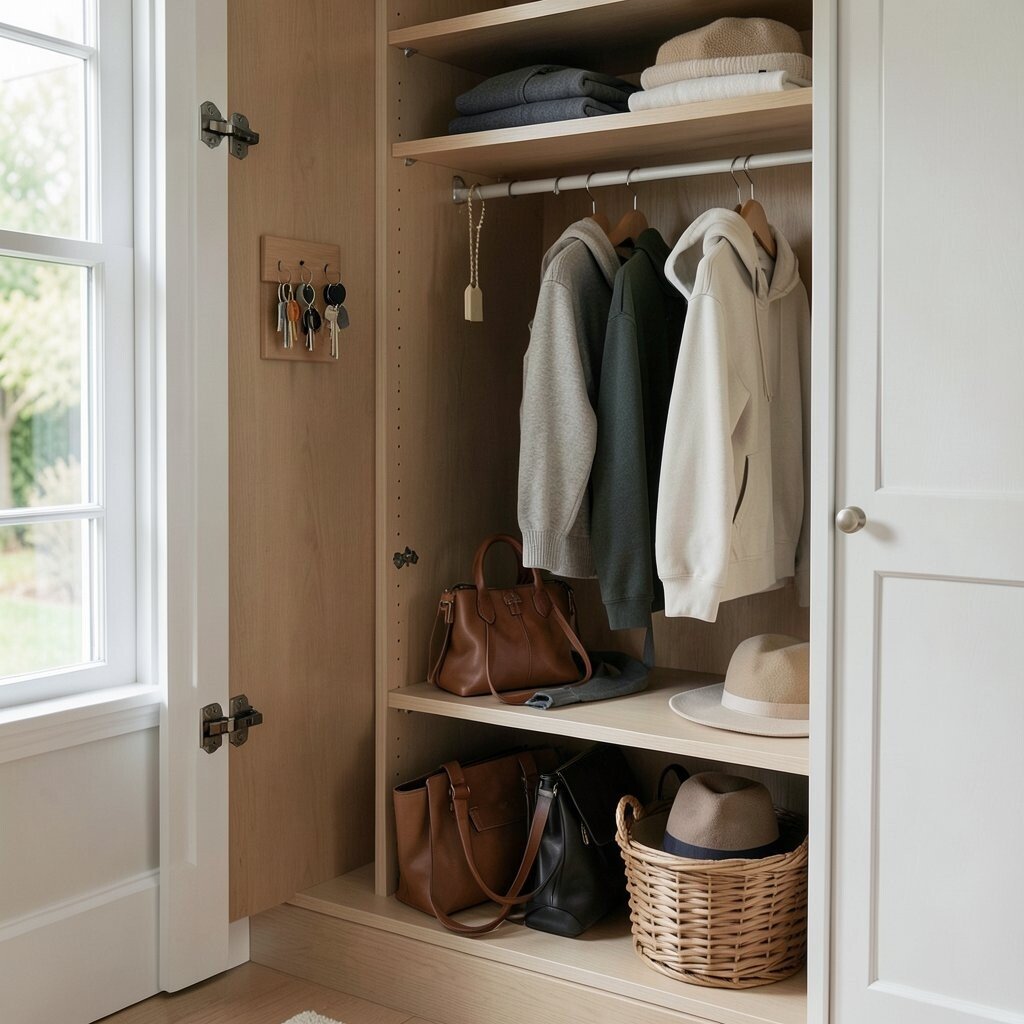
Think about how your day starts when you come home. If keys, a bag, or a hoodie end up on a chair, the closet feels less like a home and more like a backup plan.
Set up a dedicated spot inside the closet or near it for the items you grab daily. A small hook panel for keys, a low shelf for bags, and a small basket for hats can keep clutter contained. It also helps you personalize your routines, because you can place the exact things you use most at eye level.
7. Sort by Outfit Use, Not Just by Clothing Type
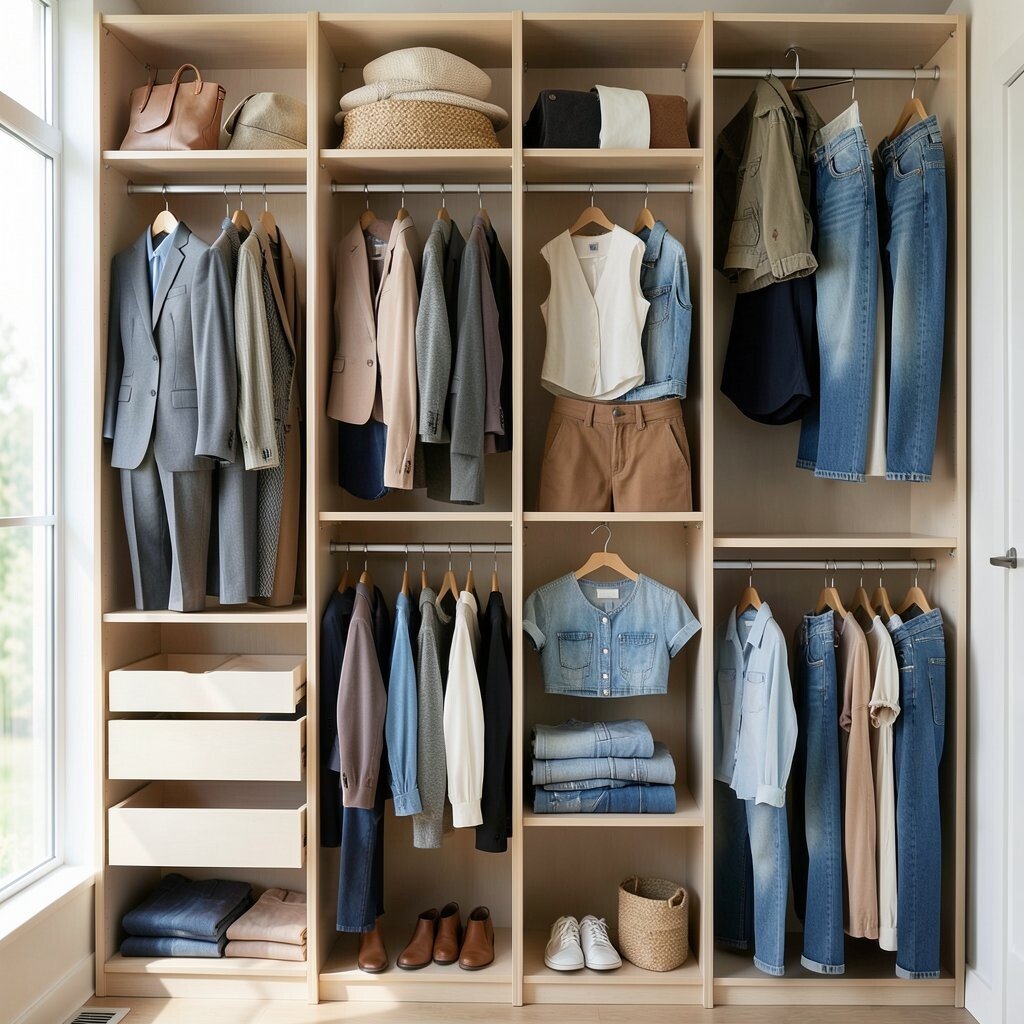
You can group items by type, but outfit use often helps you get dressed faster. A visual mix of tops and bottoms that work together can reduce decision stress.
Try creating zones for work outfits, casual outfits, and weekend outfits, then place matching pieces near each other. For practical tips, keep tops and bottoms on the same side of the closet so your hands do not travel far. This layout feels unique because it mirrors your real life instead of a generic catalog.
8. Fold With Consistent Methods for Cleaner Lines
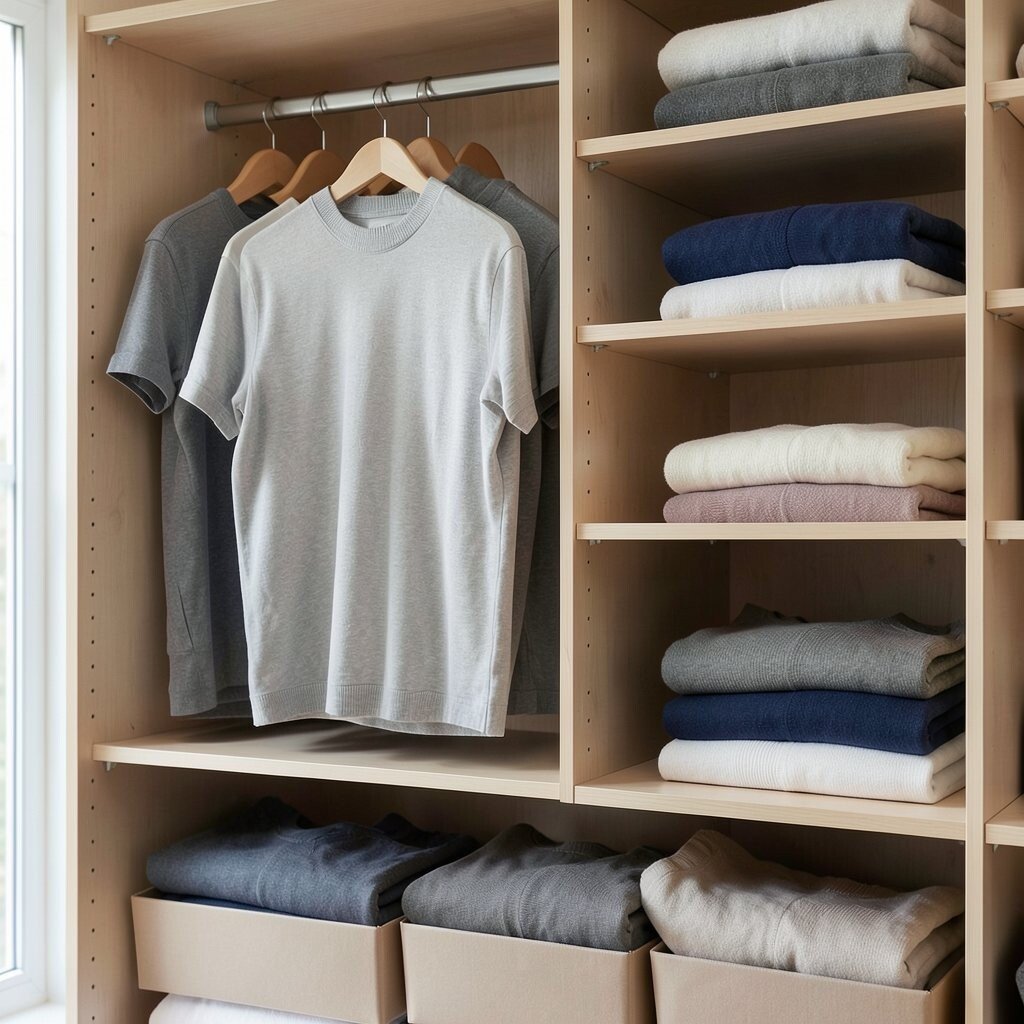
When folds vary in size, your shelves look messy even if you are trying your best. Consistent folding creates crisp edges and makes every shelf feel intentional.
Use the same folding style for T-shirts, sweaters, and lounge sets so everything sits at the same height. Stack them upright or in neat rectangles, then rotate items by season. A simple system makes it easier to personalize, because you can decide which items deserve to face outward for quick grabs.
If you want to keep costs low, use existing cardboard you may already have for a folding guide. Many people also use fabric organizers that match their closet color scheme for a modern, clean look. When your closet looks uniform, it feels calmer, and getting ready becomes faster.
9. Hang Seasonal Clothing in Clear, Labeled Garment Bags
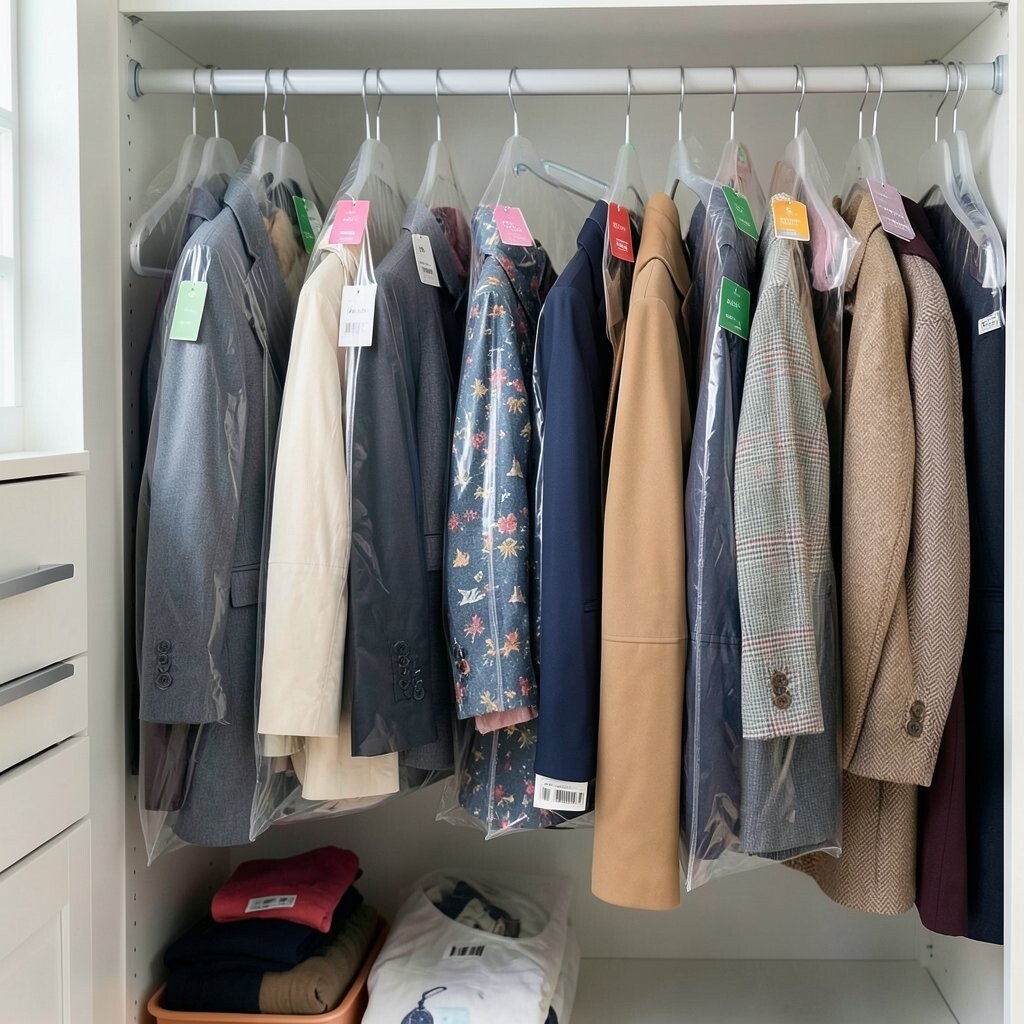
Seasonal clothes can take over a closet when they are mixed with current favorites. A clean garment bag system keeps them protected while still allowing you to see what is stored.
Slide off-season coats, suits, and bulky dresses into clear garment bags and label them by season. It reduces dust, prevents wrinkles, and keeps your closet floor usable. You can personalize the bags with color-coded tags so winter items stand out even through a glance.
For cost considerations, start with one category, like holiday wear or winter outerwear, instead of bagging everything at once. Many closets now lean into clearer storage to match how people search for items quickly. When you can find things at a glance, you avoid re-buying or re-wearing items you already have.
10. Add a Second Hanging Rod for Long and Short Pieces
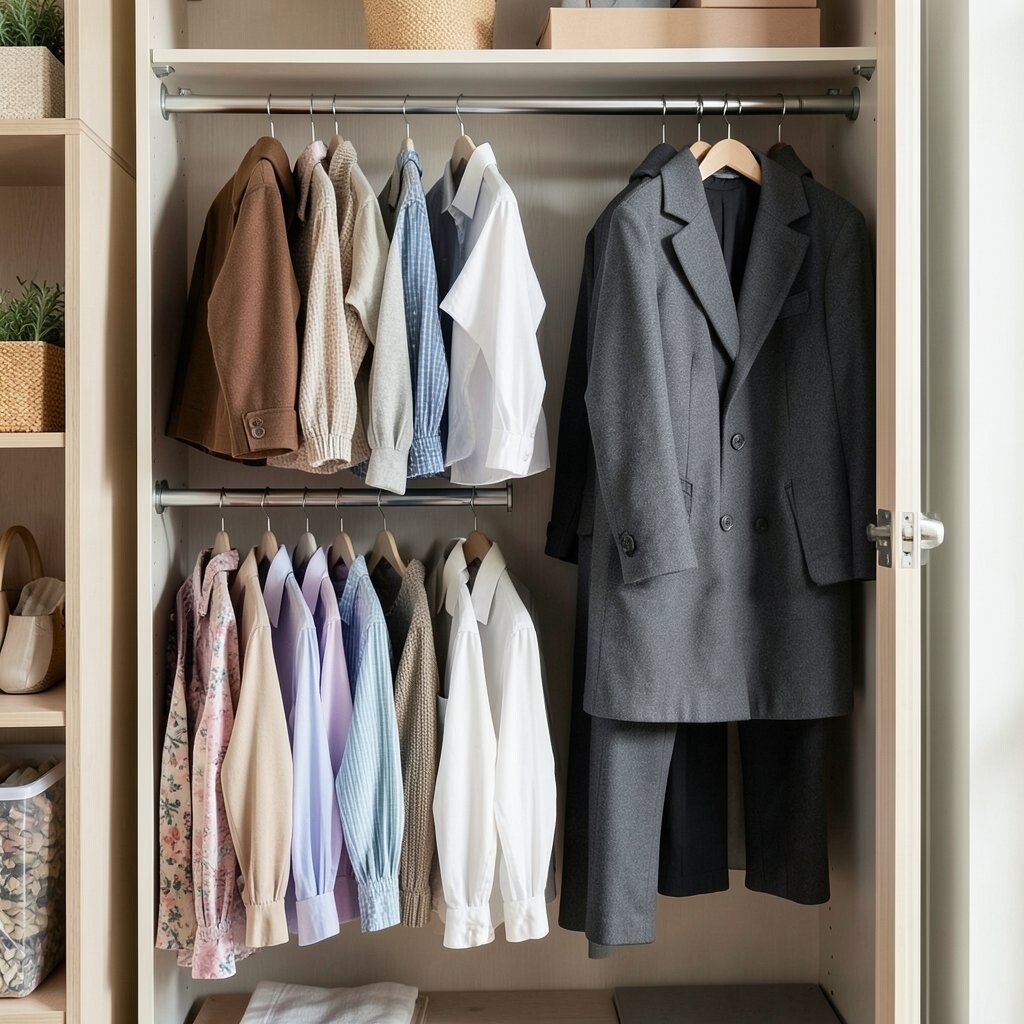
If your closet has one rod, it might be working too hard for both long coats and short shirts. A second rod can add structure and make the most of vertical space.
Install a lower rod for shirts, dresses, and hanging storage organizers, and keep a higher rod for long coats and formal pieces. This makes it easier to keep everyday items at reach height. It is a unique setup because it creates different “levels,” like a small system inside one closet.
11. Use Drawer Dividers for Socks and Underwear That Stay Put
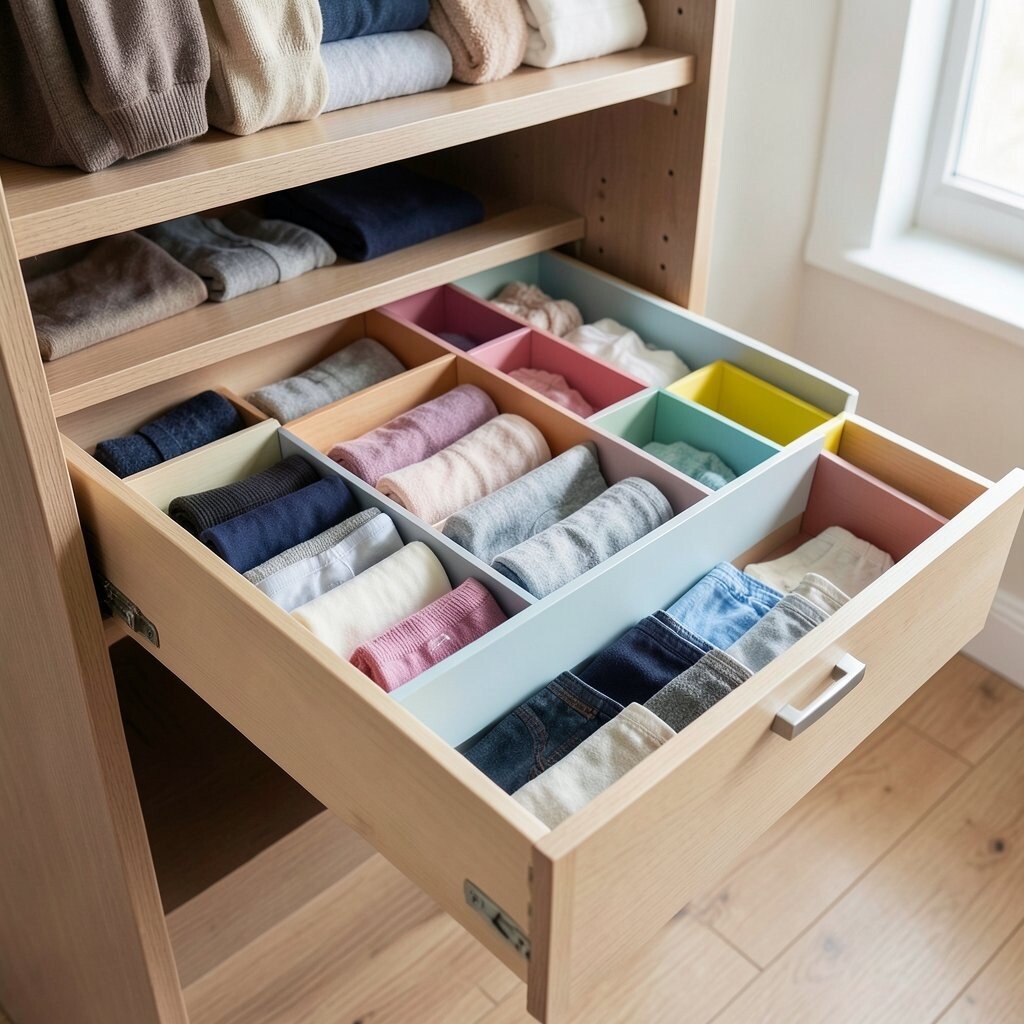
Small items scatter fast, and once they spread out, the whole drawer becomes stressful. Dividers create neat rows that make it easy to put things back correctly.
Choose dividers that fit your drawer width and allow room for different sizes, like thicker socks versus thin liners. Sort by type or color, then leave a small space for new additions so the system stays flexible. This helps your closet feel more controlled, and it saves time because you can grab what you need in seconds.
For personalization, use different divider colors or add a fabric liner that matches your room. If cost is a concern, start with dividers for socks first, because that drawer tends to grow the fastest. Many modern organizers focus on modular dividers because they adapt as your wardrobe changes.
12. Create a Shoe Wall With Tiered Racks and Rotation
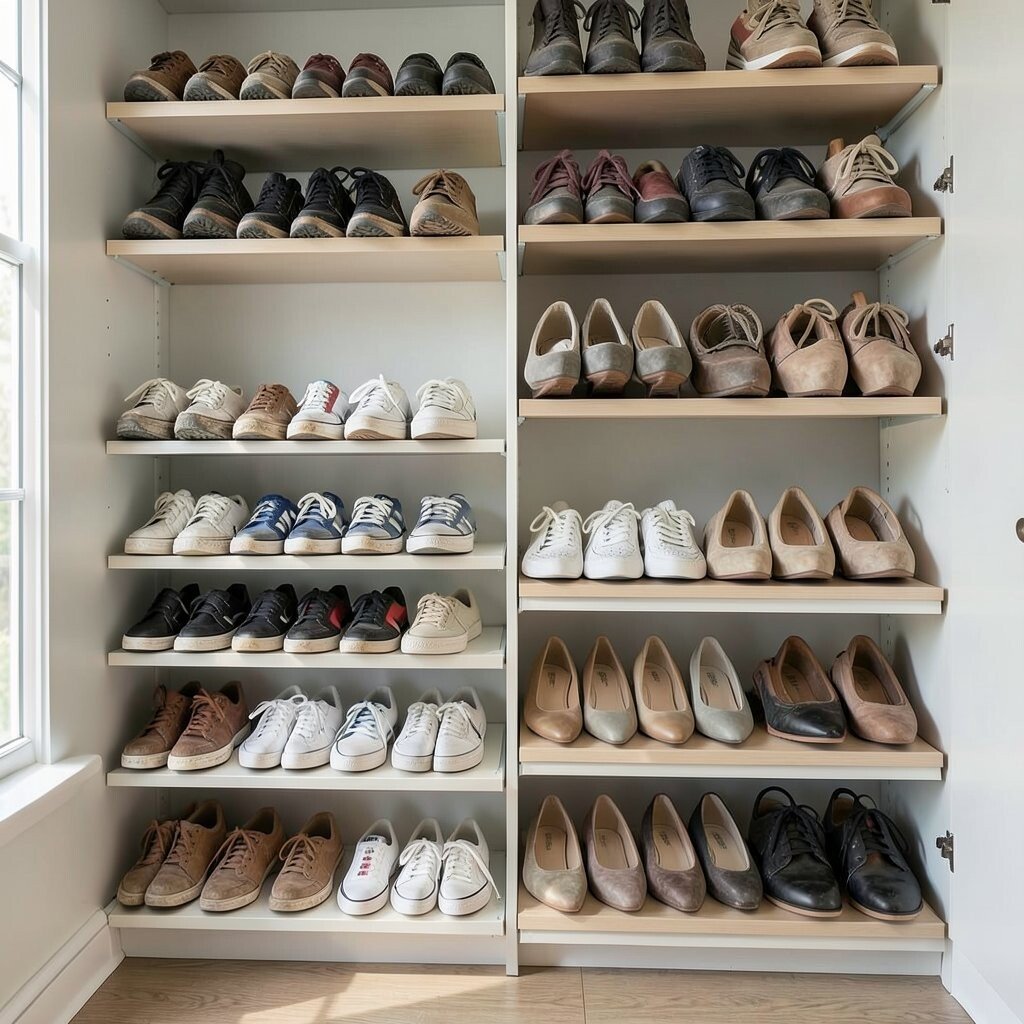
Shoes look great when they are lined up, but they can also crowd every surface. A tiered shoe rack creates a clear view and helps you keep pairs together.
Place the most worn pairs at the front and rotate the rest as seasons change. Keep sneakers, flats, and heels in separate rows so your closet stays calm and easy to navigate. It is unique because your shoes become part of the visual order, not a hidden mess.
13. Keep a Small “Wear Tomorrow” Basket for Overnight Decisions
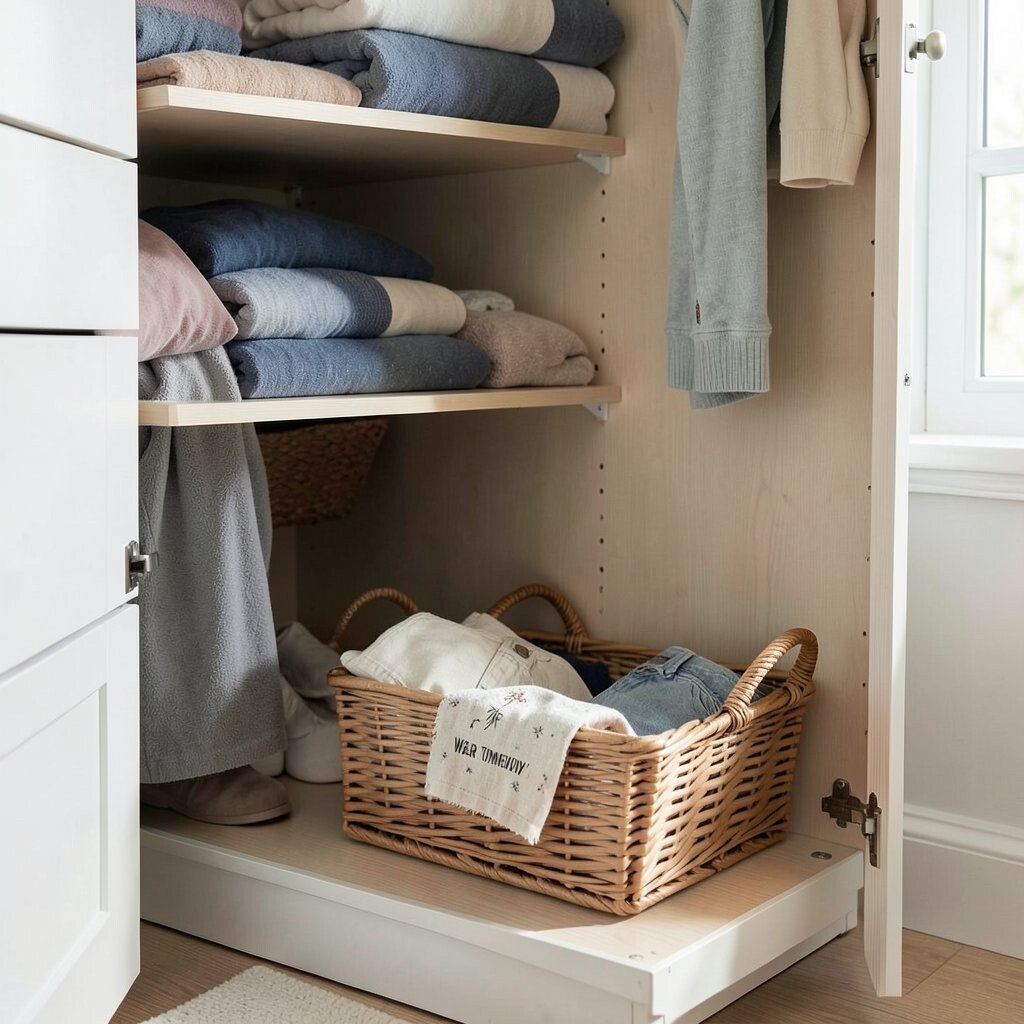
Ever stand in your closet and feel stuck before work or school? A simple basket can turn that moment into something smoother and calmer.
Set aside a small basket or tray for an outfit you plan to wear tomorrow. Place it near the closet opening so it feels like a daily ritual, not a chore. This also helps personalization, because you can style the basket with a fabric cloth that matches your bedroom vibe.
To keep it practical, use a basket with handles so you can move it easily to your dresser or laundry area. For cost considerations, any sturdy basket works, even a thrifted one. When your routine supports the way you actually live, the closet stays organized without constant effort.
14. Fold and Store Totes, Backpacks, and Bags Vertically
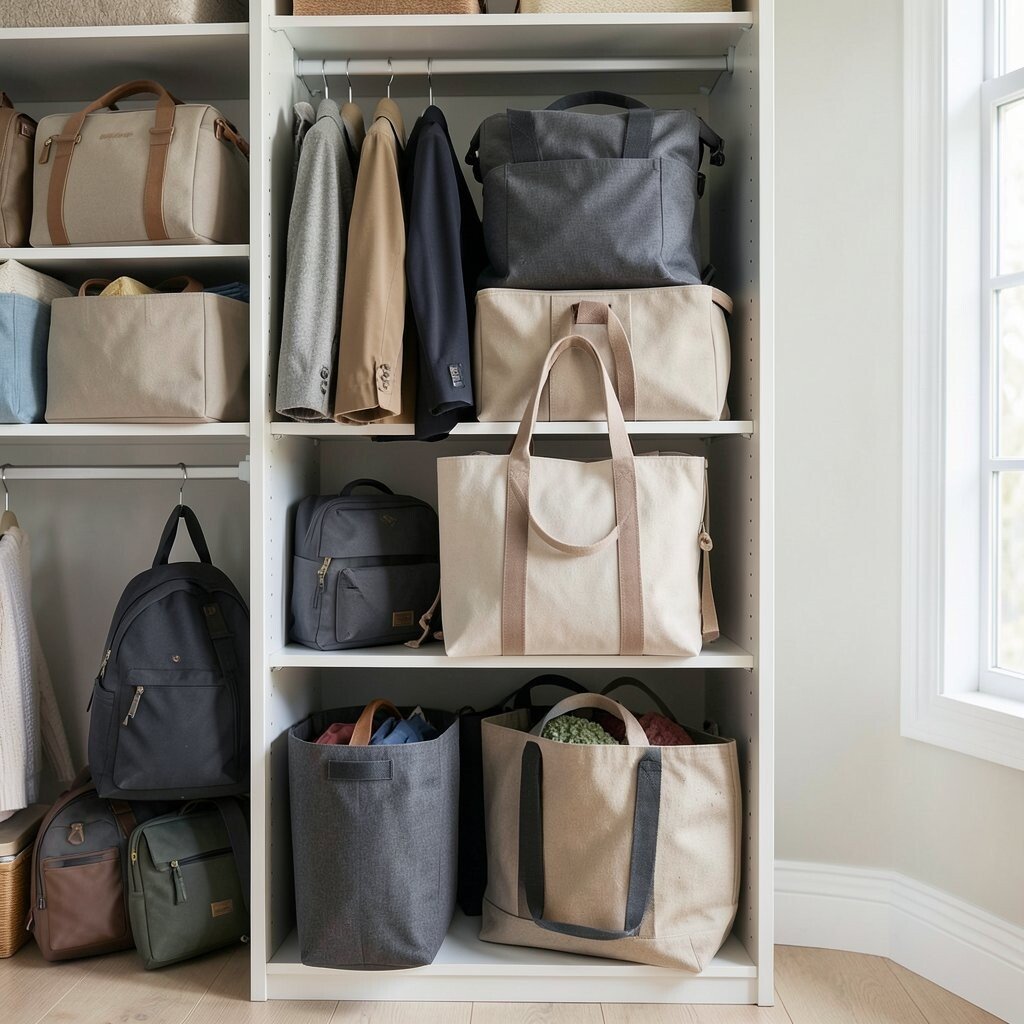
Big bags can take up space if you store them flat, and they can crush smaller items. Vertical storage helps them stand tall and keeps the closet floor from becoming a pile.
Use a tall bin, an organizer insert, or a shelf with dividers so each bag has its own space. Keep your everyday tote within easy reach and store backup bags higher up. This gives you better visual clarity because you can see shapes and sizes at a glance.
15. Add a Mirror or Light So Your Closet Feels Like a Room
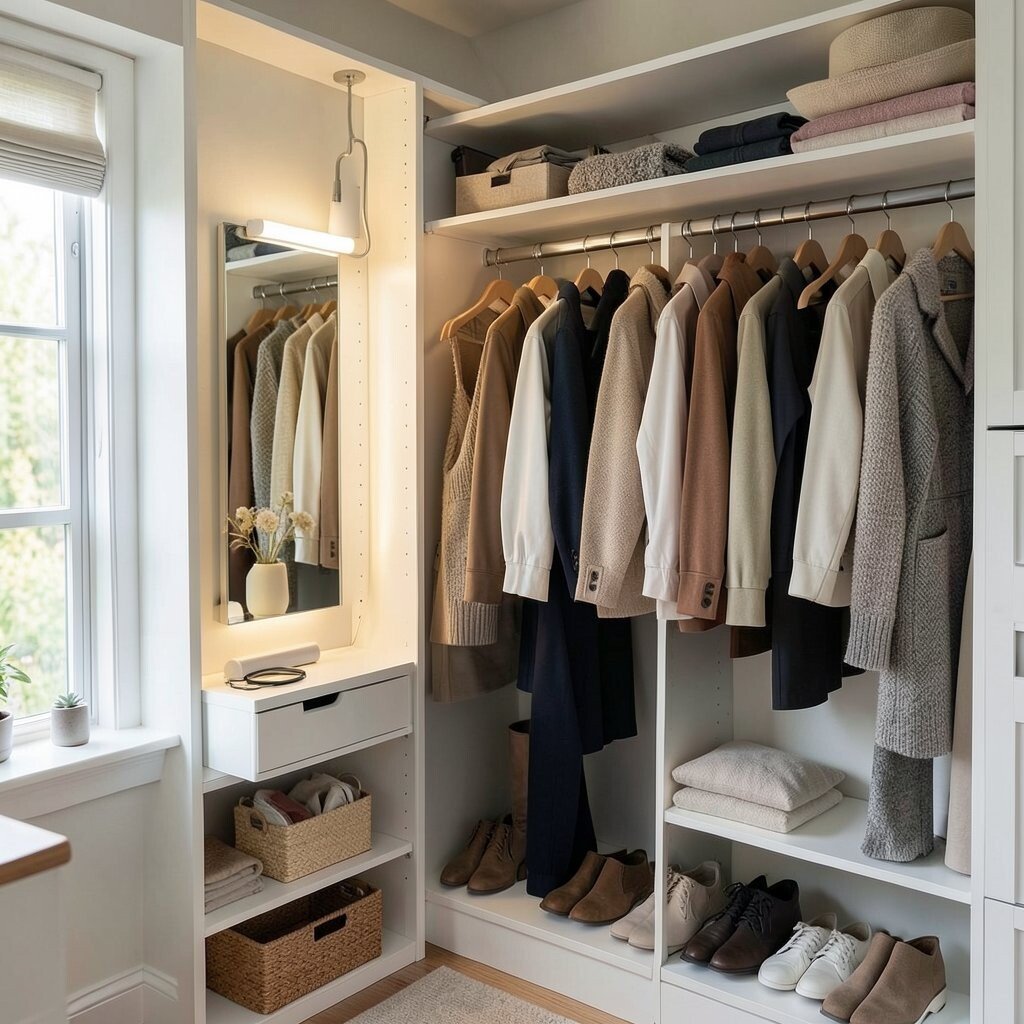
A closet without good lighting can make everything feel harder, even simple choices. When you add a mirror or brighter light, it changes how the space feels and how outfits look.
Choose a small wall mirror or a clip-on mirror near your main hanging zone so you can check fits quickly. Warm LED light helps colors look more accurate, which supports better outfit decisions. This idea is unique because organization becomes part style, part function, and your closet feels like a small dressing area.
If you are budget-minded, try a simple battery light bar or a mirror you already own. The current trend of “beauty lighting” in dressing spaces shows how important visibility is for confident choices. When you can see clearly, you put clothes back where they belong because the process feels easier.
16. Use Labeled Hangers for “If I Need It” Accessories
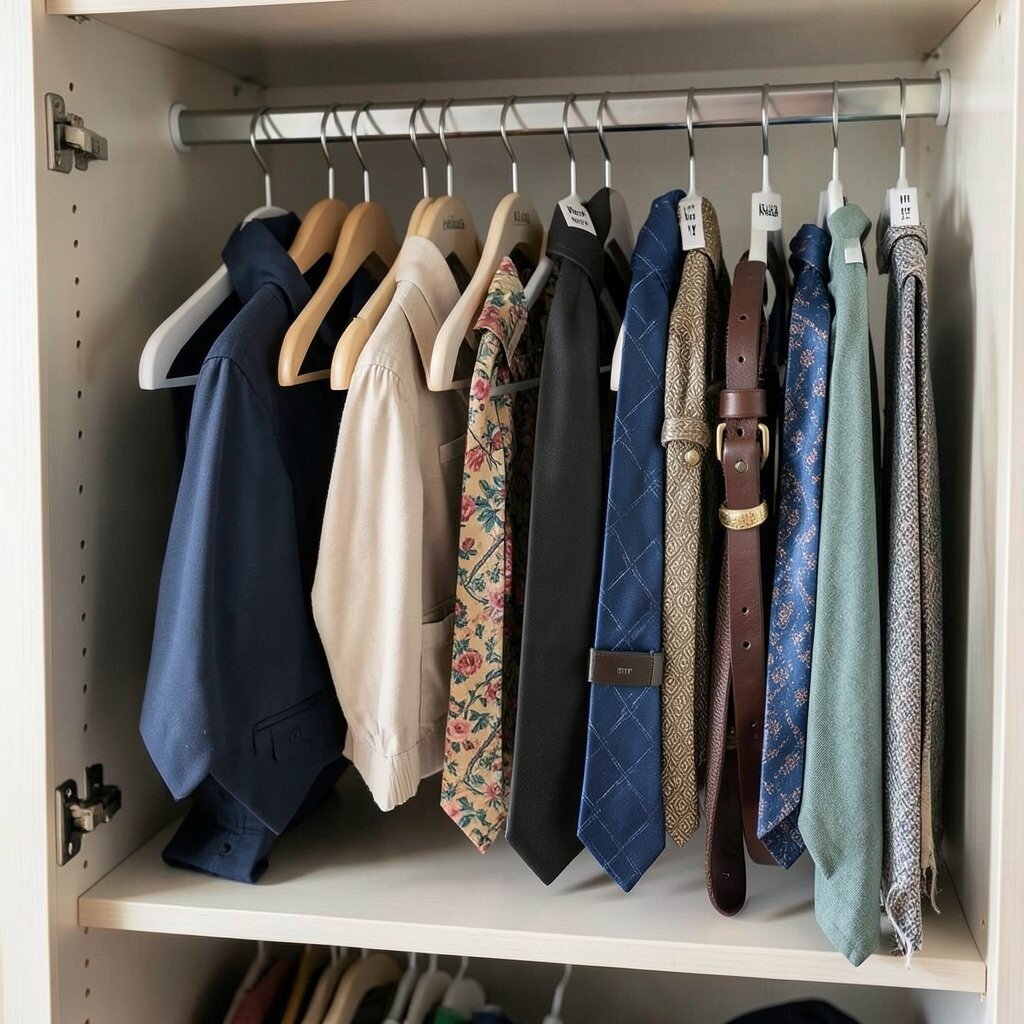
Some items are useful but not daily, like seasonal hats, special belts, or event ties. If they are stored randomly, you end up hunting at the last minute.
Keep those items in a dedicated hanging section with hangers that make them easy to spot. For instance, a strap organizer can hold ties, belts, and scarves in a tidy row. This system is practical because it keeps small accessories visible while protecting them from tangles.
17. Keep Cleaning Supplies in a Closet Side Drawer With a Dedicated Kit
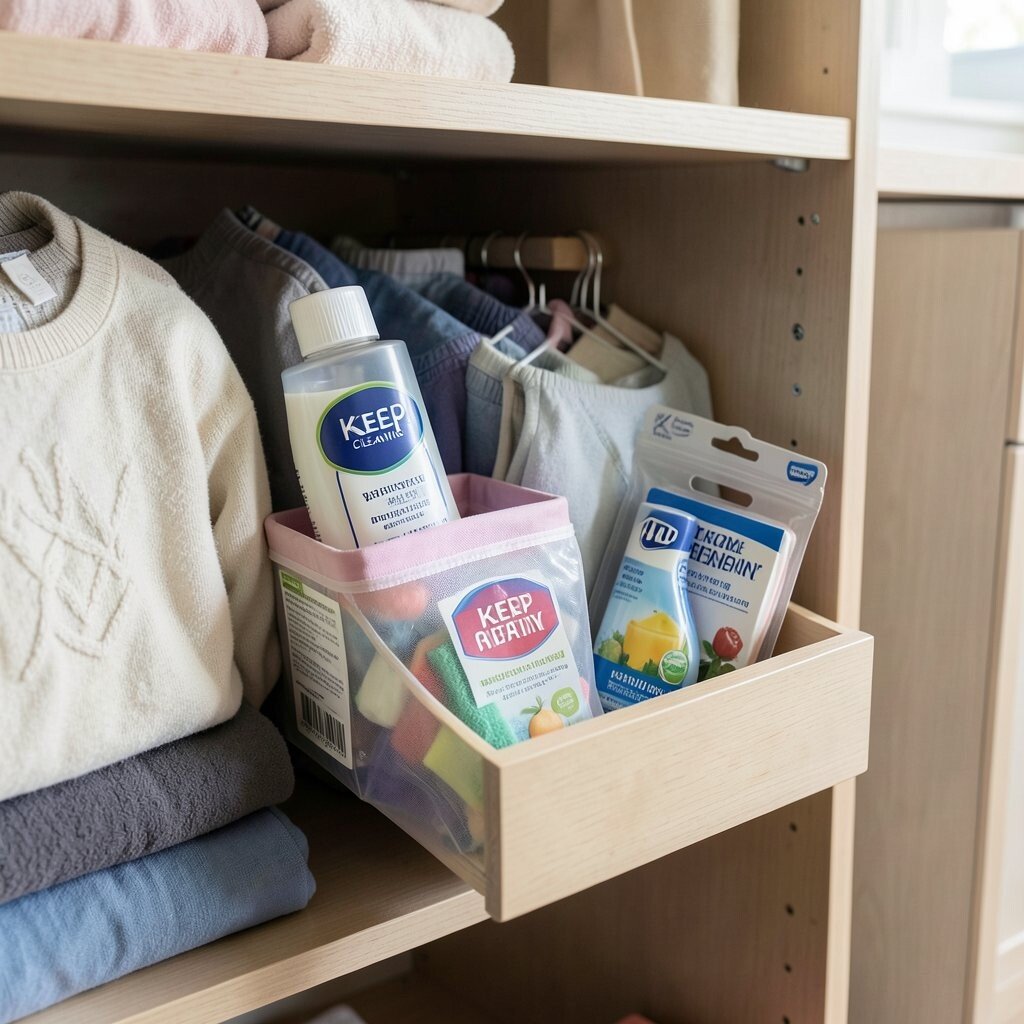
Organization can fall apart when you have no easy place to store care items. A small kit for lint rollers, garment bags, stain remover, and hangers keeps your closet ready for action.
Store the kit in a drawer or a small bin so it is not mixed with clothing. When you need a quick fix, everything is together and you do not have to search the whole closet. This supports benefits like fewer wrinkles, cleaner clothes, and a closet that feels cared for.
For personalization, pick a container style that matches your storage look, like a clear organizer with a fabric cover. Cost-wise, start with the essentials you already use, then fill gaps over time. Many people now treat closet systems like a mini home command center for smoother daily life.
18. Design a Texture-Friendly System for Delicates and Knits
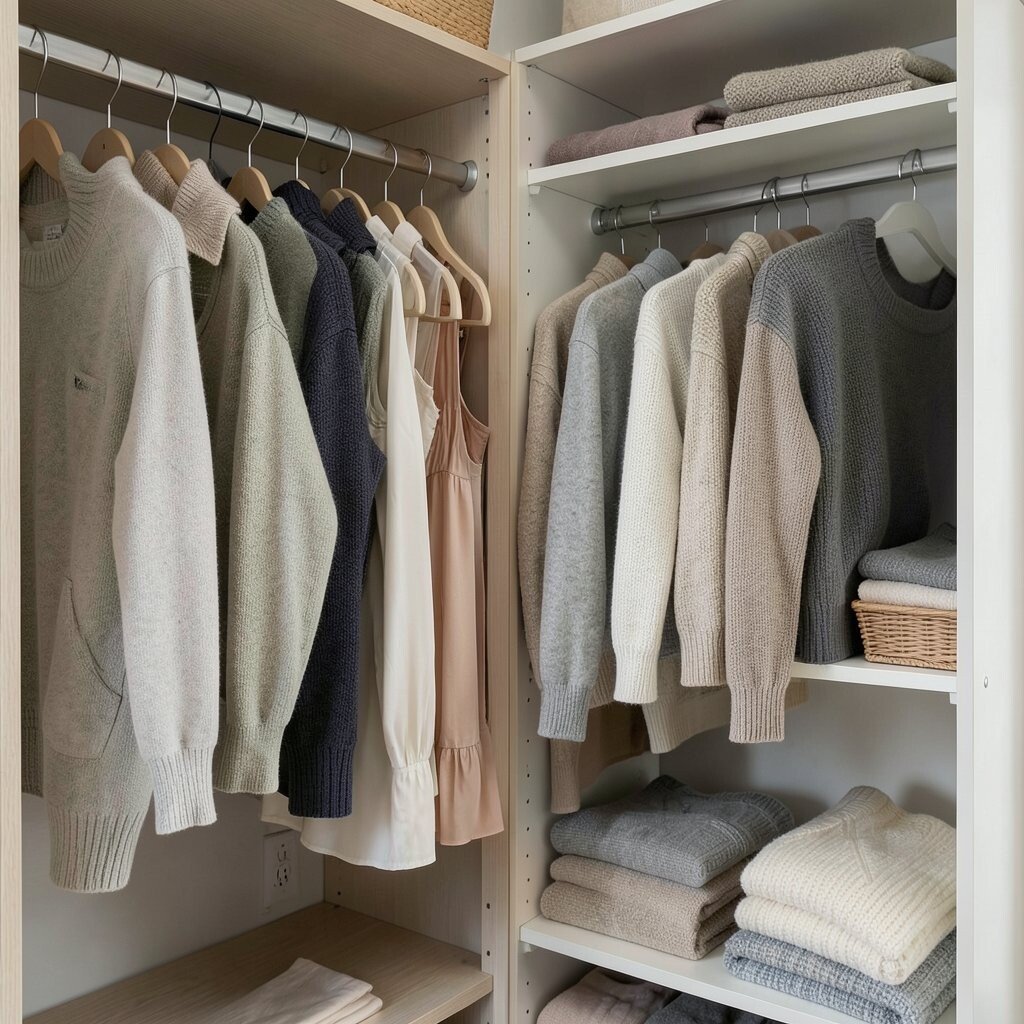
Delicate fabrics need more gentle handling, but closets often treat everything the same. If your knits stretch and your fabrics snag, it is a sign your storage system needs a softer approach.
Reserve special hangers, garment covers, or fold methods for knits and delicate pieces. Use a breathable bag for items you want protected, and store heavier knits folded to avoid stretching. This is unique because it respects how each fabric behaves, not just where it fits.
To keep it practical, separate delicates into a small zone so you do not forget them. If you want to stay on budget, focus first on your most difficult-to-care-for items, like wool sweaters and silk blouses. When clothes last longer, the whole closet feels more valuable and worth maintaining.
19. Reassess Weekly With a Quick “Move It Back” Routine
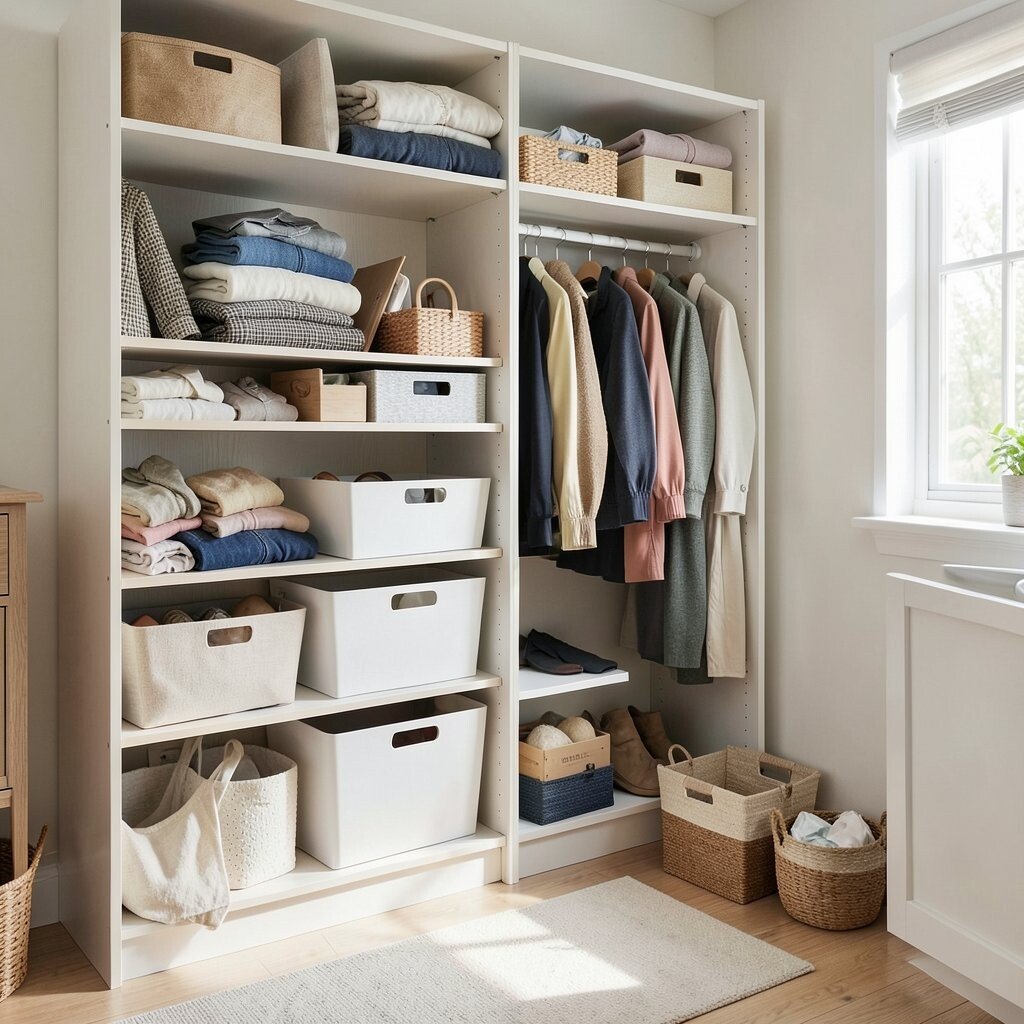
Closets get messy because life happens, not because you failed. A short weekly reset helps you keep the system running without spending hours.
Pick a day and do a fast round where you return items to their homes and adjust any bins that have tipped or slipped. Keep a small donation box or pile near the exit so you can remove rarely worn items when you notice them. This kind of routine is unique because it turns organization into a living habit instead of a one-time project.
For personalization, choose the moment that fits your schedule, like after laundry or before weekend errands. Cost considerations stay low since you mainly rely on the system you already built. Many current closet trends focus on “maintenance-first” methods because they keep spaces looking good longer.