
Balusters are small details that can make a room feel finished. The right style can turn an ordinary railing into a signature moment.
1. Turned Maple Whorls in Warm Light

Picture a stair rail lined with turned balusters that look like neat wooden beads. In a honeyed finish, they catch warm light and gently soften the edges of the staircase.
This visual brings a classic, cozy look without feeling heavy. The spacing and smooth curves make it easier for the eye to glide upward, which can make tall openings feel more graceful. To keep the vibe elegant, match the balusters to nearby wood tones like door trim, window sills, or handrails.
2. Fluted Columns for Traditional Balance

Imagine slim balusters with vertical flutes that resemble miniature columns. The repeated grooves create an orderly rhythm that feels timeless and calm.
This style adds a sense of structure, especially in formal entryways. When the railing is set against painted walls, the fluting adds depth that feels richer than flat posts.
For practicality, choose a finish that hides dust and fingerprints, since rails collect daily marks. If you want a more personal touch, paint the fluted balusters to match your trim while keeping the handrail in a contrasting wood or stain.
3. Reeded Iron Scrolls With Soft Patina

Think of iron balusters with reeded textures and small scroll accents. When finished with a gentle patina, they look refined rather than sharp.
This visual works beautifully where you want character and a touch of artistry. The iron lines can make open landings feel airy because the design reads as light and detailed instead of bulky.
To keep maintenance simple, look for powder-coated finishes that resist rust and staining. You can also pair the railing with warm lighting and simple wall colors to make the scrollwork stand out without overwhelming the space.
4. Classic Ogee Profiles for Arched Elegance
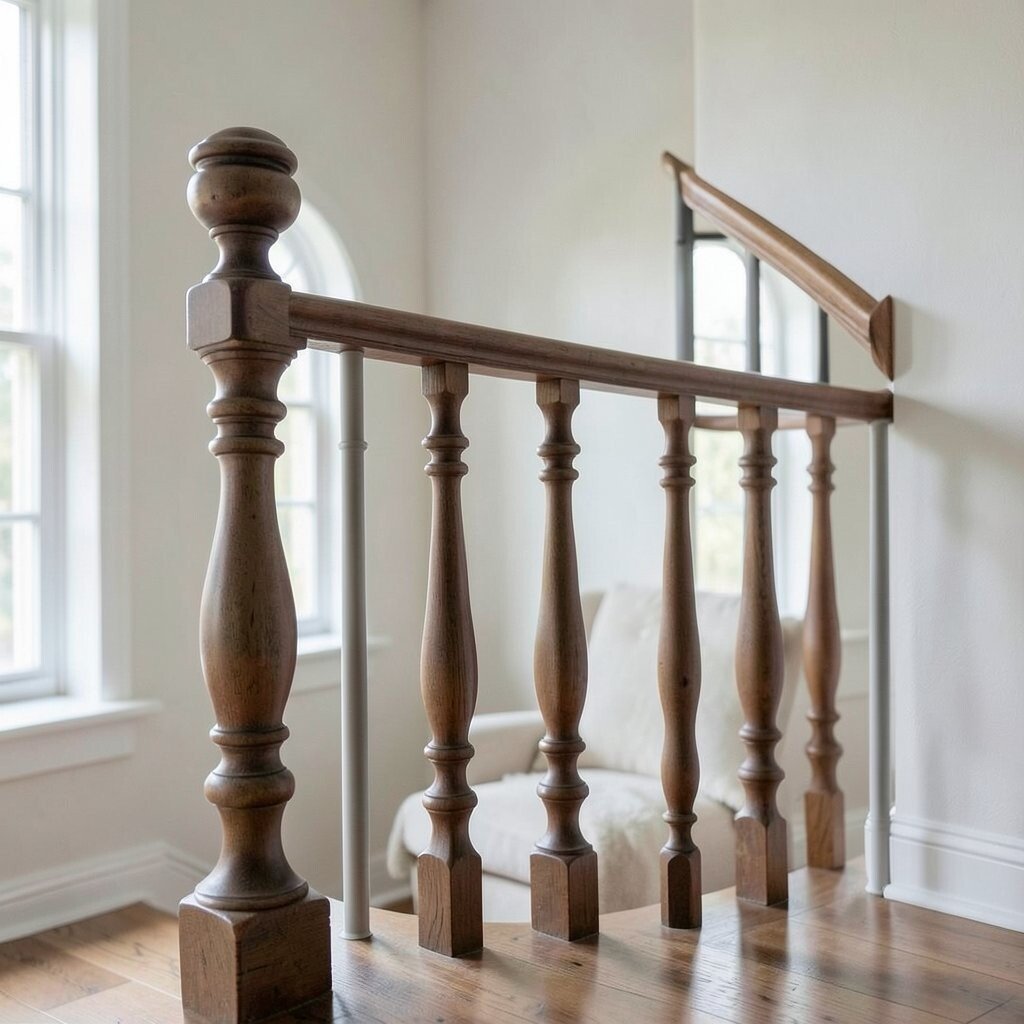
Picture balusters shaped with an ogee curve, like a delicate arch within a narrow frame. The silhouette creates a subtle swoop that looks fancy while staying familiar.
Ogee profiles add a polished look that suits both traditional homes and updated interiors. The curved form visually links to other arched details like transom windows or doorway tops.
5. Square Tapered Posts With Clean Handrail Lines

Envision simple square balusters that taper slightly from top to bottom. Even in an understated layout, the geometry gives the railing a neat, elegant edge.
This choice feels modern-classic because it keeps lines crisp. It also helps smaller spaces look more organized since the design doesn’t add lots of tiny shapes.
If you like practicality, square profiles are easier to wipe down and maintain. For personalization, vary the finish, such as choosing a matte black rail with warm wood balusters or using a satin paint that matches your cabinetry.
6. Rope-Twist Turnings for Craft-Forward Charm

Imagine balusters with rope-twist details, where the wood or metal looks braided. The twisting pattern creates motion, even when everything is still.
This visual feels artisanal and warm, especially in spaces with natural textures. The twist also helps hide small imperfections because the pattern breaks up the surface view.
For best results, keep surrounding decor simple so the braid detail becomes the hero. A practical way to personalize is to pick a finish that echoes other craft elements like woven baskets, stone counters, or linen drapes. If you want a cost-friendly approach, consider using matching turned balusters on the most visible sections, such as the front staircase landing, while using simpler posts elsewhere.
7. Ball-Top Spindles With Gentle Symmetry

Picture balusters that end in small balls, like tidy ornaments lined up along the rail. The symmetry feels calm, and the rounded tops soften the look of staircases.
This classic style is great for hallways and landings that need a friendly touch. It also works well with both painted finishes and natural wood tones.
To make the look cohesive, align the ball size with the scale of the railing and the width of the stairs. If you’re personalizing, try mixing finishes by keeping the handrail one material while the balusters are another, such as wood with metal brackets.
8. Victorian Spindles With Delicate Beaded Details

Think of balusters with beaded edges and a gentle Victorian profile. The small details create a lace-like effect, especially in front of light-colored walls.
This visual brings old-world charm without needing heavy ornamentation. It also gives depth in photographs, since the tiny curves catch light from multiple angles.
For a practical setup, choose bead details that aren’t too deep so cleaning stays manageable. If you want personalization, coordinate the railing finish with hardware like doorknobs and cabinet pulls so everything feels intentional.
9. Classic Romanesque Arched Nubs

Imagine balusters that feature rounded arched nubs along the vertical line. The overall effect is like a soft series of mini archways.
This look suits spaces with stone accents, curved doorways, or traditional molding. The arches feel sturdy, which can make a railing seem more substantial even when the design is refined.
To keep the visual balanced, maintain consistent spacing and keep the top rail straight. For practical cost considerations, compare pre-made baluster sets to custom work, since small custom changes add up quickly. A smart way to personalize is selecting a finish that matches your floor tones, which often makes the railing feel custom even when the design is standard.
10. Minimal Turning With High-End Proportions

Picture balusters with simple turning that looks crisp and carefully measured. The elegance comes from proportion rather than heavy ornament.
This style is perfect if you want classic charm in a tidy, modern way. It also pairs nicely with open shelving and light neutral palettes.
To make it feel high-end, choose a handrail finish that’s slightly satin and smooth to the touch. If you want personalization, consider adding matching newel caps or decorative brackets that repeat the same turning style.
11. Antique Look Cast Designs With Timeworn Flourish

Envision cast balusters that look antique, with graceful scrolls and slightly uneven patina. The aged look adds warmth and history to an entry or staircase.
This visual is unique because it often feels like a preserved find. The texture can also make the railing stand out against clean walls, which creates a strong focal point.
12. Slim Spindles With a Satin Ivory Wash

Imagine thin balusters painted in a soft satin ivory, set in a straight, orderly line. The delicate scale makes the railing feel airy and bright.
This style suits rooms that need a light, open feeling, like small foyers or bright stair halls. The satin finish also helps the railing resist everyday wear better than deep gloss.
For practical tips, use a quality bonding primer and topcoat so the finish doesn’t chip where hands frequently touch. Personalization is easy here, since you can tint the ivory slightly warmer or cooler to match your lighting, whether it reads golden or crisp.
13. Art Deco Influence With Geometric Bands

Picture balusters that mix classic curves with bold geometric bands. The result feels elegant yet a little daring, like early modern design done with restraint.
This visual can update a traditional home while still honoring classic craftsmanship. The geometric rhythm creates clean lines that look striking in both warm and cool lighting.
To keep it wearable, match the Deco accents to other details in the space, like a rug pattern, mirror frame, or light fixtures. For cost considerations, you might choose a railing system with replaceable sections so upgrades are less expensive if you expand later.
14. Traditional Half-Round Balusters for Soft Hand Feel

Imagine balusters with a half-round shape that feels smooth and friendly to the eye. The curved faces create a gentle visual flow along the staircase.
This visual is great for families because it looks polished without being overly fussy. It also reflects light softly, which can make hallways feel welcoming.
For practical use, choose a finish that feels comfortable under regular touch. You can personalize by pairing half-round balusters with a carved newel post or a handrail cap that matches your molding style.
15. Ornate Carved Leaves Along the Rail Line

Picture balusters with carved leaf motifs, arranged so the greenery-like shapes repeat neatly. The botanical detail brings a classic, natural elegance.
This visual adds uniqueness because it feels decorative yet not overly flashy. It also pairs well with spaces that have wood beams, linen curtains, or floral artwork.
For practicality, select carved details that are deep enough to show in shadow but not so deep that dust gathers in tiny pockets. If you want to balance cost, choose leaf accents on the most visible runs and use simpler balusters in less seen sections.
16. Wrought Iron Lattice Squares for Architectural Clarity

Imagine a railing made of wrought iron balusters that form small lattice squares. The open grid gives you a crisp, architectural look while still feeling classic.
This visual brings clarity because the squares repeat in a clear pattern, making the whole railing read as structured. It’s also great for views across a landing, since the openness keeps sightlines light.
To make it practical, use a finish designed for outdoor-style durability even indoors, since it holds up to frequent touching. Personalization can be as simple as choosing a lattice scale that matches your room, such as tighter squares for small spaces and wider squares for taller halls.
17. Classic Turned Beads With a Rolled Rail Edge

Picture balusters with turned bead rings, each one repeating in a tidy vertical line. Add a rolled edge handrail, and the whole system feels like it was made for comfort.
This visual creates a classic, craftsman mood that looks great in both traditional and transitional interiors. The rolled rail edge also invites touch, which makes the staircase feel welcoming.
If you want practical tips, consider installing a handrail that matches the most comfortable grip shape for your family. To personalize, paint the rail and keep the balusters stained, or flip it for a different contrast that still looks cohesive.
18. Tall Narrow Spindles With High Contrast Finishes

Imagine tall, narrow balusters that create strong vertical lines. When paired with a contrasting handrail and base, the look becomes bold but still classic.
This visual can make ceilings feel higher because the vertical lines pull the eye upward. It’s especially effective in entry stairs where you want drama without ornate clutter.
For practical cost considerations, selecting a consistent standard spindle profile helps keep the project predictable. Personalization can come through finish choice, such as pairing matte handrail hardware with a softer painted spindle color that hides scuffs.
19. Old-World Scrolls With Centermedallion Details

Picture wrought or cast balusters that carry scrollwork with a centered medallion. The medallions act like tiny jewelry pieces, making each railing section feel special.
This visual is uniquely eye-catching, especially on stair landings where people naturally pause and look. The centered focus also helps the pattern feel intentional instead of random.
For practical use, ensure the medallions are securely fastened and made of a durable finish so they keep their shape and color. Personalization is easy by choosing medallion style that echoes other motifs in your home, like a wreath shape in decor or a swirl pattern in a lamp.
20. Elegant Triple-Step Baluster Ridges

Imagine balusters with stepped ridges that form three subtle bands as they run vertically. The layered ridges add depth and make light bounce across the surface.
This visual feels classic yet fresh, because the steps create a gentle texture without heavy ornamentation. It also looks great when your space has clean lines, since the ridges add interest without adding visual noise.
For practicality, keep ridges medium in depth so cleaning stays simple and the railing doesn’t collect dust in deep creases. Personalization can be as simple as choosing a finish that highlights the steps, like satin paint for smooth contrast or stained wood for a warm, rich grain.