
Your cabinets can look sleek and still feel warm. The right design makes daily routines calmer and more enjoyable.
1. Floating Cabinets With Hidden Support
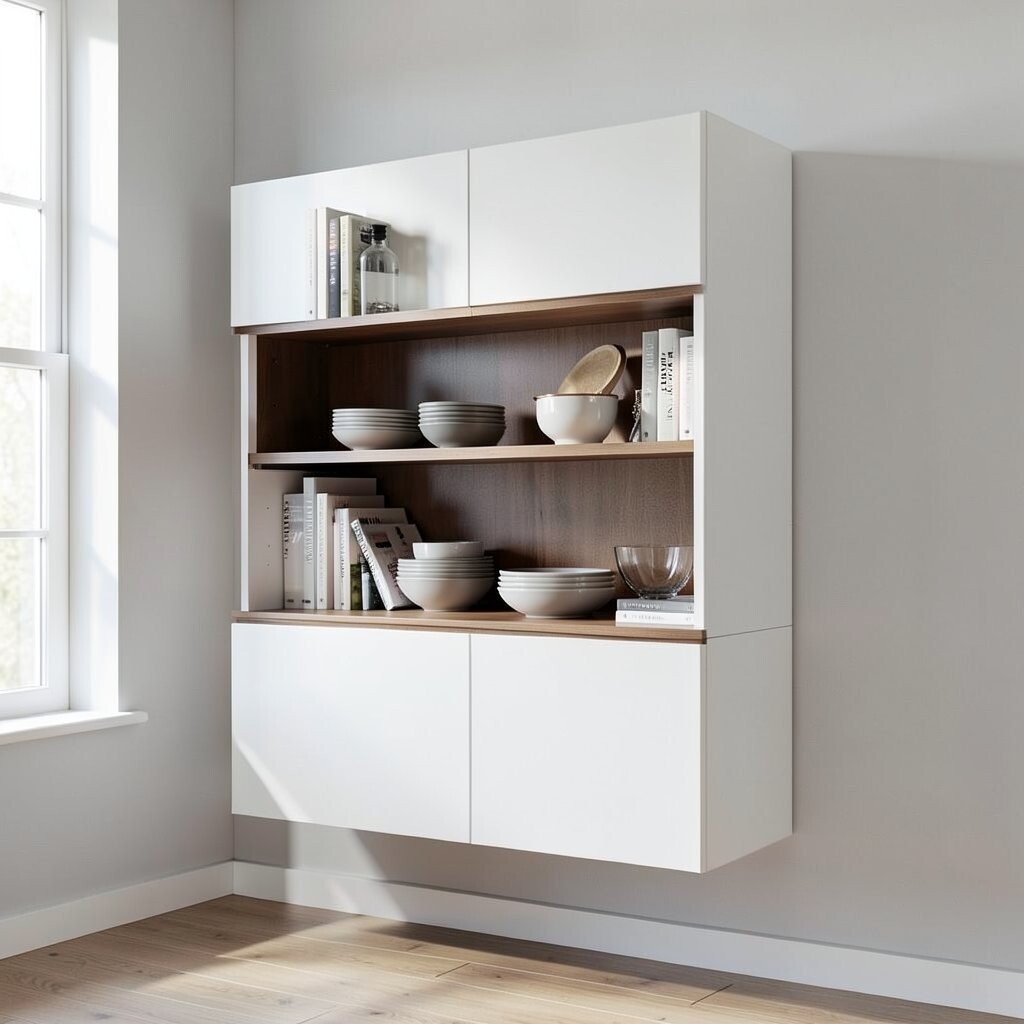
Floating cabinets feel light and modern, as if they are gently hovering on the wall. In real life, the surface stays easy to wipe because there is no bulky toe-kick to trap crumbs.
Choose a finish that matches your room’s tone, like matte white for bright spaces or walnut for cozy warmth. Use them for kitchens, entryways, or a home office so you can keep things organized without visual clutter. For practical installation, confirm your wall material and place studs carefully so the shelves stay steady even when loaded with dishes or books.
2. Warm Wood Slats and Open-Frame Shelving

Wood slats add a soft, rhythmic look that makes contemporary cabinets feel more human. You can see the grain clearly, and the structure creates a stylish pattern behind mugs, bowls, or display items.
Pair slatted doors with open shelves so everyday essentials are easy to grab. This design also helps you use cabinet space smarter, since you can group items by height and frequency of use.
To keep it practical, use enclosed storage for things you do not want on display, like extra cleaning supplies. A mid-range build often uses real wood veneer over a solid core, which keeps the look rich without going too far on cost.
3. Full-Height Cabinets With Subtle Vertical Lines

Full-height cabinetry creates a tall, streamlined effect that visually pulls the room upward. Vertical lines guide the eye and make narrow areas feel more balanced.
When you extend cabinets to the ceiling, you gain storage for seasonal items and rarely used appliances. This approach also reduces dust-collecting gaps, since the top area becomes part of the system.
If you like personalization, vary the panel spacing by section, such as more refined lines on the upper portion. For cost control, focus spending on doors and fronts, while using simpler interior shelving that is still durable and easy to adjust.
4. High-Gloss Lacquer With Color-Shift Accents

High-gloss lacquer looks crisp and clean, almost like polished furniture art. When light hits it, the surface catches highlights and makes your cabinets feel fresh every day.
Use color-shift accents sparingly, such as a thin metallic stripe or a handle finish that changes tone. This keeps the look modern without overpowering the rest of the room.
To make it livable, choose a layout that includes both closed doors and a few curated open areas. Gloss surfaces can show fingerprints, so wiping with a microfiber cloth becomes a simple routine rather than a chore.
5. Recessed Panel Doors for a Tailored Look
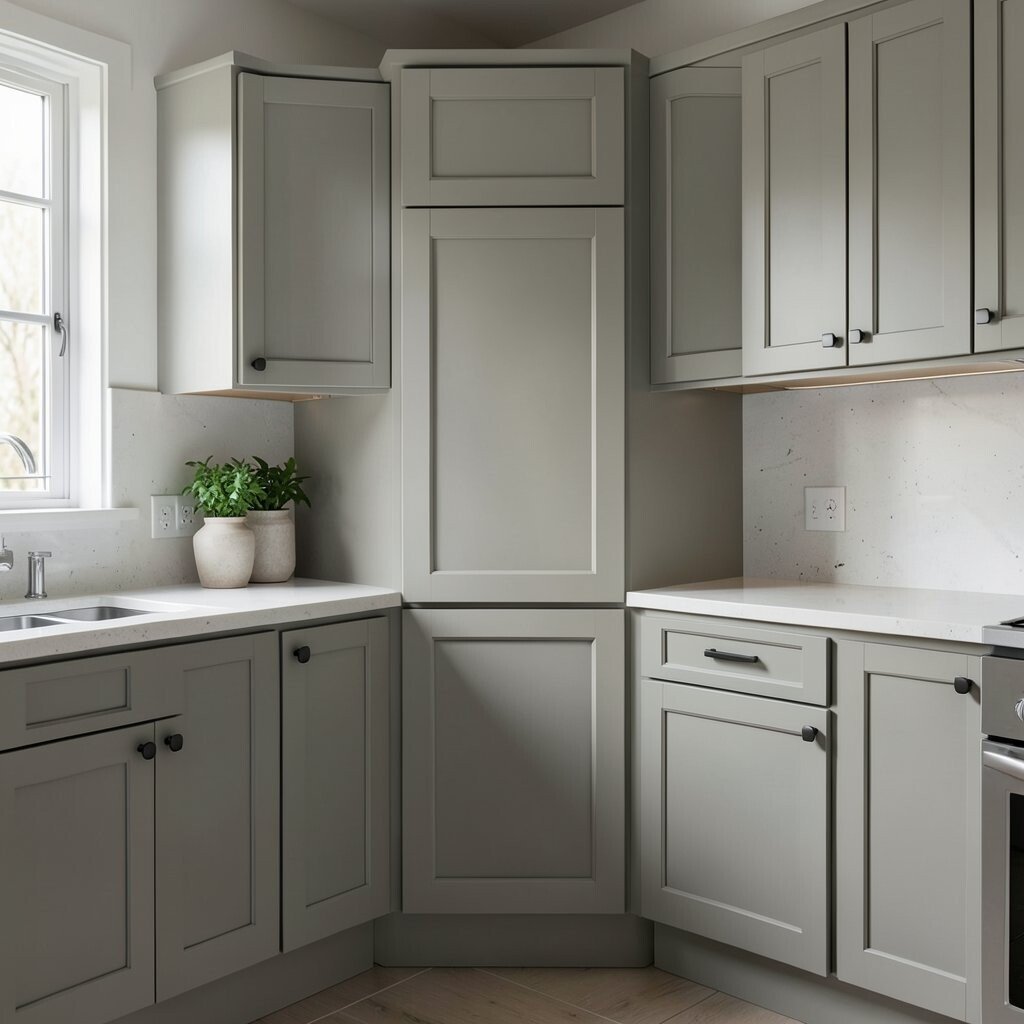
Recessed panel doors bring a neat, tailored feel that still fits contemporary design. The shallow grooves add depth, making even plain colors look intentional.
Pick a consistent door profile throughout the set so the whole room reads as one design story. This is especially helpful in kitchens where appliances and countertops already bring plenty of visual noise.
For practical tips, ensure the panels align perfectly around corners so the symmetry feels satisfying. If you want to keep the budget steady, consider repainting existing cabinet boxes and installing new recessed fronts for a strong style upgrade.
6. Frameless Cabinets With Impact-Resistant Hardware
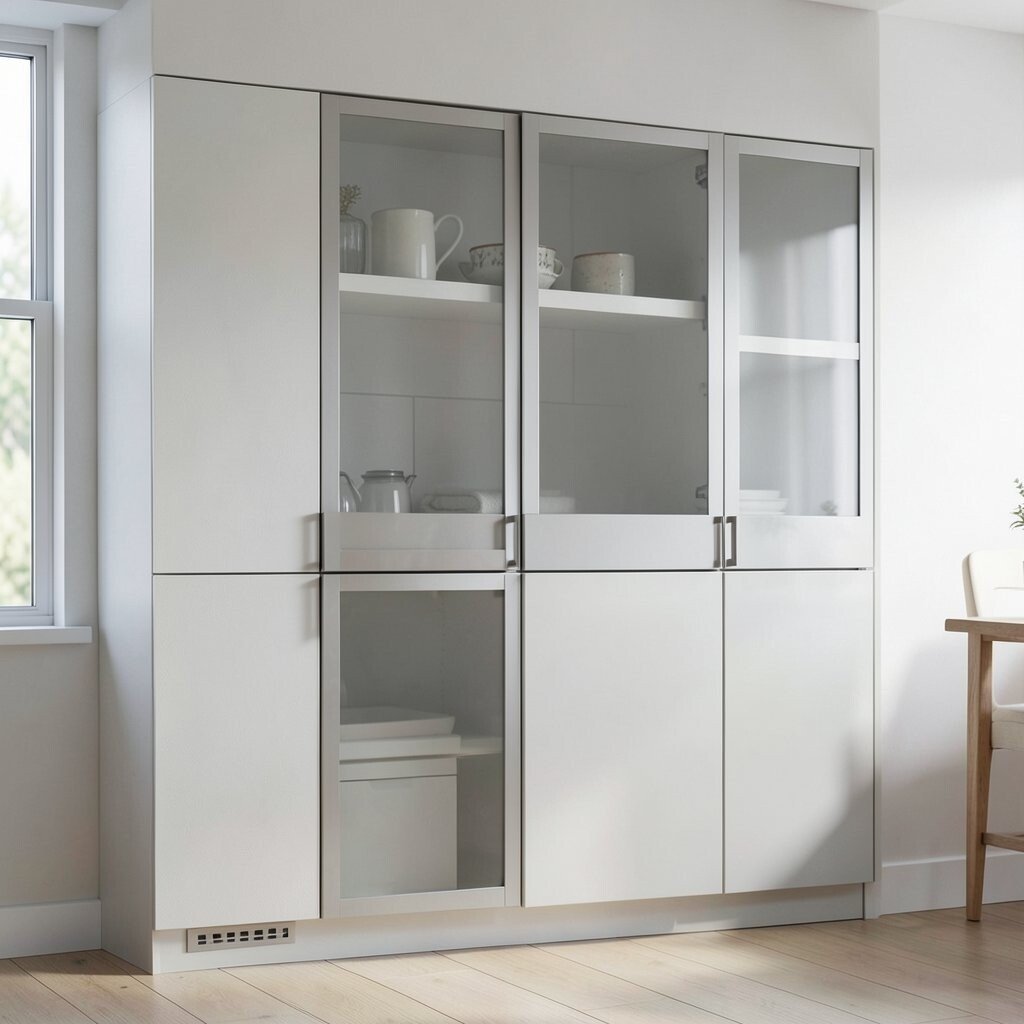
Frameless cabinetry can look sleek because it leaves less visual structure in the frame. You get a clean face that works well with handle-less or minimal pull options.
Durable hinges and drawer slides matter just as much as the front style. Soft-close hardware makes daily use quieter and reduces wear, which helps cabinets last longer.
When you personalize, match the hardware finish to your faucets and lighting so everything feels connected. For cost considerations, prioritize the parts you touch most, like drawers and hinge systems, even if some interior shelves are simpler.
7. Curved Drawer Fronts for Soft Contemporary Styling

Curved drawer fronts soften the sharp lines of modern rooms. They create a gentle wave effect that looks great in kitchens, vanities, and even media centers.
This shape also helps with comfort, because rounded edges feel friendlier to use in tight spaces. You can style them with neutral colors for calm or pair them with a bold hue for a stronger personality.
To keep the design practical, choose a radius that does not interfere with utensil layouts inside. If your budget allows, use curved fronts only for key areas like the island drawers, and keep the rest flatter for balance.
8. Matte Black With Light-Toned Interiors

Matte black cabinet fronts look dramatic, like they belong in a modern showroom. The matte finish reduces glare, so the look stays calm even in bright kitchens.
For a functional twist, keep the interior shelves and backing in a light tone. That way, stored items are easier to find, and the cabinet doesn’t feel dark when you open the doors.
Consider using matte black for base cabinets and pairing them with lighter countertops so the room doesn’t feel heavy. Cost-wise, matte black paints can be a smart option if you have cabinet boxes already, since repainting can refresh the entire space.
9. Glass-Front Cabinets With Backlit Warmth

Glass-front cabinets give your dishes and glassware a display-worthy look. With warm backlighting, the contents glow gently and feel more elevated.
This design is unique because the cabinet becomes part of the lighting plan, not just storage. It can also help you stay organized since you tend to group items neatly when they are visible.
For practical tips, use tempered glass and choose a backlight color that complements your room’s warmth. To manage cost, limit glass fronts to upper cabinets or one statement section rather than covering every compartment.
10. Two-Tone Cabinets With Contrasting Counterpart Panels
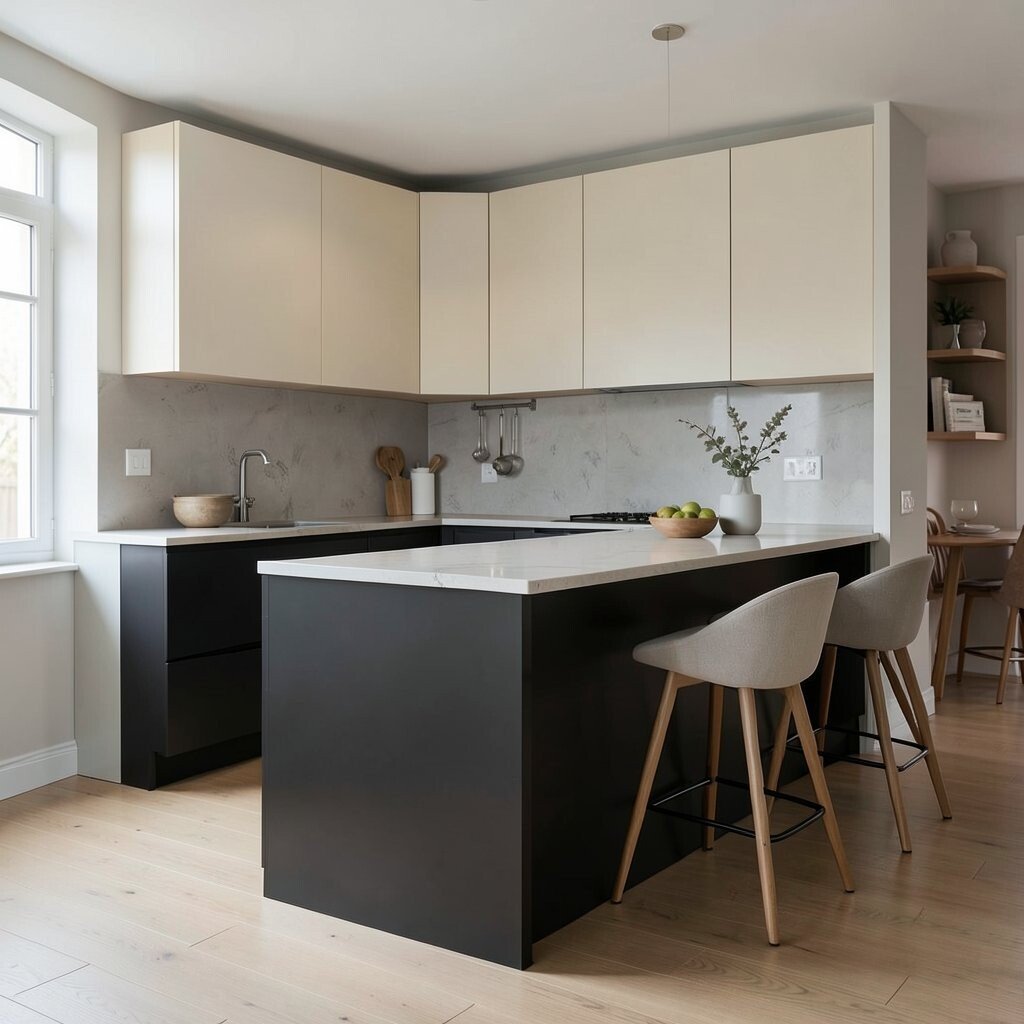
Two-tone cabinets create a playful, contemporary rhythm without needing loud patterns. You can highlight one area, like an island, while keeping the rest simple and steady.
Try pairing a darker base with lighter upper cabinets so the kitchen feels balanced and airy. This combination also helps you visually separate zones, especially when you have open shelving or a dining area nearby.
If you want it personal, repeat the color from the room, like matching it to a chair fabric or a wall accent. For cost, you can start with a two-tone plan by upgrading only door fronts in one color, while repainting or keeping the other side more basic.
11. Cabinet Towers With Appliance Garages

Cabinet towers make storage feel structured and intentional. When you include appliance garages, countertop clutter disappears fast, and cooking feels smoother.
Sliding or lift-up compartments keep items like toasters and mixers ready without leaving them out all the time. This also protects appliances from dust and accidental splashes.
Personalize by choosing a tower layout that matches your workflow, such as placing the microwave at a comfortable height next to prep space. If you are budgeting, build the tower around one or two key appliances first, since the more features you add, the more the cost grows.
12. Slim Edge Details and Minimal Handles

Minimal handles and thin edge details create a clean, modern silhouette. The design feels especially refined when your cabinet lines stay consistent across different room zones.
In a practical sense, slim hardware is easier to wipe and tends to collect less dust than bulkier pulls. It also helps smaller kitchens look more open, because the visual weight is reduced.
Choose hardware finishes like brushed nickel or matte steel that coordinate with your faucets and sink. For personalization, you can hide handles and use touch-latch mechanisms in select cabinets for a truly sleek look.
13. Built-In Bench Storage With Seat-Height Cabinets
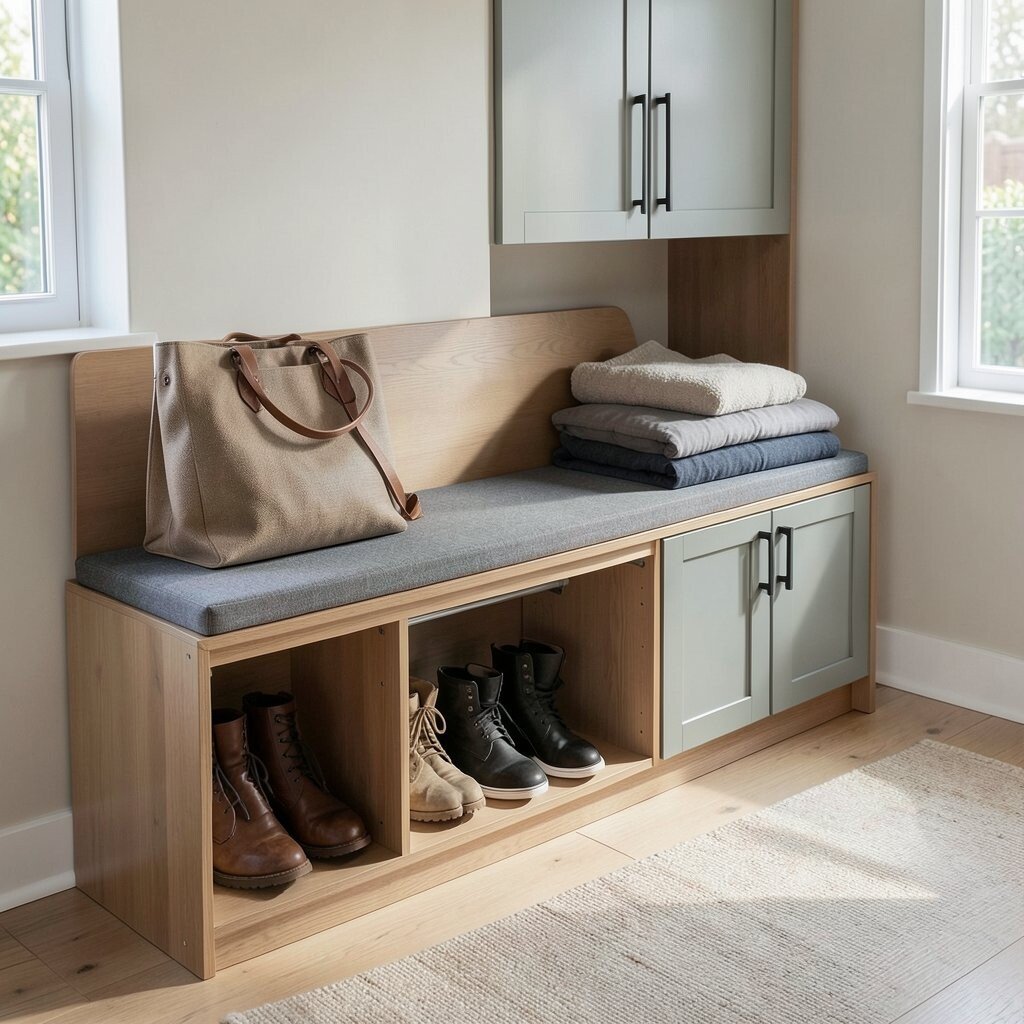
Seat-height storage is a great contemporary idea for entryways and dining nooks. It looks grounded and tidy, while still offering lots of places for bags, shoes, or linens.
The visual benefit is a smooth, continuous run of cabinets that feels custom-made. You also gain comfort, because a bench-height top can be a helpful place to sit while putting on shoes.
To personalize, add a fabric cushion or choose door colors that match your room’s textiles. Keeping costs in mind, select a durable, easy-to-clean top material so you do not need replacements after everyday use.
14. Patterned Veneer Doors in Geometric Blocks
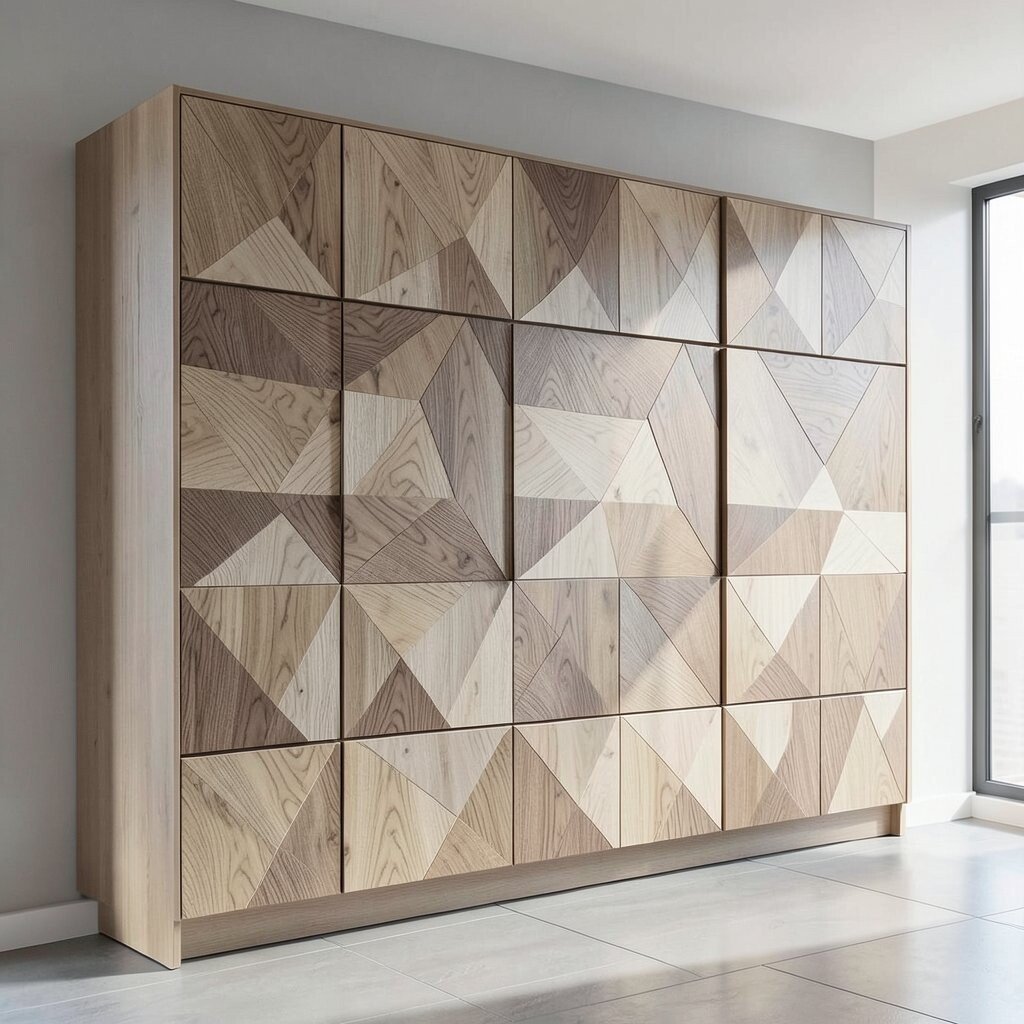
Patterned veneer doors can look like modern art while still serving the everyday job of storage. Geometric blocks add movement and a premium feel, even with simple cabinet shapes.
This design is especially unique because veneer grain can create subtle variation that no two doors will ever match exactly. That makes each cabinet set feel one-of-a-kind.
For practical tips, order veneer panels carefully so the pattern aligns the way you want across doors. If cost is a concern, choose patterned veneer for just the island or for a single row of cabinets while keeping the rest in a calmer solid finish.
15. Integrated Rail Systems for Open-and-Close Display

Integrated rail systems let you combine open display with closed storage in a smart way. You can create a moving rhythm, where some shelves show off décor and other sections stay protected.
This style can make kitchens and offices feel more dynamic, because the system supports seasonal changes. When you rearrange vases, books, or storage bins, the whole look shifts without replacing everything.
Use rails that can hold common weights and consider adjustable placement so the layout can grow with you. A practical approach for cost is to install the rail system on one focal wall first, then expand later when your budget allows.
16. Hidden Trash and Recycling Cabinets in Base Units

Hidden trash cabinets keep your kitchen looking crisp and uncluttered. Contemporary base units can hide bins behind smoothly closing doors, so nothing ugly shows in everyday life.
It is a practical win because smells and mess stay contained, and you gain an easier routine for cleanup. Many systems also include pull-out trays that make taking out waste less stressful.
Personalize by matching the door style to the rest of your kitchen so it disappears visually. For cost considerations, choose a quality bin pull mechanism and keep the door fronts consistent, since hardware reliability matters more than fancy extras.
17. Curated Storage for Small Items With Drawer Dividers

Drawer dividers are an underrated contemporary cabinet idea that makes everything easier to use. When utensils, tools, and gadgets have their own zones, the room looks neat even when you are busy.
Consider shallow drawers for spices and everyday cooking tools, and deeper drawers for baking sheets or larger items. This method improves daily flow because you stop rummaging and start grabbing what you need.
To personalize, add inserts sized to your routines, like a row for charging cables in an office cabinet. Cost-wise, modular dividers can be a smart value because they help you get more function from the space you already paid for.
18. Textured Cabinet Fronts With Subtle Fabric-Like Finishes

Textured cabinet fronts can add a soft, modern feel that looks great under different lighting. Some finishes resemble fabric or fine concrete, creating depth without bold patterns.
The benefit is that texture can hide tiny scuffs better than ultra-smooth surfaces. It also makes cabinets feel warmer, especially in rooms with wood, stone, or neutral fabrics.
When personalizing, test swatches in your own lighting so you can see how the texture reads at morning versus evening. For cost considerations, textured finishes may cost more up front, but they can reduce maintenance because small marks blend in.
19. Glass and Wood Mix Cabinets for Display and Warm Storage
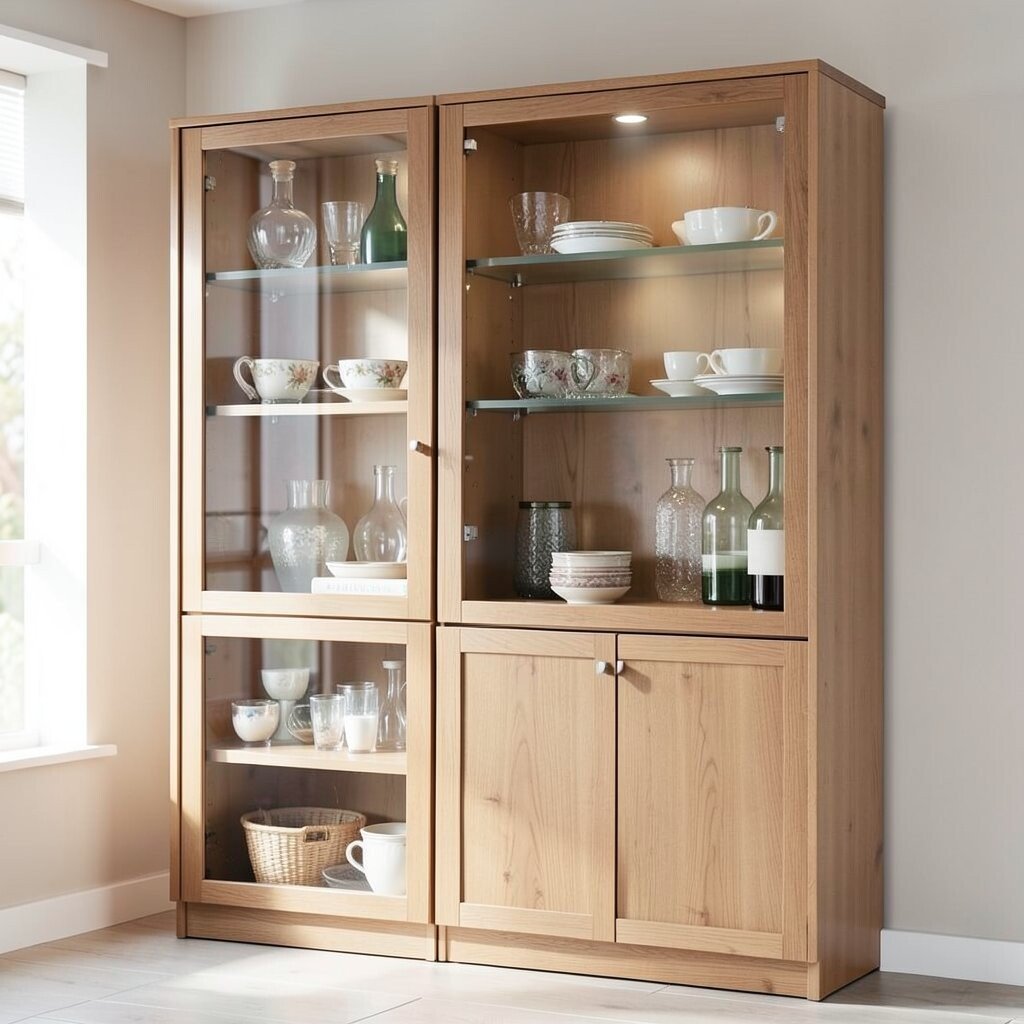
Mixing glass and wood gives you the best of both worlds: display and privacy. Wood frames keep the look warm, while glass doors let light and sightlines stay open.
This design is unique because you can decide what belongs behind glass, like heirloom cups or decorative bottles, and what stays tucked away. In daily use, it helps you keep frequently used items easy to reach without showing everything at once.
For practical tips, choose glass that is clear for statement pieces and frosted or textured for items you want to keep less visible. To manage costs, mix glass on only some upper cabinets and rely on solid doors for lower storage where items are more active.