Your closet can feel calm and tidy when the storage works with you. The right system turns small messes into simple daily wins.
1. Adjustable Shelf Rails That Grow With You
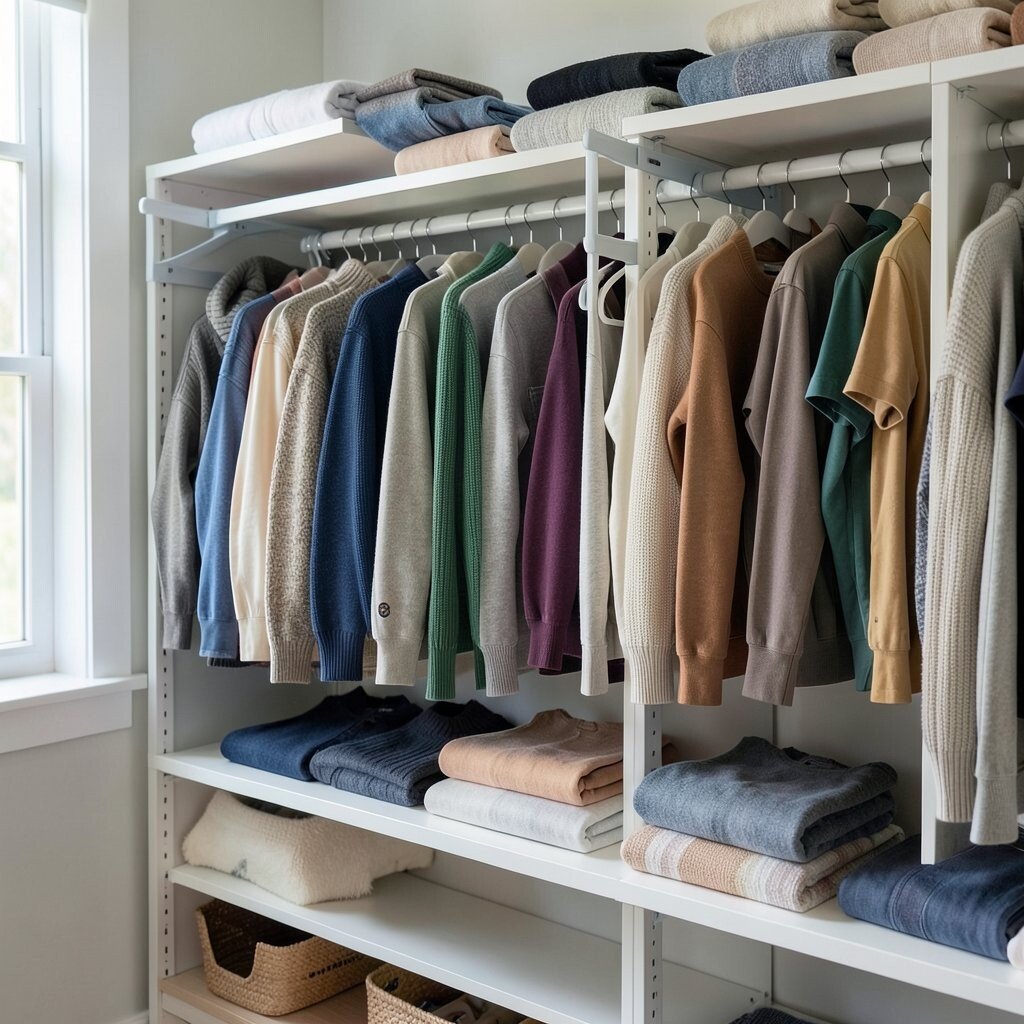
Picture a row of shelves that can slide higher or lower as your clothes change. You can see everything at once, because the height matches the items you actually own.
Installing adjustable shelf rails helps you stop stuffing things where they do not fit. Keep heavier folded sweaters on lower tiers so the shelves stay steady and your hands glide easily. For a personal touch, sort shelves by color, fabric weight, or outfits you wear together.
2. Modular Closet Bins For Quick Sorting
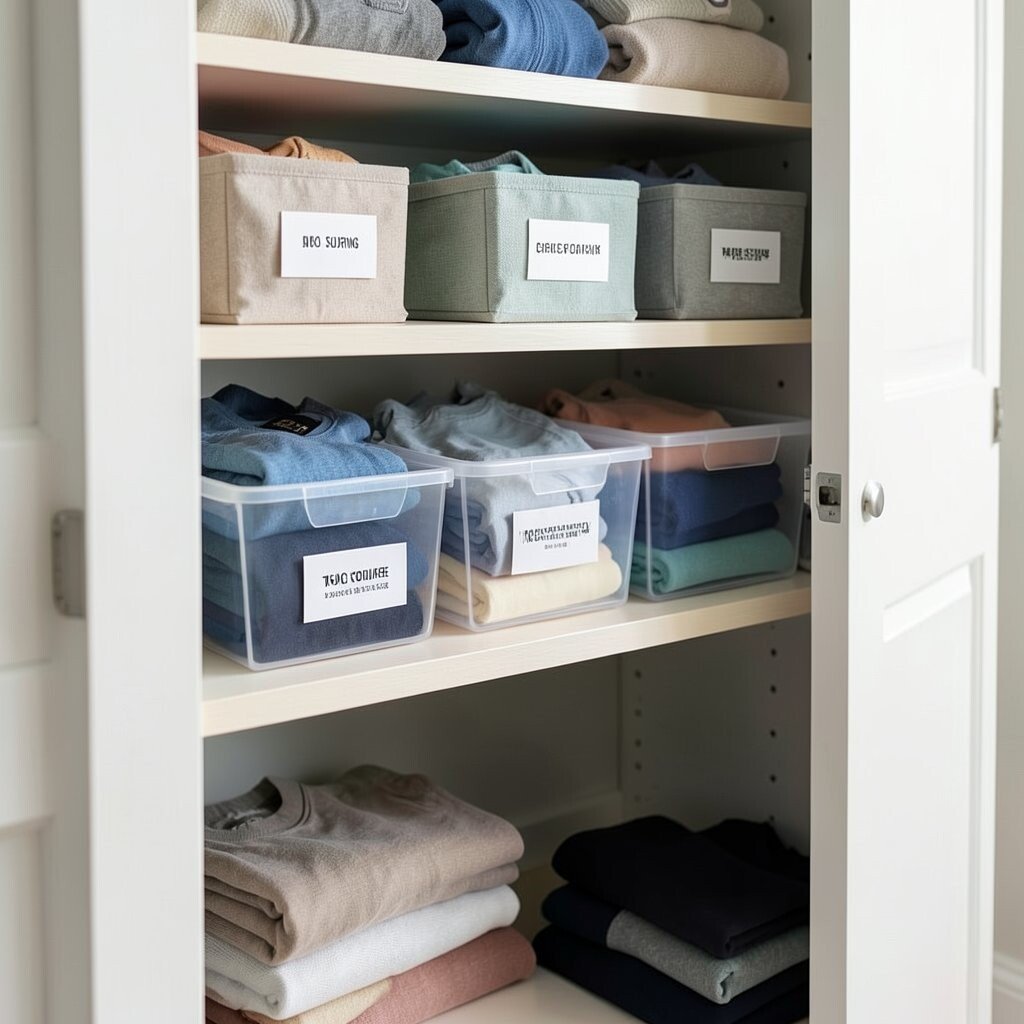
Imagine small fabric or clear bins lining up like tidy boxes on a shelf. When you open the door, your brain gets an instant picture of what belongs where.
Modular bins make sorting faster because each category has its own home. Use one bin for workout gear, another for everyday tees, and a third for socks so morning routines run smoother. Choose bins with labels you can swap later, so your system stays useful when your style shifts.
3. Drawer Inserts That Stop Clothing From Slumping
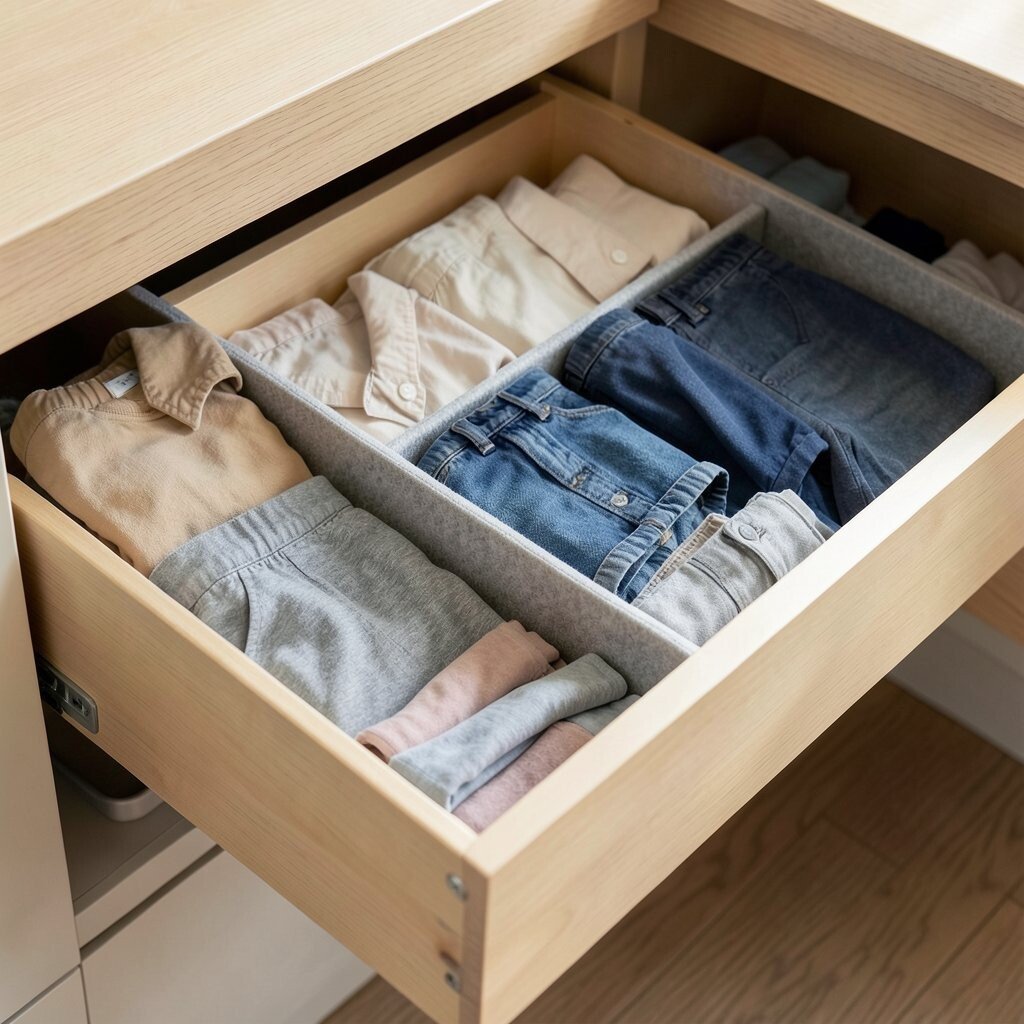
Open a drawer and notice how garments stay upright instead of sinking into a tangled heap. Smooth inserts help you pull what you need without digging through the pile.
Felt or fabric drawer dividers create neat lanes for folded shirts, underwear, and accessories. Try placing insert-free space at the front edge for items you grab often, like belts or hair ties, so you do not reach past everything else. If you want a budget-friendly approach, use washable foam inserts and replace them when they wear out.
For personalization, match the insert color to your closet vibe, like soft beige for calm or deep gray for modern style. This kind of setup also helps you avoid shrinking piles after each laundry day. Keep seasonal extras in a higher drawer so you only see what fits your current schedule.
4. Hanging Rod Extensions For Smarter Vertical Use
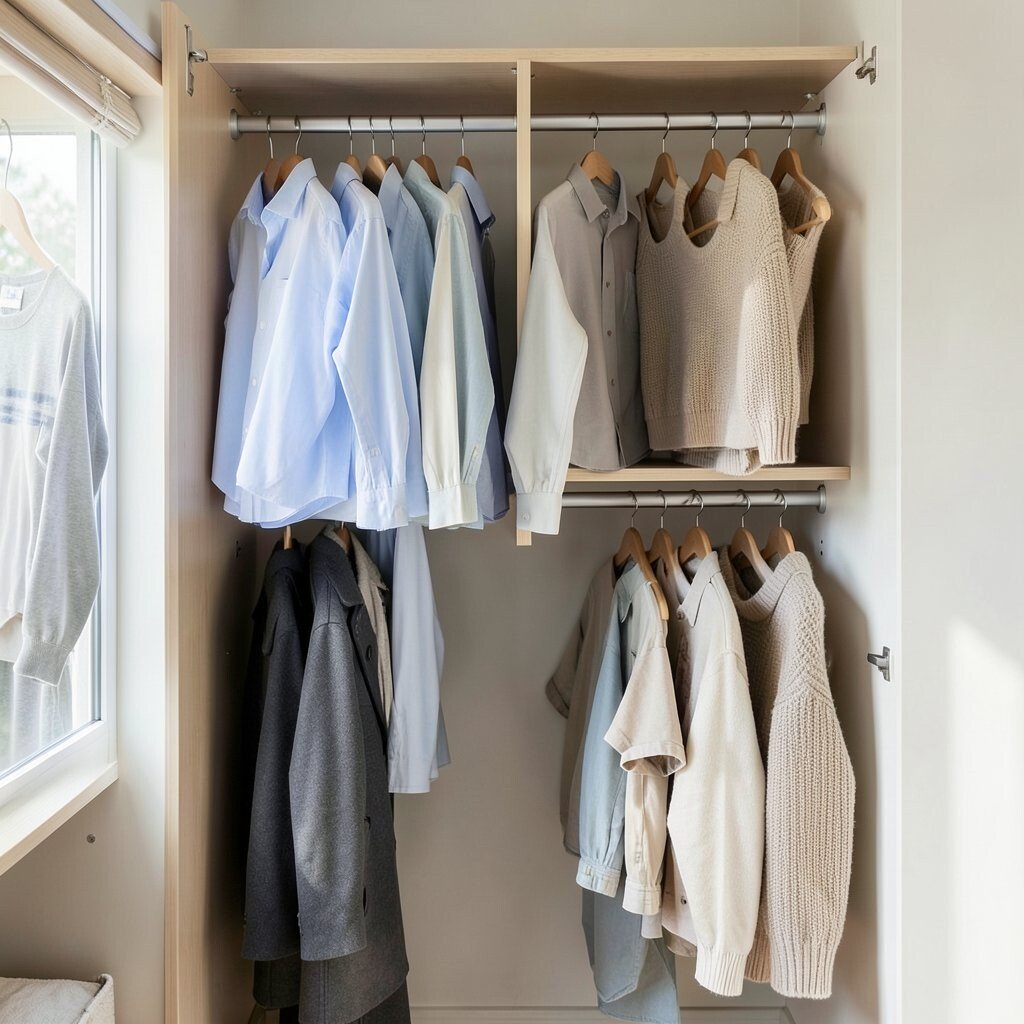
Visualize two hanging levels instead of one, with shirts on the top rail and longer pieces below. Your closet suddenly feels bigger without moving a single wall.
Rod extensions help maximize vertical space, especially in narrow closets. Store dresses, coats, and hanging knits on one level, then add everyday hangers on the other so it stays organized. A simple trick is to hang your most worn items at eye level for faster grabbing.
5. Clear Doorway Organizers For Visibility At A Glance
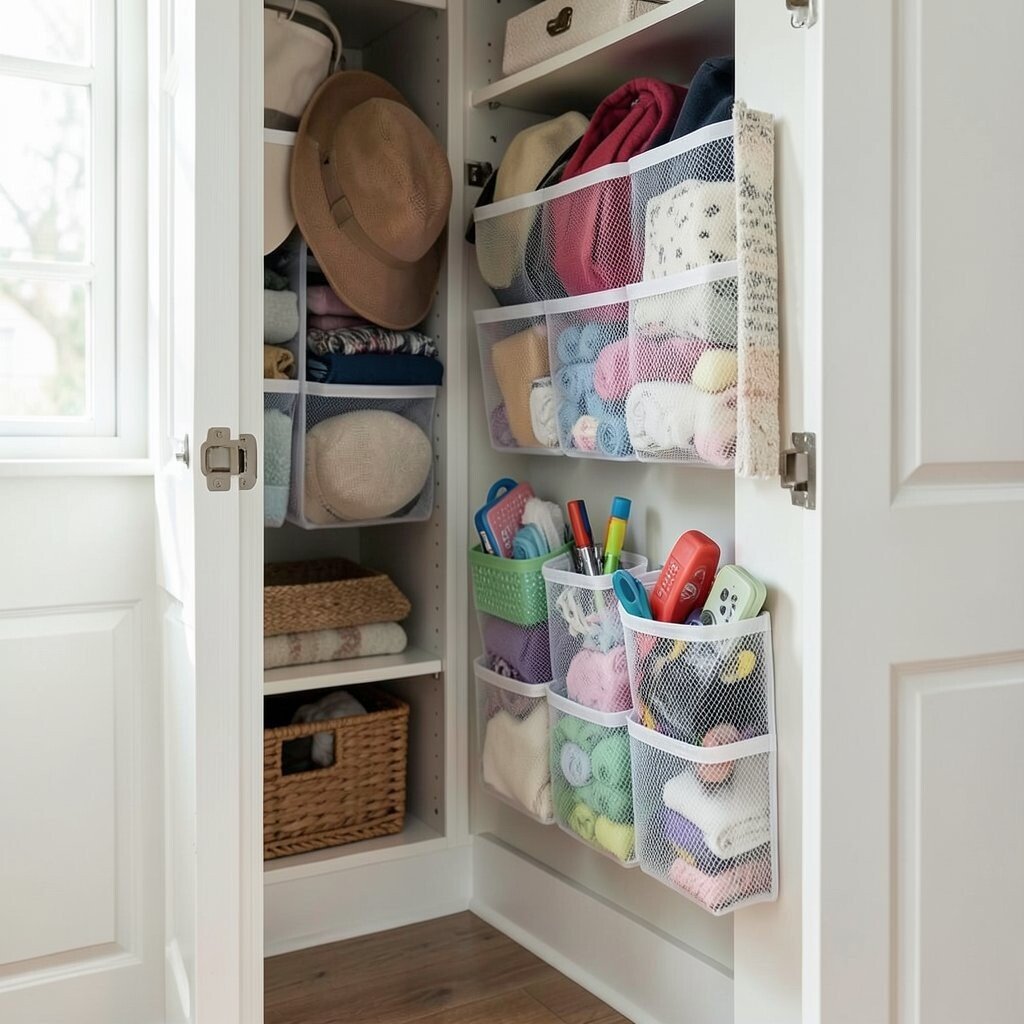
Think of the inside of the closet door holding small storage pockets you can actually see. You instantly spot hats, scarves, or cleaning cloths without rummaging.
Doorway organizers are great for accessories and small items that usually get lost. Use mesh pockets for lightweight stuff and fabric pockets for things you want to protect from dust. If you live with a tight budget, measure first and use a single organizer that covers multiple categories.
To personalize, rotate the pockets based on season and your current needs. This is also a helpful spot for emergency repair tools like sewing kits and spare buttons.
6. Tension Rods For Portable Extras
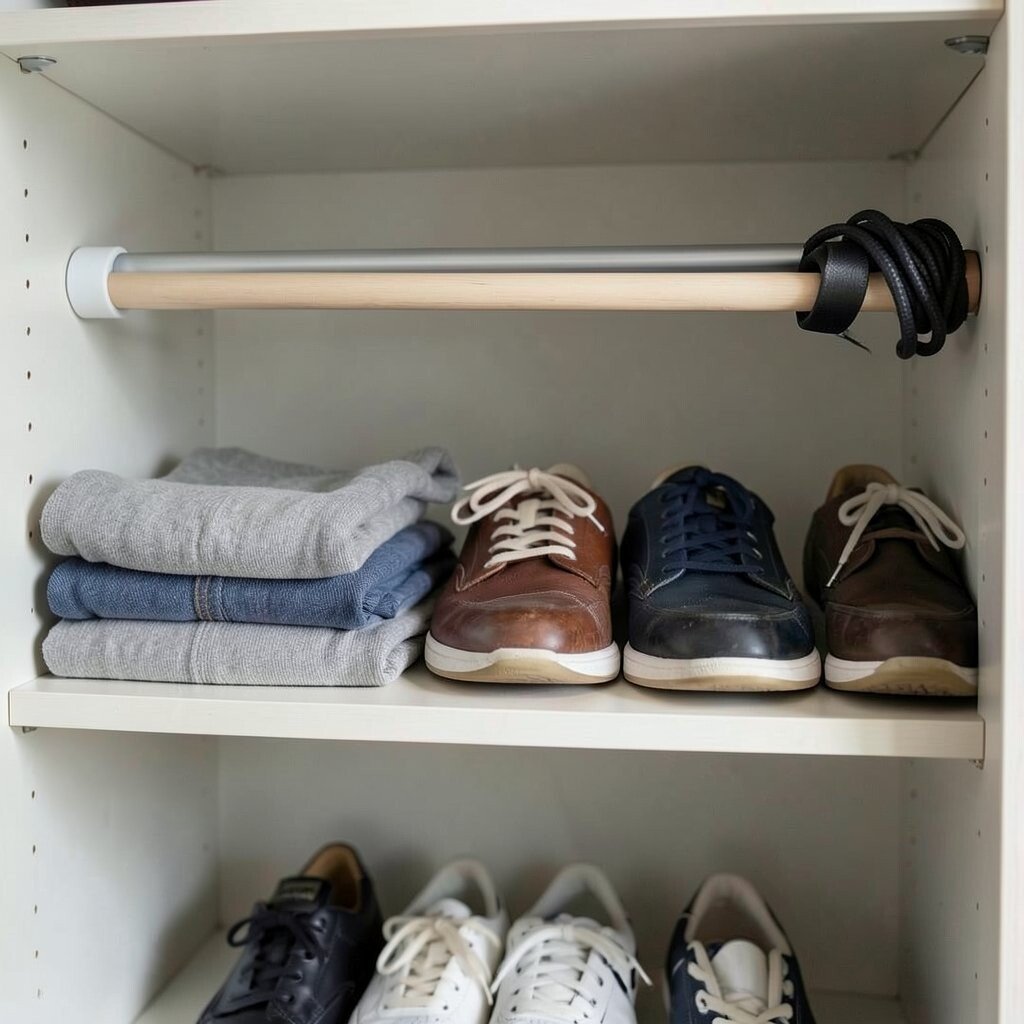
Picture a light rod snapping into place inside a closet shelf area. It creates a quick barrier that keeps folded stacks from sliding around.
Tension rods work well for dividing open shelves or holding a row of small items like shoe polish kits. They are easy to move when you rearrange, which is a huge plus if you like changing things often. For personalization, use a rod to separate formal shoes from everyday sneakers or to keep belts from tangling.
7. Shoe Systems With Pull-Out Trays
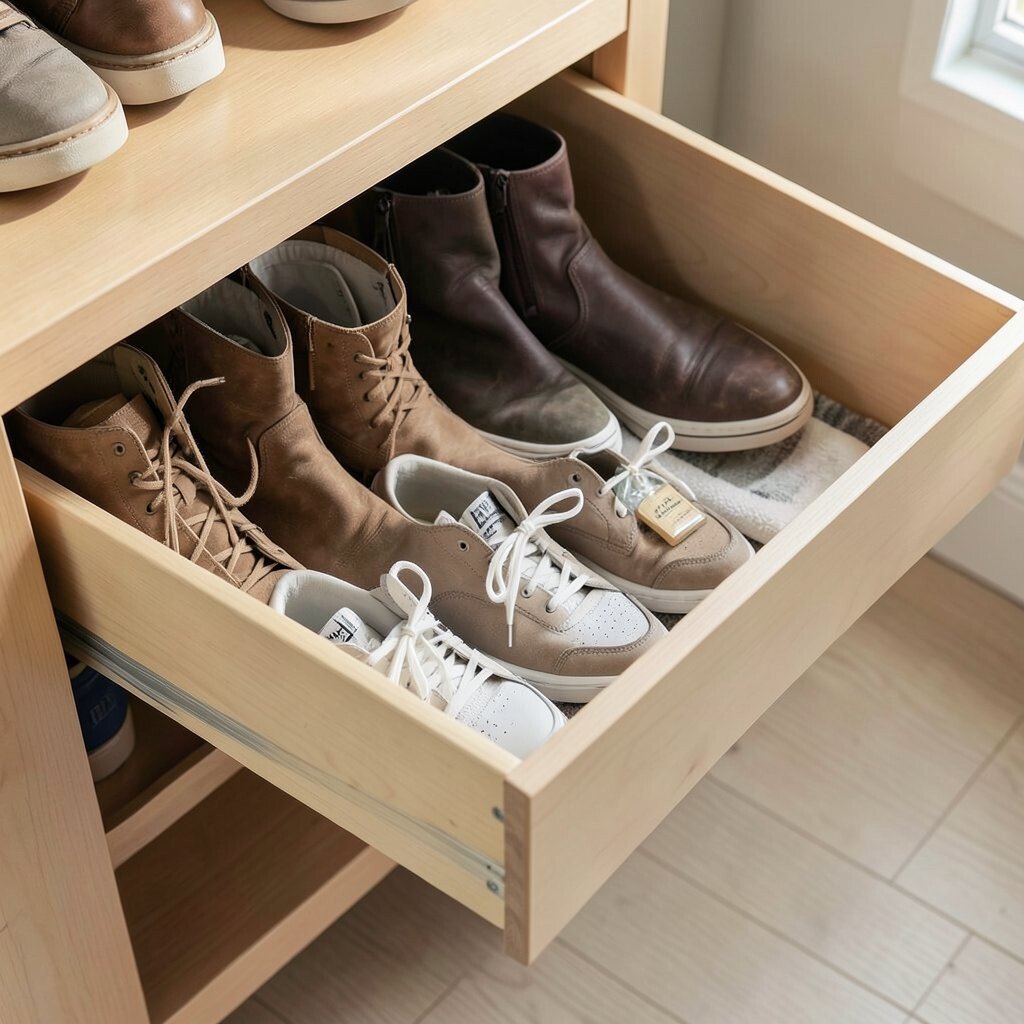
Imagine grabbing a drawer-like tray and seeing each pair lined up like a neat display. Shoes stop living in a messy corner and start matching your routine.
Pull-out trays save space and make it easy to pick the right pair without stepping around clutter. Look for trays with adjustable spacing so tall boots and low sneakers can both fit. A practical tip is to store shoes worn most days near the front for quick access.
If you care about cost, you can start with one pull-out section for your top five pairs. Personalize by adding a small scent sachet on the tray or lining it with a washable mat.
8. Closet Lighting That Makes Everything Easier To See
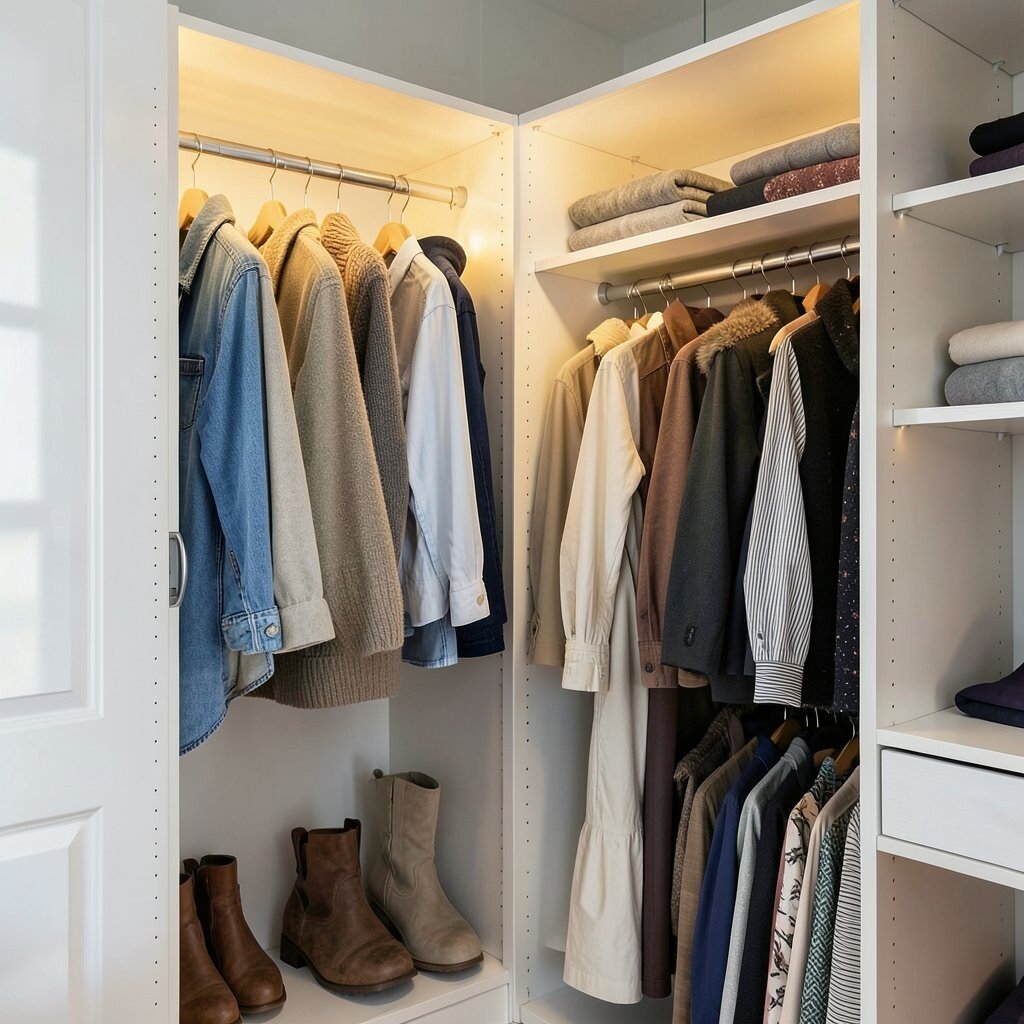
When the closet lights brighten the space, every item looks clearer and nothing feels hidden. You can spot missing buttons, stains needing attention, and the exact outfit you want.
Better lighting helps you maintain neatness because you are more likely to put things back correctly. Choose warm LED bulbs to keep colors true and flattering, which makes outfit picking less stressful. For practical use, place light sensors or motion lighting so you do not fumble for switches when hands are full.
9. Specialty Hooks For Bags, Hats, And Daily Accessories

Think of a neat row of hooks that holds bags, hats, and scarves without crowding the floor. You can see each item clearly, and everything has its own place.
Hooks reduce clutter by keeping accessories off shelves where they can tip over. Add hooks near the entry side of the closet so you can grab what you need quickly. For personalization, color-match the hooks or use a mix of sizes so each accessory hangs comfortably.
If you want to keep cost low, choose adhesive or over-the-door hook options and test them on a small area first. This system also helps you remember to rotate bags and avoid using the same one every day.
10. Fold-and-Stack Layout With Consistent Cube Sizing
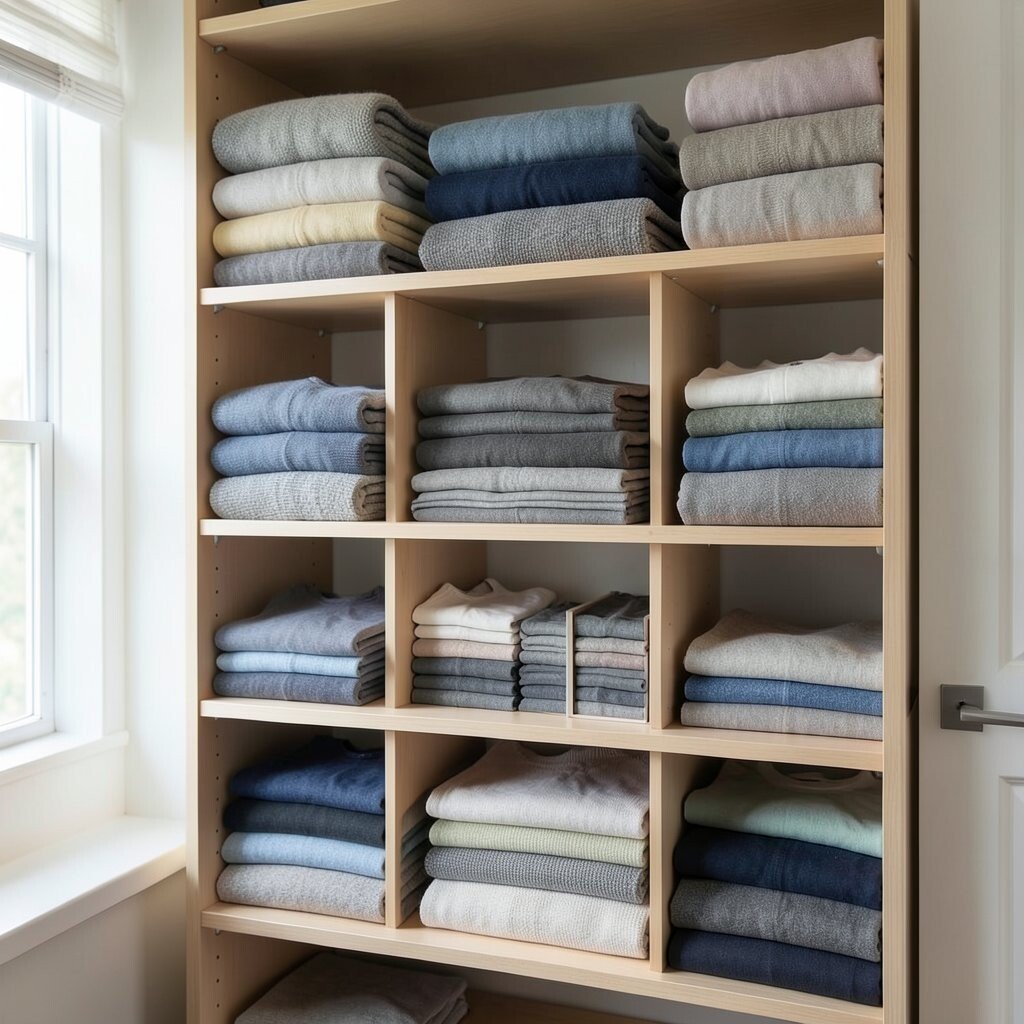
Picture a closet where folded clothes sit in tidy stacks that never collapse. Your shelves look orderly because every fold follows the same simple shape.
A consistent fold-and-stack layout makes it easier to maintain neatness week after week. Try using small measuring blocks or pre-made shelf dividers to create repeatable cube sizes. Personalize the stacking rule by choosing how you fold based on fabric, like tighter folds for knits and looser folds for soft tees.
11. Full-Height Hanging Zones For Long Items
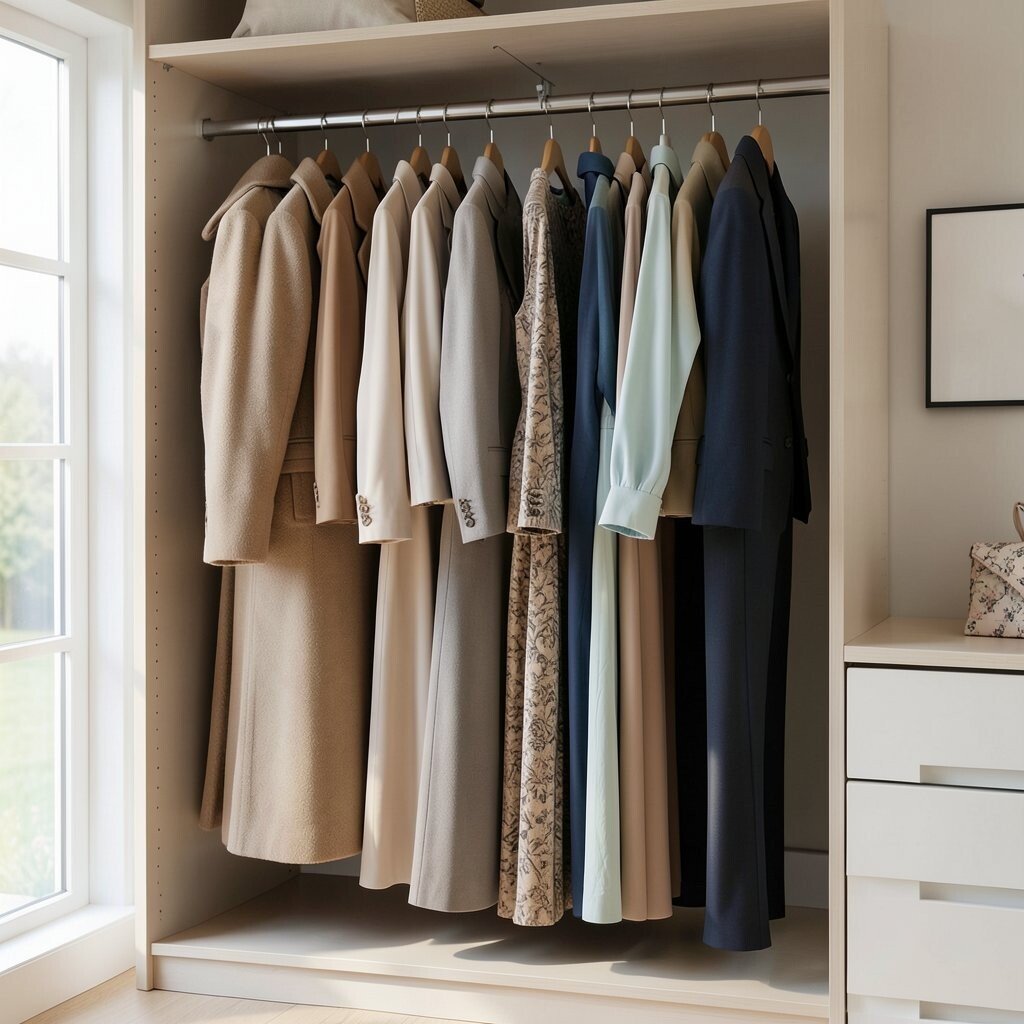
Imagine a closet with a true long-item zone where coats, dresses, and trousers hang straight. The space feels graceful, and the hangers do not squeeze each other.
Full-height zones prevent long pieces from dragging or folding awkwardly. Use padded hangers for delicate fabrics and standard hangers for sturdy items so your clothes stay in good shape. A practical tip is to separate formal wear from everyday wear so you can find outfits fast.
For personalization, add a small garment bag for special occasion pieces so they stay protected. If you are planning upgrades, consider a higher-end rail kit for sturdier support, since long items add weight.
12. Cable-Friendly Storage For Electronics And Tools
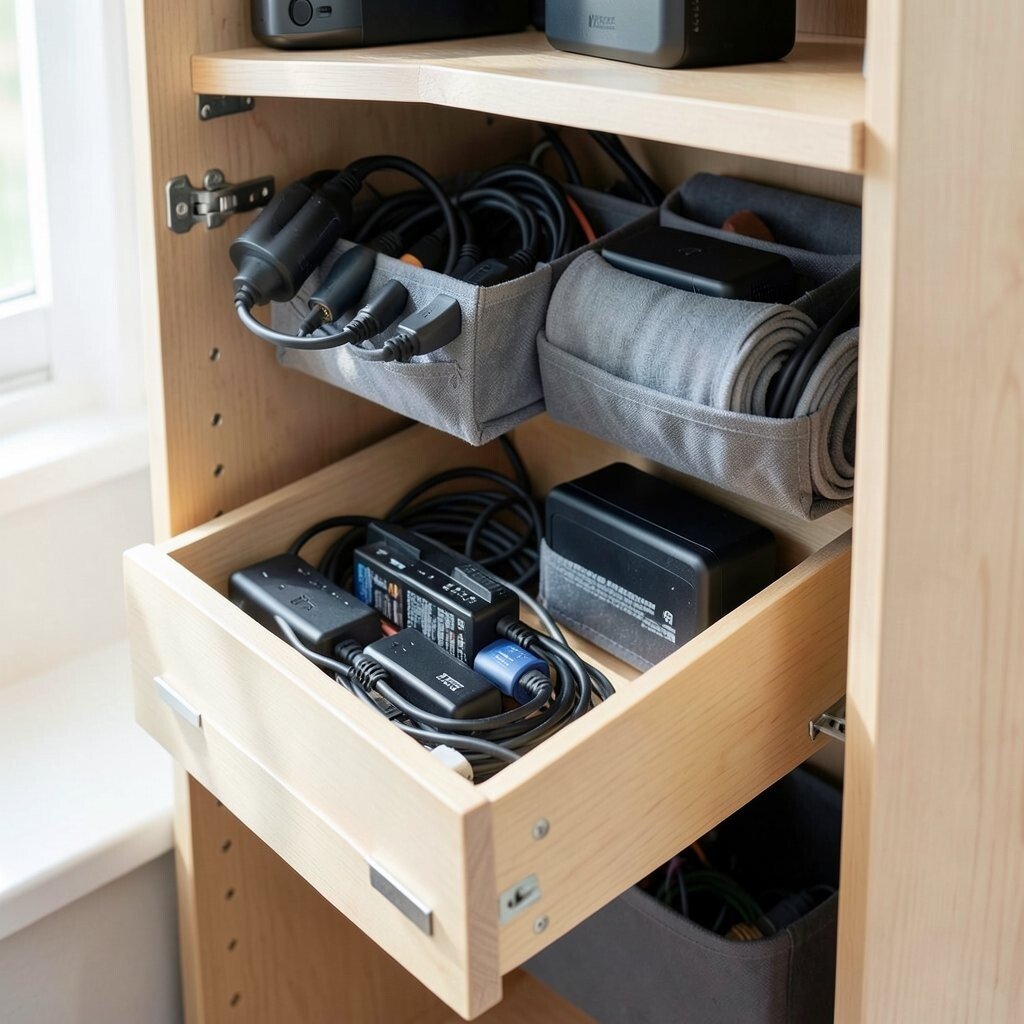
Think of a small section where chargers, cords, and spare batteries stay rolled and contained. The closet stops being just for clothes and becomes a tidy home base.
Using small organizer sleeves or a drawer insert for cables makes it easier to avoid tangled mess. Keep frequently used chargers near the top and store backup items higher up. This also helps you keep lint and dust from electronics by using closed storage containers.
13. Climate-Controlled Bins For Season Swaps
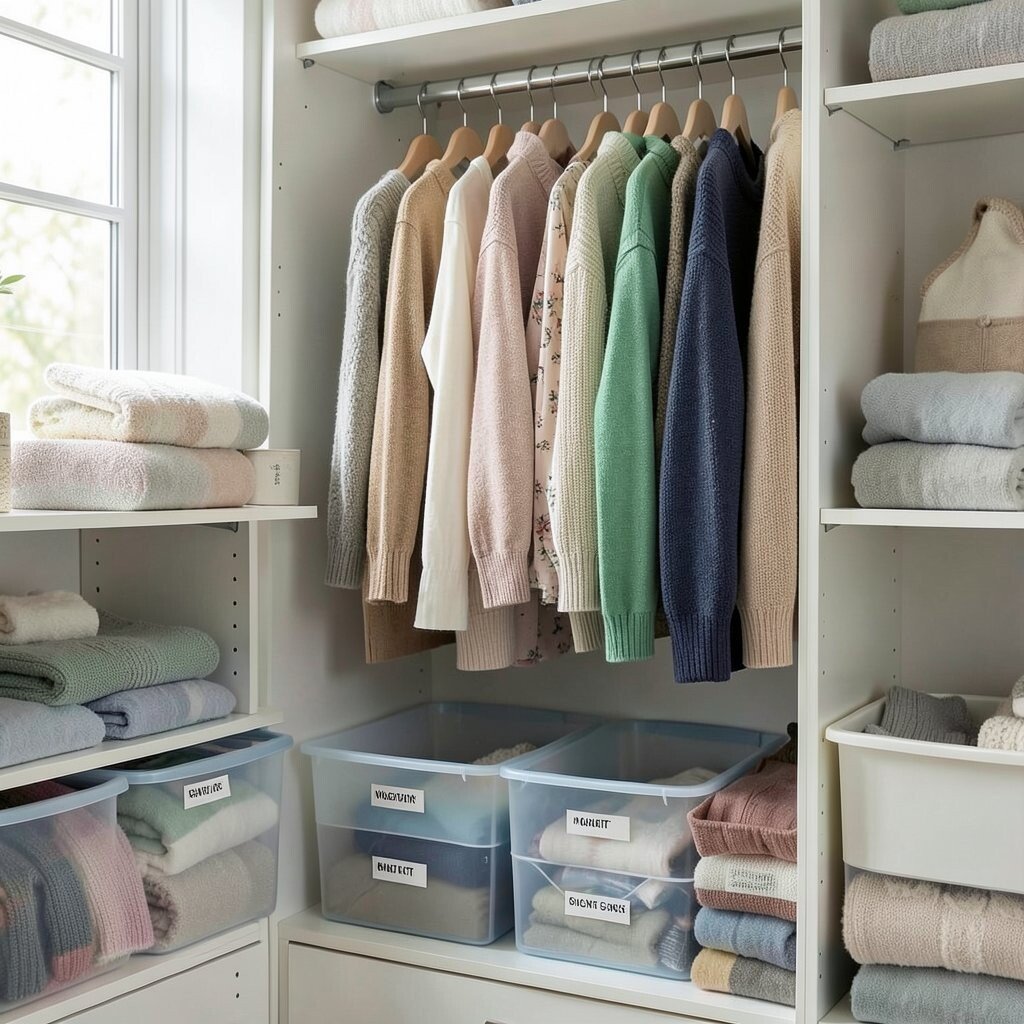
Picture sealed bins that keep your off-season sweaters safe and fresh. Your closet stays clean because only current items take up space.
Seasonal bins help you rotate clothes without turning your closet into a storage disaster. Look for bins with breathable features or moisture control if your home runs humid. A smart practical step is to label by month range or by type so you can swap quickly without overthinking.
For personalization, choose a matching color set so your storage looks cohesive. Even if you start with a few bins, a clear system helps you maintain order as your wardrobe grows.
14. Integrated Laundry Drop Zones Near The Closet
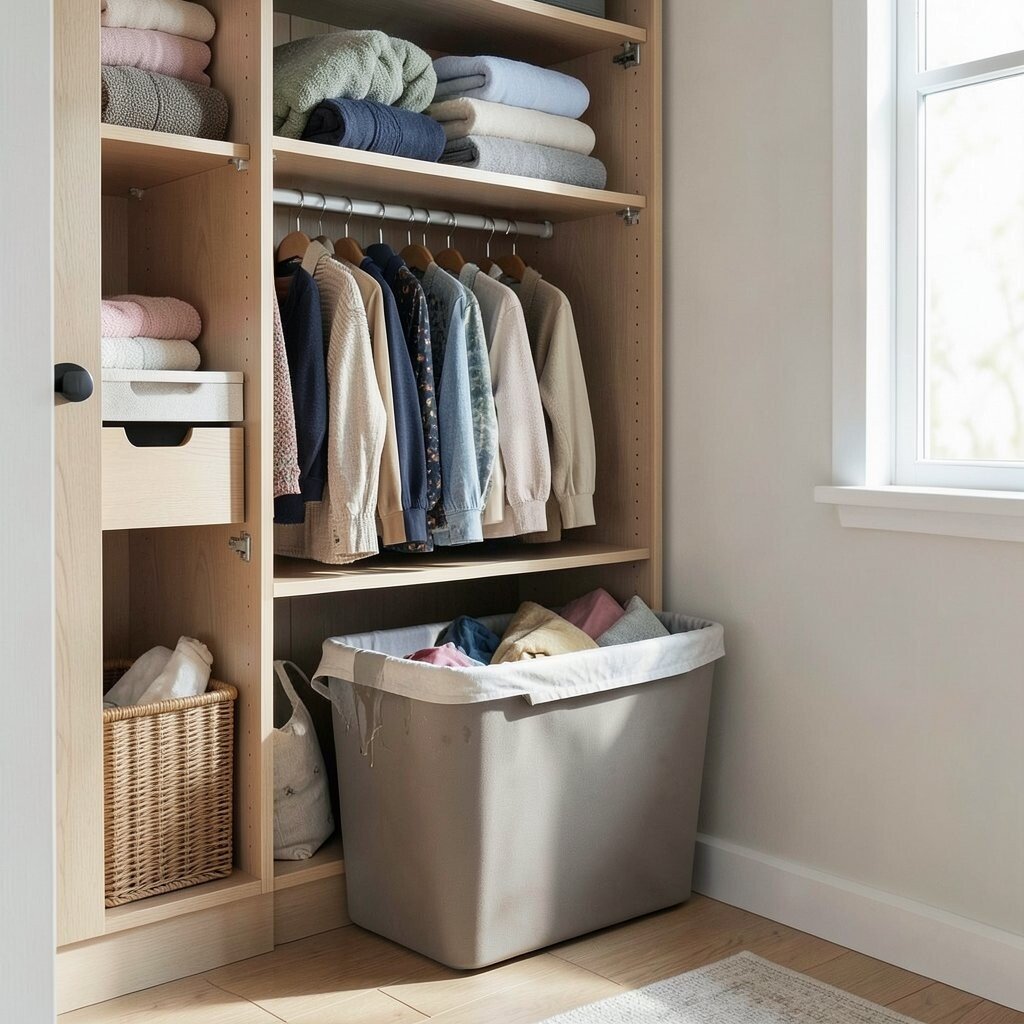
Imagine stepping into a closet area where a small hamper or drop basket sits ready. Clothes land in the right place instead of bouncing onto chairs or the floor.
A laundry drop zone keeps the closet tidy because dirty items go straight to a holding spot. Choose a washable liner to handle spills and small leaks, and keep the hamper tucked so it does not dominate the closet look. For personalization, match the hamper color to the closet shelves for a calmer style.
15. Stackable Wardrobe Track Systems For Custom Motion
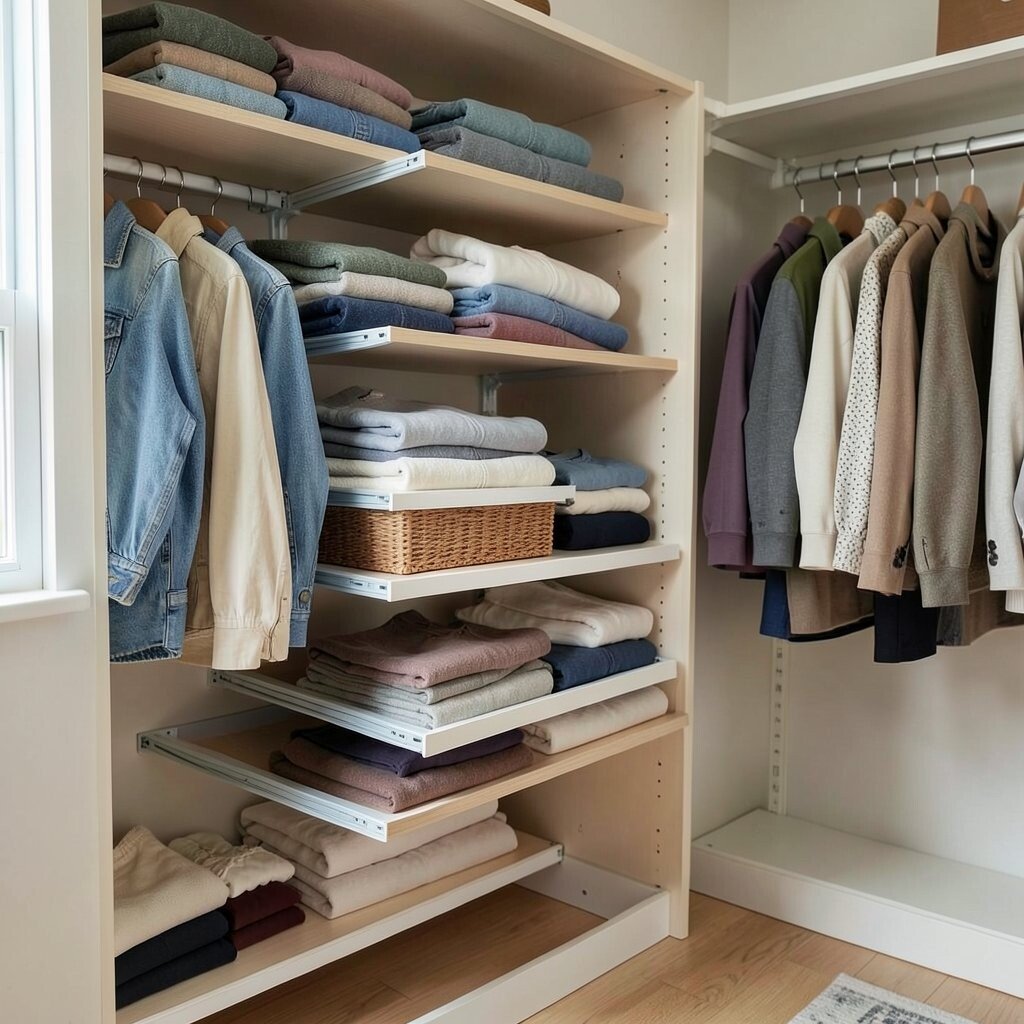
Picture sliding shelf platforms or tracks that let you rearrange storage as seasons change. You can pull a section forward, grab what you need, and slide it back neatly.
Tracks add convenience because they reduce the need to reach deep into shelves. While it can cost more than basic storage, many people find it worth it for long-term convenience. A practical tip is to keep the heaviest stacks on fixed shelves and reserve moving sections for lighter items.
Personalize by using different shelf heights on the moving sections so your outfits stay easy to view. This setup also fits well for shared closets where multiple people want different organization routines.
16. Bench-Style Closet Storage With Hidden Space

Imagine a closet bench where shoes or folded blankets sit under a lift-up lid. The top surface looks neat, and the hidden area stays out of sight.
Bench storage gives you a tidy surface for picking outfits and a hidden spot for extras. It is especially helpful in small spaces where every inch matters. Consider adding a soft cushion cover that matches your style, which makes the closet feel more welcoming.
If you want cost control, look for multi-use benches that also act as seating in an entryway. Personalize by placing a small tray on top for daily essentials like keys and sunglasses.
17. Color-Coded Hangers For Faster Outfit Matching
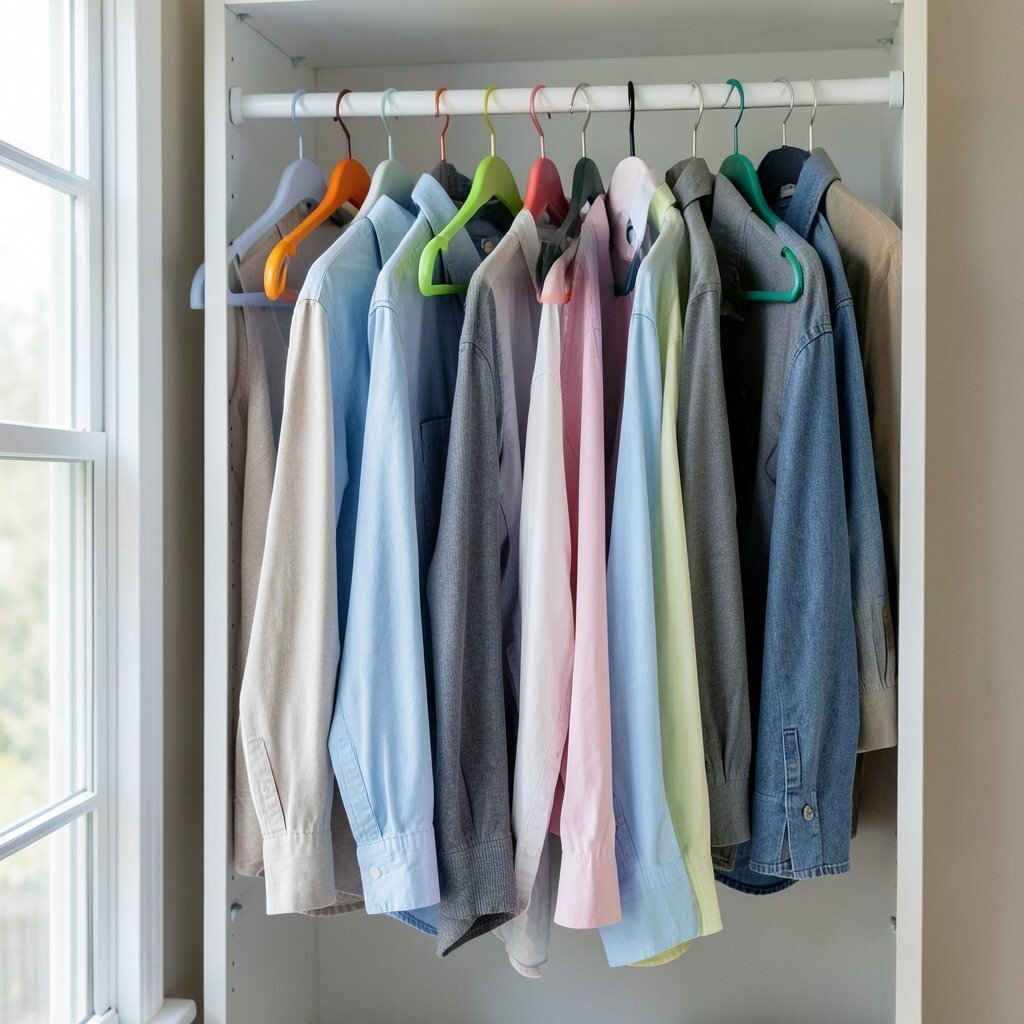
Visualize a closet where every hanger color matches a clothing category. In seconds, you can grab the right outfit without second-guessing.
Color-coded hangers reduce decision fatigue and keep the closet system consistent. Use one color for work shirts, another for weekend wear, and a third for special outfits. A practical tip is to keep hanger types the same so weight distribution stays even and your clothes hang smoothly.
For personalization, use shades that match your mood or your wardrobe palette. This method also makes it easier to see when an item is out of place because the hanger color will not match.
18. Labeled Drawer Systems With Flexible Categories
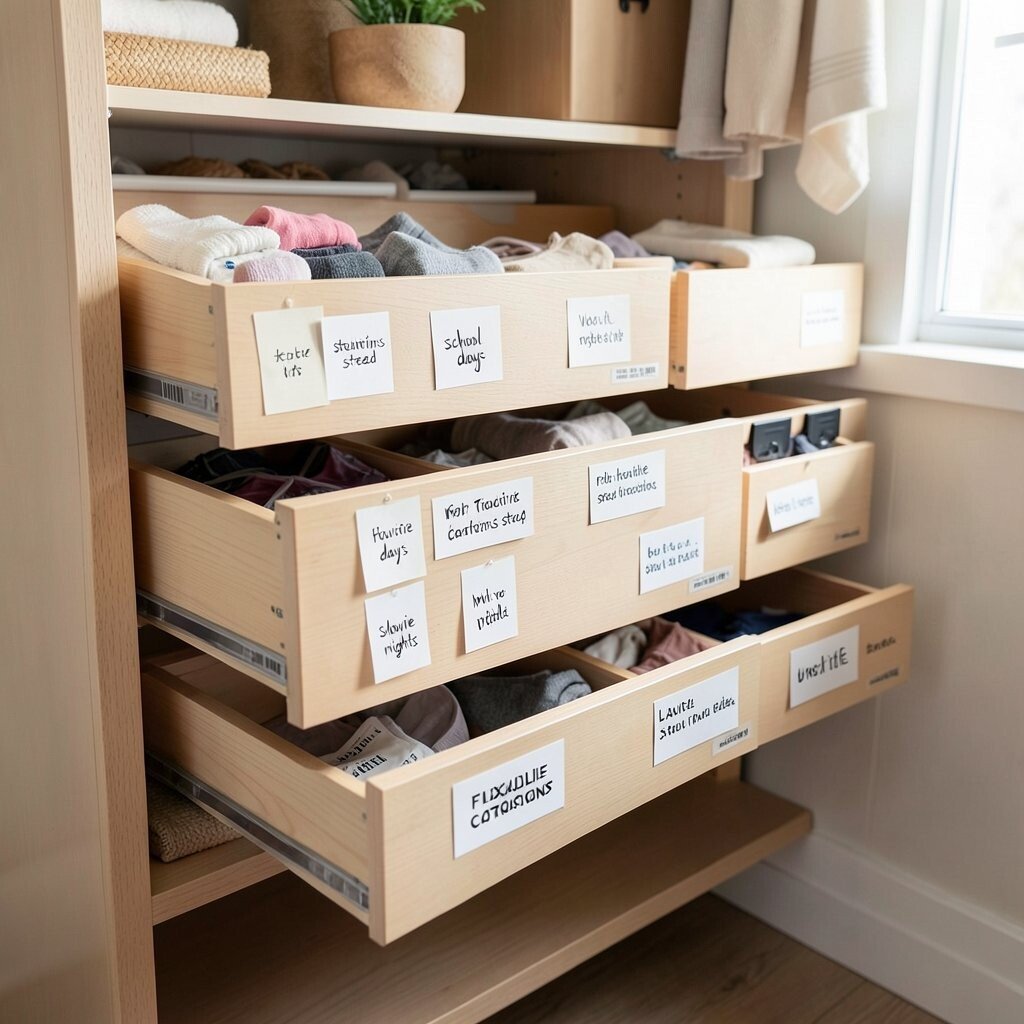
Picture drawers where each section holds a specific group and stays easy to open. Your closet feels like it has a simple map built into it.
Drawer labeling helps you keep routines steady, especially if more than one person uses the closet. Keep labels descriptive but not permanent by using erasable tags or insert-style label holders. Personalize by writing categories based on your real life, like “school days” or “movie nights,” so it fits your schedule.
For cost considerations, start with a few key drawers first, like socks and underwear, then add more as you go. This approach gives you visible progress without overspending at once.
19. Rotating Access Storage For What You Use Most
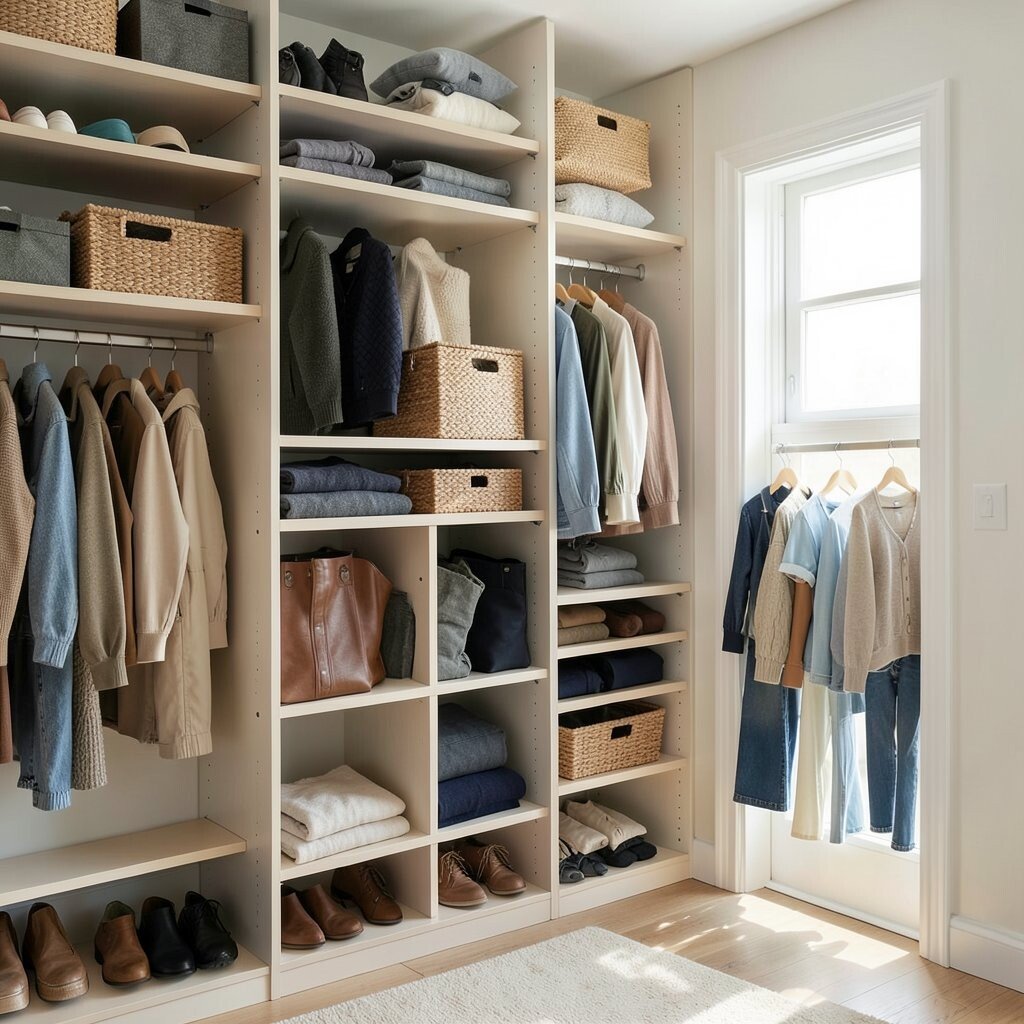
Imagine a system where your most-used items stay in the front and everything else moves slightly back. The closet feels effortless because the right clothes are always closest.
Rotating access storage works because you spend less time searching and more time getting ready. Place your daily items at the front of shelves or on upper sections and move less frequent pieces toward the back. A practical tip is to do a quick check every few weeks and shift items based on actual wear, not just guesses.
For personalization, create a small “grab zone” that includes the outfits you want on busy days. This trend is growing because people want storage that adapts to life, not storage that traps it.
20. Closet Organizers Made From Sustainable Materials
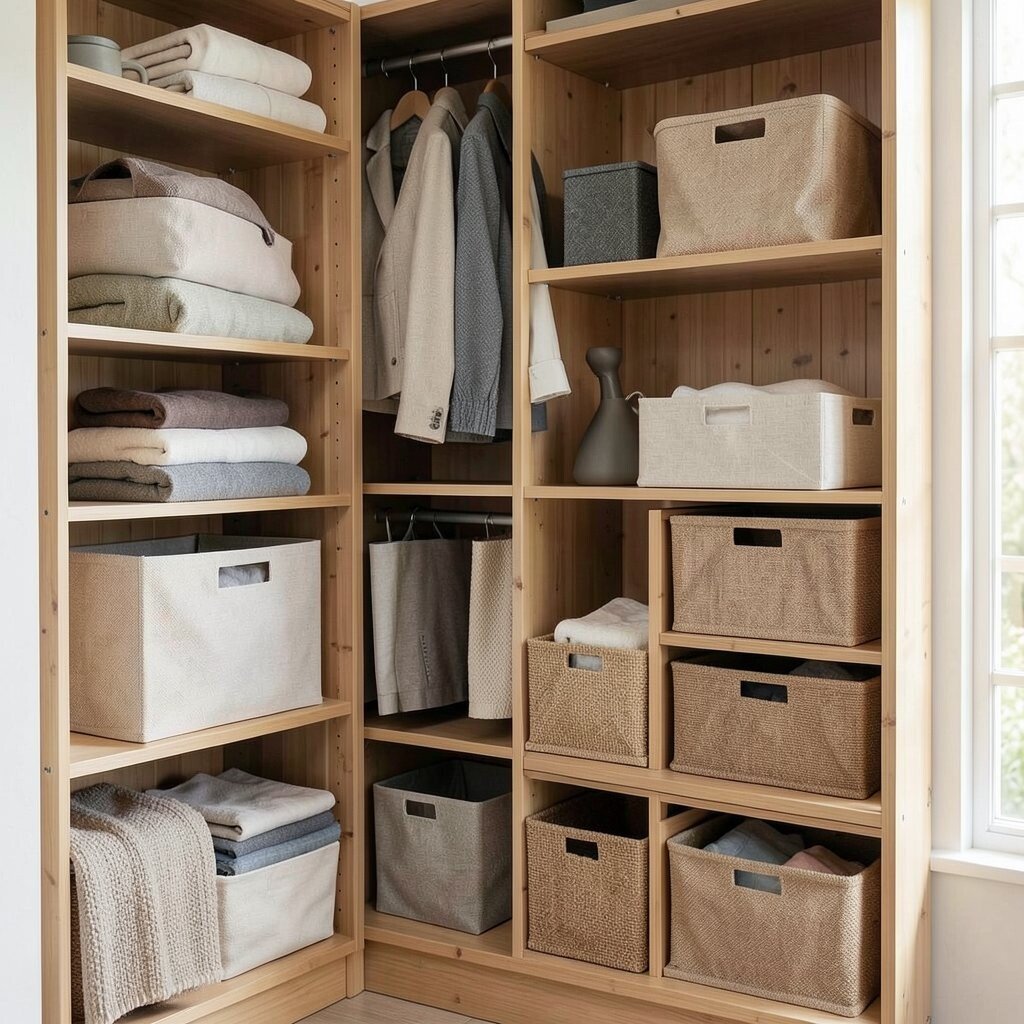
Picture warm wood tones, sturdy bamboo, or recycled fabric bins that make the closet feel fresh and clean. The materials look good and feel good to use every day.
Choosing sustainable closet organizers can be a practical way to support long-term durability and reduce waste. Many current trends focus on repairable or modular designs so you can replace parts instead of the whole system. A cost consideration is to invest in a few high-quality core pieces first, then build around them with affordable add-ons.
For personalization, pick textures that match your home style and keep the palette consistent across shelves, drawers, and bins. You will also find that sustainable materials often make your closet feel more inviting, which helps you maintain order naturally.