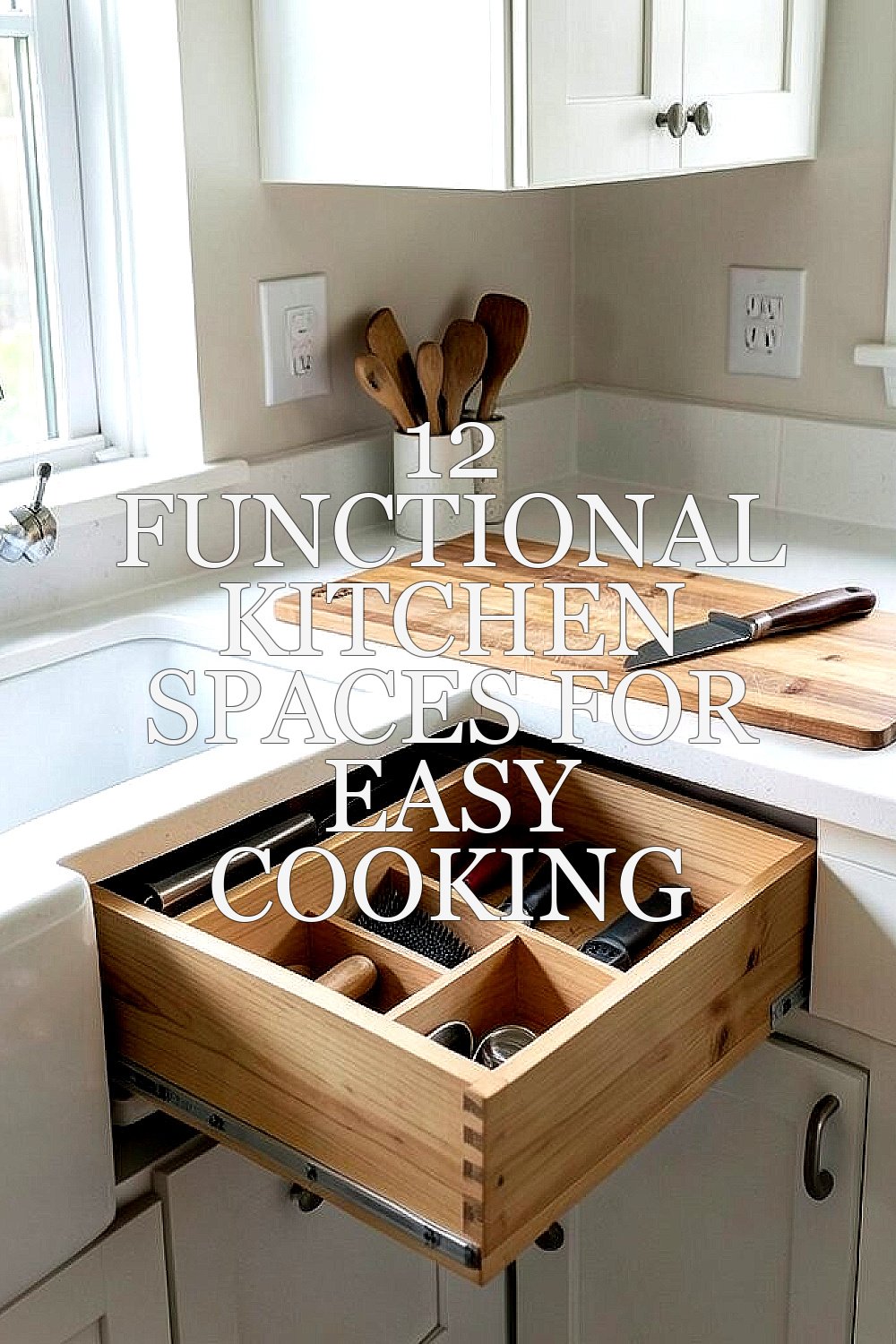
The best kitchens feel calm even when dinner is rushed. Small, useful spaces make cooking smoother and more fun.
1. Countertop “Prep Zone” With Clear Edges
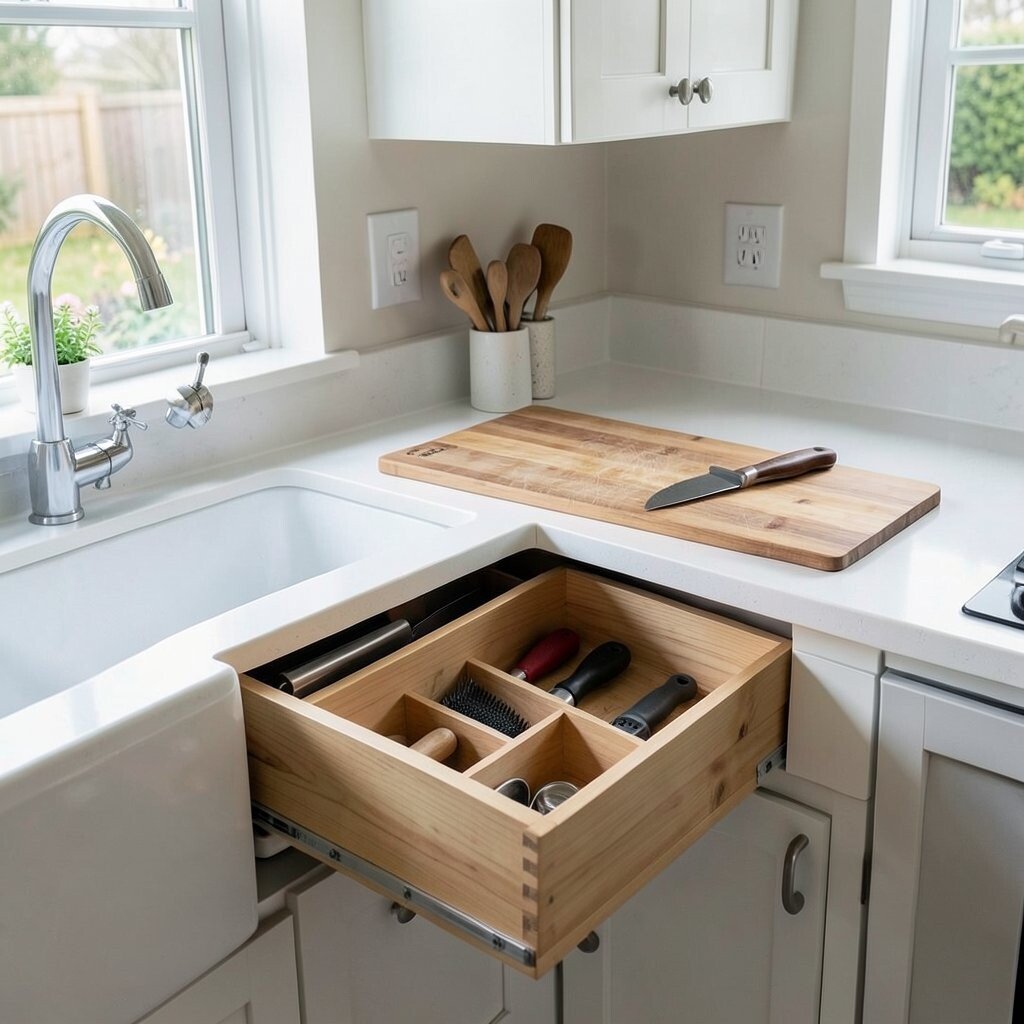
A dedicated prep zone turns chaos into something you can manage. When you see open counter space near the sink and cutting tools, you start cooking faster and with less mess.
Choose a strong surface you can wipe in seconds, like laminate or easy-care butcher block. Keep a cutting board that matches your countertop size so it slides into place every time. Add a drawer divider for knives, peeler, and small tools so everything stays within arm’s reach.
2. Appliance Nook For One-Touch Meals
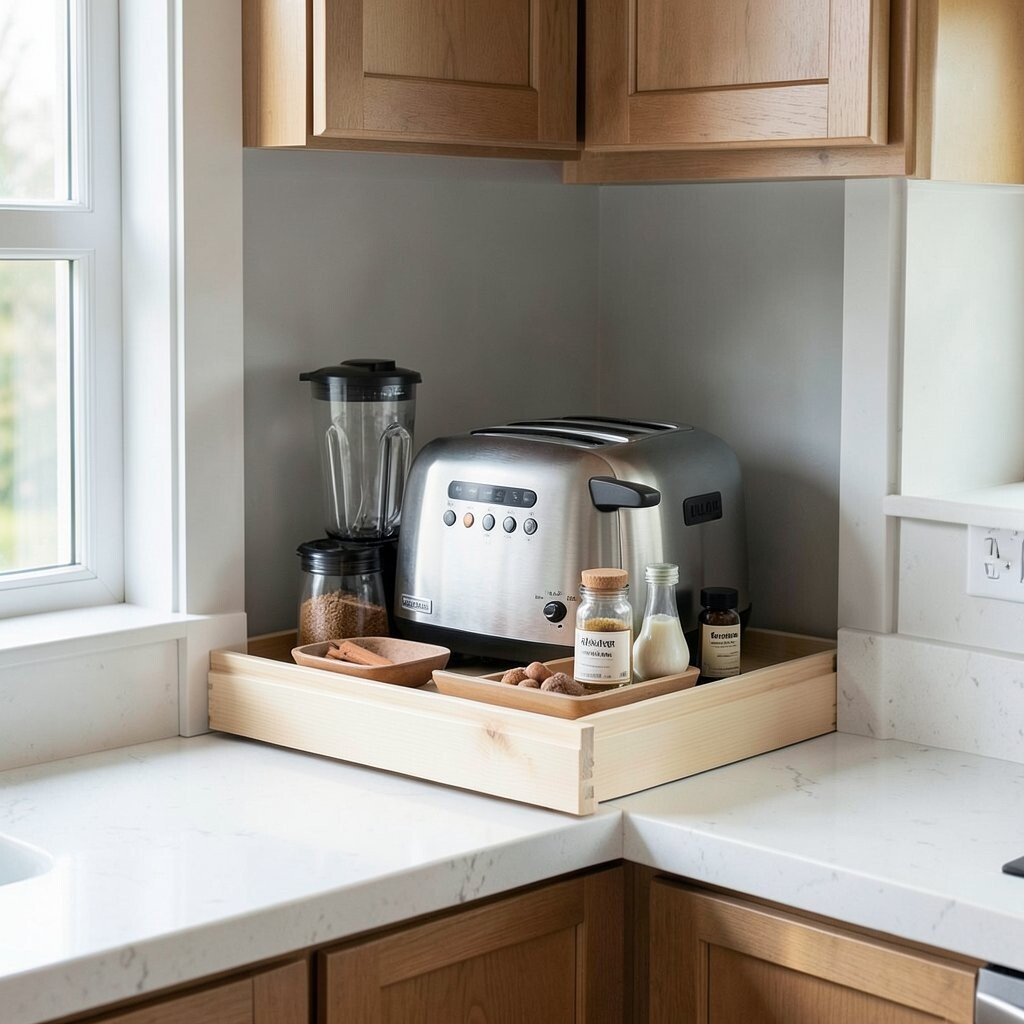
An appliance nook makes daily cooking feel automatic. When your toaster, blender, or air fryer has its own home, you stop shuffling items across the counter.
Try placing the most-used appliance on a stable pull-out shelf or a heat-safe spot on the counter. Use a small tray for spices or sauces that pair with it, like cinnamon for toast or garlic for a blender sauce. Leave a little breathing room around the appliance so you can clean it without moving a pile of stuff.
If you want a budget-friendly upgrade, pick one appliance you use most and redesign the area around it. Newer models with simpler controls are trending because they reduce guesswork on busy nights. Personalize the nook with an easy-to-read label on your shelves, but keep the look clean and simple.
3. Corner Pantry Shelf That Holds Daily Staples
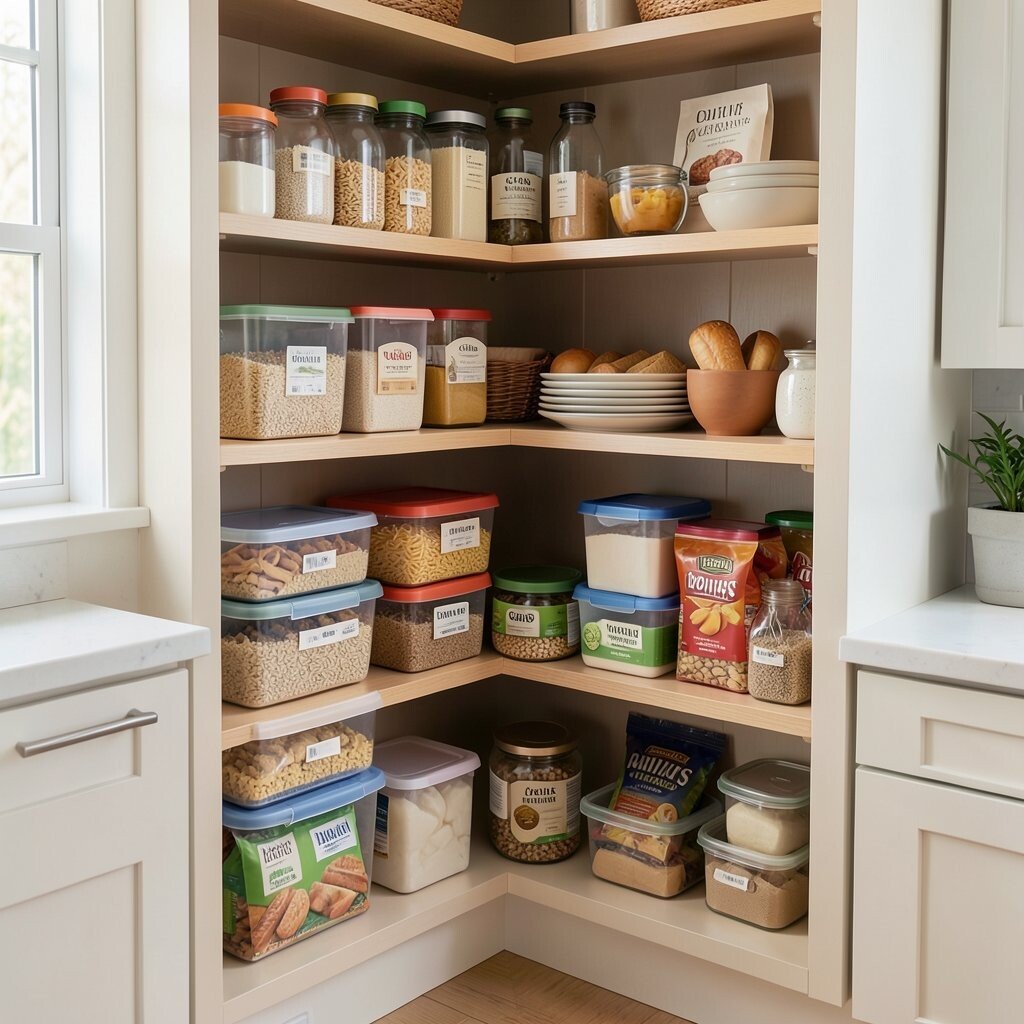
A pantry corner that’s built for everyday items saves time and frustration. You get a clear view of what you actually use, so you restock before you run out.
Use shallow bins or stackable containers for rice, pasta, oats, and snacks so labels face outward. Keep baking items near where you prep, not far away, since you often measure twice during a recipe. Add one “grab” shelf for breakfast and quick lunches so your hands never wander.
For cost control, start with just a few bins and rotate them as your routine changes. Current trends favor transparent containers and warm, matching colors that make kitchens feel tidy. To personalize, choose one shelf color theme that matches your dishes so everything looks like it belongs together.
4. Sink-Adjacent Wash Station For Fast Cleanup
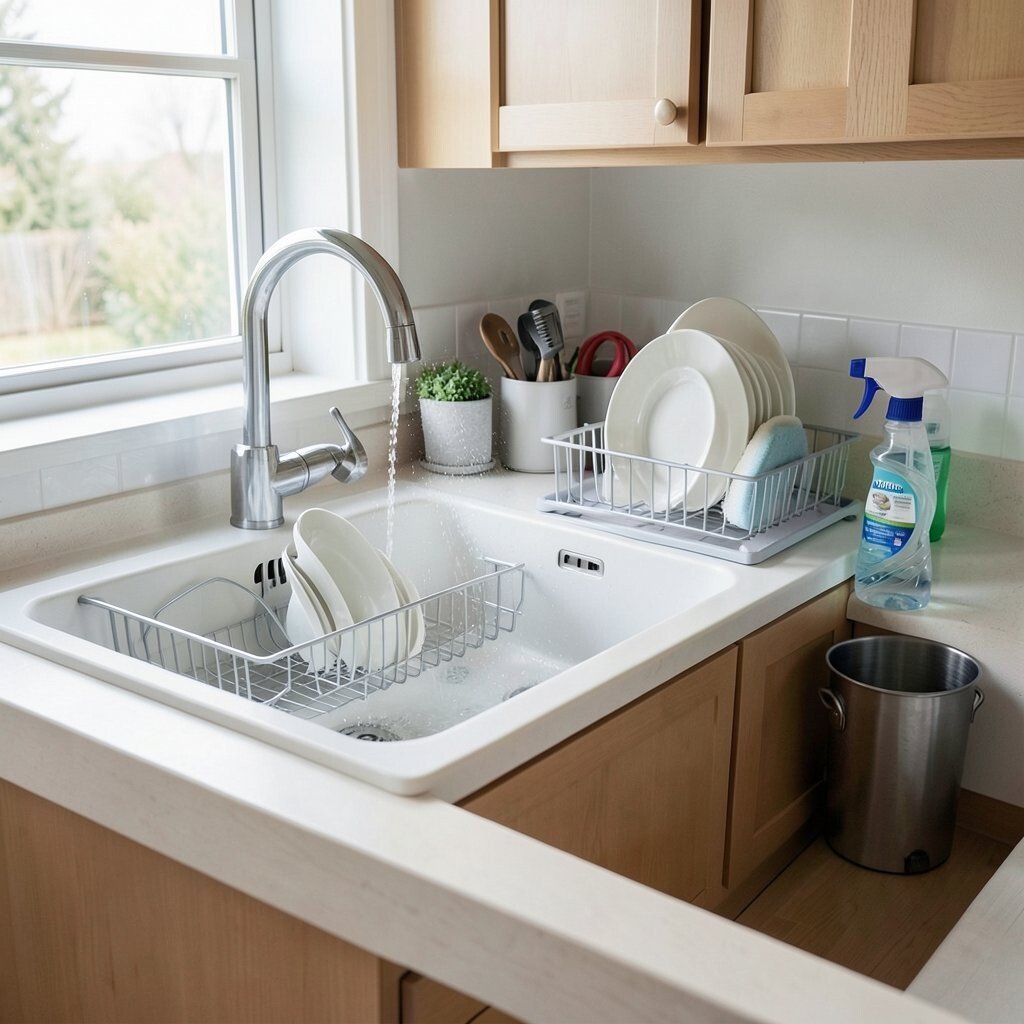
Cooking gets easier when washing is built into the route. A sink-adjacent wash station means you rinse, stack, and wipe with fewer steps.
Place a dish rack, a scrub sponge holder, and a small trash can close by so the last part of cooking stays effortless. Keep a spray bottle of dish soap or a gentle cleaner nearby so you can do quick wipe-downs. If you share a kitchen, adding a small bin for shared tools helps everyone keep the flow.
5. Wall Rail For Hanging Tools You Actually Use
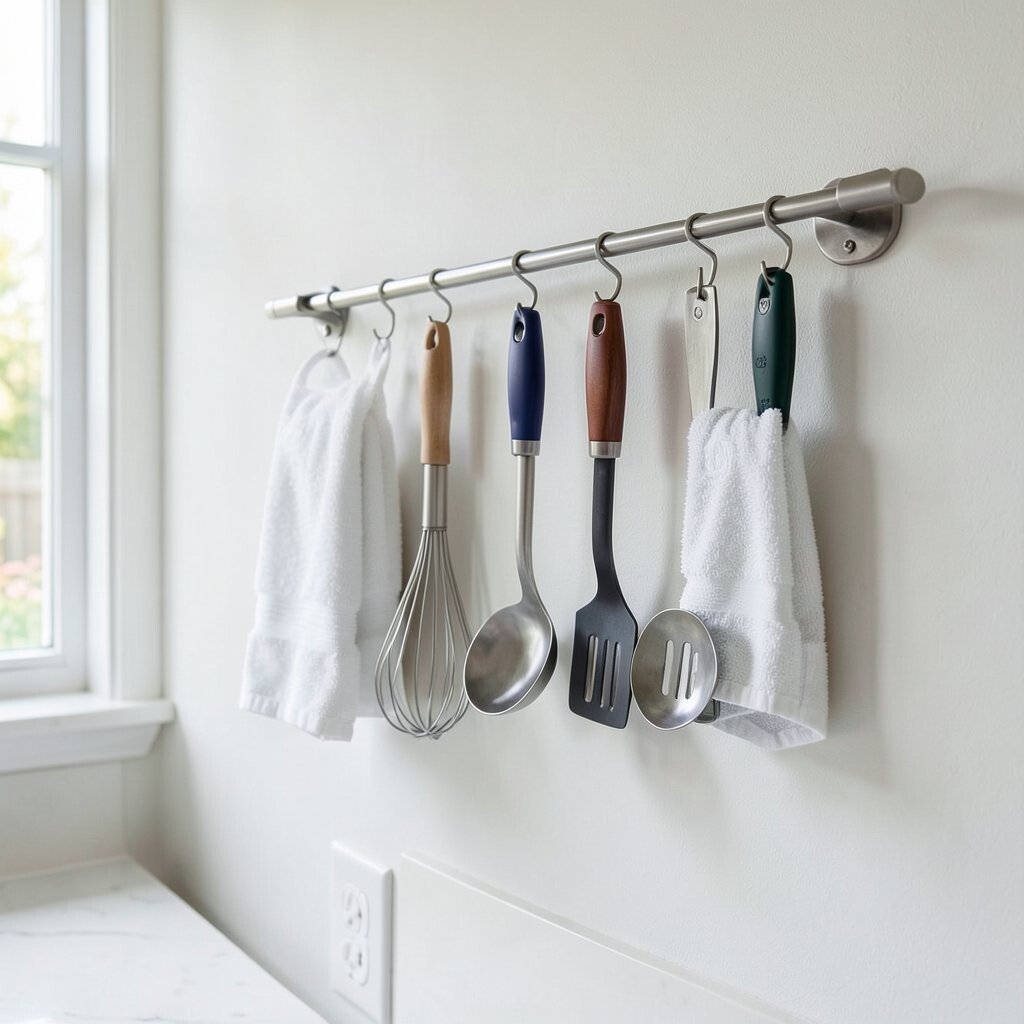
When tools hang where you can see them, you grab the right one without hunting. A wall rail also makes your kitchen look lively and organized.
Hang frequently used items like a ladle, whisk, spatula, and measuring spoon set. Add small hooks for towels so you don’t search through drawers mid-cook. Keep heavier tools toward the center so the rail stays sturdy and feels safe.
It’s a smart value upgrade because wall rails cost less than a full cabinet remodel. Modern kitchens often show open storage like rails because people love a “ready at a glance” look. Personalize the display by mixing metals or using a consistent color for handles and tags.
6. Corner Spice Landing With Adjustable Labels

Spices can make cooking exciting, but only if you can find them quickly. A spice landing right near the stove helps you grab what you need without turning the whole kitchen into a search mission.
Use a narrow shelf or a slide-out organizer for jars, then group them by meal type like pasta, tacos, or roasting. Choose adjustable labels so you can swap jars as you buy new blends. Make a habit of placing the most-used jars at eye level for easy grabbing.
To manage cost, buy refills or starter bundles and focus on the spices you use weekly. A current trend is “cook-along” spice organizing, where people store blends together for faster repeat meals. Personalize the space with a marker system that matches your personal recipes, so your kitchen feels truly yours.
7. Stove Side “Hot Zone” For Serving And Sautéing
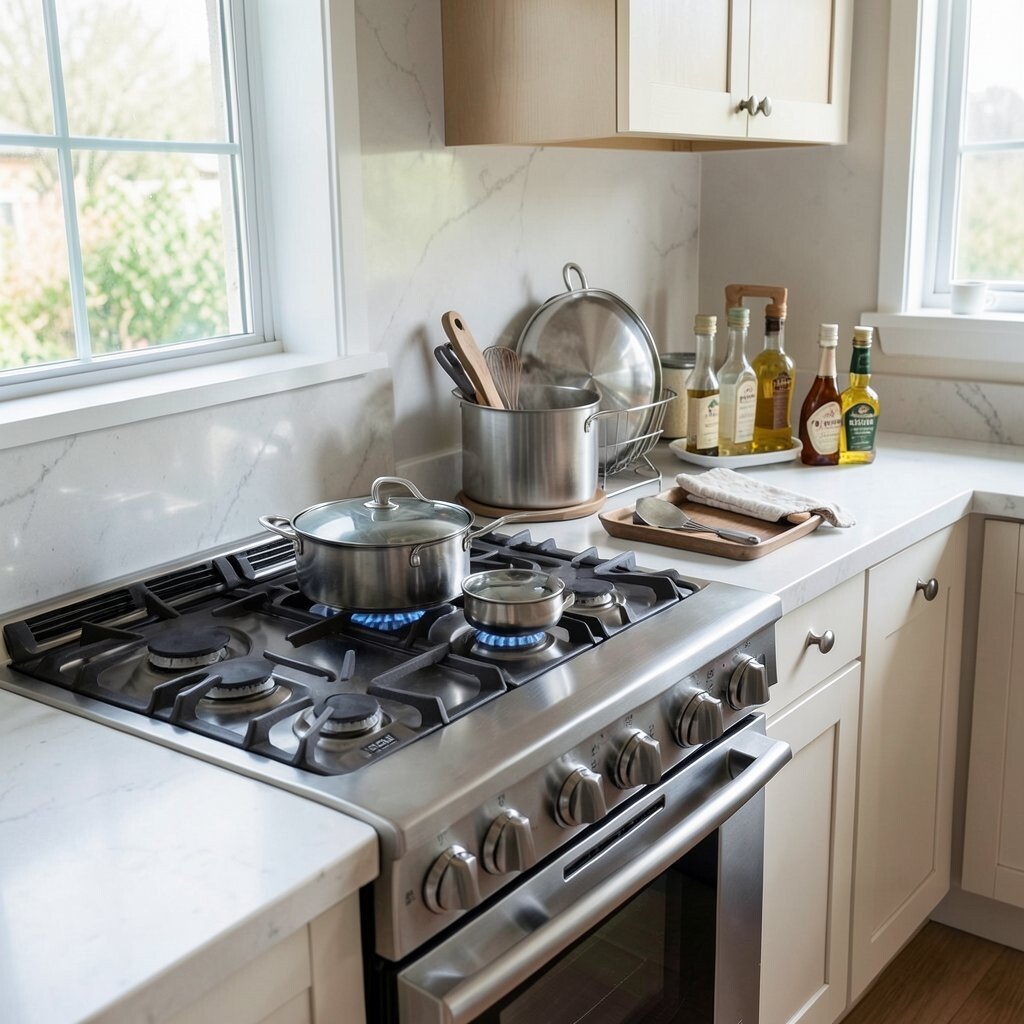
Cooking feels smoother when the space beside the stove is ready for action. A hot zone keeps cookware, lids, and stirring tools within reach so you don’t leave the pan unattended.
Place potholders, a lid rack, and a small heat-safe tray near the burners. Keep frequently used oils and sauces on a short stand close enough to grab without crossing the kitchen. If you cook often, add a magnetic strip for metal utensils so they stay off the counter.
8. Baking Station With Clear Measuring Setup
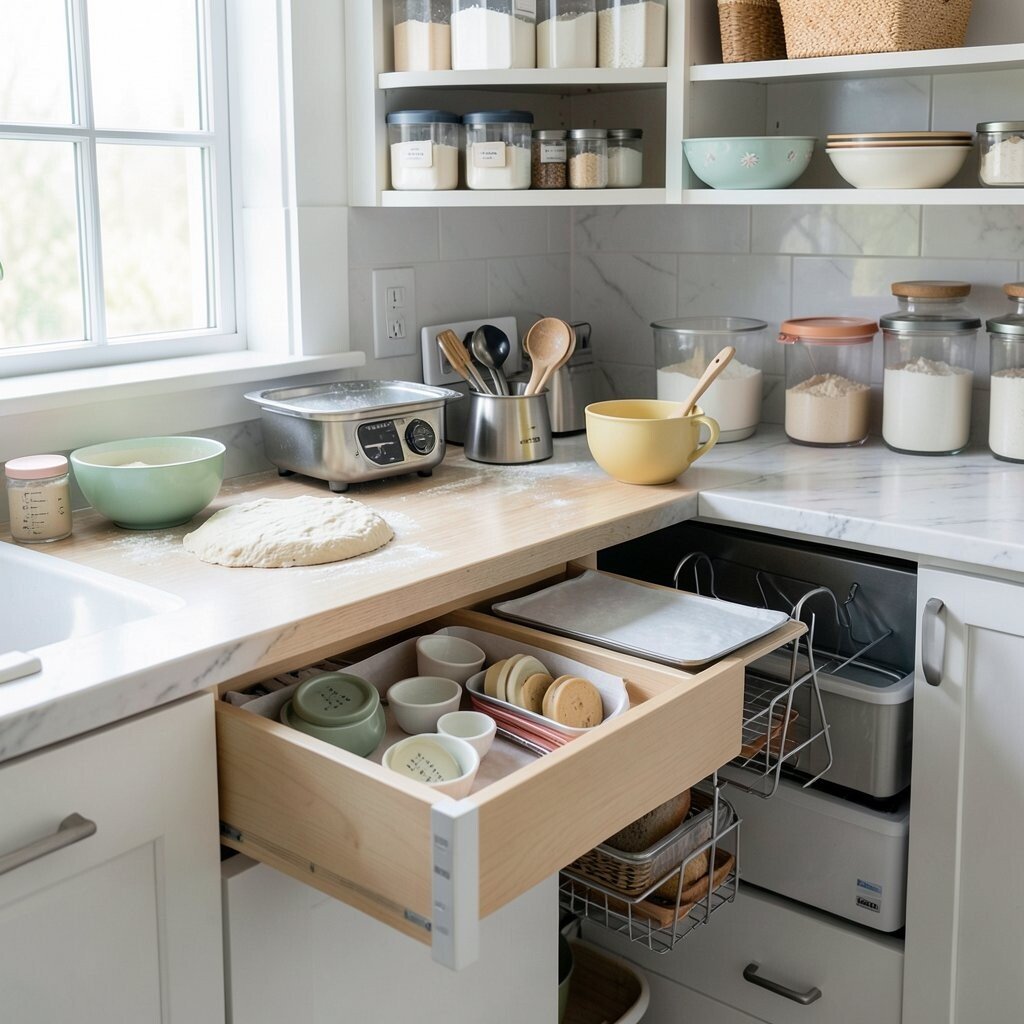
Baking is calmer when measuring tools have a dedicated home. A baking station reduces mess because you can set everything out and keep it there.
Use a drawer for measuring cups and spoons and keep a kitchen scale right where you prep dough. Add a cabinet shelf for flour and sugar bins so you can pull them down quickly. Keep parchment, cookie sheets, and a cooling rack in the same area so you don’t hunt mid-recipe.
When you shop, consider cost by choosing multi-use tools like a springform pan or an oven-safe mixing bowl. Baking trends also favor simple, repeatable layouts that make once-a-week cookies and quick breads feel easy. Personalize the station with your favorite mixing bowl color so it feels fun instead of purely practical.
A tidy baking station also helps prevent over-measuring, because your tools stay visible. You’ll spend more time tasting and less time cleaning spills around the workspace.
9. Fridge-Door Task Space For Lunch Prep
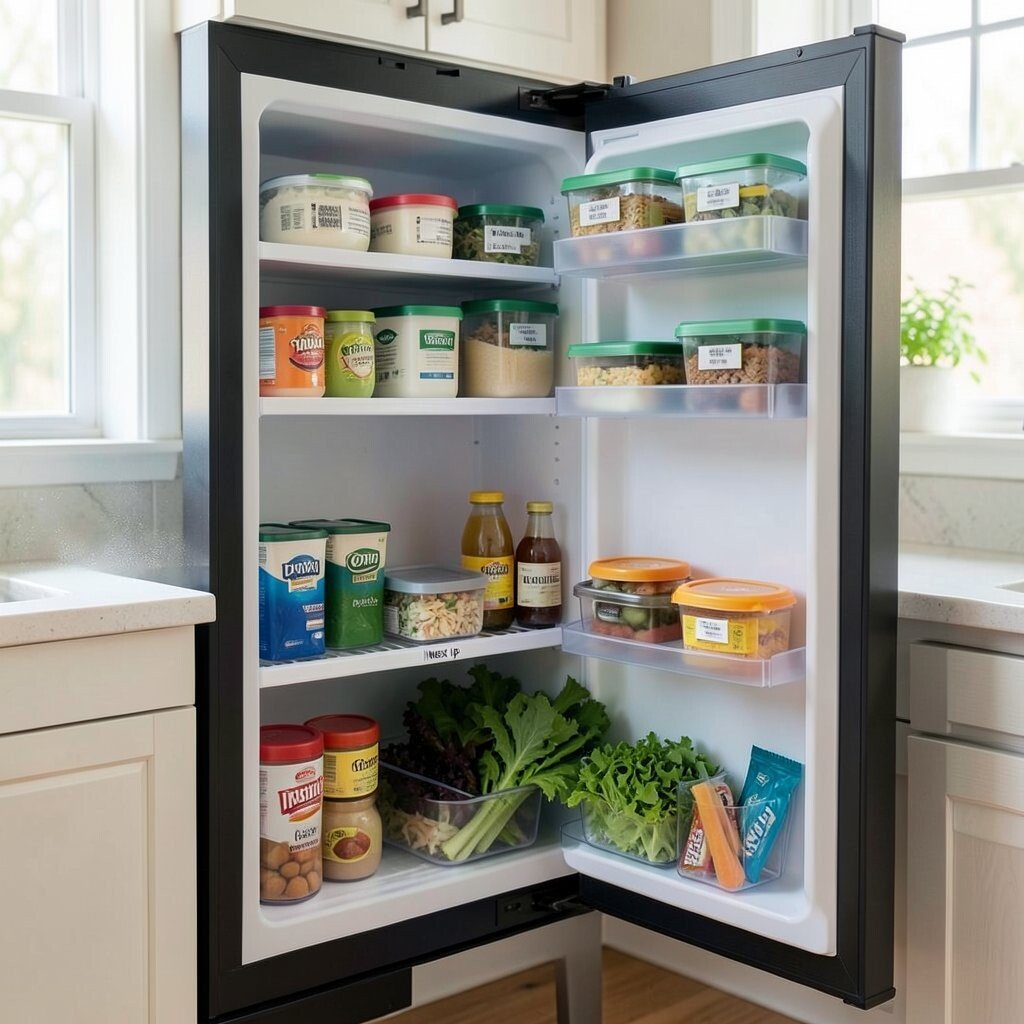
A fridge-door task space helps you prep without opening every container. When your go-to items sit in easy reach, you can build meals quickly and keep ingredients fresh.
Consider using bins inside the door for grab-and-go items like yogurt, juice, condiments, and small sauces. Keep a small spot for salad greens or prepped vegetables so they’re visible when you’re deciding what to eat. If you like meal prep, add a “next up” shelf in the fridge for containers you plan to use soon.
For cost thinking, you can use inexpensive clear bins and labels instead of buying new fridge inserts. Current trends focus on visibility and portion clarity, since people want fewer food surprises. Personalize the space with a color-coded system for different family members’ lunches or snack preferences.
10. Dining-Adjacent “Chop And Carry” Tabletop
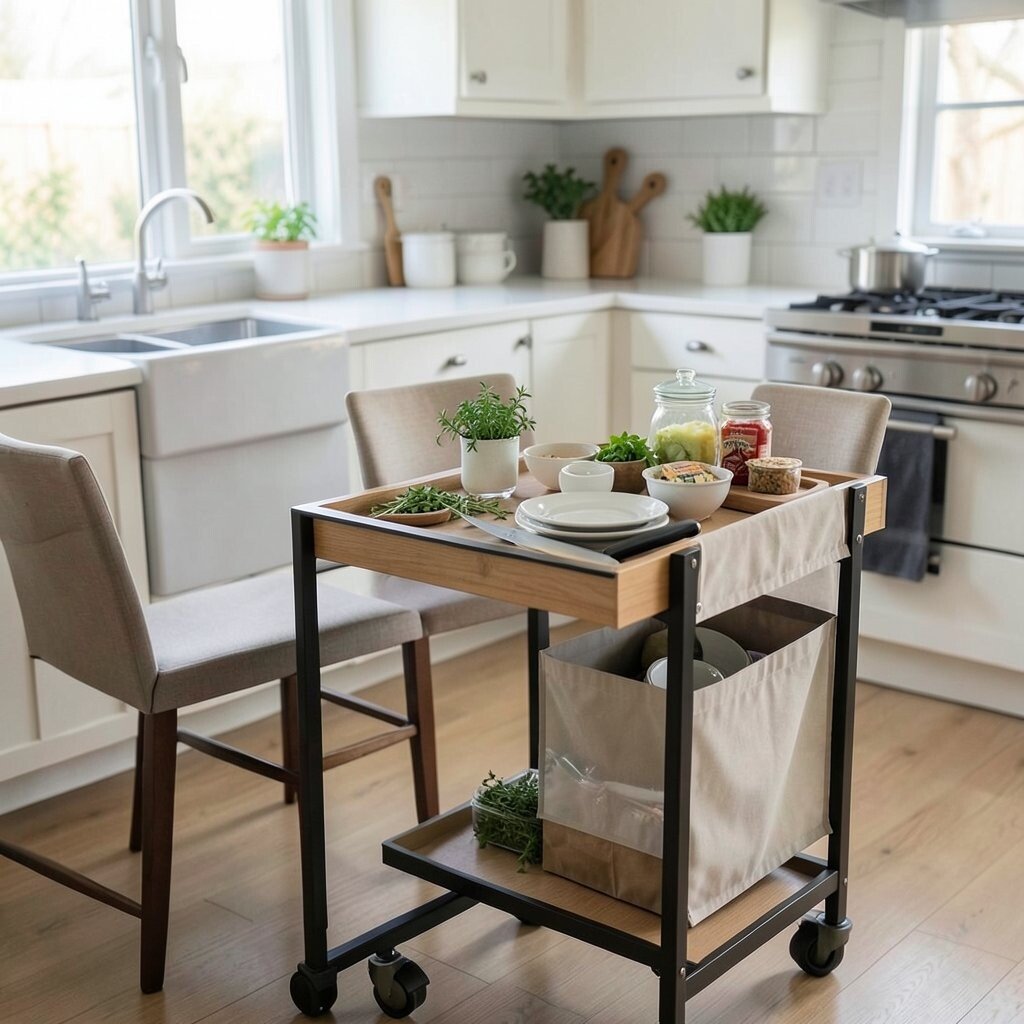
A small tabletop near dining space changes how you finish cooking. When cutting and plating happen close together, food stays warmer and your kitchen stays cleaner.
Use a narrow cart or side table with a removable tray where you can chop herbs, portion snacks, or stage plates. Keep a simple board and a chef knife stored safely so you can work without cluttering the main counter. Add a cover or small door-style organizer to hide items when guests arrive.
11. Food Storage Wall For Rotation And Freshness
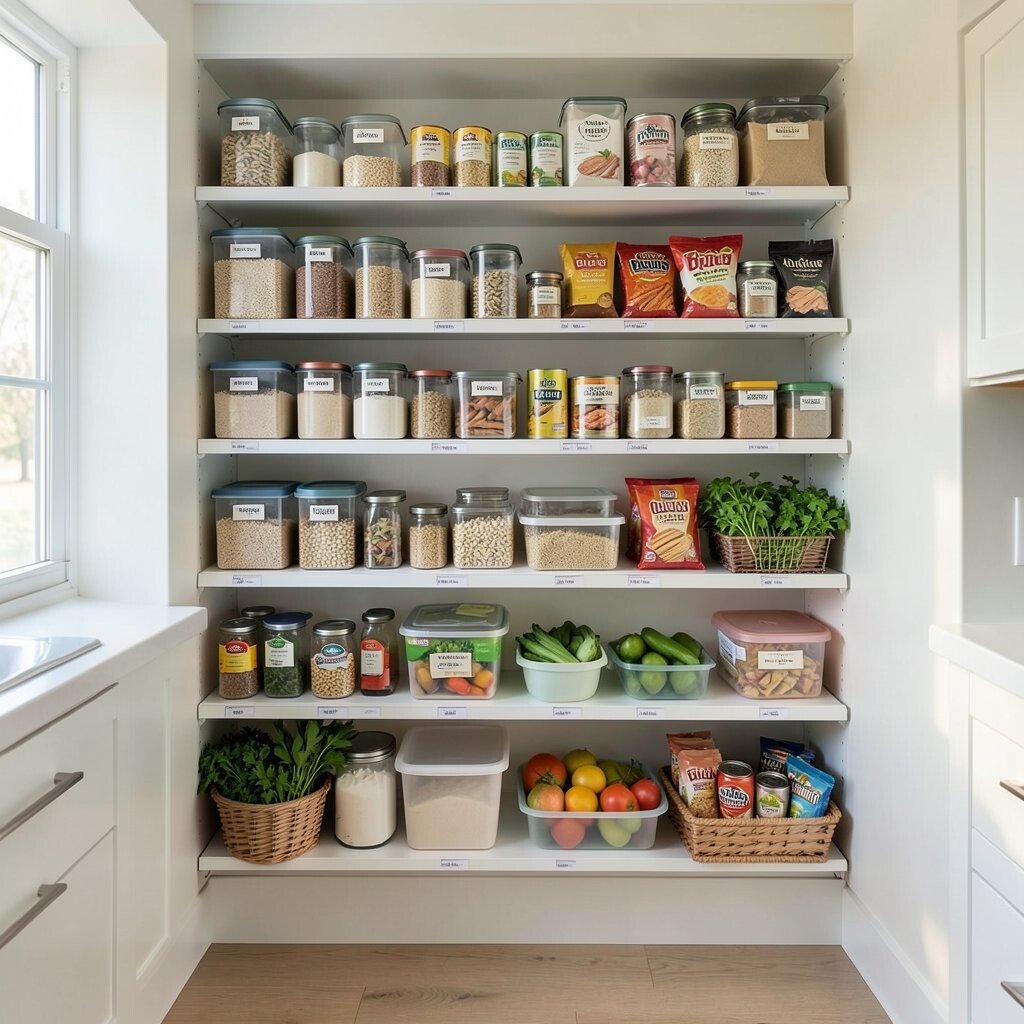
Smart storage turns cooking into a calmer routine. A food storage wall helps you track what’s new, what’s nearly done, and what needs to be used first.
Use shelving with a consistent layout so you place “older first” items at the front. Add clear labels and simple categories for grains, cans, snacks, and baking goods so you don’t guess. If you have room, include a small basket for herbs and produce that needs quick attention.
This is a great spot to spend a little money wisely because organized storage prevents waste. A current trend is using breathable containers and airflow-friendly setups for produce, which keeps things fresher longer. Personalize with a seasonal bin that holds your favorite summer or winter ingredients so your kitchen feels like it keeps up with you.
When your storage is easy, you cook with confidence instead of worry. You can pull ingredients fast, plan meals without stress, and enjoy the process more.
12. Lighted “Cookbook And Timer” Station For Smooth Steps
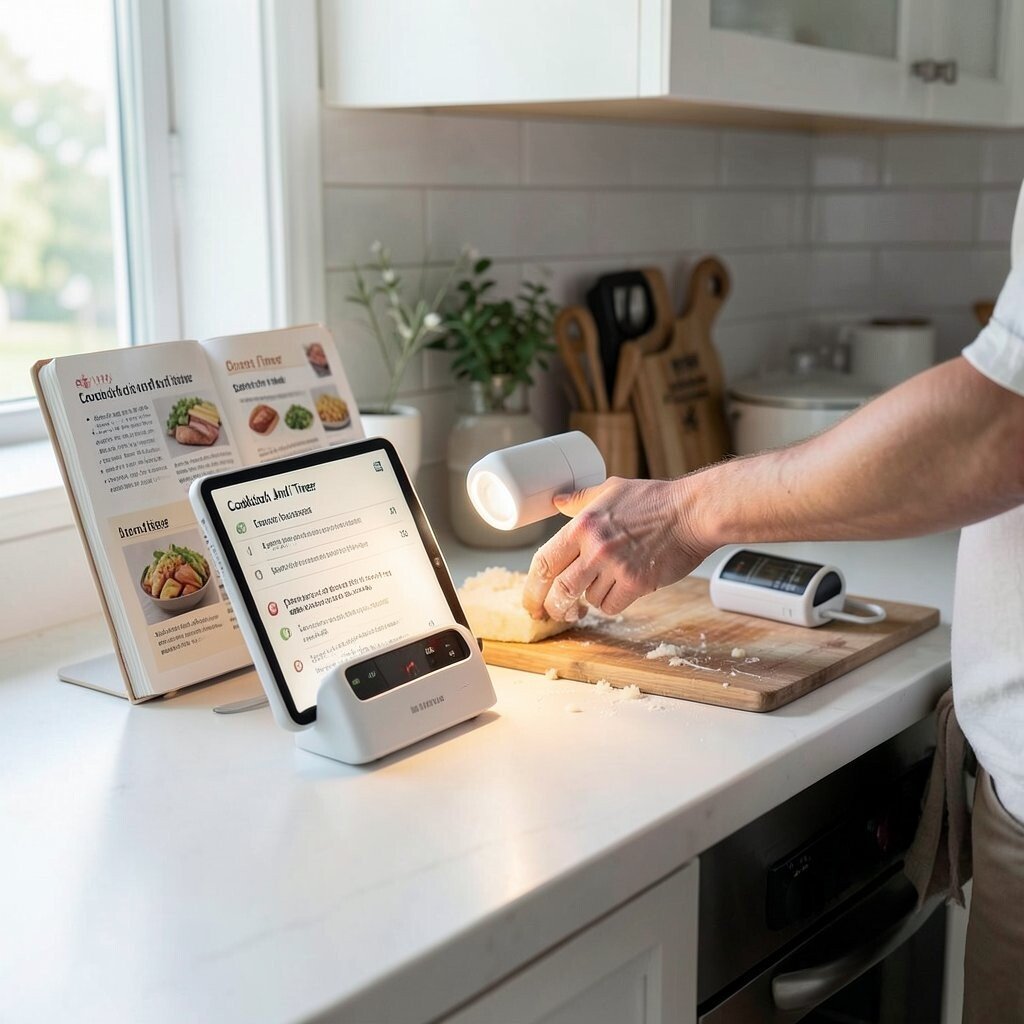
A lighted station keeps your recipe steps visible when hands are messy. When you can see instructions and set timing without searching, cooking runs like a plan.
Place a tablet stand or cookbook holder near the prep zone and add a small clip-on light. Set a simple timer system nearby for oven and stovetop timing so you don’t lose track. Store your go-to measuring guides and conversion notes in a small envelope or folder beside it.
To keep costs under control, use a compact stand and a standard rechargeable light rather than pricey gadgets. Current trends lean toward using phones or tablets for step-by-step cooking, especially with hands-free stands that prevent dropping screens. Personalize the station with your most-used recipes pinned or saved in a neat, matching theme so it feels welcoming.
This setup also helps the whole household follow along, especially when different people cook together. You’ll notice fewer mistakes, faster cleanup, and more meals that actually come out right.