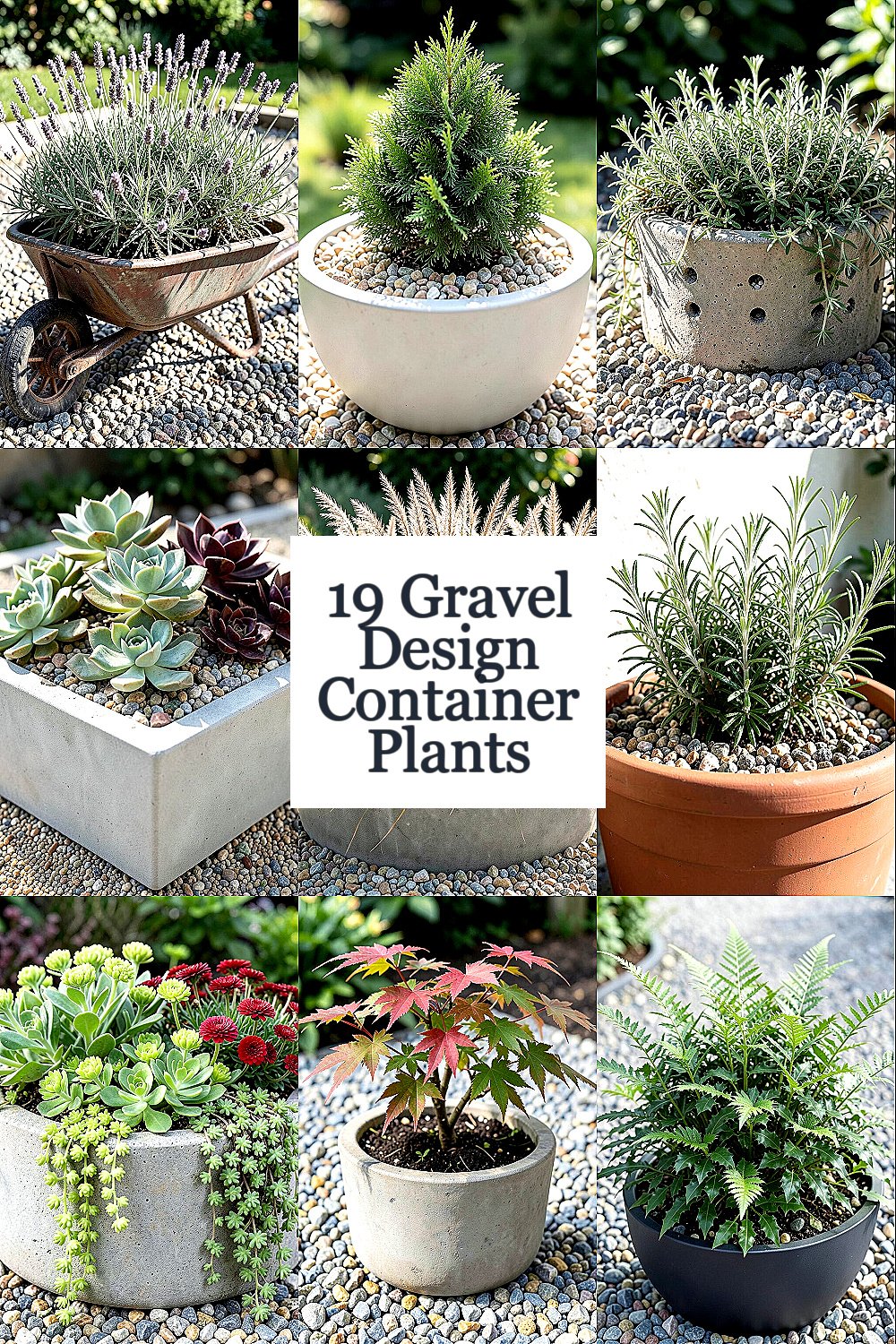
The garden can look crisp even when you keep it simple. Gravel beds and containers make small spaces feel bold and intentional.
Choosing the right plants helps the whole setup feel cared for, not complicated.
1. Lavender in a Wheelbarrow-Style Pot
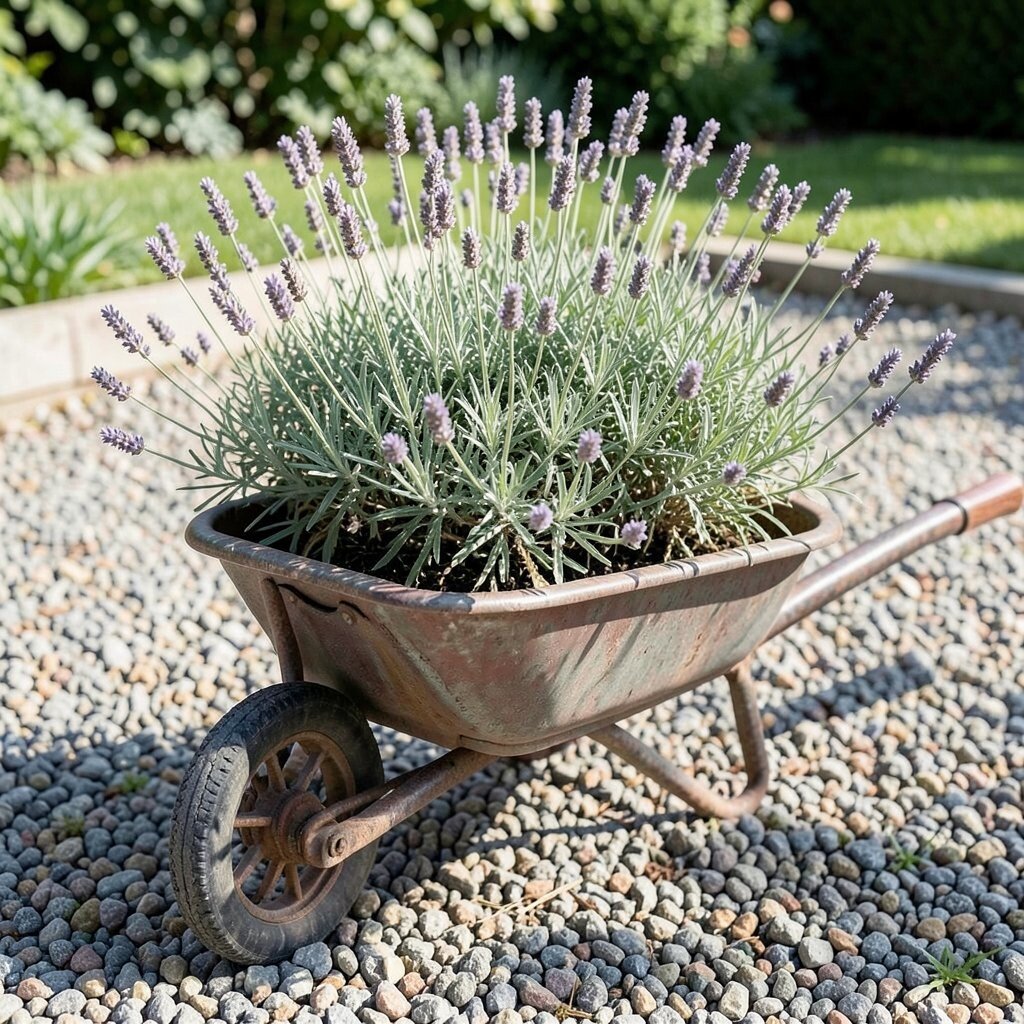
Lavender on gravel looks like a tidy little landscape all by itself. Its soft gray-green leaves and purple spikes sway gently and catch the sun.
Plant it in a container with fast drainage so roots stay healthy. Gravel around the pot helps water move away and reduces muddy splashes, which is great for patios and pathways.
2. Dwarf Alberta Spruce for Year-Round Texture
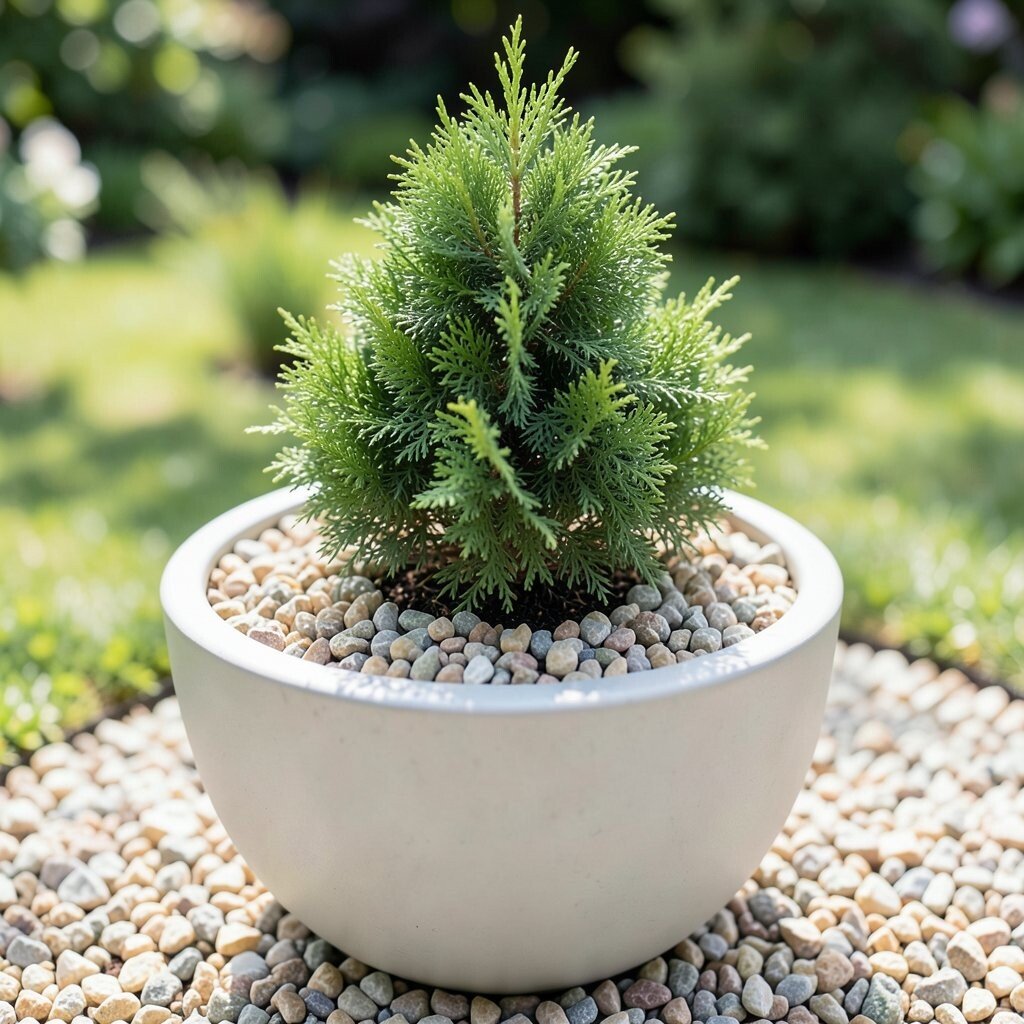
A dwarf Alberta spruce in a gravel container gives you a steady evergreen shape. You get tight, feathery foliage that stays attractive through cold months.
This style is popular right now because many gardens aim for low-fuss structure. Pair it with light-colored gravel and a clean rim pot so the green feels even richer.
Use a pot large enough for slow growth and keep the soil slightly moist the first season. Add a top dressing of gravel to cut evaporation and make maintenance quicker.
3. Thyme That Smells Like a Fresh Walkway

Prostrate thyme spreads along the edges and makes gravel look like it has a soft border. When you brush past it, the scent lifts your whole outdoor mood.
It thrives in lean soil, which fits gravel design perfectly. Less rich planting mix means fewer worries about soggy roots, especially if you water carefully.
Choose a container that has holes you can clearly see, then mix in gritty material. For personalization, let thyme trail over the pot rim and frame a pathway like a living scent sign.
4. Succulent Rosettes in Raised Gravel Planters

Succulents in a gravel container feel modern and graphic. Their rosette shapes stack beautifully, and their colors can range from dusty green to deep burgundy.
This planting trend is growing because succulents look great with minimal watering. The gravel top layer also reflects heat and helps the soil dry faster after rain.
5. Ornamental Grass with Feathery Motion
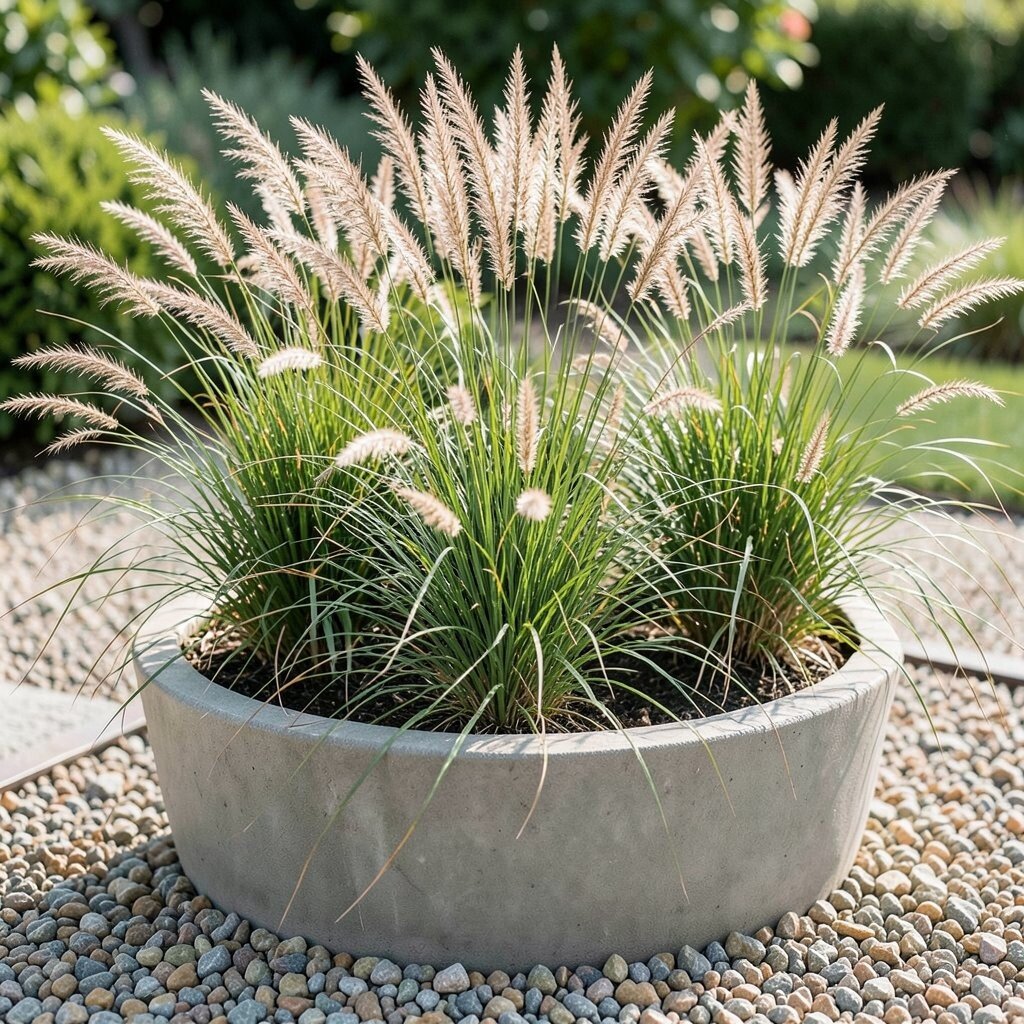
When ornamental grasses grow in a gravel container, the whole setup moves even on calm days. You’ll notice fine blades and soft plumes that sway above the stone.
Gravel helps you create a tidy, dry-looking base that matches many grass types. Pick a pot with enough room for roots, and cut back old blades in early spring.
For a fun twist, group three different grasses at slightly different heights. This creates a layered look that still stays easy to maintain, and it’s a smart way to get impact without buying many large plants.
6. Rosemary for a Small Container Herb Garden
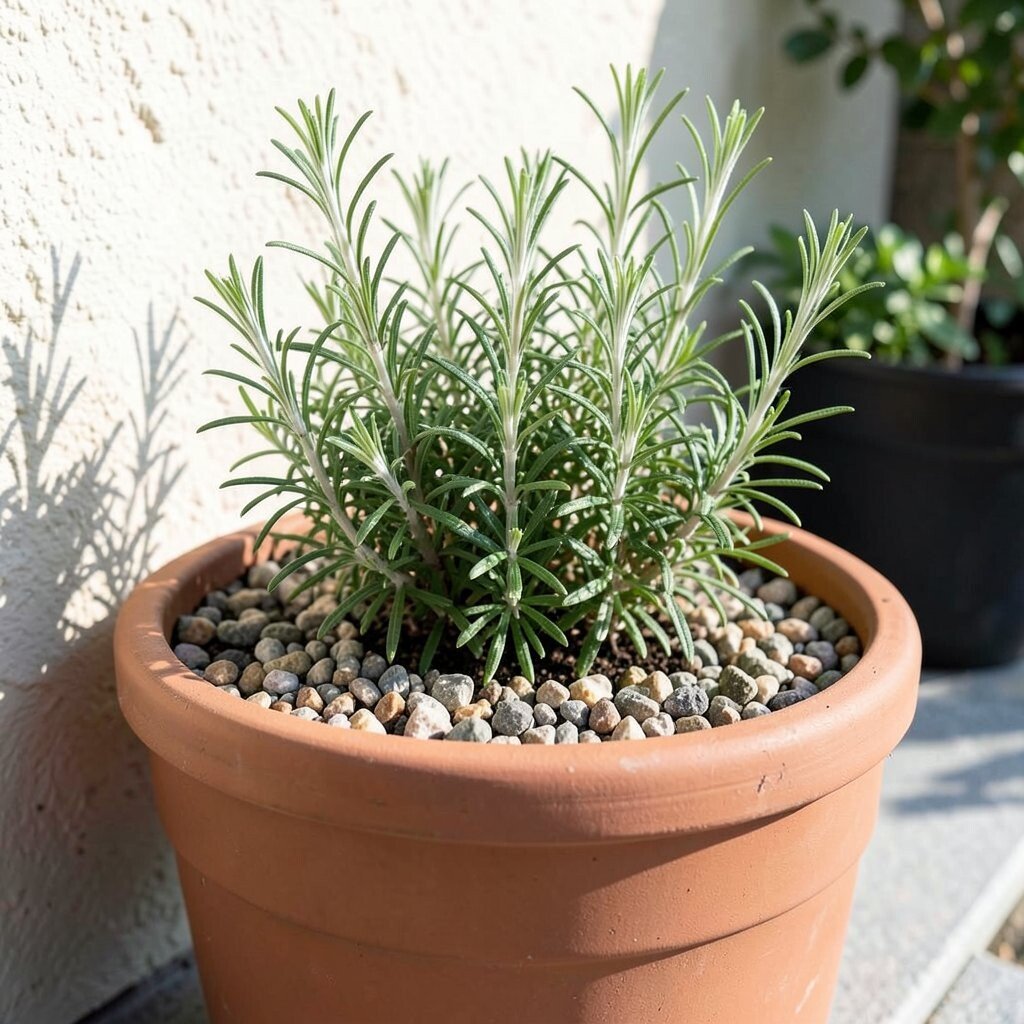
Rosemary gives a garden a confident, woody look even before it blooms. In a gravel container, the needles look crisp and the plant stands out on bright days.
It benefits from excellent drainage, and gravel top dressing can help keep the surface from staying wet. If you live in a cooler climate, place the pot near a wall for extra warmth and winter protection.
Try different pot colors to match your outdoor style, like terracotta for classic charm or matte black for a modern vibe. The plant may cost more at first than basic annuals, but it can last for seasons with the right care.
7. Sedum for a Low Spill of Color
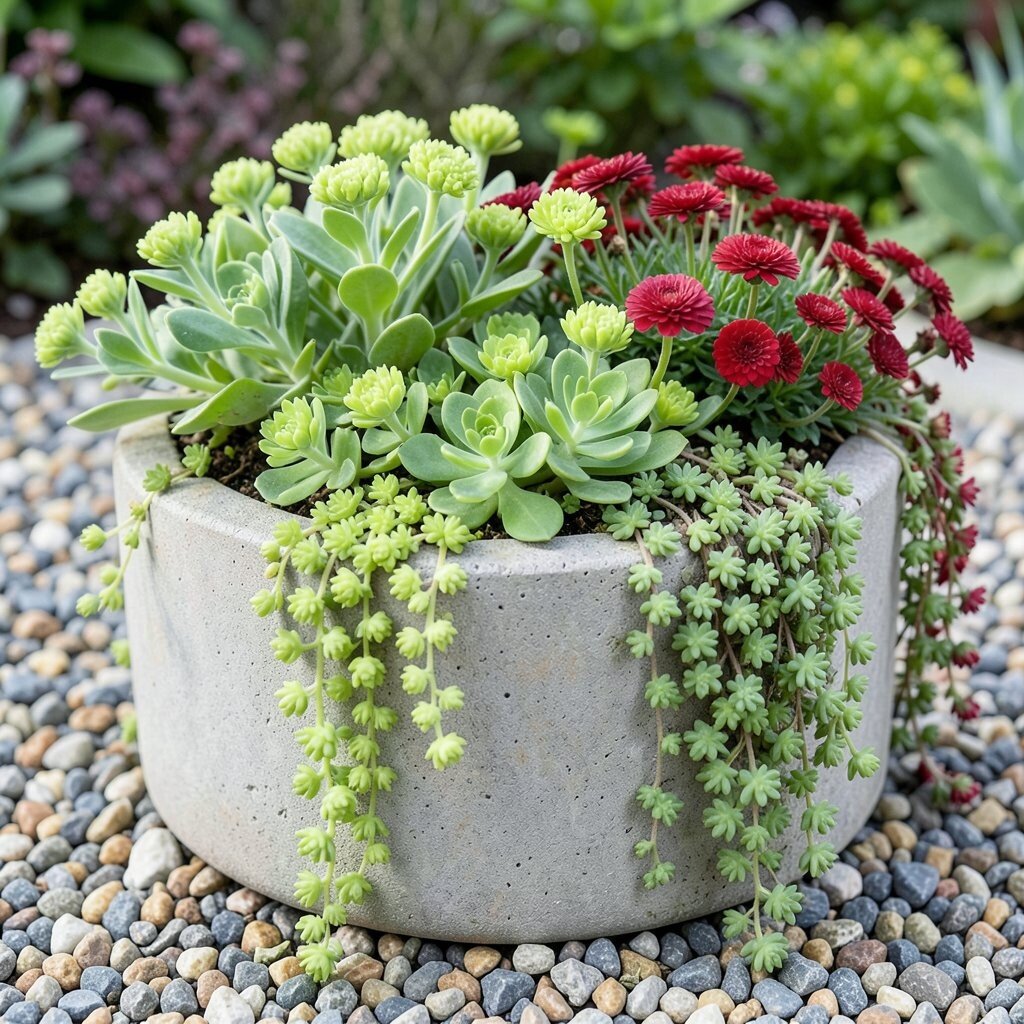
Sedum in gravel containers looks like tiny flowers sprinkled across stone. You get thick leaves that hold up well, plus clusters that pop when they bloom.
This is a practical choice for busy gardeners because many sedums tolerate heat and forgetful watering. Gravel keeps the base dry and makes the container feel cleaner after watering.
Choose a variety that matches your palette, like bright lime tones or deeper reds. To personalize, let sedum spill down the sides and create a soft waterfall effect.
8. Mini Japanese Maple in a Stone-Friendly Pot
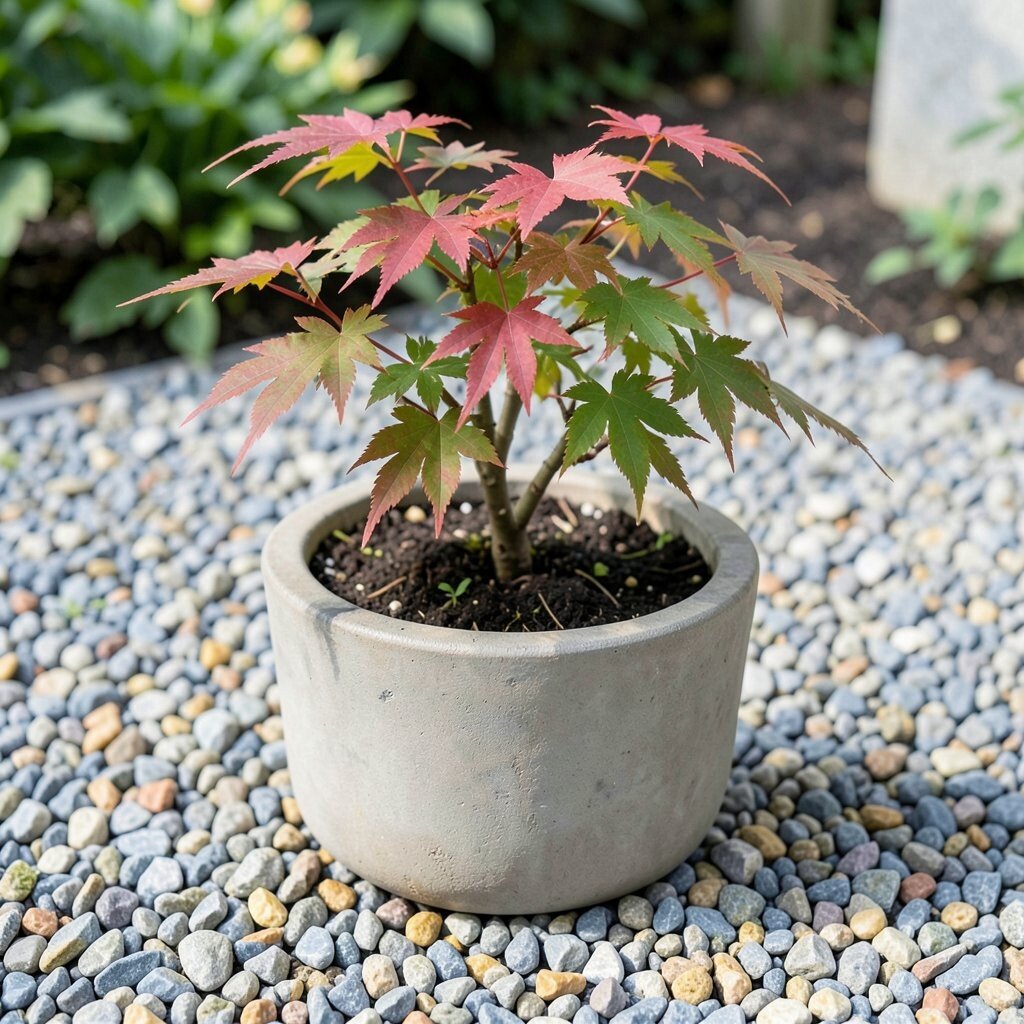
A mini Japanese maple can be a showstopper when it sits in a gravel-themed container. Leaves can shift from red to green, and the small branches look like living art.
Use gravel for visual contrast, but keep the soil mix rich enough for healthy growth. A sheltered spot helps prevent wind burn on young leaves, which matters for container plants.
9. Holly Fern for a Clean, Crisp Look
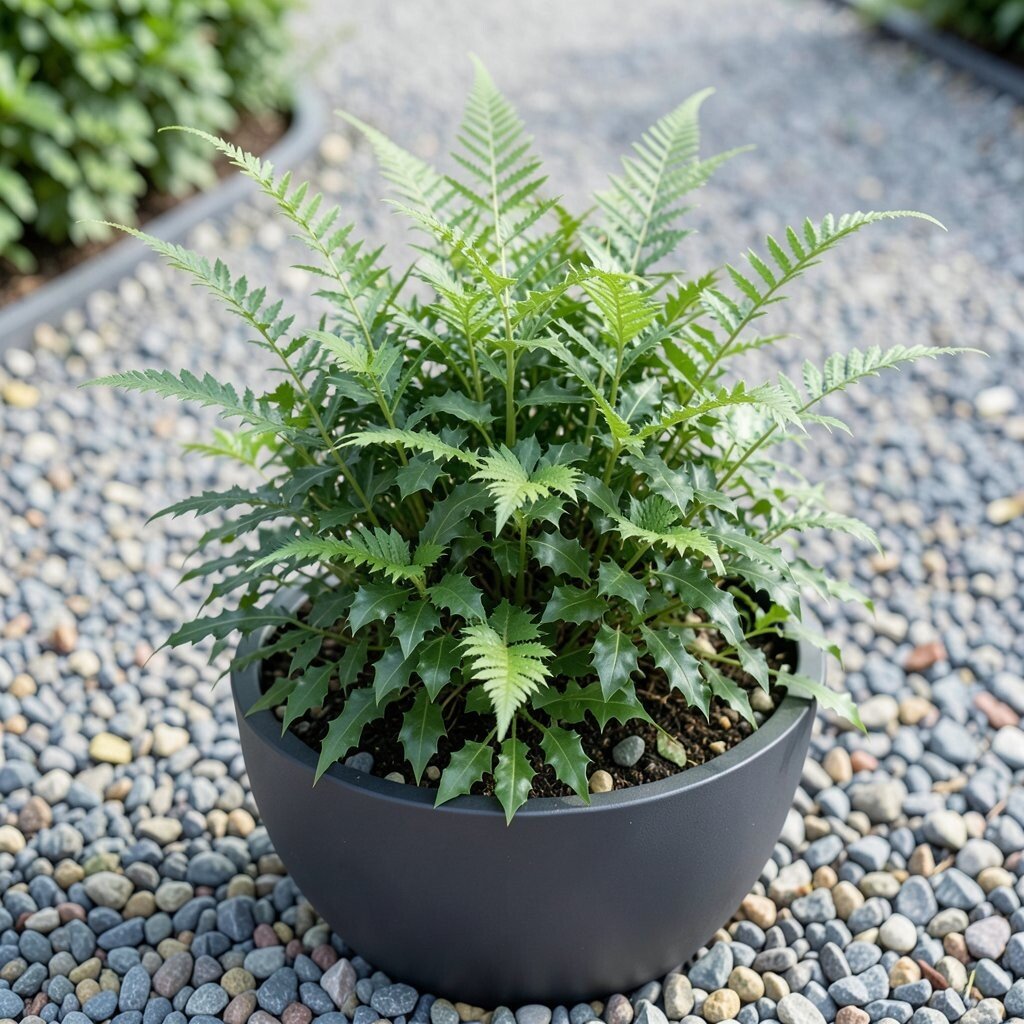
Holly fern brings a neat, lacy texture that looks graceful against gravel. It feels airy but stays dense enough to fill space around the pot.
In a gravel container, it can offer a cool-weather look and a soft green base. Keep it evenly moist and protect it from harsh sun so fronds stay full.
This plant is unique because its upright fronds create a vertical rhythm. For personalization, combine it with a darker pot and small stones to make the fronds look extra vivid.
10. Calibrachoa Cascades for Gravel Edges
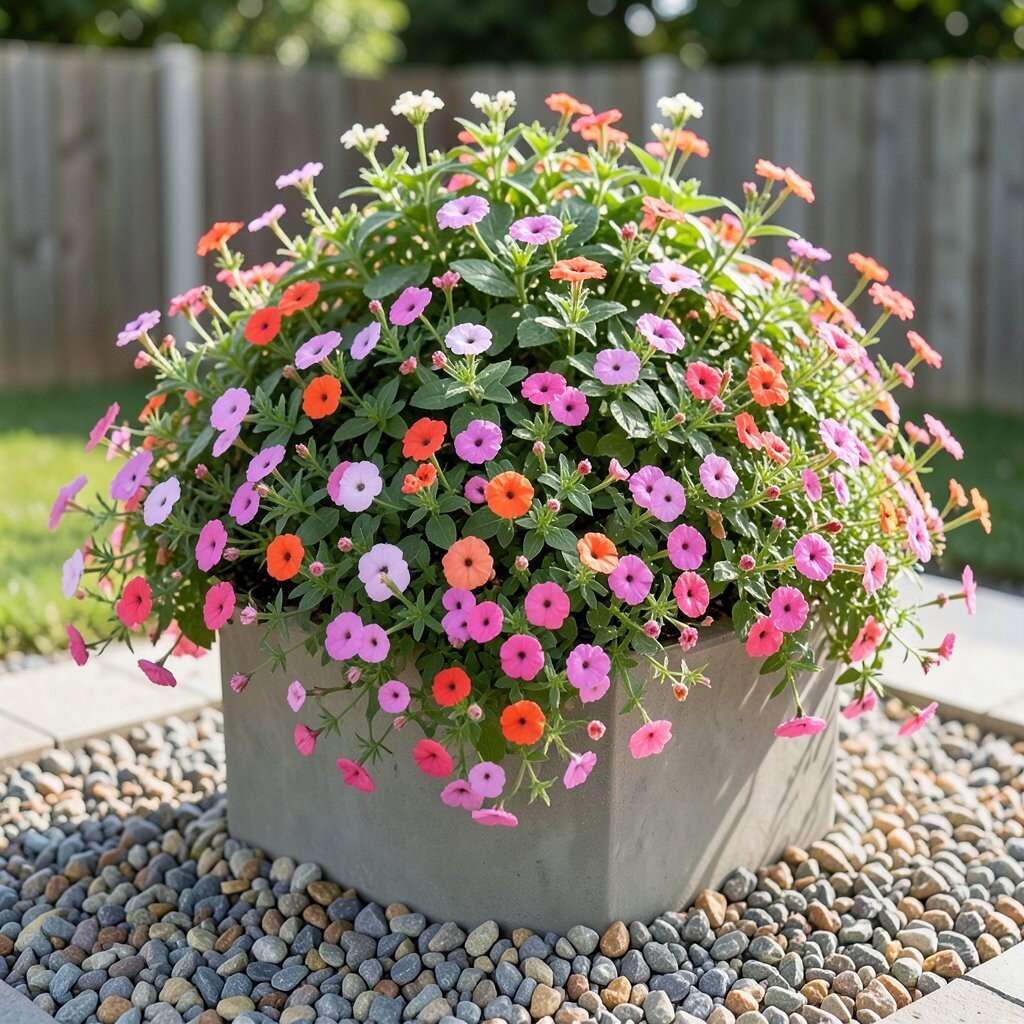
Calibrachoa blooms in a neat cascade, and it looks amazing when it spills over a gravel-lined container. Think of small, bright flowers that keep appearing and brighten the whole patio.
It benefits from consistent watering, so use a pot that holds some moisture but drains well. Gravel top dressing can reduce splash and keep the surface cleaner, even when watering gets a bit messy.
To make it feel tailored, match flower shades to your outdoor cushions or fence colors. This can be a bit of a seasonal purchase, but it’s often worth it for the nonstop color.
11. Mock Orange Dwarf for Soft Fragrance
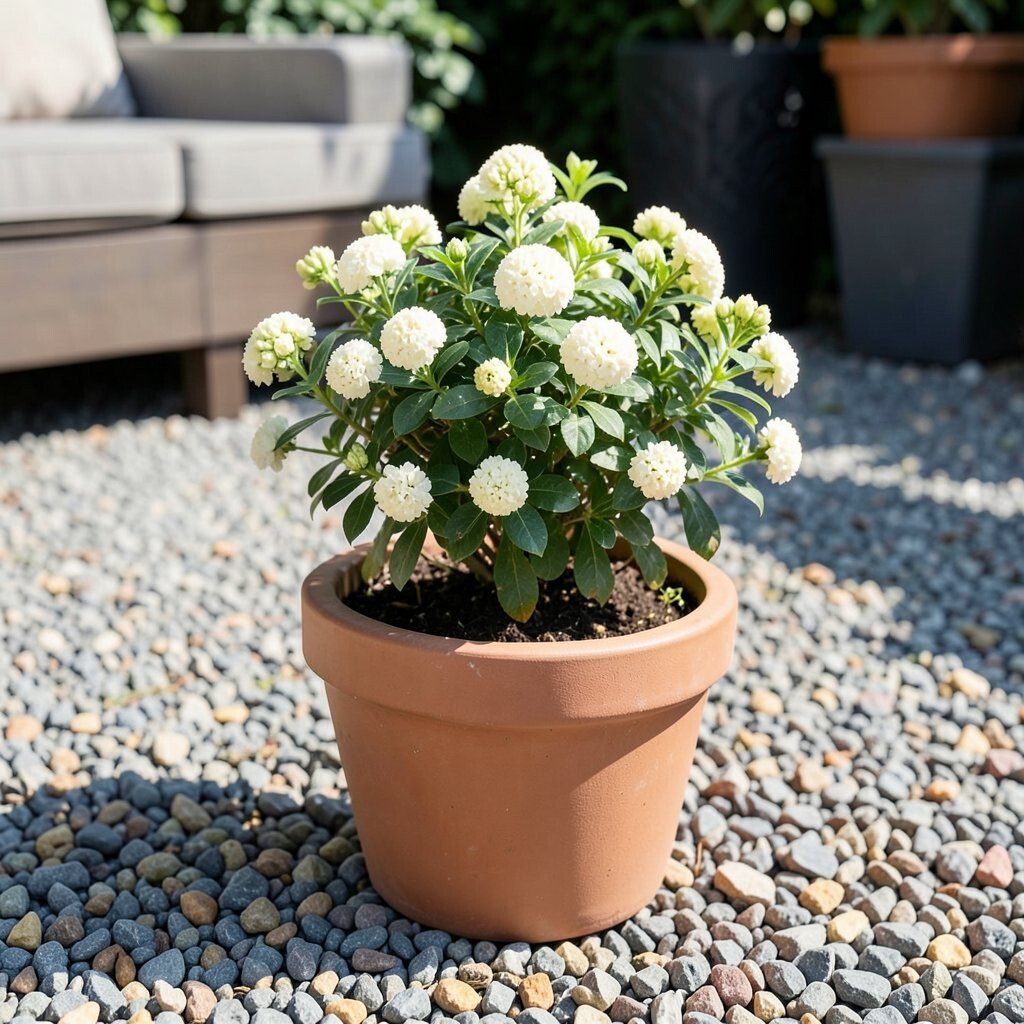
A dwarf mock orange in a gravel container brings a gentle fragrance when it blooms. The flowers look creamy and the shrub form stays tidy in a well-sized pot.
Gravel improves the look and helps you keep the soil surface from forming crusts. Give it sun and a steady watering schedule during dry stretches.
For a unique vibe, place it near a seating area where you can catch the scent. If you want to control cost, choose a smaller starter plant and let it mature gradually in place.
Pruning is simpler when the plant is container-grown because you can shape it to your space. Just remove dead growth and trim lightly after flowering.
12. Creeping Fig for a Bold Green Topper
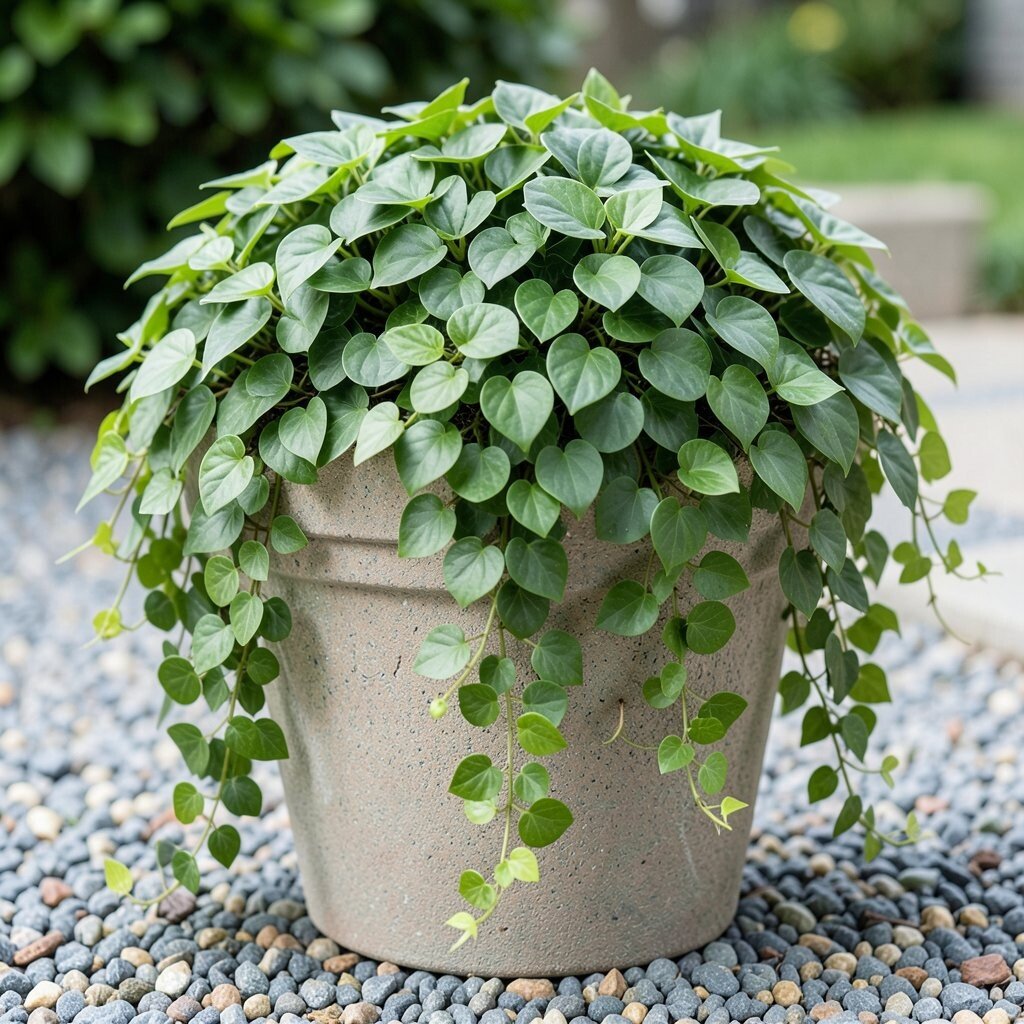
Creeping fig can look bold and sculptural when you let it climb or trail from a gravel container. Its leaves form a thick cover that makes gravel feel wrapped in greenery.
It helps hide pot edges and creates a natural border that looks intentional. Keep it in a pot with good drainage and guide the growth so it doesn’t wander into other plants.
13. Ornamental Pepper for Color with Attitude
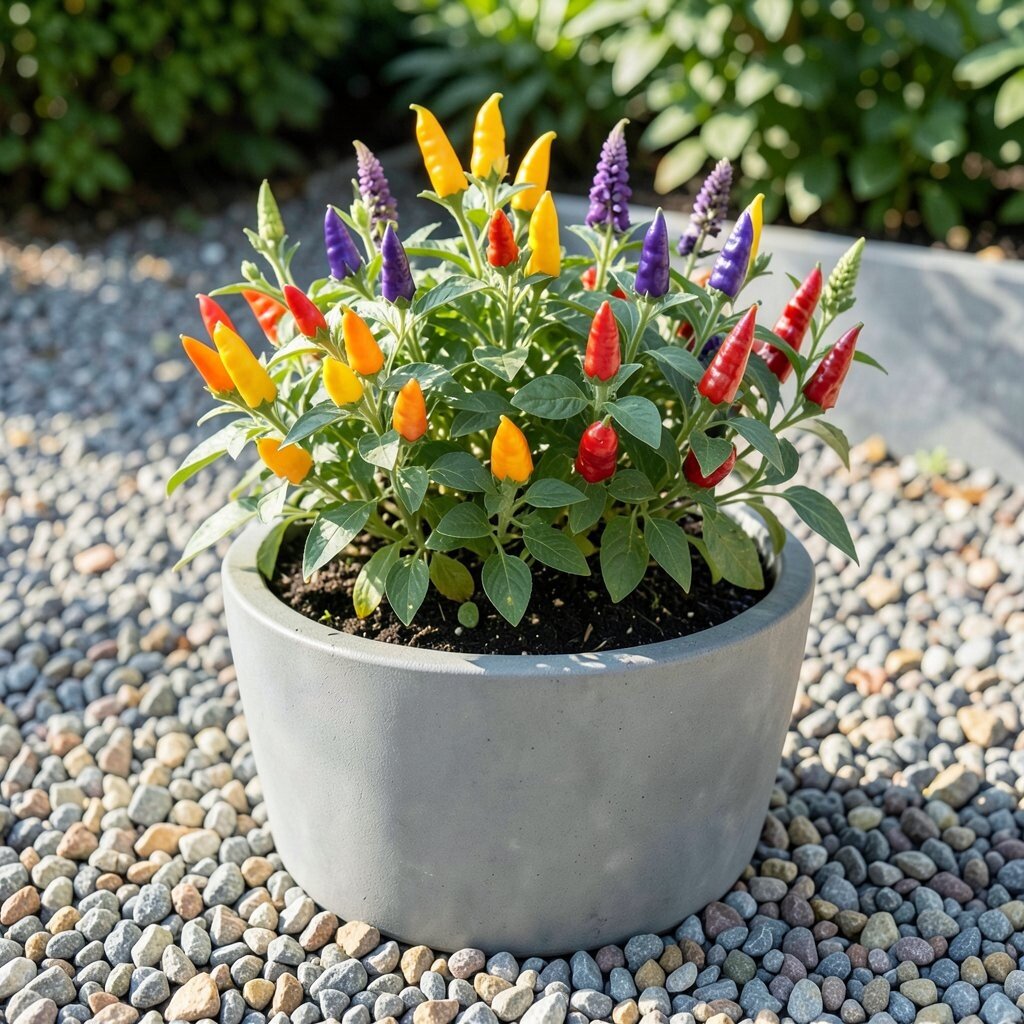
Ornamental peppers in gravel containers add a playful pop that still looks grown-up. The small fruits can be upright, giving the pot a fun, structured look.
They benefit from bright light and warm temperatures, which gravel surfaces can support by warming the area. If you want a crisp look, use coarse gravel and keep the soil level slightly below the rim.
For personalization, choose a pepper color that matches your garden theme, like orange, purple, or red. These plants can be mid-season purchases, so plan your swaps with your summer and fall calendar.
Pinch off weak growth to encourage a fuller shape and keep the container looking tidy.
14. Globe Thistle for Sculptural Silver Spikes

Globe thistle in a gravel container looks like a little sculpture with silver and blue tones. The spherical flower heads stand out clearly against dark stones.
It’s a great match for gravel because it likes well-drained conditions and does not mind drier spells. Gravel helps keep the container from feeling soggy, which is often the main problem with thistle.
15. Dwarf Citrus in Gravel for a Sunny Feel

A dwarf citrus tree in a gravel container makes the whole garden feel like a warm getaway. Even when it’s not loaded with fruit, the glossy leaves add brightness.
Gravel top dressing can reduce messy splashes and keep the soil surface neat. In colder weather, move the pot to a bright indoor spot or a protected area.
This plant is unique because it brings both structure and seasonal reward. For cost thinking, start with a small tree and choose a pot size you can lift easily for seasonal moves.
Water based on the container weight and let the top layer dry slightly before adding more.
16. Bird’s Nest Fern for Soft, Layered Calm

Bird’s nest fern looks like a calm green bowl sitting on gravel. Its fronds gather inward, creating a distinct center that feels soothing and tidy.
It benefits from steady moisture and protection from direct afternoon sun. Gravel can still work because it keeps the surrounding area cleaner while you manage watering with care.
17. Sage for a Gentle Gray-Green Landscape
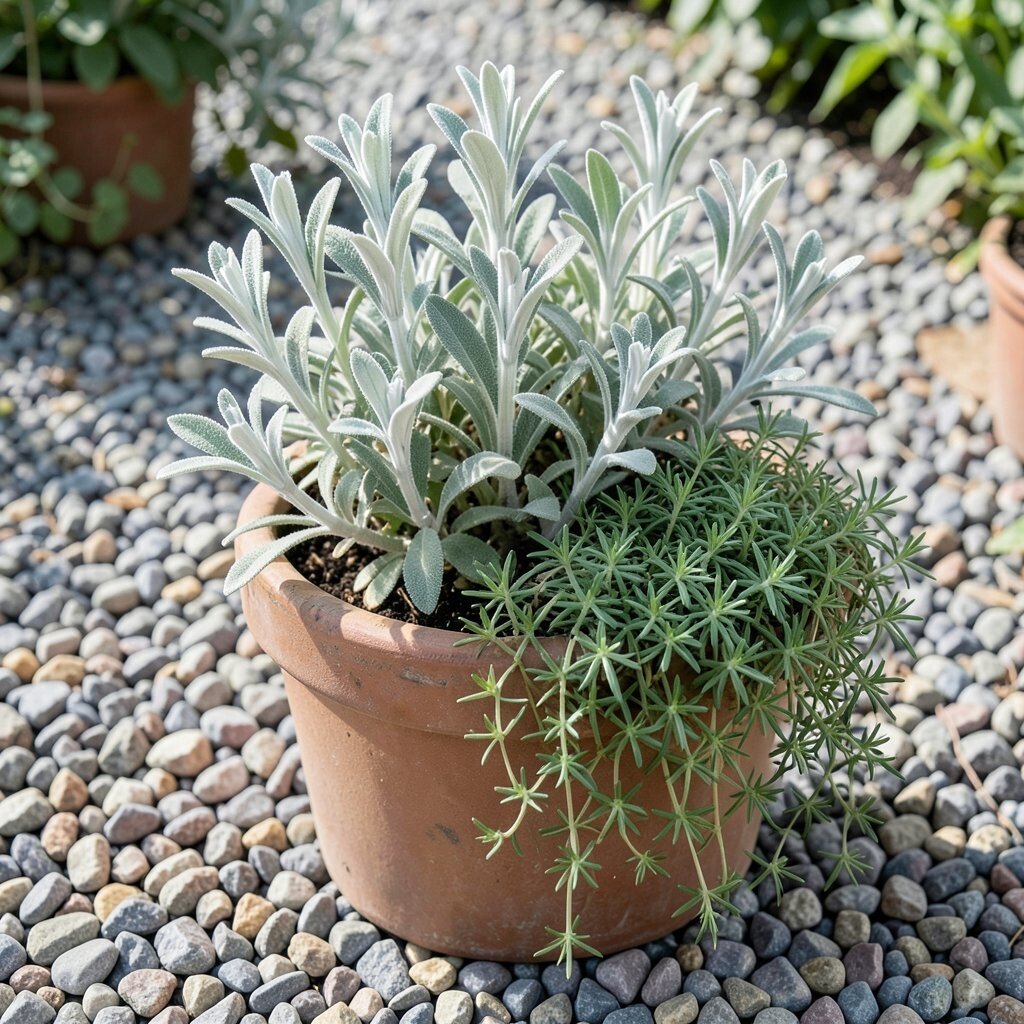
Garden sage brings a tidy, slightly fuzzy texture that looks perfect beside gravel. The leaves hold a calm gray-green color that pairs well with almost any stone shade.
It benefits from full sun and well-drained soil, so gravel top dressing helps reinforce that dry, tidy look. If you want practical speed, choose a compact variety for smaller containers.
For personalization, combine sage with trailing thyme so the pot has both upright structure and soft spillover. This also lets you harvest herbs without the chaos of a bigger herb bed.
18. Creeping Sedum or Moss-Like Covers in Tight Pots
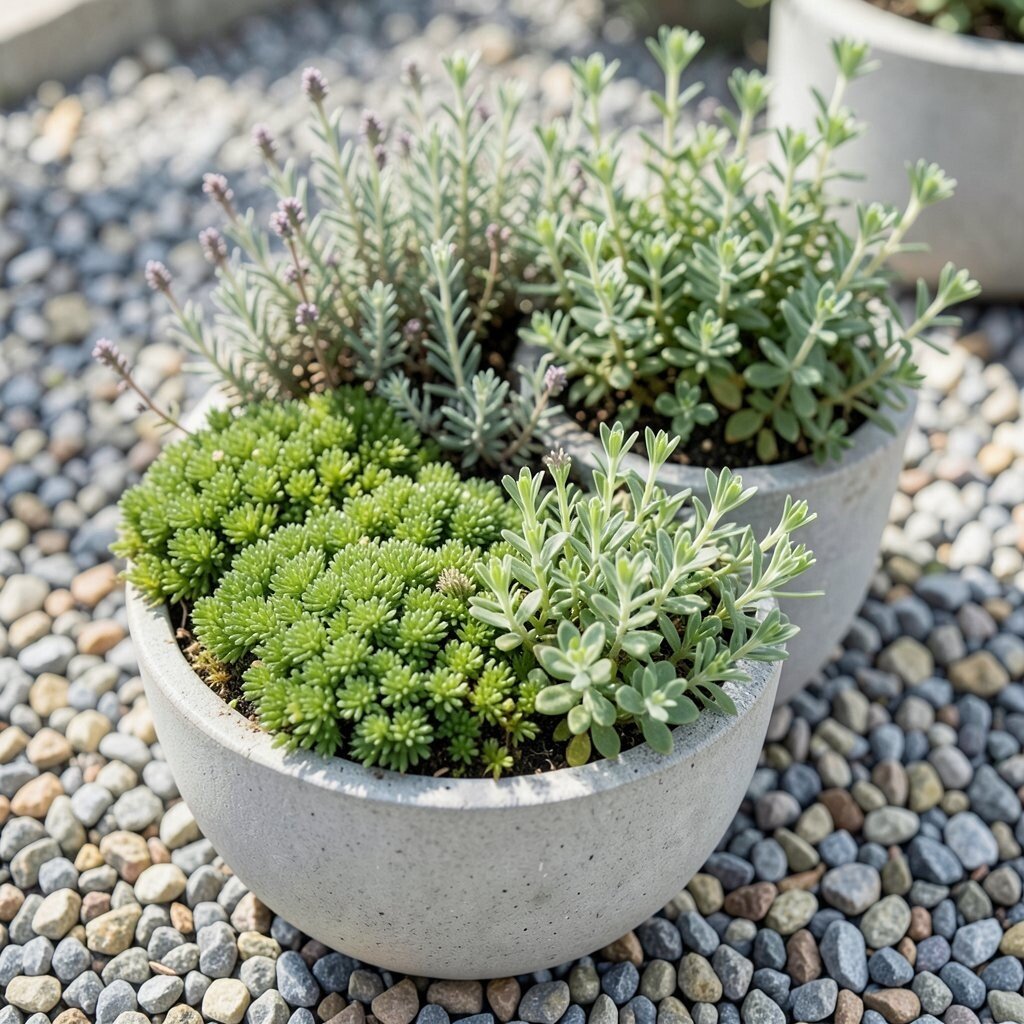
If you want a tiny, cushiony look, creeping sedum or moss-like groundcovers work wonderfully in narrow containers. They form a thick carpet that makes gravel appear cleaner and more intentional.
This approach is popular because it suits minimalist garden styles and low maintenance schedules. Gravel containers also help you control weeds visually by keeping the soil surface tidy and covered.
Use a shallow pot and fill it with gritty mix, then water lightly until roots settle. To personalize, choose cover types with different leaf colors so the “carpet” looks layered.
Since these plants can be slow at first, consider buying a slightly larger starter if you want faster impact.
19. Hibiscus in a Big Gravel-Surrounded Pot

Hibiscus in a gravel container feels bold, like a tropical moment right at your doorstep. Large blooms rise above the stone, and the plant becomes a natural focal point.
It benefits from consistent watering and rich, well-drained soil, so gravel should support drainage rather than replace good potting mix. Use a larger container so the plant stays stable during windy days.
For personalization, select bloom colors that match your outdoor accents or seasonal decor. This is a plant that can cost more upfront, but the flower display often justifies the investment for many gardeners.