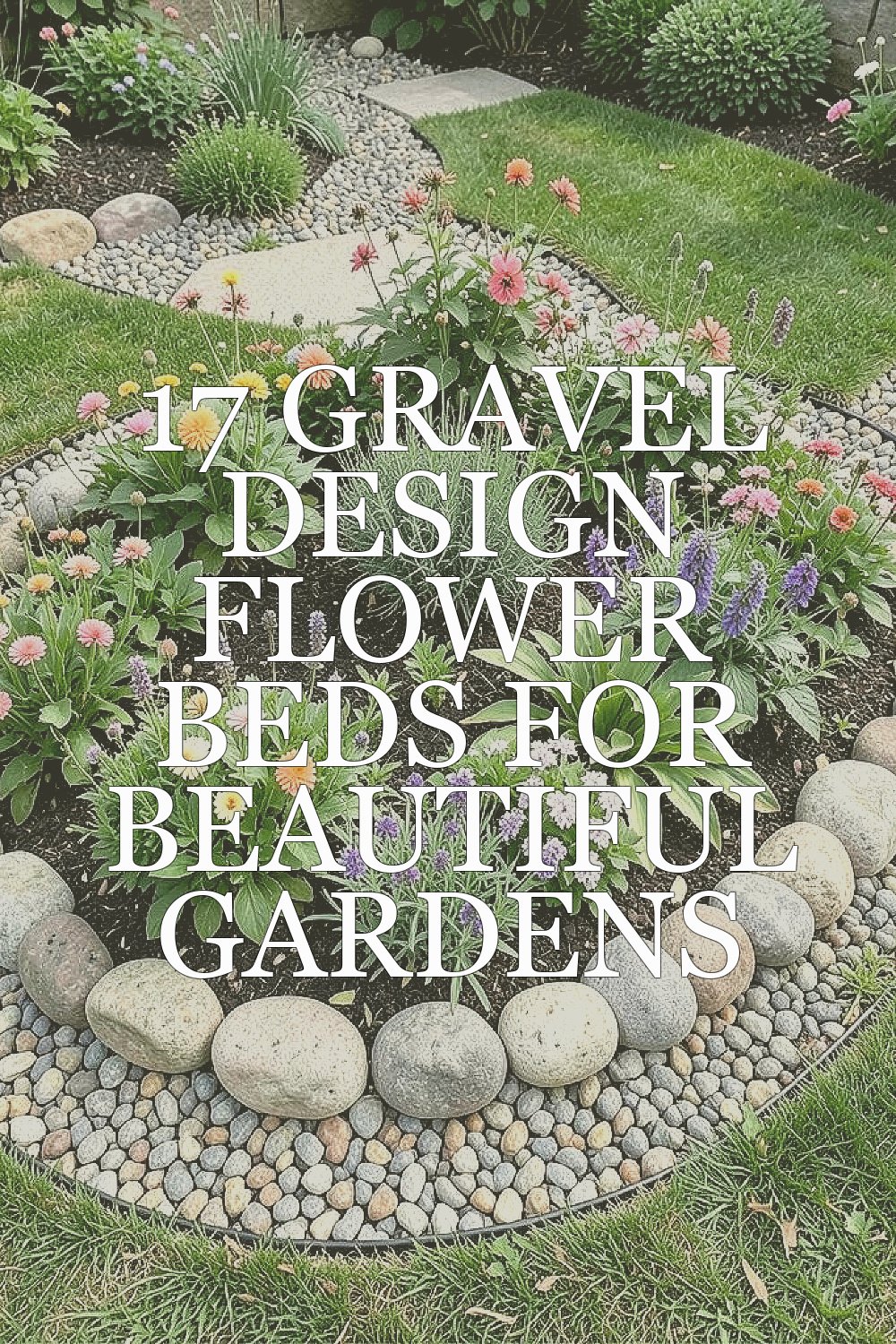
Gravel can make a garden bed feel neat, airy, and full of charm. With the right layout and plants, it looks planned, not plain.
Let’s focus on easy, stylish gravel ideas that help flowers shine while keeping maintenance simple.
1. Cottage-Style Gravel Paths With Soft Blooms
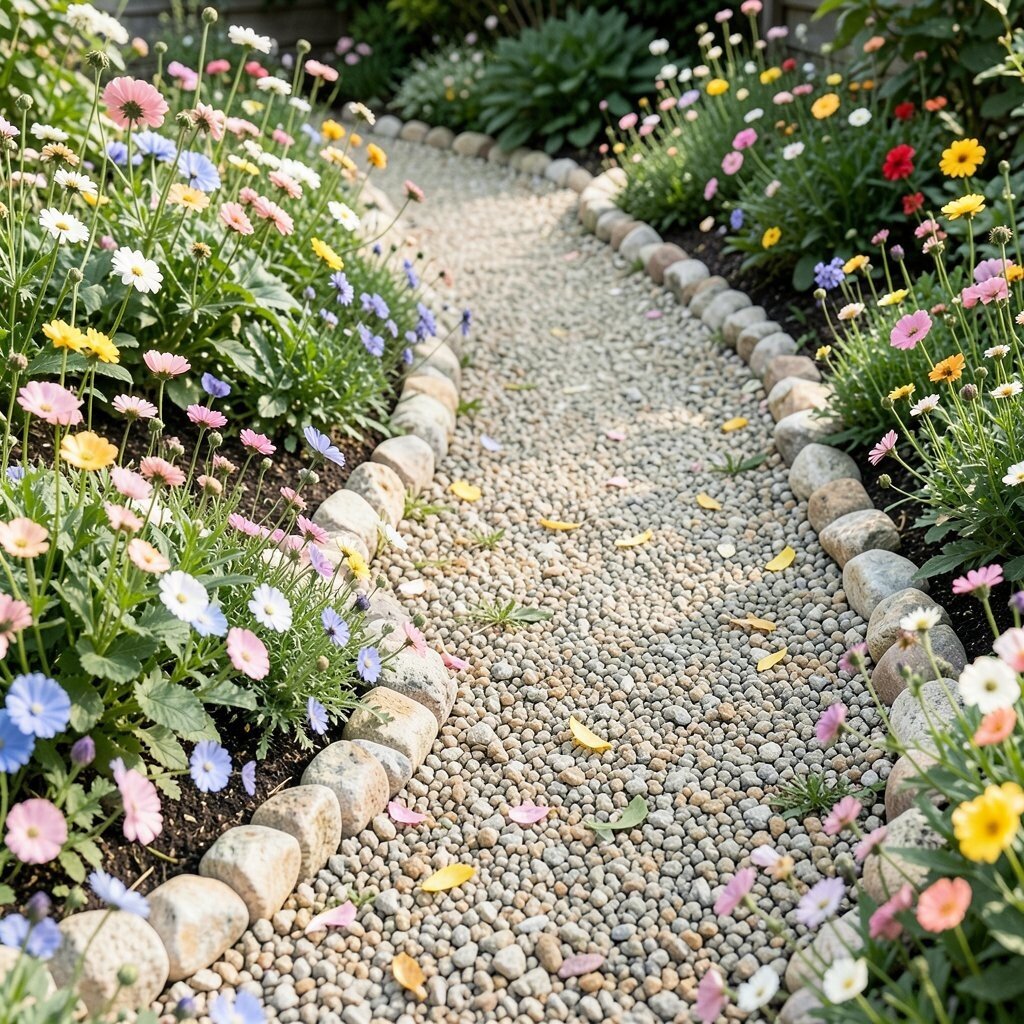
A gravel edge can turn a simple bed into a charming cottage scene. Picture a thin border of pale stones hugging the plants, with petals drifting in gentle drifts of color.
This style helps the bed look tidy even after windy days. You’ll also get better drainage, which keeps roots healthier during rainy weeks. To keep the look crisp, rake the surface lightly every couple of weeks and remove weeds before they get established.
2. Layered Texture Beds Using Mixed-Size Gravel
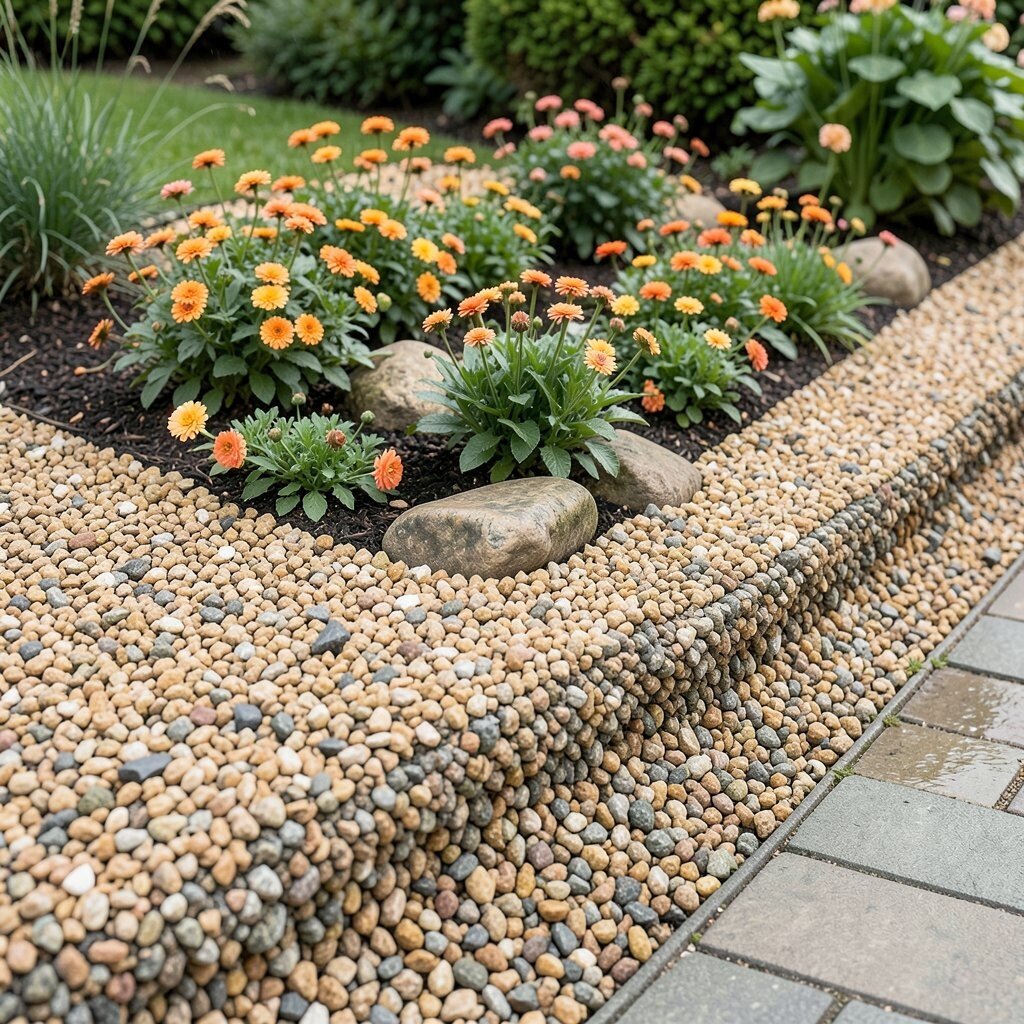
When you mix gravel sizes, the bed gains a natural texture that feels lively. Imagine small pebbles on top with a slightly deeper layer underneath, like a soft blanket made for flowers.
Layering can reduce washouts during heavy rain, especially on gentle slopes. Choose a color family that fits your plants, such as warm tans for orange and peach blooms. For personalization, try placing larger stones around a focal plant so the eye keeps moving through the bed.
To think about cost, you can use mixed-size gravel in high-traffic areas while saving your most decorative stones for the front edge. A simple way to plan is to measure the bed length and width, then buy an extra bag for touch-ups near the walkway. This approach also matches a current trend toward natural, imperfect textures rather than one flat, uniform look.
3. Rounded Gravel Borders Around Flower Clumps
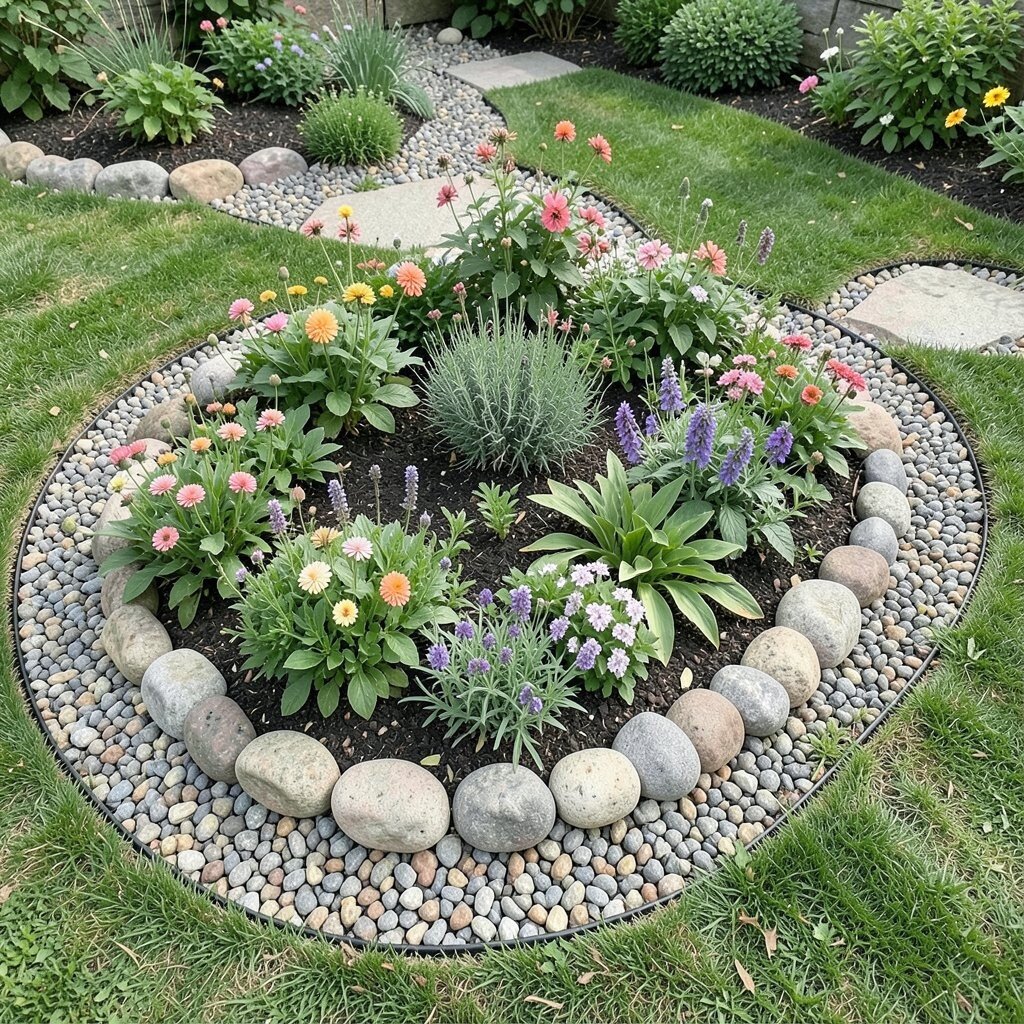
Curved gravel borders look friendly and create a sense of flow. Think of rounded scoops of stone wrapping around clumps of flowers like a living wreath.
This design helps prevent soil from washing into paths because the border acts like a gentle frame. It also keeps mowing and trimming easier since the edges stay clear. Use a garden hose to outline the curves before you move any stones, so the shape feels right for your yard.
If you want a unique twist, mirror the curve shape in nearby elements like stepping stones or a small shrub mound. For budget planning, buy gravel by weight only for the visible border and use cheaper base material under thicker areas. Many modern gardens favor rounded forms because they feel softer than straight lines.
Choose plants with similar water needs so the bed stays easy to care for. Add a few low-growing edging plants at the border to connect the gravel and the blooms in a smooth, natural way.
4. Dark Slate Gravel for Dramatic Contrast
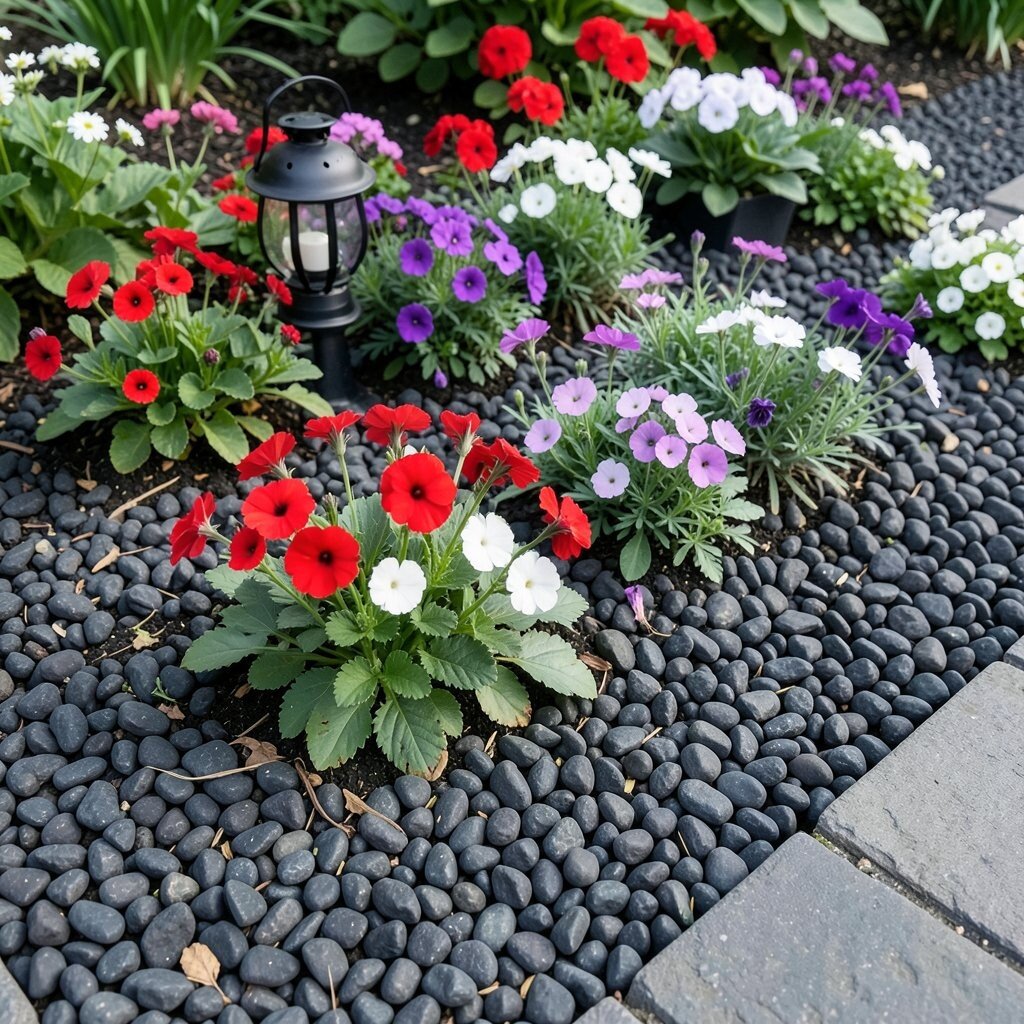
Dark gravel can make flowers pop in a way that feels bold and modern. Picture near-black stones under bright blooms, making reds, purples, and white petals look extra crisp.
This contrast can also hide small bits of leaf debris, which means the bed looks good longer between cleanups. It’s a practical choice for busy gardeners who still want a designer look. For personalization, pair slate tones with metal garden accents, like a small lantern or a black plant stand.
5. White Gravel With Pastel Flower Themes
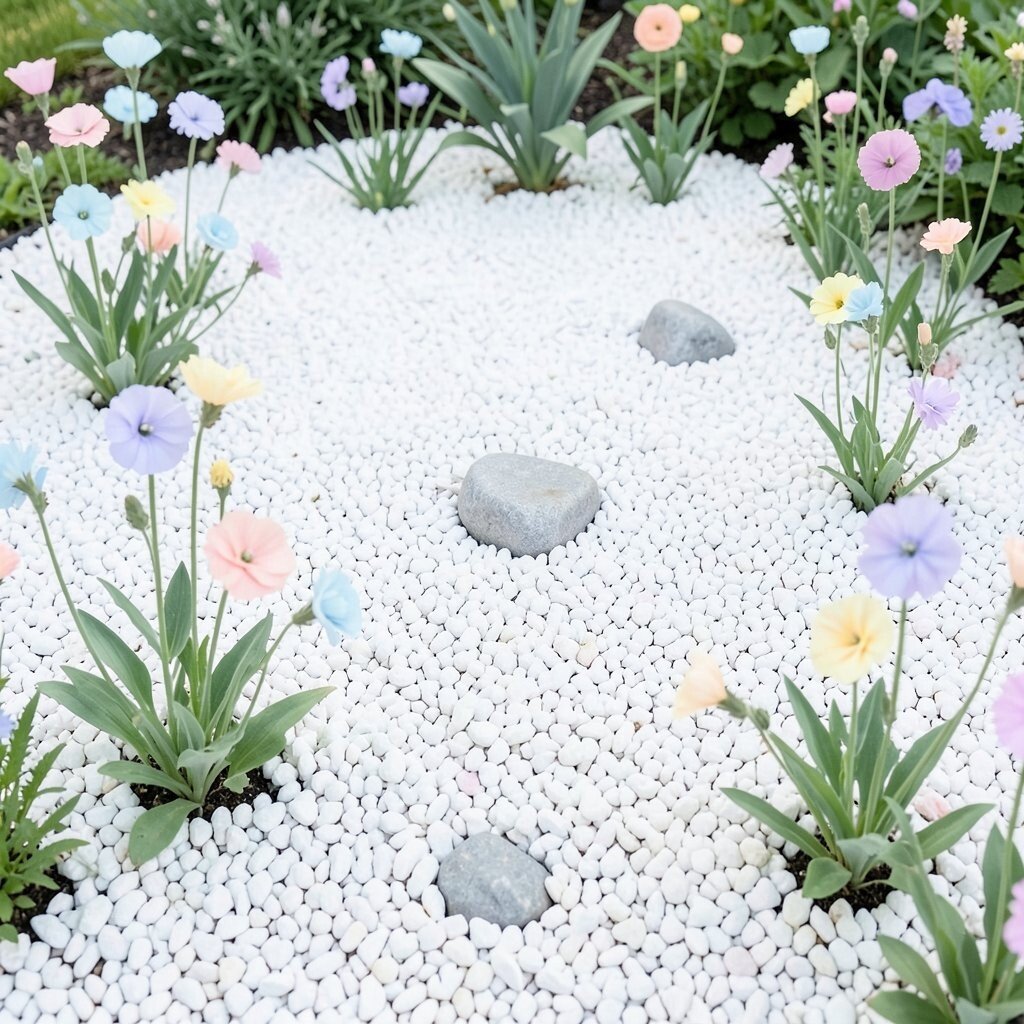
White gravel creates a clean, bright canvas that feels calm and airy. Envision a smooth, light surface with pastel flowers drifting upward like a soft watercolor.
It helps the bed look fresh even in shaded areas where colors can feel muted. White gravel also keeps the visual “noise” low, so your plants stay the main event. To keep it looking sharp, plan for a simple top-up once or twice a season.
If you want a uniqueness boost, mix in a small amount of silver-gray stone near the center to add depth. Cost-wise, white gravel can vary a lot by region, so check local suppliers for a good deal on bulk loads. This style matches a current love for bright, minimal-looking landscapes that still feel warm.
6. Gravel Beds With Stepping Stones Through the Color
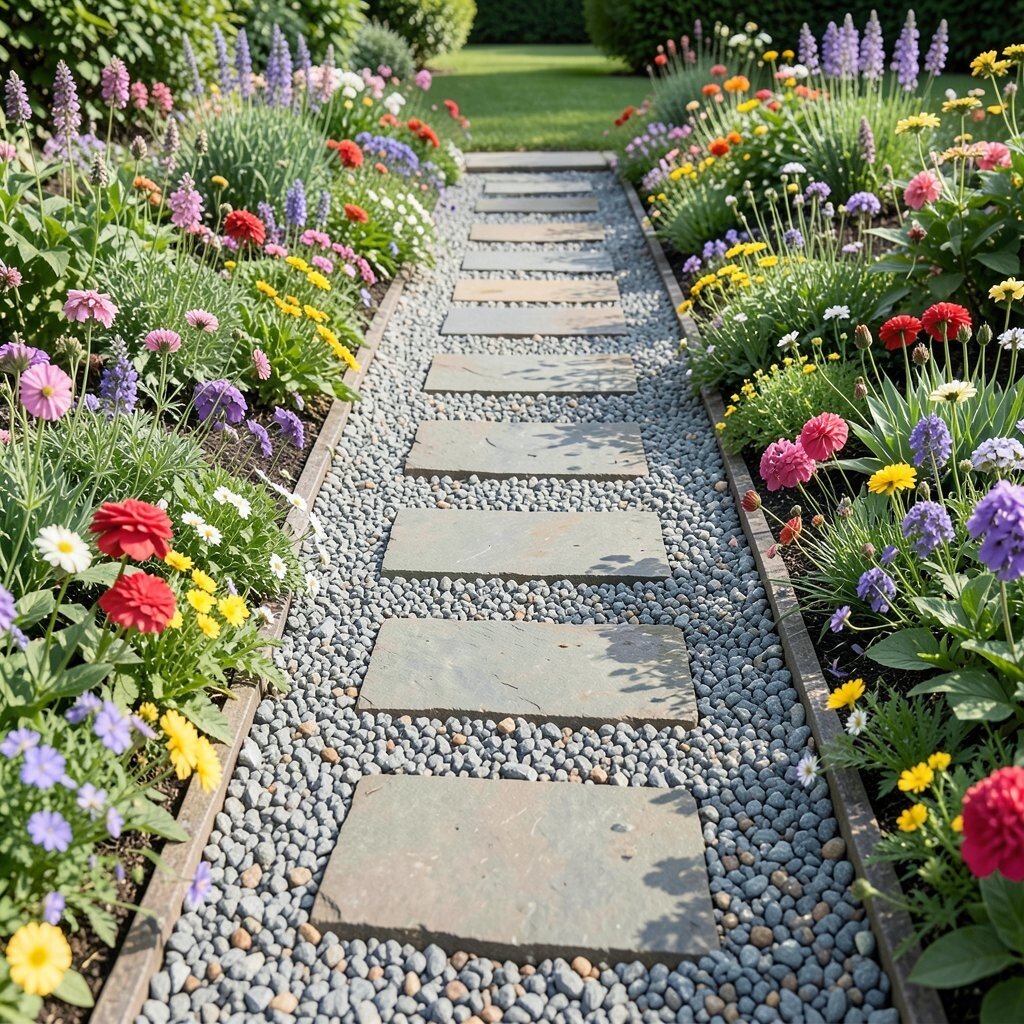
Stepping stones inside a gravel bed turn it into a place you want to walk through. Imagine narrow slabs placed like stepping paths, with flowers spilling around them on both sides.
Because gravel is firm and drains well, it’s practical underfoot, especially when the soil stays wet. The stones also create a clear route for maintenance, so you can weed or prune without trampling plants. Space the stepping stones so you can reach most areas from a standing position, which makes care quicker.
7. Sunken Gravel Flower Beds for a Neat, Built-In Look
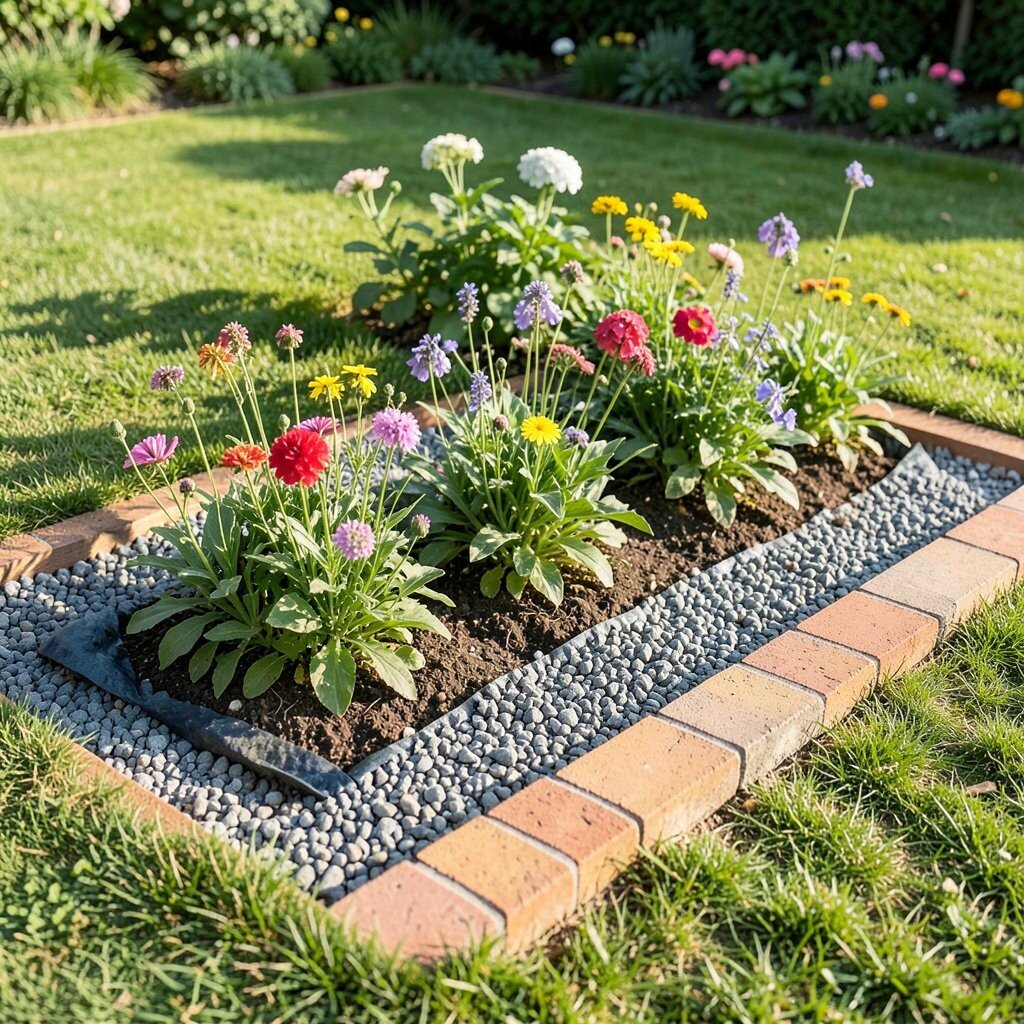
A sunken bed feels intentional, like it was built into the yard from the start. Picture gravel sitting slightly lower than the surrounding lawn, with flowers rising above like a stage.
This design reduces the “spill over” of mulch and gravel, which means fewer repairs after storms. It also helps keep the bed area cooler in summer because the soil holds steady moisture. Start by digging to the right depth and using a barrier fabric where appropriate so weeds don’t creep in.
For personalization, add a gentle border of edging brick or treated timber to frame the depression. Consider cost by reusing any clean base soil you remove, then buying gravel only for the visible surface. Current garden trends lean toward low, structured planting areas that look tidy year-round.
8. Gravel and Brick Border Blending Traditional Charm
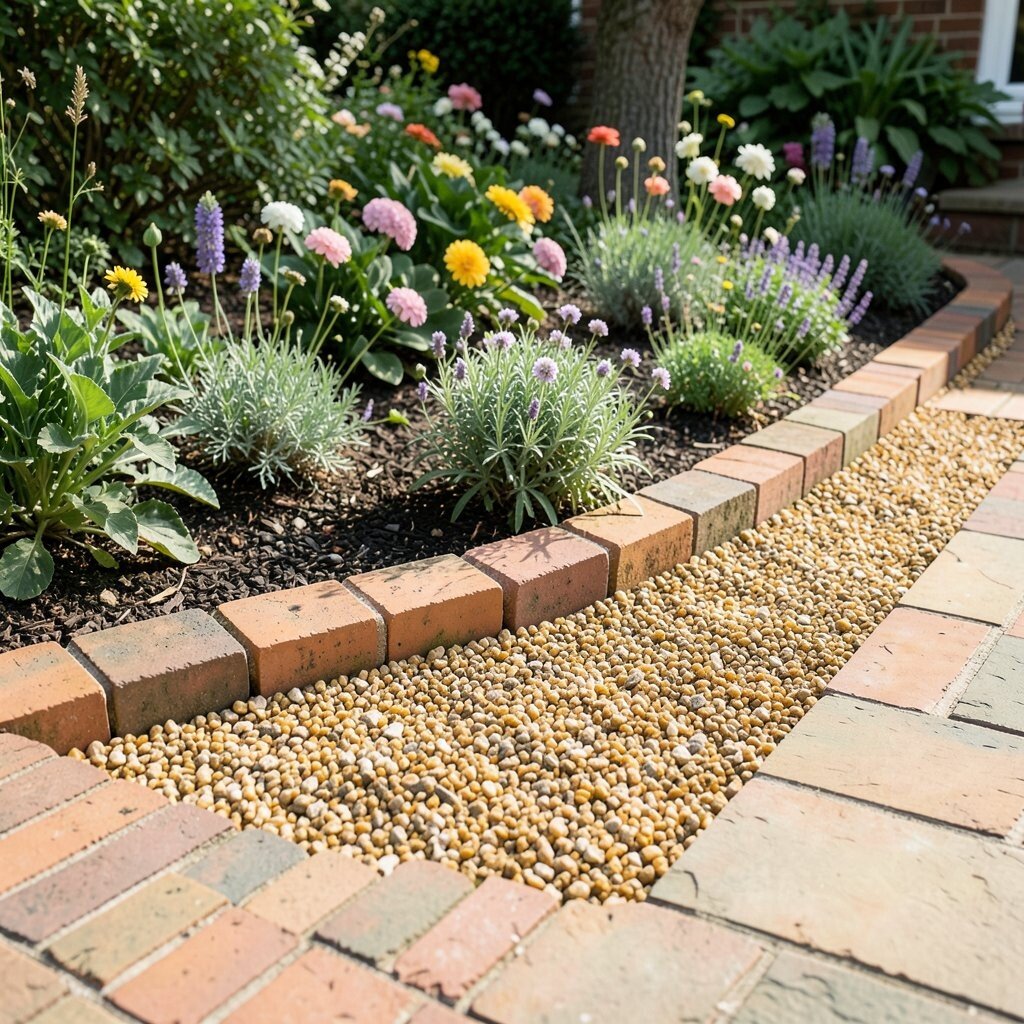
Combining gravel with a brick border can look warm and timeless. Imagine terracotta bricks lining the bed like a curb, with golden gravel filling the space between plants.
This mix gives your garden a classic structure while still keeping the maintenance light. Brick also helps keep gravel in place, especially along edges that take foot traffic. Choose brick colors that match nearby hardscape, like patios or walkways, so the whole yard feels connected.
9. Geometric Gravel Patterns With Planting Zones
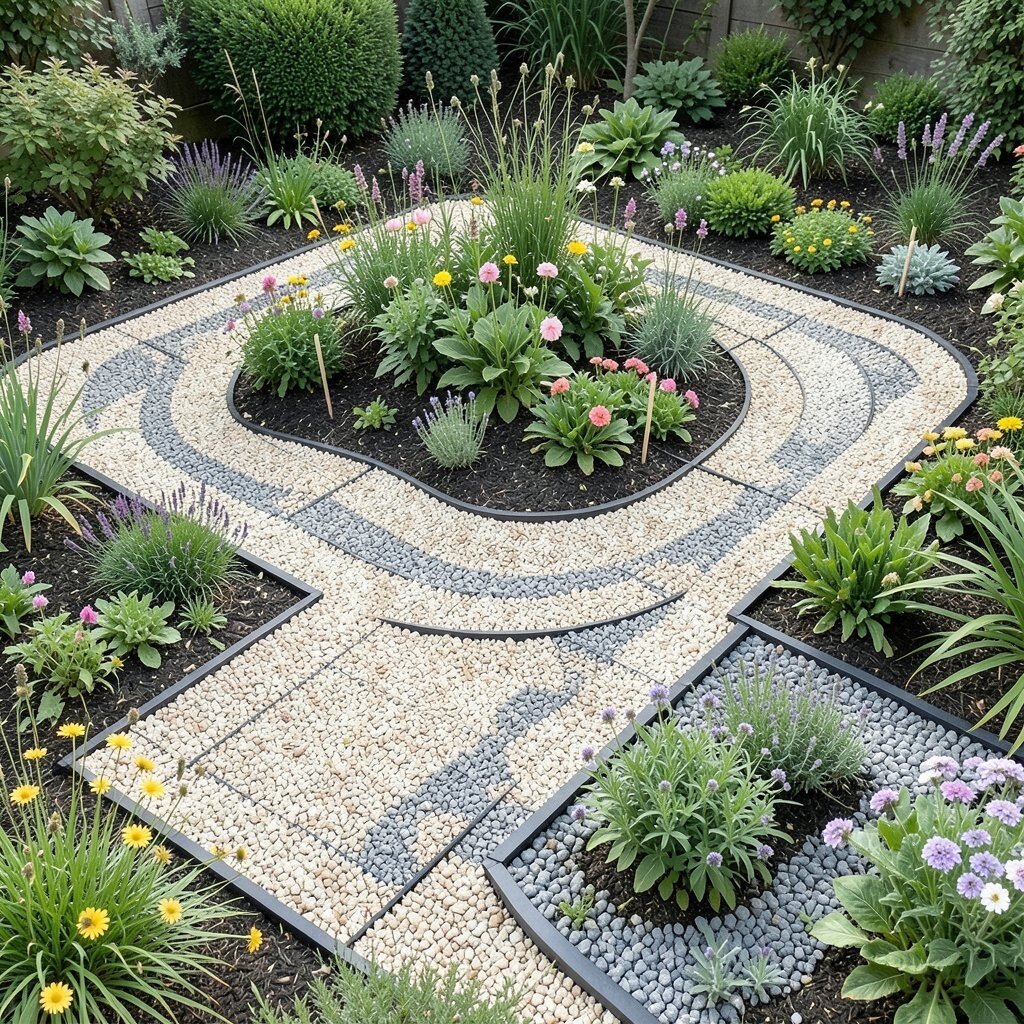
Geometric layouts bring a “designed” feel without making the yard feel stiff. Picture a simple grid or curved panels of gravel separating planting zones like neat blocks of color.
This style helps you organize different plant groups by height and water needs. You can also make the bed easier to maintain because each zone stays clearly defined. Use string lines or garden stakes to map the pattern before placing gravel, so the edges stay straight and professional.
If you want uniqueness, add one unexpected shape, like a teardrop island of taller flowers, surrounded by lower blooms. Cost control is simple here because you can limit expensive gravel to the main pattern areas and use a cheaper base underneath. Many modern gardens now favor clean shapes paired with soft plants for a balanced look.
10. Vertical-Accent Gravel Beds With Trellis Flowers
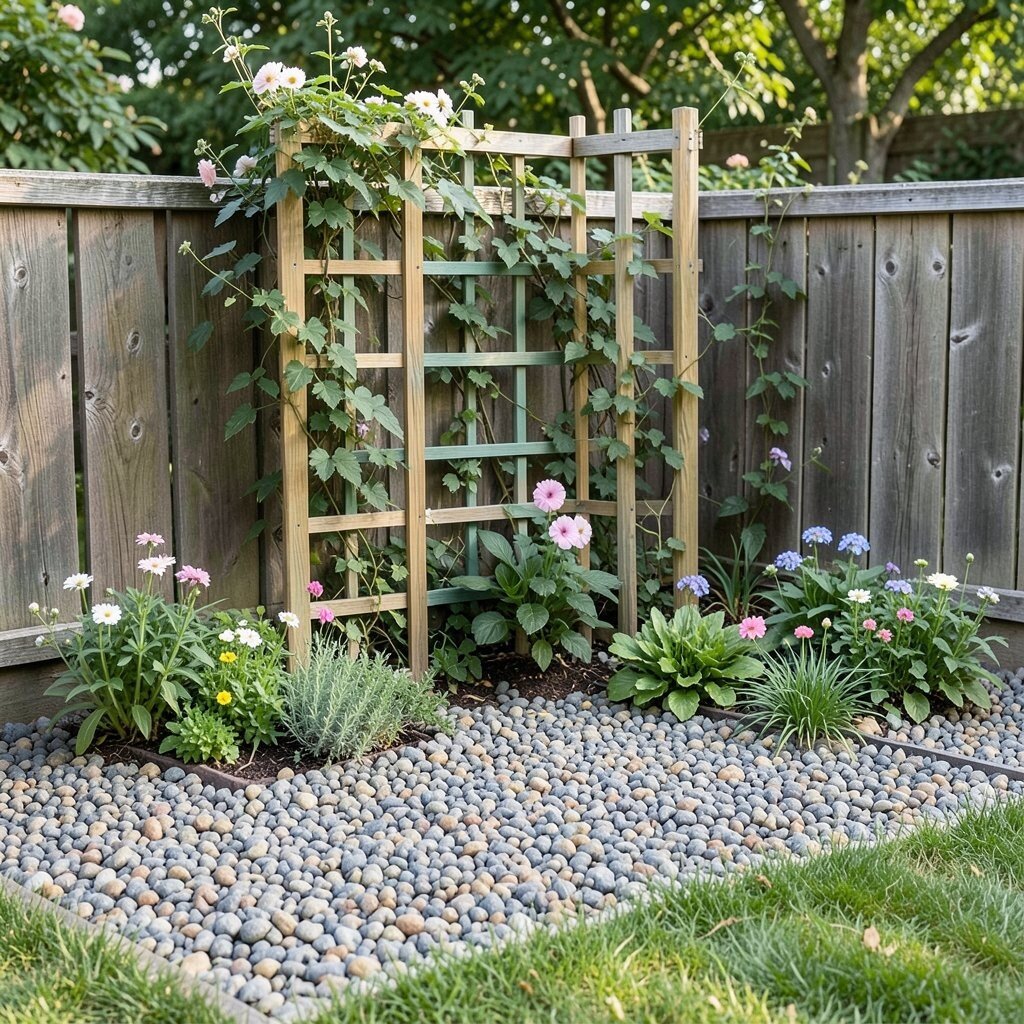
Gravel beds look extra special when you add vertical accents. Picture a small trellis behind the flowers, with climbing vines supported above a bed of smooth stones.
This design keeps vines and blooms up off the ground, which can reduce disease problems and makes the bed feel taller. It also creates a stronger focal point, especially near fences or walls. Choose a trellis size that fits the bed width, then place it before you add gravel so you can anchor it securely.
For personalization, paint the trellis a color that echoes your gravel tones, or let wood stay natural for a cozy feel. If you’re watching costs, use sturdy, repurposed wood for a small trellis, then spend on the climbing plants. This approach matches a trend toward layering heights, which gives gardens depth without needing more space.
Finish with a few groundcover plants at the base so the stone doesn’t look bare between blossoms.
11. Fragrant Herb and Flower Gravel Combo Bed
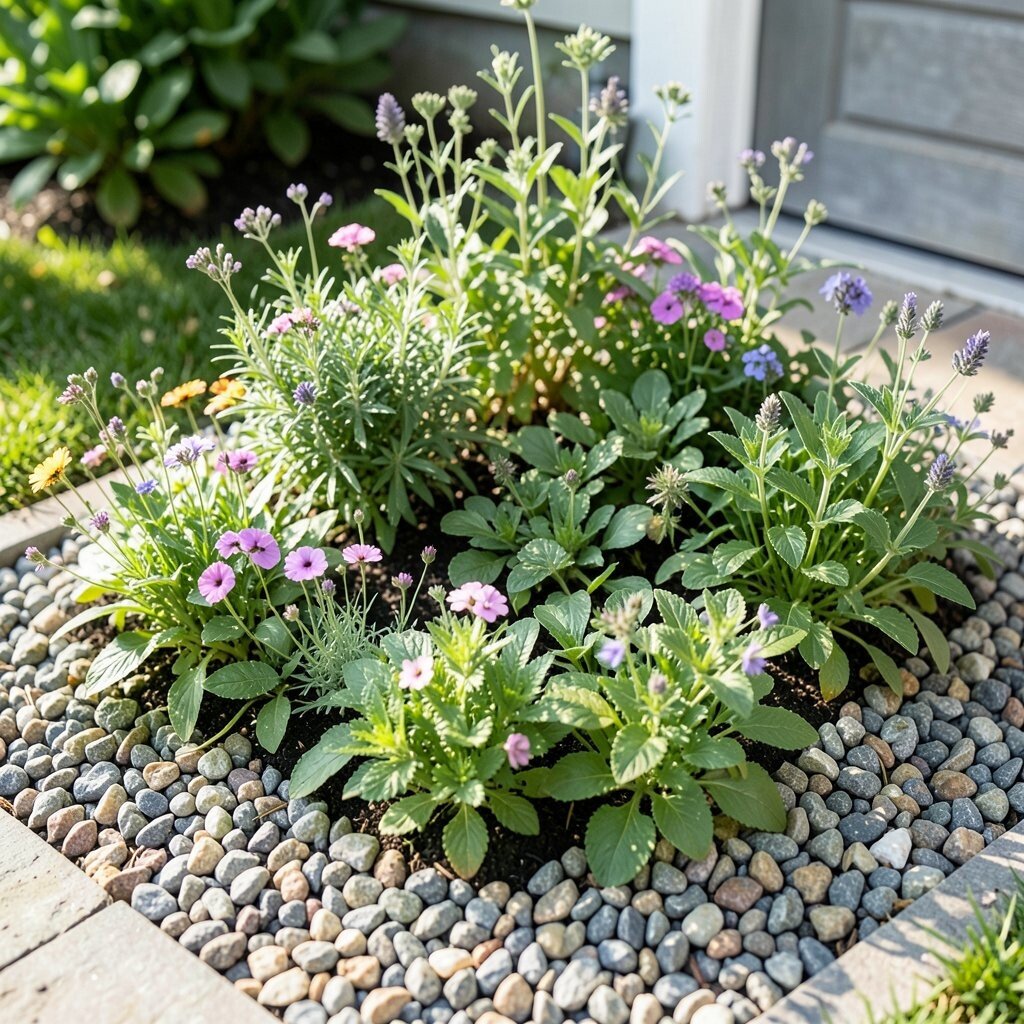
A herb-and-flower bed looks good and smells amazing. Picture tiny blossoms mixed with leafy greens, all tucked into a gravel base that keeps the surface from getting muddy.
Gravel helps herbs stay tidy because less soil splash lands on leaves, which can reduce common issues. You’ll also enjoy practical harvests right outside your kitchen door. Choose herbs that match your sunlight, then group them so you aren’t constantly adjusting water.
12. Gravel Ring Beds Around Trees and Large Shrubs
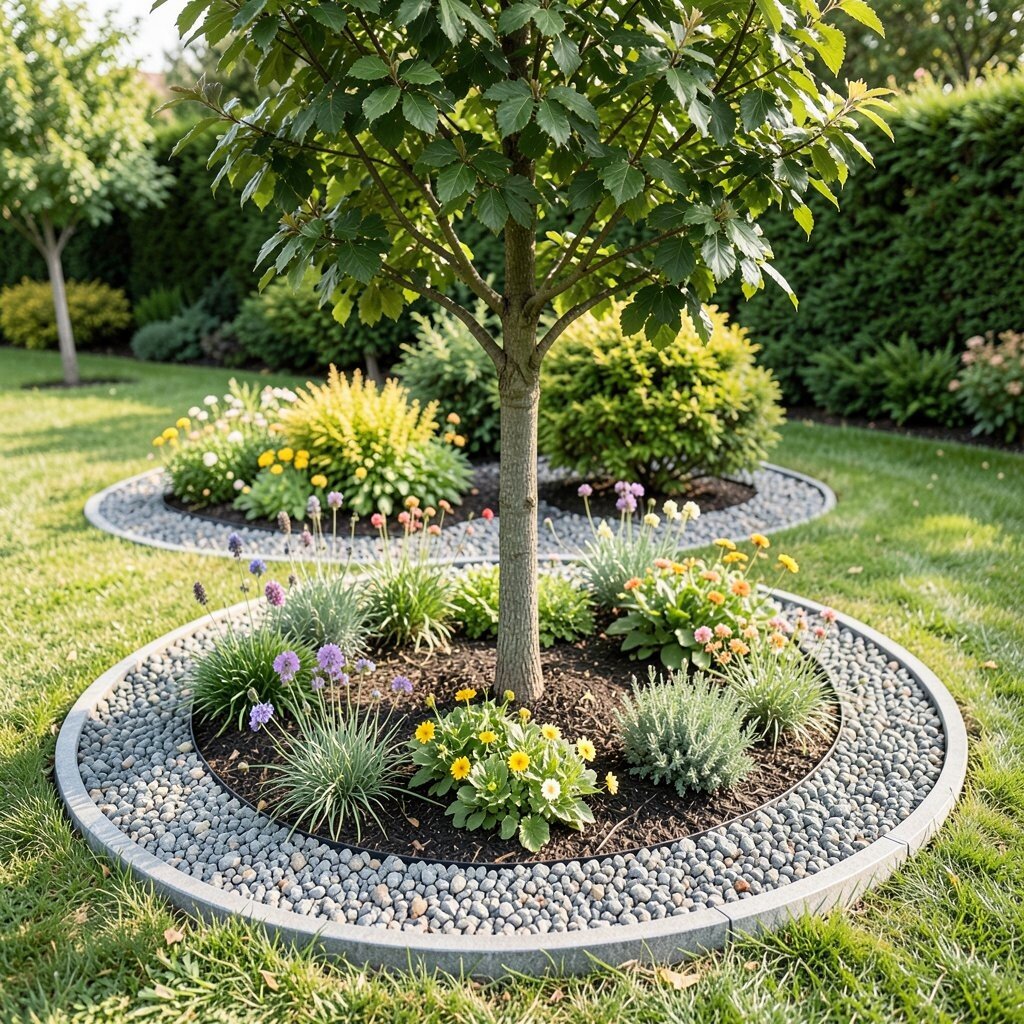
Using gravel in rings around trees can make the landscape feel intentional. Imagine a neat circle of stones around a young tree trunk, with flowers and low plants filling the ring.
This approach can cut down on lawn encroachment while improving drainage around roots. It also creates a clean border for mulching and trimming, especially under shrubs where grass struggles. Keep the gravel pulled slightly away from the trunk to avoid moisture trapping against the bark.
For personalization, choose plant colors that echo the tree’s season, like spring pastels or fall golds. Cost considerations are usually favorable because you can use gravel in a wide ring without needing premium materials everywhere. Many gardeners now use “no-grass zones” around trees to reduce mowing and make care simpler.
Consider adding a thin strip of edging or a shallow curb so the ring stays sharp year after year.
13. Tropical-Looking Gravel Bed With Bold Leaves
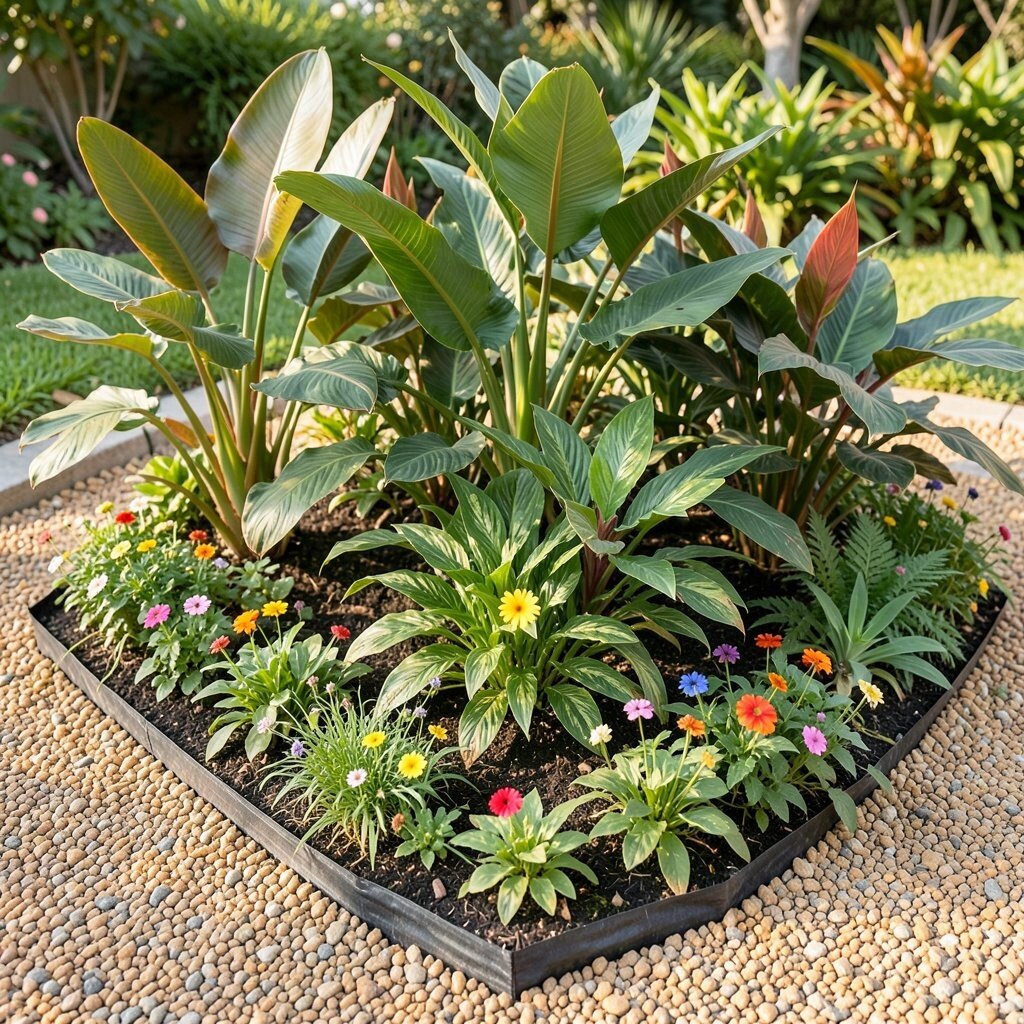
If you like a lively vibe, gravel can be the perfect base for bold plants. Picture large leaf plants set into warm gravel, with small colorful flowers popping like accents on a stage.
This design is unique because it blends a clean stone texture with a lush, fuller plant look. Gravel helps the area dry quickly after watering, which is helpful when plants prefer consistent moisture but hate soggy roots. For personalization, match gravel warmth to your plant tones, such as tan stones for golden leaves.
Keep cost in mind by focusing premium plants on the center and using hardy fillers around the edges. A current trend is mixing “statement foliage” with low maintenance ground textures, and gravel fits perfectly here. To make the bed easier, add a weed barrier and plan your watering schedule for the first growing season.
14. Low-Mound Gravel Beds for Border Edging Along Walkways
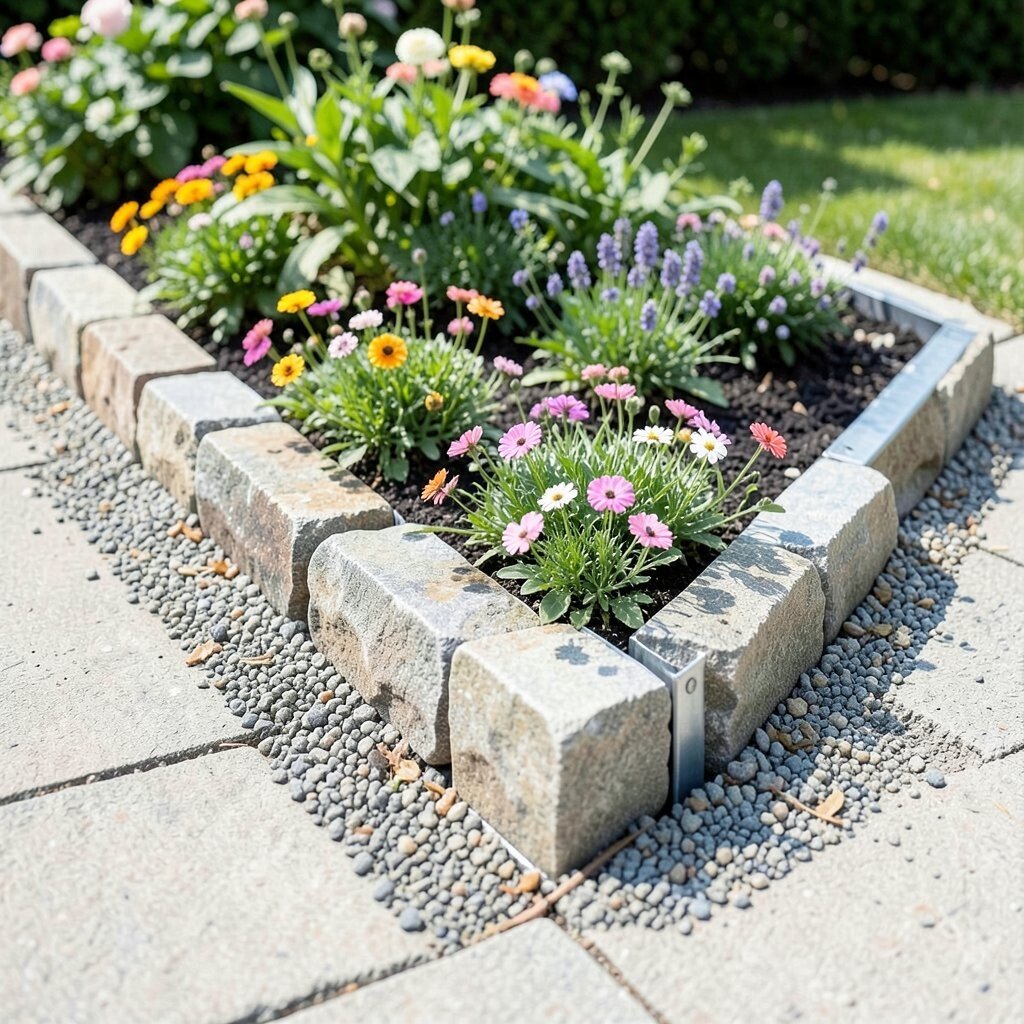
Low-mound gravel beds create a tidy border that frames your walkway nicely. Picture a shallow raised strip of stone with flowers spilling slightly over, creating a neat ribbon effect.
This shape helps gravel stay where it belongs, especially if your pathway gets occasional splashes. It also makes the bed easier to edge because the surface is more compact than a flat layer. Use a rake to shape the mound and keep it smooth, and consider adding a metal or plastic edging strip at the edges for extra staying power.
15. Gravel With River Rocks for Soft, Natural Movement
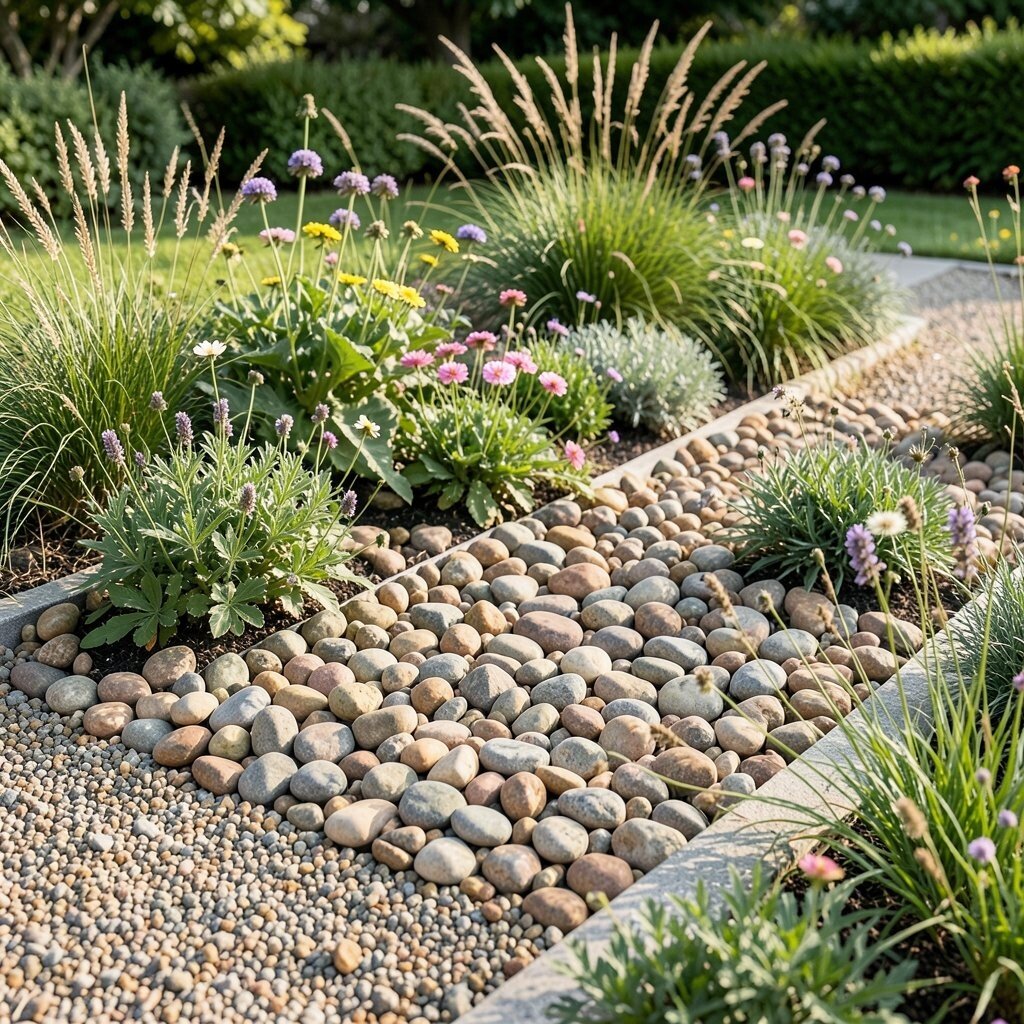
River-rock gravel gives a gentle, natural look that feels calming. Imagine rounded stones in earthy blends, with flowers growing in clusters so the whole bed looks like it belongs in a peaceful landscape.
The rounded texture can be comfortable visually and helps the bed look “collected” rather than built. Gravel also supports drainage, which keeps roots from sitting in water. To personalize, vary the stone colors by grouping them into small patches instead of mixing everything evenly.
For cost considerations, river rocks can be pricier, so you can use them as a top layer only where the eye lands, like the front third of the bed. Underneath, cheaper gravel works well as a base. This look matches a current trend of using natural river textures to soften modern straight lines.
Pair with grasses and airy perennials so the motion of the plants feels in sync with the stone shapes.
16. Gravel Beds With Seasonal Bulb Surprises
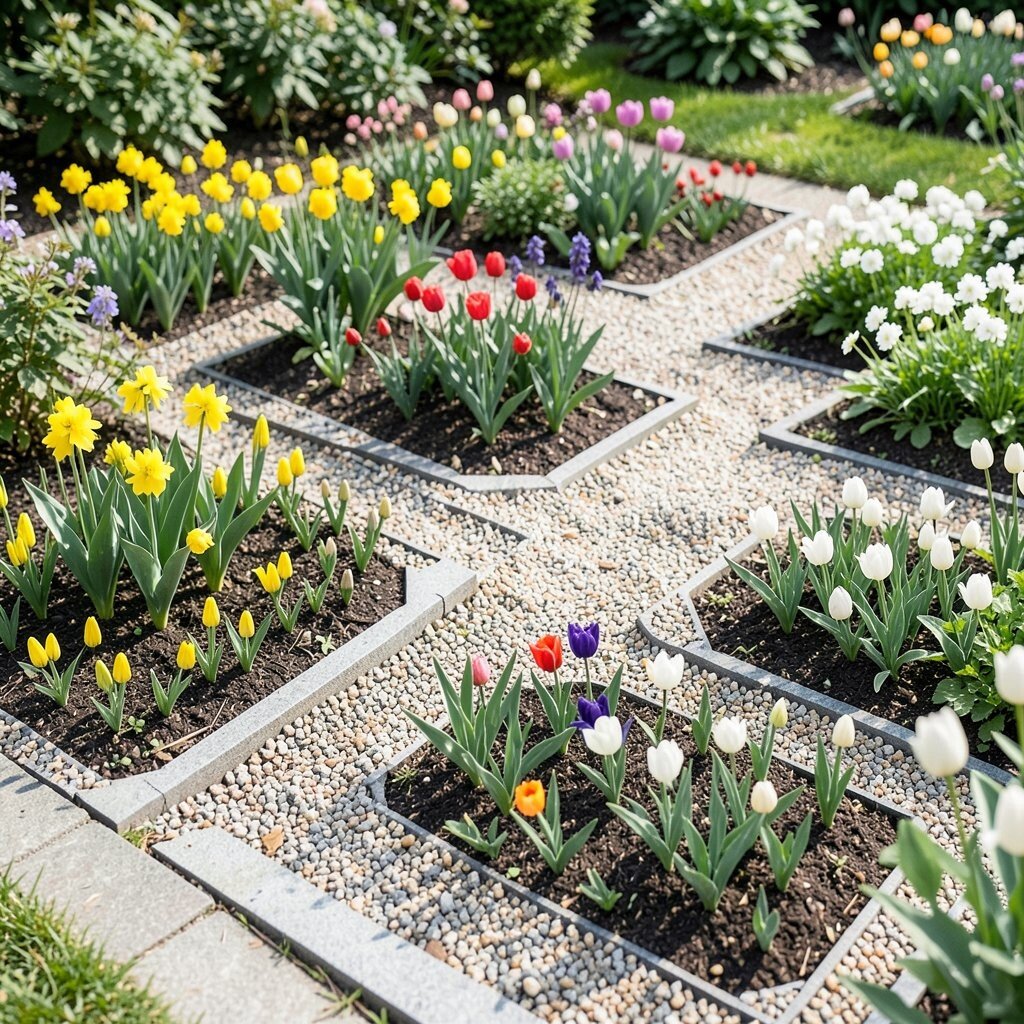
Gravel beds can be a great place for bulbs that surprise you each season. Picture scattered zones of hidden bulbs, with early color popping up through stones like small celebrations.
This design works because bulbs like well-drained soil, and gravel helps the surface stay less soggy. It also gives you a reason to keep the bed looking good year-round, since foliage will appear even after the main bloom time. Plant bulbs at the right depth for your area, then cover with a fine gravel layer so soil stays protected.
For personalization, pick a theme such as early spring yellows or summer white blooms, then repeat the pattern in a few spots for a cohesive look. Cost-wise, bulbs are usually budget-friendly compared to constant replanting, and you can expand gradually over time. A lot of gardeners now mix “set-and-forget” bulbs into low-maintenance beds for reliable color without heavy work.
Rake the gravel gently when you notice stems emerging so the growth stays unobstructed.
17. Minimal Gravel Beds With One Bold Flower Center
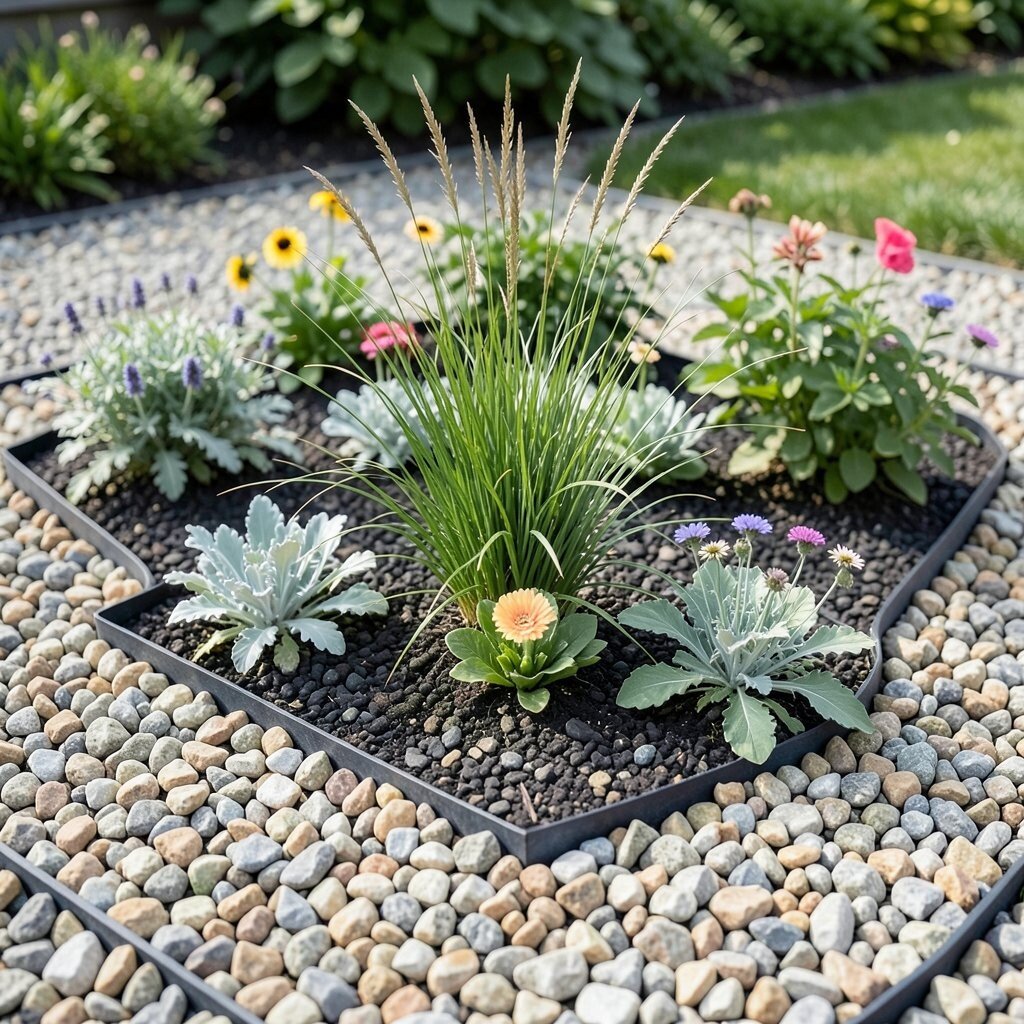
Minimal gravel designs can still feel warm and welcoming. Picture a mostly clear bed of tidy stones, with one bold plant in the center surrounded by a few supporting blooms.
This style is unique because it gives flowers more space to stand out. Gravel keeps the area clean so the bed looks polished, even when flowers are resting between seasons. Choose a strong focal plant, like a tall ornamental grass or a favorite perennial, then let smaller plants soften the edges.
To keep costs down, start with less plant material and add more over time as you learn what thrives in your light. A current trend favors “less, but better,” where design uses negative space to create a calm, modern mood. Personalize by matching gravel color to the foliage tone, such as light stones for silver leaves or darker stones for deep greens.
Water carefully at first, then shift to a simple routine once the plants are established so your care stays easy.