
A clean kitchen can feel like a deep breath. The best part is how simple changes make everything calmer and easier to use.
1. Soft-Close Cabinet Doors

Picture your cabinetry sitting flush, with no loud clacks and no jerky motion. Soft-close doors glide shut with a quiet, satisfying feel, which instantly makes the space feel more polished.
Choose matte or smooth fronts to keep the look calm and uncluttered. If you love organization, pair the hardware with a simple divider system for trays, utensils, and small bowls. For cost, you can start by upgrading only the most-used doors and drawers first, then finish the rest later when your budget allows.
2. Flat-Panel White Cabinets With Warm Undertones
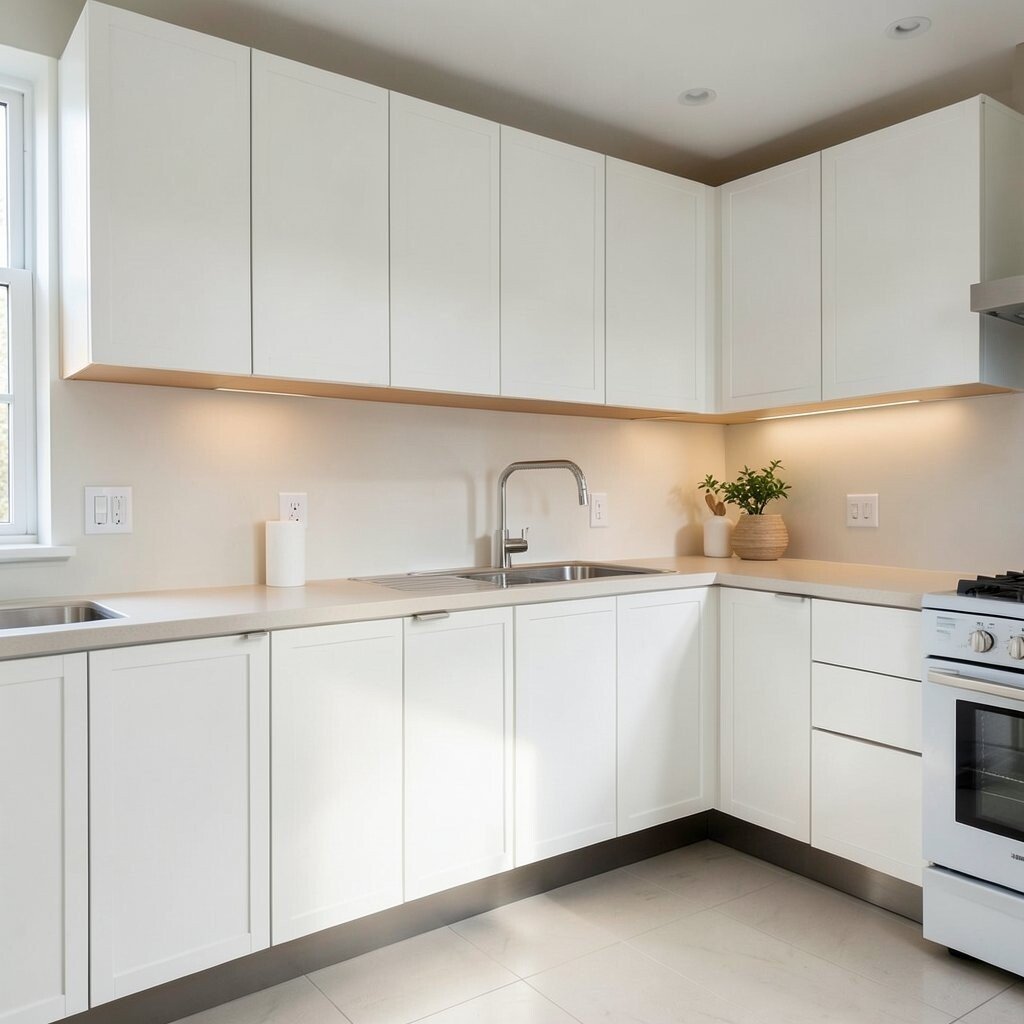
Think of bright cabinets that still feel cozy, not sterile. Flat-panel doors with warm undertones reflect light gently, so the kitchen stays airy even during gloomy days.
Go for a simple finish that hides fingerprints, especially on doors near the sink and stove. Keep the hardware minimal or skip it with a clean, integrated pull design. For personalization, add a slightly darker base trim or a subtle edge shadow so the cabinets look layered without adding visual noise.
When planning materials, compare mid-range solid paint cabinets to higher-end lacquer for how well they hold up to daily cleaning. Trends right now favor smooth, glare-free finishes and light neutrals that make the whole room feel larger. If you want a practical win, choose cabinets with adjustable shelves so you can reconfigure storage as your cooking habits change.
3. Hidden Pantry With Flush Doors

Imagine opening a cabinet that looks like part of the wall and then revealing shelves that keep clutter out of sight. Flush doors make the pantry feel built-in and calm, which helps the kitchen look cleaner every day.
This setup is great when your kitchen collects odds and ends like snack bags, extra plates, and baking supplies. Install pull-out shelves for oils, grains, and cans so labels are easy to see without piling items on the counter. If you want a personalization touch, choose a slightly different internal shelving color to make it easier to find what you need quickly.
For cost considerations, prioritize the pantry area first since it has the biggest visual impact. Current trends lean toward full-height storage and integrated door systems because they reduce the “busy” feeling of open shelving. Measure carefully so the door aligns perfectly with surrounding cabinetry and stays smooth to open.
4. Long, Linear Countertops Without Busy Patterns
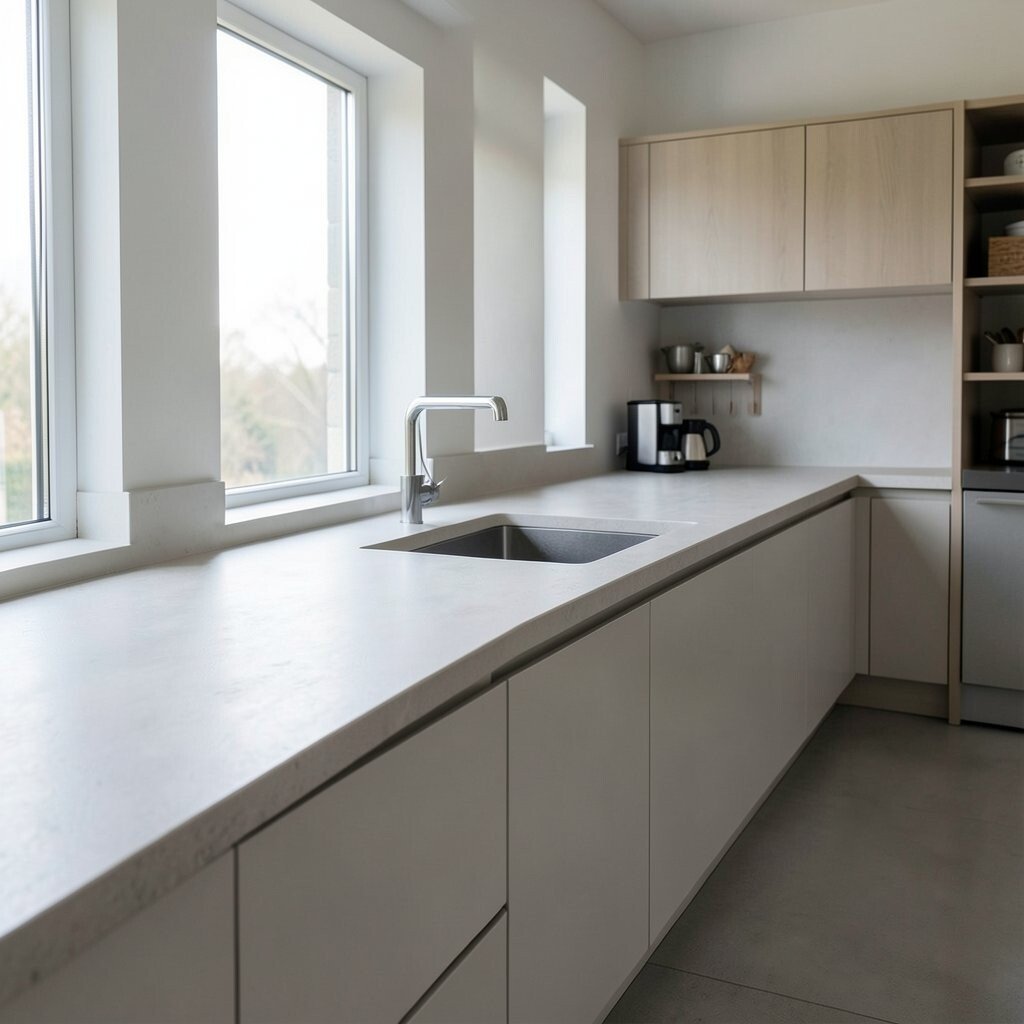
Picture a countertop that looks like a single calm surface from one end of the kitchen to the other. A long, uninterrupted run helps the room feel organized and makes daily mess easier to manage.
Choose a stone or solid surface with subtle movement instead of bold veining. If you like texture, use a finish that feels natural but stays easy to wipe, especially near the sink. For practical storage, keep small appliances off the counter by using shallow drawers for coffee tools and a cabinet zone for everything else.
5. One Bold Backsplash in Matte Finish

See a backsplash that quietly anchors the room, with a surface that doesn’t reflect every light glare. A matte finish softens the look and keeps your kitchen feeling clean and modern.
Pick a backsplash color that complements your cabinet tone and countertop, like gentle greige, soft taupe, or a muted sage. Use simple, straight lines rather than heavy mosaic patterns to avoid visual clutter. For personalization, match the grout color to the tile color so the whole wall reads as one smooth layer.
If you’re thinking about cost, consider a mid-cost tile and focus on neat installation rather than expensive materials. Current trends favor calm surfaces and fewer competing textures, which makes your counters and cabinets look even more intentional.
6. Minimalist Pendant Lighting Over a Clear Island Zone
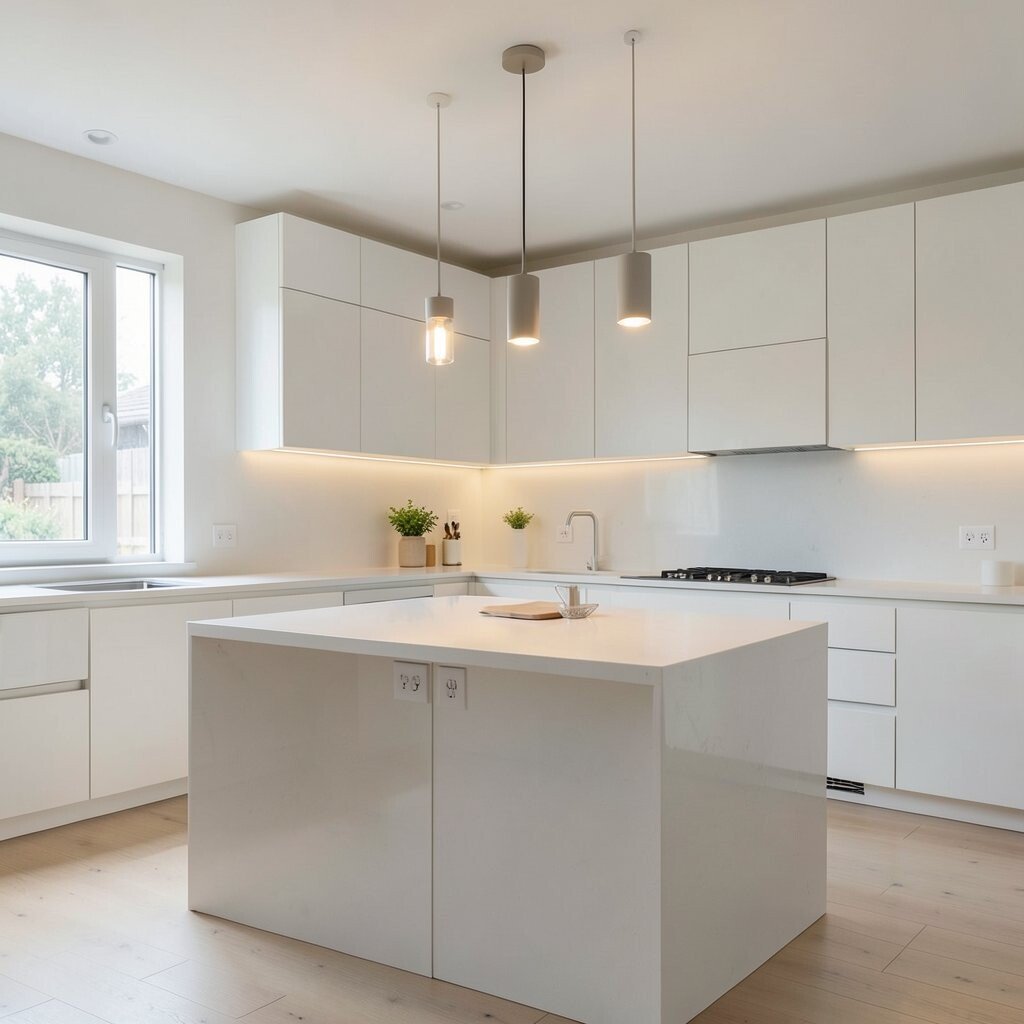
Imagine an island that stays mostly open, with one clean light fixture creating a gentle glow. Pendant lighting adds warmth while keeping the visual focus centered where you work.
Choose simple shapes like cylinders, thin glass, or small matte shades, and hang them at a consistent height. If you have outlets nearby, hide cords so the lighting area looks tidy. For personalization, select a color temperature that matches your cabinets, typically warm white for a cozy feel.
To manage cost, look for quality bulbs and simple fixtures first, then upgrade only if you want a dramatic change later. A minimalist lighting trend right now is choosing fewer fixtures with better design instead of lots of small lights. If you cook often, aim the light so it brightens prep space without creating harsh shadows.
7. Monochrome Palette With Controlled Texture

Picture the kitchen in shades that all belong together, like soft white, warm gray, and light oak. A monochrome palette makes it easier to keep everything visually calm, even when you’re actively cooking.
Limit the number of materials that compete for attention and instead vary texture in small ways. A matte cabinet, a satin faucet, and a lightly textured backsplash can feel rich without looking busy. For a practical tip, keep your dishware and storage containers in similar colors so countertops stay neat.
When thinking about cost, you can get a big effect by repainting or refinishing cabinets before replacing everything. This approach aligns with current trends toward cohesive color stories and fewer contrasting finishes. If you want personalization, add one discreet accent, like a darker frame around a niche or a single warm wood handle detail.
8. Sleek, Low-Profile Faucet With Pull-Down Option

Imagine washing dishes under a faucet that looks simple and stays out of the way. A low-profile design creates clean lines and helps the sink area feel less cluttered.
Choose a finish that matches your hardware, like brushed nickel or matte black, so everything feels coordinated. A pull-down sprayer helps with rinsing while still keeping the overall look minimal. For practicality, look for easy-clean spray heads because hard water buildup can make even a nice faucet look dull.
Cost-wise, a mid-range faucet with good parts often beats a low-cost model that wears out fast. The current trend is pairing minimal silhouettes with smart function, so the faucet stays both stylish and useful. Personalize by selecting a reach that fits your cookware, especially if you use large pots.
9. Decluttered Countertops With Appliance Zones

Picture your counters staying mostly clear, with only a few everyday items ready at hand. When you give appliances a home, the kitchen looks clean right away, even during busy cooking days.
Create an appliance zone in a drawer or a dedicated cabinet spot so mixers, toasters, and blenders don’t crowd the surface. A small pull-out shelf near an outlet can make daily use feel effortless while keeping the countertop calm. For personalization, keep one tray style for display, and store everything else behind closed doors.
In terms of cost, built-in solutions can add expense, but even simple pull-out organizers and well-placed outlets can help a lot. This fits current minimalist trends that focus on function and sightlines instead of empty counters that feel impractical. If you want to start small, begin with one drawer and one appliance zone first, then expand as you refine your routine.
10. Recessed or Track-Free Lighting for Clean Sightlines

Imagine your ceiling staying smooth with no visible clutter, and the light doing all the work. Recessed lighting supports a minimalist look because it keeps lines continuous.
If recessed lights aren’t possible, use slim fixtures with clean trims that sit close to the ceiling. Place lighting so it evenly covers prep areas and the sink, since shadowed spots can make countertops look messier. For practical tips, consider dimmers so you can set the mood for cooking, cleaning, or casual meals.
11. Minimal Cabinet Hardware in Brushed Finishes

Picture cabinet pulls that feel simple in the hand and quiet in appearance. Minimal hardware supports a clean look by reducing contrast and breaking points across the cabinetry.
Choose brushed finishes like brushed brass, satin nickel, or matte black to match other metal elements in the room. Keep the size and spacing consistent so the kitchen feels even and organized. For personalization, you can pick a warm metal tone to complement wood floors or a cooler tone for a crisp, modern vibe.
If you’re budgeting, hardware is a relatively affordable upgrade that can change the whole feel quickly. A current trend is choosing fewer, sleeker pulls rather than mixing multiple styles. Practical tip: buy handles in enough quantity and verify measurements so doors and drawers align perfectly.
12. Open Shelving Only for Display, Not Storage

Imagine a small stretch of open shelves where a few pretty items sit neatly, while everything else stays hidden. Open shelving can feel minimalist if you treat it like a display, not a dumping ground.
Use shelves in a narrow area, then rely on closed cabinets for your daily storage needs. Style the shelves with matching containers or cohesive colors so the shelf looks intentional. For personalization, add a single plant, a stack of plates, or a small set of cups that you actually use often.
To keep costs reasonable, consider using simple wood shelves with a clean bracket design instead of elaborate built-ins. Current trends lean toward mixed storage, where open shelves show character while closed cabinetry keeps the rest calm. A practical tip is to wipe shelves weekly since dust can quickly make open areas feel less clean.
13. Integrated Storage for Trash, Recycling, and Compost

Picture a kitchen where waste bins disappear into a cabinet and never interrupt the visual flow. Integrated storage makes the room look cleaner because the messy part is hidden where it belongs.
Choose pull-out bins sized for your daily routine, including recycling and compost if you use them. Install them near the prep or sink zone so you don’t walk across the kitchen while cooking. For personalization, label the compartments with subtle, clean tags or color-coded inserts.
When thinking about cost, quality runners and proper mounting are worth it because they determine how smoothly the system opens for years. The current trend is designing behind-the-scenes organization that keeps countertops and floors clear. Practical tip: measure the cabinet carefully so the bins fit without blocking doors or shelves.
14. Minimal Window Treatments in Linen or Roman Shades

Imagine soft light coming through and your kitchen staying bright without heavy fabric. Minimal window treatments keep the room feeling light and uncluttered.
Choose linen-blend curtains or simple Roman shades that can roll up neatly when you cook. Stick with neutral colors that match your palette to avoid drawing attention away from the cabinetry. For practicality, select fabrics that can be cleaned easily, since kitchens tend to collect dust and cooking splashes.
15. Calm Color Flooring With Easy-Maintenance Finishes

Picture your floor reading as a steady base, like a quiet stage for everything else. A calm flooring choice helps the kitchen look clean because it doesn’t compete with cabinet lines and countertops.
Consider porcelain tile with a subtle texture or warm-toned vinyl that resists stains and wipes clean. Keep grout color light enough to avoid harsh contrast if you choose tile, since dark contrast can show dirt more quickly. For personalization, add a simple runner only in high-traffic paths so it doesn’t break the minimalist look everywhere.
Cost considerations vary widely, but many homeowners find that durable floors reduce long-term maintenance costs. Current trends favor practical materials that look good in photos and handle everyday life well. Practical tip: choose slip-resistant finishes to stay safe when the kitchen gets wet.
16. One Simple Seating Spot With Clean Lines

Imagine a small breakfast area that feels tidy, even when you aren’t using it. A minimalist seat adds warmth without clutter when the design stays simple.
Choose sleek stools or a bench with a clean frame and a fabric that resists stains. Keep the color consistent with the palette so it looks like part of the plan, not an extra piece. For personalization, add one accent cushion in a quiet pattern that won’t overwhelm the room’s calm vibe.
For cost, you can often get great results by investing in seating quality and using simple, neutral fabrics. A current trend is balancing minimalist design with comfort, so don’t choose something that looks great but feels awkward. Practical tip: keep the seating area clear of extra bags and tools so it stays visually clean.
17. Under-Cabinet Lighting for a Crisp Prep Area

Imagine lighting that makes every cutting board and measuring cup easy to spot. Under-cabinet lights create a clean, bright work zone that helps you keep counters organized.
Use LED strips or puck lights with a warm, even glow to reduce harsh reflections. Pair the lighting with a simple backsplash so the wall looks smooth and cohesive. For practical tips, install switches near entry points and use dimming if you like a gentler evening feel.
18. Keep One Visible Surface Purposeful

Picture your kitchen with a single area that looks intentional, like a tidy tray on one part of the counter. When one surface has a clear purpose, the rest can stay hidden, which makes the whole room feel calmer.
Choose a small tray, a bowl for fruit, or a coffee station with only the essentials you use daily. Store the rest in drawers or cabinets so the visual story stays consistent. For personalization, rotate seasonal items lightly, but keep colors and shapes within your palette so it never turns chaotic.
Cost-wise, this idea is low-cost because it relies on planning rather than major renovations. Current trends emphasize thoughtful styling that still feels livable, so don’t aim for a museum look. Practical tip: set a quick rule for yourself, like clearing that surface at the end of each day, so the minimalist calm stays effortless.