The office can feel dull even when the team is full of energy. A few smart design choices can make everyday work feel brighter and easier.
When the space looks good and works well, people move with more confidence. Small tweaks add up fast, especially when they match how your team actually works.
1. Warm Natural Materials That Invite Comfort
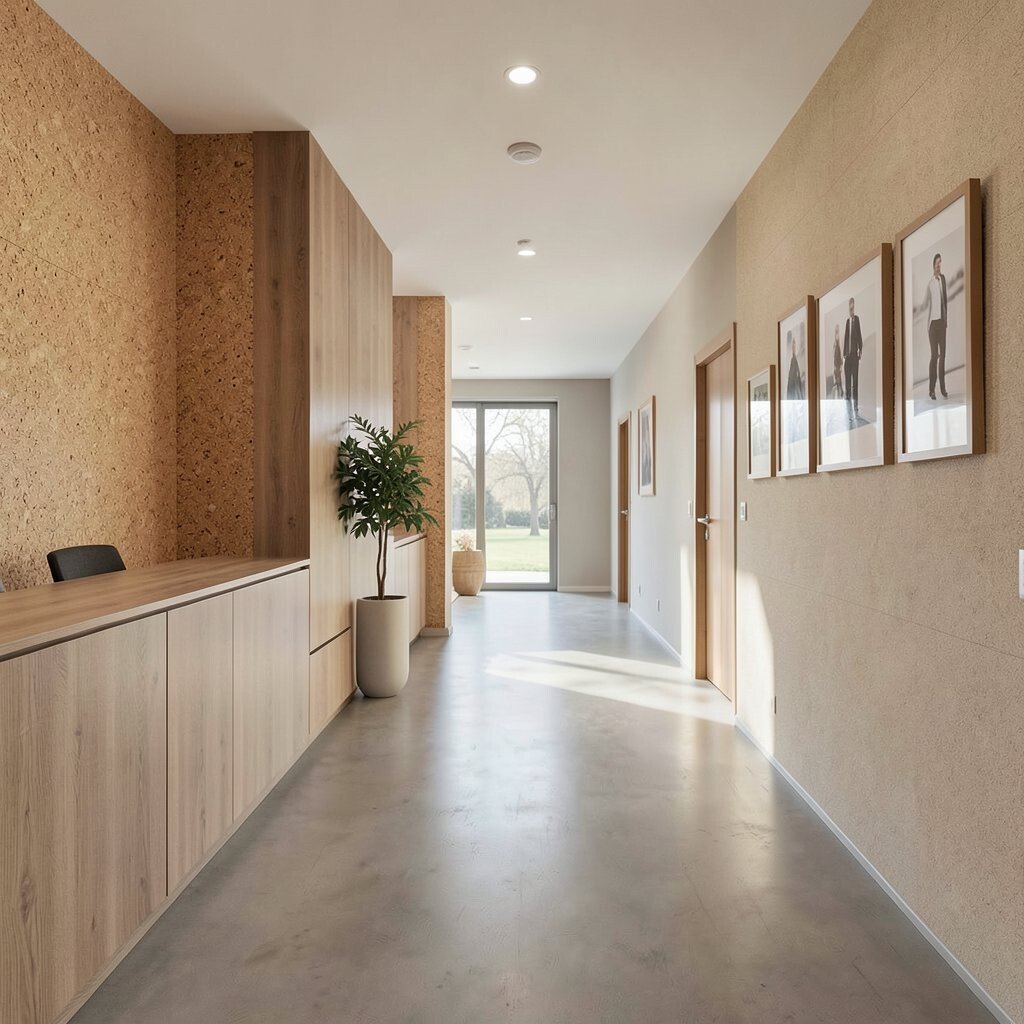
Imagine walking into a space where wood tones and soft textures greet you instead of hard, cold surfaces. Warm materials create an instant sense of calm, and they can make a modern office feel more welcoming.
You can use wood-look laminate, cork panels, or fabric-backed wall sections to add warmth without making the room feel heavy. Natural finishes also help meeting spaces feel less sterile, so conversations stay relaxed. Pair these with matte paint colors like soft greige or gentle warm whites for a clean, current look.
For practicality, choose finishes that are easy to wipe and built for daily wear. If you want a cost-friendly route, start with one area such as a reception wall or the main corridor. Personalize by adding team photos or artwork in simple frames that match the wood tone.
2. Flexible Zoning With Half-Height Screens
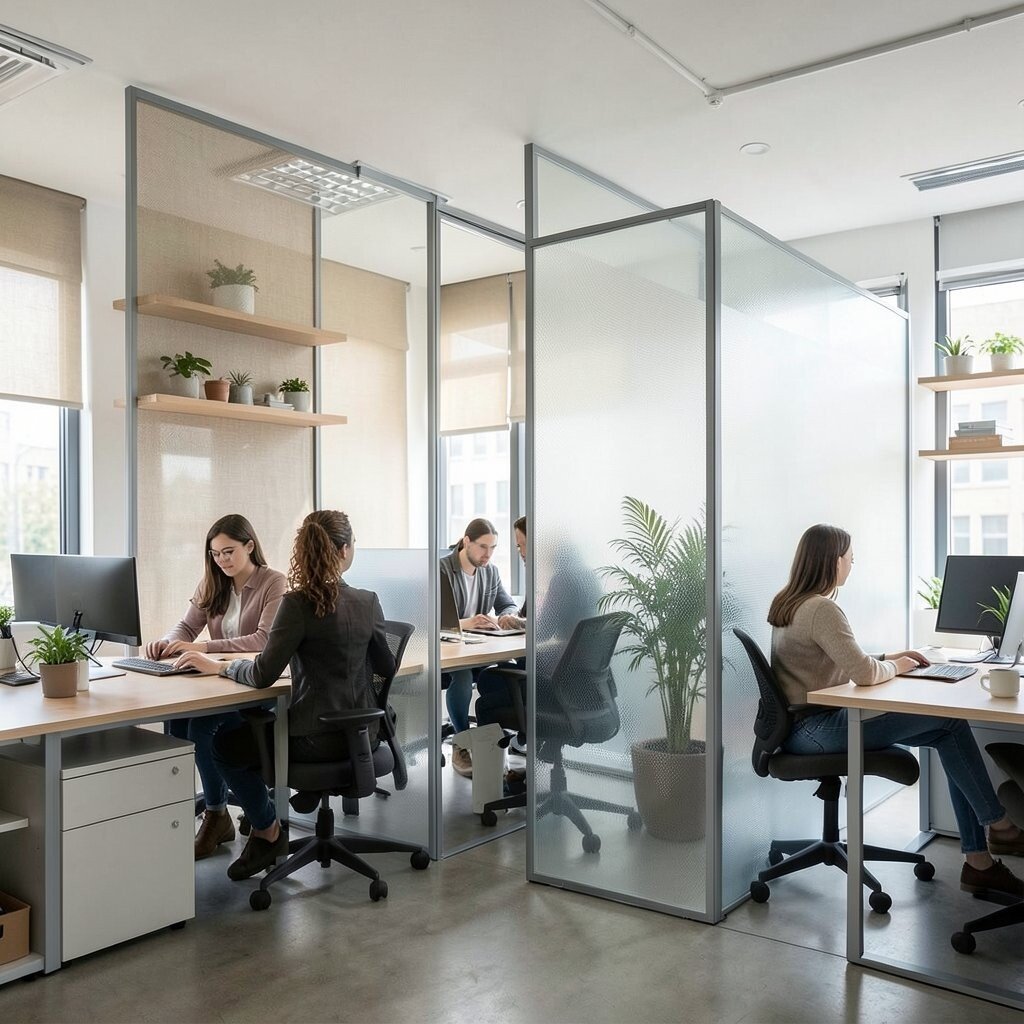
Think of your office as a set of cozy zones rather than one giant room. Half-height screens create visual separation while keeping the space open and airy.
They help people focus in quieter corners, and they also reduce noise bouncing around. When your team shifts between calls and deep work, zoning makes the layout feel natural and organized.
To get practical results, place screens near desks that need privacy, and use taller panels only where it matters most. Materials like linen fabric, frosted acrylic, or perforated metal can add a modern touch while still letting light through. For personalization, use subtle branding colors in panel accents or mount small shelves for plants and everyday items.
3. Bright, Layered Lighting That Works Like Morning Sun
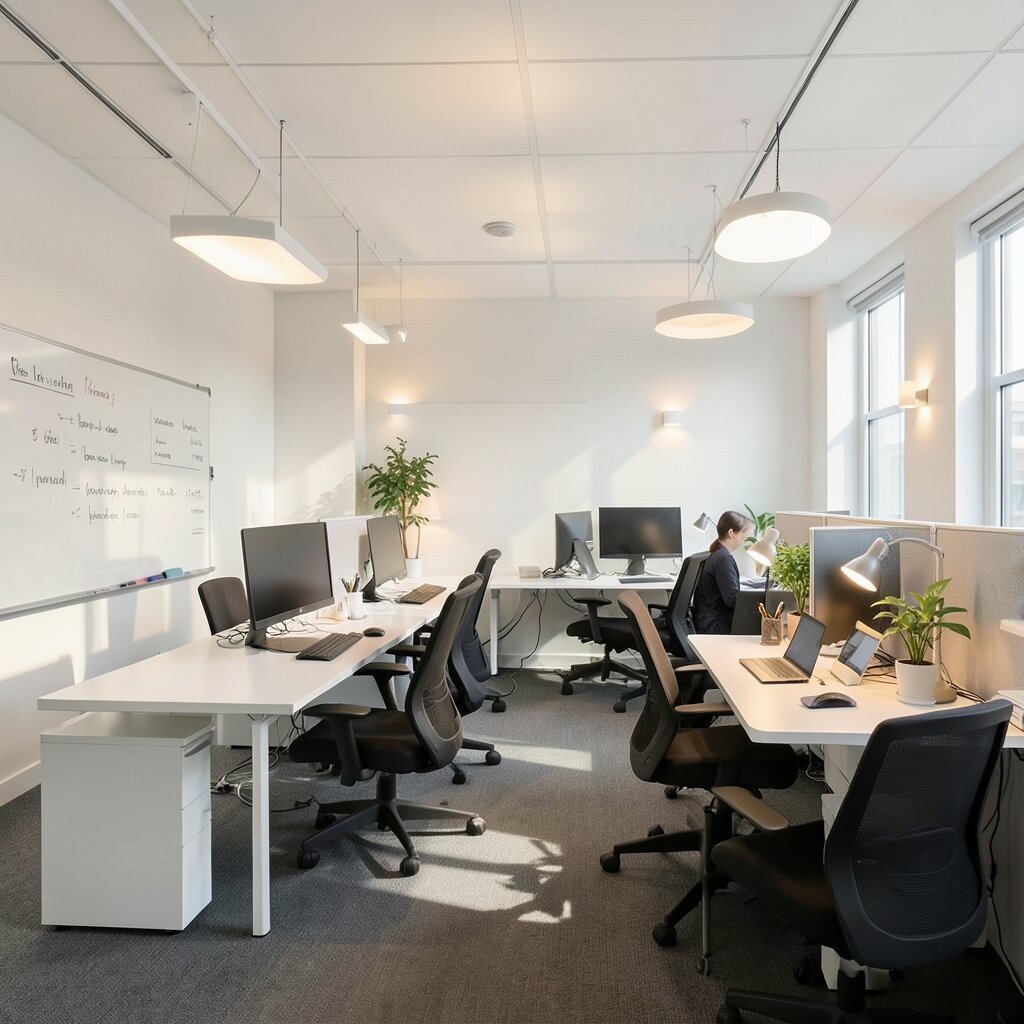
Lighting can change mood more than people expect. When you use layered light, the office feels balanced from morning to late afternoon.
Start with bright overhead fixtures, then add softer lamps and wall lights to fill shadows. This approach makes whiteboards easier to read and reduces eye strain during long tasks. Warm and neutral color temperatures also help the whole space feel more inviting.
For cost considerations, you can often keep existing fixtures and update bulbs first. Choose dimmable options so you can adjust light during meetings or presentations. Personalize by placing desk lamps in shared work areas and by using removable light covers that match your interior style.
Also pay attention to glare from monitors and glossy surfaces. Matte finishes on countertops and subtle diffusers for lights can keep everything comfortable. A well-lit office supports productivity while making the design look instantly more modern.
4. Statement Reception With Clear Wayfinding
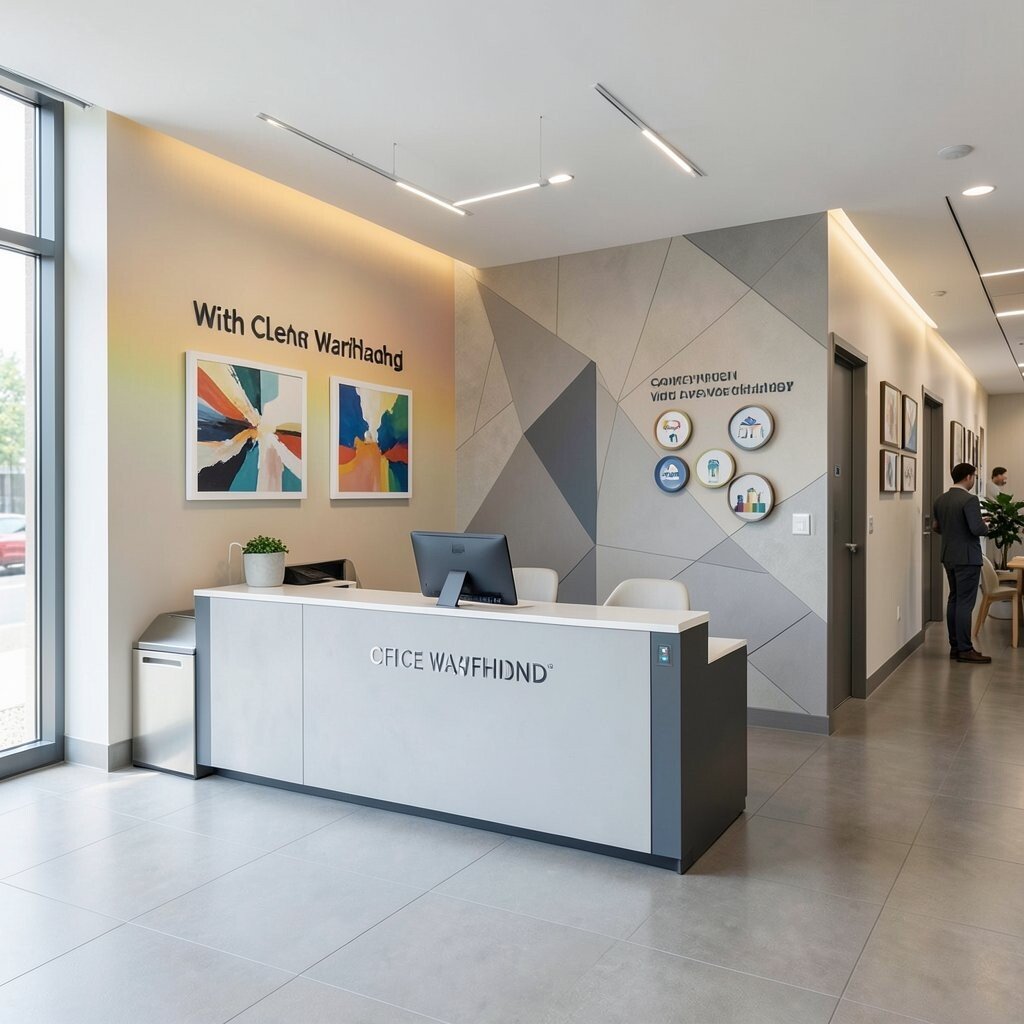
Your reception area sets the tone for everyone who walks in. A modern front desk can look bold and still feel welcoming, especially when it includes clear wayfinding.
Use a clean desk design with a back wall that guides visitors toward meeting rooms, restrooms, or the main work area. Large signage in simple fonts, plus a few thoughtful icons, makes navigation effortless. Consider adding a feature wall with a gradient paint, geometric paneling, or a soft neutral texture for a fresh look.
To keep costs reasonable, focus on one hero wall and update the desk hardware or lighting instead of replacing everything. Add practical elements like a small mail station and a charging spot for visitors. Personalize the space with rotating art, seasonal colors, or a company values wall that feels human rather than corporate.
5. Ergonomic Seating With Real-World Style
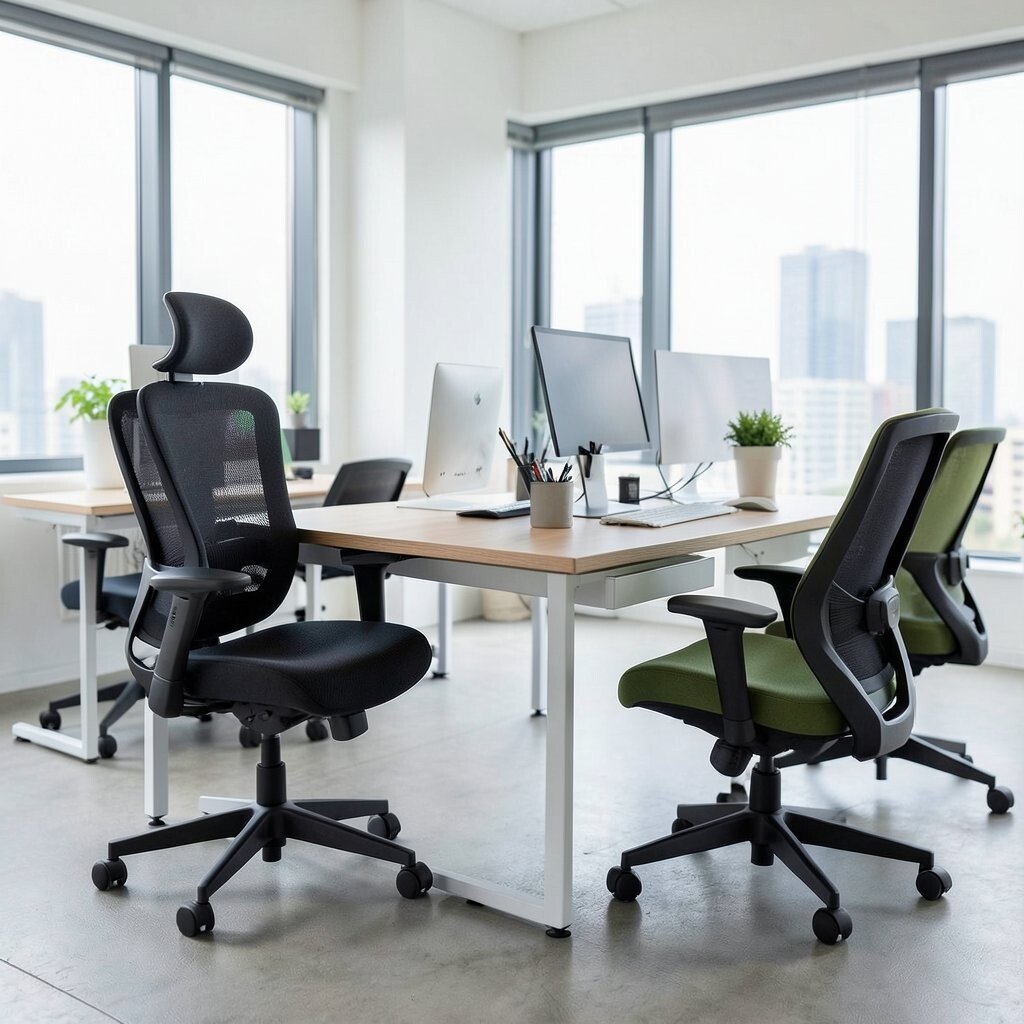
Modern office design should look good, but it must also feel good. Ergonomic chairs and supportive desks help people work comfortably and can reduce everyday fatigue.
Choose seating with adjustable height, lumbar support, and breathable fabric so comfort stays consistent across long days. A cohesive look matters too, so pick a color palette that matches the rest of the office. Many companies now mix performance materials with clean lines, creating a modern vibe without sacrificing function.
For practical tips, let employees test chairs before buying in bulk. If budget is tight, upgrade the most-used workstations first, then expand seating options over time. Personalize by adding simple accessories like footrests, desk organizers, or color-matched seat cushions where allowed.
6. Acoustic Panels That Look Like Art
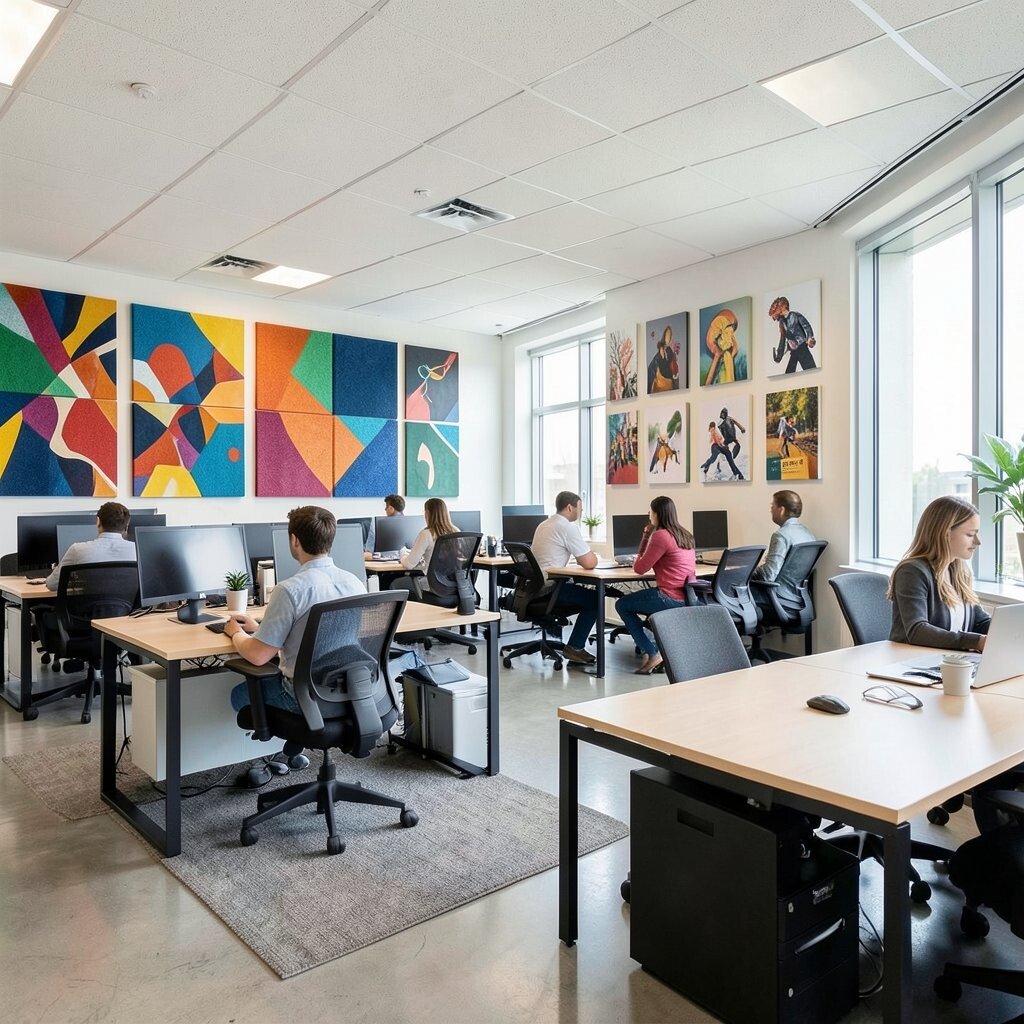
Open offices often sound chaotic, and that can drain focus. Acoustic panels bring quiet back, and they can also act like stylish wall art.
Choose panels in colors that fit your brand, or use abstract patterns that make the walls feel lively. This design move helps conversations stay clearer in meeting rooms while reducing echoes in hallways. When sound is under control, people feel more relaxed and more productive.
To keep it practical, place panels where sound usually bounces, like behind seating clusters and near communal tables. Many panels are modular, so you can start small and expand. For personalization, rotate artwork prints on panels or add small team-made graphics that match current events.
7. Touch-Friendly Tech Stations Everywhere People Need Them
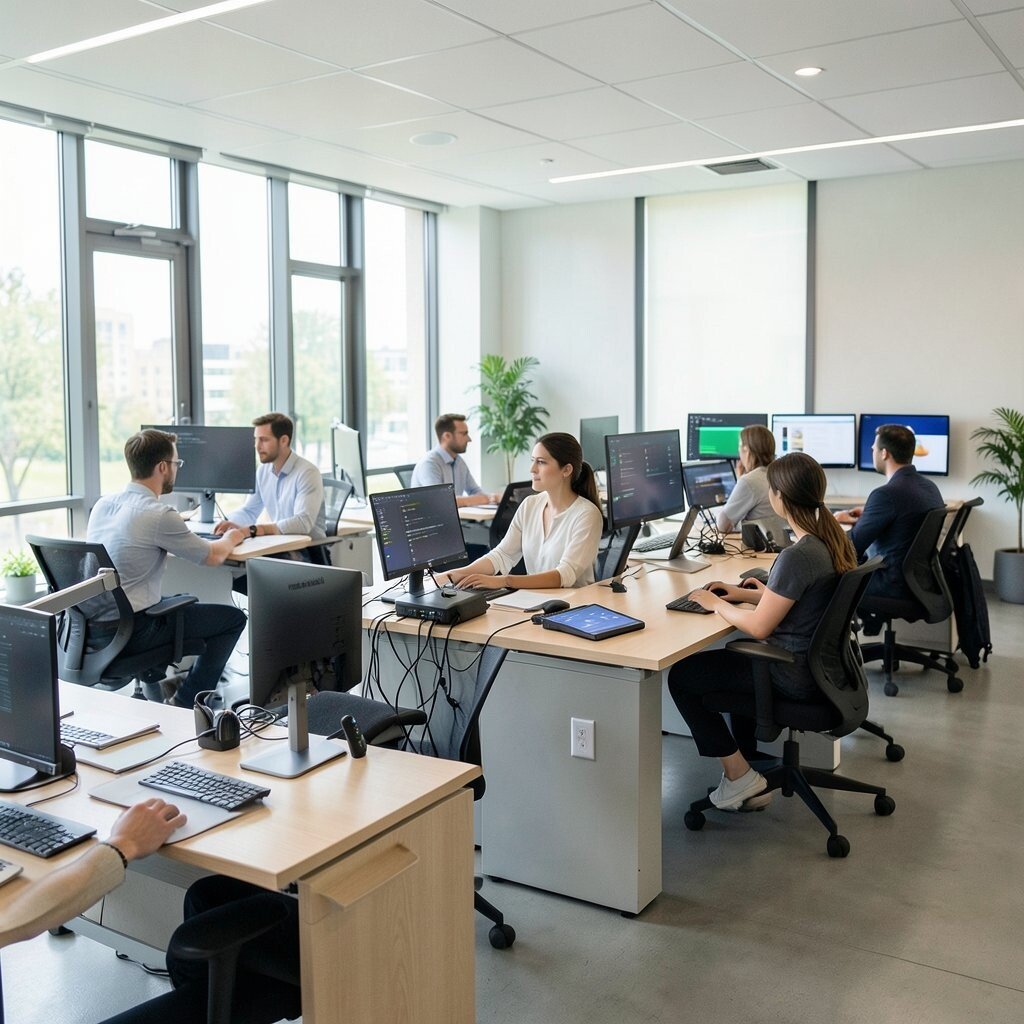
A modern office should make it easy to work, present, and collaborate. Tech stations placed in the right spots reduce interruptions and keep meetings moving.
Install shared charging docks, wireless screen-sharing hubs, and simple display screens near common areas. These tools help teams meet with fewer cables and less hassle, which feels smoother for everyone. When your tech is easy to use, people spend less time fixing problems and more time doing real work.
For current trends, many offices now use cable-managed desk systems and monitor arms to keep spaces tidy. Consider adding a compact “ready area” for quick standups, with a power outlet and a screen view. Cost-wise, start with the most-used zones like the meeting room entrance and one collaboration nook, then grow based on real usage.
8. Biophilic Design With Plants That Fit the Space
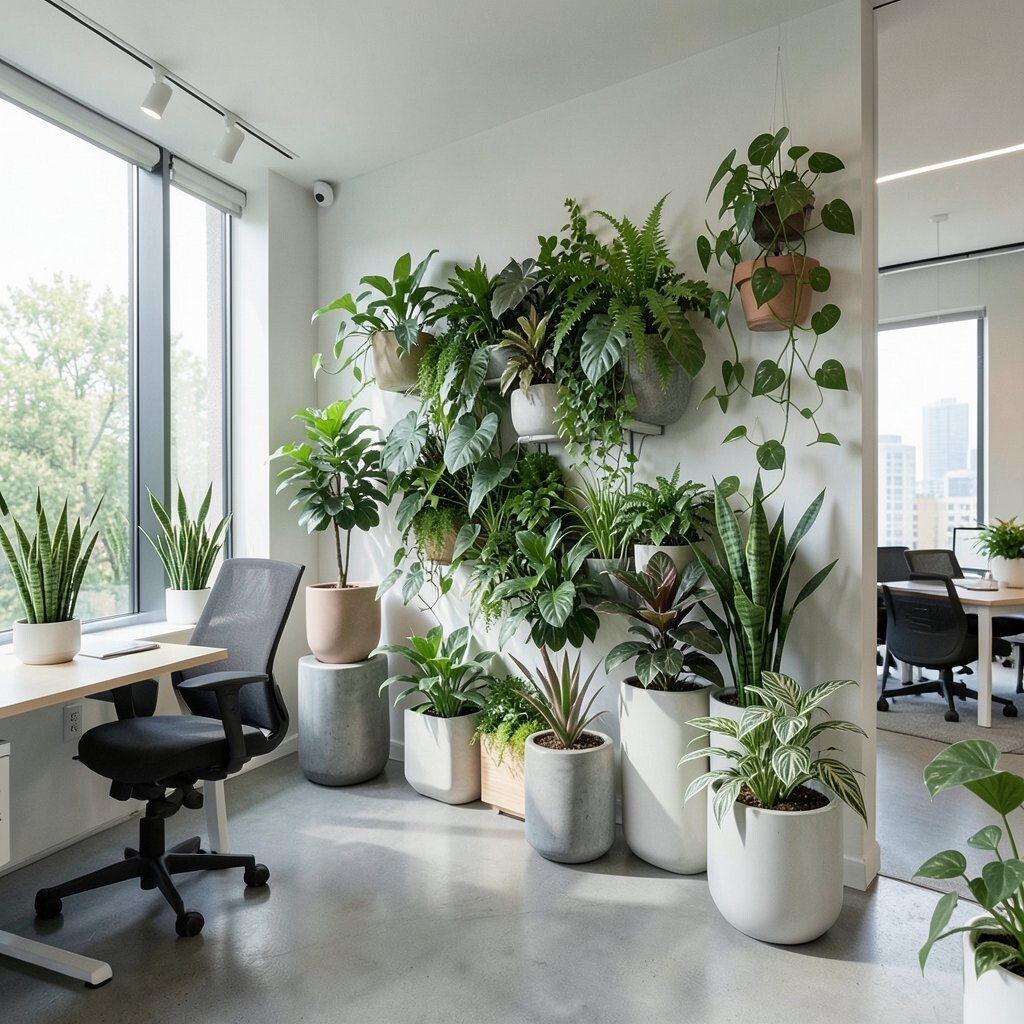
Plants can make an office feel alive without making it messy. A biophilic design approach adds color, texture, and a calmer mood to busy days.
Choose low-maintenance options like snake plants, ZZ plants, or pothos for easy care. Place them near windows for natural light, and use planters with good drainage to protect floors. Plants also soften harsh lines and add a fresh, modern contrast to sleek furniture.
For practicality, think about watering schedules and whether your team will manage care. A plant wall or grouped planter stand can create a strong visual feature without spreading maintenance across everyone. Personalize by letting each team choose a plant variety for their zone, creating a sense of ownership.
9. Color-Managed Walls That Match How Teams Feel
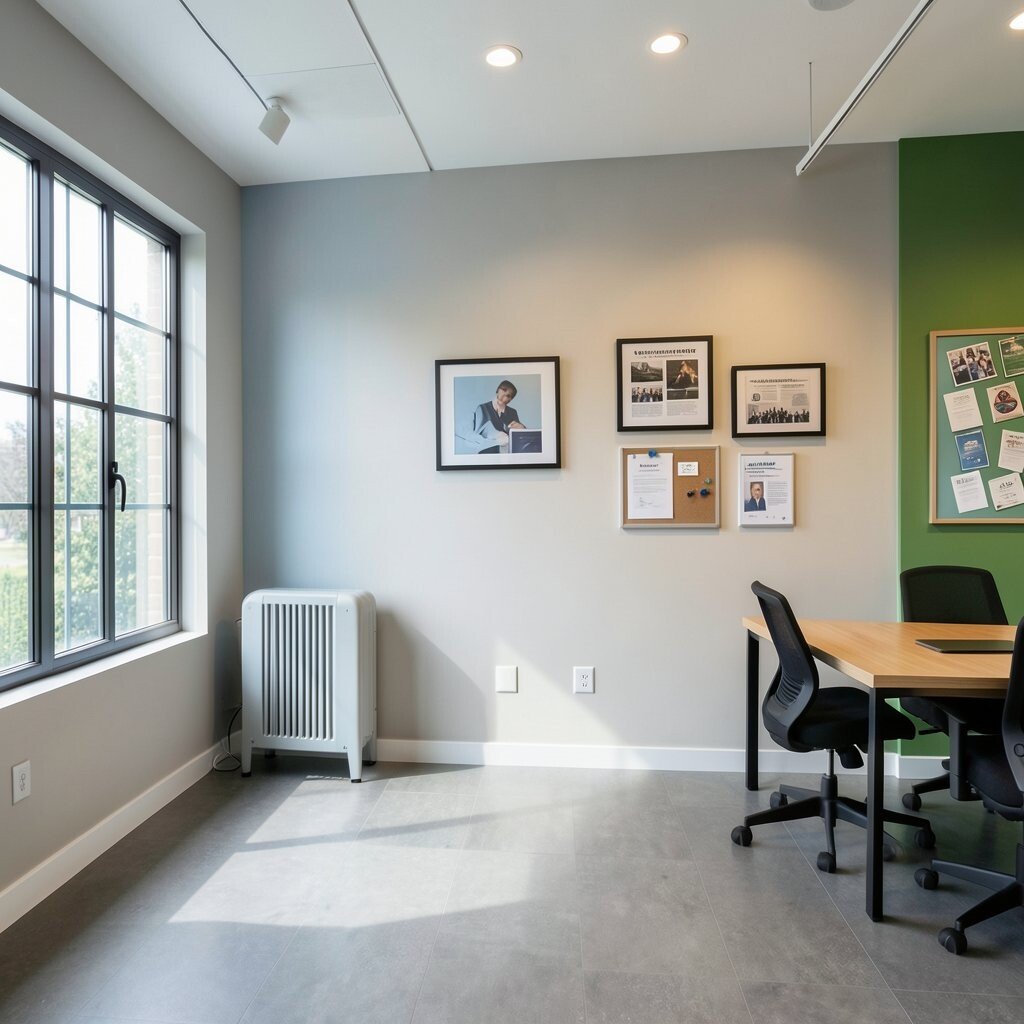
Color changes how a room feels, even when the layout stays the same. The best offices use color in a thoughtful way, not just a loud way.
Use mostly neutral walls, then add accent colors in smaller areas like meeting rooms, collaboration corners, or feature panels. Soft blues can feel calm for focused work, while warm greens can add balance and freshness. Modern offices often rely on matte paint and subtle textures for a clean, not flashy, look.
To keep things practical, test paint samples on the wall and observe them at different times of day. Consider the brightness of your light fixtures because color can shift under warm or cool lighting. Personalize with removable wall art, magnetic boards, or framed team wins that match the accent palette.
10. Transparent Meeting Rooms That Keep Light Moving
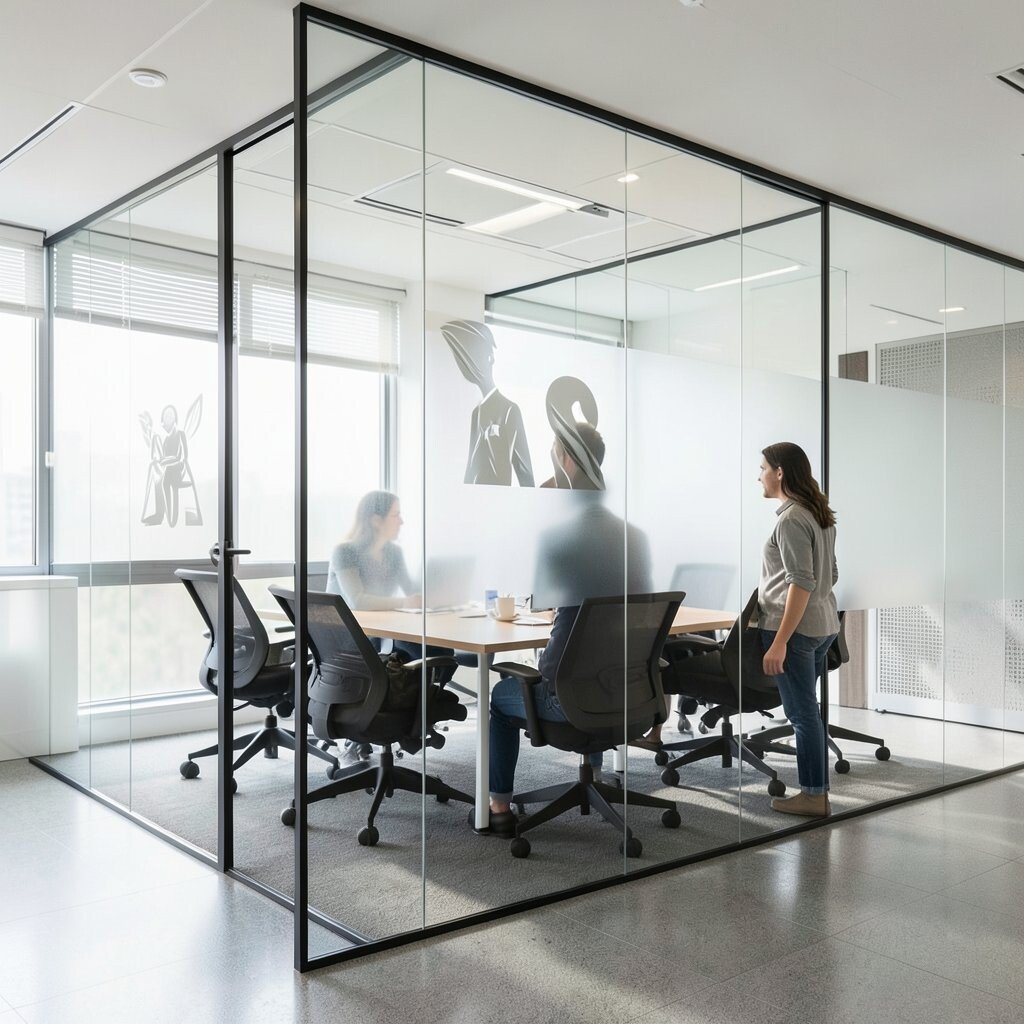
Meeting rooms can feel heavy when they are too enclosed. Glass or transparent panels help light move through the space, making everything feel more open and modern.
You can use frosted glass for privacy while still keeping a sense of openness. This helps people feel connected, and it makes hallways look brighter. Transparent meeting rooms also make the office easier to navigate at a glance.
For practical tips, choose acoustic glass or add sound-rated panels if your team needs quiet conversations. Use blinds or switchable privacy films if you want flexibility for different meeting types. Cost considerations vary, but you can often start by upgrading just one key room that hosts interviews or client calls.
Personalize by adding a simple logo decal on the glass or by using seasonal tint patterns that match office events.
11. Built-In Storage That Keeps Surfaces Calm
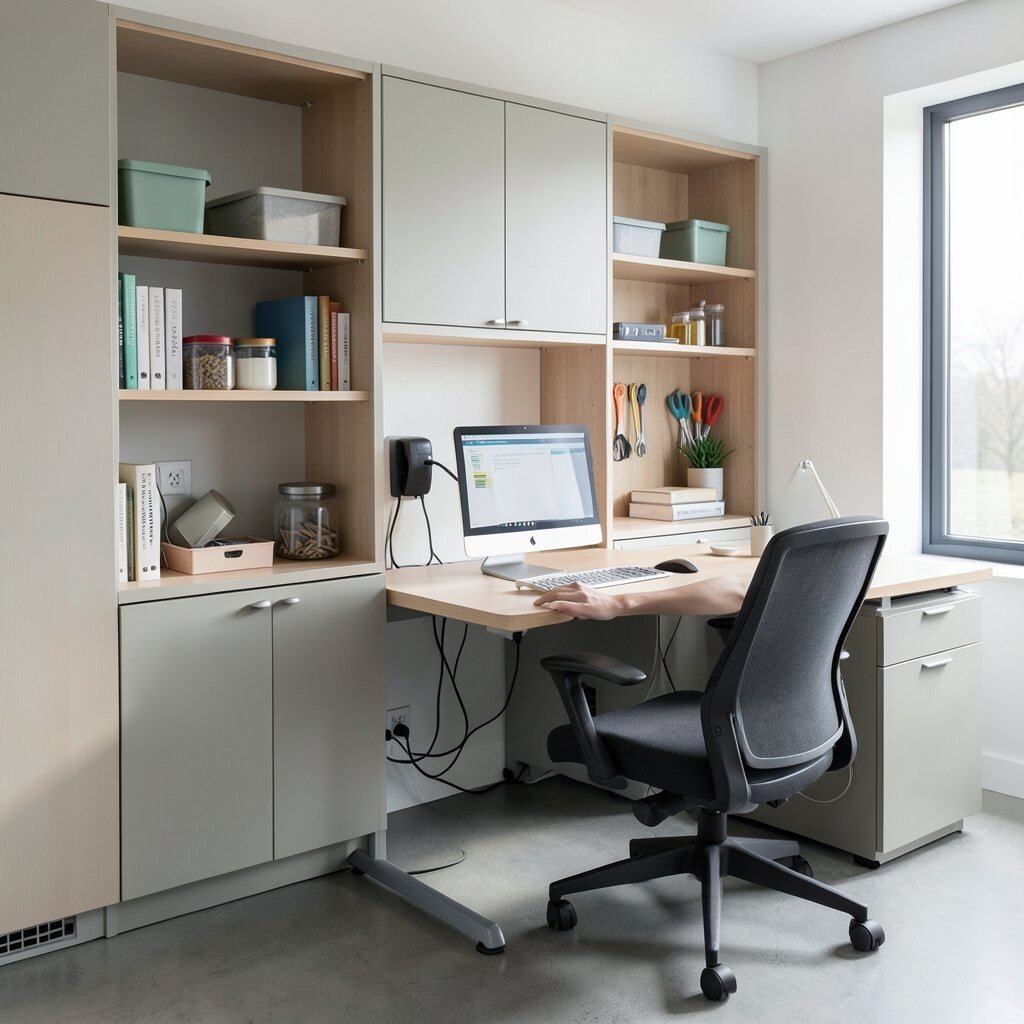
Clutter can make even a beautiful space feel messy. Built-in storage creates clean lines and keeps daily items from spreading across desks.
Think of storage as part of the design, not an afterthought. Closed cabinets for supplies, open shelves for curated items, and concealed charging areas for devices can all work together. When storage matches furniture finishes, the office looks intentional and modern.
For cost considerations, consider adding storage where it matters most, like common document areas and the busiest desk zones. Custom built-ins can be great, but modular systems also provide flexibility without heavy spending. Personalize by using shelf styling rules such as keeping containers identical or using one or two accent colors for accessories.
Practical organization also means planning for cables, chargers, and spare tools so employees don’t improvise. A tidy office supports focus, and the space will look refreshed longer between updates.
12. Curved Furniture and Soft Edges for a Friendly Flow
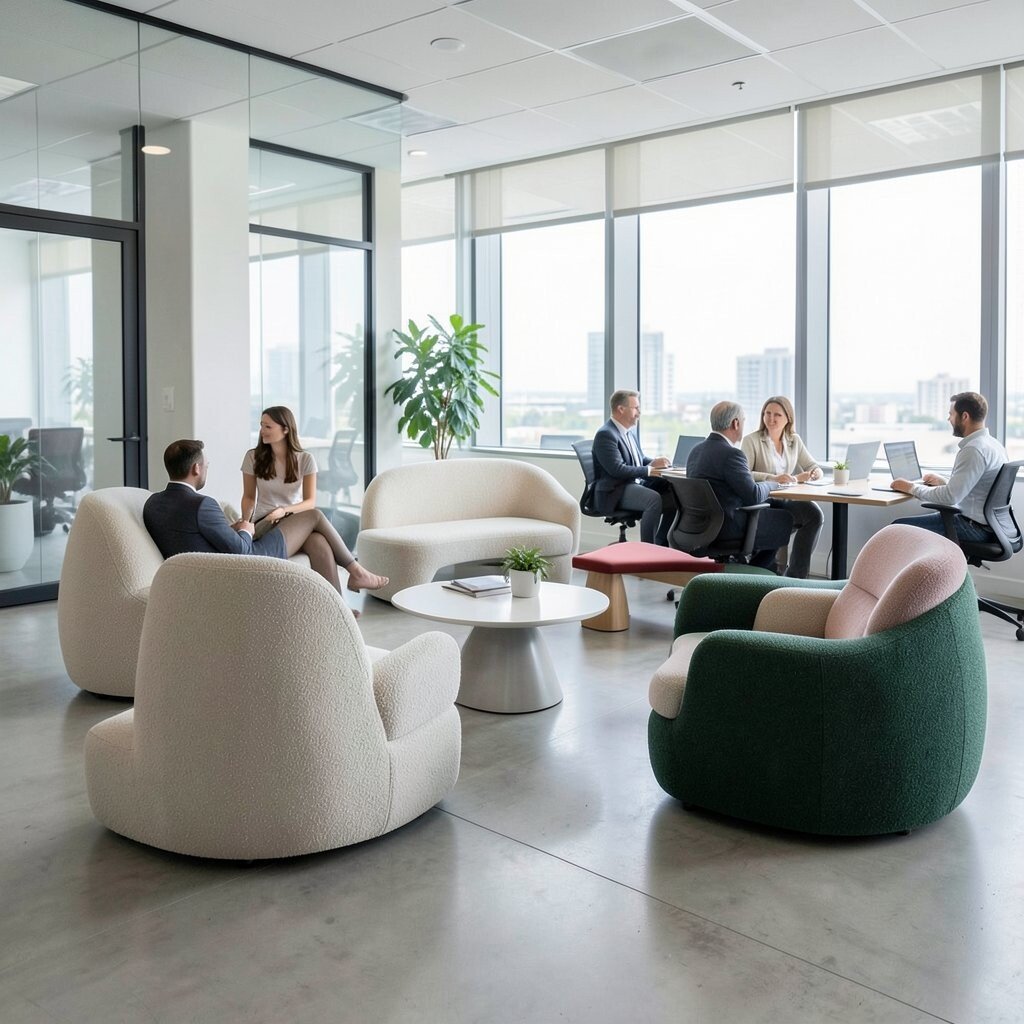
Sharp corners can make workplaces feel tense, even if everyone is friendly. Curved furniture and soft edges bring a smoother flow that feels more human.
Look for rounded lounge chairs, curved bench seating, or oval tables in collaboration areas. These shapes guide movement without forcing people into rigid paths. Soft profiles also reduce visual harshness, which helps the office feel modern and welcoming.
For practical tips, use curved pieces in high-traffic zones or around meeting areas where people gather often. Make sure the seating size still supports the tasks you do, like quick brainstorming or small group work. Personalize with fabric choices such as boucle, performance knit, or textured upholstery that matches your overall color palette.
13. Customizable Wall Systems for Teams to Keep Up With Change
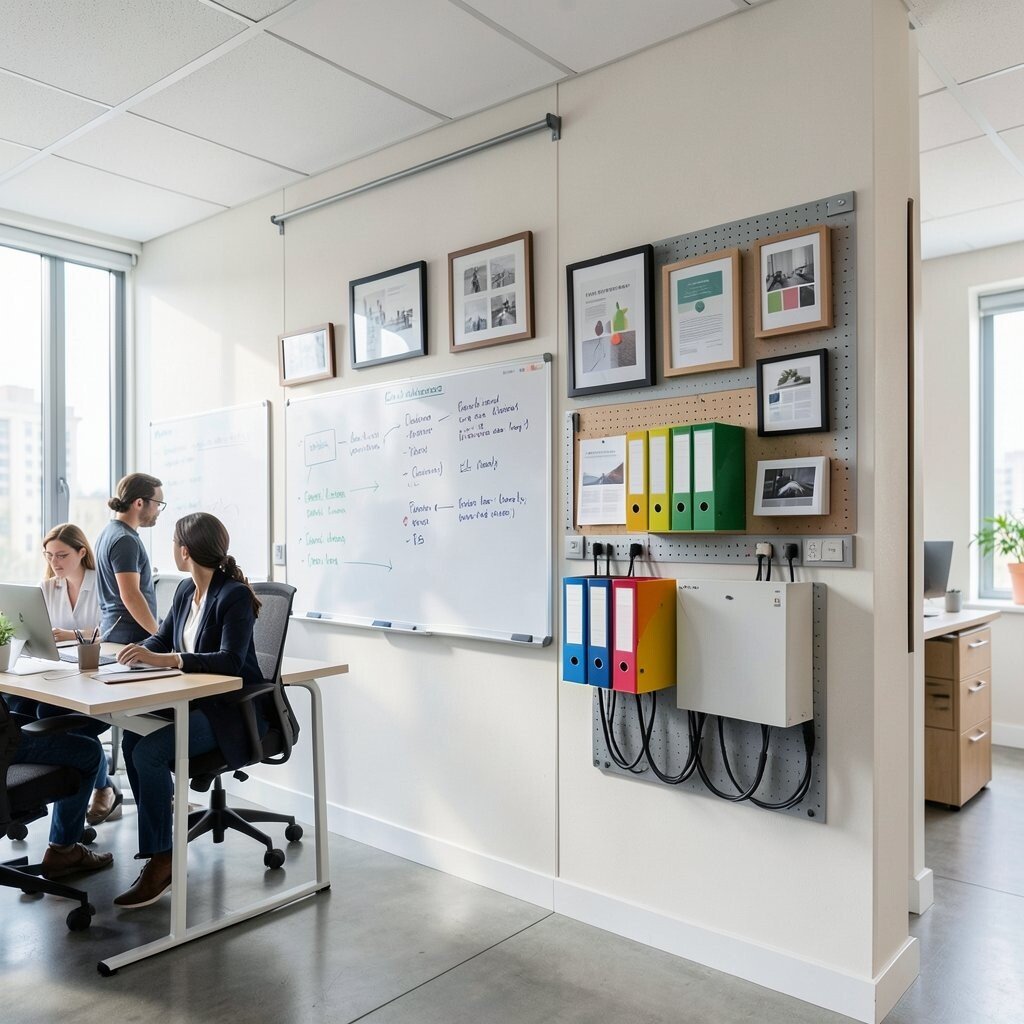
Teams grow, projects shift, and office needs evolve. A customizable wall system lets your space update without starting from scratch.
Consider modular rails, magnetic surfaces, and reconfigurable panels that support whiteboards, pinned displays, and mobile storage. This keeps the office flexible for planning sessions and quick updates, and it supports modern workflows. When the wall can change with your team, the office stays relevant instead of stuck in old layouts.
For cost considerations, start with a single wall that teams use daily, then add modules gradually. Choose durable finishes that handle frequent board writing and cleaning. Personalize by letting departments bring their own style through framed visuals, color-coded folders, and rotating project boards.
Also plan cable management near wall tech so devices connect cleanly. With a well-designed system, the office feels fresh every time your team reorganizes.