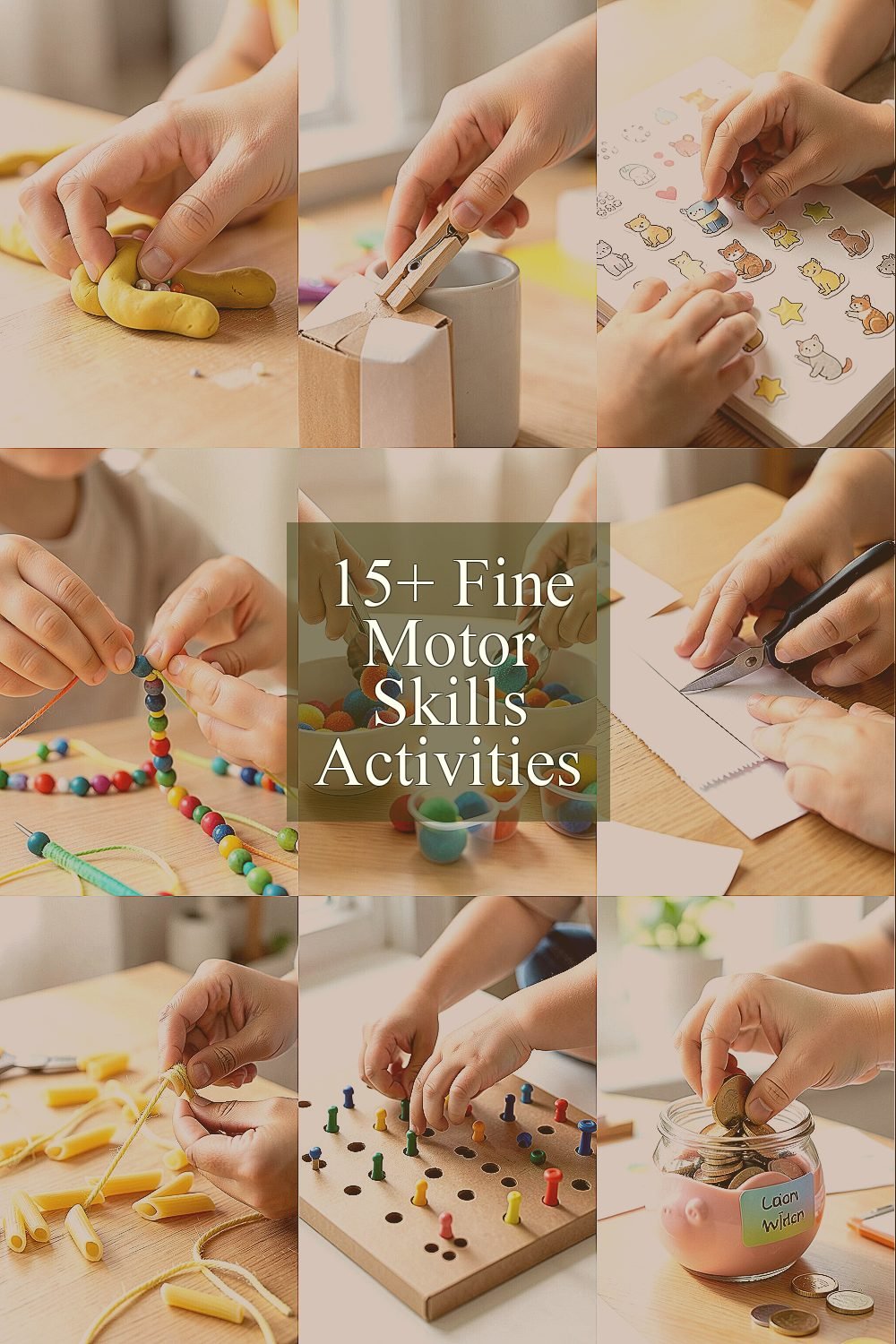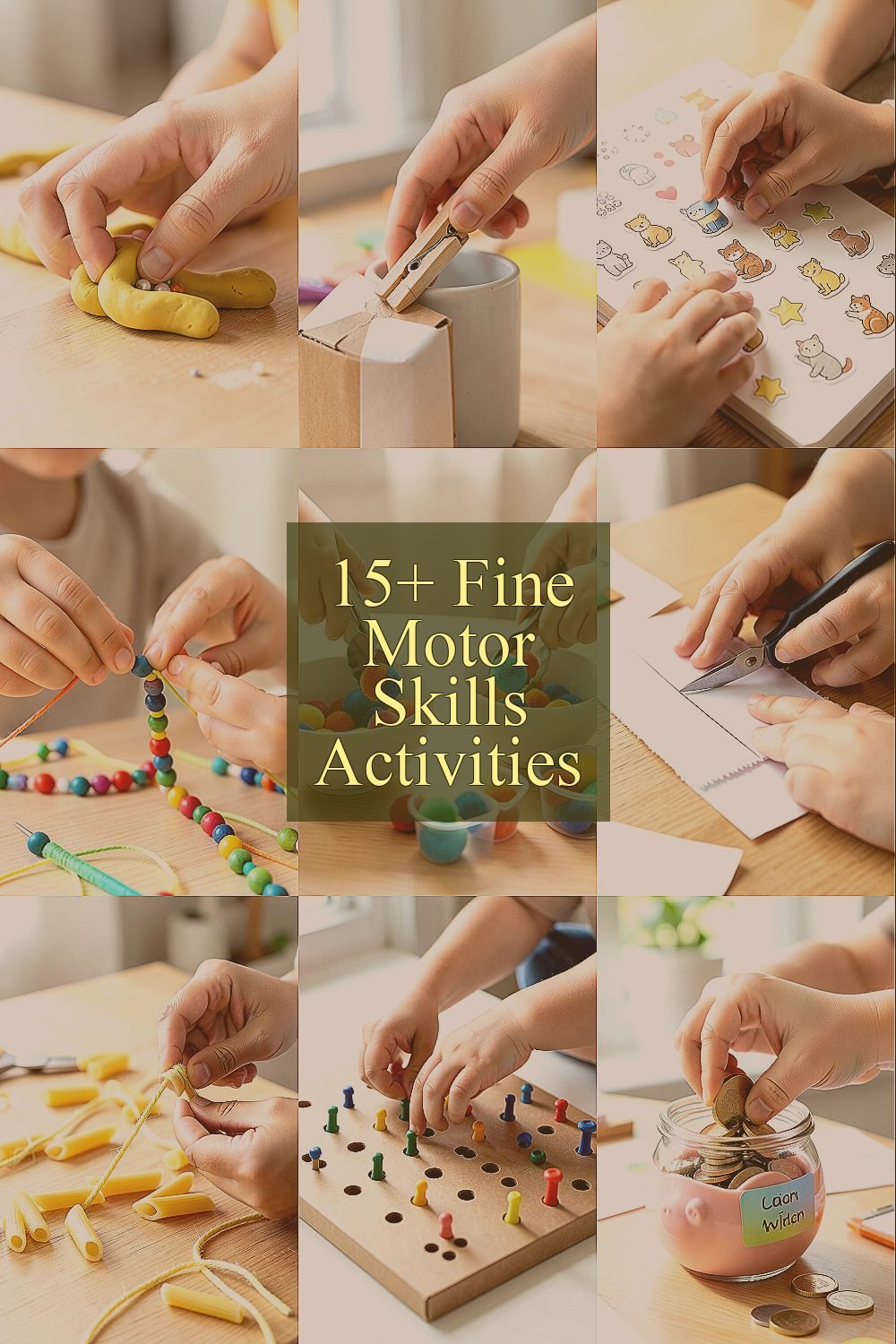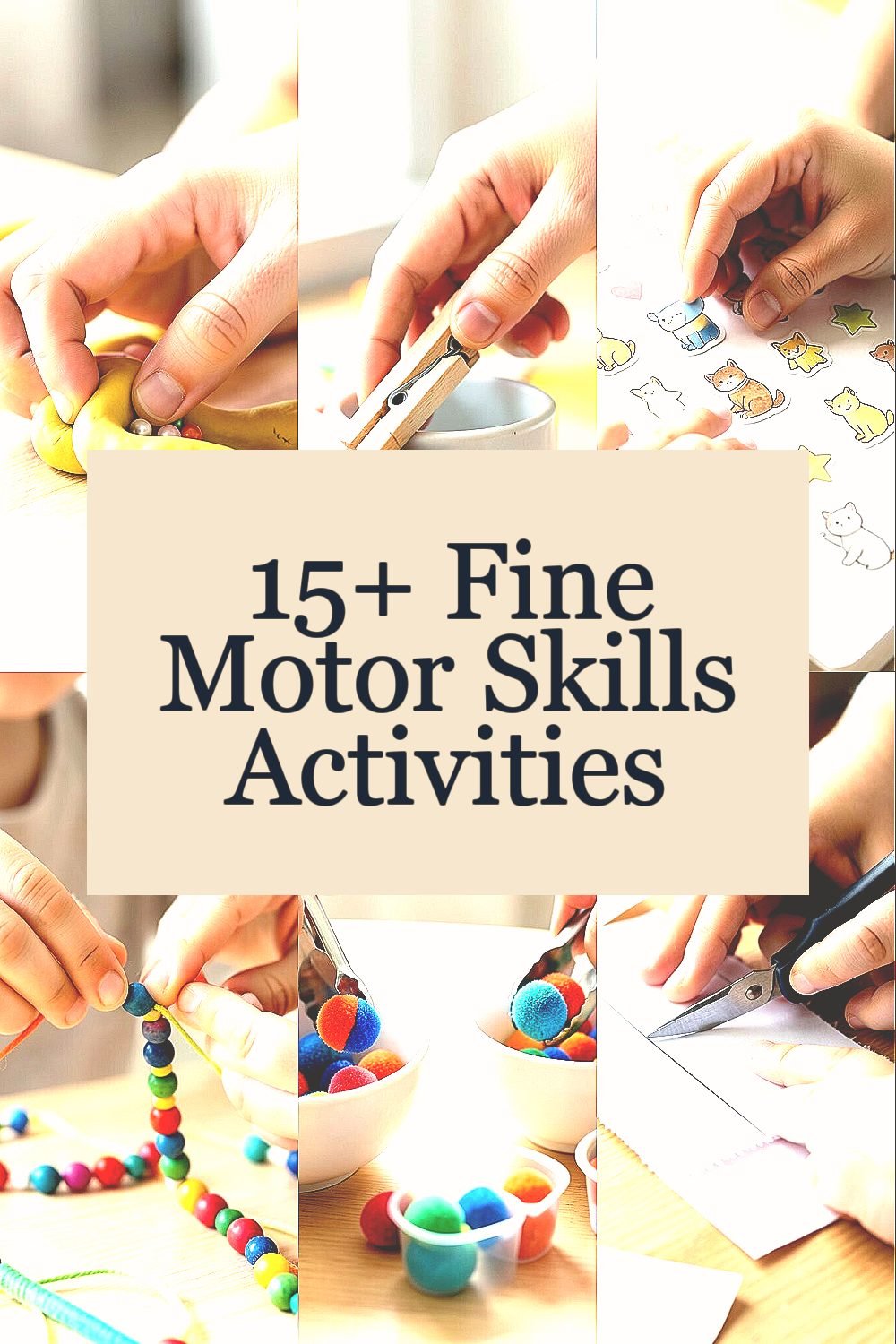
Fine motor skills help hands, fingers, and eyes work well together. These simple activities can fit into daily life and help kids and adults build better control.
1. Playdough Pinch And Roll

Playdough is soft, bright, and easy to shape, so it is a good first choice for hand practice. You can pinch it, roll it into small balls, or make long snake shapes with your fingers.
This activity helps hand strength, finger control, and hand-eye use. It is also low cost, since store-bought dough is cheap and homemade dough costs even less.
You can make it more fun by hiding small beads or toy pieces inside for a search game. Many families like it because it feels calm and gives kids a chance to make their own shapes.
2. Clothespin Pick-Up
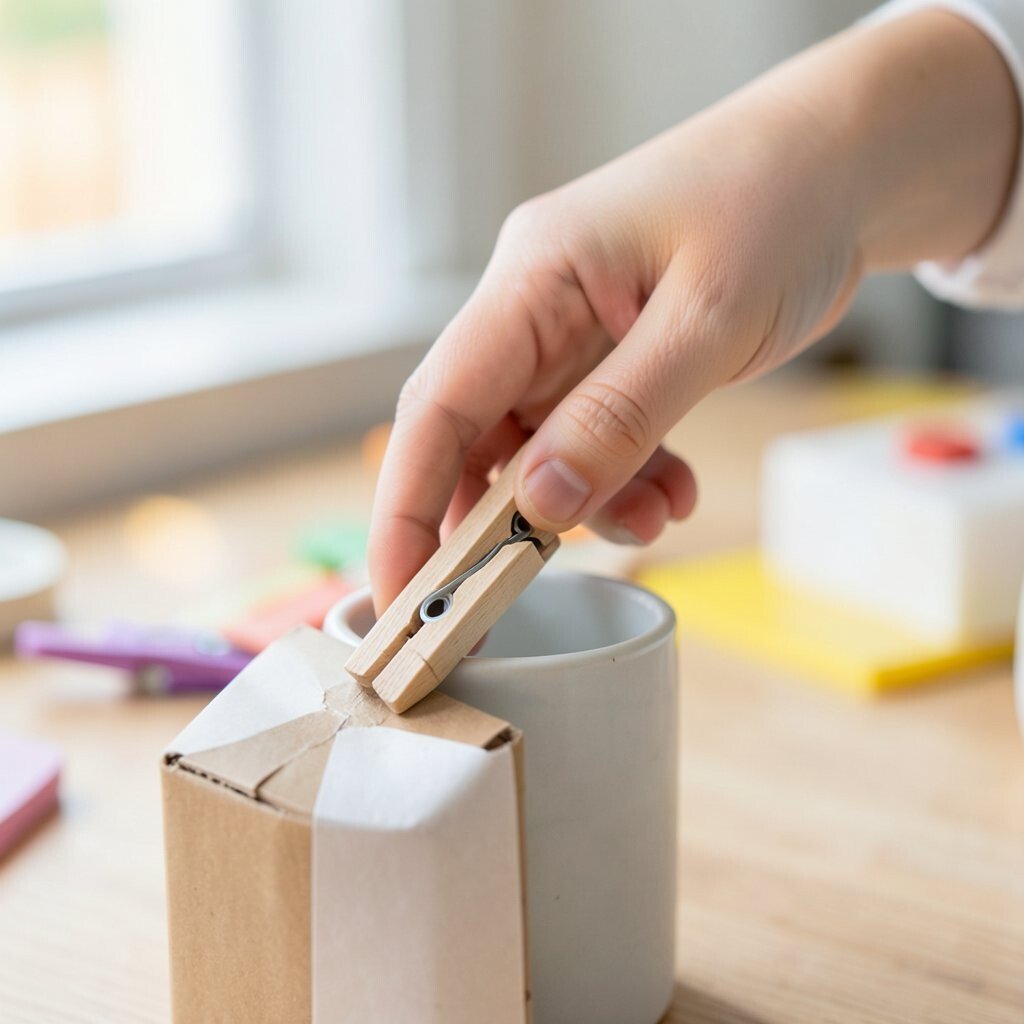
Clothespins are small, simple, and easy to hold, which makes them useful for finger practice. Kids can squeeze them open and place them on a cup edge, a box, or a paper strip.
This builds the small muscles in the fingers and helps with grip control. It also works well for home play, school centers, or travel bags because clothespins are cheap and do not take much room.
You can use plain wooden ones or colorful plastic ones, based on what your child likes. Some parents add color matching by asking kids to clip the right color onto the right card.
3. Sticker Peel And Stick

Sticker play looks simple, but it gives the fingers a real job. Kids peel stickers from a sheet and place them on paper, a box, or a notebook page.
This helps with finger control, pincer grip, and careful hand use. It also supports focus, since the child has to line up the sticker and press it down in the right spot.
Sticker sheets come in many styles, from plain dots to animals and stars, so you can pick what fits your child’s age and taste. This is a low-cost choice that also fits current craft trends, since many families like quick, mess-free play.
4. Bead Stringing
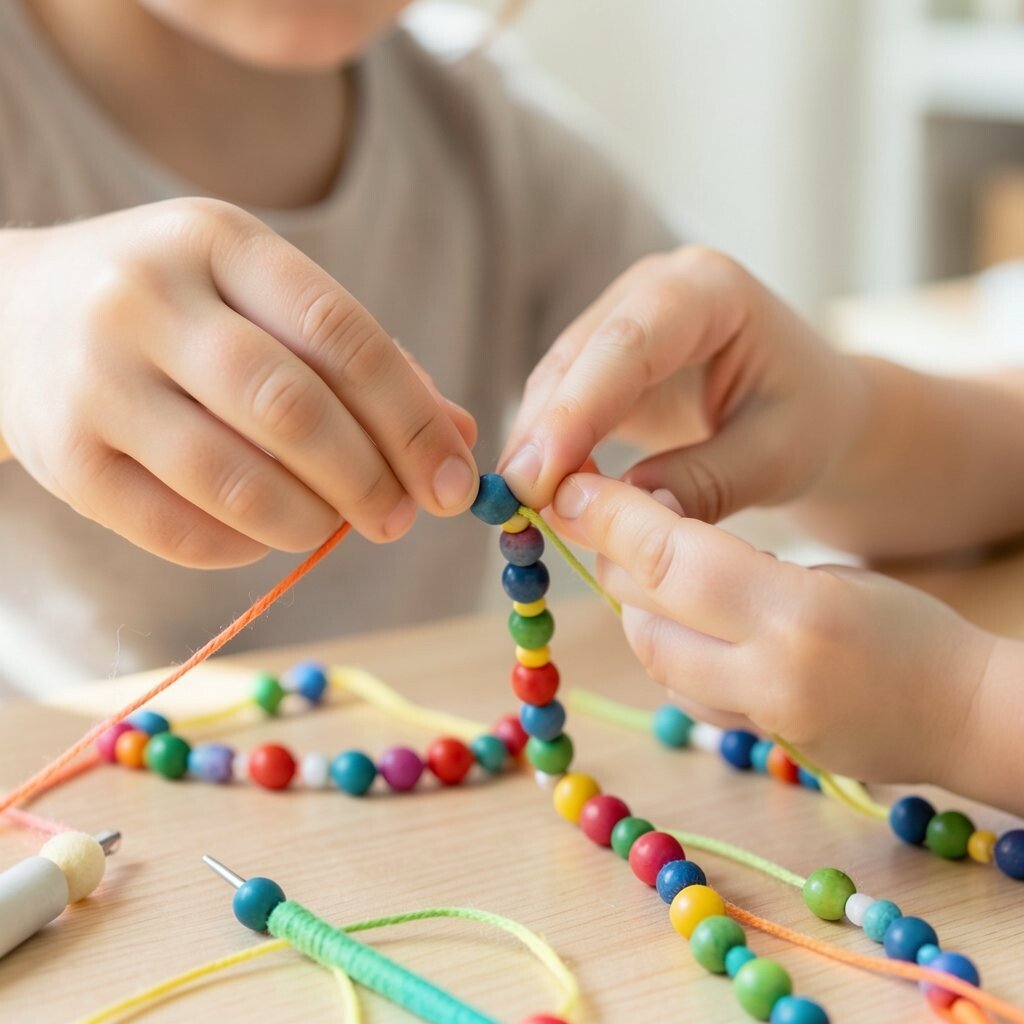
Bead stringing gives a nice mix of color, shape, and touch. Children thread beads onto string, yarn, pipe cleaners, or shoe laces, and the finished strand can look bright and neat.
This activity helps eye focus, hand steadiness, and planning skills. It can also help with patience, since the beads need slow and careful work to stay on the string.
You can use large beads for younger kids and smaller beads for older ones who need more of a challenge. Many people like to make name bracelets, key chains, or simple patterns, which adds a personal touch without much cost.
5. Tongs And Pom-Poms
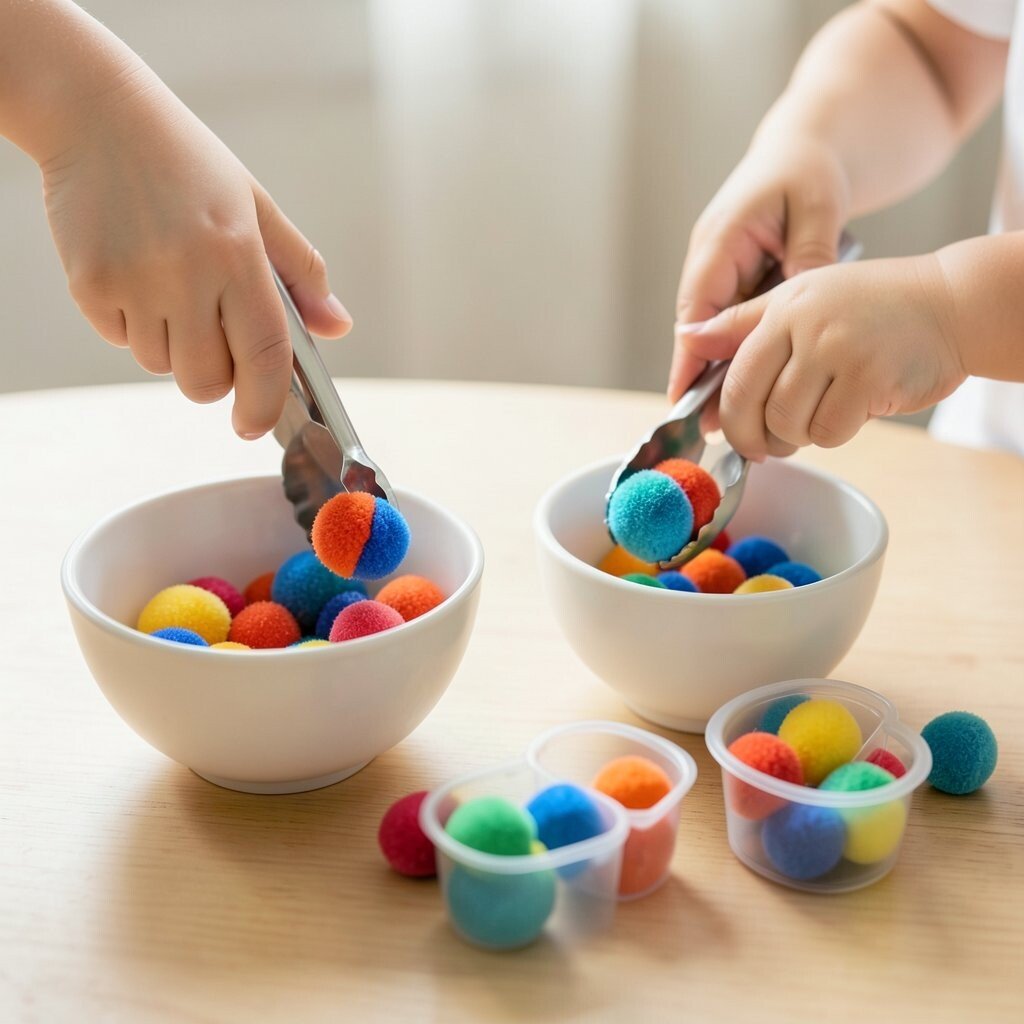
Tongs and pom-poms make a fun scoop-and-drop game. Kids use kitchen tongs, craft tongs, or even tweezers to move soft pom-poms from one bowl to another.
This helps finger strength and hand control in a way that feels like play. The bright colors also make the task easy to see, which can help young children stay interested.
You can sort the pom-poms by color, size, or into small cups for a simple pattern game. The supplies are often low cost, and many homes already have tongs and small soft items they can use.
6. Scissor Snipping Strips
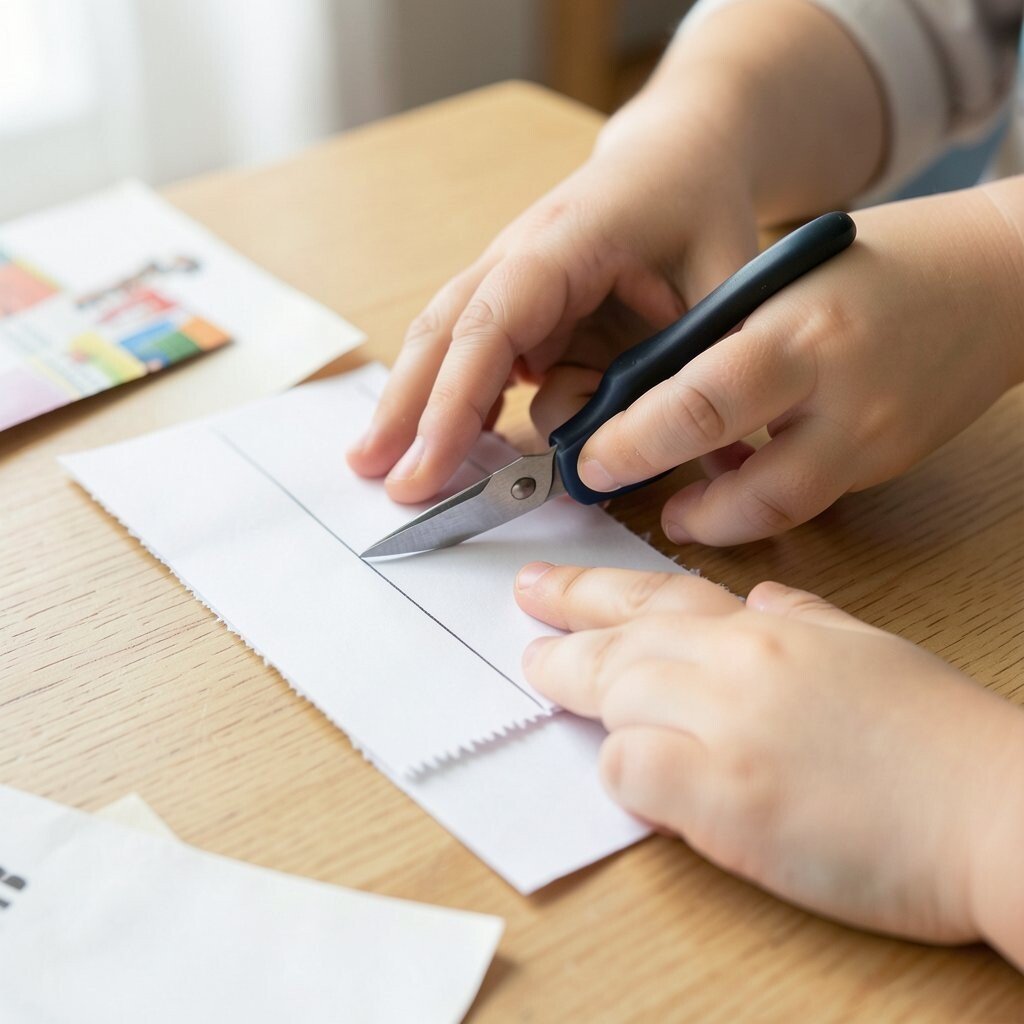
Paper snipping is a classic hand skill task that still works well today. Children cut along short paper strips, fringe edges, or simple lines with child-safe scissors.
This helps both hands work together, since one hand holds the paper while the other cuts. It also supports control, since the child must open and close the scissors in a smooth way.
You can start with thick paper, then move to thin paper as skill grows. Some families like to cut old flyers or scrap paper, which keeps the cost low and gives a second use to paper that might be thrown away.
7. Threading Pasta On String

Dry pasta makes a simple and low-cost threading tool. Kids can use pieces with holes, like penne or rigatoni, and slide them onto yarn or shoelaces.
This helps with hand-eye control and finger aim. It also gives a nice mix of feel and sound, since the pasta pieces click together as they move.
You can leave the pasta plain or color it with food dye for a bright look. Many parents like this activity because it is easy to set up, easy to clean, and easy to change for different skill levels.
8. Peg Board Play
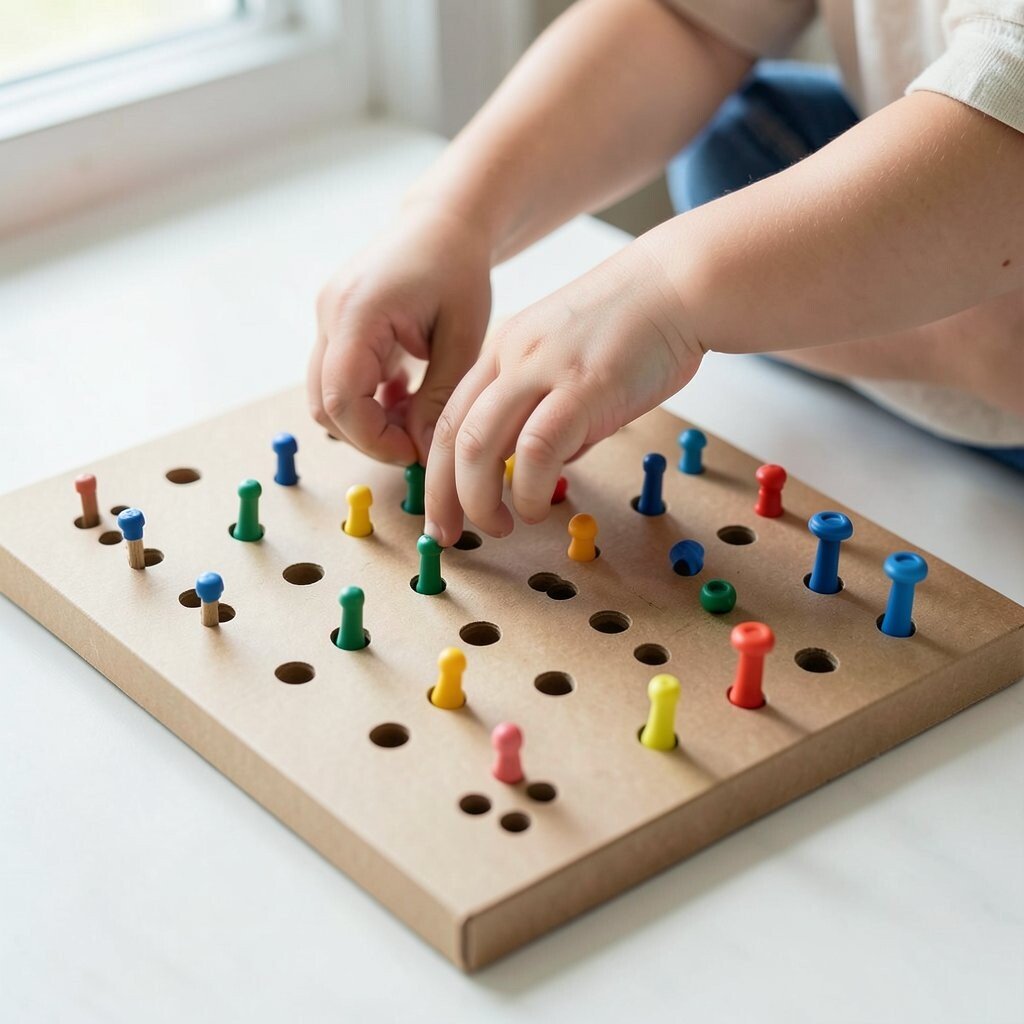
Peg boards give a neat, ordered look that many kids enjoy. Children push pegs into holes, pull them out, and make rows, shapes, or simple pictures.
This helps finger strength, grip, and careful placement. It also works well for kids who like clear steps and a task that feels tidy.
You can buy a peg board set or make one with cardboard and safe craft pegs for a low-cost version. Some families use color patterns, while others use free play and let the child make any design they want.
9. Coin Drop Game
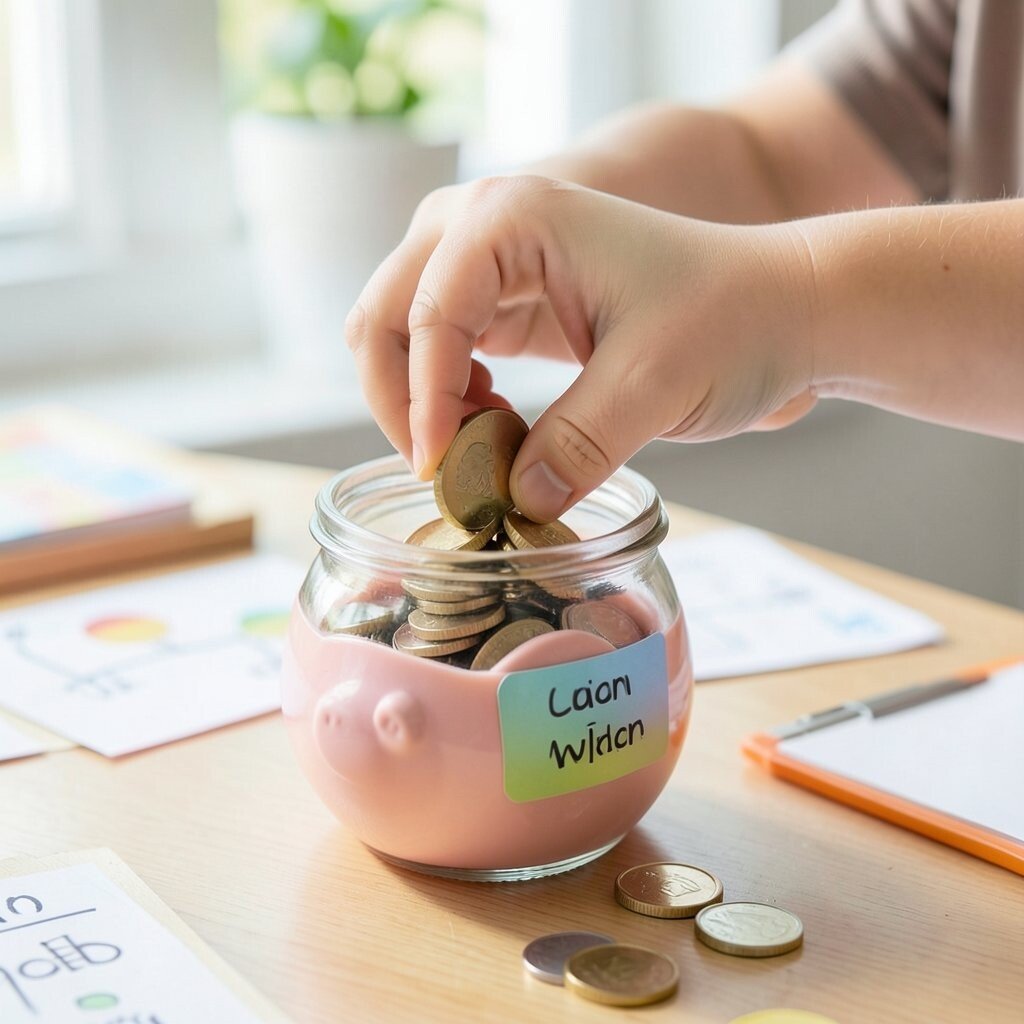
A coin drop game uses a jar, slot box, or small piggy bank style container. Kids place coins, game tokens, or flat discs into a narrow opening one at a time.
This builds finger control and helps children aim with care. It also gives a clear start and finish, which can be helpful for children who like simple tasks with a clear result.
You can use play coins, bottle caps, or paper discs if you do not want to use real money. This activity is easy to personalize by using themed jars, color labels, or a reward chart for added interest.
10. Lacing Cards

Lacing cards have holes around the edge and a string or lace to weave through them. They come in many shapes, such as animals, hearts, shoes, or simple cards with bold outlines.
This helps with two-hand use, finger aim, and steady movement. It is also a good quiet activity for home, class, or waiting rooms.
You can buy ready-made cards or make your own from cardboard, which keeps the cost low. Many current versions use bright art and simple themes, so you can pick a style that fits your child’s taste.
11. Water Drop Transfer
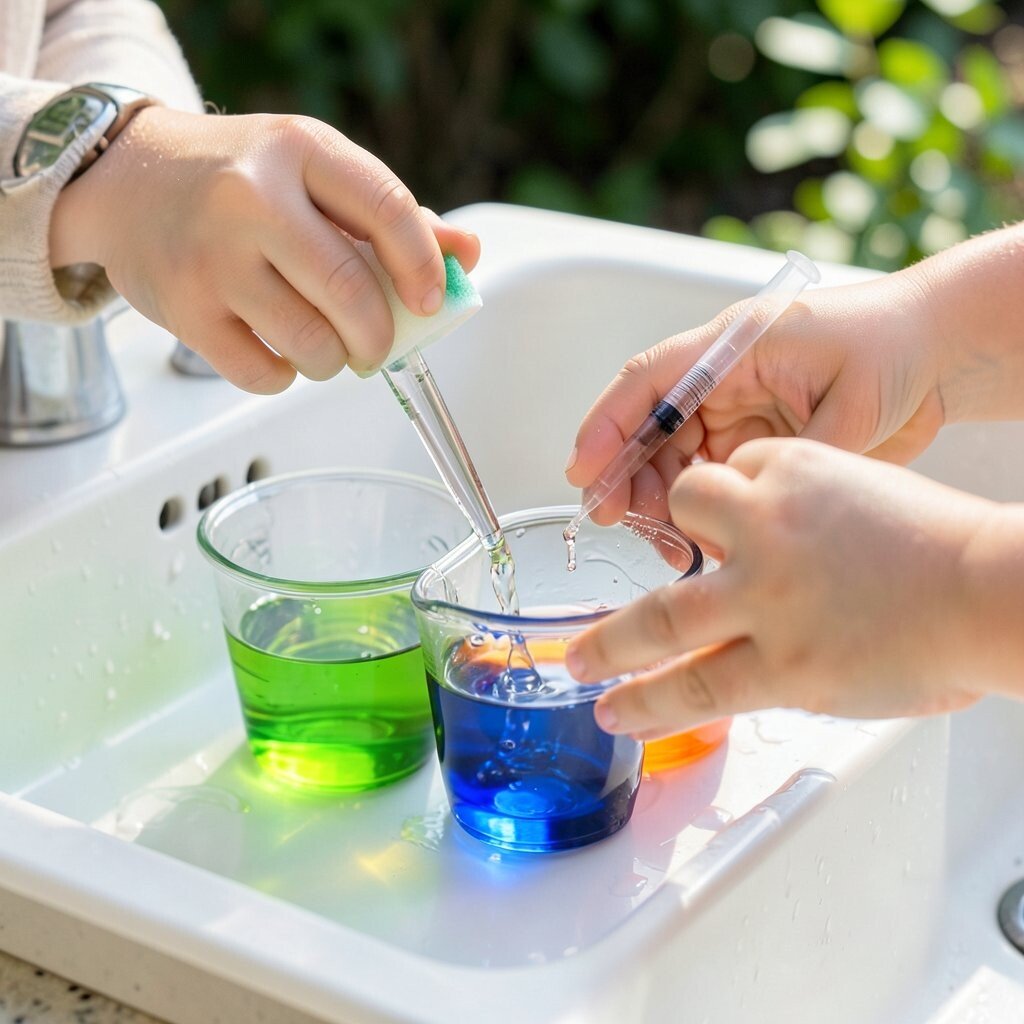
Water play can help fine motor skills in a calm and fun way. Kids use a dropper, pipette, or small sponge to move water from one cup to another.
This helps build finger control and hand steadiness while also giving a clear visual task. The water level changes make the activity easy to follow and can keep children interested for a long time.
You can add food coloring to make the cups look bright and clear. This is a low-cost activity that uses items many homes already have, and it can be set up in a sink, tray, or outside area.
12. Button Board Practice

Button boards give children a chance to work on a real-life skill. They can push buttons through holes, fasten them, and unfasten them on cloth or felt boards.
This helps finger strength, hand control, and daily living skills. It also gives a useful task that can help with dressing later on.
You can make a simple board from fabric scraps, old shirts, or felt pieces if you want a low-cost version. Some parents like to use bright colors and large buttons first, then move to smaller ones as skill grows.
13. Tweezers And Small Objects
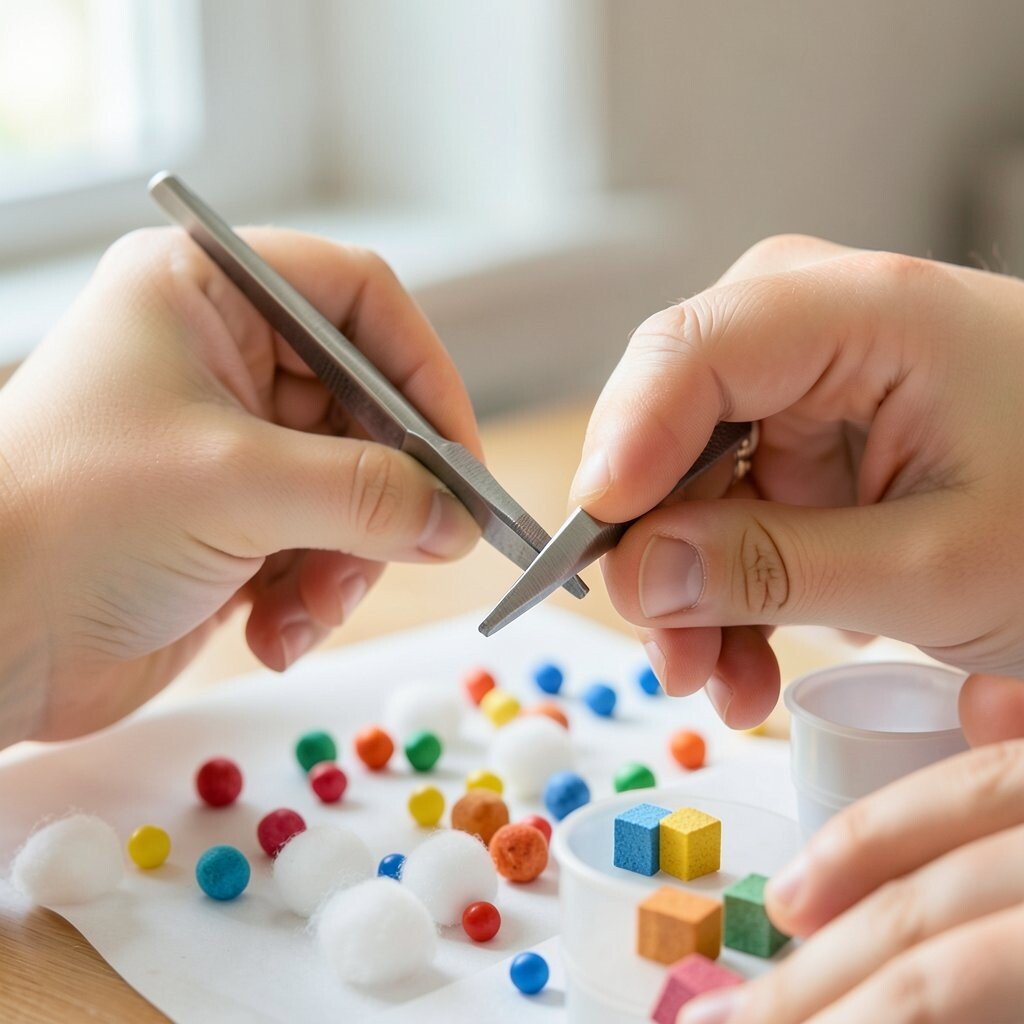
Tweezers are a small tool that can make hand practice feel like a game. Children use them to pick up beads, cotton balls, paper dots, or small blocks and move them into cups.
This helps the thumb and finger work together in a strong, careful grip. It also supports focus because the child has to line up the tool and the object each time.
You can sort items by color, size, or type to add a learning step. Tweezers are often cheap, and many families already have them in a kitchen drawer or school supply box.
14. Folding Paper Shapes
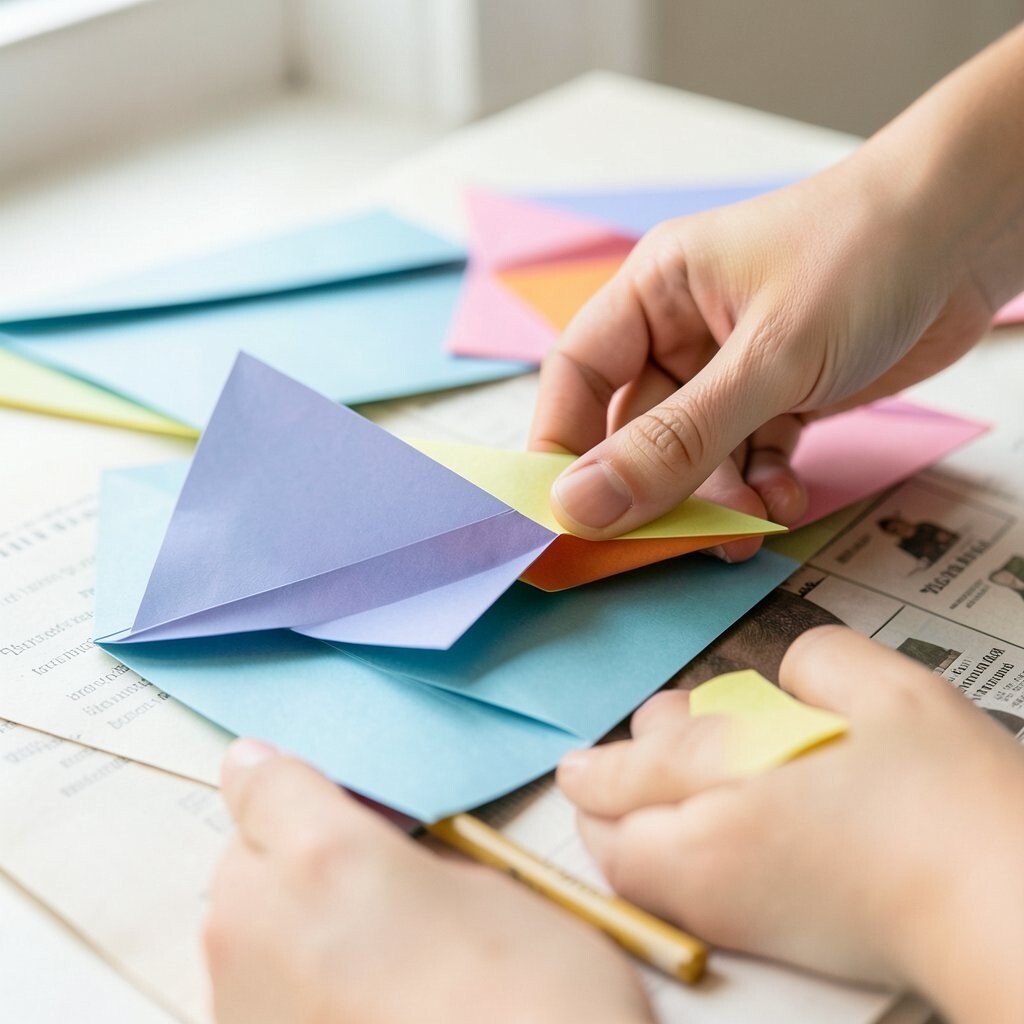
Paper folding gives hands a clear job and a simple finished result. Kids can fold paper in half, make fans, or follow basic shape folds with help from an adult.
This activity helps with hand control, two-hand use, and attention to detail. It also gives a nice visual result, since the paper changes shape as the folds get made.
You can use scrap paper, colored paper, or old magazine pages to keep costs low. Some families like to fold paper into cards, boats, or small animals, which adds a personal and creative touch.
15. Build With Small Blocks
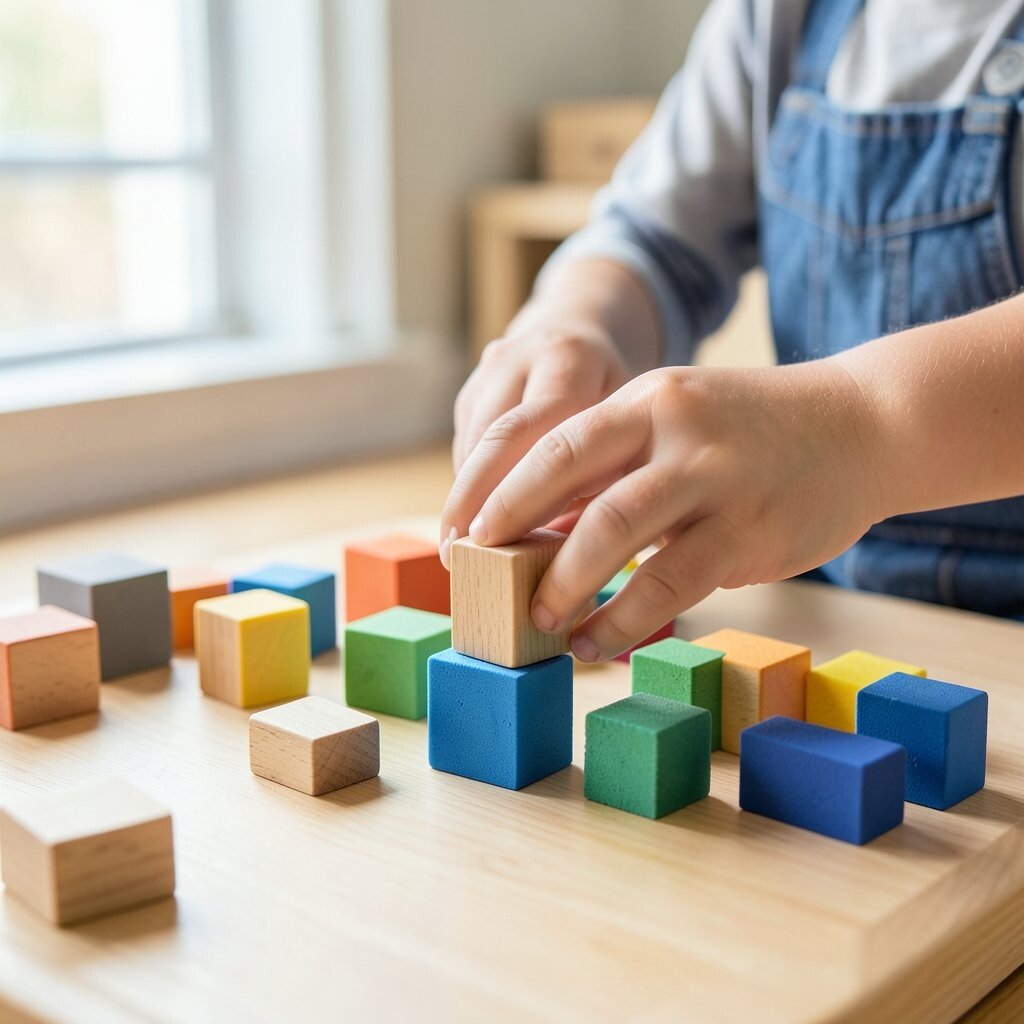
Small blocks, cubes, or stackable pieces are great for hand skill practice. Children pick them up, line them up, stack them, and knock them down again.
This helps finger control, hand steadiness, and planning. It also gives room for free play, so each child can build in a way that fits their own style.
You can use wooden blocks, foam blocks, or plastic sets, depending on what you have at home. Many families like this activity because it can be simple or more complex, and it fits well with current play trends that mix learning and open-ended fun.
16. Trace And Color Paths
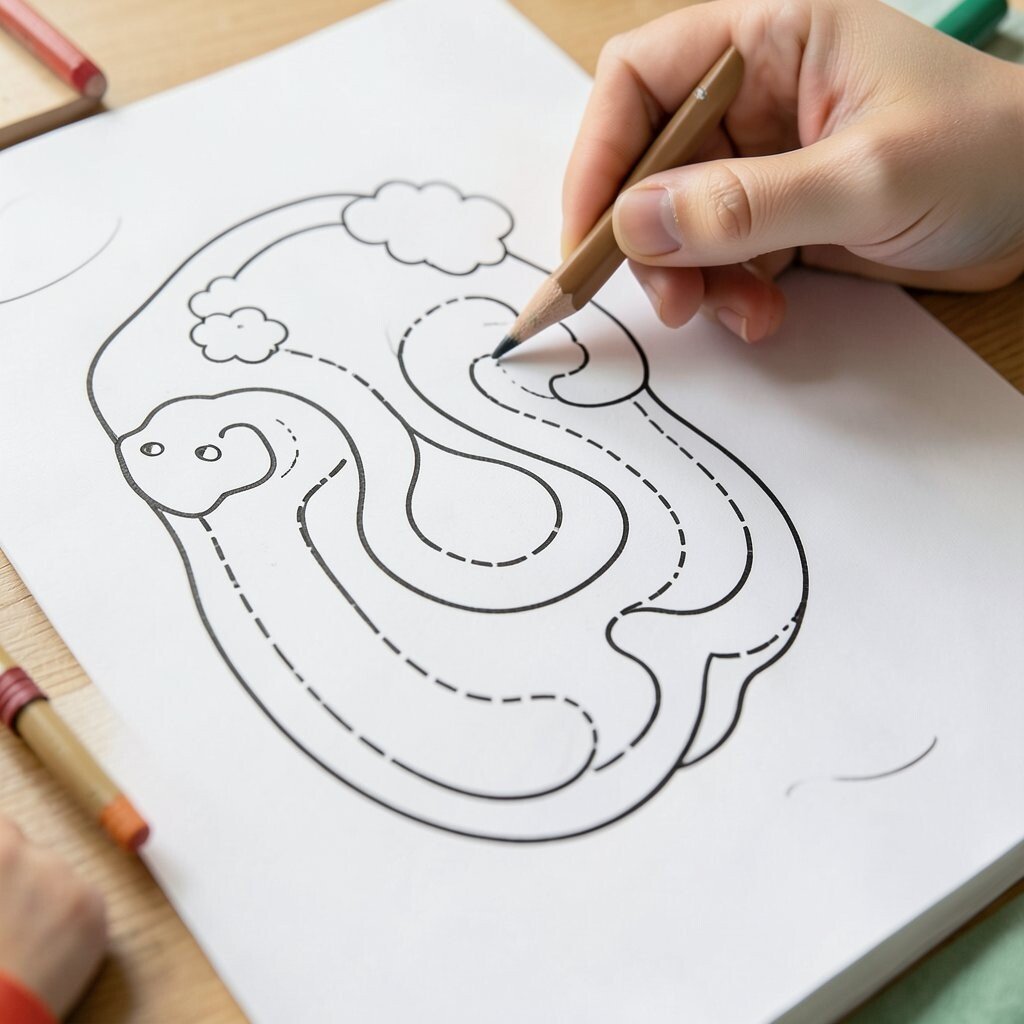
Tracing lines, shapes, and simple pictures is a useful way to build fine motor skills. Kids can follow dotted paths, maze lines, or large outlines with crayons, markers, or pencils.
This helps with pencil grip, hand control, and eye tracking. It also gives a clear way to see progress, since the child can compare the start of the page with the finished work.
You can print free pages online, draw your own lines, or use old workbooks to keep the cost low. Many children like to color the traced shapes after they finish, which adds choice and makes the page feel more personal.